
Subscribe to The Model Health Show:


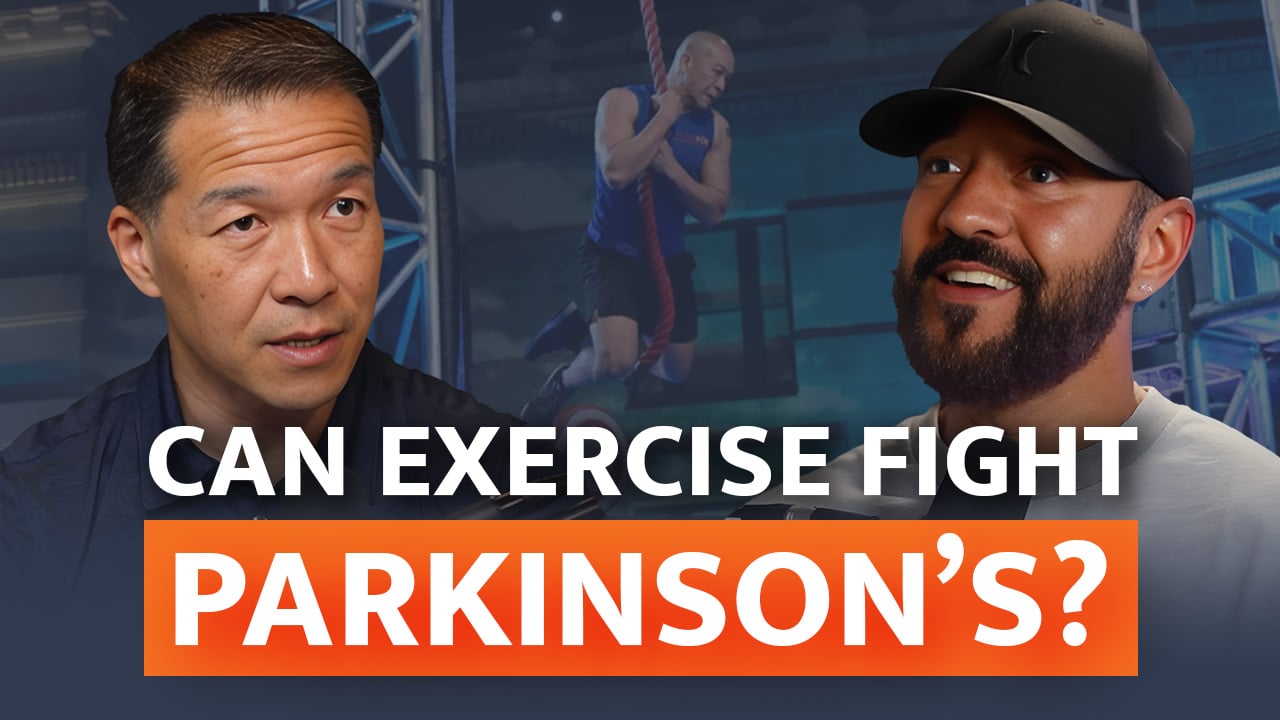
TMHS 983: Diagnosed With Parkinson’s at 27, He Became a World Record Holder & American Ninja Warrior – With Jimmy Choi
When faced with a challenging situation like a life changing diagnosis, it can be easy to feel defeated or go into denial. But if you can channel your inner strength and tap into the right mindset, most of us would be surprised at what we can accomplish, how vast our capacities actually are, and how we can break past our limits to achieve more than we ever imagined possible. Today, you’re going to hear a powerful story of overcoming.
Today’s guest, Jimmy Choi is an endurance athlete who was diagnosed with Young-Onset Parkinson’s disease at the age of 27. Despite his diagnosis, Jimmy is able to maintain an active lifestyle, including running marathons, competing as an American Ninja Warrior and setting multiple Guinness World Records.
On this episode of The Model Health Show, Jimmy is sharing his inspirational story of living with Parkinson’s disease. You’re going to hear about his experience going through denial, how he started training to manage his symptoms, the role of mindset in overcoming health challenges, and so much more. Enjoy!
In this episode you’ll discover:
- The story of Jimmy’s diagnosis. (6:02)
- How an accident inspired Jimmy to get stronger. (13:33)
- Why getting involved with Parkinson’s research helped Jimmy become active. (18:06)
- The difference between consistency and perfection. (27:30)
- How exercise can help improve Parkinson’s disease symptoms. (29:33)
- Why having a purpose in the gym is so helpful in making changes. (32:33)
- The difference between motivation and discipline. (58:42)
- Jimmy’s approach to diet and nutrition. (1:05:46)
- The role mindset plays in managing chronic illnesses. (1:09:50)
Items mentioned in this episode include:
- Paleovalley.com/model – Use code MODEL for 15% off!
- Peluva.com/model – Get 15% off barefoot shoes with my code MODEL!
- The Michael J. Fox Foundation – Learn about Parkinson’s disease research!
This episode of The Model Health Show is brought to you by Paleovalley and Peluva.
Use my code MODEL at Paleovalley.com/model to save 15% sitewide on nutrient dense snacks, superfood supplements, and more.
Peluva’s barefoot minimalist shoes support postural alignment, proprioception, and overall functionality. Get 15% off your order by using code MODEL at peluva.com/model.
Transcript:
SHAWN STEVENSON: Welcome to the Model Health Show. This is fitness and nutrition expert Shawn Stevenson, and I'm so grateful for you tuning in with me today. One thing is for certain, in this lifetime, we are going to face adversity. Millions of people every day are struggling and trying to find a way through the pain that they're experiencing, the chronic conditions that they may be experiencing, the life conditions that they may be experiencing. And today, this episode is so special, so powerful because it is a true testament to what is possible for all of us, the potential of the human spirit. And our special guest today was diagnosed with early onset Parkinson's disease. During his prime of life years, in his twenties, and to say that it shattered his reality is an understatement.
And on this very special episode, you're going to hear his origin stories and how he came to that critical point and what he's been able to accomplish and transform his life into since then. And I'm telling you right now, it is what's going to seem to be miraculous on the surface. But he's going to share with you the principles behind how he was able to achieve what he's achieved. This is one for us to remember when we're going through our difficulties and when we're micromanaging and debating with ourselves about what we want to accomplish is gonna help us to get up and to get going, and to remember that we have so much capacity to achieve our goals, to achieve our wildest imagination.
Also to overcome the obstacles that we might be faced with. Sometimes we need to hear stories like these. And again, I'm very grateful to be able to share this with you today. So on this episode, you're gonna hear how our special guest, Jimmy Choi, was diagnosed with Parkinson's at age 27, and how he then became a world record holder, an American ninja warrior. We're gonna be covering how to use exercise to fight back against neurological disease, depression and adversity, while your mindset matters more than your current struggles or circumstances, and how to actually get the most out of the time that you invest in working out, and so much more. And so, without further ado, let's get to our special guest and topic of the day.
At the age of 27, Jimmy Choi was diagnosed with early onset Parkinson's disease. Upon receiving the diagnosis, Jimmy's health and movement continue to decline.
And by 2010, he only walked with a cane and he hit rock bottom when he fell down while carrying his young son. Thankfully, they both were unharmed, but fear of the future and fear for his family made Jimmy vow to do whatever it takes to take back control of what Parkinson's had robbed from him physically, mentally, and emotionally. Jimmy's transformation would appear to be miraculous, but he will tell you that it all started with the power of a decision. Since deciding to get focused on his health and fitness, he's completed over 100 half marathons, 16 full marathons, one ultra marathon, six grand Fondo cycling races.
Multiple Spartan races, competed multiple times on American Ninja Warrior and set numerous world records in the process. He's transformed his body and dramatically reduced the impact that Parkinson's had on his life Today. He's sharing his story and leading by example to remind us of the unlimited potential that we all have within. Let's dive into this conversation with the incredible Jimmy Joy.
Jimmy, I'm so excited to talk to you. You have no idea. I've been like fanning out telling people, I'm like showing people on the streets. Hey, did you see Jimmy? Like you can see what he is done. To kick things off, I just wanna ask you, you know, right now you've accomplished so much, and I just wanna know what inspires you right now? What's keeping you going and putting one foot in front of the other every day?
JIMMY CHOI: My family, you know, I've I lived through a point in my life earlier in my diagnosis where I kind of put everybody to the side. Right. It's very selfish because it's all about, you know, what am I, how no, poor me, you know, poor Jimmy, look what you have to deal with. And never thought about the family side, never thought about the people around me. Yeah. But eight years after that initial process I had my fallout moment and then realizing that moment where I put my son in danger, we fell down the stairs. I put my son in danger. I realized that this is.
I've gotta make a choice. This is bigger than me and my focus shift. So now it's all about my family. How am I being a good husband? Am I being a good father to my kids? Am I gonna be there to watch my daughter compete as whatever it that she does in sports and life and in college? Am I gonna be there for my son at all his recitals growing up? What's he gonna do and like, am I gonna be the dad that sits and cheers or am I gonna be the dad that misses all of that? I didn't want to be the latter half of that.
SHAWN STEVENSON: Yeah. Amazing. With this said, you just gave a little insight into this superhero origin story, so I wanna go back a little bit more. Can you share, you know, that process when you received the diagnosis, like what was going on in your life, what brought you in? To get an assessment in the first place. And when you got this bill of bad news that you have Parkinson's in your twenties, was this something you just kind of took on, like, oh, that makes sense and just went on about your day? Like how did everything go?
JIMMY CHOI: So just like you said, I was diagnosed in my twenties. I was 27 when I was diagnosed. And as.
SHAWN STEVENSON: Which is incredibly rare.
JIMMY CHOI: It's incredibly young. You know, nowadays we've got kids as young as two years old being diagnosed. So, it is still very rare. But, you know, being at that age the last thing on anybody's mind, whenever you're dealing with something new in your life, whatever you're feeling, something different changes in your body, last thing in your mind is Parkinson's, right? Because most people think when they think Parkinson's is tremors and old people. So I never thought about Parkinson's. I thought it was everything that was happening to me. Changes could be explained away with everyday life. Stiffness, rigidity. I was playing a lot of golf back then, and I carried my own bags.
So next thing you, next morning when you wake up, you're gonna be stiff and sore, right? I grew up in the.com boom, right late nineties, early two thousands, and there's a lot of stress in tech jobs, and I was in tech. So little twitches here and there, Hey, that's stress. Everything could be explained away from everyday life. But when I got married, my dad always says, you gotta get life insurance when you start your, when you're getting ready to start a family. So that's exactly what I did. Now, the, they gave me a physical they come to your house and they give you a physical, and the nurse that came, she started asking questions that were very strange to me.
I'm like, this is not a standard of insurance, physical. Then she never said like Parkinson's or anything else, right? All she said to me was, Jimmy my day job outside of doing insurance physicals is I work in a neurologist office and I'm seeing things about you that I see every day. So I want, I encourage you to talk to the things that I asked you about today. And she asked me about my movement. She had me get up and walk. So I'm like, so it intrigued me. I'm like, why would she say this? Right. And then the last thing she said to me was the big hammer in the nail that says you really should go find some help. But she goes, just remember when you get your approval for your insurance, sign it before you go see your, before you go find all these other doctors.
That's all she said. She didn't gimme a diagnosis. Nothing. And she can't. Right. But when I heard that, I'm like, holy crap. Why would she say that? But my initial reaction I think is just like any other 20-year-old. Like, it, I don't really feel it now, so who cares, right? I don't see any other 20 year olds with it, so I'm just gonna ignore it. It'll bother me when I'm 80, not when I'm 27. So, like, hindsight is always 2020. I wish I had taken action immediately, but for the next eight years I did absolutely nothing for myself, for the diagnosis.
SHAWN STEVENSON: Were you, would you say that you were in denial about it?
JIMMY CHOI: Oh, absolutely. Almost immediately when I found it took like almost a year to get the final, the initial diagnosis. And it was visit after visit to various different specialists. And I went into a movement specialist disorder, which is movement disorder specialist, which is a pers, which is a neurologist that specializes in Parkinson's. And it took her less than three minutes to say, Jimmy, you've got Parkinson's. Like, I don't even remember your name yet. Right, and you tell me. I, so like, immediately I remember like a lot of different emotions, including anger that came across me. But I think she handed me like these, all these different documents and pamphlets and things like that. And I took those and I never even opened them. And I don't think anything says denial more than, you know, not even looking at the documentation that you were given.
SHAWN STEVENSON: Well, first of all, shout out to that nurse, back in the day.
JIMMY CHOI: Yeah.
SHAWN STEVENSON: That gave you that advice.
JIMMY CHOI: I've been trying to find her. I don't know how to find her.
SHAWN STEVENSON: Maybe she's listening today.
JIMMY CHOI: Maybe.
SHAWN STEVENSON: Send Jimmy a message or message us. We'll get you in touch. But, you know, that's again, that's a good humanitarian moment. And you've had those throughout as well, and you know. Can you share just kind of how everything progressed over time? Because you said it was, it is about eight years. And at that point, what happened with your health? Because I would imagine if things are getting more difficult, you're probably not moving around too much. You probably had something similar to what happened to me. When I got diagnosed with something that was very difficult, I stopped doing a lot of things, and I gained weight on top of the problem.
JIMMY CHOI: Yeah.
SHAWN STEVENSON: Let's talk about that a little bit.
JIMMY CHOI: Yeah. It became like harder and harder for me to move, right. I mean, Parkinson's progressed through those first eight years, and I was in such denial that I kind of just like. Ignored it. And your body naturally makes adjustments to change this in your body, right? Especially when you're happening slowly to the point where you yourself may not even notice that you have, you're dealing with a new symptom, right? Or your, or that your symptoms are getting worse because you're making constant adjustments and you're still flowing through life. So it doesn't seem that bad, but when someone else haven't seen you in months, they look at you, they immediately know something's wrong, right?
So, you know, it became harder and harder to move. And my concentration at the time was, I'm going to make as much money as I can and get as far as I can ahead in my career so that my family don't have to worry about money in the future. So, my focus was completely on my professional life. And when you do that, you eat out, you eat whatever's convenient and you stop doing things.
Especially because like golf, I stopped because it became, when you get worse at the game, it's a mentally stressing game enough, but when you get worse at it, you don't wanna play anymore. Right. And was not active at all in the gym. And just kind of, everything, just kind of motion became more motionless. And because I was eating junk and eating, eating like a person that travels a lot now, I gained weight to the point where I was 250 pounds. Now, a lot of people would say, that's not so bad, but for a guy my size, five feet, eight, that's pretty big. Right. And I was, I didn't know it yet, but I was putting a lot of stress on my own body and my own my own joints.
You know, with all that extra weight that I'm carrying, especially when I'm losing balance. When you're losing balance with an extra 10 pounds or 20 pounds or 30 pounds, it's hard to recover from, right. And then it got to the point where I was actually falling a lot and my wife said one day like, Hey, you gotta get a cane because you're falling and it's not safe, you're gonna hurt yourself. So I got a cane, so eight years later, 250 pounds walking with a cane.
SHAWN STEVENSON: Wow. That's a hell of a progression, you know? And also I'm already hearing the seeds of your wife's input.
JIMMY CHOI: Yeah.
SHAWN STEVENSON: Here as well. And you know, when I asked you to start this conversation off, like, what motivates you? What is your inspiration? And you immediately pointed to your family and you shared a little snapshot of the incident that was kind of a turning point that happened with your son. Can you share that?
JIMMY CHOI: Yeah. So in about 2010, so right around seven and a half, eight years into my diagnosis I was walking with a cane and my son was he's a second born and we were upstairs at home and I had just given him a bath. And you know, kids, they're, when you give him a bath, they're squishy and slippery and squiggly, right? So I was coming down the stairs so I can meet with, you know, hang out with the rest of the family with my wife and my daughter. And I'm looking at the stairs and I'm like, okay, I've got my son in one hand. I've got my cane in the other, I have to put one of them down, right? And I've got the railing, so it makes sense to just leave the cane upstairs and just go down the stairs using the railing.
But sure enough I lost my balance. After that immediate first step, I lost my balance and the two of us went tumbling down the entire flight. It was 10 steps, we counted afterwards, 10 steps and we tumbled down the stairs. I kept him above my body as best as I could. And when I hit the ground, I just remember looking up at my wife and my daughter running over my 2-year-old daughter at the time just running over and the look of horror on their faces was enough to shake anybody.
And first thing I asked my wife was, check on Mason, make sure he's good. So she grabbed him, make sure that he was okay. He's screaming, he's crying, of course, like any baby would. But then I'm just like watching them and thinking to myself, this is what it's come to, right? I've become a safety hazard to my son. Instead of helping my wife raise a family, I've added extra burdens like is this is what I want. And I think in that moment I told myself, you know what? I need to make a change. And I didn't know what it was gonna be yet, but whatever it was, doing the same thing, definition of insanity, doing the same thing over and over isn't, hasn't helped me yet. Why would I do it all over and again, make some changes?
SHAWN STEVENSON: Yeah. Wow. Thank you for sharing that. I know that's a tough moment, a tough thing to think back to and you know, I just think about, you know, somebody drowning or you know, and they got their kid in their arms. You're gonna hold your kid up.
JIMMY CHOI: Yeah.
SHAWN STEVENSON: Above the water. And that's what you did in that fall, you know, still trying to protect your son, but it's just being in this kind of compromised position just with what your body was going through. And you know, obviously something did happen, but this is a part of the story I think a lot of people miss. It's when you decided to do something.
JIMMY CHOI: That's right. Yeah.
SHAWN STEVENSON: You know, because part of it can be just ignoring the problem. Part of it can be accepting just how bad it is and I can't do anything about it.
JIMMY CHOI: Right.
SHAWN STEVENSON: But you decided to do something to get better.
JIMMY CHOI: Yeah.
SHAWN STEVENSON: So what was it for you that really helped to turn the tide because you didn't just get better or get healthier. Like you were able to eventually to start doing some things. To say exceptional is like an understatement, but like things that the average person cannot do. So what was the catalyst for you to start to treat your body differently and to, you know, really change the course of your life?
JIMMY CHOI: You know, there's many moments that kind of led to that. And then the, one of the things that I want to make sure that people understand is that this didn't come overnight. I didn't say, oh, I need to make a change. And then next thing you know, I'm, you know, fit as a, you know, as whatever, right? It's 14 years in the making and still going. Right. And I think it's a combination of things like snowballing, like people use snowball as a negative thing, right? It gets worse, it gets bigger. But I turned that around and I was like, you know what? I started with a little snowflake, right?
Which was, it could have been the fall, but I decided to do something right? So now I've got something to work with. And then I started doing things and if these things, whatever it was that I was doing at the time was meaningful. I kept, or if I felt a change, if I felt like this is good for me and it's, I'm making a difference, I'm making a change, and I'm gonna do more of something similar. So that's how I collect more and more snow along the way to create a little snowball now and then eventually, once you build enough momentum, that snowball can become, you know, a giant roll of a boulder there, so to speak. But for me, it's, I didn't know what I was gonna do. I knew I wasn't smart enough to find a cure for Parkinson's.
I didn't have enough money to fund it for sure, but the very least that I can do was to get involved in research. Right. So that was the very first thing that I did. And again, it just kind of, I kept adding to it. One of the research things that I got involved with was a clinical trial that involved forced exercise. And that is exactly what it sounds like. I go to a physical therapy office that was a part of the trial. They forced me to exercise, right? And up until this point, remember I was still 250 pounds, still walking with a cane. To this point, I haven't really felt true exercise as it relates to Parkinson's.
And the more I was, I would come back every other week for these sessions. And the more I was forced to exercise, I realized that I was feeling a little bit better at the end of those sessions. And those effects was lasting a little bit longer. My medicine was working a little bit better around those sessions. So then I asked myself, wait a minute is there's something to this, so I'm gonna do more of it? So instead of just relying on these sessions, I took action. Right. This is how you, this is how I add to my snowball is I went ahead and I added things on my own, like just walking with my family and every day I try to do a little bit more.
I think I heard this from Goggins, I think. But I think it's I'm a hundred percent certain that this is also a military mindset or maybe specifically a Marines mindset. The 10% rule, right? Where you get better, whatever it's you're trying to do, you get better at 10% of the time, right? You're not trying to boil the ocean. You're not trying to give 'em zero to a hundred, right? Your goal is to get 10% better, and when you can get 10% better, then your goal and then is 10% better at that. Right. So that's kind of how I adjusted my training or my own movement needs every day, like not every day, 'cause you can't get 10% better every day. But my goal was once a week, 10%, and if I didn't get there, that's okay. Right. If I got 4%, that's great. Let's keep going.
SHAWN STEVENSON: Yeah.
JIMMY CHOI: So that was kind of the mantra that I took, started with just walking, became running and then running. I added cycling and then I added swimming. Next thing you, I was doing marathons and triathlons and all kinds of crap. And of course, along the way I ate better, I lost weight, and I was also paying attention. This is the key right now that most people who live with a chronic disorder don't realize is that, yeah, you can eat better, you can move better, but your treatment protocol, if you're not paying attention to what, that's what that's doing in relation to your food.
And your exercise and your regimen your movement. You may not be getting the best bang outta the buck, so to speak, from your medication or from your treatment regimen that you could be. So I started making changes and tweaks to that. And ultimately at the end of the day, I find that it was a, it's a continuously moving target. Even, you know, 14, 15, 16 years later now, 2010, 2000, 20, 26. Now, 16 years later, it is still a moving target, but I'm constantly making adjustments and I think that's kind of what has been able, that has helped me transform myself to the 250 pound king wielding Jimmy, you know, to, I don't know. I don't even know how to describe myself today.
Superhero, let's just call it what's, well, I'm not a superhero but you know, a lot, just like you said, I'm doing a lot of things that people without Parkinson's can't do. Right. But I don't do it because I don't, because I think I'm any more gifted or special than anybody else. But I think what I'm able to do is a it's the result of the work that I'm, that I put in for myself. And I think, I truly believe that anybody who's willing to put in the similar type of work for them, right, they can achieve these unbelievable, or I don't let's not say superhuman. We'll say, abilities beyond who Jimmy thought Jimmy can be.
SHAWN STEVENSON: Yeah.
JIMMY CHOI: Right now, Steve is out there trying to do this. Steve can be the best version of Steve.
SHAWN STEVENSON: Yes.
JIMMY CHOI: And Stacey can be the best version of Stacey.
SHAWN STEVENSON: Yes.
JIMMY CHOI: Right. So, and that's all I'm trying to tell people is that you're not out here to be me or you or Shaquille O'Neal, right, or anybody else. Right. You're, you'd be the best version of you and that, and if you can do that, you can be very, you can live the best life that you can.
SHAWN STEVENSON: Now, here are four specific ways that electrolytes impact your exercise and athletic performance. Number one, optimal muscle function. Electrolytes like sodium and magnesium are essential for nerve signaling. Allowing your muscles to contract and relax properly, which prevents cramping and fatigue. Number two, fluid balance and hydration. Sodium helps your body and your brain to retain proper fluid. Balance. Inadequate hydration can lead to cardiovascular strain and decreased strength and power. Number three, energy and endurance. Replacing your loss sodium improves blood flow and helps transport nutrients into your cells. Sustaining energy levels during long duration and high intensity workouts in particular.
Number four, mental sharpness. Good electrolyte balance helps to maintain cognitive function and reaction time during competition. And scientists at McGill University found that sodium functions as a quote on off switch in the brain for specific neurotransmitters that support optimal function. Now, here's the problem. We know that this is all true when it comes to electrolytes in our performance, but for decades, the Gatorades and Powerades of the world have been dousing. Our bodies with crazy amounts of sugars and artificial colors and all these different shady ingredients and LMNTs stepped in and said, no more, no moss.
We're gonna deliver science backed ratios of these key electrolytes without the added sugar, without the artificial colors and the dodgy ingredients. And we're gonna do this in a way that today LMNT is fueling some of the greatest athletes and high performers in the world, including Team USA, weightlifting, NBA and NFL Teams, Navy Seals.
The list goes on and on, and right now you get to take advantage of the world's number one supplement when you go to drinkLMNT.com/model. That's drink lmNt.com/model. And not only that, with every electrolyte purchase, you're going to get a free sample pack of their most popular electrolyte flavors. And to top it off, you get to try all this. Risk free with there are no questions asked refunds. If you don't absolutely love the way that it makes you feel, again, head over to drinkLMNT.com/model right now to take advantage. My favorite flavors right now, grapefruit is popping lemonade. The lemonade salt is incredible, especially if you're doing anything where you're sweating a lot, that lemonade salt hits different. So again, head over there, check 'em out, drink lmt.com/model and now back to the show.
Yeah. Thank you for sharing that. And that context is the capacity. And a lot of this, you know, our greatest strengths are often dormant.
JIMMY CHOI: Yeah.
SHAWN STEVENSON: You know, you had no idea what you can do until you went through hell.
JIMMY CHOI: Yeah.
SHAWN STEVENSON: And so thank you for sharing this and providing the context because we all have these incredible capacities and strengths and even talents that are often dormant until the conditions are there for them to manifest. An important part of this is you shared that you are paying attention to the inputs.
JIMMY CHOI: Yes.
SHAWN STEVENSON: And the resulting outputs and how important that is as, as far as like a recipe for finding success. A lot of stuff that we're doing is just on automatic. You know, clueless. Right? We're walking around here, Alicia Silverstone in it, you know, through life, trying to just make it instead of paying attention, like once I have this particular food, I feel like this right, or my medicine tends to work a little bit better. Or, you know, I actually, I feel more stiff once I eat this particular food or this meal. You were paying attention to things like that.
JIMMY CHOI: Yeah. And I think that's the part of work that most people don't think about. And that's the part of, that's the last part of any transformation that anybody's making the, trying to make a transformation with commit to, 'cause it's hard. It's hard, right? So am I walking around with a spreadsheet? In 2010, I was right. So people hear that. I go, whoa, wait, you mean you were really walking around with a spreadsheet? Yes. I was walking around with a spreadsheet in 2010 because there, there was no, there's no AI back then, but people can do it today with AI on their phones and the devices.
Right. Back then I was, I had a flip phone. Come on. Right. But that is the hardest part is to remember, to note what you're feeling. And you don't have to be perfect, but consistency, you have to be consistent enough to see the data. The data has to be consistent. Right. And but it doesn't have to be perfect, you know, so, I always tell people. I'm not telling you to be some kind of bookworm, you know, like you gotta stop every 15 minutes to mark down what you gotta do. If you miss one, it's okay, but pick up and be consistent and just pick up where you left off. Don't beat yourself up. If you miss one, just keep going. Right. And then when enough time has passed, you have enough data points to make something meaningful, educated guess. Right. And that's it.
SHAWN STEVENSON: Seems very logical, you know, but again and today we have an added curve ball of being very distracted. Just like so much going on this constant you know, input, constant barrage of information.
JIMMY CHOI: Yeah.
SHAWN STEVENSON: And so to take back control of your thinking and your mind and your focus is another task in of itself. But the truth is, if your heart is beating, you can get better.
JIMMY CHOI: Yeah.
SHAWN STEVENSON: You still have an opportunity. And so I want to talk about specifically, you know, you getting involved in some of these, you know, different trials and trying to figure things out and seeing the impact, the output that would result from you doing exercise was really transformative in particular. And so, you know, we've had on, and one of my, you know, best friends and colleagues is really responsible for this movement of muscle centric medicine, Dr. Gabrielle Lyon. Okay. Shout out to her. And understanding how there's this chemistry involved when you are utilizing your muscles.
Before we even got started, you were talking about the use it or lose it paradigm. And so I want to ask you about specifically. How is utilizing exercise impacting your experience with Parkinson's?
JIMMY CHOI: Well, you know, I think it comes down, it's very simple actually. If you think about it Parkinson's is, it's a movement disorder, right? But there are aspects, other aspects of Parkinson's that are non-motor, and I want to stress that because whenever people think of Parkinson's, they always immediately think about tremors and things like that. But there are other areas of Parkinson's that gets that affects the body. But exercise is also it's also very helpful to all of those, not just the movement side of it.
And I think what's painfully obvious but not obvious to everybody is just like you said, the move it lose it mentality. Parkinson's tends to rob those of us living with a disease our ability to move and it's not necessarily that we're weaker. And it's not necessarily that all of a sudden our joints become you know, less capable. What's happening is that there are chemical imbalance in the brain. The do lack of dopamine is causing confusion in our muscles. So our muscles are contradicting each other and that creates a stiffness that creates the cramps, okay, which is also called dystonia. And that is what's limiting movement, and that's what's causing the uncontrolled twitches.
It's not necessarily that your muscles aren't capable of moving and that your joints aren't capable of the load, right? So I find that using exercise to force some of that movement, the bigger powerful movements to force that movement, to force that range of motion in the gym. Ultimately helps you because it trains your nervous system to know that we can still do this. Right? Now it's how do I bring this out to everyday life from the gym? So that's why I feel like I need to be very targeted when I train in the gym, so that I trained so that I am extending. My ability to my range of motion, my not necessarily speed, but more consistency in the way that I move more of a balance from from unilateral movements using un unilateral movements to create more balance and then also to have better awareness of the space around me.
Right? And I think the gym can do all that and all of that can transfer to your everyday life, but you just have to understand exactly how that's happening. And I'll give you an example of this. I was falling a lot, right to the point where I was using the cane. And one point, this is right. Even when after I started running I had diff very different methods of like keeping myself from falling. And we can talk about all these different methods, but one particular one that I wanted to highlight is that I started asking myself, I'm falling so much in real world. What can I do in the gym that will help me in to, to be safe if I fall? And how do I get back up? If you think about it, that's a burpee.
Right. It's a controlled fall to the ground and then pushing yourself back up. Now, when I started doing burpees, I was only able to do four or five at the end of every recession, right? But I was doing it so much, just doing it every day. Remember that 10% rule now, right? Five this week, six next week, whatever. Eventually it became like 30, 40, 50, and even more. And when pandemic came, everything shut down. There's nothing to do at home except more burpees. But my point is the burpees. What started out as a desire to learn a life saving skill for me, in case I do fall it. I became so good at it by doing it so much and leveling it up, right, adding additional levels to it.
That it gave me an opportunity to break a world record for a number of burpees right in and number of hand released chest to ground burpees on one minute, and I did that. I broke that record in 20, in 2020. Now, would I ever been able to do that if I didn't start doing burpees? No. Would I ever be able to start, would I even have started doing burpees if I never asked myself the question, what can I do in the gym that's gonna help my everyday life? And the answer is no. Right? So that's kind of how this's, how it is for me when every time that everything that I'm doing in the gym has to be meaningful for me and whatever it is that I'm trying to do in life, whether it's just moving better with Parkinson's or, you know, I, you know, nowadays I'm helping my son.
So I need to get stronger if, 'cause my son also has a neurological disorder and I need to help move him around. So now I do a lot of strength training, you know, so I'm doing, you know, doing things in the gym that matters to my everyday life and I need to make sure that they transfer.
SHAWN STEVENSON: I love that. Just even that thinking is going to take you so much further than just even focusing on the aesthetics piece, which the aesthetics tend to come.
JIMMY CHOI: Yeah.
SHAWN STEVENSON: You know, following the function form following function. And recently, which I was just walking into the studio, hearing you talking about this with my guys. You just did a certain insane number from my perspective of burpees to muscle ups. Right. Alright. First of all, a burpees hard enough, a muscle up. A fraction of our population could even do a muscle up. But you were doing a burpee into a muscle up for how many reps did you do?
JIMMY CHOI: 51 reps on my 51st birthday.
SHAWN STEVENSON: Come on, man. That's, I mean, yeah, like. I know that I'm kind of half joking about being a superhero, but like, you're really just a real superhero is somebody who's really just demonstrating what's possible and standing up in the face of adversity, you know, and doing it in an exceptional way and sometimes making it look cool. Alright. And, you know, you have all of these just checked off and, you know, I want to ask you specifically because with that, thinking of how can I train myself to adapt to the conditions? What are the things that I want to be good at doing? If we think like that? You're talking about a recipe for longevity as well.
JIMMY CHOI: Oh, yeah.
SHAWN STEVENSON: You know, and thinking about that in terms of our training is completely different than just like, I just wanna lose some weight. I wanna, you had a purpose behind what you were doing.
JIMMY CHOI: Yeah. No, it's a lifestyle. It has to be a lifestyle. Parkinson's diagnosis changed my life. What am I going to do? What am I, what changes am I gonna make in my life to adjust to that? Right? If I don't make it a lifestyle, then it becomes this, you know, let's bring this back to wellness and just regular fitness, I don't wanna say regular, maybe that's the wrong word, but let's just bring this back to wellness and fitness. The term yoyo dieting, right, is popular. Everybody knows what that means. Even if you're not in fitness, you know what that means is you lose weight, you gain it back, you lose weight, you gain it back. And why, when you look at people that, that it happens to, I don't wanna say everybody, but I wanna say a majority of them is because they've made dieting just a fad.
Right. Oh, let me try low carb for the next three weeks. And then as soon as they lose all that that water weight essentially, right? They take three bites of a piece of cake, half of it comes right back, right? I'm exaggerating it's not half. But but that's the yo-yo diet effect, right? Because that person didn't make a lifestyle change to maintain that weight loss, right? So for me, it's whatever change that I'm going to make has to be a meaningful lifestyle change. It can't be a fad. I can't do it. Now I'll be honest if something just isn't working, yeah, you switch course abandon, you make changes, but you learn from it, right? But whatever that, you know, whatever changes that you make, it has to be a lifestyle sustainable change.
So, you know, living with Parkinson's, for me it's if I'm not making a change in the way that I live that is going to positive, positively support what I'm trying to do. Then, you know, is that, is it worth change? Is it worth doing? And you know, if I abandon it, am I really getting benefits from it? You know, so it's co it's just constant, constantly thinking back into, in, into that and making sure that we, or me, making sure that I I'm trying to do the right things for myself for the longevity of things.
SHAWN STEVENSON: Yeah.
JIMMY CHOI: Because there's no cure for Parkinson's. The best thing that I can do for myself is to make sure that my body is prepared for the long fight so that when a treatment that does come along that is disease modifying or can be classified as a "cure". My body's ready to receive it in, in, in the best form that it is at the time.
SHAWN STEVENSON: Yeah. Thank you for sharing that. Truly like this is one of the most special parts of this conversation. We do not leverage our own psychology. You know, and if we have a big enough why, it's not gonna be a matter of getting motivating yourself to get out of bed and work out or to make certain food choices. If we just take the time to find out what is that inner motivation that really where we don't have to push ourselves. We're getting pulled.
JIMMY CHOI: Right.
SHAWN STEVENSON: By a vision for you, your family, and also again, just being able to see what's at, you've just been unlocking more and more doors. What tends to happen is you start to put more legs under that belief about what's possible when you find that why.
JIMMY CHOI: Yeah.
SHAWN STEVENSON: And so also, you know, just mentioning a potential treatment or discovery that may come in the near future here, what we do know now, what you've already activated is the solid amount of science we already have on how exercise can potentially slow down. Significantly slow down the progression of Parkinson's, if not arrested or put into somewhat of a remission to where it's not progressing or getting worse. And you've been activating that in multiple levels. And so I want to touch on this a little bit more because you mentioned earlier about the dopamine factor of this.
So we know now, of course, like just the function you training your body to be able to do certain things, number one. Number two, the activation and utilizing those muscles. And our muscles being essentially a very powerful potential endocrine organ if we use them.
JIMMY CHOI: If you use them.
SHAWN STEVENSON: Producing this chemistry, because it's not dopamine acting in isolation. Even the dopamine that you do have, it's also interacting with cortisol and with serotonin. And with these myokines and with, you know, it's this entire you know, looking at the human body instead of these isolated parts, it's this miraculous chemistry set.
JIMMY CHOI: Right.
SHAWN STEVENSON: And you are getting so much benefit, not to mention the you know, the endorphins, you know, and just you feeling better. Just the mental part.
JIMMY CHOI: That's it. Yeah.
SHAWN STEVENSON: Of it, you know. So I'm saying all this to set you up to talk about even the experience of exercising. The community that you've built around that and how that affects our neurochemistry. And you just feeling better and having the temperament to keep pushing forward. How important is that piece?
JIMMY CHOI: No, that's I think you hit the nail right on your head, is that dopamine doesn't act alone, which is why, you know, dopamine replacement therapy alone isn't a cure for Parkinson's, right. 'Cause there's other stuff that's going on. And I think when you think about it from a, a lifestyle point of view, for me. A lot of times what's happening is that when I'm sharing the things that when I share information online about, Hey, this is my lived experience. I'm not telling people this is, you need to do exactly what Jimmy's trying to do, right? I'm telling people what's possible. I'm showing people what's possible for a person with Parkinson's.
This is what's possible and what that has become is it sparked a lot of conversation. It sparked a lot of ideas exchanged with other people living with Parkinson's that are doing things their way, but they're seeing similar results or other people that are doing it in a completely different way that I haven't, I have never thought about and I'm learning from them. Right?
So we're bringing together this collective thought process and we're collecting information from from the community in terms of Parkinson's to really gather information that can be helpful to other people. Right. And I think what's great about this is that when you're, at least this is how I feel when you're able to get the feeling that you're helping somebody.
SHAWN STEVENSON: Yeah.
JIMMY CHOI: Right? And somebody is vice versa, is gets the feeling that they're helping you. I think in that sense itself, there's something about the human mind that releases these extra chemicals. And it could be endorphins, it could be serotonin. These are things that all work together that creates sort of the the they call it the runner's high. When you run so much, you feel like you're happy running. Right. They call it the runner's high. Right. And that's serotonin, just extra in your brain. And I think having a community around me sharing ideas and sharing information and pushing each other along. And the, having the gratitude of having the support system outside of yourself.
SHAWN STEVENSON: Yeah.
JIMMY CHOI: Is very important. And it does help with your mental health side of living with a chronic disease. And, you know, you mentioned that it's not always about just like motivation. It's all it's understanding the psyche behind things. But all of that doesn't start until you can deal with sort of your inner demons. Right. And and I think, and when I say that I've had to deal with depression. I've had to deal with apathy early on in my Parkinson's, and I still do today. I'm not gonna say it's completely gone away, but I think the community around me has definitely helped.
SHAWN STEVENSON: Yeah.
JIMMY CHOI: With that helps me sort of bring your, bring you out of the darkness, so to speak, because you have this support system around you.
SHAWN STEVENSON: Yeah. A lot of people who've experienced a chronic condition, chronic pain, it can be very isolating. You know, and it's interesting because, you know, just knowing your story and even you didn't even tell your wife about the diagnosis.
JIMMY CHOI: Yeah.
SHAWN STEVENSON: For what, three months?
JIMMY CHOI: For three months. Three months. I didn't tell her.
SHAWN STEVENSON: And of course, just kind of taking on the burden yourself mentally of like, I'm just gonna push through this or ignore it, or whatever the case might be, and not really talking about it. And so beautiful how when we open up and share our concerns, how we feel about a thing and, you know, how isolating we might feel. It's amazing how people are there for us if we allow them to be.
JIMMY CHOI: Yes. That's it. Yeah.
SHAWN STEVENSON: You know.
JIMMY CHOI: You got, you have to allow people that one of the things that I push the idea of being open as soon as you can, because I took, it took eight years for me. I've been on that side of the coin and I don't wanna go back. And I really want to help people understand that's not the side that you want to live in. Because here's what happened when I finally opened up. When I opened up, I realized that people are 99% supportive. You're gonna have that 1%. Right. There's nothing you can do about it, and it's best if they're outta your lives.
Okay? But 99% supportive people are understanding. People actually want to help you if you allow, if you can articulate how you would like to be helped, right? I hate it when people treat me like I have a disease, but I haven't told them how I wanna be treated. Right. Until I've opened up and tell them, and I tell them, this is how I want to be treated. And then I find that most people treat me the way that exactly how I ask. So, being open, allow that. And here's the biggest part about being open.
You remove the rumors and all the talking that's happening behind your back. You're not there to tell people what's going on. So all they can do is they see you from the outside and they can only make assumptions as to what's going on, and they'll come up with their own conclusion as to what's going on with you.
And a lot of times especially in a professional setting, right, those conclusions aren't gonna be favorable to you. So do you want other people's perception of you to be their own conclusions and their own preconceived ideas without understanding exactly what you're going through. If you allow them to understand what you're going through, you remove all of that. And that removes a lot of stigma and it removes a lot of isolation because now people are more willing to engage with you instead of being tiptoe elephant in the room kind of response.
SHAWN STEVENSON: Yeah. I have a question with this. Is there a space where you can have openness and communication and acceptance to support with being mindful of not having a victim mindset?
JIMMY CHOI: Yes. That's, that really, it was really hard for me to find that. Right. And it was really hard for me to find that initially because I think human nature is to to show compassion. But maybe in, in a way of like, over, over passionately initially because we don't understand what's going on. Right. So, you know, there is, there are Parkinson's communities where it's like, no bs this is what we talk about. Right? You understand me? So we're not there, there's a lot of those spaces are around online. But I think the bottom line is that a person living with any type of chronic illness, any type of disease that's in incurable, so to speak, they have to create that environment for themselves. And I think you have to actively do that by sharing your stories, being open and letting others in. And only until then and my own inner circle, I think that's exactly what I have, and I'm grateful for that. And it wasn't always the case because it wasn't until I started opening up that I have that open communication with my whole inner circle.
And I think everybody has to somehow create that for themselves. It won't come naturally because we all want to feel sorry for somebody. We all want to, right? That's how we initially act. And I understand that and it's okay, but if you truly want people to understand exactly what you're going through it's share without oversharing. You know, don't make it about yourself, but when people ask questions, you give honest responses. And when you are having difficulty and you need help, you ask for it. You know, and I think that goes a long way when you're becoming transparent, other people around you will take that better and be and they'll know how to, they'll finally be able to kind of dial in exactly what level of of sensitivity that they can express around you.
SHAWN STEVENSON: Yeah. And I would imagine a part of that equation is how you are feeling about yourself and not feeling sorry for yourself.
JIMMY CHOI: Yeah. Yeah. That's probably the biggest, hardest point, right? It's like, initially, I think in my first eight years, there's a lot of anger, a lot of depression. And I don't I used to not talk about this, but I've been talking about it a lot more. But I did try to hurt myself early on in those, in those first few years. And it just wasn't, it's not the place to, not the place to be. And I've been there and I don't want to ever go back, you know, but it also, but I don't think I could be here where I am without first dealing with those demons. The first dealing with that, those feelings of depression and of worthlessness and you know, exactly like the feeling of that the world would be better without me. You know? And it's very selfish way of thinking. Right. But at the end of the day, would you know, would my family have been better off without me? I don't know. I don't think so.
SHAWN STEVENSON: Thank you for sharing that, man.
JIMMY CHOI: Yeah.
SHAWN STEVENSON: Thank you.
The overall nutrition in our food has taken a nose dive in recent decades. In fact, an analysis published by scientists at the University of Texas made an alarming discovery. 43 foods, mostly vegetables, showed a marked decrease in nutrients from the 1950s to 1999. According to that research, everything from vitamin A to calcium to iron, and more, has significantly declined.
Again, if it's not in the soil, it's not in the food. It's the unsustainable farming practices that have obliterated our soil quality. But this is changing thanks to farmers who are dedicated to regenerative farming practices.
And this is not easy to do in a market that is slanted towards quantity over quality, but select farms are stepping up to do the right thing. And this is especially seen in the domain of animal foods. Research published in the British Journal of Nutrition found that beef from animals fed an abnormal diet of conventional pesticide laden grains that decimate the soil quality contain up to five times less. Omega-3 fatty acids than what's found in grass fed beef and research from the College of Agriculture at California State University has found that grass fed beef contains elevated precursors of vitamin A and E, as well as increased disease fighting antioxidants like glutathione and superoxide dismutase activity compared to conventionally raised grain fed beef with unsustainable farming practices.
Whether you're eating plant foods or animal foods, you'd better know the difference when it comes to organic practices and regenerative farming. And this is what I truly love about wild pastures. While pastures delivers 100% grass fed and grass finished beef pasture raised pork pasture raised chicken and wild, caught seafood directly to your door. All born, raised and harvested entirely in the US and raised on regenerative family farms. These pastures are free from synthetic pesticides and other chemicals. There's no antibiotics, no added hormones. And right now with the Wild Pasture subscription, you're gonna get 20% off for life, plus free shipping and $15 off of your first order. Absolutely incredible. Go to wild pastures.com/model. That's W-I-L-D-P-A-S-T-U-R-E s.com. Four slash model. 20% off for life free shipping and $15 off your first order. Head over there. Check them out. Wild pastures.com/model. Now, back to the show.
SHAWN STEVENSON: Because again, there are many people listening who've had similar feelings.
JIMMY CHOI: Yeah.
SHAWN STEVENSON: And you know, this is just again, a testament to going through the fire and figuring things out and understanding, you know, again, like, you know, there's this great sentiment about, you know, sometimes life's hardest lessons are given to its greatest angels. And you know, you mentioned earlier about this desire that we have and the meaning that we get from giving and from supporting others and contribution. It really is a need, like it's a psychological need that we have to be able to contribute to our tribe.
JIMMY CHOI: Yeah.
SHAWN STEVENSON: You know, today our tribe is very different. You know, what it looks like. But we need to feel like we matter and that we can, you know, provide, you know, some kind something and contribute in a way. And what I gather and what a lot of people should be getting today from you is that no matter what's going on in our lives, somebody else is dealing with something worse.
JIMMY CHOI: Absolutely.
SHAWN STEVENSON: You know, in some kind of area of their lives. And so to help hold that ion, but also hold our capacity to serve and to help others, no matter how bad it is for us, because that is a powerful part of that recipe for us feeling better.
JIMMY CHOI: Right.
SHAWN STEVENSON: And for us, being able to contribute more, you know? And so, you know, that's one of the big takeaways that I had. As soon as I just got in into your story and into your world, I was just like, man, there's a lot of stuff that I'm just like, you know, complaining about or whatever. Like, I if Jimmy can do it, honestly, like I could do it. And so even when I walk into the studio today, I'm like, I gotta give my muscle loves together at a different level 'cause I could do muscle ups, but burpee muscle ups like, what the hell? You know? So it's just inspiring for me to, like, there's more that I have to give that I'm not tapping into. So, you know, I appreciate you.
JIMMY CHOI: No, I appreciate you saying that too, because a lot of times I do think to myself like, there are other people in the world that have it worse off than I do. Right. So it's all relative. Right. I think any of us dealing with any kind of adversity in life I don't think we should, I don't think we should you know, immediately thinking, oh, poor me and this and that, is that everybody has their own version of adversity. You know, like, if this is a terrible example, but this is the one that I can come up with that's silly enough to make a comparison. Like if there's a professional money counter in the world, right? That person gets a paper cut, that paper cut to then could be the end of the world. But to you and I, that paper cut is just a paper cut. Right. Don't handle lemon. Right. But that to the professional paper counter.
SHAWN STEVENSON: Yeah.
JIMMY CHOI: Or professional money counter, that's the end of the world for them. Right. So it's all perspective, it's all, you know, what everybody's dealing with in their own lives. Like that paper cut isn't any worse to that person as Parkinson's might be to me. Right. So, you know, it's all relative and I think it's, I think it's our, it serves everybody in our best interest not to judge other people for whatever it is they might be, deal, might be dealing with. And that let's all lift each other up. Let's be supportive and let's be that community we all want to be.
SHAWN STEVENSON: Yeah. Obviously, but maybe not so obvious when it comes to getting results with exercise, with our training. It's the consistency piece.
JIMMY CHOI: Yeah.
SHAWN STEVENSON: It's not something you do every now and then, and that's gonna require us to show up. And so I want to ask for you personally, what's more important to you? The motivation, to show up and get the work done, or discipline?
JIMMY CHOI: Ah, that's a good question 'cause I always separate the two. I think they're two different things with a lot of times motivation is, to me it's things like I talked about my family, that's my motivation. But that's family. That's life, right?
And that motivation isn't always gonna be there because some things in life is gonna trump that over, you know, it's gonna the importance is gonna be more important in that point in time. Now, discipline on the other hand is something completely different. Discipline is a regimen. Discipline is a machine that you've created within your own schedule. And I think having discipline, right, without relying on motivation. I think that's where I am I know I've gotta, I know I've gotta work out every day to keep my body moving, to keep to try to stay the best that I can you know, ahead of this disease.
So I can be there for my family, right? For those who motivate me for the reasons that motivate me. So it's kind of, for me, it's kind of a double-edged sword, but I don't think you, I don't think if you're trying to make a lifestyle change, you can do it with motivation alone 'cause it's gonna end, right? You can't get it every day, you can't get it everywhere. But when you had the discipline, that is a never ending feed of push that you need to get into the gym every day.
SHAWN STEVENSON: Yeah. And speaking of getting into the gym, you know, there's a big difference between just getting there and getting through reps and actually getting the most out of the time.
JIMMY CHOI: Yeah.
SHAWN STEVENSON: That you're there. And I think it's even more important for people who are dealing with things. You know, physically, mentally, to really get the most outta the time that they spend working out. Can you talk about that?
JIMMY CHOI: Yeah. You know, one of the things that I see a lot of people working out online and I learn a lot from all these people. But when I see people getting into the gym, like in real life, getting into the gym, and they're just, we all look on the board and whatever your trainer has today written up on a board, 10 reps of X, Y, Z, 15 reps of X, Y, Z right? We go in there and we do the 10 reps and 15 reps and we're done, but nobody really.
At least sometimes, it seems that no one's really trying to figure out whether or not you're doing 10 quality reps or 15 quality reps, right? Especially when you get into these these hybrid training, bootcamp style workouts. You've got 30 seconds to do, you know, as many squats, body weight, squats as you can, right? And then you look over and they're like, oh, I did 35. And they're like, yeah, did you really? Because I only saw about 15 degrees of bend in that knee, right? Whereas the person, another person next to me, you is going asked to grass, right? And I only got five, or I only got 10, right? So I think that's very important.
That's a very important distinction. Are you going to the gym to just get through the motions, to get through the reps? And if you, so if that's what you're doing the same thing every day and every day and every day, are you really getting better? Are you really getting stronger? Are you really getting the most out of your training time? People always ask me, Jimmy, what do you do? Like how, like people with other people with Parkinson's, like, Jimmy, what do you do in the gym? I used to tell people, oh, I start my day off running five miles and then I do 50 pushups or a hundred pull-ups, or whatever it is.
I stop telling people that because they'll be, they'll think, okay, I should do exactly what Jimmy does, and I'll go and I'll run five miles, or I'll go and I'll do a 50 pushups and a hundred pullups, or whatever. But when you look at their reps they're doing half pushups and half pullups. So does it, are you really getting the full range of motion that you need with your disease? Right. That's my point. And also when I start telling people, Hey I start my day running five miles, I've lost 90% of the audience. Nobody likes running, right? Not nobody, but most people hate running, so they're not gonna run. So they're not gonna run, they're not gonna do it. Right. So I think it's important that the quality goes.
And so nowadays, I tell people the science behind Parkinson's related training is that it's scientifically proven or data has shown that you can slow progression of the disease if you do 30 minutes of high intensity training, four days a week. That's it. Four days a week is all you need, but you but for 30 minutes, four days a week, and high intensity training is defined in the study as hitting your 80, 80 to 85% of your max heart rate. Okay? So, that study followed a bunch of people with Parkinson's and there's three groups. One that did the 80%, one that did some exercise and one that did none. The group that showed statistically zero progression over six months was the group in the 80%, right? So that's what I tell people now. I said, look, that's what the study suggests.
And for me, my fitness level is different than you but you can work to it. So right now I do 45 minutes minimum of 85%. Right? And it's not 45 minutes from the time I walk into the gym and then walking out and 45 minutes later, and I say, that's, I'm done. It's 45 minutes of total time at 80%, 85%. So the clock stops when my heart rate drops below 1 35 and the clock starts again when it goes above it. And then I don't stop until, so sometimes that might take an hour. Sometimes that might take two hours. Right? So I think that's, that that's what I mean by getting. The most out of your training sessions is that make sure you're going in there to do the work that you need to do to improve whatever it is that you're trying to improve. And a lot of times just getting through the reps and saying that you've done it, you've done it. That's not the same as true training in my mind at least.
SHAWN STEVENSON: I love it. It's a little bit of akin to some, you know, junk food snacky, you know, versus the real whole food nutrition. You know, which is a great segue into, you know, if you could speak to what you've discovered for yourself and again, in your own context. And I know again, a lot of this does translate over to other people as well. But just what you found to be helpful as far as managing your symptoms, slowing the progression when it comes to the nutrition side, because we're spending a lot more time interacting with food than even, you know, being in the gym.
JIMMY CHOI: Right. You know, my philosophy is different. I've done it all in, in my last you know, 16 years. You know, when I, after the fall with my son I tried all the different fad diets, not. Lemme back up. I don't wanna call it fad. Some of them aren't fad, some of 'em are lifestyles, right? I've tried mind diet, which isn't a fad. I've tried a Mediterranean diet that's not a fad. But I've also done, quote unquote, the fad the fattier diets, right? Like, like, like Atkins, right? 'Cause I don't want to, I don't want to lump Atkins with like carnivore, right? Nes not necessarily because they're different. But I've tried it.
I've tried carnivore, I've tried keto. I've tried what is it? The caveman diet. I've tried. I will say it was a short-lived stint, but I tried vegan. I've tried it all, and to be honest none of those, and I and I gave it a good chance. I was on keto for a good 11 months and then went right into a hardcore version of carnivore diet. Immediately like went from keto to into carnivore for another 13 months. So two straight years. And and like I said, I've done vegan, I've done all these other things. What I found is that while being on those diets, I felt different, right? In various different aspects, whether it's brain fog, whether it's my energy levels whether it's my muscle composition that came out of it.
I felt different in all those, but none of them, to me was sustaining for my lifestyle. Or sustainable for my lifestyle because I have kids, I have a family to feed. I travel a lot, and when I do travel a lot and I have to feed my kids, I can't always adhere to. Right? So it's not sustainable for my lifestyle. I'm not saying that it's, that's bad for other people. If it's sustainable for their lifestyle, by all means go for it. But also I've remember I talked about keeping track of exactly how I'm feeling with my medication, with my symptoms and what I'm eating. I didn't see enough of a benefit or change to justify the the amount of work I have to put to, to adhere to those diets, right?
But what I have found that an overall clean eating, stay away from the processed foods, right? Stay away from your potato chips and fried chickens and pizzas and things like that, and eat clean whole foods as much as you can for. Most of the time it's much more sustainable. And yet my health benefits as it relates to Parkinson's wasn't that much different than when I was on those other diets.
Right? So for me, in my lifestyle, it was it's the best. It's just the stay clean, eat whole foods. But as I'm out watching my daughter play softball, right? I'm in the stadium and I have to have a hot dog because there's really nothing else around or nachos with some extra processed cheese. So be it. Right? Enjoy your life, enjoy your day. Don't, like, don't go out of your way to to make things hard for you and those around you enjoy it. But then tomorrow I get right back into it. And I think that, that says a lot into how I deal with nutrition for myself is that, being the most sustainable way that you can while staying as clean as you possibly can. And that's how I've been able to manage my nutrition.
SHAWN STEVENSON: That's great advice.
JIMMY CHOI: I think it's simple.
SHAWN STEVENSON: Yeah. Very simple, very practical. Oh, man. Like I could talk to you for hours. I could talk to you for hours. Is there anything else that you wanted to share today that can be helpful for everybody listening?
JIMMY CHOI: You know, I think when it comes to your overall wellness and your overall fitness for everyone else that is on their fitness journey, I think it's very important to understand that your mind is probably as important if not more important than that barbell that you're trying to lift or that or that treadmill you're trying to run on. You know, movement matters, but your mindset, how you deal with, how you plan on going into your fitness journey, how you mentally prepare yourself for the life ahead, the grind ahead. I think that's just, I think that's more important than anything. And if you have to, if you happen to be somebody living with a chronic disease or some kind of adversity in life that mental side of it is going to add an extra layer on top of that, on top of everything that you're dealing with. And if you can, if you, and it's never a shame to get help from a mental perspective, right? But if you can get your mind strong, you can get your mind right. It'll take you a long way.
SHAWN STEVENSON: Yeah. For you, I gotta ask, what do you do to keep your mind strong?
JIMMY CHOI: You know, I'm not a meditation kind of kind of person. I think for me, my gym. The gym is, my meditation is my place of peace. I'm sure a lot of people that are listening can relate to this and maybe even yourself is sometimes when you're doing something so hard in the gym, you close your eyes and you're getting through whatever it is that you're doing, right? Whether it is that someone running a marathon and just trying to close out those last additional last couple of miles, right? They're just digging and grinding and going through, when you're in the gym and your trainer says, gimme a, gimme five minutes of low plank, or gimme a, a three minutes of hollow hold, and you're just, you just wanna stay up in that hole as long as you can.
You close your eyes and you kind of go into that little dark place, right? That's my meditation that's in that area. When I train to the brink, when I bring myself, bring my body to the brink I kind of find peace with that. Some people might say I'm a little deranged for that, but but I think it brings me a lot of peace because at that point it's just me and my, and me in my head and you know, I can think about what's coming the rest of the head, the rest of the day to either look forward to or whatever it is that I'm fighting. Right. I know that in that moment, in my own mind, it's just me and me in my head looking for that clarity.
SHAWN STEVENSON: Yeah. It feeds into itself.
JIMMY CHOI: Yeah.
SHAWN STEVENSON: Is what I'm hearing really with you, you know, your mind and your body. And we've been separating the two, unfortunately, for decades now. But there's a unification or a recognizing of the unification happening right now. And so, you know, we really are. We are designed and our genes expect us to do hard things.
JIMMY CHOI: Yeah.
SHAWN STEVENSON: You know, that's how we actually unlock these dormant capacities.
JIMMY CHOI: Yeah.
SHAWN STEVENSON: You know?
JIMMY CHOI: Yeah. And I, and as we close out, I wanna give you one story about that.
SHAWN STEVENSON: Yes.
JIMMY CHOI: This was probably in like in 2019. I was at a charity event, and this charity event was actually held Thousand Oaks. And it was at a, one of those those kid jumpy place, and we had a charity event there. And this guy with Parkinson's came in and he came in on a walker. And I'm sitting there on top of a foam pit with a rope. Right. And he goes, he comes up to me, he goes, Jimmy, you inspire me. I, you know, I want to know how you can do this. And I'm like, you can do it. He's like, what? Right now? I'm like, yeah, right now. Like I'm, he's in the walker. And then I said, yeah, you can do this right now. So his wife comes running. I says whoa.
What are you doing? 'cause I'm handing the guy the rope. And now I'm like, it's a foam pit, don't worry about it. I was like, look, I will personally come out, go out there and pick him up and grab him out of there. I said, it's very simple. All you wanna do is grab this rope and I just want you to go for a ride swing to the other side. And on the other side is a cargo net and I just want you to grab it. If you fall. No big deal. Right? Just go for a ride, enjoy it. He grabs on, his wife is just nervous and I said, you might wanna record this. She goes, okay. So she pulls out her phone, grabs a rope, swings to the other side, and what does he do?
He reaches out. Now he doesn't successfully grab the cargo net, but he and he fell right? And then we get him out and then I told his wife, I said, when was the last time you saw him reach full extension in his arm? 'cause Parkinson's has a way of pulling us in. She goes, I don't think I can. I can remember when was the last time. So I showed them, him and her at the time in the video. I said, look back. Okay. That movement is still there. And it was there because it was life and death for you. Right? Your brain wasn't thinking right. It's there. Your body put all of whatever you have left into this, it shows you that motion is there right now. What are you gonna do to unlock it?
You know, so I hope that was a very powerful moment for them. But I remember that moment for myself because it teaches me that whatever it is that I'm still trying to do it's there. We just, we all gotta just learn and find out how to unlock it.
SHAWN STEVENSON: Jimmy, man, thank you so much. I appreciate you coming to see me and sharing your experience, your insights with everybody. It's been incredibly valuable. Can you let people know where they can follow you, where they can just get more into your world, get involved with any of the you know, the missions that you're a part of?
JIMMY CHOI: Yeah, so, I can be found on social media, on Instagram or Facebook or TikTok, all the same handles at JC Fox Ninja. And then, you know, as far as my advocacy work is concerned, I sit on the patient board with the Micro J Fox Foundation and also rock study Boxing International. It's boxing programs, especially designed for people with Parkinson's. And I'm a motivational speaker full time and they can find me via email, jimmy@thefoxninja.com.
SHAWN STEVENSON: Amazing.
JIMMY CHOI: Shawn, I truly appreciate you giving me the opportunity to be here and sharing your platform with me. I'm forever grateful for that. Thank you.
SHAWN STEVENSON: Oh, the honor is all mine. Thank you, Jimmy. I appreciate you so much. Everybody, make sure to follow. Jimmy. I can't thank you enough. Thank you so much. Thank you for coming to hang out with us today.
JIMMY CHOI: Oh, I had a blast. Thank you.
SHAWN STEVENSON: You got it. Thank you so much for tuning into this episode today. I hope that you got a lot of value out of this. I hope that this was a joy to listen to and just brought up so many incredible insights and reminders. And also just for me, again, finding out about Jimmy and diving into his world just really turned up the volume for me on the excuses that I might be carrying with me and to remember again. The power of, yes, the power of making a real decision and the power of finding a true why. And something that pulls us a vision that continues to pull us every day, rather than trying to push ourselves to do the things that we feel we're supposed to do.
And again, if you enjoyed this, please share the episode with somebody that you care about. Share it on social media. Take a screenshot of this episode, share it out, share your voice, share your insights, whatever this made you feel. I am sure that Jimmy would love to hear any kind of aha moment or word of encouragement or insight. And if you are listening on Spotify, for example, you can leave a comment with this episode, which is really wonderful. Or just wherever you're listening, please make sure to share. Share from the app that you're listening on. And if you can, if you want to hang out in the studio with us, pop over to the YouTube channel and check out the video version of this episode as well.
And you can also see some of the feats that Jimmy has accomplished in the video as well. We'll be showing some of that. And you know, again, I just appreciate you so much. I wanted to share something truly inspiring and life changing, and a reminder that. Many people are going through stuff, you never know what somebody's going through, but we are so strong and we are stronger when we are together and when we are holding each other accountable, but also being there to support one another.
And I'm grateful to be a part of your life and your story. And again, please share this out with somebody that you care about. Let's keep this message going, making inspiration and empowerment. Go viral. We've got some incredible masterclasses and world leading experts coming your way very soon. So make sure to stay tuned. Take care, have an amazing day, and I'll talk with you soon.
Other episodes you might be interested:

Maximize Your Energy
Get the Free Checklist: “5 Keys That Could Radically Improve Your Energy Levels and Quality of Life”
HEALTHY MEALS EVERYONE WILL LOVE
The Greatest Gift You Can Give Your Family is Health
When you gather your family around the table to share nutritious food, you’re not only spending quality time with them - you’re setting them up for success in all areas of their lives.
The Eat Smarter Family Cookbook is filled with 100 delicious recipes, plus the latest science to support the mental, physical and social health of your loved ones.



Share Your Voice
0 comments. Be the first to leave a comment.