Subscribe to The Model Health Show:


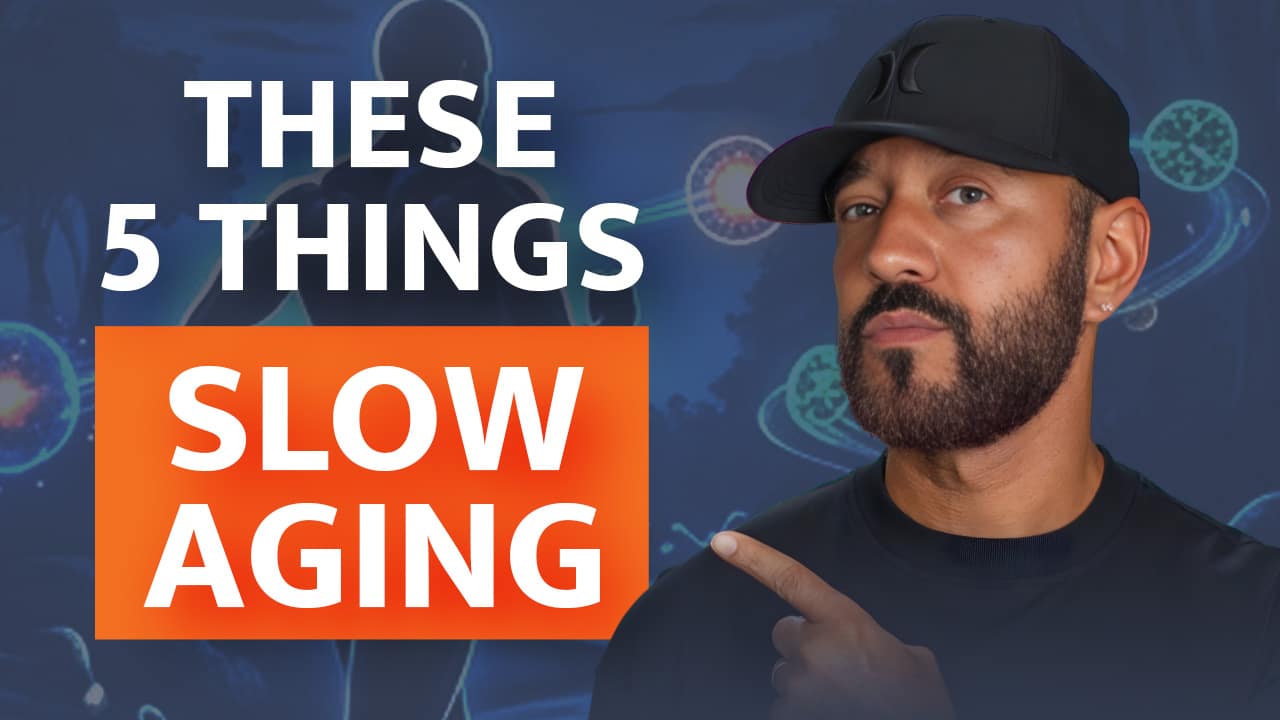
TMHS 999: These 5 Things Are Proven to Slow The Aging Process
Even though aging is a normal part of the human life cycle, our daily habits can either slow down or accelerate the rate at which we age. And when it comes to the aging of our brains, recent data shows that changes that we often associate as a natural part of the aging process are actually modifiable through specific and consistent lifestyle choices. Today, you’re going to learn exactly how to prolong the health of your brain and turn back your biological clock.
On this episode of The Model Health Show, you’re going to hear my interview with accelerated learning expert Jim Kwik on the Kwik Brain Podcast. In this interview, I’m sharing five science-backed ways to slow down brain aging. You’re going to learn how small changes to your sleep, nutrition, and mindset can make a huge impact on the way your brain ages.
Not only are these five tips proven by science, but they’re also accessible, free or low-cost, and easy to implement today for a better brain. These powerful strategies will help you protect your brain, feel your best, and live a longer, more fulfilling life. I hope you enjoy this episode of The Model Health Show!
In this episode you’ll discover:
- The difference between chronological age and biological age. (11:20)
- How vitamin D supplementation can impact telomere length. (13:22)
- What to look for in a vitamin D supplement. (16:45)
- How your sleep quality affects brain aging. (19:01)
- The importance of having a consistent sleep schedule. (20:32)
- How early morning sun exposure can help sync your circadian clocks. (22:36)
- The connection between the gut microbiome and the aging process. (27:22)
- How to support a healthy gut microbiome. (30:23)
- The role fermented foods play in gut health. (35:32)
- How resistance training can reverse aging in skeletal muscle. (37:16)
- The relationship between muscle and insulin resistance. (39:18)
- Why having a youthful mindset can help you age slower. (43:27)
- How to incorporate more play into your life. (50:07)
Items mentioned in this episode include:
- Beekeepersnaturals.com/model – Upgrade your medicine cabinet with powerful, science-backed remedies from the hive. Clean ingredients. Get 25% off during the Memorial Day Sale!
- Boncharge.com/model – BON CHARGE offers science-backed wellness tools like red light therapy devices that can support better sleep, recovery, relaxation, and healthier skin in just 5–10 minutes a day. Use my code MODEL for 15% off storewide at boncharge.com/model.
- Kwik Brain with Jim Kwik – Hear more episodes on brain performance!
- Sleep Smarter – Upgrade your sleep habits with my national bestselling book!
- Seasonal Food Guide – Find seasonal foods in your state!
This episode of The Model Health Show is brought to you by Beekeeper’s Naturals and Bon Charge.
Upgrade your medicine cabinet with powerful, science-backed remedies from the hive. Clean ingredients. Real results. Get early access to the Memorial Day Sale and get an exclusive 25% off your order at beekeepersnaturals.com/model.
BON CHARGE is one of our favorite wellness brands for supporting recovery, sleep, and overall health. From red light therapy panels and face masks to full-body blankets, BON CHARGE makes it easy to incorporate science-backed wellness into your daily routine. Just 5–10 minutes per day can help support better sleep, recovery, relaxation, and healthier-looking skin. Use code MODEL for 15% off storewide at boncharge.com/model.
Transcript:
SHAWN STEVENSON: Welcome to the Model Health Show. This is fitness and nutrition expert Shawn Stevenson, and I'm so grateful for you tuning in with me today. This is a very special episode of The Model Health Show. This is episode 999 of The Model Health Show. This is mind-blowing, to say the least, and it does-- it feels like it was just yesterday was episode one, but here we are at this incredible milestone. And today, I wanted to share something special with you that has been a big part of my life and a big part of The Model Health Show. And I think it would be appropriate to say that we kinda have our Mount Rushmore of guests here on The Model Health Show, those who've been the most frequent and most giving of their time and their resources, and also giving to me and this mission. And one of those people, most frequent guests on The Model Health Show, has been my really good friend Jim Kwik.
Now, Jim is a New York Times bestselling author and an accelerated learning expert. The things that he can do with his brain is bonkers. You know, I've seen this firsthand many times, and he's shared time and again that it's not that he is, quote, "special," it's that he's learned how to actually use his brain. This is something that we're not taught. We're taught what to think, but not how to think, and he's had such an influence in my life. Many years prior to The Model Health Show even being in existence, Jim saw something in me when I was working as a nutritionist and I was teaching some nutrition classes and things like that, and I had joined a couple of, like, these conference calls.
This was back in the day where you get on a conference call, you dial in. And the creators of this particular online event saw something special in me, and Jim kinda tapped me on the shoulder like, "Shawn, would you co-host this with me and share some information for everybody around health and wellness?" Now, again, I felt like I was just grateful to be in the room, and he's just continued to pour into my life over the years, and I appreciate him so much. The existence of The Model Health Show itself is partly due to an interaction with Jim Kwik. Him and I were doing a TED Talk in Las Vegas, of all places, and my wife was pregnant with my youngest son, which was an adventure all on its own.
Being in Las Vegas for the first time at some, "boutique hotel," which really means sketchy, all right, in, in those terms, and being able to get on stage with all these other incredible speakers and thinkers. And Jim introduced me to some people who would plant the seeds Who would enlighten me as to the existence of podcasts, and this is all the way back. This was like 2011, 2012. But The Model Health Show came a little bit later. But it was a catalyst for finding another medium to be able to share my passion, to share my gifts, to share my talents. And it was thanks to, again, it was an introduction from Jim Kwik. And so I can go on and on.
But recently, Jim was here at The Model Health Show studios, and he asked me to do an interview for his show. And when Jim calls, I answer. All right? It's pretty much an automatic yes. He, and he's utilized that. Some people don't utilize that card with me, but he really has. If he's got like a group training, if he's got, you know, his, you know, kinda mastermind group that he wants me to speak to, I show up. And it's these relationships that are so valuable, and what was shared in this interview was so valuable because we were talking about not only five science-backed strategies to slow your aging process, but specifically to slow the aging process of your brain. Now again, the brain is Jim's domain. I did not try to make that rhyme, but I'm a musical kinda guy.
But real talk, you know, this is incredibly valuable, and what you're gonna find is that these strategies are also incredibly simple. And so I wanted to share this with you. It's kind of like a integration of things for this episode 999. This is something that you're gonna hear from me personally and my experience and some of these science-backed insights in the way that only I could do them. And also, I have this interaction with somebody who's on the Mount Rushmore of The Model Health Show and somebody who is partly responsible for the existence of this show altogether in one beautiful powerhouse sandwich of goodness. Now before we get to this powerful interview, this celebration for episode nine hundred and ninety-nine comes right at the exact time of BeeKeepers Naturals' big Memorial Day sale.
You're getting 25% off sitewide for the number one wellness brand online. I'm talking their cough syrup is number one natural cough syrup in the U.S. All right? Now it's available at all these incredible outlets from CVS to Target and whatnot. They've got products all over the place. But you get 25% off right now.
You can stock up when you go to beekeepersnaturals.com/model. That's B-E-E K-E-E-P-E-R-S naturals.com/model. 25% off right now. Oh, I didn't mention, they're giving us early access for the Model Health Show community. So take advantage, all right? Because during this time of year, some stuff tends to sell out, especially some of their best sellers, including their propolis throat spray, their propolis immune spray. The benefits of propolis have been known for centuries. The ancient Greeks, Romans, and Egyptians were aware of the healing properties of propolis and made extensive use of it as medicine. Now today, we have so many well-constructed peer-reviewed studies affirming its benefits. One study was published in the journal Antiviral Chemistry & Chemotherapy, and it revealed that propolis has significant antiviral effects, specifically in reducing viral lung infections.
While another study published in Phytotherapy Research found that topical propolis that was applied three times a day accelerated the healing of cold sores faster than the control group that had no additional treatment. The researchers found that the topical propolis not only reduced the amount of herpes virus present in a person's body, but also protected the body against future cold sore outbreaks. I can go on and on with the science behind propolis and its wide range of benefits. Matter of fact, I'm gonna share one more. A meta-analysis published in Evidence-Based Complementary and Alternative Medicine found that propolis has antiviral, antibacterial, antifungal, and anti-tumor properties.
All right, so why is it so powerful? It contains over 300 active compounds. The majority of these compounds are in the form of antioxidants, specifically polyphenols that are well documented to reduce inflammation and fight disease. So again, this is something for you to stock up on right now. They also have a new propolis throat spray that has a cooling menthol benefit as well, so you get that cooling effect. So this is really great when you actually have something, you know. But the propolis immune spray is something that I use proactively multiple times a week, especially when I'm traveling or about to travel or times of extra stress. It's that preventative, it's that extra immune system support that we can utilize on a consistent basis.
So this is just one of their incredible products. They've also got their honey-based cough syrup as well. Their Superfood Honey is phenomenal. I use it all the time. The bee pollen, it's all third-party tested for all these nefarious things that are in a lot of bee products. They're doing everything right, and you get 25% off right now when you go to beekeepersnaturals.com/model. And without further ado, you already know what this is. We're getting into five Science-backed ways to slow your aging process and specifically slow the aging process of your brain. This is my really good friend, Jim Kwik, interviewing me for his phenomenal top-rated show, Kwik Brain. Enjoy and buckle up because this is gonna be fun.
JIM KWIK: Imagine that your mind could get sharper with every day or even every decade. What if your best memory, your best creativity, your best brain is not behind you, but it's actually in front of you? And so today we're gonna talk about science-based strategies to be able to not only your body to live longer and be more youthful, but also how to have that ageless mind. And I'm so excited. If you're watching this on video, we are at the set of one of my favorite studios, The Model Health Show, which probably gave away who our special guest is. He has been on our show, I think the more, more than anybody else, as on our show in 400 plus episodes. And so many of you know, he is, Shawn Stevenson and has affected millions of people around the world with his number one health podcast to his bestselling books like Eat Smarter, Sleep Smarter, and more. He's a dear friend. Welcome to the show, buddy.
SHAWN STEVENSON: Do you know how much of an honor it is to be the most frequent guest? Yeah. It's incredible. Thank you so much, Jim.
JIM KWIK: Oh my goodness, 'cause you could, we could have you on every single week. You're such a wealth of information. Our team really enjoys your podcast so much. You know, we were just talking with my co-founder, Alexis out there, and we were just talking about the history that we have with you and your family and just the work that you do, so congratulations on everything. You've been on the show talking about everything from diet to exercise to sleep. You know, I thought what would be interesting in a Kwik Brain episode is a lot of people in our community, you know, struggle to have their best brain. They feel like they're getting older and their body is not only kinda giving way, but so is their mind. So, you know, you've done so much research. You read all this research. You go deep. I mean, everything is always, you're always referencing. What's ... How, what's your current perspective on on human longevity? You know, especially when it comes to your body, which obviously your brain is part of your body.
SHAWN STEVENSON: Yeah, absolutely. You know, it's a really exciting time, obviously, because we know very strongly there's a big difference between your chronological age and your biological or phenotypic age. And the average person today, so we've got the data on this, is. And there's a standard deviation of five years older potentially than their chronological age or five years younger. Than their chronological age biologically, right? So we're talking about cellular function of the brain, organs. We have some very comprehensive testing on this. But there are people who are outliers that can be 10 to 20 years older than their chronological age or younger. And most of the time people feel it. They really feel it. They feel the difference. One of those outliers is actually here, and it's Alexis. She is much younger biologically than she is chronic- chronologically. And with this comprehensive testing, it's really cool. And it, we're looking at these different blood markers, of course, various hormones, what's going on with your cardiovascular and metabolic health, what's going on with your organ function.
Your nutrient levels in your body can accelerate your aging process, and we're gonna talk about one of those to kick things off, actually. And it paints a picture. It puts together this comprehensive perspective about where you are. And so what I wanna talk about today and share with everybody, we're gonna cover five of the most science-backed ways to slow down your aging process and slow down the aging of your brain.
JIM KWIK: And this is so this is not- this is taking into account, you know, genetics, so this is, you can't always, you can't control your genetics, but your lifestyle could activate certain factors there also, but it's in your control. I'm ex, I'm excited for these five things.
SHAWN STEVENSON: Yeah. Well, let's dive in. Can we dive in?
JIM KWIK: Let's, yeah, let's go with number one.
SHAWN STEVENSON: All right, number one, and what I'm gonna share today, by the way, most of this is free or very inexpensive. We're talking pennies a day.
JIM KWIK: Okay.
SHAWN STEVENSON: And that's what we're gonna start with number one. And number one, this was the subject of a study that was just published by researchers at Harvard, and was published in The American Journal of Clinical Nutrition. It was a four-year study, all right? And they utilized vitamin D supplementation. And they also used, and the- people don't talk about this, if you haven't heard anything about this study yet regardless, but they also used, like, an omega-3 supplement, right? And they found no difference, by the way, as far as chronological I'm sorry, biological age or phenotypic age, but there was a big difference by taking vitamin D3.
And so what they used in the study was 2,000 IUs a day, maybe about 40 cents a day. And over the course of this four-year study period, the test subjects that were taking the vitamin D3 supplement, they aged so much younger. It was actually equivalent to Reducing their rate of aging by three years.
JIM KWIK: Wow, for 40 cents a day.
SHAWN STEVENSON: For 40 cents a day, reduced their age, their rate of aging by three years compared to people who took a placebo or even the omega-3 supplement. Now, not to say there's not value with omega-3s, but we're specifically talking about our rate of aging, and this has to do with, as we mentioned, organ function, cognitive function what's going on with our mitochondria.
But to tie this in, we've got some new data, and this was actually just published, and we're gonna share this for people that are watching on the video. We'll put the studies up for people to see. This was published last month. This was just published last month. And the researchers found that it is vitamin D, the impact that it has on brain-derived neurotropic factor, neurotrophic factor in the hippocampus.
That's how it's slowing down the rate of aging in the brain. It's affecting that BDNF. All right? And so we know- Which,
JIM KWIK: which is like the fertilizer, the Miracle-Gro for..
SHAWN STEVENSON: It’s one of the nicknames. Right? The Miracle-Gro for your brain, and the hippocampus is- Memory ... most associated with your memory, right? And so those levels are higher when you take vitamin D3 supplementation. And so what are the tips here? What are the walk-aways? It's context, because for me, I like the el natural as much as possible, and we convert..
JIM KWIK: Is that sunlight?
SHAWN STEVENSON: We convert sunlight into vitamin D3. It is a very complex process, by the way. This has to do with your kidney function inefficiency, liver function, the health of your skin, the levels of cholesterol in your body. So many factors go into this, and a lot of things can go wrong, because somebody might say, like, "I spend a lot of time in the sun. I got a nice tan going on like, why are my vitamin D levels low?" 60% of the US population has low levels of vitamin D. It can be up to and over 80% for some demographics, including a- specifically African Americans, and we have basically built-in sunscreen. And so we need more time in the sun than other folks. And with that, even, you know, taking that into consideration, we could have methylation issues.
We could have fewer receptor sites, right? There's so many different things, or we could have issues with our kidneys or our liver doing this conversion. There's many different reasons, but I would encourage people to get a simple vitamin D test done. You can go to a local, you know, CVS, that kind of thing. Order something online. See what your status is. So keep that in mind. Now, here's the action step. Vitamin D3 supplementation in this study, 2,000 IUs a day. About 40 cents a day, but you wanna take it with vitamin K2. It's gonna help with absorption, and it's gonna make sure, will help to support making sure that the D3 is going where it's supposed to go in the body.
Also relates to calcium and its activity in the body, making sure stuff is going where it's supposed to go. So vitamin D3 plus K2. Number two, we want to get some sunlight as well. All right? Making it a priority because this is going to help to slow down your rate of aging, getting adequate sun exposure. Now, some people might think of photo aging, right, of the skin in particular. I'm not..
JIM KWIK: 'Cause they're taught to stay out of the sun because it'll make them age?
SHAWN STEVENSON: Yeah, I'm not talking about slathering yourself up with Crisco and go sit in the sun and, like fry yourself. But we evolved hand-in-hand, skin and, you know, sun rays. We evolved that way. It's the reason we have life on this planet. We need sun exposure. And so one of the arguments that will come up is like, "Well, what about when it's, like, a foot of snow out?" I'm from Missouri. I'm from St. Louis, Missouri. We get extremes of every season, and I'm grateful for that, so I know what those long winters are like.
The cool thing is that your body can build up these reserves, right? So during the times when we can get some sun exposure, get it direct on your skin. But in those times, those winter months, it's a great idea to supplement with vitamin D to be even more persistent about it. But also just even letting sunlight into the room. It's not necessarily a good idea to, like, try to tan through glass, by the way, because of the... That's a whole other... Well, let's not even open that up.
JIM KWIK: Okay.
SHAWN STEVENSON: But let's not even open that window. A little pun in there.
JIM KWIK: Yeah.
SHAWN STEVENSON: But we can let that light into the room, and that helps to entrain the circadian timing system of our bodies, and that is specifically what those researchers were affirming in that study that I shared to kick things off, was that this was having an influence in this circadian timing system with our bodies. And that..
JIM KWIK: Does that affect the sleep?
SHAWN STEVENSON: That leads us to number two. That leads us to number two on this list, and we're just gonna, since you gave me the pivot and the transition here. Listen to this. This was a 15-year study, and this was published just last year. I'm giving you all the new stuff.
JIM KWIK: Yeah, this is really new.
SHAWN STEVENSON: Published just last year in the Journal of Neurology, and the study followed 589 people and found that people who consistently had good sleep quality had brains that were nearly three years younger than those with consistently poor sleep quality. And one of the primary things that they measured was age-associated brain shrinkage. It was protecting the them from losing brain volume when they were getting high-quality sleep. And so please understand that this goes hand-in-hand because what the researchers were indicating, which I'm gonna share one more study in the same vein. Because this is, provides an action step for everybody, 'cause it's not what you think.
It's not what you think. This was published in the journal Sleep Health, and the researchers specifically noted, by the way, this is the name of the study. Day-to-day deviations in sleep parameters and biological aging is the name of the study, and they found explicitly that people who had the biggest differences in their bedtime and wake time from the weekend to weekdays had the highest rate of cellular aging and brain aging. All right?
JIM KWIK: Interesting.
SHAWN STEVENSON: So it's that change in schedule constantly, right, what we call social jet lag, that was accelerating the aging. So one of our big takeaways from today, vitamin D3 supplementation. Also, create and stick to a consistent sleep schedule.
JIM KWIK: Even on the weekends.
SHAWN STEVENSON: All right? Now, I'm not trying to make you into a baby again. All right? So when we're kids, we have to go by the rules or we have a set bedtime, we gotta get up.
As adults, we just kind of throw caution to the wind, and we can get into these habits, especially today with all the distractions we have access to, of, like, it's everybody's working for the weekend. We get to the weekend, and we stay up late, and then we sleep in.
Of course, we can do that stuff from time to time, but it is going to accelerate your aging process. If we're doing this on occasion, it's not gonna make any difference, and it's part of the joy effect and how important that is for keeping us young and youthful, is I'm doing something that I love. You know, there's a party going on. There's an event. I'm at Limitless Live. All right? And we got a, there's an after party.
JIM KWIK: Right.
SHAWN STEVENSON: I'm gonna go and kick it with my friends. We're gonna hang out, have a good time, and that's okay. Maybe the sleep schedule's thrown off for, you know, a day or two, but then I get right back onto my habit. So making it a priority, not just because you're binge-watching the next, like, serial killer thing.
JIM KWIK: Or doom scrolling.
SHAWN STEVENSON: Or doom scrolling, right? But make it an occasional thing, but your consistent thing is to have a consistent sleep schedule regardless of what day it is. All right? So that's tip number one there.
JIM KWIK: And consistency, I mean, that goes for movement, that goes for diet. That goes for, you know, we could all not be perfect sometimes, but overall consistency.
SHAWN STEVENSON: Absolutely.
JIM KWIK: Do you, do some pe- some of your clients or people you work with have an alarm clock, whether, while they have it to wake up, do they have one that could remind them to go to sleep?
SHAWN STEVENSON: Yep, it's on my schedule. It's on my calendar. So I get a little notification when it's, you know, time to, to wind down and get ready for bed, you know? And so that's one tip, con- consistent sleep schedule to just help to support our sleep. That was what was explicitly found. We can have the most fancy pants mattress and do all the things. Consistent sleep schedule is a game changer.
JIM KWIK: So that's another three years.
SHAWN STEVENSON: Give you another three years right there.
JIM KWIK: That's helpful.
SHAWN STEVENSON: But another tip to help improve your sleep ties to number one, which is getting exposure to sunlight in the early part of the day. And again, the researchers affirm that is due to its impact on syncing up our circadian timing system. And if you're wondering what that is, these circadian clocks are... Because I remember being in college and hearing about this, and I just thought it was a soft science. Like, it was just like biological clock, whatever. You're like, "Okay." Our circadian clocks, which exist in trillions and trillions of our cells, are essentially very, they're regulatory genes and proteins that control our other genes and proteins. These are like master controllers of what our body is doing and when. When certain neurotransmitters are getting produced, when they're- getting suppressed, hormones, your digestion, cognitive function, reaction time, muscle function. The list goes on and on. They're controlled by these circadian clocks, and that early morning sun exposure helps to sync up our body's circadian clock. There's nothing else like sunlight. Even on a overcast day, those rays are making their way through, and it you evolved.
Your genes expect that exposure to set that clock. All right? So get some early morning sun exposure if you can, at least letting it into the room, right? Open the blinds. Let it get into the room. And last tip there really quickly, and we've talked about this on previous episodes, people can go back to that, is to create a sleep sanctuary for yourself where sleep is the neural associations are created, and it's just a more peaceful, relaxing place for you to be.
SHAWN STEVENSON: One of the things that determines your diet more than anything else is your sleep quality at night. Have you ever noticed that when you're sleep-deprived and maybe even a little tired, you tend to wanna eat a little bit more, a little bit more snacky? Well, researchers at Stanford University found that insufficient sleep can reduce your levels of satiety hormones, namely leptin, and increase the levels of your hunger hormones, namely ghrelin, and directly increase your body mass index as a result.
So getting to the heart of our diet choices actually resides in laying down our head at night and getting a good night of sleep. Now, what's the number one deterrent today in getting a good night's sleep? Well, it's our technology. A lot of us are up late watching TV, on our phones, on our laptops doing work, doing the laptop lap dance, and not understanding how much it is a detriment to our body's production of melatonin and our sleep quality at night. Numerous studies, including research from scientists at Harvard, have affirmed that blue light specifically is a powerful melatonin suppressant. So having some screen-free time before bed is going to help us to sleep better at night, but that's not always possible. Sometimes we got work to do. Sometimes we just wanna kick it.
We wanna Netflix and chill a little bit, and that's all right. And in those occasions, if we want to optimize our sleep, we can utilize incredible technology when it comes to blue light blocking glasses. The blue light blocking glasses that I use are exclusively from Bon Charge. They're scientifically engineered to block out 100% of melatonin-disrupting blue light and green light for improved sleep and regulated circadian rhythms. So many people don't realize that most blue light blocking glasses are not actually lab tested to be effective, and they simply cannot perform like Bon Charge blue light blocking glasses can. These glasses are FDA registered and proven to be effective. They're made in optics laboratories by trained optical technicians.
And because of this, you can actually get them in prescription lenses if you want as well. They're absolutely incredible. So many stylish frames. When the sun goes down, my Bon Charge glasses come on. And right now, you can get 15% off when you go to boncharge.com/model and use the code model at checkout.
That's boncharge.com/model, B-O-N-C-H-A-R-G-E.com/model. Use the code model for 15% off. Get yourself some of these incredible blue light blocking glasses. This is a fantastic gift to give to your friends and family as well. And again, they've also got prescription lenses available as well. So everybody's invited to the Bon Charge party. Head over there, check 'em out. And now back to the show.
JIM KWIK: I love it.
SHAWN STEVENSON: Yeah.
JIM KWIK: Let's move on to to number three.
SHAWN STEVENSON: All right, number three on this list, and again, we're covering five science-backed ways to slow your rate of aging including your brain aging. Number three, this is another brand new study.
JIM KWIK: Fresh, fresh off the press.
SHAWN STEVENSON: Just published. This was published in the journal Aging and Disease, and it found that targeting the gut microbiome can potentially slow down the aging process, specifically targeting microbial diversity. So the researchers detailed how our microbiome impacts several hallmarks of aging, including our skin aging, vascular aging, immunosenescence, muscle loss, and more, including the impact that it has on our brain.
This microbiome brain connection, gut-brain connection is having a moment right now. I'm so grateful. Many of my colleagues are, like, some of the top gastroenterologists in the world, and they're really championing this message because it's often considered to be the second brain if we're talking about the gut, the enteric nervous system. And our microbes are producing and/or communicating with our own cells to create all these different neurotransmitters that are associated with our cognitive function, in particular our cardiovascular function, muscle function, as I mentioned.
JIM KWIK: Like serotonin?
SHAWN STEVENSON: Serotonin. I... This was in Sleep Smarter, all right? And this is, the first iteration of Sleep Smarter came out over a decade ago, and so I'm grateful this message has gotten out there in a big way. But well over 90% of our body's serotonin, you're gonna find that in your gut. But even deeper than that, and this is still not talked about enough, and again, it's in the book, most of our body's melatonin. Right? When I was in school, pineal gland, all right? That's what I was taught. You can have your pineal gland removed, which I don't recommend, and still have adequate or what would be considered to be normal levels of melatonin in your body because of these enterochromaffin cells and different hormone-related neurotransmit-mitter-related cells in your gut and the interaction that they have with your microbes.
And that's according to some researchers at Caltech. And so what do we need to do here? We need to understand, and here's the big takeaway for everybody. The scientists revealed that there's a specific characteristic of the microbiome that is linked to a longer life and slower rate of aging. In particular, they found that slower aging microbiomes of people had, "balanced composition." All right? And the test subjects were found to have ne.. When looking at centenarians, so these are people 100 years or older, what they dubbed to be, "younger-" Gut or younger microbiome profiles similar to people who are decades younger. So somebody who is 100, their gut microbiome is similar to somebody, more similar to somebody in their 20s and 30s than people in the general elderly population who are, like, in their 70s and 80s.
They had more youthful gut microbiomes. And so here's our action step. How do we create, support, protect a youthful gut microbiome? Diversity is the key. That's what I kick things off with. How do you get more gut diversity? Because they said this gut, this balance. We have this perception, and this is what I was taught in my university again, we've got these "bad bacteria," right? These bacteria that are trying to kill us. And we need to be very vigilant at taking them out, and that's led to this overuse of antibiotics, which now we have these... And a lot of people still don't realize this. We have an epidemic of antibiotic-resistant diseases happening right now. And so what we're doing, of course, we keep coming with stronger and stronger nuclear weapons that we're dropping in the form of these antibiotics to destroy our gut terrain.
And so stop labeling things as good and bad because there are opportunistic microbes that also, some of them can play a, an important role in human health, in our immune system function, in our cognitive function. We don't usually hear stuff like that. Our skin health. There could be dubbed bad bacteria, but when they're in balance, that's the key.
So we wanna have a healthy, dominant ratio of what we consider to be this friendly flora or probiotics, but also there's gonna be a ratio of what we might consider to be "opportunistic." It's about it being in balance. So how do we create and protect this diversity? The number one thing to do, and we know we got multiple studies on this, if you wanna increase your gut microbiome diversity, slow your rate of aging, increase the diversity of foods that you're eating. All right? Because every food, different food is feeding a different microbe. All right? Certain microbes like certain things. They have their preferences. There's even, I was just talking with Dr. Tim Spector, geneticist, really big in this field, and he shared with me that there's this coffee-loving bacteria.
They found this bacteria that just loves coffee. And we got some data affirming that it supports cognitive function. Also, again, just a complementary, helps us slow the rate of aging of the brain, nervous system, beneficial for the gut. The list goes on and on. So am I saying to drink coffee? No, not necessarily. If you like coffee, so be it. Absolutely. But don't just have coffee. Also have some different versions of tea, right? Alexis had some tea when she came in, right? And we have a variety of teas here for our guests. But when you eat a food, you're eating that food's microbiome. Right? When you eat that blueberry, you're eating that blueberry's microbiome.
When you eat that banana, you're eating that banana's microbiome. When you eat those almonds, you're eating that almond's microbiome. You're getting all that data in, right? So you're becoming like the ultimate Napster, right? And that's for people that know, if there's youngsters here, they might not know about Napster and the file sharing, but that was an age. That was a game changer. But you're becoming more diverse in your capacity, the things that you are able to do and to share. And so be proactive at getting in different foods, and here's the hack. Seasonalfoods.org. You can go and look in your local area, see what's in season. All right? We got some great data on the microbiome changes, and this is out of Stanford, that happen.
Just based on the seasons, our microbiome profile changes. We can complement that by eating some more foods that are in season. This doesn't mean you can't eat your favorite food, right? That might be out of season. But be proactive. Add in some things that are in season. And I think, again, we evolved eating what was around us at different times of year. Maybe that's helpful for human health. All right?
JIM KWIK: So I like the word, like, I just, so even imagining you saying this that your gut is kind of like the roots in the soil, you know, absorbing all the different diversity of the nutrients there, microbiome, and then it kind of goes up, and your brain is like the leaves or the harvest, or maybe it's like your vagus nerve there. But it's that's amazing. And I love how everything's connected, where you get the vitamin D, and it helps you to sleep, and the sunlight helps produce vitamin D you know, as, as well, and how the microbiome is also affecting your melatonin levels, which helps you sleep. It's just like all integrated.
SHAWN STEVENSON: That's right, because we're integrated. You know?
JIM KWIK: It's like a whole self.
SHAWN STEVENSON: We're a part of this amazing universe, you know? And just pivoting back a little bit to the circadian timing system, our body is always trying to sync up to the 24-hour solar day. Right? What's going on in the entire galaxy. And humans today, we can create essentially a fake daytime, an artificial daytime, and throw these clocks off, right? And it's great to have this access and opportunity that we have, but we have to realize we're a part of all this. And the more that we, the more that we deny access to these natural rhythms, the worse our health is gonna be.
And so last tip with the diversity, fermented foods, because you're getting a prebiotic vessel. You're getting the probiotic strains, multiple probiotic strains that are gonna help your body to make postbiotics. So you got pre, pro, and postbiotics. All right? With potential access just from eating a fermented food. So I would recommend five to seven servings of fermented foods each week. Not a day.
JIM KWIK: Oh, okay.
SHAWN STEVENSON: Each week .
JIM KWIK: What are your, some of your, what are just some of your favorites? Like sauerkraut is it kimchi? Is it- Kimchi ... is it yogurt? What are your..?
SHAWN STEVENSON: Yogurt, kefir tempeh. There's, I mean, there's so many. Every culture, when I worked at a university for many years, at the university gym training people from all over the world eventually, and this was maybe about 20 years ago, I started asking about, "Do you eat, is do you guys have, like, a fermented food?" Like, if I work with somebody from Iceland, for example, they, like, have fermented shark, and I'm like, "What? Really?" Like, first of all, y'all eating shark?
JIM KWIK: Yeah.
SHAWN STEVENSON: And not just shark, but fermented stank shark. And so, but then I work with somebody from Ethiopia, and they've got, like, a fermented bread or, you know, somebody from India or somebody from Kenya, or the list goes on and on. Every culture eats cultured foods, right? I like that. So it's something that we evolved doing, and I would think, again, that it has some benefit for our health.
JIM KWIK: Very nice.
SHAWN STEVENSON: Yeah. Do you wanna go to number four?
JIM KWIK: Let's go to number four.
SHAWN STEVENSON: All right . Number four on this list, again, we're doing five science-backed ways to slow your rate of aging, including slowing the rate of aging of your brain. Number fi, number four is to build muscle. Now, this was a result of a remarkable study titled Resistance Exercise Reverses Aging in Human Skeletal Muscle, and this was recently published in the journal PLOS One, Public Library of Science One. The researchers recruited 25 healthy elderly people with an average age of about 68 and 26 young adults with an average age of 24 and collected their genetic data.
They also took muscle biopsies. That's what makes this... Getting a biopsy done is not fun, but that's what makes this study so, well, additionally remarkable. So they take, took genetic testing and took muscle biopsies as well. They put the elderly participants onto a structured full body strength training program, so they did strength training exercise for essentially every major body part.
Just twice a week. Split up, like, maybe like a Monday, Thursday, Tuesday, Friday kind of thing. And this study was conducted for 26 weeks, and the researchers, again, had them just do two days a week. At the beginning of the study, they looked at these different markers that were different and related to aging, and they found that there were hundreds that were different from the old people, the older people to the young people, their expression. But after the 26-week study, here's what they found of the 596 genes they looked at, 179 genes associated with age and exercise showed remarkable reversal.
JIM KWIK: Whoa.
SHAWN STEVENSON: ... in their expression in the elderly Individuals. This means the resistance training not only slowed down their aging process, it reversed it at a molecular level, at a cellular level. That is so powerful. Muscle is the organ, this is our friend Dr. Gabrielle Lyon. It's the organ of longevity. And why is this? Why do we see this, these results in this study? Just to give people really quick PowerPoints on this. Number one, muscle is protective over what is arguably the most rampant accelerated aging disease today, insulin resistance.
It's protective. Muscle is your body's primary source of glucose disposal. All right? When you got that muscle on you, your body just is able to clear that glucose from your bloodstream and protect you far better. Number two, muscle itself is a reservoir for anti-aging, what we would consider to be anti-aging hormones. All right? So it becomes like this is what we see with individuals, you know, two elderly test subjects having a similar injury, and the one who has more muscle in their frame making a full recovery, recovering faster, especially in advanced age, because they have that reservoir.
All right? And so additionally, muscle, this is Captain Obvious, the functionality piece, right? Life is movement. Being able to move and to have... One of the things that we know today, it's not just the loss of strength with advanced age, it's the loss of power, right? And today we know that regard- it doesn't matter if you're 90, 100 years old, you can still build muscle. You can still build muscle, and that's a fact. And so but not just building muscle with in strength, but being able to do things that keep power, to b- the ability to generate power. So functionality. You can maintain your functionality and increase that lifespan but also the health span. Lastly, this is, this subject is having a moment in the sun.
I'm sure Gabrielle is gonna talk about this at the event. Myokines. Myokines, these powerful signaling molecules that are released when we contract our muscles, especially under force, under load. These myokines are now affirmed to be incredibly beneficial for our cognitive function. They help to protect our brain from, again, accelerated aging. Incredibly powerful for our immune system in particular. There's, this is probably the greatest database of science that we have as far as myokines and contracting our muscles with helping people who are, for example, undergoing treatment for cancer, being able to recover if they have more muscle. All right?
So it's incredibly impactful for our immune system. And one of the things related to accelerated aging is something called immunosenescence. So it's just this degradation over time of our immune system being able to protect us from stuff, right? This is why elderly people are often considered to be more susceptible to several different conditions, right? So it's keeping our immune system, the guys in the van, all right, the guys in the van who are running that surveillance, it's keeping them on top of their job, keeping them healthy, keeping them well-fueled. They're not in the van eating Doritos. They're in the van like having acai or something, okay? So that is number four on our list, quick tips, strength train.
All right? Make it a priority. In this study, it was twice a week. That's that minimum effective dose, twice a week. Work your major muscle groups two times per week. If you don't like going to the gym, that's okay. You don't have to. If you've got a body, you've got a gym, and you've got the ability to do strength training. We can work these major muscle groups of our legs, you know, the quads, hamstrings, glutes. We can do bodyweight squats if we're not, if we're just getting started. We could advance to holding some dumbbells or putting on a weighted vest. Like there's so many different ways to add resistance as you get stronger, right?
So find something that you enjoy doing. Maybe it's taking a class, right? Maybe it's having a personal trainer. Maybe it's doing the strength training with a friend. Ch- don't just say that you don't like a thing and don't do anything about it and take advantage of this gift of strength training and building muscle. Find something that works. Tinker, experiment. Find something that works for you that you enjoy.
JIM KWIK: Powerful body, powerful brain.
SHAWN STEVENSON: There you have it.
JIM KWIK: I love it. What about number f- I am sure people are just like, "Whoa, what's gonna be number five?"
SHAWN STEVENSON: Number five, and this is impactful on all the things that we've covered. Number five is having a youthful mindset. It's having a youthful mindset. We got some remarkable data on this now. And actually to say now is a understatement because I was first introduced by this first introduced to this by somebody who was sitting right there in that chair, Dr. Ellen Langer.
She's the first woman to receive tenure at the Harvard Psychology Department. She's a Harvard professor in psychology. She's been running experiments on how our thoughts and beliefs affect our biology for over 40 years. And the first example of what I'm gonna share as far as slowing or even potentially reversing the aging process, she conducted a study in 1979, all right?
She conducted this study before I was born, all right? And what she did was she took nine elderly men, elderly test subjects who Even then, especially back then, to be around 80 years old, like that was already remarkable, all right? And so what she did was take these test subjects and she retrofitted their environment to be an environment that was more like when they were decades younger. Right? So the same music, the same magazines, posters on the wall, furniture, everything that she could think of to retrofit and create an environment that was correlated with their younger self. And have them live in this environment for a week.
JIM KWIK: Yeah.
SHAWN STEVENSON: Here's what happened after just one week. Their vision improved, their hearing improved, without a medical intervention, without any harsh treatments, medications, anything. Their... Y- you don't hear stuff like that, that your hearing- ... improves in a week. Their dexterity improved. Their flexibility improved. Their IQ improved. Their overall cognitive function improved. They looked visibly younger. They took photos of them before and after and had other test participants, study participants to look at photos and guess how old people were before and after. Right. And they were visibly years younger, some over a decade younger, in their appearance from being in an environment.
JIM KWIK: Wow.
SHAWN STEVENSON: That was correlated and made them think younger thoughts. Hearing that music from a more youthful version of themselves and talking about things that were more associated with their youth led to all these biological changes, and the question is how? Come on now. Like-
JIM KWIK: Right.
SHAWN STEVENSON: How is that even possible? It's because every thought that you have creates correlating chemistry in your body instantaneously. It changes everything about you with every thought, and you have the ability to think thoughts that are affirmative, that are strengthening, that are empowering, and you also have the ability to think thoughts that are de- that are degrading, that are negative, that are disempowering.
JIM KWIK: Yeah.
SHAWN STEVENSON: And here's the rub. It's not about being perfect. We all have negative thoughts, all right? Our friend Daniel Amen calls them ANTs, all right? These automatic negative thoughts. We just don't want them to be automatic. We don't wanna live habitually thinking negative thoughts because that is changing your biochemistry.
If your thought, all right, thinking a thought of something that really stresses you out or creates fear in you, you feel that in your body because you're changing your hormones, you're changing your neurotransmitters, you're changing what every one of the trillions of cells in your body is doing based on that one thought. You are a community of cells and it's not just some isolated thing like I feel, no, it's everywhere in your body, including your brain. And so..
JIM KWIK: And your immune system, psychoneuroimmunology, psycho mind, neuro brain, immunology. When you're in those ne- negative thoughts and fear, it, you're more susceptible to colds, to flus, to viruses because your immune system's compromised. That is outstanding. The power of the mind. Yeah. I mean, it takes it to a whole, whole new level. And it just makes me think we had Dr. Langer on our show, and the study's called Counter-Clockwise Study, which is a beautiful name. It ma, it makes you think, I spend a lot of time in senior centers and nursing homes just to help them polish off their memories and and I learn so much also.
You know, so much wisdom there. And you, makes you think, "Why aren't every s- like senior center, nursing home, you know, decorated like it was the '80s?" You know, with that music and everything. But what a remarkable, how your external environment and your mindset affects your mindset and vice versa. Very powerful.
SHAWN STEVENSON: So what we wanna do here with this, and as you said, I'm so grateful because, again how are we connected with somebody like her? Isn't that a miracle? You know? Like, she is considered to be the mother of mindfulness and mindfulness research.
And just now, after she's been doing this for over 40 years, is her research really being highlighted and lifted up. This is primary top-down stuff. This should be the first thing that we're doing, instead of jumping to these mechanical..
JIM KWIK: Yeah.
SHAWN STEVENSON: Changes that we try to make. And so let's give some tips here for utilizing this. And number one is to utilize the power of the mind proactively. Visualize. Visualize. Wow, the science on visualization is crazy, which that's a whole other episode. But when you think something, when you visualize it, when you can even visualize yourself, like squeezing a lemon into your mouth. And just like the feeling of that, you can start to make your mouth water a little bit. Like, your brain, knowing that, and I don't like to say the brain doesn't know the difference. All right?
JIM KWIK: Yeah.
SHAWN STEVENSON: Our brains are really smart, but our brains experience things that we think about because when we're seeing things externally in the world, we're just picking up data and processing it the way that we see it, that our perspective chooses to see it. We can create that within ourselves with our eyes closed as well, and have a a very visceral experience. So visualize yourself doing the things that you wanna do, those youth, youthful things. Visualize your body getting younger and feeling good and being free from the things that are ailing you. Like, spend time in that place. Your chemistry is changing, and if your mind can go there, your body can go there as well.
So visualize. Continue to see yourself doing playful things, and that's the other tip here, is to make it a mandate to play. Play is one of the most anti-aging things that you can do. In my culture, once you reach a cert- certain age, you gotta stop playing. All right? You play too much, stop playing with me. You, s- you know,
JIM KWIK: Yeah as kids, you're like, you wanna go out and play. Later, and a little bit older, you say, "Let's hang out." Right, right. The vernacular changes.
SHAWN STEVENSON: Yeah. "Can Jim come out and play?"
JIM KWIK: Right.
SHAWN STEVENSON: Like, bro, just you wanna, whatever, you know, you wanna come over? You know, so, you know, keeping that in context, we have these social conditionings to stop playing. And play is one of the things we identify most with youth. And so creating an atmosphere and a culture of play within your household is super valuable. And so I know my family would affirm that's what we have. And start to see the world through the lens of play. Look for opportunities to do things. You brought that Rope Flow Rope..
JIM KWIK: Yeah..
SHAWN STEVENSON: Here in the studio. It didn't take me half a second to start playing around with that thing.
JIM KWIK: You had a big smile on your face.
SHAWN STEVENSON: You know? Right. Yeah. And it's just like I see the world through a lens of play most of the time, right? If I'm out for a walk, it's not gonna be unusual to see me, like, walking down the side of the curb and balancing on the curb, you know, like, as I'm walking, just or jumping over something or, you know, like, finding creative ways. Or even if my family's walking with me like, "Hey, let's take this path." Yeah. They're like, they're usually like, "No, Dad," like, "We don't know where that's going." I was like, "That's all right. We'll find out." And so just having, seeing the world through the lens of play. And last tip here is, actually this complements that, and you know this quote: We don't stop playing because we get old. We get old because we stop playing.
JIM KWIK: Yeah.
SHAWN STEVENSON: And so that quote, it was highlighted in the movie Tag recently. I don't know if, did you see this movie with Jeremy Renner? And these friends have been carrying on this game of tag for decades. All right? And what a way to keep that play alive, right?
Do not stop playing. If you have, if you've found that you're out of sync with play, let's start to add that back in proactively. Give yourself permission to have fun and to play. This can look like so many different things. This could be maybe you loved to video game when you were younger. Video games have advanced a lot. It's probably gonna blow your mind right out of your skull. But give yourself permission to play a little bit of some video games. All right? Go to an arcade. Hang around people who are youthful. My mother-in-law goes with me Wherever we go, if we're doing something family together, whether it's miniature golf.
Last time we went miniature golfing, she's the only one got a hole in one, by the way. She's, like, weird. She meditates a lot, but she's, like, weirdly good at stuff. We went to a arcade. We had dinner together. We were on family vacation, and after dinner, there was this arcade, and I was just like, "It could be good." We're walking back to the car, and I just grabbed- I was like, "Let's go in here." It was like a pay all you can play. And so she, she's there. She's, I know she's not used to all the dinging and the clinging and all that stuff, but she was playing air hockey. We had the arcade punching game with that, with the punching bag.
She- I've got video of her punching that bag, right? Whatever we're doing, she does as well. She has fun, and she helps to cultivate and feel that sense of youthfulness, and she gives that back to us as well, and that wisdom, and gives us an example of what's possible. All right, so.
JIM KWIK: Yeah. It's interesting in the episode that we had for your show, we were talking about how you spoke at one of our annual events, and Quincy Jones was there, and he loved to play, you know, and travel and experience new things. He said, you have to go to know." Right? And he would learn these languages words of 23 languages through the play of words and music, and it accelerated his learning and culture. At that same event we had, that you were speaking at we had Dr. Amen, and we set up all these ping pong tables, and we brought in this ping pong table tennis champion.
I think her account was Ping Pong Girl, and the three of us were just challenging people throughout and it's ... And as you know, it's great brain exercise, racket sports, add years to your life and and wonderful just like dance and other ways of play. But it's wonderful that you do that with your kids, that you do that with the community and when you're playing. I mean, who are the fastest learners on the planet? You know, children.
SHAWN STEVENSON: Absolutely.
JIM KWIK: And a lot of times we learn things really well, and we don't even realize we're learning it. Yeah. We're just having fun.
SHAWN STEVENSON: Exactly.
JIM KWIK: Right? Exactly. And that's absolutely amazing.
SHAWN STEVENSON: Thank you so much for tuning into this episode today. I hope that you got a lot of value out of this. If you did, you already know what to do. Share this out with somebody that you care about, and please share your voice. If you enjoyed this episode and you've been rocking with me for a while, this is episode 999. Share your voice. If you're watching or listening on Spotify, you could share right in the comment section below this episode.
You could pop over to the YouTube channel, leave a comment there as well. And if you're on Apple, this would be a wonderful time to leave a review for The Model Health Show. If you've been rocking with me for a while, you'd be like, "I've been meaning to leave a review." Go ahead, do that for your boy. All right? I appreciate it so very much. And listen, we're at 999 right now. Episode 1,000 is coming up. We got a special celebration in store for you with some special guests and all kinds of goodies, so definitely keep an eye out for that, and just know that this is the beginning. All right? Episode 1,000 is just the starting point for something even greater, and I appreciate you so much for being on this journey with me. Take care, have an amazing day, and I'll talk with you soon.
Other episodes you might be interested:

Maximize Your Energy
Get the Free Checklist: “5 Keys That Could Radically Improve Your Energy Levels and Quality of Life”
HEALTHY MEALS EVERYONE WILL LOVE
The Greatest Gift You Can Give Your Family is Health
When you gather your family around the table to share nutritious food, you’re not only spending quality time with them - you’re setting them up for success in all areas of their lives.
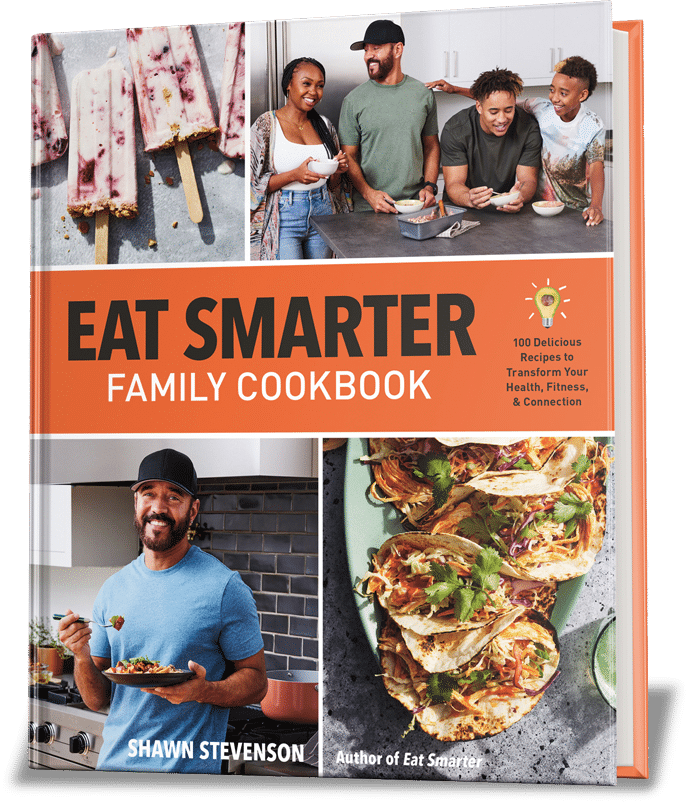
The Eat Smarter Family Cookbook is filled with 100 delicious recipes, plus the latest science to support the mental, physical and social health of your loved ones.


Share Your Voice
0 comments. Be the first to leave a comment.