
Subscribe to The Model Health Show:


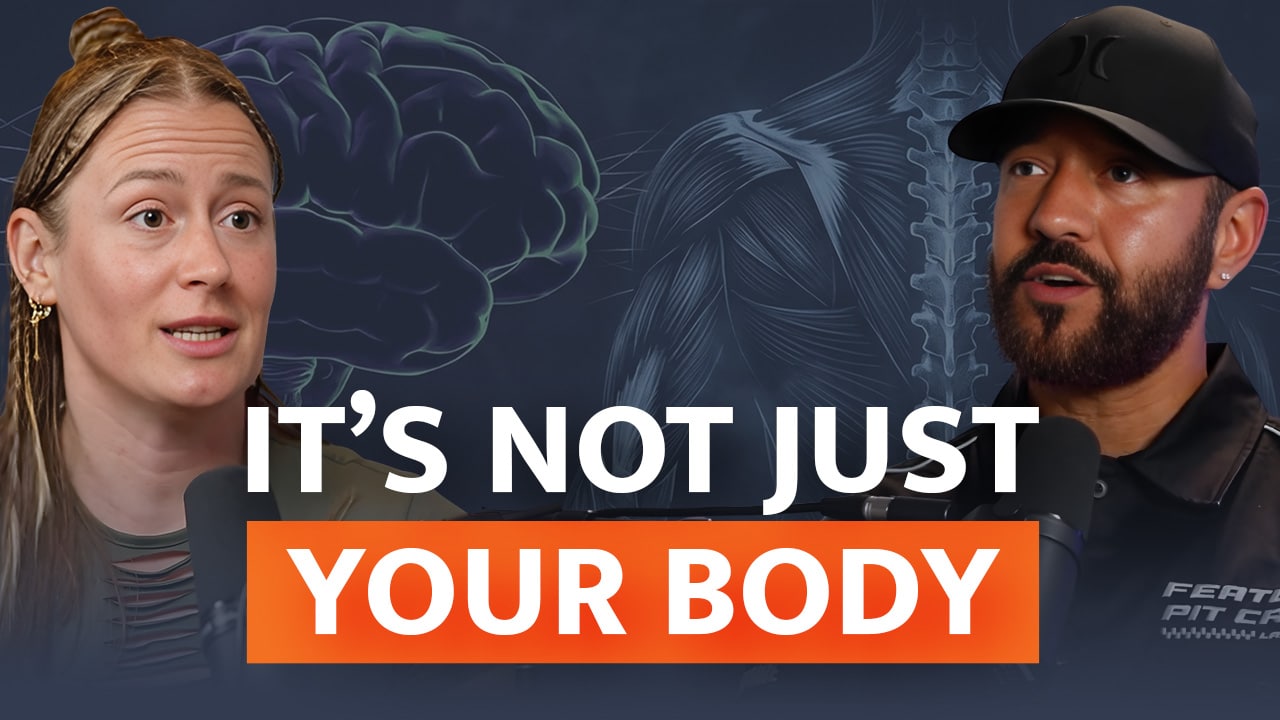
TMHS 992: This Mindset Shift Unlocks Hidden Athletic Ability | Liz Gleadle
Whether your goal is to learn a new skill or sport, change careers, or improve your relationships, it’s going to require that you get outside of your comfort zone. Today, you’re going to learn how to start small with pushing outside of your comfort zone to accomplish your goals and reach your potential.
Today’s guest, Liz Gleadle, is a three-time Olympian and the Canadian record holder in the javelin. Today, she works as a Movement and Performance Consultant, teaching her clients the importance of body awareness, building confidence, and how to express their body’s full potential. On this episode of The Model Health Show, Liz is sharing the lessons she’s learned as an athlete, the importance of getting out of your comfort zone, and the critical role of play for overall well-being.
You’re going to hear about how to express your physical capacity and tap into more optimal movement patterns. Liz is also sharing more about her gratitude practice, the importance of finding joy in both training and life, and so much more. I hope you enjoy this episode of The Model Health Show!
In this episode you’ll discover:
- The importance of prioritizing pleasure in your training. (3:08)
- How Liz got started as a javelin athlete. (5:01)
- What it means to move efficiently. (10:41)
- Why finding joy in your life can improve your performance. (17:44)
- What is missing from traditional physical education. (24:10)
- How your emotions can affect your movement patterns. (26:34)
- The science on how exercise can boost academic achievement in children. (29:19)
- What rope flow is and how Liz uses it in her training. (30:39)
- The connection between gratitude and athleticism. (49:11)
- How to start getting outside of your comfort zone. (56:05)
Items mentioned in this episode include:
- Organifi.com/Model - Use the coupon code MODEL for 20% off + free shipping!
- DrinkLMNT.com/model – Get a FREE sample pack of electrolytes with any order!
This episode of The Model Health Show is brought to you by Organifi and LMNT.
Organifi makes nutrition easy and delicious for everyone. Take 20% off your order with the code MODEL at organifi.com/model.
Head to DrinkLMNT.com/model to claim a FREE sample pack of electrolytes with any purchase.
Transcript:
SHAWN STEVENSON: Do you truly feel like you're tapping into your potential and expressing your body's physical capacity? Well, on this episode, we're gonna be talking about how to access more of your greatness. We're gonna be looking at the real things, the primary things that hold us back from reaching our performance potential. So much of our success in life, no matter the domain, is about leaning into our comfort zone. But today you're gonna understand why we hesitate to do that so often. And what are the physical aspects of being able to tap into that ability to lean into our comfort zone to get better and better, because that's where growth really is.
And so we're talking about accessing more of our physical potential, gaining more physical literacy, but also just being a badass overall. And we've got the most incredible guest today to help us to achieve this. Liz Gleadle is a three-time Olympian and the Canadian record holder in the Javelin. For 20 years, she dedicated herself to a deceptively simple quest, throwing a stick as far as humanly possible, because the javelin is one of track and field's most explosive and technically demanding events.
Her career became a masterclass. And what makes a body perform? What holds it back? Drawing on her degree in kinesiology in two decades of elite competition, Liz now serves as a movement and performance consultant. She teaches her clients the art of paying attention through movement, cheat codes, daily wins and emotional training, harnessing emotions to learn faster learn, and by understanding the metacognition of movement, Liz empowers athletes and everyday people to move beyond standard training and express their body's true physical capacity. Let's dive into this conversation with the one and only Liz Gleadle. Liz, thank you so much for coming to hang out with us today.
LIZ GLEADLE: Thanks for having me.
SHAWN STEVENSON: You've accomplished a lot. Alright? And just being able to express your yourself and your potential at such a high level for so long, you made some changes in how you approach things.
And you know, for me, even talking to you before we got started, you are really pioneering a new way of think. An integrative approach to training so we can really reach our full potential when it comes to sport and that kind of thing, but also just life in general. So what do you think people need to know or they might be missing out on when it comes to their training, when it comes to their sports performance?
LIZ GLEADLE: Yeah, so, I threw javelin and Javelin, I love to say, is about one movement to perfection. And so obviously it draws a perfectionist and it draws someone who loves to tinker. And I was always being my own n equals one study. And I think the biggest thing that I've learned in the last several years, just really taking a step away from traditional training and what I was exposed to. You know, just like lift, do this med ball, hit these numbers, do these things dah. Do these things in the sequence, which, you know, it's great to have that security. It really took me away from playing and it really took me away from enjoying my body and prioritizing does this feel good in my body?
And this is something that we often say oh, but you need to work hard. Or, you know, no pain, no gain, these kinds of things. And to a certain degree, sure, but the biggest thing to understand is that there is diminishing return on investment on everything. And when I started to prioritize pleasure and realizing that pleasure often indicates biomechanical efficiency, beauty in movement indicates biomechanical efficiency. And I started to play with those things. I stopped having back pain. I started figuring out how to move and do things I never thought were possible. I learned how to do a back flip when I was 35.
SHAWN STEVENSON: Holy moly.
LIZ GLEADLE: And this was from a girl who was terrified to jump and had the worst vertical and all of these things, prioritizing, pleasure, prioritizing play, started to change my learning speed. And so all these things that I thought I couldn't do before, even as like an Olympic athlete, people would make fun of me if they say, you know, Liz is really good at javelin, but man, she's not athletic, like she's not coordinated. And that has completely changed for me over the last three, four years. So it's never too late.
It's something that I wish I'd learned as a kid, and it's something I really enjoy teaching adults now.
SHAWN STEVENSON: Yeah, that's part of the reason why I was so excited to talk to you is just all the things that you unlocked within your own biology, within your own mindset as well. And we'll talk more about this and dig into these different components. But the fact that you throw a javelin is wild to begin with. All right. So what made you interested in and decide to dedicate your life to throwing the javelin?
LIZ GLEADLE: It was kind of a happy accident. I remember being like in grade five and people were like, what do you wanna do when you grow up? Do you wanna be a lawyer? Do you wanna be a doctor? Do you wanna be an Olympic athlete? I remember thinking, sounds like a lot of hard work. I don't know if that's my thing, but I was a pitcher. I played softball, I played basketball, I played soccer, played a bunch of different sports. And I love to say I was a B+ athlete at everything, except for pitching.
Because again, pitching is about control and it's about, again, one movement to perfection. You don't have to work with anybody. You don't really have to work against someone else. It's about placement. And I'd pitch with my dad all winter, so we'd go to indoor pitching practices multiple days a week. And when you pitch underhand, you learn how to use your hips. So no matter what gravity is affecting you. And when you are connected to the earth, like the earth is a magnet drawing us towards it. When you work the ground, that's how you pull energy back into your body and project an object off your body. And so when you throw overhand, a lot of men will often overuse their upper body and they're not actually pulling energy out of the ground.
Women underhand pitching, you have to pull energy outta the ground. So when I actually went and I threw overhand. I still used pitchers mechanics, and so I had a wicked overhand throw. So I was either pitching or I was in the outfield. And when I picked up a javelin in grade eight gym class, I looked at it and I thought, this is a stick.
It is not a ball. You cannot twist it. If you twist it, you will hit yourself in the back of the head. Like I remember thinking that when I was 12 and I threw it and I was the only person in the class who didn't hit themselves in the back of the head or twist the javelin. And my gen teacher said, you should come out for the track team, which was basically show up in practice. And very quickly I, when I was 12, I won Vancouver championships, so grades eight through 12 all competed together and I won. And then when I was in the 10th grade, I went to British Columbia Provincial Championships, which again, all grades competed together at that point. And I came third and someone said, oh, you should go to provincial championships for your age group for the club system.
And I didn't know that was a thing, but I went and I won and someone else came up to me and they said, congratulations, you've made the BC team, you get to go to nationals. And I said, we have nationals. I had no idea. I didn't really pay attention. And a couple weeks later I won national championships and I was like, I should probably start training for this.
SHAWN STEVENSON: Wow.
LIZ GLEADLE: And then the next year I had the Canadian record and I was competing in Morocco at World Youth Championships. And I was like, okay, I guess this is what I'm doing now. I'm obviously pretty good at this.
SHAWN STEVENSON: So that is incredible. You know, again, it seems like a happy accident, but life was kind of qualifying you.
LIZ GLEADLE: Yeah.
SHAWN STEVENSON: For that moment.
LIZ GLEADLE: Only child focused.
SHAWN STEVENSON: Right.
LIZ GLEADLE: Yeah.
SHAWN STEVENSON: And even your temperament at the time and just that level of like focus and precision and all these other things, these mental characteristics that you had developed or, you know, there's nature and nurture there too.
LIZ GLEADLE: A little bit of both.
SHAWN STEVENSON: But you know, this is happening actually right now with kids at my son's school in middle school. You know, one of my his coach's daughter goes to the school and they're, you know. Gym class or whatever, that's you should come on for the track team. You know, you should run 800, whatever. Just like throwing kids into this stuff and sometimes you can land on something that actually helps to direct your life. Now with Javelin, this is really unique because this is something a lot, most people never touch a javelin. You know, let alone, I mean, this is, maybe if this was like, you know, a few centuries ago we'd be throwing spears or whatever, but this is largely considered the most violent sport physically. Why is that?
LIZ GLEADLE: Well, it's very explosive. It's a fraction of a second explosive, and you're producing an enormous amount of like wattage and power in a split second. So you have 20 to 25 meters of runway and you run, you take some steps sideways, and then you take the step called a penultimate where you can set yourself up in the air to basically burst through the ground and produce all this power from your right leg into your left to push into your left leg, to have that come back up your body, up your spine, transfer cleanly into your arm and throw through a tiny little point. And if you miss, it hurts.
So javelin has the second highest injury rate in track and field next to triple, but the highest variety of injuries. Because if you don't transfer that power cleanly, it's going to leak somewhere. And when you put that left foot down, apparently you put seven to eight times your body weight through your left foot.
So I put over a thousand pounds into my left foot when I throw. And again, it's it's so fast and if you miss it really hurts. But if you do it perfectly, it feels like lightning in your veins. I am. I joke, I'm like, the best sensations I've ever had felt in my life are orgasms and throwing a personal best. They're really like, it feels that good because it's so powerful. There's so much energy going through your body that it's like lightning.
SHAWN STEVENSON: Wow.
LIZ GLEADLE: Yeah.
SHAWN STEVENSON: They're that close.
LIZ GLEADLE: They're that close.
SHAWN STEVENSON: You know what, you just said something really profound. You said leaking energy. Talk about that a little bit more.
LIZ GLEADLE: Yeah. So I, this is what I really love about dance. Dance is often about moving energy. And I mean kinetic energy. I don't mean you know, woo stuff. I mean like literally like where's the momentum? Where's gravity taking you? And a lot of the time we're not paying attention to where energy is moving through our body. So in javelin, if you don't line up your left leg with your spine, it's gonna blow out your back. But if you line it up in that perfect timing, it continues up your spine instead of going out your hip. And if your arm's at the right height, the arm receives the energy from the body and then it gets to sling through.
So what I loved, for example, about when I first started dancing, I was learning how to whine. 'cause I went to the Caribbean and I realized that when I did hip circles, it was. Janky. And I'd like, I like I would miss the point. And then I remember someone told me, oh, you have to put an accent on it. I was like, what's an accent? They're like, well, you hit the same spot on the circle, on the beat every single time. And then I stopped leaking energy because it started to have this rhythm and this consistency that I could hit. And then the same thing applied to rope flow. When you throw a rope around and you're just doing these very simple patterns, you can feel when the rope's janky, when it doesn't feel smooth, when you lose the tension.
And it's just an indicator, it's just an external indicator showing you if you have clean movement patterns or not. So all of this just indicates where am I leaking power? Where am I being inefficient? And it takes us away from this mindset of, my workout was efficient because I feel exhausted. My workout was efficient because I was in pain.
Or I was like, I pushed through intensity. And while those things are obviously like you need to push the limits, if you're an athlete, if you are an inefficient mover or you are leaking power. You are going to hurt yourself and you're not being an efficient athlete. So when you go back to this thing of am I moving cleanly? Am I moving efficiently? Am I leaking power anywhere? If you're asking yourselves those questions, when you're moving, instead of being distracted by having to focus so hard, 'cause the weight is so heavy, the intensity is so high. When you remove a bit of that intensity and you put it into precision, it really allows you to clean up these movements and movement becomes pleasurable, becomes more effective. And once you have that precision and then you add more power, now you're really tapping into the next level.
SHAWN STEVENSON: Oh my gosh, this is like unlock, I've got aha moments going right now.
LIZ GLEADLE: Yeah.
SHAWN STEVENSON: You know, this concept we talk about in relationship to you know, athletics, but just physical movement in general. Physical literacy is compensation. Right? There's this idea around it, but what it really is leaking energy. And compensating, trying to pick up where something might've left off in a sense. And we see this today now, and thank goodness we, you know, we've got a lot of a huge data set to firm this, but even the shoes that you're wearing right now, by the way, which are minimalist shoes with a wide toe box.
LIZ GLEADLE: Yeah.
SHAWN STEVENSON: If people are leaking energy when it comes to their feet, right. Then they can experience ankle problems or knee problems or back problems up the chain this kinetic chain. And this compensation that we see is just your body trying to organize itself, but you're putting yourself in position where you're leaking energy.
So what we're looking for is not necessarily like I'm beating myself into submission to have this perfect synchronicity. It's getting your body organized and harmonized in a way so that it becomes more natural. And so I want to ask you specifically because. You shared the story with me. And I'd love for you to share it about, again, I think this was your third Olympics or maybe your second, but you did everything right?
LIZ GLEADLE: Yeah.
SHAWN STEVENSON: You did everything right to the t.
LIZ GLEADLE: Yeah.
SHAWN STEVENSON: But you didn't get the outcome that you truly desired and felt that you deserved and you trained, changed the way that you were doing things. And eventually that led to two training differently, which you mentioned workflow, which we'll get back to. But can you share that story a little bit?
LIZ GLEADLE: Yeah. So, I went to university and I ended up getting a kinesiology degree. 'Cause I didn't really know what I wanted to do, but I thought, well, this kind of goes with sports. Makes sense. And when I went to make my first Olympics in 2012, I was like, this is my morning routine. This is how I eat, this is how I do things. I trained twice a day five days a week. I had, I think I probably trained 20 hours a week. It was very intense. I did Olympic lifting doubles Monday, Wednesday, Friday, which is basically unheard of.
And I was exhausted. I was always in pain, but I made it, made the Olympics, it was amazing. And for the next decade, basically, I spent all of my time outside of training, listening to podcasts and reading books about performance. So I obsessively got into nutrition and yoga and meditation and visualization and I have about 20 notebooks from all the years of everything that I've accumulated.
And I was one of those people who was just data. And it got me really far and leading up to the Tokyo 2020 Olympics, I just, I had it all dialed in. Like I had my meditation routine, my visualization routine, my body fat was, you know, like I could see abs in my veins and you know, like everything was there.
The training program is perfect. And then in the stadium outside of the stadium, actually, I threw a medal winning distance on my warmup. And then in my first throw, I was so focused on my hand that I forgot about the rest of my body. And I tripped on the runway and it was fine, but I just, I messed up my runway. I was like, fine, shake it off. Second throw, I mis take someone else's marker for my own because they're both green. And I turned too soon and it changes my runway and I throw 58, but it's not far enough to qualify. And then on the third throw, it was 25 minutes after my second and I was cooled down and I was like, five years and COVID for this.
You've gotta be kidding me. And so I was gonna retire and I thought, you know what? I never let myself do anything fun. I'm always so serious. I'm like, I'm gonna have a year of fun. I'm gonna party, I'm gonna travel. I'm gonna drink the beer. I'm gluten intolerant. I like, I'm gonna eat the food. I'm gonna stay out too late. And I have enough clout that I can get into these meats. I'm gonna have so much fun. I ended up doing 23 cities at 11 countries over the course of oh God, eight or nine months. And one of my first stops outside of, I was training at home for a bit. My rules were I had to be warm, having fun and with people I liked, and two outta three must be met at all times.
And I did not follow a training program. I just did whatever my training partners were doing. And I kind of just, I was like, this is kind of what I feel like today. And I think it was in May. So very beginning of the season, I hurt my foot. I just I couldn't run forwards. I couldn't run. I'm a track and field athlete and I can't do sprinting, which is really important for like nervous system stimulation. So I do a half runway all season and I ended up being okay. And I remember I get to Finland and Finland, their national sport as javelin. It was a bucket list item I wanted to go. And I woke up the morning of the meat and it's 13 degrees Celsius. It's pouring rain. I am sick. There's green snot coming out of my nose.
My foot hurts and I've had four hours sleep and I'm jet lagged. And I'm like, you know what? I'm in Finland. I've always wanted to be in Finland and it's raining and all the girls are complaining about the rain. But I'm from Vancouver and like I know how to throw in the rain. I didn't have indoor training and I'm just laughing 'cause I was like, ha, I know how to do this and no one else does.
I win the meet by eight meters and I throw the exact same distance to the centimeter as the year before when I was strangling everything. And I thought, I understand that doing all the right things definitely gives you a boost, but being happy and enjoying your life and feeling like you're with people you love and like you have a sense of adventure that counts for a lot more than people realize. Because I wasn't doing any of the right things. I thought, okay, there's really something here. There's really something here to your emotional state and the way that you move and the way your body creates power. And we can dive more into this, but one of the things I talk about is that happy people walk differently than sad people.
Happy people have a bounce in their step. Sad people drag their feet. Those are technical changes. To the same movement, you're producing different power. Why wouldn't that apply to a javelin? Why wouldn't that apply to every single other thing? So you don't always need to make these nitpicky little tweaks to what you're doing. You just need to say, run like you're really happy or you know, run like you're angry. Or like different emotions will produce different outcomes. What's the cocktail of emotions that you wanna produce? Because that's what if we played with that more? And so that's really what I've been diving into for the last several years.
SHAWN STEVENSON: When you think about anti-aging, you need to think about antioxidants. Antioxidants from your nutrition, help to neutralize one of the known culprits of aging called reactive. Oxygen species. These are potentially harmful molecules that can damage your cells, create DNA mutations and increase your risk of a variety of diseases. Now, how the antioxidants in your food are measured is using the ORAC scale or the oxygen radical absorbance capacity, and to support your mission of longevity, performance, good health, and blocking all of the actions of those reactive oxygen species. We need to tune ourselves to some of the highest ORAC scale foods ever discovered.
We want to get more bang for our buck and look no further than acai. Acai has a ORAC value of 103,000. So what does that mean in everyday terms? It means that it has about 10 times more antioxidants. Then most of the best fruits that you find in your produce aisle, acai is powerful, but it's also been proven to actually be highly usable by the human body. A study published in the Journal of Agriculture and Food Chemistry. Found that acai actually raised participants antioxidant levels demonstrating how effectively that is absorbed by the human body. So that's just one of these super powerful sources of antioxidants. Now, what if you combine it with another powerhouse like beats?
Beats are pH phenomenal source of antioxidants, but I don't know about you, but a lot of people are not out here eating beets. But the juice specifically from beets has been found according to the Journal of Applied Physiology, to boost our stamina up to 16% during exercise, and participants even experience less fatigue post-exercise. Now I get a therapeutic amount of acai eats blueberries. Pomegranates cherry adaptogens like cords and more, and the incredible Organifi red juice blend. It's all organic and it tastes amazing. Kids love this blend as well. And it's a powerhouse source of antioxidants and other important nutrients for human health and vitality.
Now I've been utilizing Organifi Red Juice for years. It's one of my favorite things to use and also to travel with as well to get a healthy dose of immune system supporting antioxidants and other nutrients. And so right now, when you go to Organifi.com/model, you're gonna get 20% off of their incredible red juice blend.
Alright? That's O-R-G-A-N-I-F i.com/model. For 20% off Sitewide. So check out their incredible green juice blend as well. And one of my other favorite things are the happy drops. So check those out. Therapeutic amounts of Saffron, which have all these incredible clinical benefits for supporting mental health, all these wonderful things. Organifi is an incredible team, incredible company, and they're doing stuff the right way. All organic blends, but definitely check out their red juice. Blend over at Organifi.com/model. You get 20% off right now. So head over there, check them out now, back to the show.
SHAWN STEVENSON: Thank you. Thank you. Truly. You know, and it is just, it's a remarkable story and in your firsthand experience and that really unlocked a new direction for you as well. And I see the potential here. Again, you as a pioneer, helping to usher this awareness into our training, into education. And so with that, I want to take a step back for the little ones out there, you know, because I was a gym class hero, I'm just gonna call it what it is. You know, my, my youngest son, he has gym class now.
He's, same thing. It's just like such a opportunity of expression. And oftentimes we have so much of our day in, you know, in those early years where we have to sit, where we have to be quiet, where we have to, you know, and our education system is, you know, it is what it is. Yeah. But gym class was that opportunity to express ourselves physically and within that, in that gym context.
And my son just said this to me yesterday when I picked him up from school. You know, you're taught sport. You are directed to play sport. But there's some missing components. That can change a child's life, change the direction of how they perform in the real world. How they perform in their, you know, business life, family life. The list goes on and on. But in particular in this context, how they perform as an athlete and learning real physical literacy and systems, really and not just sport. Talk about that.
LIZ GLEADLE: Yeah. So that's, I love that you brought this up. This is my favorite thing. So yeah, we are taught sports. We are not taught about our physical vehicle, so we're like, the vehicle can perform. It can do these things, let's go do the things. But we're not taught to basically say, let's look under the hood. Let's see, basically how this vehicle works.
SHAWN STEVENSON: Yeah.
LIZ GLEADLE: And now obviously we really can overcomplicate this for kids. And this is where I really like, I have a kinesiology degree and it drives me nuts. The terms that people use are like, use your adductors to do this or use this for internal rotation. People's brains are just like having a hard time with it. What did you say? Yeah. And it's not hitting. And so I created this basically what I teach is body awareness. And I teach a system for body awareness. I don't just say, you know, use your breath to go into the movement. People actually don't know what that means, which is really fascinating.
So, I created a video basically saying, this is how I teach kids. This is the very first thing I teach them. I'm like, this is how your vehicle basically works. And I break it down into five pieces and I say, your spine and your core is like your engine. This is where all the power comes from. This is where the big muscles are. This is where everything connects in the middle. This is where spinal cord is. I'm not talking about it in terms of the spinal engine, like people talk about it that way. I'm really just talking about in terms of a vehicle. And so I realized that my spine was always trained to be neutral, embraced, and strong, but it couldn't do this and I couldn't move it all these different ways.
And that's how you move energy and power into your body is how well can you move your spine. And then once you can control that, it's okay, how do we connect it to the rest of the body? And I say, your feet are often your anchors. They're the thing that's literally connected to the earth. They're the thing that you have a relative place to produce force from because it's touching something relative to gravity. Pay attention to gravity. Gravity takes you down at 9.8 meters per second. How do you transfer that energy back up into your body to make it use all these different things? And I say you have your endpoints. Whatever interacts with anything else. So often it's your hands. And basically how you move your hands is a really great indicator of how energy will either be pushed out, pulled in, or recycled.
And I love rope flow because it helps you understand how to recycle energy first, how to generate it, how to recycle it, and then how to throw it. So you find all these patterns and that's why mudras are really interesting for how to move power through your body. And I see your face is your intention point. Where you look is where you go. Your facial expression also dictates the rest of the posture in your body. So if you're happy and you're smiling, you're gonna sit like this. And if you frown, your body's automatically gonna go down. Now, if I try and smile, but don't move my body, it looks really weird. And this happens in sport, so.
Your face affects the tone and the rest of your body. So your emotions, which are portrayed on your face, are going to affect the way you move. And there's a bunch of other, I'm really simplifying this whole thing, but when the last thing is the breath, and I say the breath is just your hydraulic system.
You breathe in, you create pressure. Pressure increases, blood pressure, increases the amount of force you can push through your body. And when you start basically saying, I now teach my athletes to say these are the five components, we can dive deep down into any of these. But when you start thinking about a movement and you say, what are my anchors doing? Am I grounded? Is my breath helping or hurting me? Is it supporting the movement? Are my endpoints flopping around? You see javelin throwers go to throw and the left hand is doing this and you can see the energy just spilling all over the place and not contributing to the body. And so it gave them the kids.
I teach javelin or my club. And when I start talking to my kids in this language, they just pick it up because their body is now just this thing that they can gamify that's very simplified. And they really have, I've taken all these kids who are not the most athletic, and they're throwing a javelin, which is considered to be one of the most technical events in the world, and they all look like javelin throwers. And so that's what I love about it. I'm like, they go to soccer and they're like, I use that trick that we use like for body awareness. And all of a sudden I was kicking better. So it's really not just about throwing, it's about how do you wanna use your body? Can you problem solve using a system? And then you don't have to worry about nitpicky technique. It's does it feel pleasurable? What are these things that I can play with to make it feel more pleasurable, to make it feel more enjoyable? And it makes people love using their bodies.
SHAWN STEVENSON: A big silly problem that we've created is separating the mind of the body.
LIZ GLEADLE: Yeah.
SHAWN STEVENSON: You know? And so, a foundational piece of this is integration of the two and real, when we're talking about physical education. This is also a a journey into the mind as well, and this unification and so let's advocate for physical education. Again, something a little bit more comprehensive. You know, and over time it's been getting distilled, shrunk, siphoned out of our culture and out of, you know, kids and in particular in formal education.
And so we wanna see that unlock and improve. And we just shared some data on this. We'll put up a study for everybody to see, but you know, when kids have the opportunity to use their bodies to express themselves, to move around and move that energy, they end up performing better on their, what's deemed to be a strictly cognitive exercise, which is like doing math or reading, whatever the case might be. We improve because these things are not separate. They're connected.
And one of the things I want to ask you about specifically, and it's called Rope Flow. Right? You've mentioned this a couple of times and this was one of the things that just blew me away about you just seeing you utilizing the rope and the way that you were utilizing the rope and this particular tool. Why do you think number one, can you explain for people who are listening? Because on this video episode, which everybody should be joining us in the studio.
LIZ GLEADLE: I talk a lot with my body. It's worth watching.
SHAWN STEVENSON: Right? You see the wi, the wiggle of the hand of the, in the spine. But if you're listening, you can be watching On Spotify, we have Spotify video. By the way, and also if you're popping over and watching on YouTube, that would be awesome. But you'll see her actually doing rope flow in the video version. But can you explain for people that are listening what is rope flow? And why do you think it's such a valuable tool for all of us to be utilizing?
LIZ GLEADLE: Yeah. So, I started doing workflow 'cause I saw other people doing it and then I saw David Wack doing it. I was like, oh, that's kind of interesting. But I like using my own systems. And I was like, okay I see what's going on here. So I used my own body blueprint system, so to speak, and I was like, I will figure this out. And the rope is just an extension and a obvious extension of how clean your energy is of whether you're leaking power or not. That's how I think about it. It's really just an indication of whether or not you're moving Well, yeah, you get really good feedback from it because it is an extension of your endpoints. How well are you nuancing the end of the rope? How well are you transferring energy? And I remember when I was watching Woman King, the very first weapon they give them is a rope. Because it's easy. You're not gonna hurt yourself, right? Like it's just an easier tool to start with. Javelin is a very complicated tool.
Rope is a very easy tool. And so when I started doing it I'd been doing a lot of I'd been learning to dance and I was just learning how to whine because I was like, man, this feels good on my hips. Like I'm allowed to move my hips in a circle wild. I'm always doing squats, I'm always moving this way. It's always very strong and important and I'm just moving my hips around and moving my spine. I was like, oh, this is just an extension of how well I use my feet, work it up my hips and move it through my spine and into my shoulder. And I started to be like, oh, this is all I'm understanding working the ground.
And I love to listen to music when I work out. And wrote flow was just another way that I could hit beats. And it was just this game because it's fun to just try and hit the beat. And so I was taking this tool that was giving me this really valuable feedback of how cleanly I was moving. Then I was timing it to music.
And there's these really fascinating studies around like when you hit rhythms, when you hit a beat with your body, like you nail it every time you get a dopamine hit. And when you get a dopamine hit, dopamine is the molecule of more. It tells us, keep doing this. This is a thriving mechanism and so your body learns faster. So I started doing rot flow and I wasn't doing you can learn so many rot flow moves. I don't even know that many. I don't need that many. The point is to, for my spine, to move well and for my body to move through these different patterns and to hit the beat so that I drop in because now my body says I love moving, I'm getting the dopamine hit.
It's more important for me to hit the beat than it is for me to, you know, do something really complex. And it made it really accessible and it made it really easy for me to actually want to move and want to actually do a workout. And so it just became this really easy way to move my body well.
SHAWN STEVENSON: Amazing.
LIZ GLEADLE: Yeah.
SHAWN STEVENSON: And so when you say rope flow, just for people that are listening.
LIZ GLEADLE: Right, sorry.
SHAWN STEVENSON: Is this like a jump rope?
LIZ GLEADLE: No, so a rope flow rope is heavier. I actually went to a hardware store and made my own. I bought nine Peter Rope. I looked up how to tie a knot on the internet, and it just has basically some handles and you can hold it in one hand, you can hold it in two hands. And the point is to basically allow your spine and your shoulders to be the main driver of the rope ropes are often a little heavier. So I think I'm one of, I'm one of the only people that I can, that I've seen that is a woman who does rope flow. I don't even do it that much. I really I don't think of myself as a rope flow practitioner as just an extension of what I do.
And I think part of the reason why women don't do it is because the rope is too heavy for them. I am a strong woman. I'm six one, like I'm right now, I'm like 1 75 and I could use a heavy rope, but I would get gassed. I would get exhausted. And so I started using lighter ropes and I was like, oh, this is a better weight for me to learn on.
If I wanna challenge myself, I can go even heavier. But what it does, again, heavier things give you more feedback. Your hands have a ton of nerve endings in them. You hold something in your hand, you close your eyes, you know what's going on. And so when I close my eyes and I do rope flow, I can say, okay, I really feel if this is clean, or I feel if this is too heavy and it really gives you this point of orientation of how well your body is moving, jump rope, it's a lot harder.
There's a lot of moving parts. You're leaving the earth on repeat, and it can be hard on some people's body. It can be too much to start. So rope flow is just a gentler way to get into it, and it's a different tool with different skills.
SHAWN STEVENSON: Great summary. Great summary. And you can technically jump over a heavier rope.
LIZ GLEADLE: Yeah, absolutely.
SHAWN STEVENSON: But generally your feet are planted on the earth and you're moving around. Actually, I just went to the park yesterday. It's one of my things I do to decompress feet on the grass rope flow. And it's so interesting how certain things are kind of intuitive, right. Nobody taught me how to do a certain thing. Like for example, I was doing a one-handed move and I just felt like I should step through and then I put it behind my back and next thing you know, I'm like, oh, I could just keep doing this and going in circles. Yeah. It's really incredible. But I decided yesterday like, let me elevate one foot off the ground as I'm doing, you know, I'm going from side to side with one hand.
And I put my foot in front of me as far as I could try to maintain my balance. And then I put my foot back behind me and I'm just like, I just intuitively felt this and I'm getting these inputs. Literally from the ground up. But also again, as you mentioned, there's so much going on with my hands. And one of the things, and I've shared this before and shared this with my guys specifically, my left hand. Alright. In basketball, like it's a, you know, it's a, it is a great asset to be able to use both hands.
LIZ GLEADLE: Yes.
SHAWN STEVENSON: My youngest son is truly ambidextrous like. He writes with his left hand, but he throws with his right hand.
LIZ GLEADLE: Okay.
SHAWN STEVENSON: Okay. Like his brain is unlocked with this stuff. And apparently, you know, my, my wife said that her grandfather was the same and this is kind of where it came from. But he just, he has a great left hand and if I'm competing with him, you know, like he would try to drive me, give me to go left because I taught him to do that to other people.
LIZ GLEADLE: Rude.
SHAWN STEVENSON: And so, but doing row flow, like it just real, like it was noticeably affecting how quickly I was able to just more naturally feel like using my left hand. So it got to a point now to where sometimes I favor my left hand when, you know, playing basketball. And so it just really, again, it's what you talked about earlier, it's really helping to create this synchronicity. Through the body and the rope will give you back this feedback if you are not in synchronicity, because of course the rope can hit you. But it's more so just you know, if it doesn't feel right.
LIZ GLEADLE: Yeah.
SHAWN STEVENSON: And it's so easy, once you are doing this for a while, it's so easy to find those patterns. And to move into, move in different ways and still be in synchronicity.
LIZ GLEADLE: Yep.
SHAWN STEVENSON: Right. So, yeah.
LIZ GLEADLE: Yeah. I actually say rope flow is if you wanna get into a spiritual woo version of rope flow, just a way to think of it. I say the rope, if you hold it in your hands and you whip one side, you can feel it through the other hand what the right hand has done. Right. You can actually feel the result. And so when you're throwing the rope around, for example, if you're doing a dragon roll, which is basically your arms are open, you're just throwing over your head back and forth, you're kind of just twisting and tossing. It's kind of like you're defining your aura.
You can literally feel how much of the energetic field around you control. You're like, my arm is moving through this space. I can feel the connection to the other hand, I can feel the edge of the rope through my hands and I can feel how much I control the space. And that's where it's oh, I see how this hand is affecting that hand.
I see how moving my hand this way is gonna make my foot wanna step through. And you just start intuitively feeling how much space you control and where you control the space and where you don't.
SHAWN STEVENSON: Oh yeah. I love this. Oh, you just reminded me of something. You were inspiration for me.
LIZ GLEADLE: Thank you.
SHAWN STEVENSON: To give myself permission because you know, when I would do a dragon roll, it was very much more like kind of slow pace, just like flowing with it. But I would have these moments of I wanna do this really fast.
LIZ GLEADLE: I wanna rip.
SHAWN STEVENSON: You know, like literally as fast as I can. Yeah. And I hadn't really seen anybody do it, and I didn't know is this, okay? Am I allowed, you know, and so then I saw you doing it and you know, the transfer over to, you know, sports performance and all that stuff. But just seeing the, basically using it in a more violent way. Right? And I was just like, oh, wow. That is a capacity. And again, you're training your body to be able to handle those forces in this kind of synchronicity. And so I started implementing that whenever I feel it, whenever I feel good about it.
And also just, again, you get the feedback of being in certain positions and what you can do as well. And so we talked about this too. It's sort of like as well, like when you are. Going to the gym every day is not gonna be a pr.
LIZ GLEADLE: No.
SHAWN STEVENSON: Right. And so you can do like feeder sets to see, how am I feeling today? Should I just stick with this light rope or am I gonna do my heavy rope today as well? Or just maybe the amount that I'm doing. Right. So I use the rope flow as every time before I go lift, I'm doing the rope flow.
And it's like getting my body warmed up and just getting my mind warmed up as well. But there's so many levels to it. And the ease of access is so great. And that's the thing that you brought up too. You don't have to jump over a rope like any, literally anybody can utilize this tool and start to feel better and start to find more harmony within your own biology.
LIZ GLEADLE: Yeah.
SHAWN STEVENSON: So I want to ask you about this other phenomenon that happened in your life related to dance? And again, being one of the greatest athletes in the world and one of the top professionals in your sport. And then finding that you couldn't really dance that well. What's up with this? Like I'm a, I'm an incredible. FI have incredible physical literacy. Why can't I move my hips? Shakira said, the hips don't lie and something like, it's not adding up for me.
LIZ GLEADLE: Yeah.
SHAWN STEVENSON: Talk about that phenomenon and how that has now translated over into what you're doing.
LIZ GLEADLE: Yeah, so, I'm from Vancouver, Canada and there is no dance culture. There's no pervasive dance culture. You go to the bar and you get drunk and you kinda you know, like that's how you like, allow yourself to dance to a certain degree or to be free. And when you don't grow up in dance culture where everybody learns how to dance, everybody learns how to move to a beat. Like it's part of weddings, it's part of Friday night, it's once a month, it's a thing, right?
If you don't know how to hit a rhythm or you don't feel comfortable dancing in front of people, you don't feel good self expressing. And you know, I always thought like dance was choreography or dance was doing all this other things and it just seemed so complicated. I'd go to a dance class and I'd say. I feel like such a failure. I feel like I just did, pardon my French 12 dance moves and I don't feel good about it. And then I was on my year of fun. That's what I call my 2022 year after Tokyo.
And I went to Trinidad and I went to this party and I am, you know, training with the Olympic 2012 champion and he's throwing a birthday party and we're all hanging out and people are doing this dance and they're all like, kind of looks like a Caribbean line dance. It's very simple, just like steps, hips, you know, little movements. And I'm trying to do it and I'm stumbling around and I was like, this is not complicated. I should be able to do this. And I look at him and I say, why can't I do this? And he looks at me, he's just bounce. And I was like, I don't know how to bounce in time to rhythm.
I've, this is not a part of my life. And I was like, this is so funny 'cause people say you've heard that joke when someone goes into the office and they're sick and the doctor says, when did you stop dancing and singing? And, i, when I started just bouncing that's a thing in like Soca and Caribbean culture is it's bounce. It's not even wine first. It's like bounce to the rhythm. That's how you participate in the song. That's the first thing that I now do anytime I start to dance, is I just find the rhythm and I bounce. And then from there you are participating. So even like you're watching me kind of bounce around, right? And it's what's interesting is now it looks like I'm in a different world, but if you and I, if I start bouncing.
SHAWN STEVENSON: Yeah, I was doing that. Oh, I was already like.
LIZ GLEADLE: But if we get on the exact same rhythm, it becomes really, you can feel our brains get synchronized and the room disappears. And there's a safety in your nervous system to participate and that you belong and that you're welcome. And then from there, when you actually feel that safety, you can expand and you can do more movements. But as long as you're hitting the rhythm, you're actually getting this nervous system wiring to attunement, to sound, and you're, when you bounce, bouncing is relative to gravity. It's about developing a relationship with gravity, knowingly.
What's the first thing that babies do before they walk? They bounce when they stand up. As soon as you play music, they go ah. And it's 'cause they're testing gravity and they're like, what is this thing that's pushing me down to the earth? And it's something that if you don't keep playing with it, if you don't keep involving in your life, it's you're missing out on a major part of what it means to be human and what it means to move.
So as soon as I started to dance, I just started with bouncing and whining. When I retired, actually I blew up my knee dancing in six inch heels in Berlin when I was partying 'cause I retired. And to heal my MCL all I did was bounce and whine. I just got good at hitting a beat. And I remember one day I went to the gym like four or five months later and I was doing pistol squats because I was just trying to get my knee to work.
And I've just been bouncing to music and I get to the bottom of pistol squat and I think I could jump and I pistol squatted all the way down. And I, one legged jumped into the air. The girl who couldn't jump, who was made fun of for being unathletic. And I was like, I just needed to learn how to bounce. And I didn't need yes, plyometric. Plyometrics are great. Jumping is great. Like lifting is great. They all give you power. But rhythm is something that when you bake into your nervous system, it teaches you so quickly.
SHAWN STEVENSON: Here are four specific ways that electrolytes impact your exercise and athletic performance. Number one, optimal muscle function. Electrolytes like sodium and magnesium are essential for nerve signaling, allowing your muscles to contract and relax properly, which prevents cramping and fatigue. Number two, fluid balance and hydration. Sodium helps your body and your brain to retain proper fluid balance.
Inadequate hydration can lead to cardiovascular strain and decreased strength and power. Number three, energy and endurance. Replacing your loss sodium improves blood flow and helps transport nutrients into your cells. Sustaining energy levels during long duration and high intensity workouts in particular. Number four, mental sharpness. Good electrolyte balance helps to maintain cognitive function and reaction time during competition. And scientists at McGill University found that sodium functions as a quote on off switch in the brain for specific neurotransmitters that support optimal function. Now, here's the problem.
We know that this is all true when it comes to electrolytes in our performance, or for decades. The Gatorades and Powerades of the world have been dousing. Our bodies with crazy amounts of sugars and artificial colors and all these different shady ingredients and LMNTs stepped in and said, no more, no moss.
We're gonna deliver science-backed ratios of these key electrolytes without the added sugar, without the artificial colors and the dodgy ingredients. And we're gonna do this in a way that today LMNT is fueling some of the greatest athletes in high performers in the world, including. Team USA weightlifting NBA and NFL teams, Navy Seals, the list goes on and on. And right now you get to take advantage of the world's number one electrolyte supplement when you go to drinkLMNT.com/model. That's drinkLMNT.com/model. And not only that, with every electrolyte purchase, you're going to get a free sample pack of their most popular electrolyte flavors.
And to top it off, you get to trial this risk-free with their no questions asked refunds. If you don't absolutely love the way that it makes you feel, again, head over to drink LMN t.com/model right now to take advantage. My favorite flavors right now, grapefruit is popping lemonade. The lemonade salt is incredible, especially if you're doing anything where you're sweating a lot. That lemonade salt hits different. So again, head over there, check 'em out, drink lmn t.com/model. And now back to the show.
SHAWN STEVENSON: This is so profound. You've got me like going back in time of pretty much every culture has this expression and it seems as like the arts, right? It's like separate categories, separate of dance. And dance was a critical part of culture. You know, it's a ability to share information, to share tradition, to pass down important messages to obviously, again, to heal, to self-express, to connect.
Right. The list goes, there's all these aspects to it, but for us in our culture today, it's very much relegated to these little pockets. If you get any dance inputs at all. And again, like I think just based on you helping me to go back in time and think about this I think this is like something our genes expect us to do. Our genes are looking for dance, not just, of course, walking, carrying heavy things, you know, this and that, which are all important.
But what if dance is like this very powerful epigenetic controller of our health and our performance and our movement and our connection. And we're missing out on it because we have isolated ourselves or our culture is not prioritizing or giving value to this anymore.
LIZ GLEADLE: Yeah. Yeah.
SHAWN STEVENSON: One of the things that I saw when studying you was your perspective about gratitude, and it made so much sense. Obviously there's an emerging field of science around positive psychology and gratitude, but you made the connection between gratitude and athleticism. Can you talk a little bit about that connection?
LIZ GLEADLE: Yeah. So I said earlier, happy people walk differently than sad people. And that's a very basic thing. But gratitude is the most practiced emotion in the world. You know, people have gratitude practices. And it's funny 'cause I remember I've been doing gratitude journaling for years and I was, I'd retired in 2022, and then I unretired. But during that time, I was writing, I was thinking about different things and whenever I was writing, I was like, oh, I should look up the definition of this word, because that's what you do when you're writing something.
And I was gonna do a gratitude practice one night, and I was like, what's the definition of gratitude? It's like appreciation and thankfulness. I said, no, those are synonyms. Like they, they mean different things. They're similar, but they're not the same thing. And so I look it up and there's this enormous amount of body of research on gratitude. And I came down to this one definition that I thought that really hits it for me. And gratitude is the feeling of receiving a gift, and a gift to look at. That word is something that is given freely. It is not owed to you. You don't deserve it. It's here, I get like for you. And they're like, really?
For me, thanks. It's like you don't expect it. And when you really look at it that way, I thought, oh, if you have an attitude of gratitude and you go through your life saying everything that's happening to me is a gift. Let's just pretend even if I'm not enjoying it, let's pretend it's something that, it's like it's a gift for me. And all lessons are gifts when we're going through life. Every experience that we have is a lesson. Whether or not we learn from it. And sometimes the hard lessons are like, oh, why is this happening to me? And I was like, oh, that's, I was really, I felt like I deserved a lot as an athlete, I work really hard.
I'm doing all the right things. I'm sacrificing everything. I'm doing this, I'm doing this. Why am I not getting this? I deserve this. Right? And when you lock into that, when you experience low level emotions or like lower level emotions you go into sympathetic. So you go into fight flight, like you go that direction on the emotional scale versus parasympathetic, which is like rest, digest, creativity, safety, and it's just a different system. There's nothing wrong with either end. There's just a time and place for them. And so if you were in these lower level emotions, what happens is you're thinking narrows, your pupils constrict. You literally see less options. You super focus in on a problem. The problem is that doesn't give you more access to noticing different things, to problem solving, to creativity.
And so when I started thinking about gratitude, I was like, oh, if everything is a gift and I pay attention to all these things and I stopped dropping into these states of deservingness, I'm gonna start thinking more creatively. So that night I was doing a gratitude practice. I did it differently. And I remember this really important thing from speaking where when you say something important in a speech, you have to pause after you say it because people take in information cognitively, and they take it in emotionally and emotionally. People need a beat for it to actually settle in their nervous system. Otherwise you just don't remember it. And I thought, why would it be in a different with me if I'm talking to myself with gratitude? And so I started expressing gratitude and I was like, you know, I'm really grateful. At that time I was like, I am retired and I'm relatively healthy in a sport that just destroys people's bodies.
And I just sat in that and I just felt like this whoosh go through my body. And then I remembered facial feedback, hypothesis, the idea that you can be happy and it makes you smile, but you can smile and it makes you happy. It can go both ways. And so I'm thinking about this and I'm smiling. I'm like, don't smile. You look an idiot. I'm like, there's no one around. What do I care? And I smiled and I felt my whole spine just lengthened. And I was like, whoa. My chest opened up. This is really amazing. And I'm sitting there and I'm just experiencing so much gratitude and I thought, I've never experienced this amount of gratitude in my life.
And I'm even, you can see me like I'm talking about, you can see my face change. You can see my posture change in very real time, just even thinking about it. And I'm, it's a longer story and I keep going into the science behind, I kept experiencing these physical changes to thinking about gratitude differently and I realized how open my body felt. And during the time that I'd been just dancing and healing my knee and I was also doing yoga. I was doing a xanga yoga. So same poses, same sequence all the time. And there's this one pose that you stand on one leg, you put the opposite foot in your hip, and then you reach behind your back and you try and grab your foot.
And normally I'm like, you know, four or five inches away from even touching my foot, but my chest feels so open, I think try this pose. And I stand there and I'm just like, okay, like gratitude, like thinking about something that makes me happy. Smile, let it go, smile, breathe, smile, da. Just going back and forth between these cues and I reach all the way behind my back and I palm my foot and I thought. I got an extra six inches of mobility from simply inducing an emotional state by using gratitude, by simply understanding the definition differently and allowing myself to feel it. What would that do to a javelin throw? And I thought, oh my God, we don't teach people to understand emotions properly and it completely changes the way you move.
So that was really the moment where I thought this is gratitude is a Pareto's law of motion. The concept that 20% of the work gets you 80% of the results. You don't need to understand every single definition to, of every single emotion. To experience a huge uptick in physical performance. The mind affects the body. The body affects the mind. The heart is the connection in between. If you're into chakras or yoga, they say your upper chakras. So throat, third eye crown. And your heart is your middle chakra. And then you have your lower chakras, which is like your power center, your sensuality, sexuality, and your safety.
And the heart is the bridge between the two. And I thought people always talk about a mind body connection, but it's a mind body, heart connection. And that's what really that's what emotions are. That's what gratitude is and can be tapped into. It's in, it's evolving that middle center.
SHAWN STEVENSON: Yeah. It's you're talking about the essential capacity for feeling of safety. You know, because what would present for you, again, being able to do this particular pose and your body is completely dedicated to keeping you safe and preventing movement that it doesn't feel safe doing. And so utilizing this capacity, your body trusted you more, it felt safer to be able to really express physical literacy.
Now, with that being said, what if we started to train with that intention? Because you know, you talk about this as well and this concept of getting out of your comfort zone and your training, that's a capacity of feeling safe to really do that and to do it with some real value. And so how important is it? How important is it for us to encourage or find ways to feel safe so that we can then stretch ourselves?
LIZ GLEADLE: Yeah, so it's one of my things I hate. Most people are like, do one thing a day that scares you. I'm like, no, like you don't wanna be sending yourself into that fight or flight mode constantly. I think it's good to do that once in a while. But especially in training, I love to say like your comfort zone is a great place to reinforce things. And then between comfort and fear, there's many other emotions.
It goes comfort in my mind, kind of curiosity, excitement, anxiety and fear. And one of the best ways to stretch yourself basically, and to get outside of your comfort zone and to learn and integrate it is going about eight to 12% outside of your comfort zone because you know you're safe, but you're taking a risk. It's like you got one foot in the comfort zone and one foot out, and you're like, I'll be okay. And when you do that, you start to expand your comfort zone into your curiosity zone. And soon enough, the things that would've kind of excited you or given you anxiety are just outside of your comfort zone because it's so building proof.
So confidence, I'll say like confidence has a, is also a mathematical term. It's a scientific term. It's like how, what is the percentage that you feel like that you could do a thing? Are you 90% confident you could do something? Do you feel confident taking that risk? Or are you 20% confident? And that's built off of proof, off of past experiences. And so when you're constantly working just outside of your comfort zone or even in your excitement zone when it feels like you want to do it, then that's really a place that you build those confidence feelings. You build that confidence number, and then you build out your comfort zone. And soon enough you're doing these incredible things that you never thought you could be doing because you don't have to push into fear all the time, but the things that used to scare you won't scare you anymore because you've grown that zone.
And then eventually when you do have to take a risk, when it is that time, you'll be like, generally when I try new things, I seem to do well at them. That's how your brain is programmed. And if you're doing a really high box jump for example, you'll just be excited. Someone who's scared and tries to do a really high box jump is going to rip off the front of their shin. So yeah, you probably got one too. And that's that exactly 'cause scared people move differently and confident people scared people move differently than excited people or curious people. It's a different movement pattern. It's a different coordination sequence. So it's really like it's again, it's like we just want people to improve.
And if you're trying to do that with athletes and you wanna keep them healthy, like a healthy athlete's gonna progress faster than someone who's constantly hurting themselves. 'cause they're taking big risks because they have to be afraid all the time.
SHAWN STEVENSON: We just we're leg twins first of all.
LIZ GLEADLE: That's good.
SHAWN STEVENSON: Which is amazing. But you know, this, again, unfortunately, this isn't a big part of our culture right now. Our lexicon, this way of thinking. And it just, all of this really makes complete sense and there's so much value here and it's just about getting this message out and also having the social proof, especially today, like people, you know, the proof is in the pudding, this kind of thing. Yeah. And so you are teaching, you're teaching these insights, you're teaching these movement patterns. You're teaching, you know, these different skills and skill acquisition. Can you share number one, where can people get more access?
LIZ GLEADLE: Yeah.
SHAWN STEVENSON: To your trainings. You have some courses available. Can you talk about that a little bit?
LIZ GLEADLE: Yeah. So you can find me on Instagram. My Instagram is very cheeky. It's called Javelizz, so J-A-V-E-L-I-Z-Z. I'm Canadian, so Z for you Americans. And my course used to be called the Peak Performance Accelerator, but I didn't like the name and I changed it. I call it athlete cheat codes. And the course is people often use the word integrated, meaning everything is connected, but I love the word holistic, meaning everything affects everything else as in their feedback loops.
And what I teach people is I teach them to see athleticism from a bird's eye view. I say, these are all the things that can change the way you move. There's some physical things that you can do. There's some mental tricks that you can have. There's some emotional tricks that you can have, and there's some social things.
And whenever you start to build out the pillars of each one of these areas, you basically enhance the capacity of the other ones. And emotional training and social training are largely untapped. And mental training is something that I think we spend too much time on the wrong things. And again, it's about what is 20% of the work that's gonna give you 80% of the results, because then you can spend more time on energy on other things that might give you a huge return on investment.
So I basically wanted to create something for athletes who, you know, not everybody has access to really great sports psychs or nutritionists or anything else, or even coaches. And what as an athlete can you be responsible for that will give you a leg up? Because you can't always just work harder, you have to work smarter. And if you understand a general overview of all the things that you can tweak and play with, and you get the foundation down, you are off to an incredible running start. So, it can, my course can be found on school. It's called again, it's called Athlete Cheat Codes, and you can just go through my Instagram and find the link.
SHAWN STEVENSON: The school app. So it's S-K-O-O-L.
LIZ GLEADLE: Yeah.
SHAWN STEVENSON: And yeah the accessibility is, it's never been easier, but at the same time, it's still an awareness piece. And so being able to share this, and by the way, if you've got a young athlete, this would be absolutely valuable, but this is valuable for all of us.
LIZ GLEADLE: Oh, yeah.
SHAWN STEVENSON: You know, because again, I've seen some of the things that you've been talking about that I've implemented, changing the course of my life and how I do things, how I move, how I relate to the world, how I relate to my own body. And so this is grounded in science and practicality, but you know, it's up to us to say yes and just to make it easier on ourselves. Learn from people who figure these things out. And so, and also what I love about you too is that you're constantly learning and sharing and experimenting.
And this is one of the things that I really picked up. Just, you know, following you on, you know, Instagram and just some of the insights that you shared, like when you shared that video about gratitude connected to athleticism, it's just yeah. I never thought about that. It makes complete sense.
And so I appreciate you so much for, you know, having the audacity to share because you've been through a lot, you know, you've experienced a lot. You've lived many lifetimes in one, and this is, and you're just at the beginning part of this as well of this story. And so it's very exciting and you have a ton of value. You've been around and worked with a lot of different people, live different cultures as well. And so you really helping to bridge the gap for us. And so I just want to thank you so much. Thanks. Thanks for making it available. I appreciate it.
LIZ GLEADLE: Yeah, thanks for having me on. It's it's really exciting to have opportunities like this and to meet people who are really interested in human performance and just kind of the human experiences. It's really fun and we all have a body and we all have the capacity to move. And when you really get to drop into these different levels, it's. It brings people a lot of joy when you get to connect people with other people, so thank you.
SHAWN STEVENSON: That part. Yeah, thank you. I appreciate it so much. The one and only Liz Gleadle, everybody. Thank you so much for tuning into this episode today. I hope that you got a lot of value outta this. If you did, you already know what to do. Share it with somebody that you care about, share the information, share the inspiration, and let's keep this movement going. You could take a screenshot of the episode and share it on Instagram as well.
I'm @ShawnModel on Instagram. Liz is active there. She's got an incredible Instagram account, so make sure to follow her and also tag her as well. I'm sure that she would love to see the love, and of course, you could send this directly from the podcast app that you're listening on, to somebody that you care about. And listen, we are just getting warmed up. We've got some incredible masterclasses and world leading experts coming your way very soon. So make sure to stay tuned. Take care, have an amazing day, and we'll talk with you soon.
Other episodes you might be interested:
Maximize Your Energy
Get the Free Checklist: “5 Keys That Could Radically Improve Your Energy Levels and Quality of Life”
HEALTHY MEALS EVERYONE WILL LOVE
The Greatest Gift You Can Give Your Family is Health
When you gather your family around the table to share nutritious food, you’re not only spending quality time with them - you’re setting them up for success in all areas of their lives.
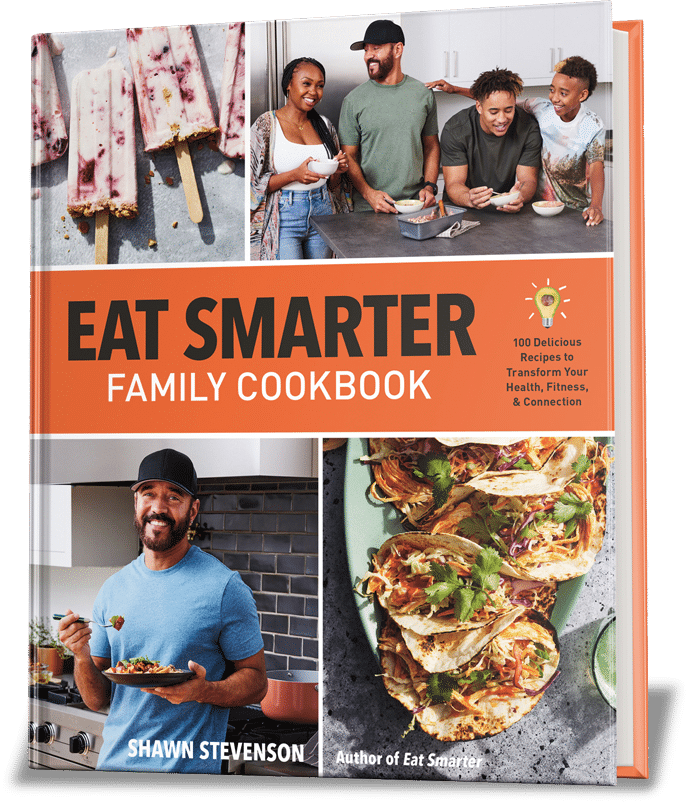
The Eat Smarter Family Cookbook is filled with 100 delicious recipes, plus the latest science to support the mental, physical and social health of your loved ones.


Share Your Voice
0 comments. Be the first to leave a comment.