
Subscribe to The Model Health Show:


TMHS 995: The Hidden Truth About Exercise: Disease Prevention, Longevity, & More Energy Than You Can Imagine
So many people still have it twisted—exercise isn’t about aesthetics, it’s about energy, vitality, and unlocking the highest expression of who you are. In this episode, we’re flipping the script on what movement really means for your health. From boosting your cellular energy to protecting your brain and immune system, you’re going to discover why exercise is one of the most powerful tools we have—not just for longevity, but for living better right now.
In this episode, I’m breaking down the science-backed truth about exercise—from large-scale meta-analyses to cutting-edge research on mitochondria, mental health, and disease prevention with data from thousands of participants and decades of research showing exactly how movement impacts your biology, your mood, and your lifespan.
You’re going to learn how exercise actually creates energy instead of draining it, why it’s more effective than medication for mild depression in some cases, and how it dramatically reduces your risk of chronic disease and infectious illness. We’ll also break down the five most powerful types of movement you can start using today—and why the most important one is simply the one you’ll actually do.
In this episode you’ll discover:
- Why exercise is about more than looking good (00:00)
- How consistent exercise improves energy and reduces fatigue (00:50)
- Why even one workout can boost your energy (03:09)
- How movement helps your body create energy (04:20)
- The role of mitochondria in cellular energy (06:52)
- How exercise impacts depression, stress, and anxiety (08:23)
- Why your muscles act as an endocrine organ (10:45)
- How exercise trains your brain to experience more pleasure (12:03)
- How exercise strengthens immune function (15:30)
- The link between exercise and chronic disease prevention (21:30)
- Why muscle is essential for metabolic health (23:21)
- How exercise improves brain function and memory (24:30)
- The five most science-backed forms of exercise (27:10)
- The longevity benefits of walking (28:13)
- Why the best exercise is the one you’ll actually do (32:22)
Items mentioned in this episode include:
LMNT – to get a free sample pack with your order https://drinklmnt.com/model
This episode of The Model Health Show is brought to you by LMNT.
LMNT is a science-backed electrolyte drink designed to support hydration, energy, and optimal performance—without the sugar, artificial colors, or junk found in conventional sports drinks. With the perfect ratio of sodium, potassium, and magnesium, it helps support your workouts, cognitive function, and immune system. Head over to https://drinklmnt.com/model to get a free sample pack with your order.
Transcript:
You are now listening to The Model Health Show with Shawn Stevenson. For more, visit themodelhealthshow.com.
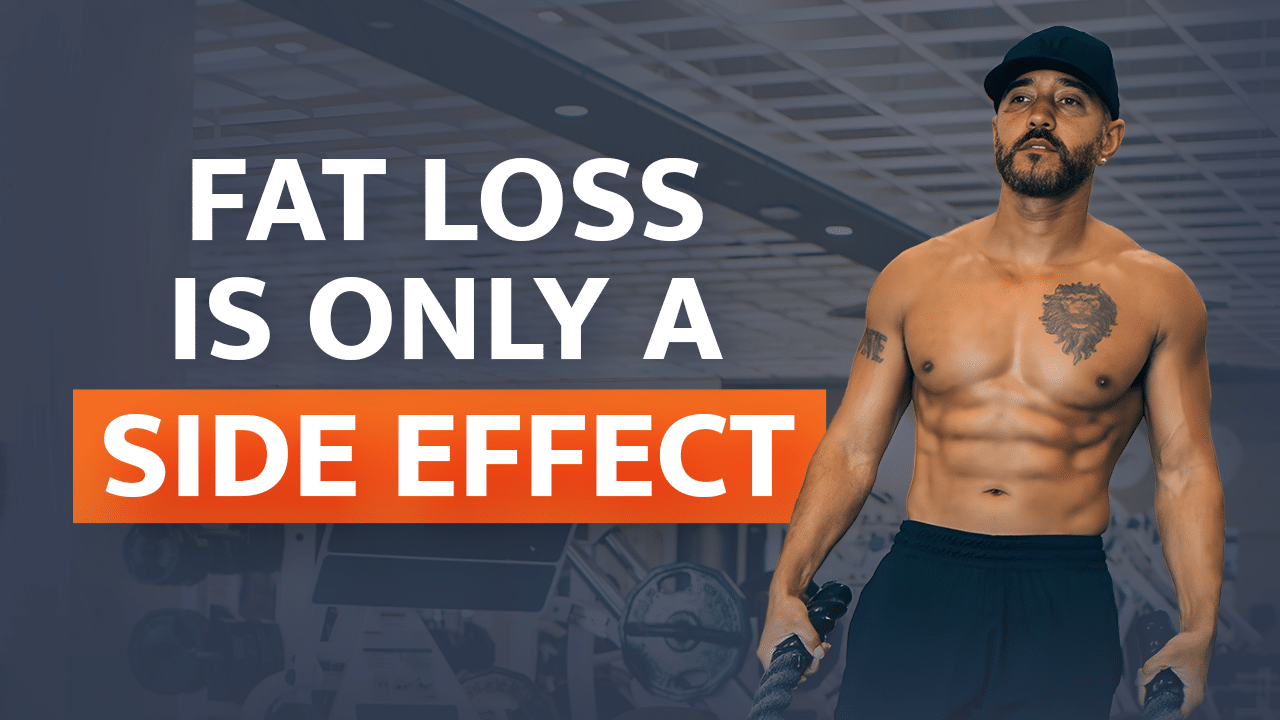
SHAWN STEVENSON: So many people still have it twisted. Exercise is not about looking good. It's not about the superficial changes that you might see on the surface. Those are side effects of something far more powerful. You're about to discover the truth. About exercise and the remarkable impacts that it has on your life, and it starts with energy.
One of the most common reasons that people give for not exercising is the lack of energy needed to do it. But what if exercise was the secret key to unlocking more energy than you could ever imagine? A phenomenal meta-analysis titled The Effect of Chronic IE, consistent Exercise on Energy and Fatigue States.
Was published in Frontiers in Psychology. This was a meta-analysis of randomized trials that included 81 studies and over 7,000 people. The researchers found conclusively that consistent exercise gives you more perceived energy. The scientists observed that consistent exercise improves energy, decreases fatigue, and increases vitality, positioning, exercise as a non-pharmacological strategy for managing tiredness across populations.
Another study, and this time it's a randomized controlled trial, was published in the journal Psychotherapy and Psychosomatics to examine if regular exercise can alleviate tiredness and improve energy in adults with persistent fatigue. Participants with low energy will placed into one of three groups.
Group one was assigned to do moderate intensity exercise. Group two was assigned to do low intensity exercise, and Group three was a control group who made no structured changes. Participants exercised according to their group, three days a week for six weeks. The scientists tracked vigor and fatigue state scores, as well as aerobic fitness across the study period.
Here's what they found at the end of the study. Both moderate and low intensity exercise led to significant improvements in feelings of energy in study participants compared to the control group. In fact, both moderate and low intensity exercise led to similar reductions in fatigue. And listen to this, the changes in feelings of energy and fatigue were independent.
SHAWN STEVENSON: Of changes in aerobic fitness. The bottom line, it didn't matter how much more fitter they got. Consistent exercise of any type made them feel better. It made them feel more energetic. Exercise is one of the most valuable and science-backed ways to increase our feelings of energy and vitality, and the results can happen fast even after just one bout of exercise.
You can start to feel better. A meta-analysis titled The Effect of a Single Bout of Exercise on Energy and Fatigue. Reviewed the data of 16 different studies and found conclusively that even one session of exercise leads to measurable. Increased feelings of energy in most people. Now, this can be a wide variety of exercise types of course, but a specific form of exercise that provided the added benefits of measurable reductions in fatigue were those that were low to moderate intensity and lasting a little longer than 20 minutes.
Basically, a single brisk walk can do wonders for both enhancing feelings of energy. And reducing fatigue. So we know that just one bout one session of exercise can get you feeling better. But of course it is the consistent utilization of exercise that leads to the biggest reductions in fatigue, even in individuals with chronic conditions.
As a meta-analysis published in Scientific Reports affirms now, this is the foundation to kick all of this off today. You don't just get energy. You make energy as a part of this incredible universe. You are an expression of the infinite source and supply of all things. And within you, you are literally made to generate energy on command.
If you abide by the laws that control all of this, our experience here on planet Earth is governed by the laws of physics, most notably Newton's first law, the Law of Inertia. Newton's first law says that an object in motion tends to stay in motion, and an object at rest tends to stay at rest. Inertia describes how difficult it is to change the motion of an object.
It states that if a body is at rest, inertia relates to how hard it is to get that body to start moving, and if a body is moving, inertia relates to how hard it is to get that body to slow down or to stop. What this means is that there is a scientifically affirmed power of momentum of getting up and getting going, and often people who've achieved extreme longevity, the centenarians and the quote, super ages of the world.
SHAWN STEVENSON: They've often said something along the lines of never stop moving, continuing to stay active. It just keeps that kinetic energy going. We are teaming with potential energy. We are made of it. But it is through the expression and the decision to move that we start to stack conditions to transform that potential energy into kinetic energy, the energy of movement, and so understanding that physics are governing what's happening with our biology.
We want to lean into and take advantage of this powerful law of inertia because this is happening in our lives. Whether we understand it or not. And so we can co-create, we can participate in this beautiful unfolding of energy, and the power is truly in our hands. And now if we take a step and move from physics into the realm of biology and just look at some of the basics of where our cellular energy is coming from.
You can take a glimpse into the universe within your cells, and that's where you'll find the mitochondria. Your mitochondria are often referred to as the quote, energy, power plants of your cells. Now, what does exercise do for you? Exercise stimulates your body to make more mitochondria. More mitochondria, make more a TP, the energy currency of your body, adenosine, tri phosphate, and it's through the contraction of your muscles that more.
Mitochondria. It created mitochondrial biogenesis. The power is in your hands to make it so whether this is through walking through, lifting weights, through playing a sport, whatever the case may be, your muscles are contracting in order to move you through this universe. Exercise does not drain your battery.
It upgrades it. Energy is a complex construct with mental, emotional, and behavioral components. And what else does exercise do to influence all of these components? It stimulates positive changes with your hormones and your neurochemistry, which is another aspect of feeling. Much better. Do you know that depression is now the number one cause of disability in the United States?
SHAWN STEVENSON: According to the NIH, depression is now the leading cause of absenteeism here in America, and this is yet another reason why exercise matters more to you and your family and your community. Then the superficial exercise is one of the most scientifically validated defenses. Against this depression epidemic.
A recent meta-analysis published in the BMJ that included 1039 randomized controlled trials and nearly 130,000 participants revealed that physical activity is 1.5 times more effective at reducing mild to moderate symptoms of depression, psychological stress and anxiety. Medication or psychotherapy, exercise works better.
This is not to negate the value of well prescribed medication and the value of psychotherapy. This is not to negate those things. These are incredible and important tools that we have today to be able to treat the person who actually needs them. And with that said, exercise, according to one of the largest studies conducted on the subject of depression, ever constructed exercise works better.
So this doesn't have to be an either or world. This can be a both and world where we. Might be utilizing psychotherapy and we utilize the power of exercise. We might be utilizing a medication and we utilize the power of exercise. Our genes expect us to move, and when we don't, we experience symptoms. And many of these symptoms relate to our feelings of our mood, our mental state, our emotional state.
And this is why, again, this is an essential. Aspect of our reality here in this universe. Now the question is why? How does this actually work so well when it comes to our mental health? Well, your muscles are an endocrine organ. When we contract our muscles, we are literally releasing myokines and anabolic hormones that influence our mood, that influence our neurochemistry and our behavior.
In addition, exercise is well established in multiple studies to reduce stress. We know that we're producing things like endorphins, and serotonin and dopamine, all related to influencing our mood and our disposition. Additionally, exercise has been found to increase our resiliency. Exercise is one of the most valuable and accessible hormetic stressors in our reality.
SHAWN STEVENSON: And hormetic stressors are those that make you better. You get the stress. Because that's what is responsible for the stimulation of more mitochondria being produced. It is not the contraction of the muscles itself. It is the stress that occurs. We stimulate that stress through contracting our muscles, but is a response to having these hormetic stressors and to top it all off, amongst many other reasons, exercise has been found to sensitize.
Our brains to more pleasure. Our brains are. Adaptation machines and they're constantly looking for patterns, and we can get stuck in a loop of negativity. We can get stuck in a situation where we are sensitized to toxicity and to problems and to worry and to anxiety, and it becomes a self. Fulfilling feedback loop.
And so exercise when This is one of the most remarkable things ever discovered about exercise has been found to sensitize your brain to more pleasure. It starts to look for and to find a. More positive or affirmative feedback loop when we are engaging in exercise. Now, even with all of this said and the value that is well established, we're still gonna have the tendency to have some.
What about why exercise regularly? But I still struggle with depression, number one. This is not a cure all for anything. Nothing is. Number two, why do you still. Desire to exercise consistently. What would you be without that? How much worse would your depression potentially be? And so again, this is being able to put this in its proper perspective and not to engage in what about is and look for something to be a cure-all.
We're looking to stack conditions in our favor and understand that life is dynamic. There are many different parts that are feeding into our overall expression of energy, our mood, our performance in our lives. We do know for certain that exercise is one of the most powerful epigenetic controllers in our reality, and when we don't give our bodies this valuable input, we experience symptoms of physical distress and mental and emotional distress as well.
And so give ourselves the value, the permission to utilize this valuable tool that has been put into this pithy box of exercise to look good exercise, to burn the fat away, to build that shelf like booty, to build the testicles and you know, the suns out, guns out have those incredible arms and muscles and all these things.
SHAWN STEVENSON: Yes, these can be a side effect of exercise and a dedication to certain forms of exercise, but. The activity of contracting our muscles is so much more valuable to us as a human being. And so my goal today is to inspire us to make it a mandate to implement this into our own personal culture, into our family culture.
And so that that begins to spread to our communities because the science and the power. Does not stop there. What else is robbing us of our energy, of our productivity, of our ability to create the lives that we truly want to create? Well after depression, the number two thing that's sidelining, the average person is sickness.
And there's two parts to it. Part one that we'll address is infectious illnesses, quote, catching something. Does exercise provide a science-backed defense? Well, a meta-analysis published in exercise and sports science reviews determine that regular exercise significantly improves human immune system response to infections and reduces susceptibility to viruses.
Another huge study that was published in the British Journal of Sports Medicine analyzed the impact of regular exercise. In defense of COVID-19, it tracked the exercise habits of over 200,000 people, and here's what they found. Number one, regular exercise had a notable protective effect against contracting a COVID infection.
Number two, and even more significantly regular exercise appeared to slash the risk of severe COVID infections. Number three, regular exercise dramatically reduced the risk of death. From COVID as well. In one cohort of this study, people who regularly strength trained and utilized aerobic exercise had a 27% lower risk of contracting a COVID infection and a 57% lower risk of severe COVID symptoms.
Now the question is, how does this work in relationship to defending us from. Infectious illnesses. Well exercise enhances something called immunosurveillance. This is the process by which cells of the immune system look for and recognize foreign pathogens to effectively make adaptations to them.
Alright, so they are analyzing, they're the guy in the van. They're putting together the oh oh seven weaponry to be able to take out specific pathogens in the way that is most effective. SHAWN STEVENSON: Additionally, exercise is clinically proven to reduce systemic inflammation. Plus exercise improves something called immunomodulation.
This is the ability for our immune system to be tempered, to be adjusted, and to be more responsive, to increase immune system activity if need be, or to reduce it because our immune system can be overactive and are. Symptoms that we experience when it comes to infectious illnesses, those symptoms are really a result of our immune system fighting.
What it deems to be a threat, it's more so our immune system. Why we are experiencing those symptoms than the pathogen itself. It's the body's perception and adaptation to that pathogen, and so we want our immune system to mount an appropriate. Response and exercise has been found to help us to do that.
And to top it all off exercise delays the onset of something called immunosenescence, and this refers to the gradual degradation of the immune system associated with aging, and it's regarded as a foundational reason why elderly individuals have higher rates of susceptibility to infectious diseases.
Exercise. Significantly helps to delay the onset of immunosenescence. And by the way, when people think about nutrition during our exercise and performance, they often think about electrolytes. It's required for muscle function, a TP utilization, and pretty much every process that the body does. But these.
Minerals that carry an electric charge are critical in supporting your immune system as well. A meta-analysis published in Annals of Clinical Biochemistry titled Electrolyte Imbalances in Patients with Severe Coronavirus Disease 2019 Analyze Five Studies with nearly 1500 patients. With COVID-19 and found that both sodium and potassium were significantly lower in patients with severe symptoms.
Now, it's not clear if the electrolyte deficiency made them more susceptible or if the body's defense system required the use of more of their electrolyte stores to fight the infection. But it is clear that electrolytes are critical to the proper function of our immune systems. And so for immune system support and.
SHAWN STEVENSON: For supporting your exercise and sports performance. Make sure that you're utilizing some high quality electrolytes when you need them. But there's been a slight catch with this in recent decades because the Gatorades and Power Aids of the world were. Delivering crazy amounts of sugar, artificial colors, and other shady ingredients.
And this is why Element is now the number one science-backed electrolyte drink designed to support active hydration, cognitive performance. A healthy immune system in an overall healthy lifestyle element has the science-backed ratios of sodium, potassium, and magnesium to help you to feel and perform at your best.
With no added sugars, no artificial colors, and nothing dodgy. The best performers in the world utilize element, I'm talking about Team USA, weightlifting, NBA and NFL teams. The Navy Seals, the list goes on and on, and right now you can try element risk free with their no questions asked. Refunds. If you don't absolutely love the way that it makes you feel, just head over to drink.
element.com/model right now. That's drink LMN t.com/model. And with every electrolyte purchase, you're going to receive a free sample pack on top of all that to be able to try all of their most popular flavors. So again, head over there, check them out, drink lmt.com/model. And now moving on to part two. In the context of sickness, sidelining us in relationship to the impact of chronic diseases.
Our society has a major chronic disease epidemic. According to the CDC, over 75% of American adults now have at least one chronic condition. This is astronomical. It's uncalled for, and we know conclusively that our rapid increases in sedentary behavior is a huge contributor to this epidemic. A peer reviewed meta-analysis published in 2012 on sedentary behavior.
Found that our nation's sedentary behavior was associated with a 112% increase in the risk of developing diabetes. A 147% increase in risk of developing heart disease and about a 50% greater risk of dying prematurely from all causes. Does exercise provide a science backed defense against this? Well, according to research published by the American Heart Foundation, simply walking for an average of just 30 minutes a day can lower the risk of heart disease and stroke by 35% and lower the risk of type two diabetes by 40%.
SHAWN STEVENSON: The researchers called it a wonder drug, and if this was. Available in a drug. If exercise was available in a drug, it would be the most popular drug or supplement the world has ever seen. But the benefits are locked when we actually move our bodies. Now the question is why does exercise work so well when dealing with chronic conditions in particular are epidemics of insulin resistance and diabetes that have a major.
Role in neurodegenerative conditions and heart disease. The list goes on and on. Insulin resistance is a huge component of this. Why is exercise so effective? Well, it is muscle. That is the primary site of insulin resistance, and it is muscle that is responsible for upwards of 80% of glucose disposal. When we have our muscle and we're contracting our muscles, it is muscle that is a reservoir of amino acids that helps to secure metabolic performance and support healthy aging.
It is muscle that is the most powerful. Endocrine organ that we have the power to substantially control. So are you truly receiving why exercise is not optional? It is mandatory for the fullest expression of who we are and to put a science backed cherry on top of all of this. It is through exercise that our brain and our cognition is radically improved.
One of our most incredible guests that we've had here on the Model Health Show is neuroscientist Dr. Wendy Suzuki and her lab at NYU has affirmed in multiple studies how exercise helps to stimulate and improve the performance of particular parts of the brain, namely the hippocampus that is largely considered to be the memory.
Center of the human brain, and we have the ability to improve and protect our ability to make memories. In addition, a randomized controlled trial published in the Archives of Internal Medicine found that resistance training promotes cognitive and functional brain plasticity, and Dr. Suzuki's work found that this is occurring through aerobic exercise.
So you've got both. Pick your pleasure. Pick your panacea rather than picking your poison. Pick your pleasure. You got resistance training, you got aerobic training, but this doesn't have to be an either or thing. This could be a both and, but most importantly, I just want you to do what you'll actually do.
SHAWN STEVENSON: We just need to move our bodies. And whatever that looks like, you're going to find tremendous benefit. A 2014 study conducted at Georgia Tech revealed that strength training for as little as 20 minutes can improve long-term memory. Researchers have studied participants train legs for just 20 minutes versus controls who did nothing.
Two days later, they had them to do an image recall test, and the strength training test subjects outperformed the non lifters by 10%. The moral of the story is the mantra to never skip leg day. The reason this is so effective, especially when training legs, is that this is the largest aspect of our muscular potential.
The gluteal femoral complex is where we're gonna find generally more than half of our body's muscular makeup. Alright? Now, of course, we can do a lot to build up our arms and our chest, but it's just by design. That being able to, and this is going back to the mantra, thick thighs save lives. We have the capacity to build lower body muscle and dramatically improve our metabolic health.
And of course, to top it off, improve the health and function of our brain and cognition. So now at this point, what are the specific forms of exercise that we need to do? To extract these incredible benefits, as I said, pick your panacea, but what I'm gonna do is provide you five of the most science affirmed methods of exercise to really be able to get the most bang for our movement buck.
Number one is strength training, and so there's a wide variety of what that looks like from body weight exercises to conventional weightlifting, kettlebell training. The list goes on and on. We've got incredible masterclasses that we've done here on the Model Health Show regarding strength training, including interviewing some of the world's foremost experts in this domain.
There is no shortage. Of finding the science, the tactics, and the inspiration to implement some weight training. But most importantly, we, we've gotta do it. We've gotta make ourselves stronger and more resilient. It's going to create a positive feedback loop of more energy and resiliency. Number two is walking Our genes expect us to walk.
SHAWN STEVENSON: We are bi eddo. All right. We are designed to walk and if you want to live longer, walking is the fastest way to get us there. According to a study published in the Journal Plus Medicine, walking for just 11 minutes a day is enough to extend your lifespan by two years. Alright? There's so many epigenetic benefits that come along with simply walking the 10,000 steps a day.
Mantra is apparent in our culture now, but the science doesn't have this number as like this ideal number to hit. It's actually at 4,000 steps and above where we start to see some significant improvements. Under 4,000, you're cooked. You're gonna struggle with your health under 4,000 steps a day on average.
Is kind of that barrier of entry into just basic levels of health and wellness. But once we get past that and we get past 8,000 steps a day, that's when we're really unlocking another level of benefits. Again, affirmed by signs. And so really it's 8,000 steps a day, but this is gonna vary from person to person, condition to condition, terrain to terrain, whatever's going on in your life.
But just strive for 8,000 steps a day at minimum. Really? 4,000 at minimum. Minimum. Minimum, minimum Eminem, but 8,000 is where we really want to. Target and make sure that we hit every day. Number three is moving quickly, right? This is our capacity to generate power and speed, often associated with youth.
We tend to not slow down because we have to, but because of our life structures, and we decide, okay, we're not a kid anymore, so we stop moving fast. We see it, and it's one of those things that we associate with aging is this process of slowing down. There might be some of that, yes, but we do that to ourselves far.
Prematurely, and so having some form of sprint, like act activity. This could be, yes. This could be sprinting. This could be sprinting on a stationary bike. This could be an assault bike. This could be sprinting and jumping rope really quickly, or running in place really quickly. This could be using battle ropes, right?
SHAWN STEVENSON: The list goes on and on and on of ways that we can safely. Utilize sprinting, but we do know there's a ton of science to affirm this is going to help us to unlock more energy, to feel better, and to be more resilient against these chronic and infectious conditions. Number four. This is affirmed when looking at exercise's, ability to prevent injuries, and to help us to recover faster should an injury occur, which life is gonna happen.
This is another reason people stop doing stuff because they're afraid that they're going to get injured. But in reality, when we stop doing stuff and we stop moving, we stop doing the things that we love to do. We are far more likely to get injured. A meta-analysis of 25 randomized controlled trials published in the British Journal of Sports Medicine found that specific forms of exercise.
Proprioception training and strength training can reduce approximately two thirds of all sports injuries and overuse injuries could be nearly cut in half. So this brings us to the value of proprioception training. Balance training, doing plyometrics. All right. So utilizing single leg movements and lifts and jumping.
This is so valuable in the context of keeping us feeling good, energetic defense against disease and also injury prevention. And it should we get injured. It is clinically proven to help us to heal faster. Number five, and this is arguably the most important. Number five is the type of exercise that is most valuable is the exercise that you'll actually do.
And I'm going to caveat that with something that again, our genes expect us to do, which is play. Utilizing the power of play unlocks so many capacities. Yes, through the power of movement, but also through, but also through the context of relationship building and the social. Implements as well and problem solving and the cognitive benefits that are seen here.
The connective benefits that are seen here through the expression of play cannot be stressed enough. This is how children learn. This is how we evolve. Learning is through play and we, again, we start to ratchet that down so much unless we happen to find somebody to pay us a few mil to continue to play, or LeBron still playing.
SHAWN STEVENSON: He's playing a child's game. He's putting a ball into a hoop in creative ways. Now, not to negate the chess match that he is undertaking with it, but in reality this is something that we all could learn to extract and to utilize no matter where we are on our life's timeline. And I love the powerful statement attributed to George.
Bernard Shaw that we do not stop playing because we grow old. We grow old because we stop playing.
SHAWN STEVENSON:
If you enjoy this, please share this out with somebody that you care about. You could send this directly from the podcast app that you're listening on. Of course, you could take a screenshot of the episode and share it on social media. Tag me. I'm at Shawn model, and of course, and of course, tag Jessica Ortner as well.
I know that she would be blown away to see that love. Well, we've got some incredible, incredible masterclasses and world-leading experts coming your way, including, listen up, you thought we were done. Episode 1000 of the Model Health Show is coming up here soon. We've got something very special in store for you. Make sure to follow me on social media. I'm at Shawn Model on Instagram because we're gonna be live streaming that whole day. We're gonna show you what's actually going down in the Model Health Show studios. We got some special guests coming through, so you're not gonna want to miss that. So again, follow me on Instagram at Shawn, model the stay up to date. And again, just be ready. We got so much more in store. Take care. Have an amazing day, and I'll talk with you soon.
Other episodes you might be interested:
Maximize Your Energy
Get the Free Checklist: “5 Keys That Could Radically Improve Your Energy Levels and Quality of Life”
HEALTHY MEALS EVERYONE WILL LOVE
The Greatest Gift You Can Give Your Family is Health
When you gather your family around the table to share nutritious food, you’re not only spending quality time with them - you’re setting them up for success in all areas of their lives.
The Eat Smarter Family Cookbook is filled with 100 delicious recipes, plus the latest science to support the mental, physical and social health of your loved ones.



Share Your Voice
0 comments. Be the first to leave a comment.