
Subscribe to The Model Health Show:


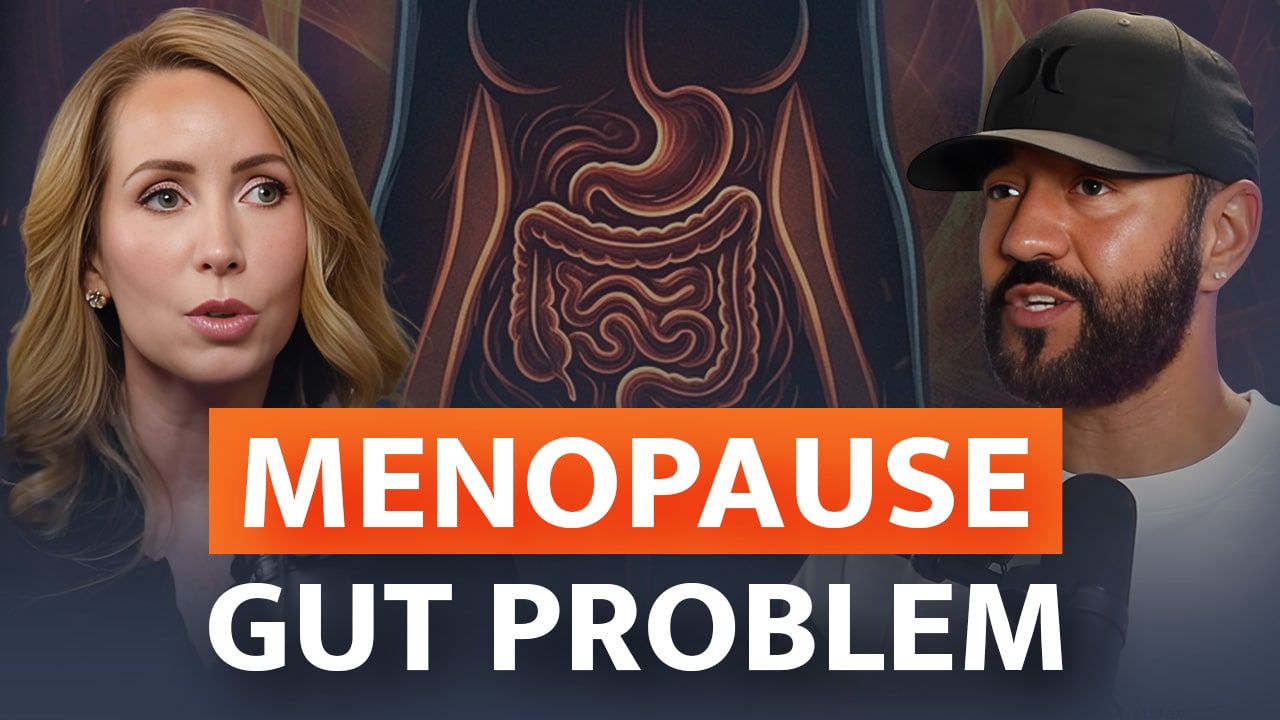
TMHS 994: The Menopause Gut: Why Metabolism Changes & How to Reclaim Your Body – With Cynthia Thurlow
It was once believed that the process of menopause was just something that women had to suffer through, often silently. But today, the conversation is changing. We now know that perimenopause and menopause symptoms can be reduced with science-backed education, hormone replacement therapy, and lifestyle interventions.
Cynthia Thurlow is a nurse practitioner and bestselling author who is passionate about helping women take control of their health from midlife and beyond. Her newest book, The Menopause Gut is a paradigm-shifting guide to how hormones shift in perimenopause and menopause, and how balancing the microbiome can shape your health outcomes as you age.
Today, Cynthia is back on The Model Health Show for an important conversation on how women can prioritize feeling their best through the transition of menopause. You’re going to learn about the bidirectional relationship between gut health and hormones, how women can navigate the aging process as smoothly as possible, and the critical role nutrition plays in metabolic health, immune health, and more. I hope you enjoy this interview with the one and only Cynthia Thurlow!
In this episode you’ll discover:
- The meaning behind the book title, The Menopause Gut. (2:37)
- What the 3 Ps of a woman’s life are. (5:31)
- Why the gut is a powerful regulator for aging. (6:28)
- Specific things that accelerate aging of the ovaries. (7:38)
- Two things that women need to think about before entering perimenopause. (8:20)
- What the estrobolome is and why it matters. (9:21)
- The link between inflammation, the immune system, and menopause. (16:52)
- How adverse childhood experiences can lead to autoimmune diseases. (29:31)
- The truth about counting calories, especially for menopausal women. (37:30)
- Nutrition principles for perimenopausal and menopausal women. (48:36)
- The main caveat that midlife women should consider about intermittent fasting. (53:00)
Items mentioned in this episode include:
- WildPastures.com/model – Get 20% off every box plus an additional $15 off!
- Organifi.com/Model - Use the coupon code MODEL for 20% off + free shipping!
- The Menopause Gut by Cynthia Thurlow – Order your copy today!
This episode of The Model Health Show is brought to you by Wild Pastures and Organifi.
Get 100% grassfed and finished beef, pasture raised chicken, and other nutrient dense, regenerative meats. Sign up with my link to get 20% of for life, plus an additional $15 off your first box at wildpastures.com/model.
Organifi makes nutrition easy and delicious for everyone. Take 20% off your order with the code MODEL at organifi.com/model.
Transcript:
SHAWN STEVENSON: Our hormones are the chemical messengers that connect all of our cells, our organs, and our bodily systems to keep all of our trillions of cells on the same page. Our hormones are the signaling molecules that determine things like growth, metabolism, reproduction, and mood. But what happens when these hormones change dramatically, erratically are seemingly plummet altogether. This is one of the experiences that half of our population goes through when we're talking about the phenomenon of perimenopause and menopause. And this information that you're going to learn today is critical for all of us to know because this lifecycle impacts each and every one of us.
It impacts our relationships, impacts our overall health and our connection, and we need to lift up women's voices and help to really understand how to support this process in the best ways, the most science backed ways that we possibly can. And today, you're going to discover the profound connection between hairy menopause, menopause, and gut health.
Today we're going to be exploring the menopause gut, and our special guest is going to blow your mind with some of these incredible insights. Without further ado, let's get to our special guest and topic of the day. Cynthia Thurlow is a nurse practitioner, host of the Everyday Wellness Podcast, bestselling author, an international speaker with over 15 million views for her TED Talk, intermittent fasting transformational technique. With over 25 years of experience in health and wellness, Cynthia is a globally recognized expert in perimenopause and menopause, in intermittent fasting, and our work has been featured all over major media, including A, B, C, Fox, KTL A, entrepreneur magazine, and much more.
Her mission is to help empower women to live their most optimal lives in perimenopause and beyond. Let's dive in this conversation with the incredible Cynthia Thurlow. Cynthia, I'm so happy to see you today.
CYNTHIA THURLOW: So glad to be here.
SHAWN STEVENSON: We got so much good stuff to talk about, first and foremost, the menopause gut.
CYNTHIA THURLOW: Yeah.
SHAWN STEVENSON: What is the menopause gut?
CYNTHIA THURLOW: It's really helping clinicians, women, men, the people that love the women in their lives better understand what's happening in the gut microbiome as women are navigating this perimenopause menopause transition. So we talk about how our ovaries age, we talk about how the immune system ages, we talk about the gut, we talk about bones, we talk about this brain gut access. We talk about hormones and supplements and all the lifestyle pieces that are so important. And I think this is a left out conversation around this very important transition in a woman's life. And to me, I think about it as the glue that makes everything else work.
SHAWN STEVENSON: Hmm. I love this. Now, just hearing the title, of course, it kind of resonates with like, what about the gut itself or body fat? So is there a connection there as well?
CYNTHIA THURLOW: I mean, the title is a double entendre without question. But I do talk about how the gut microbiome shapes and shifts, body composition, insulin sensitivity, all of these kind of key components that for many women they're really plagued with. And I say plagued with in the most loving way possible. I have experienced this myself, but I think for so many women, they feel like their bodies suddenly, they don't understand what's going on with their bodies. Everything that used to work no longer works. And so we kind of weave into the conversation the things that, building awareness around the changes that are happening and what they can do to offset those changes.
SHAWN STEVENSON: Yeah. This obviously can be very frustrating, you know, and, and let alone everybody wants to experience just to have good health and to feel good about their bodies. But this relationship changes. In particular, when we're talking about this transition, perimenopause, menopause, and, you know, you are bringing to light so many incredible aspects that are simply not being talked about right now, and one of those being the differences of the microbiome makeup of men and women and in particular with that transition into perimenopause and menopause. So talk about that.
CYNTHIA THURLOW: Yeah. There's something called the micro gender room. This was a new term to me when I was doing research for the book, but it talks about how, you know, young men and young women, until they go into puberty, they're microbiomes are very similar. And not surprisingly, influence of testosterone is predominantly for men, estrogen, progesterone for women, and a little bit of testosterone. We start to see differentiation in the mi, in the gut microbiome, and what I find fascinating is men stay pretty consistent throughout their lifetime. Women, however, have these dynamic shifts, puberty, pregnancy perimenopause, where we get dynamic shifts in microbial diversity, inflammation, all these different changes.
And the irony is life comes full circle. So if women live long enough after they go into menopause, their microbiome starts to resemble a men's again. And so again, it's these influences of these key hormones and inflammation. It's fascinating to me how much changes in each one of those kind of significant, I call them the three P's. Not surprisingly puberty if a woman has a pregnancy, and then this perimenopausal transition, and I think not enough individuals are talking about these subjects, but it explains a great deal about, you know, you mentioned body composition shifts, it impacts sleep, it impacts cognition, it impacts the symptoms.
Women experience. It impacts why suddenly women develop odd symptoms like bloating as they are having this transition. Or they suddenly develop underlying food sensitivities that maybe they've never experienced before. And so it really begs to have this conversation just to build awareness so that people can be looking out for these things proactively. And if they're already on the other side, there's things you could do that can improve the health of your microbiome that don't necessarily have to be sig, you know, significant or expensive.
SHAWN STEVENSON: Mm-hmm. What is it about the gut that makes it such a powerful regulator for aging?
CYNTHIA THURLOW: Yeah, it's such a great question. So when I think about the gut microbiome, it is, you know, 40 trillion bacteria, fungi, viruses that influence every single part of our body. Every single organ system, you know, I think about there's a gut bone access, there's a gut ovarian axis, there's a gut lung axis, there's a gut brain axis, and it goes on and on and on. And so when I think about it from a longevity perspective, we know that our ovaries set the pacemaker of aging for our bodies full stop, the most mitochondrial dense organs in our entire bodies. Not surprisingly, and as our ovaries are aging, you know, we are born with a finite amount of ovaries, unlike men that are making you sperm.
I think every 72 hours, if memory serves me correctly. We are born with a finite amount of eggs, and so. You know, once we go into puberty, we go through this atresia. So this, you know, where eggs are, maybe we have an egg that is, you know, potentially, you know, we ovulate as a potential, be a fertilized doum, go on to be a baby or you know, you can ovulate a couple eggs per month and they just die off. And so over the course of our lifetime, we have less and less eggs. And what hearkens the beginning of the end of our fertility is this drop in progesterone. And so for a lot of people understanding that, you know, what's driving longevity is really the ovaries and helping people understand like what are the things that accelerate aging, what accelerates our ovaries aging.
I think for some people it's surprising. Some of our lifestyle choices, some of it's genetics. Like if your mom went into early menopause, you may be more likely to go into early menopause. And maybe defining average age of menopause is 51. You know, it's considered to be premature menopause if you go in before the age of 40 and it's early if you go in before 45, so normal is considered to be 45 to 55. That's a huge range of time for people to, you know, fall within this normal distribution. And so when I am having conversations with women and helping them understand it's number one, you know, we wanna preserve fertility for as long as we can. Number two, what are the things that will accelerate aging of those ovaries?
Things like smoking, alcohol use, toxins underlying chronic stress and trauma, adverse childhood events. There's some genetic variants too as well, but I think for a lot of people not realizing there's a lot we can do to preserve fertility or to, you know, kind of forego going into menopause earlier. Some things we don't have control over, but I find it endlessly fascinating. So thinking about our ovaries as a pacemaker of aging is unique and novel.
SHAWN STEVENSON: Hmm. Let's talk about a specific connection, because again, most people still today are not aware of the various connections with the gut, right? Gut brain connection, gut ovarian connection list goes on and on. But with that being said, there are specific hormones that are being processed, interacted with metabolized in relationship to the gut. So let's talk about the estrobolome.
CYNTHIA THURLOW: Oh yeah. This is, it's an awkward name for a very important component of the microbiome. This is where estrogen is broken down and metabolized. And for a lot of people, they don't realize there's this very specialized part of the microbiome that is designed to help them break down estrogen and get rid of it. So there's two forms of detoxification in the liver, and then you're supposed to, you know, package up this estrogen and effectively, I'm gonna oversimplify it, poop it out. Now, for a lot of people, they're like, this doesn't make any sense. I'm in perimenopause, menopause, perimenopause, you could have 20 to 30% higher levels of estradiol, which is the predominant form of estrogen our bodies make until menopause.
Or even in menopause, women can still have estrogen that gets recirculated. So if it's not being properly broken down, which can be for a variety of reasons, a lot of it is related to poor gut health, it can magnify symptoms. Suddenly women are having more vasomotor symptoms, more hot flashes, more bloating, more breast tenderness, more weight loss resistance. You know, weight loss resistance is kind of the bane of most women's existence at this stage of life. But helping them understand that being able to break down a detoxify estrogen is important. Now, the word detoxification gets thrown around a lot. And let me be clear, our bodies detoxify every day. We breathe, we sweat, we urinate, we defecate.
Those things all help with that. But over the course of a lifetime, by the time women are in their forties, I think of it as a toxin bucket. The things you're exposed to in your personal care products, environment and food have a tremendous impact on how you are gonna navigate this middle age point of your life.
And so the stroum is very important. And there's an important enzyme that's called beta glucuronidase, and that's important for helping to break down that estrogen piece so that we can break it down, package it up, and poop it out. Now, how many women that are middle aged think it's normal not to have a bowel movement? Once a day like that becomes normal, whatever your normal is, becomes normalized. And so I oftentimes have to explain to women. You know, if you're not having a bowel movement every day, that can be a sign that you may be, you know, potentially recirculating that estradiol, which can magnify all these other symptoms.
In particular, it's the hot flashes piece. Like women will say, I don't understand why my hot flashes are so bad. It's not always just a blood sugar dysregulation. It can also be that recirculating, uh, estrogen. Also important to note that we can make our own estrogen, so that's endogenous and we can also be exposed to it outside our bodies. That's exogenous and those together can be quite powerful.
SHAWN STEVENSON: Wow. Wow. I hope that everybody's really listening to this 'cause again, understanding that our microbiome, and in the case, if we're talking about menopause, perimenopause has such a profound impact on estrogen.
CYNTHIA THURLOW: Mm-hmm.
SHAWN STEVENSON: Like that is just a game changer in of itself. And also, again, what I love about your work is, like you even said it, just that you put a little sidebar, it isn't necessarily that if somebody isn't using the bathroom every day, it could be blood sugar related, it could be all these other things as well. But just for you to be able to have that investigation. Right. Are you regular? Because somebody might be, well, I'm regular, but my, I'm having these hot flashes. We're just checking off boxes here because there are a lot of people who are not regular.
CYNTHIA THURLOW: Yeah.
SHAWN STEVENSON: And all my years, I've been in this field for 23 years now, and I remember, you know, working at the university that I graduated from and I had a client who, she owned a couple of restaurants that were pretty popular. And, you know, was doing her initial assessment and she, you know, we, which thankfully at that point, about a decade in, I started asking people about their digestion.
CYNTHIA THURLOW: Mm-hmm.
SHAWN STEVENSON: And she shared that she uses the bathroom maybe every six or seven days. Can you believe that? Right, right.
CYNTHIA THURLOW: No, I can't imagine what's backed up.
SHAWN STEVENSON: She was, she was petite.
CYNTHIA THURLOW: Mm-hmm.
SHAWN STEVENSON: Okay. You would never know outside of all these other symptoms. She did, of course, have some, but it wasn't always the case where she would have some bloating, whatever. But it was all these other symptoms of lethargy, of discomfort, and, you know, and headaches and things like that. So it's not always just like you're just backed up and full of poop and it's just obvious to see, right. But this is something that she didn't necessarily know was a problem.
CYNTHIA THURLOW: Right? That's where your normal becomes normalized. And I think for a lot of people, there's a stigma around talking about bowel movements or poop. Like let's be really frank. And I think for so many of us, we need to be able to have those conversations. We need to be able to tell our provider. We need to be able to say to ourselves, it's not normal. I haven't had a bowel movement in four or five days. Now for some people, and this has been my experience clinically, there are some people when they travel, they get constipated.
That's different. There are some people who have to have a bowel movement in a public restaurant, and like they're totally, I would say, the non-public poopers of the world.
For a lot of individuals, it's like, let's figure out how we can make your body feel safe because part of that parasympathetic nervous system. In order to defecate, you have to, your body has to feel safe, so if you're stressed or you're rushing around, or you're not allowing yourself enough time, that may contribute to that.
SHAWN STEVENSON: Yeah, and some people are the opposite. It's evacuation when they're nervous and stressed and all those things. You know, it's just, again, paying attention to your own temperament.
CYNTHIA THURLOW: Right.
SHAWN STEVENSON: Thank you for bringing this up because I don't think we've really talked about this before in all these years, is, you know, your body when it comes to digestion, it's a circadian.
CYNTHIA THURLOW: Correct.
SHAWN STEVENSON: Medicine as well. It's looking for that consistency. It's looking for routine, certain conditions and you know, for many people they want that home court advantage right. When they use the bathroom. But there are people everywhere you go, you know, we just went to a basketball tournament who were, you know, taking a deuce, you know, at a basketball tournament, like the audacity for me. It's just like, there are pe I remember going to the club, you know, when I was like, you know, 2021 or whatever, and there are people, you know, taking a deuce at the club. Like, it's just like, you.
CYNTHIA THURLOW: See that's bizarre.
SHAWN STEVENSON: Your level of comfort is remarkable.
CYNTHIA THURLOW: Yeah.
SHAWN STEVENSON: You know what I mean?
CYNTHIA THURLOW: I call it the non-public poopers, like I used to put it in charts, NPP because they would disclose that they just couldn't do that. So I think there's, there's certainly extremes of comfort levels, but like the reality of the situation is if you gotta go, you gotta go.
SHAWN STEVENSON: Yeah. Yeah. Better out than in.
CYNTHIA THURLOW: Correct.
SHAWN STEVENSON: We always say.
CYNTHIA THURLOW: Correct.
SHAWN STEVENSON: Now to, to move this a little bit more forward, I wanna talk about the relationship with the microbiome and some of these markers including, you know, inflammation, you know, the things that are really the hallmarks of abnormalities with perimenopause and menopause. Inflammation is such an underrepresented part of the discussion, but obviously inflammation can mess up so many aspects of our health and cause disruption. But let's talk about the relationship between the health of your microbiome and inflammation in this context?
CYNTHIA THURLOW: Oh, they, they go hand in hand. I mean, in fact, I would say aging in general goes along with an uptick in inflammaging. So the inflammation, there's acute inflammation, you know, you trip, you fall, you skin your knee. That's acute inflammation. The chronic stuff is the achy joints, the brain fog, all the other constellation of symptoms that people experience. But when I think about inflammation as like a bigger bucket, it's, it's thinking about changes in.
Muscle mass that lead to a loss of insulin sensitivity that will stoke that inflammation. I think about the loss of estradiol, predominant form of estrogen that our body makes with that loss of estradiol, more inflammation in the body. I think about how, you know, this inflammaging piece is, you know, intersects with our immune system and how, you know, there is a
complete flip in the way that our immune system reacts in perimenopause and menopause. It tends to be more inflammatory. There are these t helper cells that are part of the acquired immune system and it's interesting we become. They use the term TH-1, so T helper one, dominant, which tends to mean we are more reactive. We are more likely to develop autoimmune conditions and perimenopause and menopause.
We are going to be less reactive to vaccines, not as a political statement. This is what the research says. We are more likely to not recover as easily from infection, so we're more likely to get infected and stay infected. Those opportunistic infections, a lot of the people that were impacted by the pandemic. If we take the metabolic health piece out of it, we're generally older individuals and the immune system just becomes less vibrant. And so I think this inflammation piece is really tied in with the immune system. And I know the immune system is neither sexy nor uncomplicated, so I try to keep it simple, but it's just helping people understand why do we see four to five times more autoimmune conditions in perimenopause and menopause?
It's because the immune system is just not as robust. And so I think it's endlessly fascinating. I think about, you know, we talked about how we have this loss of insulin sensitivity, more brain fog, more cognitive changes for a lot of people that can be a sign of inflammation. I think people think about inflammation, like, oh, my joint hurts.
Oh, I have, you know, tummy trouble. And it's helping them understand that inflammation can show up very differently. It can be as, as bio individual, as each woman is. It can show up as uniquely. For me personally, inflammation generally shows up in my gut, like I will have digestive system system issues. We think about, we're more likely to experience leaky gut, that small intestinal layer is one cell layer thick. What's on the other side of that small intestine right outside of that cell is the immune system. The immune system gets provoked. It drives an infl inflammatory response. If you're eating particular types of food, you leak food particles into your bloodstream.
That provokes an inflammatory response. So I also think about that food piece. Women will say, I was never sensitive to gluten before. I was never sensitive to dairy before. I was never sensitive to insert nightshades, oxalates, whatever it is. You know, the hot food of the month. For a lot of individuals, they suddenly find that their tell for the inflammation piece is they just react differently to, to otherwise healthy types of foods. And that can be quite a quandary, but I find it's multiple things that are overlapping. So it can be challenging to figure out like, oh, it's definitely this. It's multiple things that we use. The term multifactorial. It's multiple things contributing to those symptoms. That are driving the inflammatory process.
SHAWN STEVENSON: The overall nutrition in our food has taken a nose dive in recent decades. In fact, an analysis published by scientists at the University of Texas made an alarming discovery. 43 foods, mostly vegetables, showed a marked decrease in nutrients from the 1950s to 1999. According to that research, everything from vitamin A to calcium to iron and more has significantly declined. Again, if it's not in the soil, it's not in the food. It's the unsustainable farming practices that have obliterated our soil quality. But this is changing thanks to farmers who are dedicated to regenerative farming practices.
And this is not easy to do in a market that is slanted towards quantity over quality, but select farms are stepping up to do the right thing. And this is especially seen in the domain of animal foods. Research published in the British Journal of Nutrition found that beef from animals fed an abnormal diet of conventional pesticide laden grains that decimate the soil quality contain up to five times less Omega-3 fatty acids than what's found in grass fed beef and research from the College of Agriculture at California State University. Has found that grass fed beef contains elevated precursors of vitamin A and E, as well as increased disease fighting antioxidants like glutathione and superoxide dismutase activity compared to conventionally raised grain fed beef with unsustainable farming practices.
Whether you're eating plant foods or animal foods, you'd better know the difference when it comes to organic practices and regenerative farming. And this is what I truly love about wild pastures. Wild Pastures delivers 100% grass fed and grass finished beef pasture raised, pork pasture raised chicken and wild, caught seafood directly to your door. All born, raised and harvested entirely in the US and raised on regenerative family farms. These pastures are free from synthetic pesticides and other chemicals. There's no antibiotics, no added hormones, and right now with the Wild Pasture subscription, you're going to get 20% off for life, plus free shipping.
And $15 off of your first order. Absolutely incredible. Go to wild pastures.com/model. That's W-I-L-D-P-A-S-T-U-R-E s.com. Four slash model. 20% off for life free shipping and $15 off your first order. Head over there. Check them out. wpas.com/model. Now back to the show.
SHAWN STEVENSON: Oh my goodness. Thank you so much for bringing this up 'cause truly, you know, this is something that I didn't think about as well in relationship to perimenopause and menopause. The role of the immune system. You know, this is so profound. It's just like, why do we separate it? You know? And so with that being said, to see the incidents of autoimmune conditions rise during perimenopause and menopause. Now those rates have gone up in recent decades. Even that manifestation. Why is that?
Because, and I want to ask you in, in two different ways, historically, you know, a few decades ago, a, you know, a couple generations ago it was not as common to have the onset of these autoimmune conditions just because, again, things are changing, as far as the perimenopause and menopause. But also there are still places on earth today where you don't see such a high increase in autoimmune conditions. During perimenopause and menopause. Why is that? Why is it the, the change happening today and also why is it happening more in the quote western world?
CYNTHIA THURLOW: I think number one, I think we do a better job of being able to differentiate different types of autoimmune conditions, maybe before there were a couple big buckets. There's clearly more higher incidents and prevalence without question. I think there's over a hundred diagnoses right now for autoimmune conditions, which is mind-boggling. I think our modern day lifestyles play a huge role. I think it's our food. It is our stress level. It is that we're not sleeping. I mean, if you really look at the research on sleep, there was a meta-analysis that was done in 2019 looking at at for every one hour you sleep less.
If you sleep four hours, or more, it's for every one hour. It's a 9% increase in obesity. That's not even looking at all the other factors that come with that. So I think it is our modern day lifestyles that are driving all of these issues. We are eating foods, they're Franken foods. A lot of us are eating foods that are food like substances, and I'm not being, I'm a realist, so I get it.
Whether it's protein, powder, protein bars, whatever it is that people are eating, we're just eating and not sleeping, and we're constantly stimulated. We live in this hedonistic environment where you can stream anything you want anytime of the day or night. Uber Eats will deliver you food anytime of the day or night. Then you add on top of it the complex role of trauma that I think for so many people, maybe we're just hitting the tip of the iceberg, talking about what happened in someone's childhood and how that's influenced their immune system and their cortisol response and their autonomic nervous system. So I think it's multiple things, Shawn.
Not just one thing, but I do think when you look at. Cultures that are maybe not as exposed to our hedonistic type lifestyle. I think they're just preserved. I think it's, it's a much more, and I, when I use the term simple, I just say it's a much less complicated situation. You know, people are, are eating predominantly nutrient dense whole foods because that's all that's available and they are not tethered to technology 24 7.
And maybe their, their stress might be something that's brief and sporadic, which is what stress is designed to be, not unrelenting stress throughout the day 24 7. I think it has primed our bodies to be that much more susceptible and the more that I understand about the immune system and the role of cortisol and the catabolic effects, the more I think we are just primed to just be much more likely to develop not just one autoimmune condition, but multiple. And for people listening, I tell everyone, once you have had one, you're more likely to have others. It's very much a domino effect.
SHAWN STEVENSON: Hmm. Hmm. Profound, profound. So, I mean, to put it in a nutshell, we are living in very different conditions.
CYNTHIA THURLOW: Yes.
SHAWN STEVENSON: The world is very, very different than what it was just, you know, a, a couple decades ago. And things are not slowing down anytime soon. And so getting this education and finding ways to not try to hide from the world, but how do you adapt? How do you increase your resilience and survivability in these conditions? And if you're unaware, you're just gonna be at the mercy of these changing conditions. And that's the thing. And this is why this education is so important. Most people are unaware.
CYNTHIA THURLOW: Yeah.
SHAWN STEVENSON: You know, but with this ignorance is not bliss.
CYNTHIA THURLOW: No. Well, and I think about, you know, I had my 30th high school reunion a few years ago, and I remember I went with my best friend and we had a great time. And I was looking around the room and, being a clinician, like, I'm just always kind of observing. I'm an empath and I just kind of take everything in. And I was like, you know, the people that are doing the best right now are the people that are not acting like they're 18 years old. And I'll just simply put it that way. If you are still thinking that you can get by as a middle-aged person or nearly middle-aged person with what you did at 18, it's not gonna serve you well. And so, to your point, I think that through knowledge builds awareness around things that we can be doing to ensure that we don't have a marginal decade.
Like Peter Attia talks about the marginal decade. I don't want a marginal decade. I wanna have, you know, a great decade, one after the other. And I think for so many people, when I hear, a woman say to me. Yeah. This is just the way things are. I'm X age 54, 45, 62 70. This is just the way things are and the degree of acceptance.
SHAWN STEVENSON: Hmm.
CYNTHIA THURLOW: And I always say, you know, fighting against that acceptance of things that you do have some control over. I'm not talking about things we don't have control over. The things we do have control over. Giving people options to be able to make different choices, to improve their quality of life is really, that's why I'm here.
SHAWN STEVENSON: Yeah. And we have so much power and within that. You know, and so thank you for, for saying that as well. And I know that some people split their coffee out when they heard 30 year anniversary of your high school graduation.
CYNTHIA THURLOW: That was a while ago.
SHAWN STEVENSON: So, but you know, I was just thinking recently. Because you know, when I think about my high school class, you know, there's certain songs. I even have my senior book, you know, that I wrote, like what are the, the hot songs right now? And we've got things that are tied to that time. And I think about the kids now, you know, like what is their songs gonna be?
CYNTHIA THURLOW: I know.
SHAWN STEVENSON: You know, sexy Red, that's dance. I don't know if that's gonna stand the test of time. You know.
CYNTHIA THURLOW: Probably not.
SHAWN STEVENSON: No disrespect. No disrespect Sexy Reds from my hometown, St. Louis. I know a lot of girls like her. But, you know, anyways, with this being said, it's incredible to have access today, right? We have access to education. And so part of this is just making sure that people know that the bridge is already there. Right? And so this is why I'm so grateful to do this work, but we also need to focus on strategies, which we're gonna get, dig more into that. But there's such a important part of this conversation that you are bringing forth that again largely no one is talking about this.
CYNTHIA THURLOW: Yeah.
SHAWN STEVENSON: And this is the influence of trauma in relationship to menopause. So I want to talk a little bit more about that and just to dig in deep, can you help us to, to make sense of why this is an influential factor?
CYNTHIA THURLOW: Yeah. I think this is such an important conversation because how many of us experienced significant child adverse childhood events? I certainly did. And so there was a study done between Kaiser and the CDC looking at the impact of specific traumas that, that younger people can experience. And you can go online. It's not gate keep, you can go online and, and do the quiz. And so I transparently have a score of nine, which is quite high. What that does is it, it completely undermines or rewires your autonomic nervous system. So what I grew up in was physical, and I share this just transparently to give people some perspective, physical and emotional abuse, alcoholism, narcissism, all those things were part of my childhood.
But I adapted. And the way that I adapted was I was the good kid. I was the kid who was perfect. I was the kid who got good grades 'cause then I was left alone. And so my nervous system was rewired to suppress a lot and also at a heightened stress response. So even though I always say I look like the duck paddling across the lake.
Like I look calm on the outside, but like inside my body is fighting, fighting, fighting. And the same is so similar for so many other women, but what that chronic cortisol does to your body, that elevation is, we know it can age your ovaries faster. We know it contributes to autoimmune conditions. We know it can lead to disordered relationships with food. It can lead to poor metabolic health. That doesn't mean that happens to everyone. But when I was diving into the research, the understanding that trauma, whether it's sexual abuse, physical abuse, emotional abuse, all these things rewire our nervous system. And so it can definitely make us more likely to, or have the potential for an earlier menopause.
In fact, there was a study that was done looking at a woman who was sexually abused. If she goes on to have children who are sexually abused, she will go into menopause eight years earlier. That is substantial and significant. What's interesting to me is I've been having conversations with physician friends of mine who are OBGYNs, so a physician that is up all day and all night delivering babies. Obviously a kind of a stressful environment to be in. How many of them went into early menopause? And I think that there, there's a lot that we don't yet fully understand, but stress can age our ovaries faster. And so I find it interesting and certainly this ovarian senescence, so that's a fancy way of saying ovarian aging. Can definitely be impacted by the stress that we experience as young people, and by young people, I mean children under the age of 18. Obviously if you experience stress and trauma when you're older, that can also influence it, but quite significant when young people are exposed to quite a bit of trauma.
SHAWN STEVENSON: Hmm. Wow. Yep. Yep. This boils down to, you know, just with that being highlighted when you said the nervous system wiring. And you know, so we're talking about the brain, we're talking about the peripheral nervous system. Everything downstream. Why would that influence menopause? When you just said that piece, it immediately clicked in for me.
CYNTHIA THURLOW: Yeah.
SHAWN STEVENSON: That we, we, again, we separate that. Right? What does that have to do with, you know, hormones and they're integrated, right. The hypothalamus. These are integrated with our nervous system and our endocrine system. And so your perception of stress, when you talk about wiring, we're talking about our perception of stress, how our bodies process, metabolize, interact with stress in our environment. Perceived stress.
CYNTHIA THURLOW: Yes.
SHAWN STEVENSON: And so that is instantly going to change what your hormones are doing 24 7, 365. Yeah. And so thank you so much for highlighting this because this could be another place for women to investigate. When they're wanting to, like, I wanna make this process again. I don't want to have, I don't wanna settle.
CYNTHIA THURLOW: Yeah.
SHAWN STEVENSON: I want this process of perimenopause and menopause to number one, to not have to suffer unnecessarily, but also to come out the other side feeling healthier and stronger. And you know, even during the process, dare I say, which again, there are so many examples emerging of this being possible, but the education needs to be there.
CYNTHIA THURLOW: Yeah, and I think for a lot of people, if they're not doing that internal work, if they've experienced, you know, they've had post-traumatic stress disorder, they have significant childhood trauma, young adult trauma. When you go into perimenopause, if you are not dealing with your stuff, it will bring itself up. I think 70% of divorces are initiated by women. And I'm not suggesting that you go into perimenopause and you instantly wanna get divorced. I'm just saying that if you don't deal with your stuff, and each one of us have stuff, it will make it more challenging as you are navigating this transition. Because it isn't just hormones that are fluctuating, it's neurotransmitters that are fluctuating. So the way that we perceive the world shifts enormously.
SHAWN STEVENSON: Well, you've said this a couple of times, we've talked about the ovaries. We've touched on this in relationship to aging. Can you share what is the most mitochondrial dense organ in a woman's body?
CYNTHIA THURLOW: The ovaries. And which is, it's not surprising. I mean, they're there to help create life. And I think if you were to ask most people, including, including healthcare providers, they probably would say the heart, the brain. Yes, those are mitochondrial dense organs. Are, ovaries are the most mitochondrial dense organ in our bodies.
SHAWN STEVENSON: So this is why earlier when you were saying, you know, we want to sustain fertility, you know, as long as possible and the healthy fertility. And I know that someone were like, I don't want to, I don't want to, you know, have the possibility of having a kid. It's not about that.
CYNTHIA THURLOW: Yeah.
SHAWN STEVENSON: It is about that, but it's not all about that.
CYNTHIA THURLOW: Yeah.
SHAWN STEVENSON: It's an expression of longevity as well.
CYNTHIA THURLOW: Well, and it's like, I didn't know. 10 years ago, what I know now. So obviously I went into menopause earlier than expected. I think a lot of my 2019 hospitalization had a lot to do with that. But I'm the first person to say, what do I talk to younger women about? Like, all this emerging research that's coming out. It's like, this is really exciting that maybe women instead of going into menopause, average age of 51, maybe they go in a little later. I mean, the longer we go without hormones is significant. You know, a hundred years ago people didn't live as long. Now they do.
And I think in many instances, having a conversation about how long you go without hormones is critically important. I want everyone listening to be able to have a fully informed conversation with their licensed medical provider so they can decide for themselves what makes the most sense. Because maybe HRT isn't the right decision for everyone, but every woman deserves to have a fully informed conversation. And I think. You know, nothing is more sad to me as a, as a clinician. If a woman says to me, yeah, I had a total abdominal hysterectomy. They took out my ovaries, my uterus appropriately, and then they're 38 and they go from 38 to 50 with no hormones understanding what is happening physiologically.
It's one of these things where I'm like, you deserve to have that con, that person that, that removed your ovaries and your uterus should have said to you, let's get you started, because between 38 and 50, you should have been on higher levels of hormones because that's of a young age to go into menopause. And I think there are some instances where there are people who are still fearful to have those conversations with their patients. And I'm like, there's plenty of other people that aren't. So make sure you're working with the right person.
SHAWN STEVENSON: Hmm. Amazing. Amazing. Let's dive in and talk a little bit more about some of the things to consider to test out and to utilize in this context. One of those, obviously diet plays a big part, and you've mentioned that a little bit, but my big question is, you know, a lot of women experience more struggles with weight management during perimenopause and menopause in particular. And is it just a ma, like they just need to, just need to get on a calorie reduced diet?
CYNTHIA THURLOW: Oh, the bane in my existence, some of the, and I'm gonna say this lovingly, not all, but there are a few males out there, personal trainers, typically that'll say. What are you talking about? It's just calories and calories out. And I'm like, if it were that simple, none of these women would be suffering like they are. It really is so much more than caloric intake. And you know, whether we're having a conversation about sleep disruption, which we know is, can be a disaster for metabolic health, not managing your stress, we become so much less trust resilient. And we've already talked about how cortisol is an important hormone, but if it's chronically elevated, it's catabolic.
You're breaking down what muscle you do have. Not to mention the fact you're driving your immune system to be dysregulated and you're leading to more leaky gut. You know, the kind of ultra processed foods that the bulk of us are still eating. We know you're going to consume an additional 500,000 calories a day.
That's significant over time 'cause your brain is tricked into believing you haven't eaten as much food as you have. And then, you know, we can talk about meal frequency, we could certainly talk about the lack of muscle mass. You know, sarcopenia is a real issue and it's not just lip service, it's the understanding that muscles make us look healthy and strong and all of that. But it is absolutely critically important for metabolic health to maintain muscle mass. It's a glucose reservoir. And then you add in all the other things, the gut health piece, you know, what's going on with your gut. Are you dealing with your stuff?
Are you someone that has, you know, connections to others? I think we don't, we underestimate the importance of, you know, connection to other people. Something as simple as having friends, having loved ones, people that check in on us, you know, loneliness is equivalent to cigarette smoking. And that's another thing that we forget about. A lot of times our elderly friends and family members that, I mean, they're incredibly sad. They feel, you know, they're, they have no connection to other people and how that'll also influence all this. So we have to feel a sense of connection. We have to feel a sense of purpose. And then on top of that, we have all these other levers that we have to be considering when it comes to shifts and body composition.
And it is so much more than calories. It's something that. I find endlessly fascinating that there are so many people that still wanna die on that sword. And I'm like, hang on a second. I was like, let's think about the hormonal changes that a woman goes through. So as estrogen is depleted and follicular stimulating hormone, talking about the hypothalamus, a very important hormone that tells the ovaries to release an egg. As our FSH is going up and our estradiol is going down, protein becomes so much more important for satiety. It's important because if we're not eating enough protein, we're standing in our pantry at nine o'clock at night wondering why we're hungry. "We're hungry." It's because of this appetite regulation, leptin and ghrelin, if they get dysregulated.
So all these hormones become very, very important for women as they're getting older. You know, I think that GLP ones absolutely have a place. I feel like they become part of the conversation every time I talk about body composition. And obviously there are clear cut indications for insurance coverage versus things that can be compounded. I see a lot of benefits for women being able to help with body composition there, but the foundational elements have to be addressed first. I think in many instances it's having that conversation that, yes, a GLP one may be helpful for shifting body composition, but if you don't do all the other pieces, you're not gonna be successful long term.
And that's an important kind of distinction to make. Not to mention the fact replacing the hormones you lost can be very helpful for shifting body composition, and that's estrogen and progesterone for most people. And plus or minus some testosterone, depending on the woman, not every woman in menopause needs to have her testosterone replaced.
SHAWN STEVENSON: Got it. Got it. Amazing.
As you know, mental health challenges have skyrocketed in recent decades and without addressing the root cause of this emerging change in our society, we're going to continue to see poor outcomes we need to address, of course, nutrient deficiencies, our sedentary behavior, our lack of social connection, our poor sleep quality.
All of these things are proven to contribute to these epidemics of poor mental health. Of course, medication can be helpful in some context, but most people are not educated about the science-backed natural supplement that has been shown to be as effective as many medications. So making sure that we're being mindful of our lifestyle factors, but also utilizing science-backed supplementation. An analysis published in the Journal of Effective Disorders found that the renowned spice called saffron was just as effective as conventional antidepressant drugs like Prozac. Toil and Celexa additionally, and of the utmost importance, people who are utilizing Saffron had none of the side effects that were seen rampant in those who are utilizing those conventional treatments.
So something that is far safer, but equally if not even better in effectiveness. That's what we get when utilizing something like Saffron. And my favorite resource for Saffron in therapeutic amounts and actually in a tasty version, are the happy drops from Organifi. Go to Organifi.com four slash model right now and you're gonna get 20% off their phenomenal happy drops. Alright? As a matter of fact, you're gonna get 20% off storewide. Now these happy drops are exceptional. It's not necessarily just for a mood boost, but something that can be utilized as a tonic, something that is good for many other aspects of your health, because Saffron doesn't just have one benefit of supporting mental health.
It's also been found to be supportive of metabolic health as well, and here are a couple of real world testimonials when it comes to these happy drops. Nicholas said, happily surprised. I was extremely skeptical about this product despite all the good reviews. However, using it daily for the past two weeks, I can definitely say that they work. I definitely have an easier time staying positive and rolling with the punches of daily life with the help of Happy Drops and Hillary said Happy Drops will make you happy that you ordered. I found out about these little drops of bliss from Instagram. I was skeptical as every product makes claims that aren't always backed.
Upon trying these happy drops, I've noticed a mood improvement energy that lasts throughout the day. AKA no afternoon slump anymore, and improved sleep at night. I'm thrilled. These are just some of the incredible testimonials. You could check them out over on the website. Again, go to Organifi.com/model for 20% off right now. That's O-R-G-A-N-I-F i.com/model for 20% off. And now back to the show.
SHAWN STEVENSON: I wanna say this as clearly as possible. The issues are not the calories, they've never been the calories. We have estimations of what amount of calories are in a food, but most people don't realize this. It's not based off of somebody's actually testing that food to see and using a bomb calorimeter and you know, it's the Atwater system, it's just estimation and it's always been estimation. It's not about the calories though. Regardless if we have an estimation of the calories in their food, there are no two people on planet earth whose bodies process calories the same way whose bodies metabolize, interact with even identical twins.
And this was part of one of my books. I shared multiple studies on identical twins, if their microbiome makeup right was different. One twin was more inclined to gain weight than the other twin firm Acutes, bacteria, deities. You know, just these certain two very general classifications of bacteria, you know, so our gut microbiome, our hormone function, our age, our genetics, you know, the list goes our muscle mass. Our nervous system. And not to mention all of these kind of Epicor controllers with the food itself. You mention protein, like I can go on and on and on, and some people's bodies process protein, you know, not some people, everybody's body process protein slightly differently.
CYNTHIA THURLOW: Yeah.
SHAWN STEVENSON: And there can be people at, at extremes, right. And so it's not this cookie cutter thing, and it's more so, and what you're doing is providing areas of investigation instead of saying, just do this thing and all your problems are gonna be solved.
CYNTHIA THURLOW: Wouldn't that be so much easier? I mean, I think on a lot of levels, you know, women in middle age are, are marketing, you know, they're a marketing draw. You know, we're a vulnerable population for a lot of women. They're like, I don't know what's going on with my bodies. Everything I used to do no longer works. I know for so many women, especially my super type A, you know, patients and clients that, you know, they have no problems with motivation to go to the gym.
They have no problems with eating pristinely. They have no problems with plus or minus intermittent fasting. And when their bodies betray them, I'm using their words, they become incredibly frustrated. They're, they struggle with being patient because I will say to them, this is not a, we're gonna figure it out in two weeks problem. Am I gonna get you feeling better within a month? Absolutely. But if your sole focus right now is losing weight, and that's usually what it is, I'm like, there's so many other things we have to work on to help us understand why your body is struggling with relinquishing control over body composition, fat mass, muscle mass, et cetera.
And so I find it endlessly frustrating. We put so much pressure on women, you know, I grew up in the thin as in stage. Thankfully now we're starting to see strong is what we're focused in on strong bodies for men and women, which I think is a blessing. But that mentality that we've grown up with doesn't go away. So my generation really still, it's a, it's a complete mind screw because on the one hand they're like, intellectually, I hear you. On the other hand, they're like, yeah, but the devil's on my shoulder and it's telling me what I need to do is more fasting, more exercise, more caloric restriction, eat less carbs, insert whatever, whatever, you know, whatever macronutrient is, ta is having a moment, good or bad, or indifferent, and they really struggle with that.
So, I share this because over the past 10 years, I've exclusively worked with women. And it is so apparent to me that the way that things are marketed to women, it's really designed to make that, it's kind of fueled this degree of insecurity. Like, my body's betrayed me. What's going on? This pill, potion or powder is gonna take it away. That's not gonna do it.
SHAWN STEVENSON: Well, what is the angel on the shoulder saying? What are some of this, what are some of the principles that women can investigate when it comes to their diet, like what are some of the nutrition principles again? Not this is the thing that's going to save you.
CYNTHIA THURLOW: Yeah.
SHAWN STEVENSON: But what are some kind of consistencies that most women would get a lot of value from if we're talking about the menopause gut?
CYNTHIA THURLOW: Yeah. I would say number one, slow and steady. So this is not, you know, you're gonna snap your fingers and you're instantly gonna feel better. So we talk about protein centric diets because protein is so important, not only for satiety, but maintaining muscle mass. And we need more protein with age, not less. So I jokingly say my very athletic teen, well one teen and one young adult children, they can, you know, have 10 grams of protein and probably trigger muscle protein synthesis, whereas. I need 40 or 50, as do most of my patients. So being really conscientious about getting at least, you know, 30 to 50 grams of protein in each meal.
If you are intermittent fasting, please, please, please do not compress your feeding window to such a short, narrow window of four hours and think you're gonna eat a hundred grams of protein in four hours. It's not gonna happen. I don't know any woman that can do that. And if you can bravo, but you're part of the minority, I would say. The other thing is carbohydrates are not the enemy. I think for far too long we've told men and women carbohydrates are bad, and so I have an entire group of women who are paranoid or fearful to eat carbohydrates. It's the context that's important. It's helping them understand fruits and vegetables are not the problem.
You are not going to get obese eating a an orange. You are not going to get obese eating a piece of watermelon. Like unfortunately, we've kind of gone the wrong direction. I'm usually talking about processed carbohydrates, but I really emphasize fiber. I emphasize fiber for a number of reasons, but fiber is critically important because we have less, one of the many things that happens in the perimenopause, menopause transition, we have less short chain fatty acids.
And why is this important? Because short chain fatty acids are a fuel substrate and a signaling molecule that is critically important for insulin sensitivity. It's important for reducing inflammation that can be involved in ggl endogenous GLP one production, along with things like Akkermansia. And so helping them understand that fiber is consumed, it's fermented in the colon, and then these beautiful short chain fatty acids go out and do their work. But we have less of them in this transitional period. I would say the other thing that is a consistent theme is hydration. Something so simple like hydration.
We start to lose our perception of thirst by the time we get thirsty. And this is the, again, it's that estrogen play, like as we're losing estrogen. We lose those kind of thirst responses. It's not necessarily the baro receptors in the neck. It has nothing to do with that. When I looked at the research, I was like, this makes so much sense. Like my little old ladies that didn't wanna pee and would tell me I'm on a diuretic. I don't wanna drink more water 'cause I don't wanna go to the bathroom. I'm not talking about that. It is general hydration, day to day, week to week. That makes an enormous dish difference in your cognition, your sleep quality, your digestion.
So hydration becomes a huge co part of the conversation. I would say those are the consistent pieces. Now the question always becomes, what about healthy fats? So bio individual, some people do well with plant-based, plant-based fats. Some people do well with saturated fats. I am more the former than the latter. So I can do more carbohydrates, more protein and lower fat. Doesn't mean I eat no fat, I just eat less of it, and certainly more plant-based varieties. So there's a degree of experimentation, but the nutritional piece is so important to get your head wrapped around and it's not designed to punish you.
I cannot eat the way I did at 18. Heck, I can't eat the way I did at 35, but I found a happy place where I can exist eating plenty of protein. And for a lot of my patients, when they're eating enough protein, they just feel so much better. They're like, I'm not standing in the pantry at nine o'clock at night wondering why I'm staring at chips and thinking about the ice cream in the freezer. All of a sudden I'm like, I can go to bed and I feel satiated and I feel good about my choices I've made today.
SHAWN STEVENSON: Love it. You've mentioned intermittent fasting a couple of times. And this is obviously a very popular framework for dieting today. But this is grounded in very, very deep historical, you know, human evolution. We didn't have constant, we're not eating all the time. Right. Today it's the access thing. And so having to be strategic is just something that we're doing in this new environment. Now, with that being said, can intermittent fasting be something that's a helpful tool during perimenopause and menopause?
CYNTHIA THURLOW: Yes, but, so here's my caveat. Obviously this is something I'm known for, so I always have to provide the caveat, can you get enough protein into your feeding window? Because what I find is easily 80% of the women I work with can't. And so I always say, this is where I coined the term digestive rest, which gives people a 12 hour, you know, times table during their day to get three boluses of protein in that is sustainable. You're still getting benefits from of digestive rest, improved blood sugar regulation. You're not eating constantly. But for a lot of women that can't get that protein into an eight hour, six hour, four hour feeding window takes the pressure off of them. Now, one thing that I do do, and I ask women to consider is track your macros for a week.
Just track 'em. No judgment, just track them. Pretty consistently, there's not enough protein intake with those very narrow feeding windows. Now, do I suggest intermittent fasting? If people are traveling and they're in an airport and there's no decent things that you can eat, I think that's absolutely fine. But if the goal is to maintain and build muscle. You have to be careful with fasting. It doesn't mean that I don't believe in it as a strategy. And if someone's incredibly, if someone's not particularly metabolically healthy, we know this is someone that could benefit from losing, you know, 40, 50 pounds. I think that intermittent fasting can be of benefit, but it always has to be in the context. Can you get your protein needs met? And that's always the conversation that I think a lot of us are not having with ourselves.
SHAWN STEVENSON: Phenomenal. You know, the data that we do have is showing even 10 to 12 hours. After, you know, finishing a meal and just having that time of not consuming food. We see some metabolic benefits.
CYNTHIA THURLOW: Absolutely.
SHAWN STEVENSON: Take place, you know, uh, insulin obviously Yeah. Sensitivity goes up. Like there's, it doesn't have to be so stringent to get some of those benefits, but more so we don't wanna miss out on, especially, I'm so glad you mentioned it, mentioned this. It's one of the, not only but best protein related studies that we have in older age. We know that the ability to process and utilize protein goes down as people get older. And so this is even more important because we see the degradation increase when they're not getting an adequate protein. And so this is such an important thing to be focused on and to be strategic about for your life as an individual and finding out what, what works best for you.
CYNTHIA THURLOW: Yeah.
SHAWN STEVENSON: And so, you know, with that being said, we covered some of the foundational pieces when it comes to diet, nutrition. Are there any other things that you want to point people to and that they're gonna learn about in the menopause gut?
CYNTHIA THURLOW: I do talk about alcohol. That's kind of like poking a bear because it is a very personal decision. If you look at the research, and I'm not talking about a glass of wine once a month, I'm talking about the heavy drinking that is still part of the mommy drinking culture, and I know this because, you know, if I'm at events or I'm talking to people and I'm just listening, I'm sometimes surprised that even women in their forties, fifties, and sixties still drink fairly heavily.
We know that it is problematic for a number of reasons, puts you at greater risk for certain types of cancers. You know, heavier drinking or consistent drinking, can lead to leaky gut, can increase your estradiol levels within your body to points or estrogen levels that, elevates them for several hours afterwards, you know, impacts your sleep quality. You know, I, I would say a lot of people drink because they're trying to manage their stress levels. It actually makes it worse. So kind of looking at your relationship with alcohol and saying, you know, is it worth it? Because I think that the, you know, certainly the ed, the, the research that's out there is certainly starting to head in the direction that alcohol really has no health benefits. And so being selective if you choose to drink, just being selective about using it sparingly and not habitually.
SHAWN STEVENSON: When you said poke the bear, I thought about cocaine bear. I think they might even have a part two of that, by the way. But an alcohol bear movie would, would hit different.
CYNTHIA THURLOW: It's triggering. It's, it's interesting to me how triggering it is to talk about alcohol and I just say, listen, I'm just presenting objectively what I read and see. And certainly, you know, I have my own personal preferences because of the way that I grew up, but that's not what's clouding my perspective. It's like really looking at the research and if we're talking about a healthy gut and knowing that we're a greater risk for leaky gut at this stage of life, it's like that would be one of the things I would use sparingly or not at all.
SHAWN STEVENSON: Yeah. There actually was already a alcohol bear, which was Yogi the Bear, if you think about it. He was always chasing the picnic baskets.
CYNTHIA THURLOW: Yes.
SHAWN STEVENSON: He called his little friend Boo boo.
CYNTHIA THURLOW: Yep.
SHAWN STEVENSON: You know, he was tipsy all the time. So, if you could, can you share just. What people can expect when they pick up a copy of the Menopause Gut. And also, of course, where they can pick up a copy.
CYNTHIA THURLOW: Yeah. Thank you so much. So the Menopause Gut is really giving us a expose into the microbiome, the gut microbiome predominantly, but really looking at the influence on immune system, on bone health, brain health, looking at hormones, hormone replacement therapy. I unpack the WHI Women's Health Initiative and explain how that's influenced, prescribing privileges. We talk about supplements, we talk about sleep, nutrition, exercise, and lots and lots of resources. I don't touch on peptides in the book much because, you know, some of them are not FDA approved and that can be kind of a little bit of a landmine.
And so menopause Gut is available anywhere books are. If you have a local bookstore, please go place a presale order and check it out because we wanna be supportive of our local bookstores, our brick and mortar bo, our lo brick and mortar bookstores. But anywhere you find books, Amazon Barns, and Noble Target, et cetera.
SHAWN STEVENSON: Awesome. Thank you so much. And you know, I know how much you care truly and how much you put into, you know, the work that you share and creating a book like this is, is very special and it's timely and you are addressing so many of the things that, you know, again, they're just kind of hiding in plain sight. And so I'm so grateful to be able to support this project and I'm so grateful for you. Truly.
CYNTHIA THURLOW: Thank you.
SHAWN STEVENSON: Truly.
CYNTHIA THURLOW: Thank you. I'm grateful for you as well. Thank you so much.
SHAWN STEVENSON: Amazing. Amazing. The one and only. Cynthia Thurlow. Thank you so much for tuning into this episode today. I hope that you got a lot of value out of this. If you did, please share this with somebody that you care about. You could take a screenshot of this episode and share it on social media. Tag me, I'm at Shawn model and tag Cynthia as well. Let her know what you thought about this episode, and of course you could send this directly from the podcast app that you're listening on.
And if you wanna hang out in the studio with us anytime, pop over to the Model Health Show YouTube channel and you'll be able to hang out in the studio with us, see visuals of the episodes, see me and the guests, hang out in the room, catch that wave, catch that vibe with us. And of course you'll be able to see some of the references and studies that we talk about to get that visual added effect as well.
And also if you are tuning in on Spotify, you already know we have Spotify video as well, so you can enjoy the video episode on Spotify too and all of those platforms, you can leave comments, share your voice, please do share your heart.
It really does mean a lot. And if you're listening on Apple or other platforms, of course you could share your voice by rating the show, leaving a review. Every single message truly does mean a lot. So I really do appreciate that and we've got some incredible, incredible world leading experts in powerful masterclasses coming your way very, very soon. So make sure to stay tuned. Take care, have an amazing day, and I'll talk with you soon.
Other episodes you might be interested:
Maximize Your Energy
Get the Free Checklist: “5 Keys That Could Radically Improve Your Energy Levels and Quality of Life”
HEALTHY MEALS EVERYONE WILL LOVE
The Greatest Gift You Can Give Your Family is Health
When you gather your family around the table to share nutritious food, you’re not only spending quality time with them - you’re setting them up for success in all areas of their lives.
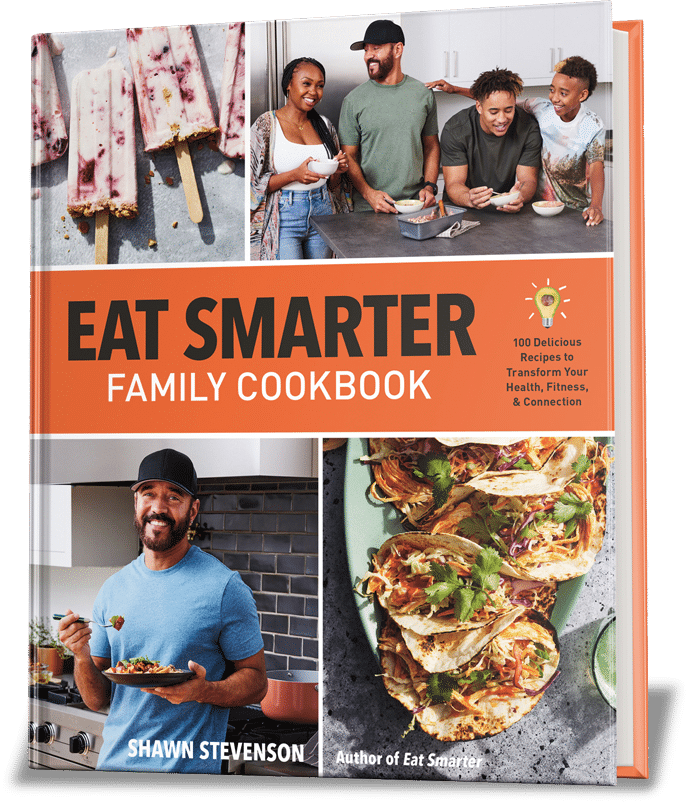
The Eat Smarter Family Cookbook is filled with 100 delicious recipes, plus the latest science to support the mental, physical and social health of your loved ones.


Share Your Voice
0 comments. Be the first to leave a comment.