Subscribe to The Model Health Show:


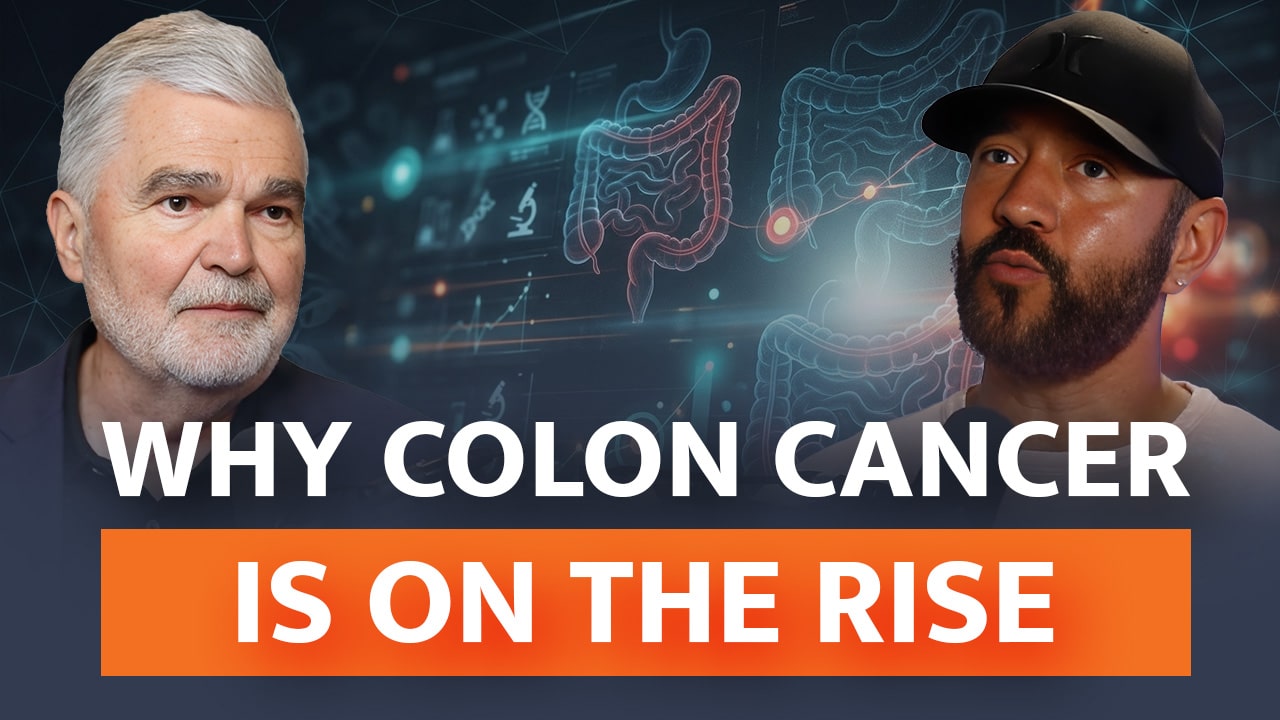
TMHS 991: The Shocking Truth About Microplastics, Microbes, & Pollution: Why Colon Cancer Is on the Rise – With Dr. Emeran Mayer
It was once believed that young adults were largely safe from developing colorectal cancer. But the sad truth is, rates of cancer and cancer deaths have been on the rise in younger age groups in recent years. Today, we’re going to unpack some of the environmental factors that could be behind this uptick and how to optimize your diet and lifestyle for a healthier gut.
Dr. Emeran Mayer is a gastroenterologist and neurologist who specializes in the intricate role between the gut and the brain. Today, he’s back on The Model Health Show for an enlightening conversation on the important topic of colon cancer. Dr. Mayer is sharing the risk factors for colon cancer, new innovations in microbiome research, and how to strengthen your gut health.
You’re going to learn about advances in colon cancer screening methods, the optimal diet for a healthy gut and microbiome, and the role your hormones play in regulating your gut and overall health. Dr. Mayer is passionate about taking a holistic role to health, as well as empowering folks to understand the brain-gut connection to make more informed decisions about their health. I hope you enjoy this interview!
In this episode you’ll discover:
- How advances in colon cancer screenings have impacted cancer rates. (6:35)
- The different methods of screening for colon cancer. (7:16)
- Why colon cancer rates are rising in young adults. (8:53)
- The connection between processed food intake and colorectal cancer rates. (18:36)
- What intrinsic health is and how to influence it. (33:20)
- How early life trauma can predispose humans to chronic illnesses. (36:55)
- What the estrobolome is. (43:34)
- Dr. Mayer’s approach to taking probiotics. (54:13)
- Dietary principles that can help you reduce your risk of developing illnesses. (1:02:51)
- The importance of regenerative agriculture. (1:03:20)
- How eliminating ultra-processed foods can improve your health. (1:07:15)
Items mentioned in this episode include:
- Beekeepersnaturals.com/model – Save up to 30% on natural remedies!
- Piquelife.com/model – Get exclusive savings on bundles & subscriptions!
- Mayer Nutrition – Shop gut health supplements, organic olive oil, and more!
- Books by Dr. Emeran Mayer – Learn more about the brain-gut connection!
- Connect with Dr. Emeran Mayer Website / Newsletter / Podcast / YouTube
This episode of The Model Health Show is brought to you by Beekeeper’s Naturals and Pique.
Reinvent your medicine cabinet for with clean, effective products powered by the beehive & backed by science. Claim up to a 30% discount at beekeepersnaturals.com/model.
Go to Piquelife.com/model for exclusive savings on bundles & subscriptions on cutting-edge solutions for your head-to-toe health and beauty transformation.
Transcript:
SHAWN STEVENSON: Welcome to the Model Health Show. This is fitness and nutrition expert Shawn Stevenson, and I'm so grateful for you tuning in with me today. This episode is filled with incredible and timely insights. As of this recording, there is a surging conversation around colon cancer with the loss of a couple of very notable people in our culture. Catherine O'Hara recently passed away with a complication related to colon cancer. She was well noted to be the mom from home alone. More recently, she was a big part of the Emmy award-winning show, the studio.
And recently we also lost James VanDerBeek, who was somebody who came to stardom through Dawson's Creek, which was a part of many of our upbringing. And I actually have a close proximity relationship with one of these individuals, and I had no idea about the situation that they were going through. And many people are suffering in silence with their conditions. And this is another advocation for us to communicate, to share with family and friends and not bear that burden of chronic illness on our own. And this could be, you know, absolutely a cancer condition, or this could be related to depression.
This could be related to struggles with our blood sugar and diabetes, whatever the case might be. Let's normalize not struggling on our own to figure things out. Even people just struggling with an injury or back pain, just being able to communicate to know that you are not alone and people care about you. And with this emerging conversation, I reached out to someone who's been in this field as a gastroenterologist for decades. I'm talking about when I was in diapers, he was treating patients and making a huge impact. And over the years, he became more and more invested in prevention. And so I ask him, is this new emergence of this conversation just a call out to everybody to run out and get a colonoscopy?
Is that what the message should be? And you're gonna be surprised at his answer. And most importantly, he brings up something that is wildly overlooked right now as the age of a colonoscopy has been reduced even further. It's still well established that individuals who are much, much younger, we are seeing an incredibly high and rapid increase in the prevalence of colon cancer in younger and younger people.
What is going on? So I'm going to be able to ask him about this as well, and he's going to share the latest science regarding this for prevention and also the best practices for finding out the early warning signs. Plus, in addition to this very powerful part of the conversation, we are going to shift gears and talk about some incredible new science regarding the gut, the microbiome, and testosterone and estrogen. Another thank goodness emerging conversation is happening right now around perimenopause and menopause. And there's a huge microbiome connection that you need to know about and this is important for both men and women. We're talking about hormones that influence all of us, and it's so much bigger than a tunnel vision focused simply on reproductive organs.
And so again, this is absolutely filled to the brim with incredible insights and information that everybody needs to know. So without further ado, let's dive right in. Renowned gastroenterologist and neuroscientist, Dr. Emeran Mayer is one of the world's foremost experts on the gut brain connection and chronic disease prevention. Over the past 40 years, his research and published work has offered groundbreaking evidence of the critical role of bidirectional interactions between the brain and the gut, and more recently on the role of the gut microbiome. In these interactions with broad implications, not only for gastrointestinal diseases, but for metabolic and emotional and cognitive health as well. He's the author of over 400 peer reviewed studies and the author of multiple bestselling books, including the Mind Gut Connection, and their Gut Immune Connection. Let's dive in this conversation with the one and only Dr. Emeran Mayer.
Thank goodness we have a legend to be able to talk to with the emergence. Right now, there's a resurgence in the conversation around colorectal cancer and recently a couple of well known. Celebrities and influential people have passed away from ramifications of this condition. One of them being Catherine O'Hara, the mom from home alone, America's mom in many ways, and James VanDerBeek to name a couple of these individuals. And I have close proximity to one of them. And with this conversation emerging, it's such a blessing to be able to talk to somebody who, this has been your space for decades. And we were just talking before the show, the conversation now with the microbiome and gut health and any related cancer, this is something that you've been studying, you know, for literally for decades.
And now it's like in vogue, in popular, thank goodness. But we get to talk to the person, and so one of the things that you shared with me was that screening. There's been a huge uptick in screening in a certain demographic, but the cases of colon cancer are actually happening at much higher levels in a younger demographic. Let's talk about what's going on here. What are some of the most important things that people to know when it comes to colon cancer? Because oftentimes we think it's idiopathic. You know, unfortunately, even in my college education, it's just like, we don't want cancer to happen, but there are certain underlying components that dramatically increase our risk. Let's talk about that.
DR. EMERAN MAYER: Yeah. I mean, you know, starting with the epidemiological numbers, fortunately, you know, and this has really been the success of the colon cancer screening, the very aggressive promotion of that there has been a decrease in adult colon cancers and the complications from it. So if you catch it early, obviously, you know, when it's still just a polyp before it transforms term into malignancy. If you catch it early, there won't be any major consequences. And I think this is largely due to this colon cancer screening program and colon cancer screening has been done in two ways.
Stool tests is famous hemoccult stool test that, you know, we did basically with every physical exam you would do a rectal exam and, you know, have a liquid that you put on a stool sample and you would you could detect if there's any blood in it, occult flood net. Then there was a development of genetic tests also in the stool which became more sensitive. And then there's colon cancer screening with colonoscopies, and that has become, I would say, for many of my colleagues in gastroenterology. So the main source of income really, and for hospitals. And the combination of these, I think, you know, has slowed this epidemic of colon cancer that we saw before.
So why do we have that situation that, you know, first of all, why was it so widespread before in all age groups? Why is it now increasing in younger age groups even down into the thirties? I mean, obviously, genes haven't changed, you know? Genetics are always a risk factor. If you are in a family that has a history of colon cancer or any kind of malignancies, then you are at a high risk and you should definitely be more aware of the risk of developing yourself.
But why is it happening in at an early age? There's gotta be something environmental going on and something that has changed. I would say in the last 30 years or so, or 20 years, we don't know exactly what that is. I mean, I would say diet being very high on the list here. But it also could be a range of things from the microplastics to any of the the hidden chemicals that are mixed entire food supply, you know, from glyphosate, which is being used in higher and higher concentrations. So I don't think we have the answer. The general, and this is what the, you know, the microbiome comes in and so colon cancer happens in the habitat of, well, most of our microbes live. The trillions highest concentration on the planet really is in our colon. We don't see them, we don't hear them, we don't feel them.
But they live there in more or less in harmony with our gut and our gut-based immune system. But it is, and I would always say, you know, science is moving constantly. So right now the status right now, we would say some aspects of the microbiome that sort of predisposes to a low grade inflammatory condition in the colon is probably the most likely mechanism. But they should, you know, mention again, we don't know what microplastics or nanoplastics are doing. We have no idea, you know, so there's a few totally black holes in, in, in our science of new developments in society. Certainly the microplastics have increased continuously, you know, like even now, if you're a health conscious individual.
And you know, follow the advice to eat more fruits and vegetables, almost all these fruits and vegetables come in, plastic containers, you know, and and plastic bags haven't disappeared either. So I would say the exposure to plastic has, if anything has increased despite our worries that it's doing something silently, you know, that is not good for our health. So I would say overall positive news in terms of fighting colon cancer in adults shocking news that it's happening in younger people. I personally also always have felt. So the whole thing about colon cancer screening and gastroenterology. People that underwent that, that process. And it's, you know, it takes between five and 10 minutes to do a colonoscopy.
People are evaluated now on their skillset. You know, the faster they can do it, the better. And there's basically no time to communicate with the patient afterwards, you know, so we've lowered the age of screening. I think it's 45 now from 50, but there's not really what I think would be the most important thing, the patient education. So if somebody has a, you know, a lot of polyps or a semi malignant polyp or even a colon cancer that's found on the colonoscopy, the most important thing in my opinion is the consultation about a healthy diet, which right now it's sort of, delegated to dieticians. I think the physicians themselves should be trained. And this, these efforts now, you know, in medical school that is finally, you know, after all these years and decades without any nutrition education, this finally is happening.
SHAWN STEVENSON: Yeah.
DR. EMERAN MAYER: But then there's also the matter of time as a gastroenterologist, are you willing to spend half an hour of time where you could do two colonoscopies and make five times as much money? Or are you actually, you know, teaching the patient what's known? Anyway, so I mean, that's in summary the way I look at this at this area. You also asked me before, does anybody need to get a colonoscopy now at 45 or even earlier. I mean, there are these non-invasive tests, you know, the genetic stool tests.
So the hemog test has kind of disappeared more or less, but the sensitivity of some of these newer genetic tests or molecular tests in stool samples is almost as good as the colonoscopy. You know, and you could say a lot of money could be saved for the healthcare system if you've, the initial screening should annual, you know, the cheaper tests starting at the age of 30 really. And only if you have a strong family history or if something suspicious is found like multiple polyps, then you should have your colonoscopy, which allows you to take a biopsy and, you know, look at the tissue.
SHAWN STEVENSON: Yeah. Yeah. And it just seems more logical, you know, if we have. Less invasive tests that can be done. You know, again, you know, one of the things that you really enlightened me to is the capacity for revenue when it comes to colonoscopies. And it's a big driver for supporting the healthcare system in of itself. And so this isn't getting into a conversation about the ethics of the physician. The physician is wanting to help the patients, but the way that the system is structured right now and the cost of running a hospital the cost of running a private practice, it's structured in a way, and the insurance as well, where you have to really focus on the monetary side in order to stay in business.
And so it's a, we're talking about a restructuring of things and it is possible because just the fact that nutrition is now being highlighted more, which is something that just, we didn't know if that would ever happen. It's happening now, thankfully. So this can be another catalyst and a big driver of this is individuals like yourself who are, again, speaking from inside of the system and sharing these insights and saying, now that we have this elevated conversation around colon cancer and we've lost some special people in our culture, this isn't a warning sign or an alert sign to run out and get a colonoscopy per se.
But we can do some minimally invasive, non-invasive tests potentially. And then if there's a red flag, then you can go for the colonoscopy because there's some risk involved with colonoscopies that aren't really talked about very often. Can you talk a little bit about that?
DR. EMERAN MAYER: Yeah. I mean, if it's done at a, as a reputable you know, medical facility I think the risk is really minimal. You know, I mean, people are so skilled now and trained to do these procedures in the minimal amount of time, you know? Yeah, there's medications involved to, you know, relax you, and you won't remember afterwards that he had a colonoscopy.
SHAWN STEVENSON: That sounds scary in of itself, but it's very minimal risk, but there, it's not risk free.
DR. EMERAN MAYER: Yeah.
SHAWN STEVENSON: Let's put it like that.
DR. EMERAN MAYER: Yeah. I mean, compared to, I would say, you know, when I started practicing gastroenterology, the risk has gone down to, I mean, nothing is zero in medicine, you know, I mean, but it's, that would not be a criteria that I would use to make this decision. But I think the ability that we have now to catch people do annual exams you know, starting in their thirties because that's where we see these really tragic cases that somebody develops, you know, metastatic colon cancer. I think we should take advantage of these, you know, to the fullest.
SHAWN STEVENSON: Yeah. And it's, again, it's far less complicated, far less time required to get these tests done. And then if there is a problem a warning sign, then we can go to something that's more, you know, kind of comprehensive as far as like a colonoscopy. Yeah. And again, we have a lot of tools at our disposal right now, but most people aren't aware of it, and our system is not structured in a way that promotes it.
And so we're advocating for that. And most importantly, how do we reduce the risk? And something you share with me years ago, you know, you were talking about the impact of food and as somebody who is a pioneer in this field, like it for you as well, is just shocking to see how little you were taught about the impact of diet and you study the organs related to processing our food, you know, the assimilation and elimination of the food that we're eating and not taught about the food that we're eating and the impact.
And this just came out a couple of months ago. This was published in JAMA Oncology. This came out literally like six months ago. Brand new paper. It looked at nearly 30,000 female nurses who were under the age of 50. And what they uncovered was that the individuals in the highest quintile of ultra processed food intake had a statistically significant, about 45% greater odds of early onset colorectal cancer and related issues.
DR. EMERAN MAYER: Yeah. And that highlights a very important point coming back to this onset in young and younger individuals. So I dunno exactly if I get these numbers right. I think in general, 40% of our food intake occurs in in, in the US in the form of ultra processed food. And I would say the key components of that is high sugar high saturated fat, high salt and no, or very little fiber. So those are the key ingredient. There's obviously a lot of additive that we don't even know. If you look at, you know, I always use that example on the plane, you know, in what the stewardesses offer. You know, it's always the choice, sweet or sour.
Do you want, you know, something in a little plastic bag that's that's chocolate based with, or pretzels and quotation marks. And you look at the ingredient list and it's a whole page. The one side of this, of ingredients that have never heard before, it's all chemicals, you know, so these pretzels are more chemistry than they have anything to do with bread or with a pretzel.
And in children, so I said in adults about 40% of food intake In children, it's much higher. So imagine from the early on you know, when I dunno at what age that really starts. But I would say at the age of three or four, you know, the body is bombarded with these chemicals and many of whom we don't really, this dyes, you know, that's another big topic right now that have never really been cleared for their safety. They get this labeled by the FDA of grass GRAS generally recommended as safe. But that's a complete, you know, that's loophole. It's an opening. Anything fits into that unless something gets killed from eating it. And so many of these ingredients that are in there that children are exposed to and I think the percentage is of the total food intake of children goes up to 60% of ultra processed food.
So that's kind of a good thing. What we're seeing right now, you know, with this political movement you know, make America healthy again. It's one aspect to attack you know, this ultra processed food component of our diet. I think the new guidelines have a lot of limitations. I'm not supporting the people that promote it. But it's certainly raised the awareness and if that will change, you know, if in the next couple of years are you not gonna get on the plane these kind of snacks or not just on the plane, anywhere you get outta the plane, there's stands with all these snacks, you know, and you look at each con each package and has the same kind of list of ingredients. It may change for, you know, conscious people that, that spend a lot of time thinking about it. But I don't think for the majority of Americans this is not changing, you know?
SHAWN STEVENSON: Yeah. Yeah. I mean that's the thing, you know, we need top down change, absolutely. But the bottom up change is gonna be most viable for us. And especially right now in the short term is what differences we can make. And speaking of the top down change, as of this recording, there was just some new policy put in place, which again, we don't know when it'll get implemented, if it'll get implemented requiring hospitals to dramatically reduce or even eliminate ultra processed food avail availability within the hospital setting, which is shocking.
Again, you would never have thought that something like that would happen. And it just speaks to, again there's nothing more powerful than an idea whose time has come. And for us to not focus on the political aspect, just to focus on the human aspect of it and the fact that we can do better. We know food matters and let's make some differences with our food. And one of the things you mentioned, and by the way, somebody can be eating what science believes to be a perfect diet for themselves and still develop colon cancer. And this, one of the other things that you, I'm so grateful to talk to you about is like it there. There isn't just this one thing, right? We have a genetic component, we have an environmental component, and there can be things stacked against you that you don't even realize.
You mentioned microplastic several times. There are numerous papers. And seeing this connection with colorectal cancer and microplastics, and this was published in Scientific Reports last year as well. And so this isn't just like a theory. There are multiple things that we're exposed to in our environment and so many of these things, if you think about it in the relationship with the microbiome are finding their way into our digestive tract. And so with this being said, so we've got the microplastics potential and being more conscientious about that, how we're s you know, cooking our food. It's so easy. We have the microwave culture, pop it in the microwave, in the plastic container. We know that is one of the fastest ways to get billions and billions of microplastics and nanoplastics into your body is microwaving food and plastic.
DR. EMERAN MAYER: Yeah. Use the microwaving in a plastic container. Yeah. You know, I mean, this is like, it's almost insanity to do this, you know? But it's almost like, you know, with smoking, I mean, smoking was around for such a long time. Nobody really paid attention to it. And then it took, you know, decades of very hard fight and the government had to step in. And I think you need that kind of in. I think things are moving faster today because there's a greater awareness and interest in health and wellness. And I always wonder, is this really just a bubble effect that we are seeing that, you know, we live in LA and we think, oh, everybody is talks about healthy diet and it was, is this really happening all over the country in the small towns in southern states, in the central of the us?
I don't know. You know, it's I kind of doubt it. I think we, we have this illusion that there's tremendous progress in our awareness, but in reality and then there's the cost factor also. You know, if these healthy things are two times as, or three times as expensive then it's only a small percentage of the population are able to afford it.
SHAWN STEVENSON: Yeah. That part, the accessibility.
If anybody knows about seasonal allergies, it's me. One of my earliest memories in my relationship with my wife, then girlfriend, was spending time at the ER because I couldn't breathe every season. Without fail, my allergies would act up and just have me so congested that I was suffering, struggling to sleep at night. Thankfully, I changed my life. I changed my health. I changed what I was eating, and now allergy symptoms are far and few in between. Occasionally a cat will irritate me a little bit, but just being able to change the inputs that I'm giving my body. But one thing that I would never do regardless of my symptoms is turn to these.
Terrible, dangerous, conventional products on store shelves that are proven to largely be ineffective compared to some of the most science-backed natural allergy prevention and treatment that is now available to all of us. One of my go-tos back in the day was a medication filled nasal spray that was in fact habit forming had I had my hands on some more money, some more cash, I would've kept using it and using it. I was using it way too often, and I didn't even realize it. The habit crept upon me very addictive and very dangerous. Today what I turn to and what I recommend is a non-toxic, non-habit forming science-backed nasal spray that cleanses and soothes our nasal passengers, especially during allergy season, to help to flush out irritants, soothe sinus irritation, and defend against germs that we inhale.
What I'm talking about is the propolis nasal spray from Beekeepers Naturals. Go to beekeepersnaturals.com/model right now and you're gonna get 20% off of their phenomenal propolis nasal spray max. That's B-E-E-K-E-E-P-E-R-S naturals.com/model, and you're gonna get 20% off. The propolis is science affirmed to reduce histamine response and defend against germs. Right on the spot. The xylitol helps you expand the nasal passengers to ease congestion and a saline solution naturally clears and moisturizers. And to top it off, oregano oil invigorates your sinuses for a deep, refreshing ability to breathe. Many of my friends and family members swear by the propolis nasal spray max, including my videographer.
Say hello Connor. He's the one who really affirmed its effectiveness and because of him, I made sure to keep it on our superfood cabinet shelf, our medicine cabinet as well, for if any of my family members are dealing with a little something and they need to breathe easier and top all of this off with the propolis immune support throat spray, this is something that we use preventatively and also when we need that extra boost to help with allergy symptoms.
Beekeepers now has a great new menthol version of their propolis throat spray, but the classic spray is something that I use every day, get a couple of sprays in just that. Great immune system support propolis contains hundreds of bioactive compounds, including essential vitamins and antioxidants. It really is remarkable, again, backed by science. These are the supports that I wish that I had all those years ago. Head over there, check them out, get stocked up right now. Go to beekeepers naturals.com/model for 20% off. And by the way, beekeepers is the number one, science-backed allergy treatment in the world now found at places like Target Whole Foods, Walmart, CVS, and Walgreens. Of course, you could pick it up there right now. Or as you know, you get 20% off when you go to beekeepers naturals.com/model to really stock up. Head over there, check them out. And now back to the show.
SHAWN STEVENSON: You know, again, we're with this emerging conversation, thankfully, this is not to discourage getting screened at all. We want to advocate for that. We also want to advocate for understanding we can get more people buying in on earlier screening with these less invasive methods. And we need earlier screening because of the environment that we're in right now. If we're doing a lot of these things where the things that you're talking about, there wouldn't be this need.
Yeah. You know? But right now, this is the way our system is structured and our system is leveraging the fact, and unfortunately, you know, it's kind of propping up our economy, not just even the hospitals, right? It's dependent on us being sick. And this is the world that we're living in today.
DR. EMERAN MAYER: Yeah.
SHAWN STEVENSON: Unfortunately. And so for us to change that, it's going to take a lot of collective voices, but it starts with you as an individual and what you're doing with your family. And so we address the ultra processed food issue a little bit, but there are some other components here as well. Because again, there can't be this one thing, this one smoking gun.
DR. EMERAN MAYER: Yeah. And let me just comment on this. So this is something that I sort of focus on this more and more that, you know, a system's biological view of health and illness. You have like this this intrinsic health that our body generates. It's, and we're basically an elaborate machine that evolution has taken millions of years, billions of years to come up with. And it's programmed for health and survival. And one way does it, is by creating being in a state of balance of homeostasis. That's the ultimate goal of evolution, that we earn this. And we've pushed this so far away from that state in many situations by different forces. So diet is obviously an important one, but many other lifestyle factors and mind states exercise basically all the major influences that we are exposed to in our society have an influence for some.
And there's obviously the genetic vulnerability underlying this. So the intrinsic health is something that's determined by our genetic background. Some people are super healthy. We see this with, you know, with longevity. For example, healthy longevity. You know, some people lived very unhealthy lifestyles and live into their hundreds. And, but it's influenced to varying degrees by these other factors. So one person, let's say, has the good genes, but you know, diet contributes like 60% of what we call the variance, 60% influence on the, but then they still, you know, if they're depressed or chronically anxious if they exercise, what air they're exposed to, you know, some, for each individual they contribute a significant amount, but they differs.
Nobody has the same, it's not like everybody has 60% diet influence. And you almost have to say to ultimately to, you know, estimate the risk of somebody to develop diseases, we'll have to use AI to enter all these variables and then calculate a risk score for that person. If you have a very low risk score, be afraid, don't need to do many of these tests throughout their lifetime. But there's gonna be a lot of people that are pretty high in, in, in this, in, in these categories. But this system's biological view of health and wellness and disease, I think is a key concept. We don't learn this in medical school. You go for one cause and it drills down to one receptor that's overstimulated or yeah, I would, and you know, talking about the one receptor, so GLP one obviously comes up, and we were lucky. Every once in a while a compound like this comes up that covers many of these factors that contribute to the we still don't know exactly how it works on so many different disease processes could all be a consequence of affecting body weight and metabolism, but could also be that it affects many of these other you know, what we call the exposome, the influences from the environment on our genetic on our intrinsic homeostasis.
But every once in a while that happens. I think it's the exception. It's much more. You know, just looking at food, for example, food is not just one thing. It's not just the calories, it's not just the fat, it's the different types of fibers and it's the different types of and there's a tremendous variety of, on, on each of these. There's thousands of fiber molecules, hundreds of polyphenol molecules. So to come up with what's still invoke today, you know, a lot of the influencers that come up with this one magic thing, you know, if you do this and they generalize it, everybody will get benefit from it. That's, it's not the case, you know?
Maybe somebody would, that plays a big role, but in somebody else it, it has not the same effect. I often think about this, we've done a lot of research on this early life trauma, and that's one of the big risk factors, you know, that predisposes people to chronic illness throughout life. And you know, there's a good example like Holocaust survivors who went through undescribable trauma and or war survivors. And then now we have these several wars going on. I mean, you would think if what we study in the laboratory at, in the university setting is generalizable, everybody who was involved in these war situations or was in a concentration camp would be affected. But it's a lot of Holocaust survivors that live into their nineties and hundreds.
That's always, and that definitely have not been people that went to the gym every day and, you know, paid attention to their diet. They lived a regular lifestyle, you know, yeah. I think for me personally, this is one of the most important insights and lessons that I've learned is to look at this truly. We call it holistic view of health and disease. That's not one thing and it's not one remedy and it's not the same for everybody.
SHAWN STEVENSON: Yeah. Yeah. Thank you for that. And it's a, as you just mentioned, it's a kind of an overall stress load, that it's your own blueprint. Everybody has their unique blueprint and it's gonna be different pieces or puzzle pieces that are going to be effective or harmful to different people. And you mentioned earlier, you even said the mind state. With this being said, what is the connection between our thoughts, stress, you know, as you called it, your mind state when it comes to our gut and our microbiome?
DR. EMERAN MAYER: Yeah. So I want to start with one example where we know a lot about this and this is the increased risk of colon cancer that patients with inflammatory bowel disease, ulcerative colitis have, and so that's well established. What's less well established and you know, we've gotten involved in this kind of research over the last yeah. 10 years or so, how mind states affect the activity of the colitis.
So most gastroenterologists would say ADD has nothing to do with stress. This is a gut disease. You know, it's an immunological disease has to do with t-cell, with t lymphocytes. And, but there's pretty good evidence that, for example, an increased stress reactivity that some people have, influences how many recurrences of the ulcerative colitis have once they've gone into remission. So a big factor that, that influences the activity, inflammatory activity in the gut of these people comes from the mind, you know? And that's pretty clear Cut. So we have one now. Not all these increases, certainly not in young people, even though inflammatory bowel disease is also increasing in younger patients.
So there's some connection, but the low grade inflammation that's harder to measure, you know, is asymptomatic. But from animal studies, we know that low grade inflammation of the colon is a risk factor for colon cancer. So it's quite plausible given the importance of the brain gut microbiome interaction and the role, the prominent role of low grade inflammation that we have seen in animal models of IBD. You know, I would say there's a definite link between if this affects, you know, not everybody who is stressed will develop these inflammatory changes in their, in, in their colon. A lot of people will never know it because they're not gonna have colitis symptoms, you know, but it's is inflamed.
But we do know from many studies that, that stress, chronic stress, acute stress, changes the microbiome and engages the immune system through that. You know, it's a good example how mainstream gastroenterology, just like it has happened in IBS before and is kind of very conservative. You know, that this idea that if you are chronically stressed, that this affects your colon and if you also have genetic risk genes, this would increase your risk of developing colon cancer and a bad diet. I think that, it's again, this multifactorial influence on the system, but the mind state definitely plays a role in this, you know?
SHAWN STEVENSON: Yeah. Thank you for sharing that because again, we tend to put all of our eggs in one basket, or we just throw up our hands and, you know, we are just complete victims to the different circumstances that might manifest. And so we know there's a relationship with stress and this kind of inflammatory cascade. And also the influence that stress has potentially on our overall gut health, our microbiome, and this is where some of your most recent work is at. Looking at the influence that our microbiome has on the production of different hormones and neurotransmitters, and the influence that this can have on our cells, on our DNA. And so this one I wanna talk about next, I want to ask you about this emerging work with the estrobolome.
DR. EMERAN MAYER: Yeah, I mean the reason that we, that this conversation has only started recently reflects another thing of our society that, you know, that women's health has not been viewed equally important as men's health. You know, many of the clinical trials have always been done in males, also in, in animal studies. 'cause it's easier it's, you have to have the twice the sample size, more expensive to do males and females. So it's kind of amazing that, you know, half of the population undergoes menopause and per menstrual symptoms and that it's taken us so long before this has become, and it's still not mainstream.
You know, it's not so this troon it's a group of microbes that is involved in the. In the reactivation and recycling of estrogen, I should also say testosterone and many other substances that the liver ex excretes. You know, the liver is, are main cleaning organ in the body together with the kidneys. But in liver, a lot of processes happens that mo molecules that are no longer needed that have performed their their purpose are modified on a molecular basis, which allows them to be excreted through with the bile and the bile empties into the small intestine and then goes down, you know, and then ultimately you would think a simple, like if an engineer had designed this, they would just say, okay, all this is targeted for excretion.
But not in the body. You know, in the body you have this group of microbes that have a specific enzyme called beta glucuronidase, which takes off that molecule that the liver at it, to make it exc executable. So it's kind of going against what the liver wanted to do, you know? And then these molecules, once you remove that sugar component becomes water soluble and can be reabsorbed the end of the small intestine and then the colon back into the circulation. So this is a significant source of estrogen molecules and testosterone molecules in the body that was already scheduled for excretion, but then the microbe saved it and it's being reabsorbed. In general, this process is is a beneficial process both for us. You know, it as long as the ovaries are the main producers of estrogen or as estradiol the main, you know, the main estrogen molecule, it's not that important.
It makes up about 10%. But once the ovary is shut down and nobody can change that or wants to change it, then it becomes the only, the domain source of estrogen in a woman's body. And and it's variable, you know, shutting it down is a universal biological process that affects all women, but the amount that's being recycled depends on what kind of microbial ecosystem or composition each woman has. Some have a very powerful system. So they have higher estrogen levels after menopause and others, it's almost non-functioning. And so they have a lot more symptoms. And so a colleague that are working with at UCLA, Dr. Meriweather, very smart guy which you can tell because he did his undergraduate work in philosophy as a philosophy major.
So for the very few physicians or researchers that has that background. But I love to talk to him because he always has these amazing ideas that we could actually engineer. Microbes that have the special capacity, that have more of this beta glucuronidase. So they will be more efficient in doing this recycling. And you, it would be personalized. You would give this to women. They have a lot of symptoms. So instead of hormone replacement therapy, you would basically just give them probiotic that would stimulate the recycling of the estrogen. I mean, it's an amazing idea, I think, but it also, you know, it has a benefit, potential benefit for men.
'Cause obviously so many people take, you know, testosterone supplements because you could manipulate that level as well, you know, with a different type of, so it would have to be a different microbe that is specialized on. So what it said about this enzyme is beta glucuronidase. There's hundreds of different sub forms of it. Some specialize for estrogen, some specialize for testosterone, some specialize for other chemicals that we are excreting. So you could ultimately, you know, David has that future plan, which I think is one of the most exciting things that I've heard, to create specialized bioengineered probiotics that will allow you to improve your your hormone metabolism.
You know, I mean, it's and I think this approach, I mentioned this to you earlier I think the ESTRO alarm is an exception to this, but when it goes about diet, I always say. We wouldn't need to do any more research because we know all the answers already. What would be the optimal healthy lifestyle for health and wellness and prevention of disease, even in our, you know, contaminated, modern world. But science will not be happy with that, you know? And you can't make that much money with just recommending, you know, how many apples you have to eat per day and you know how much fiber. But there are developments going on that I think are gonna revolutionize the healthcare system, how long they will take.
Some of them are already here. Give you two other examples. So one is the roam and being able to influence these, this reactivation, recycling of hormones. The other one would be bioengineered fibers, you know, there's thousands of fiber molecules. So when we talk about fiber, we think this is one, one molecule that you have to, and so a lot of people do this, you know, they most of these commercial products that say, you know, you increase your fiber intake it's one fiber type, but the microbes are specialized in all these different fibers.
So when you eat a healthy plant-based diet you deliver these thousands of different molecules and it forces your microbial ecosystem to add more and more specialists that can handle these different fibers. So the more diverse your plant-based diet is, the more diverse your microbiome will become, because you need all these guys to break down the fiber into, you know, often it's the same end result is. Short chain fatty acids, it's health promoting molecules. You know, butyrate is sort of most well known, but that's another, so there's a company called one Bio that has just launched the first product. So they take natural fibers and slightly modify them and make them water soluble. And they've created what they call a glyco pedia, which is a collection of hundreds of different fiber molecules that are all slightly manipulated so they can all, so you can take a teaspoon, put it in, in your water, and you won't even notice that you now adding 20 grams of one type of fiber to it.
You can add four teaspoons of different types of fibers, and then you have this variety, but as you would get by eating, you know, 30 different vegetables a week. So this also has a revolutionary potential, you know, because I doubt that people will really dramatically change their dietary habits, the majority to go to that, what's currently, you know, considered the gold standard, 35 vegetables, fruits and vegetables a week, different types.
It's feasible. So we are actually practicing this in our own family, but not everybody can do, it may not be affordable for many people to but so I would say, and then there's a third examples of this modifying existing probiotics or microbes. And that's probiotics. So generally probiotics have been used for treatment of inflammatory bowel disease and, but what people have noticed. The minute you stop taking them, they're basically, they're gone from your gut. You know, they're not able to colonize your gut, particularly inflamed areas. If you have ulcerative colitis, they won't stay there. So a company in, sort of company in Vancouver that have been affiliated with, they have developed you know, bioengineered probiotic, taking a very commonly used probiotic, made a small genetic change in that.
So now is actually thriving from these inflammatory mediators. It, it feeds on these inflammatory meters. So it's, it goes, if you swallow one as probiotics, it homes into that area of inflammation will only live there as long as there's inflammation because that's when it gets its nutrients and it will die off. You know, once the inflammation is gone. So also completely revolutionary way of treating inflammatory bowel disease, for example. These are just like three examples I gave you, and I think, you know, right now I consider myself a big fan of probiotics. Not sure, you know, I think if you like them, if you feel good, take them.
But it's not a dramatic effect, you know? But these new things that are coming down the pipeline are really revolutionize, you know, what we can do with fairly natural means. You know, it's not like taking a new chemical. It's taking an organism that lives in your gut and slightly modifying, you know, its properties.
SHAWN STEVENSON: Have you noticed that a lot of skincare products are now adding green tea extract to their ingredients? And for good reason, a review of 20 studies published in the Journal of Skin Med revealed that green tea is effective in reducing acne, dermatitis, warts, keloids, rosacea, and many other skin issues. This is incredible. But the biggest benefits were seen when green tea is consumed versus being utilized topically. And the very best source of green tea is matcha green tea. Now, matcha is out here heavy in the streets. People are becoming matcha, girlies, matcha boys. All right? But the traditional matcha is being distorted a little bit.
It's being Frankenstein up a little bit, but the traditional matcha is absolutely overflowing with unique benefits, including benefits for our skin health. Now, here's the rub. There's a ton of different pseudo matcha out there, or low quality matcha. And for myself personally, there's only one matcha that I drink and is quadruple toxin screened for purity, and is 35% higher in L-theanine, which is clinically proven to help to.
Stress induced skin irritation, absolutely amazing. The only matcha that I drink is the Sun Goddess Matcha from Pique Life. Head over to Pique life.com/model and you're going to receive up to 20% off their phenomenal Sun Goddess Matcha plus all their other award-winning tees. And in addition to up to 20% off, you're also gonna get access to a free starter kit that includes an electric frother.
Now I'm about that froth life. I use my frother every single day. And to top it all off, you get to try Pique Tees risk free with their 90 day money back guarantee. So again, head over there, check them out, Pique life.com/model. That's P-I-Q-U-E-L-I-F e.com/model for up to 20% off. Plus some other amazing bonuses. This is the real matcha. This is what matcha was always meant to be. Nothing added, no preservatives, no funky sugars, no artificial sweeteners, just the very best matcha green tea in the world. Head over there, check 'em out. Pique life.com/model for up to 20% off. And now back to the show.
SHAWN STEVENSON: Wow. Yeah. You told me years ago about your skepticism about the probiotics out there supplemental on the market. And again, it just makes sense just not being able to have the capacity to really colonize and really change things in a notable way. And you gotta keep taking them. And also some people, again, it could be an end of one experiment where they do find relief or whatever the case might be, but this is one of the reasons we don't have really conclusive data about like supplemental probiotics. We've got far more data on prebiotics.
DR. EMERAN MAYER: Yeah.
SHAWN STEVENSON: Right. And being able to provide the fiber types for our bacteria to do what they are designed to do, which is to create these chemicals in us. For us, and this speaks to the benefit when we are talking about the estrobolome as well. Just to step back to that really quickly, this is revolutionary. Like this is one of those things that should really grab our attention because we have been kind of programmed or maybe undereducated about estrogen. Not maybe. Definitely. And also just seeing it strictly as this is just an ovary related thing where we know that. Estrogen is being produced. Men don't have ovaries, but we have estrogen.
Yeah. All right. Estrogen is being produced by other cells and tissues and organs as well. And the relationship with the microbiome and the gut should really make us all stand at attention. Like, whoa, wait a minute. Hold on. And there are things that we can target with the microbiome that could potentially help to provide relief from estrogen related decline in, in the case of perimenopause and menopause, and also in, in the domain with men with testosterone, the same thing. So how can we keep more of these beneficial compounds around? Because what we don't get educated about is our gut is heavily related to the processing, the removal, digestion, I would say, of these hormones. And also recycling,
DR. EMERAN MAYER: yeah.
SHAWN STEVENSON: Of these hormones. And so why are we not paying attention to this?
DR. EMERAN MAYER: I think it's a new, it's a new philosophy in medicine quite honestly. And if you talk to many of my colleagues about this, they would've never heard about it. You know, it's it's become a very hard thing in the startup phase because startups seen, you know, were a lot of people now realizing, wow, just this has the potential is huge, you know, and there's a lot of investment money that goes into it, but the mainstream medicine and science has not really embraced that yet.
SHAWN STEVENSON: Yeah. Well, again, thank you because you're changing this and, you know, conversations like this reach a lot of people and a lot of practitioners as well. Just to start to investigate this more, and, you know, obviously there's a incredible domain available for bioidentical hormone therapies. What if this is beyond bioidentical when your body can produce it in you for you by addressing your microbiome and addressing your gut. So it's pretty cool.
DR. EMERAN MAYER: And there's one advantage. You know, understand, I there's very little research so far on the testosterone part of this recycling, but, you know, it's well known taking testosterone in injections or in any supplementary form, it will affect your own system. So it, it will compromise. It's hard to get off them. I mean, not that I'm taking them, but I've heard people talk about it. It's hard to get off it. If you generate these with your natural mechanisms, you probably won't have that withdrawal effect. You could always stop it, you know? 'cause it's not like adding a boost that's un physiological. So that's another advantage I think, of using the body's own wisdom and the microbial wisdom combined to come up with these new therapies.
SHAWN STEVENSON: Amazing. Well, we've already covered a lot of ground and we started off this conversation with addressing, again, this highlighted conversation of colon cancer and the very best form of treatment as prevention, you know, and just doing what we can, stacking conditions in our favor. And obviously diet is a big component of that. It's not everything, just to be clear again, but this is one of those things that we know has a in big influence and we can influence it. And having you here, what would be three dietary targets or dietary principles for us to follow, to help to reduce our risk of developing chronic illness like that?
DR. EMERAN MAYER: You would have to go back to, really, to the microbiome. So right now, I think you know, we talked about this earlier, sort of a commonly discussed theory is that it's a low grade inflammation that the microbial interaction with immune system in the gut creates. And so the standard American diet is prone to create this low grade inflammation. So I think it's not one simple thing. It's definitely, you know, eliminating the ultra processed foods with the sugar. And for a lot of people, this would be number one from, for things that we know, you know, we can't do much about the chemicals. Well, you can if you have access to regenerative, organic agricultural products, you know, on farmer's markets.
It's definitely another way of doing it because there's so much in the, in, in the soil. You may think about, you know, if you eat these vegetables that, that are you know, that, that are grown in a natural environment, well they are exposed to their own microbiome. You know, which the chemicals that we put in the soil, I mean, it's a little of a diversion chemicals that we put in the soil. And the chemical fertilizer is suppressing the microbiome of the soil, which is a major source of stimulation for plants to produce these health promoting molecules. So if you bite, you know, from. You know, plant-based food sources from areas that were only grown with chemical fertilizer and never or exposed to this microbial, this soil microbial communication with the root system.
You may be fooling yourself, you know, if it tastes good, it looks good, but it's devoid of all the benefits that you normally would get from it. So I think if you can do it, you know, go organic, ideally go sustainable, organic and regenerative organic certainly, you know, red meat always comes up and it's, it's an ongoing battle. We see it now with the new food guidelines, you know, that has been both the fat, the animal fat, and the just the red meat has been you know, trivialized as an important factor. So now, you know, people are being encouraged to increase their red median intake, protein intake and beef talo and, you know, stuff like, and butter.
But there's an extensive literature that's shown that there is an increased risk you know, of colon cancer with these animal based meat and dairy products. You know, it's not I mean, if you have your steak once a week, it's not an issue. But if you have your two hamburgers every day and that's your main, and your french fries, deep fried french fries, you are exposed to something that's not healthy for you. And that increases your studies. That has shown you know, it increases the risk. It's amazing. I mean, coming back to these new food guidelines, you know, this was a commission that came up for of highly qualified people that were invited to contribute to these new guidelines. But then the report to the commission was not publicized.
It was overworked by politicians under the influence of lobbying groups, by the American Beef Council and, you know, the dairy industry and all this. And so they added this component to it, which was not part of the original proposal. Coming back to this, you know, society obviously has, its has many influences on our food quality. But coming back to the simplest thing what would you do beside, besides going to a largely plant-based diet? Ideally coming from, or organically grown food, eliminating ultra processed foods as much as possible. I would consider those two, the two main factors, you know, that I would, the others play probably not as important roles.
But yeah, like, I mean, you can't avoid the exposure to plastics, you know, living in our society. Just but I think these two things, avoiding the ultra processed diet and going to a largely plant-based diet, which are now called the, it's an ancestral diet. It's not just a Mediterranean diet. Even though I have a lot of positive memories and associations about eating this diet in Italy. So for me it tastes better just because of that. But you go to. Traditional Asian diets very similar. You know, you go to the remnants of hunter gatherers on the Amazon, on the Orca River, same thing, two thirds or more plant-based, even though they're surrounded by animals, they have learned it's not good for them to just live off all the animals around them.
So they eat berries and roots and tubers and nuts. So yeah I think this ancestral largely plant-based diet need a vegan nor vegetarian under for ethical reasons, you know, which I totally understand is probably the advice that I would give.
SHAWN STEVENSON: Okay great. You know, thank you for that because again, this isn't pointing to the exclusion of anything. It's pointing to the focus on the things that we know to be most influential for a gut microbiome, which is having those inputs, those data points of different fiber types. Right. And you know, again, when I was in school it was like soluble and soluble. But there are all these different, every single food has its own unique fiber that it's providing, unique data, right?
And we're taking on basically the microbiome, even if you want to think about it like that of the blueberry or a microbiome of the avocado. It's like data points to communicate with our own microbes and getting a diversity. And so you mentioned, again, we wouldn't have a need for these supplements if we were all kind of living in accordance with how we evolved, which is having, the reason we have all these different microbes is because we had traditionally had all these exposures to different things.
But over time, and you see this with hunter gatherers, their diversity of their microbes versus the average American is dramatically different because we are no longer providing those inputs. And so making it a mandate, as you mentioned, and one other thing y'all want to throw in here that you talked about briefly is the exposure to chemicals in our food as well. And if we can do what we can to, again, if the accessibility is a, is a priority for us to find accessibility, organic regenerative farming. These are all things that we can check off. We can start to normalize, but there's controversy around that. Well, organic doesn't really make a difference. It just depends on where you look, because one of the most, we're talking billions of tons has been utilized. Chlorpyrifos.
DR. EMERAN MAYER: Yeah.
SHAWN STEVENSON: Pesticide. We know that it creates havoc with the microbiome. It's related to all these different birth defects and chronic diseases, and it's been caught up in red tape, you know, because also our food system can become reliant on some of these compounds as well to grow our food. It's just like, well, what if we, okay, it's banned now. We lose all these crops. And so it's not to villainize one particular thing, it's to know better and to work towards that. That's one of the things that I admire about you as well, is like you advocate for us to do that. And with all this said where is a good place for people to connect with you, to follow you, to just get into your universe? You've got some great stuff that's coming very soon for everybody as well.
DR. EMERAN MAYER: Yeah. So since we last talked you know, gotten into a lot of exciting projects. So the best way to connect to, you know, my world of information and products is go to my website, emran may.com and then it gives you all these channels that you can go, you know, from hundreds of podcasts, hundreds of newsletter posts. You know, there, there's a lot of information there. We've also created something in the last year together with our son Dylan this brand male nutrition, where we selectively have identified certain areas that are missing in the diet. Like poly, you know, polyphenols. So these molecules that plants make to protect themselves against disease and against UV light, against pesticides.
And these compounds not as popular in, in the, in, in the late press as fiber, they've been studied in very large scale, NIH, you know, well controlled studies like flavonol and other polyphenol. So that's one exciting thing. This also like, you know, one thing that we picked a natural product this extra virgin olive oil from 800 year old trees. I find that so at, so attractive because, so it's unusual for a tree to survive 800 years. They're exposed to extreme heat and UV light and you know, pests and all kinds of things. So these trees must have had a selective advantage, which are these polyphenols, you know, they have the highest concentration of polyphenols, not just in their leaves, but also in their in, in, in the olives.
And so we've identified a product that is third party tested for high polyphenol content. And our vision of this is to have a whole, you know, store of similar kind of polyphenol related products that nobody talks about, you know, but that we know has probably the same beneficial at effects as fiber dust. So that's in, you know, in terms of dismay nutrition branch.
SHAWN STEVENSON: And where can people get this olive oil?
DR. EMERAN MAYER: They can go to the website it's mayer nutrition.com.
SHAWN STEVENSON: That's M-A-Y-E-R.
DR. EMERAN MAYER: M-A-Y-E-R nutrition.com. And yeah, so that's, I mean, there, there's always a limited supply. You can imagine that of course, right? This is not a mega product. You know, it's.
SHAWN STEVENSON: With these, speaking of which, you know, centuries old, these are adaptogenic compounds. These are adaptogenic trees.
DR. EMERAN MAYER: Yeah.
SHAWN STEVENSON: You know, they've really found a way to be resilient. And so again, it's just passing on these traits and picking up these, and the polyphenols in particular, like you mentioned, there's, so we, there's so much data on this and in particular the impact it has on our microbiome.
DR. EMERAN MAYER: Yeah. And then, so the other two things, as you mentioned, so because, you know, my first book, the Mind God Connection has done so well, continues to do so well. My publisher, Harper Collins, asked me if I would write a 10 year anniversary edition, which have just completed, it will come out in October. And we've also created a, something for the lay public and easily digestible and practical Guide to Optimal Health and Wellness, which has both.
Science, but also lots of recipes and dietary recommendations, not just dietary dishes. And I've done this with a with a co author because I'm obviously not a chef and, you know, had to consult somebody who, who knows this as well. Really excited about these two book projects. Yeah, and back in my mind I still have this this idea that at some point I would like to do a documentary on this concept of the interconnected planet, you know, which would summarize many of the things, the topics we talked about today, because this holistic view of the world and our health and diseases.
Affects everything, you know? And we as a society have been very successful with our Western approach of scientific, rational but limited approach to identify new things. But we've also missed out on a lot of opportunities. Like we talked about taking advantage of this holistic intelligence of, and wisdom of the system. So if that film ever is gonna happen, we have a teaser made of it. But so that's down the line.
SHAWN STEVENSON: Dr. Mayer, thank you so much for coming to hang out with us today. It's always enlightening talking to you and I appreciate you being a pioneer and pushing these ideas into culture because it's not just everyday people that you're impacting, you're also impacting physicians and practitioners and people who are. Impacting the lives of other people. And so the work that you're doing is, it's invaluable. So I appreciate you.
DR. EMERAN MAYER: Yeah, thanks. And you know, for me also personally, the mission that I see for myself at this stage of my career, I don't need to publish any more papers, you know, and I also don't really necessarily need to lecture to my colleagues in gastroenterology. 'Cause I mean, they're more interested in doing endoscopies than some of these topics that we talked about. But this education of a large segment of the population is definitely becoming my main mission, you know? And whatever I can do to enhance that with, you know, with the media, social media, book publications, and hopefully the documentary film as well. Yeah, that creates my passion at the moment.
SHAWN STEVENSON: Yeah. Well, you are appreciated. I thank you so much, the one and only Dr. Emeran Mayer, everybody, thank you so much for tuning into this episode today. I hope that you got a lot of value out of this. Keep this conversation going. Please share this with somebody that you care about.
Send this directly from the podcast app that you're listening on. Or of course you could take a screenshot of the episode, share it on social media. Tag me. I'm at Shawn model tag, Dr. Mayer as well. I know that he would love to see the love. This is such an important conversation. We covered a lot of ground today, but again, we need to help to shift our system towards prevention, towards, of course, early detection with non-invasive and minimally invasive testing that we now have available just to get more buy-in from people, to get people in the door to make sure that our health is on point.
With this being said, restructuring our current healthcare system is going to be a mighty task, to say the least, because it is so focused on monetization just to keep everything running as is. And disease prevention is not a very good business model for the way that things are currently constructed. And so we're advocating for change in multiple aspects of this. And also, again, this powerful conversation around the estrobolome and the impact that targeting our gut and our microbiome and the health. Of our gut and microbiome and influencing symptoms of perimenopause and menopause, and also andropause as well when it comes to men's health.
This is incredible and something for us to now, again, you heard it here first, to be able to have our eyes out for coming down in the next couple of years, more information about this, and again, more ways for us to take back control of our health, take back control of our minds, and stack conditions in our favor. I appreciate you so much for tuning in. If you enjoyed this episode, please if you're listening on Spotify, leave a comment, make sure to like this episode. And if you're listening on Apple Podcasts, please pop over and leave a review for the Model Health Show. It really does mean a lot. And of course, you could pop over to the YouTube channel and get to hang out in the studio with me and my guests and share your voice there as well. We've got some incredible master classes and world-leading experts coming your way very soon. So make sure to stay tuned. Take care, have an amazing day, and I'll talk with you soon.
Other episodes you might be interested:

Maximize Your Energy
Get the Free Checklist: “5 Keys That Could Radically Improve Your Energy Levels and Quality of Life”
HEALTHY MEALS EVERYONE WILL LOVE
The Greatest Gift You Can Give Your Family is Health
When you gather your family around the table to share nutritious food, you’re not only spending quality time with them - you’re setting them up for success in all areas of their lives.
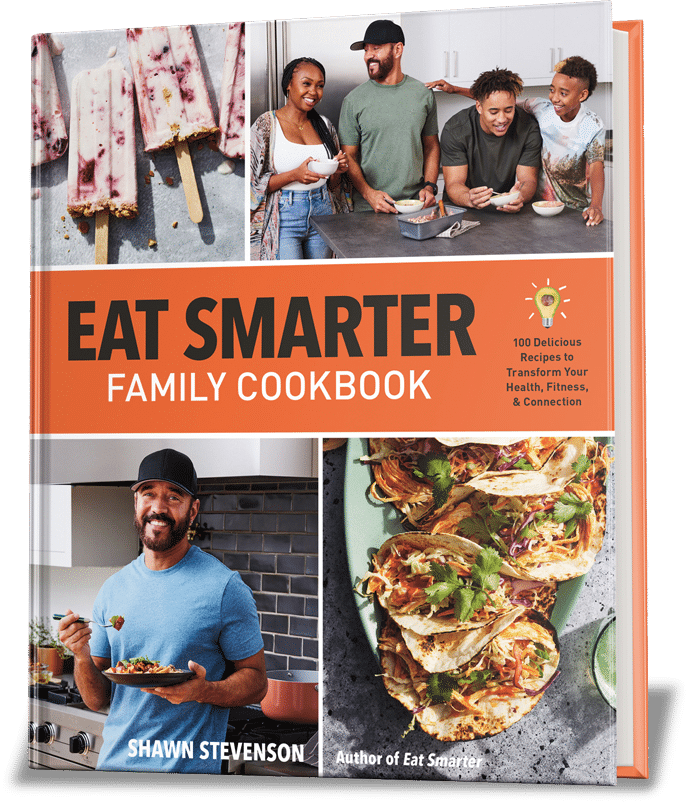
The Eat Smarter Family Cookbook is filled with 100 delicious recipes, plus the latest science to support the mental, physical and social health of your loved ones.


Share Your Voice
0 comments. Be the first to leave a comment.