
Subscribe to The Model Health Show:


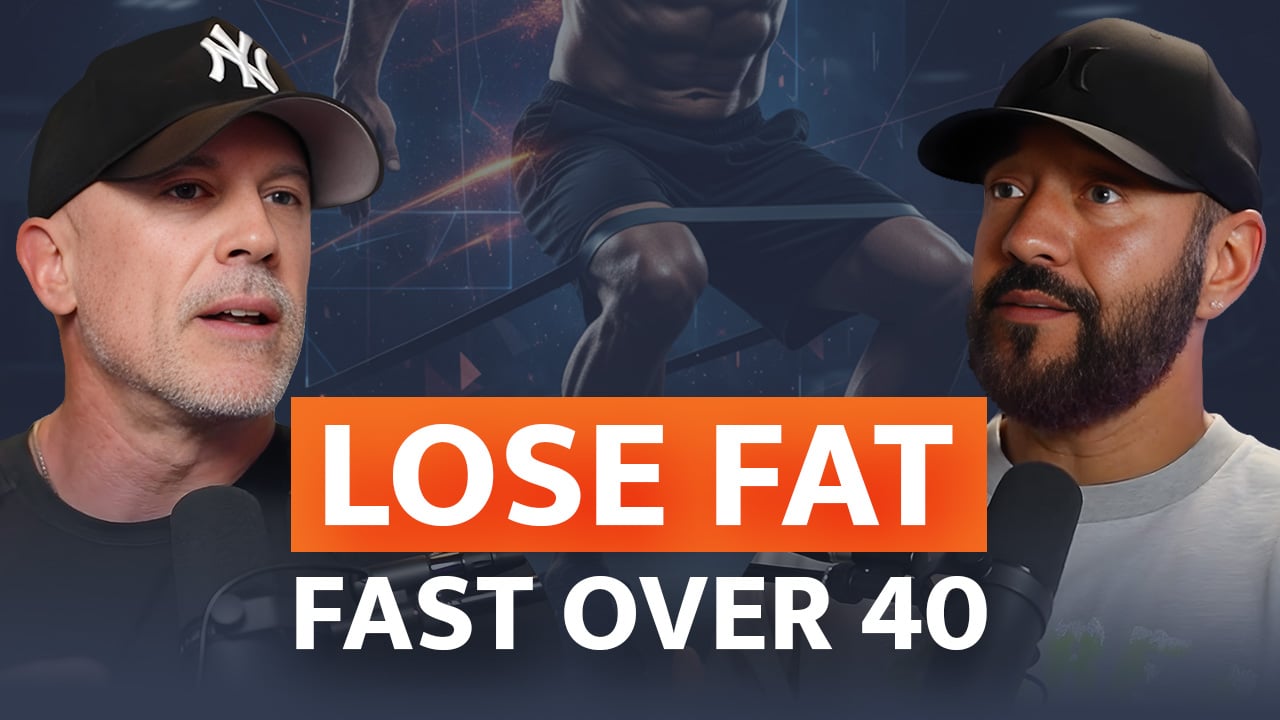
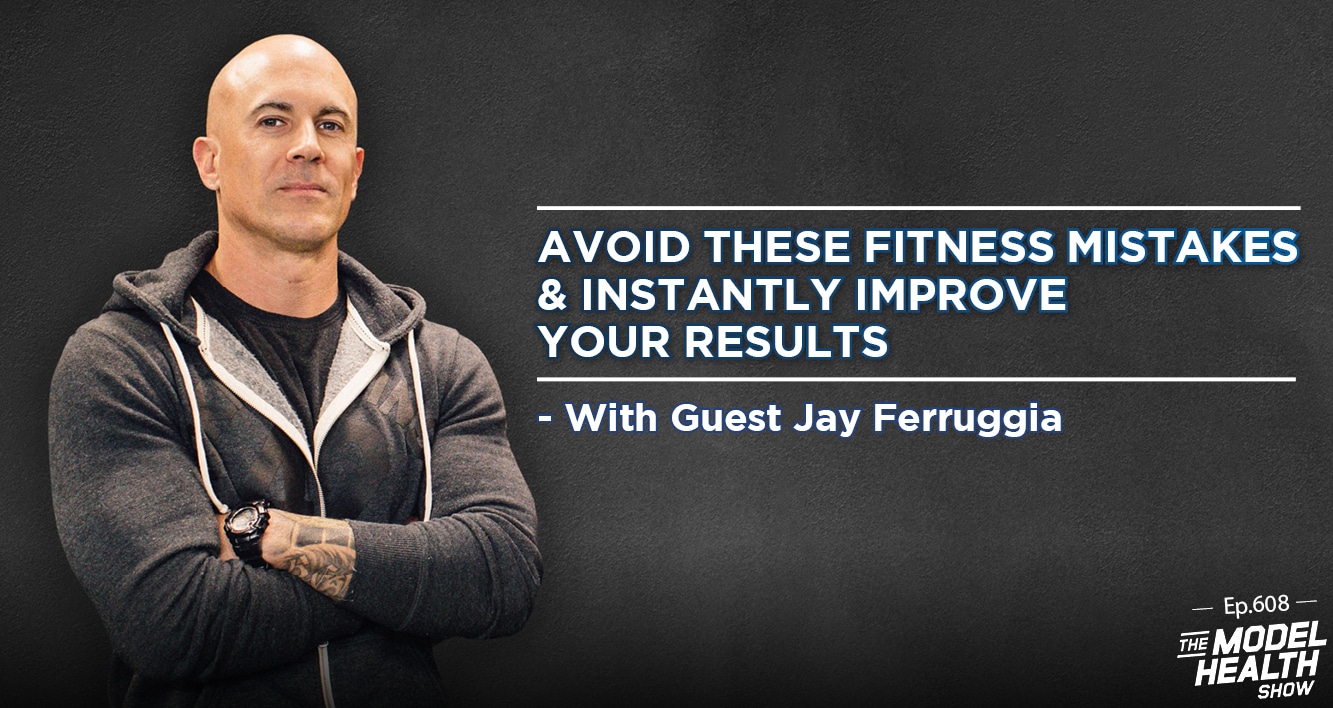
TMHS 982: The Truth About Burning Fat After 40 & Why Evidence-Based Training Can Be Wrong – With Jay Ferruggia
For years, losing body fat has been overcomplicated in our culture. Myths like spot reduction, counting calories, and excessive cardio exercise have infiltrated the fitness space and have stopped folks from making real progress on their health goals. On today’s show, you’re going to learn about six important but often overlooked keys to fat loss.
Today’s guest, Jay Ferruggia, is a high-performance fitness coach with over 30 years of experience. Jay works with professional athletes and has played a pivotal role in more than 10,000 transformations. He is also an expert in fitness over 40 and how to get real world results in the gym.
Jay is back on The Model Health Show for an incredible conversation on the forgotten factors of fat loss, how to build muscle over 40, and the importance of sequencing and form. Jay has a wealth of knowledge and experience, and I know you’re going to love hearing his insights. So click play and enjoy the show!
In this episode you’ll discover:
- The major misconceptions about what it takes to lose body fat. (3:52)
- What the 6 Ss of fat loss are. (7:22)
- How optimizing your vitamin D levels can make you feel better. (8:58)
- The effect saturated fat has on your metabolism. (11:07)
- How salt can enhance your performance. (16:49)
- The connection between sleep and fat loss. (20:47)
- How to build a strong metabolism. (27:30)
- Why you should always be working to improve your form. (38:35)
- What sequencing is and why it matters. (39:58)
- The best exercises for building strength. (54:00)
Items mentioned in this episode include:
- DrinkLMNT.com/model – Get a FREE sample pack of electrolytes with any order!
- WildPastures.com/model – Get 20% off every box plus an additional $15 off!
This episode of The Model Health Show is brought to you by LMNT and Wild Pastures.
Head to DrinkLMNT.com/model to claim a FREE sample pack of electrolytes with any purchase.
Get 100% grassfed and finished beef, pasture raised chicken, and other nutrient dense, regenerative meats. Sign up with my link to get 20% of for life, plus an additional $15 off your first box at wildpastures.com/model.
Transcript:
SHAWN STEVENSON: Welcome to the Model Health Show. This is fitness and nutrition expert Shawn Stevenson, and I'm so grateful for you tuning in with me today. We're going to go beyond the theory and we're gonna get into the practicality of what's going on in the gym and outside the gym to really contribute to fat loss and body transformation. And I'm telling you right now, this individual, our special guest, has helped to transform the bodies of thousands of people everyday. Folks who just want to get in the best shape of their life to some of the most elite athletes who are out here demonstrating their physiques in their respective sports.
And today he's gonna be sharing six of the most overlooked, often forgotten aspects of fat loss that everybody needs to know. He's also going to be talking about this new paradigm of evidence-based lifting and evidence-based exercise and the potential things that are missing and sometimes flat out wrong. He's also gonna be sharing some insights on exercise sequencing that a lot of people are unaware of and could be incredibly valuable in having more pain-free experiences in your lifting protocols. And the reason that I brought this special guest for you here today is because of the influence that he's had on me personally.
There isn't anybody in my life that's influenced the way that I train more than our special guest. And so without further ado, let's get to our special guest and topic of the day. Jay Ferruggia is a high performance coach to elite performers in the WWE, UFC, MLB, and NFL, as well as everyday people who want to get into the best shape of their lives.
He has over 30 years of experience and has personally coached the transformations of over 10,000 people. He's been featured on ESPN, men's Health, men's Fitness, Maxim Entrepreneur, muscle and Fitness, hers, and many other major media outlets. Jay has helped to pioneer the underground warehouse style gyms in the mid nineties that are now popular today, as well as many of the other unconventional training methods that have risen in popularity. Jay's also the host of the Jay Ferruggia Show and an in-demand keynote speaker, and he's here today to give you the most overlooked insights when it comes to fat loss. Let's dive into this conversation with the one and only Jay Ferruggia.
You know, today, more than ever, people are confused. Man, there's so much information out there. There's many ways to skin a cat, as they say, but a lot of people are struggling to figure things out, and so that's why we have you here to help us to make sense of all this madness and chaos.
JAY FERRUGGIA: No doubt.
SHAWN STEVENSON: And you know, you, what's so unique about your work and what you're doing right now, specifically working with athletes, whether it's the MLB, NFL, but the WWE in particular, it's not just about functionality and strength, but it's also about the aesthetics, right, and being lean. And so a lot of people, their goals are to be more lean. It's to burn fat loss. But it's so confusing.
JAY FERRUGGIA: Yeah.
SHAWN STEVENSON: So let's start there. Let's start with, because I know what I'm about to hear is gonna be different from what a lot of people are thinking because you're thinking is different when it comes to fat loss. So when you hear fat loss and one of your clients' goals is fat loss. Where's your mindset go?
JAY FERRUGGIA: So yeah, I would generally go in the opposite direction of what the mainstream belief is, which is to exercise more and eat less. But that doesn't, it's not that easy. It doesn't work like that. So I'm looking at, first I'll have to reprogram some of those beliefs, right? 'Cause people come to me like, yo, I'm doing all this. I'm exercising this much. I'm doing endless amounts of cardio. I'm not resting during my workouts. I'm doing high reps. I'm doing all the huffy, puffy stuff. And they think that hard work and sweat equates to fat loss, which it doesn't, because sometimes, you know what people don't always want to hear is sometimes your metabolism is broken.
Sometimes your thyroid is downregulated. And that comes from years of just doing the wrong stuff, right? And then, especially if you're type A. So now you're doing what you think is the right thing, but it's actually wrong for you because you're already stressed out living on cortisol and adrenaline.
So now you're fasting, you are going low carb, you're doing so much hit, maybe you're doing like CrossFit or F 45, and these are all the things that, that will prevent you from actually building the physique you want.
We have to do the opposite. We have to reprogram you to be like, Hey, less is more. And so what my goal is for people to eat more, which again, is super counterintuitive and there's not a lot of studies there. There's probably no studies on this. This is where science gets a little blurry, where I'll say to someone, Hey, I've taken, and it's not just like I've taken one person, I've done this for 30 years.
I take people that are coming to me on, let's say 80 grams of carbs a day, a hundred grams of carbs a day, and with a very meticulous, precise way of doing things. I'll get them to the point where they're eating 2 50, 300, 400 grams of carbs a day, same weight. And people are like, yeah, that defies the law of thermogenics. Maybe. I don't know. I'm just doing what works. You know what I mean? I'm not going by every study that just came out. This is what works over time. So if you come to me and your body temperature's super low, huge common factor for a lot of people. They come in, especially type A guys, forties and fifties.
That's one of the first things I say is measure your morning temperature. They're like, it's 96 too. I'm like, oh my God. Okay, now we got a massive mountain to climb here. Then we'll get, I'll get guys 97 something. We wanna be 97.6, 97.8, ideally in the morning. And I mean, we all know this from middle school, right?
98.6 is the ideal temperature I want to get guys where after a meal, they're at least, you know, 40 minutes after a meal, they're at 98, 6, 98, 8, something like that. But that takes strategy and that takes doing the opposite of all the things. Like, okay, you gotta start eating more carbs. You gotta stop fasting, you gotta lower the intensity of the training. You gotta sleep more. You gotta reduce stress because if you're not sleeping and you're not reducing stress now your cortisol is up through the roof and then you can't lose that spare tire because generally if your cortisol and your stress hormones are super high, you're gonna see it in that spare tire.
And people listening to this, and maybe I never maybe never thought of it until I pointed it out, they'll be like, oh, I know. Like I even noticed it, dude. If I'm going through a really stressful period, I'll take my shirt off and like, what happened? You know, like it happens that fast a lot of times. So, again, going back to body temperatures, which I think like a lot, all my clients will send me their blood work, but I'm like, if your temperature is that low. There's an asterisk next to every one of these things 'cause we gotta fix your thyroid. We gotta fix this, we gotta fix that. Let's fix that and test again.
In 90 days where the doctor's like, oh no, take this medication. I'm like, I don't know, dude. Let's change a lot of things here. And then if you get to the point where your temperature's higher and Ray Pete Dr. Ray Pete was big on let's about this for years. If your temperature's higher, you are going to just, everything's gonna improve. Your cognitive function, your sexual function your recovery. You're just gonna feel better. You have way less anxiety and you need to deal with stress better. So again, what I do for that is, is, and you can, it's the five or six S's, right? It's we gotta reduce stress.
Saturated fat helps with that. Salt helps with that. Sex, sun, sleep strength training. Probably another one I'm thinking of. But anyway, so again we go the opposite direction where I'm gonna have you. Just doing a little bit less and eating more. And then over time that, that might change. I might get you back to the volume of training you were at, or I might even exceed that, but we gotta heal first. And I get that nobody wants to do that. It's like, I want results now, overnight results. But if things are broken, where are we going? You know?
SHAWN STEVENSON: I don't even know where to, this is amazing, man, because again, when people see you and they see the athletes that you work with, the people that you work with. Because it's not just athletes, like you've helped a lot of everyday people to get the results that they've been trying to get for years. And to hear you talk about addressing stress, right. And to see, for example, like being under maybe a stressful time and just seeing your body fat go up.
JAY FERRUGGIA: Yep.
SHAWN STEVENSON: But the opposite can be true as well. Just like, what did I do? Like I'm really looking lean today. Like what happened? You know, and so it's like paying attention to these specific metrics. And I want to dive in and ask a little bit more about these because one of them that you mentioned in these s's, and there was six of them that I got. Stress, saturated fat, salt, sex, sun, and sleep. I want to ask you about sun because coming from the East coast. And living in LA now. You know, obviously it's a very different environment when it comes to sun access.
JAY FERRUGGIA: Yeah.
SHAWN STEVENSON: But why is that something that you point out that people should pay attention to?
JAY FERRUGGIA: Well, vitamin D is like a hormone. Like, it's like, I mean, people think of, oh, let me get HRT. It's like, well, are you getting vitamin D? You getting vitamin D from the sun? It's a hormone. It's not just.
SHAWN STEVENSON: It's a steroid hormone.
JAY FERRUGGIA: Exactly. Yeah. So you want to improve your vitamin D levels. You want them to be optimal. If you do that, you're gonna feel so much better all around, you're gonna perform better, your immune system's gonna be way better, and then it's gonna set your circadian rhythm. So you're gonna have, like, especially if you're getting that morning sun, you're gonna improve your sleep. And you can even feel it like you could be having a really stressful day. And I go, dude, just take 10 minutes. Go outside, take your shirt off or not even take your shirt. Like if, whatever, get some sun on your face, and sun in your eyes.
And you can actually feel. The stress in the cortisol come down. I mean, even better if you can do that, you know, to be hippie-dippy barefoot and be grounding, like walking on the beach or this, or the, even the grass or something like that. It literally, like if you're in tune with your body, you feel that like, oh my God, I feel so much better. And then once you do that, you're like, why don't I do this more?
You know, you have to consciously reduce your stress because we just get so used to being in that fight or flight state, and then you're wondering like, why can't I lose fat? Why don't I look the way I want? Why am I not building muscle? It's like you, you're pushing a rock uphill the whole time. You gotta fix some of those things first.
SHAWN STEVENSON: That's such great advice, you know, and even just checking your vitamin D is something super simple that you can do. And obviously again, this is something we evolved having access to getting more sun exposure. We're just the average person spending like over 90% to 95% of their time indoors. Now, you know, again, it's just, it's not because what tends to happen, you know, this is the what about is, what about if I don't get sunlight? You know, we know Luca right up there in, in Seattle, one of these northern states Yeah. Right up there, right by the border, and he know he could have that same excuse. And what he's doing is he's getting it when he can.
JAY FERRUGGIA: Yeah.
SHAWN STEVENSON: Right. And also he's structuring his lifestyle and his training. I just saw a video recently of him being outside like, you know, pushing his kid around, you know, and just thinking about it and making it a priority is more the key than like, it's too difficult.
JAY FERRUGGIA: Exactly. Yeah.
SHAWN STEVENSON: So, we got sun I want to ask you about, which was surprising as well. Saturated fat.
JAY FERRUGGIA: Just because that helps boost your metabolism. And so, again, I see so many people our age that their temperature super low. So I think saturated fats, like there's, he, this goes back to kind of Ayurvedic medicine, like he I'm sorry, warming and cooling foods. Foods that make you warmer. And so saturated fat is one of them. Like, if you're someone who's freezing all the time I would say reduce not long term, but for now, reduce the amount of polyunsaturated fats. You shouldn't be living on fish oil and macadamia nut oil and you know, things like that.
Olive oil, like I would actually say focus on dairy fat, focus on fat from meat, and then see what happens. Because that, that, that fat we know will improve your metabolism a little bit, whereas the other polyunsaturated won't as much. And again, this is long, this is kind of like a short term fix, long term. I would say for most people, more of a Mediterranean diet kind of blend of fat would be good. Smaller amounts of saturated fat, especially if you have any kind of heart disease in the family or plaque buildup or whatever. But there's issues we gotta fix, you know? And that's what gets confusing is sometimes people will have blood work come back with numbers that might suggest other issues.
But if you're freezing and your thyroid shot, again, I kind of put an asterisk next to that 'cause, just 'cause I've seen it so many times, like let's do 90 days or six months, whatever it takes to raise your temperature back up. Then all of a sudden, oh, now your cholesterol is normal. Oh, now this is normal. Now your ferritin's normal. Like all these things like, I don't know, I feel like fixing your thyroid and your body temperature comes first.
SHAWN STEVENSON: Yeah, man, thank you for saying that because. You, and you know this as well, we start to look at food in parts instead of like this overall makeup and what it's doing for your body and what we evolve doing.
JAY FERRUGGIA: Yeah.
SHAWN STEVENSON: And I'm saying that to say that there are a lot of things that are dependent upon saturated fats with our biology. Right?
JAY FERRUGGIA: Right.
SHAWN STEVENSON: And even the first food, the one food that we know is a human food. All right? Humans have tried to eat everything all right? But the one thing is when we're born human breast milk
JAY FERRUGGIA: Yep.
SHAWN STEVENSON: It's upwards of 50% saturated fat.
JAY FERRUGGIA: Yep.
SHAWN STEVENSON: Exactly. Yeah. And that's the quote, bad fat.
JAY FERRUGGIA: Yeah.
SHAWN STEVENSON: And so we've created this black or white thinking is bad and all this stuff. Now, needless to say, as an adult human being, you don't need that much saturated fat as a baby. But the question is why it's helping to develop the brain and the nervous system.
JAY FERRUGGIA: Yep.
SHAWN STEVENSON: Right. And so thinking about, again, addressing stress, addressing stability. That's where I would start to think like, wow, what saturated fats are kind of important in that.
JAY FERRUGGIA: Yeah. I think they get too demonized 'cause you know, you gotta consume cholesterol and saturated fat to produce hormones.
SHAWN STEVENSON: Right.
JAY FERRUGGIA: Yeah.
SHAWN STEVENSON: Yeah. Again, it's just this black or white thinking. And by the way, if people are like, well, aren't saturated fats dangerous? There are studies to affirm everything. Just about any position that you want to take. And so some of the saturated fat dogma has to do with like observational data and that is true. It exists. But there are other studies, like there's a massive decade long study that included 130,000 participants data from 18 different countries, and it found that total fat and saturated fat in particular. So saturated fat and unsaturated fats are not associated with risk of myocardial infarction or cardiovascular disease mortality.
In fact, the researchers found that higher saturated fat intake was associated with lower risk of stroke. All right? And so it's just being able to keep this stuff in context. There's data to affirm everything. We're gonna talk more about that of course, but we don't want to villainize something that's found in natural foods.
JAY FERRUGGIA: Yeah.
SHAWN STEVENSON: The saturated fat found in fucking Oreos is way different.
JAY FERRUGGIA: Right.
SHAWN STEVENSON: Than the saturated fat that you find in avocado or some fish.
JAY FERRUGGIA: Yeah.
SHAWN STEVENSON: So with that being said, so we've got the saturated fat. We covered sun. Let's talk about sex. Shout out to salt and pepper, by the way.
JAY FERRUGGIA: Yes.
SHAWN STEVENSON: That just came out just like that.
JAY FERRUGGIA: Just, it is just another way for you to produce feel good hormones and reduce stress. Right? Like, humans need physical contact, they need touch. You need to connect and bond with people. So it's just another way to just reduce that. Reduce your cortisol.
SHAWN STEVENSON: Yeah.
JAY FERRUGGIA: Yeah.
SHAWN STEVENSON: And I think that also biology matches what you are doing as well. So it's not just, I need the testosterone in order to do this thing. Doing this thing might increase the testosterone.
JAY FERRUGGIA: Right? Yeah.
SHAWN STEVENSON: Right. And so engaging in certain things and also just like you said, all these different feel good hormones that are associated with reducing stress, reducing cortisol. So, yeah. Thank you for bringing that up because again, I don't think we think about that.
JAY FERRUGGIA: Yeah. I just saw a thing the other day, I don't know how accurate it's, but it said it was like 83% of men say the only thing that makes them happy is physical touch from their female partner. I was like, yeah.
SHAWN STEVENSON: You know, this goes, I just saw it on my bookshelf yesterday. I was looking for a book and I saw the five love languages.
JAY FERRUGGIA: Yeah.
SHAWN STEVENSON: Sitting on my bookshelf for a physical touch and you know, and it just, it is what it is. You know, we love in different ways, we connect in different ways. There's different degrees of it, but having that physical touch is, it's just very human. Like, we all need that. And it doesn't, again, have to be you know, intimacy to that degree. But just being in even proximity with people that you love and it's so important. It's important for our development and it's also important for our resiliency.
JAY FERRUGGIA: Yeah.
SHAWN STEVENSON: As well. So now what about salt? That's another controversial thing.
JAY FERRUGGIA: Yeah. So many people are scared of salt and sodium, but it is a performance enhancing, I don't wanna say a performance enhancing drug. Like if you take someone who's really low sodium and you start giving them LMNT and start having them salt their food more, all of a sudden their performance their strength in the gym, their pumps in the gym their endurance, everything's gonna be so much better. So if you're in a low sodium situation you're actually stressed out. Like it's, the body's under a stress response. And you can tell, it's funny because I've talked about this a bunch of times where it's a badge of honor in the fitness industry where everyone's like, oh, my urine's clear. And I'm like, that's actually a stress signal.
Like if you, if your dog pees clear, you bring 'em to the vet, that's not good. So it should be light yellow, it shouldn't look like a beer, then you probably gotta go to the doctor, you know? But and you'll notice if you drink the same amount of water all day on a low sodium diet. You're gonna be running to the bathroom all day, and it will be clear. If you add element and you salt your food, then it won't be, and you won't be in the bathroom as many times, which means what? You're actually utilizing that water you're hydrated. Everybody knows you need to be hydrated, but you can over hydrate. And then what happens is your adrenaline and your aldosterone and your cortisol, like stress hormones get elevated.
If you're just peeing all day now you're under stress. So adding sodium is like one of the easiest things you can do to improve your performance. And really, unless you have some kind of serious heart disease or something, I'll say there's no risk. Like what? Like test it. Go get your blood work done, nothing's gonna happen. It might improve. A lot of things will probably improve.
SHAWN STEVENSON: Yeah, you just said it, man. You know, again the Cockran database, like the biggest database, you know, all of this you know, if you, if we're looking at a conglomeration of studies around whatever topic, salt was one of those things that was analyzed and was found to have no correlation when it comes to like cardiovascular disease for example. And that's really the big thing is like, oh, it causes hypertension. Yeah. In some cases, yes. But it can also do the reverse if your sodium is too low.
JAY FERRUGGIA: Yep.
SHAWN STEVENSON: It can elevate your stress hormones and cause hypertension. And so it's not to villainize and to make it bad. And the thing is where most people getting their salt today is from ultra processed foods. Right.
JAY FERRUGGIA: Exactly. Yeah. That's food.
SHAWN STEVENSON: So it's coming, packaged with all this other crap.
JAY FERRUGGIA: Yeah.
SHAWN STEVENSON: Yep. And the lowest quality version of what salt can be. And salt isn't just one thing. There is magnesium salts, potassium salts, calcium salts, sodium salt. So we tend to think sodium and salt is synonymous. You know, with one another. And so just being able to keep some of this in context because we can't really, we can't move without these electrolytes. Right. Like our muscles, the contraction and relax and a relaxed response. Magnesium and sodium.
Yep. Like we have to have this balance in potassium as well. And just being able to hydrate your tissues, your brain, your nervous system. What happens when you're deficient at these, especially for people that are eating cleaner. We gotta be more intentional about making sure that we're getting enough electrolytes in.
JAY FERRUGGIA: Yeah. One thing I would add is I have everyone that I work with, I have at iodide salt, 'cause that kind of went out, it seems like an out outdated relic from the eighties. But if you pick up any bottle of salt, it says, does not contain iodine. A necessary supplement you know what I mean?
A necessary nutrient, an essential nutrient, however they phrase it. And so I'll have my guys use at least half of their daily sodium intake when they're salting their food. Get a, it's hard to get a really high quality one. You gotta search to find it. 'cause usually in, in the the grocery store, it's all, it has all those caking agents and everything in it.
But you can hide, you can find a high quality one online and it'll have them use that because iodine does help. Again, if you're dealing with low body temperatures in your thyroid kinda shot like iodine's, one of the things you would add. So it is a simple way to get it and just doing that, you could start to feel better as well.
SHAWN STEVENSON: Awesome. Thank you for that advice. Let's talk about sleep. In the context of fat loss. Again, I don't think a lot of people think about this when they're trying to lean down. Things are just not moving. Take a look at your sleep.
JAY FERRUGGIA: Yeah. So the first person I ever heard talk about this was Mike Menzer back in. God, he must have talked about this in the seventies or eighties. And he was kind of like one of the early proponents of like low intensity, low volume, high intensity training. And he would say that as he was going into a contest prep where guys are doing more and more activity, he would try to sleep more. 'Cause he was kind of ahead of his time, ahead of the time with a lot of his thoughts. And he said by sleeping more, he's gonna reduce his stress hormones, because stress hormones at that point are so high because you're training so much, you're doing so much cardio and you are like when you're dieting that hard, your stress hormones are through the roof.
You know? So he was like, I want to bring that down by sleeping more. And so that that's a kind of good takeaway for everybody is again, when we're talking about repetitively here, is that we're existing in this high adrenaline, high cortisol state. While sleeping is gonna help you improve all your hormones. If your hormonal profile is whacked, it's hard to lose fat. So you sleep more, your testosterone's gonna go up. If you have really low testosterone, not gonna be good. High cortisol not gonna be good. Your physiques not gonna look good. Right? So it's just really those two things. It's just hormone kind of optimization and just reducing those stress hormones.
And then of course, you're gonna feel better, you're gonna perform better, you're gonna get more reps in the gym, you're gonna be stronger. You know it's gonna, if you go do cardio and you have higher output, you are gonna lose fat. If you go to the gym and you're setting prs, you're gonna build muscle, which is gonna help you look leaner, right? But if you're sleeping six hours a night, five and a half hours a night, all those things are gonna be not optimized. So if we can optimize those and your performance is better, you have higher output, you get better results.
SHAWN STEVENSON: Amazing. Amazing.
Now here are four specific ways that electrolytes impact your exercise and athletic performance. Number one, optimal muscle function. Electrolytes like sodium and magnesium are essential for nerve signaling. Allowing your muscles to contract and relax properly, which prevents cramping and fatigue. Number two, fluid balance and hydration. Sodium helps your body and your brain to retain proper fluid balance. Inadequate hydration can lead to cardiovascular strain and decreased strength and power. Number three, energy and endurance. Replacing your loss sodium improves blood flow and helps transport nutrients into your cells. Sustaining energy levels during long duration and high intensity workouts in particular.
Number four, mental sharpness. Good electrolyte balance helps to maintain cognitive function and reaction time during competition. And scientists at McGill University found that sodium functions as a quote on off switch in the brain for specific neurotransmitters that support optimal function. Now, here's the problem. We know that this is all true when it comes to electrolytes in our performance, but for decades, the Gatorades and Powerades of the world have been dousing. Our bodies with crazy amounts of sugars and artificial colors and all these different shady ingredients and LMNTs stepped in and said, no more, no MAs.
We're gonna deliver science backed ratios of these key electrolytes without the added sugar, without the artificial colors and the dodgy ingredients. And we're gonna do this in a way that today LMNT is fueling some of the greatest athletes and high performers in the world, including Team USA, weightlifting, NBA and NFL Teams, Navy Seals. The list goes on and on, and right now you get to take advantage of the world's number one supplement when you go to drinkLMNT.com/model. That's drinkLMNT.com/model. And not only that, with every electrolyte purchase, you're going to get a free sample pack of their most popular electrolyte flavors.
And to top it off, you get to try all this. Risk free with there are no questions asked. Refunds. If you don't absolutely love the way that it makes you feel, again, head over to drinkLMNT.com/model right now to take advantage. My favorite flavors right now, grapefruit is popping lemonade. The lemonade salt is incredible, especially if you're doing anything where you're sweating a lot, that lemonade salt hits different. So again, head over there, check 'em out, drinkLMNT.com/model and now back to the show.
SHAWN STEVENSON: In addition to that, and we'll put this study up for everybody to see, testosterone is a very sleep dependent hormone as well. You know, and so there's a strong correlation with the more hours of sleep that we're getting and the quality of that sleep and raising our testosterone levels. And taking young men, college age men, sleep, depriving them for just a week. Testosterone drops by about 15%.
JAY FERRUGGIA: Yeah.
SHAWN STEVENSON: Which, that's like making them like 10, 20 years older.
JAY FERRUGGIA: It's crazy.
SHAWN STEVENSON: When it comes to testosterone, if we're, again looking at fat loss, building muscle, just that energy to perform for men and women. Testosterone is obviously important.
JAY FERRUGGIA: Yeah. And then there's that relationship with testosterone and estrogen or estradiol on a blood test where it you need to those to be in balance. Right. So, for men, generally men are gonna feel best probably around 40, maybe up to 50 on estradiol. But if your testosterone ratio is off, if you're saying there like then your estrogen shoots off, now you have too much of the female hormone and then you start again gaining more fat. Like, you have negative implications from that as well.
SHAWN STEVENSON: Yeah. So for people, specifically for people over 40 of these six S's is there anywhere that people should focus on specifically, or is there anything else to add?
Because again, when I'm thinking about. Being leaner and being sleep deprived, or not getting a lot of sleep. I was thinking, you know, in my twenties I didn't even think about sleep. Yeah. You know what I mean? But I was still walking around pretty lean.
JAY FERRUGGIA: Yeah.
SHAWN STEVENSON: So would this be something that's even more important as people are, you know, getting over 40.
JAY FERRUGGIA: For sure. Yeah, absolutely 'cause you're fighting against the clock, you're fighting father time, so you gotta do all the things, like the things that we could get away with 20, 20 years ago.
You can't anymore. Like I find myself now at 51 prioritizing my sleep even more. Even though like, I'm like a east east coast hustle kind of guy, and I want to get up, I'm like, I'm gonna stay in bed for another hour just because I know, like I have the evidence on my blood work, but not all that how I feel and perform every day. Like, I'm like, alright, I'm hard charging. I wanna get up and I want attack, but I'm like, nah, I'm gonna, I'm gonna stay here. Like, I've actually it's taken me a while to do that, but the performance suit is so much better. Like, I get sick so much less. Everything feels better. Everything about my life feels better when I prioritize sleep.
You just, you have to, you can't you can't get away with the things you used to. And here's another misconception about this kind of covers all the s that we're talking about is the. So many people say, well, your metabolism slows down when you get older. No, it doesn't. It doesn't. I can eat more food than like I could in my twenties and stay lean. But you have to do all the things to optimize that, right? If eating the right foods and the right ratios, training the right way, doing the cardio, doing the recovery, sleeping, optimizing your hormones. Yeah. I mean, if you exist on 1300 calories a day as a 50 or 40-year-old male, and you're you're fasting, you're doing too much training.
Well, yeah, your metabolism, it slowed down. Now you eat, you one piece of pizza. I like to build someone's metabolism to the point where they're fat proof, where it's like, okay, now you can have one or eight slices of pizza and you're fine if your metabolism shot. You can't, you do that and you look like job of the hut, like, you know what I mean? But we need to get to the point where you're fat proof. And so a really strong metabolism is like the number one thing I'm trying to work on with people.
SHAWN STEVENSON: Amazing. Alright. So what I'm hearing overall is just stacking conditions, having these small pieces in place because we're not trying to just attack losing fat by just sweating our face off and busting our ass in the gym. Because it simply does not work like that. It doesn't. I wish it did. It's all these other things outside the gym. Yes, we need those inputs, but the other things outside of the gym. All right. So, and to focus on that even more as we are over 40.
With that being said, life happens. There's stuff going on and you work with people who have some crazy schedules and they're doing very intense things. They're training, they're performing. Whether this is, you know, your MLB. You know, baseball players or the WWE. So I wanna talk to you about that and that experience, because you just got back and you shared some of your adventures with me and working with some of these WWE superstars and just seeing the way that they train and what they put their bodies through. So what is your mindset and what are some of the things that you are thinking about when you're working with athletes like that? That need to look good, but they also need to be durable. And also they're they get injured a nice amount of times. And so how do you come in into it working with somebody like that?
JAY FERRUGGIA: So the first thing that comes to mind is, I remember what Buddy Morris said is that name ring a bell. Buddy Morris was a strength coach in the NFL for years, and this is probably back in the nineties. He told me this. He said, the first rule when you're working with a high level athlete, a pro level athlete, is don't fuck them up. And that's huge, right? Because if you do that, their career is over. Your career is over. You can't do that. So you need, you can't treat it like a, like you're trained a 16-year-old. You're like, okay, these guys are already high level. How much can I help them avoid injury, recover, perform better change their training so their joints are better?
And then a lot of it just becomes like, you could have the perfect plan on paper, but it's always changed because like you said there's flights 52 weeks a year, multiple times a week. You're in a different gym all the time. You may have gotten injured. You're stressed outta your mind. You're not eating proper, whatever it is. So we have to be changing that on the fly. And, you know, you have to be adaptable. You can't be too rigid. You have to be like, Hey listen, here's what we're doing. We gotta change this. But I would say, and again, even for guys like us, like the first thing I'm gonna think about when we go to the gym is, okay, let's not get injured.
Let's feel really good. Let's get the stimulus we want without beating ourselves up, without wrecking our joints, our spine, our hips, our CNS, and depleting our hormones like we've talked about. So, so those are the things I, I consider. And then when you have high level type A guys, as you know, from being around so many 'em for years, it's sometimes it's just kind of like keeping them like, dude, you're doing too much.
You're pushing too hard. I just had this conversation with the guy the other day. And he even started, he texted me, he is like, dude, you're right. We gotta have a come to Jesus moment. Like, I gotta calm down a little bit. I'm like, dude, I've been telling you. Which is the opposite problem you have, we have with a lot of sedentary people, but high level guys, you have to just kind of hold them back a little bit and still make 'em feel like, Hey, I'm pushing myself, but let's push ourselves in the right way. It's not gonna have a negative impact. You know? And most guys, again, over 40, I think we always wanna think longevity. Certainly for an athlete. WWE guys, we gotta think longevity 'cause they're taking bumps, they're landing on their back on the floor all the time. We gotta think longevity. But even for guys like us, we gotta think longevity. 'Cause we've accumulated years and years of wear and tear.
SHAWN STEVENSON: Yeah.
JAY FERRUGGIA: Like from playing sports, from doing stupid stuff, you know, like I used to jump my bike off a cliff and do flips when I was, you know, like you just have years of wear and tear where it's like, be smarter about it now, you know?
SHAWN STEVENSON: Oh man, I'm just thinking about some of the crazy stuff I did, man.
JAY FERRUGGIA: Yeah.
SHAWN STEVENSON: You know, like one of the thing, nevermind, I'm not even gonna talk about it. So, with this in mind how do you recommend an athlete, or again, us as well, like life athletes, if we're not trying to wreck our joints and to feel, you know, sore and we've got things to do, we've gotta perform. So for example, you've got, and you've worked with some of the top people in the WWE. What are some of the training principles when you have them in the gym doing exercises? How are you going about that so that they're not feeling a mess once they get into the ring?
JAY FERRUGGIA: Yeah. And so, and you mentioned what I love about training the WWE guys is it's performance and aesthetics in one, which is what everybody would want. Like it's the coolest person to train, you know, 'cause like football player, they're in their uniform. It's more performance. But that's what's really cool and that's what most people would want is like, you are like a real life action hero. You're Wolverine or Deadpool or something. So we have to train and eat in a way that's gonna enhance the aesthetics. Obviously you're out there in your underwear in front of, you know, thousands and millions of people.
So what does that look like? That looks like for most of my guys, it's about four sessions a week, sometimes five. If they're obsessed, we gotta go five, but then we just hack the volume down. We take basically take the volume of four sessions and you know, add it to the fifth one. But the training has to be, you know, you and I have trained together. It's like we want to train hard. I'm never gonna tell someone, don't train hard. We're gonna train hard, we're gonna go heavy, we're gonna get the necessary stimulus. But in a way that you feel good, like you leave, you're like, I could do that workout again. I feel better. I have no joint pain. The next day I did it didn't negatively impact my sleep.
You know, things like that are super important. So we kind of modify or moderate the volume based on that. Right. I have a, like, I can give kind of like ratios for people. Like if you want to train. It's kind of based on the number of sleeps, right? So if, say we train today and then we want to train 48 hours later. So with two sleeps, you could basically recover from one to three sets per body part. With three sleeps you can recover from about three to five. So, I mean, if we did an upper body day today, let's say today's Monday, and then we go Tuesday, oh, I'm sorry, Wednesday and then Thursday. So that would be three sleeps, right?
And then four sleeps you could cover from about six to eight sets. So that, that, it's good to know that as a general rule, because then you can kinda structure your training. Do I wanna do full body? Do I wanna do upper lower? Do I wanna do push, pull legs, whatever. So you know, the number of sets has to match the number of sleeps and it's six to eight sets for a body part. You'll kind of maximize the stimulus. Doing more than that isn't necessary. Again, it depends. Like legs aren't legs are quads, glutes, and hamstrings. And then back isn't back. It's upper back and lats. So there's some gray area there. I would say for most people, you wanna train each body part three to four sleeps, five sleeps max.
If you're more advanced and your recovery is slow. And then of course, we've gotta quantify what is a set like a lateral raise versus a military press, different recovery demands, a leg extension versus a squat. Different recovery demands. So there's some gray areas there. And then how hard are you training? Are you taking your sets to failure or are you taking your sets to reps shy? That's still, that's gonna be a little different too. I think it's really important to to quantify those things and not just go in blind. And then again, that how back to the X's and O's of training. And again, you and I have trained together even just recently, the execution is really important.
You could get away with just bouncing in sloppy form when you're younger. You can't do that when you're older. So execution, you have to be, it has to be meditative. You have to be fully in there in every set thinking about, okay, how do I go from the stretch position to the shortened position, not use momentum, not kind of bounce, not get sloppy towards the end. And then what's a true set to failure? It's perfect form. The last rep looks like the first rep, but it's slower. You have to have that involuntary slowing at the contraction speed. But it's not, okay, now my elbow is flared out. No, that's not failure. You failed one or two reps before that.
So it's just form and execution becomes really important. Exercise selection, like I'm not gonna have guys do as you get older, especially the WWE guys, I'm not gonna have them risk doing like. Barbell back squats, barbell deadlift from the floor, a bench press, standing overhead press. We're not gonna do any of that anymore. We're gonna pick dumbbell variations, maybe machines, maybe cables. And if we do those barbell variations, we would do them second or third. You know, again, when we train, we will, I dunno if you're paying as much attention to it as I am, but we'll sequence things a certain way where if we do this exercise first, this exercise second, this third one feels so much better than if we did it first.
If we did it first, it's like, oh my God, my shoulders kill third pain free. Right? So that's something that a lot of people don't think about that you really need to consider the sequencing, the exercise selection, and how you actually do them. And then once you do that, you can train hard. Like I've seen guys, and I'm not gonna name who, because they're huge influencers and doctors or whatever, say, oh, you can't, you gotta lift for 15 reps and above when you're older. I'm like, no, you don't. You just have to know how to set up your workouts correctly, and then you can still train heavy and hard.
SHAWN STEVENSON: Yeah. That's been my firsthand experience with you 'cause this was just like about a week ago. When we trained and I lift more when I'm working with you than I thought I would be able to. And literally it said it is that exact thing you said when the workout was over. I feel like I could do that again. Like I, I could do all that stuff. More, but I lifted more than I thought.
JAY FERRUGGIA: And pain free, right?
SHAWN STEVENSON: And pain free. Yeah. You know, but it was really a lot of focus, that mind muscle connection, man. After the first exercise we were doing a row machine, I don't what do we call that machine?
JAY FERRUGGIA: Yeah. We were doing like a lat focus single arm row. And I remember you were like, dude, my lats, it's crazy.
SHAWN STEVENSON: Yeah, man. I got a lat pump. Like, I felt like I could fly away, man. My laps would just stick it out, man. It was incredible. And you know, again, just that feeling afterwards of like, I didn't feel like super depleted. Anything like that. Like I really came in there, we pushed the right buttons because we went to that point right there. One rep or less is right there at failure. But maintaining that form and just really being locked in and doing the work and it's just amazing, the difference, man.
'cause you can go in there and just do a lot of Yeah. Sloppy stuff. You know, again, like you can feel like you are, you know, you're doing something, but if you want get the most from it, you've gotta pay attention to the details.
JAY FERRUGGIA: Yeah. And some people are like, oh, just go move weight. I'm like, but what other physical endeavor? What other sport do you do that Just shoot however you want. You know what I mean? Don't practice your swing. It's like, that doesn't make, makes no sense. You, I think you should always be practicing the, to your, to get, improve your form to get better. Like every set, even if I've done this machine or this dumb exercise a thousand times, I'm still gonna do it. And I'm gonna learn. I'm always learning. So if I'm training with you, I'm looking at everything you're doing. I'm learning something there. And then when I do myself like, oh, he did that little thing, fuck. I do that sometimes and then I'll check myself. Right. Like, you always wanna be improving and learning.
That's why it's good to video, even not for social media, just for yourself. Video and watch it back and be like, oh, I thought I had my head in a good position, but I'm poking forward like this on every row, or whatever it is, right? Because we all have that. I have that. I'll see videos of me and be like, I tell a million people a day not to do that, and I'm doing that. You know? So you gotta just be aware and that's how you get better and that's how you train pain free. You know, with that longevity in mind is if you're constantly improving your form.
SHAWN STEVENSON: Now, can we go back to sequencing a little bit more? Because again, just to think about where you're putting a certain exercise in your program can make a huge difference. The thing that we came into this thinking, again, is like you do your hardest thing first. Right. So is that a principle that we should abide by or can you give us more insight on sequencing the exercise that we do?
JAY FERRUGGIA: Yeah, so I, a good rule of thumb is what you wanna prioritize you should do first. So let's say you were doing a push day. And you're like, I wanna grow my shoulders. That's my main thing. Okay, so then I'm not gonna have you do a press overhead first. It's too stressful at our age. But we could do lateral raises, we could do dumbbell laterals, machine laterals, we could do cable laterals, and we could do three or four sets of those. It's not gonna negatively impact your pressing at all. Then I might say, Hey Shawn, you know what? Let's actually do rear dets too. Let's fully pump up the det before we start to press, and then it's gonna feel so much better. So now we do, let's say three or four side laters rear det flies. Now the shoulder's feeling really good.
Now our core temperature's up now the, it's just like, it's gonna feel so much better. So now it's say, okay, let's overhead press, but instead of standing or at a 90 degree angle. Let's incline the bench to 75 degrees, because now it's a little bit more of a natural range of motion, whereas most people, as you get older, you lose that overhead mobility and that thoracic extension. So now it's just safer. We could also, if your shoulders are really bad, but just like, I wanna grow my shoulders, I would do the same thing. I would do the side delta, the rear belt, then let's hit chest, however many sets we do for chest five, six sets, and then finish with more adults at the end. So we're kind of sandwiching it in and if your shoulders are so shot that you can't overhead press, then we'll just add more laterals at the end.
And so back to your other question about should we do the hard thing first? Yes. But again, I think you, your priority muscle group that you wanna bring up, but in a safe way. And what people will say is, oh, well then it's gonna really decrease the amount of weight I can do on my squat or my press, or whatever. But it doesn't, you adapt over time. The human body's really adaptable. Your work capacity increases over time. So it really doesn't, and then even if it did a little bit, who cares? You feel so much better and you can train forever. If you're always getting injured then what does it matter? Right?
So same kind of theory when it comes to legs. I'll always do hamstrings before squatting, exercise, sometimes hamstrings, sometimes adductors and glutes before squats. 'cause now everything's warmed up, everything's gonna feel great. Knees, hips, low back feels way better. And by the time you get to squats, you're like, oh, this feels amazing. 'Cause I'll have guys my age that I can't squat anymore. No, you can just let me do it this way and you'll be able to, and so I think that's the key, is just having those safer exercises first and getting a pump. It's funny, we live in this world now of like science-based training where people are like, oh, pump doesn't matter, and this doesn't matter.
You should only do four reps, or, it's too much fatigue. It's like, yeah, but in the real world, none of that works. You can't go in at 50 years old and just go do four reps on a squat or a bench or something first, you know, you can do it for six to eight, maybe six to 10. But if you do other stuff first and you're smart about it, and you're getting that pump and everything.
SHAWN STEVENSON: The overall nutrition in our food has taken a nose dive in recent decades. In fact, an analysis published by scientists at the University of Texas made an alarming discovery. 43 foods, mostly vegetables, showed a marked decrease in nutrients from the 1950s to 1999 according to that research. Everything from vitamin A to calcium to iron, and more. Has significantly declined. Again, if it's not in the soil, it's not in the food.
It's the unsustainable farming practices that have obliterated our soil quality. But this is changing thanks to farmers who are dedicated to regenerative farming practices. And this is not easy to do in a market that is slanted towards quantity over quality, but select farms are stepping up to do the right thing. And this is especially seen in the domain of animal foods. Research published in the British Journal of Nutrition found that beef from animals fed an abnormal diet of conventional pesticide laden grains that decimate the soil quality contain up to five times less. Omega-3 fatty acids than what's found in grass fed beef and research from the College of Agriculture at California State University has found that grass fed beef contains elevated precursors of vitamin A and E, as well as increased disease fighting antioxidants like glutathione and superoxide dismutase activity compared to conventionally raised grain fed beef with unsustainable farming practices.
Whether you're eating plant foods or animal foods, you'd better know the difference when it comes to organic practices and regenerative farming. And this is what I truly love about wild pastures. Wild pastures delivers 100% grass fed and grass finished beef pasture raised pork pasture raised chicken and wild, caught seafood directly to your door. All born, raised and harvested entirely in the US and raised on regenerative family farms. These pastures are free from synthetic pesticides and other chemicals. There's no antibiotics, no added hormones, and right now with the Wild Pasture subscription, you're gonna get 20% off for life, plus free shipping and $15 off of your first order. Absolutely incredible. Go to wild pastures.com/model. That's W-I-L-D-P-A-S-T-U-R-E s.com/model. 20% off for life free shipping and $15 off your first order. Head over there. Check them out. Wild pastures.com/model. Now back to the show.
SHAWN STEVENSON: This is a perfect segue into something I want to ask you about, because you've already mentioned this a little bit and you know far better than most. We are in this paradigm of evidence-based medicine, evidence-based lifting, and you know, and I really helped to kind of champion this message. You know, I've been doing this for almost 25 years myself. But you know, people can go back and see, you know, content from me 20 years ago referencing some peer-reviewed data. And we've done that even in this episode.
JAY FERRUGGIA: Yep.
SHAWN STEVENSON: But what happens is we swing too far over to the other side of the pendulum where everything, it has to have some kind of study reference.
JAY FERRUGGIA: Yeah. Some new studies.
SHAWN STEVENSON: And what people miss out on is this very important caveat, which is we can have a thousand people in this study and 999 of them can get amazing results, but one of them dies. One of them is killed by the same thing that helps 999 people. And it's just like, well, that one person doesn't matter. Like this is what the evidence says. That one person matters.
JAY FERRUGGIA: Yeah.
SHAWN STEVENSON: And you could be that one person where everybody's saying to do this thing, but this thing over here works way better for you, and that's okay. So I know that what's going to happen eventually is we're going to find that happy medium where all things tend to lie, which is, yes, we wanna have this evidence-based information, but we do not wanna lose sight of n of one.
JAY FERRUGGIA: Yeah.
SHAWN STEVENSON: Your own personal experience, and experience and experimentation.
JAY FERRUGGIA: Yeah.
SHAWN STEVENSON: As well, because no one can tell you what's gonna work for you better than you finding out for yourself.
JAY FERRUGGIA: Yep.
SHAWN STEVENSON: Right. And so with all that being said, and evidence-based lifting, which is some people would say the nerds are taking over.
JAY FERRUGGIA: Yeah.
SHAWN STEVENSON: The gym, you know. But both of us are nerds as well in our own ways, and that's awesome. We're inviting, we're being more inclusive into who's doing this work. And the mission for a lot of these individuals is to get the result with the least amount of effort, which is awesome. It's a great way of thinking about things, but sometimes you just gotta lift, sometimes you just gotta experiment. Sometimes you gotta do something. You gotta experiment in a way that like, and I know you've done this probably 10,000 times in the gym, like, damn, like, let me try this.
JAY FERRUGGIA: Yeah.
SHAWN STEVENSON: Right. So what is evidence based lifting possibly missing for people?
JAY FERRUGGIA: So, many of those studies and the people that are quoting those studies all day, you could tell in two seconds they've never trained anyone. 'Cause in the real world, all that goes out the window. You would not, nobody would run a successful training business if you just did what they're telling you to do. It's way too boring. It's not realistic. You're gonna get injured. And so, you know, to your point about things that don't, that aren't proven in studies but are fun to do.
Like for years when I ran my own gym for 15 years, I would do things that are just challenges like, like NFL coaches will do at the end of practice, right? There's no scientific study that shows you that running these suicides is gonna be good. Or doing this is gonna be good. Any mental challenge, any Rocky Balboa kind of highlight film, like none of that is good on paper, but it's good mentally and it's fun and it bonds people and it's why people stick with you as a trainer or coach, whatever, for years because they remember that was much fun.
Men want to compete, females do too, but I'm, most of my clients are men, so I'm speaking of men. Like men need to compete, they need to bond, they go need to go to war together. And so things where you're like, oh, drop sets cause too much fatigue. It's like, it's fun, dude. It's fun. You need to work hard, you know what I mean? You get a great pump. Nobody likes going to the gym and not getting a great pump. I don't care what the science kids say, you're not going to the gym and not great getting a great pump. It's the best feeling in the world. And as far as getting a great pump goes. There's no way in hell that if someone comes to me and says, I need to improve my shoulders and my biceps and tricep those three muscles, then I'm not gonna pump them up.
We're not gonna get a huge pump on those. Someone's like, Hey, I'm gonna star in this thing in 90 days. You're getting a monster pump, you're doing high reps, you're doing high volume, you're doing lower rest periods. Stuff I wouldn't tell you to do for chest or back or hamstrings, but we're gonna do that because I know of after 30 years of doing this, that's what works for adults. You could say, oh, well overhead press for sets of six. Dude, I've had a million people do that and I know a million colleagues who I've had a million people do that. Shoulders don't grow. Oh, we know. We start doing 12 to 20 reps on laterals. Shoulders grow. Okay, so I don't care what the science says.
I just literally last week wanted to ask two of my friends who were NFL strength coaches something, they both said the same thing. I never once thought, is there a study? They told me what worked for their guys, and they've both been doing it 30 years. I said, that's fine. That's good enough for me. That's all I need to know. I'm gonna start doing it. You know? That's it. Like, that's who I want to talk to is people that are actually in the trenches, and whether it's in pro sports, their own private thing, whatever, have you produced results in the real world with real people? Because otherwise, and I don't know, it, it doesn't really matter to me, you know?
Yeah. It really doesn't matter. And there's never gonna be a study that shows if you do leg curls and hip thrust before squats, your knees feel better. There's never gonna be a study on that. You know, there's never gonna be a study on So many of the things that we've even talked about here, the things that you and I do when training, like, putting this row before this row and sequencing your overhead stuff later. Because I just know it's better for your shoulder health. I know at 40 or 50 years old, I don't want to go in and go heavy overhead chins or pull downs. First. I wanna get a pump, get some rows in, and then do it. Never gonna be a study on that. That's just experience. That's just me doing this for 30 years and everyone's saying, oh, my shoulder feels better. Okay. It's good enough for me. Yeah. You know?
SHAWN STEVENSON: Exactly. You know, it's finding out what makes you feel good.
JAY FERRUGGIA: Yeah.
SHAWN STEVENSON: And that study is probably not gonna be done because. You're you.
JAY FERRUGGIA: Right.
SHAWN STEVENSON: As well. So thank you for mentioning that.
Because again, like doing these particular things, your knees feel better is gonna be situationally dependent.
JAY FERRUGGIA: Yeah. And then it's what do you enjoy? Like you could argue, okay, higher frequency is better, maybe in certain cases, but if you can't recover, your joints aren't recovering. Everyone has individual recovery rates, which I don't think is taken into account. Like there's four of us in this room right now. We might all recover differently. There's nothing you can do to change that. That's genetic. There's things you could do to improve it. But at the end of the day, there's individual recovery rates, there's individual responses to exercise. If there weren't, then we could all be Michael Jordan, or we could all be Ronnie Coleman.
Right. It's individual. And then again, back to your enjoyment. Like if I said full body training, a muscle, every two sleeps, every 48 hours is ideal. Studies prove that unequivocally, but you don't like it. You like getting a pump more so you like doing either upper or lower or push pull legs or something like that. You're gonna get better results doing that. And because it's long term. So if you are just gauging your, whatever you're gonna do in the gym based on a 90 day study or a six month study, like dude, you're gonna be training for 30 years at the end of a year. And here's where, here's how I can negate every study of all time on training, is with this statement.
We all know that after your first few years of training. You can ba like you're gaining muscle at a snail's pace. So whether you do full body, upper, lower push pull legs, a once a week bro split, it's not gonna change. You're still, if you've been training for 20 years, you'll be lucky if you gain three pounds of muscle in a year. It sucks. But that's the reality. And here's the thing, as a newbie, any split, you're still gonna gain 20 pounds of muscle that first year, as long as you're eating enough. So it doesn't matter. We get so caught up in all these little nuances about this is optimal. This is optimal. It's like, it doesn't matter, bro. Think if you think long term, you're gonna end up at the same place. That's all that matters.
SHAWN STEVENSON: Yeah. Yeah. And here's the truth as well. A lot of the studies that are being done are just affirming what you've known already for years.
JAY FERRUGGIA: Yeah. Yeah.
SHAWN STEVENSON: So thank you for sharing that, man. Well, you know, something that I want to ask you about that I wouldn't necessarily ask anybody else, like you're, to say that you love hip hop is an understatement.
JAY FERRUGGIA: You know, the biggest.
SHAWN STEVENSON: You love hip hop, you're a historian of hip hop. It's in your DNA. And just where you grew up, how you grew up. And so you live it. Like it's just a part of who you are. And in hip hop there's always been this conversation about top five. Who's your top five? Who's your top five? Top five dead or alive. But I want to turn this to the training world and to ask you your top five exercises, dead or alive. And I know this is tough, so I'm gonna split it up upper and lower. If you had no other choice, you had your five ex, the only five exercise that you can do, and I know again, I'm talking to you so there's so much situational dependency.
JAY FERRUGGIA: Yeah.
SHAWN STEVENSON: But for the majority of people.
JAY FERRUGGIA: Okay.
SHAWN STEVENSON: Top five dead are alive upper body exercises.
SHAWN STEVENSON: Alright, I'm gonna go with an incline dumbbell press. I'll go with a neutral grip. Chin up, I'll go with a chest supported row. I'd probably go with a lateral race, just because everyone wants big dets as the superhero look, and maybe a standing dumbbell crawl. Yeah.
SHAWN STEVENSON: That's a good top five.
JAY FERRUGGIA: Yeah.
SHAWN STEVENSON: That's solid. That's solid. I would, again, it seems those are the classics.
JAY FERRUGGIA: Yeah.
SHAWN STEVENSON: All the classics. What about lower body?
JAY FERRUGGIA: Lower body? We gotta have something for hamstrings, glutes, quads. So, for hamstrings, for me personally, I would go with a glute ham raise, but most people aren't strong enough to do that. So it's some kind of leg curl, a seated leg curl. For glutes I would do a hip thrust. For quad, I would do two quads. I would do some kind of squat. If I pick like a safety bar squat, and I would pick a rear foot elevated split squat. And then we gotta have a hinge in there. So I would default to like a semis stiff legged or a Romanian deadlift. But so many people can't do it and it's very risky. So I'm gonna put a 45 degree back extension on there that you can, you know, hold weight on. I put those.
SHAWN STEVENSON: Okay, got it. Got it. Now what about the core? Because again, this is just being a hundred, I don't know about you. I rarely ever quote just do abs.
JAY FERRUGGIA: Same.
SHAWN STEVENSON: It's just.
JAY FERRUGGIA: Yeah.
SHAWN STEVENSON: Baked into what I do. And obviously having a quote six pack is more so about cleanness than these particular exercise. We all have abdominal muscles. All right. They're just covered up.
JAY FERRUGGIA: Yeah.
SHAWN STEVENSON: You know, sometimes. And so, but with that being said, to make the muscles maybe a little bit more blocky or pop.
JAY FERRUGGIA: Yeah.
SHAWN STEVENSON: What would those five exercises be?
JAY FERRUGGIA: That's a great question. And I'm, there's one thing I want to touch on that you brought up Visible AB people think is cardio. Doing abs, it's really neither, like I, I have pictures of myself where I visible six pack or eight pack. I barely did any cardio for a year and I did like two sets of abs, so, you know, but I would say that, that's a good point too, because people think, let me do a thousand reps and I'll spot reduce. But what you said is what you actually want to do, you want to make the abs bigger and blockier so that when your body fat's lean enough, they actually stand out. No different than your delts, your chest, anything like that. So you want to be doing weighted exercises for six to 12 reps with progressive overload in mine.
So I like some kind of weighted situp variation. My favorite one actually is you take an ab mat and you put it on a bench, and then you lay cross like you're like on a t on the bench. That way you're getting a full stretch and then you're crunching up and sitting up. So it really loads the muscles in a stretch, fully stretch, fully shortened, and you can load that over time, just holding weight behind your head. That's number one for me. I like a hanging knee raise, and if people aren't strong enough to do it, just do an incline reverse crunch. I like some kind of a loaded carry, so I'm gonna say a one arm suitcase or a one arm farmer's walk. And then I, like, I would probably put like some kind of ab rollout would be next, and then some kind of rotational drill.
I'm thinking functional here as well. Probably like a like where you stick the bar in a landmine unit and do like a Russian twist or a full contact twist with that. That way we're getting yeah, I think we covered my, I mean, generally I like to cover antit extension rotation, anti-rotation, but I don't think I fit all those in that list, but that would be my list there to because you'd get the progressive overload with the cross bench crunch and with the the the reverse crunch or the hanging knee raise. And if you just progressively overload those over time, your abs will get bigger and pop out and they'll look better.
SHAWN STEVENSON: Amazing. Thank you, bro. I appreciate it so much, man. I mean, since we already ventured into hip hop, top five, who's your top five?
JAY FERRUGGIA: All right. NAS, Eminem, black thought. I always get caught up here. It's always those three, and then depending on the day, it could go a different direction. But I'll go. Can we throw groups in or is it just solo?
SHAWN STEVENSON: You could throw a group in.
JAY FERRUGGIA: If we're throwing groups in, then I will go Tribe called Quest there and Public Enemy.
SHAWN STEVENSON: Boom. Yeah, that's fire. That's fire. My man. I appreciate you so much. I cannot be around you and not get better.
JAY FERRUGGIA: My man. Thank you. Appreciate that.
SHAWN STEVENSON: That's the greatest testament is of same as a brother and as a human being. You are exceptional man. And just thank you so much. I appreciate you so much, much.
JAY FERRUGGIA: It means a lot.
SHAWN STEVENSON: All right, there you have it Jay Ferruggia. Where can people connect with you, get more information, follow you, get more into your world?
JAY FERRUGGIA: Yeah, if you just go to jay.fit, keep it super simple, just jay.fit. You can find the podcast on there. You can find my social on there. You can find free downloads if you want to hit me up for coaching or get involved in anything. It's all right there. Yeah, you have it, man.
SHAWN STEVENSON: Anything else?
JAY FERRUGGIA: That's it, man. Appreciate you. Thanks so much.
SHAWN STEVENSON: More hip hop. More muscle.
JAY FERRUGGIA: Yes.
SHAWN STEVENSON: We're just getting started.
JAY FERRUGGIA: Hell yeah.
SHAWN STEVENSON: My man. The one and only Jay Ferruggia everybody. Thank you so much for tuning into this episode today. I hope that you got a lot of value out of this. If you did, you already know what to do, share it out with somebody that you care about. Send this directly from the podcast app that you're listening on. Little DM action. Or of course, you could share this on social media. Take a screenshot of the episode, share it on your IG story. You can tweet it out or exit out, whatever he said. What? What do you still call it? Tweets like, or of course, Facebook, wherever you want to share it, please share it out.
Share your voice, and of course, tag Jay as well. I'm sure he would love to see the love, and we are just getting warmed up. We got some incredible masterclasses and world leading experts coming your way very soon. So make sure to stay tuned. Take care, have an amazing day, and I'll talk with you soon.
Other episodes you might be interested:
Maximize Your Energy
Get the Free Checklist: “5 Keys That Could Radically Improve Your Energy Levels and Quality of Life”
HEALTHY MEALS EVERYONE WILL LOVE
The Greatest Gift You Can Give Your Family is Health
When you gather your family around the table to share nutritious food, you’re not only spending quality time with them - you’re setting them up for success in all areas of their lives.
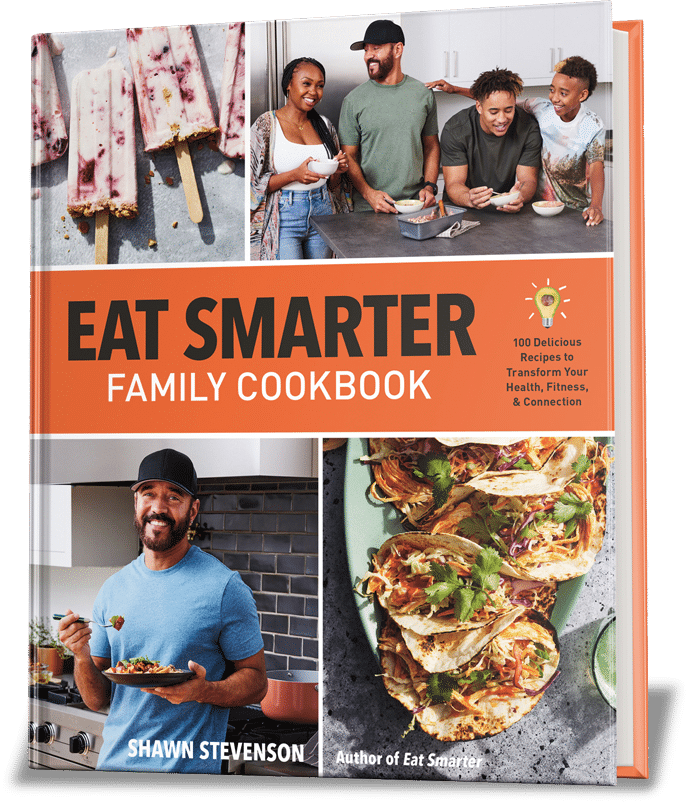
The Eat Smarter Family Cookbook is filled with 100 delicious recipes, plus the latest science to support the mental, physical and social health of your loved ones.


Share Your Voice
0 comments. Be the first to leave a comment.