
Subscribe to The Model Health Show:


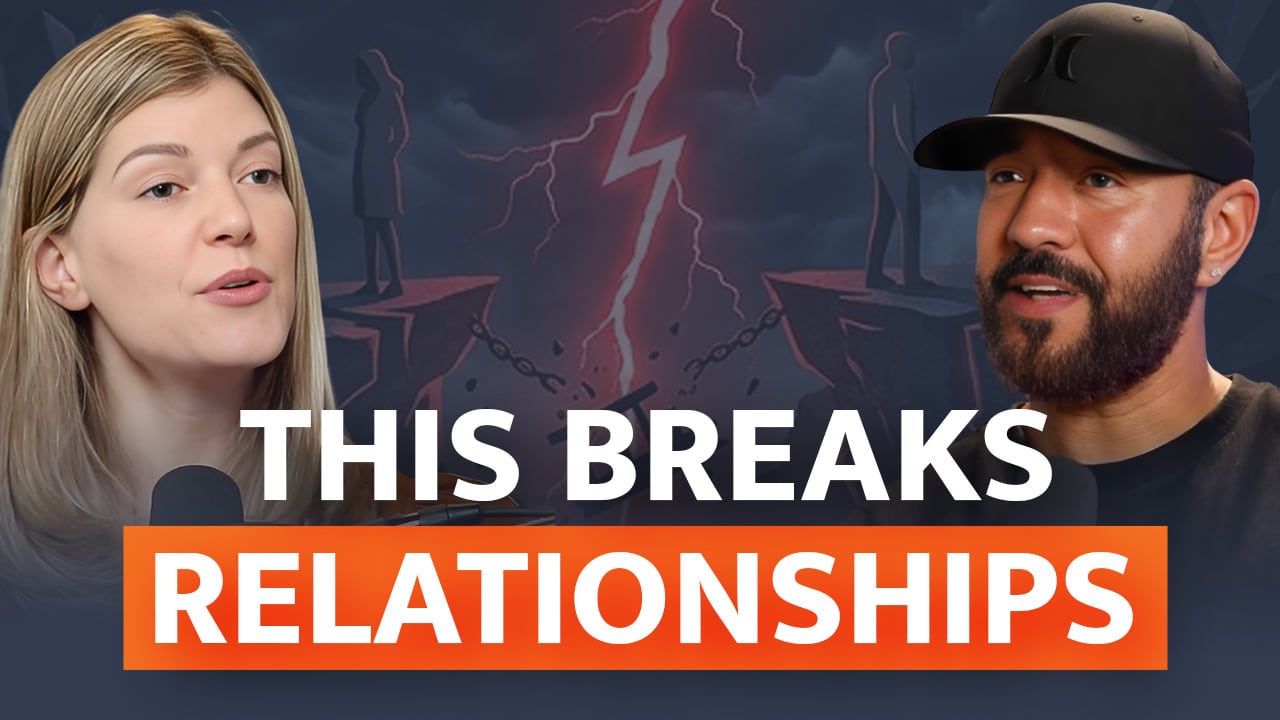
TMHS 1003: The Psychological Cost of Holding Emotions In & The Underrated Power of Oversharing – With Dr. Leslie John
Have you ever hesitated to share what you were really thinking? Or have you ever regretted saying something vulnerable? Both experiences are common, and today you’re going to learn how to make a more informed decision on when to open up.
On this episode of The Model Health Show, we’re joined by Harvard Business School professor Dr. Leslie John to discuss the research behind being vulnerable. Dr. John’s new book, Revealing: The Underrated Power of Oversharing, is a groundbreaking guide to better communication. In this interview, you’re going to learn how oversharing can actually help you build stronger relationships, better health, and more success.
We’re going to discuss the benefits of sharing your thoughts with others, the health benefits of writing down your thoughts, and how to evaluate the risks of opening up. You’ll learn why revealing your inner world is a skill, and what you can achieve by being more vulnerable. This conversation will help you cultivate more intentional and fulfilling conversations that can lead to better, healthier relationships and more inner peace. I hope you enjoy this conversation with Dr. Leslie John!
In this episode you’ll discover:
- The psychological cost of holding in your thoughts and emotions. (3:14)
- Why revealing your feelings can actually make a better impression. (7:26)
- What happens when someone in a high-status position is vulnerable. (15:34)
- The meaning of TLI. (17:47)
- How to read the room and gauge if you should share your thoughts. (18:24)
- What mind-reading expectation is. (25:54)
- The gender differences between how men and women share. (28:00)
- Why revealing is a skill and what we can gain from it. (31:44)
- The questions you can ask yourself before revealing. (34:42)
- What EQ is and its relationship to revealing. (39:13)
- The big 5 personality traits and which one is most predictive of opening up. (46:06)
- Two sentences you can complete to start revealing more. (57:40)
Items mentioned in this episode include:
- Organifi.com/Model – Organifi makes nutrition easy and delicious for everyone. Take 20% off your order with the code MODEL.
- Piquelife.com/model – Doctor-approved, cutting-edge solutions for your head-to-toe health and beauty transformation. Get exclusive savings on bundles & subscriptions.
- Revealing: The Underrated Power of Oversharing by Dr. Leslie John – Get your copy today!
This episode of The Model Health Show is brought to you by Organifi and Pique.
Make nutrition effortless—and actually enjoyable. Organifi’s delicious, superfood blends help you
boost energy, reduce stress, and feel your best every day. Get 20% off with code MODEL at organifi.com/model.
Elevate your daily ritual with cutting-edge, doctor-approved teas designed to support your metabolism, skin, and overall vitality. Unlock exclusive savings on bundles and subscriptions at piquelife.com/model.
Transcript:
SHAWN STEVENSON: Welcome to the Model Health Show. This is fitness and nutrition expert Shawn Stevenson, and I'm so grateful for you tuning in with me today. I've got a question for you, what happens when you hold your feelings inside? When you don't have a healthful way of expressing yourself, what happens with your mental and even your physical health? And on the other side of the equation, what happens when you feel like you overshare, when you venture into the domain of TMI? Like, was that okay? Should I have said? What happens psychologically and also to your health and your mental health when you venture into the domain of oversharing?
Now, today's expert, I'm telling you right now, this is gonna be a game changer for you in your intimate relationships, in your family relationships, in your work relationships, in your success, because there isn't a space in our lives where being able to manage and communicate how we feel, there isn't an area in our lives that this is not going to be impactful. But the truth is, so many of us simply don't know how to go about doing this stuff, and it's not an accident. We're gonna talk about why we're in the state that we're in, but most importantly, how do we leverage the underrated power of oversharing? Again, with the caveat, there's a certain way to go about this, but it can be harmful to ourselves to keep things bottled up inside.
But also, how do we go about doing this in a healthful way, a transformative way that makes us better? So many insights from this conversation have stuck with me already, and I'm so looking forward to employing in my life on a regular basis. This is one of those episodes that can be a game changer for the rest of your life. So without further ado, let's get to our special guest and topic of the day. Leslie John, PhD, is the James E. Burke Professor of Business Administration at Harvard Business School. Her award-winning research appears in top academic journals and media, including The New York Times, The Wall Street Journal, and The Economist.
Most recently, she penned the brand-new book Revealing: The Underrated Power of Oversharing, and today she's going to teach you why silence isn't neutral. There's a psychological penalty for keeping our feelings inside. How thoughtful revealing improves your health, how expecting our partners to simply know what we want can set us up for a lot of failure, and so much more. Let's dive into this conversation with the incredible Dr. Leslie John. Leslie, it's so good to see you. Thanks for coming to hang out with us.
DR. LESLIE JOHN: Thanks so much for having me.
SHAWN STEVENSON: Of course. Of course. So what happens when we keep stuff in. Especially in our world today, we got a lot going on, a lot to process.
DR. LESLIE JOHN: Yeah.
SHAWN STEVENSON: Is there a penalty? Is there, like, a psychological cost for keeping things in when we really need to express ourselves and let stuff go?
DR. LESLIE JOHN: Yes, absolutely there is. There's tons of research on this. So there, let me start by saying one of the studies that really rocked my world as a parent, 'cause I have two small boys. And what they did in this study was they looked, they wanted to see whether holding it in concealing your thoughts and feelings, whether it was related to your physiological stress response in your body. So what they did with these preschoolers, they're like two, three years old, they videotaped their faces as the children watched a scary movie, and now they also measured what's known as the galvanic skin response.
So this is, of course, a measure of how sweaty your fingertips and hands are, right? So it's physiological stress when we're... we can't really hide that. When we're actually physiologically stressed, we get these sweaty palms. And what they found was that the children who let it out, who were more expressive, who showed what they were feeling when they were watching the scary movie, they were less stressed. Their galvanic skin response was lower. It was less reactive, suggesting that opening up is positively related to comfort or to, like, lack of stress in a way, right? Put differently, the children that held it in, they were more stressed physiologically. Now, the kicker for me, as a boy mom, they tracked the children, so there wasn't a gender difference at this point.
Boys, girls were equally expressive. But just a couple years later, when the children were ready for kindergarten, they did it again, and this time there was a gender difference. And you can maybe imagine what the gender difference is, right?
SHAWN STEVENSON: Yeah.
DR. LESLIE JOHN: The boys were holding it in. And like my son, he's literally about to go to kindergarten right now, and I just... you know, that's heartbreaking to think that in that amount of time they've learned culturally that they should hold it in, and it's clearly not good for them. So that's a huge piece of work that, that really made, reminded me or told me, like, "Five alarm fire here. We need to do something about this." Then I did a lot of my own studies where I looked at the penalty that people have for hiding, the interpersonal penalty. So there's, like, a wellness penalty, and then there's also, like, a social penalty for hiding.
SHAWN STEVENSON: Ooh. I wanna hear more about this.
DR. LESLIE JOHN: Shall I hit you with that?
SHAWN STEVENSON: So before, before you get to that, this is so important, because somebody just said this about me, you know, just a couple of days ago. They said, "You're stoic," right?
DR. LESLIE JOHN: Oh, yeah.
SHAWN STEVENSON: And of course, and I do present that kind of energy. And they also coupled that with, and they were sitting right here in this chair that I'm a, I think they said puffball inside, right? So, like-
DR. LESLIE JOHN: Like a softy. Yeah.
SHAWN STEVENSON: Yes. And that's because, of course, being able to peel back the layers and to get to know me. But also this has just been work over the years to be more transparent..
DR. LESLIE JOHN: Right.
SHAWN STEVENSON: ... to share, to express myself.
DR. LESLIE JOHN: Yeah.
SHAWN STEVENSON: Because again, where I come from, especially the environment that I come from, inner city..
DR. LESLIE JOHN: Yes.
SHAWN STEVENSON: ... you know, poverty, it's just this is just something you just don't do. You know? You have to be tough..
DR. LESLIE JOHN: Completely.
SHAWN STEVENSON: ... in order to survive.
DR. LESLIE JOHN: Totally.
SHAWN STEVENSON: And so expressing my feelings wasn't even on the menu.
DR. LESLIE JOHN: For sure.
SHAWN STEVENSON: And what that leads to is a, obviously a lot of dysfunction.
DR. LESLIE JOHN: Yeah.
SHAWN STEVENSON: But at the other side of the equation today we have this paradigm of oversharing..
DR. LESLIE JOHN: Yeah.
SHAWN STEVENSON: .. Which there, I would imagine, are pros and cons and ways to go about that are valuable, because this is even your new work.
DR. LESLIE JOHN: Yes. Right? Exactly.
SHAWN STEVENSON: Is focused on that. Because the way that you framed it was like, oh, like, there are instances where I need to proactively overshare.
DR. LESLIE JOHN: Completely, yeah.
SHAWN STEVENSON: And so we're gonna get into all that good stuff.
DR. LESLIE JOHN: Amazing.
SHAWN STEVENSON: But let's talk about the social penalty be the social penalty, because what you said earlier basically there's a hiding penalty-..
DR. LESLIE JOHN: Yes
SHAWN STEVENSON: ... when we're keeping things repressed and not expressing ourselves.
DR. LESLIE JOHN: Exactly. Exactly. And completely, I love that you raised that example of your background and how in some context, like you w- it's correct to not show your cards, right? Like, you'll be eaten for breakfast, to put it in a mild way. So being, reading the room is, like situational awareness is key to nailing this. That being said, yes, the hiding penalty. So, we could do a little thought experiment for listeners. Listeners, imagine that you are choosing between two prospective dates. So there's two people that you're thinking about going on a date with.
And as you make this decision, you talk to one of them and you say to them... I'm laughing 'cause it's a bit of a bold question. You wouldn't start with this, but I'm cutting it to the chase. You say to them, "Have you ever had any STDs?" I guess they're STIs now. And the person says, "I have had so many STDs, I cannot even count.
All the STDs. And some that haven't been discovered." So, okay, so- Ew ... it's like, that's ew. Yeah. The other person, you ask the same question and they say, "I'm not telling you." Now, I know that neither of these is your number one choice, right? But because I'm a social scientist and this is what I specialize in, putting people into awkward choice situations and seeing what their choices illuminate about human behavior, so here, this kind of impossible choice, what would you choose?
Most people choose kind of the devil they know. They choose the person who's like, "Yep, I've had all the STDs," relative to someone who very clearly is not engaging in your conversation or not engaging in the act of self-disclosure. And that really shocked me because, for obvious reasons, like, really? You're telling me that you'd rather, like, date someone... Like, this person just isn't saying anything. Like, if they answered, maybe they wouldn't have had any, right? Like, why are you penalizing this person? We know this person is, like, five-alarm fire. Don't do this. But it turns out... So we did more research and more scenarios and tried to understand it better, and what we found was that the thing that undergirds it all is trust.
So when someone reveals something sensitive to you, they are showing you that they trust you because they're relinquishing control to the universe, and they're saying implicitly, "I'm telling you this because I'm, I trust you not to make a fool out of me," right? And when they do that, by taking that social risk, you trust them, and that's the spark of all human connection and flourishing, right? And this is so important to our species. Really, you could make an evolutionary argument, even though I'm not an evolutionary psychologist, that this is so important, social relationships, connectedness, we die without them, that we prefer someone who admits to pretty unsavory things relative to someone who abstains from this really important act of self-disclosure.
And yet we don't always get this right because in other studies we ask people to imagine, okay, imagine you're applying for a job and you're asked on the application, what's what's the worst grade you've ever gotten? And suppose you've gotten an F. Would it be better to say that you've gotten an F, or would it be better to opt out of answering?
Most people think the right strategy is opt out of answering. But then we ask prospective employers. They're like no. We want the person who... We'd rather the person who's never gotten an F, but if we have to choose between these two..." So people get it wrong, is what that showed me, that we think we do better by withholding to make an impression, when in fact so often revealing makes a better impression.
SHAWN STEVENSON: That is mind-blowing.
DR. LESLIE JOHN: Yeah, it blew my mind too.
SHAWN STEVENSON: You know, and again, it's just- My question would be how did we end up like this..
DR. LESLIE JOHN: I know.
SHAWN STEVENSON: ... to where we are so prone to keeping things in and to not discussing? Like, and I think this is gonna lead to a little bit of just the way that our culture's structured today, we're so, it's so pointed towards individuality.
DR. LESLIE JOHN: Yes.
SHAWN STEVENSON: And also even the construct, like you mentioned earlier, we're not in a tribal construct anymore. You know, we're just creating these kind of little isolated pockets of, you know, and we don't have, a lot of people don't even have extended family who are in, like, very close proximity as well.
DR. LESLIE JOHN: Right, right.
SHAWN STEVENSON: And so just that accessibility, I think- ... as well. And this is why we might point the finger an awkwardness of somebody oversharing on social media. For example, to a, to an audience a lot of people maybe they don't know.
DR. LESLIE JOHN: Right.
SHAWN STEVENSON: It's just like that's a strange behavior to do something like that, but maybe it's something innate within us to want to do that but we don't have that proximity.
DR. LESLIE JOHN: Yeah. And I think it's the same thing, so it is innate. It should be innate, but there's also some innate things that work against us, that work against us from revealing. One of those things is that we really freak out, technical term, we really freak out when we feel we've gone too far. The cringe of the TMI, right? You feel like you've gone one step too far. You're like, you ruminate. You have a disclosure hangover. You're like, "What did I say at that party?" It's like you poured gasoline all over your body and you lit a match. You're like, "There's no saving this." And so you beat yourself up for it, and that's totally valid.
Like, TMI is a thing. But what I encountered again and again in my research and as I wrote the book was that so often these times where we beat ourselves up over TMI, there is often redemption in those moments. So for example I, when I was a baby academic, I found myself late at night at a conference with mostly junior people, but two very grand pooba senior academics who I was desperately trying to impress. Someone had the great idea of let's go around the circle and tell our most embarrassing story ever. Now, most people said kind of these humble braggy like, "Oh, I showed up late to a talk," and- ... but I, for whatever reason, I went for it, and I told my actually most embarrassing story ever. And the next, and people were like, right, you get that social feedback of like, what?
And so I felt terrible the next day. I'm like, "Oh, my goodness," like- Job prospects gone. But then, long view, the two guys that I was trying to impress, they became my closest mentors. One of them, especially, I call him my academic big brother. Like, and I know that it wasn't in spite of that. It was like, when I shared that, he's like, "Yeah, she's real. She's fun. She's interesting." And so, so it- it's not black or white often, but yet we feel like the TMI. We get negative, immediate, visceral reactions. But then we forget that, like, the long game, if you put yourself out there, when a colleague needs to confide in someone, they might choose you instead of the person who is just, like, kind of completely filtered.
SHAWN STEVENSON: It's just it makes so much sense. But again-
DR. LESLIE JOHN: It's hard to do, though ...
SHAWN STEVENSON: It's hard to do.
DR. LESLIE JOHN: Yeah.
SHAWN STEVENSON: It's hard to do. And I wouldn't be here if it wasn't for that.
DR. LESLIE JOHN: Yeah.
SHAWN STEVENSON: Because I was just trying to think, what was my most embarrassing moment? Like, was there something ... And I remember I was teaching a food prep class. And at this point, like, I, you know, I'd really transformed my health and, you know, I'd come from a very kind of dysfunctional background and also dysfunctional health. And I remember I shared a little bit about it, just like, you know, I was overweight and I had this chronic spinal condition. I was on all these medications depressed. But I was embarrassed when I said it. I didn't wanna ... I, because I'm the health guy.
DR. LESLIE JOHN: Yeah.
SHAWN STEVENSON: Right? And we're here to be healthy and have a good time.
DR. LESLIE JOHN: Right, right.
SHAWN STEVENSON: But after the class was over and the next class was scheduled somebody came over to me, and they were like "I already have my, I'm gonna bring my two friends to the next one." Amazing. "Are you gonna tell that story again?"
DR. LESLIE JOHN: Amazing.
SHAWN STEVENSON: And I'm just like, "What story?" Wow. And they went, "About your back and about the..." It was what inspired them to bring more people. It's amazing. Right?
DR. LESLIE JOHN: Right.
SHAWN STEVENSON: And that just cracked everything open because it is the messiness. It is the-
DR. LESLIE JOHN: Completely
SHAWN STEVENSON: ... the pain.
DR. LESLIE JOHN: That's the benefit.
SHAWN STEVENSON: Because we can relate to those type of things-
DR. LESLIE JOHN: Exactly.
SHAWN STEVENSON: ... because these are real human conditions that pretty much everybody goes through and we wanna act like we got it all figured out.
DR. LESLIE JOHN: Right. And that's why it's especially powerful coming from you when you're leading the class. I call this a catalyst confession. When you are in a high-status position and you say something vulnerable, it's, like, exponentially more useful to people, right? Because you're modeling that you're... people already respect you, so you don't really have to worry about being viewed as, you know, not having your shit together or your stuff together. Sorry. But there's so much opportunity to inspire others. And when we don't talk about hard things like this, then you get into kind of these shame loops of, like- ... if nobody else talks about it, then you feel anomalous. And then when you feel like you're the only one that's had this thing, then you feel even worse because what's wrong with you, right?
Everyone else has it together and you don't. And so when someone that's a really high-status person can cut through and be real, it just has such amazing benefits. I'm thinking of Magic Johnson, actually. Magic Johnson, in the '90s, when he was diagnosed with HIV, he ... You can watch the clip on YouTube.
It's so moving. It gives me goosebumps every time. It's in this, like, low-ceilinged LA conference room. He's making an announcement. Nobody knows what it's gonna be, and he says, "Because I've contracted HIV, I'm re- retiring from the Lakers effective immediately." And then the nerdly scientists g- got into it, and what they did was they measured HIV testing as a function of kind of pre- pre-catalyst confession a la Magic Johnson, and post. And he directly, you can directly attribute that confession or that revelation to many more people getting tested and in turn getting treatment. So, so much go- Angelina Jolie, when she wrote that article in The Times about breast cancer, like, that spurred, literally it made more people get test- tested for breast cancer.
SHAWN STEVENSON: Yeah. Wow. It's again, sometimes it's life kind of positions you to do something like that. But this is something that I think, again, is inherent within us. If we had what we deem to be like a sa- maybe a safe space to be able to do that. Is there any v- validation to, like, this idea of a safe... could... You did mention it earlier about situational awareness.
DR. LESLIE JOHN: Yes. I know. Reading the room is so, so important. So the point is, yes, the title of my book is The Underrated Power of Oversharing, but it's cheeky. It's supposed to be cheeky. Yes, there still is TMI. Yes, we have to be aware of this. But in being cheeky, I wanted to bring attention to, we didn't even have a word for this until I came along, TLI, too little information. Right? TLI is, I've become convinced through research and practice and life that it's a way bigger problem than TMI, 'cause TLI, when we don't share, that's when we miss out on the, like, really important stuff and, like, colleagues that never trust you romances that never spark, friendships that never blossom, and so on.
So, yeah, you definitely have to read the room. I think one of the things you can do is first understand what's your goal in potentially revealing something. Is it to gain status? Is it to feel comfortable with someone? Is it to get closer to someone? Is it to just vent and get validated? Those are all very different goals, or maybe it's a lot of those things at once. But if you don't know your why, it's kinda hard to make good decisions about to whom and when to reveal the thing. So your why is really good an important thing to know. But then understanding who is in the room, is this the right time? Like, for example, when I get home from work, if I had a really hard day at work and my hubby says, "Hey, lass, how'd it go?"
Meanwhile, he's, like, juggling kids and doing logistics. Like, he doesn't actually mean, tell me how it actually was, right? Like, and believe me, I've tried. If I don't read the room, 'cause I've made that mistake- ... then it's just not a nourishing conversation, right? And then I don't, I... And then I'm like, "Why didn't you ask?" "Why did you ask?" So understanding, like, other people's emotional states, and are they ready for this? It's particularly tricky, I find, revealing negative things about other people, so like constructive feedback. And I have, I'm the official bad guy at Harvard Business School. I know I don't look like a bad guy, but I... I don't think I do.
But I I'm the chair of the Academic Performance Committee, and so what that means is that when our MBA students, if they get enough bad grades, they have to petition, write long pieces to- plead their case to stay as a student- ... as opposed to having to kind of un-enroll for a bit, and my committee decides. And so I have a lot of hard conversations with the students on telling them, "I'm sorry, but you can't come back." And I've drastically changed the way I reveal this to them. What, the way I had started doing it was I'd come to the meeting, which is a lot of people's intuition, prepared, like, what they did wrong, and they ask you, "What did I do wrong?"
I'm like, "You did this da." But that never went very well. So now what I do is I actually spend most of the time listening, and they say, "What did I do wrong?" I'm like, "What do you think you do wrong?" Just throw it back at them. And then you kinda excavate it from them. And when they tell you, that act of them revealing to you, then they feel understood and heard and tr- they trust you, and then I can ac- start actually helping them. So, reading the room requires a lot of understanding of, like, is this person ready? What's your why, and is this person ready? Is this the right person, and are they ready to receive what I have to say?
SHAWN STEVENSON: I love these two examples with your husband and then with this kind of, you know, so- bigger social example of that.
DR. LESLIE JOHN: Yeah.
SHAWN STEVENSON: It's so good, so powerful.
When you think about anti-aging, you need to think about antioxidants. Antioxidants from your nutrition help to neutralize one of the known culprits of aging called reactive oxygen species. These are potentially harmful molecules that can damage your cells, create DNA mutations, and increase your risk of a variety of diseases. Now, how the antioxidants in your food are measured is using the ORAC scale, or the oxygen radical absorbance capacity. And to support your mission of longevity, performance, good health, and blocking all of the actions of those reactive oxygen species, we need to tune ourselves to some of the highest ORAC scale foods ever discovered.
We wanna get more bang for our buck, and look no further than acai. Acai has a ORAC value of 103,000. So what does that mean in everyday terms? It means that it has about 10 times more antioxidants than most of the best fruits that you find in your produce aisle. Acai is powerful, but it's also been proven to actually be highly usable by the human body. A study published in the Journal of Agriculture and Food Chemistry found that acai actually raised participants' antioxidant levels demonstrating how effectively that it is absorbed by the human body. So that's just one of these super powerful sources of antioxidants. Now, what if you combine it with another powerhouse like beets?
Beets are a phenomenal source of antioxidants, but I don't know about you, but a lot of people are not out here eating beets. But the juice specifically from beets has been found, according to the Journal of Applied Physiology, to boost our stamina up to 16% during exercise, and participants even experience less fatigue post-exercise. Now, I get a therapeutic amount of acai, beets, blueberries, pomegranates, cherry, adaptogens like cordyceps, and more in the incredible Organifi red juice blend. It's all organic, and it tastes amazing. Kids love this blend as well, and it's a powerhouse source of antioxidants and other important nutrients for human health and vitality.
Now, I've been utilizing Organifi's red juice for years. It's one of my favorite things to use and also to travel with as well to get a healthy dose of immune system-supporting antioxidants and other nutrients. And so right now, when you go to organifi.com/model, you're gonna get 20% off of their incredible red juice blend. All right, that's O-R-G-A-N-I-F-I.com/model for 20% off sitewide. So check out their incredible green juice blend as well. And one of my other favorite things are the Happy Drops, so check those out. Therapeutic amounts of saffron, which have all these incredible clinical benefits for supporting mental health.
All these wonderful things. Organifi is an incredible team, incredible company, and they're doing stuff the right way. All organic blends, but definitely check out their red juice blend over at organifi.com/model. You get 20% off right now So head over there, check them out. Now, back to the show.
SHAWN STEVENSON: Just the power of again, asking questions and also knowing the situation. Because what we tend to do and this is something else we talk about, we have these mind-reading expectations.
DR. LESLIE JOHN: Oh, yeah, totally.
SHAWN STEVENSON: You know, like when you're coming home and then your husband is, like, doing these things, and you're just like I want him to ask me, you know, about this," or whatever the case might be. Or, "I want him to say this. I'm s- I'm sharing this thing-" "... because I want you to affirm me." Like, "You should know what I'm doing right now." Talk about the-
DR. LESLIE JOHN: Right, and isn't that so interesting in what you said? There's, like, so much that's missed. 'Cause we, I don't say that. Like, I wouldn't s- like, that's what I want, but I don't say that thing, right? And then I'm like, why don't you say that thing? Why don't we just say it? So this, r- I mean, needless to say, writing this book, I'd done, you know, 20 years of research before the book, but then it wasn't until I wrote the book that I actually started applying all the things. And I'm like, holy cow, this, like, truly every single tool has changed my life, my marriage. So the mind-reading stuff just astounded me. So there's this research on how... What they did in this research, they brought in couples that have loved each other for years and years. They've been together for, like, 12 years on average.
They brought them into the lab, and they asked them to talk about a conflict that they had recently, and then they each tried to guess how the other person had been feeling. So they wrote down h- how their partners, their thought, how their partners, what they were thinking and what they were feeling, and they were wrong 80% of the time. Whoa. 80% of the time. People who have loved each other for 12-plus years get it wrong, and yet the kicker is they thought they had it right. So we're overconfident in how much we know our spouses, but once we know, wow, we don't know them as well as we think the fix is easy, right? We need to ask. We need to communicate.
Th- on top of that, there is a scale. You know we psychologists love scales. There's a scale called mind-reading expectations. I put it on my website, 'cause I did it myself. 'Cause again I use myself as a guinea pig for every tool in the book, and I realized when I took this scale that I, my mind reading expectati- expectations are off the charts. So the scale measures things like you agree or disagree with items like, "My partner should just know how I feel. My partner should anticipate my needs." And when I say these things out loud, it's ridiculous. Like, of course it's illogical. But that's how these things work. They're so ingrained in us.
Yeah. And so for me, like, becoming aware of our tendencies is, like, 90% of the way there, right? Self-awareness is so key. And so now that I know this about myself, I- it turns out that, like, what feels like over-communicating is just communicating. I'm like, "Colin, I need a hug this morning. Please give me..." I mean, and he's empathic and can sense that, but he can't read my mind, so.
SHAWN STEVENSON: You don't say.
DR. LESLIE JOHN: I know.
SHAWN STEVENSON: Question, is there a bias, or is there a s- you know, again, with, does this tend to be women?
DR. LESLIE JOHN: Gender, yeah, I knew you were gonna ask that. I think that women tend to, I think that women tend to have it more. I do because-
SHAWN STEVENSON: Not that there's anything wrong with that.
DR. LESLIE JOHN: No yeah. Yeah. Because, and I think the reason is that culturally, like, the story of the, you know, heteronormative princess and prince fall in love, the princess never says how she f- like- ... it's the man that ex- that knows the time to propose and all this, and so that doesn't help feed these expectations. But men, for their part, I think that they're, on the other hand, men disclose less in general than women, and that's why it's interesting there are s- the therapeutic self-disclosure, by that I mean disclosure where you keep a diary, disclosing to yourself, that process of taking- ... those words and anxieties that are swirling around in your head, writing them on paper, that is ex- incredibly therapeutic.
Like, it has mind and body benefits galore, and those benefits are observed even s- more strongly for males. And I think it's because men keep their feelings inside more than women do, so if they're, if your feelings are all inside, it's harder to process them. And what I love about this exercise of just, you literally just take things that are bothering you keep a diary essentially, and you write them down on paper. And you don't even have to try to make sense of them or process them. You don't, like, less is more. Just put the darn things into words. Just put words on paper. That process of taking these swirling things and putting it into words activates that prefrontal cortex area of your brain, the logical reasoning.
And so it's like you become the CEO of your feelings when you can articulate them like that, right? Okay. And then they become more manageable. And you haven't even told anyone. This is just doing a diary. Like, when you talk to a friend about them, the benefits are even greater.
SHAWN STEVENSON: Right. Is there a health benefit to that?
DR. LESLIE JOHN: Yeah. So there have been studies on how, Well, yes, there is a health benefit for the simple reason that the mind-body connection. Yeah. When we, as you well know, when we heal our mind, our body also follows suit in many ways. And one particular study that I just found completely astounding in a wonderful way was a study where what they did was they had HIV-positive patients, they randomized them, so, like, real hardcore science.
They randomized them to either keep a diary of what they were struggling with, things that were on their mind Or just what they ate for breakfast kind of thing, a control task. And then they measured their blood. They did blood draws after, like, weeks or so of doing this. And the people who had written about the things that bothered them, their blood was healthier. Like, their T cell counts ... I'm not a physician but, like, their blood was literally healthier.
SHAWN STEVENSON: Yeah, their immune system.
DR. LESLIE JOHN: Yeah, their immunity. It was ... And then there are meta analyses indicating that, like, meta analyses, studies of studies on this task, and there are ... That is a very clear benefit is there. It's a small benefit, right?
SHAWN STEVENSON: Yeah.
DR. LESLIE JOHN: But, like, amazing. When you think of, like, the hardcore thing of, like, taking medication, this, like, writing them down can give you a very, a significant and robust benefit.
SHAWN STEVENSON: Yeah. It's pretty amazing. And this is really, you know, with healing, just being healthy, it's stacking conditions.
DR. LESLIE JOHN: Yeah.
SHAWN STEVENSON: Right? I love that. What if that's normalized so that this is just your state? Right. You know, you're, you're creating conditions to where your internal terrain is just healthier.
DR. LESLIE JOHN: Right. What if we taught that in school with kids? What if we had them always have a diary, right? Like, what if we started young? It's interesting. We're never ... I think, I really do think that revealing is a skill. It's a skill that gets us so much. It gets us health. It gets us relationships. It gets us power, influence, so much of the good stuff in life, and yet we're never taught it.
SHAWN STEVENSON: Yeah. We've gotta ... We- Number one, we've gotta learn how to do it.
DR. LESLIE JOHN: Yep.
SHAWN STEVENSON: Right? And also, we've gotta learn how to receive it.
DR. LESLIE JOHN: Oh, yeah.
SHAWN STEVENSON: Because-
DR. LESLIE JOHN: That's a whole other topic
SHAWN STEVENSON: ... you know, I'm thinking about-
DR. LESLIE JOHN: Yes.
SHAWN STEVENSON: ... And my wife knows this well. I've been with my wife for 22 years.
DR. LESLIE JOHN: Oh, congratulations.
SHAWN STEVENSON: And so we're just, you know, this is my bestie. But you would think, again, just even based on that, like, the 80%. I know there were times when I was dead wrong, and same with her. But just over time, and again, doing this work and, you know, ha- talking to some of the greatest minds in this space, I started to, and this was a couple years ago, like, tell her explicitly, be like, "This is what I want."
DR. LESLIE JOHN: Yeah, I know. And- It's amazing, isn't it?
SHAWN STEVENSON: But, but- ... she still reverted back to what she thinks that I would want.
DR. LESLIE JOHN: Yes.
SHAWN STEVENSON: You know what I mean? I'm ... and I, you know, we've had these things where, like, I literally told you exactly-
DR. LESLIE JOHN: Yes.
SHAWN STEVENSON: ... what I needed. And, you know, so again, it's just-
DR. LESLIE JOHN: Old habits die hard.
SHAWN STEVENSON: That part.
DR. LESLIE JOHN: Yeah.
SHAWN STEVENSON: You know? And it was not easy 'Cause then I felt like I shouldn't have even said anything.
DR. LESLIE JOHN: I know. Well, this is where I view revealing wisely as a campaign. It's a campaign. It's not a one-shot thing, right? And it's especially hard because a lot of these habits are deeply ingrained, and it's tricky because she's doing what she thinks she wa- you want. And so you ... So to push back on that is a bit ... You're you're right to be delicate with it, but, you know, keep at it. Yeah. It's a campaign. I've had similar situations where my, with my husband where we have very divergent preferences, and he's like, really?"
SHAWN STEVENSON: Yeah.
DR. LESLIE JOHN: Yes, that's what I want.
SHAWN STEVENSON: But it's again, it's stacking conditions. And if we don't know this stuff or how to do it we know we could see the res- I'm a very big results guy. We could see the results and the dysfunction in how we're showing up in our relationships with others our relationships with ourselves. How isolated we are even with people in feeling alone, you know? So something is seriously awry right now in our society.
DR. LESLIE JOHN: I agree.
SHAWN STEVENSON: So we know that. How do we fix it? It's like with anything, you've gotta make it a study. Yeah. You've got to learn how to actually, how do you express yourself in a healthy way?
DR. LESLIE JOHN: Right.
SHAWN STEVENSON: One of the most valuable things I've already gotten from you is knowing your why. Why am I sharing this with this person, right? Like, what is my intention? Instead of just kinda letting the faucet, turning the faucet and letting that, the, you know, the fire hose go off. Or, you know, completely r- withholding in a great situation where you can possibly have some type of healing or- ... you know, whatever that why might be for you. Maybe it's just, again, to potentially vent- ... or to, you know, get some kinda affirmation, to get some kinda insight. Yeah. Whatever the case might be. You might be blocking yourself from it completely.
DR. LESLIE JOHN: Yeah.
SHAWN STEVENSON: So yeah.
DR. LESLIE JOHN: Yeah, totally. And what I find is that once people ... People often ask me, "Okay, so I'm thinking about disclosing this thing. How do I think about it? Like, should I say the thing or not?" And number one, what's your purpose? But then after that, one thing that I often suggest, which I do myself, is take a couple of these decisions and think it through a little bit more. So for example, let's make it really concrete. Imagine that you're at work and y- you came up with this brilliant idea for a product and it came to fruition and great success.
The whole team did it, but the core idea was your baby. You overhear a colleague of yours, the boss asked them whose idea was it, and they said, "Group effort." And a part of you dies inside 'cause you're like, "Ah but it really was me." And so the old you might've been like, "Well, I'm not gonna say something because I don't wanna be a jerk. I don't want them to, like, think I'm petty. I don't wanna ruin the relationship with my team that I love," right? And that's all valid.
That's how whenever we think about whether to reveal something, to the extent it rises to our consciousness, which it does- often doesn't, that's a whole other issue, but when we're thinking about it, should I say something or not, we immediately fixate on the risks of revealing, right? That I just delineated there. They'll think I'm petty. It'll be awkward. Relationship's not gonna be good. Valid, but that's not a fulsome way of making a decision. The next thing you wanna do, you wanna also think about, well, what are the risks of not saying the thing? Well, if I don't say the thing I'm gonna ruminate.
When I ruminate, that may seep out into passive aggression. That may damage my relationship. So that's, there are very real risks to revealing that we don't usually think about, but we need to think about them alongside the risks of not revealing alongside the risks of revealing to make a fulsome choice.
SHAWN STEVENSON: So how do you handle a situation like that?
DR. LESLIE JOHN: Right. So then, like, the, a similar situation like that happened to me, and I thought this through. I literally did this, like, I, I wrote down my, like, risks of revealing. Yes, I'm a nerd, but it was super helpful. That's great. Risks of not revealing, and then I s- that frame makes you see it from a different perspective. And then when I thought of the risks of revealing that, oh yeah, I'm gonna be angry, I'm gonna ruminate, I'm gonna keep it inside- then I, the bonafide benefits of revealing started to emerge. Like, "Wow, this is actually an opportunity for them to know who I am and that I value ideas. They're important to me."
And if I could figure out the right way to say it, which of course EQ, se- emotional s- situational awareness and the way there's so much we know on how to say hard things, so we know how to do this, so if we figure out the right way to do it, if I said it in the right way to the person, then maybe they would respect me more because I had the guts to like speak up and they know that I care about ideas, and that's a wonderful thing.
And when you feel like someone knows you for who you really are, like me, I think ideas are incredibly important, that makes me feel closer to you when I feel like you know, you know my values, and that's great for relationships. Now, of course there are risks as well to revealing, but we can't just fixate on all those. What I want people to do is to think, just don't do this for every decision, but maybe for a big one or maybe for a trivial one where the stakes are lower. Think through the risks of revealing, also the risks of not revealing, the benefits of revealing, and the benefits of not revealing. So there's kind of four things. Don't just fixate on the one, which is what we do like 90-plus percent of the time. Because when you do, you'll often make different decisions.
SHAWN STEVENSON: This is so good. So valuable. You know, you had a little Freudian slip there.
DR. LESLIE JOHN: Oh.
SHAWN STEVENSON: You said EQ.
DR. LESLIE JOHN: Yes.
SHAWN STEVENSON: And this is something I wanted to ask you about-
DR. LESLIE JOHN: Okay. Yeah.
SHAWN STEVENSON: ... actually. So you said EQ versus IQ. So first of all-
DR. LESLIE JOHN: Yes.
SHAWN STEVENSON: ... I want you to, if you could, first for people who don't know can you talk about EQ versus IQ, but in the context of relationships. Because I've been talking about this a little bit m- with my family, you know, like- ... my wife and just even, you know, with my youngest son also, that we have this tendency- in our society to think if somebody's good at one thing, that they're good at other things.
DR. LESLIE JOHN: Oh, yeah.
SHAWN STEVENSON: Right? So if somebody's really smart-
DR. LESLIE JOHN: It's not at all like that. Yeah
SHAWN STEVENSON: ... then, you know, they must have great relationships. They must, you know, be, you know, such a great athlete or what- or we do that with great athletes, right? They're a great athlete. Yeah. They must know how to have healthy relationships. They must know how to, you know, be financially intelligent. Whatever the case might be. Yeah. If somebody's smart at one thing, we tend to think that they're smart at everything.
DR. LESLIE JOHN: Right. Right. And that may be true also with our beliefs about EQ and IQ, where IQ is, I think of IQ as kind of book smarts in a way. Classic intelligence tests, IQ, like cognitive reasoning, really hardcore in that sense. But EQ, which I've come to believe is far more important, if I had to choose what, to have EQ or IQ, I'd 100% choose EQ hands down, but IQ is wonderful too. So EQ is the ability to understand your own emotional world and that of others, and is incredibly important to be a functioning human in society. And revealing When you learn how to reveal better, it increases your EQ. Why? Well, one thing I learned as I was... If we go back to the situation of like, oh, mind reading, we, I expect my husband to know how I feel implicitly. Okay, so now that I know this about myself, I have to tell him how I feel. Well, the next issue I had was I didn't know how I felt.
Revealing wisely requires a level of emotional literacy. So I had these conversations. I am a, I'm a psychologist. I have a PhD in psychology and economics, and I was talking to my therapist. I was kvetching about something. I don't even remember what it was, and he said, "Okay, but how do you feel about that?" And I said, "Well, I think this might be a big problem. I think my mom might feel disappointed." He said, "How do you feel about that?" Like, I kept listing how others felt or my cognitions until finally I said, "What is a feeling?" And then he handed me this tool called an emotions wheel, which is the greatest gift ever because it helped me to gain emotional literacy.
And I have it in my book. I actually have a much simpler version because I needed a lot of remedial help, so I made it simpler for myself. But essentially the way the emotional wheel wor- the wheel of emotions works is if you're you s- It, it helps you gain emotional literacy by helping you understand the different shades of and gradations of emotions.
So you start by thinking, "Is this a good feeling or a bad feeling? I can do that. Is it thumbs up, thumbs down?" And then the next is thumbs down. Okay, well, am I, like, more angry or am I more sad? I can distinguish between those two, but then that's it. But if, so if I say sad, it could be like, am I crestfallen and am I disappointed?
Am I embarrassed? Like, there's so many different versions of that. And so the tool really helps you gain emotional literacy, and that's required in order to reveal well. You need to know f- core- ... how you actually feel. So for me, as I wrote the book, I realized, yes, there's these benefits to revealing, but doing it wisely required, for me, kind of an underhaul of my emotional literacy.
SHAWN STEVENSON: Wow. I would think, again, we would have education around EQ.
DR. LESLIE JOHN: Exactly. Exactly ...
SHAWN STEVENSON: yeah, it's so crazy. It's so crazy. One of the people-
DR. LESLIE JOHN: Meanwhile, we've got our, like, our kids' friends are in, like, math school and, like, coding. And like, great. That's great. That's awesome. But, like, what about, like, conversational skills?
SHAWN STEVENSON: Yeah. And the stuff that's actually gonna make you fulfilled in life and connection and all the things.
DR. LESLIE JOHN: Completely. That's what matters. Yeah.
SHAWN STEVENSON: I mean, why be super smart at something and you're by yourself, you know? 100%. But with that being said Dr. Daniel Goleman many years ago when I started The Model Health Show, he's one of the people that I-
DR. LESLIE JOHN: Oh, he's amazing.
SHAWN STEVENSON: ..Wanted to share with the rest of the world, and he really kind of- helped to usher into popular culture the social brain. The awareness of the social brain. And we did, of course, this was probably maybe year four of The Model Health Show- ... we had the opportunity to have him on the show. But just that awareness that, you know, we even have this EQ. Because IQ is such a focus-
DR. LESLIE JOHN: I know.
SHAWN STEVENSON: ... in success in your a-
DR. LESLIE JOHN: Completely.
SHAWN STEVENSON: ... ability, your value even. And just to see how many people are radically successful who aren't necessarily the, you know, high IQ. And to devalue how EQ can be so powerful.
DR. LESLIE JOHN: I know.
SHAWN STEVENSON: The EQ individual could be the person who gets people together.
DR. LESLIE JOHN: Exactly.
SHAWN STEVENSON: Right? And gets the ideas executed and get thing, gets things done.
DR. LESLIE JOHN: Exactly. Exactly.
SHAWN STEVENSON: And helping people to feel seen. And the list goes on and on.
DR. LESLIE JOHN: Yeah.
SHAWN STEVENSON: With all of these, quote, "soft skills." Right?
DR. LESLIE JOHN: Right. I hate that it's called soft skills, right? Right. It's, like, demeaning of them. And interestingly, so I, at Harvard Business School, I teach MBAs, I teach executives, so there's, like, a wide, I teach, like, from, like, 22-year-old to, like, 65-year-old. And the MBAs, they just ... Oh, the most of them are really wonderful.
There are a few of them that ... Well, let me say it this way. In the MBA curriculum, I would say the soft skills, aggressive air quotes here, leadership, the leadership course is, like, a low-status course. Finance is, like, the high-status course that, you know, if they were to choose which they had to, which, if, which case to not read the night before, they would choose to let the leadership one go. But then when the same people come back for their alumni reunions or to brush up in executive education, what they all say is, "I wish I had paid more attention in leadership class." 'Cause that's what ... Leaders need EQ way more than IQ in my view. I, it would be fascinating if there was a study that actually showed that, that measured, like, EQ and IQ in leader performance.
SHAWN STEVENSON: Do the study.
DR. LESLIE JOHN: Like, that would be ama- ah, yeah.
SHAWN STEVENSON: I'll be involved as well.
DR. LESLIE JOHN: Yeah, let's do it.
SHAWN STEVENSON: So good. And this is the thing too. We've got a bit of a, there's, like, a blender. It's we're making a smoothie right now in our society.
DR. LESLIE JOHN: Yeah.
SHAWN STEVENSON: There's a lot of stuff just kinda getting whipped up.
DR. LESLIE JOHN: Totally.
SHAWN STEVENSON: This is a huge-
DR. LESLIE JOHN: We're figuring it out.
SHAWN STEVENSON: ... opportunity. Yeah, big opportunity. A lot of, you know, kind of, strong structures of how things were supposed to be done. Those are kind of shaky and changing and evolving. This is a great opportunity to implement new ideas like this.
DR. LESLIE JOHN: I agree.
SHAWN STEVENSON: And we're seeing the change taking place in real time. And so this conversation even coming along at this time is super valuable super important, because we are so unaware of ourselves, and we're being pulled to be so externally focused more than ever.
DR. LESLIE JOHN: Yes.
SHAWN STEVENSON: This is something to triple down on right now is to, you know, not just working out, obviously we were talking about this before the show the value of that, but working in. And cultivating these skills because we all have these capacities. You know, there's volume to it, of course where you might fall. But I believe these are all things that we can also learn and develop and use with intention. And so I think one of the great things, and I wanna ask you about this, to help us to just get a little bit of direction on where we are foundationally. You talk about being a revealer or a concealer.
DR. LESLIE JOHN: Okay. Yes.
SHAWN STEVENSON: Let's talk about that.
DR. LESLIE JOHN: That's great. So yeah, people often ask me, like, "Is there a revealing personality?" And yes. So if you think about the big five is, like, the most robust way that psychologists think about personality differences. So most personalities can be kind of boiled down to five major characteristics, a combination which stands for OCEAN, so openness to experience, conscientiousness, extroversion, agreeableness, and neuroticism.
I know, it needs to rebrand. Neuroticism is, like, kind of emotional reactivity, negativity. And so when I ask people what... Maybe I'll ask you. What there's one, one of these personality characteristics, openness to experience, conscientiousness, agreeableness, extroversion, neuroticism, that is strongly predictive of willingness to open up. Do you have a hunch or do you prefer not to guess?
SHAWN STEVENSON: Conscientiousness.
DR. LESLIE JOHN: What's that?
SHAWN STEVENSON: Conscientiousness.
DR. LESLIE JOHN: Conscientiousness. Ah, interesting. Why do you say conscientiousness? That's a good guess.
SHAWN STEVENSON: I just think it's a good inroads because-
DR. LESLIE JOHN: It is, yeah
SHAWN STEVENSON: ... of just being aware of the situation, the construct, the pieces. How am I coming across? What is this person's intention? Just paying attention to the pieces.
DR. LESLIE JOHN: Yeah, I love that, and I think that conscientiousness, I wonder whether it's... I bet it's related to self-awareness, conscientious and there is tons of research on how conscientious people, we often overestimate like, people's aptitude in deciding whether they will be good in a role, and we underestimate, like, just their conscientiousness of, like, how hardworking and can they, do they do the thing. But I digress. In this case, when it comes to comfort opening up, and you're not alone, everyone gets it wrong. But actually, you didn't get it wrong in the way you, people usually get it wrong. The way people usually get it wrong, they guess extroversion. They think that people who talk a lot are revealy.
But when you think about it- You know, decibels does not equal depth. We love extroverts because they're gregarious, they talk a lot, but it's actually not related to how deep they go. Yeah. In fact, one of my very best friends is a hardcore extrovert which is, it's lovely. Like, she calls me a conversational free rider, because sh- we're together, and she'll do all the talking, and I get to, like...
And I'm more introverted, so we work out well. But anyways, she's an extrovert, but she's not very revealy. So you can have- And I'm more of an introvert, and I'm very revealy. So the trait, I won't leave you in hanging anymore, is agreeableness. Agreeableness is very strongly predictive of comfort opening up. And I was just as surprised as you were when I did this research, and then we learned more. And what we figured out was that the reason agreeableness is most strongly predictive of being revealy, I sound like Pee-wee Herman. Revealy. Revealy. Love Pee-wee.
SHAWN STEVENSON: We just...
DR. LESLIE JOHN: cut out as you need.
SHAWN STEVENSON: We're a mess.
DR. LESLIE JOHN: So-
SHAWN STEVENSON: Tell them Large Marge sent you.
DR. LESLIE JOHN: Sorry. Sorry. So focus, LJ. Okay, so the agreeableness. Agreeableness the reason agreeableness is so positively predictive of opening up, comfort opening up, sharing, personal self-disclosure, is because agreeable people tend to trust others. They tend to walk around the world with kind of this default level of trust. And to open up to someone, that requires being really trusting, for better and for worse. Now, I'm a really agreeable person, for better and for worse, and this has bitten me. So for example, I remember when we were newly pregnant with our first baby, it was, like, the dark days of COVID, and I just really wanted to tell people.
So stupidly, I blurted it out to our landlord. "Hey, I'm pregnant." Well, that, that triggered a series, this crazy chain reaction where we ended up having to move out because she didn't want a baby and all of this. Holy moly. Yeah, so that was somewhere where I was like, "Oopsies." My husband, on the other hand, he's more reserved, and so he was very kind. And he's like, "LJ, that was not the greatest decision." But he was supportive and kind. But that's an example of how being agreeable and my tendency to open up, it can bite you sometimes. But I'd rather, I, again, as I said at the beginning, I'd much rather suffer from net TMI than TLI. Just think TLI is a way bigger problem.
SHAWN STEVENSON: It's phenomenal. Phenomenal.
All right, I'm about to give you the tea on longevity. There's one beverage that has been found and scientifically proven to contribute to longevity far better than anything else. A phenomenal peer-reviewed study published in The Lancet Just last year found that people who regularly drink tea age slower than everyone else. Using clinical biomarkers to determine biological age and following thousands of participants for up to four and a half years, the researchers found that number one, transitioning from not drinking tea to tea drinking was associated with a decrease in biological aging versus people who remained non-tea drinkers.
That's the tea. Number two, even stronger associations were found in consistent tea drinkers. And number three, the research suggests that drinking around three cups of tea per day had the most anti-aging benefits. There are so many varieties of teas to choose from and they're teeming with different benefits from green tea to herbal teas like rooibos tea. But there's one tea, if we're speaking about anti-aging, that you need to know about. It's been found to have anti-aging and anti-obesity effects. This is according to a study published in the journal Clinical Interventions in Aging that found that the renowned science-backed tea called pu'erh makes a notable difference in weight loss.
In this double-blind randomized placebo-controlled trial, the researchers stated, quote, consumption of pu'erh was associated with statistically significant weight loss when compared to a placebo. Fat loss was seen for the arms, legs, and the hip and belly regions, unquote. The participants who utilized pu'erh lost more overall body fat and what was especially remarkable was they maintained their muscle mass during their weight loss.
This is that major component of longevity. There's only one pu'erh that I drink and this is my favorite tea. I've been drinking pu'erh for years and it's from the incredible team at Pique Life. Go to piquelife.com/model right now. You're going to receive up to 20% off plus some limited time free bonuses like an electric frother to mix your favorite beverages. Their pu'erh is made from a patented cold extraction technology. It's triple toxin screened for purity and it's wild harvested so it's even richer in these incredible polyphenols that lead to those amazing benefits that we talked about. And right now you get to try Pique Tea's risk-free with their 30-day money-back guarantee.
You either love it or you'll receive a full refund. So you have nothing to lose and better health to gain. Head over to check them out. It's piquelife.com/model. That's P-I-Q-U-E-L-I-F-E.com/model. Take advantage. And that is the tea. Now back to the show.
SHAWN STEVENSON: You know, this is so interesting because, you know, this paradigm we've got this kind of black and white introvert or es- extrovert and you just fit into these camps. And you know, even that is super blurry and-
DR. LESLIE JOHN: Totally
SHAWN STEVENSON: ... there's a spectrum and there's situations and all the things. But just to think again, just because somebody's extroverted that they're going to be more revealing and more, and have more depth as far as a connection. You know, this is again, not just looking at the superficial. And this holds true, I think, in a lot of relationships, and I've seen this trend also, like on social media seeing more examples of this with couples, that there tends to be the pairing of a extrovert with an introvert-
DR. LESLIE JOHN: Oh, interesting. Yeah
SHAWN STEVENSON: ... pretty frequently.
DR. LESLIE JOHN: Yeah.
SHAWN STEVENSON: And we tend to have these Paula Abdul, shout out to Paula Abdul opposites attract pieces that tend to fit together. And this could obviously create a lot of problems but it can also create a lot of reward and benefits.
DR. LESLIE JOHN: Totally.
SHAWN STEVENSON: But it's being able to learn each other-
DR. LESLIE JOHN: Completely
SHAWN STEVENSON: ... figure these things out, and I think, and this is what I wanna ask you about-
DR. LESLIE JOHN: Yeah
SHAWN STEVENSON: a huge step in this is being aware of this mind reading expectation.
DR. LESLIE JOHN: Yes. Yes.
SHAWN STEVENSON: Right? And so what I wanna ask you about, obviously our relationships have a huge impact on our lives you know, from a health standpoint, mental health, our physical health, you know, our fulfillment, our happiness, our ability to, you know, be resilient.
DR. LESLIE JOHN: Yep.
SHAWN STEVENSON: Super important, but a lot of us just don't know how to do it. And so let's speak from a position first with the tendency tends to be with men, and I'm just gonna say it as, you know, a participant in this category of holding back in sharing.
DR. LESLIE JOHN: Yeah.
SHAWN STEVENSON: Right? And just kinda really keeping things to myself-
DR. LESLIE JOHN: Yeah ...
SHAWN STEVENSON: more frequently. Is there a place there ... W- what ... Oh, okay, I'm gonna say this. I've seen the value firsthand and the shocking result with my wife and kind of happiness when I overshare. Like, I share something in depth. Like, I kinda, quote, "get something off my chest" and I share something. And she has a sense of, like, happiness and whereas I feel like I probably shouldn't, I don't wanna put this on you, or I don't need to talk about this but just sharing it anyways, I feel like it makes us closer. So can you speak about oversharing in that context with- With men
DR. LESLIE JOHN: Yes. I mean, I think number one, doing is believing. You have to do it. Just do it. Because you... I say that because you cannot, you cannot understand the benefits if you don't actually do it. You can't feel your spouse being like, "Oh, wow, he opened up to him. Now I know what, now I know why he's grouchy. It's not me," right? You can't imagine that in prospect. You gotta actually do the thing. So you have to bring yourself to open up and do it. But then the next question becomes, okay, well how do I do it? And there are lots of different ways of doing it, but I think that, I think... and lots of contexts, right?
Like, how would you do it at work would be different than how you do it in your, with your spouse. So let's just keep the spouse example. This is, like, someone who you ideally have a lot of emotional intimacy with. By that, I mean someone who you can tell them anything. Anything, right? My husband is that. He's the one person in the world that I can tell anything to and that's real intimacy. And so to get there, I think, yeah, we have to be revealing, especially men who maybe for lots of reasons and I, when I was researching my book, I went down many rabbit holes of, like, is it nature or nurture, the fact that men are often more reserved?
And it's a bit of both, not surprisingly. So what would you be able to do? Well, step one is being, understanding your own state, right? So it's your own emotional literacy and awareness, which we've talked about a little bit. But then the next step is, like, how do you actually share it? And one thing you can try to do is if you f- share in this context with your spouse your feelings, how do you feel?
Say, you can say, "I feel complete the sentence. You can complete two sentences. I feel, and I need... And just generating those, to be able to say those, you need to have done some reflection on how you feel and what you need. So that's part of the battle too, is the reflection. But then all you have to do, so I've given you this tool, it's fill in the blanks. Professor John says, "I feel, I need." And when you do that once, see what happens. Try it again in a n- in another context, and you'll find, as I did when I was doing the tools, using the tools as my own guinea pig, that once you do it a couple times, you see, oh my gosh, your spouse is like, "Oh." I can't sing. I have no voice.
But they really appreciate it, and then you feel closer to them, and you will keep doing it. Another thing you can do, another powerful tool, especially for people who themselves are a little reserved or don't wanna open up- Is to ask your spouse how they feel. Say, "How do you feel?" Because when you ask them how they feel, that prompts them to help you as well, to then ask you afterwards, to reciprocate, to kinda go back and forth. Were those helpful, or should we-
SHAWN STEVENSON: Yeah, absolutely.
DR. LESLIE JOHN: Okay. Okay. Yeah.
SHAWN STEVENSON: Just again, just leading with that as well.
DR. LESLIE JOHN: Yeah.
SHAWN STEVENSON: I love the quote from St. Francis of Assisi, "Seek first to understand and then to be understood."
DR. LESLIE JOHN: Oh, yeah.
SHAWN STEVENSON: Right?
DR. LESLIE JOHN: It's so right.
SHAWN STEVENSON: Especially in a conflict situation.
DR. LESLIE JOHN: Yeah.
SHAWN STEVENSON: But also, you know, my wife it's the permission. The reason that I would share more than I normally would, because I kind of just wanna say what I need to, you know, the part that I need to say, and that's that. But she'll be, you know, I'll say some, the thing, and then she'll be like, "Say more."
DR. LESLIE JOHN: Oh, amazing.
SHAWN STEVENSON: Right?
DR. LESLIE JOHN: You have such a-
SHAWN STEVENSON: Because we have this-
DR. LESLIE JOHN: .. supportive wife. Yeah
SHAWN STEVENSON: ... paradigm of, in our culture. This is also due to her friends. This, they have a text thread, a voice texting called the yappy hour.
DR. LESLIE JOHN: Oh.
SHAWN STEVENSON: And so they, you know, it's the language.
DR. LESLIE JOHN: That's great.
SHAWN STEVENSON: But, you know, it's like, say less, right? Like, you say this thing, like you don't even need to say any more. But it's the reverse. It's like, say more.
DR. LESLIE JOHN: Yeah.
SHAWN STEVENSON: Right? It's just like, okay, well, you know, and I can go a little bit further with the thing, you know? So it's just like opening up the space for that to even happen.
DR. LESLIE JOHN: Right, right.
SHAWN STEVENSON: And so but now what about on the other side of the, you know, the mind reading expectations? Like you self-confessed to like-
DR. LESLIE JOHN: Right, right
SHAWN STEVENSON: ... oh my God, I am fitting into this very, you know, distinctly.
DR. LESLIE JOHN: Yeah.
SHAWN STEVENSON: How do you handle m- maybe like turning down the volume on expecting somebody to read your mind?
DR. LESLIE JOHN: Yeah, exactly. So for me, it's been like one of these learnings that like, it's like a switch. 'Cause now that I know this, I'm like, oh, okay, I have to tell him that I slept really crappily and I'm super exhausted, and when I don't sleep well, I can't regulate my emotions, so please don't ask me what the k- kids want in their snacks this lunch. Like, don't ask me any- I can't make decisions when I'm sleep-deprived. So, like I tell him. And so I know it seems so banal, right? But it's- Yeah ... like crazy powerful. You know, another thing that I've been experimenting with more is thinking about, like trying to appreciate the sheer number of opportunities to share more, because I think a big part of the problem is that it doesn't, often doesn't even occur to us to share, especially when you think about gender differences or people who tend to be naturally reserved.
Like, it's not like it's on their mind to even share. And so what I started doing was these like little audits where, so, like as an example so what I would do is I would keep track of the things I said in the day and the things I didn't say. So for example, I wake up I roll, this is gonna, I'm gonna do it on hands.
This is gonna be said, this is gonna be unsaid. I wake up, I roll over in bed, say, "Good morning, Collie. I love you." We haven't been married that long, so we're still lovey-dovey. What I don't say is, "I slept like shit. I slept like crap. I slept badly. I can't regulate my emotions when I don't sleep well. I'm gonna need some more love today." We get into the bathroom, I stare at myself in the mirror, I think, "I feel older than I thought I would at this age, and how come I still have acne?" I don't say any of this, so I'm 5-1. We're not even downstairs. Five unsaid, one said. And my point isn't that we should say all of these things all of the time.
We withhold for very good reason, for kindness, out of strategy, whatever, but I think we should consider. And before I started doing these decisions, they like completely flew under the radar for me. Yeah. And then, I mean, all of those that I just talked about, like I should tell my husband how I feel about my body. He will say something nice. At least I'll feel understood, right? So there's, so a big part of this is just r- even realizing the opportunities.
SHAWN STEVENSON: Wow, I love it. Again, this is some complex terrain. And the best thing that we could do is just, again, making it a study. Learning about it. And you put together this book. There's, now, the thing is too, as of this recording- ... this is available everywhere that books are sold.
DR. LESLIE JOHN: Yay.
SHAWN STEVENSON: And sometimes we have the ability to get decades of experience and condensed into something that might take us a couple of hours of devotion. And how priceless is that?
DR. LESLIE JOHN: Yeah.
SHAWN STEVENSON: You know? So what was it that inspired you to put this book together for everybody?
DR. LESLIE JOHN: Oh, what inspired me was I mean, so, for the first 10 years of my career, I was, studied how people overshare and how bad it is. And I would like literally lecture people and be like, "We're oversharing.
Stop doing this." 'Cause I was thinking of social media, and you know, people who maybe say something they shouldn't, and then they either get fired over what they posted, right? So yeah, the, those were mistakes, but as I kinda zoomed out and aged a little, I realized that take is not wrong, but it's not right either. Because when I looked at all of my research, the single most consistent thing was that when I give people space, when I make it fun, when I make it communal, they really want to share. So- Yeah ... people aren't stupid. I started thinking, "What are the benefits?" And so I did a 180 on like, wow, maybe we're not even sharing enough.
And ever since, I've just been on this quest to like really understand, A, what it gets us, vast majority. Like, there's a chapter on love, on friendship, on leadership, on influence, all these things. And how to do it well, and how to think through the decisions in a better way. So that's what really, you know- I encountered this point in my career where I felt like what I was saying to, in talks was I was kind of leading a double life because in my personal life, I would say, so professional life, we suck at privacy. Personal life, do I have all my passwords on a notepad on a computer? Yes. Do our, are BuzzFeed quizzes my kryptonite? Yes. Like, give all my data. And so I'm like that's very hypocritical. What's going on?" And it made me kind of view this in a more expansive way.
SHAWN STEVENSON: In the words of Pee-wee Herman just Well, this has been-
DR. LESLIE JOHN: I love Pee-wee.
SHAWN STEVENSON: This has been a big adventure and, you know-
DR. LESLIE JOHN: It has been.
SHAWN STEVENSON: ... I appreciate you-
DR. LESLIE JOHN: Ah, good one. It has been a big adventure. Nice.
SHAWN STEVENSON: Yes, I did that. But if you could, can you share the best place for people to pick up a copy, to follow you, and all that good stuff.
DR. LESLIE JOHN: Right. Proflesliejohn.com and same handle on socials, ProfLeslieJohn.
SHAWN STEVENSON: Perfect. The new book is Revealing: The Underrated Power of Oversharing. Pick up your copy. Get a copy for a friend. This is a good book club book idea, so pick up a copy today. Thank you so much for coming hanging out with us today.
DR. LESLIE JOHN: Thank you for having me.
SHAWN STEVENSON: Of course, the one and only Dr. Leslie John, everybody. Thank you so much for tuning into this episode today. I hope that you got a lot of value out of this. If you did, you already know what to do. Please share this out on social media. Take a screenshot. Share this episode out to your community. You can tag me. I'm @ShawnModel, and tag Dr. Leslie John as well.
I'm sure that she would love to see the love. And of course, you can send this directly from the podcast app that you are listening on right to a friend or a family member to keep the conversation going. We are just getting warmed up. We got so much in store for you that's going to keep up-leveling your life, your health, your relationships, and so much more, so make sure to stay tuned. Take care, have an amazing day, and I'll talk with you soon.
Other episodes you might be interested:
Maximize Your Energy
Get the Free Checklist: “5 Keys That Could Radically Improve Your Energy Levels and Quality of Life”
HEALTHY MEALS EVERYONE WILL LOVE
The Greatest Gift You Can Give Your Family is Health
When you gather your family around the table to share nutritious food, you’re not only spending quality time with them - you’re setting them up for success in all areas of their lives.
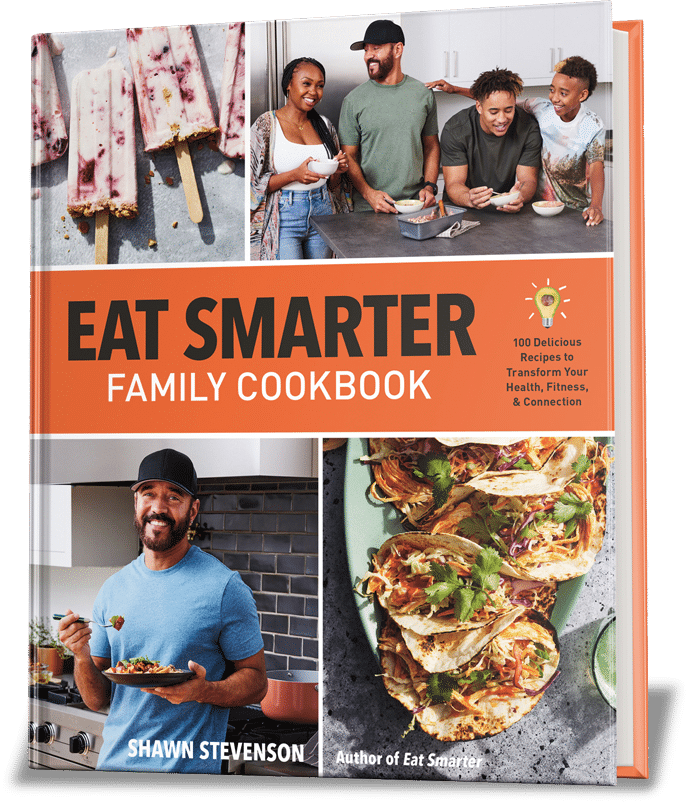
The Eat Smarter Family Cookbook is filled with 100 delicious recipes, plus the latest science to support the mental, physical and social health of your loved ones.


Share Your Voice
0 comments. Be the first to leave a comment.