
Subscribe to The Model Health Show:


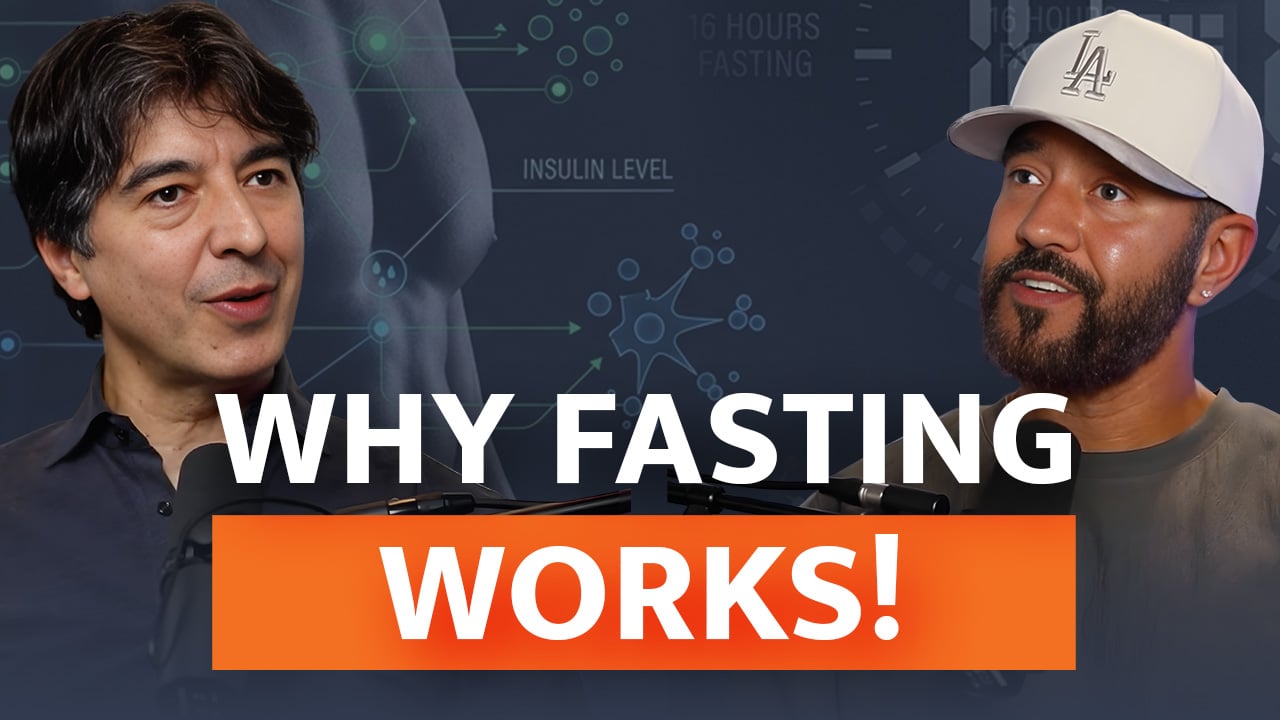
TMHS 998: Diet to Target Cancer at Its Roots & Slow Cellular Aging – With Dr. Valter Longo
What if there was a clinically proven approach that could improve cancer survivability, support remission, and help protect healthy cells during treatment—yet most people have never heard about it? In this episode, I sit down with Dr. Valter Longo, one of the world’s leading researchers in longevity and cancer science, to uncover the groundbreaking research behind fasting and fasting mimicking diets.
He has spent decades researching aging, fasting, cancer prevention, and longevity. His work on fasting mimicking diets is now being implemented in hospitals and clinics around the world. In the episode, we’re going to dive deep into how strategic nutrition can influence cellular repair, metabolic health, inflammation, and even cancer outcomes.
You’re also going to discover how fasting impacts cancer cells differently than healthy cells, why metabolic flexibility matters for longevity, and how modern lifestyles are accelerating chronic disease. Dr. Longo also breaks down the connection between nutrition and cancer prevention, the role of protein intake in aging, and practical ways to improve your health span while reducing your risk of disease.
In this episode you’ll discover:
- Introduction to fasting mimicking diets and their impact on cancer survivability. (00:00)
- How green tea and matcha support autophagy and metabolic health. (02:20)
- Dr. Valter Longo’s background and groundbreaking longevity research. (03:30)
- Why fasting can protect healthy cells while making cancer cells more vulnerable. (05:15)
- The connection between modern diets, inflammation, and rising cancer rates. (08:40)
- How fasting influences cellular repair, regeneration, and stem cell activity. (12:10)
- Why metabolic flexibility is essential for longevity and disease prevention. (15:45)
- The science behind fasting mimicking diets versus traditional fasting. (19:30)
- How excess protein intake can accelerate aging pathways. (23:50)
- The relationship between blood sugar, insulin, and cancer growth. (27:15)
- What the research says about fasting during chemotherapy treatment. (31:40)
- The difference between lifespan and true health span. (36:05)
- Practical nutrition strategies for reducing disease risk and improving longevity. (41:20)
- The importance of lifestyle habits, movement, and recovery for healthy aging. (47:50)
- Final thoughts on creating a healthier future through nutrition and prevention. (54:10)
Items mentioned in this episode include:
- Piquelife.com/model Elevate your daily ritual with cutting-edge, doctor-approved teas designed to support your metabolism, skin, and overall vitality. Unlock exclusive savings on bundles and subscriptions.
- Peluva.com/model Most shoes weaken your feet—these rebuild them. Peluva barefoot shoes are designed to restore natural movement, improve strength, and support long-term health. Get 15% off with code MODEL
- Connect with Dr. Vander Longo Website / Instagram / Facebook
This episode of The Model Health Show is brought to you by Pique and Peluva.
Pique Life makes it easy to upgrade your health with quadruple toxin-screened matcha and premium teas designed to support metabolic health, energy, and cellular wellness. Head to https://piquelife.com/model for up to 20% off plus exclusive bonuses.
Peluva creates innovative barefoot-inspired shoes designed to improve movement, foot strength, and performance with science-backed five-toe functionality. Visit https://peluva.com/model and use the code MODEL for 10% off.
Transcript:
SHAWN STEVENSON: What if there was a complementary treatment for cancer that's clinically proven to increase survivability, improve rates of remission, and improve quality of life for cancer patients, and yet most people have never heard of it? Today, we're gonna be talking with one of the world's leading cancer researchers pioneering fasting-mimicking diets in the complementary treatment of cancer. He's gonna share the science behind its effectiveness and how we can begin to finally reduce cancer rates in our society in general. This is truly profound information and incredibly valuable for you to know and to share.
And before we get to our special guest, there are a plethora of amazing time-honored foods and beverages that meet the requirements of the fasting-mimicking diet. Green tea fits solidly here as it supports autophagy and metabolic health without breaking the fast. Rich in catechins and polyphenols, it helps reduce hunger, supports the reduction of blood sugar and insulin levels, and boosts cellular cleanup. Could this be a major reason for green tea's efficacy in reducing cancer risk? A study published in the journal Breast Cancer Research and Treatment found that women who drank the most green tea had an approximately 20 to 30% lower risk of developing breast cancer. Now, this is an observational study, but the data is incredibly promising.
While a meta-analysis of 29 studies published in the peer-reviewed journal Oncotarget found people who drink green tea daily were around 42% less likely to develop colorectal cancer. Again, green tea has been utilized for centuries, and now we have modern science to affirm- its power in helping to reduce disease risk in the human body. Now, there is one type of green tea that stands out far and away better than most, and that is matcha green tea. And matcha is having a moment right now. There's matcha girlies out there. There are matcha boys out there. But it's creating this kind of Frankenstein version of matcha. Now, of course, there's some great adjuncts and add-ins that we could have with the matcha.
But truly, if we want to get the benefits of green tea and matcha green tea specifically that has far more catechins and polyphenols, that's why it's so valuable in this context, then look no further than the quadruple toxin-screened green tea, made by a Japanese tea master, and I'm talking about the matcha green tea from Pique Life.
Go to piquelife.com/model right now for up to 20% off plus some amazing free bonuses. They have their Sun Goddess matcha green tea, of course, but there's also a wonderful blend of green tea and pu erh tea, which is actually my favorite tea right now, that is available as well. Plus, with their amazing risk-free 90-day money-back guarantee, you have nothing to lose and only better health to gain. So again, head over to piquelife.com/model. That's P-I-Q-U-E-L-I-F-E.com/model right now for 20% off. And now let's get to our special guest and topic of the day.
Dr. Valter Longo is a professor of gerontology and biological sciences and the director of the Longevity Institute at the University of Southern California, one of the leading centers for research on aging and age-related disease. Dr. Longo was named by Time Magazine as one of the 50 most influential people in healthcare for his research on fasting-mimicking diets as a way to improve health and prevent disease. His laboratory has developed both dietary and genetic interventions that protect normal cells while sensitizing cancer cells to chemotherapy. And these interventions are now being utilized in many U.S. and European hospitals. He's here today to share his incredible research with all of us. Let's dive into this conversation with the one and only Dr. Valter Longo. Dr. Longo, thank you so much for joining us today.
DR. VALTER LONGO: Well, thanks for having me.
SHAWN STEVENSON: Obviously, cancer is one of the leading causes of death in the United States. And certain types of cancer, they're still continuing to rise, even though other chronic conditions we have great treatments for. So this is an issue that we're definitely trying to solve, and there's a lot of innovation. And right now, I don't think people realize how much of an impact it has on our lifespan. And so for you and your experience What would happen if we completely eradicated cancer from the face of the earth? It's no longer an impact on human health. What would happen with our lifespan?
DR. VALTER LONGO: Yes. So I ask that question almost every year to my students at USC, and usually I get between 10 and 20 years as a response, right? But it's actually three or four years, right? So if we completely cure cancer, and also if we completely cured heart disease, each will probably give us about three to four years extended lifespan or life expectancy. So in, you know, so I also always in my talks show this slide where I show obesity and smoking as risk factors.
For cancer, cardiovascular disease, Alzheimer, and then I show them next to 30 years of life, right? So if you look at aging, it's so much more powerful than even smoking and obesity, and even smoking and obesity combined, right? So what does that mean? It means that we have to treat aging first, right? So if you can make somebody 10 years younger it's very difficult to do. Or if you can keep somebody, you know, aging much more slowly than normal then that can have a huge impact on so many different diseases, and not just cancer or cardiovascular disease.
SHAWN STEVENSON: With this being said, unfortunately, this isn't the message that a lot of us are receiving, and there's a lot of obviously fear around cancer. And what we're here to do today, of course, is to provide some insights, and also to talk about some of the facts as well, and I'm so grateful to have you here for this. You know, just keeping this in context, when it comes to risk factors for cancer, I think a lot of us think about carcinogens in the environment kind of adding to this precipitous rise in cancer. But as you highlight, the major risk factor for cancer is aging. Right. And so having that as part of prevention is a huge point of focus that's not being focused on.
DR. VALTER LONGO: It's not being focused on. Now, things are changing a little bit, right? So now you hear about longevity is everywhere. 30 years ago when I was starting, people didn't even know what longevity meant. So I think it things are switching. You're starting to see a lot of longevity clinics and you know, I saw that CNN now has a show on longevity. And so yeah, things are changing and hopefully they're translating also into real longevity medicine, right? So meaning, let's not just focus on getting you out of the office and taking care of you for the next three months, but actually what is the effect of this lifelong? So if you think about GLP-1, for example, right?
So GLP-1 you know, of course it does really good weight-wise and you can lose a lot of weight on GLP-1. Then even if you look at the data, at least some of the large studies are showing that 92% of people will stop within three years, right? Yeah. And at least according to this large study. And then if you look at another study that just came out, it shows that the great majority of the people that stop will regain weight, and that weight is gonna be mostly fat. So when you lose weight- ... you lose muscle, bone, potentially bone and fat. But then when you regain it most as, as fat, right? So now and then I asked AI, what is the result of all of this if you think about five years down the road? And the AI said, basically you're gonna have a net loss of three kilograms of fat and a net loss of two kilograms of lean mass, right?
So that's what you get in the long run. So then thinking about longevity and longevity medicine, you wanna say, "This is not good," right? They now you're a 220-pound person, and now you're gonna lose whatever, 20 pounds o- of weight and then regain it most back. But now you have l- less lean mass than before. Right. So yeah. So then in that context, you s- you will wanna find something else, right? Instead of getting excited about the short term or great, you know, because six months later you're gonna have lost 20 pounds, you wanna say, "Pointless," right? It comes with a lot of side effects and n- of course, it's not pointless if you had tried everything else. But most of the cases that doesn't happen, you know? There's not a team that's trying to help you lose it the right way. There is just a pill a miracle pill that that is very easy to fall for.
SHAWN STEVENSON: Yeah. Thank you for bringing this up, by the way, because muscle loss is one of these markers for aging. Right? And if we're looking at this and from the approach of slowing the aging process, this is doing the exact opposite. And until we have long-term data on this stuff, we don't know the long-term ramifications. Will we see increased rates of cancer as a result of this kind of, you know, craze that's happening right now? And so it's just, again, being able to have the data for people to be aware, to make informed decisions because you know how it is with our culture. It's just you know, looking for that miracle pill, that miracle solution. And thank you for also pointing out it's great that we have options, absolutely, but we need to think much more holistically, take a meta perspective.
And one thing d- directly from your book, in your new book is Fasting Cancer, which I just tore through. It was so great. You said specifically, "We should concentrate less specifically on cancer prevention and start focusing more on slowing the aging process, since it is a major risk factor for many diseases and dysfunction, not just cancer." So we're really stacking conditions in our favor. Now, despite all of our innovations in technology and science and medicine, cancer rates are still rising. What is going on? You talk about this unconspired conspiracy- Right ... as well, to start to look at what are some of the foundational reasons contributing to higher rates of cancer outside of aging?
DR. VALTER LONGO: Right, right. Yeah for sure now you have 75% of people in the US either overweight or obese, right? You have high consumption of ultra-processed food. A lot of people are not eating their, your regular meal anymore. They're just eating you know, food that they purchase at the store already packaged. So that's certainly a contributing factor. And then if you look at proteins, right? For the longest time, the protein intake actually was pretty flat, right? And in the last however many years, you're starting to hear I mean, when people are surveyed, they're they're pointing to proteins as the healthiest of the food, right?
And now proteins can, you know, the, a lot of data suggests that if you have a good amount of plant-based proteins, that's perfectly fine. But most of the data indicates that if you have a high amount of animal-based proteins, that's gonna be a problem, including cancer, cardiovascular disease, overall mortality, et cetera, et cetera. So yeah, so some of these some of these are gonna be central, and we already know from, let's say, mouse or monkey work, right? If you take a mouse and you put it on a low animal protein diet it's gonna live longer and have less cancer. And same thing for rats. And so i- in epidemiological human studies indicate the same, right?
So I think that it, the food is probably the number one component. And for example, if you take Japanese, right? For historically, they had a low protein diet and a mostly vegan diet. And so if you look at the at least one study showing what happens to a Japanese if they move to the United States, right? If you look at I think it was breast cancer and prostate cancer, right? So very low rates, right? Then they move to the United States, and within so many years, they now get have the two to three times higher prostate and breast cancer rates, at least according to that one study. But yeah, so I think that it can't be genetics because of the same Japanese moving to the United States.
So what is it about the United States that makes a Japanese two to three times at higher risk of developing prostate cancer or breast cancer? Well, it's hard to imagine our exercise changes will have been responsible for that. So the most likely change consistent with everything else I said is the food, right? Yeah, food is is gonna play a very central role in obesity, in overweight, but also directly in the ca- the DNA damage, the aging process, but also in you know, whether a cancer cell or a pre-cancer cell stays alive or dies, right? So for example, if you eat a lot of animal proteins, a factor called IGF-1, insulin-like growth factor one, will be elevated and stay up.
Well, that IGF-1 is known to be responsible for protecting cancer cells from undergoing suicide, right? And so some drug companies are targeting these anti-suicide pathways to as a therapeutic for cancer. So yeah. So I think that, those are probably at the center of the of the cancer epidemic.
SHAWN STEVENSON: You know, just to provide some context and even, you know, being able to study your work, and also I had the opportunity to come to the screening of your Documentary, which is amazing. It was a full Hollywood experience. I'd never been to the TCL Chinese Theatre and all that good stuff. And just to see these stories and to see what's possible, and also just to present your data in a very visual way as well after conducting all these studies over the years was just so fascinating. And just to see the diversity also, the different spots that you were going and studying humans and eating behaviors, you know, to keep in context as well with the change here, even with IGF-1, it's not just animal foods, it's also the ultra-processed foods as well. And this is something that you point out in your book, and that's the really the big change, too.
You know, I worked at a university for years, and seeing people coming from all over the world and enjoying the American diet. Once they do that, you know, which largely fast food, ultra-processed foods regardless of the macronutrient makeup, you know, the quality of those foods really starting to contribute to poor health. And I would see this in the form of, you know, what it-- wh-whether it's insulin resistance, weight gain, you know, acne, autoimmune conditions, the list goes on and on, that they simply didn't have until they moved here. And also, there are some in-instances of moving back home and the symptoms subsiding.
DR. VALTER LONGO: Right.
SHAWN STEVENSON: You know? There's something very different about our society and, you know, it's kinda, again, stacking conditions against us. And one of the things that you talk about in the book, and I would love for you to highlight this, a lot of times leaning into that specific things for conventional cancer treatment, chemotherapy, radiation, and the like, we see this loss of weight that can transpire as a side effect. And so one of the standard of care recommendations is to make sure you're eating a lot. And a lot of times, those foods even that are provided by the hospital are ultra-processed foods.
DR. VALTER LONGO: Right.
SHAWN STEVENSON: And unfortunately, of course, we could see that this could be contributing to the problem, but also this is potentially ignoring a very powerful solution, which is fasting, and even your book, Fasting Cancer. But it's not fasting in the way that we might think off the top of our heads. This is a fasting mimicking diet approach. Talk about that, please.
DR. VALTER LONGO: Yes. So first of all I think that people in the US shouldn't feel bad, right? Because this is now a worldwide phenomenon, right? In southern Italy has obesity and overweight rates are very similar to those of the United States. Same thing for the Middle East, same thing for lots of countries in South America and Central America. So yeah I think that it just got to the US first, but now it's just spread in China and India, so it-it's just everywhere, right? So But yeah, but cancer, I think that we like you said, with the the...
If you think about cancer centers, there are silos, right? So you have the oncologist, and they're worrying about cancer, and then you might have the dietician or the, you know, physician that focuses on nutrition, and they're foc- they're worrying about muscle and cachexia and and the way...
So in my foundation clinics and one is here in Los Angeles we form a team. There's a physician, the nutritionist, the molecular biologist, right? And so that team, every week, we have board meetings, right? So everybody has an opinion, and then of course, then we report to the oncologist. You know, we don't make a decision. We tell the oncologist, "Here's what we think," and, you know, the oncologist makes the decision. You know, that, that's missing and and that's very necessary because you do not wanna help a little bit the muscle of the cancer patient and also help a lot the cancer cells, right?
And so you wanna first kill the cancer cells. That's, you know, number one. But protect the patient, right? So and sometimes protecting the patient may mean that they need to fast, right? And so it's still early and like you said, it's fasting-mimicking diet. So we started in 2010, I think, at Norris Cancer Center here in Los Angeles, and it was a water-only fasting trial where we were seeing fast- water-only fasting was helping mice deal with chemotherapy. And then we were seeing water-only fasting was, he was killing cancer cells. So we started a trial. We were very excited. We thought everybody's gonna do it, and then nobody wanted to do it, right? And that was very surprising because every... And to this day, everybody that I meet including oncologists are saying, "Well, cancer patients are gonna be very motivated.
They're gonna do it." A- and I tell them, "No they're not," right? But yeah, the fasting-mimicking diet then was something that came out of the National Cancer Institute of the NIH and the National Institute on Aging. Basically, we asked them, "Le- fund research to, to come up with a diet that is as good as water-only fasting." And then everything changed, right? So now yeah, people are saying, "Okay, this is not the di- this is not my favorite diet. This is not my ideal diet, but it's okay. I can deal with this," right? So yeah, so it's a low calorie, low protein, low sugar, high fat diet, and they usually last four to five days for cancer patients.
And in that, and usually we don't change standard of care. So if they're on immuno- immunotherapy, they keep immunotherapy. They're doing chemo, they keep chemo. So we don't interfere with whatever their, the oncologist decided. We just help hopefully at least according to lots of animal studies and lots of clinical studies now help the therapy work better.
But, you know, cancer is many diseases, if you think about it, and many therapies, so it's not like diabetes or obesity where you just have, you know, one disease, one or two drugs and everybody agrees. Cancer is 100 different diseases and 1,000 different drugs, right? So I think it just needs a lot of time to, you need a lot of time to test everything for every cancer and every combination therapy.
SHAWN STEVENSON: Truly complementary. That's the approach. In that study that you mentioned, you actually, and there's several studies, but that particular one with the mice fasting, 65% of the mice who didn't fast died in the study. None of the mice that fasted died with the chemotherapy. And so again, one of the things that's not taught, you share a story also of going to this massive, you know, one of the largest cancer conferences for physicians and practitioners in the world, and there wasn't a single workshop related to the side effects of the treatment.
DR. VALTER LONGO: Yeah.
SHAWN STEVENSON: And how do we help patients to actually, you know, feel not to mention feel better, but also survivability through it as well.
DR. VALTER LONGO: Yeah.
SHAWN STEVENSON: And so seeing the benefits, and again, you have been studying this in your lab and also working with people, working with your team, and you share these stories in the documentary, so many of them. And it's just profound to see the impact that this fasting-mimicking diet can do with survivability. What is it about the fasting-mimicking diet that actually helps with survivability?
DR. VALTER LONGO: So this is still early, right? So we know at least the preliminary smaller studies indicate that for triple-negative breast cancer, which is one of the major ones and the most aggressive ones, you see now a four years increase overall survival rate. Everything else, you gotta, we have to wait because, you know, we don't wanna give false hopes and say we we've done something that is not clear yet.
So I think that in the mice for sure the fasting-mimicking diet sends normal cells and cancer cells in opposite direction, right? And this is why we think it's very promising, 'cause no- nothing else out there does that Meaning that there is nothing that can separate all cancer cells from all normal cells, right? And fasting mimicking diet is one of the ways to do that. So now the normal cells respond to fasting by becoming protected, and the cancer cells usually don't care or don't care as much, right?
So they keep on going. And that's a great... I always u- use the analogy of the desert and if you took a billion people and put them in the desert and you make them run, and you don't give them shades, shade a- and they have no water after a couple of weeks, 100% of them will be dead, right? And so now if you think about running and you think about cancer cells are always running, right? And they cannot stop running. So it's really great feature because basically it says, okay, it's like putting people that cannot stop running in the desert. You know, those that at least said, "Okay, I'm gonna stop running," you know, at the end of the two weeks, you'll have a lot of them alive, right?
But if you're running, there's no way, right? So yeah, so that's a dumb feature of canc- cancer cells that we have to exploit, and nobody's exploring that. And it's not like you have 50 ways to do that. I really haven't come up with, haven't seen any other way other than fasting to send all normal cells and all cancer cells in opposite direction. And so yeah. So then now if you hit them with chemo, right? So they now keep on running. The food is scarce, right? And now you hit them with chemo, that's got, that's the sun, right? And in the analogy, the chemo is the sun. So now you hit them hard, and they're already semi-starving because there's not enough food to keep growing, to keep running.
And that's what does the trick, right? So in mice we see, you know, if you only use chemo or fasting cycles, they are about equivalent, right? But if you use them together, now all of a sudden you start seeing a lot of mice that are cancer-free even in meta, what we call metastatic models. So they have cancer cells in, in different places metastasizing. So yeah, so it's very promising and but, you know, of course, the system is really set up to favor big pharma, 100, 200, $300 million investment just to get through the clinical process, right? It's a billion dollars to come up with a cancer drug, you know, from beginning to end.
So yeah, so it's it's really... And if you think about the 100 cancers and the 1,000 drugs, right? You know, there's got to be a reform. And I don't mean a reform like open the gates like we see now for peptides, right? Don't open the gate 'cause that's even worse. But reform should be let's have a serious Way to move forward much more quickly, much less expensively for those that, you know, may need an a co- a complementary or integrative intervention, right?
You know, say immunotherapy plus, but plus what, right? So if you're not responding to immunotherapy or you're not responding to hormone therapy right now, a lot of times the oncologist will say, "I'm sorry, that's all I got," right? And my- there's a scientist somewhere in the world that say, "No, please use this," right? The, yeah, so there's something called compassionate use, but rarely used by the physicians, and and I think compassionate use is really the desperation time, right? Yeah. This is more like no, there's a lot of data. We have maybe some clinical data. We have lots of mouse data, and if nothing else is working, can we have a discussion with the oncologist, and can we introduce that for the patient?"
DR. VALTER LONGO: Yeah.
SHAWN STEVENSON: The interesting thing right now is that I feel that we're kind of at a crossroads, and a lot of this information is becoming, thankfully, you know, with communication, the internet, technology, is becoming more readily available. There's less resistance, but there's still a lot of resistance. Because as you mentioned this is a multi-multi-billion dollar industry, and this is the unconspired conspiracy. It isn't that necessarily, you know, especially practitioners are trying to not include something that can be helpful, but it's just what the system is built around, and there's a lot of money that is being pushed into the success of finding what that magic bullet is.
And so the magic process or magic shield that you talk about is really looking at the value and just being honest. This is very obvious once we say it a certain way of how impactful our diet is, because this is the, this is what is actually making our tissues. This is what's feeding cancer and/or our healthy cells as well. It's based on the intake of our nutrients. Every part of our cells is made from the food that we eat. And also, the energy to run all of this is made from the food that we eat. It's not coming out of nowhere. Yeah. And so it obviously has value, and our bodies know very well how to kill cancer cells. It's just like it, it's a system that's built in.
That system can become dysfunctional. And as you talk about primary driver aging, we start to have immunosenescence, right? And but there are certain things that we can do to slow down the aging process, slow down the progression of even immunosenescence to keep our immune system doing the job that it's supposed to do longer. And so my question for you is, would the longevity diet, because that's your other kind of primary focus, would that be, would it be accurate to say that this is also a potential Benefit in reducing the risk of cancer? W- more focused, specifically my question is with prevention, the longevity diet, or would this be something where we can proactively utilize a fasting-mimicking diet to increase our longevity?
DR. VALTER LONGO: I think both, right? So the longevity diet is really the, Well, at least the the fasting-mimicking diet is part of the longevity diet. But the... Usually, we think about the longevity diet as the every day, what do you do every day, right? So what kind of food do you eat every day? And so it, you know, it has similarity to, to the Mediterranean diet, similarity to the Okinawan diet, similarity to the O- Loma Linda diets. And you know, mostly plant-based, pescatarian l- low but sufficient protein et cetera, et cetera. So yeah. So both clearly affect the aging process or certainly aging markers. And so for example, for the fasting-mimicking diet, we showed, we did three cycles and and we showed that biological age in two different clinical trials was reduced by about two and a half years, right?
And but i- in that trial, a- at least we, in one of the two trials, we also looked we, we wanted to just not only include biological age because it's based on measurement of markers that, you know, some people can agree, some people can disagree that those are measuring aging. So we also measure fatty liver, and we measure l- you know, fat in the liver, and then we measure what's called the lymphoid-myeloid ratio, which is one of the, one of the ways to measure immunosenescence, which you just mentioned, right?
And liver, fat in the liver was clearly reduced, right? And this was done by MRIs, right? So we wanted things that are hard to argue with. Is this gonna make you longer lived? Yes, probably, right? So if you're accumulating fat in the liver, not good. And it's good to begin to reverse that. And there was pretty strong effect actually in fatty liver in the patient in the trial after s- FMD cycles. And then the lymphoid myeloid ratio, so eventually humans have more myeloid cells in the blood and less lymphoid, like lymphocytes, right? The T cells, the B cells. It is a ratio.
And so three cycles of the fasting-mimicking diet re-reestablish or certainly reduce this age-dependent- ... increase in this, you know, unbalance of myeloid cells and lymphoid cells, right? So yeah, so then together with the biological age changes, we're also showing that, you know, the blood is becoming younger and the and the liver if you will at least is becoming las- it's g- it's getting less fat and it's probably also something that younger people you know, don't have, you know, the fat accumulation, right?
So yeah, I think that FMD is definitely contributing to lots of things that make it easier for the body potentially to prevent cancer. And the longevity diet, I think it's the same. It's just that i-i- we haven't tested it yet on biological age and on, on those markers, right? You know, we don't have a, we have, we don't yet have data. We're finishing trials, big trials right now with the longevity diet. So we'll see. But I think that you know, the FMD for sure.
SHAWN STEVENSON: Great.
DR. VALTER LONGO: Thank you for sharing that.
SHAWN STEVENSON: Longevity isn't just going to come to us. We've got to walk towards it, and walking is the key word in this sentiment. According to a study published in the journal PLOS Medicine, walking for just 11 minutes a day is enough to extend your lifespan by two years. Let me get that, 11 minutes, two years? Yes, please. While research from Australia's University of Sydney shows that swapping one hour of sitting for an hour of walking daily can slash your risk of premature death by about 14%.
That could mean roughly nine additional years of life. How, Sway? Well, a big part of this has been affirmed by research that was published by the American Heart Foundation, noting that
walking for an average of 30 minutes or more per day can lower the risk of heart disease and stroke by 35%, and lower the risk of type 2 diabetes by 40%. The researchers called it a wonder drug. If they was selling this and getting these kind of results, it'd be the biggest blockbuster drug of all time And it's unlocked by simply walking. And what's at the foundation of this is that it's improving our insulin sensitivity. It's helping one of the most important aspects of life and durability.
It is triggering the creation of more mitochondria, the energy power plants of our cells, that is utilized and unlocked when we are actually using our muscles. The list goes on and on. Now, what if we are able to not just get all this value from walking, but habit stack that bad boy, and help to get some rehabilitation to one of the most important aspects of human function and performance, which is our feet? When it comes to walking and human performance, our movement truly is built from the ground up. And each of your feet has 26 bones, 33 joints, 19 muscles, 107 ligaments, and each foot has over 200,000 nerve endings that are all there for collecting data about your movement. And we're muting all of this intelligence with these crazy iterations of boxed up shoes that are scrunching our toes together and muting, again, muting this intelligence in our movement and our performance.
And so for rehab and prehab, for my feet and for my performance, one of my favorite things to do is not just to go walk, but it's to go walking wearing my Peluvas. Peluvas have an incredible stylish design with a wide toe box and science-backed five-toe functionality. And right now, you're gonna get 10% off of your new pair of Peluvas when you go to peluva.com/model.
Just use the code model at checkout for 10% off. Again, that's peluva.com/model, P-E-L-U-V-A .com/model to take advantage. They are upleveling things in a big way. You're going to notice how you're moving better, how you're feeling better, and how your performance is elevated once you start wearing and walking in your Peluvas. And by the way, they've also got some new court shoes for pickleball and things like that. They've got their golf shoes as well. They've got designs for hiking. The list goes on and on. If you want to live an active life, definitely check out peluva.com/model to show your feet some love. And now, back to the show.
SHAWN STEVENSON: This brings us to a really important point in the conversation about real health span versus longevity with frailty, right? And I said this statement years ago. Many of my colleagues have shared this sentiment as well and shared it since. But one of the things that I kinda-- it just hit me one day. I was actually doing the show, and, you know, we argue about, well, humans are living longer now. But we're not necessarily living longer. We're dying longer. We are extending suffering. We're extending the amount of time that you can kinda stick around in managing symptoms. What we really want is an extended health span to where we can have a high quality of life and to enjoy those longer years.
And so this is another really important part of your work, and also figuring this out for yourself and your unique N of 1 because you talk about really catering things, and this is what you and your team do, catering things for the individual, right? And so it's finding that balance, you know, with m- maintaining our muscle mass, which I wanna circle back and talk about the GLP-1s a little bit as well, but also being able to, of course, have the disease prevention, and also the importance of, let's talk about this first, the joy in what you're doing and something that's sustainable, right? Because that's one of the things, again, you see... you publish this mouse study and you're like, "This is gonna change everything. People are gonna..." And nobody wants to participate, you know? And you talked early in the book, there was a story about Grappa. Is it Grappa, the drink?
DR. VALTER LONGO: Grappa.
SHAWN STEVENSON: Grappa. Grappa. Yeah. You talk about that, and somebody had kinda shared this story at a conference, and let's talk about that story first.
DR. VALTER LONGO: Yeah. So somebody... I was at a conference in, in, I think it was in Trentino, in the eastern part of Italy, and and somebody got up in, in the audience and said, "You know, there was this lady, and and she was, you know, 98 or whatever and she used to eat grappa, this very hard liquor you know, every morning," right?
And and then eventually the doctor in the clinic that she was living in said, "No, stop," you know. "You can no longer have grappa." And and then she dies right right after that. And so everybody started laughing, and then I said, "You know what? I... There's no way I will have taken the grappa away from her." She was like 102 or something like that, and why would they possibly keep get the grappa away from this lady? And so I think, yeah you have to you have to, So of course, if somebody was much younger and he was drinking three or four a day, probably you'd say "Yeah, stop." But in this case it, you know, she enjoyed it so much, and I'm assuming that to her it was just hell to not be able to do that every morning.
And I have another story. This gentleman, 104 years of age, right, in, down in, in southern Italy. And and so he's always ... We go to the house and to talk to him and we're like, "Well, when did he go out last time?" "Oh, we don't let him out," right? That's what they were saying. And I said, "Why?" They said, "Well, he's 104. You can't..." I said, "Look, you know, he's 104. Let him just live," right? And you know, a couple hours later, he was in the square with his hat on. He was so happy, right? And he lived for another, you know, a very many years. So yeah. So I think that, you know, first you have to be happy, right?
And this is why a- at the foundation clinics, we like to sort start with that, right? What will make your life not happy, right? And and that includes the fasting mimicking diet. So lots of people, maybe half of the people that come to the foundation clinic will do the fasting mimicking diet, then half of them w- won't do it, right? But you gotta do something. You can't just say, "I don't wanna make any changes. I don't wanna do any of this." So I think that our job is to get people to slowly embrace lots of different things that eventually are, you know, the longevity diet, the fasting mimicking diet, 12-hour time restricted eating, right?
Eat within 12 hour. Sleep for eight hours, you know. You read in a book on that. So yeah. So all of those things we try to get people to do. And A, you know, we published a study a few years ago that we always wanted to do it, right? So let's just give mice the worst, the most terrible diet that you can imagine, like high fat, high processed food, high sugar, just as bad as it gets. And so the mice become huge. And and then we said, "Okay. What if you give them..." So I'm thinking of the people that don't wanna change, right? So then I said, you know, "What if you give them five days of a fasting mimicking diet only once a month?" And we thought, "You know, it's probably gonna make it a little bit better," right?
But five days, what can five days get? 26 days a month of terrible diet. And sure enough, perfect, right? And not only did we measure cholesterol, we measure glucose levels and a lot of, you know, acute measurements. We measure lifespan and they restore the normal lifespan. And we measure heart function and heart ability to recover from damage restored. Five days a month of the FMD, of the fasting mimicking diet, we're completely, at least in mice reversing all of the problems of, caused by this really terrible diet. So yeah. So I think that this is what we're moving towards. Instead of saying, "Well, it's either this or that," right?
Or drugs, right? It's either you're gonna be obese and sick or you're gonna take drugs or you're gonna have to change your life. So yeah we need to start coming up with reasonable lifestyle interventions. Like for example, now we finish in Calabria the five-day FMD once every three months, right? So now it becomes even more reasonable for people to say, "Okay, every three months I do five days." Yeah so much easier than once a month, let's say, right? The what we did for the mice. So let's see. We haven't analyzed the data yet but you know, soon enough we'll have that data.
SHAWN STEVENSON: Yeah. Our bodies are resilient. Our bodies know what to do if we create the right conditions, and part of the conditions again are joy, and also what works for you right now where you are. You know, let alone, let's step outside of the realm of cancer, but just in our day-to-day lives. Another story that you shared was Emma Morano as well, and she was over 100 years old, and she loved her red meat, and she had a journalist tell her "You got, you're gonna die if you have red meat."
DR. VALTER LONGO: You're gonna get cancer.
SHAWN STEVENSON: You're gonna get cancer. And so she told her doctors. She's I've gotta stop, you know, having this." He's just "Listen, you made it this far. You're healthy. Just continue to enjoy." But also again, the overall lifestyle as well matters so much. Eating a lot of different plant foods. Even with the alcohol component, you know, that example with the grappa is this is something humans have been consuming forever, all right? Even if on accident, you know, the ethanol that might, you know, and foods that have, quote, "gone bad." And so being able to concentrate that and get this psychoactive effect is a whole other story, and the degree at which people do it.
But we do have data affirming like red wine improving the microbiome, right? Or, but again, small amounts, and reducing cardiovascular risk. But it might increase the risk of this thing, and it's just kinda again, where is the trade-off? We don't think about that in terms of our conventional treatments because a lot of our conventional treatments, we're trading off diseases. For years it was well established that radiation, specifically on the breast, the left side in particular, increased the risk of heart disease because we were doing this radiation right at the spot of your heart. Now, of course we have new innovations that have kind of made it less. It's still there. There's still an imbalance there with this side versus the other side. But it was just trading off diseases. We'll cure you of this thing, but we're gonna contribute to causing another thing.
DR. VALTER LONGO: Yeah.
SHAWN STEVENSON: And then playing this kind of, you know, Russian roulette of medications and treatments and missing out on, number one, and most importantly, what are the conditions that are causing this disease in the first place? Let's address these things, help to remove the cause, and it's not about being perfect, but it's about finding what's perfect for you. And what you're doing is you're sharing with people what some of those ingredients are. And so, to circle back and talk about this, the GLP-1 phenomenon, and looking at the in- influence of, you know, our modern lifestyle with insulin resistance and obesity, can you talk a little bit about the relationship between insulin resistance and cancer?
Because one of the things I picked up, and again, this is probably people have heard this before, but certain types of foods do preferentially, like cancer enjoys a lot more than other types of foods. So talk about the relationship- Yeah ... between insulin resistance and cancer.
DR. VALTER LONGO: Yeah. So we you know, we've been working on cancer for a long time, and both human cancers and mouth cancers, right? And if you think of about two things that the cancer almost all of them love is either sugar or growth factors, insulin-like growth factor one, right, IGF-1. And insulin could be the third, I'd say. But almost all cancers like one of these three insulin-like growth factor one, IGF-1, or sugar. It... But not all cancers are highly dependent on sugar. We see some cancers that don't care that much. But some, most cancers, they care a lot, right? So yeah, if you have insulin resistance, then you most likely have hyperglycemia so meaning that you have higher levels of glucose in the blood, and that's really favorable to cancer cells, right?
So a lot of cancer cells have lost the ability to do utilize mitochondria properly, so they like to cycle through what's called glycolysis. So they like to just use sugar as a quick source of energy. And not just energy, because now they're also using glycolysis to produce a lot of other, you know, component of you know, DNA and proteins. So yeah, so I think that they the yeah, the cancer just are dependent on a few things primarily, but they like lots of things, right? So for example, we publish on hormone therapy in, in, in breast cancer, and the cancer in that case liked leptin, IGF-1 and insulin, right? So if we took if we replace any of these the cancer started growing again.
You know, so we use fasting, mimicking diet. But then if you e- either give them back IGF-1 or leptin or insulin, then the cancer start growing again, right? So and this is also why it's so important to have what we call like a wild card type of intervention a fasting-mimicking diet because it, you know, between two cancers of the same type, you could have differences in what the cancer depends on, right? So imagine now needing a different cocktail of drugs for each cancer and even the same cancers, right? So you need the wild card, and the wild card that we think is fasting-mimicking diet. Just making it more difficult for the great majority of cancers in those five days to stay alive. And so you really wipe out lots and lots of different cancer cells or the majority of cancer cells. And you know, but of course, it has to be done in combination with whatever drug or cocktail of drugs is effective for that particular cancer.
In this case of breast cancer, it was you know, fulvestrant with estrogen-blocking drug and and then palbociclib, which is a CDK, CDK4/6 six inhibitor, so it's going after the cell, the cancer cell division, cell proliferation process, right? So these two drugs, plus the fasting-mimicking diet now you start seeing cancer regression. Instead of cancer staying flat and then eventually start growing cancer started going down until you start seeing the masses disappear, right? So this is mice, but we also did this in a clinical trial with women and and lots of women did you know, very well, but there, there was not there was not power to, to look at efficacy between the fasting-mimicking diet and not.
We actually put together 11 of the best hospitals in the world to do that and we never got funded so far, right? It was MD Anderson, Mayo Clinic, Cleveland Clinic you know, a lot of the, a lot of the the top hospitals and unfortunately the reviewers that are very much drug-oriented did not did not think even though these 11 top hospitals together you know, had the right to, to do a trial on, on something so important, you know?
SHAWN STEVENSON: You shared that, and this is the truth, each cancer has a molecular weakness, and so being able to exploit that and using this as a complement and just to circle back with the obesity and insulin resistance, in the book you share how these are modern conditions arising from normal states evolved to survive long winters or periods of starvation. Our bodies are now, even though we have the same genes, we're in these conditions to where the starvation never comes. The long winters never come. The fasting never comes. And so we're in constant consumption, and our bodies are just doing what they have evolved to do, which is to store lots of fat, store lots of energy.
DR. VALTER LONGO: Yeah
SHAWN STEVENSON: And to stock up for when that winter comes, but it never comes. And so coming in with an intervention, like for example, with the GLP-1, to address this, to get us to ramp down on that consumption, is obviously something that can be helpful. However, we might be missing out on the fact of what is this actually doing from the level of our metabolism, our metabolic health, and slowing it down because you also talk about this phenomenon of the thrifty genes. Our bodies, once we hit a certain spot, if we start to aggressively pull away calories, something else is gonna kick in to fight back. Talk about that a little bit.
DR. VALTER LONGO: Yeah. So the point is a lot of times you hear people saying fasting is good, right? And these statements and I always say fasting is good, bad, and neutral, right? Because it depends how long, for whom, how frequently, et cetera, et cetera. And also what type. You do fasting, whether only fasting or a fasting mimicking diet. Yeah, so if you go too long so is- there are clinics that keep people you know, for weeks and weeks, right? And I've looked at some of the data, and at least in some cases the data look like if you go for a long fast, you're gonna lose a lot of weight, but then if you look at the people the year after, they're back at their weight, their preview, their baseline weight, right?
So they regained all the weight back. And so the I think it was the label lab at Columbia has shown, and this was a New England Journal of Medicine paper, has shown that if you severely restrict humans for long enough, they'll go into a, some type of a low energy expenditure modality. Why? 'Cause they're scared of running out of food. I mean, you know, with, like you said, you know, with the result of billions of years of evolution. So is if this, the organism senses low availability of calories for long periods, it might start causing going into epigenetic reprogramming, meaning it's starting to control long-term what, how we use energy, right?
And their control may be, "I don't wanna use it. I wanna keep as much as possible." Now you got a problem, right? This is where you see, you hear people saying, "I'm not eating anything, and I just can't. I don't know what's going on." Right? So they'll probably enter this low energy expenditure mode and that could potentially last years. So we know this for very well from calorie restriction studies also, right? So the studies in calorie restriction, they will show per, adjusted per body weight. Now, after you've lost the weight because of chronic calorie restriction the body's consuming less than expected, even if you adjust it for the lower body weight.
So yeah, so you don't wanna enter that, right? So you wanna, like you were saying earlier, you wanna get out of the summer mode where you're storing energy 'cause you got a lot of energy available, but you don't wanna enter in the long winter mode. You don't wanna enter hibernation. If you enter hibernation, you got a problem, right?
Because now the body... And you might feel tired, right? You're hibernating, right? You might feel tired. "I don't know why I'm tired. I don't know why I'm hungry all the time." Well, exactly, right? The body is trying to protect you from death. And you know, so interestingly, the modern medicine doesn't look at any, like this is, you know, you don't have to believe me to, for this. I mean, this is textbook stuff, right? And and yet it almost has no place in medicine whatsoever. Let's just give you GLP-1, insulin, you know, metformin. So I think that yeah, I think that we need to change the way... I mean, there's gotta be a lot more science into medicine, and if we don't do it, AI will do it, right, for us, right?
So yeah, we need to, you know, almost as soon as possible. And you know, again, this is what we do in our clinic, you know, your physicians, molecular biologists, nutritionists, sleep expert, you know, psychologists. Yeah, that's the way to do it. And and that works, you know. And and but also the biologist there or the molecular biologist has to know about the bear or the emperor penguins in the South Pole, and why do they gain weight, and when do they lose weight and lots of things there, you know, from all kinds of pillars, right? It's a completely new, you know, way of viewing it. And that's why you cannot just have the physician alone doing it. And you can ask the physician working our, with us, right? They'll say, "Yeah, if I didn't have the molecular biologist telling me about all these things, I wouldn't even think about it," right?
So I think that, yeah, so that's that's what's needed, you know. And we need universities to start training this personnel 'cause it's not existing, right? So now you have the dietician, but the dietician, they're great, but they may get a couple years, you know. They may have a undergraduate degree and then a couple years of training, a master You know, whereas the doctor now does four plus four, so it's a lot of training. So we need that kind of training, right? For specialists that can can solve the problem.
SHAWN STEVENSON: Yeah. And also training specifically in how do you support treatment, you know? And also affirming like the s- the science that you're teaching and the fasting-mimicking diet, what if that was taught to dieticians to complement treatment with physicians, you know?
Like again, it's not just the education, it's what people are being taught as well. Yeah. So it's not receiving it alone, it's also, thank goodness, we're actually changing what physicians are being taught, what dieticians are being taught. And, you know, it's so crazy, you know, as we sit here today that according to the BMJ, the average American's diet, adult's diet, is like over 60% ultra-processed foods.
DR. VALTER LONGO: Yeah.
SHAWN STEVENSON: And a lot of that, you know, I took a nutritional science class in college as well, big auditorium, classroom, and all that stuff, and it was really, one of the hallmarks was low-fat diet. Low-fat diet without context of the quality. And so marketing was used for low fat. If it had low fat on it, I was eating it. You know what I mean? And so it's like having context with these things, because obviously fat is very important, especially in the fasting-mimicking diet, but where are the fat sources coming from? And so there's an abundance of really great plant fat. So can you talk about some of your favorite foods that, you know, might cross over with the fasting-mimicking diet, but also just these longevity foods as well? What are some of those foods for us to focus on?
DR. VALTER LONGO: Yeah. And that was the idea of the fasting-mimicking diet, right? So I could have made it with really unhealthy ingredients, just match the need, right? So I could have made it with lard and a lot of, you know, animal fat. But the decision back 20 years ago was let me… I sort of anticipated that eventually people will do it for aging and not just cancer. And so I... The idea was let's just make it as healthy as possible, right? So let's give five days, let's give people the opportunity to have very healthy food for five days. And and, you know, so nuts and olive oil and vegetables and you know, whole grains or at least grains.
There is also some starches in there. The, and we also wanted to make sure that people finished it and it was, you know, okay to eat, right? The, it was pleasant enough so that people could eat it. Yeah, so y- you don't get everything you want, but I think we got most of the things we wanted and and that was a very good idea, right?
So now Stanford just published an- And I was mentioning to you earlier published on on Crohn's disease and University of Miami published on colitis disease. And so these FMDs are, you know, making drugs work better or a lot better. You know, Crohn's I mean, the Stanford study was really remarkable the effect of just three cycles of the FMD in regression of the and even remission from the disease, right? At least temporary remission. Yeah, so I think that it was a good idea to and I imagine, w- and this we showed for mice, we have never shown it for people. But when we did the mouse studies for inflammatory bowel disease we either used water-only fasting or the fasting-mimicking diet.
And the water-only fasting only had about half of the effect of the fasting-mimicking diet, and we were surprised. So then we d- dug into it and realized this was because the fasting-mimicking diet contained a lot of prebiotic ingredients. It was feeding lactobacillus, bifidobacteria, and other protective m- microbes that then were helping the gut reverse the autoimmune disease. So yeah, so I think that you know, lots of data from ... I mean, I was happy to see ... So we do a lot of collaboration with Harvard School of Public Health, but when I designed the longevity diet, I was just looking at everything, right? And i- in in five pillars, right? You know, clinical trials, epidemiological data, mouse data, centenarian data, you know, complex system.
But then I was very happy in the last however many years to see Harvard and my longevity diet and also these Norwegian big studies converging on the same ingredients, right? You could argue about it. There's only like a few. The fruit is the only one that we're a little bit arguing. You know, I think m- my data a- and my longevity diet and the Norwegian data is suggesting normal levels of fruit, and Harvard is suggesting high levels of fruit, more like fruits and vegetable of the Mediterranean diet. But yeah, so it's legumes number one or very close to it, whole grains up there, nuts, and and then of course low red meat, low processed meat consumption, or very low or absence of consumption of those. Yeah, so those are, you know, a common denominator, meaning they're, they seem to be very solid and and and I think everybody should move in that direction.
Now, another thing that most people are ignoring is that, you know, you could have tomatoes, and tomatoes for a lot of people cause inflammatory responses, right? So we should also be very careful in t- going back to what we were saying earlier about personalization.
SHAWN STEVENSON: Yeah.
DR. VALTER LONGO: So you could have a, you know, brother and a sister or b- two brothers, and one is gonna be on this, you know, longevity diet and eating lots of tomatoes, and the other one cannot eat tomatoes at all, right? Yeah. So then..
SHAWN STEVENSON: This could even be in twins.
DR. VALTER LONGO: They could even be twins. Yeah. Absolutely, right? Yeah. Th- because maybe one twin took antibiotics, took some drugs and that just disrupted the microbiota and now they find themselves in completely different responses to something like tomato or nightshades or lots of different things, you know? So yeah, so I think that the ingredients are those, the and they are for the fasting-mimicking diet and the, for the longevity diet, but but be careful because you know, there's lots of these autoimmunities probably. So we know this very well for celiac disease, right, and gluten. And so I think there was a very important, you know, discovery decades ago about gluten causing autoimmunity, because it basically said it's not like you heard because, you know, the medical community will say, "Ah, come on. It cannot be, it cannot be food." But it was food, right?
SHAWN STEVENSON: Yeah.
DR. VALTER LONGO: And and I think it's important to think if it was, if it caused celiac disease. If a gluten causes celiac then lots of other ingredients, maybe combination of ingredients may cause lots of other autoimmunity, autoimmunities, right? So this is why it's so important to pay attention to to, you know, is this ingredient maybe, is this ingredient triggering an inflammatory response in me?
SHAWN STEVENSON: Yeah. So amazing. So in the book, you have sections dedicated to some of the most pervasive cancers as well. So fasting, nutrition, and breast cancer, fasting, nutrition, and prostate cancer, fasting, nutrition, colorectal cancer. The list goes on and on, so you're specifically addressing these different issues and how it all relates to nutrition and the fasting-mimicking diet and the potential benefits.
So this is a great resource for us to share with our friends and family members, and for us to get educated as well, because, you know, it's- It's it's not just impacting the lives of the individuals, but it's impacting the lives of families and communities, and we have solutions. And it's gonna take an integrative approach. It's gonna take more communication. It's gonna take leaders like yourself to, you know, to study this and to run this stuff in your lab and to get this out in- into the world, and you've provided that in so many different ways. Of course, the new book is Fasting Cancer, which is available everywhere books are sold, but also you have the new documentary. Can you talk a little bit about the documentary?
DR. VALTER LONGO: Yeah. Yeah. The documentary is called Fasting and the Longevity Revolution, and and you can watch it streaming. And the documentary the director and the producers I think did a great job basically taking s- several of my books or lots of my books and put it into an hour and a half. And of course, the books are not about only my research. They're about research of a lots of different scientists around the world. And, you know, and so I've dedicated n- almost 40 years now. I started working on aging now 40 years ago in Texas. And so I think it's about this 40 years journey in collaborating and with so many great scientists and so bringing all of that to people in an hour and a half, right?
That's the documentary. And trying to... I push them very hard to make sure it w- I was was part of lots of documentaries, and a lot of times it's just, it's stories, right? Oh, you know, this patient did this, and that patient did this, did that. And I always felt as a scientist and somebody that runs a lot of clinical trials, that's not good, you know? You know, you can have the story, but then it's gotta be followed by multiple clinical trials, right? And and so that was very important. It was not easy to convince everybody to do it but I think they were convinced that, yes, it's not as entertaining talking about clinical trials as,
SHAWN STEVENSON: It's entertaining to me.
DR. VALTER LONGO: Yeah.
SHAWN STEVENSON: I love that stuff.
DR. VALTER LONGO: Yeah, right. But not to most people. And but I think it was important, right? So yeah. Yeah. This is not our opinion. It's not a story about, you know, a doctor having his diabetes reversed by the fasting Mimicking Diet. You know? Then there was six clinical trials done, all confirming what we just showed you, you know? Same thing for cancer, same thing, you know, for lots of other diseases. And by the way, I think there is 20- oncologists or something like that, I forget how many that read every chapter that their name is on, you know, MD Anderson, USC Norris Cancer Center, and lots of great cancer centers.
So it was very important for me to run it through them, by them, and have them come back sometimes and say no. You know, what if it was the chemo that did? What if it's not the fasting? What if..." Yeah, so I think every time they spoke up about it I made, I went back and made a correction and said, "Okay, yeah, it is possible that in this particular case it might have been." I mean, you know, the mouse data of course is very strong, but in the case of patient you know, I try to say, I try to be very very much based on data in my enthusiasm- ... based on basic research. So there is enthusiasm there, but, and is l- of course the idea that, you know, A, if you don't have other options, you've got to talk to your oncologist about it, right?
If you get to the point where your oncologist says, "I'm sorry, I don't think, you know, we got anything else," so that, that's definitely a time where, you know, you wanna push. You gotta, you know, get the team together, right? Because that's your life. And so yeah, so that was very important. Without false promises, but say, "Hey, people, we've seen..." Like I talk in the book about, you know, the National Cancer Institute in Milan, the Italian National Cancer Institute, and when I first presented this many years ago, I remember they were very skeptical, right? They all, the room, you know, is the leading oncology place in Italy, right? And they were very skeptical.
And then three years ago they published a study that, where they had, I think it was 100 patient that underwent the fasting-mimicking diet. Many cycles. But out of the 100 patient, I think there were, like, 20 with metastatic cancer, and out of the 20, 5 in a very you know, unexpected way went into remission, right? By a combination of fasting-mimicking diet and immunotherapy, FMD and chemotherapy, and they were so surprised that they published this in a leading journal. Because yeah, you could get one case, you know, some stage four patient going into remission. But getting five cases in the same trial, they thought this is not usual," right? So yeah. So the, it doesn't conclude anything but it certainly says, "Hey, if 5 out of 20 went into remission, even in a stage four, it is possible," right? So yeah. So keep that in mind and if you need to use it, you know-
SHAWN STEVENSON: And so if you wanna see the film, everybody can go to fastingandthelongevityrevolution.com. So that's the name of the film, fastingandthelongevityrevolution.com, and you can stream the entire documentary. I encourage you to watch this with friends and family members as I did, and I just appreciate you to put all this together. I know it's been a lot of work, but also for real, it's a labor of love for you. You really love what you do, and it comes through in the way that you do it. And for me, it was just a joy to see all these incredible cultures around the world and to see what's possible. You know, there was a guy, I think he was like 95 or something, he was like going to get in his car and like swerving around.
DR. VALTER LONGO: 100. He was 100.
SHAWN STEVENSON: He was 100 years old. Yeah, that guy was 100 years old.
DR. VALTER LONGO: And still driving, yeah.
SHAWN STEVENSON: And his car had it had some, it had an ass to it, you know? This is an, this is a sizable vehicle. He was swerving around, but he also, it wasn't like he looked frail. He was strong, he was sharp, and he was just living his life. Yeah. And so to have these examples of what's possible, especially in a culture where we're bombarded with messages of the other, and I just really appreciate it. And also, I just appreciate you for coming to hang out with us today. This is a true blessing. I appreciate it.
DR. VALTER LONGO: Yeah, and I appreciate you and your podcast. Great. Great.
SHAWN STEVENSON: Thank you. So again, "Fasting Cancer" everywhere that books are sold. Check out fastingandthelongevityrevolution.com for the new documentary. Thank you again, the one and only Dr. Valter Longo, everybody.
DR. VALTER LONGO: Thank you. Thank you.
SHAWN STEVENSON: Thank you so much for tuning into this episode today. I hope that you got a lot of value out of this. This is something else to add to your superhero utility belt and also to share with your friends and family for true science-backed support for disease prevention, but also disease treatment, in particular in this rampant area of accelerating cancer rates. Still to this day, we've found treatments to help slow the progression of many other diseases, but cancer is still on the rise, and we can do something about this.
And so this education is more important than ever. And of course, checking out the resources from this episode, enjoying Dr. Longo's amazing documentary. By the way, it was narrated by Edward Norton, okay? AKA The Incredible Hulk All right. So but, you know, that's the more the Marvel big budget, whatever. He's got a lot of great like independent and classic films, The Italian Job. Shout out to The Italian Job. But he's really been about that life when it comes to his health and wellness for a long time and putting his time and energy behind this mission was something that was very meaningful for him.
And I was truly blessed to be there for the screening of this film. And, you know, all the contributors were there, the director and, you know, Edward Norton was there. And, you know, to again, further this message and to create a resource because we have a very visual culture. Right. So sometimes it's seeing a documentary, but this documentary is unique in that it's spending a lot of time in the lab and lab data, plus all the stories and the amazing examples of longevity displayed. But it's really focusing on the science. And of course, his new book is available everywhere that books are sold, Fasting Cancer. And, you know, again, we just want to equip ourselves, stack conditions in our favor so that we can be as healthy as we can possibly be for our friends, our families and our community. We've got some epic master classes coming very soon. We're knocking on the door of 1000 episodes. Be ready. We've got some special things in store. And I appreciate you so much for being on this journey with me. We're just getting warmed up. Take care. Have an amazing day and I'll talk with you soon.
Other episodes you might be interested:
Maximize Your Energy
Get the Free Checklist: “5 Keys That Could Radically Improve Your Energy Levels and Quality of Life”
HEALTHY MEALS EVERYONE WILL LOVE
The Greatest Gift You Can Give Your Family is Health
When you gather your family around the table to share nutritious food, you’re not only spending quality time with them - you’re setting them up for success in all areas of their lives.
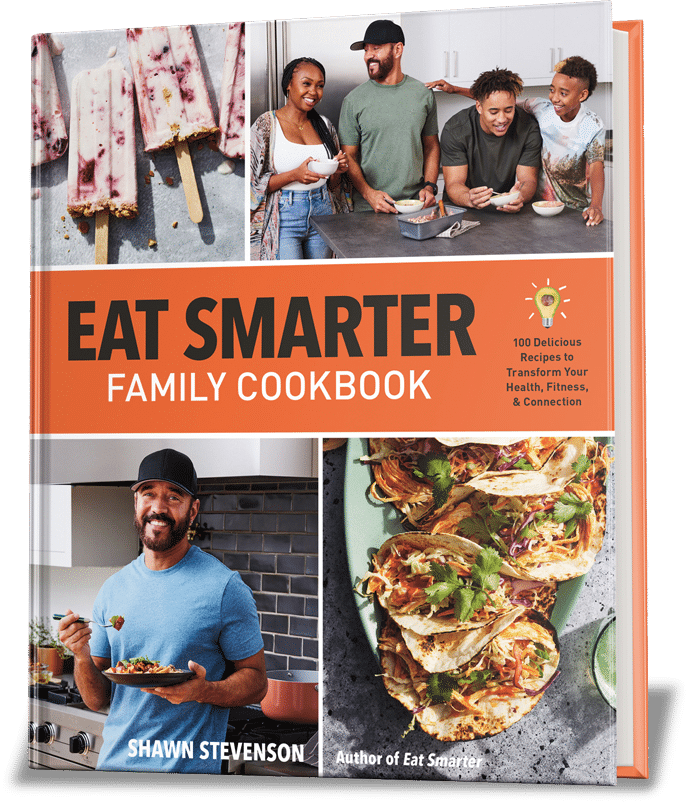
The Eat Smarter Family Cookbook is filled with 100 delicious recipes, plus the latest science to support the mental, physical and social health of your loved ones.


Share Your Voice
0 comments. Be the first to leave a comment.