
Subscribe to The Model Health Show:


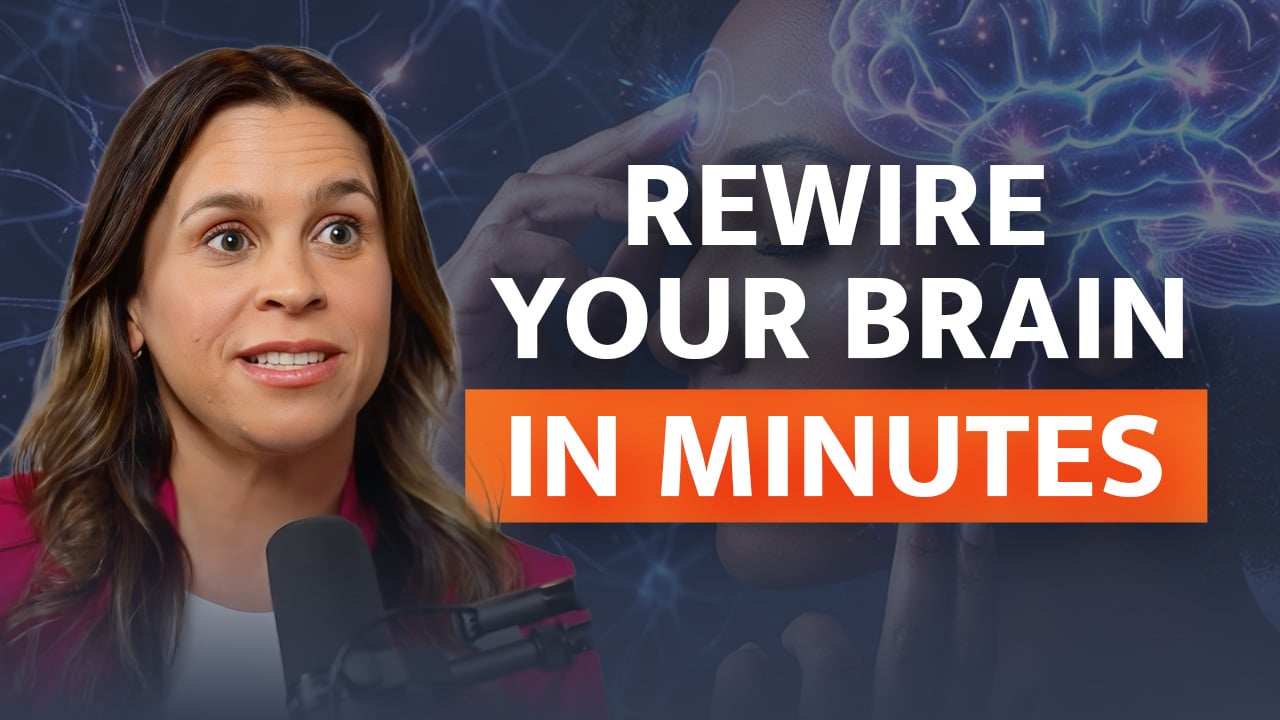
TMHS 996: Do This to Cut Cortisol by 43%, Relieve PTSD, & Rewire Your Nervous System – With Jessica Ortner
Most people still believe that when stress hits, you should just “think positive” and push through—but your biology doesn’t work that way. When your brain’s alarm system gets triggered, your rational thinking literally goes offline. In this episode, we’re breaking down a powerful, science-backed way to work with your nervous system—not against it—to reduce stress, lower cortisol, and regain control of your mind and body.
Our guest, Jessica Ortner, is a New York Times bestselling author and co-founder of The Tapping Solution, a global movement that’s helped millions of people reduce anxiety and trauma using Emotional Freedom Techniques (EFT). Her work is backed by hundreds of peer-reviewed studies and is now being researched at institutions like Yale, Harvard, and Columbia. Jessica brings both personal experience and cutting-edge science to help us understand how to truly rewire our stress response.
In this conversation, you’re going to discover how tapping can reduce cortisol levels by up to 43%, help resolve PTSD symptoms, and transform the way your brain responds to stress triggers. We’re diving into the neuroscience behind anxiety, how your body stores trauma, and why you can’t think your way out of stress—but you can retrain your nervous system. Plus, you’ll learn a simple, practical technique you can use anytime to create calm on demand.
In this episode you’ll discover:
- Introduction + Why you can’t think your way out of stress (00:00)
- The tapping method & 43% cortisol reduction explained (01:23)
- Meet Jessica Ortner + what EFT tapping is (02:02)
- How tapping calms the nervous system (science breakdown) (03:21)
- Jessica’s anxiety story & discovering tapping (05:31)
- Why chronic stress is so damaging today (09:08)
- The 43% cortisol study (how tapping beats other methods) (10:05)
- PTSD study: 90% symptom remission (game-changing results) (13:31)
- Real-life PTSD story + first responders application (17:00)
- “Your body’s electrical system” (trauma + stress explained) (19:32)
- Memory reconsolidation: how tapping rewires the brain (22:30)
- The “familiarity trap” + why anxiety patterns repeat (28:06)
- Fear of flying story + real-world tapping results (31:38)
- Step-by-step tapping tutorial (guided demo) (35:25)
- Tapping for physical pain + healing stories (45:24)
- Brain scan study: tapping reduces cravings & rewires responses (51:17)
- Final insights + how tapping can transform your life (58:02)
Items mentioned in this episode include:
- Visit https://rewired.thetappingsolution.com/ to get a copy of Rewired
- Paleovalley.com/model - Use code MODEL for 15% off!
- Organifi.com/Model - Use the coupon code MODEL for 20% off + free shipping!
This episode of The Model Health Show is brought to you by PaleoValley and Organifi.
Paleo Valley Essential C Formula
Most vitamin C supplements are derived from genetically modified corn and synthetic compounds—but Paleo Valley uses real, organic superfoods like camu camu, amla berry, and acerola cherry. Head to paleovalley.com/model to get 15% off your order.
Organifi makes it simple to fuel your body with high-quality, delicious nutrition—without the guesswork. Head to Organifi.com/model and use the code MODEL to get 20% off your order.
Transcript:
SHAWN STEVENSON: Welcome to the Model Health Show. This is fitness and nutrition expert Shawn Stevenson, and I'm so grateful for you tuning in with me today. I want you to think about the last time something was really stressing you. This may have been the last time that you were laying in bed late at night, and the thoughts just wouldn't stop. You're replaying a conversation, you're second guessing a decision, but you know that you need to sleep. You know, stressing about it is making it worse, and you're telling yourself to just calm down.
Just let it go. Think positive, but it's not working. And here's the thing, it's not supposed to. When your amygdala, your brain's glorified fire alarm gets activated, your prefrontal cortex, the part of your brain that does all of the rational thinking and reframing, essentially goes offline. It gets muted.
This is why you cannot often think your way out of a stress response. Your brain is not designed to do that in that state, and yet that's exactly what most of us have been told to do. So today we're going to talk about what actually works when your nervous system is stuck in a loop. We're going to look at a somatic technique that combines acupressure with modern neuroscience. And in one clinical study, it was shown to reduce cortisol levels by 43%. There are now hundreds of peer reviewed studies affirming the effectiveness of this technique, and it's now being studied at Yale, Harvard, Columbia, and other prestigious universities as well. And with all that being said, let's dive right in.
Our guest today is Jessica Ortner. She's a New York Times bestselling author and co-founder of The Tapping Solution, which has helped millions of people worldwide through emotional freedom technique. Tapping her new book, rewired is the first book co-authored with both of her brothers, Nick and Alex, with A Forward by Tony Robbins. Her work has been featured on the Today Show, CNN, Fox News Shape Women's Health, and countless other media outlets. And through the Tapping Solution Foundation, she's brought this work to schools, veterans and communities in crisis, including her hometown of Newtown, Connecticut. And she's not just going to talk about this today. She's going to walk us through exactly how to do it. Let's dive into this conversation with the incredible Jessica Ortner. Jessica.
JESSICA ORTNER: Ah, Shawn.
SHAWN STEVENSON: I'm so happy to see you.
JESSICA ORTNER: So happy to be here.
SHAWN STEVENSON: You're about to reveal a truly life transforming technique for our mental health and our physical health. It's now been affirmed in over 300 peer-reviewed studies, including 103 randomized controlled trials. Jessica, for people who've never heard of tapping before. What is it in its simplest terms?
JESSICA ORTNER: This is one of the most powerful ways to calm your nervous system. What we're doing with the tapping is that we have points in our body that have high concentration of nerve endings. They're also considered acupressure points, and we have these mechanoreceptors. So when we begin to stimulate these acupressure points, it sends an electrical signal to the brain to allow yourself to calm down. One of the best ways to understand how tapping works is to understand how the nervous system works, and that is a big word that's being thrown around a lot right now. But what are we really talking about when we say the nervous system?
Your nervous system consists of your brain and your spinal cord and these nerve endings all through your body. And back in the day when we used to think about how we worked as humans, we thought that the control panel was in our brain and everything else. We were just puppets. And what we're realizing now with the nervous system is that we have this information highway between the brain and the body, and we gain information. We gain in memories and emotions are not just stored in our brain, but we have physical experiences and they're stored in our body.
SHAWN STEVENSON: Hmm.
JESSICA ORTNER: And so what you're doing with capping is when you're having a reaction, a panic, a stress, anxiety, you have that the communication in your nervous system is danger. And so what you're doing with the tapping is as you stimulate these points with these nerve endings, it sends a calming signal to your brain.
So if your brain has a stressful thought and you have a signal of safety, those two signals will bump up against each other. It makes your brain recalibrate, wait I thought I was meant to be panicked, but now my body is feeling calmer. And that's the, that is the way that you communicate through your nervous system to your mind to help release panic, anxiety, overwhelm, and break out of thought loops.
SHAWN STEVENSON: Hmm. We've known each other for a long time, and just to see how much tapping has grown, we're talking tens of millions of people utilizing this technique and just the, to see the growth in science, like there are mountains of data now available on this and we'll get into some of that. But before we do, I want to ask what initially got you to try this technique and also to anchor it in in your life?
JESSICA ORTNER: I have had anxiety my whole life, ever since I was a kid. As a kid, I had a speech impediment. I had trouble reading, and that caused this immense amount of anxiety because if you have an experience and we've all had experiences where suddenly we feel unsafe, we feel like we have to hide, we feel like we're not enough. What happens with the anxiety is it's actually your nervous system trying to protect you. One bad thing happened and now when it's time to speak in class, speak on stage, say something at work, you begin to have a panic response because your body is thinking. You're not safe, let's be on guard. And so it has the very best intentions. So I found tapping when I was in a really tough place and my brother came to me.
I wrote the book with my two brothers. My brother Nick came to me and he goes, I heard about this thing, tony Robbins mentioned it. I went online, let's try it. And I was like, and he started having me tap. I am the youngest of two older brothers, Shawn, the amount of pranks that I have gone through in my life. So there was a moment when he had me tapping underneath the arm that I look at him and I think If you are pranking me, I'm going to be so angry. He goes, no, no, no, no. Just stick with it. And so I began to tap and I found that I had a real physical shift. I was sick at the time. I wasn't getting better. I was two weeks into a cold, not recovering as, and as I tap, I feel this calm in my body and I look up at him and I go, I don't wanna get better.
He goes, what do you mean? I go, I am working so hard and I'm doing everything right, and if I take a break, I'm drowning in guilt. Hmm. And the only way to take a break was my body to go, let's just get sick. It wasn't a conscious decision. I didn't go look for a virus, but my body was reacting in this way. And after I tapped, I had this huge physical shift and then I forgot about it. 'Cause we do this, we hear something, a podcast, someone tells us something, we have a breakthrough, and then we just go on to what's normal. And it wasn't until months later that I was going through a breakup. I was back, I was in my early twenties.
I was back in my parents' house and I didn't want them to hear me crying. And I started tapping on these points and I remember thinking, I don't remember all the points. I'm sure I missed two. And I felt this profound shift in my body. And after that moment I teamed up with my brothers and we were like, we have to figure out how this is working. We need more people to do this. This is incredible. So we just started to share it and the journey starts there.
SHAWN STEVENSON: Yeah, true story. I was living in Ferguson Florissant at the time when the Tapping Solution Summit was taking place long before we even met. And I remember just seeing this buzz online and seeing all these incredible individuals who were like mentors for me from afar who were participating in this. Like, you know about this too, you know about this too. And eventually, of course us crossing paths, has just been such a blessing and I'm so grateful for you. And you know, just speaking of that anxiety and just the different applications for this stress.
And we've done a lot, around stress recently and had on like some of the world's foremost experts in stress research. You know, stress obviously isn't all bad. But when it's not healthfully managed and you know, we have hormetic stressors that we can kind of get better from. But then just the chronic stress is literally causing epidemics of disease and dysfunction because, you know, as you mentioned, this nervous system that we have is incredibly dynamic and powerful and we can get stuck in certain patterns. And also if we're overloading ourselves, we're not meant to deal with a lot of stuff we're dealing with today. And so we have epidemics of anxiety and depression in all manner of kind of mental health stress. And so one of the studies I wanna ask you about is mind blowing this cortisol study and the researchers found a 43% reduction cortisol by utilizing tapping. Talk about that.
JESSICA ORTNER: Yeah. This was a breakthrough study and I'll, I'll mention it. It's a breakthrough because it's also a replica study and replica studies are important 'cause sometimes you have a one-off study that shows something. You need to have multiple studies. And this was a replica study that showed this result. What they did is they had three groups. They had a control group that was asked us to relax, relaxing, can lower cortisol. They had a group that was doing psychoeducation, which meant they were learning about mindfulness, how to look at stress different, just kind of like a talk therapy in a group session.
And then the third group was doing the EFT tapping. And what they found is the group who was doing the psychoeducation, their cortisol did go down. It went down by 19%. As you said, the one, the group that was tapping it went down by this 43%. So that is profound and that shows that not only are people saying, Hey, I feel less stressed, I feel better, but the markers in the body show that reduction in cortisol.
And I love your show, and I love how you have so many experts. There'll be a brain health expert, lower stress, gut health expert, lower stress, heart expert. Lower stress, stress in an overproduction of cortisol impacts every aspect. And so one of the things about tapping that I think might've worked against us in the beginning is people go, I don't get it. Someone's tapping on their back pain, but then there's someone else tapping on their stress around finances. How are you using one thing on these two very different things? What we're targeting is the stress in the anxiety, the reaction in our body, and when you lower cortisol and you feel more relaxed in your body, often those pain sensors go down.
The pain begins to go down because your body can begin to recover the way that it couldn't before. If you're stressed around your financial situation, you're not making good decisions, you feel shut down, you feel panic, you deal with that stress, all of a sudden you can think more clearly. You can ask for help, you can be more creative and you can be more resourceful. So it's not that it works on all these things 'cause it's magic. It works on stress and stress impacts everything.
SHAWN STEVENSON: So powerful. So powerful. And again, with this particular study, a replica study.
JESSICA ORTNER: Yes.
SHAWN STEVENSON: So this was a study that was al already conducted in a similar style. And the research is again just to like prove or disprove it, did this actually work this well? And being able to, again, this is published in a prestigious peer-reviewed journal and actually tracking cortisol levels before and after. And we know that this can dramatically reduce our stress hormones and our stress response in our body. And we're gonna talk more about how it does it, because there's really some profound insights like.
Reading the book I, and of course, knowing about this, practicing this for a while, I had a huge aha moment of like, oh, that is exactly what I needed to hear. And also, we're gonna talk about, and by the way, those that are listening, you would be very blessed to come over to the YouTube version of this episode on our YouTube channel or if you're watching on Spotify, we have Spotify video as well, so that you could see the studies that we'll put up that we're referencing. And also to learn how to actually do this. Jess is gonna share this with us here on the show today. And so before we get into all that, I want to ask you about another really, really profound study. And this was actually published in the Journal of Nervous and Mental Disease on PTSD symptoms and the results from this study. There is nothing else like this. Talk about that study.
JESSICA ORTNER: So there was a study, this was done with Veterans War veterans, US veterans, and what they did is they split the group into those getting 30 sessions of EFT tapping and then those doing the standard care. So the regular therapist that the, the standard care for the va. And what they found is after these 30 sessions. 90% of the participants who did tapping their symptoms went so low that they no longer qualified as having PTSD.
SHAWN STEVENSON: Complete remission.
JESSICA ORTNER: Complete remission, and those who were doing the standard level of care, 4% of them, but then they followed up through, so three months later, they followed up to see if it was holding, and 86% still were in remission, not considered having PTSD. Six months later, it was at 80%. So long-term, 80% difference, or 80% of people getting these results. The challenge with a study like this, Shawn, is that it's almost so impressive that it creates a lot of skepticism. And so there has been so many more studies around PTSD and tapping, and there was one meta-analysis.
There's actually been three, but I'm mentioning one of them because this meta-analysis was done in Europe by a group that has no association to tapping. Nobody likes it, wants to research it. This was very much a third party. And a meta-analysis takes all of the studies around something and crunches the data to see what the effect size is, which is between zero and one, one being incredible. 0.7, 0.8, great results. And they looked at all of the studies around tapping and PTSD and the effect size was 1.8, which is incredible. So what I'm seeing now is one, it's been approved by the VA to be used.
SHAWN STEVENSON: Yeah.
JESSICA ORTNER: And two is that this is opening the door for more research, for more bigger universities to take this on.
SHAWN STEVENSON: I mean, just everybody please hear this because again, this is one of the issues that is so overlooked and can be so damaging not just to the individual, but their families and the community when dealing with post-traumatic stress syndrome and having so little effectiveness with standard of care and it is what it is to see something that is upwards of 90% effective, like this should be front page news.
JESSICA ORTNER: Yeah.
SHAWN STEVENSON: And as you just mentioned, thankfully, this is now being kind of integrated into care, but we are just getting started as far as like the message getting out there to people to know that it's available. And also for practitioners, for physicians to know that this is a valuable tool as well to not just treat a symptom, but to actually address the underlying issues with the nervous system.
JESSICA ORTNER: I'd love to share a real story to make this study real. There was, we get hundreds of these stories, but one really stands out to me. It's this woman, Sam Sonnet, who was a veteran. She also was in the NYPD. She was in a department that dealt with very difficult cases, and then later, before retiring, she was in charge of training those encounter terrorism for biochemical counter-terrorism. So she had this whole unit underneath her. She started to deal with some PTSD symptoms, which she said she admitted, it's tricky. You don't wanna admit you're having trouble sleeping, you don't wanna admit you're having stress because this is your job, is to show up for other people. And so she went to a conventional therapist and the therapist said, okay, let's sit down and let's write out every traumatic thing.
Let's kind of talk through everything. She goes, it's impossible. In one day on my job, I've had three traumatic cases. And then she found another therapist who incorporated tapping, and she said that is when her life changed, because when not only was she able to use the therapist's knowledge and tap with the therapist, but in those moments between shifts or after a shift when you have to let go of what happened, she would often say that a lot of times, first responders, there's no middle part of between. You're experiencing something and you walk in to the dinner table with your kids.
SHAWN STEVENSON: Mm.
JESSICA ORTNER: And so your body does not know that you're home and safe again because you will cont because obviously your nervous system wants to keep you safe and you've just experienced something traumatic. And so she actually created tapping meditations that are in our app, the tapping solution. They're always free, always unlocked for first responders, which is giving yourself those moments to be able to l to let your nervous system know that it's safe to let things go before trans transitioning on to the second part of your day.
SHAWN STEVENSON: Thank you for sharing that story. And that's one of the great things about your new book as well is the stories and just highlighting, you know, because again, it's, these are things that we can actually relate to and to see all the different applications as well. Like that's something that most of us never think about. Even people who are first responders never think about it because you're not trained really on how do you actually decompress, be able to shift what's going on with your nervous system a lot of times just carrying around that trauma with you. And again, we see such high rates of anxiety and depression and mental health struggles and physical health struggles as well with first responders. It's not an accident. It goes hand in hand. And one of the great parts about this book, and I wanna share this directly, this is one of the parts that I highlighted and you saw, I wrote a bunch of notes in the book as well, but this part, this section is called Your Body's Electrical System.
And it says, think of your body like a house with electrical wiring. When everything's working right, the lights turn on, the appliances run, everything flows. But what happens when there's a short circuit? The lights flicker, breakers, trip, things stop working properly. That's what trauma and chronic stress do to your body's electrical system. They create short circuits that keep triggering the same responses over and over. Examples, see, a dog equals panic for you, even though one bit you 20 years ago, read an email from your boss, your stomach knots, even though you're good at your job, thinking about money, chest heightens, even though you're not actually in danger.
Can you see yourself in any of these situations or something similar? These are your short circuits in action. Now, this is what I want everybody to take away. Traditional therapy helps you understand these patterns. Like having an electrician explain why your circuits keep tripping. This understanding is incredibly valuable. Of course. It gives you insight, context, and often profound awareness about why you react the way you do. But tapping does something different and can often accelerate results to the next level. It resets your body's electrical system by stimulating specific points that send calming signals directly to your brain's alarm center.
The takeaway here is, again, traditional therapy helps you to understand the patterns. Okay? Like having an electrician to explain why your circuits are trip, like this is what's wrong with you. It's your mother, it's your, you know, it's this relate. It was when you were six. But how do I actually change it? And this gives us an inroads into actually making that change.
JESSICA ORTNER: Yes. And I wanna say I love therapist. God bless them. And I think one of the reasons that tapping is growing so fast is I hear people say, oh, my therapist told me to do this between sessions, or my therapist taught me this. So we're seeing a lot of therapists who've been maybe frustrated because they're having incredible training. They really help you get insights. But they see that there is a physical trigger. And I remember speaking to Dr. Damon Silas, he is a therapist in the military. He's actually now in a, in the American base in Germany. And he said when he started, he started 'cause he wanted to help. And what he would find is that when people would start talking about their, their challenges, there would be this physical response, this physical anxiety.
And so sometimes they'd leave the office and maybe they had the aha moment. But their body was still anxious, so we have to go through the body. The mind follows the body, and so when the body feels safe, that's when you can begin to change. And it works very powerful with looking at moments in our past, and that's because something called memory reconsolidation. We used to believe that a memory was written in stone. It happened. That's how it happened. But scientists are realizing that memories have, they have a way of changing. It's the same way that you can have something happen to different people. Or if you have siblings, you all experience something and you got something totally different or, or the memory is completely different.
So when you think of a memory, there is this window where it's almost like opening a file on your computer. So usually you think about something that time, that dog bit you, and you open that file and you feel that sense of dread again. And now when you move on, that file is still saved with the same panic and anxiety. And so you see a dog that you know doesn't bite, it's your friend's dog. It's always sleeping. It's in the bed. You tell yourself, this is a poodle, I'm safe. It does not matter. Your body will continue to panic because it learned that it wasn't safe in that moment. What you do with the tapping is if you think about a memory, it opens up that file.
You begin to feel what happened, and now what you're doing is you're sending a calming signal to your brain. So you're retraining, you're rewiring your brain to be able to notice that memory, but now feel the sense of safety and so that when it saves that anxiety goes down. So the memory and the details might be exactly the same, but you'll be able to think about the memory and the anxiety will be lower.
SHAWN STEVENSON: Hmm. So powerful, so insightful.
One of the most important nutrients for human health. This should be of no surprise. It should be written in the sky. It's vitamin C. It has so many benefits from supporting our immune system function to supporting our sleep quality, and even supporting our mental health. Vitamin C is believed to be a bonafide stress buster. And reduce stress by supporting the adrenal glands and allows a person to bounce back more quickly when under stress. In a randomized, double-blind, placebo controlled trial published in the journal Psycho-Pharmacology, looking at the stress of public speaking and other stressors, scientists found that those who received vitamin C supplements experienced less stage fright, maintained more balanced blood pressure, and at a faster recovery of their cortisol levels.
What don't you do? Vitamin C is so special. Now, here's the rub and what most people don't know, this is not written in the sky is that most vitamin C supplements are made from genetically modified corn syrup and corn starch. These are not ideal sources of vitamin C for our tissues, for our brain, for our ideology, and so we wanna make sure that we are sourcing our vitamin C supplements from bonafide science-backed sources.
And for that, the vitamin C supplement that I've been using for years is the Essential C Formula from Paleo Valley. Go to paleo valley.com/model right now. You're going to get 15% off of their powerful essential C complex. Now it's based on some of the most vitamin C dense real super foods. That have ever been discovered, including AC cherry, AMLO Berry, and the vitamin C superstar of superstars, camu, camu berry.
It's all organic with no binders, no fillers, no synthetic ingredients. Plus it has a 60 day plus hundred percent money back guarantee. So if you aren't absolutely thrilled with it, you'll get your money back, no questions asked. So again, you've got nothing to lose, but better health to gain by utilizing paleovalley's essential C Complex. Head over to paleo valley.com/model right now for 15% off. That's P-A-L-E-O-V-A-L-L-E y.com/model for 15% off storewide. And now back to the show.
SHAWN STEVENSON: You know, our bodies and our brains, our nervous system. It's just filled to the brim with memories. And this is why, you know, it's so interesting because now science is affirming this phenomenon as you just talked about, the memory update phenomenon, that when we remember something, we're temporarily bringing that file up and it's like unlocked to be able to do something with it. Should we choose to? But most of us are just kind of living and our memory might pop up or and create a response. And part of that response too, whether it's pleasurable or something that is, you know, the total opposite. We have a physical change in our bodies, like the chemistry in our bodies change based on what we're thinking about and the memories that we are carrying around.
And here's the crazy thing, it's not even present, like this is something that doesn't exist anymore, but it can have that same response. And I want to ask you about this because the question would be like, I logically know that I'm safe. Like I'm okay. Why on earth would my body respond the way that it's responding? And one of the things I've learned from you is that our bodies and our, and our brain's primary goal is to keep us safe, right? And it will go through any means necessary to do that. And what happens is something called the familiarity trap will take place. Talk about that.
JESSICA ORTNER: We love certainty. Certainty gives us a sense of safety. Now that could be certainty that we're not enough, that bad things happen to us, that we can't speak in public. We have these beliefs and these thoughts that repeat over and over again. And the more that we repeat them and we think them, it's almost like water going down a mountain. The more it goes down, it makes the grooves deeper and deeper and you begin to think, well then that must be who I am. I must because I've run this pattern for so long. Maybe this is who I am. And the biggest breakthrough that I've experienced personally, and I've seen thousands others, is this moment when you realize I am not my patterns.
I am actually not my behaviors. I am so much more than this. And I think the biggest thing about understanding that your nervous system wants to keep you safe is it really opens the door to self-compassion because what if, just entertain this for those who are listening. What if there is nothing wrong with you? What if you are not broken and the only thing that's happening is a pattern that you've become so familiar with that it feels safe to your nervous system? What if one thing happened and it taught your nervous system? People can't be trusted. I can't speak on stage. And suddenly your nervous system because it loves you, because you are enough, because it wants nothing more than your survival will continue to run that pattern and that anxiety is a way of keeping you safe.
This changed the way that I addressed my own anxiety. Not only did I realize that I wasn't getting anxious as much, but anxiety still happens, right? Like we're not always gonna have a bad day. I have moments where I go, oh, I am nervous. I'm anxious about something. The biggest thing that shifted is this realization that what I need, the anxiety is not true. I don't have to believe what I think when I'm anxious, and that the anxiety's goal is not to keep me down or remind me that I'm not worthy. The anxiety's goal is just to keep you safe if keep me safe. And so what if when I find myself moments, when I find myself in moments when I'm triggered? I simply say to myself, all I need is my own reassurance and a sense of safety.
Not that I need to be fixed, not that I'm not enough. It's simply my body's desire for safety. And once you do that, once you have that switch, then it's almost even nice to go to the tapping to find something where I can go, how do I speak directly to my body? Because logically you might know that it's more. It's scarier or the chances of you being in a car crash are higher than crashing in an airplane. Logically you can go, an airplane is safer than a car. Your body does not care if you had seen something that triggered you around flying. You will give yourself every reason why you shouldn't be scared of flying and your body's like, I don't care. I have this memory saved. I have this panic, and I'm going to keep reliving this until you can communicate with me that I am safe.
SHAWN STEVENSON: Amazing. You've got a great story in the book, at an airport. And it, this was with a family that had planned a trip and they had come down to the wire and the mom couldn't get on the flight.
JESSICA ORTNER: Yes. And someone had our app, we have the tapping solution app, which has fear of flying, tapping meditations. And the swimming went up to her and goes, I know this is a little strange, but let's go to the side. Let me play this tapping meditation for you. Let's tap. And the woman was desperate because her, her, you know, these trips you plan for forever. And so she goes, okay. And again, she physically, before I couldn't go on the flight, every part of her wanted, like she wanted to go, but she physically couldn't. And when she was able to tap, the anxiety went down and she was able to get on that flight and have that dream vacation. And I was at the farmer's market the other day and I had like a tapping solution t-shirt on, and the woman selling honey was like, oh, Jessica, I have to tell you, I planned this trip to Italy.
I've been wanting to go to Italy for over 10 years and I haven't been able to. And I tapped and I was able to get on that plane. And we're seeing the, the wonderful thing about this app is that most apps just track. If you show up like, Hey, you did five days in a row. We track your before and after, like from zero to 10, what's the anxiety before and what's the anxiety after? We have 18 million data points. We have 34 million tapping meditations played, but 18 million of those have those data points, and we can see that when you tap on anxiety, the release anxiety, tapping meditation, after a million people used it, the average decrease was 40%. So what does that mean? 40%? If you are at an eight, a fear of flying and you are not getting on that plane.
If you tap for nine minutes and you're on a four, maybe you have a little anxiety, but you can go, you can go, you can move, and then you can continuously do that work to lower the anxiety. But we're seeing even just dropping something by almost 40% is life changing because it doesn't stop you from taking the action that you wanna take.
SHAWN STEVENSON: Our brains really are just predictive machines as well, you know, to keep us safe. And, again, you could try to logic yourself to death, just like this doesn't make sense. I just gotta do this. I just, I want to do this. But if your brain and nervous system are predicting that, even though you know that this thing is going to make you feel better.
JESSICA ORTNER: Yeah.
SHAWN STEVENSON: If it is predicting, like, not necessarily like this thing happened last time, I'm just gonna go ahead and make sure that you stay locked in this pattern. Tapping gives you an opening to start to recalibrate, rewire that experience. And there really isn't anything like it because in the, this is the best part about it, and you kind of bullet pointed all these different things and why it's so valuable, you could do this anywhere. You don't need anything or anybody, you could do this yourself. And it's built into your nervous system. You know, these, again, these acupressure points, but also there's a, the messaging, the communication that goes along with it, which I just did a session yesterday and of course you guys give guided, tapping meditations and also frameworks in the book for all kinds of different things, by the way, and this could be something big, something really, really big or something that you might deem to be very small that's irritating you.
And it can be transformative, but what I found was that I knew what to say already. Like I knew what to say for myself as I was going through my tapping session and like you've, it's so crazy. 'cause I'm just like, this is not gonna make that big of a difference this time. It's just that's not, this but's just like a, again, you go from like a five to like a two. Right? And so I think this is a good point to actually take us through and show us how to do this. And again, this is mapped out in the book. You've got incredible videos on this, but I've got you here.
JESSICA ORTNER: Ah.
SHAWN STEVENSON: So teach us.
JESSICA ORTNER: Yes. I'm so glad to be here. And for those who are listening, I'll try to explain it and get on that YouTube channel as well. This is something that once you get comfortable with using it, and I really recommend people, I'm gonna give you an experience, a very small experience, right, to get familiar with the points, but go and do a tapping meditation. There's free ones on YouTube at the tapping solution. In the beginning, you're just learning where the points are. But what's powerful is, it's always the same nine points. So when you learn this tool, you have this for the rest of your life. So when you wake up at three o'clock in the morning and you need some stress relief, or you've just been in a fender bender and you're just panicking, you can go to this. So the very first point is the side of the hand, and it doesn't matter what side of the body you tap on.
So the points are on both sides. And then the next point is where the hair of your eyebrow begins, so it's right on the bone. Then we have the side of the eye and it's still on the bone. So not back in your temple. You're still staying on that bone. And I am using about two fingers, two, three fingers. All you wanna do is tap to stimulate these nerve endings you have underneath the eye, which is the bone underneath your eye. You have underneath the nose between your upper lip and your nose underneath the mouth, which is the crease between your lip and your chin. You have the collarbone point. If you feel your collarbone, you go down an inch on either side. You can also use your whole hand to tap. Then you have underneath your arm, and it's a hand width from your armpit.
For ladies, it tends to be where your bra strap lies, and then you have the very top of your head right on the crown. So these are the nine points. What we didn't cover is how this started, which I'll say very quickly that it started with a therapist, Dr. Roger Callahan, who had a woman, Mary, who had a water phobia, and he was using all traditional types of therapy, but she kept saying, I feel it in my stomach.
The phobia starts in my stomach. And he would say he was studying acupressure and he just experimented. And he said, let's just stimulate this point. Just tap while you're talking. And that's how she had a breakthrough. So tapping really started with this combination of these, this psychology and the acupressure. What you wanna do with tapping is you wanna start by giving a voice to how you're feeling, which a lot of people are resistant to because they think, no, I don't wanna, you know, we just try to like talk our, try to make ourselves be positive and push through. But what's happening is that the nervous system needs to be, to be feel safe.
You have to recognize what you're experiencing. You have to have a moment where you can just accept where you are. Because what's happening is you're triggering that thought, that's creating the anxiety, you're sending a calming signal, and that's what recalibrates things. You can also use tapping for something positive 'cause again, it's only a calming signal. So if you're thinking of a positive affirmation. And you send this calming signal, you can really sink into it. So you can use it for positive things. It's in the new Devil Wears Prada trailer. Emily Blunt is tapping. She goes, may the fire from the bridges I burned light my way.
Not the kind, not the kind of tapping I do. But I simply say that because you can tap on what you want. But this is the challenge. People sometimes wanna go to the positive, and you really wanna give yourself a moment to honor where you are. Because if I tell you, Shawn, in the middle of a panic attack, Hey, you're fine. Tell yourself I'm good, I'm fine. I'm okay. While you tap, there's a part of you that's like, absolutely not. But if you give yourself a moment to be seen, to recognize, to tap, that's when the shift happens. So with that, we're gonna have an experience. We're just gonna do two rounds, okay? So for those that are listening and watching, I want you to repeat this in your mind.
So I'm, I'll say something, repeat it in your own mind and focus on your own experience. So we're gonna start on the side of the hand and tap here. I want you to say to yourself, actually, let's do this as we tap, notice how your body feels right now. Notice if you're feeling any stress or tension, and give your stress a number from zero to 10. So 10 is like you're really stressed out, zero, you're feeling calm. This number is only for you. Notice how you feel. Notice where you're carrying the stress in your body. And now tapping on the side of your hand. Repeat after me in your mind. Even though I'm holding on to this stress, I acknowledge how I feel.
And I give my body permission to relax. This is called the setup statement. We're gonna now tap on the eyebrow point and we're gonna give a voice to this feeling, so repeating after me. Or if you want, just simply listen all of this stress side of the eye, all this pressure I feel under the eye, all these responsibilities under the nose, all of this uncertainty. I under the mouth. I recognize this stress. Collarbone. I acknowledge how hard it's been under the arm and how hard I've been on myself, top of the head, all of this stress.
Going back to the eyebrow point. I acknowledge how I feel side of the eye, and I'm here to let my body know under the eye that even though I don't have all the answers. Under the nose, it's safe to begin to relax under the mouth. Even with everything going on collarbone, it is safe to begin to let go under the arm. Even with this stress, I am safe, top of the head. It's safe to relax and to find more ease.
Now take a nice deep breath in and exhale and you can just check in with your body. Maybe you wanna move your shoulders around. That was a very quick experience, just two rounds, and what tends to happen is. One of two things. Either you notice yourself feeling more calm, or sometimes as we begin to do the tapping and our voice quiets, what happens is what happened to me when I was tapping on feeling sick, and all of a sudden I realized, actually, I don't wanna get better because I'm drowning in guilt if I'm not pushing myself. And then the tapping would shift to focusing on that emotion.
SHAWN STEVENSON: Hmm.
JESSICA ORTNER: So it really helps you because you're sending this calming signal. You're also in a space where you can reflect in such a loving and calm way. Well, you begin to have those aha moments to figure out, well, what do I really need? How do I really wanna navigate this? So again, that was just two rounds, and the more that you do the tapping, the more that you'll feel more comfortable doing it in those moments when maybe you don't have the book in your hand or you, you don't have your phone to use the app. But usually our experiences are maybe 10 or 15 minutes.
SHAWN STEVENSON: Yeah. Thank you Jess. Like, it's so awesome. I mean, just again, I love the setup of just first checking in with yourself. Where are you? Give yourself a number because again, the proof is in the pudding and you can see the change. Maybe again, whatever you're dealing with is at a seven or a six, and then it goes to a three. This is like proof positive that you can actually tap in Yeah. And help to resolve some of this, whatever it is that you're dealing with. And specifically, I wanna ask you about this obviously. When we think about the nervous system, we tend to think about mental and emotional related things, but this is also a very powerful application when it comes to physical pain as well.
JESSICA ORTNER: Yes.
SHAWN STEVENSON: Can you talk about that relationship and why you guys specifically addressed this in the book too?
JESSICA ORTNER: It was one of those things that we had to address because the feedback we get is absolutely overwhelming. And I think the reason that tapping has spread so much is that it's very subjective to say, your anxiety went down, but pain is more real in the sense of you're in pain or you're out of pain. And it is clear and it is life-changing. And we see again and again that when people begin to tap, they say that their migraines stopped coming back, their back pain went away. There was this gentleman, Gary, that we interviewed for the book and he. Also he's, he's an older gentleman and his wife heard about us and his, he had just tried everything.
He got to the point where they were burning the nerve endings. It's a procedure where you burn the nerve endings to help to stop the pain receptors. So he was really desperate and he started using the tapping. And he said that very first time where he really gave himself this full tapping experience. His pain went down almost by half. And then he kept doing it every day and his pain went down to zero to the point that, to this day, he still taps consistently. He shared this with one of his Navy brothers. This is a Navy guy. So his, this Navy brother had a, has a bullet wound. I mean, I can't make this up.
This is wild. He was shot in the back in a hunting accident and has lived with this pain. And the biggest challenge was sleeping because it was keeping him up at night. And he found that the tapping lowered the pain levels enough that he was able to fall asleep. So in this case. He's still struggling. He still has some pain, but he can sleep every night. I mean, it's, it's incredible. So we see people who are having these huge, miraculous moments, and then there's people who are like, Hey, every time I have a flare up of a symptom, I go to the tapping and it decreases my symptoms. And I think that always goes back to the cortisol and the stress. I think we're really underestimating how stress and how emotions impact our body.
SHAWN STEVENSON: Yeah. Yeah. And this is one of the biggest, if we're talking about all the different types of epidemics that we're experiencing today, which there's so many, but the pain epidemic and seeing the monetization of that by, you know, pharmaceutical industry and you know, and we all know the stories by now with the opioid epidemic. Just again, to really understand that there is a solution here that we already have access to because that experience of pain, again, is our body, ironically, trying to protect us.
JESSICA ORTNER: Yes.
SHAWN STEVENSON: And what happens is even if you can get a resolution with your pain, there's still a fear there, right? And this can start to debilitate you and your life. If I do this thing, I'm gonna experience pain. And sure enough, you do the thing, you experience the pain, even though you might even be well. And so the applications here to, again, to be able to not just address the acute symptom, but to dig deeper, right? We get the electrician to come in and say, this is why we're experiencing this, but here's how we actually rewire it.
And that's the value. And part of this too is something that you also note, which is tapping positively influences gene expression. And this has been noted as well, you guys again, just compiling all of this incredible data. This is a very powerful epigenetic controller. And so this isn't just, again, this kind of superficial change we see on the surface. This is changing us at the level of our genes.
JESSICA ORTNER: Yes, it is. I mean, this study is incredible. We all have, we have genes, but we have ones that turn on that and turn off. And so what they found is after people did tapping, they looked at those gene markers and the genes associated with inflammation were down. Immunity were up, and it was a very small study, but it's showing us what's possible. And that's why I really feel like we are just at the beginning of this research, and I've noticed such a change, Shawn, like we've known each other for so many years, and back in the day when I first started, it was a str. I didn't even understand why it worked. We made a documentary film about this because we wanted to show the before and after. But even in that film that came out, you know, 18 years ago, we didn't really have an idea of why it was working. We knew about the Meridian system, but so much has evolved since then and the research has piled up that I see that a lot of places that have been closed off in the past are now taking a serious look at this.
And I am predicting right now in two years from now where this really is going to explode. And I believe, especially for therapists, that it's, as more research comes out, it's their responsibility to, to bring this in to, and it doesn't mean you have to just, this is all you do, but this is such a powerful tool to incorporate it with all the other things that you're already doing. And, and to look at it in like the grand scheme of how we use it in our life therapy is so incredible. We do it once a week if that meditation so powerful. Many studies helps with resiliency. It's hard to meditate when you're having a panic attack. So this is the one tool that you can do when you really feel like the anxiety has hijacked you and you can't think your way out of it. It is like the emergency tool that everybody needs to have in their pocket.
SHAWN STEVENSON: Yeah. This is one of those things where so often, so many of these stories is, I tried everything.
JESSICA ORTNER: Yeah.
SHAWN STEVENSON: Right. And then I finally found this, and I want to ask you about what happens in the brain. When we tap, because you also have some really fascinating data around and actually doing brain imaging around obesity and cravings. Talk about that.
JESSICA ORTNER: This study was wild. This was done at Bond University in Australia. It was a study with women who were clinically considered obese. They've struggled with cravings. A craving is a physical experience when you have a tough craving and so many people who are trying to lose weight and they'll say, I just, I know I shouldn't, but I can't help it. It's a physical reaction to reach towards that food. And they did this research study with this group of women and they put them in an FMRI machine and they started to show them those high calorie foods that they craved. When you see a photo, the craving begins to turn on. It's how commercials work. You see the Big Mac falling from the sky and it's designed to help you. The cheese have a craving.
SHAWN STEVENSON: The cheese of the pizza.
JESSICA ORTNER: Exactly. And so they were showing those images and as they showed those images, you see and we'll, we're gonna bring this up, you see parts of their brain activating. So not only are they saying they have a physical craving, but you see like fireworks in their brain. And they're saying their craving is strong. Then they took this group, and I think it was about four weeks of tapping, and they also had a control group, and after four weeks of tapping, not only did the women say, I feel like I have more control, that was the biggest thing that they were saying, I have more control.
They said that their craving was down, but the fascinating thing is that they put them back in the FMRI machines and they showed them these images and their brain's reactions were completely different. They were not lighting up the way that they did before. This is so significant because it shows that tapping is changing the way that your brain reacts to a stimuli. So yes, this was with cravings, but I think what it really implies is so much bigger that when you tap on a trigger on something that's struggling, your brain changes the way that it reacts.
SHAWN STEVENSON: Hmm. This again, it's seems too good. To be true and having all of this data now is just affirming. Yes, it is true again and again and again. And the question is that I have for you is like, why has this kind of been hidden from us? Like we have access to be able to change our body's response to the things that, you know, cause us harm, that debilitate us, that cause us these, you know, stressors that start to run and control our lives. And all along we've had the solution just like built into us all we had to do. Tap into it.
JESSICA ORTNER: Yeah. I think the reason is because there's not big money behind it. I think when you have big pharmaceuticals and big money, the research gets pushed. There's different agendas. Tapping has spread almost like this, stubborn, like it won't go away. For those who don't like it, it's like it's spreading because there are people who won't stop talking about it, who share it with their sister-in-law and their friend therapists who've been frustrated because they see their clients having these physical reactions now find that they can incorporate this and now every client is using it.
So it's spreading very organically and, and I think that we are getting to this critical mass that we can't be ignored. And I see it, Shawn, I see it in the past year. I have people reaching out that I would've never dreamed from universities who wanna look at this, who wanna look at our app. I think something to note is that in, in a lot of these studies, they worked with a practitioner. So you work with someone who's leading you through it. And what's been amazing is that my brothers and I, we noticed that, well, people were getting results on their own too. People were learning how to tap. And in those moments, at three o'clock when they're triggered and they can't fall asleep, they're using it and they're getting a result.
So we started creating these tapping meditations where you can just press play and be led to think about what you're experiencing to begin to let it go, to send that safety signal. And when I talked about that zero to 10 scale, it really started because in tapping, you tend to do that when you're in front of a practitioner just to see that you're moving in the right direction. We didn't realize that what that would also give us was these data points to be able to knock on the door of a university and say, Hey, we have a million people who use this and look at this, look at these numbers. And so that's, that's changed everything. And my hope, this book, I wrote this book and my brothers and I, we were like, if there's one book that people had to buy, we've written a few books.
But if there's one book that you wanna read to get comfortable and truly understand it, this is the one. And even if you don't buy this book, I hope that you just come back to the podcast and learn the points, because sometimes you realize you need it like me when it's that moment when you don't want someone to hear you crying and you just need some relief and you don't need to spend money to use this. It's something that you have forever. And it's wonderful as a parent too. Kids really gravitate towards this. And so I, yeah, I just like, I'm really passionate about just everyone knowing this because it's so easy, it's so accessible and it is spreading more and more because people are talking about it 'cause they're sharing their results.
SHAWN STEVENSON: Yeah. You know, the thing is, this has been around forever, you know, like this access to certain, you know, meridians in the body, nerve bundles.
JESSICA ORTNER: Mm-hmm.
SHAWN STEVENSON: As we more, you know, accurately say today, but just these certain points on the body that are closely related, like the vagus nerve is having a moment right now. In our culture where it's this gut brain connection and this information superhigh where a lot of the data is kind of our gut forming our brain on you know, what to do in the temperament. And so our bodies are incredible and there is this incredible electrical system as we kind of broke down and we have an inroads into that now. And so what can people expect in the new book? The new book is rewired available everywhere the books are sold. What can people expect with the book?
JESSICA ORTNER: It's called Rewired because with every chapter, you're able to start to look at certain patterns you might be running, and sometimes those patterns are, are a subconscious. If you're dealing with procrastination and you don't know why, there usually is a belief or a fear. The reason that you keep making excuses that you're not ready or you need to do more research, or you need to study more, that's often a fear response. And so as you go through every chapter of the book, you can begin to reflect on your own life and see yourself and begin to recognize what are the thought patterns, what are the patterns I'm in?
And realize that we're not broken. We're simply running patterns, and that's the biggest thing that I want people to take away is. Is knowing that you don't have to believe everything. You think, I'm gonna say that again. You do not have to believe everything you think. So if you've been telling yourself you're not good enough, you're not capable, you're too old, you're too young, you don't need to believe those beliefs, and when you tap using the body and you feel calm, your whole world opens up.
SHAWN STEVENSON: Phenomenal. The one and only Tony Robbins wrote the foreword for this book, by the way. And you know, you've got applications for when your mind won't shut up. You know, you're trying to sleep at night and you've got all, you know, the quote monkey mind going on for addressing various fears for, again, issues related to pain.
You explicitly address that energy. You know, when you're so tired. Many other applications when other people drive you crazy, like, you know, obviously we live in LA so you know, the traffic could be a thing, you know, panic, you know, and just so many different applications. What about when we're being hyper self-critical? So it's just helping so many different things explicitly in the book you're addressing these topics and I encourage everybody to pick up a copy of this today. It's just a great read period, you know, incredible stories as well. I breezed through it so fast, like before I knew it, and I appreciate you so much.
You know, what we didn't share was like. Again, I've known you for a while and we met at this mastermind, Jim Kwik. Yeah. Who's been actually the most frequent guest here on the Model Health Show, and he's a big reason for the init initiation of this show being in existence like he's been there throughout, you know, this journey, but he got some friends together as a multi-day thing.
We were all hanging out, but day one we're hanging out. It's all these different people and just they got, they're successful and all these different stuff. But I felt like you were like the only, not, let me not say the only, but the most normal person and we just linked up. Yeah, we did. You know, we just linked up, we were like arm in arm and we are like hanging out with all these people and going through these, these experiences together. And so I knew that you were an amazing person then. And you know, this is a testament to who you are, but also the work you've done on yourself to make me feel safe, you know? And I feel I'm a pretty safe feeling guy, you know, but just like there's this immediate attachment and so I think you're so special and you know, I just appreciate the work that you're doing and your brothers and just providing access to this incredible tool.
JESSICA ORTNER: Oh, thank you Shawn. And I wanna share one quick story, which is, I did tell you this, but I'm gonna put this, I need this on the record that I'm staying with my best friend in California. And we went on a walk this morning on the beach and I was telling her how excited I was to be able to be here. And we were both talking about what fans we were. And she said to me that she bought your book Sleep Smarter for all of her. She runs a company and she got it for her employees. And she said she has been buying books for employees, for years now. And when she looks back the book that made the biggest difference in their lives, in their happiness, in their performance and the way that they treated each other was reading your book, sleep Smarter.
SHAWN STEVENSON: How powerful is that?
JESSICA ORTNER: So powerful.
SHAWN STEVENSON: How powerful is that? And as I shared too, like going back, it was that mastermind all those years ago, over a decade ago where I met my literary agent. Yeah. You know, it's just, it's crazy for sleep smarter, like, you know, we're so connected and I appreciate you so much. Rewired, everywhere books are sold. Is there anywhere else you want people to connect with you?
JESSICA ORTNER: You can follow us at The Tapping Solution on Instagram and Facebook. We have a great YouTube channel, but reach out, tap try it, share it with friends. And thank you for letting me share it here.
SHAWN STEVENSON: Of course, we're tapped in, baby.
JESSICA ORTNER: Yeah.
SHAWN STEVENSON: The One and Only Jessica Ortner. Everybody, thank you so much for tuning into this episode today. I hope that you got a lot of value out of this. It's such a valuable tool for us to have in our superhero utility belt, and I highly encourage you to get a little bit more expertise, get a little bit more verse in utilizing this powerful technique by following Jessica's work. Checking out the new book Rewired. Of course, there's a ton of incredible videos online as well. She shared some resources and we'll put some resources for you in the show notes as well. But there are so many incredible tools like to find a technique that can be so remarkably effective in clinical trials for things like PTSD.
We're talking about upwards of 90% effectiveness in the particular study that we covered earlier. Again, this is a major prestigious peer-reviewed journal like. This cannot be overlooked any longer, and with whatever you might be dealing with, you never know how effective this might be in support of that until you try it. So again, I appreciate you so much. If you enjoy this, please share this out with somebody that you care about. You could send this directly from the podcast app that you're listening on. Of course, you could take a screenshot of the episode and share it on social media. Tag me. I'm at Shawn model, and of course, and of course, tag Jessica Ortner as well.
I know that she would be blown away to see that love. Well, we've got some incredible, incredible masterclasses and world-leading experts coming your way, including, listen up, you thought we were done. Episode 1000 of the Model Health Show is coming up here soon. We've got something very special in store for you. Make sure to follow me on social media. I'm at Shawn Model on Instagram because we're gonna be live streaming that whole day. We're gonna show you what's actually going down in the Model Health Show studios. We got some special guests coming through, so you're not gonna want to miss that. So again, follow me on Instagram at Shawn, model the stay up to date. And again, just be ready. We got so much more in store. Take care. Have an amazing day, and I'll talk with you soon.
Other episodes you might be interested:
Maximize Your Energy
Get the Free Checklist: “5 Keys That Could Radically Improve Your Energy Levels and Quality of Life”
HEALTHY MEALS EVERYONE WILL LOVE
The Greatest Gift You Can Give Your Family is Health
When you gather your family around the table to share nutritious food, you’re not only spending quality time with them - you’re setting them up for success in all areas of their lives.
The Eat Smarter Family Cookbook is filled with 100 delicious recipes, plus the latest science to support the mental, physical and social health of your loved ones.



Share Your Voice
0 comments. Be the first to leave a comment.