
Subscribe to The Model Health Show:


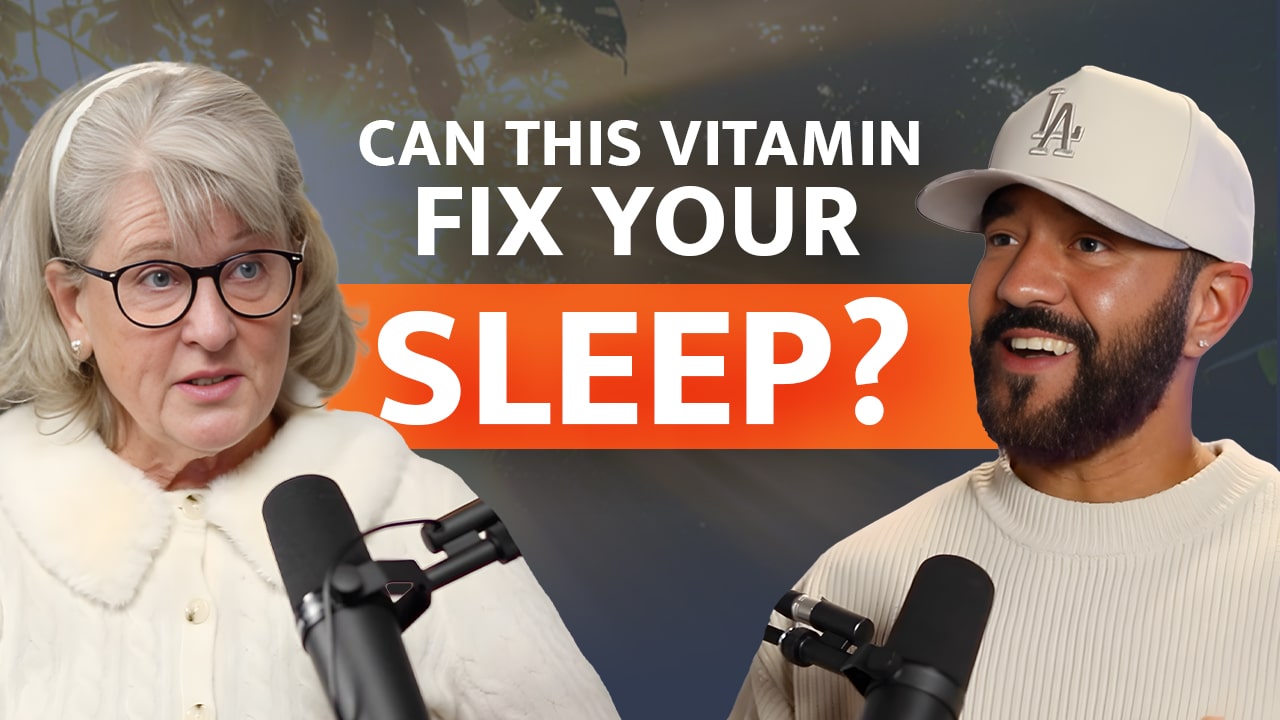
TMHS 978: The Shocking Connection Between Vitamin D & Sleep – With Dr. Stasha Gominak
If you’re laying the foundation with healthy sleep hygiene habits, but quality sleep is still evading you, what should you do next? Many people suffer through this problem or turn to short-term solutions without getting to the root cause of the problem. But what if you could support your body’s natural sleep process with simple, accessible, cost-effective solutions?
Today’s guest, Dr. Stasha Gominak is a neurologist and sleep coach. Her program, RightSleep, teaches a proven approach to restore sleep through supplementation, healing the gut, self-assessment, and giving the body the tools it needs to cultivate restorative, high-quality sleep. Dr. Gominak has published influential articles that show the important connection between sleep and gut health as well as sleep and sun exposure.
On this episode of The Model Health Show, Dr. Gominak is here to talk about the powerful role that vitamin D has in regulating sleep. We’re diving into the science of how vitamin D works in the body, its essential role in facilitating sleep, and so much more. Dr. Gominak is also sharing her top tips for sleeping better. I hope you enjoy this interview!
In this episode you’ll discover:
- What vitamin D’s specific roles are in the body. (2:12)
- How a vitamin D deficiency can contribute to obesity. (2:42)
- What it means if your vitamin D levels do not rise with supplementation. (4:41)
- How sleep changes when vitamin D levels fall. (8:27)
- The truth about vitamin B-12. (17:36)
- How vitamin D affects the human brain stem. (20:31)
- The link between acetylcholine deficiency and sleep problems. (28:04)
- What the origins of vitamin B supplementation are. (44:45)
- Why vitamin D supplementation is important. (53:19)
- The importance of the microbiome for whole body health. (1:00:01)
- Gominak’s top tips for better sleep. (1:04:18)
Items mentioned in this episode include:
- Piquelife.com/model – Get exclusive savings on bundles & subscriptions!
- Boncharge.com/model – Use my code MODEL for 15% off blue light blocking glasses!
- Connect with Dr. Stasha Gominak Website / Facebook / Instagram / YouTube
This episode of The Model Health Show is brought to you by Pique and Bon Charge.
Go to Piquelife.com/model for exclusive savings on bundles & subscriptions on cutting-edge solutions for your head-to-toe health and beauty transformation.
Bon Charge carries the world’s largest selection of science-backed blue light blocking technology to enhance your sleep and overall wellness. Use my code MODEL at boncharge.com/model for 15% off blue light blocking glasses and more.
Transcript:
You are now listening to the Model Health Show with Shawn Stevenson. For more, visit themodelhealthshow.com
SHAWN STEVENSON: Welcome to the Model Health Show. This is fitness and nutrition expert Shawn Stevenson, and I'm so grateful for you tuning in with me today. What if you feel like you're doing everything right, but you are still struggling with sleep issues?
Dr. Sasha Goldman's groundbreaking study revealed how a key deficiency can contribute to a host of difficult sleep problems. Her study titled The World Epidemic of Sleep Disorders is A Linked to Vitamin D deficiency, has helped to shed light on the power of vitamin D in regulating our sleep cycles, but it was only part of the story.
Her subsequent research has highlighted the role of the microbiome and why simply running out and grabbing a Vitamin D supplement. Isn't the right solution for everyone? Listen in and learn with her today. Dr. Goman received her medical degree at Baylor College of Medicine and completed her neurology residency in the Harvard affiliated Massachusetts General Hospital.
After working as a neurologist and several decades in medicine, Dr. Goman published Pivotal studies proposing that the global struggle with worsening sleep was linked to reduce sun exposure and microbiome dysfunction. Today, she provides simple processes for normalizing sleep and the intestinal microbiome through her program called Right Sleep.
She's passionate about improving patient's health and wellbeing, and she's here to share her insights with you today. Dr. Gonick, thank you so much for coming to hang out with us today.
DR. STASHA GOMINAK: Shawn, thanks for asking me. It was my pleasure.
SHAWN STEVENSON: Listen, you've already blown my mind and you're gonna be able to help a lot of people today and just even to expand our thinking when it comes to sleep.
As you know, this is a multi-pronged epidemic with sleep struggles, and there is potentially an underlying reason that most people have no idea about. So first and foremost is vitamin D merely a vitamin. Can you please share your information on that and how does vitamin D impact our sleep?
DR. STASHA GOMINAK: Vitamin D is not a vitamin.
It is a seco steroid, which means it's a steroid hormone, and all steroid hormones affect behavior of the animal. And they're coordinated behaviors that have specific outcomes. So, and D runs the sex hormones, D runs thyroid. So there are aspects to this that affect our fertility, our metabolism, when we put on fat.
When you make humans have low D year after year after year, and summer never comes because you've told them that sun is bad for them, then they get obese. It's not really their fault.
SHAWN STEVENSON: The conversation on D is so much bigger, so much bigger. And so with this being said, again, we think of vitamin DI know myself as like the sunshine vitamin, right?
In this context of like energy, and it has all of these. I mean, we've got thousands of studies on the impact that we have biologically from vitamin D. So again, just to go a little bit deeper, how is this making us sleepy?
DR. STASHA GOMINAK: Okay. You have to think of it as. That the controls behind our biology are so much more complex than humans will really talk about.
But again, it's really, as the vitamin D is going up, there's a message to the body. We get to this, these ideas through doing specific scientific experiments, but especially with vitamin D, you really need to look at it in a, in the teleologic way. So you think of it having a purpose and then you see if that meets what you've seen in the studies.
We're all told not to do it that way, but to be frank, medicine gets. So hypnotized by single variable studies that they don't see the bigger picture. Mm-hmm. Okay. So what happens when we're, our dose is going up? We, we actually have some experiments that say, and this gets to one of the problems of what's the dose, what's the blood level?
How are those two related? Okay. All we have are these blood levels, and frankly, the blood level is the leftovers. If you give a big dose to someone who's been really sick and really deficient and they take 20,000 a day and their level doesn't go up. It does not mean the body is not absorbing it. It means every cell in that person's body is sucking it up and there are no leftovers.
Okay. You only get to see that if you are a clinician actually giving doses and doing blood levels on a regular basis over several years. Okay. And we can, we can swing back to that if you want, but what does it have to do with, uh, sleep one if it's going up? And you wanted to s say to the the animal, okay, as your level is high, we're gonna build muscle, we're gonna make repairs, we're gonna do all these things that are related to D.
Opens goes to the DNA, all hormones go into the nucleus, get to the DNA express proteins. In these experiments where they gave 2000 of D, and these were short experiments in young, young people, college over a six month span, if you give 2000 and they measure how many different genes were expressed, if you give 5,000, how many genes were expressed?
If you give 10,000, how many genes are expressed as you go from 2000 where 50 genes are expressed to 5,000, where 500 genes were expressed where you go to 10,000 and 1500 or 2000 genes are expressed. I want you to think about the fact that the rate of rise. Of the D level. It's not the dose per se, it's you're going from a low level to a higher level faster.
That means that the message overall is, let's make repairs. Let's open all these genes and make all these things happen. That allows you to actually say, okay, what really happens in the human body? Let's use grandpa who's living in South Oklahoma. He's coming out in the spring, in March. He's outside every single day because all animals are supposed to be outside, and this is in 1945.
DR. STASHA GOMINAK: Okay, he's coming out in March. He's getting more sun. He's seeing UVA now, some of the UVB. He's slowly, slowly, slowly building the D level, and then we get to August and he's using. A huge up up. He's getting a huge upswing because the amount that he's making, he's still got the same clothes on, but the amount that he's making per day is related to how long the UVB light is available.
And the UVB light is much more available in August than it is in March, in October. Okay. So the reason why it affects our sleep is we are looking at not the actual only the level, but what's happening. So as the level is going down, it means winter is coming and as the level is going down, then you are able to lower your metabolism, sleep longer so that your energy is conserved.
And then there's a next piece, which is, well, how do I know when to end that part? And it's because you're going outside to pee every day and you're getting a little sun. We should think of it the way we would think of a plant. Okay. And I wanna come back, just to answer your question first. The sleep is part of maintaining our ability to make it through a long span of time when there is no food.
We don't think of it that way, but that's the way it was meant to be. Now the next question should be, well, if that's true, why is everybody who's got a D below 30 not able to sleep at all? Uh. That's a really good question. Their sleep just goes kaput and now those are the patients I was doing sleep studies on my, all I can do is, is suppose that that means once it goes below 40, you are really not in the same biologic pathway that you were supposed to be in.
Okay. Now has that happened? In the world before? Yeah. Every single old person, every single old person before they die, if they don't have some other disease that's killed them, gets a sleep disorder. They're either falling asleep while you're talking to 'em during the day, or they're up roaming the house at night.
So all of these things that we've seen linked to D are diseases and events that we've seen in old people. Why do old people lose their teeth? Why does their hair fall out? Why do they walk funny? They have low D because the production of D starts to fall off as we get into our seventies. So even if you're spending the entire amount that you've always been the same eight hours or 12 hours a day outdoors, your ability to make the D falls in the mid seventies, which means the Polynesians still died at age 85.
DR. STASHA GOMINAK: They didn't have, uh, they had the perfect skin and the perfect D amount, but we still have this set of events that happen in the past, in the most ideal setting, let's say the Oklahoma, in the 1940s when we had antibiotics, we're just starting to use them. We didn't die of all the childhood illnesses because we had vaccinations.
We didn't die of epidemics. We weren't starving to death. There was no war in the United States at that time. People could live to be 75, 85 years old. Their first medical problem would start at about age 75, and then they would die over a short period of time. Now it's starting at two or four. It's starting much earlier, and they're all things that elderly people have already had.
So it's. It's kind of deep because we would like to be able to say, oh, d run sleep because of blah, blah, blah. But you're right, it, there isn't a a, an obvious logic, but if you look in an evolutionary way and say, okay, this is a hormone that has to do many things for me, so I'll survive the winter. I think it's pretty logical.
SHAWN STEVENSON: Hmm. Now with, with this being said, having the vitamin D input is. It's not just doing one thing, right? We, we tend to think, okay, it's just gonna hit this one button, but we need to think of it more like a part of a system rather than this kind of binary.
DR. STASHA GOMINAK: Yes.
SHAWN STEVENSON: It's just turning on sleep or turning off sleep.
DR. STASHA GOMINAK: Yes.
SHAWN STEVENSON: It's part of this overall circadian system and getting us synced up with life on planet Earth. You know, this 24 hour solar day, so vitamin D. Historically, this would be something we are accessing from sun exposure. But today obviously we have supplementation and it can be incredibly helpful for people.
DR. STASHA GOMINAK: But then there's a caveat that comes along with it because, uh, one of your papers that you published really looked at the context of how vitamin D, all these receptors, like it's just filled with receptor sites with our brainstem and these different parts of our brain that have huge influence on our sleep cycles.
In particular REM sleep. And so that was starting to broaden out that picture. And so what could happen if it wasn't you, is you just buy in completely. Everybody should be on vitamin D supplementation to improve their sleep. End of story, right? You took the story a step further based on working with real people, including yourself in the real world.
But there was something that happened for you that really kind of cracked all of this open and understanding this at like a really foundational level. Can you share that?
DR. STASHA GOMINAK: Yes. And first you have to understand that I was desperate. My patients are desperate. I'm desperate. Nobody's writing about things that will help them.
I've lived my whole life as a physician, writing what other people reading, what other people write about what to do. And I'm also starting to have a sleep disorder. I'm perimenopausal, I'm waking up all the time at night, and for the first time, I'm sharing the same struggles that my patients are. And I'm actually asking my patients things like, well, what do you think?
That's just not the way most doctors are trained. So there's. I'm starting to have an interaction with my patients where we're both desperate. We're both on the same side of the equation. That's a really important thing. Then the next thing that happens is I'm starting to see that the treatments from four years ago, I'm five years into it now, the CPAP is starting to wear off.
The people are coming back and saying, you know, I'm still wearing it. But man, in the first year, my blood pressure went down, my cholesterol went down, my diabetes was under better control. Now I'm back on all the medicines again. There you said superficially, and it is superficial. It is a bandaid. The sleep medicine's the same.
DR. STASHA GOMINAK: I already have 20 years of experience with them. I know they wear off. There's a disease in the background that we have missed. How could all these young otherwise healthy people just. All be failing. And by this time I'm reading the sleep literature around the world. Every place that they've got a sleep study center, all the sleep, all the sleep studies are abnormal.
They may not be saying that they have apnea, but they're still not normal. Okay? That means this is a global epidemic. So anything that would cause it has to be happening around the world. And there's one other real important piece. I trained in medicine from 1979 to 1983, and this was before sunscreen.
Okay, so we're gonna go onto vitamin D, but the thing that I was looking at at the time was toxic exposure, dietary changes, all the things that everybody's saying, it's, they're not wrong, but they're not the only thing we can look at. But there's a timing aspect, which means that the many of the diseases that have become chronically e an epidemic proportions and are first time reported in the mid eighties, chronic fatigue, fibromyalgia, non-alcoholic fatty liver, there's a timeline for that.
It all starts to show up around the mid eighties when A-D-D-A-D-H-D autism starts to be on the rise. So that timing issue is something that's in the back of my mind and a specific thing happens. This 18-year-old walks in, she's got daily headache. Like all my other patients, she's about to go to college.
She looks perfect, and she has a sleep study and. Her sleep study was terrible. I asked her how her sleep was and she said, fine, and she sleeps for 10 hours. I didn't know to ask at that time, do you have to sleep longer than other people? She sleeps for 10 hours at the sleep study. In fact, she can't sleep for 10 hours 'cause they wake her up at 6:00 AM wake her up, wake too early.
DR. STASHA GOMINAK: But she had absolutely no phases of deep sleep every 10 minutes. So 35 times an hour she would wake to light sleep. She's asleep. She has no idea that she is not getting to restorative phases of sleep. But I'm looking at this sleep study going, whoa, this is the worst sleep study I have ever seen. The brain is trying to get into deep sleep, but it's not able to.
That's. Bizarre. This is happening in a little area of the brain called the brainstem, where all the things that control everything we do are running. When you're unconscious, you're being run by this little area. It's doing all the things to keep you alive. Her brainstem is not working correctly. She said, comes back, her headaches are gone.
She likes the medicine we put her on, but she says, I'm so tired. And now I have her sleep study in front of me and I'm thinking, this is horrible and I have no idea what to do. And by complete accident, I say, okay, we'll do some thyroid and we'll do some B12 and her B12 turns out to be profoundly low, uh, low enough that it's lower than the lower limit of normal.
And for the first time, I walk outta my room and I go to Google instead of my neurology textbooks. Later, after she's gone and it says I, I say, you know, symptoms of B12 deficiency and it says fatigue and daily headache, and I've been doing headache for now 25 years. I've never done a B12 level because we've been trained away from the vitamins.
Also, probably starting in the 1980s, medicine has said if you have a good diet, you don't need vitamins, and we've. Really shirked our responsibility. These things that we've called vitamins are the central portion of our metabolism of every single cell's health. So B12 already has a literature relating it to sleep and to feeling better.
So then I start to do B12 levels in all of my patients who have done sleep studies. And then very soon after I start drawing blood on everybody, one of my patients says to me, you know, my doctor did my vitamin D level and she gave me vitamin D and my wrist pain went away. And I was thinking bone vitamin, right?
Because that's the bologna we've been taught. And uh, so I go, okay, well my patients have pain. I'll just throw that in. And it happens to be September through December of 2009. So DR. STASHA GOMINAK: I'm drawing it at a time when theoretically, if it comes from the sun, it should be at its highest for the whole year. And every person I test, their D is low.
The B12 is there some of the time when they're really sick. Okay? It is a really good match to the sickest patients, even when they're young, if they have B12 and D deficiency, we're gonna talk about how that happens, but they're related to one another. I think that the first domino is always the D goes low, then the microbiome goes.
Then there are other things that happen after that. So the last week of this series of four months, two guys come back and say, and what I've been doing. All, every evening after I see my patients, it's filling out these little lab slips that say, okay, your D is low. Take a thousand IUs. 'cause I have no idea, nor do I care really?
Okay. I'm saying, is the B12 low or not? And so two guys come back and say, Hey, I've been wearing the CP Pap for a whole year and my headaches didn't go away. And I'm like, oh, bummer. And he, no, listen, you sent me that thing last time, a little note that said I should start vitamin D. And you know what? I took it for about three weeks and my sleep started to get better and my headaches went away.
And both of these guys, and there are two men in the same week who tell me exactly the same thing. And they made the connection. My sleep got better and my headaches went away. And I'm thinking, well, the CPAP helps 'em, no question. The CPAP helps. So what I did that Christmas, uh, was to go to the literature and say, what's the connection between vitamin D and sleep?
And in that particular time, there were no hits, none. But the next question was vitamin D in the brain. That was what I put in as the keywords. And I get into the literature of a guy named Walter Stump. Who has been doing vitamin D receptor research through the last 30 years and starting in 1979, he is working in the one of the premier vitamin D labs at that time, and they publish an article that says Vitamin D is not a bone vitamin.
It's never been a bone vitamin. It's in the pituitary, it's in the stomach, it's in every, so since the late seventies, early eighties, Walter Stump has been publishing articles about where the vitamin D receptors are and making conclusions about its use in our body. And he has a very evolutionary. A much bigger lens than most of the people that are writing about vitamin D.
DR. STASHA GOMINAK: And it's really important to make the point that every single expert, and frankly I don't think there are any, because we know so little about something that is so profoundly big in our biology, but everyone who enters into that area, vitamin D enters through a certain lens and I entered it looking for an answer for sleep.
We're gonna talk perhaps a little bit more about the science, but what I found was Walter Stump had written an article already in the 1980s showing that this part of the brainstem that makes us paralyzed, that runs a pivotal part of our sleep and other nuclei that run the timing and the ability to coordinate our sleep with the time of day.
Those all have vitamin D receptors. And his view of it is, oh, so simple. This is the hibernation hormone. Duh. How do we tie ourselves to whether or not there is sunlight? Because the food comes from the sunlight. All energy on our planet is what we are sucking up to be able to be living beings. That means we're tied to it.
We, we don't think of it that way 'cause we go to the grocery store for food. Okay. And we, we think we're so smart. We think we've done all of this stuff. We are so far from just understanding the miraculousness of a li in single cell bacteria is miraculous. So part of the problem right now is. How did you learn about vitamin D?
What was your focus? What are you trying to do with it? What's your intention with it? That piece is really important because at the time I was completely naive. I didn't understand just how pol politically fraught this hormone is in medicine. So there is a connection to vitamin D, but the way to phrase it, I think, is who would ever believe that there was a, a habit or a behavior that could make you lose a nutrient?
We can still form that. We can still say it that way, but it doesn't come from the food that nutrient runs. Not only how you sleep, but what happens to the calories you eat. Because if it's preparing you for the winter that's coming, it's gonna tell your body through the microbiome to put your calories into fat.
That means there was a whole system that would allow you to survive six months of winter when the dinosaurs existed. That was s. 250 million years ago, this chemical was already widespread throughout every single animal. The D three that we make is the same stuff reptiles, birds, insects make on their skin in response to sunlight, a particular wavelength.
SHAWN STEVENSON: One of the things that determines your diet more than anything else is your sleep quality at night. Have you ever noticed that when you're sleep deprived and maybe even a little tired, you tend to want to eat a little bit more, a little bit more snacky? While researchers at Stanford University found that insufficient sleep can reduce your levels of satiety hormones, namely leptin, and increase the levels of your hunger hormones, namely ghrelin and directly increase your body mass index as a result.
So getting to the heart of our diet choices actually resides in laying down our head at night in getting a good night of sleep. Now, what's the number one deterrent today in getting a good night's sleep? Well. It's our technology. A lot of us are up late watching TV on our phones, on our laptops, doing work, doing the laptop lap dance, and not understanding how much it is a detriment to our body's production of melatonin and our sleep quality at night.
Numerous studies, including research from scientists at Harvard, have affirmed that blue light specifically is a powerful melatonin suppressant. So having some screen free time before bed is going to help us to sleep better at night, but that's not always possible. Sometimes we got work to do, sometimes we just wanna kick it.
We wanna Netflix and chill a little bit, and that's all right. And in those occasions, if we want to optimize our sleep, we can utilize incredible technology. When it comes to blue light blocking glasses, the blue light blocking glasses that I use are exclusively from on charge. They're scientifically engineered to block out 100% of melatonin disrupting blue light and green.
For improved sleep and regulated circadian rhythms. So many people don't realize that most blue light blocking glasses are not actually lab tested to be effective and they simply cannot perform like bond charge blue light blocking glasses can. These glasses are FDA registered and proven to be effective.
DR. STASHA GOMINAK: They're made in optics laboratories by trained optical technicians, and because of this you can actually get them in prescription lenses if you want as well. They're absolutely incredible. So many stylish frames. When the sun goes down, my bond charge glasses, come on. And right now you can get 15% off when you go to bond charge.com/model and use a code model at checkout.
That's bond charge.com/model B-O-N-C-H-A-R-G e.com/model. Use a code model. For 15% off. Get yourself some of these incredible blue light black glasses. This is a fantastic gift to give to your friends and family as well. And again, they've also got prescription lenses available as well, so everybody's invited to the bond charge party.
Head over there, check him out. And now back to the show. It's so profound. So profound. It
DR. STASHA GOMINAK: is profound.
SHAWN STEVENSON: First of all, thank you for clarifying the point of, because we tend to oversimplify things and right put in this little pithy box, it's says vi, it's a vitamin, it's your vitamin D and you already affirmed it is far more than this pithy vitamin.
This is a steroid hormone that is found basically everywhere you look in the body and in particular when it comes to the brainstem and this kind of circadian timing system. And that's what your work, and you know, you published a couple of papers on this and this is how we got connected is one of our initial conversations and really breaking down like how is it working?
Because when I think of vitamin DI think of daytime, I think of being awake and up and active. So how on earth can this. So-called vitamin, but you know, vitamin D actually improved my sleep at night. How does that work?
DR. STASHA GOMINAK: Yeah, great question. I'm gonna, I'm gonna add a scientific term that you're gonna have to put a little explanatory spelling on the bottom.
It took a long time, but ultimately the final outcome is vitamin D when it hits those receptors that we've talked about in the brainstem, makes choline, acetyl transferase, which is the final enzyme that makes a neurotransmitter called acetylcholine. When I found that out, I was, uh, kind of confused because I'm a neurologist.
For me, acetylcholine is something I'm familiar with, and as I read this comment that D is linked to making acetylcholine, I thought, well, that's weird. I don't even remember what acetylcholine does in the, in the brain, like I know it's related to Alzheimer's disease, but. And I started to think about it more and I thought, you know, I'm actually learning what the neurotransmitters do by the drugs we give.
So when I I, I give a serotonin reuptake inhibitor, that means it, it extends the life of serotonin and that patient gets more satisfied or happy if I give dopamine to the Parkinson's patients. And what that led me to is there are no drugs for acetylcholine, but acetylcholine, I type that in as a search point.
And what the Google says is acetylcholine is, uh, what runs our ability to focus and be alert during the day, and it allows us to drop into the deeper phases of sleep and get paralyzed correctly at night. Now, that is mind boggling because medicine. I approach asleep and awake as two different things, but in fact, there are two centers that are cholinergic, and that's the term used for acetylcholine, cholinergic centers.
One is in the base of the frontal lobes, and it is what directs our attention, and that is ruling your brain during the day. If you have the right neurochemistry, it's firing at a certain rate and it's allowing you to concentrate, be distracted, and come right back at night. That center changes its firing rate and instead another center that is cholinergic and the brainstem begins to run your sleep.
That is a totally different way to think about this. This is much more complex. This means the brain has to know how to use. Acetylcholine based on the moment of the hour of the day.
SHAWN STEVENSON: Mm-hmm. Right.
DR. STASHA GOMINAK: And that is the sort of thing that you see once you start using things. And the weird part of this whole story is vitamin D makes the enzyme, but it turns out as I'm giving vitamin D for two years learning about it, that enzyme is then asking for the two.
Pieces that it's going to join together. And those are choline that does indeed come from the diet. And the second one is, uh, co-enzyme A and that co-enzyme A, in order to have it in your body. The main piece that makes that co-enzyme is B five pantothenic acid. It is a B vitamin and it is my belief that it is only made by the microbiome, the normal microbiome.
So what happened to my patients was I gave D for two years, they got better, then they got worse again, and so did I. And it turns out D by itself is not enough to get the normal human microbiome to come back. And it's not until 2020 that there was a first article. I had assumed that D was a major. Player in as a co-factor to have a normal human microbiome because our loss of the normal microbiome happened.
Concomitantly with all those other diseases I told you about, IBS started to be reported in the middle eighties. The weird part in my patients was they got better in their sleep, but there were a couple things that didn't get better, and this is two years worth and you know, like a thousand patients. One, they slept better for a while, but then it got worse again despite having a good D level blood level still.
But they also didn't lose the IBS. Their belly symptoms didn't get better and they didn't lose weight. They still, if they were overweight before, they still are, they're exercising more, they have more energy. They feel like they just spontaneously start working out at the gym. So those pieces were still bouncing around.
And then there were certain things that happened to my patients. This is why I have a website, not because of D but because my patients started to fail at the two year mark and so did I. And they failed in painful ways. They not only started to have the same sleep problems they did before, but they would come in and say, you know, my hands hurt, my knees hurt, my intern has sent me to the rheumatologist.
DR. STASHA GOMINAK: They're telling me I have the, uh, rheumatoid arthritis, and I wanna know because you're doing this weird stuff with D. Could this have anything to do with vitamin D? And I had no answer. The fact that it's coming two years into it is really important. Because nobody's gonna connect it. But I did, because I've got so many people that have different diseases.
They're all neurology patients, but they have different things. They're different age groups, but they're all coming back with these painful complaints. And at that point we discover something else by accident. You wanna hear about it?
SHAWN STEVENSON: Absolutely.
DR. STASHA GOMINAK: Okay. So this is also by accident. So there are several serendipitous accidents that happen.
And again, I wanna say I was desperate. My patients are desperate. I'm desperate. No one's writing about what's happening. I can't find any references in vitamin D being used consistently for sleep, let alone for pain in the body. So a patient brings me a book and she brought it to me. It was a book that was written in the 1990s by a lay person who's writing about the use of pantothenic acid for B five B.
Yes, for people who have rheumatoid arthritis, she has rheumatoid arthritis. She gets much better when she takes pantothenic acid. She gives it to a bunch of other people. She's writing it and she's, the book is called The Pain-Free Promise of Pantothenic Acid. The woman brings me this book and I think, oh my God, one more person who's bringing me crystals and essential oils, and now a book about more vitamins.
I don't know about vitamins. I'm, I'm going there kicking and screaming. Okay. 'cause I'm still an md, but I read the book and the book has references from the 1950s. Now I'm reading other things about pantothenic acid, which all say there is no such thing as pantothenic acid deficiency because it's in every food.
DR. STASHA GOMINAK: All of the major textbooks, all of the articles that are written. At that time, this was about 2012. But those references from the 1950s have a set of experiments that were really creepy 'cause they were a bunch, they were done in convicts at the Iowa State Prison in a lab that was next door. They tube fed convicts, a pantothenic acid deficient diet.
It wasn't even taken from real food and in two weeks they became unable to sleep. Belly complaints burning in their hands and feet, and a funny gait. The reason why this is so important is I had two women who have been my patients for four or five years already. They both have headaches. They've just come in and told me they had burning in their hands and feet.
They are have nothing to do with each other. The only thing they share in common is they've been on vitamin D for two years. They also are on B12. Burning in the hands and feet is very uncommon, at least in my practice. So burning in the feet when the person has signs of diabetes, the internist keeps them and they say it's from the diabetes.
That's the, the, the pat answer that everybody gets, but burning in the hands and feet when they're already on B12 and they have no diabetes. That's a little bit weird and the, the timing of them getting this within one month of each other also suggests to me, again, I'm looking through this lens of sleep.
When they're sleeping better, they aren't just lying there. Like a lump unconscious. They're making repairs. It's not that I want them to be unconscious. I want them to be able to get into specific phases where they make repairs. All of those repairs are related to the basic building blocks of every biochemical pathway, which means all the B vitamins, all the vitamins, all the minerals, all the basic ingredients that we use to make cellular repair.
And my feeling was I have forced these people into a b vitamin deficiency state. What, how could that happen? Their, their diets haven't changed. Okay. My patients were more educated about their diets than I was. I don't really care about diets. Okay. Do paleo, that's fine. They've already done all these diets.
DR. STASHA GOMINAK: Their sleep wasn't better with the diets. That's why we went down this path. So now I'm thinking these people, two women, same complaint, very unusual. I've been doing neuropathy for 30 years now. That's only walked in the door once during the whole time I've been practicing and they're already on B12, so I don't know what to do.
So these 1950s articles burning in the hands and feet link to B five. Oh yeah, let's go. So I go down to the vitamin store and I'm looking at the B complex. The B five is in 400 milligram tablets. That's the only strength that comes in. And I think, oh, I'm about to step into this morass of vitamin other vitamins and doses, because it turns out with vitamin D, the dosing is so screwed up in the literature.
So I get the 400 milligrams of pantothenic acid. My particular complaint, and I always use this because it's funny and because it's weird, is I have this weird butt pain, like my buttocks hurt when I sit down, and I've never had that before. I'm running three times a week still. It doesn't hurt when I run.
It only hurts when I sit down. But what is that from? And I have restless legs. My restless legs is well controlled, but that is my sleep disorder. Why? One of the things that makes me very committed to this. So I'm taking the pantothenic acid and then I go and I think, you know, the only thing I remember from medical school is if you give one B vitamin, you should give all of them.
So I walk over to the B complex and I, I realize that it's a total mess. This particular store had like 18 rows of B complexes of different kinds, and they all have different things. But I stumbled upon B 100, which is a specific. Set of doses. So my problem is I'm not giving my patients vitamins. I am suggesting that they get certain things.
And if I want them to actually pay attention to the dose, I have to be very specific about it. And this B 100 is all eight bs, a hundred milligrams of thiamine, a hundred of riboflavin it. It determines that they will have a hundred milligrams or a hundred micrograms, depending on which vitamin you're talking about.
DR. STASHA GOMINAK: And I grab that at the same time, and I start giving this out as a recommendation, but I'm taking it myself. So for the four days that I actually give those recommendations to everyone who I've measured their B12 level and their D and I have their sleep study and they're starting to complain of pain of various kinds, I give them that recommendation.
But by Friday, I realized that my restless legs has started in the morning, this last four or five days. Something about this, this vitamin. And now I'm on 500 milligrams of it. It's making my restless legs happen all day long. I haven't noticed my sleep is different, but it usually means that I'm drowsier during the day.
'cause this restless legs happens in drowsiness. So I stop the 400 milligrams of pantothenic acid. I go on the B 100 and I think, oh my goodness. Oh, my patients are gonna come back and yell at me again. And, and I, I, I think there's nobody really to go to because there's, it doesn't exist. Okay, well, it's existing in my patients.
I go to this B 100 for one day, the next day. I have no butt pain. So one too much of B five caused my restless legs to go out of control immediately. And. My pain went away in a day. Both of those things are things I would never report to anyone because it's too weird and everybody's already thinking I'm a weirdo, but my patients start to straggle back in over a three month time and most of them bring the 400 milligram bottle and say, this stuff nearly killed me.
It made me so agitated I couldn't sleep at all. I only took it for two days. The two people that didn't say that were the ones with the burning in their hands and feet, they did great on that bigger dose, and some of the patients yelled at me and fired me and. I really couldn't blame them. I mean, it was this, this is completely opposite what the woman said in the book.
The reason why that woman, my patient brought me the book, was the gal who's giving this out, who, who gets so inspired. She writes a book about it, says not only does their pain go away, but their sleep gets better. That's why my patient brought it to me, not about rheumatoid arthritis, but the sleep. She knew I was a maniac about sleep.
DR. STASHA GOMINAK: So, this is a dose-dependent effect. Some of the patients don't fire me. They say, look, I did that 400 milligrams for a couple days, but I was so agitated and, and I had, I couldn't sleep at all. But then I stopped it and I just took the B 100 and you know what? My pain went away in like one day. And I said, that's what happened to me.
What, what do you think is going on? This is the weirdest thing. One, this is acting like a drug. We are taught that vitamins can't hurt you. That is wrong. It can really hurt you. Two, it's sitting on the shelf at 400 milligrams. I just gave a series of only 40 people because that was all I saw in that four day span.
I gave 40 people this and they had the opposite reaction in a in immediately. They said, oh, I got agitated within an hour and here are 30 people telling me things in the same phrase, same phrasing, and like you can't ignore that. You can't say, oh, pantothenic acid deficiency doesn't exist because it's in every food.
Obviously it is not in any food. Otherwise, I'd eat three avocados and I wouldn't be able to sleep. Okay, so something is badly wrong with the literature. The second piece is what's different about my patients, because this woman claims that she's given this out to all these people with rheumatoid arthritis, and by now I'm reading the literature and there's a bunch of literature in the 1960s, 1970s of giving pantothenic acid.
Two people with rheumatoid arthritis, lupus autoimmune disease because pantothenic acid becomes coenzyme, coenzyme is necessary to make cortisol. So in the very early studies of autoimmune diseases, anything that acted like cortisol, we didn't know why their cortisol would be low, but we're giving prednisone.
We know that really helps them. They did clinical trials using pantothenic acid, but they used it by itself. Remember how you said we put this in these little boxes? We try tend to simplify. Medicine has done that with the vitamins. The weirdest question of all is why do we have eight Bs? Like why is there a, and then eight things.
Call B and see. I swear it took me five years of dealing with this to finally go, wait, why do we have eight Bs? These are eight chemicals. Okay? The first little piece of dogma was given in medical school. If you give one B, you should give all of them. Suggests that somebody knew in the past that these eight chemicals actually came from bacteria.
DR. STASHA GOMINAK: And when you get into the history of them a little bit more deeply, what you find is the naming and the discovery of the bees was done using a yeast bacterial mixture that was stolen from Mrs. Pasteur's liquid. She was gonna make bread with. And they put a little auger in that and they poured it into a Petri dish.
And since then there's a yeast extract in the basis of what all the little Petri dishes where they study bacteria. These eight chemicals were first reported as bacterial growth factors. If you just say that sentence within the context of where you and I live now, where we're constantly thinking about which bacteria is in my nose now, which is in my mouth, which isn't.
That means they, somebody in the past knew that these eight chemicals were being secreted by a group of bacteria. So at the same time I'm reading about bacteria. I'm, because I know that the GI tract wasn't right, and I'm, I'm suspicious that the reason why I was able to force them into a bee deficiency state was not because of their diet, but because they had IBS symptoms, and even the people who didn't have IBS did not have a normal microbiome.
That means I've asked for a bigger production of bees from the microbiome, but it's not able to keep up. That means I have to find a way either. I have to figure out what the dose should be of these eight. Nobody knows that. The bacteria that live in my belly when it's normal are the only organisms on the planet who really know how much of each of these you should have what ratio over what time span in your GI tract.
So I think, I bet that they want this B 100, you know, if I think of it as a Petri dish instead of as my GI tract in order to bring back the right foursome of Fila. So I'm reading other articles that are saying there for Fila. There's one article actually before the article I published in 2016 that works this out, that says the reason why there are for Phila is that every single one.
Makes a bee and needs a bee. So this is a symbiotic foursome of phyla that make eight chemicals. In fact, they make hundreds of chemicals that our body needs. We're just not naming each one of those metabolites yet as other vitamins. There's gonna be a list of 200 things that are vital parts of the human body that have been lost when you lost your microbiome, whether it's at birth or 20 years ago.
DR. STASHA GOMINAK: So looking at it in that context, and the, the good thing was the GI doctors are doing all this stuff that I would never have been able to convince my patients of, but my patients are willing to listen to me babble on about, okay, you're taking this B 100. Here's the piece I want you to pay attention to.
Remember all that pain you had and your sleep was lousy, okay? You've been on this B 100 for about three weeks now. Your D is perfect. We're giving D and B 50 or B 100 into your belly. We're making this B vitamin soup. This is gonna encourage all the normal guys to come back and become the dominant species, but when that happens, they're gonna make what they're supposed to make.
They are going to make all of these eight chemicals in the right amounts, and then you're taking my pill and they're doing their job, and you have double the dose. And remember what happened when we took too much of that B five, your sleeplessness returns and your pain returns. So I said, look, I don't know how long it's gonna take or if I'm right here, but I'm suspecting that that's gonna bring back the normal microbiome.
And if it, if this, these two things, your sleep interruption and your pain come back, you have to stop that B 100 and it took three months. Consistently that's, that's through most of the people that I was dealing with. I personally, of course, didn't listen to my own advice. And at four months, I'm getting up in the morning, very stiff, feeling old.
And one of my patients says to me, you know, you told me to take this B 100, and I took that, but I felt really stiff in the morning. And I said, you did. You feel old? And she said, yeah, I would like have to loosen up in the morning. And I broke the pill in half and I'm taking B 50 and I feel great. So then I say, that's what I feel like in the morning, and I stop it a month late.
So because of those events. I have a website that is dedicated to when you take D, you must bring back your microbiome if you do not in your future, 2, 3, 4 years later. And this right now is 2, 3, 4 years later from COVID when we started. D, really bad things will happen to you because it'll force you into a B vitamin deficiency state that none of the primary practitioners are used to calling that it is a thiamine deficiency that makes your feet swell and your feet burn.
It is B five deficiency there. Complex multiple bees together. And I think I'll stop there and let
SHAWN STEVENSON: you ask me things. Okay. This is so good. Can you give us a. I, again, I know it's difficult because there's so many different types of people in different situations, but just some overarching principles when it comes to, okay, we wanna make sure that your D levels are good, but what else should you be considering?
So we've got vitamin D, you mentioned the bears earlier, and B and the B vitamins. So if we are looking at vitamin D supplementation, should we also be utilizing B vitamins?
DR. STASHA GOMINAK: Because this is pretty complicated. I have a website that's dedicated to giving you a path to follow, where I just say, okay, shut up and do this.
Okay, this, this, and this. So I have a workbook that takes you through it. But the the final summary is one, as you get a D level that's better for sleep, then you must give a large dose B complex that has all eight. And you must do that for long enough that your microbiome comes back. The hardest part of this is what you're using to decide whether or not you need these bees is what your body says to you.
That is not what medicine has been doing. I, I was used to having the little piece of paper with the labs. It turns out these, the most of the le levels for most of the vitamins are not helpful, uh, based on my own clinical experience with myself and my patients. So you have to listen to how your body tells you that you need it or you don't, and then you stop the supplement when your microbiome is producing the right amount.
And then you have to have a concept that's even a little bit more difficult, which is that has not brought back all of your deficiencies if your microbiome was not able to help you absorb iron correctly and day one. After you stop the three months of B 50, let's say your microbiome is an organ of your body that is now reconstituted, it was, it's equivalent to saying, my liver fell out.
DR. STASHA GOMINAK: Okay. 10 years ago my liver fell out and I've been struggling ever since. Okay, your microbiome was back, but you still have somewhere between a year and several years of needing supplemental amounts of these things you're deficient in. So a mi, a multivitamin of small doses of bees is in the background for a period of time.
And then believe it or not, once you start to sleep a lot better, you'll actually make more repairs and then your body will ask for more of these bees. And one of the biggest confusing aspects of this for me was I personally believe the idea that why would the body ever need more than whatever the microbiome makes?
Why would we ever need to supplement? But it turns out those of us who've been running around on this planet with a wrong microbiome for the last 25 years or the last two years, develop deficiencies that the body has worked around. But to get to the place you wanna be at your peak performance, you still have to provide the supplements once the helpers, the bacteria are there doing their job, and then eventually you will not need the supplements.
And the B five part of it, B five is one of the key chemicals to the autonomic nervous system. So all the stuff that we've been talking about that have to do with heart rate variability, heart rate, sleep, how can we measure what level of sympathetic versus parasympathetic tone is connected directly to this B five?
The stuff I told you about the people going with insomnia, this is the weirdest thing I've ever seen. But you will still at six months later, eight months later, if you try to take five milligrams of B five, you may not be able to sleep. Because your body has now gotten to the homeostatic place for B five production, and it's meeting the need that your brain has.
These are concepts that most people are not talking about. The abnormalities and the destruction has been described. But instead of using the idea that, oh, we ran out of the juice that runs the parasympathetic, we're upping the juice supply by meditating by breath, work by all the things that everybody talks about on your show.
They're all valuable. But if you ran out of the basic building blocks that make the juice,
SHAWN STEVENSON: Hmmm..
DR. STASHA GOMINAK: The meditation is not gonna continue to work. You're gonna run out like the CPAP did. Like my sleeping pills.
SHAWN STEVENSON: One of the fastest ways to impact your gut health is through the things that you drink. That liquid medium is a fast delivery system.
To improve your energy, boost your metabolic health, or to straight up mess you up. When it comes to gut health, one of the most powerful things seen in clinical data to instantly uplevel the health of our gut are polyphenols. And these are incredible compounds that have antioxidant and anti-inflammatory properties that are out of this world.
And this is just one of the reasons why in that liquid delivery form, teas like green tea and black tea are noted in thousands, literally thousands of peer reviewed studies to have a variety of health benefits. Now, my favorite tea is absolutely abundant in polyphenols, and it's been found to have remarkable impacts on our gut health.
A recent study published in the Peer View Journal Nature Communications uncovered that a unique compound called Thea Brownin found in the traditional fermented tea called Ppu Air, has remarkable effects on our microbiome. The researchers found that Thea Brownin positively alters our gut microbiota that directly reduces liver cholesterol and reduces lipogenesis the creation of fat.
Another study published in the Journal of Agricultural and Food Chemistry found that PIR may be able to reverse gut dysbiosis by dramatically reducing ratios of potentially harmful bacteria and increasing ratios of beneficial bacteria. So much of these benefits seen in these peer-reviewed studies are due to the incredible concentrations of polyphenols.
That are found in pir, and the only PIR that I drink is triple toxin screened for purity. It uses a patented cold extraction technology and it's wild harvested, making it even more abundant and polyphenols. The PIR that I'm talking about, and again, it's the only PIR tea that I drink, is from the incredible folks at Peak Life.
DR. STASHA GOMINAK: Go to piquelife.com/model and you're going to get up to 20% off. Plus they're going to hook you up with a free starter kit that includes an electric frother with some of my favorite bundles and my favorite tees over at Peak. Again, go to peak life.com/model. That's P-I-Q-U-E-L-I-F e.com/model to take advantage.
This P Air tea is in a league of its own. It's absolutely incredible. You can enjoy it, either hot or cold, and there are multiple studies affirming its benefit on our overall metabolic health and supporting fat loss as well. It's truly special. Again, head over there, check 'em out, peak life.com/model. Now, back to the show.
DR. STASHA GOMINAK: Yeah,
SHAWN STEVENSON: So essentially we are hu again, life finds a way and so we're finding these things to kind of bandaid and to help us to keep going, which I think our bodies ourselves are still crying out for. Normalcy. And when we say normalcy, it's completely different from the lifestyles that we're living today, which is the average person is spending 90% of their time indoors.
And so we're not getting all these natural inputs. And you know, and obviously you know this, but our circadian timing system, that primary input is light and dark cycles. Mm-hmm. Controlling what all of our cells are doing. And you mentioned the gene expression, right? And it's impacting all of these genes.
And what happens when we cut ourselves off from this? I'm so grateful you brought up the point of, you know, like our, why would we be taking something from outside when our bodies would be naturally producing it? Our microbiome would naturally produce these things. Well, our microbiomes are dramatically different if even just comparing to hunter gatherer tribes that are around today.
And so what we, what we wanna do and what your program does is helping us to really improve. Our sleep from the inside out, truly right by be beautiful stead, beautiful stead by targeting the microbiome and of course being mindful of these inputs with vitamin D. But we want to get our microbiome, everything online and healthy because these B vitamins, and we've known this for years, when we're taking a supplement versus our, our bacteria creating them for us, in us, for us.
Our bodies know what to do, but we've gotta get everything back in balance.
DR. STASHA GOMINAK: I, I'd like to make one point that I don't see talked about, and that is. We have a microbiome in every part of our body, and we have very specific species that grow in our mouth, in our nose, in our ears. The GI tract has its own set of microbiome in the mouth, esophagus, the stomach in the small intestine, and it changes every few feet so that there is a different group in the third foot of the small intestine because bile is starting to come in.
One of the things that's ignored is the fact that the reason why everybody talks about the colon and who's living in your colon is because the poop samples are easy to give. Getting a sample from the mid portion of the small intestine extremely difficult. They are able to do that, but it's not very simple.
Also, it's important to realize. I am gonna give this as an example. We talked about this earlier. There are certain bacteria in the colon that make al alcohol ethanol, and that ethanol is used by the enterocytes that live on the lining. It's giving the FA food, it's using alcohol, it the enterocyte that lines your intestinal contents.
The actual behavior of each part of the intestine is very unique, and the microbiome that fits that part of the intestine is unique also. Now, that means that when I give a supplement a B five, certain things happen at the top of the jejunum, the very beginning of the small intestine. We know that that's where most of the bees are absorbed, and the effect of that B five was in a half an hour.
DR. STASHA GOMINAK: It's in a half an hour. That means it gets absorbed, it goes in your blood, it goes into your brain and makes you agitated or calm, depending on if you've got the dose right. But there's another very fascinating thing which just came out, which is there are certain bacteria in the colon that make a messenger that goes to the enterocyte, the lining cell, and hits a.
A free fatty acid receptor. That free fatty acid receptor then sends a message to the liver that talks to the GLP one receiver. It means it is one of the natural ways that your brain is told that you're, you're hungry for meat and fat, or your're hungry for carbohydrates and sugar. The messenger that's being made by that bacteria is B five, and that B five goes to a different receptor.
It goes to a different receptor that has a totally different effect. Okay. That means the level of complexity of not only these, what we call vitamins, we are thinking of them as, oh, I take a vitamin and I get better. No, it's much more complicated than that. You take a vitamin and you actually change what's being fed your bacteria.
That means the bacterial population in your GI tract will change with every supplement you give it. It will have a trickle down effect to the different species. And there may be some, some guy down there making something that made your sleep better or worse, that had nothing to do Exactly with the, we're looking at these biochemical pathways in such a simplistic way, and we're separating out, oh, all these things are published in the bacteria, in the microbiology literature, and we're making it different than what's happening in my brain.
It's a lot more complicated than that. The final message is every single person needs to have the room and to be instructed to pay attention to what happens to them.
SHAWN STEVENSON: Yeah,
DR. STASHA GOMINAK: that's the key. And to be curious and to be courageous enough to say, that wasn't right for me at this point. When my biochemistry changes, it might be different for me.
SHAWN STEVENSON: Amazing. Amazing. So I know you can't give a sweeping recommendation when it comes to vitamin D, but are there some things for us to consider? Would this be something where we are prioritizing sun exposure when we can get it? Would this be focusing on a good vitamin D? Supplement D three? Of course. A combination of both.
What do you recommend? Just in general, and I know it's difficult, but just in general.
DR. STASHA GOMINAK: In general, my, my recommendation is that you be outside more. None of these different forms of energy, some of which are visible and some are not. None of these wavelengths ever come by themselves. Our biology is really linked to a rainbow of wavelengths that is really important.
That means when we, when we biohack, there's always a downside. Taking the vitamins is perhaps all we can do, but I really think prevention of this is more, is actually more powerful than treatment. So being outside more. Even sitting outside, if you're not exercising, outside being, you don't have to be, even in direct sunlight, you have to be in direct sunlight, touching your skin to make vitamin D, but you get many, many benefits from being outdoors.
Even it's on a patio where everything is open, and that's, I think now well supported by things that medicine has ignored for a long time. So the recommendation is that now the second recommendation is if you have decided that you wanna supplement with D, you need to learn more. You need to get educated.
And the most important part is you need to be doing D levels. We in the United States are actually very unusual within the globe because I work all around the world. We can get vitamin D levels that are accurate, done by a specific technique, and we can order them ourselves for a relatively reasonable price, and we can do that every month.
Our doctors are currently being told that they should not do D levels, that they should not recommend D, and they should not do D levels. That is a tragedy. Because medicine really needs to learn about this. And the only way they're gonna learn is by doing what I did. Give the, give them the D and then check their levels.
DR. STASHA GOMINAK: So learn a little bit more about it. If you wanna get serious about getting yourself back to a place where you can do all sorts of things that you, you should have been able to do your whole life, but went away 10 years ago. If you have autoimmune disease that you're trying to reverse, I got to see things in my patients that I did not think were reversible.
We, we basically believe that autoimmune disease is just gonna continue and I was able af over years. And there's another piece to this, which is if you think about sleep and. What we have to do, and even if you are able to sleep for eight hours, the number of things that the brain has to do, I personally believe that all repairs must be supervised.
When you're making repairs, you're opening up pathways that could lead to making two cells. When you really don't want two cells or 20 cells or 2000 cells, that means a brain is actively engaged in supervising every single repair we make. You have to be respectful of the time that takes. That means it's happens very slowly, and one of the basic things that I had to learn was.
When something that's bugging us goes away, we forget we ever had it. And we think about whatever's bugging us. Now, that means the pivotal part of doing something that takes a year and a half is writing down every week what you're doing. And you're dedicating yourself to noticing that I only had three headaches last month, because as soon as they're gone, you're like, well, how come my toes still hurts?
Okay. And I really think we're designed to be that way, and that means it takes a bit of attention. I also think that my program is a tiny little sliver of the pie. Okay? You have people talking about nitric oxide, other people talking about vascular growth, other people talking about hyperbaric oxygen, they're all pointing in the same direction.
That means you should keep trying stuff. The key is to try to get your sleep as good as you can. My sleep still isn't perfect. And the odd part about that is the only way you can become a sleep coach is if you have a sleep disorder yourself.
SHAWN STEVENSON: Hmm.
DR. STASHA GOMINAK: Because otherwise, anybody who sleeps normally is like, what are you babbling about?
Who, who cares about that? That's stupid. Just go lie down. You go to sleep. You have to be, have a sleep disorder yourself to really understand what it's like.
SHAWN STEVENSON: Yeah. Thank you for that. Yes. Yes. So, and this is the Right Sleep program? Yes, by the way. And we'll have the links for everybody in the show notes.
And of course go to dr goman.com mm-hmm. And you can find the right sleep course there as well. So that's D-R-G-O-M-I-N-A k.com. And also you have a fantastic YouTube channel. Can you tell people about that?
DR. STASHA GOMINAK: Yeah, I have, um, all these interviews, uh, put together there, but I also have things that we've called Sleep chats, which are little tiny videos that are just about one particular topic.
Okay. Does sleep have anything to do with carpal tunnel? I have a carpal tunnel. And does sleep have anything to do with burning in the feet? And does sleep have anything to do with, uh, my, uh, acid reflux? Okay. So I have a lot of, um, brief videos and. Um, I also will, as part of my, um, we will be switching over to a membership, uh, instead of just a single workbook, but we will be able soon to be able to get a worksheet, which, I'm sorry, a workbook, which will give you your journey.
But I'll also have many other teaching videos that will help you learn how to use this correctly. And also q and As. And those q and as are really about encouraging you to explore other things, iron, sulfur, magnesium, things that you, uh, talk about on your podcast that sometimes will make a big difference in sleep Also.
SHAWN STEVENSON: Right. And that's the thing, you know, thank you for saying that because it's different seasons as well. You know, like we could have something that works fantastic for us for a certain st extent, but to have more tools in our tool belt and, but most importantly, to have that introspection, right? Just to be able to pay attention to what's going on with ourselves.
DR. STASHA GOMINAK: You know, that we're massively distracted today more than ever, which is again, contributing to the problem. But you know, having you to be able to walk people through the process is very special. So thank you for making that available. So again, dr goldman act.com, the right sleep program, you can find it there and we'll put the link for everybody in the show note and your YouTube channel as well.
And thank you again because, you know, just being able to ask these questions and to have us di to direct ourselves to ourselves to start to pay attention to these things, but most importantly, to know that. If you're here and your heart is still beating and you are curious, you can figure some things out, things can get better.
And that's the overarching message that I picked up from just spending time with you and spending time with your work. And we need to, you know, stop being so just complacent in our thinking and putting things in these pithy little boxes. We're so dynamic and beautiful and complex and there are certain principles that at some point you're gonna have to pay attention to.
And vitamin D, this conversation is so much bigger. Call it a vitamin is disrespect at this point. You know?
DR. STASHA GOMINAK: I, I think I completely agree with you. That's so well said.
SHAWN STEVENSON: Yeah. Well, I appreciate you so much for coming to hang out with us and making the trip. He made the trip to come and, and be here today, so I appreciate you.
DR. STASHA GOMINAK: My pleasure. Thank you Shawn. You're doing a great job.
SHAWN STEVENSON: Thank you. Uh, I appreciate that so much. The one and only. Sasha Goman, thank you so much for tuning into this episode today. I hope that you got a lot of value outta this and have something to think about when it comes to improving your sleep quality.
DR. STASHA GOMINAK: This is about syncing up that circadian timing system. Now, of course, we have the 24-hour solar day, but we have the 365 seasonal changes, monthly changes, weekly changes, hormone changes that would naturally be happening in alignment with all the ural and nocturnal patterns of life here on the planet.
And this is where we get into this conundrum with the vitamin D deficiency causing issues with our sleep. And it's not just about here we take all these vitamin D supplements and it's just gonna solve everything. It might make things significantly better initially, but it's also coupled with as. Dr.
Goldman's research has indicated making sure that we have a healthy microbiome, and ideally we wanna get to a place where we're getting adequate sun exposure. Having a healthy microbiome and getting plenty of time outdoors just so that our bodies can stay synced up. The symptom of poor sleep is a symptom.
You know, part of her research has really illuminated the fact that, you know, sleep is something that our bodies just do. In one of her studies, she states that sleep is completely involuntary. Most humans fall asleep at about the same time every night, and at the same time as the other humans around them, quote, normal humans, transition into and out of the same phases of sleep at about the same time as the other humans around them.
And waking at the end of sleep is also involuntary and occurs at about the same time for most humans. Now, these observations imply that sleep. Is not induced by a buildup of a substance like adenosine, for example, that make us feel sleepy. But it is a carefully orchestrated, time locked event that happens in all humans at about the same time.
So we're not just synced up with all of nature, we're synced up with each other, and we are a part of nature. And so for us to be so discombobulated and disconnected from this natural rhythm, again, it's a symptom that there's a deeper issue here with us being connected to life. And so I'm grateful that she also pointed us to introspection, to paying attention to how we feel, not just based on getting a test done and maybe our vitamin D levels are low or they're adequate, or whatever the case might be, and bringing the conversation, the B vitamin family as well.
DR. STASHA GOMINAK: But. Paying attention to how our bodies feel and seeing, like analyzing what did I do the day before? Or you know, what were the conditions of my sleep? How long did I sleep? What's going on in my life right now that might have made my sleep a little bit better or made it a little bit worse? You know, just having a little bit of introspection and paying attention to these small things because that's how we evolved.
Alright, today we've got all these gadgets and contraptions. It sounds super old school. Go, go gadget, you know, wristwatch, you know, to try to tell us that we got a good night's sleep, but we know if we got a good night's sleep And what we do during the day really does show up for us when we lay our heads down on the pillow.
And so again, I just wanted to add this additional layer of insight when it comes to this sleep. Epidemic that our society's experiencing. And just a call to action to get more sun exposure, more time, time outdoors. We already know that this is important. It's just another reason so that our bodies can do these things naturally, but this does not negate the value of a supplement in particular supplementing with Vitamin D.
I wanted to share one other quick study with you on this Vitamin D note. Before I met Dr. Goldman, I came across this study. This was published in the Journal of Biological Rhythms, determining that vitamin D is able to modulate the expression of and synchronized genes involved in our circadian rhythm.
Alright, this is well established, but what are we doing about it? All right, we're getting all the fancy pants, you know, the curtains and the mattresses and all this. That's awesome. Stacking conditions. But if we're not giving our bodies the ability to make the things that make our sleep. We're going to continue to struggle, and so again, pay attention to this vitamin D equation.
DR. STASHA GOMINAK: Really focus on gut health. We've got amazing episodes from the world's foremost experts in gut health and the microbiome. So just educate yourself, be proud of yourself, be patient with yourself, and just keep taking one step at a time. That's what it's all about. We got some epic masterclasses and world leading experts coming your way very, very soon.
So make sure to stay tuned. Take care, have an amazing day, and I'll talk with you soon.
Other episodes you might be interested:

Maximize Your Energy
Get the Free Checklist: “5 Keys That Could Radically Improve Your Energy Levels and Quality of Life”
HEALTHY MEALS EVERYONE WILL LOVE
The Greatest Gift You Can Give Your Family is Health
When you gather your family around the table to share nutritious food, you’re not only spending quality time with them - you’re setting them up for success in all areas of their lives.
The Eat Smarter Family Cookbook is filled with 100 delicious recipes, plus the latest science to support the mental, physical and social health of your loved ones.



Share Your Voice
0 comments. Be the first to leave a comment.