
Subscribe to The Model Health Show:


TMHS 1011: Why One Diet Doesn’t Work for Everyone: Nutrigenomics, Microbiome Diversity & More
If you want a stronger body, a more efficient brain, or just better health overall, your diet is one of the top levers you can pull to make a significant difference. The food you choose to eat has a powerful influence on your health outcomes. On today’s show, you’re going to learn about nutrition’s impact on the human body.
On this episode of The Model Health Show, you’re going to hear my interview from The Jesse Chappus Show (formerly The Ultimate Health Podcast), where I shared essential health information, like how your diet affects your genetic expression, and the science behind circadian medicine. You’re going to hear my experience with fine-tuning my diet, implementing intermittent fasting, and more.
This conversation dives into the problem with eliminating entire food groups and the future of circadian medicine for overall well-being. You’re going to learn about how intermittent fasting can aid in fat loss and the power of personalized nutrition. Click play and enjoy the show!
In this episode you’ll discover:
- How my relationship with food evolved throughout my career. (2:48)
- The science of nutrigenetics and nutrigenomics. (5:23)
- How adding to my diet (not restricting!) improved my gut health. (9:09)
- The value of both Western medicine and natural remedies. (13:21)
- Why your mindset plays an instrumental role in change. (18:31)
- How being open to change will serve you. (24:37)
- What circadian medicine is and why it matters. (26:01)
- The connection between sunlight exposure and cortisol levels. (28:17)
- How exercise timing can impact your sleep quality. (39:35)
- Why intermittent fasting can help you burn more body fat. (46:02)
- The science of fasting mimicking nutrients. (59:01)
- How coffee influences your brown adipose tissue. (1:03:10)
- The importance of maintaining muscle mass during the aging process. (1:12:05)
- What percentage of the average American’s diet is ultra-processed foods. (1:19:42)
- Why omega-3 fatty acids are essential for brain health. (1:23:41)
Items mentioned in this episode include:
- DrinkLMNT.com/model – Get a truly meaningful dose of electrolytes in a science-backed ratio. Free sample pack with any order.
- Piquelife.com/model – Doctor-approved, cutting-edge solutions for your head-to-toe health and beauty transformation. Get exclusive savings on bundles & subscriptions.
- Sleep Smarter – Upgrade your sleep habits with my national bestselling book!
- Eat Smarter – Read my national bestselling book for more nutrition tips!
- The Jesse Chappus Show – Check out more of Jesse’s interviews!
This episode of The Model Health Show is brought to you by LMNT and Pique.
Most people are underhydrated—and it’s costing you energy, focus, and performance. LMNT delivers a science-backed electrolyte ratio with no sugar, no junk—just what your body actually needs. Get a free sample pack with any order at drinklmnt.com/model.
Elevate your daily ritual with cutting-edge, doctor-approved teas designed to support your metabolism, skin, and overall vitality. Unlock exclusive savings on bundles and subscriptions at piquelife.com/model.
Transcript:
SHAWN STEVENSON: You are now listening to The Model Health Show with Shawn Stevenson. For more, visit themodelhealthshow.com.
Welcome to The Model Health Show. Sometimes you just need to throw it back. Now I'm not talking about any kinda dancing, backing that thing up, but sometimes you gotta do that too. Sometimes you just gotta throw it back to some of the most important foundational ideas when it comes to our health and wellness.
Things can get uber complex today. There's so many different conversations going on, but just getting back to the principles of health and wellness, especially through the lens of what we're eating. Our food has such a powerful influence on our health because every bite of food that we eat literally influences our genetic expression.
And so transformation truly is at the end of our forks. And with that being said, there's this iconic interview that I did on one of the top-rated health and wellness shows in the world called The Ultimate Health Podcast with Dr. Jesse Chapus. And in this powerful interview, he asked me some incredible questions, and you're gonna be learning why we need to be cautious of one-size-fits-all diets How your diet interacts with your genes and the meaning of nutrigenomics and nutrigenetics, why eliminating entire categories of real whole foods can be detrimental.
And also in this throwback interview, I'm sharing a story about food sensitivities that I had about a decade ago. Now this interview was from a couple years ago. And so just keeping that in context, but you'll be able to hear some of these insights that I haven't really shared anywhere else. You're also gonna learn why circadian medicine is one of the fastest growing fields in health, and how you can take advantage of it.
You'll learn some surprising facts about intermittent fasting, including its impact on fat loss, and so much more. And so today we're throwing it back with this powerful exclusive interview from the top-rated Ultimate Health podcast. Enjoy.
DR. JESSE CHAPUS: Shawn, you share a story in your book, Eat Smarter, where you're going about your health journey, and given the foods you talk about here, which we're gonna get to in a second you're, eating healthy foods, and all of a sudden you notice that your digestive system starts to act up.
So these foods, like I said, healthy foods like kale and cashews that you've been eating and promoting your health start negatively impacting you. So how far back is this, and what do you do?
SHAWN STEVENSON: So, I think that all of us who are operating at a significantly high level in the field of health and nutrition, all those things, we go through phases.
And we go through our phase of dogma and believing that our way is the right way. And so when I was doing clinical work and doing consulting as well for big businesses even as far as nutrition, whatever I was into, that's what I would tell the business they needed to be into, and their employees or my clients, which, going from the standard American diet...
And when I say that, Jesse, I'm not just a card-carrying member of the SAD diet. I was the president of it. All right? I ate fast food approximately 300, 300-ish days a year. The only time I didn't eat fast food is when I couldn't scrounge up a couple of dollars, and then I would eat ultra-processed foods at home.
So this would be like a box of Velveeta shells and cheese would be a fancy meal for me, a family-sized can of SpaghettiOs. And so going from that to really reducing... When I made a decision to eat more plant-based in that moment, I was eliminating so much of the ultra-processed garbage, additives, toxicants, preservatives, artificial this and that.
And so my level of health accelerated so much and so quickly, and I attributed it all to these plant-based foods and not the avoidance of these things that were really tearing me up. And so my body adapted, I got healthier, but I would still have these nagging little things, nagging allergies, right?
Food sensitivities. And I would blame it on everything else but my favorite foods, which, maybe I was really going hard on, my kale salad that I was, like, massaging with lemon juice and avocado and trying to make it palatable. But yet at one point, my digestion really just revolted against all of these kinds of raw food.
I did a raw food protocol, plant-based, for about three years. And then eventually by getting my digestion well and avoiding some of these trigger foods, I happened upon more of a paleo style, and this was maybe 12 years ago. And so then I'm telling all my patients this, like, this you get through We're eliminating the beans.
We're eliminating rice, whatever. But eventually I got to a place where I really understood, and I'm grateful for this because this is where medicine at its cutting edge, precision medicine, is at today and also personalized nutrition is becoming a popular term, and I started to base the protocol that I would design for patients and for businesses to the best of my ability based on the needs of the person in front of me or the group in front of me.
There would be some individual things that I could help them to dial in for themselves. So I would start to ask people about their heritage. Like, "Where does your family come from?" "Oh, Sicily. Your grandmother moved here," whatever. "What did she eat? Maybe it wasn't fill in the blank, maybe it was more of this," right?
If it's a somebody's born in Kenya, maybe they didn't eat much, maybe they believe that they're supposed to eat a lot of salmon, but it's not really jiving with them, but maybe they have goat is more frequently, right? So, like, dialing people into what their genes are more familiar with, and this is nutrigenomics, right?
So we have nutrigenomics and nutrigenetics, where our genetic template can be a guiding light, in a sense, for what foods will resonate with us. And with nutrigenomics and nutrigenetics, one, one is identifying our unique genetic template, the other is understanding that every single bite of food that we eat changes our genetic expression, right?
And I've been talking about this for so long, and I was fortunate enough to have access to Dr. Bruce Lipton a long time ago, and he really impressed upon me, and it changed my life, changed my paradigm about epigenetics. But me being a nutritionist and food being my bridge, in a sense, there's many paths to the goal, I became obsessed with really understanding and really trying to enlighten everybody on the fact that every single bite of food that you eat affects every cell in your body instantaneously.
But because of our conventional paradigm we still see things in isolation, and we separate our body into parts. And even if we find a food that might be good for your cardiovascular system, like beets for example, we just think, "Oh, this is a great heart food." It affects your toes. It affects everything about you.
Every cell in your brain is being influenced by every bite of food that we eat, and again, including the expression of our genes. So, long and short of it, is just through experimentation and being, and having the audacity and courage to once we get comfortable with a certain diet framework, we tend to think it's the end-all be-all, but we're always changing, we're always evolving, and giving ourselves permission to change as we change.
DR. JESSE CHAPUS: Such a good point. And this particular roadblock I'm referring to is when you ended up going to a doctor and having some testing done of your gut, and you realized that things were off balance there, and he recommended beans and gluten to you
SHAWN STEVENSON: Right.
DR. JESSE CHAPUS: So talk about that because at that time, those were foreign foods to you and you couldn't picture eating them, and you even resisted in the beginning until he pushed further. Talk about what happened there.
SHAWN STEVENSON: Yes. So and there's a sub chapter in Eat Smarter. It's looking at a piece of bread, for example, and knowing that there's two sides to every slice. And some of my best friends, some of my close associates and colleagues like Dr. Steven Gundry, he's been to my house many times.
I love him, and he brought forth this plant paradox and essentially these, plant compounds, these anti-nutrients that can degrade your health significantly. And there is truth to that, but we have this tendency to go all or nothing and throw the baby out with the bathwater and even miss on what he's saying.
Because if people actually talk with him, he's not saying to you, you can't ever eat rice. It's saying, "Hey, let's pay attention to more traditional methods of cooking this rice," for example. Eliminating some of the lectins or anti-nutrients, pressure cooking it, soaking it, sprouting it, all these things to make it more digestible and to be able to utilize it.
And so at the time, I was so dogmatic about beans and rice and, this was the kind of paleo framework that I couldn't really hear. I was just like when we had got this testing done and I was having these food sensitivities and I got to this place where, and I know some people listening have experienced this, I was afraid to eat because I didn't want think something to trigger me, right?
And so I had my quote, "safe foods" at this point. And that's no way to live. And so when he recommended kind of repopulating certain species of gut bacteria by eat- including beans, including some sprouted grains and things like that, I just was like, "Nah, I could do it without that." And I just didn't really get better.
And when I had the courage to just, okay, I'll do it, and included some of those foods along with some other things, I got better so quickly. I've been struggling for like two or three years, just like the occasional like digestive discomfort. And it would really just If somebody knows about this, having like digestive pain, it can really mess your life up.
And since that point, and this was about, we'll just say six years ago, I, my, I have this robust, healthy, I feel like I could digest, a horseshoe at this point, very strong, healthy digestion, but this had been a result of all the experimentation that I've been doing over the years, there's beauty within it, but there can also be challenges. So doing an all raw food protocol, you lose out. Your body really operates on a use it or lose it basis. With the certain digestive secretions, the release of certain enzymes that help me to digest high quality proteins, more dense proteins, the body just tamps down on the ability to do those things over time.
And so helping to repopulate my gut by adding in some of these kind of, quote, "resistant starches" has become more popularized as well. It was what I needed right then. Do I do that today? Am I like Regularly having bread? No. I just, I don't really feel good about it, and it's not necessary. But in that phase of my life, it actually helped to improve my digestion, improve my health, and open the conversation up to actually look at the data and see like, wow, there's a lot of peer review data, randomized controlled trials showing efficacy with certain types of grains.
I can't just ignore that doesn't exist because of my belief system. And then at the other side, there's a tremendous amount of data on how certain grains, especially conventional grains, this kind of genetically modified dwarf wheat, is tearing people's digestive system up. Pro, gliadin and, the release of zonulin and just pulling apart our gut lining.
So it really just depends on... Also, in some of those studies, the researchers acknowledge it's how it's prepared matters in how it affects your digestive system. So our ancestors that were utilizing grains, they didn't have it all wrong, but at the same time, what we're doing today is not remotely close to what our ancestors were doing as well, so.
DR. JESSE CHAPUS: Looking back at that time in your life when the resistant starch helped with your microbiome, given what you know today, do you think you could have done that differently using things like potatoes and rice and then cooking and cooling those and getting the resistant starch through those? Or was it something specific about bread and beans that, that helped you through that?
SHAWN STEVENSON: That's a great question, and that's what I tried initially. I was using different forms of potatoes. I was eating white rice and, cooking, cooling. That resistant starch conversation was a good friend of mine Dr. Alan Christianson, which I think you might know him as well. He really brought that into my mental Rolodex, but it just wasn't doing the trick.
So again, I was trying to do my thing with my limited perspective on this versus my physician friend who'd done all of this digestive testing, is really versed at understanding what the data was showing, and just abiding by that for that moment. So yeah, it's, it just depends on the person, at the end of the day.
And we need to get to a place I feel where everything is an option because also in our space- Jesse, you know this, that we can become so hyper-focused and hypervigilant with preventative stuff that we don't appreciate the advances in Western medicine where if we have an acute situation, it could be lifesaving.
It can be a bridge for folks, but we don't wanna see folks dependent on those things and just feeding pharmaceutical companies' pockets just be, by basically farming us as another sick person. But it has its place. Everything is an option, but at the end of the day, we have to do what's best for us right now, and also giving ourselves permission to change as time goes on.
DR. JESSE CHAPUS: Let's stick on the microbiome piece here for a bit. And we know resistant starch was a big piece of you fixing your gut at that time. What were some of the other things you did, and what worked and what didn't?
SHAWN STEVENSON: Great question. Yeah, so there's also what I was doing, too, to reduce... I was experiencing dysbiosis at the end of the day, where I had a proliferation of certain classes of bacteria that are known to be more opportunistic.
Now, as I say this is coming from a more evolved understanding of this, that even those bacteria have their place. It's just, it's about the ratios of these things because when we get into this position, this psychology where we wanna kill all the bad stuff, that's what got us in this place in the first place, where we have this war against bacteria, and really understanding we are mostly bacteria ourselves, obviously.
Like, that's really come to the forefront just in the last decade. And with that said, so it's really getting things in a happy, healthy ratio where those opportunistic bacteria and also opportunistic... It's not just the bacteria. You know about this as well. The human virome has really become top of mind for a lot of people.
And just prior to everything shutting down and the world getting crazy, I was starting to teach more about that. I was doing some guest lectures and things like that with some universities, but talking about the human virome, the mycobiome as well, with fungi, and also, there's archaea, there's all these different...
There's a kind of like a ancient category of microbe that exists within our bodies as well, and seeing all the benefits with these things, but also seeing where we can be in a position where, for example, we're carrying around, what, a hundred trillion, 400 trillion virus particles in and on our bodies right now Many of them have pathogenic capacity, but that can only, or that tends to happen when we are in a state where our resilience is depressed, where we've become compromised, whether that's through stress, whether that's through sleep deprivation, abnormal, diet exposure, especially when all those things are added together, like what happens in our society.
And so with that said, I took the route initially of trying to target these pathogenic bacteria with, garlic and, quote, "natural antibiotic means," but it just didn't do the trick at the time. So we did a selective strain of an antibiotic, actually, and I haven't really talked about this, to target a certain class of bacteria that had kinda gotten out of control, and maybe it was, like, two weeks on that.
And while taking a probiotic as well, which the data on probiotics, we could do a whole thing just talking about that. It's very sketchy, all right? It's very sketchy. But not to say that there's not efficacy there, but just especially marketers tend to screw everything up. And so I could confidently say that eight to nine out of 10 of the micro- I'm sorry, the probiotic products out there are are not really doing very much for your health.
And it's primarily because, again, our digestion is so complex and our microbiome is so complex and resilient. Taking a little pill is not going to really shift things in a dynamic way, especially long term. Maybe for a couple of minutes, but our microbiome shifts so much that literally, like, if the wind blows in a funny way, like, it's gonna shift your microbiome.
It's constantly changing and evolving, and we wanna just keep nudging it in the direction of balance. And so I did that, and also I started to add in more foods over time that I was afraid of, right? So I got to start adding in, like, for whatever reason I was having, I was being triggered by seafood, and I love seafood, so, like, sardines and salmon and these different things that I really couldn't eat without a reaction for, like, two or three years, I was slowly adding those foods back in, feeling good, gaining food confidence again. And, it's just really about... I was also, Jesse I can't not mention this. The biggest part of this whole thing as we're talking about this was my mind, because all change is, that's where it's really happening, and so many of my decisions at that point had been driven by fear.
And when you're being led by fear, again, temporarily it can get us into a place of balance or safety. Let's put it like that, not necessarily balance But at some point it's not sustainable. And so it was just working on my mind to just slow down, to go within, to pay attention to my body to again have confidence in understanding that I didn't know everything, and to have the courage to change and adjust, and especially adjust my beliefs.
Because last little part here just for everybody Whenever we get results with a diet framework, and you and I both, this is one of the things that I really love about you, is that you're inclusive in diet ideals, right? If somebody gets great results, like when I did a vegan protocol and my health transformed dramatically in very positive ways in some aspects, I can have the tendency to believe that's right for everybody, and that's it's right for me all the time.
But over time, when my body starts to present and give me feedback and communication that, "Hey, we're lacking this. We need to change this," if something works for us, what we tend to do when problems arise is to double down on what is no longer working for us. Like, I'm, I must be just, I'm not doing it right.
And I would even say that to people. I would say that to colleagues of mine who are top health experts, when they're saying they're not doing raw food anymore. They're more like they're adding in some cooked food. I'm like, "You're just not doing it right. You don't know. You've been doing it for 20 years.
I've been doing it for two. You just don't know." And yeah, so that's really, I wanna implore this upon everybody to just have the courage to question things, to question our biases, and also to open the door for evolution and for change as time goes on.
Summer's here,
and it's time to play. Growing up, this was my favorite time of year to have fun outside for hours and also to enjoy some homemade lemonade or iced tea.
And today, we can enjoy these same summer vibes but with upgraded purpose. What if you can experience the thirst-quenching power of lemonade and iced tea and give your body an infusion of key electrolytes to fuel your performance? And what does it even matter in the first place? Well, electrolytes enable optimal muscle function.
Electrolytes like sodium and magnesium are essential for nerve signaling, allowing our muscles to contract and relax properly, which prevents cramping and fatigue. Sodium also helps your body and your brain to retain water, preventing dehydration that can lead to cardiovascular strain and decreased strength or power, things we don't want to happen.
Well, if you don't know, now you know the number one science-backed electrolyte drink designed to support active hydration, cognitive performance, and a healthy lifestyle is the electrolytes from LMNT. LMNT has the science-backed ratios of sodium, potassium, and magnesium to help you to feel and perform your very best.
No sugar, no artificial colors, and nothing dodgy. The best performers in the world utilize LMNT. I'm talking about Team USA Weightlifting, NBA and NFL teams, the Navy SEALs. The list goes on and on. And right now, LMNT has just released their brand-new lemonade iced tea electrolyte drink mix. The science-backed ratios of electrolytes, a light lift of caffeine from black tea, and that summertime flavor that hits perfectly on a summer day.
And right now you get to try LMNT risk-free with their no questions asked refunds if you don't absolutely love how it makes you feel. Just head over to drinkLMNT.com/model to take advantage right now, and you're also going to get a free bonus pack of their most popular flavors with every electrolyte purchase.
Again, go to drinkLMNT.com/model. Now back to the show.
DR. JESSE CHAPUS: Interesting thing about you, Shawn, as you're continuing to evolve and learn and change, you're in a unique position where you're doing it in front of the world because you have this platform, your podcast, that you've been doing for nine years. So I think you mentioned it was six years ago this bout with your digestion.
You had already been doing your show and educating people. Talk about how challenging that can be to pivot when you're in the spotlight.
SHAWN STEVENSON: Yeah. Yeah, that's tough. I remember going to... even prior to my show, I was the face of another brand, this big online health site, and I was like the resident nutritionist for this podcast.
And this was before, this was like 12 years ago, before people knew what podcasting was. I didn't know what podcasting was. And this was in the time when my wife got pregnant with my youngest son, and I just had to get to this place where I don't want him to be an experiment. Like we're doing this raw vegan thing, and I wanna make sure that he's getting all the stuff that he needs.
And so also her cravings, so she just started to have these very unusual cravings, and then she would feel guilty like she's craving meat. It's just like, "No, you just need some salt," and so going to Whole Foods after you've been plant-based for maybe five years and you get your carton of eggs and you put the kale over the top of it, 'cause you're embarrassed.
I had to get over that really quickly and just be authentic Because one of the worst things that we can do, I think, in this life is just to be honest and to, again, to act like we got it figured out. And there's a natural tendency that once, again, once we find something that's working for us, to really dig our heels in.
And so it's just a natural evolution over time if you're open and honest to say, "Hey, like"... And I'm at the place now where, and especially just witnessing the last couple of years, where I really understand throughout time some of our greatest thinkers, whether it's Socrates or, Gandhi, I really think that they came to a place in their perspective really realizing that we don't know
Like, we really don't know anything. We're spinning around on this blue sphere with this, like, perfect conditions for life to exist in the middle of the Milky Way galaxy amidst billions of other galaxies. Not planets, galaxies. And we think that we know what this is all about. Like, we have no idea And the little bit that we do know, it just, we we grab onto it because it gives us a sense of certainty and control in, in a universe that is so complex.
And one of the things that I've really been, that I've really been working to push into popular culture, and it's so interesting, and I know you experienced this as well, that the right people start to show up who are championing this message as well. So I feel that the microbiome is having a moment right now for sure.
But where things are going right next or at, it's happening now, is circadian medicine and really paying attention to how we're lined up and in sync with the 24-hour solar day. Not just the diurnal and nocturnal patterns of the earth, but we're lined up with the entire solar system, and within each of ourselves are these clocks.
And I remember at my university and hearing something like circadian timing, right? Your biological clock, and it just sound very, like, not real. It sounded like a very, like, I don't know, like horoscope or something. It's just like, I don't know about that. Not to disrespect horoscopes if people are super into that.
There might be some validity in it. But for me it's just like, that doesn't make sense. But today we know that our biological clocks are essentially, they're functional genes and proteins that literally control the expression of other genes and proteins. They're controlling everything about us depending on what time of day it is and whether or not we're synced up with that.
Because how can we detach ourselves, which we can't really do that, but we can try to manufacture essentially a second daytime just by keeping all the lights on in our house in the evening and, being on our screens and the whole thing, and it throws a monkey wrench into this clock and the gears start to get a little bit chunky and clunky, and what manifests is dysfunction, chaos, disease.
And so getting ourselves in alignment with that, to the best of our ability. And there are certain things that sync it up, like so quickly. Andrew Huberman, I think you might have even had him on recently. I had a conversation with him.
DR. JESSE CHAPUS: Working on it right now.
SHAWN STEVENSON: Okay. We'll make sure that we get that locked in ASAP.
So he came in, into my studio and he was like, "Shawn, big fan." Right? And I was like, "I know because you're talking about the same things that I'm talking about," 'cause I'm a big fan as well, and we're talking about getting up and going getting that early morning sun exposure Just that one simple thing, I wrote about this in Eat Smarter.
I'm sorry, Sleep Smarter, my first book, I wrote about this, and we've got... This was innovations in clinical neuroscience. Just getting up and getting some early morning sun exposure actually helps to sync up I struggle to use the word reset your cortisol rhythm, and it helps to lower your cortisol in the evening.
Getting sunlight in the morning helps to lower your cortisol in the evening, and we don't want cortisol high in the evening. Clinically, we call these folks tired and wired, where the cortisol is too high in the evening, too low in the morning. And cortisol being elevated in the evening, that's a surefire way to disrupt your sleep quality.
You might be unconscious, but you're not gonna go through your sleep cycles effectively. And so something as simple as that, or just getting up and doing some activity, right, in the first part of your day is gonna help to kickstart that cortisol rhythm and let your body get synced up again. But we can throw a monkey wrench in even that activity if we're on our screens late into the evening.
And so, all that to say, this is where I really feel the next thing that people are gonna hear more and more about is circadian medicine. And even the timing of certain medications, the timing of certain drugs, I'm sorry, medication, drugs, synonymous, certain supplements, the timing of our exercise.
Everything about us. What time we're eating. Obviously, that is huge right now. That's initially where I've, why I brought this up, because even the timing of when we're eating food, that is one of that might be the biggest circadian, like proactive circadian synchronization thing that we can do as a human, and it has so many different health ramifications when we're deciding to eat or to, quote, "break our fast." So yeah.
DR. JESSE CHAPUS: Lots to get into here. I wanna stick on the circadian medicine piece since we're in that right now, and I wanna get into some of the nuances here. You talked about getting that daylight first thing in the morning. Let's go really detailed, really granular here. For people, this might be brand new to them when exactly do they go out in the morning?
How long do they need to spend? And what if they're in an environment where there isn't a lot of daylight, or they're at a time of year and they're in a more northern climate like me in Canada where, it's wintertime and it's harder to get outside? Are there certain things we can do, like lights we can get for inside or certain hacks we can use to, to work around that?
SHAWN STEVENSON: Absolutely. Absolutely. So a couple of little tidbits here, and I just wanna affirm this also this recent study. This was cited in Nature Reviews Endocrinology. Here's a direct quote. It says, "Disruption of the circadian system can alter microbiome communities and perturb host metabolism, energy homeostasis, and inflammatory pathways which lead to metabolic syndrome."
So they're talking about the circadian timing system being gummed up, leading to the advent of one... probably the biggest issue underlying so many of our problems, which is metabolic dysfunction, right? So and of course, a lot of our colleagues have been passing around and it's been on the public consciousness that only about 88% of our citizens here in the United States are metabolically healthy.
And so with that said, that synchronization, depending on where you are in the world, like I I moved from Missouri to Los Angeles in 2019, at the end of 2019, just in time for the fun to start, all right? That's I'm being sarcastic with the fun. But being in Missouri, we got really, we got extremes of everything, right?
Spring is springin' it. Winter, full on white walkers, all right? Summertime, amazing, but hot. Crazy hot. The fall, gorgeous. Wonderful falls. With that said, winters are not fun to go out your door in Missouri, it can get into the negatives, and so having the audacity to, like, go outside and get sun exposure is not really viable, especially for the average person.
Here's the good news: Simply getting exposure, even ambient light coming through even your windows into the room is going to help to sync up because there's something about sunlight that is unlike any other light and we cannot replicate it. I don't care what anybody says. We have all these different therapies.
We got red light great, but we cannot remotely get close to dialing in what the sun is doing. So with that said, though, if you're if you wanna sit by a window and allow the sun to hit your skin, that's a different conversation because it can distort the UV. There's UVA and there's UVB, and about 95% of the rays that actually reach us, that's UV- UVA.
UVB is what's needed to make, to trigger the cholesterol process, the synthesis into vitamin D, right? So but the, but glass distorts that, right? So we're getting hit with a lot more of this kinda UVA, which can lead to some abnormal stuff with our skin that we might not want. This is not to say that you can't have that happen, a few minutes and you're gonna die or something.
It's not like that. But ideally, you want, if you wanna get sun exposure on your skin, you wanna be in the nude. You wanna be skin to sun, all right? But again, just opening your windows, opening the blinds, should I say, and allowing that ambient light into your room is gonna be just fine.
However, we're talking about building resilience. So if it is 20 degrees, and the crazy thing is after moving to LA, I've seen how I've become more baby-like, all right? When it's, like, 50 degrees outside and I'm, like, shaking. It makes no sense, Jesse. Now, of course, like, I do my cold cryotherapy, all that stuff, but just initially, like, I would go out for my morning walk, and when it start to get a little brisk, I just see, like, my body's just not used to this cold exposure when just going out for a walk.
So now I gotta, like, put on a hoodie and the whole thing. And building resilience means I can, hey, let me go out, maybe go up on my roof or go outside for five, 10 minutes, embrace this cold that my ancestors lived in, and just, get... I could stare off into the horizon where the sun is at. You don't gotta stare directly at the sun, especially after it's rising up to a certain point in the sky.
You don't wanna stare at the sun. But just staring off into the direction of the sun, 10 minutes maybe I'm sipping on some gynostemma tea or a little pu erh or some, your coffee, maybe some mushroom infused coffee. Just make it a thing. Maybe you go out there and you pop on the Ultimate Health Podcast and you stand there proud.
Maybe you, maybe you take it another step. Maybe you go up on, like, I lived in the woods, in Wildwoods in Missouri, and we're kinda secluded, so maybe you even put on your house shoes and some warm socks and you go out there in the nude and you stand there in all your glory.
I never did that, by the way, but I'm just throwing it out there. So those are a couple of things. And also last thing to add to the mix here, I've spent time in, all over the place. New York City, concrete jungle. Some of the best humans that I know live there, and that's one of those things where even getting sunlight is difficult because of all these tall buildings, right?
So in a case like that we do have advances in technology, like light boxes and things like that, that do have some clinical efficacy, especially against seasonal affective disorder. Very compelling evidence as to how effective using light boxes are. With that said, we still can't replicate sunlight.
And so I would highly suggest structuring your day, structuring your life in a way that you're able to pop out, even if it's for lunchtime. Central Park is obviously, it's central. There's a lot going on there, but just being able to find a place where you got some open access to some more sunlight and/or ambient light.
You, if you care about this stuff, you can structure it in your day. There is a way to do it, whether it's like you're doing a walking meeting, whether it's, your lunch break, whether it's, right after work, whatever the case might be. But even that, by the way, you, I think you know about the litigation, the Sunshine Act, where they're trying to make this kind of permanent change with daylight savings time, but in the wrong direction.
So that would create a situation where, New York City folks are, kids are gonna be at the bus stop and it's like 8:00 AM, 8:30 AM, and the sun still isn't up, right? So yeah, we just gotta keep all this in context. And by the way, I did a master class really talking about the Sunshine Protection Act and giving us the science around that, but also imploring us to like, we have a voice in this stuff.
We also have a voice most powerfully in our own life, but we tend to tell ourselves like, "This is the only way. I can't do it. I can't get... it's too cold. It's this, it's that, it's my schedule." Where there's a will, there's 10,000 ways, and we can live our lives making up excuses, not to say that they're not valid, but every excuse that we make, we're putting ourselves in a little mental prison.
There is absolutely a way that you could get some sun exposure in your day. You just have to make it a priority.
DR. JESSE CHAPUS: And coming back to the zoomed out overhead that we started this with, we were talking about setting the circadian rhythm or our internal clock, and when it comes to that specifically, we need to get that sun within a certain period of time when we wake up, correct?
SHAWN STEVENSON: Ideally, it would be within the first 90 minutes to two hours of the sun rising that you get some sun exposure, because some folks get up long before the sun comes up, depending on the time of year. Maybe the sun is rising at say, 7:00 and they're getting up at 5:00. So just as soon as the sun comes up, if you can, just get 10 minutes.
Some folks advise more. 10 minutes is more than sufficient, even five minutes, to be honest. I, just to tell you this, I think even one minute, even just one minute the sun, our bodies are so intelligent and it knows what that is. Our genes know what sunlight is, and it's just like, oh, that's... And it, and every cell in your body knows based on where the sun is at, the location of it, what time it is as far as your biological clocks are concerned.
Our cells are so smart, but our belief systems can be so dumb because we think that our bodies don't have this intelligence that are so far beyond anything that we're acclimated towards. So I would rely on leaning into nature, leaning into what our genes have evolved with, and letting that do the work, if that makes sense.
DR. JESSE CHAPUS: No, for sure. And you talked about a few different areas there when it comes to setting that internal clock. One we just covered deeply being sunlight in the morning. Let's talk about exercise. Is this something we wanna do at a certain time of the day ideally, and how does that relate to our internal clock?
SHAWN STEVENSON: So Appalachian State University did a really great study to see how exercise would affect things like our sleep quality and our blood pressure in the evening, for example. Having high BP in the evening is more correlated with this kind of activation of our fight or flight sympathetic nervous system.
Like our hyper- more hypertension in the evening is something that we don't want. We want a calming down of things. This leads to another common misconception in health that our body's numbers are static, right? So that our temperature, right, 98.6 degrees, right? You're healthy. No. Your temperature can easily be over 100 during the day just because.
Not because you're sick or anything like that. It's just this constant modulation. If you just did a workout, you might have your temperature higher, and that's okay. Your blood glucose might be up. Your stress hormones might be elevated. Cortisol, right, that's given this villainous name in science unfortunately, cortisol is not a bad guy.
However, When it's hyperactive and/or produced at the wrong time, yes, we can have some problems. But you need cortisol in order to make thyroid hormone, for example. You need cortisol in the mix in order for you to, like, have the energy to just kinda get up and get engaged with life. Cortisol is not bad.
You want cortisol, but you want it to be in balance. You wanna find that homeostasis. And so, for example, when we're under stress one of the things that tends to happen, and also this is what leads to, higher likelihood of getting an illness, when we're pumping out excessive amounts of cortisol, our bodies tend to dump out a lot of vitamin C, right?
So these stores, this kind of reservoir, vitamin C, B vitamins, in particular B5, and those are needed for all kinds of immune modulation, but they're also needed for so many other... Vitamin C is part of, like, even your skin being able to regenerate itself, right? It's important for many things. But we just start, like, dumping out so much of it.
And so this kind of RDA paradigm of, like, we get this certain amount of vitamin C. No, it's not even based on you as an individual, let alone a healthy person. A lot of these things are for preventing deficiency and, like, scurvy. That's what the numbers are based on. And it's also not based on what is your lifestyle right now.
And so, with all that being said, we wanna be mindful of that and how exercise affects our endocrine system. And so what the researchers did, again, this was Appalachian State University, they had folks exercise at three different times of day to see what the effects would be, and they had them exercise at 7:00 a.m exclusively for one phase of the study. They had them exercise at 1:00 p.m., right in the afternoon, and then they had them in another phase of the study exercise at 7:00 p.m. in the evening. I have a book for my youngest son that I would read him in the evening, and then eventually he started reading it himself.
In the book, it's like a bedtime book. The little characters, the little animals had their bedtime routine. This one might be, taking a bath, brushing their teeth, putting on pajamas. But then one of the things, and this was an older book, was for them to exercise right before bed, like literally next to their bed, to exhaust them, right?
And this was something that was actually promoted in healthcare not that many years ago, okay? A few decades back. Like, tire yourself out And just from a logical perspective today, what is that doing? You're getting a release of all these stress hormones. That's not what you wanna do. And so but however, for some people that's what they do.
They just beat themselves to a pulp. They go to their BJJ, their jujitsu class in the evening at 9:00 PM. They do their rolling. They're exhausted. Maybe they even you know, do some cardio afterwards just to try to knock themselves out, right? So now here's what happened after they compiled all the data.
The folks who exercise in the morning, the folks who exercise in the morning at 7:00 AM had the most efficient sleep cycles. They tended to sleep longer, and they spent the most time in the deepest, most anabolic stages of sleep, right? So really getting that restorative, high-quality sleep. And they had the greatest drop in their blood pressure in the evening.
So exercise in the morning helped them to lower their blood pressure in the evening a la activation of that parasympathetic rest and digest nervous system. 1:00 PM it was, some, there was some improvement, yes. This, again, none of even as I'm saying this, I hesitate because your lifestyle, this doesn't mean you can't exercise after work.
This doesn't mean that However, what's ideal, what is our, what our genes expect of us is probably to exercise in the early part of the day. In the evening, it was, compared to the other two times, the least benefit as far as the sleep quality, restorative sleep time, whatever. But it didn't make things worse.
That's the thing. I wanna make that clear. It didn't make things worse. So with that said, if you have a routine where you're working out after work, cool. Absolutely. But get some exercise in the morning. And then just like, "I already don't have time. That's why I work out at night," I'm not saying you gotta do a full workout.
Just take five minutes. This can be in coordination with getting outside for five minutes. I do this every day, five to 10-minute walk. For years, I'd do five to 10 minutes on a rebounder, right? So but now I'm in LA and it's not as cold, so I've just got in this habit of going for this power walk, five, 10 minutes, do a little bit of mobility work.
That's how I start my day. All right? So, you gotta really base it on your lifestyle. I highly encourage people, just for that circadian timing benefit for every cell in your body, get some sun exposure, and you could couple that with a little bit of exercise at the same time.
DR. JESSE CHAPUS: Let's move into the third piece now, which you talked about before being a big piece of this, which is the food when it comes to setting the internal clock.
When do you eat, and what is the research showing in that realm?
SHAWN STEVENSON: Awesome. Awesome. All right. I'm gonna share a piece of research first. So this was published in the peer-reviewed journal Obesity. All right? And the researchers stated that employing intermittent fasting is like flipping a, quote, "metabolic switch" that shifts the metabolism from fat creation and fat storage to mobilization of body fat in the form of free fatty acids and fatty acid-derived ketones to be used for fuel.
Now, that sounds great, right? Utilizing stored body fat. But one of the things that I always try to add in that conversation, lipolysis is one part of it. Getting our, these free fatty acids to get released, that's cool. But that's, they get reabsorbed. Like 75% that gets released gets reabsorbed somewhere else.
All right? And what we wanna do, the end point of where we're, quote, "burning fat," where we're actually eliminating from our system, is at the mitochondria. Right? So it's getting into that factory and we have beta oxidation, cellular respiration. The elimination of this fat where we, quote, "lose fat And that process in and of itself, again, it's cool, but what really drives this process to completion is what's really helpful, let me not say this is not operating in isolation, is not losing our muscle tissue, is muscle is such a powerful component because it's so expensive for our bodies to carry.
The mitochondria are so hungry for those free fatty acids will easily get utilized by our muscle tissue. And another study, this was conducted by researchers at the University of Copenhagen, found that intermittent fasting is able to quickly reduce insulin resistance and nullify the effects of insulin-created roadblocks that stop fat from being released from our cells.
But here's also what they found, and this was published in the Journal of Endocrinology, that it also is very protective of our muscle tissue, this process, versus a conventional calorie restriction diet. All right? There's something, there's some intelligence with our body when we have a short bout of not having food where it's protective of our muscle in releasing these stored fatty acids because in a short term, through our evolution, I would think that this is like, okay, this individual is getting up, it's time to hunt, wanna make sure the muscles are robust.
We've got this fat for fuel. However, over time when we don't have food, when we're fasting, we'll just say, this is extending out seven days, whatever, now evolution has a different switch because that muscle is expensive, and so it will start using that tissue and holding on. Fat is, it's much, it's a much slower burn, so it can live off of this much longer.
So there's a shift that takes place over time, right? This is why intermittent fasting, smart intermittent fasting can be so valuable because we're tapping into the good stuff that we want without dipping into, this long-term calorie restriction, right? And/or long periods of fasting without an objecti- objective of like, for example, healing from a chronic disease.
There is a place for that, absolutely. And so with that said man, I've been intermittent fasting for I'd say eight years. And again, I just Prior to that, for about 15, 16... Wait a minute, 17 years actually, I've been employing various types of fasting because of my mother-in-law, and, trying to figure, again, figure out various health issues.
And so I'm a big proponent of not talking about something that I don't have intimate experience with. And so suddenly I'm seeing people come, coming into my office that have, fibroids and have, Crohn's and have, fill in the blank, glaucoma, cancer. And it's just like I didn't necessarily sign up to start seeing all of this variety of chronic issues.
And seeing this scare happen with my wife. At the time she was my girlfriend, but she went in, routine checkup, and they found some cancerous cells, the ovarian variety. And it shocked her. She was young. We were in college. Like, what the... What is... How? And she went to her mother, which her mom is an occupational therapist, but she's been a teacher trainer for many years.
She goes above and beyond for her patients, teaching them nutrition, all this stuff. And I would see physicians coming in to see my mother-in-law to try to get their health together, and I'm just like, "What the... Why are they listening to your mom?" Like, it's so weird. And so, so she went to her mother and told her, "I got this diagnosis."
And my wife was my girlfriend at the time. She was really broken up, like, oh my, cancer, right? It's just like, it's so scary. And she told me about it first, and I remember I was leaving my... I was leaving the library at the university. I'm just like, I'm frozen. I'm like, I don't know what to do."
Like, "D- talk to your mom." Like, and so anyways, this is a true story. This is what really got me into this field at this level. Her mom put her onto this protocol fasting. It was 21 days. Structured fast. She was, like, juicing vegetables and, like, all these other things and these different combination of herbs and all this stuff that seems so strange to me.
And about 25 days later, she went into the physician and they couldn't find anything. And this is a true story. This happened in my life. I wouldn't give a I wouldn't care, I would... If this... I wouldn't believe this if I didn't see it happen myself. But be in that moment, she still gave her power away because they were like, "Well, we can't find anything with this testing method.
Let's do something more invasive." Right? And so now they're cutting, they're doing all... They're trying to find a problem instead of asking, "What did you do? What happened where we can't find anything?" And so with that being said, now I know like, wow, there's I knew from my experience that a degenerative bone condition or spinal condition can resolve itself because that's what happened with me at the age of 22, right?
Getting diagnosed at 20. But I didn't know like cancer, diabetes. Like, what? There's solutions for these things. Your body has a capacity to resolve these issues as well. And so it opened a whole new paradigm to me. So I started to in good consciousness, I couldn't talk about this without doing it. So we did 21-day fasts and like And I would do that for years.
Not 21 days, but maybe like a seven to 10 days and like having our little coconut water and water fasts and it was a lot. It was a lot of experimentation, wonderful revelations and that whole thing. So I was very versed at this when intermittent fasting came into the fold because the downside with those fasting protocols is, with lifting weights and training and my muscle retention, ah, man, I would get so skinny, I would lose weight, and then I have to kinda build from the ground up.
And so that was frustrating. And so I wanted to be able to extract those benefits, however, and so just more on a consistent regular basis, the intermittent fast. And so my protocol today just to share with you, even today, I'll just give you the example. I got up at we'll say 6:00 AM. I made my son's lunch and made well, my wife made her own coffee today for a change.
And I did some reading and some mobility work, and I had coffee at probably and it was a cordyceps infused organic coffee and I probably had that at say 8:00, 8:00 AM. So maybe that was like two hours after getting up and I had some MCT oil in there. I had let's see, some collagen in there, which I don't always do And yeah, so I had that and then I did a workout at, say, 9:00.
It was like 45 minutes, and then I had a 15-minute cushion for us, so I was, like, trying to get all the tech stuff together. And so but while we started this interview, I just had some, protein. I just had protein and water. And so I'll probably have my first "meal" at, noon-ish my time.
All right, I'm about to give you the tea on longevity. There's one beverage that has been found and scientifically proven to contribute to longevity far better than anything else. A phenomenal peer-reviewed study published in The Lancet just last year found that people who regularly drink tea age slower than everyone else.
Using clinical biomarkers to determine biological age and following thousands of participants for up to four and a half years, the researchers found that number one, transitioning from not drinking tea to tea drinking was associated with a decrease in biological aging versus people who remained non-tea drinkers.
That's the tea. Number two, even stronger associations were found in consistent tea drinkers. And number three, the research suggests that drinking around three cups of tea per day had the most anti-aging benefits. Now, there are so many varieties of teas to choose from, and they're teeming with different benefits, from green tea to herbal teas like rooibos tea, but there's one tea, if we're speaking about anti-aging, that you need to know about.
It's been found to have anti-aging and anti-obesity effects. This is according to a study published in the journal Clinical Interventions in Aging that found that the renowned science-backed tea called pu'erh makes a notable difference in weight loss in this double-blind randomized placebo-controlled trial.
The researchers stated, quote, "Consumption of pu'erh was associated with statistically significant weight loss when compared to a placebo. Fat loss was seen for the arms, legs, and the hip and belly regions." Unquote. The participants who utilized pu'erh lost more overall body fat, and what was especially remarkable was they maintained their muscle mass during their weight loss.
This is that major component of longevity. There's only one pu'erh that I drink, and this is my favorite tea. I've been drinking pu'erh for years, and it's from the incredible team at Pique Life. Go to piquelife.com/model right now and you're gonna receive up to 20% off, plus some limited time free bonuses, like an electric frother to mix your favorite beverages.
Their pu'erh is made from a patented cold extraction technology. It's triple toxin screened for purity, and it's wild harvested, so it's even richer in these incredible polyphenols that lead to those amazing benefits that we talked about. And right now, you get to try Pique Tea's risk-free with their 30-day money back guarantee.
You either love it or you'll receive a full refund. So you have nothing to lose and better health to gain. Head over there, check them out. It's piquelife.com/model. That's P-I-Q-U-E-L-I-F-E.com/model. Take advantage. And that is the tea. Now back to the show.
DR. JESSE CHAPUS: Interesting. Thanks for sharing all that. And I wanna get into a couple details you shared, one being waiting two hours to have your coffee.
That's not a typical type thing most people do. I'm somebody that, I go to the washroom, and I make sure my daughter's, has her little breakfast and do a couple things around the house, feed the dog, and then have my coffee. Why wait that couple of hours?
SHAWN STEVENSON: The... I'm so glad that you asked this.
My wife literally just asked me about this, and I'm like, "It just, it's in my book, baby. I talk about it." Because there's there's conflicting ideas because she was asking, "Does having this coffee break my fast?" And I'm like, "On paper- On paper, yes, because you are consuming something that is a caloric consumption as well.
You might have your ghee or grass-fed butter or, MCT oil, collagen, whatever the case might be. However, I don't know if you know Ori Hofmekler.
DR. JESSE CHAPUS: No, I don't.
SHAWN STEVENSON: So he wrote The Warrior Diet many years ago. He's been talking He was like Israeli Special Forces. He's got one of the coolest voices and he's been talking about this stuff for so long, and he's a picture of this, right?
Andrew Huberman, big fan of his, of Ori Hofmekler. We actually ended up talking about him when we were talking. Andrew actually went to Ori's place one time, back in the day, like seeking counsel from the Yoda in a sense of this. And Ori really brought to the fold this concept of something called fasting-mimicking nutrients, right?
So fasting-mimicking nutrients. He even shared data with me on something like a whey protein being something that doesn't, quote, "break your fast" as far as your metabolism's concerned. It actually nudges it into more of those metabolic actions that would happen while you're fasting. But in particular also MCT oil, same thing here.
And so, and I wanna share this by the way, because that consolidation of time, I think people can be dogmatic about like it needs to be a certain, 16/8 or 12/4, like what's the best. This was published in the journal Cell Metabolism, and they were looking at the habits first of all of the average adult American.
And they found that the average person from the first bite of food in the morning to the last thing they have in the evening, they eat about 15 hours span a day. All right? Which is nearly the amount of time most people are awake, okay? And the scientists decided to see what would happen if they simply shorten their eating window just a little bit for the test subjects to see what would happen, and they just had them reduce their eating window to 10 to 12 hours.
10 to 12 hours. All right? So this is just 12. Like this would be a 12/12, and here's what happened. After 16 weeks without any standard dietary restrictions, by the way. They didn't tell them anything, just eat your food in this window. By shortening their eating window, the study participants lost an average of over seven pounds.
All right? They subjectively reported that they were sleeping better, they had more energy, and also an anal- an al- analysis of their diet found that they naturally reduced their caloric intake by about 20%. So they were losing weight. And this was without calorie restriction, again, by the way. They were losing weight eating foods that they enjoyed and experiencing a lot more energy.
But again, there's a lot more going behind the scenes with metabolism. So even just having intentional, right? I'm done eating dinner at, say, 7:00 PM. I have my my coffee at 7:00 AM the next day, right? If you're concerned about on paper. However, we have this paradigm of fasting-mimicking nutrients, and I can share a specific on this.
All right, now to specifically highlight how coffee can fit into this equation of a fasting-mimicking nutrient source Here's a study. This was published in the American Journal of Clinical Nutrition revealed that coffee actually stimulates the release of a variety of satiety hormones, including CCK. Now, this is produced primarily by cells that are in our gut, and CCK has this really prolific impact on our overall metabolism.
And so another one of the... People know a lot about leptin right now as being the glorified captain of the satiety hormone team, but there's also CCK, there's also adiponectin, which adiponectin has this really interesting ability to specifically target visceral fat and as far as like releasing energy as well.
So our satiety hormones don't just play a role in making us feel satiated, they play a role in fat metabolism. And so another aspect with coffee was that, now this is where it gets really interesting, the chlorogenic acid found in coffee has been found to increase the breakdown of stored white adipose tissue while increasing the protection of our muscle tissue.
That is like a perfect complement to what fasting does. That's exactly what we want in an intermittent fast, again, protection of our muscle tissue to also sustain this fast. And I'll share one more. This is according to data published in the journal Biochemical Pharmacology, found that coffee is able to accomplish this particular feat through the action of AMP-activated protein kinase, sorry, or I call it AMPK.
And AMPK has several influences over our health, in particular improving glucose transport into our cells, regulation of inflammation, autophagy, the list goes on and on. So the benefits here with coffee go on and on. And also I cited a study, and all that, that I just shared is in Eat Smarter.
But I, earlier in the book, I cited a study where researchers were looking at what happens when you drink coffee as far as your brown adipose tissue influence. And so they were like using MRIs or FMRIs, and they found that brown adipose tissue dominant places in the body, like around the neck, shoulders, around the sternum, would light up when people consume coffee.
All right? So there's something really remarkable about this. And humans, we've been utilizing coffee for thousands of years. However, what can happen, again, in a dogmatic framework is that, oh, this is killing people, this is a bad thing, this is, whatever. And there are negatives as well. Just about every single thing, every food, every nutrient source No matter how healthy it is, there's a point where we're going to have data that shows the opposite of what you might consider.
And that's, again, for us to open ourselves up, because coffee might be wonderful, even in all these contexts I'm sharing, but maybe not for you, not right now. Maybe you've got some issues with how your body's processing a nervous system stimulant, right? And so this is one of those things where we also see potential for influencing our sleep quality in a negative way based on your caffeine metabolism.
H- caffeine has a half-life of, depending on you, it could be five-hour half-life, it could be eight-hour half-life. So if you consume 400 milligrams of caffeine, after five hours, half of that 200 milligrams could be active in your system. That's definitely enough to screw up your sleep cycles, and there was a really interesting study done.
They gave test participants caffeine literally right before they went to bed, three hours before bed, six hours before bed. Even having caffeine six hours before bed created noticeable disruption to their sleep cycles. All right? But they were using caffeine isolated. They this isn't coffee, all right?
Because coffee's also coming along with all these other co-factors that, you know. And also we can do things to complement coffee like I, This is why I love the infusion aspect with the medicinal mushrooms, for example, or even L-theanine added to the mix. This is why green tea doesn't tend to give people any negative responses that they might see with having too much caffeine from coffee, because the L-theanine is more calmative, helping to keep you balanced.
And so, just being able to also buffer things with some high-quality fats as well. There's so many different ways that you can go about this, but I just wanted to point this out. And I wanna share one more nutrient really quickly, because I mentioned the MCT oil implement in this And so in the context of complementing a fast or being a fasting mimicking protocol, so "MCT" is one of the things that's remarkable about this, medium-chain triglycerides is that it instantly incites the production of ketones.
So we don't have to be in a state where, we are fasting for a certain amount of time, whatever the case might be, that generally we can get the the activity of ketones. MCTs trigger this response. And MCTs, as a lot of folks know at this point, can be utilized, I struggle to say an alternative fuel source, but because it's not necessarily an alternative fuel source, it's a, it's also it's both.
Our brains can use ketones and it can use glucose. Not for everything in the brain, however. Glucose kind of trumps as far as all the stuff that it can do in a sense, but it's not like ketones have not been utilized by humans forever. All right? It's something that's just was a natural, normal part of our evolution.
And so that's one thing. And also here in this context consuming MCTs during your fasting window mimics and supports the benefits of fasting in this particular way, which is boosting the level of ketones, 'cause that's one of the things we see with fasting. Plus, according to data cited in the International Journal of Obesity and Related Metabolic Disorders, MCTs have been found to boost the oxidation of stored fat while increasing satiety at the same time.
The study also noted that MCT enabled study participants to retain more of their muscle mass during the weight loss process. Come on. It's again it's such a wonderful complement.
DR. JESSE CHAPUS: Let me make sure, I wanna highlight what you just said there, because you mentioned before coffee in and of itself is gonna help burn the white fat and preserve muscle, and now you're saying MCT is gonna, if we put that in the coffee, it's gonna ramp that up as well.
Which brings me to the question, again, knowing that, how come you'd wait a couple hours to have that coffee and not get that going earlier in your body?
SHAWN STEVENSON: Here's the answer I don't always wait that long. All right? I don't always wait that long. If I do, it's just because I'm doing other stuff, right? So I might just be...
It's because I'm reading or meditating or I'm just getting that work, that 10-minute walk in and mobility work. I'm gonna get to that coffee, and so however, again, because on paper it's just like sometimes just to challenge myself or just to, fill this with something else I have that space.
My wife likes to get right to the coffee. As a matter of fact, she is a little aggressive about me getting her coffee together for her because that's kinda like her morning vibe. She likes to sit and have her coffee and listen to her voice texts from her friend or her, do her journal. It's a vibe, it's a vibe. It's like a, it's a celebratory aspect of the day, so I totally get it, and for me, it just depends. So you could take on whatever mental perspective you want. On paper, you are having something with calories if you put something in the coffee. But just straight black coffee, not even in the conversation about is that breaking fast.
Not even on paper, no kinda way is that doing that. So coffee and tea and obviously water, totally fair game here to just be completely fast on all, checking all the boxes. However, if you're adding things to the coffee, on paper, breaking the fast. However, if you implement fasting-mimicking nutrients like what we're talking about here, and I'm just mentioning a couple, like with MCTs, you're going to possibly up-level the benefits of that fast.
So it just depends on your perspective at the end of the day.
DR. JESSE CHAPUS: And another one of those nutrients you mentioned before is whey protein being a fasting-mimicking food. Is that what's in that bottle you're sipping from after the workout?
SHAWN STEVENSON: Yes, that was. Yes. So I had some grass-fed whey. And, like that, even that, every single thing that we can talk about is gonna have some kind of controversy around it, whereas whey, I believe that a point, again, it's just like a waste product or a byproduct of a different industry, right? But then I started to look at, like, where did this actually come from? Where was the origin? When did humans first document it, start utilizing whey? And it goes back to Hippocrates.
Hippocrates, the father of modern medicine. Largely, he get, he gets this label. He utilized whey protein for his patients, all right? He called it serum, all right? Serum. And he really felt that it was this kind of rejuvenating elixir that was used internally and even having people bathe in it.
All right? Now, what kinda money you have today to have to, to be able to bathe in whey protein, some grass-fed whey? Hippocrates was balling out or they had a system to where he was getting access to a level of this medicine really that he was utilizing. But not in the same thing, sense that we do, that we think about it here where it's something that is like a spot thing.
We're talking about more something that is more of a, something that is a tonifier or adaptogen or something that adds benefit. And so yeah, so looking into that I was just realizing like wait a minute, I have a skewed perspective on this. And although we have all of these wonderful plant-based proteins as well, in our data, in peer-reviewed In our most prestigious peer-reviewed journals, we don't have very much datas affirming the efficacy.
Even though we might know that the protein amino acid profile is there, we just haven't tested it yet. Not to say that it's not effective, we just have so much peer-reviewed data on the efficacy of whey protein and having benefits with, sustaining our muscle tissue helping to reduce the rates of, muscle breakdown, which Gabrielle Lyon, which I sent you an email on this as well right before the show, but she's really pioneering muscle-centric medicine because she's worked as a geriatric physician and seeing what happens when we don't work on building and sustaining our muscle.
That's... Our muscle is even acts in many ways as like a reservoir for anti-aging compounds or even, again, even, there's certain terms that I'm using today just because they're popular, but anti-aging, like we're going to age, but sustaining youthfulness is a better way to look at it. And if you don't have that reserve, like this is why people who are fit, who have a notable amount of muscle on their frame, they even recover faster from infectious diseases, from injuries and the like.
And that's becomes more important as you get older. We have immunosenescence taking hold. We have the higher likelihood of having an injury. The fitter you are, the faster you're gonna bounce back.
DR. JESSE CHAPUS: And Shawn, what are your thoughts on after a workout, and maybe this is something you do periodically, continuing a fast instead of having a drink like that?
So could you compare and contrast the difference in physiology to continue a fast versus put that protein in right after?
SHAWN STEVENSON: I love this question. All right. I've, this is something I've sat and contemplated on, of course looking at the data. One of the things that we see when you engage your muscles, right, you do some strength training activity and then you have more of a fasting time after, we see a higher release of human growth hormone.
All right? So we're getting a higher release of HGH, which again, if we're looking through the lens of youthfulness that's a pretty nice benefit. But this is coupled with you still getting in your required protein intake at some point, right? So one of the things that I really, she kept reiterating this in our conversation because I'm just like, "Well, what about protein at this time?
What about this time?" She's just like, "As long as you have your proteins need, protein needs met in a day, your body knows how to categorize and sort things out and to use it appropriately." Right? So as long as you're hitting your mark to help to regenerate, to rebuild, because we have this thing in our mind, me coming from the fitness world as well, when I was in college, I was a strength conditioning coach and personal trainer first when I was working on my degree.
And so I was really force-fed these narratives like, you have this like anabolic window, right? Or your muscle is just like you, if you don't eat like within this timeframe, then you know you're going catabolic. If you don't eat, breakfast is the most important meal of the day. If you don't eat it, your metabolism isn't on.
These things are just not logical. They're not logical. You would be If your metabolism isn't on you're not waking up. Like that's the end of the story. But of course, there is a place where, especially with the intake of protein in particular, we're seeing this increase in our metabolic rate in a sense to try to process that protein.
It is more metabolically demanding But does that mean that you're going to have more energy or you're going to have more whatever? Fill in the blank. It's just looking at things through this, like, very through, through tunnel vision. And so with that said, the data is clear on something else, though.
Post-workout protein synthesis, the utilization of that protein. Post-workout, when your muscles have experienced these micro tears, it is much higher in its capacity to absorb and use those proteins and specifically glucose, utilizing carbohydrates. This is a great time if you wanna get in a nice whack of carbohydrates.
Your muscles become like sponges after that workout to where the implications of that carbohydrate dose that you take in getting stored as fat somehow is, like, almost eliminated. The, this, and maybe if you're going to IHOP and you're having, like, the fruity tutti fresh and fruity or maybe that's Denny's.
But you're having this whole crazy breakfast with, like, stacks and stacks of pancakes. Maybe you might store some fat. But for the most part, a reasonable amount of carbohydrates and, maybe a treat or something like that, your muscles are just hungry and sopping all that up. All right, so there's two different perspectives here.
Myself personally, it just depends. Like today, I knew the format of my day. This is time. I'm gonna take advantage. I'm not gonna have something that's super calorie dense. Gonna have a whack of like 20 grams of protein and call it a day, and then I'll have my meal and carbohydrate intake and all that stuff a little bit later.
And so, yeah, it just really depends on what your goal is. But the bottom line is you absolutely need to get in your protein requirement during the day. And we've been fed a lot of misinformation over the years about protein in particular, and that's something I really I didn't know that I was doing it at the time.
This is before I even knew Gabrielle, but in Eat Smarter, I was really helping to bring about, I spent a significant amount of time helping to articulate how important and how valuable protein is. Because when you're looking at me, when I'm seeing you, when you see a person, you're looking at their proteins.
Primarily, you're looking at proteins are the dry weight of the human bodies, the solid stuff, protein and minerals. And they're so important for building blocks for everything. Your... If we get into a conversation about hormones, your hormones are made from proteins. Enzymes, they're proteins. If you're not giving your body these basic building blocks, it's going to struggle.
But the human body is resilient. It'll figure it out. It can do a patchwork job on you, but it will struggle to just do basic functions, not to mention more advanced things. This is one of the reasons that I had such degradation when I was just still a kid, really. When I had this diagnosis of degenerative disc disease at the age of 20, that was years in the making to get to that place where my disc looked like two dark fried pieces of bologna.
My L4, L5 disc, and there's like, the light isn't shining through them. That took years to get to that place. So how could a child have that much degradation? By the way, my last scan, the light is shining through. You could see the disc. It has health, and this is two decades later. And it's just like I was so deficient in the building blocks necessary to make high-quality tissues. This is why protein is so important. It's not a joke. When I was... again, I'm inclusive. All-- I know the top people, they're my friends in the vegan camp, in carnivore camp. Talk about a spectrum of, associations, but we need to be more inclusive.
We're fighting about minutia a lot of times. The average American, 60% of the average American's diet is ultra-processed foods, and we're debating about a toxin in a plant. Oh my God. And by the way, when I say that statistic, a lot of people are not aware of that. That's for American adults According to the CDC, children here in the United States, approximately 67% of their diet is ultra-processed foods.
Ultra-processed foods. That means it is so far removed from anything that's natural, you can't even tell where it came from. You can't tell where Lucky Charms came from. That's a ultra-processed food. A SpaghettiO? What the f- where does that come from? If, you present this to somebody in a tribe, the Maasai, for example, like, "Here's a SpaghettiO," they'd be like, "What the...
Where does this... What plant? Where did this come from?" There's no association. It's lost any resi- re- resemblance to anything that's real or natural. That makes up si- 67% of our children's diet here in the United States. It's absurd. And so, with that said, being more inclusive and getting everybody together, instead of all this infighting, I think we could do a lot of good, but having that perspective, with... And also understanding that this can change as well, one of my friends, Paul Saladino, first he was like, "All plants, get them out of here." Now, he's in- integrated the fruit, but he still has this very, animal-centric protocol that works for him, right?
And he, and I lo- I love and admire him because he has the audacity to change his perspective, and also he's about that life with presenting evidence to support his views. But then we've got a vegan doc who has the capacity to do the same thing, right? And so we have to understand that both of them are right and both of them are wrong, because it depends on you. And there are templates, like especially with what Paul's doing, what have humans been doing the longest? We've been hunter-gatherers f- forever. Forever. A vegan lifestyle is a new invention in human society. It's a new thing. And that's okay. Not to say that there can't be efficacy there, but we've gotta understand this is a new thing.
This is an experiment. And cult- you cannot find one culture throughout human history, and you... I've read the books. I'm talking ra- I if you've seen some of these, like, this looks like it's from Harry Potter, like some dusty, like, big, the Gospel of the Essenes and all this stuff. I know.
We still try to find the thing that supports our view. We haven't had a truly vegan civilization, like, documented. Like, that's just not... This is a new thing. Because each culture, for example, we might have, with the blue zones, for example, we tend to... There are people who prop that up as like, "It's plant-based.
These are plant-based." We go, "No." It might be 10% animal products in this particular culture, but don't ignore that it's there. Don't ignore that it's there. It's okay. This doesn't mean that the person has to be a carnivore, but just acknowledge, like, m- hey, maybe some omega-3s from this source is ideal, because today we can use our modern technology to affirm what our ancestors already knew.
Like, for example another study that I talked about in the cognitive s- performance section in Eat Smarter was one of my really good friends, Dr. Daniel Amen, he actually wrote the cover quote for my book. He's doing SPECT scans, he's doing brain imaging, looking at the brain to see how nutrition affects the brain.
All right? So if somebody knows, he knows. But anyway, so doing FMRIs and actually looking at the brain research have uncovered that people who have the lowest intake of DHA in particular have the highest rate of brain shrinkage. That is terrible. That's terrible. It's something that doesn't have to happen.
And the implementation of DHA and EPA specifically that are only, not only, primarily gonna be coming from animal foods helps to improve reaction time just overall cognitive ability, memory. The list goes on and on. Now, I'm, I put that parameter mostly animal foods because your body can make some out of precursors.
So ALA, which is a plant version of omega-3s, which I spent time in my clinical practice, people were coming in when I was just, I had tunnel vision with this, with a vegan protocol, and I was telling people, you gotta get your flaxseed oil, hemp seeds, your chia seeds, all these. Get your omega-3s.
They're so important." I could see the data on how important omega-3s are, but I'm ignoring that this is DHA and EPA that the studies are saying So your body can take ALA and convert it into some of DHA and EPA. But you- depending on you, your microbiome, your genetics, you could lose upwards of 75, 85, 90% in this conversion process.
And so for you to get the amount of DHA that you need to protect your brain from literally degradation, because DHA and EPA need for- needed for essentially signal transduction, like your cells being able to talk to each other. There's, they're structural fats. They're not used as energy in the same way that other dietary fats are used.
They're used to m- to literally make the structure of your brain. This is not a joke. It's so important. And so deficiency in these things is not okay. And so what are the best sources? In talking with, again, folks like Daniel Amen neuroscientists out of NYU, Lisa Mosconi, another friend she told me that it's not the fish, it's fish eggs that are the most dense source of "DHA" and "EPA" that you're gonna find in nature.
So salmon roe, caviar, things that just seem very fancy to me. I was just like, "Oh, this is why it's so prized by our ancestors for thousands of years. They figured this out." Also, eggs kept coming up in that category of really viable source, not just of omega-3s, but also of phospholipids. Because if we're talking about the brains that actually...
I'm sorry the fats that actually make up the structure of the human brain, the structural fats, sphingolipids, phospholipids, and cholesterol. These are the fats that actually make up your brain, and this is not a joke. So finding viable sources. Also obviously fish, fatty fish. The Journal of Neurology found that just one seafood meal per week, folks who are eating just one to two seafood meals per week did in fact perform significantly better on cognitive skills tests than people who ate less than that.
All right? We know that it's got the good stuff there. Grass-fed beef also you can get some omega-3s, some viable omega-3s there. But again, if somebody's doing a vegan or vegetarian protocol, I've been working my ass off the last few years to, "Hey, we've gotta get you on the algae oil at least." All right, so we know, but again, we get into this conversation where we know that the omega-3 "DHA" is there, but we don't, we haven't run clinical trials to see the assimilation.
Does it perform as well as a fish oil supplement does that we've got all this data on? So, but then fish oil, we got this controversy with fish oil. Like, every single thing is gonna have somebody poking holes in it, and that's good. But never, we do not wanna get into a situation where we're dogmatic and where we think we've got it all figured out and our way is the only way.
DR. JESSE CHAPUS: Well, given the importance of, you mentioned "DHA," "EPA" and these other components of our brain, and you mentioned a number of foods there we can have that are high in these nutrients, talk about the controversy in fish oil, and then do you get all the important fats and nutrients for your brain through food, or do you feel like you need to supplement to, to get all that?
SHAWN STEVENSON: I'm a big proponent of food first. I'm a big proponent of food first. This is, again, not to say that my way is the only way, because within the food first paradigm, there are some issues because our food is not the same as our ancestors- People have been talking for many years about the degradation of the soil, reduction of nutrients coming through in our food, like, and comparative studies that might come out, like a carrot today versus a carrot 20 years ago.
And then the expert might be like, "Well, just eat two carrots then," and just like, at some point, three carrots might be too much. It reminds me of Ace Ventura. I don't know if you remember, he got- he kept getting hit by those darts, and one dart he kept running, another dart, and he's like, "Three darts is too much."
At some point it's gonna be too much, and we need to go to food-based supplements, right? Food-based concentrates of supplements. Essentially, that's what fish oil is, really. And if it's done in a efficacious way it is also done in a way that is protective of the oil, right? If the company's doing, doing it the right way.
Now, I think that the, probably the biggest controversy around it is probably sustainability, and rightfully so. Like, there's definitely some concerns here. But it's not because we don't have an abundance or had an abundance. It's because we're ... It's not the, even the overfishing paradigm. It's what we're doing to the environment.
And for, we've lost, like, 70% of the animal species on planet Earth in, like, the last, what, 50 to 100 years. Like, so- it's some crazy statistic like that. It's nuts. Like, we just keep endangered species and then, like, extinction. Like, we're just doing this every day, and without bounds. Like, nobody's thinking about this.
Like, they're just they're too busy, watching Netflix in the McDonald's drive-through. All right? I don't know if anybody's ever did that, but that's just what popped out of my my, my consciousness, 'cause I know it's happening. And so people aren't really thinking about this stuff. And there are advocacy folks and advocacy for all of these things, but I think part of the problem is these people think that their thing is the only thing, and so they get tunnel vision with what, what's happening here.
The only reason we can do something like that, pursue so much destruction, is that we're destroying ourselves. We're not healthy. People that are trying to protect the environment negate the fact that other humans are part of the environment. We're environment, too, and if we're unwell, if we're mentally unwell, physically unwell, it's very difficult to make healthful decisions or to give a shit about some rare fish group that is on the endangered species list.
It's very difficult to care about, cuttlefish if, if you're not healthy. Like, you're trying to just, like, survive. Because humans as well, we have the capacity to help to reverse so much of this. Like, we could do it so quickly. If you saw what happened in LA when everything shut down, and, like, this
I could see- I could see mountains behind mountains off in the distance just like I didn't know that was there because the sky's just cleared up, right? Wild animals, true story, would start coming into our neighborhood, and life finds a way when it has the opportunity and access, and this is what's so exciting about regenerative farming.
Like truly I highly encourage everybody check out the film Sacred Cow if you haven't seen it, and to see like this, a particular ... He he's not even a farmer, but he's more of a scientist and he took on this challenge of like how quickly can using some of these strategies, he essentially turned like a desert into viable farmland by utilizing regenerative farming practices and cows and circulation in a certain way, and turned what seemed to be this thing that would take hundreds of years to create viable land to grow food on in like a couple of years is crazy.
And so, even with that argument, also there's concerns with, toxicity, which again, that's viable, very viable. So for me, I'm, I have this bias where I'm looking for I, I think that I'm more so doing the thing that science, conventional medicine says that they're doing. We're looking for benefits outweighing the potential downside, right?
I'm really doing that, but I'm doing it from a place of like, let's get significant benefit and if there's a downside, actually small downside. Not like they're very close to each other. It's just like, oh, this is just a little bit better, so with that being said, DHA and EPA are so freaking important that, for me, we're talking about brain shrinkage.
We're talking about cognitive performance. We're talking about what makes you human, your brain. Your brain is what makes you human, truly And so with that, and if we have a small level of toxicity, so be it. Let's create resilience. Let's create healthy cellular heal- healthy cellular communities so that we can process toxicants in a healthful manner because that's what our bodies do.
Now, we have never been exposed to this level of toxicity, let's be clear, but this is what we have to do. We have to rise to the occasion. We have to stack conditions in our favor because we don't wanna be so pristine and healthy in our ways about things that if you get like a gram of gluten in your, in your potato somehow, and then you have a full on breakdown, where go into a shock.
Like, we don't wanna be that. We wanna be resilient. We wanna have the capacity to deal with our exposures. We live in a very abnormal planet. Like, we live... I mean, not planet, society. There's a wonderful quote from Krishnamurti that says, "It is no measure of health to be well adjusted to a profoundly sick society."
And that's what we're seeing right now. There's a confirmation where in our society today, being unhealthy is normalized. And so being adjusted to that, to a profoundly sick society, that is no that is not something that we need to strive for. In fact, today, if you're healthy, you're weird. You're not normal.
And so right now we need to strive to be a little bit more weird, i'm advocating for folk- for folks to be different, to be abnormal until we can shift the culture to making health normalized again. And I know that's going to happen because in our society today where we're seeing the highest rates of epidemic, epidemic levels of disease, every chronic disease you can name, infectious disease, the list goes on and on, there can't be a problem without a solution.
And so even as this is happening with our kind of demented view of human health, and we've been dissecting ourselves, and we've gotten to a place where we are at war against our own cells, against what makes up our tissues, against, the microbes that inhabit our bodies. As we've done that and we've looked through the lens of conventional medicine and our treatments, quote, "treatments for illness," poisoning, cutting, and, radioactive treatments, radiation burning being the tool belt, none of those things speak to health.
In spot cases, of course, these things can be viable, but right now we're shifting to... With that being said and this is the point I wanna make is going to a conventional university We're force-fed these beliefs that it is in our best interest to treat these symptoms. When a patient manifests symptoms, you do something to treat the symptoms.
We don't talk about what caused the symptom. We don't talk about root causes. When somebody has hypertension, it's not a sign that they're deficient in lisinopril, like that's, but that's the paradigm that we're operating from. But with that, this knowledge in recent decades of healthcare, of medicine, of training physicians has really been reserved for a certain guild and a certain way of thinking.
While that is taking place and while everything has gotten worse with our society's health, and we have a $4 trillion healthcare system now here in the United States We've seen the emergence of platforms like this at the same time. Right now, this is emerging where folks can get educated about their own bodies.
They can be empowered. They can learn from the very best people in the world in their respective fields of healthcare, of medicine, and you and I know many of these folks, and we've never seen a time like this. So again, while things might look bleak on the surface, I know there's a tipping point, there's a shift that's taking place, and we've just seen a real kind of like life has all of this has been thrown into a Vitamix the last couple of years and really blended up to really see the mess that we've gotten ourselves into.
And so, I really see it as a great opportunity. Of course, it's been frustrating. Of course, it's been hard to witness for many people, the suffering the separation the sudden dichotomy that's taken place where you're either Black or white, you're in or out, you're this or that, and the politicization of science.
All of these things were already happening, but now it's really been brought to the surface for us to be to be reminded that we don't wanna be adjusted to a severely sick society. We wanna adhere to the principles of life. That's what science really is supposed to be at its core, is the study and understanding of life, of nature, of how things work.
And within that, there's this underlying tenet with- in science in its truest sense, is to continue to question what you think you know.
DR. JESSE CHAPUS: Shawn, I wanna thank you for coming back on the show. It's been a number of years. The book I used in prep for this is Eat Smarter, and there's also Sleep Smarter. We're gonna link those up.
We're gonna link up all your social media, your website. The work you're doing is just so important, and I thank you for coming on the show and sharing your message, and for sharing your message with your platform and all the things you do, so thank you.
SHAWN STEVENSON: It's my honor. I love talking with
you. It's been too long, so I'm really grateful to catch up today.
Thank you so much.
Thank you so much for tuning into this episode today. I hope that you got a lot of value out of this. If you did, you already know what to do. Share this
out with somebody that you care about and keep this conversation going. And definitely, if you feel inspired, check out the Ultimate Health Podcast as well.
And listen, we've got some epic world-changing guests and powerful masterclasses coming your way right here on The Model Health Show, so make sure that you are subscribed and ready. I appreciate you so much. Take care, have an amazing day, and I'll talk with you soon.
Other episodes you might be interested:
Maximize Your Energy
Get the Free Checklist: “5 Keys That Could Radically Improve Your Energy Levels and Quality of Life”
HEALTHY MEALS EVERYONE WILL LOVE
The Greatest Gift You Can Give Your Family is Health
When you gather your family around the table to share nutritious food, you’re not only spending quality time with them - you’re setting them up for success in all areas of their lives.
The Eat Smarter Family Cookbook is filled with 100 delicious recipes, plus the latest science to support the mental, physical and social health of your loved ones.


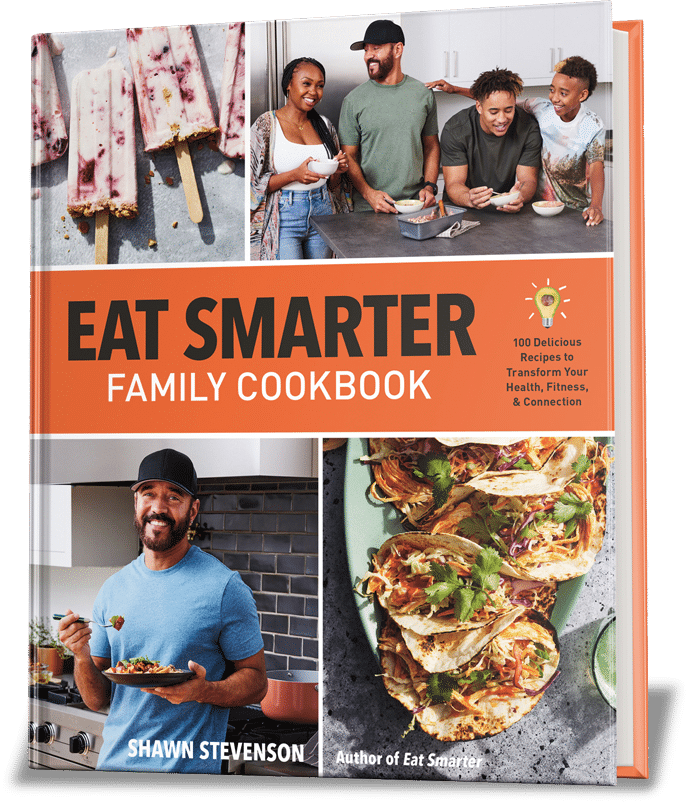
Share Your Voice
0 comments. Be the first to leave a comment.