
Subscribe to The Model Health Show:


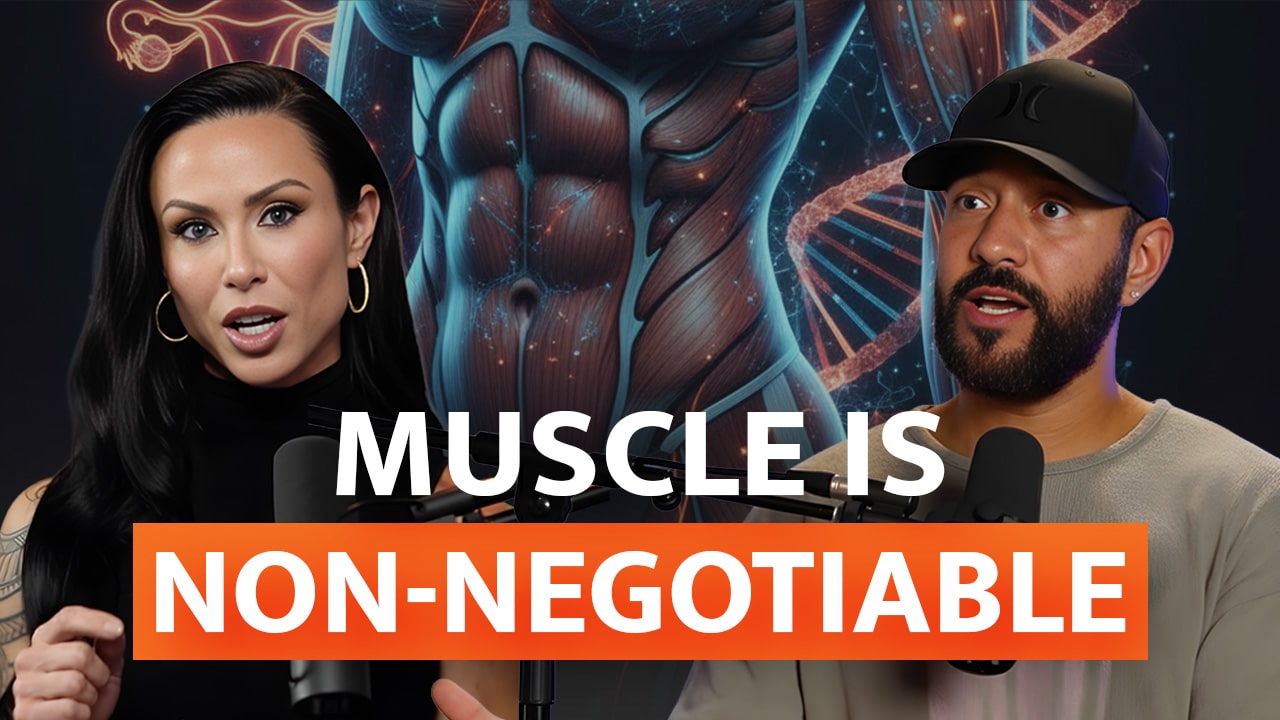
TMHS 963: How Muscle Mass Impacts Sexual Function, Muscle Clock Genes,The Power Of Isometrics – With Dr. Gabrielle Lyon
Having an adequate amount of muscle mass on your frame can protect your longevity, improve your metabolism, and so much more. In fact, a new study showed a strong connection between muscle mass and sexual function. Today we’re going to deep dive this topic, including how you can apply science-backed strategies to get stronger for life.
Today’s guest, Dr. Gabrielle Lyon is a board-certified physician, New York Times bestselling author, and the founder of the Muscle-Centric Medicine movement. Her new book, The Forever Strong Playbook, shares the exact formula needed to build muscle for long-term health. Today, Dr. Lyon is back on The Model Health Show for an enlightening conversation on the role of muscle in sexual health and how to train for injury prevention and longevity.
This conversation highlights the importance of isometric exercises, including the top exercises to master to preserve functionality and mobility. You’re going to learn about muscle clock genes, the role sleep plays in muscle building, and so much more. Dr. Gabrielle Lyon is an absolute expert in this subject matter, and I hope you enjoy this conversation!
In this episode you’ll discover:
- What percentage of men have erectile dysfunction. (2:48)
- How muscle operates as a metabolic organ. (3:26)
- The link between sarcopenia and erectile dysfunction. (5:03)
- Why it’s critical to protect your tendon health. (9:03)
- What an isometric exercise is and its role in injury prevention. (10:14)
- Which nutrients are critical for collagen synthesis. (18:45)
- What the Foundational 5 are and their purpose. (24:07)
- The importance of being able to activate your posterior chain. (28:59)
- Why muscle health and mental health are connected. (33:01)
- What the muscle clock is. (43:08)
- The definition of MPS. (47:43)
- How your sleep impacts your ability to build muscle. (50:11)
- Why thermal stress can improve your health. (1:00:43)
Items mentioned in this episode include:
- WildPastures.com/model – Get 20% off every box plus an additional $15 off!
- Paleovalley.com/model – Use code MODEL for 15% off!
- The Forever Strong Playbook by Dr. Gabrielle Lyon – Claim your preorder bonuses here!
- Connect with Dr. Gabrielle Lyon Website / Newsletter / Podcast / Instagram
This episode of The Model Health Show is brought to you by Wild Pastures and Paleovalley.
Get 100% grassfed and finished beef, pasture raised chicken, and other nutrient dense, regenerative meats. Sign up with my link to get 20% of for life, plus an additional $15 off your first box at wildpastures.com/model.
Use my code MODEL at Paleovalley.com/model to save 15% sitewide on nutrient dense snacks, superfood supplements, and more.
If you knew an ingredient in your food could make you sick, would you still eat it? Probably not. Yet from orange juice to peanut butter cups, the synthetic ingredients lurking in everyday pantry staples could be doing you more harm than good. And while industrial food producers would love you to think otherwise, poor nutrition is a leading cause of preventable chronic diseases. As the saying goes, you really are what you eat.
Our guest on this episode, New York Times bestselling author and food activist Vani Hari, explains “health washing” and shares how innocuous terms like “natural flavoring” can mask toxic ingredients in your favorite foods—and what you can do about it.
Vani is no stranger to confronting the food industry, and her investigative work has led to significant changes from major brands like Chick-fil-A, Chipotle, Subway, and many others. Armed with what she’s learned in her own personal journey and thousands of hours of research, Vani explains how to empower yourself and your loved ones to make better food choices.
While this year has been a rollercoaster, taking charge of what you put into your body—especially during a pandemic—is one small act you can do to regain control and fortify your health. If you’re ready to take a critical look at the food in your kitchen, listen and learn!
Transcript:
SHAWN STEVENSON: Welcome to the Model Health Show. This is fitness and nutrition expert Shawn Stevenson, and I'm so grateful for you tuning in with me today. You are in for a real treat. It's time to uplevel your knowledge on why muscle matters and how to increase your muscle span. Today you're gonna discover the connection between muscle and sexual health that was just published in a prestigious peer-reviewed journal by our special guest. And I can, of course, think of multiple ways why muscle is important, strategically insects, but this goes far deeper than the superficial stuff in ways that are important for our overall vitality. And today, you're also gonna learn the emerging science regarding muscular clock genes, that's absolutely mind blowing.
And to top it off, you're gonna learn what the best, most foundational exercises are to get the results that we actually want to get all these benefits that we're talking about. So we're going to cover that as well. And I think some of these exercises are actually going to surprise you. And so this is chock full of incredible mind blowing, game changing insights with our incredible special guests. So let's jump right in with our special guest and topic of the day. Dr. Gabrielle Lyon is a board certified family medicine physician, New York Times bestselling author, and pioneer of muscle centric medicine. Dr. Lyon completed a combined research and clinical fellowship and geriatrics and nutritional sciences at Washington University.
Today, she's a leading expert and educator in protein metabolism, longevity science, and physical performance. She's here today to share with you how to protect your muscle span and how to be forever strong. Let's dive in this conversation with the incredible Dr. Gabrielle Lyon. We've got the one and only Dr. Gabrielle Lyon here. How you doing today?
DR. GABRIELLE LYON: I love coming to see you. We just have a great time.
SHAWN STEVENSON: Yeah, we're gonna have the best time ever today because I wanna start off asking you about this new study that you just published on the connection between muscle and strength and sexual function. All right, let's talk about it.
DR. GABRIELLE LYON: In case anyone needed another reason to be strong, we have provided it. There is a relationship. We just published a study on the relationship between sexual function, i.e. erectile dysfunction, and the strength and health of skeletal muscle mass. I mean, 40% of men at age 40 have erectile dysfunction. 50% of men by age 50 have erectile dysfunction. The stronger, more healthy muscle mass you have, the better your erections.
SHAWN STEVENSON: Mm mm Say more. Alright, so how did you come about this, this data? Like where did the data come from? Talk about what you did to figure this out.
DR. GABRIELLE LYON: Yeah. Well I, as you know, you and I have been friends for many years and I believe, and I think that many of us are now shifting to believe that muscle is the organ of longevity. Muscle is so much more than mass power strength. There's a metabolic component to skeletal muscle, and I'm just gonna break this down very simply. Skeletal muscle is the primary metabolic sink for carbohydrates. At rest, it burns fatty acids. It's our amino acid reservoir, and it also releases myokines.
Now that lays the foundation. But in order to get healthy skeletal muscle, you have to train, whether it's cardiovascular activity or strength training activity. And in the process of training, you improve blood flow and endothelial function. And when I think about why people exercise, there's mass and strength, which is really important. And then there's metabolism. And then there's plumbing, whether it's cardiovascular, plumbing or erection, plumbing. You know, women have their own form of erections too. Therefore, we wanted to take it a step further, myself and my colleagues at Baylor, I mean, did this study and I was the lead author on this study.
It's just another way to get people to pay attention to muscle beyond the obvious. No man wants to have erectile dysfunction. No woman wants to be challenged with sexual function as a problem for her, right. There's so many things that we can't control in life, but we have voluntary control over our muscle. Yeah, so we collected a ton of data. We looked at many different studies, and after analyzing all the data, we saw that there was a relationship between skeletal muscle mass and strength and erectile function. And that if you are sarcopenic, which is low muscle mass and function, that those sarcopenic individuals had a 73% greater risk of erectile dysfunction.
SHAWN STEVENSON: Holy guacamole.
DR. GABRIELLE LYON: That's right. Everyone in this room is about to be doing pushups.
SHAWN STEVENSON: That is crazy. And by the way, this study is published in the Journal Sexual Medicine Reviews, and one of the things that would come up as what would seem to be Captain obvious is the relationship between testosterone and erectile dysfunction. But you and your team found that strength in particular, grip strength was correlated with better erections, independent of testosterone levels.
DR. GABRIELLE LYON: Very important point. Yes. Independent of testosterone levels. If you are stronger, you will have a better erection. Pretty amazing. Again, and I think that this just goes to show the central role, muscle mass plays and also endothelial function, NO two production, vasodilation. I mean, kept an obvious over here. But in order to be able to talk about these things, we have to analyze the data and we have to have a scientific rigor to be able to say, okay, if you are stronger. And regardless of your hormonal status, which becomes very important because I think that we are in the landscape of beginning to understand how important hormones are. But even with hormone replacement, you still must do the next right action for both men and women.
SHAWN STEVENSON: Yeah. Yeah. We can't just eliminate or pull that off the table. You've gotta train, you've gotta be strong.
DR. GABRIELLE LYON: You have to.
SHAWN STEVENSON: And today, more than ever, we could use a playbook on this. Uhhuh Uhhuh. And fortunately you put that together for us. And first of all, the first thing that I noticed about this book is that it was beautiful. It's beautiful, the layout. You're checking every box. You're giving us the specific plan and the why's. I'm a big why guy. How, and this is one of those things I think is gonna be. Valuable for many years to come. The Forever Strong Playbook. And we're gonna talk about, we're gonna dibble and dabble through the book because there's some things in this book that I know that a lot of us don't even think about.
And of course, you cover how to most effectively and efficiently build muscle to get stronger. You cover the nutrition piece training, but I wanna ask you about something unique on the recovery slash training side that I'm just fascinated with. And this is something that was in my training as an athlete, but I kind of strayed away from it, and now it's kind of a resurgence of isometric.
DR. GABRIELLE LYON: Yeah.
SHAWN STEVENSON: Exercise. Can you talk about what isometric exercise is and why it's so valuable? How, why did that make it into the Forever Strong playbook?
DR. GABRIELLE LYON: I love muscle. I'm obsessed with muscle, and muscle is the obvious. You train hard. And all of a sudden you are like, ah, my elbow hurts, or my shoulder hurts, or my knee hurts. Muscle is not the common denominator of being able to continue to move forward. I wanted to make a playbook to be able to provide people with a path forward for resiliency. Better, more resilient humans, because that's what I believe that we're capable of. Tendon health has been a really big challenge for me, and I think for a lot of people, whether it's achilles, tendinopathy ,or tendonitis, or rotator cuff injury, or patella, or knee inflammation, tendon strain, that is what takes us outta the game.
It's not a muscle injury. It is, I hurt my tendon and now I can't move and tendons take more time to build and strengthen then muscle. Training skeletal muscle will outpace the ability of your tendons. So isometrics, you know, we talk a lot about resistance training, and that's obviously moving. You know, you can move from point A to point B, say like a bicep. But in order to really recruit muscle fibers and create this neural connection, isometrics from a pain standpoint as well as a neuromuscular standpoint is a tool that, I don't know. I think that we've really glossed over exactly what you said as an athlete. So for an example, what is an isometric exercise? Let's say somebody has patella knee pain and the tendon on their knee is inflamed, right? A lot of people have knee pain. If you were to contract that, say a leg extension and hold your leg in that contracted position.
Tighten it. Tighten it against just the muscle itself. You are doing an isometric exercise and it does a number of things. Number one, primes your brain. You are now focused on recruiting that tissue, and why do we wanna get good at recruiting that tissue? Because we don't wanna get injured. You know, I always thought, and I think that, you know, when you're younger, you're just thinking about the drive forward. You're not thinking about, uh oh, I'm in a back pain, knee pain or hip pain. But it shows up. So isometrics is a form of, or a tool in the toolbox of recovery, and I use it all the time for pain. It creates a short term pain relief process.
SHAWN STEVENSON: Mm. It's just so good. So good.
DR. GABRIELLE LYON: So important.
SHAWN STEVENSON: Even just extending my leg out here and an extension right now and just squeezing that muscle. Just within a few seconds you feel it like start to fatigue and really kick on. And I don't have to worry about what's going on with the joint. I can get a lot of muscle input and activation just from that one simple thing.
DR. GABRIELLE LYON: And your muscle and your mind are getting smarter at the connection. We live in a very fast paced world and you know, when I was putting this together, I'm thinking, okay, how do I keep people in the game for as long as possible? And I had to face my own injuries and say, okay, what do I know and what do I see from our patients, from myself? And that was really not taking the time to reorient ourselves to the processes beyond muscle. And that's really tendon health.
SHAWN STEVENSON: Mm-hmm. Thank you for bringing this up. Again, because when it relates to muscle, we don't really think about or give a lot of love to the tendons and that's what's gonna keep you in the game. And there is a way to strengthen them and strengthen that connection. And isometrics are phenomenal for that purpose. Part of the reason I strayed away from that of was because I was just focused on explosion. Right. Explosive power. Like I just want to be, I want it to all be functional movement fast and doing some isometrics can help me to maintain that ability to do that stuff.
DR. GABRIELLE LYON: Absolutely. And guess what? There's a lot of resistance for us. You know, we're busy, we're parents, we're moving all around. People will always say again, I'm too busy, or I don't have time, or I'm traveling, I don't know about you, but I'm on the plane. No one likes to sit next to me and I'm, you know, squeezing my glutes and I'm just sitting there in these positions and I'm able to activate their, my muscle. Yeah, there's a lot less obstacles. There's less obstacles than people think. There are a multitude of ways to maintain a healthy architecture. Which is what we're doing. And tendons for people who maybe are not quite sure where they're placed, muscle is attached to bone through tendons and tendons are interesting.
They're different than muscle tendons don't really have a big blood supply. They are very avascular, whereas muscle, we're getting the blood flow. So the way in which we approach tendon health is a bit different than the way that we would approach muscular health. And one other item that we cover in the book is that it's not the concentric. So it's not the moving up of the muscle, but it's the lengthening of the muscle helps with laying down collagen in the correct manner. And as we age, collagen decreases and, we don't want that to happen 'cause we don't wanna get injured.
SHAWN STEVENSON: Hmm. So speaking to that eccentric.
DR. GABRIELLE LYON: Absolutely.
SHAWN STEVENSON: Focus. Yeah.
DR. GABRIELLE LYON: Mm-hmm.
SHAWN STEVENSON: There's a lot of, a lot of good stuff on that. So also, so can you give me an example? So with an isometric, what about holding or moving against an immovable object? Right?
DR. GABRIELLE LYON: Yes.
SHAWN STEVENSON: And, and in maybe a lengthened position where you can't lift the bar. Mm-hmm. Right. But you're just kind of pulling against it and getting that, that neuromuscular feedback and that muscle activation, but again, in that lengthened position.
DR. GABRIELLE LYON: And another way, and this is for um, people, I'll give you another example. 'cause this is what I had to do. I tore my hamstring 10 years ago. Hmm. I just finished my fellowship at Wash U. And you know, it's just a rigorous place. So I thought that entering into a 50 hour event was a good idea. I dunno. I just..
SHAWN STEVENSON: So is this a, this is a marathon?
DR. GABRIELLE LYON: No, it was Koro. A very good friend of mine, mark Divine. A former Commander Seal had this..
SHAWN STEVENSON: I know Mark, yeah.
DR. GABRIELLE LYON: Yes. I had a 50 hour event and I thought that was the next right action. My level of discernment was a bit off. So I started training for that. My musculature was there, but my tendon health wasn't, my tendon health was not there. And it can take months to progress a program appropriately. You will always get stronger before your tendons. So I embarked on my training for this 50 hour event, and on a sprint stride, I snapped my hamstring. So I vaulted 80%. Yeah. And it has taken me a very long time to heal because number one, nobody wants to take that time.
We just wanna push, we wanna do those explicit actions and use your musculature, but I could not physically do that. So for me, part of my healing was using isometrics. And if you are gonna do a hamstring curl, say for example, and if you are laying on your stomach, you do a hamstring curl, you are, you hold it in that curled position that's essentially isometric, and then you go slowly down, you slowly let your legs down that would be eccentric. And during that process, over time, you are laying down, it's stimulating collagen synthesis and it's helping the recovery and health of that tendon.
SHAWN STEVENSON: Are there any other isometric exercises that people could just kind of readily do? What about like a wall sit?
DR. GABRIELLE LYON: Perfect. Perfect. So wall sit activates both glutes and quads sit up against a wall. Not fun, but it is effective. And you squat down lower and you're up against the wall. And then you're able to really contract your glutes and your quads. And this can be done anywhere. And it's a great pre-exercise for movement. And that becomes important, especially as we're aging.
We're able to prime our body. And so in the playbook I put together number one isometrics, which I use for pain. It is short term pain relief because one of the things that becomes very difficult is if you are moving through pain, it's not always a good thing. And pain is typically not localized. You might feel it in one spot, but you and I both know it creates this cascade of events in the body. It's not just a local experience.
SHAWN STEVENSON: Hmm. So it has like a analgesic.
DR. GABRIELLE LYON: It does effect.
SHAWN STEVENSON: As well.
DR. GABRIELLE LYON: It does. Short term.
SHAWN STEVENSON: And also with that wall sit, you have the ability, again to, and there's many different ways to go about this, but you can, you can push up against the wall and a movable object.
DR. GABRIELLE LYON: I love it.
SHAWN STEVENSON: Right. And again, it's, it's so much safer, but you can get a lot of muscle activation and also those tendons are getting a lot of love as well.
DR. GABRIELLE LYON: And what about for the more mature population? They can do this anywhere. You can do any kind of isometric exercise from a wall, sit to a leg extension to a hamstring curl. And it's just incredibly helpful.
SHAWN STEVENSON: Love it. I love it.
DR. GABRIELLE LYON: There's also a little nutrition. I'll sprinkle a little nutrition in here. We do not have a great ability to study tendons in humans because. Unlike muscle, you can't biopsy your Achilles heel. Therefore, I think that our education, understanding around tendons is behind than say muscle. But what we do know is that dietary protein is important for tendon health. Also, vitamin C for collagen synthesis, for those thinking, okay, well what can I do as a tactical takeaway for tendon health?
And I think the data is still mixed, whether oral collagen, whether those compounds actually help or improve muscle tendon health. I mean, I use collagen all the time for hair, skin, and nails and gut health. But we do know that protein is important and we do know that vitamin C is important.
SHAWN STEVENSON: Amazing. Protein. Vitamin C, pay attention.
DR. GABRIELLE LYON: Leucine actually plays a role in collagen synthesis and tendon health.
SHAWN STEVENSON: Mm, amazing. Amazing.
The overall nutrition in our food has taken a nose dive in recent decades. In fact, an analysis published by scientists at the University of Texas made an alarming discovery. 43 foods, mostly vegetables, showed a marked decrease in nutrients from the 1950s to 1999. According to that research, everything from vitamin A to calcium to iron and more has significantly declined again. If it's not in the soil, it's not in the food. It's the unsustainable farming practices that have obliterated our soil quality. But this is changing thanks to farmers who are dedicated to regenerative farming practices.
And this is not easy to do in a market that is slanted towards quantity over quality, but select farms are stepping up to do the right thing. And this is especially seen in the domain of animal foods. Research published in the British Journal of Nutrition found that beef from animals fed an abnormal diet of conventional pesticide laden grains that decimate the soil quality contain up to five times less Omega-3 fatty acids than what's found in grass fed beef.
And research from the College of Agriculture at California State University has found that grass fed beef contains elevated precursors of vitamin A and E, as well as increased disease fighting antioxidants like glutathione and superoxide dismutase activity compared to conventionally raised grain fed beef with unsustainable farming practices. Whether you're eating plant foods or animal foods. You'd better know the difference when it comes to organic practices and regenerative farming. And this is what I truly love about Wild pastures. Wild Pastures delivers 100% grass fed and grass finished beef pasture raised, pork pasture raised chicken and wild, caught seafood directly to your door. All born, raised and harvested entirely in the US and raised on regenerative family farms.
These pastures are free from synthetic pesticides and other chemicals. There's no antibiotics, no added hormones. And right now with the Wild Pasture subscription, you're going to get 20% off for life, plus free shipping and $15 off of your first order. Absolutely incredible. Go to wildpastures.com/model. That's W-I-L-D-P-A-S-T-U-R-E s.com/model. 20% off for life free shipping and $15 off your first order. Head over there. Check them out. Wild pastures.com/model. Now back to the show.
SHAWN STEVENSON: This is such great advice. We're talking again forever. Strong playbook. Forever strong.
DR. GABRIELLE LYON: Yeah. We didn't call this marginally weak forever. It's the Forever Strong playbook. Forever.
SHAWN STEVENSON: No wait. Strong for a little while playbook.
DR. GABRIELLE LYON: That's so funny. Just on Monday was Monday, Wednesdays and Friday strong.
SHAWN STEVENSON: I want to ask you about, and I love this, I really do, because it's hard to really nail it down. Like what are the best, you know, the quote top five, you know, it's very difficult to nail it down. But if you're getting inputs for a variety of these kind of compound uh, movements, compound muscle groups, and you did a great job with this. You talk about the foundational five.
DR. GABRIELLE LYON: Yes.
SHAWN STEVENSON: And I'd love to go through these and to share these with everybody. And again, there's demonstrations on all this stuff in the book, of course. And if people are watching the video version, which if you're listening to the audio version, pop over to YouTube, come and hang out with us in the studio. We'll put up some video demonstrations of these as well. But the foundational five, let's start with the standing calf raise with abduction. Yeah. This, this, here. Listen, Katie Bowman. She's a biomechanist. She told me about this years ago. Im just like.
DR. GABRIELLE LYON: She did? Okay. Tell me, tell me what she said. I wanna hear.
SHAWN STEVENSON: She, if I, if I was to like drill it down, like what's the number one, gimme the best, what is the best exercise for us to do? And she said this.
DR. GABRIELLE LYON: She did?
SSHAWN STEVENSON: Of all the different things that humans can do. She said this because of the importance, which now we're seeing like, you know, there's memes where we got like the, a heart in the calf, right? Because it has such a big impact on our metabolic health that our cardiovascular health. So tell us about the standing calf raise, but not just that with abduction. Why is this in the foundational five?
DR. GABRIELLE LYON: Well, first I wanna tell you where the foundational five came from, and the foundational five came from Dr. Gerard Donofrio. And he is a very dear friend. I've known him over 10 years, and he is a physiatrist, physical medi, physical medicine and rehab. And Dr. Gerard, he was on my podcast.
This guy is a tendon muscle expert. All things physical, all things rehab. And I was like, Gerard, I have been injured every which way to Wednesday. What do we do? And he said, well, we're gonna put in place a foundational five from the ground up, the most common causes of injury and we're gonna build from there. And I was like, all right, sign me up and I better not get injured again. So these five exercises are very particular and the calf raise. And I was like, Gerard, I am not doing calf raise. And that's probably what you said to Katie. Did you say that? Were you like, I am not doing this?
SHAWN STEVENSON: I mean, of all the things to do, it just seemed very low on the priority list.
DR. GABRIELLE LYON: Exactly. And the foundational five, the calf raises with abduction. Our ankles, our foundation from the floor up. Our feet are our proprioception tools, is not just feet. They are our interaction with the external world and provide input. The achilles heel, ankle mobility, it's from the ground up, affects our ability to squat, affects everything in the chain going up. So oftentimes again, a major injury is achilles heel. So we have to strengthen our soleus, our calf muscles. And the way to do it is obviously this calf raise with abduction to be able to help with also the arch of the foot.
SHAWN STEVENSON: So can you describe what that looks like for people that are listening?
DR. GABRIELLE LYON: I'm gonna do my best. If you imagine, everybody has gotten up on their toes, right? And we use a little ball that we put between the calf and you squeeze it together. So if you're just standing there, you're squeezing it together. Again, an isometric exercise.
SHAWN STEVENSON: So like, maybe like a soccer ball that's a little flat.
DR. GABRIELLE LYON: Perfect.
SHAWN STEVENSON: That type of thing.
DR. GABRIELLE LYON: There you go. Perfect. And when you are squeezing your calfs together, you're creating internal tension. So you're turning on all these muscles and imagine, a calf raise or a woman wearing heels. Right now. It puts your position, your foot, in an elevated position, so a calf raise. You are going from the floor to your tippy toes while you are squeezing in abduction. You should definitely go to the YouTube because that was probably only a marginal visual explanation of that. But that's essentially what it looks like.
SHAWN STEVENSON: This is something that you can add in. This is one of those like micro inputs, right? You could do this at your desk. You know, at this point, I'm sure a lot of people listening have some form of like a standing desk. You can do this at your desk, you know, and, you know, just keep like a, a soft ball around, you know, again, somewhere around the size, like a kickball or a soccer ball.
DR. GABRIELLE LYON: And, and it could even be smaller.
SHAWN STEVENSON: Yeah, it could be.
DR. GABRIELLE LYON: You could put, so you don't look like a weirdo going on the airplane. Which by the way, it doesn't matter if you do pick a small ball, because again, what you are doing is we spend a lot of time talking about overt muscular strength. Monday is universal chest day. We, we all know what that is, but we don't think about these more subtle movements that become really important and that you can do anywhere.
SHAWN STEVENSON: Love it. Love it. So that's number one of these foundational five standing calf rays with abduction.
DR. GABRIELLE LYON: And this can be done a couple times a day. It doesn't have to just be one time a day if you are. So I've been doing a lot of sitting on this trip with me. I do this while I'm in the car. I also bring bands. I, this is just a side note, I know this has nothing to do with the foundational five, but I bring bands all ways in which I can add isometrics.
SHAWN STEVENSON: So smart.
DR. GABRIELLE LYON: I look like a weirdo.
SHAWN STEVENSON: Standing calf rays with abduction, again, pretty easy. You, again, micro, you can add this in as micro exercise. You can do, you know, a set of 30, 20 or 30, a couple times a day.
DR. GABRIELLE LYON: Yep.
SHAWN STEVENSON: Right. It's just getting those inputs.
DR. GABRIELLE LYON: And abduction is like adding to the body. So going towards midline.
SHAWN STEVENSON: Right. And abduction is going away. Exactly. So let's go to number two here. These foundational five. This is classic.
DR. GABRIELLE LYON: I know.
SHAWN STEVENSON: But again, it's just.
DR. GABRIELLE LYON: Okay. Down list. We're just bringing the retro, retro back down. Let's go.
SHAWN STEVENSON: Single leg RDL's.
DR. GABRIELLE LYON: So single leg RDL's. You know, there is a phenomenon that's happening. Do you wanna know what it is? It's called pancake butt. I mean, we've all seen it. I have one. And we have to be able to really activate our posterior chain. Yeah. So anything behind for people that, I mean you, your audience, you speak so much to nutrition and so much to training. And then really being able to scale back and think front of our body, back of our body. RDL will be able to activate glutes, posterior chain and also is getting that hinge. And this becomes very important because we're also improving mobility.
SHAWN STEVENSON: Wake those glutes up.
DR. GABRIELLE LYON: Yeah. Pancake.
SHAWN STEVENSON: Sleepy glutes.
DR. GABRIELLE LYON: Yes.
SHAWN STEVENSON: Out there.
DR. GABRIELLE LYON: Sleepy glutes was a nice way of saying it. Yeah. And I'll tell you what I call it off air, but I'm not gonna tell you.
SHAWN STEVENSON: I'm sorry. You gotta know that that's in the..
DR. GABRIELLE LYON: It's the off air.
SHAWN STEVENSON: That's in the, un what is it called?
DR. GABRIELLE LYON: And unedited version. I'm still not saying it. It was on air. But think about it. We do not use, we go from sitting to standing and we are very deactivated. Yeah. We are not having to do these deep squats. We are not having to embark on powerful movements. And many of us, including myself, are not, we've forgotten how to have good mechanical patterns. All of us. Yeah. We're domesticated.
Think about our children. They're crawling, they're squatting, they're doing all these other things that we stop doing and we. It's not enough to just go in and lift over time as you get older, you have to bring it back to the foundation and remember how to move well. And that's where part of this comes from.
SHAWN STEVENSON: Yeah. Yeah. There's so much, so many inputs come with that one movement as well.
DR. GABRIELLE LYON: Yes.
SHAWN STEVENSON: And you mentioned the hip hinge again, waking up those sleepy cakes. Uncensored version. I'll find that out later. Yeah. And also, you know, this is something you could do without weight. You could do exactly with one weight. So you got these different planes that the body is operating in and being able to stabilize itself because you're on one leg. Just, it's such a great exercise.
DR. GABRIELLE LYON: And if you are really present now you're thinking about it. You said something really important, which I know we're gonna get to the airplane, is that we are always moving forward and back in the sagittal plane. We don't do a ton of rotation or move sideways. We are meant to move in all of the domains. And a lot of programs are sagittal programs right front to back. And, we should add in rotation for core stability. I don't know if number three is the hip airplanes.
SHAWN STEVENSON: Hip airplanes. Let's go to it.
DR. GABRIELLE LYON: So, I love, this is actually my favorite. I have, and you will see, you get really tight hips and your core necessarily isn't always strong. And we're thinking about how we're gonna increase our core, and maybe we're gonna do sit-ups or whatever. You pick your poison, but the reality is, a hip airplane is what it sounds like. You're in a, this is really challenging describing these without seeing them.
So imagine that you are, have your arms open and you are bending forward like you would in an airplane and you're internally rotating the opposite leg that you are standing on. I don't know if we're doing this a service. This illustration, this verbal illustration, and you are turning your hip inward and then externally rotating it while you are either holding onto something or your arms are out, you're improving stability, you are mobilizing your hips, you are also activating your glutes and you are moving from, you know, a very subtle side to side motion. Really important.
SHAWN STEVENSON: So we're getting out of the just static sagittal plane and bringing in some rotation. In a very safe and smart way.
DR. GABRIELLE LYON: And anybody can do this. And you are not allowing your bo, people think that training for 45 minutes a day and then going to sit for the entire rest of the day is adequate.
I mean, it's not, and also walking is amazing. But what about really bringing your mind and your body together? 'cause we already know that there's a bi-directional relationship between muscle health and mental health.
SHAWN STEVENSON: Yeah. Yeah. Please start training some rotational movements in. You know, that's one, again, it can be way down the list of priorities, but if we're looking at how people are actually getting injured, that's one of those kind of common culprits is that you're not trained in that position to be, you know, having to have some rotation. And your brain, and your nervous system, and your muscles all being in alignment to do certain things.
DR. GABRIELLE LYON: You know, and think about it. I really like that you brought up injury. We don't typically rip a muscle. We tear a tendon or injure a tendon. We're not, I mean, I don't know about you, but I don't think I've ever, I mean, I guess I tore my hamstring, but I tore it at the tendon. I didn't care the muscle. And that's really important for people to understand that it is about longevity and thinking about longevity is one step further than just thinking about being jacked in tan, wearing a skinny tank.
SHAWN STEVENSON: So we've already covered the standing calf raise with that deduction. This is, again, strength from the ground up looking at where so much of movement of performance happens with this association with our feet in the ground. Right. And so having that input for that, we've got the single leg RDL's, that posterior chain. We've got the single leg movement, we've got proprioception stuff there, and we've got waking up the sleepy cakes. We've got the hip airplanes to get us some rotational input. Next up is 90 90 breathing.
DR. GABRIELLE LYON: Ah, this is my least favorite. Have you done breathing? Yeah. Really? So this is my least favorite because it's boring. And let's face it, we like high stimulation, but this is something that I found to be very helpful. One of the things, especially as a woman and a mom, my pelvis isn't always placed well. My rib cage, my rib cage is extended and I'm almost sitting back into my pelvis. Why is this a problem? Because over time with repetitive training, you are further imprinting, poor posture and poor alignment. So this 90, 90 breath is, if you're laying on the ground and you have your legs up on a block, your heels are, kind of on that block and there's just a very slight subtle, three outta 10, three outta 10 isometric pressure.
You, push your ribs down and you tuck your pelvis up, and the idea is you're breathing from your diaphragm. You're not breathing from your shoulders. We all know, like when someone takes a deep breath and I'm raising my shoulders up and you. Take a nine. It's a, a breathing of a 90 count breath, the 90, 90 breath, and this is lying on your back on, on a box. Your feet are on the box at a 90 degree angle, and the idea of this is you'll press your heels down, you'll recruit in an isometric manner, your hamstrings. You will take a deep breath in and you'll breathe from your diaphragm.
You will push your ribs down and you'll hold this for five to 10 seconds and do a handful of repetitions. The amount of pressure that you're going to use is say a three outta 10, very subtle. And again, this helps with the hamstring. It helps with the positioning of the rib cage. And anytime or if you are an anxious person, breathing truly helps.
SHAWN STEVENSON: Mm.
DR. GABRIELLE LYON: Yeah.
SHAWN STEVENSON: So obviously, but not so obvious, we forget this tool all the time. Yeah. Do you like, do, do you like doing 99 your breasts? Have you done those? Yeah, of course. Yeah. I've done it, but it's not something that is just like, as part of my training, I don't think about it like that. But we've gotta change that. Yeah. You know, this is a part of training, it's a part of recovery. We can go from that kind of fight or flight, you know, kind of catabolic state that there we're, that we're in and get into that anabolism and the recovery, which is when it happens, despite shifting over.
DR. GABRIELLE LYON: Yeah. And I think that I, and you'll have to correct me if I'm wrong, but I thought with Dr. Gerard a million times about this. So again, I've injured myself over the years because of my level of stubbornness, and I think the listener or the viewer can relate because we don't just make one mistake once.
You think that you do, you think that you know just this one time and you touch the fire, you never do it again. No, that's not at all how it happens. You do pullups, you injure your rotator cuff. And then do you think you never do a pullup again? No. You're like, yeah, man, that feels pretty good. And then you find yourself up there doing this, this 90, 90 breath. Again, I fought with Dr. Gerard. I'm like, I am not doing this.
And every time I fall off, guess what happens? I hurt myself because I am not connecting my mind and my hamstring, just the motor recruitment and the prehab movement's not there. And so I would suggest everyone begin to try these exercise. Just gimme six weeks. I'm not asking for six years. I'm asking for six weeks. Do it once a day. And so that is the 90, 90 breath. The next one I believe on the list is the bird dog. Yeah. Is that the next one?
SHAWN STEVENSON: Yeah, that's number five.
DR. GABRIELLE LYON: So bird dog is, imagine the cat cow in yoga and the bird dog is, if you on your hands and knees, you'll raise your, say you raise your right arm and your left leg. So it's that counter stimulation. You are both sides of the body. Yeah. And you'll do that. You'll hold it for, you can do, I don't know, six to 10 reps you choose. And it just helps activate the core. And it also makes the connection, oh, this is the word we were looking for, contralateral.
SHAWN STEVENSON: Yep.
DR. GABRIELLE LYON: The contralateral connection. I think we're missing one more. Do we have one more?
SHAWN STEVENSON: No, that's it. That's it.
DR. GABRIELLE LYON: We ate our five.
SHAWN STEVENSON: We ate our five, top five. Dead or alive. All right. So there's so many applications with all of these, but with that bird dog, you know, this, this is a very, very top, this is a top tier rehab exercise, but we need to start looking at this as a prehab exercise. And quite frequently, I'd say 75% of the time, this is a part of my warmup routine.
DR. GABRIELLE LYON: Is it really? Yeah.
SHAWN STEVENSON: Yeah.
DR. GABRIELLE LYON: Okay. And have you found that it it helps.
SHAWN STEVENSON: I mean, I'm doing pretty damn good. So, you know, you are, you are. But usually, again, it gets implemented when something happens.
DR. GABRIELLE LYON: Yes.
SHAWN STEVENSON: Right. But it's just, again, it's, it's getting everything kind of synced up. The brain nervous system, muscle recruitment, and especially in that core and that stability and having that kind of cross body, cross-sectional engagement is just, it's kind of obvious.
Are you about that snack life? The paradigm of snacks have changed dramatically in recent years. I grew up my snacks, animal crackers, little capri sun, maybe some random candy from my grandma's purse. You know, she's got the butter scotches and peppermints in there. All right. Of course you got little, little chips, little cookie. Listen, that's all fine In Dandy. Our paradigm of eating candy has really messed us up. And so trying to get healthier, I started having granola bars right at granola bars as a kid as well. Super sweetened with a picture of a guy with a wig on, you know, looked like one of the founding fathers on the box. You know what I'm talking about, but trying to get healthier. You know, I switch over, I do the granola, healthier, lower sugar, or low fat paradigm of these cereal bars, but still really missing the point.
And then today we had all these innovations in these newly invented chemical complexes to try to trick our bodies with fake fats or fake sugars, and we end up with a ultra processed conglomeration of a new kind. What about something real? What about utilizing the paradigm of a food bar, something on the go, but with all real food ingredients, and that's what we have with the Paleo Volley Superfood bars. Not only does it have over eight organic superfoods and collagen rich, 100% grass fed bone broth protein, there are no added sugars or sugar alcohols. They come in a variety of flavors, including red velvet, lemon meringue, apple cinnamon, and what I have right here, dark chocolate chip.
These are the only food bars. That we keep here, the studio for our team and our guests, and I keep these at home for my family and I travel with these as well. Huge fan of the Paleo Valley Superfood Bars. And right now you get access to 15% off their Amazing Superfood bars when you go to paleovalley.com/model. That's P-A-L-E-O-V-A-L-L-E y.com/model for 15% off their phenomenal superfood bars, plus all of their other incredible snacks and superfood, wholefood based supplements. So much more. Head over there. Check 'em out. paleovalley.com/model. And now back to the show.
SHAWN STEVENSON: Now we're gonna talk about one of my favorite sections of the book, and I'm so grateful that you are talking about this. Finally, somebody is talking about this in a major book form, the connection between sleep and muscle, the muscle sleep connection.
DR. GABRIELLE LYON: The muscle clock is what I think you're really excited about.
SHAWN STEVENSON: Yes. Let's talk about it. Spill the tea.
DR. GABRIELLE LYON: The clock genes. So every tissue in our body has a clock gene. So we are regulated on a 24 hour circadian cycle, a light dark 24 hour cycle. Everything has a clock chain. And our major anchor is the super, super cosmetic nuclei, or super cosmetic nucleus. And this is really regulated by light. You go outside, you get sun in your eyes, and this sets the stage for your 24 hour cycle. The other thing that helps really anchor our circadian cycle is food. Now muscles, muscles also have clock genes working on a 24 hour period. The data, a lot of the data is done in rodents. I remember when I was in WashU, we had a fellow who was studying clock genes, but he was studying clock genes in mice, and he was looking at the relationship between metabolic dysregulation and their clock genes.
What do I mean by that? So if we understand that the body exists in this 24 hour cycle, and we begin to think how does our external environment affect these subtle physiological processes? Think about an individual that is up overnight. They work the night shift.
We know that night shift workers, that is a risk for cancer, right? That's considered a carcinogen. The other thing that we don't often think about is that if you are a night shift worker, you have increased levels of blood glucose, insulin. But why? What tissue do you also think that is affecting, I would say, skeletal muscle tissue. Now you are up out of alignment with your circadian biology and listen, for some people, could you train and compensate for this?
Could you do movement and compensate for this? Yes, but we already know 50% of people are not exercising, and we already know that Americans are consuming more than you know. Upwards of 300 grams of carbohydrates and now we impart a dysregulated behavior cycle in which we're affecting our muscle health. And listen, is it a slam dunk? I don't wanna say, okay, if you're up overnight, you're gonna affect specific health outcomes of your muscle clock genes. But if we begin to think about it, and again, I think that we're still early. If someone is a professional athlete, there's evidence to suggest that if they train later in the day that is optimizing for muscle clock genes and that they may be more effective and stronger later in the day because of this relationship to clock gene.
SHAWN STEVENSON: Hmm. I would love to see a study done and get some data on injuries.
DR. GABRIELLE LYON: That's a great idea.
SHAWN STEVENSON: Time of day with professional athletes, right. But this is directly from the book you shared that your muscles contain their own clocks that influence the expression of more than 2,300 genes controlling muscle growth, performance, structural integrity, energy production, and nutrient processing. Right. So we're talking about impacting thousands of genes in relationship to the timing of things. Right. And so one of the conversations that I've been working to push into popular culture is our association. Like we're inherently connected to the 24 hour solar day, right? So our body is always trying to sync up of, with what's happening in our solar system, let alone what's happening on our, on our planet.
But we cut ourselves off from this and we send our bodies these pseudo signals now, you know, with the fluorescent lights, for example, and just this kind of artificial conditions. And so it's throwing these clock genes off all the time. But the great thing about us and our physiology so much smarter than our conscious awareness is it's, are we trying to sync up if we just get these inputs? And so what I wanna ask you about specifically, so you shared that these muscle clocks, orchestrate NPS, talk a little bit about that.
DR. GABRIELLE LYON: So muscle protein synthesis, our favorite, well, my favorite topic. Now, our clock genes. Again, there's a multitude of factors that affect muscle protein synthesis. And I would argue, and this is something that I'm very interested in exploring, is the relationship between that 24 hour cycle and our ability to utilize nutrients and our ability to utilize nutrients and sense nutrients is dependent on our muscles. I don't wanna say openness because that's weird, but the sensitivity of our muscles. So as one could imagine, again, I wanna be very clear that there are many inputs for muscle protein synthesis, but if we were to really reorient ourselves to the world that we live in, we do not live in one single scientific bubble that is sitting in an environment where they're, you know, turn the key and now muscle protein synthesis is happening.
If we're aging, it is less effective. If our diet is lower in protein, if potentially our hormone status, and we're not training. There's a whole host of inputs into muscle protein synthesis. But if we were to also layer on to timing and think about these clock genes and the way in which our muscles are designed to work, we are not nocturnal. And I believe that eventually we will begin to see this supported by the literature that if we are so dysregulated that all of these small things will play a role in our ability to build muscle.
SHAWN STEVENSON: I love this. Okay, you specifically said as well on the other side, your muscle clocks are extraordinarily sensitive to sleep disruption. A single all-nighter induces a catabolic, aka breakdown environment leading to measurable muscle loss and suppression of muscle protein synthesis. So again, we know that if we're skimping on our sleep, we are going to blunt our adaptation from our training. And so I just want you to share it just from my heart to your heart to the listeners.
DR. GABRIELLE LYON: Yeah.
SHAWN STEVENSON: What is the ultimate connection? How important is sleep when it comes to building muscle?
DR. GABRIELLE LYON: You are not building muscle when you're training. You're building muscle, when you're recovering it. For example, people care about testosterone. If you are sleep deprived, your testosterone will be lower. If you are sleep deprived, your muscle response, and we see this acutely in muscle protein synthesis. I think it's anywhere from 13 to 18% suppression. You know, and it's difficult because I have to be honest, I'm a terrible sleeper. I'm a terrible sleeper. I, I don't really like to do it. I should. I just think that there's so many more exciting things to do other than sleep. But the reality is immunity is suppressed, muscle protein synthesis is suppressed, cognitive impairment happens.
You know, when I was training in geriatrics, we had a list of risk factors for Alzheimer's, and one of the risks is poor sleep. So if we want to live forever strong, not live somewhat marginally strong for a short period of time, we do have to sleep. And I'm gonna say one more thing, there are genetic variabilities between people and their sleep time. For example, I'm a military wife. Certain, and I think that we self-select for the ability to choose a profession. There was a study that had a group of army rangers and all of these army rangers had a mutation in their gene that allowed them to sleep some, something like four hours a night and be fully functional and be fully functional cognitively, but they had a genetic mutation versus the rest of us I think it's safe to say need between seven and nine hours. But can you imagine a genetic mutation that allows some individuals to be able to work and push most of the day? That's insane.
SHAWN STEVENSON: Yeah. And again, if you just think about the conditions that we evolved in, right? Having those individuals within the tribe, who are the lookout? Who are the protectors who are always on guard? You know, there's, you know, the, we don't have, we have such a scattered and disrupted and complex environment that we live in today as far as you know, the things that we do. And it's great. We've got all this opportunity and things that we can consider and be, but our biology doesn't care about a lot of that stuff.
DR. GABRIELLE LYON: It doesn't.
SHAWN STEVENSON: And so it's just honoring our biology, stacking conditions in our favor to the best of our ability. A big part of that is mapped out in the Forever Strong Playbook. I'm grateful that you put this together. I said this before we got started. I think that this is gonna be one of those that, you know, it's gonna be that kind of quintessential work that you're going to be able to continue to share and put in a lot of people's hands.
I think. Just because it's so physical and visibly beautiful, tactile, like that experience of being able to see all this stuff as well. I think people are gonna put their hands on it more frequently as well and just kind of check in, look at the different pieces.
DR. GABRIELLE LYON: Yeah.
SHAWN STEVENSON: And it's kind of also, there's a choose your own adventure aspect to it too, you know. And being able to like look at what is the thing that I think that I need the most help with, or the thing that I'm most excited about. Right. So having some temperature challenge, really focusing on those foundational five, you know what, this muscle clock connection is just blowing my mind. Let me optimize for that. Of course, there's pictures to demonstrate all of this stuff in the book. Again, it's a beautiful book and we're covering, there isn't a box that you're not checking and one of the biggest boxes, which we so overlooked today.
And you talked about this and I'm so grateful you covered the temperature crisis in modern life. The temperature crisis. This is such a huge part of human health, resilience adaptation, but it's just like we don't know that it's going on because we have this quote, creature comfort, and we're missing out on these valuable inputs. So what is the temperature crisis of our modern life?
DR. GABRIELLE LYON: I'm so glad you asked. I have a definition for you. Okay. And I loved this definition because I think that it says it really, really well. So here you go. And this is really about human thermal resilience, human thermal, hot and cold resilience.
Resilience is defined as the ability of a system, community, or society exposed to hazards to resist, absorb, accommodate, adapt, to transform and recover from the effect of a hazard in a timely and efficient manner.
Including through the preservation and restoration of its essential basic structures and functions through risk management. That is a mouthful, but we have this comfort crisis in which we are taking away the ability to be exposed to external environment that we were designed to be able to overcome and be exposed to. I was looking at a study before I came here. We spend 90% of our time inside, 90%. We go from inside this, you know, house building to inside our car to inside our homes. Our bodies were designed to adapt to the environment. We are essentially taking away the external environmental cues. We were, I mean, think about it.
I grew up in Chicago. You know how cold it was? It was, it's freezing. But because I'm a native Chicagoan, I could go outside with, you know, no pants and a coat. I don't recommend anyone do that, but you know it, it didn't shock me nearly as much because I grew up in that environment. Why is it important to have exposures? To be able to acclimate? Our body relies on its own internal processes to be able to shiver, to make us warmer. To be able to, if we are hot, cool us down, we have taken away that adaptation.
SHAWN STEVENSON: Mm-hmm. And the question is, does it matter? Are we missing out on something that we need to be our best to perform at a high level, to be adaptable, to be resilient if we're constantly in that creature comfort, what, 68 to 74 degrees chronically and not getting those more intensive exposures. And when we do, we're pissed.
DR. GABRIELLE LYON: Pissed.
SHAWN STEVENSON: Right? If you, if you, if you're not, and what I've found is that my experience with utilizing Asana, for example. I really don't get as hot. Like if, if the other people are like, I'm, I'm super hot, or they're sweating their ass off, I don't, I don't, I don't have that same experience. Like, I'm more comfortable if it's really hot not to say that it, it's doesn't get uncomfortable. And the same thing with cold, right? Having those cold exposures, maybe you're doing some cold plunging. You just don't have the same response as other people who don't have those inputs on a consistent basis.
DR. GABRIELLE LYON: And think about it, we were designed for challenge. We were not designed to be in climate control. As humans, we were not designed. And so we all know that when you do not use physiological processes and you do not expose yourself, think about muscle atrophy. We have a, you know, I would say a crisis of sarcopenia or muscle atrophy. They're, they're slightly different, but atrophy is really driven in part by sedentary behavior and disuse. Muscular atrophy is in part driven by disuse. Now, if you move that over to environmental exposures, we can account for our temperature. We are not being asked to go outside in Arizona and hang out.
And listen, i'm not saying anyone does that. I don't want you to have heat stroke, but the reality is, if you are someone who lives there and you spend time outside and obviously you stay hydrated, your body can cool itself off. I just think that it becomes important to recognize that there are multiple ways to, I don't know, not to be cheeky, be forever strong, but it does require pressure. It does require environmental pressure. And this is one thing that I think that we have really removed ourself from and we have to bring it back in. And there are also tools, whether it is cold exposure or heat exposure, I call it fire and ice, that allow us to not only recover, but to do things that would be very difficult.
It would be very difficult to take another action other than cold exposure to have that same effect. I mean, what are you gonna do? How else would you replicate that? The environment there was provided for us so that we could begin to meet that challenge. And once you take that away, there's nothing, it's not like, I can't think of another way to do it. You have to put yourself in the environment. There's no pill that you could take that would do the same as cold exposure or heat exposure.
SHAWN STEVENSON: Mm-hmm. Yep. And we know, again, there's not any aspect of our biology that's not impacted or even improved, like brown adipose tissue.
DR. GABRIELLE LYON: That's right.
SHAWN STEVENSON: Right. These immune parameters. Heat shock proteins and adaptations with our cardiovascular system. Like we're missing out on these inputs when we're not getting exposures to, again, hot or cold, fire and ice. And so what are your recommendations or what are some general recommendations?
DR. GABRIELLE LYON: Pick the one you don't wanna do and do that one first and just being straight. I'm just being straight up here.
SHAWN STEVENSON: Yeah.
DR. GABRIELLE LYON: Some, for some people it's easier for cold exposure and some people it's easier for heat exposure. I'm gonna tell you there's a, there's more evidence for the heat exposure. There's finished studies, hot saunas, not infrared, and I use both infrared and dry heat saunas. But, you know, cultures have been doing this for a very long time. Heat exposure, and that could be anywhere from 175 degrees upwards to two 12 degrees of Fahrenheit. So it's hot. You are sweating. There are various ways to do it, baby steps at first, but over time, you'll build up to, and there's a multitude to ways to do it, but it could be an hour a week. It doesn't have to be, you know, an hour a day.
SHAWN STEVENSON: Right. Spread out again. So it's spread out.
DR. GABRIELLE LYON: It, it could be 15 minutes at a time.
SHAWN STEVENSON: Yeah.
DR. GABRIELLE LYON: What I will say is that with sauna exposure, I think there are certain things that are very valuable. In part this thermal stress, you mentioned heat shock proteins, but also the effect on cardiovascular activity. It almost, and you know, I don't wanna say it mimics exercise because there is the full motion of moving your musculature, but it does increase your heart rate. It increases, obviously you're sweating. There are a whole host of things that it does. And the research, which I have found very compelling is that it can lower inflammatory markers like H-S-C-R-P. And you're not, you know, you don't like to exercise. Start here.
SHAWN STEVENSON: Yeah. So there's some exercise mimicking benefits with sauna.
DR. GABRIELLE LYON: Mm-hmm.
SHAWN STEVENSON: So again, this is all in the book. You give protocols recommendations. I love how you share again, like. Start with the easy on ramp. Like you don't have to go full on, you know, just take baby steps. Right.
DR. GABRIELLE LYON: So my son who is training for the SEAL teams right now.
SHAWN STEVENSON: And he's four.
DR. GABRIELLE LYON: He's four.
SHAWN STEVENSON: He's four by the way. And he is dead ass serious. He is serious, he's so serious about being the Navy Seal.
DR. GABRIELLE LYON: He is very serious. He takes his training very seriously and, you gotta come over to our house so that, you know, you guys could relate, but it's crazy. And for him, he and I say this joking, he does it 'cause he wants to, but he started with a face dunk coal plunge. And again, does it have the same systemic impact as fully immersing your body in a cold plunge? Not necessarily. And again, these studies, I think were a little bit behind on the science in terms of the effectiveness of cold exposure. But one thing that I can say for sure is that it can increase the stress response, norepinephrine, dopamine. It does create a response in which you have the opportunity to bring yourself down, but you don't have to dunk your whole body in. You could start with your face, then you can go next to your body.
You know, whatever you choose. You pick your own adventure, but you don't actually have to spend that much time in the cold, and it doesn't have to be that cold. Our plunge at home is set at around 50, and we spend, I mean, I spend a lot of time in there because I like it, but someone doesn't have to spend more than 12 minutes a week in the cold plunge. Here's where it really helps, and this is anecdotal women that are going through hot flashes, cold plunging seems to really help them. And this is what I've heard from the women in my practice that are going through menopause that are not candidates for hormone replacement therapy. They use the cold plunge.
I've also seen it to be effective and there isn't data for this, so I wanna be very clear. There's evidence-based information and then there's anecdotal. So what I am talking about next is anecdotal from our practice, individuals with autoimmune conditions. I have seen them seem to improve with cold plunge. And I, you know, I think that autoimmune conditions, whether it's rheumatoid arthritis, whether it's Hashimoto's, and we have them go up to their thyroid in the cold plunge. So pretty awesome.
SHAWN STEVENSON: The thing about you is like you are frequently ahead of the curve, frequently. And so I think that. We're just getting an appetizer as to what's to come because I'm confident even just what you shared, there's going to be data coming out over the next couple of years about that connection.
DR. GABRIELLE LYON: Yeah, and you know, you mentioned something earlier about the environment, how we are creatures of comfort and we have to recognize that it's very difficult to do randomized control trials in humans to keep them inside all day, to actually say, you know, this is bad for us. When we can begin to piecemeal these things together, for example, light exposure, it is ubiquitous. External light exposure, under fluorescent lights, under all of these lights. It's difficult to understand, I think the profound impact that it's going to have, even though it seems in, you know, it seems as if it would be nothing, right? We're sitting in bright overhead lights all day, but the reality is. We don't necessarily know exactly how all of these things affect our physiology over decades and over generations.
SHAWN STEVENSON: Can you let everybody know where they can pick up a copy of the book?
DR. GABRIELLE LYON: Yes.
SHAWN STEVENSON: And also anywhere that people can just connect with you, get more information, just get more into your world.
DR. GABRIELLE LYON: Thank you so much. First of all, thank you so much for having me on. I always love coming to see you. This playbook. It starts with an ethos. And I'm not gonna say the whole ethos, but it is under the construct that aging is inevitable, but weakness is a choice and so is strength. And collectively, this is not about a workout or nutrition or the million recipes in the book, which are amazing, but I believe, and I know you believe that together we can build a stronger, more resilient future.
And to me, this is practical tactical manual for a cultural shift is what this is. So I wrote the book that I wanted, and I'm proud of it, and I don't say that lightly because my first book was good, but I, and you know me well. I'm not one to say, oh, this is, but this book, this book is not about me. This book is a manual to create a cultural shift. So with that being said, you can get it on Amazon. You go to my website, Dr. Gabrielle Lyon, I'm on Instagram. I have a great podcast, which you are due to come on by the way. So we'll get that done. And I have a newsletter and a medical practice.
SHAWN STEVENSON: Yeah, yeah. You're one of my favorite people. Same. I've said your name. So many times when you're not around, you know, just talking with other people. You know, you're one of those people that check in on me that really, I feel like you have my back. If I call you, you're gonna be there. And that is, that's rare, you know, and you're just really about that life, what people see they get. And you're brilliant, you are incredibly insightful and putting these ideas together for us in this form, like we're getting decades of insight and experience. Not to mention all the people that you've worked with and just put into this one incredible playbook. It's priceless. So I appreciate you.
DR. GABRIELLE LYON: Thank you so much for having me.
SHAWN STEVENSON: Of course. It's my honor, the one and only Dr. Gabrielle Lyon. Thank you so much for tuning into this episode today. I hope that you got a lot of value out of this, some game changing insights, muscle clock genes, the importance of utilizing some isometrics in our workouts, and so much more. All of this is covered, and it's a beautiful, beautiful book in the Forever Strong Playbook, which again, as of this episode release, it's just a couple of weeks away, but you can get access to the book and $300 in free bonuses by pre-ordering the book when you go to drgabriellelyon.com/playbook.
Again, that's drgabriellelyon.com/playbook, and Lyon is spelled LYON, by the way. So truly, again, this is incredibly important information. We can change the way. That our society is aging. We can put a stop to the degradation and the poor health that we've seen run rampant in recent decades, but we've gotta take action. So that's why it's so important to share information and episodes like this with the people that you care about. So please share this out with somebody that you love. And of course, you could send this directly from the podcast app that you are listening on or watching. If you're watching on Spotify video, for example, which we're on Spotify video.
If you're listening on a different platform, pop over to Spotify and check us out as well. And of course you can share this episode on your socials. Take a screenshot, tag me. I'm at Shawn model and tag Dr. Gabrielle Lyon as well. I'm sure she would love to see the love. And listen, we've got so much more in store for you. We are just getting warmed up. You got some incredible masterclasses and world-leading experts coming your way very, very soon, so make sure to stay tuned. Take care, have an amazing day, and I'll talk with you soon.
Other episodes you might be interested:

Maximize Your Energy
Get the Free Checklist: “5 Keys That Could Radically Improve Your Energy Levels and Quality of Life”
HEALTHY MEALS EVERYONE WILL LOVE
The Greatest Gift You Can Give Your Family is Health
When you gather your family around the table to share nutritious food, you’re not only spending quality time with them - you’re setting them up for success in all areas of their lives.
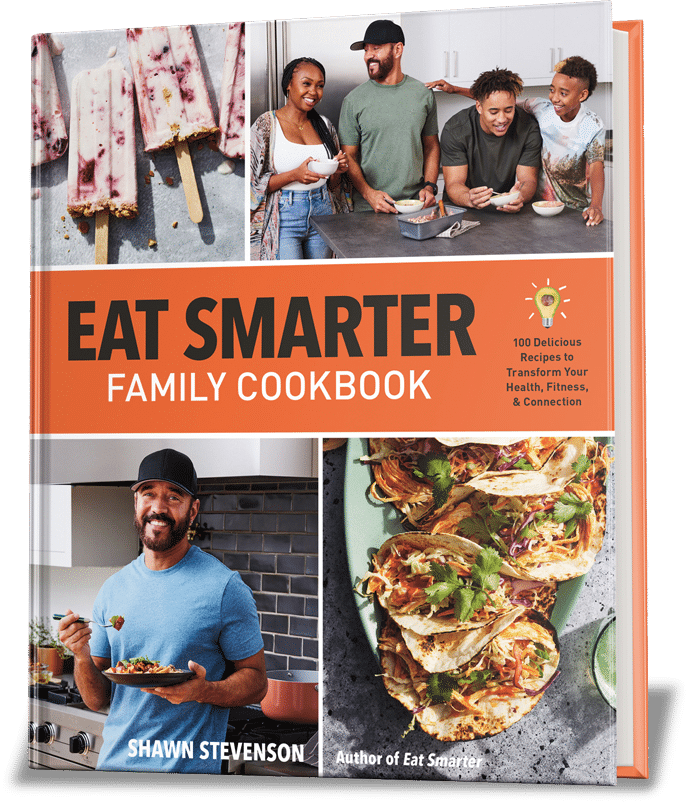
The Eat Smarter Family Cookbook is filled with 100 delicious recipes, plus the latest science to support the mental, physical and social health of your loved ones.


Share Your Voice
0 comments. Be the first to leave a comment.