
Subscribe to The Model Health Show:


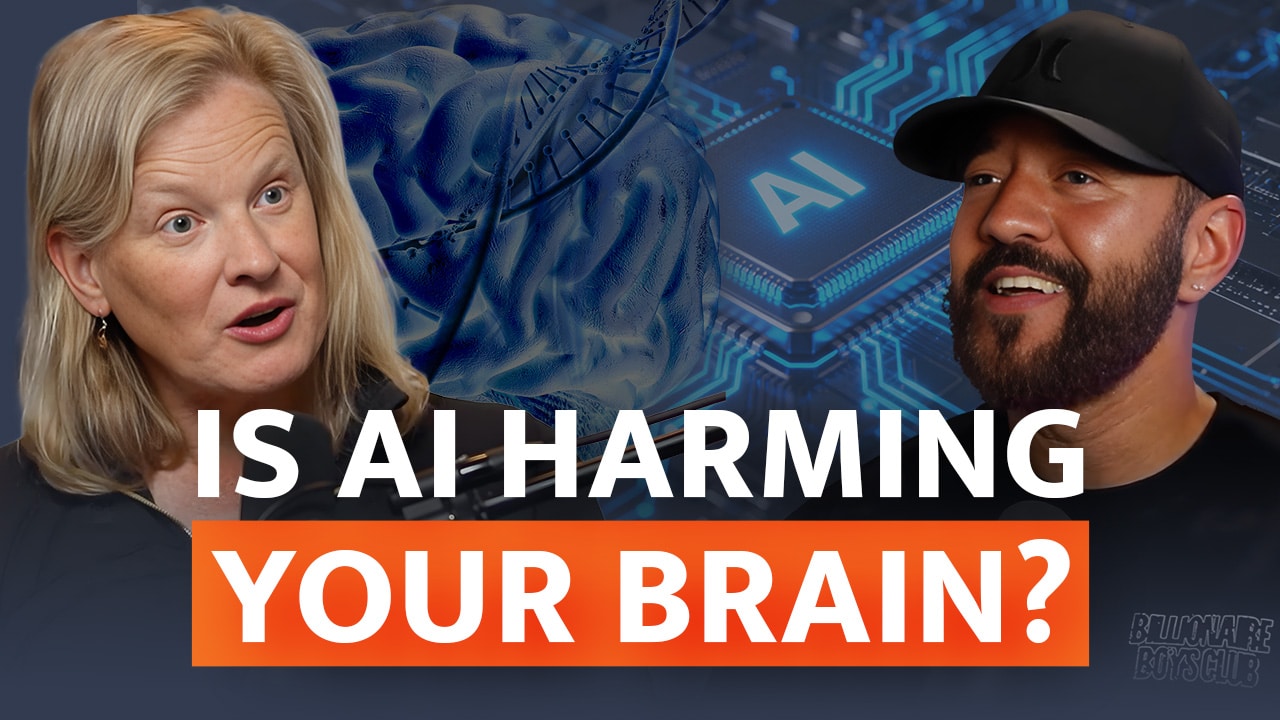
TMHS 985: How Artificial Intelligence is Making Humans Dumber & How to Robot-Proof Your Brain – With Dr. Vivienne Ming
As the use of artificial intelligence has absolutely exploded in recent years, there are some important questions we should be asking ourselves. How can using AI impact things like our brain and our creativity? And is it possible to use AI for good? Today, our guest is going to help answer these questions.
Dr. Vivienne Ming is a theoretical neuroscientist and author. Her new book, Robot-Proof, is a guide to navigating today’s automated world. On this episode of The Model Health Show, Dr. Ming is here for a fascinating discussion on how AI and social media impact our biology, our cognition, our kids, and society-at-large.
You’re going to learn about the pros and cons of using AI, why you shouldn’t outsource your ability to think, how to develop more curiosity, and the important role of having a sense of purpose. Dr. Ming’s work is all about helping humans thrive in a way that can’t be replicated by AI, and I know you’re going to find her insights invaluable. I hope you enjoy this episode of The Model Health Show!
In this episode you’ll discover:
- The pros and cons of artificial intelligence. (4:19)
- What percentage of people turn their brains off when using AI. (8:08)
- The importance of cognitive effort in preventing cognitive decline. (9:39)
- How automated navigation could lead to increased rates of dementia. (13:37)
- Why we need to find a balance between shallow and deep thinking. (15:35)
- An important distinction between thinking and understanding. (28:54)
- How to use AI to grow and thrive. (34:24)
- The best way to use AI to improve your creativity. (42:11)
- Why having a strong sense of purpose is more important than ever. (55:18)
- How to become more valuable as a human in the age of AI. (56:58)
Items mentioned in this episode include:
- Paleovalley.com/model – Use code MODEL for 15% off!
- Beekeepersnaturals.com/model – Save up to 30% on natural remedies!
- Robot-Proof by Dr. Vivienne Ming – Get your copy right here!
- Connect with Dr. Vivienne Ming Website / Instagram / YouTube
This episode of The Model Health Show is brought to you by Paleovalley and Beekeeper’s Naturals.
Use my code MODEL at Paleovalley.com/model to save 15% sitewide on nutrient dense snacks, superfood supplements, and more.
Reinvent your medicine cabinet for with clean, effective products powered by the beehive & backed by science. Claim up to a 30% discount at beekeepersnaturals.com/model.
Transcript:
SHAWN STEVENSON: Welcome to the Model Health Show. This is fitness and nutrition expert Shawn Stevenson, and I'm so grateful for you tuning in with me today. I never thought I'd see this in my lifetime, but AI is here and it's integrated itself into so much of society. In the blink of an eye, and we're only at the beginning stages of our intersection with ai, and there's already some emerging evidence on the impact that it's having on our brains. Now, AI can be seen potentially as an extension of our ability to think and to utilize our cognitive ability. However, when approached in the way that most of us are approaching our interaction with ai, we have emerging evidence that is actually causing significant and swift cognitive decline. And so this is impacting our brains in a very detrimental way.
And with that said, if our conversation and our mandate and our mission is going to be around longevity, along with disease prevention and protecting our invaluable brain and cognitive abilities, along with creating the life that we truly want to create. We've got to support, protect, and also cultivate the ability of our brains to grow and to develop, and there are certain ingredients that are essential, they're required. It's like making a recipe. If you don't have these particular ingredients, your cake's not gonna turn out too good. If you don't have the flour, and instead you use Play-Doh, you're gonna have a very different meal situation showing up.
And with all this said, and with the complexity of this, I actually connected with a theoretical neuroscientist who has decades of experience in the domain of ai. She's actually behind some of the most remarkable inventions in utilizing AI and the treatment for a variety of illnesses. But not only that, she is operating at the intersection of how AI can actually be detrimental. And so she's got a wide array of experience and insights, and this is the voice that we need to hear on this subject right now, and I'm so grateful to be able to share this with you.
Today. Dr. Vivienne Ming explores maximizing human capacity as a theoretical neuroscientist. She was named one of the 10 women to watch in Tech by Ink Magazine and is teaching at the emerging intersection of AI and human intelligence. Her latest research is revealing the inherent cognitive decline humans face if AI is used haphazardly. But she's also illuminating how ai, when used with great intention and awareness, can bring about meta learning that can make humans smarter, happier, and more successful. Let's dive in this conversation with the incredible Dr. Vivienne.
Alright, Dr. Ming, thank you for coming to hang out with us today.
DR. VIVIENNE MING: It's a blast. It's always fun to come down.
SHAWN STEVENSON: Big question. Should we heed Sarah Connor's advice and start getting prepared to battle AI in the robots?
DR. VIVIENNE MING: You know, the guy who taught my first undergrad AI course, a guy named John Vitali, who fair to say was stoned every day in class. A brilliant MIT trained cognitive scientist who had the exact same pizza stain on his t-shirt.
SHAWN STEVENSON: Like wow.
DR. VIVIENNE MING: 16 weeks in a row. But he taught the AI class on the philosophy of Know your Enemy.
SHAWN STEVENSON: Wow.
DR. VIVIENNE MING: Now this will sound like a strange way to answer you. I wish we had any idea how to build Skynet. We do not. If anyone's telling you that GPT is awake and aware, they are fooling themselves. However, that doesn't mean that your question is invaluable and doesn't have meaning because we have built this amazing thing. I don't wanna undersell it. I also don't wanna oversell it. It is not any of the world ending ai's that are listed out in all of science fiction history which I love as a nerd. But what it is astonishing. You know, think of any question, think you're all of your smartest friends and the kinds of questions you might've gone to, Hey, tell me, take a look at this.
What does this rash mean? I need to put a will together, you know, the toughest questions you might ask anyone. Now you gonna open up your phone and for free, ask any of those questions and any others. Hey, Dr. Ming, tell me about the superior calculus and how it integrates visual and auditory information. And I'd say, okay, do you want me to kind of bullshit you for the next 15 minutes or maybe give me a day and I'll put something. It'll give you a better answer than I can in 20 seconds. Wow, what does that mean? And that answer also comes with, Hey, I'm glad you're really thinking about important questions.
You're so bright. And here's the information, let me know how I can help you with other questions. And those sorts of experiences, literally all the information humanity has been able to learn for free in your pocket. You know, mostly accurate enough that I think fears of hallucinations are now much less of a thing and offered to you with such endearing sycophancy that who would ever wanna stop talking to it.
SHAWN STEVENSON: Yeah.
DR. VIVIENNE MING: The thing that worries me, the reason why I recently shared out to the world, AI built only for autonomy. Only to be its own thing is a dead end for humanity isn't because I'm worried about GPT destroying the world. It's because thinking about how you get from the studio back home, given rush hour conditions, and maybe I wanna stop by, rather than just asking Google Maps to figure it out for you.
Thinking about how am I gonna market this with this weird lady coming in who is a tough sell? 'cause her stuff is all over the place. What's the marketing copy? Well just ask GPT to write it for me. I'll have Claude code up the website that I'm working on. You know, instead of following up on what Vivienne was talking about and actually going figure out what the hell the superior colus actually is, I'll just ask Gemini and it'll tell me, and it sure will feel like I know this, I'll be able to answer someone else now, when in fact tomorrow you won't know it.
And what I found recently in my research is 90 to 95% of people, let's put it in PT Barnum terms. Most of the people, most of the time turn their brains off when they're using ai. They export their cognition, they automate it. The way I've been talking about it recently is that all of my work has been about building better people. I don't want to buy Sam Altman's robots. I wanna be a mastermind with a bunch of body minions. I, in my sci-fi mania, I wanna be a cyborg, I wanna be a men ta, I wanna make me better. And nothing being built today, none of the AI benchmarks that are out in the world are about building better people or how AI interacts with us to be better.
And you could say, well, I don't care about that. I just wanted to diagnose cancer. We might have a chance to talk about why that's important in terms of, actually the smartest thing from my research is that other five to 10% of people who do amazing things, which I cheerly call Cyborgs. But the other reason is when we put an EEG on people and have them write essays, make predictions about the future write code, you know what?
We don't see the 40 hertz gamma activity that indicates that they're thinking that they're really putting in cognitive effort. And you know what? That predicts early cognitive decline. Dementia, increased rates of Alzheimer's like this is stealing from our future self. Exporting our cognition today means you will not have it for you later. And that's the thing that worries me so much more than Skynet. I'm a little worried about autonomous weapons. Not really the theme of the show, but we could chat about it. But it's that human component that's missing.
SHAWN STEVENSON: Wow. Thank you for sharing this because again, our worst nightmares are you know, art imitating life imitating art, Skynet, Terminator, the Matrix, that kind of thing. But in reality, what we're looking at right now is something more insidious as far as like eroding human intelligence and our brain health and cognition and basically devolving in a way because we're outsourcing our thinking. And so now we've got some strong evidence on this already. And this is the big reason why I wanted to have you on today and have this conversation because it's here, it's immersed in all that we are already doing, and it's just the beginning.
And so for us to, you gave a great example about the GPS. Right. I've been in LA, I've been in LA for six years and I had to make myself learn where I am. Like people would say, oh, this is the Woodland Hills or whatever. I'm where is that? I know my way front and back all over St. Louis, like all over. I don't need a GPS. But I was living and growing up in a time where we didn't have GPS and so now just outsource it. And so I often don't know where the hell I am. And so now I've been intentionally like, let me turn this thing off. I'm gonna figure it out. Especially if I got a little bit of a time cushion just to, because it's a big part of being humanly. You mentioned absolutely epigenetics earlier before, you know, before we even got started, we were talking about this, but something our genes expect us to do is just like, figure out where we are and move around. What if, what happens if you don't ever do that and you're just getting told where to go?
DR. VIVIENNE MING: 100%. I mean. The, listen, let me be frank. I hate social media with a passion that dims the sun, but I'm still there because my day job is, I run a philanthropy and people send me hard problems. My child is dying, my company is making mistakes. We don't really have fair promotion system. Our country's doing everything the World Bank says. No one wants to hire our citizens. Human problems, messy human problems. I call myself a professional mad scientist on LinkedIn. So let's be clear. Nobody writes to the professional mad scientist first. The crazy lady is last resort.
So when I get a message it's because nothing else worked. And I need to be available for people to be able to contact. So I'm there. Even on some famous networks that went from being named after birds to being named after. So I try to be there and I tried to share research just to be present. And maybe the most shared thing I ever said was in 20 to 30 years, there will be a significant increase in early onset dementia, and it will be causally related to the use of automated navigation. Waze and GPS Google Maps. And that would be clear. I use Google Maps. All the time. I travel a lot.
I'm in cities I've never been into before. How do I get from the airport and I walk I loathe being in a car. So how do I get from wherever I am to where I need to be, especially in places that have old towns and medieval parts of the city where it's all twisty and turny. So I use these systems, I'll freely admit, but one thing we know from truly decades of neuroscience research is thinking about navigating in the real world is part of good cognitive health. It's how our brains came together. And if you don't have to do it, I didn't even consider it a prediction, it just was an obvious consequence. It sense the evidence has piled up that it's true. I'm not claiming everyone is headed towards Alzheimer's at 30, but will taking that away affect us? Yeah. So then I do, they wisely keep me away from the undergrads at uc, Berkeley, but I still give a lecture each year for an engineering and entrepreneurship course.
And I challenge them. The biggest problem I think in the tech world is we build products that at best make people better while they're using them, but they're worse than where they started when they turned them off again. And plenty of them like social media, I don't think we're better while we're using it. So here's a great example. Navigation. How can I show up at Charles Dugal airport and find my way to my hotel in Paris, and be better when I get there. That's my challenge to them, and they come up with genuinely good, complex. I got an AI model, I've got this, that, and the other.
Here's what I do. I check. What do I, even in Berkeley, how do, how would I possibly know what the street is blocked? There's a traffic nar somewhere that is truly a superhuman capability to be able to do that. Then I think, what do I know about Berkeley and I try and take a different route and beat Google there. That way I get the benefit of using the technology, but I thought about it, psychological terms, shallow and deep.
It's fine to spend some of your life shallow. I mean it sounds terrible, but most of what we do kind of runs in that shallow. We can't be deep all the time. Throughout your day, you need to regularly find those moments. Take a different route to work every day. Actually take the time to read a book, not just 250 characters, and think about what you're doing. Not just because there's important information there for the sake of the art you are doing, your future self and your future cognitive health, an incredible service. Because if you're not doing that, it gets harder and harder to get yourself to do it. And unfortunately, my industry, or one facet of my industry, the tech industry has decided the best all products should be about efficiency. They should, everything should be about making your life easier. We should be building products that give us what we need and not what we want and we haven't lived up to that.
SHAWN STEVENSON: Okay. One of the big takeaways for everybody today to potentially stave off dementia Alzheimer's just to overall better brain health, is to explore your environment and tap into again, something our genes expect of us. And I want to say this specifically because, you know, when we're using a GPS, it's just basically telling you, you know, where to go, here's it, and you're paying attention mostly to the GPS, and of course keeping your eyes on the road. But what happens when you know that safety net isn't there, is that you actually pay attention.
You start picking up on all of these markers, all of these little bits of reality that paint a picture and it creates a map. Right? And if there's one thing that humans have passed on through generations was creating a map that you follow, but then you pay attention to all the signs and all those little small details. Is it an accident? It's called a treasure map, you know? And really thinking about that and how we glorify that in a cinematic sense. But today we never do that. We never follow the steps and pay attention to our environment to lead us to where we want to go. We've outsourced that. And the question is, what are we filling it with as well?
DR. VIVIENNE MING: Yeah. Yeah.
SHAWN STEVENSON: So I want to ask you about this. When you mentioned earlier about AI being affirmative and really it's like it's, there's, it's there's something paying attention to you. And in this world, how it's constructed. Now, you mentioned your how you despise social media, but we've outsourced that as well. We're not really getting that input as much of actually.
DR. VIVIENNE MING: 100%.
SHAWN STEVENSON: Getting that attention. And so if we're getting that from AI and not from other humans, could that create some dysfunction?
DR. VIVIENNE MING: Let's be clear. My loathing is unfair and in some ways unjust. I'm sure there's plenty of good stuff to be found on social media and people engaging deeply and well. But let's extend this recommendation from just physically, literally navigating through space. You're on Instagram or TikTok. Why not? Just why did you like that image? Why didn't you like that image? Take a beat. Think about it. Before you're just 200 milliseconds. Your brain isn't processing anything swipe.
You're, I know this is an LA thing, but for everyone else, you're sitting on the subway, up in Bart, in the Bay Area. You just see a hundred heads on every car looking down at their phone. Again, it doesn't have to inherently be bad, but you see that swipe, and you're thinking you
are not processing any of that. There was a great study, I mean, there's this great debate. It is social media bad, especially for, let's say adolescent girls. So there's great experiment a natural experiment in Canada, broadband rollout. And so suddenly these kids in rural Canada got access to broadband and then they matched that against mental health reports and academic performance and so forth.
I found this study truly compelling and yes, its headline finding was this is bad, especially for adolescent girls. Their academics go down, mental health goes down, you should be concerned, but there is no such thing as an average person. Literally every science finding you've ever found about human beings is not the actual finding. It's sort of a summary description of the largest number of people in it or this fictional average. So yeah, the largest number. Most adolescent girls were harmed by social media in this context. But actually we got a hold of the data from that. Looked at it, analyzed the metadata of these young women interacting with their phones and found one.
There was a group that were never on social media. Sometimes we say AI or social media or whatever, you know, maybe the legitimate or not boogeyman is like COVID. It's gonna get you and there's nothing you can do. Here are these young girls who just choose not to use it. That's their choice and they're not there. Why? Understanding. That's what's always so interesting to me as a scientist who breaks the trend, who's different. 'cause that points to how the world could be different because there was this small group, small but meaningful. They were on their phones just as much as their peers. They look great. They had none of the mental health.
Their academics were higher. You look at the metadata, shock of all shocks. Swipe, swipe, stop, go look up something. It's the same topic. They're checking something, go back. We don't know what they're checking 'cause it's just metadata. But then they go back to the picture they were looking at, then they go look it up again. Someplace else. Shallow, deep shallow, deep thinking. They don't, not all the time but thinking and they looked great. So, you know, my silly rant about social media and I mean, I spent 30 years building AI models. My first ever was a neural network. Shocking. On a funded, I mean, this is a public pure science project, but it was funded by the CIA to tell if people were lying or not in 1999 by analyzing their faces.
So my undergraduate honors thesis was a neural network that could tell the difference between a real and a fake smile. Morally very complicated. But who as. It was so cool. Not so much the ai, but that I could use a machine to understand human beings. This thing that felt so human. I will say later, I got to use what I learned. Doing that to build a model, to analyze faces and reunite orphan refugees with their extended family members in un refugee camps. And to have autistic kids with Google Glass read facial expressions and learn how to read facial expressions in natural interactions with people. Can technology make people better?
Not by just giving them the answer, but by causing, if you design it to specifically support change learning and learning comes from making mistakes. This brings us back to ai. If AI is just giving you the answers, you never make a mistake and you never learn anything.
SHAWN STEVENSON: Whether it's from injury, age-related wear and tear, or even chronic diseases and infections, our stem cells have to kick into action to help us heal. There's a specific compound that's been identified in turmeric that's getting a lot of attention right now for its impact on our stem cells. This compound is called ourone in a study site in the journal stem cell research and therapy. Details how our neural stem cells proliferate 50 to 80% faster when exposed to varying levels of ourone, the study concluded that ourone thus constitutes a promising candidate to support regeneration and neurologic disease, unquote.
How powerful is that? In addition to the remarkable power of our turon, turmeric has many other phytonutrients that support stem cell function. A little known realities that stem cells act upon in inflammation. And many people are experiencing a chronic state of systemic inflammation that's literally draining their body's supply of stem cells.
One of the most notable anti-inflammatory compounds ever discovered comes from turmeric two. That nutrient is called curcumin. And curcumin is shown in numerous studies to reduce inflammation, including. In a meta-analysis cited in the Journal, frontiers in Pharmacology, plus a randomized placebo controlled trial conducted by scientists at UCLA found that curcumin appears to reduce inflammation in the brain and even improve memory and attention span. And of course, we could take this advice and start adding more turmeric to a variety of dishes, including curries to scrambled eggs or whatever the case might be. But keep in mind that the results seen in these studies are from therapeutic amounts of turmeric that would only come in supplement form.
And the turmeric supplement that I've been using for years is certified organic with no binders, no fillers, and has an outstanding money back guarantee. It's the turmeric complex from Paleovalley, and right now you're gonna get 15% off of their incredible turmeric complex. When you go to paleo valley.com/model, that's P-A-L-E-O-V-A-L-L-E y.com/model for 15% off. I absolutely love their turmeric complex. It's always there on my superfood shelf for whenever I need it. So definitely head over there, check them out, support reducing inflammation, support your stem cells, and even support your cognitive health with the turmeric complex. Go to paleovalley.com/model 15% off and now back to the show.
SHAWN STEVENSON: Oh my gosh, this is so good. This just hit me for the first time. We talked about the navigation piece and exploring, it's literally called the explorer page on Instagram. Right. They're like, it's a, it's an innate human thing. We wanna look for stuff, but it's being, it's like a ultra process version of it, basically.
DR. VIVIENNE MING: Yeah.
SHAWN STEVENSON: And yeah. So, but I want to ask you about this as well, since we're, again, you circle back to ai, I want to ask you about how we'll get into and just for everybody who's might be like, on the edge of their seat, like, what do I do? We'll get into a healthier way, a more efficacious way of interacting with what is already here.
But we want to be more aware coming into this. And I want to ask you about how AI could, again, you've touched on this a little bit, affect our working memory, affect our attention, our ability to pay attention, our ability to, you know, problem solve to reason. One of the things I got from studying your work recently was that, and it was just like a whoa moment, was artificial intelligence is, I mean, in a different galaxy as far as thinking, but it's not understanding. There's a difference between thinking and understanding.
DR. VIVIENNE MING: I have an experience using AI that might be useful one to share, even if it's not an experience that most of us have, which is and this goes back to sort of the early days. I say ai, early days of LLM. So even things like the very early versions of GPT before it became the big breakout hit that it is. Google had something called barred that eventually morphed into a Gemini. So before this modern ubiquitous, what was his experiences? And it felt like interacting with my grad students, which is to say a 23, 4-year-old AUC Berkeley.
Brilliant. They know everything. I mean, genuinely for upwards of seven years, this is their, this question they're studying is their life. There may be five other people in the world that could truly talk to 'em about it. And what a privilege I get to be one of those people. But like for an hour a week, why am I there? They're smarter than me. They know more than me about this subject. This is silly. Well, they know everything and they understand nothing. Turns out my job as a science mentor isn't to teach the knowledge. They're brilliant. They could go learn it on their own. They don't even need AI or the internet.
They could go to the library and all this stuff existed and always has. I'm not there to teach knowledge. I'm there to teach understanding. What do you do when knowledge ends? 'cause that's the business of science. I am gonna argue at a world rich in ai, that's quickly becoming all of our jobs. 'cause AI is everything we know, and we should be proud of how much humanity has learned about the world. And everything beyond that really is pushing beyond its capabilities. And it turns out we're terrible with that stuff, but we're the only game in town. And these amazing, I, I mentioned this sort of five to 10% of people that do amazing things. I call them cyborgs. Not solely because I'm an unrepentant sci-fi nerd, but that's become the term of art sort of in the field.
These people that just, you can't even tell who's making the decision. Like they produce something and it's a truly collective, but we call it hybrid intelligence. It's not nat artificial, it's not natural, it's hybrid and it's unique and it's superhuman and it's super ai and it's so exciting in our experiments, but it's still so few people really are engaging that way. So..
SHAWN STEVENSON: What's happening to the people who aren't engaging like that? What's happening to their brains?
DR. VIVIENNE MING: So the people who aren't engaging, as I mentioned earlier, their cognition drops. The gam activity is down. When they submit an answer say have 'em write. Write an argument. You know, like a debate and Right, your side of the argument, people find their arguments not especially compelling, but they don't even remember what they argued. The funny thing is when you give them the ai, they feel like this is part of their knowledge, part of their capacity. Could you do this again next week without GPT happening? Yeah, of course I could, but you could give them literally the exact same question. They can't remember what they said. They can't remember what they, so the, none of it's truly getting processed.
It's an interesting parallel in just classic education. The, like, the boring way to put it is active versus passive learning, but the passive is classic lecture hall. I get up and they pull the string on my back and I go for like two hours. And I really like doing that as it turns out, who would've guessed? Someone with zero social skills enjoys telling stories on a stage, but I talk at them and they learn something maybe. And active, I get up in front and I'm Socrates. I started asking questions. I get people to, you know, stand and deliver, like they have to be present and engaged. So we already know this.
Students hate active learning, hate it. It's hard, it's effortful. To be honest, the teachers don't like it. It's also hard. Instead of a one class of a hundred students, you're teaching a hundred classes of one student kind of experience. But actually, that's not the reason why students hate it so much. They hate it because even though the research shows unambiguously, you learned vastly more in an active learning context. They feel like they've learned less because they've had their misconcepts exposed. And most of us spend a huge amount of subconscious effort hiding our misconcepts from ourselves. We give what we know is the right answer rather than exploring a better answer. Because we might be wrong when we start exploring.
Boy, if you can't get beyond the, if you can't even celebrate being productively wrong, you can't get anywhere. What we see in these cyborgs is Gemini. You are my worst enemy, my lifelong nemesis. Here's the chapter I just wrote of my new book. Tell me in Excruciating detail why I am wrong and what I can do about it. Now, in a natural social context, most people would never willingly do something like that, but that's part of the great thing about this. I mean, a genuine positive. You are not talking to a person. I hate to break it to you. It doesn't care. So you don't have to make it your nemesis, but you could say, Hey, you are my friendly but bluntly, honest, best friend, editor.
Tell me what's wrong with this chapter and what I can do to fix it. Frame it however you want to, but whatever you don't ask it to tell you why you're right. Don't ask it to just write the chapter for you. Challenge yourself. How can I make this better? Your job, interestingly enough, is to be you. Your job is to say what no one else in the entire world will say, because the thing everyone else would say is now free in your pocket. What you would uniquely say, especially with the help of an AI to get the facts right and the details is magic. And if you're not doing that, you're not getting the most out of these sorts of systems that you could. But if you're not doing that, you're also just in the long scope of your life, you are not engaging your dorsal later prefrontal cortex that's supporting all of your working memory.
You are not developing the resilience you need. Resilience and psychological context is how likely are you to find success after experiencing failure? I hate to break it to you. The only way to get more resilient is to experience failure. So all of these things that predict amazing life outcomes, working memory, perspective taking, ugh, such a powerful one. Resilience, a sense of purpose in life. You'll notice, I'm not saying that you went to Stanford. I'm not saying that you know how to do Python on your resume. These things that sound very squishy, but I'm telling you, they are the hardest of hard skills. These are things that both predict long-term positive life outcomes, including all cause mortality, Alzheimer's risk, ischemic, heart disease risk, insulin sensitivity.
They also predict, intriguing enough how likely people are to engage as cyborgs with the AI that they're using. Ask it to challenge them, curiosity, an obvious one. But did you know you can develop curiosity. It isn't just in your genes, right? It isn't just something you got by the roll of the dice in character creation. This is something you can actively foster, easier to foster in your kids if you're a parent. So go all in on it, but you can do it in yourself as well.
SHAWN STEVENSON: Wow. Thanks for sharing that because, you know, curiosity I think is just, we think is an inherent, what level of curiosity do you have that you can develop that? Wow. You know, this is what I'm really hearing as well is like we cannot actually be fully ourselves if we're outsourcing our thinking. You know? And there's just so much human capacity and character. Even the development of curiosity.
DR. VIVIENNE MING: Yeah.
SHAWN STEVENSON: That we can unknowingly be outsourcing and not. You know, I'm also thinking about the argument of some people just like, well, it's not gonna matter anyways, because my thinking is all, and my interaction's gonna be in this virtual world, and there is a place for that. But I don't really see most humans wanting that to be their life. And for those of us who are interested in really being human and enjoying life and maybe looking at AI as an opportunity to, again, kind of supplement support, foster more of these capacities, have a better relationship with it. I wanna ask you about some of these tenets.
You know, you mentioned individuals who are thriving, looking at this more of a, as a cyborg interaction versus think for me. The truth is when something is thinking for you, your use it or lose it really?
DR. VIVIENNE MING: Yeah.
SHAWN STEVENSON: That, to put it bluntly, but also that could free up space for your brain to think and to do other things. But most of us are not. We're just gonna end up being more complacent.
DR. VIVIENNE MING: You know, there's this idea of a universal basic income. Hey, if robots just take all of the jobs, Jeff Bezos will pay you to do nothing. Well, I don't know. Amazon tried to hire me to be their chief scientist once it was in fact one of the best job pitches I've ever gotten because it's one of the few that actually got me. This will dated a little bit when you hear the statistics. Dr. Ming, in seven years, we'll be a 1 million person company. I think they're like 1 8 2 now.
Your job will be to make their life better. So I got the pitches of we've got nasty data problems. Who's alive at the end of that? Why do I care?
You know, I love a good movie, but solving nasty data problems for Netflix just didn't excite me. We're all gonna get rich. A lot of companies have pitched me on that. Boy, do you not understand me? I give away all of my money every year. If I wanted to be rich, I'd probably start by keeping it. But my family has an amazing life and there are kids that are dying. My kids will have a better life 'cause I've already given them what they need. If I make the lives of other people better, especially because of my quirks of my own life, really make me understand that. So none of that matters. To get that pitch from Amazon, which probably not on everyone's hero list right at the moment, that was something I appreciated.
Not that I was mistaken, that I'd think I'd take the job, but I went up, met with them. I actually offered to do the job for free. I will only do the things I believe in. 'Cause the simple truth is, I think their philosophy, I don't believe I'm mischaracterizing it to say they're not a believer that people can change. For the most part, you are what you are. We wanna buy that from you for a few years and then have you happily go away. And if that's your view of the world, maybe humans are sort of superfluous, right? If we are just your minions to carry out your orders, why not just build robots and then let the rest of us do it for free?
Except I am here to tell you, not in a million years where Jeff Bezos pay you no money to go sit on your ass and drink my ties, nor would Elon Musk or any of them. So, so things like a universal basic income is a solution to some kind of problems. How do you pay your rent? How do you pay for food? Not a great solution, but it is a solution to that. But what it's not is a solution to, how do I make meaning in my life? You know, they say we'll pay you and then you can go create and be free. It's the same kind of pitch you get with ai. It will do all the boring work. So you can do the fun, creative work, I dunno about you, but the boring work is part of the creative work.
If I don't, I mean, I have a quirky idea of what fun is. If I don't understand the data, if I haven't gotten dirty with the data, I don't understand it, and therefore I don't know the models that fit, I don't know what's going on in those human stories that I'm touching, I won't get it right. In that case, I should just let the machine do all of the work. If I am trying to write a screenplay, paint a picture, analyze the spreadsheet, generate marketing copy, and I'm outsourcing the boring stuff, I hate to break it to you. There's no creative stuff left for you to do. In fact, kind of nerdy, but we built an economic model, did some simulations. If you only outsource the boring stuff, guess what?
You just get more boring stuff. You get more, not less. So you really wanna support creativity. AI should directly support creativity. And the easiest and best way for it to do it is to challenge you for it to act as an external working memory so you can expand what you're keeping in mind. It sounds silly to say this, but the best totally fictional, but still the best sort of, you know, I wish this was my day to day, but I actually have to write code. But the best example of working with AI is an adventures end game when Tony Stark is figuring out time travel. And he's just sort of talking to his AI Jarvis, I think it is, and he is like, well, try this.
What if we put the whole structure on a helix and then we change these parameters and it goes, and it runs the simulation, boop, figure's out time travel. Like that's not entirely unlike what I'm seeing those cyborgs do in my experiment, the thing that almost no one else is doing. You know, we ask them to make predictions about the future. That way we know that AI can't just have memorized the answers. What will the price of, well, we all are thinking about the price of oil right at this literal moment in time. But six months ago, what would the price of oil be in six months? It turns out you grab the random people off the street. They have no, I, they don't even know what the price of oil is right now.
So we're terrible at this. We ask them to make 10 predictions in an hour. UC Berkeley students sort of man, women on the street. It's above chance, but they don't do great. We have AI do these predictions. It's way better. So again, why are we here? What's the point of us? Then we do the hybrid intelligence. We give a little team of humans an ai, even just a cheap, free, open source, small model, and we have them do the same predictions. And if they have high measures of fluid, intelligence, curiosity, perspective, taking your ability to understand what's going on inside someone else's head and intellectual humility.
Don't tell me what I want to hear AI tell me what I need to hear when they have these qualities. Then they shift into this cyborg mode and the humans explore and the AI pulls you back towards the data and then the humans explore. And then the AI pulls you back and three or four rounds of that. And they came up with predictions that weren't just better than the ais by themselves, easily better than the humans by themselves. We pulled our predictions off of this site called Poly Market, which is in the news nowadays. It's a prediction market. People literally bet on the future. It does better than poly market, where professional predictors have real money in the game. Random people on the street who don't know anything. The smartest thing on the planet today is not the bleeding edge of Google or open ai.
It is not Terrence Tau, the mathematician. It's random people with these deeply human qualities, paired up, even with a modest ai. It so excites me, but the crucial ingredient is they are thinking for themselves, for the good of us and them, but also, you know, again, to bring it back to the theme, I guarantee you they're gonna have better long-term health outcomes, long-term happiness, friendship networks, even income, not just because they're smart, but that rich sort of human quality.
SHAWN STEVENSON: Today, highly refined sugar is infused into so many of the things that are on our grocery store shelves, and we've gotta make a change. We've gotta make an alteration right now to take back control of our palette and to reduce the consumption of that ultra process version of sweetness. So how do we do that? Where can we get that sweet sensation that we're looking for without all of these metabolic problems? Well, a recent study that was published in the peer-reviewed journal, nutrients Detailed How Honey, raw honey specifically, can actually improve our fasting blood sugar levels, improve fat metabolism and reduce the risk of heart disease.
Additionally, the scientists noted the vast antioxidant and anti-inflammatory properties that honey has to call honey am mere sweetener is an absolute atrocity. It's an understatement to call it merely a sweetener. It has remarkable benefits that are simply seen in not many other foods. For example, a study cited in the journal, evidence-based, complimentary and alternative Medicine determine that honey's antioxidants have nootropic effects such as memory enhancement.
Plus a randomized double-blind placebo controlled study cited in the journal pediatrics revealed that honey was able to outperform a placebo and significantly reduce cough frequency and severity at night and improve sleep quality. Now the emphasis here is on raw honey. You wanna make sure that it is actually real honey, because there are some honey sters out there.
And if you don't know about the Honey Gate scandal, look it up. Right? So you want to get your honey from trusted resources. And my favorite source of honey is from the incredible team at Beekeepers Naturals. Go to beekeepers naturals.com/model right now. You're gonna get 20% off the Incredible Superfood honey, plus 20% off storewide. They are adamant about the third party testing, making sure there are no nefarious things coming along with only the highest quality honey in the world that also has complimentary amounts of bee pollen and propolis as well. It's truly special. Head over there to check 'em out.
It's beekeepers naturals.com/model. That's B-E-E-K-E-E-P-E-R-S and naturals. That's N-A-T-U-R-A-L s.com/model for 20% off Storewide. Head over there. Check them out. Get your sweetness from a source that's keeping you metabolically healthy. Again, head over there, check 'em out. Beekeepers naturals.com. Now, back to the show.
SHAWN STEVENSON: There's already a plethora of studies on the importance of meaning when it comes to not just longevity, but the quality of our lives. And it is never, it has never been more important. Meaning was kind of baked in our tribal construct, I think, you know, but now again, this, we're all so scattered and isolating.
There's so much to do. There's so much we can do. We can be, and all these things. We can get into this conversation of paradox of choice, of course. But I want to talk about some of the character traits for us to really focus on in this emerging age of ai for us to, again to thrive in these conditions rather than what if you're, if people don't get their hands around your work and you know the people that you're influencing.
There's a high probability of, again, I'm just gonna say it, we're gonna end up being like dumb and dumber, you know, and not really maximizing our potential and let alone even tapping into it remotely, because we need stress. We need to fail for us to get stronger and to get better. We need to figure things out. We need to ask tough questions. And so what are some of these qualities? You mentioned perspective taking. Is there anything else?
DR. VIVIENNE MING: So long ago I was the chief scientist of one of the first companies doing AI and hiring, which turns out to be very difficult and biased. I mean, our job was literally, our tagline was we take bias out of tech hiring. Boy was that a harder task than I think any of us at the time appreciated. Who would've thought that a bunch of geniuses in Silicon Valley might get that wrong? But I'm still immensely part of what we built. Amongst the things we built was a data set of 122 million working professionals, my job was to figure out how good you were at jobs you've never held.
Because our clients were Google and Rolls Royce and Citibank and JP Morgan and Facebook, and they were hungry for amazing people. They know, they knew every student coming out of an elite university. Find me, everyone who's as good as them, but doesn't have that pedigree. That was our job. That was our product, if you will. You were our product. And I'm looking, what is it that predicts those people. And it wasn't what you claimed on your resume, the skills you said, you know, it wasn't once I knew other things about you. The fact that you went to that fancy, snancy university didn't it predicted a little bit, but not much. There wasn't that much.
It added. So what was left over, nowadays we might call them foundation skills. What was left over was measurable. It predicted life outcomes, not just careers, but as we've talked about long-term health outcomes and more. Probably causally, not just predicting, but really driving it. And for my interest, changeable. The thing I said in taking that job was I wanna find people and employers and tell those employers, here's nine people that are exactly what you're looking for, and here's a 10th that could be, if you are willing to invest in them.
And guess what? They're gonna come a lot cheaper because no one else is gonna look at this person. But if you invest in them, you can make them amazing. So that's what got me really interested in change plus my life story. So in the end, I started calling these qualities, meta learning. Because what bound them together is the people that possess them had learned how to learn. It didn't matter that they didn't know how to do a thing 'cause they could go figure it out on their own. So there were cognitive skills, working memory, attention, numeracy, literacy, a lot of those as adults, you and I, we're long past doing a lot of development of our cognitive skills.
It's a maintenance game, which is just as important but early in life up to about age five, eight. Are you a parent? All of these are still open. Working memory predicts so much of our life outcomes and, kids life experiences early can drive it up and down like own that make a difference. Social skills, perspective, taking communication, leadership, hugely theory of mind. These I've already mentioned that perspective taking was a big predictor in our study and in other studies looking at who's really good at using ai. And surely enough, the same thing that allows me to understand other people allows me to understand. I don't think GPT understood my question.
It's given me a really great answer, but I think it might be the answer to something else. Perspective taking predicts that metacognition, self-assessment, strategic thinking, analogical reasoning, emotional intelligence. We already talked about resilience. I have a whole future book planned purely for the construct of purpose. The subtitle of that book is going to be the science, economics and story of Purpose. It's amazing. And if you had one thing in your life and only one thing to predict long-term life outcomes a sense of purpose where you are, will you believe in something that's bigger than you and you're willing to make a sacrifice for it?
It could be a grounded human thing, could be a big spiritual thing. From a scientific perspective, it doesn't matter, as long as it's bigger than you. Like. These are the things we saw in a data set of 122 million people. These are the things that mattered to life outcomes. And now in this seemingly totally different story, people interacting with machines, these are the things that predict this sort of cyborg shift probably because what we're really getting at is for two or 300 years. We've been able to just kind of sit back and say, I know how to do a thing. I know how to weave. I know how to build a car. I know how to design a circuit board. And yeah, anyone else with a kind of similar background to me could do the exact same thing, but that was valuable because very few people could do that.
I've got all that for free in my pocket. Now, that could be terrifying. What is left? What's left is the unknown and meta learning is about your ability to adapt to the unknown. In fact, I would say to summarize everything I've written about this crazy upcoming book of mine, it is the answer to the question, what about humans becomes more valuable as machines become more intelligent? It is the one truly unique remaining thing to us. Our ability to explore the unknown and to deal with uncertainty. And while that may sound like a, like, essentially everybody has my job now. You know, everybody has the, I don't know why my child is dying.
Please save their life job except in their own little space and that probably sounds exhausting and terrifying, and that's a fair response. But the people that have figured that out live longer, happier, wealthier lives across the board. This isn't just a story about being a good cog in the economy. This is a story about the life everybody wants. You getting to live it on your terms. Unfortunately, it also is a story about, well, gosh, but is the rest of the world going to change fast enough for my choices? But we get to choose for ourselves. So that's what I'm really pushing for here.
SHAWN STEVENSON: Thank you. Truly, like I, I know a lot of us feel kind of, I mean uncertain to say the least, which is a good thing.
DR. VIVIENNE MING: Absolutely.
SHAWN STEVENSON: Potentially.
DR. VIVIENNE MING: That's real.
SHAWN STEVENSON: But also, you know, just to get some footing in this and to have a framing, a perspective taking. Right. That's really, I mean. In some ways that's wisdom. You know, being able to like, think of about things from multiple perspectives and to have that meta learning.
And I think that's, you know, just from my experience and where I come from to be in the position where I am, where I'm sitting here talking to you, it was that ability to really zoom out and to look at things from different perspectives and to be able to zoom in and really analyze something very deeply.
And this is a very remarkable human capability, and we wanna lean into that. And so thank you for sharing those because again, looking at how can we invest in developing these qualities and using that, bringing that to the table in our interactions with ai. Resilience, purpose, perspective, taking curiosity, and not, again, being aware of not outsourcing our ability to think and to really, and I'm going to say this, hopefully it doesn't make sense, but just to even think about our thinking, right? And so you were sharing that example with the social media of just being able to, okay, I came across this thing. Let me go, let me think about this deeper. Let me go and investigate this and let me think about how I'm relating to this thing. Like that's that meta learning in action.
DR. VIVIENNE MING: Absolutely.
SHAWN STEVENSON: And so the new book, as of the release of this episode, it's gonna be available. Everybody can pick up a copy wherever books are sold.
DR. VIVIENNE MING: Absolutely.
SHAWN STEVENSON: What is something else that you want people to know about this book and why they need to pick up a copy?
DR. VIVIENNE MING: Listen, I wrote a giant multi hundred thousand words. Don't panic. That's not the published book. It was full of dirty words and crazy jokes 'cause it was the only way I could stand doing this. If everything we've been talking about sounds so nerdly, I've got a whole chapter about the day my son, the four days my son and I spent in the Oakland Children's Pediatric Intensive Care unit when he was diagnosed with type one diabetes.
Notionally, it's a story about how I invented the first ever AI for diabetes to treat my own son.
But it's really about the experience of going through that. So I've got these memoir chapters, I've got lots of dumb jokes and nerdy sci-fi references. I've got chapters that go by the title of How to Robot Proof Your Kids, how to Robot Proof Yourself and How to Robot Proof Your Community.
And trust me, it is not my native space to do this, but it is full of specific activities to engage in, like the failure diary where you don't just keep track of your failures, you track them so you can see how they led to success. 'Cause if you don't experiment and you don't experience failure, you don't learn and you don't get better, keep track of that and train your brain, oh that was worthwhile. I should have stood up and asked the question. Admit I didn't understood 'cause all the good things afterwards that I would've forgotten about, but I made that note and kept through. So we have all of these very specific examples and yeah, everything we've been talking about is well explored in detail.
The Gemini told me again and again, this is too detailed. You got too many citations in here. I wanted you to understand the science. I didn't dumb anything down, but I still wrote it hopefully to be fun and accessible. And yes, they made me cut out so many words. All of the experimental fiction got taken out. You think I'm joking, but I am not. I really went to town on this book and they like a good ai. My editors brought me back to sanity. The subtitle of the book is When Machines have All the Answers Build Better People. In 1991, I had standardized tests my way to university and I simply stopped getting out of bed and I stopped going to class and I flunked out and I ended up homeless, and I spent a good chunk of the nineties that way.
The price of a box of rice in 1995 is 49 cents. I know that 'cause it meant if I found two quarters that was rice for the week, I wouldn't wish it on my worst enemy. I got a second chance at my life and I went back to that same university I flunked out of, and everything was different. I wanna build better people. I wanna decide who they are. You get to decide that for yourself, but these other qualities are transformative. I had the chance for that. I had a chance to build a better version of myself, and I want everyone to have that same chance. In fact, there really are three books. The other two are yet to come.
This one's how to Build Better People in the context of ai. The next one is in the context of this deep and powerful concept of purpose. And the last goes by the title of the tax on being different. Something we don't really wanna talk about in America right now, but difference is good, it's valuable, and we should celebrate it. So, but they're all still the same story. Every single person on this planet is amazing, but very few of us give the chance to live the life that allows us to become that amazing person. And I just wanted to codify some of what I've learned about how to do that.
SHAWN STEVENSON: Yeah. Thank you for that. And you know, just knowing your story or some of it and just seeing, of course you mentioned failing out of school, but then coming back it was purpose driven.
DR. VIVIENNE MING: Yeah.
SHAWN STEVENSON: You know, you had that thing that pulled you and encouraging that in all of us and for everybody to know that you are robot proof, you already are. It's just the awareness of it. And so the new book Robot Proof When Machines have all the answers Build Better People Pick up a copy today. Dr. Vivienne Ming, I appreciate you.
DR. VIVIENNE MING: It was a blast. Thank you for having me.
SHAWN STEVENSON: Of course, the one and only Dr. Vivienne Ming everybody. Thank you so much for tuning into this episode today. I hope that you got a lot of value out of this. We started this conversation off by addressing the elephant in the room. Is AI going to eventually be like, you know what?
Why do we need em? So we talked about a little bit, and it was affirmative to say the least, to hear her perspective because again, she's somebody who's been in this working on this, but that's a conversation for another day. No one has the clear and definitive answer on this, but what we do know is that the extinction of humanity, as we know it can be through means that is very much more sinister and insidious and self-inflicted, which is interacting with these tools and not intentionally, purposefully using the capacity that makes us human in the first place, which is our ability to think and to understand and to problem solve, and to be creative, and to unite all of these to together with emotion.
And to create a world that works for all of us to continue to elevate humanity, it's going to take actual humanity and not to negate the value that can be seen with the emergence of AI, obviously.
But more than ever, we need to cultivate those tools, those character traits in resilience, in perspective, taking in curiosity, and all the stuff that Dr. Ming talked about here today. And if you enjoy this conversation and you want to further the conversation, please share it out with somebody that you care about, talk about it, engage, be a real person. And also you can engage with me, hop over to the YouTube channel. Make sure that you're subscribed over on YouTube.
We're doing some incredible giveaways over on the YouTube channel, and you get to hang out in the studio with us. You get to see the visuals and all the cool stuff that comes along with the Model Health Show in that format. And also, of course, you could share your voice there very easily in the common section. If you are listening on Spotify, they now have comments as well. You could share your voice there. I'd love to hear what you thought about this episode. And regardless of where you're listening or watching, if you're listening on Apple. Please pop off reliever review for the Model Health Show, and it really does mean a lot.
Please share your voice. It really helps to reach more people and to inspire more people to really take control of their thinking and to engage in more abundant and rich conversations versus all the little junk food, the little snacks out there on social media, which is awesome. We, we have that. It's here. But to truly be able to dedicate yourself to really learning and thinking about something more deeply, that's what this medium really allows. And I'm so grateful for that, and I'm grateful for you. Thank you so much for hanging out with me today. We've got some epic masterclasses and world leading experts coming your way very soon. So make sure to stay tuned. Take care, have an amazing day, and I'll talk with you soon.
Other episodes you might be interested:
Maximize Your Energy
Get the Free Checklist: “5 Keys That Could Radically Improve Your Energy Levels and Quality of Life”
HEALTHY MEALS EVERYONE WILL LOVE
The Greatest Gift You Can Give Your Family is Health
When you gather your family around the table to share nutritious food, you’re not only spending quality time with them - you’re setting them up for success in all areas of their lives.
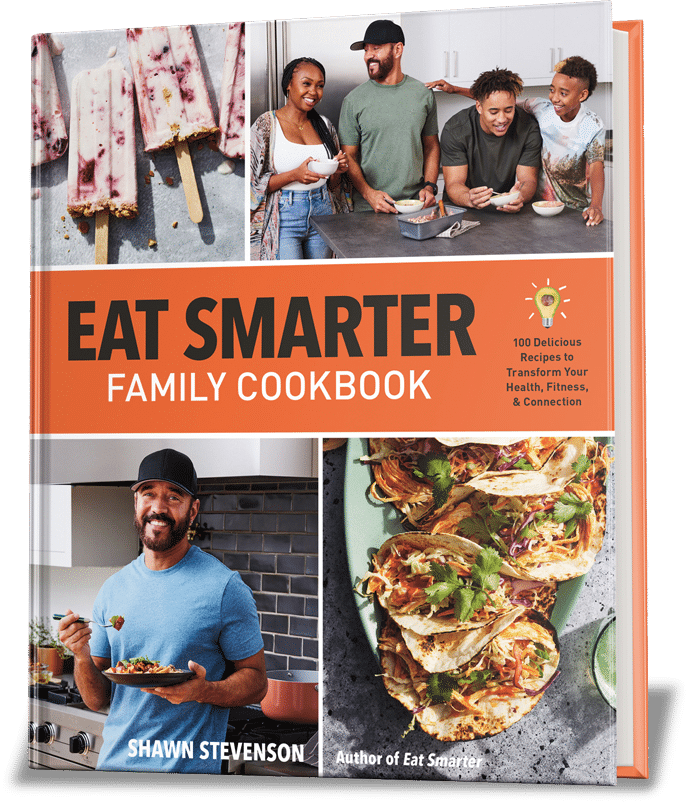
The Eat Smarter Family Cookbook is filled with 100 delicious recipes, plus the latest science to support the mental, physical and social health of your loved ones.


Share Your Voice
0 comments. Be the first to leave a comment.