
Subscribe to The Model Health Show:


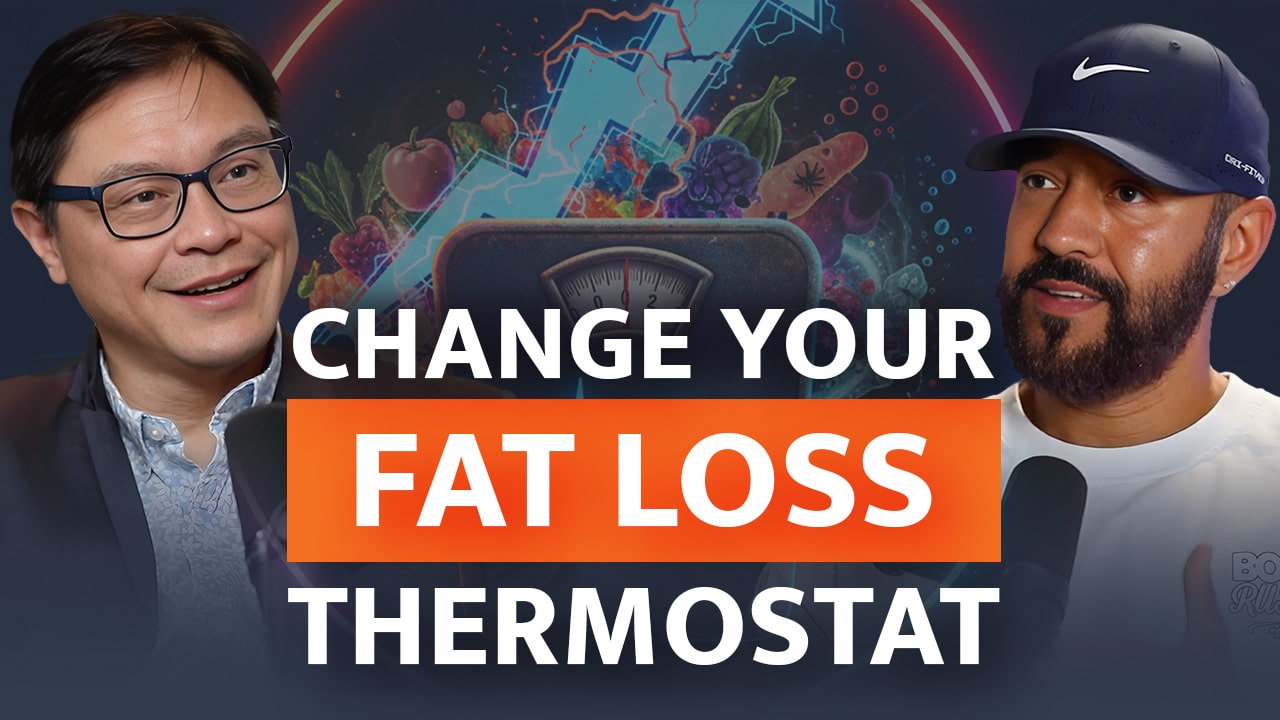
TMHS 980: Change Your Body’s Fat Loss Thermostat & Crack the Hunger Code – With Dr. Jason Fung
Is sustainable, natural weight loss possible in a world of crash diets and weight loss medications? On today’s show, you’re going to learn about real, science-backed strategies that you can use to regulate your body’s internal weight regulation system. If you want to reach a healthy, maintainable body weight long-term, this episode is full of actionable insights for you.
Today’s guest, Dr. Jason Fung is a medical doctor and New York Times bestselling author who has helped thousands of people lose weight and prevent disease through clinically proven, natural strategies. Dr. Fung is recognized as one of the first physicians to prescribe the combination of healthy eating and intermittent fasting for patients with obesity. His new book, The Hunger Code, is a complete guide to losing weight in the era of calorie counting, GLP-1 medications, and ultra processed foods.
Today, Dr. Fung is back on The Model Health Show to help you understand what drives hunger and weight gain. We’re going to dive into the role that specific hormones play in regulating hunger and satiety, how your environment can dictate your eating habits, and three specific, science-backed things you can do to reset your body’s fat thermostat.
In this episode you’ll discover:
- What your body’s fat thermostat is and how it works. (3:07)
- How your hormones influence hunger and satiety. (5:11)
- The role insulin plays in regulating hunger. (6:07)
- Why counting calories doesn’t work long-term. (11:29)
- How hormone shifts during perimenopause can influence weight. (17:48)
- Why ultra processed foods contribute to weight gain. (28:06)
- The three different types of hunger. (28:38)
- How changing your environment can help you lose weight. (38:23)
- The problem with conventional weight loss strategies throughout history. (51:00)
- Fung’s three golden rules of weight loss. (53:35)
- The best practices for fasting. (1:00:02)
Items mentioned in this episode include:
- Themodelhealthshow.com/ourplace – Use code MODEL to save 10% on toxin-free, ceramic coated cookware!
- Piquelife.com/model – Get exclusive savings on bundles & subscriptions!
- The Hunger Code by Dr. Jason Fung – Learn how to reset your body’s hunger!
- The Obesity Code by Dr. Jason Fung – Read about the secrets to lasting weight loss!
- Connect with Dr. Jason Fung Website / Instagram / X / YouTube
This episode of The Model Health Show is brought to you by Our Place and Pique.
Use my code MODEL at themodelhealthshow.com/ourplace for 10% off toxin-free, ceramic coated cookware.
Go to Piquelife.com/model for exclusive savings on bundles & subscriptions on cutting-edge solutions for your head-to-toe health and beauty transformation.
Transcript:
SHAWN STEVENSON: Welcome to the Model Health Show. This is nutritionist, a research scientist and bestselling author, Shawn Stevenson, and I'm so grateful for you tuning in for me today on this incredible episode. You're gonna discover what your body's fat thermostat is. There's an internal system that's regulating how much weight we all are carrying, and we have an incredible expert in to detail how this incredible system works.
And with that being said, how do we actually change this thermostat so that we can be at the weight that we want to be at? And within this powerful conversation, he's also gonna break down the role of hunger when it comes to weight gain and weight loss. And he's gonna share that there are three science backed types of hunger for us to be aware of and for us to be able to address. And so often in our society when it comes to weight loss, you don't know what you don't know when it comes to anything. We don't know what we don't know. And so to have somebody of this expertise to really enlighten us is incredibly powerful. So I think you're really going to enjoy this today.
And with that being said, let's go ahead and dive into this powerful interview with our special guest, Dr. Jason Fung. Jason Fung, MD turned his passion for disease prevention into a groundbreaking, clinically proven and natural treatment for type two diabetes and obesity that has helped thousands of people around the world lose weight and reverse metabolic disease. Dr. Fung completed medical school at the University of Toronto and a fellowship in nephrology at the University of California Los Angeles. After studying and implementing science-backed nutrition protocols, Dr. Fung was one of the first medical doctors to prescribe a low carb, high healthy fat diet alongside intermittent fasting to his patients struggling with diabetes and obesity.
Today, Dr. Fung continues to promote the fasting lifestyle while simultaneously addressing the root causes of hunger and overeating with his patients. Let's dive into this conversation with the one and only Dr. Jason Fung. Dr. Jason Fung, so good to see you.
DR. JASON FUNG: Oh, thanks for being, thanks for having me here. I love being here.
SHAWN STEVENSON: Of course, you really helped to crack open the understanding of how obesity works, how body fat works in your previous book, and now you're taking it a step further, and you're really zooming in and helping people to understand about our bodies fat thermostat.
DR. JASON FUNG: Yeah.
SHAWN STEVENSON: Because obviously what we've been doing as a society has not been working.
DR. JASON FUNG: Right.
SHAWN STEVENSON: And so you're reorienting us to, to think in a way that is more advantageous to getting the results of actually losing weight and keeping the weight off. So to start with, first and foremost, what is our body's fat thermostat?
DR. JASON FUNG: So the fat thermostat it's what I call this process of homeostasis. So homeostasis is a fancy word for balance. So if you think about your room thermostat, you know, you set the thermostat and if it gets too hot, it turns on the air conditioning. If it gets too cold, it turns on the heat, right? But either way, you maintain this balance and that's homeostasis. So in your body, you have the same thing for almost every single mission critical system.
So if you have a body temperature, when it's hot, you sweat. When it's cold, you shiver. If you drink a lot of water, you pee it all out. If you don't drink a lot of water, you don't pee it all out. Right? If you know, can't breathe and you don't have enough oxygen, you hyperventilate, right? You go in the bright light, your pupils dilate. When you go in the dark room, it constricts. So everything always maintains that balance and you how much body fat you carry is the same way. It's a mission critical system. Because if you think about a wild animal, for example, it must maintain a certain narrow range of body fat, otherwise it'll die. Right? If you're a predator and you're morbidly obese, you'll never catch anything, right? If you're a morbidly obese rabbit, you'll die, right?
And if you carry too little body fat, you'll never survive the winter you're gonna die, right? So the body very tightly controls it, and humans are no different. We actually control our body fat percentage as well. So it sets it at that range. So if you are overweight, the question is not sort of this calories and calories out, the question is why that thermostat got pushed up. Just like in your room, if you game into a room and you say, whoa, it's really hot.
You don't say, let me see, what are the sources of heat in versus heat out, right? You say, who set the thermostat so high? So you turn down the thermostat. And with our body, it's the same way. Everybody knows that, you know, when you're trying to lose weight, right? If your body fat thermostat is set too high and you lose weight, what happens? Well you regain it, right? You get hungry and if you still don't eat your metabolic rate goes down. So the question is, what controls this? And it's really what controls everything else, which is the hormones in your body. There are certain hormones that push your thermostat up and there are certain hormones that push your thermostat down.
And it's only by affecting those hormones that you can sort of control your weight long term, because that's what controls sort of the hunger and the satiety. So just like your room thermostat doesn't actually heat up the room, it turns on the heater to heat up the room. Your body fat thermostat, when it senses that it's, you know, your it's set really high, then it's gonna turn on hunger and it's gonna make you eat right or it's gonna turn down your metabolic rate, you're gonna burn less or you're still gonna gain that weight.
But it's that regulation and that's the hormone. So, which hormones push it up and which hormones push it down. The clearest sort of way to tell is simply to give people the hormone right? Then you can tell, right? So insulin is sort of the main hormone. If I inject you with a lot of insulin, you're gonna gain weight. And it doesn't really even matter how much exercise you do, how much willpower you have. It doesn't matter 'cause I told your body to gain weight. So therefore you are going to either get hungry and eat more so that you gain weight. Or if you don't eat more, your body will turn down your metabolic rate and you'll gain more.
Right? And that's the problem. So people say, oh, I cut my calories and so on, and I'm still gaining weight. And so a lot of these calories, you know, bullies say, that's impossible. No, it's totally possible. The body turned down your metabolic rate. I've seen people who measure their metabolic rate, they're burning like 800 calories a day. That's an insanely low number of calories. So guess what? They feel cold, they feel tired, they feel hungry, but they're not losing weight because they didn't pay attention to those hormones. So insulin is one, cortisol is one, so stress hormone. So cortisol is a stress hormone. If you give somebody synthetic cortisol, they gain weight.
And then Ozempic is a great example of another hormonal system, which is the GLP one system. And we all know it causes weight loss. It doesn't restrict calories in any way, right? What it does is it reduces hunger. How well it pushes that thermostat down, right? So therefore that turns hunger right off. You don't want to eat. You lose weight, but it didn't restrict calories, right? It changed the hormone balance. And that's the important lesson of ozempic, is that the way we think about our weight has to change. It has to think about, you have to think about that thermostat. Why is it going up? So if you understand why is going up, then you can say, Hey, if insulin is a problem, how am I gonna lower the insulin?
If cortisol is the problem, how am I gonna lower cortisol? Right? And that's the stress hormone. Do I need to get better sleep? Do I need to meditate? Do I need to be more mindful? Is it gratitude? All of these things are gonna affect the cortisol system, right? But not necessarily, you know, insulin, right? But there are different hormones. The ozempic affects GLP one. There's all, there's a list of them. There's like 10 of them, right? And you know, sympathetic, the sympathetic nervous system is another hormonal system that changes the body fat thermostat. And again, you can look at a drug like nicotine. People who smoke actually weigh less.
They lose their appetite, but why did they lose their appetite? It was because it stimulated the sympathetic nervous system, which pushed the thermostat down, which made you lose your hunger, and then that's what made you lose weight. Right. When they stop smoking, people gain weight. Right.
SHAWN STEVENSON: This is so fascinating and it's one of those things of course, like we're just living life and it's hiding in plain sight.
DR. JASON FUNG: Yeah.
SHAWN STEVENSON: You know? And so, again, we have these very intelligent systems and you mentioned just giving those examples of like an obese bunny. Your food or you know, you're not gonna survive if you don't have enough. And so our bodies are always seeking that homeostasis when it comes to our metabolism.
And so what we are often trying to do now when we have pushed ourselves into a place where that thermostat is set in a way that we have accumulated a lot of body fat and we are trying to just target a diet or ti target a exercise program and not understanding that our biology is essentially working against us. It is not, and I'm using that very loosely because our biology is trying to help us to survive.
DR. JASON FUNG: Yeah.
SHAWN STEVENSON: But for our intents and purposes, it's working against us because we have not addressed where the thermostat is at.
DR. JASON FUNG: Exactly.
SHAWN STEVENSON: And so we're out here just like, you know, it's set at a certain point where, you know it's higher than we want to be. We just keep taking off clothes basically instead of, let me change the thermostat. So that everything starts to work for me and not against me.
DR. JASON FUNG: Exactly, like if you think about insulin is a normal hormone, but its job, one of its jobs is to tell your body to store calories, right? So you eat, insulin goes up, your body gets the message, Hey, store some calories. And body fat is one of the ways it stores calories. So if you compare two foods say you have a donut and a frappuccino for breakfast, right? 800 calories. Insulin spikes way up because there's a lot of refined carbs, a lot of sugar, right? Really high glucose goes way up, insulin goes way up. So that spike in insulin, it's gonna tell your body, Hey, shuttle all these 800 calories into your fat stores.
So what happens? Well, there's no energy for the rest of your body, your liver, your heart, your brain. So like 10 minutes later you're hungry. You're like, I need to go eat something. Right now, compare that to an A like three egg vegetable omelet, right? 800 calories, same number of calories, but insulin doesn't go high, right?
So you're not storing it because you didn't give it the signal to store it. And therefore all these calories are sitting around and your body's like, okay, I'm full. I'm full until lunch, or maybe even till dinner, right? So two very different outcomes, same number of calories. But why? Because the food contains the calories, which is the energy, but it contains instructions, information of what you're supposed to do with those calories. Does your body store it or does it burn it? Because those are two very different things. So if you think that you can get by with just counting calories, but you're eating the wrong foods, right? A bunch of cookies, a bunch of, you know, ultra processed foods, and you haven't lowered your insulin, well, what's gonna happen is that your body's gonna still get the same number of calories, but your the message is to store it all as body fat, right?
So then if it stores a body fat and you don't eat anymore, your, the rest of your body is like, Hey, what's going on? So you're gonna feel cold, you're gonna feel tired, you're gonna be feel hungry, but you're not gonna lose weight. And guess what? That's what every single person who does chronic calorie restric describes. Like not just one person, like millions of people are like, oh, I cut my calories, I feel like crap, and the weight loss has stopped, right? And it's because of the hormones. But the problem is when you go to talk to like the conventional sort of experts, they say no, it's all calories. It's calories.
You're cheating on your diet, right? And it's like, no, they weren't cheating. The advice they were given, which was to focus exclusively on the calories, was completely wrong. You've heard this, a calorie is a calorie, right? Calories in, calories out. What they don't understand is that you have to focus on the hormones and also what's driving the calorie consumption, right? And when you think about it, it's the hunger, right? Because that's how the body, you know, regulates the thermostat, activates hunger or turns off hunger. But it's the hunger that drives your eating. So if you're not dealing with the hunger, you're not going to be able to change the eating behavior, right?
And that's precisely what Ozempic did. It focused on the hunger and not the calories. And that's a crucial difference. If you focus on calories, say you just eat 500 you eat the same thing you normally eat, but less what happens, you're gonna be hungry. Why? Because you eat when you're hungry and you stop eating when you're full, if you stop eating before you're full, you're gonna want to eat some more, right?
So your calories went down, your hunger went up. Guess what? You're fighting your body constantly, just as you say. So what happens now if you just focus on the hunger? Hunger goes down and calories goes down, but you're not fighting with each other anymore, right? So then you have to look at these hormonal systems like insulin, like cortisol, like GLP one, and say, how can I adjust my diet? If the insulin is what's pushing it up? Why is why what part of the diet is pushing the thermostat up so high? And that's the important part because it's not the calories part of the equation, it's the hormonal side of the equation.
SHAWN STEVENSON: Yeah. Thank you. That's amazing. Because again, I think, well, I know this, you know, I went to a traditional university, nutrition, you know, my nutritional science class. A calorie is a calorie. You know, it's like looked at this unit of measurement that is something that is consistent, right? Just basically like if we measure out this room, it's a certain amount of feet and it is every time.
DR. JASON FUNG: Yeah.
SHAWN STEVENSON: But calories are not the same.
DR. JASON FUNG: Exactly.
SHAWN STEVENSON: And in particular, how it relates to our biology. You know, calories did start off in the realm of like physics, but then it kind of parlayed its way into nutritional science. But it's not, it's far from a perfect science. It's good that we have something that can give us a general idea of things. But when you gave that example of the three egg veggie omelet
DR. JASON FUNG: Yeah.
SHAWN STEVENSON: And the inputs of those calories, like very high protein. We've got a lot of fiber coming in and the reaction that our bodies give. And we, the thing is like even individuals who mean, well, who've been in this space and they're just like, just calories. You know, measure the calories and calories out. They know, they've heard the terms of thermic effective food, for example.
DR. JASON FUNG: Yeah.
SHAWN STEVENSON: Right. And they've heard you know, these kind of aspirational ideas about how to relate to calories. And then again, blame the person, instead of acknowledging like these are epic caloric controllers, right. And one of them being protein is going to react differently in your body. And you mentioned, and this is what I wanna ask you about, you mentioned the reaction when it comes to insulin, that insulin response. So that food that you're choosing, what's the response with insulin? What's the response with the things that are going to d determine what your hormones are doing? And my question is, what about people always bringing up this example of the professor who did the twinkie diet and lost all this weight, just eating Twinkies.
DR. JASON FUNG: Oh yeah, that's a difficult one because in the short term you can certainly manipulate it long and short, right? Because if your body is going to manipulate your your metabolic rate down, it's not gonna do it sort of instantaneously, right? So anytime you do a short term diet, you can certainly go up and down either way. So it's hard. And for, you know, for some people it doesn't make as big a difference 'cause we're all individuals, right? So the whole twinkie diet thing is sort of one example. It's like, okay, that's fine. You took it as an example of calories and calories out. Well, how's it worked for the other 300 million people in the United States trying to lose weight.
SHAWN STEVENSON: And also what we don't ask is how did that person feel?
DR. JASON FUNG: Yeah.
SHAWN STEVENSON: When they were doing their Twinkie diet.
DR. JASON FUNG: Yeah, exactly. Because really there's lots of ways to lose weight, right? There's actually tons of ways and I think it's because the things that cause weight gain, and this is the thing I always try to focus on is the science. Like what causes weight gain? There's actually lots of different things because there's lots of different inputs, right? There's insulin in cortisol and GLP one and GIP, and sympathetic tone and glucagon and testosterone and estrogen and all these things.
And it's not just the number of calories because the problem with the whole narrative is that it's all about calories. So if you can't control calories, it's your fault. Because you have no willpower. Right? Then that's where all the fat shaming comes in, right? And we don't need that sort of thing. But, you know, it's very clear that narrative, which is, I learned it right in medical school. All the doctors learned it. It's clear that's not true, because you can look at a simple example like perimenopausal women, for example. So perimenopausal, the perimenopause is actually one of the highest risk times for gaining weight, right? So some women gain two pounds, some women gain 10 pounds.
But it's clear that there's that, and if you ever talk to perimenopausal women they know. Right? And it's not by accident. Like if it was all just willpower, how does every single woman lose their willpower at exactly the same period of time in their life? That makes no sense. Well, obviously the commonality is they're all going through menopause and estrogen is decreasing. Right. That's the link. Not, oh, these women just let themselves go, right? No, that's the wrong interpretation, and that's the problem with this whole calories thing, when you interpret it as that's all your fault.
Now you're blaming the victim because she is the one who's experiencing this weight gain from a hormonal standpoint. And estrogen's actually quite fascinating just from a scientific standpoint because estrogen's actually an appetite suppressant. So you can actually follow women through their menstrual cycle. So when they go from, you know, day one to the mid cycle, which is ovulation, estrogen tends to rise. And when you measure how much women eat through that period, they actually eat less and less as they get closer to ovulation, right? And then as soon as they ovulate, progesterone goes up and progesterone is an appetite stimulant.
So then how much they eat goes up. So it's very predictable. And the problem with perimenopause of course, is estrogen is decreasing. Estrogen's going down, appetite's going up. The hunger is going up. And guess what? They gain weight. It was nothing to do with all the things we talked about. Willpower, calories, you know, and the implication is so insulting. It's like, oh, these women, if you gain weight, you're like either stupid or lazy. Right? It's like, no, it means that the hormonal balance in your body has changed for whatever reason. Right. Testosterone's exactly the same. And again, not that you can change it so much, but it's just instructive. So if you treat somebody with prostate cancer or testicular cancer or something and you take out their testicles and their testosterone levels drop, it is very clear that they lose muscle and gain fat.
Right? Because the testosterone was a hormone that told you to gain muscle and lose fat. Like, why do you think people take testosterone. Right? Same thing with puberty. Before puberty, girls and boys have roughly the same body fat. After puberty, girls have about 50% more fat. Is it willpower? Is it laziness? Absolutely not. The women gained breast fat and hip fat because they're preparing for childbirth. The boys, the teenage boys, gain muscle because that's what the testosterone was telling them to do. Is it because they're counting their calories? No. Have you seen what teenage boys eat? It's a lot, and it's mostly crap, right?
It's not good stuff, but they're gaining muscle. Why? Because that's, the hormones were telling their body to do. So again, we gotta get out of this mindset that it's their fault, it's people's fault. It's like this is a hormonal balance, not a caloric balance, because it's the hormones that tell your body, what are you supposed to do with these calories, right? So the testosterone, for example, takes the calories and turns it into muscle. Like, and then boys gain muscle. They also do all kinds of stupid things, right? But the point is that it's all that. So if you're looking at weight gain, then you gotta think about, hey, what are the, these other hormones at play, right?
So, estrogen, testosterone, insulin, cortisol, they're all important. And they could be different in different people, right? So for one person, it could be insulin for another person, it could be cortisol, right? So somebody who doesn't get enough sleep, they're sleep deprived, they're under stress, their cortisol's going up, cortisol's telling your body, Hey, gain some weight. You're pushing that thermostat up. So now you say, oh, eat fewer calories. Well, let me see. So the problem was you didn't get enough sleep and your best advice is to eat less calories. Like that's insane. You should get more sleep, right? Or if your problem is stress, you need to meditate, you need to talk to friends, reconnect with family.
The advice is not eat fewer calories. Right? But this sort of, you know, narrow-minded sort of advice. It's sort of like the, to the man with a hammer, every problem is a nail, right? So whether your problem is perimenopause or sleep deprivation or stress or, you know, emotional trauma, it's all the same solution, eat fewer calories, right? You'll never succeed that way. Right? And we guess what we haven't. So we do need to get hey, we need to know more about the science of why you're gaining, why you're losing weight. And that's what the hunger code, that's what the obesity code was, right? So the hunger code's sort of a take on a follow up to the obesity code, which really talked about the hormones.
And this explores the topics in much more detail in both in terms of the hormones, but also in terms of emotional hunger and social hunger too, which are actually huge. They're actually huge facets of behavior in general. Right? But how do you completely ignore the emotional side, right? This whole calories thing, it completely ignores the importance of social influence and the importance of emotions. It's like, why No behavior, no human behavior is devoid of that. You know, emotional input, right, or social input.
SHAWN STEVENSON: Yeah.
If you're looking for safe, beautiful, non-stick cookware, I've got you covered. Every day my family cooks using the cookware from our place. They're non-toxic. PFAS, free ceramic coated With nearly 100,005 star reviews every day. My family utilizes their award-winning cookware, pressure cookers, air fryers, and more. Now, why does this matter? Well, for years non-stick quote, non-stick Teflon cookware. Has been poisoning our society. One of the most notorious compounds used to make Teflon cookware was a chemical called perfluorooctanoic acid or PFOA, which has been found repeatedly in peer-reviewed studies to contribute to higher rates of infertility, liver disease, and a variety of cancers.
For instance, a study published in the Journal of the National Cancer Institute concluded that PFOA is a strong kidney carcinogen with risk increasing in tandem with levels of exposure. It has only recently been removed from making this STIC cookware only to be replaced with chemicals that are similarly as dangerous. And so to break free from this nonsense, the amazing team at our place has really stepped up to provide again. Safe, beautiful non-toxic cookware that you are absolutely going to love. They also have incredible titanium cookware as well, so they've got some amazing stuff. Head over there, check them out.
Go to fromourplace.com/model, and you're going to receive 10% off site wide. So this includes their cookware and also their amazing appliances like their air fryer. Now, air fryers are popping right now, but it's one of the most toxic environments potentially when you've got all of those PFAS chemicals in conventional air fryers, they've got you covered. Our place has you covered with a non-toxic air fryer, and we use it all the time. So again, head over there, check them out fromourplace.com/model. That's F-R-O-M-O-U-R-P-L-A-C-E.com/model and use the code model to get 10% off and enjoy their 100 day risk-free trial, free shipping and free returns. So give this gift to yourself or the people that you care about. Our place is really about that life. They're amazing. Again, head over to fromour place.com/model and use the code model for 10% off. And now back to the show again.
SHAWN STEVENSON: This isn't like a soft science, like that's chemistry. You know, we feel the way that we feel based on the chemistry that we're creating.
DR. JASON FUNG: Exactly.
SHAWN STEVENSON: And there's so many things in our reality that influenced this chemistry. Like there's never been more stuff, you know? And one of those things that you are addressing is this really, I mean it's become the predominant type of food in our culture today. You know, according to the BMJA few years ago, the average American adult diet is around 60% ultra processed food. And JAMA published in 2018, the average American child's diet is getting close to 70% ultra processed foods.
DR. JASON FUNG: Yeah.
SHAWN STEVENSON: And so this is a newly invented category of foods. And what makes a food ultra process is that, you know, again, this is the phenomenon where we have a field of corn, which I'm from the Midwest. I done seen a few corn fields, but that corn, it's not like becoming a creamed corn, which that's processing. Right. Ultra processing means that corn field somehow some way becomes lucky charms.
DR. JASON FUNG: Yes, exactly right.
SHAWN STEVENSON: Something that is so far removed from anything relating to the plant that it apparently came from, and plus all these different additives and you know, known obesogens as well. So obesity causing agents. So these are compounds that can increase the risk of gaining belly fat and body fat overall independent of the calories. Like this is known again. And so what is the connection here with Ultra processed foods and the hunger code?
DR. JASON FUNG: Yeah, so ultra processed foods , and you really hit the nail on the head there because it's like we're moving past this whole discussion about calories, right? The calories was maybe sort of like kindergarten level discussion, right? Very shallow, very superficial. This is getting into the real heart of the matter. Like how does the processing change the foods so that it becomes so much more obesogenic, right? Because it's clear that it does. Right. And there's so many ways. One of the ways is through, so there's really several types of hunger. There's this homeostatic hunger, which is driven by all these hormones, but there's also a sort of emotional hunger called hedonic hunger. And this is because eating is a pleasurable. Thing like we all enjoy eating and the ultra processed foods taste that and sort of turns it up to 11 sort of thing, right?
So when you take a natural food, it can only contain a certain amount of, you know, carbohydrates, sugar, whatever it is, right? But once you process it, you can put whatever you feel like, right? You could put these artificial colors, artificial flavors, artificial sweeteners, artificial fats. You can change the texture with texturizer, you can change the creaminess with emulsifiers. You can put flavor enhancers like maltodextrin and you know, MSG. There, there's so much stuff you can do, and what it does is it sort of brings that pleasure, sort of the dopamine reward systems, and basically boosts it right up into very unnatural state.
At the same time, it turns down the satiety, right? So anything that makes you wanna stop eating 'cause there are these natural breaks to eating, right? So when you eat a steak, you're gonna activate certain hormones like peptide, yy, cholecystokinin, GLP one. So you can eat, you know, a steak. Can you eat 10 steaks? No, because you're activating all those hormones. Well, with ultra processed foods and natural foods all have this, right? So what, even with natural carbohydrates, there are natural satiety signals that will turn off, right? You can't just keep eating beans like, you know, pound after pound of beans. You can't because there are those natural signals, but you can get rid of all those, right, with ultra processed foods.
That's why like if you go and imagine you went to this, you know, buffet, you've really stuffed, and somebody said, here have this pork chopper, we're gonna get charged. You'll be like, yeah, charge me. Right? What if now somebody puts down a cookie, you'd be like, oh, I can do that. Right? Why? It could be the same calories. The difference is the hormones and it's so ultra processed that it's turned down all those satiety signals that you can still eat it, right? So now you get into a very dangerous situation where you've got sort of, you're stimulating a lot of hedonic hunger at the same time you're not, you know, you're not satisfying the homeostatic hunger so you can just keep eating it and eating it, and in fact, it can turn into a food addiction.
And the research on food addiction is exploding in the last five years, say. They have these scores now, like the Yale Food Addiction Score so that you can study that scientifically. And what's very clear is that a huge proportion of the people who struggle with weight are actually suffering from food addiction. That is, they cannot stop eating even though they know it's bad for them. Right? And if you've ever watched those shows, you know, those 800 pound person shows, right? It's clearly, they're clearly addicted, right? So the thing is that if it's an addiction, again, you need to understand this is an addiction. So you, there's a whole different toolkit that you have to use.
If somebody is an addict, then you don't say everything in moderation, right? If you're addicted to alcohol, the last thing I should say to you is like, have a beer. Everything in moderation, right? It'd be like the worst advice ever, right? Because you haven't treated it like an addiction. If you're addicted to cocaine, I don't say just have a little sniff, it's okay. Right? But people get addicted to these ultra processed foods because of this, you know, pleasure sort of enhancement, right? And the problem is if somebody says, well, you know, just have a little bit, it's fine, everything in moderation, but you can't, you have to actually treat it with abstinence because if you eat that one, you can't stop.
And the funny part is that people will tell you, they're like, I'm a bread addict. I'm a pizza addict. I'm a chocolate addict. I'm a candy addict. They're telling you they're addicted and nobody takes them seriously. Like if you are addicted, stop completely. You can't take any, now you have to treat them completely different. 'Cause now we're talking about addiction medicine. How do you treat it? Well, you know, like Alcoholics Anonymous, right? They have 12 steps, right? You have like forgiveness and you know you have a sponsor, right? Friends to talk to. You have, you know, finding a purpose and all this stuff, all this great stuff that you give an alcoholic, that you don't give a food addict.
All the food addict gets is eat fewer calories, eat in moderation. Nothing is off the limits. And if you can't lose weight, it's your fault, right? How heartless is that really? Like, honestly, how heartless is that? So that's where these books come in because they're really trying to get into the heart of what's causing the problem. And therefore, once you know better, then you can bring in. You know, the treatments for it, right? So conditioned hunger, which is the third type of hunger. There's a whole research and behavioral psychology that tells you how to treat conditioned. You know, there's conditioned hunger because there's counterconditioning and there's extinction, which are two techniques used in behavioral psychology, right?
And you know, so it's like the more you know, the better you can do because you can dial in the right things. So conditioned hunger is actually quite interesting because I actually think it's a huge problem. Like, other than the ultra processed foods are a problem too. But conditioning is a term where when you pair two things, right? So the classic example is Pavlov's dogs. So, if you give dogs food, they'll salivate, they'll get hungry. If you ring a bell and then give them food, they'll quickly pair the bell and the food. So now when you ring a bell, they'll get hungry and salivate. But they don't get food, right? So now you've changed the bell from a neutral stimulus because it was neutral to something that's gonna provoke hunger.
Right? Now, you think about what happens in modern day society. You eat as soon as you get up. People say you can't skip a meal, you must eat breakfast. You have a mid-morning snack, you have lunch, you eat in the car, you eat at the desk, you eat when you're walking, you eat, when you're watching a movie, you eat when you're going to the mall. You eat when you're getting a coffee. You eat when you're, you know, watching a sports event, right. Now you've paired every single one of these things with food. You walk outside and it's like, ding ding. It's like you are creating all this conditioned hunger. We are Pavlov's dogs.
Right. And that's the food noise that people talk about, right? You go outside, it's like, why am I hungry all the time? Because there's billboards with food. You're walking in the hospital lobby and hey, there's a coffee shop and they're baking donuts. And the subway here is baking bread. There's smells, you know, you get in the car and you've paired the car with food, and then you watch a movie and you're used to eating something when, so it's like everything. You can't stop it, right? And the thing is that once you identify it, then you can do something about it. If you didn't know what the problem, you couldn't deal with it.
Now if you recognize, hey, what kind of hunger is it? Like what's driving the food behavior? Well, it's the hunger, right? You, we eat when we're hungry. Is it the hormone, the hormonal, physical hunger? Is it the emotional hunger, the hedonic hunger, which is the ultra processed foods and food addiction? Or is it the conditioned hunger? Now you can say, oh, I see it's addiction. Let me reach into this bag of addiction medicine. Figure out what are the appropriate things to do and do it right. And that's what this, these books are about.
SHAWN STEVENSON: Amazing. So there's three types of hunger. And again, we think hunger is just one thing. There's just one note on a piano like this is hunger.
DR. JASON FUNG: Yeah.
SHAWN STEVENSON: And it's far more complex. Now you mentioned social.
DR. JASON FUNG: Yeah.
SHAWN STEVENSON: Aspect of hunger as well. And this ties in as well with these kind of conditions.
DR. JASON FUNG: Just the conditioned hunger, yeah.
SHAWN STEVENSON: Piece of it, which is, again, we have these cer, so certain social structures, and especially with humans, like everything Rev revolves around food. I can't think of an event that food isn't involved, you know, whether it's a birthday or funeral, whether it's, you know, a graduation or, you know, obviously a big part of, you know, dating and whether it's after the game with our kids. Yeah. You know, the list goes on and on. You mentioned, you know, watching a sporting event, for example, super Bowl Sunday was recent.
DR. JASON FUNG: Yeah.
SHAWN STEVENSON: You know, it's just a huge food day. Our holidays huge food days, but what we've created is a 365. Huge food day with all of these social hunger cues.
DR. JASON FUNG: Yeah.
SHAWN STEVENSON: And then we're blaming ourselves when it's so difficult for us to manage our appetite, our hunger in these conditions.
DR. JASON FUNG: Exactly. So you look at countries around the world, for example, so you could look at Japan, which is a very, you know, it's a, you know, very first world developed nation, just like the United States and the, but the obesity rate is very low. Right, why? Because the social structures really prevent a lot of this sort of extraneous eating behavior, right? So you take a Japanese person in Japan, the risk of obesity is extremely low. Now they move to the United States and guess what? Their obesity rate goes up like five fold. By the second generation, it's gone up like tenfold. And you think about these situations, like think about it this way. So in the 1970s, say, and you're working, you're in an office, whatever, there's no food anywhere right?
Now, you go to the office and you have a meeting, guess what? There's a plate of bagels, there's a plate of cookies. So you're not actually hungry, but you're super bored. So what do you do? You go eat that cookie, right? It's because of the situation in the 1970s, would you have really left that meeting? Gone outside, gone and found a store to to sell you a cookie and then come back while your boss is like, should I fire you? Right? It's not. It's the situation. It's not the person. But now look that in the 1970s, that person, it took a huge amount of willpower to get that cookie in modern day when somebody's just ordered a plate of cookies, it takes a huge amount of willpower to not eat that cookie because it's staring you in the face and you're just bored outta your mind, right?
The situation is all about the environment, and so we blamed the individual. But it's not their fault, just like the Japanese person. You can't blame it on the individual because it's the environment. So then you have to say, how do you change that? Well, there are lots of ways, right? You say, okay you know, one small example is in the nurses station. So I work in the hospital, and so 20 years ago in the nurses station, there'd be like cookies and donuts and all the time, like 24 hours a day, because there's a lot of patients and stuff. Families would bring in food and stuff, and they'd bring cookies and baked goods. It's very nice because they're showing their appreciation.
But the problem was the same thing. It's staring you in the face all the time. You cannot stop it because it's right there, right? So when you're a little bored, you're a little this, you're a little, that boom, that donut goes in your mouth right. It's changed a bit, right? Because of the mindset around these ultra processed foods have changed. So you don't see that nearly as much. I see much less chocolates and cookies and stuff in the nurse's station. That's so much healthier. And so you can take that and you can say, well, what if I ran a company, what would I do? Well, you can say, there's no more of this. We're selling braid. Somebody's birthday.
So there's cake, right? Because now you can't, the problem is that all those other people, they can't not eat cake and look like an ass, right? Like, oh, why aren't you eating cake? It's like, well, you know, you're gonna eat cake because it's their birthday, right? But you never should have, and you never would've except that of that, right? So if your boss, you say, no more eating in the boardrooms meetings have no food, because that's not a place for eating no more candy bowls because, you know, hey, it's really unfair to people trying to lose weight. Like, we're trying to be nice, but in, in fact, we're not actually doing good. You know? So there's so many little things.
Let's bring back the water cooler. You wanna have somewhere to hang out and talk? Go and get some water. Right. It's right there for you. It's set up for you. Right? So why don't we do that, right? Because the whole narrative is about redesigning your social and your physical environment so that you can succeed. And we saw this during COVID. COVID was a tricky time. Everybody's at home. Guess what? Everybody ate a lot. Why? Because you're sitting on the kitchen table and there's food just all round. And all those cues, right? The pantry's there, right? Oh, you're a little bored. Oh, hey look, there's cookies in the pantry. Right?
SHAWN STEVENSON: You're watching Lion King or Tiger King, you know, during that time as well.
DR. JASON FUNG: Yeah, that's right.
SHAWN STEVENSON: Right. You know, I gotta grab some snacks.
DR. JASON FUNG: Exactly. So it was a tough time, but again, it's not the individual, it's the environment that they've put themselves in. Right. So therefore, one of the key things you have to do is redesign that environment, create that social environment, the people who are going to help you succeed, the environment that are gonna help you succeed.
SHAWN STEVENSON: Amazing. So, obviously, you know, one of the things, well, maybe not so obvious that you articulate in the book is just this kind of evolution of weight gain in our modern society. You know, in particular here in the United States. Going from 1960s, around 13% obesity rate to currently somewhere around 42% close to, you know, getting close to 45% and just the span of a few decades. But in particular, it's been the last few decades where, and this is what I wanna ask you about. Is it true that we're not necessarily, especially like, you know, since the 1990s, 1980s, we're not necessarily eating that many more calories to account for all of the weight that we're gaining?
DR. JASON FUNG: Yeah, because calories are not the end thing, so everybody thinks it's calories equals weight gain, but it's actually completely not true. If you eat a hundred calories your body has a decision to make. Do you store those calories or you do you burn those calories, right? So how many calories you eat is not the most important thing. The most important thing is what you do with those calories, right? So you eat lunch and you eat a certain number of calories. What do you do? Do you store it or do you burn it? Because obviously if you store it, you're gonna get fat. If you burn it, you're gonna have lots of energy feel good and not get fat, right? But you don't get to choose, right? It's not like, oh, I'd like to do this, right? It's their hormones that decide for you, which goes where, and insulin is a big thing.
So this idea that it's all about calories is patently false, right? Because it doesn't account for the differences, the quality of the foods, because food contains not just the calories, which is the energy, the food, energy, but it contains the instructions, right, of what you're supposed to do. So therefore, if you're eating foods with the instructions to, hey. Don't store it, let's burn it. Right? Or you can choose foods like very ultra processed foods that have a lot of instructions, store all this as fat, right? So therefore, those are very different. And that's why the number of calories has a very loose association with obesity rates.
And that's what I mean about let's move past this idea. Even if you think about human physiology, you know, I describe in the book how, you know, we think that it goes from calories to weight, but it's not, it's a food, but it has to be then digested, which then goes into the stomach, then it must be absorbed, which affects your hormones, which then affects your weight. And each of these steps has like 10 different ways it can be changed. So therefore, they're not the same. Just like the, you know, 200 cookie, 200 calories of cookies is not the same as 200 calories of broccoli. Like, who gets fat eating broccoli? Like, not that many people, right? But there's plenty of people who will eat, you know, cookies and get fat.
Why? Because of the hormonal change, right? So the whole calories thing is sort of just it's so, you know, it really doesn't make a huge difference. If you look at the correlation between calories and obesity amongst countries, for example, I take that in the book it's a very loose correlation. You can calculate some something called the correlation coefficient, which is like 0.6, which is sort of a moderately weak association, right? So the quality of the calories, like what are those calories telling you, that's also very important, and that's where the ultra processed foods just throws us sort of completely out of whack.
SHAWN STEVENSON: Right. Oh my goodness.
One of the fastest ways to impact your gut health is through the things that you drink. That liquid medium is a fast delivery system to improve your energy, boost your metabolic health orders straight up mess you up. When it comes to gut health, one of the most powerful things seen in clinical data to instantly uplevel the health of our gut are polyphenols. And these are incredible compounds that have antioxidant and anti-inflammatory properties that are out of this world. And this is just one of the reasons why in that liquid delivery form teas like green tea and black tea. Are noted in thousands, literally thousands of peer reviewed studies to have a variety of health benefits.
Now, my favorite tea is absolutely abundant in polyphenols, and it's been found to have remarkable impacts on our gut health. A recent study published in the peer-reviewed journal Nature Communications uncovered that a unique compound called Thea Brownin found in the traditional fermented tea called pu'erh has remarkable effects on our microbiome. The researchers found that Thea Brownin positively alters our gut microbiota that directly reduces liver cholesterol and reduces lipogenesis the creation of fat. Another study published in the Journal of Agricultural and Food Chemistry found that pu'erh may be able to reverse gut dysbiosis. By dramatically reducing ratios of potentially harmful bacteria and increasing ratios of beneficial bacteria.
So much of these benefits seen in these peer-reviewed studies are due to the incredible concentrations of polyphenols that are found in pu'erh. And the only pu'erh that I drink is triple toxin screen for purity. It uses a patented cold extraction technology and it's wild harvested, making it even more abundant in polyphenols. The pu'erh that I'm talking about, and again, it's the only pu'erh tea that I drink, is from the incredible folks at Pique Life. Go to piquelife.com/model and you're going to get up to 20% off. Plus they're going to hook you up with a free starter kit that includes an electric frother with some of my favorite bundles and my favorite tees over at Pique Life.
Again, go to piquelife.com/model That's P-I-Q-U-E-L-I-F e.com/model to take advantage. This pu'erh tea is in a league of its own. It's absolutely incredible. You can enjoy it, either hot or cold, and there are multiple studies affirming its benefit on our overall metabolic health and supporting fat loss as well. It's truly special. Again, head over there, check 'em out, piquelife.com/model. Now, back to the show.
SHAWN STEVENSON: It's so fascinating because again, where the calories are coming from can make a huge difference in what your body does, the decisions that it makes.
DR. JASON FUNG: Yeah.
SHAWN STEVENSON: And stimulating the creation of new muscle. For example, if you hit a certain amount of protein calories.
DR. JASON FUNG: Yeah.
SHAWN STEVENSON: Right. Again, independent of even weight lifting weights, which when we think about gaining muscle. Think about the input, the signals that we need to give our muscles to do that. But now we know that if you eat a certain amount of protein in particular, like leucine.
DR. JASON FUNG: Yeah.
SHAWN STEVENSON: We can stimulate the creation of muscle tissue. So again, our body's deciding what to do based on the inputs in particular from our food.
DR. JASON FUNG: Yeah, because, so protein is quite interesting because. It affects this different hormonal mediator called mTOR. And mTOR is a growth hormone as well, right? So insulin is also a growth hormone, but that's why when you eat a lot of protein, you're gonna stimulate the mTOR, which is gonna stimulate growth, which in, in, in a lot of cases, if you let it, it's muscle growth, right? Especially if you pair that right with exercise, because it's really most important for that eating protein by itself without doing exercise. You can get a bit, but it's.
SHAWN STEVENSON: Very minimal.
DR. JASON FUNG: Yeah. You're not gonna get a lot. I wish you could, but nobody just eats and gains a lot of muscle, right? So the whole point is that there's such complexity of this, you know, system that our body is, why do we dumb it down to something that's so, so basic when we've actually spent, you know, decades learning how our body works, and then ignoring everything that we've discovered and just saying, well, it's all about calories, right? So we're just gonna ignore insulin and GLP one and all this, you know, all this good stuff, right?
Like, GLP one's interesting because that's the hormonal system of Ozempic. And Ozempic really turns down the hunger, right? But the key is that you're not restricting calories, right? If you're restricting calories, it's very unsuccessful. And we've done that. So you could wire somebody's jaw shot. They did that in the sixties. They wired people's jaw shot because they wanted to make them lose weight, but they didn't. Why? Because they got hungry, right? They wired the jaw out, they couldn't eat calories. Then they got really hungry and then they figured a way around it, right? You'd take milkshakes and all this other stuff, right?
Then in the 2010s, they're like, oh, I know we're gonna cut out somebody's stomach. That was the sleeve gastrectomy, the bariatric surgery, and it was also mostly a failure, right? We actually had high hopes for that as a medical community. But the problem was that if you look at what they're doing is completely wrong because again, you're pushing down the calories 'cause you're surgically restricting calories, but then the hunger just goes up and up 'cause you never dealt with the hunger issue. And they find ways around it. Again, they take milkshakes and they take, you know, sweets and all this stuff, and then they regain all that weight, right?
So the number of surgeries, the rule on why surgeries that is done in the United States peaked in 2010. So, while the obesity rate went up, this miracle cure for obesity just kept going down. The only reason is because it doesn't work right. Now, you get a drug that suppresses hunger but not calories, and it works, right? The problem is when you go off of it, if you haven't learned the what's driving the hunger, then of course the weight goes back up, right? But it's the hunger that's most important. And that's the sort of theme of the hunger code, right? The hunger is what's driving your eating behavior. So until you think about the sort of deeper reason for the eating behavior, you can't get it right.
So if you're thinking that the problem is overeating, then it's really a problem of over hunger because why are you eating? Because you're hungry? So if you don't think about the hunger, you'll actually never get ahead of the problem because you never understood the problem.
SHAWN STEVENSON: Wow. Obviously there is so much rich information in the book to understand this inside and out, but just practically for everybody listening today just to have some things to walk away with, what would you say are the three most important things for people to target when thinking about things in terms of this body fat thermostat?
DR. JASON FUNG: Yeah.
SHAWN STEVENSON: Cracking the hunger code and proactively addressing weight loss, sustainable weight loss.
DR. JASON FUNG: Yeah.
SHAWN STEVENSON: Through addressing hunger, what would those three most important things be?
DR. JASON FUNG: So in the book I have this three golden rules of weight loss, and there's sort of, there's 50 weight loss tips, but there's three golden rules, which are sort of the most important things. So the first is ultra processed foods, like don't eat ultra processed foods because they actually cut across all the different types of hunger.
They're basically deliberately engineered to give you a lot of, you know, it's easy to eat. You're getting a lot of, you know, spiking insulins. You're getting a lot of this homeostatic hunger, the physical hunger.
It's turned up the pleasure to like, you know, the reward system to 11. So you got stimulated a lot of hedonic hunger and then the social conditioned hunger because it's so easy, it's so convenient, you can always pair it right. So you can always go and when you go to the car, you can open a bag of, you know, cheetos or whatever, right? Like who's going to fry a little piece of salmon and go into their car, right? Obviously not right, but the convenience and availability of that makes that social hunger, that sort of conditioned hunger good. So, because it cuts across all three, it's actually one of the most important things you need to do, which is why we need to move past this sort of idea.
It's just calories, right? There's the three types of hunger, and this cuts across all three. So number one is avoid ultra processed foods. Number two is make sure you have an adequate fasting period. So again, fasting is a very ancient strategy, right? So it's been it's in the Bible. So it's been around at least for 2026 years. And the thing is that when you don't eat, insulin's gonna fall, which is the signal for your body to release calories, right? And body fat is just a store of calories. So if you think about it, you're just using the calories that you've stored for what it was meant to do. So what's wrong with that? Right?
Think about it. If you have 50 pounds of body fat, you have like 375,000 calories. What's the big deal? If you don't eat for a day and you take 2000 of those 375,000 calories, is there anything wrong with that? No, not really. Right? So you have to make sure that, hey, you gotta understand it's very simple. When you eat, your body's gonna store calories, right? When you don't eat fasting, that's when your body's going to release calories, right? That's why you don't die in your sleep every single night because your body can hold it and release it. The key is, it's the hormones that determines which way it goes, especially insulin.
Is the hormones going into storage or is it coming out of storage? You gotta make sure it comes out of storage, and that's when it comes outta storage, that's when you're gonna turn off all those types of hunger. And it also breaks a lot of the conditioned hunger 'cause if you have a rule, for example, that I'm gonna fast for 16 hours, I won't eat sort of after 6:00 PM. Well, all of a sudden, if you go watch tv, that runs smack into your rule of, Hey, I'm not eating after six.
Now you've set this guardrail for yourself to make sure that you're following good practices, right? It's this sort of like, oh, okay this is just gonna give you that little nudge. So the third thing is to sort of redesign that social and environmental piece because it's actually super, super important. For example, the people that you hang out with have a huge influence on what you do, right? If you, if all your friends are playing basketball, you're playing basketball. If all your friends are watching basketball and eating potato chips, you're watching basketball and eating potato chips, that's life, right?
So you gotta find that environment that's gonna allow you to succeed. You're gonna gotta find the people that are gonna allow you to succeed because they influence us. We all know that social influence is a huge, it's highly important, right? To what we do, like what we do reflects what our friends do, our family does, and so on. So if you have a chance and you can influence them, of course on, you know, on the other side to to be good as well. But it's important just like the Japanese person in Japan and the Japanese person in America, it makes a difference. So those are the most important things. Avoid ultra processed foods fast regularly and redesign your environment, your social and physical environment to succeed.
And the funny part about these golden rules is that they're literally the oldest rules in the book, right? They're not something newfangled, oh, do this and this, right? It's never thought of before. No. If you ask your grandmother, she would've told you the same thing. Don't eat junk food and don't eat all the time. Right. Don't fall in with the bad crowd. Okay. Well, her grandmother would've told her the same thing. Right. And this sort of wisdom has sort of distilled itself and proven itself over the years. I'm not trying to reinvent the wheel here. I'm just trying to point out that these are the most important things you should do.
Not, oh, we should get this new drink with the peptides and the this, and the that, and the, I mean, there's nothing wrong with them, but, you know, is it like advice that has withstood like the thousand years of human history, right? It's like, I don't think so, right? They might be fine, but here's the things that have worked for a lot of people, their principles, right? And you have to follow those three sort of principles. Don't eat like bad food. Don't eat junk food. Don't eat all the time. And surround yourself with the right people in the right environment.
SHAWN STEVENSON: I love that third one is so powerful because the third one also influences the other two.
DR. JASON FUNG: Yeah.
SHAWN STEVENSON: Tremendously. You know, if you really think about it that social piece you gave a great example. If this is what the people that you're around are doing, you're doing it.
DR. JASON FUNG: Yeah.
SHAWN STEVENSON: And it takes an in, when we talk about willpower, that's where that comes into play. Like your willpower to do a certain thing in the environment that is doing something completely different and there's a place for that. But what if you stack conditions in your favor to where it makes the choices more automatic. But one thing, since I have you here, that I would love to get some more insight about would be the fasting piece.
DR. JASON FUNG: Yeah.
SHAWN STEVENSON: Because when somebody hears that, it's just like, so what? How do I do it? What do I do? Because going from like I'm eating every day, all these different meals to just like cold Turkey, I'm not gonna eat tomorrow. Like what? What are some best practices when it comes to fasting?
DR. JASON FUNG: Yeah, so there's two sort of variables. You have to set the amount of time, so how long are you gonna fast for, right? So there's different strategies. There's a 16 hour fast, which is an eight hour eating window. So you might eat, for example, from 10:00 AM to 6:00 PM and then you would fast from 6:00 PM to 8:00 AM You can still eat three meals in that if you want to.
You can go up to 24 hours, which is a sort of one meal a day. So you eat sort of early dinner, late lunch sort of thing, and then go till the next day, early dinner, late lunch. You don't have to do it every day, right? So you can choose, pick and choose. If you have a event that night, of course you can always change it and you can go longer and shorter and you can alternate them.
Then you can start going into the longer ones. So past 24 hours, sort of 36 hours once you go past the 24 hours. Interestingly, I think it's, you gain a lot of power in terms of weight loss, and it comes down to the fact that when you sort of go, like say you fast the whole day and then don't eat till the next day. So you've actually gone more than 24 hours. 'cause say you eat at 7:00 PM dinnertime on Monday. You don't eat Tuesday, you don't eat again until, say, 7:00 AM on Wednesday, it's more than 24 hours. You're talking about 36 hours, right? Once you get the nighttime, what you're getting is this sort of eight hours of sleep where you're still fasting, but it's completely free because there's no effort involved.
There's no hunger involved. And the thing about it is by the, yeah, time you get the next morning you get the circadian rhythm works in your favor because you, you release all these hormones at 5:00 AM there's part of the circadian rhythm, which happens every day at 5:00 AM your brain releases certain chemicals like growth hormone and cortisol, which actually suppress hunger. And that's why a lot of people are not hungry in the morning. So even though you didn't eat the whole previous day, you'll wake up on that Wednesday morning and feel completely normal with no extra hunger. So you basically reset even though you didn't eat. And then you can keep going longer, right? So you can add more to it.
And what happens also is that you get into this sort of fat burning state because your body has two sources of fuel. One is sugar, glycogen, and one is fat. So you're getting into this fat burning state. So really interesting because the hunger is starting to come down when you reset that next morning. But you're still getting, you're still in that fat burning state. You got the whole nighttime where you didn't even have to think about it and you're still burning fat, right? So really powerful stuff. And then you can start going into the multiple days. And the really interesting thing when you start getting into the multiple days is that one, you can start putting some calories back.
You don't have to do a full water only fast. You can do things like bone broth. You can do things like a little bit of vegetables, a few calories here and there. Turns out that if you know, when you're going longer, it's okay to add a few calories back, like 300, 500 calories. A lot of the data now says that, hey, you're gonna get most of the benefits and put less stress on your body 'cause it's not as stringent, right? So that's another option that actually works really well and may have additional benefits like anti-inflammation and all this sort of thing. So that's the sort of, you know, the sort of types of fasting that I have, which is the sort of the short ones, the sixteens, the 20 fours, getting into the 30 sixes, and then going longer.
So any of those work really, you know, you have to try it and see which one you prefer because some people love the longer ones and other people hate 'em. They all work. It depends on how often you do it. If it's shorter, generally more often longer, you might do it like, you know, a little less often.
SHAWN STEVENSON: Amazing. And keep in mind, this isn't just about I'm fasting just to lose weight.
DR. JASON FUNG: Yeah.
SHAWN STEVENSON: This is one of the most effective approaches when you talk about the removal of these ultra processed foods or the things that are causing the problem.
DR. JASON FUNG: Yeah.
SHAWN STEVENSON: Right. So we're moving away from that. So we've got abstinence.
DR. JASON FUNG: Yeah.
SHAWN STEVENSON: Essentially when you gave that example of like, you know, this whole everything in moderation, like we just need to remove the thing that's the issue, you know, and it's an opportunity to do that and your chemistry is going to adjust.
DR. JASON FUNG: Yeah.
SHAWN STEVENSON: You know, based on that decision. So it's again thousands of years of use. And I love that you came in with the softball here of like, you could just do, you know, an intermittent fast. You know, and give that a shot, see how you feel. Because what it is, if we're just gonna say it bluntly, we are, we've conditioned ourselves to want to eat all the time and we've conditioned ourselves to not be comfortable with being hungry. Or just even feeling that feeling or even something remotely like a tickle of hunger.
DR. JASON FUNG: Yeah. Yeah. That's right.
SHAWN STEVENSON: So we don't really know what hunger really feels like.
DR. JASON FUNG: That's right.
SHAWN STEVENSON: A lot of times it's just entertainment. It's just.
DR. JASON FUNG: Boredom. Yeah.
SHAWN STEVENSON: You know, it's all these other components of hunger, not just like a true hunger where your biology is like, I'm not gonna make it because you have thousands and thousands of extra calories that your body has, you know, has to utilize. And so, you know, I love this because you're expanding the conversation. And the inputs and giving credibility to the fact that this is a complex system. You know, and to stop treating ourselves like we are just this one vanilla way to go about it. And by the way, when you mentioned the buffet.
DR. JASON FUNG: Yeah.
SHAWN STEVENSON: Example, you know, and just like, you go and get stuffed, but there's room for dessert, you know?
DR. JASON FUNG: Yeah. That's right.
SHAWN STEVENSON: You're not gonna let me get another, you know, slice of pizza or chicken or whatever the case might be. But I remember this as a kid, the best thing would be to go over to the ice cream. I'm stuffed. Okay. I'm done. But going over, and I remember the first time I was at a buffet called Ryan's, and I could not believe that they were about to let me do the ice cream machine. Like it's just a handle. And I could just do this myself. I don't feel like I got any training for this, like, you know. And so I did it. I did the whole thing, tried to do the little swirl like they do at the restaurants. You get all these toppings and there's room for it, you know?
DR. JASON FUNG: Yeah. We used to joke as kids that you know, our parents would be like, oh, why would you want dessert? Like, didn't you eat? And we were all like no. There's a second stomach for dessert.
SHAWN STEVENSON: Right.
DR. JASON FUNG: We used to tell ourselves that all the time. I love that. And I think it was hilarious because there's actually some truth to the whole thing because there's no satiety signaling. All those desserts highly refined carbohydrates. Right? You're not talking protein shakes here. You're talking about you're take out all the protein 'cause it's satiating. You're taking out anything that could, like the bulk you're taking out. Anything that would. You know, increase satiety signaling, so now you have this ice cream or this cookie or whatever, right? It's like, oh, because it doesn't make you full. Even when you're full, you can take another one down. Right? And that was our whole second stomach thing.
SHAWN STEVENSON: Kids, you know, the genius of children.
DR. JASON FUNG: We got to the heart of the matter and like telling you the second stomach, like we knew that as kids and the top researchers in obesity don't even know about that whole stomach stuck second stomach phenomenon, right. It's crazy.
SHAWN STEVENSON: Hopefully they're learning and they're getting access to your book and your knowledge and you know, just the work that you've been doing in recent years has made huge waves and made a huge impact. Not just on individuals who are getting the results, but also on practitioners, you know? And so I appreciate you so much for that. Can you let everybody know where to get a copy of the book? And also where to follow you and get more information.
DR. JASON FUNG: Yeah, so you can get it anywhere. You buy your books normally and on social media, you can find me on YouTube under Jason Fung on x.com and Instagram under Dr. Jason Fung. You can also go to my website if you're interested in the other books, which is Doctor, that's D-O-C-T-O-R, Jason Fung. I say that because the other one, DR Jason Fung is like some porn site or something like that. I know. I tried to get that website. I'm like, oh my God, what is this? Right? So I had to go with the other one. So just remember that other one is not me, B-O-C-T-O-R, Jason Fung. So, yeah, and then from there, you know, there's links to all my books and so on.
SHAWN STEVENSON: Amazing. And do not go there. Alright, whoever is this? No. Okay. So the book is called The Hunger Code Resetting Your Body's Fat Thermostat in the Age of Ultra Processed Food Available right now. Go pick up your copy today, Dr. Jason Fung. I appreciate you so much.
DR. JASON FUNG: Oh, thank you so much. This was a great conversation.
SHAWN STEVENSON: Of course. Of course. The one and only Doctor D-O-C-T-O-R, Jason Fong, everybody. Thank you so much for tuning into this episode today. I hope that you got a lot of value out of this. You already know what to do if this was enlightening and you found it beneficial.
Please share the love with somebody that you care about. One of the best ways to share today is where everybody's hanging out, which is social media. All right, take a screenshot of this episode. Tag me. I'm at Shawn model and tag Dr. Jason Fung as well. I'm sure that he would love to see the love, and let's keep this momentum going, keep this education going because it really does matter.We're making a huge difference. So listen again, I'm telling you now you ain't seen nothing yet. We've got some incredible masterclasses and world of leading experts coming your way very soon. So make sure to stay tuned. Take care, have an amazing day, and I'll talk with you soon.
Other episodes you might be interested:
Maximize Your Energy
Get the Free Checklist: “5 Keys That Could Radically Improve Your Energy Levels and Quality of Life”
HEALTHY MEALS EVERYONE WILL LOVE
The Greatest Gift You Can Give Your Family is Health
When you gather your family around the table to share nutritious food, you’re not only spending quality time with them - you’re setting them up for success in all areas of their lives.
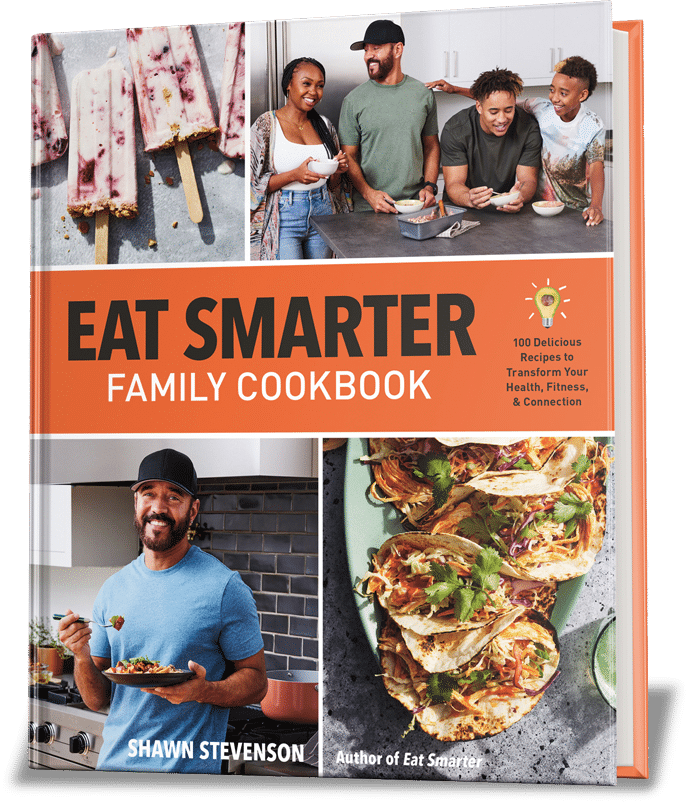
The Eat Smarter Family Cookbook is filled with 100 delicious recipes, plus the latest science to support the mental, physical and social health of your loved ones.


Share Your Voice
0 comments. Be the first to leave a comment.