
Subscribe to The Model Health Show:


TMHS 966: Science-Backed Methods That Extend Your Life Far More Than Genetics Ever Will
Your genes influence many things about you, including your traits, and how your body operates. But is it actually true that our genes can control our health outcomes? Today, you’re going to learn about epigenetics, your ability to put the brakes on the aging process, and the science-backed habits that can boost your longevity.
On this episode of The Model Health Show, you’re going to hear my interview on the Mind Pump Show, where I discussed the impact your relationships have on your health, the truth about the role our genes play in dictating our health outcomes, and how to improve your biological age. You’re going to hear some interesting studies on vitamin D supplementation, the differences between whole and unprocessed foods, and the invaluable role that our relationships play in our lives.
In this conversation, I’m also divulging some of the critical life lessons I’ve learned throughout the hardships of the past couple years, including my experiences with parenting, loss, and family dynamics. You’re going to learn about the benefits of having a healthy relationship with sun exposure, why our expectations can shape our experiences, and so much more. Enjoy!
In this episode you’ll discover:
- How our relationships impact every area of our lives. (8:44)
- The connection between longevity and healthy relationships. (19:19)
- What epigenetics are and the truth about your perception. (32:47)
- The link between vitamin D levels and telomere length. (36:04)
- Why biological aging can vary based on habits. (37:36)
- What percentage of the population is vitamin D deficient. (39:59)
- Tips for optimal vitamin D supplementation. (41:45)
- The fascinating science on how your mindset can slow down aging. (47:50)
- How epicaloric controllers can affect your weight, hormones, and more. (56:04)
- Why your perception of stress can shape your experiences. (1:07:57)
- The value of having meaning and purpose in your life. (1:10:48)
Items mentioned in this episode include:
- DrinkLMNT.com/model – Get a FREE sample pack of electrolytes with any order!
- WildPastures.com/model – Get 20% off every box plus an additional $15 off!
- Mind Pump Show – Check out more episodes of Mind Pump Show on YouTube!
- Eat Smarter Family Cookbook – Transform the health, fitness, and connection of your entire family with the Eat Smarter Family Cookbook!
This episode of The Model Health Show is brought to you by Wild Pastures and LMNT.
Head to DrinkLMNT.com/model to claim a FREE sample pack of electrolytes with any purchase.
Get 100% grassfed and finished beef, pasture raised chicken, and other nutrient dense, regenerative meats. Sign up with my link to get 20% of for life, plus an additional $15 off your first box at wildpastures.com/model.
Transcript:
SHAWN STEVENSON: Welcome to the Model Health Show. This is fitness and nutrition expert Shawn Stevenson, and I'm so grateful for you tuning in with me today. Today we've got big news scientists have discovered there are specific genes that are controlling our levels of body fat and even obesity. Now, this wasn't just a couple of genes. There are over 400 genes that are affirmed as of this recording, and they continue to find more and more. This genetic complex is very complex and that's part of the problem. Scientists thought that we can find these specific genes and target these genes through different therapies and medications to essentially manipulate the genes into not expressing that body fat that we don't want are expressing obesity.
One of those genes that was revealed was the FTO gene, also known as the fat mass and obesity associated gene. And this gene was initially confirmed to be an obesity susceptible gene that predisposed individuals to having obesity, right? This was just huge news, front page headlines, all the things, but it turned out to not be accurate because there are tremendous amount of people who have this gene who are not expressing obesity, not in the slightest.
And so what's going on here? Well, unfortunately, the dogma that our genes are controlling our health was proven to be untrue. One of the biggest analysis ever conducted was published in the peer-reviewed journal plus one, and it was titled, genetic Factors are Not the Major Causes of Chronic Diseases. And so this is now well established and the kind of conversation around genes causing disease, finding these specific genes that are related to the expression of cancer, obesity, heart disease, Alzheimer's, whatever the case might be, keeps leading to dead ends. And unfortunately, the public still doesn't know about this.
Yes, our genes do have an impact on our expression of health. Absolutely. Genes, if we can make an analogy, they're really like the blueprint for making you. Alright, so genes are determining the proteins that are getting printed out to make the copies of you. Again, this is just an analogy. So we're talking about the building blocks that make you up, the signaling molecules, hormones, and neuro transition, all the stuff that's guiding how you're getting made, how you're feeling, your expression of energy or lack thereof.
The list goes on and on. Our genes are absolutely an important part of this process, but there's something above the genes that is determining how our genes are being expressed. We can have a gene say this FTO gene, and have hundreds or even thousands of different proteins, alterations that are getting printed out via this one gene, and it's being influenced by these epigenetic inputs largely from our environment.
But there's something even deeper than that. And that's just one of the things that we're gonna be covering today in this very, very special episode. Now, I'm often invited to do some of the most incredible shows in the world today, and I'm so grateful for this. And I've done all the things, whether it's from Good Morning America to Dr. Oz, to all the network news stations, and I'm honored to be able to say that. But certain shows and certain environments are just incredibly special. And what comes out of them is incredibly special. And recently, I was invited onto one of the, I'm talking the top of the top fitness and health shows in the world today.
And it's from the Incredible guys at Mind Pump Media, Sal, adam, Justin. It's an incredible group of guys who put together something so special and they're so dedicated to excellence. And I had the opportunity to take my son to a Golden State Warriors game for the first time, all right. Which was amazing. So I took him up to the Bay Area, the yay area with me, the San Francisco area. Also took a trip down to San Jose to hang out with the guy. So I was able to kind of make this incredible experience with my son and also to have him there. This is my youngest son who's 14 right now, and have him there for this recording.
And if you've been listening to the Model Health Show for some time, I've shared that I had a really difficult season of life about a year ago. You know, having people close to me, passing away and just changes in my family dynamics and you know, just a lot of things happening at once, which tends to happen. You know, you've heard the sentiment when it rains it pours. And I definitely experienced a little bit of a, you know, LA flood, which is what at this point LA could do better. Alright, it rains and the streets just turn into, like, we looking for Noah's Ark out here. Alright, he's crazy. But just during that difficult season, I was able to really unpack and share some things during this interview that I haven't shared before.
And so I was able to really discuss how I was able to deal with it all and come out the other side renewed. And also we discussed why our relationships are a powerful key in helping us through tough times and a powerful key to our overall health. Plus, of course, we share some profound insights about epigenetics and how to influence our gene expression.
Plus within that, and this is why I was setting the stage for this conversation today, when we're talking about the expression of health, we're in this conversation about longevity and real longevity. We are still having a conversations about our genes and epigenetics and what are those things in our life for real that we can do backed by science to slow down our biological aging.
So we're gonna be sharing some of that as well. We're also gonna talk about the connection between processed foods and processed relationships and much more. So it's a dynamic, incredible conversation and I was truly honored to be a part of this. And so today I'm gonna share with you my recent interview on the Amazing Mind Pump Show with Sal, Adam and Justin, enjoy.
SAL DI STEFANO: Shawn, welcome back to the show, man.
SHAWN STEVENSON: This is the greatest studio in podcast history.
ADAM SCHAFER: Ah, come on. You're just saying that. Yeah. You're just messing with us.
SAL DI STEFANO: He's been on a lot. He knows. He knows man. Believe him.
SHAWN STEVENSON: Come ons, you know?
ADAM SCHAFER: Sounds like I'll take the compliment. Go ahead, ahead. Tell me how, how great we are.
SAL DI STEFANO: We were just talking about how, how long it's been since we had you on. It was right after you wrote your book. Right? Your first book and.
ADAM SCHAFER: The cookbook that my, my wife loves, I swear she's in that all the time.
SAL DI STEFANO: So that was 2023. Yeah. Yeah. Was that so .
SHAWN STEVENSON: That was my latest book.
SAL DI STEFANO: Yeah. That was the latest one.
SHAWN STEVENSON: The Eat Smarter Family Cookbook.
SAL DI STEFANO: Yeah, that's right.
SHAWN STEVENSON: That's right. It's the number one cookbook, new release in the country when it comes.
ADAM SCHAFER: We have all kinds of cookbooks. We, she, we cook outta that more than any other cookbook.
SHAWN STEVENSON: I didn't know that, man. Come on. That's, that's what it's all about.
ADAM SCHAFER: Yeah. Yeah.
SHAWN STEVENSON: It makes me so happy.
ADAM SCHAFER: I mean, and maybe 'cause I guess it fits like our wheelhouse if the food that we're, we're always trying to make food like that and I, I don't know too many cookbooks that are, that are balanced like that nutritionally and taste good. Like it just, I don't know. I feel like it's either or a lot of times either like it's all about how good can you make it. Macros are horrible or it's just all about macros feeding a certain kind and then it tastes like crap. And I it just, you did such a good job of that, so.
SHAWN STEVENSON: Thank you. That means everything.
SAL DI STEFANO: Yeah. We were also just talking, and you were talking about how you had been going through some difficult times since then, but how you kept going back to the show and how. Nine outta 10 times. I think you said that the interviews were, you felt like they were for you. Things that you were interested in or things you wanna learn about.
SHAWN STEVENSON: Things I needed to hear.
SAL DI STEFANO: Things you needed to hear. What were the things that interested you the most during this period of time? Like, what have you learned? 'cause you're a smart dude last, every time I talk to you, I'm like, I always think, man, this guy, really smart dude, really knows his stuff, but also learns a lot. Like has anything, have any of your opinions changed or have you grown in any of those areas, that you know, since we had you on?
SHAWN STEVENSON: Yeah. You know, the main thing would definitely be just the emphasis on relationships and how impactful they are on our psychology, on our practices. And, you know, it's just even more so than even previous. And a big thing for me, man, was just like. And, and you know this, especially as guys, like we tend to compartmentalize.
SAL DI STEFANO: Yeah.
SHAWN STEVENSON: We tend to process things just enough to keep going, you know? And so I got to kind of confront some of those things. And for example, I had an expert who came in who was like the world leading expert on burnout. I know what the burnout was like that didn't exist to me. Like what? And also we relate something like burnout to work.
And I'm just like, I love my work. You know, I get up every day for this. It feels great, but it's not just the one thing, it's a overall life construct, right? So maybe you're dealing with family difficulties. Like I mentioned, I just rattled out to you guys like so many people that passed away that were close to me. And it all happened really in a short amount of time. And so even that, just psychologically, making me feel more and more, kind of depleted and just kind of struggling to figure things out to. Because when you, when you lose somebody, it's, um, you have to restructure how you think.
SAL DI STEFANO: Mm-hmm.
SHAWN STEVENSON: Right. In the same way when you gain somebody, and this was another revelation, was like, every time I had a child, it's like another part of your brain. It's confiscated. Like it is permanently devoted to that human being that just showed up. Right. And so it starts to split you. Right. And so when my daughter was born, she was my first and immediately there was a split in my brain that always focused on where is she?
What is she doing? Is she okay? Right? I gotta protect her. And my son came in, came next, my oldest son, another split happened, right? Can I be the man that I need to be? Am I gonna be able to like throw the football around with my kid and teach him how to be a good man and all these things? Then my baby boy who's here at the studio, I'm so grateful to say, shows up and again, it splits you again.
And so these are all things that just kind of, these conversations, these experts that I had the opportunity to talk to, the things that I was inspired to do, masterclasses on myself and kind of deconstruct. It was all just a part of the healing process. You guys know this, the thing that I love most about you guys, and I think about you guys like actually pretty frequently because you guys hold each other accountable. You have something so special here where if one of you guys is dealing with something or struggling. Like the other two guys, like, just the energy in here, it's like gonna keep you thinking about how can I improve? I gotta figure this stuff out. You know, it's such a powerful force.
ADAM SCHAFER: We talk about how lucky we are to the exact point you're making. I think men do a really bad job of seeking out other men to confide in, hold them accountable to. We tend to hang out still with the guys that we probably went through high school or college with. We have different reasons why we're attached to them. Maybe they're not always growth minded or sharing those personal things.
This forces us to have that bond and relationship. And I think because of that, we, we really value that, that ability for us to hold each other accountable, push each other, and grow. It's like, I'd say it's one of my favorite parts about that relationship. 'Cause you're right, I think.
SAL DI STEFANO: Iron sharpens iron.
ADAM SCHAFER: And, and men don't do a good job with this man. They become hermits. Yeah. Really. We're really bad at it. We really are.
SAL DI STEFANO: Do you, do you have a group of men that you know you can go to that are gonna call you out? That you can tell 'em, Hey man, I'm feeling weak or I'm feeling tired? Do you have that group?
SHAWN STEVENSON: That's such a great question. I'm gonna, first of all, I'm gonna say yes, there are a couple of people, but I didn't grow up like that and so I was very hesitant.
SAL DI STEFANO: Yeah.
SHAWN STEVENSON: Extremely hesitant. Even through my struggles, you know, with losing people that are close to me, changes in my household, you know, having kids move out and a lot of that stuff was a, a big struggle. And I know that some of the men in my life could be very helpful because oftentimes even when you, especially when you're dealing with kids. It is very helpful to have, have those outside voices.
SAL DI STEFANO: Oh yeah.
SHAWN STEVENSON: Right. That they respect. And so I knew that those people were there for me to reach out to and they would always affirm that, but I was just like, nah, I got it. I'll figure it out.
SAL DI STEFANO: Mm-hmm.
SHAWN STEVENSON: And so it took, it took a minute, man. It took a while. And the most important thing is the exposures, right. Just being around them was these touch points. And so one of those people was actually Dr. Michael Beckwith. Right. So he's the founder of Agape Spiritual Center. And I met him while I was speaking at an event of all places in Portugal, which is crazy 'cause I'm like just coming from where I come from. When I found out about him, it was the movie The Secret.
SAL DI STEFANO: Yeah.
SHAWN STEVENSON: Know I was living in the hood, hood, like Ferguson, Missouri Mattress on the floor, you know? And, but I felt connected to him, like of all the people and the messages. And then I end up meeting this guy. On the other side of the planet, you know, like it was just magical. And so we instantly connected and he's been there kind of like a mentor and a brother, and like a father figure too in some ways. And so just dealing with processing the loss of my father, but it wasn't even so much losing my father, which he was in assisted living for about 12 years because of drugs and alcohol, brain damage.
And he just couldn't shake these seizures. And he had gotten clean, but he, you know, these seizures and just continued degradation with his brain. He had to stay in his home. But losing him was for me, you know, I've, we said this before the show, there's levels to it, but I just felt this very strong sense of gratitude because I got to experience, you get to choose what you focus on. Lemme put it like that. Right? I could focus on all the negative things and a lot of negative things happen.
SAL DI STEFANO: Mm-hmm.
SHAWN STEVENSON: But, I got to grow up with somebody who had this incredible childlike nature too. He was a very strong, very strong dedicated man. You know, very strong alcoholic too. But he got up every day and went to work no matter what, no matter what. And I picked that up, you know, and that's a great quality to have, you know. But also when our times together was like playing video games or he come out and play basketball with my friends, nobody else's dad did that. And guess what? My son knows this. I'm the dad that's out playing basketball with the kids. You know, like these are those things that I picked up and I'm so grateful that I had that opportunity, you know.
SAL DI STEFANO: Is it hard for a guy like you who is probably consistently.
Affirmed through the world that through your own work, your own effort, you're gonna get the stuff that you want. 'cause you do that, you work hard, you bust your butt. Is it hard for a guy like you, after being able to do that, to say, yeah, I need to depend on other people.
SHAWN STEVENSON: Exactly. You just, you just said it. You know, I've been that person. And so the other thing I picked up from, from him, he didn't mess with people. Right. He's very much a lone wolf. He would've like one friend maybe. He'll come around like while he is drinking and you know, I kind of picked up that temperament. Whereas my brother and sister, they have tons of friends. They mess with a lot of people and that kind of lone wolf mentality just kind of went with me through my adulthood and you know. But then the greatest blessing of starting the Model health show was my relationships. And I didn't even sign up for that man. I didn't know that was gonna happen. And you guys know this too, it's like, it's such a blessing to meet all these incredible people.
SAL DI STEFANO: Having conversations.
SHAWN STEVENSON: Yeah. Like I had no idea. And so it just really kind of opened me up to how powerful that is. And you know, with that being said, with Michael Beckwith in an instance, it wasn't so much about dealing with my father's loss, it was dealing with my family.
SAL DI STEFANO: Hmm. Right.
SHAWN STEVENSON: Because I was seen as quote the one, right. I'm the one who like made it. Figure some things out. I took care of everything with the funeral and all the different pieces.
SAL DI STEFANO: But where do you turn?
SHAWN STEVENSON: Exactly. Exactly. And because of that, man, and I haven't really talked about this and my son knows this, but I just, I had this pain, this terrible pain that popped up in my neck, in my shoulder. I couldn't turn my head after he passed away like two days later. And I'm just like, but I don't feel like sad or hurt or angry. Like, I feel love. And you know, I talk, I finally talked with Michael Beckwith about it, like just open, like, Hey, you know, like this is going on.
And he just asked me some questions and it was mainly about, you know, my little brother and sister because growing up in that environment, they had an opportunity or a choice to make. Like, are we going to model our parents? Are we gonna do something differently?
SAL DI STEFANO: Mm.
SHAWN STEVENSON: And they modeled my parents significantly and I'm just like, with him passing, that was another thing. It was, I was so hopeful. No, not even hopeful. I almost had this internal demand that you see, this is what can happen. Don't let this happen to you. I hope you guys get the message now. And I did, but it was unconscious. But talking with him, he helped me to realize and redirect that it was my expectation that was causing me pain.
Expecting them to be a certain way instead of just seeing them as they are and loving them as they are. And so, and I wouldn't believe it if. I'm very skeptical, very analytical. But the next day I woke up in that pain that had been haunting me. Like we went on a vacation 'cause we had a base vacation scheduled to go to Maui. I never been to Maui, so I'm in Maui and I can't turn my neck right. And I went and got the special like Loy Loy massage. This little hawaiian lady put her elbows all up in her, destroyed the knot that was in my shoulder, but then it went, popped up on the other side. Right. And I just.
SAL DI STEFANO: That's funny.
SHAWN STEVENSON: It wasn't until I got back, got on the phone with him, told him what was going on, changed the way I was thinking and the pain went away.
SAL DI STEFANO: To, to try to separate the mind from the body is silly.
SHAWN STEVENSON: It's so silly.
SAL DI STEFANO: It, it does. It's talk about the data. Shawn, I know you're a big data guy and a science guy. Talk about what the science says of relationships and what it does for our health longevity. How it impacts us. 'cause for me personally, this is the most fascinating data. There's almost nothing that will predict. Mortality or longevity? Like your relationships, which is wild. 'cause you're like, what does that have to do with my physical body? But talk about some of that and some of the people we've talked to.
SHAWN STEVENSON: Sure. Well, one of the largest studies ever conducted was conducted by researchers at Brigham Young University. And this was a meta-analysis of 148 studies and over 300,000 study participants. So it's a big data set. And they're, they're tracking these individuals, following them for a significant amount of time. And just looking at all these various lifestyle factors to see how it impacts their longevity, how long they live. And after compiling all the data, they found that individuals who had healthy social bonds had a 50% reduction in all cause mortality.
The overall nutrition in our food has taken a nose dive in recent decades. In fact, an analysis published by scientists at the University of Texas made an alarming discovery. 43 foods, mostly vegetables, showed a marked decrease in nutrients from the 1950s to 1999. According to that research, everything from vitamin A to calcium to iron and more has significantly declined. Again, if it's not in the soil, it's not in the food. It's the unsustainable farming practices that have obliterated our soil quality.
But this is changing thanks to farmers who are dedicated to regenerative farming practices. And this is not easy to do in a market that is slanted towards quantity over quality, but select farms are stepping up to do the right thing. And this is especially seen in the domain of animal foods. Research published in the British Journal of Nutrition found that beef from animals fed an abnormal diet of conventional, pesticide laid laden grains.
That decimate the soil quality contain up to five times less Omega-3 fatty acids than what's found in grass fed beef and research from the College of Agriculture at California State University has found that grass fed beef contains elevated precursors of vitamin A and E, as well as increased disease fighting antioxidants like glutathione and superoxide dismutase activity.
Compared to conventionally raised grain fed beef with unsustainable farming practices, whether eating plant foods or animal foods, you'd better know the difference when it comes to organic practices and regenerative farming. And this is what I truly love about wild pastures. Wild pastures delivers 100% grass fed and grass finished beef pasture raised, pork pasture raised chicken and wild, caught seafood directly to your door.
All born, raised and harvested entirely in the US and raised on regenerative family farms. These pastures are free from synthetic pesticides and other chemicals. There's no antibiotics, no added hormones, and right now with the Wild Pasture subscription, you're going to get 20% off for life. Plus free shipping and $15 off of your first order. Absolutely incredible. Go to wild pastures.com/model. That's W-I-L-D-P-A-S-T-U-R-E s.com. Four slash model. 20% off for life free shipping and $15 off your first order. Head over there. Check them out. Wild pastures.com/model. Now, back to the show.
SHAWN STEVENSON: Said another way, individuals with healthy relationships had a 50% boost in longevity. Alright, and so this was a greater increase then beating obesity, then stopping smoking. All these other factors. It was the quality of their relationships that stood out far and away more than anything.
ADAM SCHAFER: I find that study so fascinating because of how much like we've, you know, we demonize smoking cigarettes as we should. It's very unhealthy for you to do. But like we talk, if you were to ask the average person, you know, what's the best thing or the healthiest thing you can do for longevity? They probably say, not smoke, not drink, something like that. When in reality it's, you know, how much energy, energy are you putting towards building relationships with people?
Now when you start unpacking this, you're connecting these dots. Do you begin to put new practices into your life? Or you like, 'cause it's a lot of times you, you know, the data, you know what you need to be doing. But then to actually take action to foster those relationships, especially for a man, especially a man that's older, you know, to now build new relationships or focus on those things. Do you find yourself having to create new habits or do new things? Like has stuff like that changed for you at all?
SHAWN STEVENSON: Yeah, that's a great question. Now, just to lean in, let's use a cigarette example because chances are if somebody starts smoking, it's because of a relationship.
SHAWN STEVENSON: Right? Drinking, what you eat.
ADAM SCHAFER: That's an interesting point.
SHAWN STEVENSON: Yeah. Your sleep habits. Your sleep habits are more influenced by your wife and kids than anybody on earth, by far.
SAL DI STEFANO: Fact.
SHAWN STEVENSON: Right. Your exercise habits are influenced by your relationships more than anything. I can go on and on. What it is, and this is just real practical, so we're not even talking about like quantum level and all that stuff. We're talking very practical. Why are relationships so influential on our longevity and our health? It's because it's the tip of the spear. It's what affects everything else that you attribute to your health and wellness. Now, with that said, I've simply decided to be more intentional and strategic about who I have around me.
Right. And my son, funny enough, my son who's sitting right back there, he asked me today, you know, with all the shows that I do and all these incredible people I've interviewed, he was like, do you, do you usually become friends with them? And I'm like, yeah. I mean, pretty much we're, we're friends, but like we don't have, we don't like, have long-term relationships. And it kind of made me sad, but also told him that there's seasons, right? Certain people that I meet that enter my life, we might spend a season together. Maybe it's like we're close for a couple of years. Right. And so that's what, when you asked me the question initially, like, who are some of these people?
And I thought about my guy, Bedros, Bedros Keuilian. Right. So there was a season where me and Pedros were like seeing each other more frequently. He's in, in Chino Hills, so it's a nice little trek from la, but he actually flew out to St. Louis to kick it with me. He brought his family and we all went out together to Ted Drews frozen custard.
Shout out to Ted Drews, you know what I mean? And just we went and got barbecue together and just like, and the same thing when I came out to see him and, you know, just being able and that high level of thinking and that inspiration that he brings being around him and him having these things for me as well, that added value to his life. But we haven't seen each other in probably two years now. I've just kind of flown by. But I think about him often and I pray for him and his family. But I just actually did the opening keynote for his event because he had a scheduling thing where he couldn't be there to open his own event. The fitness business, you know, event. And he had enough invested in me to trust me to do that for him, you know?
SAL DI STEFANO: So do you find it easier to be vulnerable and open when you're on a podcast than you are in your real life? In your personal life, I should say?
SHAWN STEVENSON: Man, that is such a great question too. Oh my God, man, I got chills from that one. My wife gets mad at me because she finds out, like my mother-in-law listens to every episode of my show.
ADAM SCHAFER: And she finds out more from your show than they do talking. Yeah.
SHAWN STEVENSON: She'll find out that I cried and then tell my wife. She's like, I don't, I've never seen you cry. It's, I don't know. You know, it's just, it, I think it's cathartic to be able to, to talk about certain things, but also I was very exposed like the last couple of years with all the things that happened. Like my, I just felt more sensitive. You know, and so having these conversations, like stuff would just come out, you know, but for, it's not that I'm trying to like, you know, not, you know, cry around my wife or whatever like, I didn't cry. I cried when, last time I cried I was like 16. And then I think I had like one Johnny Depp, crybaby tear back up when my grandmother passed away. And then that was it. I didn't cry again until, I don't know, my mid thirties, you know what I mean? Of just, it's not, it's wasn't some kind of badge of honor.
But of course there's a subconscious thing there of being tough. Yes. But also like, I'm just not a somebody who cries a lot, you know? Yeah. I just, I'm very. Um, I'm very aware of circumstances and just kind of like I think about them. I'm a thinker. Yeah. You know, but just being a, allowing myself to be more in my feelings, you know, which can be seen as a negative thing in our culture like there's even a term, like you're all in your feelings. You know, but doing that in the context of safety and, and, and, um, and insight, you know, and so it's very cathartic. So, but, and also to answer your question though, I've had the most amazing time with my wife, you know, through especially this last like six months.
You know, because of all the processing of things that have happened, happened separately for her is voice texting with her friends and these little mini fucking podcasts they do for each other. Right. So she's, I like that stuff. She's been processing stuff as well because all this loss, like, she lost her father as well. Yeah. You know, our, our son moved outta the house and changed the dynamics of the household. Our baby boy is growing up and he's a teenager now. Right. And so we've been able to, again, have relationships where we can have a space to be able to process things and come back together and to process. Yeah. And have great conversations and, and, and experiences together as well.
SAL DI STEFANO: Yeah. I, I can identify with a lot of what you're saying. I think it's very difficult when you've accomplished things in life by your own merit, working hard. I can do this. But eventually get hit with something where you're like, I can't, I don't know. I heard something from a friend of mine that hit me so hard.
I thought it was so. True. You know, we always hear, I dunno if you've ever heard this, the people will say, you know, God only gives you what you can handle. And my buddy's like, that's not biblical at all. He says, God gives you more than you can handle, so you lean on him. And I was like, oh no, I've been doing this all wrong.
SHAWN STEVENSON: It surrendered.
SAL DI STEFANO: Yeah. And, I asked you about that vulnerability question because another thing that struck me was somebody told me, you, you can only, your friendships can only be as deep as you allow them to get with you. So if you're only so deep, that's as deep as it's gonna go. Which means you gotta take a step out into the scary uh-oh. What's this person gonna do with this information? Do they think I'm weak? Are they gonna think I'm, am I gonna do I feel weak? Yeah.
SHAWN STEVENSON: Makes it very, very difficult. It's why it's so important to really know thyself. You know, this incredible tenant. But, you know, I love the, the saying or statement or belief that. People are in your life for a reason, for a season or for a lifetime. Yeah. Right. And we tend to get very obviously attached to certain things and certain ways of being and certain lifestyle factors and comfortability. And you know, just to go back to my son's question about my friendships, you know, like the most incredible friendships are manifesting now where I was on some Drake energy, like, let me no new friends.
You know, that kind of thing. Yeah. Like I've, I'm good, but just being open and receptive and, you know, I could see who's in my life right now for probably for a lifetime. And it would be, you know, my, my wife, my, Michael Beckwith for example. This, they just come to mind. They pop into my mind. But there are people in my life for this season of my life right now that are so amazing, you know, so thoughtful. One of those people, I'm gonna shout her out, is Dr. Gabrielle Lyon.
SAL DI STEFANO: Yeah. She's great. Love her.
SHAWN STEVENSON: Of everybody that I've met. The past, you know, five years. She's the person who checks on me the most often.
SAL DI STEFANO: She's very genuine in.
ADAM SCHAFER: What's cool about that. It's so impressive considering everything she's done in her life. She's so busy, how busy she is. And, I mean, I, I'll, I'll back that up. She's, I'm, I, out of the three of us, four of us, I tend to communicate the most with our friends from the podcast and she beats me. She's the first one to always reach out first, and I'm like, God, how'd she do that? She's, that's my thing. I'm good at that. And she's better than I am at, she's so good about checking in and I always think, man, I'm so blown away by the amount of relationships that she manages, all the things she does in her life and still has the time to, to do that. But value is what we're talking about. Right? Yeah.
SAL DI STEFANO: Shawn, one of the things that I find really fascinating, that's really been something that we've only really been talking about for the last 10 years. But probably mostly for the last five years is how are genes expressed themselves, or epigenetics? You know, there is this belief in the past that you had your genes and that was it, but now we're finding, we know that, uh, behavior, lifestyle, thoughts, relationships, changes, how they, you're not set, they're not set in stone.
So you may have a predisposition for anxiety, or for heart disease or for other things and what you do, how you think will change, how they express themselves. What are some of the things that you've learned in some of your interviews and in your study about epigenetics and just how plastic they seem to be?
SHAWN STEVENSON: Yeah, so this was, it's getting closer to 20 years ago now. When I was first exposed to Dr. Bruce Lipton's work, he's cell biologist. He's really, I mean, most people would attribute him to being like. The father of epigenetics. Yeah. In communication to popular culture and, you know, modern medicine and science. And so again, just the blessing of doing this work in, in, in this show. I got to have multiple conversations with him over the years. And, you know, he, he told me from the very beginning, you know, I get, you know, when I went to school, when I was in my expensive university, we were really in the age of genes cause diseases.
SAL DI STEFANO: Right.
SHAWN STEVENSON: Right. And the truth is, and again, there's multiple published peer-reviewed studies on this top scientific journals affirming that less than 1% of all diseases are directly caused by defective disease. Isn't that wild? Right. And so, keeping that in mind. Then what happens? How, how do we manifest these diseases? And so this is looking towards the new frontier of epigenetics. And I struggled now I was about, I didn't wanna say new because it's not new, right? It's just new that we know about it.
SAL DI STEFANO: That's right.
SHAWN STEVENSON: You know, and gene expression. So we have this conglomeration of genes that make us up, but there are hundreds or even thousands of possible expressions of what a gene can look like or the proteins that can be printed out of you. Alright? The genes are blueprints to print out materials that make you up and it's going to be dependent most by the environment. And Dr. Lipton continued to correct me. And like it's not just the tangible environment that you're thinking about, it's the environment of your mind. It is the number one thing.
Because your perception of the environment. Affects your body more than the environment itself. Alright? And so what I mean by that also, our thoughts create chemistry in our bodies, instantaneously. Every single thought that we have changes our chemistry. We produce different hormones and neurotransmitters instantaneously. All of our trillions of cells are immediately changed just based on our thoughts. That is so powerful. But what are you thinking? What are you thinking right now? What are you chronically thinking? What is your habitual thoughts? And are these thoughts of fear and stress and worry and doubt, lack or they thoughts of affirmation and joy and love and peace.
And we get to choose. But in our society today, we're so distracted, we forget that we have a choice and we often just become victims to our environment or our circumstances. And so that's just kind of setting the table. And so what I wanna share today are some of the things, because our gene expression is really.
If we are breaking it down to this foundational level, that's how we're experiencing this process of aging is through what our genes are doing. Because we know that we can have a genetic expression that can change and make us essentially like a younger version of ourselves. And specifically. So let's just go, let's go through some of these.
SAL DI STEFANO: Yeah.
SHAWN STEVENSON: So this just came out this summer. Alright. And this was conducted by researchers at Harvard Publishing the American Journal of Clinical Nutrition. And they were looking at rate of aging and using all these different biological markers, including monitoring their telomere length. And I'm sure you guys have talked about telomeres many times over the years. So these are the end caps on our chromosomes. And so as we, we have each cell division, a little bit gets clipped off. That's associated with biological aging, one of the strongest markers we have. And so these researchers were looking at. Vitamin D three omega threes and placebo to find out do any of these.
Common supplements slow our rate of aging. All right. This was a four year study, all right. And they tracked all the, again, all these different biological markers and after compiling the data at the end of this four year study period, the individuals who are taking the vitamin D three aged about three years less in that four year study than people who are not, who are taking the placebo or even the omega threes. The omega threes didn't really make a difference when it came to biological aging. And so this is, it was 2000 IUs international units a day. It's like 40 cents a day.
SAL DI STEFANO: That's nothing
SHAWN STEVENSON: incredible. Again, four year study, the people taking the vitamin D three only aged essentially one year biologically. And also, let's take a step back actually, because we subconsciously think that the calendar is toxic. We think the calendar is deadly. The calendar is killing us. We have associations with the calendar in certain markers of aging. But the truth is, and this is based on the widest body of study that we have, there is a, there's a variance, there's a statistical variance in biological aging versus, so we've got the calendar, right?
We've got chronological aging, and we've got phenotypic or biological aging. So this is what your cells are doing, cognitive function, the health of your organs, immune system, all that stuff, right? And so the calendar is correlated with aging, but it does not cause aging. All right? There's a statistical variance of five years on average, older or younger for what your calendar year is for the average person.
SAL DI STEFANO: Half a decade.
SHAWN STEVENSON: Right. Statistical variance. Five years older or younger. But then there are outliers who are 10 or 20 years older than their biological age, or 10 or 20 years younger than their biological age. That's exciting.
SAL DI STEFANO: Yeah.
SHAWN STEVENSON: And I recently, I did all this stuff, whatever, I was almost eight years younger than my chronological age.
SAL DI STEFANO: Through, through what you were doing. Oh, you, oh, you got tested.
SHAWN STEVENSON: Yeah, I did the whole.
SAL DI STEFANO: Oh, I see.
SHAWN STEVENSON: You know, gamut of blood tests and whatnot. And again, this is just, we're still figuring this stuff out, but, you know, keeping that in mind, the calendar is not toxic. Alright. And so there are the, but what, how are certain people aging younger or aging slower than other people? Vitamin D three is one of these powerful markers. Where does it naturally come from?
ADAM SCHAFER: Sun.
SHAWN STEVENSON: Having some time in the sun. Yeah.
ADAM SCHAFER: That's what that points to me, that, that stuff like that research that I just highlights, just how important getting outside in the sun is more than anything else.
SAL DI STEFANO: Do you think I, I think it's less of magic from the sun, although it's magical and more a result of the deficiency of sunlight that we all just are chronically under because Well, yeah.
ADAM SCHAFER: That's why the supplementation that make such an impact.
SAL DI STEFANO: Exactly.
ADAM SCHAFER: Is 'cause we're so deficient. That makes a huge difference.
SHAWN STEVENSON: You got it. You got it. And so, but the study, if you just read it at face value, like I need to take vitamin D three. Right. And that can absolutely be helpful. Absolutely. 2000 IU a day. All right. But what is the core problem here? Right. 60% of our population in the United States is deficient in vitamin D. 60%. It's for some demographics, it's far more. Like African American, 80%. Hispanic 70. All right. Why is that? Got a little more melanin. All right. So a little bit less absorption of that, as you said, the magical interaction with the suns ray in our biology.
Right. And so people with more melanin need even more time in the sun. Right? But we've had all this marketing, and of course, I'm not saying to go from spending a year nine to five and just in your car, and then going to the beach, right. For your vacation. Yeah. Yeah. That's a way to get sunburnt and fuck yourself up.
ADAM SCHAFER: That's right. Go the other way.
SHAWN STEVENSON: But to have a lifestyle where you're not getting sun exposure because of all of this silliness, because of our lifestyle. Yes. And the busyness, but also because of the messages around the sun is trying to kill you. Right. And so it's being smart and having s. Do. We don't have life here on this planet without that flaming ball. We don't. You know, and so, just a real quick caveat, sidebar. The sun's rays hits us like we have photoreceptors on our skin, right? It picks up light and it sends data to all of our cells. It's critical for setting our circadian rhythm, which I'm gonna get to next. And beyond that, this vitamin D production, it interacts with cholesterol in our system as well.
But then there are all these processes, it's gotta associate with your liver. It's gotta associate with your kidneys. Like if you have poor function of all these other organs, like you may not even have good conversion of vitamin D and that could be another place for supplementation. But this is why, and here's the, here's the takeaway for everybody with this one. This is just, we'll just say tip number one, vitamin D supplementation, 2000 IUs a day. It has to be vitamin D three. Mm-hmm. When I was in college, we were not taught that. All right. It didn't matter what was in my rum. Vitamin. Right. So vitamin D three, because that has been, that is more of an end product for our bodies to use it.
Okay? If you have poor liver function or kidney function, whatever the case might be, it's more usable by our body number two, and you need to take it with vitamin K two so that, because it's gonna associate with calcium as well, we wanna make sure that stuff is ending up in the right place. All right? We don't want the calcium to end up in your arteries and mm-hmm. It's vitamin K two and D three together again, 2000 IUs a day. And then the last tip within this, I mean, we can keep going, but it would be to get some sunlight, to get some sun exposure. Make it a mandate, make it a habit, and help to kind of build up that resilience. 'cause the sun is just like, I haven't seen you in a while. You know, so it's just like having that association where we're getting some sun exposure because your body needs it.
ADAM SCHAFER: I mean, to, to tie it all together, the stuff that we've been talking about, maybe the healthiest thing you could possibly do for yourself is take a 30 minute walk with someone you love out in the sun.
I mean, we talk about relationships being so powerful and I know that a lot of our podcast is dedicated to nutrition and at strength training and, and all the things that are related to that. But this is why I think as my training career has evolved a lot of times that's what my initial tips to someone getting started looks like, is like, Hey, before I write you this extensive workout program and this crazy diet with all the macros bounce like.
Get outside and go walk with your spouse for 30 minutes to an hour out in the sun, like every day. And that right there will make such an impact on 90% of people's lives. Just doing that long thing. Huge.
SAL DI STEFANO: And, just to back you up, like if you took somebody, if I took somebody as a, as a fitness professional who never exercised and I take him to the gym and I just beat the crap out of 'em, you know what? You're gonna see damage, overstress, harm. That's what's gonna happen. If I take somebody who doesn't work out and I'm like, we're gonna do a hardcore workout. And the data would show if that's what we studied, don't do this. You guys exercise is terrible for you. Oh my God. Look at these studies on people who never exercise and then suddenly go spend a day at the gym.
This is terrible. It's causing cancer, inflammation, injuries, heart disease. This is not good. This is what we're looking at when we're looking at people who are getting sunburn is that their bodies aren't able to, haven't been around, they haven't been outside. They can't adapt to going outside for, to the park for two hours because otherwise they're in indoors all day long. And so what you see are cancer rates going up, you see damage, you see sunburn. So this is where the messaging got all messed up. The result of which being, Hey, here's what you do if you do go out in the sun, let's just cover you in these chemicals. Yeah, harmful chemicals. Let's put all these xenoestrogens on here.
Let's talk about that for a second, Shawn. What do, because that's controversial and I know you don't mind going that direction. Let's talk about the sunscreens that people have used historically to protect themselves from the dangerous sun and the, and what have you learned about the effects of the sunscreens themselves?
SHAWN STEVENSON: Yeah. So it's not difficult to find at this point, you know, the benzene, and there's, as you mentioned, you know, you got these parabens and dilates and, you know, but here's the thing. Even with all the newly invented chemicals that we are slathering on our bodies to protect us. What we're doing this, we're doing this with, with hope and trust, okay?
What we need to ask is, is it working? Have rates of skin cancer gone down? You know, no. They've gone up since we've been using sunscreen. All right. It's not working. It's not working. And so we're doing something that contributes to poor health. You know, it's carcinogens, all these different carcinogens, but that's what I'm a big fan of, results. Like is it, if it's working, I'm for it. Like all the, give me all of it. Yeah. Right. But it's just not working. And so it's just a silly, it's a very silly thing, but there are ways to protect your skin, you know, obviously, again. Clothing, wear a hat. Yeah.
SAL DI STEFANO: Get a tan.
SHAWN STEVENSON: There's zinc.
SAL DI STEFANO: Slowly get a tan.
SHAWN STEVENSON: Slowly build. That's the ultimate. That's it. Slowly build up. Exposure to the sun. Your body knows how to handle the sun because your jeans evolved. And that was my whole point with starting it off with the vitamin D three thing is we've got, I mean, thousands of studies on vitamin D now in all these different areas of health that it's impacting whether this is improving sexual function, cardiovascular health, cognitive function, immune system function, but at it at the heart, we've got really great data on all of the epigenetic influence. It has thousands of your genes are instantly influenced. Yeah. When your body's producing and or you're bringing in more vitamin D.
SAL DI STEFANO: Yeah. Vitamin D technically could even be referred to as a hormone, the way it acts in the body. Yeah. Which is, you know, pretty remarkable going back to how your perception of your environment affects your genes. More than the environment itself. What's interesting to me is when you look at the data on people with trauma or stress, and its correlation to autoimmune disorders and diseases, so it's really strong connection.
It's as if hating yourself turns your immune system on against yourself, which if, which makes perfect sense. If you're perceiving something, your body will follow that perception because that's the most accurate thing you could possibly find is your perception of things. Not necessarily the subjective. It's not like a computer that it measures the environment. It's how you perceive the environment that changes those things.
SHAWN STEVENSON: Yeah. I'm gonna go there since we're looking at what, what can we do to slow down biological aging? It's your mindset. And have you guys talked to Doc Dr. Ellen Langer?
SAL DI STEFANO: No.
SHAWN STEVENSON: So she's considered to be the mother of mindfulness. You know, she's the first woman to receive tenure and in the Harvard Psychology Department where she's still teaching today, all of this, these studies that are conducted on how our thoughts affect our biology, she started this.
SAL DI STEFANO: Oh wow.
SHAWN STEVENSON: Literally in 1979 was her first study that she conducted looking at the impact of your beliefs in your environment and your biology.
And so she took eight elderly old men and they retrofit fitted an environment to be decades younger. Right. So the environment that they bring them to has, like posters from that time, you know, decades earlier, they only played the music from decades earlier. The newspapers and magazines were more from youthful versions of themselves.
SAL DI STEFANO: It's like a time machine.
SHAWN STEVENSON: It's a time machine. And the results were, I mean, unbelievable. Let me, let me, let me tell you some of these results.
ADAM SCHAFER: Did you know that?
SAL DI STEFANO: I, I, this was, I remember this.
j a : Never heard of that. I didn't know that.
ADAM SCHAFER: I wonder if she's friends with Arthur Brooks. I can't believe I've never heard of her.
SHAWN STEVENSON: Yeah, I'm not familiar at all. Oh, yeah, yeah. So after compiling the data, because what they did was they took all of these different biometrics before and after they took photos, before and after. So these individuals within a week had improvements in their vision, improvements in their flexibility, dexterity, that's crazy. Improvements in their IQ and overall cognition. Improvements in their gait, improvements in their hearing in one week. How you don't hear about an elderly man getting their hearing back or having their hearing improved.
ADAM SCHAFER: That's Wow.
SHAWN STEVENSON: Without some kind of medical intervention. And their faces were visibly younger. Like they had people to actually like look at before and after pictures.
SAL DI STEFANO: That's hilarious.
SHAWN STEVENSON: And they, they looked younger in a one, one week.
SAL DI STEFANO: : In one week.
SHAWN STEVENSON: Yeah. Wow. Being in an environment that said, Hey, I'm, I'm my younger version of myself, they changed. That's okay. And what it really boils down to is what's happening at the level, the genes. And so how do we utilize this? We have to, if we strive to have a more youthful disposition, we have to think younger. Right. We tend, as we get older, to blame things on age. Yeah. Haphazardly. Right. You get an injury, right. Maybe you injure your, maybe you injure your Achilles. Right. And you blame it on It's 'cause I'm, 'cause I'm older.
Halliburton just tore his. Jason Tatum tore his, the difference is they're young and they're just like, I'm just gonna rehab and get battered. Yeah. We tend to start chalking things up to these things when people get hurt at all ages. Yes. You can have, you can slow down how quickly you get. Well, but it doesn't have to be that way. Yeah. And so we need to be careful about haphazardly blaming things on age and also what are the, what are the ingredients that tell your genes that you are younger to keep producing these younger, and I'm going to actually share a study in a little bit demonstrating this, but one of the most powerful inputs is something that we just, we do not think about our value enough in its play.
SAL DI STEFANO: Yep.
SHAWN STEVENSON: Children have a disposition of play. Alright. And as we get older, we stop playing. And so having that as like a hallmark in our lives to keep playing, to keep a youthful mindset, a youthful disposition if we want to, again, kind of mimic these results in this trial. And the same thing with Ellen.
When I had the opportunity to talk with her, she was talk, she plays tennis, you know what I'm saying? She's like, I think she's mid seventies or eighties, whatever.
SAL DI STEFANO: 78.
SHAWN STEVENSON: She had, she had a terrible injury like maybe 10, 15 years ago. Like, and the doctor's like, you're not gonna be able to play tennis again. She's like, fuck that. You don't know who I am. I'm going to continue to do what I love. And she got better and she healed, you know? And so, countless examples of this, I wanna give one more since I'm with you guys. I, the crazy thing was meeting her, I had referenced her so many times, and also the, the work of her students, one of her students is Dr. Alia Crumb, and she was doing work at Stanford.
SHAWN STEVENSON(AD) : I've never heard somebody say that they want to have a less energy. I just got so much energy, I don't know what to do with it. I don't know what to do. For most people today, they want to have more energy. Energy is the fuel of our lives and our experience of energy, if we're looking at it through the lens of biology, boils down deep down to the role of our mitochondria, also known as our cellular power plants or cellular energy plants.
But it's a dynamic exchange going on constantly with all of these trillions of mitochondria that we have within our bodies. Now the question is what is going to help our mitochondria to do what they do and to give us that energy that we're really looking for? Of course, we want to mind our mitochondria. Eat some nutritious food, eat foods that are not creating derangement and all these abnormalities, blood sugar spikes and gumming up all of our cells and our tissues, making sure that we're getting adequate sleep, checking all those boxes. But if we're boiling things down to a category of nutrients that we really wanna look for, look no further than that category of electrolytes.
Electrolytes are minerals that carry an electric charge and they are critical for the function of your mitochondria. A recent study published in free Radical biology and medicine determined that mitochondrial sodium levels are critical in contributing to changes in mitochondrial energy exchange and redux capacity. So this is about delivering energy to all of our cells and resisting the harmful impacts of oxidation and stress. Who knew sodium was so essential for life? Well, a lot of people have known this, including researchers at McGill University, who found that not only does sodium help to maintain proper water balance for all of our cells, but also our most essential organ of energy and life period, which is the amazing human brain.
They also found that sodium functions as a quote on off switch in our brains for specific neurotransmitters that support optimal function and protect our brain against numerous diseases. And so we wanna make sure that we're targeting plenty of electrolytes in our diet. It's gonna come in the form most often of whole organic fruits and vegetables. But this is also the reason that so many people feel and experience more energy and faster recovery when they're utilizing supplemental electrolytes. Now, if you're going to utilize an electrolyte supplement, the number one science-backed electrolytes supplement that supports active hydration, cognitive performance, and a healthy lifestyle overall, look no further than the incredible folks at LMNT.
LMNT has the science-backed ratios of sodium, potassium, and magnesium to help you to feel and perform at your best, the best performance in the world. Utilize LMNT. I'm talking about Team USA, weightlifting, NBA athletes, NFL teams, Navy Seals. The list goes on and on and on. And right now you can try LMNT risk free with there are no questions asked. Refunds. If you don't absolutely love the way that LMNT makes you feel, head over right now to drinkLMNT.com/model, and you're going to get a free bonus pack of their most popular flavors with every single purchase. Alright? Go to drink LMNT.com/model. That's drink LMN t.com/model to take advantage of this right now, head over there, check 'em out, drink LMNT.com/model, and now back to the show.
SHAWN STEVENSON: And the milkshake experiment. All right? And so this is, I love this study. All right, so they blended up a big batch of milkshakes and they were giving them to study participants. We'll just say that the milkshakes were 380 calories, but they labeled them differently. Some of the milkshakes were labeled as when they gave them to participants as high calorie indulgent milkshakes where they put 620 calories on it, same calories. Alright. But they label it different. And then for some people they put a label of low calorie sensa, sensible milkshake. That's only 180 calories, same amount of calories. Alright. They compile the data they were looking at, and this is the cool thing about it. They're looking, doing blood tests and they're looking at hunger and satiety hormones. So ghrelin, when the individuals had what they believed to be a more indulgent milkshake that was high calories, their ghrelin plummeted.
All right? So they were not hungry potentially for a significant amount of time afterwards because their biology said, I already had a lot. The people who had what they believed to be the low calorie milkshake, even though it was the same amount of calories for everybody. Their gollin didn't budge. Didn't change. So what does that say for us practically, is that they're gonna be hungry again, shortly thereafter. They're going to want to eat more because they feel, they believe. That what they were consuming wasn't that much.
ADAM SCHAFER: Alright. This, this actually is so cool because it also proves why we don't, we, we don't have a lot of success with like, all these low calorie snacks that, that come on that have been around forever. 'cause you'd subconsciously eat that little 120 calorie snack. You like, oh, I'm hungry again a half hour later and you end up eating what the 400 500 calories snack would've been just through three of those instead.
SHAWN STEVENSON: Yeah. Let alone, let alone the value, the actual nutritional value it contains. Our belief about it supersedes so much, and this is what I call, you know, I talked about this in my previous book, eat Smarter is Epicor controllers. Right. Calories. It's a very sound science. Yes. But even as I say that, it's the least sound measurement that we have because like we can go right now and measure out a hundred yards It's always a hundred yards. Calories are always different. What, what is on that label for that pack of D's? Nuts. Yeah. Right. Shout out to, I think, is it Mr. Beast? Mr. Beast. Yeah. Mr. Beast has these nuts. It might say 400 calories, but it could be 300. Yeah, it could be 500. It's gonna depend. Right. And the same thing with your exercise. Like, oh, you're so, you do the math, whatever. I'm going to burn off whatever amount of calories on this treadmill. Yeah. It's gonna be different. You can't, it is so variable in and of itself.
SAL DI STEFANO: Yeah.
SHAWN STEVENSON: You know, it's just that, but that's just the foundation of it. But then we have these Epicor controllers that determine how your body responds or interacts to the calories that you consume or the calories that you expend. And so we need to put more attention on those things. Not to negate the value of having calorie management, but what's going on with your microbiome? What's going on with the nutrients that you're eating themselves? We know that the macros influence. The calories and how your body processes them. We know the power of protein.
Stress in your day, stress sleep has a huge impact. Oh yeah. On your, your how your body processes calories. Huge impact. Oh yeah. And several other factors. And so, and not to mention, you know, the quality of the food itself. You know, I think I might've shared with you guys the, the sandwich experiment.
SAL DI STEFANO: I don't remember, did I share that with you guys?
ADAM SCHAFER: No, I don't know. Tell you, do it again. Lemme hear it. Okay. Yeah.
SHAWN STEVENSON: All right. So, this study was published in Food and Nutrition research, and the scientists wanted to find out would our bodies respond differently metabolically to an ultra processed sandwich versus what they consider to be a whole food sandwich. Same amount of calories, same macros, but one sandwich was cheddar cheese and whole grain bread, and the other was white bread and cheese product. Right, like Kraft singles. Which we know they can't call it cheese. It's not Kraft cheese. It's Kraft singles. Yeah. They can't legally call it cheese.
There's not enough cheese in the cheese. And so they consume these sandwiches and of course they were able to measure how much calories you're expending. Right? Because most of our calories are actually coming out through our breathing. Right. We, yes, we could sweat it out and all that kind of stuff, but we're just expending calories.
That's the primary. And so they strap 'em to these monitors. And so they're measuring how much energy is coming out after eating these respective sandwiches. And here's what happened. Again, they had these sandwiches, had the same amount of calories and same macros on paper, but when people ate the ultra processed version of the sandwich, they had a 50% reduction in calorie burn after eating that sandwich than when they ate the whole food sandwich.
ADAM SCHAFER: 50%.
SHAWN STEVENSON: 50% reduction. Yeah, I would've remember that.
ADAM SCHAFER: I don't remember that.
SHAWN STEVENSON: You remember that, right? No, I don't remember that.
SAL DI STEFANO: No. That's interesting.
SHAWN STEVENSON: Again, this is published in food and nutrition research. And now here's the thing. What, what's going on here? What I refer to that as like it's creating a metabolic clog. Like it's just a complexity. It's making, it's difficult for your body to process this stuff. And so you're, you end up retaining more of it. But let me be clear. If people read further into it, you could assume like, this is kind of a temporary thing. Your body will sort things out over time.
SAL DI STEFANO: Sure. Mm-hmm.
SHAWN STEVENSON: But what if you do that every day? Day after day after day.
ADAM SCHAFER: Meal after meal.
SHAWN STEVENSON: Guess what? You have a severely deranged and clogged metabolism where your body is just having a hard time processing all this fake, yeah.
SAL DI STEFANO: Yeah. It's to try to separate food into its chemical makeup, calories, macros, nutrients, which are all important, but just to make it just that. Completely flies in the face of human behavior, culture history. I mean, we eat how many people eat food based off of, it's just pure nutrient like this is what I, it's, we, it's never that. It's always, I'm hanging out with somebody or I'm watching this movie, or it's breakfast, lunch, dinner, or like, crave something or it's a wedding, or I'm sad.
Food it means so much more to us. So it's, I always thought it was silly. In fact, good coaches know this, good personal trainers and coaches, coach behaviors and not macros and calories, and have far more success over that long term, than people that just are like, here's your macros, you know, follow this, that, and the other and let's see what happens.
SHAWN STEVENSON: Precisely. Yeah. I totally agree. You know, again, we have a tendency, you know, I get it. We like to simplify things, but we tend to oversimplify things.
SAL DI STEFANO: Of course.
SHAWN STEVENSON: You know, and something is so complex like. I was just thinking about, I mean, he showed me the megalodon tooth.
SAL DI STEFANO: Yeah. Cool.
SHAWN STEVENSON: On right, like this. We don't know what's going on. We have no clue. We're just here trying to figure it out and maybe, you know, enjoy the process a little bit here and there. Like this is all just really great mystery. We know a ti, we know like a fraction, of a fraction of a fraction, of a percent about what's going on. And that's awesome. Yeah. Now part of that discovery is understanding the genes. Right? And so what I wanted to share with you guys earlier, just like a very specific testament to this. So this was, this was published. No. First of all, lemme tell you the title of this study. Resistance Exercise reverses aging in human Skeletal Muscle.
This is published in plus one. Now I'm gonna talk specifically about gene expression. The researchers took 25 healthy elderly people with an average age of like 68 and 26 young adults. They had an average age of around 24 and collected their genetic data. They even, what I loved about this too, they also took muscle biopsies from the participants, which is not fun. The elderly participants were put onto a structured full body strength training program for 26 weeks, and the researchers had them to just do two full body strength training sessions each week, progressively increasing the amount of weight that they lifted as they got stronger which you, what you guys do.
SAL DI STEFANO: Yeah.
SHAWN STEVENSON: Now this is where it gets interesting. They tracked nearly 600 of their genes from the young people and the older people. The young people didn't do anything different in their lifestyle. The older people started strength training, so the control group. Young, young people, and so 600 genes related to aging.
It showed significant differences between the young people and the old people. The old People's Genes expression just was like all associated with stuff that we attribute to older people, right? And being stuff that's kind of getting messed up or messed up. Now, here's what happened at the end of the study. Again, this was a 26 week strength training program for the older people. Nearly 200 of their genes in these older people showed remarkable change in their expression. Now mirroring the younger people. Alright. 200 of those genes, almost 200 of their genes were now looking as if they were younger, so decades younger.
SAL DI STEFANO: So you couldn't even tell between the, those, the 200 and the other as like, these are the same age.
SHAWN STEVENSON: So we're saying, we're not even saying slowing down the aging process, we're saying potentially reversing it through strength training. How profound is that?
SAL DI STEFANO: So profound. Yeah. Yeah. Yeah. I always refer to, well, exercise in general, if you had to label anything, a fountain of youth, which I, there's so many things that could contribute to this, but exercise in general. And then more specifically, I would say strength training, just because of its, it directly combats all the physical things that we could that we would normally attribute to aging.
You know, frailty, mobility, strength, insulin sensitivity, you know, all the things that we would normally see would decline as you get older. That form of exercise directly a combat. So it's not a surprise to me that you would see on a test a reversal of age Yeah. With genes. 'cause that's what's happening.
SHAWN STEVENSON: Absolutely.
SAL DI STEFANO: You're you're going, you're going backwards with that stuff. When we're talking about mindset, um, at this point, I don't think it's woo woo. I think at this point people will hear it and go, yeah, you know, I've seen studies. It makes sense. The challenge though, is how do you change that mindset, right? So it's like, okay, well I just think like a kid, like what does that look like? One of the things I like to point to is the DA data on stress. So if you look at studies on stress, chronic stress, you have studies where they say, okay, let's list all the areas of stress in your life and then let's take them outta your life and let's see what happens.
And then we have other studies where they take people who have list all the things in stress and they say, we're not gonna take anything out. We're just gonna now try to work on assigning meaning and purpose to the stress and the meaning and purpose side crushes. Crushes the take things outta my life that are stressful type of things. And for me, that makes perfect sense because objectively, if you live in a modern society, objectively, there's always, you know, situations. But objectively speaking, we have far less objective, hardcore stress than, than people a hundred years ago. Like this is just, it's just a fact. Like they have.
SHAWN STEVENSON: You gotta deal with a megalodon.
SAL DI STEFANO: Yeah. Or even a hundred years, like, you know, great depressions and world wars and just, you know, your kid got, you know, bronchitis and they might die, you know? Yet we're more stressed. So, I don't necessarily, a lot of times people are, oh, we have all the stress in our life. I think it's less of that and more of we have no meaning and purpose behind the stuff that we're doing. How do you feel about some of that?
SHAWN STEVENSON: Yeah. Man, this reminds me of my co my conversation with health psychologist Kelly McGonigal. And this was the first thing that I ever shared that went crazy viral. It's like a hundred million views on social media. And it was just this little snippet from our conversation and what she was talking about in the clip, she was talking about how exercise is elicits what you know is quote hope molecules.
SAL DI STEFANO: Yeah. Yeah.
SHAWN STEVENSON: We know, we, of course.
SAL DI STEFANO: I remember this clip.
SHAWN STEVENSON: Myokines and all stuff.
SAL DI STEFANO: Yeah, yeah, yeah.
SHAWN STEVENSON: But another part of that conversation and what she really got on my radar for, you know, this was about 10 years ago was her data affirming how you perceive stress makes all the difference in the world. So if somebody is dealing with a stressful situation and they see it like, the stress is just killing me, it's breaking me down, and so be it.
But when you can perceive it as this stress is making me stronger, I have what it takes to make it through this, this too shall pass. Just having a more affirmative mindset in the face of stress. Again, the mindset piece. People were in fact, more resilient, had a healthier gene expression, had healthier biology because they chose to see the stress differently. Now, I say chose very loosely because most of the time we're unconscious that we do this. Some people we think just seem to have this temperament where I just see things like that, right? But you can learn to do that.
ADAM SCHAFER: Yes.
SHAWN STEVENSON: And you can also.
ADAM SCHAFER: A hundred percent.
SHAWN STEVENSON: Unlearn it in a way, or be beaten into a situation where you change and you're like, well, you know, it is taking me down.
And any of us, this can happen to, this is the power of remembering. Right? And this is why shows like this are so important. This isn't just your, your learning stuff. You know, some stuff you might even know. It's to remember, it's those constant reminders from people that you know and trust to remember how powerful you are to affect change, to determine how you think, to choose your own thoughts instead of being told what to think and to be programmed that I can't, I'm disempowered.
There's all this stuff going on in the world. And you just said it too, you know. Our stress is different today. Like most of, especially if you're listening to this, you got a phone, you got a phone, like we've got so much access and opportunity, and we don't have to worry about even it. I don't know if you guys saw this data, but the obesity epidemic is on par, like even in the homeless population is on par with the general population. You don't even have to have a home. And you can be as big as you want to be. We have access to food and calories. It's, again, I'm not saying that it's healthy, so many of our needs are being met, but it's the psychological need of meaning and purpose.
Right. We need that. We absolutely need that as human beings. And if I, was I, not particularly prepared, but I have multiple studies affirming how purpose, a sense of purpose, contributes to longevity and slowing down the rate of aging. We many people know, like superficially, the legend of people retiring and then they begin the process of degradation and dying quickly thereafter.
SAL DI STEFANO: Yeah. Clear date out.
SHAWN STEVENSON: Right. And so even if you retire, retire from a career. You've gotta be proactive at investing yourself in something that gives you meaning and purpose. And this is why these long lived cultures isn't yet another reason why these long lived cultures with all these centenarians, it's not, again, it's the food is one thing. Yes. Relationships, community, but it's meaning and purpose.
The elders still have jobs to do. They still have important roles in the community, in the family structure. And we, today, more than ever, we have to proactively find that for ourselves because we're so fractured. We're so fractured in our relationships, and we don't have a lack of access to it is, but we do have a lack of awareness.
SAL DI STEFANO: What I see, and it's, by the way, spot on. You look at these old cultures, and you compare to like our culture, where youth is valued. And wisdom is not, you know, getting old here is, you know, you go to Okinawa, you go to Sardinia. And people who are older are, you want their wisdom. You want their, you know, Arthur Brooks wrote this great book on this, and you mentioned how when people retire, their health suddenly declines.
But there is a subset of that group where they're actually, they flourish. And he looked into this and said, what's the difference? Well, the difference was that the people who flourished went from doing to teaching. So now they're done with their work, but then they started mentoring and teaching and volunteering and they just continue to flourish. Whereas the other group was like, done with work. It's like, okay, now I'm just gonna go sit on a beach or whatever, relax, watch tv, and their health took a terrible. Dive because of that lack of purpose. And what this, there's a few places that I can see where this is an issue. We're talking about relationships in particular.
We know how bad processed foods are. Okay. So I think now this is not even controversial to say that heavily processed foods, generally not good for you, in pretty much any way. Okay. About the only value of processed foods is their long shelf life. So I could see how there might be some, some positive applications there. Otherwise it's just bad for you. What we've done with relationships is we've made them processed is what we've done. Same thing we did to food. So we've taken real relationships where I walk out my house, talk to my neighbor, knock on someone's door, someone comes to my house, we're hanging out. You gotta do the weird, awkward thing and, oh, they're coming over. The house is clear. Whatever. So that little bit of work, but now it's face to face. We're, and we've just processed it. Yeah. So it's like, yeah, I'm talking to people. I'm on.
ADAM SCHAFER: I have a social media, I have a hundred Facebook friends. Yeah.
SAL DI STEFANO: Yeah. I'm texting, you know, which, you know, processed food gives you calories, you're not gonna starve. Processed relationships is not like just being in a room, not talking to anybody, but then it's not real relationships. And it's just as bad for you as processed food. And we've processed a lot of things. And relationships, in my opinion is one of the worst ones.
SHAWN STEVENSON: So. Well said.
ADAM SCHAFER: Yeah. And I think it's so important for men, and this is again, back to relationships. Like, I think because I'm the, I have four kids and I have two older and two younger from different, you know, I was married, my first marriage and then my second marriage. And I am way different as a father with my younger ones than I was with my older ones when they were little. You know, had I had, had, I really had a mentor that I respected that I went to for these things and said, Hey man, I'm gonna have kids. You've already had kids, and taking their advice. I think it would've helped.
SHAWN STEVENSON: Absolutely.
SAL DI STEFANO: I think it would've helped rather than going through it and then be like, oh man, I could have been more patient. Yeah. You know? Because I got same as you.
ADAM SCHAFER: How, you know, with the gaps of all the way from teenage all the way up to thirties. What have you seen, like, um, culturally, like the challenges? Like, I think it's so interesting. Like I know he's, he grew up in the iPhone generation, right? Probably, you know, everybody probably has one at school. So like that where your 30-year-old, no one probably had that. She probably barely just barely got theirs, you know, 10 years ago or whatever.
So what has that been like with how different the culture is today raising them? Have you found that you've had to mold as a father? Do you find yourself having to talk about something you really didn't have to talk about before? What's that been like?
SHAWN STEVENSON: Yeah, this experience is way different with my youngest because it's the first time that somebody's acting like I'm not cool. Right. Because, you know, with my, with my daughter, like, you know, she would see it. They just like, her teachers are trying to hit on me. Yeah. Picking her up and all her all her little friends like me, you know? And the same thing, my oldest son, like our coaches are so close because I was, I was 21.
ADAM SCHAFER: Yeah. Yeah.
SHAWN STEVENSON: And so when he was in high school, like.
ADAM SCHAFER: You, you were still hip to that, that generation, right?
SHAWN STEVENSON: Yeah, exactly. Like we listen to the same stuff, you know,.
ADAM SCHAFER: You're a boomer to this generation.
SHAWN STEVENSON: Right. And I remember, you know, like he had started to act a little bit like, I'm not cool a little bit, but then like his friends were like following me on social media or whatever, and they're like, dude, your dad was with, you know, I don't know, whoever, yeah, whoever they were following. He's like, yo, your dad is, you know, and so it just like, he was like, yeah, you right, he alright. He alright. And so, but you know, seeing that transition with the, you know, with the technology for sure. I mean, you know, my kids, both of my kids were in it. My older two kids. But for him now I know. And so like, we were the last, he knows this to get like an iPhone and, you know, into middle school.
And also we have family culture around it. Right. And so no social, the social media piece. Right. That's incredibly dangerous. And we know this, like yeah. There's, there's too many studies already that are cited on this stuff. And the fact that there's kids in elementary school getting phones, that's crazy. Alright. Six years old. 6-year-old kids, 6-year-old kids with phones is crazy. But again, if we don't know, we don't know. Yeah. And parents are not trying to hurt their kids. It's just like, it seems so. It normal. It's, it's insidious. Yes. Yeah. Right.
ADAM SCHAFER: It's culturally accepted, so everybody thinks it's the norm.
SHAWN STEVENSON: Yeah. You just here put the kid in front of a screen. Right. And so, yeah, just having a real, a culture of a healthier relationship with the devices. This is a problem for all of us. We know it. Picking up my phone for those that don't see the video, but, you know, and so one of the things that we observe, like family dinners, right?
We don't bring phones to the table. Something very practical, and he'll tell you like, I'm the main one that I don't even have my phone near me a lot of times. Right. So like, if we're all hanging out in the living room, for example, like my phone is in the kitchen, you know, we don't have the phone, especially at bedtime.
Right. Having kids, having their, the study just came out, I think last week or last month on in particular, was found when kids have their phone at night. Right. And it just, it's so obvious, like if the child has their phone at night interrupting their sleep, and so what the, the study was affirming was worse mental health. Higher rates of all manner of, you know, all of that depression, anxiety, and, you know, ideation. Right. And so having that phone at night, so we, he doesn't have the phone in his room at night.
ADAM SCHAFER: It's good.
SHAWN STEVENSON: Right? And so just having some basic parameters around it, but also knowing he's going to have his phone, he's gonna be talking with his friends, he's going to be watching some, you know, uh, video clips like I just showed you, his AAU basketball clips, for example. Like he, he, he loves that kind of stuff. And so that's great. But it's being mindful monitoring as well, because, you know, it, I, I could just put up a video that we're all watching. Maybe it's a Mr. Beast video, but then it's like some Dick Pill commercial comes up or whatever. Just like, you know, and if he was younger, it's like, what is that?
You know, what is a Blue Chew? Yeah. Or whatever I think is Blue Chew. I don't know. But you know, it's just like. The culture that we exist in is going to be putting stuff in front of our kids. And so we've got to educate them about it. Be proactive, tell them in advance.
ADAM SCHAFER: That's the key right there. I, you know, I have friends that are, are going through trying to put the toothpaste back in the tube Right. And take it away. And you can see the resentment from the teenagers and the kids that are just like, what? You've always let me have this now I can't. And there's not a lot of communication. There's not a lot of education to the why. And then I have a cousin who homeschooled their kids. They have teenagers and, they have very strict parameters around the phone, social media, all those things. And I remember talking to her as a teenager, like, you know, does that bother you that mom and dad only let you do it for this long or you have this and that?
She goes, yeah, I wish I could do it more. And then I said, when you become a parent one day and you have kids, what will you do? I would do the same thing. So, you know, and that shows me that they, you know, they can admit, yeah, of course I want, want it more. But then also they've done a good job as parents of informing and educating 'em why they're doing that. And enough to where she's saying, yeah, when I become a parent, I would enforce the same rules.
SHAWN STEVENSON: Yeah. I think it's why I, the, the example because I, like I said, I had, I have four kids and my two older ones were especially my oldest when he was growing up, this is when it all started becoming popular.And I just wasn't aware, you know, I thought it was like tv, like when I was a kid, we had tv. So Yeah, it's like tv. It's not like tv. It's very different from tv. With my younger ones, much more, much more strict. And even my 15-year-old, it's like much more strict. In fact, she always tells me, my friends get to do all this and that.
I'm like, I don't want you to be like everybody, you know, and I show her the stats. You wanna be like this? And she's like, okay. Yeah, but the example that was given to me, which I thought was perfect, it's like, would you allow, would you just put a bunch of candy and garbage food around your kids and then say you choose what you want to eat. You can make those choices. You know what you're gonna do. No, they don't have the capacity, the maturity, to be able to make good choices when they're presented with things that are so well engineered. Now at multiply that times 10,000, and that's what you have with the engineered algorithms. It's the equivalent of processed food engineering itself as you're eating it.
That's what the algorithm doing as you're using them, they're engineering themselves to be that much more attractive. So if you give that to your kid, your teenage kid even, and you're just like, you know, you educate them. You're just, you're setting 'em up for failure in my, in my strong opinion. So in my opinion on this has changed dramatically as I've become more educated on this.
So with my youngest ones, it's gonna be, I'm gonna keep 'em away from it as long as I possibly can. And again, even my 15-year-old, she gets five minutes a day on Instagram, five minutes. Lemme tell you, we fight over this still, all the time. And I'm like, we're gonna keep it at five. Hey listen. Good.
SHAWN STEVENSON: That's good dad shit right there. Yeah. That's, that's good. Dad. Shit. You know, and he, my son can see the difference with his friends, you know?
ADAM SCHAFER: That's good. He has that awareness.
SHAWN STEVENSON: Yeah. Because there's a
ADAM SCHAFER: ery clear difference between these kids that had unfettered access for man to have it.
SHAWN STEVENSON: Oh man. For sure. For sure. And o of course, like kids today, a lot of times they get together and get on their phones together.
ADAM SCHAFER: Sure.
SHAWN STEVENSON: Right. Which is so funny to see. Yeah. And so, but of course like they're sharing memes and stuff, that too, you know, it's, it's a way to interact and we do the same, you know, but to be able to see the difference when a kid is easily distracted. Right. Having a difficult time focusing. Right. We are, we're programming not just our children, but ourselves, but especially our children, to struggle to pay attention to things.
SAL DI STEFANO: That's right.
SHAWN STEVENSON: Like we already have this epidemic of ADHD and ADD, but it's not an accident. Right. It's not an accident. And you know, the, the research is like, you know, maybe we had two to three minutes of like attention span. Now it's like, yeah. You know, seconds. Seconds. And it's, we're just, our brains are very good at automation and it's just, it's just learning.
And so unlearning is more difficult, as you just mentioned. That's right. So if we can come into this and with some intention, with some structure, with communication, and also being a dad, being a parent, and also having these parameters. Sometimes it seems tough, but Yeah, it's tough.
SAL DI STEFANO: Yeah. You're gonna be different from everybody else. That's the point.
SHAWN STEVENSON: That's the point.
SAL DI STEFANO: That's the point. Yeah. If you want to be healthy. Spiritually, mentally, physically, you have to live differently than the norm. 'cause the norm is not healthy. And that's the conversation I constantly have with my 15-year-old. She's like everybody else, like, we're not gonna be like everybody else. And I'm sorry, but I love you too much. And so that's the struggle. A hundred percent. Bro, thanks for coming back on.
ADAM SCHAFER: Yeah, yeah. Good time. Always good time.
SAL DI STEFANO: Great conversation.
SHAWN STEVENSON: Thank you guys so much.
SAL DI STEFANO: Always a great conversation. Great podcast. You're one of the few podcasts in our space that has stood the test of time.
We were just talking about this the other day. We've been on air now for 10 years and we've seen so many health podcasts that, you know, come up the top disappear, whatever, and you're always doing such a great job. And that's a testament to the authenticity and just, uh, your ability to communicate and, and bring out the best in people, so.
SHAWN STEVENSON: Yeah.
SAL DI STEFANO: Good job, man.
SHAWN STEVENSON: Thank you. I appreciate that. Guys, thank you so much. Thank you so much for tuning into this episode today. I hope that you got a lot of value out of this. If you did, you already know what to do, please share it out with somebody that you care about. Keep this conversation going and definitely check out Mind Pump as well.
Those guys are doing some incredible work and are doing it with integrity and they've been really putting in work and intention for a very, very long time. And huge shout out to those guys. And listen, we are just getting warmed up here with the Model Health Show, and I'm so inspired and I'm so grateful, and I just appreciate you so much for being on this journey with me. It really does mean more than you know, and when I tell you we've got some incredible, incredible masterclasses and the most amazing guests in store for you. I am not pulling any punches. I truly do mean that. And I truly do appreciate you. And so just be ready. Be ready. And with that, I wish you an amazing day ahead. Take care. Have an amazing day, and I'll talk with you soon.
Other episodes you might be interested:
Maximize Your Energy
Get the Free Checklist: “5 Keys That Could Radically Improve Your Energy Levels and Quality of Life”
HEALTHY MEALS EVERYONE WILL LOVE
The Greatest Gift You Can Give Your Family is Health
When you gather your family around the table to share nutritious food, you’re not only spending quality time with them - you’re setting them up for success in all areas of their lives.
The Eat Smarter Family Cookbook is filled with 100 delicious recipes, plus the latest science to support the mental, physical and social health of your loved ones.


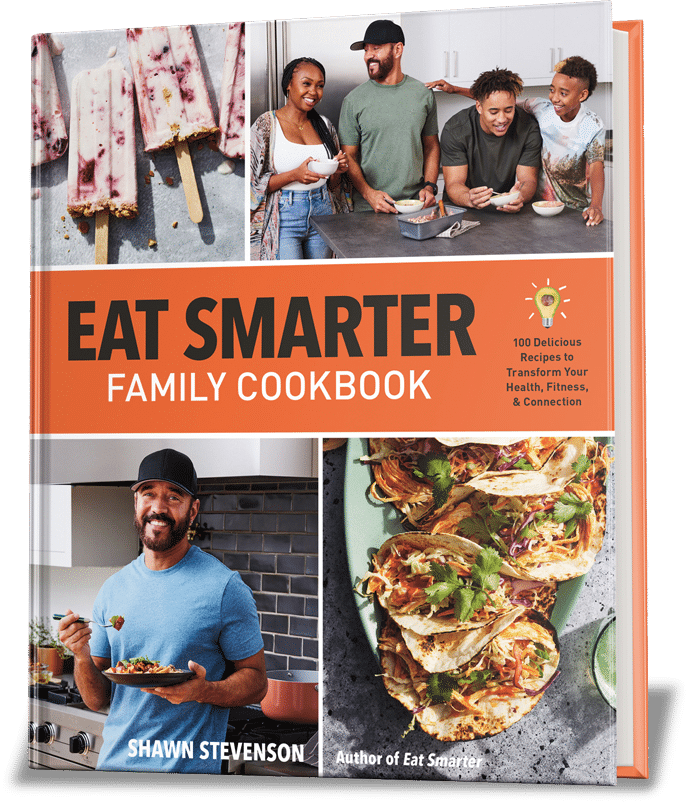
Share Your Voice
0 comments. Be the first to leave a comment.