
Subscribe to The Model Health Show:


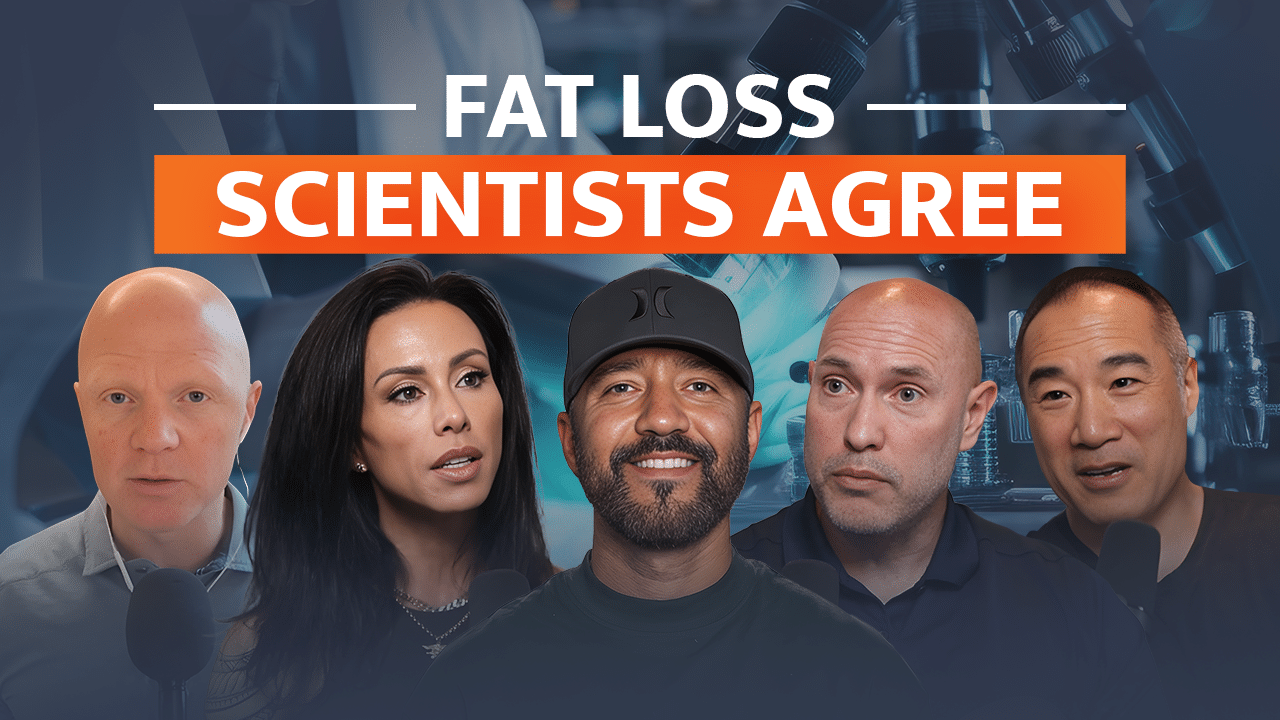
TMHS 989: Fat Loss Scientists Reveal How to Burn Fat and Build Muscle FASTER
There is an important distinction between weight loss and fat loss, and this key difference is often overlooked in our culture of quick fixes. Focusing exclusively on reducing excess body fat will improve your health, optimize your metabolism, and help you look better and live longer. Today, you’re going to learn exactly what it takes to lose body fat.
On this compilation episode of The Model Health Show, you’re going to learn from four of the world’s leading fat loss scientists on how to effectively, safely, and healthily lose excess body fat. We’re featuring interviews from incredible researchers, professors, and medical doctors who have tons of knowledge and experience on healthy and sustainable fat loss.
You’re going to learn about the specific ingredients and action steps that are necessary for losing body fat, the importance of preserving healthy muscle while losing weight, and how to optimize your metabolic health. Most importantly, you’ll hear how to set yourself for success and longevity while striving toward your body composition goals. This compilation episode is full of tangible takeaways that will lead to lasting results, so click play and enjoy the show!
In this episode you’ll discover:
- How being sleep deprived can impact your fat loss efforts. (2:40)
- Why the scale going down isn’t always a good thing. (7:07)
- What muscle is, and its critical role in regulating metabolic health. (8:58)
- Why you must prioritize preserving muscle during weight loss. (10:21)
- The two most powerful anabolic stimuli. (14:27)
- How elevated insulin levels impact fat cells. (31:54)
- What the three primary causes of insulin resistance are. (36:17)
- How each macronutrient affects insulin. (39:53)
- The role your muscle mass has in predicting your survivability. (53:45)
- What chubby muscles are and how they occur. (55:30)
- The health benefits of simply going for a post-meal walk. (58:38)
- What collateral fattening is and how to avoid it. (1:08:19)
- The minimum effective dose of strength training for muscle hypertrophy. (1:17:59)
Items mentioned in this episode include:
- Boncharge.com/model – Use my code MODEL for 15% off blue light blocking glasses!
- WildPastures.com/model – Get 20% off every box plus an additional $15 off!
- Worst Fat Loss Mistakes with Dr. Bill Campbell – Watch the full interview here!
- The Truth About Insulin Resistance with Dr. Benjamin Bikman – Learn more here!
- Do This to Build Muscle with Dr. Gabrielle Lyon – Watch the full interview!
- How to Optimize Fat Loss with Alan Aragon – See the full interview here!
This episode of The Model Health Show is brought to you by Bon Charge and Wild Pastures.
Bon Charge carries the world’s largest selection of science-backed blue light blocking technology to enhance your sleep and overall wellness. Use my code MODEL at boncharge.com/model for 15% off blue light blocking glasses and more.
Get 100% grassfed and finished beef, pasture raised chicken, and other nutrient dense, regenerative meats. Sign up with my link to get 20% of for life, plus an additional $15 off your first box at wildpastures.com/model.
Transcript:
SHAWN STEVENSON: Welcome to the Model Health Show. This is fitness and nutrition expert Shawn Stevenson, and I'm so grateful for you tuning in with me today. Some say that body transformation is not just science, but there's an art to it as well. The art piece is really about our individuality and finding what works best for us in our dynamic, constantly evolving life. So that's one part, but what does the science say? In today's episode, you're gonna hear from four of the world's leading fat loss scientists to help us to understand how to support this process of fat loss, again, backed by science and complimenting that with maintaining our lean tissue as well, so protecting our muscle and burning fat.
Now with all of this said on this episode, all four of these experts are research scientists with published studies on fat loss and muscle gain in prestigious peer-reviewed journals. And they're going to share with you their biggest insights to support you in your own art and science, in transforming your body and creating the body and the health that you truly deserve.
And first up in this powerful compilation is Dr. Bill Campbell. And Dr. Campbell is a professor and director of the Performance and Physique Enhancement Laboratory at the University of South Florida. And he's the author of over 200 peer-reviewed studies and manuscripts on topics related to sports nutrition, physique enhancement, and exercise performance. And in this segment, he's going to explain the profound connection between sleep and fat loss. The truth about protein in relation to burning fat and building muscle, and much more. Enjoy this first segment with the incredible Dr. Bill Campbell.
DR. BILL CAMPBELL: This study made a huge impression on me. There has, there's far reaching implications when I read this study about weight loss resistance, which most scientists don't believe that really exists, but it exists and this study demonstrated that. So what they did in this study, similar, they had subjects have two different conditions, a sleep deprived condition and a non sleep deprived condition. And they put them on the same caloric deficit. I think they reduced their calories by 33%. And this was over several weeks, I don't remember how many weeks, but it was like eight weeks, 10 weeks, something like that.
And what they found was a couple things. When the subjects were sleep deprived, eating the same number of calories, they lost significantly less body fat, and they lost significantly more lean mass.
SHAWN STEVENSON: Hmm.
DR. BILL CAMPBELL: So the way that I have interpreted that, if you are a fitness professional or nutrition professional, and you're help, you're working with people on losing weight, and I know you've done this in your career. As much as the focus is on the nutrition, there needs to be an equal amount of focus on the sleep because what this study taught me, you are literally spinning your wheels if you think you're dieting and trying to lose body fat.
If you're not getting adequate sleep, don't diet, don't waste all of that, that, that energy, that those resources. And again, it's not just that they didn't lose as much fat, they lost significantly more lean mass. So one thing I always do when I look at studies, I always look to look at, out of the weight that was lost, how much came from fat tissue versus lean mass tissue. And the sleep deprived group, it was half of the weight loss came from lean mass stores. And that's the thing that has the long-term repercussions. That's why people gain weight back quickly when their diet is over. So that, when I say that there's certain studies in my career, and I've been doing this for about 20 years, there's certain studies that have been profound in how I counsel people and how, you know, when I write research, this was one of those studies.
SHAWN STEVENSON: Yeah. It's just something that in our modern society, we don't, we just don't think about, you know, we don't think that sleep is impacting our metabolism. And again, just to reiterate this. The weight loss between the two groups was similar, but what they were losing, so the group that was getting adequate rest lost 55% more actual body fat and they retained their lean muscle tissue during the weight loss versus the other group, they lost less body fat, but lost more muscle.
Right. So that sleep deprivation is creating an alteration in how their body is using energy and it starts to just basically burn off some of the most valuable tissue that we can possibly make. That it takes a lot of work to make muscle tissue.
DR. BILL CAMPBELL: Oh yeah. Yeah. And you made a really good point. If you stopped reading that study at just the weight loss, you would say, oh, okay, well it really doesn't matter. And that's one thing I, with my university students. I always say, if you're gonna read any weight loss study, always pull back the curtain on body weight. What's the body fat and the lean tissue responses to this. Yeah. And, to be honest, I was guilty for years myself. Like, you know, I heard about your book and how important sleeping, like, ah, yeah.
And then I'm reading these studies and I'm like, man, I have not done, I've not done a good job as an educator. But then again, when you, when I, when I read these studies, you know how it is like you can hear things a hundred times and until something clicks. But now, literally, when I work with fitness professionals, I already said it once, but I'll reiterate. You have to make, you have to prioritize their sleep as much as the weight loss diet. Otherwise, and again, I'm thinking of people going through like a divorce loss of job. If we know there's times when people are gonna have really high levels of stress that likely are gonna impact their sleep quality, maybe this isn't the best time to also to try to lose weight because it's, again, it's, you're not gonna get the results.
I'd say what my lab is known for is fat loss research, but prioritizing the muscle tissue during this, during a dieting phase because there's a lot of bad ways to diet that you just, it's sad because people think what they're doing is working 'cause they see the scale going down, but they don't have any understanding of what's gonna happen two months from now, three months from now, when they're gonna have more body fat on their bodies than what they had before they were started because they lost so much muscle tissue. So, early in my career, did a lot of studies. I was one of the first researchers to really just focus on females in fitness. Like, so most of my research is on women and women losing excess body fat or even just women in fitness trying to lose body fat. And then my career in the last year or two has shifted.
I'm still protecting muscle, still trying to help people lose body fat, but it's, my population has shifted to a middle aged woman, particularly going through menopause. So that's where I'm at now.
SHAWN STEVENSON: That's phenomenal.
DR. BILL CAMPBELL: Sounds like an awesome job, right?
SHAWN STEVENSON: Yeah, man, it just, for me, of course. It just sounds so fun and just, you know, these are things that, again, so many of us simply don't know. Now, you mentioned already what we're gonna dive in on right now, which is you prioritize taking care of the muscle, and fat loss.
DR. BILL CAMPBELL: Yes.
SHAWN STEVENSON: Right. And these two things, you know, for the average person's mindset, especially if they're tuned into health and fitness, are kind of dichotomous.
DR. BILL CAMPBELL: Yeah.
SHAWN STEVENSON: You know, like you're doing one or the other. But you mentioned also, again with muscle, what I wanna do is I wanna talk about what muscle really is and what it does for us. And I wanna ask you the big question, which is, how do we get strong and maintain our muscle and lose fat?
DR. BILL CAMPBELL: Okay.
SHAWN STEVENSON: So let's start with muscle. What the hell is it?
DR. BILL CAMPBELL: So muscle is it, it is our ability to move without muscle. We do not move. It's what, you know, allows us to run from danger and it allows us to pre protect our families. And again, I'm a fitness guy, so it allows me to run and jump and lift weight. So I love muscle. One thing in terms of our metabolisms, it's, it has the largest role in our metabolic rates.
Now, of course, our bodies have a lot of skeletal muscle, but your muscle really does, your metabolic rate follows your muscle mass. So the more muscle you have, the more, the higher your metabolic rate. Now, it, we used to think it, we would improve our metabolic rate a lot more than what we actually do. But in my research, whenever my subjects, the subjects, if they ever lose muscle mass. We pick up on that. Alls I have to do is look at their metabolic rates and I can say, yep, they lost muscle. And then I go look at the actual muscle data, and it's like, yeah. It's very, very predictive of one's metabolic rate.
SHAWN STEVENSON: Hmm. Fascinating. Okay, so we got a little bit on what muscle is. So why do you prioritize protecting the muscle or getting your clients and patients stronger in conjunction with fat loss?
DR. BILL CAMPBELL: Okay, so I'm gonna take that through two different lenses. I've learned that if a lot of people want to and need to lose excess body fat. And what I've learned is if you don't protect your lean mass during your dieting phase, and what I've learned is you will not be successful for long. You might lose body weight in the short term, but as soon as your diet is over, in many cases you will gain the weight back. And sadly, people will, if they lost a lot of muscle in this process, they'll gain more body fat back than they initially had to start with.
So we, in this scientific world, we call this body fat overshoot. So the enemy here is crash dieting. Crash dieting is, it looks great on the body weight scale, but what people don't appreciate is if you do crash dieting for extended periods of time, yes you're losing a lot of body fat, but you're also losing a lot of lean mass and we have several pieces of evidence. One of them dates back to the Minnesota starvation experiment. I don't know if you're familiar with that study, but essentially what they found was that, or there was a debate for many years and the debate was, once people lose body weight, they, their body now starts to work against this weight loss.
And one of the things the body does is it elevates or increases its drive to eat. And the debate was, our bodies are gonna keep, are gonna have an elevated hunger until one of two things happen, either until we gain the body fat back that we lost, or until we gain back the muscle mass that we lost. And it seems that most of the research points to the fact that it's not really the body fat. So if we lose muscle mass, our levels of hunger are going to be elevated. And there's even a condition called hyperphagia, which is a, like an uncontrollable sense of hunger. And when your diet is over, you're gonna have a strong drive to eat until you gain back the muscle that you lost.
And that's where again, this situation comes up where a lot of times, by the time you gain back your muscle, you've already gained a lot more body fat. So I've taken that research seriously. And I said, okay, if this is true, we need to design diets that protect muscle from the very start. So what my lab has done, and I think pretty successfully, we designed diets that strip fat, excess fat off the body. But right from the start, we are also having, in the back of our minds, we're protecting every gram of muscle that we can, because again, this is the long game.
SHAWN STEVENSON: So how do we protect our muscle? And as you said, strip the fat away?
DR. BILL CAMPBELL: Yeah. Yeah. So this, you're asking me to talk about what I love talking about. This is great. So I always ask people, let's prioritize your goal. Like, do you want to lose fat or do you want to build muscle? So I always like to start, start with that. And we can do both and we can talk about that later. But I look at dieting, so we're gonna, if we reduce people's calories, it's very, it's a very potent fat loss stimulus. And the way that I perceive a caloric deficit is that induces a catabolic stimulus on the body. And a catabolic meaning it breaks down tissue.
That's good, that's good for fat tissue. A reduce my calories, my body's in a catabolic state. I wanna break down body fat. Good. But that catabolic state is ubiquitous, and that means there is also a stimulus to break down muscle, and we don't want that. So the way that I conceptualize this is during a diet, we have an overall catabolic environment. What can we do during this phase of fat loss to impose some anabolic stimuli? And the two most powerful anabolic stimuli in an overall catabolic environment are resistance exercise. So lifting weights pro is, it is a anabolic stimulus to the body and a relatively high protein diet. Protein is an anabolic nutrient.
So it's actually simple. I mean, I've been studying this for 20 years, and really when you go on a diet, two things that we want to do is resistance train and match that with an optimal amount of protein intake. Those two things keep giving every time we lift weights, and every time we're consuming protein, we're just, we're introducing these anabolic stimuli into this catabolic environment.
And then there's other more advanced strategies that are a little bit newer, like diet breaks, re feeds, things like that, that actually take us out of this catabolic environment for a couple days or a week at a time. So those are some other strategies as well. So then the other reason why I'm really passionate about protecting muscle, and this goes with where my research is currently at is helping women going through the menopause transition. One thing we've learned about this phase of life is not only do women start to have an accelerated rate of fat gain during the menopause transition, but for the first time in their lives they're starting to lose lean mass. So, and this happens without, I mean, this is not a dieting thing anymore.
This is just the physiology of menopause. So this is why it's the same principles. I just encourage women, obviously throughout their life, but particularly as they get into their forties, as we're getting very close to this menopause transition, we want to resistance train to kind of give us as many defenses against this loss of muscle mass and relatively high protein intakes to also help protect the muscle.
SHAWN STEVENSON: So, with all this being said, when you said a high protein diet, for example, like, what do you mean by that? How, what should we be thinking about? It's like, can we figure that number out for ourselves right now, what we should be targeting?
DR. BILL CAMPBELL: Yeah. And first, for the midlife woman, what we know is that women in particular are eating very low protein intakes. The average protein intake of a menopausal woman is 70 grams per day. That is very low. So what I recommend, and I'd like to give recommendations based on one's goal, body weight. So this is a way to do this so that anybody can say, okay, this is my weight. Now I just need to do a quick multiplier to determine my optimal protein intake.
And if somebody has obesity, that's why I like to say goal body weight. So the numbers that I recommend are 0.75 grams per pound of ideal body weight, up to one gram per pound of body weight. And then for our European listeners, that's 1.6 to 2.2 grams per kilogram of body weight.
SHAWN STEVENSON: Just based on this alone, I would imagine, like you said, the average woman is way off in her protein intake. And so what is that going to do for her?
DR. BILL CAMPBELL: I love that you asked that. Listen to this. We have multiple studies where they've given women, again, this is in this, menopausal space when, the only thing that researchers did was increase protein. No other intervention. Women have gained muscle lean mass and lost body fat.
They're increasing their calories by only adding protein alone, and it's acting as a fat loss stimulus. And of course, it's probably not too surprising, but there's no resistance training here. Now, of course, resistance training is awesome. I mean, we want people resistance training, but I read the, I read these studies and I'm like, this is, this is fat like. Protein is a powerful nutrient and it's anabolic. And, but it's actually catabolic to fat. Now, I also wanna say, I don't want people who are already eating a lot of protein to think, oh, I'll increase more. This seems to work when you are eating a low amount, and then you take it to levels that are in the optimal range.
SHAWN STEVENSON: It's as if the proteins have an intelligence, you know, it's as if the amino acids have an intelligence and your body, it's association with them is just like, I know what to do with this.
DR. BILL CAMPBELL: Yeah. Well, and our muscles are amino acids, so it's, it makes sense, right? But yeah, what, what is shocking is there's no stimulus such as resistance training on the muscles, which is what I used to think you had to do. Now again, if somebody's eating adequate protein, I don't want you to think, oh, I can double my protein and I'll build more muscle. I don't think that's gonna happen. But if you're currently not eating an optimal amount and you increase it, that yes. And again, I'm aware of four, possibly five different studies in humans where, and this is from sedentary people to resistance trained females. This study was in my own lab where we increase calories only from protein and body fat has been lost.
SHAWN STEVENSON: Hmm. That's powerful.
DR. BILL CAMPBELL: Yeah. Come on. It's, protein is no joke.
SHAWN STEVENSON: Now you, you know this as well as anybody the past couple of decades. We've been hyper-focused as a culture on either fats or carbohydrates. Right? It's been like either bashing or loving one of those, and protein's just been sitting on the sideline the whole time like, Hey, I'm kind of important here.
DR. BILL CAMPBELL: Yep.
SHAWN STEVENSON: So go, go, go ahead.
DR. BILL CAMPBELL: Well, I, you're asking all the things in my wheelhouse. It's almost like there's this big fight between the carb people and the fat people. Have you ever heard of the protein leverage hypothesis?
SHAWN STEVENSON: No. Please share.
DR. BILL CAMPBELL: You're gonna like this. We have a natural protein threshold each day. And until you get enough protein and meet this daily threshold, you are going to have a drive to eat. And if you don't get this, if you don't meet this threshold of protein over a 20 hour, 24 hour period, you're gonna keep wanting more food.
You're gonna keep getting hungry. And in our culture, in the United States, in this, let's just call it in a ultra processed food environment, because people are hungry, they're reaching for the foods that are the most convenient because that's quick food and I'm hungry. And the, so the foods that they're eating are, you know, processed fats and, and high sugar, high salt foods. But that's when you're getting them, you're getting more and more calories. But they are, those foods are also low in protein, so that's not getting you to your protein threshold. So you keep, you keep this hunger until you've reached this threshold. And I'm gonna discuss a study now that, again, best study I've ever read on this.
And they basically set out to either validate the protein leverage hypothesis or to invalidate it. And the first thing they did was an entire other study where these researchers basically got a bunch of food scientists and they mastered the art of disguising the protein in different foods. Because one of the problems with protein food research is it's hard to hide protein so people know Yeah, that was a lot of protein 'cause it's usually not as good. And so they, they again, awesome study. They were able to disguise whether it was a low, moderate, or high amount of protein. Then in the second study, they brought subjects in and they gave them the exact same meals, same number of calories.
But the only difference was, and this was for breakfast, lunch and dinner, all disguised. But one had very low protein, one had a moderate amount, and one had a higher amount of protein. That was the only difference. So they basically gave them TR and they were living in the research lab again. So this is where, what I like to say, there's no Taco Bell temptation here.
Researchers can monitor everything and basically what we're asking is if they were eating, oh, so they gave 'em their trays of food. They could eat as much or as little of these trays of food as possible. If they wanted a second tray, here's a second tray. If they didn't want to eat it all, they took it away and they had access to snacks. And basically what they were asking is. When the subjects are eating high protein, are they eating less overall calories or to stay it the other way? If they're eating low protein, are they going to eat significantly more calories? And one of one of these outcomes will either validate or invalidate the protein leverage hypothesis.
And what they found was the subjects not knowing. High versus low protein intake. When they were given low protein intake, they ate significantly more calories, mostly from snacks, and I think the dinner meal.
SHAWN STEVENSON: Mm-hmm.
DR. BILL CAMPBELL: Which again, I don't like to say proves as a scientist. But that study really added a lot of credibility to the protein leverage hypothesis in humans. And just for a side note, the moderate and high protein feedings foods, there was not a difference between them, but, and that actually makes sense because once you meet the threshold, there's not an, there's not a greater advantage. So, and if you think about this just ties into everything we know about a high processed food diet, which is low protein. So a lot of this stuff. Makes sense when you can start putting the pieces together of like general nutrition and, like an obesogenic environment.
SHAWN STEVENSON: Yeah. Now what is it about protein that, that does this for us, that really supports our metabolic health?
DR. BILL CAMPBELL: Yeah, so one of the things is it's the most satiating nutrient, so it makes us feel the fullest. The other thing is metabolic. So a term to describe this is called the thermic effect of food. Some people will refer to that as dietary induced thermogenesis. So what that means is. When you eat protein compared to fats or carbs, it doesn't take your body much energy to digest and absorb fats and carbs.
But protein is the only macronutrient that has nitrogen bonds in it. So nitrogen atoms. And that's hard to break. Like that's not easy. So the body has to really work hard to break apart these amino groups or these nitrogen bonds. And not only that, but once you break it apart, your body has to digest, absorb, and transport the amino acids to the body. And then we look at, well, when amino acids go to the muscles, they will generally increase muscle protein synthesis. Carbs don't do that, fats don't do that. And that's also an energy demanding process. So think about it like this. If we have a hundred calories of carbs, protein, and fat, I always, when I teach this to my students, I say a hundred calories of butter fat, a hundred calories of Skittles carbs, and a hundred calories of chicken breast.
Out of those a hundred calories, 25 of them are being used up in the protein just to do the work of digesting it. Only seven calories are being used to digest and absorb the Skittles, the carbs and 2% are being used to digest and absorb the fat. So this is another reason why I tell people, if you are going to overeat on protein because there's gonna be less body composition damage.
SHAWN STEVENSON: Alright, I hope that you enjoy that first segment. We've got some incredible experts in store for you. Now, keeping in mind the research from Dr. Campbell and really leaning into the profound impact that our sleep quality has on our metabolism, that our sleep quality has on our ability to burn fat and protect our muscle.
We know that fat loss is truly sleep dependent, so having a lifestyle that simply appreciates, we don't have to revolve our life around our sleep, but some people do. Once they realize that they have permission to do this, they love, they prioritize getting that high quality sleep for some of us. We want to get that minimal effective dose. We want to get the most value that we can in the shortest amount of hours possible, and either version of that lifestyle and that revelation around sleep. We've got to understand it's the quality of those sleep minutes, not just the quantity. And the biggest obstacle today for our sleep quality in our modern society is our relationship with our tech devices, our smartphones, our tablets, our televisions.
We know we have so many studies at this point. We know that is causing major disruption with our production of melatonin and suppressing melatonin and increasing our production of stress hormones, namely cortisol in the evening, which is very anti sleep. This was highlighted in the study from Brigham and Women's Hospitals reveals that being on our light emitting devices.
In the evening, the researchers found that participants took longer to fall asleep. They spent less time in REM sleep. That reduced secretion of melatonin, and they also had delayed circadian rhythm as well. Thus, of course, they're waking up feeling much more tired and more lethargic the next day. So what do we do about this? Yes, give ourselves some screen free time before bed at least 30 minutes, at least 30 minutes. Put the phone down, find something else that doesn't require us to stare into artificial light, whatever that might be for you. Again, the art and science. The art is what works for you. For you. It might not be reading a physical book or journaling or doing some meditation.
Maybe it's spending some time with your significant other. Maybe it's listening to a podcast where you don't have to stare at a screen. Maybe it's doing a crossword puzzle by your salt lamp or by candlelight. Maybe it's taking a nice relaxing bath with the Epsom salts. Maybe it's having a cup of relaxing, chamomile tea before bed. Finding that thing that works for you. But also, yes, we're going to have exposure to artificial light in the evening for most of us, and having access today to blue light blocking glasses that actually work. The technology has come so far, and the blue light blocking glasses that I use exclusively are from bond charge.
Their blue light blocking glasses are scientifically engineered to block out 100% of melatonin disrupting blue and green light for improved sleep and regulated circadian rhythms. Their glasses are FDA registered and again, proven effective, and they're made in an optics laboratory by trained optical technicians.
And right now, when you go to boncharge.com/model, you're going to receive an exclusive. 15% off when you use the code model at checkout. So again, go to boncharge.com/model. That's B-O-N-C-H-A-R-G e.com/model. Use the code model at checkout for 15% off. They've got and array of incredible frames to choose from as well.
Lots of different styles and so you're gonna find something that you love, head over there, check them out. And also, if you happen to wear glasses, like reading glasses, you can actually get these in prescription frames as well. So they're really doing a great job over there. Boncharge.com/model. And moving on to our second expert fat loss scientist in this very powerful conversation around the science of fat loss.
Next up we have Dr. Ben Bikman. Dr. Ben Bikman is a professor in metabolic scientist who's in the lab doing biopsies, studying body fat and uncovering the real factors that change it. His work has been published in the most prestigious medical journals, and he's an excellent teacher in giving us insights into mastering our metabolism. And in this segment, he's gonna be sharing why you must address insulin and inflammation to effectively reduce body fat. Plus he's going to share four science backed principles to support you in burning body fat. Let's dive into this next segment with the incredible Dr. Ben Bikman.
DR. BEN BIKMAN: First thing, and this will blow some minds, you cannot have a fat cell grow unless insulin is elevated. It is totally, completely, utterly impossible. Now, I know people wanna say, oh, well, calories matter too. They do matter. But if you just take out that one single variable, if you deprive a fat cell of insulin, it cannot grow 100% full stop. Take this as from a guy who literally grows fat cells in my lab all the time in a human model you even see this.
If you have a person with type one diabetes, they can eat, they can eat 10,000 calories in a day, and all they do is skip an insulin injection and they'll be as skinny as they want. In fact, this is so well known to that diabetic that it's a known eating disorder. It's more of a hormone disorder. But if they just skip their insulin injection, they'll be as skinny as they want. It's a condition called diabulimia. You only eliminate one single variable. The insulin, they cannot not only grow fat, they can't even hold onto it. So as much as calories matter and they do. Insulin is an absolutely necessary signal to tell the fat cell to grow and then the calories help fuel that growth.
Now that was a bit of a tangent, but so let's come back to the hypertrophic fat cell. So you have a fat cell that's getting, I promise it matters because as the fat cell starts to get so big, it's like a water balloon that's getting to the point of maximum growth. And if you continue to put water in that balloon, it's gonna pop. And so as insulin is high and there's sufficient calories to fuel the growth that the insulin wants the fat cell to, to undergo, the fat cell starts to tell insulin. Insulin, you continue to make me grow. I can't grow anymore, so I'm gonna stop listening to you. And so the fat cell that's grown so much becomes insulin resistant to stop growing.
So that's a survival mechanism. The poor fat cell is, it literally, if it continues to grow, the membrane cannot hold it together and it'll start to fragment and literally start to pop, which will be very unhealthy cause a lot of inflammation. And it'll be a messy process in that fat tissue to try to clean up very unhealthy. So the fat cell becomes insulin resistant to stop further growth. At the same time, as the number two. As the fat cell gets bigger and bigger, it starts to get pushed further and further away from the capillaries, which is the main blood vessel where the blood is giving up its oxygen and giving up its nutrition to a cell and taking all of the waste products away from a cell.
So if a cell is getting pushed too far from a capillary, it starts to suffocate the technical term at the level of the cell is it starts to experience hypoxia, it becomes hypoxic, and if the cell doesn't get sufficient oxygen, once again, it will die. It will be a very messy process, and we don't want our cells to die and the fat cell doesn't want to die. And so it starts leaking out these pro-inflammatory cytokines, this word I mentioned earlier, some of those cytokines kind of act like a trail of breadcrumbs, where when the capillary senses those breadcrumbs, it can follow them back and start growing a new blood vessel to feed that suffocating fat cell.
So the fat cell has another mechanism to ensure its own survival, to correct its hypoxia in this case. But in the process, it is now leaking all of these pro-inflammatory cytokines throughout the entire body, causing what we commonly call subclinical chronic inflammation. So it's not like their inflammation has reached the point of an autoimmune disease or a cold or flu, but it's higher than it should be in someone who's otherwise healthy. And it's all because of the hypertrophic fat cell. And so we have the high insulin and the insulin resistance as the fat cell tries to stop growing. And then we have the inflammation as the fat cell tries to correct its hypoxia, both of which just contribute to insulin resistance throughout the body.
So I generally say the fat cells the first domino to fall, and then when the fat cell becomes insulin resistant, it's promoting this insulin resistance to other tissues like the liver, like the muscle, like the brain, you know, causing fatty liver disease, causing sarcopenia or wasting of the muscle, or causing Alzheimer's or migraines or depression in the case of the brain. The three, what I consider to be primary causes of insulin resistance. And I use the term primary, very carefully and deliberately because there are other causes or other contributors of insulin resistance, but they don't meet. My standards of being called primary. So there are secondary causes, which for the sake of time we won't get into.
So the primary causes, which are, by my standards, stimuli that are capable of causing insulin resistance on their own. So independent of any other signal and have also been shown to cause insulin resistance in every biomedical model used in science. So in isolated cells, growing in a little Petri dish in laboratory rodents and in humans, you know, the top of all creation.
We go all the way through this and we can see that these three things will cause insulin resistance and you just mentioned all of them. Stress, inflammation, and then insulin itself. So to the astute listener, you, they can already start to see a bit of a vicious cycle that can be created here. And, in fact, I'll end on that one just as I kind of cover these briefly. So the first one I've mentioned is stress. I define stress by an elevation in the prototypical stress hormones. Those stress hormones are adrenaline and cortisol. In both instances, if you increase either of those hormones, they start to really want to push up blood glucose. That's the one thing they have in common.
Cortisol and stress are very, cortisol and adrenaline rather are very, very different hormones. They have practically nothing in common except they really want to increase blood sugar levels. That puts them at odds with insulin, whose most famous job is to lower blood glucose levels. And so the more those stress hormones are creating an upward pressure on the glucose in the blood, well, the harder insulin has to work to bring it down. Thus, it's no surprise that they cause insulin resistance. I believe the most relevant variable then when it comes to stress is sleep. Actually, even one bad night of sleep can cause quantifiable, demonstrable insulin resistance. The next day, very, very well established. So I focus on sleep as the most relevant variable when it comes to stress induced insulin resistance.
And then just moving on to inflammation time. Immune signals are up in the body, and this is most obvious with things called ins, called cytokines. Cytokines are basically little pro-inflammatory proteins. These little, well, almost like a pro-inflammatory hormone coming from the white blood cells. You know, macrophages, for example, are releasing a lot of these cytokines, but a lot of other cells can too, like fat cells, when they get too big, they can contribute to this increased inflammation. So anytime inflammation starts to go up, it directly causes insulin resistance throughout the body. In most instances, I believe that's primarily relevant because of a food sensitivity as well as fat cells that are too big.
And that's a conversation all on its own. Why do fat cells get big? And it's a combination of insulin and calories. But then mentioning insulin brings me to the third point, and I end with this point because I do believe it's the most relevant, which is chronically elevated insulin is a cause of insulin resistance.
It's in fact the one that I believe is the most powerful and prominent of all of the variables. And this is why my approach generally to resolving insulin resistance starts with this heavy scrutiny of carbohydrates because we have three macronutrients in our diet. I mean, just to put things in perspective for people so they can appreciate how relevant this is. 'Cause I could imagine someone listening, thinking, well, my insulin isn't elevated all the time. Let me just sort of suggest to the audience just how wrong that view is at a global level. So we have three macronutrients. The three things that we eat, proteins, fats, and carbohydrates. Fat has no effect on insulin.
You know, if you and I were to eat a stick of butter and we measured our insulin for three hours, I've done this kind of study, not with butter, but with oil, with olive oil. There's no effect on insulin. It's an absolute flat line. If we did the same by eating pure protein, maybe we get a little bit of an effect. Some people have a higher effect, some people have none. It's gonna be, I guess we'll say little to no effect with pure protein. Then when we eat pure carbohydrate, now, you know, buckle up. Insulin's gonna go up by 10 to 20 times and it's gonna be up for about three hours. And this isn't a healthy insulin sensitive person.
This is in a college aged male who's healthy. This is the most metabolically sound person among the entire population. Take a 20-year-old man, that guy can handle all kinds of metabolic abuse and shrug it off. Yet, even in his body, give him about 50 to 70 grams of 75 grams of glucose. It's gonna take him three hours to clear it, and his insulin would've gone up, 10 to 20 times. Now, however, if we take the average adult, which is insulin resistant, it's gonna take them up to five hours to clear that glucose and eating 50 grams of glucose, that's pretty easy. And you don't even have to, you don't have to bat an eyelash at that, and you already found you've eaten it. Even still, if you take that young, metabolically bulletproof, 20-year-old man and give him about three to 400 grams of carbohydrate of glucose, which again is not hard to do, it's very easy to drink or eat that much, even in his body, his insulin's gonna be elevated for 10 hours.
10 hours. So now let's just take that information and put it in the context of a standard, I was gonna say standard American diet, but the more accurate term is a global diet because globally, 71% of all calories come from starches and sugars. So they're carbohydrates. 71% of all the calories we eat at a global level. And when you look even sort of more microscopically, we've been told to eat six times a day. And so you take someone who's eating six times a day, including an evening snack, and 71 percent-ish of what they're eating is coming from carbohydrate. Everything starts to become clear where the moment a person wakes up, maybe finally when they've woken up, their insulin has finally come down overnight.
It's been working hard overnight, and they finally get to a kind of fasted level. And then what do they do? They immediately spike it by drinking and eating refined, starchy, sugary food. And then the insulin has peaked within about 30, 45 minutes to an hour, right as it wants to start coming down, maybe two hours in. They of course, have a mid-morning snack and they bump it back up, and then their lunch, then their afternoon snack supper, evening snack. And so every waking moment is spent in the state of elevated insulin and depending on what you eat before you go to bed, and let's face it, most people don't eat protein and fat.
They want something salty and crunchy or sweet and gooey. So it's gonna be some refined carbohydrate coming from a bag or a box with a barcode, and thus they go to bed having just dumped in a hundred or 200 more grams of glucose into their bloodstream. And now insulin is elevated for hours while they're sleeping. And one final note on this, if you go to bed hyperglycemic, you activate your sympathetic nervous system, you are actually spiking your adrenaline right before you go to bed. So there are a lot of people who blame their insomnia on their anxiety and they wonder why they're so hot. Their heart is pounding.
They wonder what they're anxious about. You're not anxious about anything. You just spiked your blood sugar, which activates your sympathetic nervous system. So good luck sleeping well now you're gonna have higher cortisol tomorrow because of your poor night of sleep, and you just keep feeding the metabolic beast. And thus it's no, it's little wonder why insulin resistance has become the single most common health disorder worldwide. So the nutrition plan, which absolutely matters most. As much as I'm an advocate of exercise, exercise cannot fully make up for a diet that is not up to code. If your diet is really lagging, exercise is only gonna help so much. So it's based on the principles that I mentioned earlier. But to kind of wrap all of them up. It's, it's focused on control carbs. So it's a heavy focus on the starches that the carbohydrates that have the least impact on glucose and insulin. That is the primary motivator here. How can we keep, how can we nourish the body but keep glucose and insulin in check?
So it's focusing on, you know, smart sources of carbohydrate, namely fruits and vegetables. So that's the control carb part of it. And then the prioritized protein. And I would say the don't fear fat principles, they really should come together in our fear of fat. We have pulled the two apart. Because in nature you never see that there is no such thing as a protein that exists in nature that comes absent fat. In other words, every protein in nature has fat with it, and that is how we should eat it. If you eat protein in isolation, you don't digest it as well. You minimize the anabolic effect of that protein at muscle.
This is all evidenced in human studies. When protein comes with fat, we both digest it better. It has a stronger anabolic signal than the protein alone. So muscle protein synthesis is stronger when protein is consumed with fat. That's how I advocate people eating it. Whether you wanna invoke a divine authority or just nature and evolution, if nature says all proteins come with fat, it stands to reason that the human body is built to bring it in that way. So who are we to defy evolution or God and pull those two things apart, keep 'em together, protein and fat come together. That's how we should eat them. So prioritize protein and don't fear fat. I could say don't fear the fat that comes with that protein and it's gonna have little to no effect on insulin. And speaking of nourishment, that is the nourishment that matters most. I'm not an enemy to carbohydrates, but there is no such thing as an essential carbohydrate. Literally it does not exist. There are such things as essential amino acids. Thankfully, you'll get them all from any animal source protein.
There are such things as essential fats. Thankfully, you'll get them all and more from every fat source, every animal source fat. So I'm an advocate of animal sources in those instances just to ensure you get them all. But again, no essential carbs. That doesn't mean don't eat any of them. It means don't make it the main part of your diet.
Why would we make the main part of our diet the very one thing that we don't need? Focus on the things we need. And then the fourth and final principle is fasting, frequently fast. Find a way to incorporate fasting into your, into your daily plan. But my only point on that is how you end your fast matters more than how long you fast. So the food you eat when you're fast is over matters much, much more than how long you fast. And I say that born from abundant experience of seeing people who will go on a 24 or 36, 48 hour fast and then binge whatever they can shove in their mouth. They shove in their mouth and then they end up feeling sick.
They feel ashamed. They hate to admit this kind of addiction that they're trying to fight with food. And it ends up becoming kind of a form of fasting bulimia, where they're binging and purging, but in a sense of fasting. So they only eat one time a day. But man, it's a bunch of garbage. It's gummy bears, it's candy, it's cakes, it's cookies. No, it'd be better to have a shorter fast and keep those macronutrient rules in mind than have a longer fast and throw the macronutrient rules out the window.
SHAWN STEVENSON: Alright, I hope that you enjoyed that segment with Dr. Benjamin Bikman. We've got two phenomenal fat loss scientists in store for you coming up. And next up in this masterclass, you're going to hear from the one and only Dr. Gabrielle Lyon. Dr. Gabrielle Lyon is a board certified physician, author of multiple peer reviewed studies and founder of Muscle Centric Medicine. And in this segment, she's going to be sharing why muscle is anti-obesity and Antifa, except when you have chubby muscles. And in this segment she's gonna be sharing with you why muscle is anti-obesity and anti-fat, except when you have chubby muscles. Let's dive into this next segment with the one and only Dr. Gabrielle Lyon.
DR. GABRIELLE LYON: Skeletal muscle has multiple impacts on the body, and when we think about mobility, and we think about it as a metabolic sink, you know, in the face of obesity, which that's what we all talk about, is this concept of how obesity is driving all these illnesses. And again, obesity is a side effect of unhealthy skeletal muscle. And again, what we're gonna begin to see that more and more. Skeletal muscle in and of itself as an endocrine organ is very valuable, especially when we think about pain and inflammation and contracting. Skeletal muscle allows this interface with the immune system through these hormones called myokines, and there's hundreds of different myokines.
And some of the original research on this came out of Patterson's lab in Copenhagen, and still to this day, she is a immunologist, an exercise immunologist. So she's an immunologist, an md, as well as a PhD in exercise immunology. And she looks at the interface between skeletal muscle and the immune system. The more healthy skeletal muscle mass an individual has, the more that they are physically active, the more myokines they secrete to help temper the immune system and to help limit inflammation over the long term.
SHAWN STEVENSON: Hmm. So number one, there's a high probability that we're carrying more, and it's not just about strength, as you pointed out earlier.
DR. GABRIELLE LYON: No.
SHAWN STEVENSON: It's about actual muscle mass on our frame. We're going to have increased resilience, not just against injury, but also things like infections. Things like chronic diseases as well. You mentioned our muscles being like a metabolic sink.
DR. GABRIELLE LYON: Yeah.
SHAWN STEVENSON: Let's talk a little bit more about that. So we've got Myokines. What about the amino acids?
DR. GABRIELLE LYON: Yeah. Skeletal muscle is number one. It is absolutely your metabolic sink. And I think that we all appreciate that. We say, okay, well I'm gonna exercise so that I can eat more. And this is really a common way individuals think about it. But skeletal muscle, especially in the face of obesity, insulin resistance. It is the pinnacle, the pinnacle place to begin. So let's think. What does skeletal muscle do? Skeletal muscle is your site for glucose disposal for the carbohydrates that you eat. Skeletal muscle is the site for glucose disposal, not just at rest, but when an individual exercises, it allows for glucose uptake of the muscle without insulin.
You are leveraging your body's own capacity to move substrates or foods that you eat out of the bloodstream into skeletal muscle. What happens when an individual doesn't have a lot of muscle like these elderly studies, that the loss of skeletal muscle becomes so detrimental? The question becomes what are the outcomes? The outcomes that we're worried about? They are cardiovascular disease, they are cancer, they are Alzheimer's disease, they are immobility. This way of not being able to maintain your activities of daily living all directly relate to the quality of skeletal muscle. And arguably, and people are gonna push back on this statement, the amount of skeletal muscle mass you have, people will push back on this.
And I just wanna mention that it's because the research is young. The, these first group of studies coming out where we, they will begin to actually directly measure skeletal muscle, will change the paradigm of how we begin to think about muscle mass as important. And just to circle back, it's your place for glycogen storage. The more healthy muscle mass you have, the more you have places to put glucose. When you lose that blood, glucose goes up. When you lose that, insulin levels go up, all of which, in the long term, become very detrimental.
SHAWN STEVENSON: This is so powerful. There's so many pieces of this. Just the fact that we can absorb or draw that glucose out of our bloodstream into muscle without the activity of insulin. That should just change the game right there in and of itself. As you know, one of the big issues we are struggling with as a culture is insulin resistance and muscle supersedes that in many ways. And not only that being a reservoir for these powerful myokines, basically I'm just gonna consolidate it. Stress. If we're talking about stress resilience, our muscles are really a reservoir for anti-aging compounds.
DR. GABRIELLE LYON: I would agree with you and I think that we're still learning so much more about it and we do need to shift this to become the focal point. You mentioned something else that's really important is that it's an amino acid reservoir. And basically there's data to support that the more healthy muscle mass you have, the greater your survivability against nearly any kind of morbidity and mortality. And let's just take cancer. One of the reasons individuals die of cancer is because of cancer cachexia. Which is muscle wasting this highly catabolic state directly related to the amount of muscle mass you have.
So when you are younger, like I look at your son, he's been training forever. He is doing, and you know, taking care of the actions that set him up for a much stronger trajectory of aging.
SHAWN STEVENSON: Yeah. And the crazy thing is, this used to just be a part of our culture. You know, we, it did, would develop muscle. We were active, we were lifting heavy things. We were moving, doing a lot of activity through the day. But we've become more and more and more sedentary, especially in the last few decades. And again, the big ramification, yes, we see the outer appearance of fat gain, but your research indicates clearly the biggest villain in this whole equation is our loss of muscle.
DR. GABRIELLE LYON: Yeah.
SHAWN STEVENSON: So I wanna ask you about this. There's something you mentioned throughout the book, basically chubby muscles. Alright, so.
DR. GABRIELLE LYON: Yeah.
SHAWN STEVENSON: We know about visceral fat, we know about subcutaneous fat, but there's an integration point, and I wasn't taught this in my university education.
DR. GABRIELLE LYON: Yeah.
SHAWN STEVENSON: That fat and muscle are really kind of intimately connected. We have this intra muscular fat.
DR. GABRIELLE LYON: Intra, yeah. Intramuscular fat.
SHAWN STEVENSON: Let's about, let's talk about chubby muscles.
DR. GABRIELLE LYON: That is, first of all, I have been reading this for a very long time and studying these things. I have never had someone say chubby muscle, so.
SHAWN STEVENSON: It's what I do.
DR. GABRIELLE LYON: Pretty creative there. Skeletal muscle, when you have healthy skeletal muscle, think about it as a filet. When you have unhealthy skeletal muscle, you think more about it as a rib eye. Unhealthy skeletal muscle gets elevated levels of intracellular fats. This, um, really changes the, not just the composition of healthy skeletal muscle, but its ability to do its job.
When muscle is infiltrated with fat, it changes its strength, it changes its connectivity over time, it changes its resilience. And that's from the physical architecture, the physical architecture of the muscle changes. And the trajectory of that is something that we see through this concept of sarcopenia or obesogenic sarcopenia. Sarcopenia is this idea that we lose muscle mass and function and less known, which by the way, that ICD nine code, that classification of disease only came about till two, came about in 2016.
SHAWN STEVENSON: That's super recent. That's crazy.
DR. GABRIELLE LYON: The identification and classification of the loss of muscle mass and strength came out in 2016.
SHAWN STEVENSON: All right?
DR. GABRIELLE LYON: I mean, that in and of itself is so impactful and this idea that chubby muscle is, it's not just one day you get chubby muscle.
SHAWN STEVENSON: Yeah.
DR. GABRIELLE LYON: The changes in skeletal muscle will happen before you see any visceral, any subcutaneous or visceral fat. Skeletal muscle changes at, you know, there's some early data, when this concept of insulin resistance and skeletal muscle started out of Yale and they looked at healthy sedentary 18 year olds. No excess body fat.
SHAWN STEVENSON: Healthy, sedentary already caught. Oxymoron.
DR. GABRIELLE LYON: Caught the oxymoron, and what they found was those individuals were already so showing signs of insulin resistance without any outward signs of gaining weight.
SHAWN STEVENSON: Yeah, it's happening below the surface.
DR. GABRIELLE LYON: It's happening below the surface. It's also happening before we recognize it.
SHAWN STEVENSON: Let's point to one takeaway already from this conversation for today, for everybody and this simple act of if, you know, post eating a meal, which I just had a friend that just got back from traveling in Europe in one of the towns that she stayed in. Basically she said essentially like the whole town seems to get up and go for a walk together after dinner, right? So our muscles being a site of glucose disposal. But what is it that's triggering this? Listen, where do we put this? Can we have PO pre-activity and absorb glucose post activity? You talk about that in the book too. Let's talk about this.
DR. GABRIELLE LYON: Yeah, I think that's a really great point 'cause it's so easy. It's just such an easy takeaway, this idea that you get up and you go for a walk. Glucose disposal utilizes insulin at rest. And, when you think about how you're going to move carbohydrates out of the blood into skeletal muscle, it does require insulin. There are transporters, glute four transporters. When you get up and when you move, let's say you go for a 10 minute walk, you do not require insulin to move glucose out of the bloodstream into the cell. You are augmenting your body's ability to manage and regulate not just insulin, but blood glucose. So simple.
SHAWN STEVENSON: So basically just contracting our muscles. This doesn't even need to necessarily be a walk.
DR. GABRIELLE LYON: It doesn't.
SHAWN STEVENSON: So we could sit in our chair and maybe do some.
DR. GABRIELLE LYON: Well, you and I should do some more pushups.
SHAWN STEVENSON: Oh?
DR. GABRIELLE LYON: oh, we are doing it. He beat me last time.
SHAWN STEVENSON: Listen, listen. Barely, barely. You're about that life, you know? So what's so special about muscle is that we can make it?
DR. GABRIELLE LYON: I can't think of another organ system where you can consciously control through voluntary action. Its ability to grow. I mean, I cannot think about my liver growing and do something about it in a healthy way. I mean, maybe drinking, but.
SHAWN STEVENSON: Right.
DR. GABRIELLE LYON: But skeletal muscle is an organ system. That we have direct control over through our actions and behaviors and arguably the pinnacle of health and wellness. And it has been so overshadowed by this bro culture, by thinking about being jacked in tan and the guy in the, the tank that it's really turned people away from saying, that's for me, that life is for me. The person I have to become, to create these disciplines and do these actions to build this skeletal muscle.
That's not for me. I'm not like a meathead, but it's that very tissue and that very organ system that is the focal point of all the issues that we're talking about. The CDC doesn't even list the loss of skeletal muscle or on, you know, as a cause of death. It looks at heart disease, it looks at cancer, it looks at accidental falls, it looks at respiratory illnesses, it, kidney disease, diabetes, those all Alzheimer's. Those are all related to the health of skeletal muscle as an underpinning.
SHAWN STEVENSON: It's crazy. It's crazy. We're looking at the wrong thing. I want to ask you about this and I was happy that you brought this up, but it can be a little bit unsettling, which is, and I know you're like, what the hell is he about to say?
DR. GABRIELLE LYON: I already know.
SHAWN STEVENSON: You did share some data on it, essentially being difficult. Once we venture into loss of muscle or having chubby muscles, it can be more difficult for our bodies to manage inflammation and also to having difficulty gaining muscle.
DR. GABRIELLE LYON: Yeah.
SHAWN STEVENSON: So let's talk a little bit about that.
DR. GABRIELLE LYON: Yeah. That was a really interesting area to go into. This idea of some of these mechanics of healthy skeletal muscle. We talk a lot and I've talked to you about muscle protein synthesis, and that's really this incorporation of amino acids. It's this physiological biomarker of what we believe to be muscle health. When muscle is functioning in a healthy manner, it has the capacity to generate this muscle protein synthetic response.
And again, it's this incorporation of amino acids, which is necessary for the accretion of skeletal muscle. That process can be blunted muscle protein synthesis. This process that is so critical to the health and wellbeing of our muscle can be blunted a few ways. It can be blunted through aging and inactivity. This concept of anabolic resistance where the efficiency of skeletal muscle decreases, because I didn't mention this before, but skeletal muscle is also a nutrient sensing organ and it senses the quality of the diet. And one way skeletal muscle does that is through these amino acids in particular, the branch chain amino acids.
That ability becomes blunted as we age in the way that we think about traditional aging. Now could it be overcome? It certainly can be. The other aspect is there is some evidence, and this was out of bird's lab, there some evidence to suggest that obese muscle can have a blunted response and people are not gonna like to hear that.
SHAWN STEVENSON: Yeah.
DR. GABRIELLE LYON: And there is evidence to suggest that unhealthy tissue becomes blunted, that its capacity to respond becomes a bit blunted. Now, that's not to say it's gonna happen to everybody, and that certainly doesn't mean that you cannot reverse your health of skeletal muscle, which is what's so empowering. You can absolutely generate healthy skeletal muscle.
SHAWN STEVENSON: I hope that you enjoyed that segment with the one and only Dr. Gabrielle Lyon. We've got one fat loss scientist left in store for you. Now, as you're probably hearing, many of these scientists are affirming. The importance of prioritizing protein. This is not necessarily a high protein diet, okay?
It's about simply making it intentional because of the powerful metabolic effects that high quality proteins have. And we can get protein, obviously, from a wide range of different foods, plant foods, and animal foods alike. But we've got to make sure that, especially when we're getting into the domain of animal foods, make sure that we are prioritizing foods that are grass fed because of the ideal ratios of Omega-3 fatty acids that are found in those particular animal foods.
And when we are thinking about purchasing higher quality fruits and vegetables or animal foods, many of these foods are going to come at a premium. They're going to be more expensive, and we've got to support brands that are making it more accessible. And taking away a lot of the cost that we normally see with purchasing these higher quality foods. And for me, this is why I love the company Wild Pastures. They deliver 100% grass fed and grass finished beef pasture raised pork pasture raised chicken and wild, caught seafood directly to your door, and they source exclusively from regenerative family farms. No antibiotics, no added hormones, no added steroids, no feedlots, and absolutely no GMOs.
Fast delivery from their farms right to your door, and with a wow pasture subscription. Right now. If you take advantage, you're going to receive 20% off for life. 20% off for life, plus free shipping and $15 off your first order. Just go to wild pastures.com/model ticket advantage. That's W-I-L-D-P-A-S-T-U-R-E s.com/model.
Take advantage for a trusted source of regeneratively raised foods. And being able to invest in companies that are doing things the right way. And now without further do, let's get to our final expert in this powerful compilation of fat loss scientists. And our final expert is the one and only Alan Aragon. Alan Aragon is a fat loss expert, metabolic scientist who's authored multiple peer reviewed studies on fat loss, muscle building and overall exercise science. And in this segment, he's gonna be sharing with you a phenomenon called collateral fattening and how much training is actually necessary to prevent collateral fattening to burn fat and build muscle. He's gonna give you the prescription on the volume of exercise to target. All right, so let's dive into this final segment with fat loss scientist Alan Aragon.
ALAN ARAGON: We wanna be protective of lean body, mass muscle, specifically because you can look at muscle as the metabolic engine of the body. So the metabolic blast furnace of the body where all the fuels are used and partitioned and directed to where they need to go. And, you know, if we lose muscle tissue, then you can reduce your resting metabolic rate. You can get reduced functional capacity and just a reduced capability to metabolize incoming fuels from the diet. And so the importance of muscle and maintaining muscle mass. It just can't be overstated.
SHAWN STEVENSON: You've denoted this phenomenon that you call collateral fattening.
ALAN ARAGON: Mm-hmm. Mm-hmm.
SHAWN STEVENSON: Can take place for people. So what is, what is collateral fattening?
ALAN ARAGON: Yeah. Think of collateral damage, like the original way that term was used. One of the earliest contexts of collateral damage is when you have to go in there and, you know, rescue some folks from a particular region or whatever, and then you gotta blow things up and then, well, there's casualties there.
So that, that would be collateral damage. Collateral fattening is when you try to do the, you know, the noble, and legitimate effort of let's say, losing body weight. But in the process you lose a lot of lean body mass. And what happens when you lose lean body mass is the body doesn't know that You're just trying to get rid of the final 20 pounds or whatever. At the end of the dieting cycle, your body senses an energy crisis. Let's imagine if you lost 10 pounds of lean mass along with 10 pounds of fat mass. Your body's like, oh boy, we need to survive. We gotta get that lean mass back to gain back metabolic function.
And so what happens is you will actually have higher levels of hunger hormones, and your appetite will be just dysregulated and raging all the time, compared to if you were to preserve lean body mass while losing body fat. And so what happens when you lose this lean mass at the end of the dieting cycle, along with fat mass, then the collateral fattening effect is when you have a behavioral drive to gain that lean mass back.
And then you end up overeating. And that starts like the overeating cycle of the yo-yo dieting circle. And so gaining more fat back than you started off with would be kind of the ultimate bad case scenario of collateral fattening. It's like, okay, you lost weight, but you lost too much lean mass. You were too hungry at the end of the dieting cycle, so your body senses an energy crisis ate back the the calories to in order to attempt to gain back that metabolically precious lean mass and then collateral fattening occurs. So that's what it is.
SHAWN STEVENSON: You kick this off. You know, we talked about being able to build and maintain our muscle mass and how important that is, especially as we advance in age. And how possible it is. Now my question is, and what I really always taught from, you know, when I was working with people. Was what is the minimum effective dose?
ALAN ARAGON: Yeah.
SHAWN STEVENSON: Right?
ALAN ARAGON: Mm-hmm.
SHAWN STEVENSON: And I've you, even my first book I was writing from that perspective, like, what, how little can we change somebody's habits in their life to get them these results?
ALAN ARAGON: Yeah. Yeah.
SHAWN STEVENSON: So I want to talk about minimum effective dose as far as strength training, but I wanna start off by talking about optimal, because that's.
ALAN ARAGON: Okay cool.
SHAWN STEVENSON: That's my passion get, and I know a lot of people get who listen as well. You know, what is optimal for us to build muscle.
ALAN ARAGON: Mm-hmm.
SHAWN STEVENSON: You know, as we advance in age and so that we can protect and sustain our muscle. What is the ideal strength training structure? Like how often should we be training?
ALAN ARAGON: Man, this is a great topic. I love this topic. There's been a bunch of really good research that answered or attempted to answer these questions within the last 10 years. And so I have to give my colleague Brad Schoenfeld a lot of credit there. So let's start off with set volume per week set. Volume per body part, per muscle group per week optimal for maximizing muscle growth. The range is roughly on the upper end. On the upper end, 10 to 20 sets. Okay. So like once you start crossing into the 20 sets per week, then you really start courting the potential for overuse.
SHAWN STEVENSON: Yeah.
ALAN ARAGON: So wear and tear, overuse injuries.
SHAWN STEVENSON: Junk volume.
ALAN ARAGON: Junk volume, et cetera. Yes, that's right. Around the 20 ish point. Now we're talking sets per muscle group per week. Okay. So that leaves us with this kind of sweet spot that, okay, it's for the advanced dudes, it's somewhere between 10 and 20. For people in the real world who have maybe an hour to train per session, it's honestly difficult to get more than depending on, you know, rest time between sets.
It's honestly difficult to go much more than 12, 12 sets per muscle group per week 12, you know, 14, 15 possibly sets per muscle group per week. So if you look at a model where if, for example, you hit a body part twice a week and that, and that's a whole other, you know, conversation. Typically when you start, when you start doing more than eight sets per muscle group per week, it might benefit you to split the frequency up at which you train the muscle to two times a week. Rather than just getting it all in on one single session. So that Breakover point seems to be like eight, 10 ish sets if you're at that level. So if we look at 12 sets per muscle group per week, you hit the muscle twice a week, you hit it with two exercises, three working sets per exercise. Most people can do this, most people can fit that in, and most people can get in and out of the gym in less than an hour when they do it that way.
So if we're talking about, you know, optimal, optimal for advanced, advanced guys, well some of those guys will be pushing beyond the 12 sets per muscle group a week towards the 16, towards 18. Some guys will be pushing the twenties, but they're typically. If you can honestly do, 20 sets per muscle group per week, take 'em all to failure or close to failure. You're probably gonna have to cycle that. You probably won't be doing perma 2020 work sets to failure per muscle group per week, if you're a, you know, a real world working person. So yeah, your, your question about optimal, it's almost like, okay, what is, are we talking about an influencer, you know, a fitness model type who can shoulder that 15 to 20 ish end?
Or are we talking about a regular working person in the real world who will probably top out at 12 to 15 and would probably be do just as fine with six to 12? Okay. So that's, that's optimal. And I know that that was very, that wasn't super specific, so I'm hoping I answered the question somewhat usefully.
SHAWN STEVENSON: Absolutely, yes you did. Yes you did. Because you know, within that average, what an average person could do that would put you in. Our society today really like the top 5% fittest, you know, in society. Yeah. You know, if you, if you have that kind of training volume, and that, I think that's doable for a lot of folks, is just having the, the insight that you just delivered on, like, what do I actually need to do? Like, how much, like where, what would put me in that, in that space? And now with that being said
ALAN ARAGON: mm-hmm.
SHAWN STEVENSON: What, for, for those who are like, I just want to get the benefit and I'm not trying to be, you know, super human or super fit or in that top upper echelon. I just want to age healthfully.
ALAN ARAGON: Mm-hmm.
SHAWN STEVENSON: What is the minimum effective dose?
ALAN ARAGON: Okay. Okay. So I'm gonna answer that, but I wanna add some nuance to that, you know, the, the optimal stuff I talked about. Okay.
SHAWN STEVENSON: Yeah.
ALAN ARAGON: With like that 10 to 20 ish range where you're pushing advanced, adaptations, and of course with the 12 set limit being what most people in the real world can do. It is a mistake to treat every muscle group the same in terms of how hard you're gonna go at and how much effort you wanna put at it. 'cause every one of us has our strengths and limitations, you know, every one of us has our muscle groups who wanna bring up and our strong muscle groups that kind of grow when you just drive by the, the gym, right?
So, when you're trying to optimize muscle hypertrophy and you're juggling these larger volumes of stuff, some muscle groups, just train them casually, train them at maintenance, lower the volume that you train them at, lower the effort that you train them at effort and volume that you train them at.
Save that energy for the muscle groups that you are trying to purposely bring up, and, or, or the ones that you are already good and you purposely wanna make them stand out. Um, so that, that's a little bit of nuance that I wanna add there, because you can't be, you know, adding, you know, doing like. 20 sets, or 10 to 20 sets for every single, muscle group. And putting the same kind of effort for every single muscle group. You don't have to do that, just the parts that you want to work on. And for most people, it's not gonna be all parts.
SHAWN STEVENSON: Mm-hmm.
ALAN ARAGON: So, yeah, just wanted, wanted to add that, so.
SHAWN STEVENSON: Thank you. Yeah, that's great. Yeah.
ALAN ARAGON: Minimum effective dose per what, you know, the, how as research stands today for muscle hypertrophy. The maintenance of, I have to say, you know, the, the populations that we study in in research trials are not extraordinary specimens. You know, people who are resistance trained the way that you qualify as being labeled resistance trained for a given research study. Typically, if you've been training for six months.
They call you resistance trained. And some researchers are a little more diligent and they'll say, okay, we'll try to recruit subjects who have been training for at least a year. And the reason for that is it's hard to find participants for research studies. So if you put these pretty strict and lofty parameters, okay, we can only find people who've been, you know, training for at least five years and can, you know, bench press, like triple their body weight. It's like you're not gonna have a study, you're not gonna find participants. So, as the research stands today, you can maintain muscle gains. As a non extraordinary specimen on as little as three sets per muscle group per week. Three to six is kind of the catchall, minimum effective dose, three to six sets per body part of Muscle Group per week.
SHAWN STEVENSON: Thank you so much for tuning into this episode today. I hope that you got a lot of value out of this. If you did, please share it out with somebody that you care about. And if you haven't already done so, pop over to the YouTube channel. You get to actually hang out in the studio with me and all of these phenomenal guests, and it's just a vibe.
It's a vibe. And we also have exclusive content that we release only on YouTube. You're not gonna find anywhere else. Also, we do some really cool giveaways over there, so it's really a great place to be. So hop over there and subscribe to the Model Health Show on YouTube. And listen, we've got some incredible, incredible masterclasses and world leading experts coming your way very, very soon. So make sure to stay tuned. Take care, have an amazing day, and I'll talk with you soon.
Other episodes you might be interested:
Maximize Your Energy
Get the Free Checklist: “5 Keys That Could Radically Improve Your Energy Levels and Quality of Life”
HEALTHY MEALS EVERYONE WILL LOVE
The Greatest Gift You Can Give Your Family is Health
When you gather your family around the table to share nutritious food, you’re not only spending quality time with them - you’re setting them up for success in all areas of their lives.
The Eat Smarter Family Cookbook is filled with 100 delicious recipes, plus the latest science to support the mental, physical and social health of your loved ones.



Share Your Voice
0 comments. Be the first to leave a comment.