
Subscribe to The Model Health Show:


TMHS 958: How to Change Your Environment to Make Healthy Choices Easier, Combat Stress, & Feel Your Very Best
Have you ever considered the role that stress plays in impacting your sleep, diet, and overall well-being? On today’s show, you’re going to learn about the critical role that stress plays in human health, and the number one way to combat your stress levels to feel better and live longer.
On this episode of The Model Health Show, you’re going to hear my interview with Mona Sharma on the Rooted in Wellness Podcast. This conversation covers how factors like your stress levels and your relationships can influence your health. We’re also going to cover how to cultivate healthy families, the power of shared family meals, and how to navigate raising healthy kids in an unhealthy world.
You’re going to hear the science that inspired Eat Smarter Family Cookbook, how your genes influence your health outcomes, and some of my personal story of reclaiming my health. You’ll learn about simple ways to eat less ultra-processed foods, how improving your relationships can impact everything from your sleep to your diet, and so much more! Enjoy!
In this episode you’ll discover:
- The definition of culture. (6:33)
- How the rates of ultra-processed food consumption have risen. (8:27)
- The link between strong social bonds and longevity. (16:55)
- Which behavior reduces your children’s chances of obesity and eating disorders. (18:58)
- How social isolation influences your longevity. (27:25)
- Simple ways to reduce your family’s screentime. (32:07)
- The importance of getting your whole family involved in meal planning. (47:47)
- A vital skill we need to pass down to our children. (52:25)
- The truth about how genes determine health outcomes. (55:18)
- My best tips for incorporating more family meals into your routine. (1:10:07)
- Why right now is an important time to be connected with each other. (1:22:44)
Items mentioned in this episode include:
- Fromourplace.com/model – Get 10% off toxin-free, ceramic coated cookware with code MODEL!
- WildPastures.com/model – Get 20% off every box plus an additional $15 off!
- Eat Smarter Family Cookbook – Transform the health, fitness, and connection of your entire family with the Eat Smarter Family Cookbook!
- Sleep Smarter – Upgrade your sleep habits with my national bestselling book!
- This Gut-Heart Connection Could Change Your Life – Hear Mona Sharma’s interview here!
- Rooted in Wellness Podcast – Listen to more of Mona’s episodes!
This episode of The Model Health Show is brought to you by Our Place and Wild Pastures.
Get 10% off toxin-free, ceramic coated cookware by using my code MODEL at fromourplace.com/model.
Get 100% grassfed and finished beef, pasture raised chicken, and other nutrient dense, regenerative meats. Sign up with my link to get 20% of for life, plus an additional $15 off your first box at wildpastures.com/model.
Transcript:
SHAWN STEVENSON: Welcome to the Model Health Show. Every so often I get to share with you some of the powerful conversations that I have outside of the Model Health Show Studio when I'm doing major media, going on cool radio shows and talk shows, and also some of the top podcasts in the world as well. And I recently had the opportunity to sit down and to be interviewed on one of the top wellness shows in the country, hosted by industry leading nutritionist and wellness coach Mona Sharma. And this episode is particularly powerful and I wanted to share this with you because this time of year, as of this recording, it's the holiday season, right? There's a lot going on. No matter when you're listening to this, it's gonna be incredibly valuable. But with so much going on, so much going on in the world to be rooted in wellness, and that's the name of her show.
To be rooted in wellness and family and intention and connection is more important than ever, and this is why she invited me in to interview me about this subject matter. And so in this powerful interview, you are gonna be hearing why stress is a leading cause of disease and dysfunction. Plus one of the primary ways to combat excess stress, and it has to do with our relationships. You're also going to hear how I personally taught my kids to make healthier choices. And in fact, my youngest son, Braden, came along with me for this interview. He had the day off from school at the time, and so he was able to sit in and to testify to affirm as to what I've taught him over the years. And of course, you can glean some insights to support your relationships, whether it's your kids, grandkids, nieces, nephews, whatever the case might be, because we are raising the next generation of human beings.
I believe that children are the future. Shout out to Whitney Houston. And so having some insights because we're dealing with little humans and they got their own. Goals, wishes, desires, ways of doing things that they wanna do. So how do you modulate that kind of stuff? Also, you're gonna be learning the number one thing people blame for not achieving their goals. And with all these modern tests and trackers to analyze your health, what's the best way to know how healthy you are? We're gonna cover that. Plus how to make family meals more consistent and rewarding. And some of that you have likely heard because I've been shouting this from the mountaintops for the past couple of years.
But there's a lot of new insights here in this interview because of the incredible questions that Mona asked me, and it's just such a joy to be able to do and to be able to share this with you today. So please enjoy this incredible interview that I did on Rooted in Wellness.
MONA SHARMA: Shawn Stevenson, welcome to the Rooted in Wellness Podcast.
SHAWN STEVENSON: So good to be here.
MONA SHARMA: Before we dive in, this podcast is all about ancient wisdom in our modern world, and really how we can help our listeners become more rooted, but rooted in the sense of who they are, but also their health, their happiness, and maybe even the inner wisdom that everyone has, that they can heal. So to start off, what are three things that help you feel rooted in your health and who you are? Your happiness?
SHAWN STEVENSON: Mm. Number one family.
MONA SHARMA: Mm-hmm.
SHAWN STEVENSON: You know, just being around my tribe and, you know, you know what it's like when you make people, you know, to be a part of your tribe as well. And, just being able to glean insights and energy from both sides, you know, of the generations, you know, my, my mom, my mother-in-law, and my kids. So that's number one. We'll talk a lot about that today and impact.
MONA SHARMA: Family's a big part of who you are and what you share, so I love that you said that first.
SHAWN STEVENSON: Yeah. It's a big leverage, you know, it's epigenetic influence and, we'll again, we'll talk more about that. But, that's, that's number one. Number two is a lot of movement.
MONA SHARMA: Mm-hmm.
SHAWN STEVENSON: You know, it's something that our genes expect from us is to move. And there's still cultures today that it is a unwritten mandate within the kind of code of the culture. If you don't move, you die.
MONA SHARMA: Mm-hmm.
SHAWN STEVENSON: You know, we required movement in order for us to survive, and now the game has changed a lot. You know, there's, everything is basically accessible with your phone. We could sit here right now and have this interview and have DoorDash deliver right to us.
MONA SHARMA: Right. We don't have move, you know?
SHAWN STEVENSON: Right. We got all the entertainment we could ever imagine. You know, people can even find a mate without going somewhere today. You know, which is it's interesting. It's interesting. So that would be number two, lots and lots of movement. And, number three, play.
MONA SHARMA: Mm-hmm.
SHAWN STEVENSON: You know, play can be kind of incorporated with the movement. You know, it's, it could be parallel to that or even perpendicular. But play, you know, I love that sentiment that we don't stop playing because we get old. We get old because we stop playing, we stop playing.
MONA SHARMA: It's a good one. So I own in on those questions because I think that, you know, I have such incredible speakers and guests and experts sitting in that chair. And I think that when people look to us as practitioners and wellness, they think that healing's complicated, that the things that matter most to us are gonna come with a lengthy checklist. And I would say nine times outta 10, everyone that sits there, it's something that's free. It's something that's free and it's something that comes to their hearts. So thank you for owning in on that. The other part of that too is, I also don't think it's a coincidence that a lot of the people that you and I meet with, they ended up hitting rock bottom through some sort of a health diagnosis.
SHAWN STEVENSON: Right.
MONA SHARMA: You are not, you, you are unique to this story, but you're not unique to this story. Right? So you were diagnosed with degeneration of your spine, right? In your twenties?
SHAWN STEVENSON: At 20. At 20, yeah.
MONA SHARMA: At 20. So you've been on this healing journey, and I'm curious, do you notice when you drift, like when you go back to old ways that used to be part of you, and what are the things that cause you to feel uprooted when that happens?
SHAWN STEVENSON: Hmm. That's such a great question. You know, this, I even this conversation itself, the umbrella that kind of covers all of this is about culture. And to define culture, you know, really quickly, it's the attitudes to values, beliefs, and behaviors shared by a group of people, and then pass from one generation to the next. And so the culture that I've intentionally created makes it really easy to not fall back into these old habits and the ways of being that led to the conditions that I was in. Now, of course this is not perfect, but I think it can manifest its head in different ways.
MONA SHARMA: Mm-hmm.
SHAWN STEVENSON: And that's what's so interesting. So at 20, I was diagnosed with this so-called incurable condition, and even for this to show up on the MRI, where my L four, L five S one disc were just like showing up black on the MRI because they were so degenerated. I was a child.
MONA SHARMA: Yeah, a baby.
SHAWN STEVENSON: 20 years old. That took years of really devolution and degeneration of my spine for it to show up like that and for me to have these very notice noticeable symptoms. But prior to that, when I was 15, I was at track practice and at the time I was just had all these incredible aspirations and opportunities to play football at the next level. Run track. I ran a 4-5 40 already as a kid. And at track practice, I was coming off the curve into the straightaway doing a 200 meter time trial and my hip broke. Right? And it's just like, how on earth would that happen to a child? There was no fall, nothing like that. But my bone density was so brittle and it just led to a string of additional injuries that kept me off the football field off the track. And ultimately I get that diagnosis.
Now here's the rub at the time, and I've been really trying to champion this message because this is very like pertinent it right now. At the time I was eating, and this is no exaggeration, and I'm gonna back this up with, with some science, I was eating about 90% ultra processed foods. Okay. And right now, and this was just published in jama, the Journal of the American Medical Association, just a couple of years ago, they looked at ultra processed food consumption by US children. From 1999 to 2018, so it's about 20 years. In 1999, the average US child was eating 62. About 62% ultra processed foods already.
MONA SHARMA: Mm-hmm.
SHAWN STEVENSON: Alright. By 2018, that number reached almost 70%. It's like 68% of the average child's diet in the United States. As you know, there are kids at both ends of the spectrum as well. So that's the mean, that's the average. I was definitely on the other end of eating mostly predominantly ultra processed foods. And so an average day of eating, you know, going to, I was in the Dsec program, desegregation program.
MONA SHARMA: Wow.
SHAWN STEVENSON: Getting buzzed from the city to the good schools. And so I wouldn't, I wouldn't eat breakfast at home, you know, I was leaving the house at like five 30 in the morning and taking an hour bus ride. When I get to school, I get the free lunch. I mean, free breakfast and free lunch, and so I'd get. You know, some donuts or you know, little, so single serving little bowls of cereal and some juice and.
MONA SHARMA: Mm-hmm.
SHAWN STEVENSON: You know, so starting my day with ultra processed foods.
MONA SHARMA: Yeah.
SHAWN STEVENSON: Oh, and only ultra processed foods for lunch. And I just shared this with my son the other day. I get a personal pizza and a pretzel with cheese.
MONA SHARMA: Mm. I remember this.
SHAWN STEVENSON: And so I dipped the pizza into the cheese and that was my lunch. And then, you know, we get something out the vending machine before football practice and then after school long bus ride home. And it was ultra processed foods, nine times outta 10 at the house.
MONA SHARMA: Wow.
SHAWN STEVENSON: You know, and I was making my body out of some of the worst possible things and that was the disconnection because people don't realize this. And, you know, when I graduated from high school, I wanted to go to, and this was just aspirational because I didn't know anybody who went to college. Like I was the first person in my family to go to college, let alone graduate. But I wanted to do a pre-med program, and so I went to this university and in my biology class, which I hated, I detested science. So why on earth would I want to go to a pre-med program with aspirations of becoming a doctor?
And it was because of the way that I was taught. It was so disconnected from me as a human in the real world because I didn't realize as we were learning about the cell, when we're looking and studying the cell membrane, we're looking at the meals that we've eaten. When we're looking at the nucleus of the cell, it's the nutrients that person has eaten. You know, we can go on and on. The mitochondria is made from your menu. And so all these cell parts we're studying in this kind of abstract way. We're looking at food if we're talking about it in the real world. And so I was making my cells out of just garbage. Right? Newly invented fake foods.
MONA SHARMA: Fake ingredients.
SHAWN STEVENSON: And so my body was falling apart and we could talk about some of the things I did to change that, of course.
MONA SHARMA: We will. Yeah.
SHAWN STEVENSON: But I went from being radically unhealthy to being one of the healthiest people on the planet, you know? And just having this incredible transformation was inspiring to people around me. That's really was the birthing of my career. And so I put all my chips into that healthy environment creation, and it just went kind of a long stepwise. And again, being able to make people and, you know, and to attract other people who compliment that lifestyle, it makes it a lot easier. But like I said, it can manifest in different ways because of the things we carry from that.
Yeah. You know? And so I carried a lot of dysfunction from the environment that I come from, a lot of violence in my environment. Outside my home, inside my home. And having that show up in dysfunctional things, maybe I'm challenging myself too much, for example. And not really honoring my body and resting enough. Right? So I went through a phase of that and just like, you know, kind of teetering into dysfunction and another manifestation of an injury or a back problem or, sciatic pain or whatever because of something else, right? And so it's addressing all of these, and I'm gonna say this, all of these gifts that I was presenting with, they looked like challenges and yes, devastating things at the time, but they were blessings because they helped me to continue to grow, evolve and stack conditions in my favor.
MONA SHARMA: Hmm. You're pulling up my heart and I hope listeners too. I want, I really want people to share their story because when you lose your health, nothing matters. Everything stops. And fortunately for people who listening who just have curiosity around health and wellness, I think these stories really matter. When it comes down to community, I think that, like you, when you made the transition, who you surrounded yourself with was probably such a great contributor 'cause you digest everything, right? Including the conversations and the friendships and everything that you have. And for listeners on the table here, we've got Shawn's incredible book.
It's called Eat Smarter. Before the show, we're talking about like every doctor needs to be gifted. This book, and one of the first ways that you start it that I love is we were never taught that the content of ourselves would be determined by the food that we eat. There was a disconnect from understanding that our mitochondria were made from our meals, our nuclei were made from nutrients, and our membranes were made from our menu. It's like, yes, that just got me instantly because people understand this concept of food as medicine, but because we're so disconnected from where food comes from, how it's grown, what goes into it, the process from getting it from the farm to our table, there's a big disconnect in understanding that what I eat is gonna fuel the mitochondria in my body.
Right, right. So I love that you speak to this research shows that who we eat with is just as important, as important as what we eat. Going back to community. So when we eat in communities, you share about the concept of how it releases oxytocin lowers our cortisol. It can improve our digestion, improve our nutrient absorption, growing up at the ashram, we always ate in community. We always ate with people in nature. No distractions, no phones, no screens, no anything. And it doesn't surprise me that the environment that I was in there was also such a great part of my healing journey. But can you talk a little bit more about that? Let's start with that big picture. What does the science say between the connection of who we eat with and how our bodies respond to what we're eating based on that?
SHAWN STEVENSON: Hmm. Yes, yes, yes. So, obviously, just to set the tone for that, we evolved for thousands upon thousands, upon thousands of years, eating together as community or having input and responsibility in the procurement of food, the preparation of the food, and eating together, and also celebration, like this was a hallmark time of sharing tradition and also sharing history, right. Passing down information to the next generation. And I think a great example of this is like a luau. You know, because it's like, it's kind of the show, you know, for pe for modern day people, but you're really seeing a representation of how things were across the globe.
MONA SHARMA: Mm-hmm.
SHAWN STEVENSON: Right? And so there was obviously the procurement of the food itself, the preparation, sharing, sitting together. But there's song, there's dance, there's expiration, there's experience, and everybody's involved. Today we are no longer, we are more and more devolved or pulled away from that. And we're eating more in isolation. And most of the time in front of a screen. And my question was, is this having an impact on our health? And even just as posing that question, you already know the answer. But to what degree? And so I dove into the research and it changed everything for me because my obsession was food.
Because I'm a nutritionist, my obsession was food. And I built my career on that. But I found that, well, this, this is not just more important, this is far more important. Food matters. Of course it matters. Absolutely. Exercise matters. I wrote the book on sleep wellness, you know, as the first sleep related book to become international bestseller about 10 years ago. Sleep smarter. But all of those things pale in comparison to our relationships and how they impact everything else. And, so I'm going to just stack some things here and just rattle off some things. So number one, I shared in the book one of the biggest meta-analyses ever conducted by researchers that Brigham Young University.
And North Carolina, or University of North Carolina, and this was 148 studies, over 300,000 study participants. And they were looking at like, what are the, and they looked at everything, diet, exercise, smoking, habits, you name it. And they found that people who had strong social bonds had a 50% boost in longevity versus those who did not said another way. People who had strong or healthy relationships had a 50% reduction in all cause mortality. Right?
MONA SHARMA: Right.
SHAWN STEVENSON: So we're talking about 50% reduction in dying prematurely from everything. More so than beating obesity, beating, smoking, diet, exercise. Those things matter again, but re there's something about our relationships. So that's number one. Number two, conversations with Dr. Robert Waldinger. Who's the director. He's the fourth director of the longest running longitudinal study for humans on longevity. Same outcome. He's at Harvard. Same outcome as he shared with me. Healthy social bonds are far and away the most impactful thing on how long we're going to live.
And now to take this to the level of how does food interact with this other researchers at Harvard 'cause because I was looking at this intimate act of eating together and these health outcomes and they found that when people eat together on a consistent basis. They seem to naturally consume higher amounts of essential vitamins and minerals and all these different nutrients that help to prevent chronic diseases in those family members. When they ate together, less often they were consuming more ultra processed foods and more things that were considered to be problematic for human health.
And thus higher rates of chronic diseases. And I was like, okay, this is getting crazy dive deeper. And I come across a study that was published in Pediatrics on Children. Alright. And they found that when kids eat with their parents and or caregivers. And the I'm a big minimum effective dose person. Like what is the on-ramp for everybody? They found that three meals per week was a minimum effective dose. If kids were able to do that three times a week or more, they had dramatically reduced risk of developing obesity and disordered eating.
MONA SHARMA: Mm-hmm. Wow.
SHAWN STEVENSON: Let stack it again. What about the parents Researchers conducted a study on some tech workers at IBM and they were looking at the impact of quote, getting home in time for dinner. Like, which was a tradition, you know, even decade, you know, a few decades back. And what they found was that if parents were able to get home in time and have dinner with their families on a regular basis, their work morale stayed high.
MONA SHARMA: Wow.
SHAWN STEVENSON: Their job, you know, their job satisfaction, productivity, all those things stayed high, but as soon as responsibilities cut into their ability to eat with their families on a regular basis, stress.
Skyrockets work, morale plummets, productivity plummets, job satisfaction, plummets. And to tie all this together and a answer the question why, in my conversation with Dr. Waldinger at Harvard, he shared that it's because our relationships are the most powerful means of processing stress ever discovered like there's nothing else remotely close. There isn't a supplement, there isn't a mental hack being with other people who you trust, who you love, and you know that they've got your back. It helps us to metabolize stress. And as you know, stress is kill, literally killing us. Stress caveat is not all bad.
MONA SHARMA: Exactly.
SHAWN STEVENSON: We need stress.
MONA SHARMA: We need the stress.
SHAWN STEVENSON: It's part of life. It helps us too, to grow and to adapt. A healing part of the healing process is stress. But when it becomes chronic, we're not processing stress, we're just carrying all these things. And this doesn't mean you gotta vent per se, but just being around people that you love helps your body to process stress and it's unconscious.
MONA SHARMA: Mm-hmm.
SHAWN STEVENSON: And so we're talking about a change in your chemistry, right? So we know that there's a shift from this sympathetic fight or flight that we're pretty much habitually in today, over to that parasympathetic rest and digest. If we're tying this into the food conversation and it happens automatically, a huge increase in oxytocin. When we're around people that we care about and Oxytocin is having a moment right now. Right. His nicknames is the Love Hormone Cuddle Hormone.
MONA SHARMA: Yeah.
SHAWN STEVENSON: Now, I wouldn't say it's just specifically that there's a lot of chemistry that takes place when it comes to love, but what we do know, and I share this in Sleep Smarter 10 years ago, is that oxytocin is one of the most powerful hormones in relationship to reducing the impact of cortisol in your body. Right?
MONA SHARMA: Right.
SHAWN STEVENSON: And so it just is like, it's that thing that naturally helps to buffer stress.
MONA SHARMA: Hmm.
SHAWN STEVENSON: And so as we go deeper into this conversation, we can like unpack like what are those specific things? Yes. It metabolizes stress. That's a, yeah, that's a very big idea. But how it all happens is really miraculous as well.
There are a few things better than a home cooked meal. It's like a warm hug inside. It's a great opportunity to deliver some of the best nutrition as well, all kind of managed and curated by us or our loved ones versus all the stuff out there on the streets, right? There's so many wonderful benefits of cooking at home, but, and it's a big old, but most people were unaware that when we were cooking at home trying to provide our family with incredible nutrition and great health, we were actually being harmed.
We were actually being poisoned because for years so-called non-stick cookware, Teflon. The Teflon Dons were creating cookware that has been harming human health. And one of the most notorious compounds used to make Teflon cookware is a chemical called perfluorooctanoic acid, or PFOA, which has been found repeatedly in peer reviewed studies to contribute to higher rates of infertility, liver disease, and a variety of cancers. For instance, a study published in the Journal of the National Cancer Institute concluded that PFOA is a strong kidney carcinogen. Now, this compound has only recently been removed from creating non-stick cookware only to be replaced by chemicals that were found to be equally as destructive to human health.
Like Gen X was a recent iteration and so many people are saying No more. Enough is enough. We're choosing better than, and how can we break free from this nonsense?
Cooking is supposed to be one of the most healthful things that we can do. And so for real, safe, beautiful non-stick cookware, one of my favorite gifts to give and what my family utilizes every day is the cookware From Our Place. Our place cookware is non-toxic, PFAS, free ceramic coated and has over 75,005 star reviews with their award-winning cookware, pressure cookers, air fryers and more. And definitely check out their titanium non-stick cookware as well. Just head over to fromourplace.com/model and you're going to receive 10% off all of their cookware and appliances when you use the code model F-R-O-M-O-U-R-P-L-A-C-E.com/model and with their 100 day risk-free trial, free shipping and free returns, you can give this gift to yourself and the people that you care about with confidence. Again, take advantage right now. Head over to fromourplace.com/model. I'll let you in on a little secret. They've always got some great bonuses and sales and bundles, and that's how you could save even more on this amazing cookware. Again, go to fromourplace.com/model and now back to the show.
MONA SHARMA: It's such a beautiful and simple concept again, right? Craig and I talk about this all the time. I think we've had more dinners with our kids than we ever saw our parents at dinner. Like my dad worked at IBM. Funny enough.
SHAWN STEVENSON: Mm. Come on. This is not an accident that is this secret, is he?
MONA SHARMA: We made it home really late, but he was never available to just sit down with us at dinner. And what I'm thinking is like, gosh, I think for children especially, it's like it creates a sense of safety, right? You're with the people who have your back, you know, you're protected during that time. And people, 10 years ago, I would use energy and vibration and all those words, and now it's backed by science, right? But there's an energy when you're with the people who you know love you, it emanates from their body. And in Ayurveda, we talk about the concept of like, when you eat, when you're stressed, your digestion, it shunts, it stops down completely. You cannot digest your food when you're in that state of stress.
And like you, I don't know about you, but every single client that I've worked with this year has said that they spend more time me, with the exception of one spends more time in a state of stress than not. Right. But also not recognizing it. It's almost like it's become their blueprint because we live in a world that reflects that stress. It's good to be busy, good to be doing more all the time to be available. Right. Not to mention what we're watching on our screens instantly makes us feel a sense of stress and God knows, like the hormonal cascade that that's doing. But I wonder, listening to you, how many of our listeners especially have adopted to living to a higher level of stress? Like, if I could step in their body, what would I feel? Right.
SHAWN STEVENSON: Right. Oh my gosh.
MONA SHARMA: Yeah.
SHAWN STEVENSON: Yeah. We went outta there quick.
MONA SHARMA: We went outta there quick. So let's break that down and understand then what are the long-term implications? People, they might be listening. Yeah, I get it, but I can't necessarily change my lifestyle right now. Or maybe they don't live with their family members, or maybe they didn't even have that experience growing up. Right. What are some of the long-term implications then of this isolation?
SHAWN STEVENSON: Yeah. Oh, funny enough, this was just published about a year, year and a half ago, and this was another one of the biggest studies ever conducted on human health and longevity. And this looked at over 2 million people longitudinal, and this could be tracking them up to about, you know, 25 years plus. And what they found was that the most dangerous thing right now for human health is soc social isolation and loneliness. So individuals that had chronic states of loneliness over the study period had around a 15% higher incidence of death from all causes. But it was about twice as bad around, you know, over 30%. So this was around like 34, 30 5% increase in all cause mortality when people were socially isolated. Okay.
MONA SHARMA: Wow.
SHAWN STEVENSON: We need each other. And so when you're talking about energy, it, this is not a joke.
Like even as we're here in this room and you know, this thing HeartMath Institute, for example. Our bodies are emitting certain fields that we can't see with our, you know, our, I don't wanna say dumb, but like we see a certain spectrum of reality. There's so much we see way less than than what exists, what's here. Right. There's way more stuff. And so there's a tube Taurus is what they call it, that extends from the human heart up to about eight feet.
And so literally when you're around other people, you're energies are interacting. And then if we take it to the level of the microbiome, which is having another moment right now. And there's a lot of microbial file sharing that takes place, you know, when you're around other people that trains your immune system. What happens when you're isolated? You just, you're right. It's not getting that exercise that it needs for your immune system to be function pro, functioning properly. I can go on and on in all these invisible things. We talked about the hormone change that takes place. We talked about the change in your nervous system, but what I wanna make sure that I share today is something that very, that's very practical.
And this is the fact that, again, as you mentioned, we're on our phones a lot. We're on our phones, we're staring at screens and we're not really being seen. Right. And so we can superficially look for that in likes and things like that. And you know, and people become obsessed with doing that stuff. But this is all that's new. What we need, what our genes expect and need from us is to feel seen and valued in the real world.
MONA SHARMA: Mm-hmm.
SHAWN STEVENSON: Right? And so, giving this blessing and benefit to your children, especially today, where they don't feel seen more than ever to sit there without your devices and to eat a meal together. It's just stacking conditions 'cause you gotta eat anyways. But it's that psychological human need of feeling like I matter, like somebody sees me, I'm here, I'm here, and I'm, and my voice matters. And so, you know, just that's a little bit more practical than some of the invisible stuff. We need that. We all need that. You know, we need that for ourselves as well.
What I feel like one of the benefits that's happened with me, with my kids when I brought my son, my youngest son, Braden, is here, is it's humanized me more. You know, because what tends to happen, and you probably had this with you, with your, with your father as well, it's like, it's kind of like Superman, you know, like nothing phases him. He's doing, his dad's working, you know?
MONA SHARMA: Yeah.
SHAWN STEVENSON: And to humanize me. And he has so much more empathy for me and he's like looking out for me and making sure that I'm good, I'm taking care of myself and these kind of things, you know?
MONA SHARMA: Wow.
SHAWN STEVENSON: And it's beautiful. It's because of these touch points and sitting around together before we eat, nine times outta 10, we go around, we do like a gratitude practice, right? So we'll go around and share, you know, three things that we're grateful for from that day, or, you know, a while back we did like, what's something you failed at today? And we go around and talk about these things and me talking about failing. Me talking about failing Superman here.
MONA SHARMA: Yeah.
SHAWN STEVENSON: You know, it's just, again, it really helps to create more rapport and connection with our family members. And, you know, I just wanna share this because Father's Day just passed. And I like to control my schedule as my family knows. I don't, I'm not that, I don't like to sporadic unless I choose it kind of thing. So they're like, okay, we're gonna do this stuff, you know, Sunday. I'm like, okay, I guess. And so they took me to this really dope brunch and it was awesome. And so we all, again, we had that thing of us sitting together. We're not on our devices and we're hanging out, we're chopping it up, we're eating good food, and we've had this tradition. I actually wanna share a couple of tips if I can.
MONA SHARMA: Please do. Yeah.
SHAWN STEVENSON: So how to be, because this also leads into part of that question, how do we do this today when we're more fractured than we've ever been?
MONA SHARMA: Yeah. Kids are exposed to so much through their screens. Right?
SHAWN STEVENSON: Exactly. Yeah. Exactly. And it is like, it's so addictive, it's so savory. It's like, it's just so much, it's infinite. Right? And so we've gotta first understand that we are addicted. Right? That's kind of the first step, is understanding that we have a problem.
MONA SHARMA: Yeah.
SHAWN STEVENSON: And more often than I've had the opportunity to talk to so many different addiction specialists over the years in doing this work. And one of the most practical things is to, if we were wanting to change a habit, is to replace it with something of equal or greater value. Right. Because just going cold Turkey is very difficult. Impossible.
MONA SHARMA: It's hard, right?
SHAWN STEVENSON: So you gotta replace, like people don't want your hand with something else, right? Yeah. And so we had to anchor in the society today, and I just ran into, at one of his basketball tournaments, a mother and her family sharing how this book is impacted or the Eat Smarter family cookbook and changing the dynamics of how our family is eat, how our family is eating together. And so what do we do what we have done for whatever reason, and every family's gonna be different, is kind of like having something to look forward to in that meal, right? So food is awesome, but you gotta be careful about rewarding with food.
MONA SHARMA: For sure.
SHAWN STEVENSON: So, but after dinner, you know, back in St. Louis, before we moved to LA. We had this phenomena where we'd end up having a dance competition or dancing together, or it evolved into like having rap battles come on. Right.
And so once we got to LA, my son has a iPad and like somebody would like make a beat and we go around the table and freestyle and it got to a point where we actually bought a microphone and so we passed the microphone around. But when we haven't done that in probably a year, we haven't done that practice like our family structure changed. Like my older son moved out for a bit. They moved back and driving back from the brunch with freestyling in the car.
MONA SHARMA: Amazing.
SHAWN STEVENSON: You know what I mean? And it's just like this thing that adds unconsciously, like I have something to look forward to. It's creativity, you know, it's challenge, it's fun, it's funny, it's, you know, empowering, you know, it's like has all these ingredients that you look forward to that family meal, this could be a game that you guys play. I've just talked to a family. They play a board game while they have dinner, which I'd never thought about. You know, which it seem kind of obvious. This could be, you know, you guys doing some kind of, you know, maybe your family sings together, like playing instruments. Maybe it's just like telling funny stories or.
MONA SHARMA: Choosing a playlist. Each person gets to choose a playlist if you're not, you know. Sets the tone for what's happening.
SHAWN STEVENSON: Endless possibilities.
MONA SHARMA: Endless possibilities. Yeah. Those are amazing tips.
SHAWN STEVENSON: Yeah.
MONA SHARMA: I think the no screen thing that you mentioned, Jay, Jay smiling in at us, you know, as we're talking about 'em. I think what's really cool is first acknowledging that maybe screens are like the new McDonald's. No, when we were growing up, it's like we normalized eating at McDonald's. Now we know like the, the horror that, that played. Screens are the new McDonald's and you know, if we own in on what's gonna happen in the future because it's being so normalized .
You talk a little bit about this in your book also, but like the impact on children and the trajectory of the future. I wanna point out like this was a conscious decision for you and Anne, you set the environment in your house for doing this with your kids because you're imprinting on them. So that they carry that on out into the world. Right. Do you share with them like this, the stats? Do you share with them the dark side of what you know around all of this?
SHAWN STEVENSON: My son is right there.
MONA SHARMA: Yeah.
SHAWN STEVENSON: And this is a part of it. He's around. Yeah. Like even right now, and when we were leaving the house, my wife was like, it's take your, take your kid to school. I mean, it's take your kid to work day, but this isn't really like work for him or for me. This is just, it's our passion. It's what we do. And him being a part of these conversations and listening in on stuff has been. Obviously very powerful. He's been to tons of my speaking events and just involving him. He, I interviewed him on my show a couple years ago when he was amazing.
MONA SHARMA: I gotta watch that.
SHAWN STEVENSON: A tiny little guy, you know? And just involving my fa, that's my family. My oldest son is a really incredible strength conditioning coach. Personal trainer. I never told him to do that stuff. Right. He just decided that that's what he wants to do. And it's because he is around it, you know? And so the power of modeling is incredible. The power of creating an environment, as I said earlier, culture is the shared values, attitudes, beliefs, and behaviors shared by a group of people pass on from one generation to the next. The problem today with so many, like, we might want to change our habits and we had to deal with this stuff. Maybe there's certain things we wanna stop doing.
Stop eating. It's so hard to get somebody to change their habits that's hurting them when they're in a culture that is feeding them those habits constantly. You can't escape it.
It takes so much more turbulence to try to change that. Well, what if you create a culture where it's just automatic? It's just what you do. And so, you know, for my kids just being around it, obviously, but also, yes, having the conversations, talking about the things, but most importantly, asking questions and letting them share, like, share their voice, share their perspective, and not making them wrong.
MONA SHARMA: Mm.
SHAWN STEVENSON: Because we, we can easily, and I went through a phase of like you can't eat this, you can't do that. You know, be the, the kid at the birthday party. Like, you know, you don't eat that. Whatever. I just like step back and I just let these things happen because we have a healthy base. And also he knows how he feels. If he has that chitty, I'm going to edit Chitty cake. And he knows how he feels like he doesn't feel his best. And then he'll wanna like, you know what? And he'll tell me like, dad, we should really eat a good dinner.
MONA SHARMA: Oh, amazing.
SHAWN STEVENSON: Like, eat something to help tonight. You know what I mean?
MONA SHARMA: Yeah.
SHAWN STEVENSON: And so it's, again, it's just stacking conditions. And understanding that, you know, our families, our children, our relationships, you know, our significant others, we need a lot less berating and we need more inclusion. We need more patience and we need more. And this is another tip. We know our family better than anybody. We know what motivates our husband or our wife or our kids. More than anybody, but because we are stressed out, we don't wanna do it.
MONA SHARMA: Got it.
SHAWN STEVENSON: Right.
MONA SHARMA: Yeah.
SHAWN STEVENSON: But we also know what demotivates them. And so what we tend to do as a reaction unconsciously is do the thing that demotivates them.
MONA SHARMA: Yeah.
SHAWN STEVENSON: Right. And so we have to take care of ourselves. So we have that space to have that patience in those moments. Right, 'cause I know what motivates my son. I know what motivates my wife. And my wife is, like I said, she is, she's crushing it right now. And this thing is going in our house even this morning. And my son told her, and she told me that he said it yesterday. He was she, he told her like. The secret to your happiness is just listen to your husband. Because she did what I said yesterday and she was like so happy. Like I, she was tired. Like we tra we did a really tough str strength training workout in the morning and then we went for a pretty long walk later in the day.
And it was super hot as well. And so, you know, I went back to work and then I saw her like an hour later. She's just in the chair, feet are kicked up and she's just like half asleep. And I'm just like, baby, just take a nap. If you're tired, it's okay. 'cause she said, I'm so tired. Let's just take a nap. It's okay. And she picked up her phone 'cause what happens a lot of times when we're tired, we'll just start scrolling
MONA SHARMA: Exactly. Let's start resting.
SHAWN STEVENSON: Right. Instead of you're not, you're, you are distracting yourself and not getting restored. And so she did it. She went, took a nap and she took a shower and she was like, so pumped. She was like, I feel so she got dressed up.
MONA SHARMA: Amazing. Refreshed.
SHAWN STEVENSON: It was, she went to the grocery store, she like planned for the week. She made dinner and then she was still like bouncing around like all happy. And these are things I might have told her before, but in a different way.
MONA SHARMA: Yes. Yeah.
SHAWN STEVENSON: Like, you know, it, it, it is just like creating that space and that encouragement and also you can recruit your people that you make into this as well. And so my youngest son and my, both of my, my sons, they're so affirmative and supportive of their mom, you know, and just letting her know when she looks beautiful. Letting her know when you know she does something, you know, does something that, you know, a quote, good job. Just everything is just affirmative and loving. And we of, let me not be clear. We do get on each other's nerves. All right?
MONA SHARMA: Of course.
SHAWN STEVENSON: We talk a lot of shit. All right. But we love on each other. Yeah, so much. And even in the shit talking like there's still, it's imbued with love and compassion.
MONA SHARMA: Well, the boys do that because that's modeled from you. Let's just call it as it is. So that's incredible. And I love that you're sharing stories because I think a lot of people when they get to that point of frustration where they wanna give up, right? Oh, it's too hard. I can't make them do what I wanna do, or vice versa. You're not giving every person in the house an opportunity. Right? And, I love that you hovered on that because I've worked with so many people where if they're not one person's into health and wellness, the other partner isn't one of the partners is still buying the Cheetos and the cereals and stuff like that. The communication to kids, if you say, don't eat this, it's bad for you versus eat this is way better for you.
It's gonna get lost. All their friends are eating the junk food, it tastes way better to them 'cause it's hyper palatable. So giving them other tools to understand how it makes them feel. My son looks at his bowel movements and he knows when he is eating the shitty food, like he just knows instantly, oh, okay, that was it. What did I eat today? But having open conversations about that because. It's not just about what's healthy and what's not, it's about how it makes you feel. Right. And when you feel better, you make better choices. When you feel better as a family, God, life just gets better. Right.
SHAWN STEVENSON: That part. Yeah.
MONA SHARMA: That part.
SHAWN STEVENSON: You know, really quickly with that working as a nutritionist for so many years, I also worked as a strength and conditioning coach at the university that my wife and I went to. But working with people, that was the number one reason that people gave for why they can't get the results that they were wanting to get the partner, again, whether it was losing weight, whether it was, you know, getting their blood sugar in check, hypertension, whatever they're dealing with, they blamed their family.
MONA SHARMA: Mm-hmm.
SHAWN STEVENSON: It's the number one thing. My kids, it's my kids. Like they, you know, I wanna do this, but my kids. Right. I gotta, I'm not gonna make two different meals. Like my kids, they won't, they only eat pigs in a blanket or whatever, you know, mac and cheese or whatever, or it's my significant other, you know, it's my wife, it's my husband. Like, they just make it so much more difficult and what really changed the game for me with helping individuals was helping families.
MONA SHARMA: Yes. Yeah.
SHAWN STEVENSON: Because as you know, there's these sentiments, which I don't necessarily like saying anymore, but like, you can't be a prophet in your own land.
MONA SHARMA: Yeah.
SHAWN STEVENSON: Right. To where, you know, if I'm trying to, you know, wanna help my mom, for example, it's just like, my mom's not really listening to me because she's like, boy, I changed her diapers. Like, what are you talking about? You know? But when it comes from an external voice, it's very, very helpful. This is why this show, and this shows like this, are so powerful because you get to share from another perspective. Right. And, so being able to incorporate and bring in, like, we will just say that I'm working with a woman, you know, she's a lawyer. Her husband, you know, maybe he's a engineer, whatever the case might be. And they've got two kids and she's just like, they're the problem.
MONA SHARMA: Hmm.
SHAWN STEVENSON: Right? And they're pointing the finger outward. And I come in, instead of just meeting with the, the wife that I'm working with, the woman that I'm working with. I come hang out with their whole family and just, you know, introduce myself, hang out, you know, talk to them a bit. And that person personifies me or personalizes me.
MONA SHARMA: Yeah.
SHAWN STEVENSON: Right. And this just happened at his tournament when that, when the family came over to me. But in particular, it was the mom. And she was just like, I've been listening for 10 years, and, you know, and the husband and son were there, and to actually see me.
MONA SHARMA: Mm.
SHAWN STEVENSON: And, because what the sentiment as they said was in the house, like Shawn said, that might get on their nerves. Right.
MONA SHARMA: Yeah.
SHAWN STEVENSON: You know what I mean? And so being able to like, actually talk with people and to create a cohesive thing. And what I would do is find out what motivates each person. Very practical. Like, so I might find that the sun is a soccer player and I talk about how their nutrition and their sleep habits can radically improve their performance and put them in a different league than everybody else.
Right. I find that leverage point for each family member, and it's just like, it creates this lasting impact to where literally I get messages to this day of people I worked with 10, 15 years ago, like Shawn, ever since that day, or ever since that time that I worked with you, man, you changed the trajectory of my family. And so if we can find leverage points now for people listening, they might not know a Shawn or a Mona directly, but what are those things that you can do to where it's coming from someone else's voice or perspective?
This could be as simple as like, and I'm gonna, since we're here, I'm gonna be real. It tends to be guys who are more hardheaded.
MONA SHARMA: Yeah, I agree.
SHAWN STEVENSON: As she's looking over. And so, but also we tend to be more skeptical too, and so I found a great strategy to be like, this guy said something about like, if you, you know, eat this food, like it helps improve your sleep quality. Like, what do you think about this? And like, maybe give him the paper or, you know, the study or send him the post and just see what you think about that. And then he might be like, you know what, like, yeah, what a lot of guys would be like, I knew that already, or whatever, you know, or, you know, I don't know about that. But it can spark a conversation versus you coming in and telling him what to do, which we tend to rebel, you know? But, and it depends. It's not a, a man, woman, female, male thing. It depends on her personality character.
MONA SHARMA: Right.
SHAWN STEVENSON: It depends on our character. But also what I've seen in working with a lot of people is that guys tend to be a little bit more hardheaded. And so, yeah, just being able to be like, you know, a little bit more of like i'm the student here. Just like, what do you think? Big daddy? You know, and so like that could be a strategy.
MONA SHARMA: Yeah. I love that. The other part to that though is if there's something around health that you're interested in, if you start searching on your phone, you are part of this algorithm. I know there's like 11 eight. You've gotta be careful of the algorithm that you're part of. However, if you're talking about these conversations, if you gently send those recipes or articles or inspiration to the other people, change the algorithm. At least it gets the dialogue shifted.
SHAWN STEVENSON: Mm, yes.
MONA SHARMA: Right. So own in on that. Change the algorithm.
And I wanna point out too, that people might not know, in your cookbook, you have recipes from your family. And what I love about that, in our house, what we do is like one person will choose the food for the night. I want Indian tonight. I want, we're big on Taco Tuesdays and, or it's pasta. But people will have a say in what's being given. And I'm calling that out because I think that for a really long time now, women tend to be seen as the ones who kind of are the drivers of wellness in the house. But I think the paradigm shifting, like I really think men want to be. Part of that want to be inclusive. And so having a man like you who's a leader in a model, for that is a really big deal.
SHAWN STEVENSON: Yes. Yeah. I 1000% agree ahead. I 1000% agree and coming in that with intention. And so for example, you know, inviting my kids in on what are we making
MONA SHARMA: Yeah.
SHAWN STEVENSON: You know, for dinner this week. Right. And that's another buy-in for the family dinners. Right. Something to look forward to. So we're doing the planning, you know, what kind of dessert do you guys want, you know, after dinner, right? So it might be the cherry yogurt pops that are on the cover of the book, or it might be, you know, the superfood bark that we make as well. So it could be like a buy-in on what we're actually preparing. This is another great thing. Again, you know your family better than anybody what motivates them.
Right. And so them being a part of deciding what we're gonna to eat together and my wife tends to do that quite a bit of like inviting me in on the conversation. She knows how I am too. You know what I mean? Like I wanted, you wanna say, I wanna be, you know, part of it. But I've loosened up on that a lot because it, we've intermingled so much, so we're just like, babe, you know, just like, just pick something.
It's fine. You know? And so yesterday, funny enough, and my son had this for dinner, one of the recipes in the book. It's this, it's a Greek bowl with these incredible meatballs and just all these different flavors and flavor sensations. I think a big part of why this book is successful too, is that we're big foodies. We love food. Oh, you can tell. And we've accumulated these recipes over the years and like you just mentioned, like there's a hot chocolate recipe that I make my son all the time, or that my oldest son randomly at our, you know, previous house, he just randomly made these cookies from like four ingredients.
MONA SHARMA: Amazing.
SHAWN STEVENSON: And it's just like, okay, that's going in the book. Right. And also my wife and I perfecting some really delicious meals. We used to teach classes of food preparation as well. I didn't know that. Yeah.
MONA SHARMA: Oh, cool.
SHAWN STEVENSON: Yeah, for years we did that and it got, it got bonkers like trying to feed a lot of people. In one class, like, you know, wow, it's like 30, 40 people. That's a skill. It's a lot of work.
The overall nutrition in our food has taken a nose dive in recent decades. In fact, an analysis published by scientists at the University of Texas made an alarming discovery. 43 foods, mostly vegetables, showed a marked decrease in nutrients from the 1950s to 1999. According to that research, everything from vitamin A to calcium to iron and more has significantly declined. Again, if it's not in the soil, it's not in the food. It's the unsustainable forming practices that have obliterated our soil quality. But this is changing thanks to farmers who are dedicated to regenerative farming practices.
And this is not easy to do in a market that is slanted towards quantity over quality, but select farms are stepping up to do the right thing. And this is especially seen in the domain of animal foods. Research published in the British Journal of Nutrition found that beef from animals fed an abnormal diet of conventional. Pesticide laden grains that decimate the soil quality contain up to five times less Omega-3 fatty acids than what's found in grass fed beef. And research from the College of Agriculture at California State University has found that grass fed beef contains elevated precursors of vitamin A and E. As well as increased disease fighting antioxidants like glutathione and superoxide dismutase activity compared to conventionally raised grain fed beef with unsustainable farming practices.
Whether you're eating plant foods or animal foods. You'd better know the difference when it comes to organic practices and regenerative farming. And this is what I truly love about Wild pastures. Wild Pastures delivers 100% grass fed and grass finished beef pasture raised, pork pasture raised chicken and wild, caught seafood directly to your door. All born, raised and harvested entirely in the US and raised on regenerative family farms. These pastures are free from synthetic pesticides and other chemicals. There's no antibiotics, no added hormones. And right now with the Wild Pasture subscription, you're going to get 20% off for life, plus free shipping and $15 off of your first order. Absolutely incredible. Go to wild pastures.com/model. That's W-I-L-D-P-A-S-T-U-R-E-S.com/model. 20% off for life free shipping and $15 off your first order. Head over there, check them out. Wild pastures.com/model. Now, back to the show again.
SHAWN STEVENSON: Just inviting people in on the process For sure. This, another part of that is inviting your kids in on the process of preparing the food.
MONA SHARMA: Yes.
SHAWN STEVENSON: This is another big part of this mission.
MONA SHARMA: It's everything.
SHAWN STEVENSON: Because right now somewhere around 30 plus percent of young people don't know how to prepare a single meal. We're talking like college age kids. Like, so like under, you know, 25 and under and adolescents. So we just say 18 to 25 year olds don't even know how to make one meal for themselves. Alright. It is a, it's be, it is becoming on the endangered species list.
MONA SHARMA: Oh, I believe that.
SHAWN STEVENSON: And so what happens, and I share the data on this, is that when they don't know how to prepare food for themselves, they automatically eat more ultra processed foods. Family meals are also on the endangered speech list. Only about 30%.
MONA SHARMA: Oh yeah.
SHAWN STEVENSON: American families eat together on a regular basis, right? This used to be the majority. Now it's this extreme minority, and so please invite your kids in, make some recipes together, give them this vital skill to be able to take care of themselves because this world like it is just gonna be tantalizing them with like all these convenient, easy things. But this can be easy too. Just being able to whip up a couple of things for yourself with real foods can be absolutely life sustaining, truly.
MONA SHARMA: Make a recipe book as a family.
SHAWN STEVENSON: Right.
MONA SHARMA: I could be doing anything right now. I would travel, pack up my family, travel the world, go to every village and find like the sage wise, older man or woman and like find all the recipes. Let's document them before we lose it all and like trade it all in for these genetically modified food, fast food, everything. Fast Food nation.
SHAWN STEVENSON: You should do that.
MONA SHARMA: Right? Thanks.
SHAWN STEVENSON: Documented.
MONA SHARMA: Okay. I gotta feel it out every time with guests. I'm like, okay, you should do that. Okay. It's affirming and I will to close that topic on men 'cause we do have a lot of male listeners. When my husband, he was inspired on a trip that we had to Morocco. He bought a Tein pot and then just starts making these big te pot meals.
SHAWN STEVENSON: Mm.
MONA SHARMA: That was like a love language for me. It was like one of the most amazing kind of sexy things for a man to do. So tip for the men out there. Now that we've drifted from that a little bit, let's go back to, you know, how we eat and who we eat with being important, but also the science around how it drives our cravings and also our metabolism. When you speak to metabolism, we think about the impact of our physiology. Maybe we take it back to the mitochondria.
SHAWN STEVENSON: Mm-hmm.
MONA SHARMA: So when we think about our bodies actually utilizing the food as information, what is the impact? Like, how could it, how could it shift our metabolism? How could it shift our food cravings?
SHAWN STEVENSON: Hmm. Yeah. This is multi-layered at its core. As soon as you are around other people, in particular, people that you have a relationship with, that you love and that you care about and that care about you.
MONA SHARMA: Mm-hmm.
SHAWN STEVENSON: Our biology changes dramatically. So, as I mentioned, this is an epigenetic influence. And so one of the things that also, there's over 250 studies that are embedded into the content of the book itself. But I talked about some data affirming how we're at this place now, where when I was in college, what I was taught was that genes control your destiny, you know, and if you have a genetic predisposition for a particular disease and you have this, they started looking for all these genes that cause disease.
That was the thing, like genes are the reason, like this is the price. Your lifestyle kind of matters, whatever. But it was all really all the, the chips went in on the deck of genes control your health. Right. Today we know this and we're so far from that.
MONA SHARMA: Yeah.
SHAWN STEVENSON: That upwards of 99% of disease manifestations, unless you're born with a true genetic defect, unless you're born with a true genetic defect, most of us get here with pretty healthy genes and we don't have genes. And I, one of my mentors, and I've had multiple conversations with him about this, is cell biologist, Dr. Bruce Lipton.
MONA SHARMA: Mm-hmm.
SHAWN STEVENSON: And him being really the pioneering voice in epigenetics. He told me, Shawn, we don't have genes for disease. We, and I was just like, whoa. That doesn't feel there's ruffling my feathers. He's like, no, no, no. We don't have genes that code for disease. Disease genes can manifest or present certain symptoms. Right. And so a good example of this might be type two diabetes.
MONA SHARMA: Yeah.
SHAWN STEVENSON: Which is obviously of epidemic proportions today, where we have around half of the US population, diabetic or pre-diabetic. And it was somewhere around, you know, 30 to to 40%. And, this is a quote, adult onset diabetes, right?
MONA SHARMA: Yeah. Yeah.
SHAWN STEVENSON: So you're not born with this, but something happens that something happens along the way. And what happens is, for example, we'll just say that one of your primary causative agents is epigenetic influence is ultra processed foods. Right? Extreme amounts of sugar and carbohydrates that your genes never interacted with for thousands and thousands of years prior. And now you're getting exposed to, and now our body is responding and making an adaptation to that exposure to keep you alive.
MONA SHARMA: Yeah.
SHAWN STEVENSON: It's changing the way that it operates to help you to survive. But then we blame the stupid disease like body, why are you doing this thing? When we were exposed to something that was making us to adapt to this condition, and then of course, what do we do? Instead of removing the cause, we start to treat the symptom.
MONA SHARMA: You got it.
SHAWN STEVENSON: When we get into this vicious circle.
MONA SHARMA: The full cycle.
SHAWN STEVENSON: And so, and then we blame, oh, you've got, you've got diabetes in your family. You know, and yes, that absolutely plays a part, but it is a tiny, tiny part. You know, that the vast majority of, and what he shared with me was that, you know, we've got, we, the human genome project, we're expecting to have all these genes.
MONA SHARMA: Yeah. Right.
SHAWN STEVENSON: They come to find out like there's certain varieties of corn that have way more genes than humans do. But what we have is incredible diversity in how genes can be expressed. One gene can have thousands of different potential expressions. And that's what he shared with me based on epigenetic inputs. So your environment, your diet. But every time I talk about these things as well, and this is exclusive stuff right here.
MONA SHARMA: Yeah.
SHAWN STEVENSON: Every time I talk about those things, which I was studying, nutrigenomics, nutrigene genetics, but he'd be like, Shawn, no, no, no, no, no. The mind first, the number one influence over your gene expression is your mind. And it just like, oh, it's so hard for me to like really accept that. But then as I dove deeper and deeper into the data over the years, every thought we think has correlating chemistry that's in, in instantaneously produced. And so if we're having thoughts of anxiety and or something that's pissing us off or something that we just feel joyful about, we feel that feeling because there's a change in our chemistry with that said, and to put a bow on this. And to tie it all back together when we're around people that we care about.
There's a deep change that happens with our biochemistry. This is unconscious. Just our thoughts of even if we're pissed off at them for whatever reason, if we know that we love this person or are our family members, our chemistry changes and it elicits more of what we would refer to as like anti-aging, you know, expressions of certain things. And so what we are doing when we stack conditions in our favor with our environment, with our family members, and understanding that we need, we need this for healthy genetic expression. We each other more than ever, we know the ramifications with social isolation. It's deadly. And we know that being with people that we care about, having healthy social bonds is the number one from the longest running study on humans.
Number one determinant of how long you're gonna live is your relationships. And it's because it's impacting you at the level of your genes. I hope that answered the question.
MONA SHARMA: It does answer the question completely, and I love that you took it there. I'm doing my master's in quantum healing and Dr. Lipton's, one of the professors in that. And I have to say, looking back, do you not believe after your diagnosis, if you didn't believe that you could heal, done, if I believe that I was gonna have a heart condition for the rest of my life, prescription after prescription, I wanna throw that back at the audience because so often we witness people in our family, in our circle getting sick.
We believe that it could be part of us, and this is what gets me with longevity right now. We talk about longevity in our circle as well. So much of it is fear-based, like the fear of getting older, the fear of getting sick. And it's like, well, are you taking the supplements and the vitamins and working out because it makes you feel good and you're happy? Or is it driven by fear? And the fear is the emotion of what's in your body. We have to switch our perspective and change our lens. So I think belief is something that's so huge. And, going back to something that you said earlier with HeartMath, just thinking about someone that you love changes your physiology. I took those old school epigenetics tests, you know, within school and nutrition school and stuff like that too. And, under, there's a completely different lens in how we understand epigenetics today. Do you recommend that people do their epigenetic testing?
SHAWN STEVENSON: Mm, that's such a good question. Oh my gosh. I know. Okay, so I just did the what again, at this current time appears to be the most advanced panel. On, you know, it's like 110 different biomarkers. And in addition to that, you can get like CT scans and all this stuff to come up with your biological age. This is where we are again, I think there's, yes, we have these objective measurements, but some of that being a quote, biological age is still subjective. Like there's nothing that's invented today that could tell you like how old you are biologically, but we can see some very close approximations, right? And so I just did that. Cool. I am almost eight years younger biologically than I am chronologically, which is pretty dope. Pretty time according to this.
And also I see this room for improvement like there's this one surprising. Nutrient deficiency that I had, it was just like, what? And by, and this one was a controller of so many other things. And so just being able to focus on that interesting, can make me even more, basically slow my rate of aging. Let's not say reverse my age per se, but slow my rate of age of my rate of aging dramatically. And so I was actually one of the keynote speakers for one of these big, you know, biohacking events like the big one, you know, Dave. But I was brought in to be like the grounded person, you know what I mean? Just like, listen, I know you guys wanna take all this shit and in the other room and do all these treatments, but just go for a walk.
MONA SHARMA: Yeah.
SHAWN STEVENSON: You know, so I'm coming and I'm sharing the data on this and you know, and so it's, the approximation is so much closer, right? We overcomplicate things because of fear, right? And so I'm very big on practicality and doing that and getting that blood work done. I think it speaks to some people, like my wife is very analytical with that. When it comes to that stuff, self quantification motivates her immensely. I don't wanna do that. I want to pay more attention and advocate for people to pay attention to how you feel, God, pay attention to how you look, how you feel, how you perform. Just see yourself.
MONA SHARMA: Mm-hmm. Yeah.
SHAWN STEVENSON: Right. Pay attention. Like, am I doing something? And then like, I'm hella puffy the, the next day, like, your body's telling you you don't need a blood test, you don't need like, this complicated thing to tell you. Like, that thing didn't really jive with you. Right. But we are so externally focused today. So many things are pulling our attention outside of our bodies. I know this intimately. We can have all the studies in the world, and by the way, you can go and look at my track record. I've got stuff from almost 20 years ago where I'm using peer-reviewed data to affirm a certain point. Which has become popular today.
MONA SHARMA: Wow. Yeah.
SHAWN STEVENSON: I did that. I'm gonna share this with you. I've been really talked about this before. I did that because when I started to like speak at these different events and I go like, speak to the biology department at a university, and I've been in this field for like 23 years now. I felt inadequate because I didn't finish the pre-med track. I got, I got out of there because I hated it.
MONA SHARMA: Yeah.
SHAWN STEVENSON: Life brought me back to studying health and so, and I'm coming at this with a different perspective of overcoming a so-called incurable disease that the way that you're teaching is it put me into that position, right, with the no SIBO effect. Right? This is incurable what I have and that made everything exponentially worse. So I'm coming in to speak to this department maybe. I think at the time I was like talking about telomeres and whatnot, which I know, you know, Elizabeth Blackburn and Alyssa Pel and like that whole thing. But, you know, I felt like I've gotta come with the data just so they listened to me about practicality.
I did it with a purpose because I didn't have a lab coat on. And I'm just, you see me like I'm just a cool guy, you know, just, you know, I show up how I am authentically. And so that's why I was using published data to affirm a point or something practical. Now it's like you used in everything. You know, our friends and colleagues use this template and many of these folks, and they've sat in my, in my office or in my studio and they share with me, like, I was listening to your show for years prior to what I'm doing. And I could see that template. And it's a great model because it provides some verification for you to tell a story and to empower people, but we are at a point now where these studies can mess people up.
MONA SHARMA: Yes.
SHAWN STEVENSON: Because that study is not the end all, be all. That study might say this thing that is completely wrong for you and an end of one experiment is more than enough. Like you could be doing something that works remarkably for you, that doesn't seem to work for anybody else that you know.
MONA SHARMA: Got it.
SHAWN STEVENSON: And you're not gonna honor that because of this study says that this isn't good for you. You know, we've gotta take back our agency and to, yes, we can have, and I've shared a bunch of studies, we can have that data. But the most important data, more powerful than any of these studies, is the data that your body is presenting to you literally every single microsecond of your life. If you just take a moment and tune in.
MONA SHARMA: You got it. God, I love that. That literally word for word is the inspiration for this podcast. How do we merge that ancient belief system? I say with modern medicine, right? There's so many gifts to modern medicine. Having this information is really, really nice. But as much as we can talk about root cause healing, any doctor who's getting that lab report and they're seeing an increase in liver enzymes or lipids that are elevated, that doesn't give you root cause, doesn't help you understand any differently. You've gotta go out and figure out how, what, what the source is for you and how you can, you know, switch tracks. And for healing, 99% of the people that I work with, it starts with the supplements and the food plan and that, because that's what they're conditioned to thinking. Then it turns into, ah, no, that doesn't feel good for my body.
I wanna do this instead. Right. And to bring that back to everything that you've said, I think the foundation of what you're speaking to today, it comes down to an emotion that you. It's a state that you're setting within your body, and that state starts with community and with the state that you're putting your body in when you're with people that you love when you're eating with other people instead of isolation.
SHAWN STEVENSON: Absolutely. And one last point with this is that why are relationships so impactful?
MONA SHARMA: Yes.
SHAWN STEVENSON: The leading researcher said it was stress, metabolizing stress, which is dope. Okay.
MONA SHARMA: Got it.
SHAWN STEVENSON: One of the things that I feel, again, and of one understanding of this is that, and this is gonna be obvious once I say it, but we don't have published data on this. Your relationships impact what you eat more than anything else. Your relationships impact your sleep habits more than anyone else. Your relationships impact your exercise habits more than anything else. I said anyone else. But anything else, you know, that your husband is gonna impact your sleep, your wife is gonna, your kids are gonna impact your more than anything else.
So again, your relationships are the tip of the spear. It's that thing that it's the umbrella under which everything else sits because it impacts everything so much. So what if you get the relationships right? So it automatically makes everything easier. Invest in that thing because it's gonna be influencing you, period. You can't get away from it. And there are, like, of course, if you have enough will, you can be that person in your family that gets out and goes to the gym and gets the hell away from your family. Like, this is my whatever, you know, I'm dedicated to this thing.
But what I found to be more beneficial is instead of dad going to this magical place, come called the gym and coming back like happier and, you know, sweaty or whatever, just like, where, where have you been? You know, it's more like, let me show them what I'm doing. Right. Let me do this in front of them. Let's train together.
MONA SHARMA: Yeah.
SHAWN STEVENSON: And so I intentionally did that early on. And to this day, like my son is sitting in the other room, he's their 13 years old. He's, I don't have to tell him. He's just gonna get out and train. He's gonna, he's gonna shoot around, he's gonna do some exercise. He's gonna ask like, what can I do? And like, even if we do game together by the way, which I had a, I had a terrible gaming day yesterday. But after that, like, we go outside and we play in the real world. You know, we, we went outside and played horse, you know, shot around and we have this balance and he invites that balance because of our culture that we've created. And so it helps to affirm and makes everything so much easier when you get the culture right.
MONA SHARMA: Mm-hmm.
SHAWN STEVENSON: And so I wanted to share that. And also if I can close with some tips.
MONA SHARMA: Yeah please.
SHAWN STEVENSON: To go back with, you know, this, this family eating phenomenon today more than ever, if I pull out my phone and you as well, we've got all this stuff on our calendar that's scheduled. Isn't our family more important? Our family is more important than any of that stuff, but we usually don't put them on our schedule. Schedule it. Three meals per week is that minimum effective dose seen across multiple studies? I just shared a couple. Schedule it, make it sacred. Put it on your calendar.
And so this could, and it whatever that looks like for your family. It doesn't have to be dinner, by the way. This could be brunch on Sunday like we just did. And then a couple of meals per week. This could be coffee with friends. Right. And I'm taking, I'm talking outside of your family if you don't have kids, if you don't, I was gonna say friends count too.
MONA SHARMA: Yes.
SHAWN STEVENSON: Alright. Shout out to friends. Shout out to Ross and all those guys, Rachel. But friends, friends count too. And having that inter that, that very powerful interaction. So this could be getting coffee with your friends, schedule it, this could be, you know, maybe you have family dinners Monday, Wednesday, then brunch on Sunday, or family dinner Monday through Thursday. Then one of the things we haven't been eating together as frequently because. Basketball season.
MONA SHARMA: Nice.
SHAWN STEVENSON: We've been watching a ton of basketball, sports.
MONA SHARMA: Wow.
SHAWN STEVENSON: Him playing basketball and watching basketball while having dinner, and it's just been like, it's a season for that with us right now. But we have a deep anchor in us eating together and talking. And even outside of that, if we don't have that time of sitting down eating together, we have time of us seeing each other and talking. Like even a walk over here, five minute walk. Right.
MONA SHARMA: Magic.
SHAWN STEVENSON: Just me and my son magic.
MONA SHARMA: For sure.
SHAWN STEVENSON: You know? Yeah. And so having those touch points, so schedule it, make it real. Schedule it. That's tip number two because we talked earlier about having something of value attached to the meal. Right? So find out what that thing is, make it fun. Make it, it doesn't have to necessarily be like super fun, but like something rewarding. Something connecting. It could be even a tough conversation. You know, it could be, apparently my mother-in-law used to ask my wife and her sister when they were little, like littles. Like, you know, what's the meaning of life type questions, right? And having philosophical conversations. Right.
MONA SHARMA: What a gift.
SHAWN STEVENSON: So whatever that looks like for you. And as we've talked about multiple times, make it a phone free zone.
MONA SHARMA: Absolutely. Yeah.
SHAWN STEVENSON: Another study done on children, minority children who are generally in the context of a low income environment like I come from. I can literally count on my hands how many times I sat down and ate a meal with my parents. Okay. Outside of a holiday. It just didn't happen. It wasn't a part of my reality. But I know if my parents knew, they deeply knew that eating with their kids was going to protect them against illness. They would've done it. They weren't bad people. We just didn't know, and we're living in just chaos. Essentially we'd eat a lot at the same time, but we'd just grab and go, right. You know, get together in front of the screen together.
I sat down and ate with my brother and sister quite a bit, but I couldn't wait to get back outside or go to the tv, play a video game, whatever the case might be. And so we know that our phones are, our devices are dividing us. Our devices are divisive, divisive.
MONA SHARMA: Divisive.
SHAWN STEVENSON: And so even having the phone and eye and eyesight, and I shared a study in the Eat Smarter Cookbook actually on this, pulls away attention, like literally strapping people up and monitoring their brain activity. It pulls away attention from the moment because your brain knows if it sees that phone, there's so many goodies in there. And so make it a phone free zone because that study on these children found that when parents or caregivers ate with their kids, four meals per week didn't matter which meal they ate five or more servings of fruits and vegetables five days a week. Significantly less ultra processed foods, namely chips and soda. But what they noted in the study was this, if the TV was never a rarely on.
MONA SHARMA: Mm.
SHAWN STEVENSON: There's something about having that thing in between everybody, plus the marketing to the children, children who watch. It was like who every hour that a child is watching television led to a consumption of 127 more calories.
MONA SHARMA: Oh, I believe it.
SHAWN STEVENSON: Per day.
MONA SHARMA: Yeah.
SHAWN STEVENSON: And it's that, of course, it's from ultra processed foods and the marketing and those kind of things. So with all that said, make it a phone free zone, tech free, of course. Put a playlist on whatever the case might be. That's fine. That's in the background. And, make that a time to be present with each other. That time is for you and it's so healing for everybody.
MONA SHARMA: Is connection the missing ingredient to everyone's wellness plan?
SHAWN STEVENSON: Absolutely. It's number one. Number one.
MONA SHARMA: Let's just reiterate that. So family meals linked to 35% just three times a week linked to 35% lower risk of disordered eating, better school performance, lower obesity rates in kids. This is one of the studies that you, that you pulled out. We have to really own this, and I think that we need to model it when we're out in the world and talk about it with our friends because it's the only way that we're gonna see change, because using a screen is just gonna become more normalized moving forward.
Right? So, great tip. All right. I wanna get some more things outta you as we wrap things up. The biggest one was on, where did we go here? Ah, so people who had, oh, the connection. You've written that connection is one of the most overlooked ingredients in your wellness plan, but talk to us like what are some of the trends that you're seeing out in the world in terms of food consumption for children that are really impacting their physical and their emotional development.
SHAWN STEVENSON: Yes. So this goes back to that study we mentioned at the beginning from jama. So the average child in the United States right now, the 20 year study is eating almost 70% ultra processed foods. That is absolutely atrocious and it's unacceptable. This doesn't make any sense at all, except the fact that the culture that we have has normalized the consumption of these fake foods. All right. Now the trend is that what I'm an advocate for is just don't go cold Turkey. Let change the ratio. Even though this could be easily framed as like, I'm making this as bad food or the villain, humans are awesome.
Like, we've created some really cool stuff that's tasty. We've got these brilliant food scientists who are doing all this incredible innovation to make foods taste a certain way. We can acknowledge what that is. Appreciate it. Let's not villainize it and. Just have more of real stuff that we know, again, we've been eating for thousands of years and save some space for little fun stuff, you know? Quote, fun stuff for, for which even as I say that, yeah, I know eating real food is fun as hell too. But just like, let's not villainize the twine. And I'm saying that because I've thought a lot about this. Like, I'll contemplate on Twinkie for like, just, I'll go on a walk and think about it for an hour.
It has value, it has its own value. You know, if this was an apocalypse situation like that, twinky can keep you going for a day. I just watched, we're going through right now since my son is 13, we're going through the archive of Denzel watched movies. We just watched a book of Eli.
MONA SHARMA: Okay.
SHAWN STEVENSON: And the movie starts off with him. Spoiler alert, eating a cat.
MONA SHARMA: Right.
SHAWN STEVENSON: All right. He eats a cat. And I'm just like, in that situation, like if he came across a twine, right? I mean, that is what's gonna happen. Literally like, cause for celebration, like for real, we're gonna throw a party. We found a box of Twinkies. So that could be around for a hundred years because it never dies. Basically it's like designed to be, you know, it's fake. It's, it never had any life force to it and, you know, but it can sustain you. It has this value, and I'm open to the possibility that all this ultra processed food we're consuming is mutating us in some beneficial way. Okay. Maybe we're gonna get X-Men powers. I know. I'm just saying, I'm throwing it out there.
MONA SHARMA: Yeah. Yeah.
SHAWN STEVENSON: We don't know. We'll do a follow up on that. Chances are it's really messing us up. Yeah. Extremely, extremely bad. But I'm open to that and I'm saying I'm setting it up like this to say we don't wanna villainize this thing because it tends to push people towards the things we tell them to stay away from.
MONA SHARMA: Right.
SHAWN STEVENSON: Let's focus on adding in, shifting the ratio. I'm a big advocate of 80 20. Right. Eat 80% real foods. Make that the basis of your diet.
MONA SHARMA: Yeah, same.
SHAWN STEVENSON: And save that 20% for, you know, whatever you wanna dibble and dabble in.
MONA SHARMA: Yeah.
SHAWN STEVENSON: All right. So that's kind of just one of the big like mindset shifts to take with that.
MONA SHARMA: A twinkie, you could bring someone a lot of joy and if it's the joy that's the rainfall in your body, I totally get it. But to your point, it's like once you get to the part of doing the healing where the foundation is solid, I think our bodies are so resilient that we can handle it. It's when it becomes in excess. So what about the tips like the parents who are listening who are like, yeah, but Shawn, you know, there's goldfish everywhere at my school. Cheerios are there every single morning there's coffee cake and you know, the school's saying it's good for me. How do we make parents understand that? It's really up to them to make the change.
SHAWN STEVENSON: Yes.
MONA SHARMA: I get hate mail on Go goldfish crackers, by the way. Like if I have, like, I'm so anti goldfish, but I get hate mail on it. But what are some tips for, for those people?
SHAWN STEVENSON: The, first of all, the power is in your hands. You know, so much of our culture's been outsourcing our kids, everything to other people. And we just need to be honest about that. Now, this doesn't mean we have to be, you know, live on, you know, off the grid and, you know, homeschool our kids and all that stuff, and more power to people who choose to do these things. But this doesn't have to be a either or Right situation. I am a firm believer that it's a both end world and our responsibility, our blessing, our greatest gift is to be able to create that foundation and set the template for these kids.
And so do the things that we can, we know that at school, yeah, they're gonna have, there's gonna be candy, there's gonna be this, there's gonna be that, but what are you doing at home?
MONA SHARMA: You got it.
SHAWN STEVENSON: Like, let's really stack conditions, make sure we get all the good stuff we can when they're at home and find creative ways to do that. And also lean into innovation, right? And so goldfish crackers, there are quote healthier iterations of these.
MONA SHARMA: Absolutely everything.
SHAWN STEVENSON: That have less everything now. It is insane. Anything that you could think of, there's a healthier version of that thing now, because humans were like, yo, I really love pizza, but I know it totally messed me up. So they're creating these like healthier, you got it. Versions of anything that you can think of, right? Just yesterday, wait, wait. On Father's Day, we got, this is a, this is a plug for our favorite YouTuber, Ryan Rehan.
MONA SHARMA: Oh, okay. All right.
SHAWN STEVENSON: That my son and I will watch his videos together, but he's got a company that he created, this young kid, he's like, I'm gonna guess he's probably 25, but he created a candy company called Joyride.
MONA SHARMA: Oh yeah, yeah, of course.
SHAWN STEVENSON: And so it has no artificial colors.
MONA SHARMA: Yeah. Yeah.
SHAWN STEVENSON: Significantly less sugar. But kids really love it. And they love him, right? So, and so he's wanting to make his candy, the number one candy at targets. He's number two right now. But it's just like, even these kids that are getting some of these ideas and truths about nutrition, they're trying to find a way, like, Hey, I'm a kid. I still like candy. You know, I want these sour strips and, you know, twists and things like that. But how can we do it a little bit better and not hurt ourselves so much? And also understand that's just candy. Like, let me eat real food as a primary thing in my diet, and it's okay to have some of this stuff.
So be a advocate for better than. Right. And you can be an advocate at your school, at your kid's school as well. You can be an influence. You could suggest things, you could talk about things. You can get other parents together. They have meetings for this kind of stuff.
MONA SHARMA: You got it. Yeah.
SHAWN STEVENSON: Or you can put them together yourself and you can change, and I'm saying this from a place of experience. Some of my friends, Kelly Starret. Dr. Kelly Starrett. And his wife, Juliette Starrett, incredible coaches. They've got standing desks at their kids' schools.
MONA SHARMA: Incredible. Really?
SHAWN STEVENSON: You know, they got standing desks put in.
MONA SHARMA: Wow.
SHAWN STEVENSON: Yeah. And, you know, again, it's just because of who they are and the influence and having these conversations.
MONA SHARMA: You got it.
SHAWN STEVENSON: Things are changing.
MONA SHARMA: Yeah. It's happening.
SHAWN STEVENSON: Right now. And we could be a part of that change.
MONA SHARMA: Beautiful. It's happening. I really do feel it's happening. Thank you for being here today.
SHAWN STEVENSON: It's my pleasure. This is awesome.
MONA SHARMA: I’m so excited for you. Last two rapid fire questions. If you could leave our listeners with one takeaway that you're most excited about for the future, what would it be?
SHAWN STEVENSON: Getting people hanging out together.
MONA SHARMA: Yeah.
SHAWN STEVENSON: You know? AI is here.
MONA SHARMA: Mm-hmm.
SHAWN STEVENSON: AI is listening right now. Like AI is, I don't know what they're, what AI is thinking. But the thing is, our lives is, as AI is integrating itself more and more into our culture and more things that humans have been doing that AI is gonna be doing. And it's just, it is what it is. There's no stopping it. Even if I might want to, what that's gonna do is lead more time for us to do something and as if things are going now, that's going to mean more time for people to be in that Meta universe. Online and jacked into the Matrix. Honestly, and I get conjured up the ideas right now as I'm sitting here, my son is in the other room of that movie Ready Player one.
MONA SHARMA: Mm-hmm.
SHAWN STEVENSON: Right. Where people like are getting on virtual to experience life and experience, whatever you can imagine, really anything. And that in of itself is very alluring. But what we know about humans is that, again, we need each other. And so my proposition for everybody is to make it your mandate to be more human than you've ever been. All right? That stuff is awesome. My family and I, we went and did a virtual, like, video game, place, whatever. It was amazing. It was awesome. But we don't wanna live there because chances are, as things have been affirmed to us now, that is going to be a detriment to your health. If that is a majority of what you're doing and where you live. Get offline more, create, connect, be again, as human as possible. Move your body.
MONA SHARMA: Mm-hmm.
SHAWN STEVENSON: Explore. Have fun. See the things, you know, go outside of your environment as much as you can. And this is coming from somebody who didn't get on a plane till I was 25 mm. It was the first time I got on a plane. Because I had had no aspirations of leaving, you know, the St. Louis Hood that I lived in, you know, but get outside of your environment, experience life.
This is our chance to be more human, to create, to connect. We're gonna need each other. I don't know how quickly this is gonna happen, but it's gonna come a time in the near future where we're up against some insurmountable odds from technology and us in some way. I'm not trying to conjure up a terminator scenario.
MONA SHARMA: I get it.
SHAWN STEVENSON: But we are gonna need to band together. We should start that process now. Love each other, respect each other, spend time together in the real world. So that encompasses a lot more than two things I think.
MONA SHARMA: So you were such a model of that. Everything from your content to the guests that you have on to your cookbook to you don't have eat smarter or sleep smarter. Make sure you go and get that. And I couldn't agree more. It's connection. Connection to yourself, to others, to your food, to your environment, to your loved ones. Thank you for modeling that today. Thank you so much.
SHAWN STEVENSON: Of course. It's my honor. Thank you.
Thank you so much for tuning into this episode today. I hope that you got a lot of value out of this and definitely check out Rooted and Wellness with Mona Sharma. If you enjoyed her interview style and the questions and just the vibe overall. She's a wonderful human being, great teacher as well. And of course, she's been a guest here on the Model Health Show, so check out that interview because I know that we talked about some things that she don't really talk about, even, you know, through her own media experiences. So it's incredible, incredibly insightful. She has an amazing story of recovery because she had heart surgeries and all kinds of stuff trying to figure out her own health.
So again, I hope that you got a lot of value outta this. Apply, apply, apply. This is a time more than any other to connect, to spend time devoted intentional time with the people that you care about to make that an intention. If you don't have that right now, currently.
To make it an intention to gather clarity and to move, take those steps in that direction because we truly do need each other more than ever. We got some amazing masterclasses and world-class guests coming your way very, very soon. So make sure to stay tuned. Take care, have an amazing day, and I'll talk with you soon.
Other episodes you might be interested:
Maximize Your Energy
Get the Free Checklist: “5 Keys That Could Radically Improve Your Energy Levels and Quality of Life”
HEALTHY MEALS EVERYONE WILL LOVE
The Greatest Gift You Can Give Your Family is Health
When you gather your family around the table to share nutritious food, you’re not only spending quality time with them - you’re setting them up for success in all areas of their lives.
The Eat Smarter Family Cookbook is filled with 100 delicious recipes, plus the latest science to support the mental, physical and social health of your loved ones.


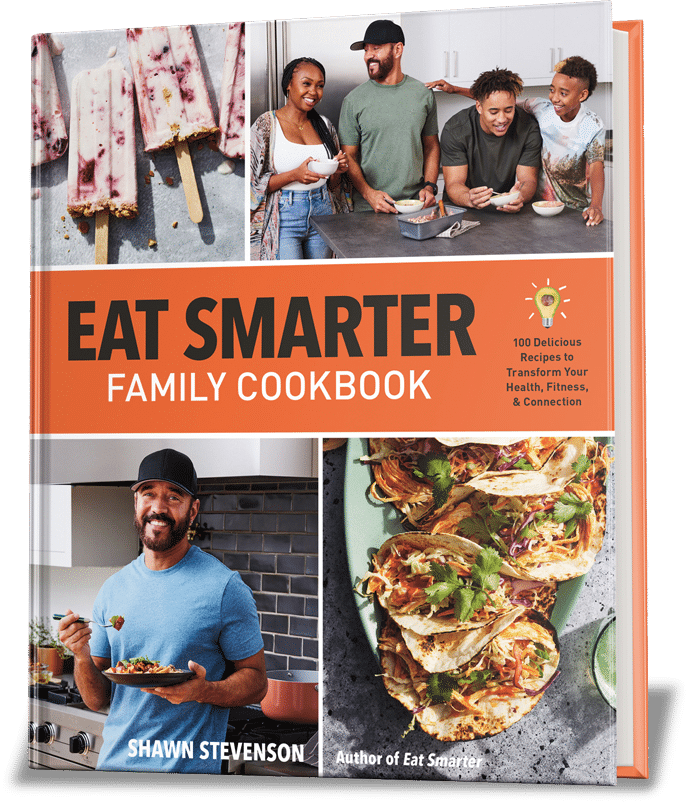
Share Your Voice
0 comments. Be the first to leave a comment.