
Subscribe to The Model Health Show:


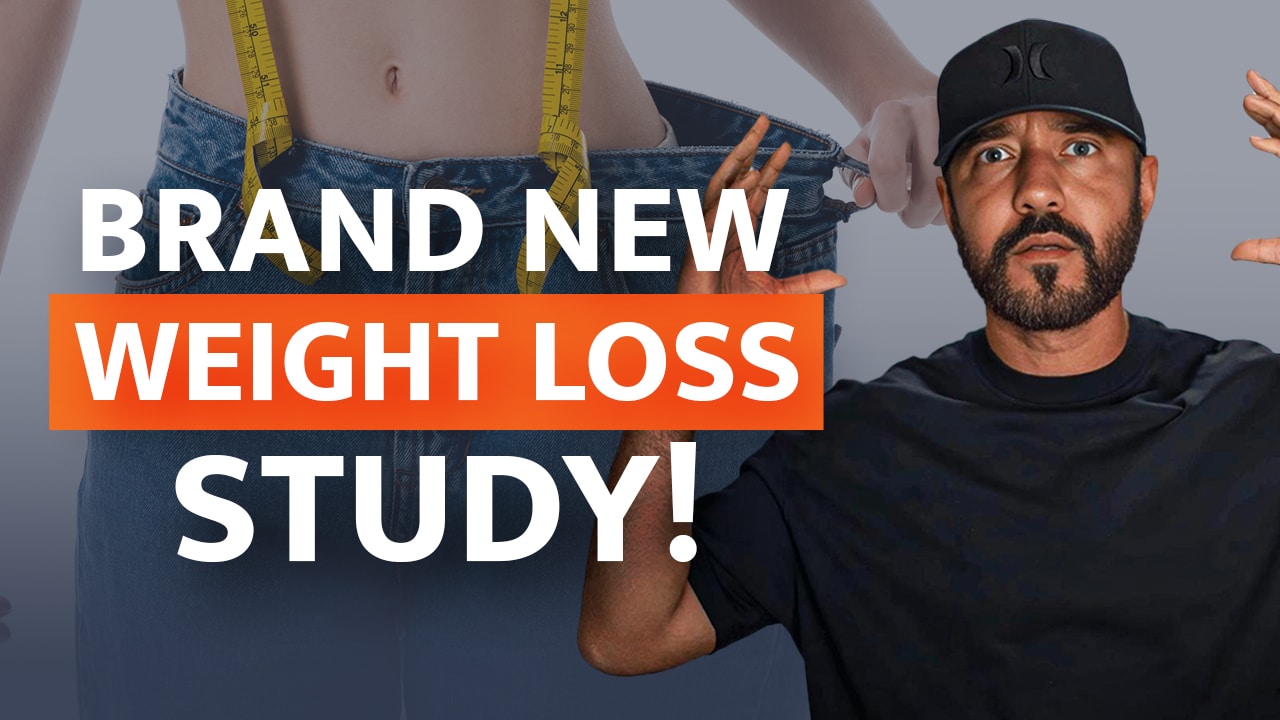
TMHS 964: New Weight Loss Study Shows How to Keep Weight Off Long-Term
There are many strategies you can use to harness your biology to reach your goals, but have you ever considered the role that gravity plays in regulating your body weight? On this episode of The Model Health Show, we’re diving into the fascinating science on the human body’s relationship to gravity. You’re going to learn about how the human body can sense weight, and how it reacts accordingly to regulate your metabolism and body weight.
You’re going to learn how to harness the power of biogravitational medicine to improve your metabolic health, body composition, and more. Specifically, you’re going to learn how the human metabolism regulates in response to weight loss, and how loading your body with additional weight can improve weight loss efforts.
We’re going to cover specific ways you can use this interesting relationship with gravity to improve your workouts and uplevel your daily routine. You’ll also learn five main areas you need to address to support the regulation of your body weight and overall health. I hope you enjoy this episode of The Model Health Show!
In this episode you’ll discover:
- What percentage of weight loss attempts fail long-term. (0:23)
- The definition and purpose of resting metabolic rate. (2:45)
- How gravitational loading can help your body resist regaining weight. (4:48)
- Why every part of our bodies evolved to manage gravity. (12:01)
- How wearing a weighted vest can impact your body composition. (17:03)
- The fascinating relationship between weight loading and liver health. (21:15)
- What the gravitostat is. (23:14)
- How to add a weighted vest or alternative equipment to your existing routine. (26:32)
- The best anti-gravity exercises for all fitness levels. (28:52)
- Five factors to address to ensure your fat loss efforts will last long-term. (36:21)
- How your hunger and satiety hormones react to weight loss. (36:50)
- The critical link between nutrient deficiencies and overeating. (38:30)
- Why focusing on walking can aid in fat loss. (41:07)
- The two main ways to protect muscle mass during weight loss. (49:47)
- Why better sleep can improve your body composition. (50:01)
- The role your relationships play in supporting your health goals. (52:55)
Items mentioned in this episode include:
- Peluva.com/model – Get 15% off barefoot shoes with my code MODEL!
- Sleep Smarter – Upgrade your sleep habits with my national bestselling book!
This episode of The Model Health Show is brought to you by Peluva.
Peluva’s barefoot minimalist shoes support postural alignment, proprioception, and overall functionality. Get 15% off your order by using code MODEL at peluva.com/model.
Transcript:
SHAWN STEVENSON: Welcome to the Model Health Show. Today I'm going to share with you groundbreaking new information about weight loss and fat loss. Most people are completely unaware of why sustainable weight loss is so difficult. In fact, it's the primary reason why according to a meta-analysis published in the journal, obesity reviews 85% of all conventional weight loss attempts fail long term. You see, when you undertake a conventional plan of diet and exercise, cutting your calories and exercising more, your biology adapts to those changes that you're making. In fact, one of the things that your biology does to adapt to that decrease in caloric intake is to reduce your metabolic rate or your RMR, your resting metabolic rate.
Your biology is designed to do just that. It's great at it. The genes that you have, those pristine genes that got you here, you are a result of your ancestors survival of the fittest. But it is better stated as survival of the fattest, because those who were best at gaining weight and keeping that body weight on were the ones who survived and passed on their genes. And so we are evolutionarily adapted to hang on to weight. Your body is not in a hurry to let that go. Now, that's all fine and dandy in normal circumstances, but in our modern world today, we are not in a condition to where we have feast and famines. We have 24/7, 367. I'm adding two more extra days on there. I know it's one extra day. Sometimes leak year, 367 days a year, access to every food delicious delicacy that you can imagine. Alright, we're swimming in conditions that are at war with how our genes and our cells have evolved.
And so with that being said, these biological adaptations to calorie restriction, this one of the primary reasons why long-term weight loss is so difficult, and most people are not telling you about this. And the reason that I'm talking about this specifically is that when you lose weight, your body automatically begins to reduce the amount of calories that you're burning specifically while you're not doing anything. This is known as your resting metabolic rate. Your resting metabolic rate, or RMR. It's the number of calories your body burns at rest to perform basic life sustaining functions like breathing, circulating your blood, moving all of the hormones and neurotransmitters throughout your body and where they need to be.
And it accounts for about 60 to 75% of your total daily energy expenditure. And this amount can go down significantly, when you lose weight through conventional calorie restricted dieting. And today I'm here to share with you a brand new study that has revealed a way that you can potentially defend against this. This fascinating new study was published in the International Journal of Obesity, and it analyzed how something called gravitational loading during conventional calorie restricted diets can influence your subsequent weight regain. This fascinating new study was published in the International Journal of Obesity, and it was looking at a way to potentially defend against the habitual, the standard, the conventional normal weight regain when somebody loses weight.
So again, we might diet and exercise. We cut our calories and we lose, say 20 pounds over the course of a few months. For about 85% of all people, they regain that weight within about the same amount of time, and oftentimes gain back a little bit more. What can be done to defend our bodies against it? And again, the researchers are affirming that this weight regain is so easy to gain back that weight plus a little bit more because your resting metabolic rate goes down when you're cutting calories because your body won't like it when you're cutting back those calories and what it's accustomed to, it's gonna defend against it.
And so this study, again, publishing the International Journal of Obesity, analyzed how something called gravitational loading can be used during your conventional calorie restricted weight loss program to potentially defend against the subsequent weight regain. And so again, I want to be as clear as possible. This is brand new information to potentially circumvent the drop in resting metabolic rate during calorie restriction. The scientists in this study sought to utilize gravity. So how on Earth, literally, how on earth did they do this?
Well, what the scientists did was they took 18 test subjects and split them into two groups. Half of the participants were placed on a standard six month calorie restricted diet, while the other half were placed on a standard six month calorie restricted diet with one difference. They were also instructed to wear a weighted vest. Throughout the study, the weighted vest group was instructed to wear their weight vest for about 10 hours a day, just living life and doing their typical routine. Now, the weight of the vest was increased incrementally over time to match the amount of weight that they lost. So, for example, they may have started off with the one pound vest, and as they dieted and lost, we'll say five pounds, five pounds of weight would be added to the vest making it a six pound vest.
In essence, the weight of the vest was canceling out the weight that was being lost. Well, according to your biology, and we're gonna dig in deeper on this. Now, just a note, the weight of the vest didn't get that heavy over time because the maximum was not exceeded to a certain point, but it led to some interesting results. Now, please note this is very important. There were no other lifestyle changes in either group. The only intervention was a weighted vest to match the amount of weight that they were losing over time. And here's what happened at the end of this initial six month study period. At the end of six months, both groups lost a pretty similar amount of weight.
The diet only group lost about 23 pounds on average, while the Diet Plus weighted vest group lost about 25 pounds on average. And if you're like me, I felt that this two pound difference was not worth the trouble of wearing a weighted vest. But here's where it gets extra spicy. They followed up with the participants after two years. Alright, so two years later they follow up with the study participants and as you'd expect, the people in the diet only group regained all of the weight that they lost, plus a little bit more. But something unusual happened with the Diet plus weighted Vest group. Although they put the weighted vest down a year and a half earlier while they were doing their calorie restriction and continued on with their life. For some remarkable reason, they only regained half of the amount of weight that they lost. The calorie restriction, the diet only group regained all of their weight that they'd lost.
While the weighted vest plus diet group only regained half of the amount of weight that they lost. Now my question is what the falling apple is going on here? How did these scientists utilize gravity to be able to get these results. What is going on? Well, to put this in simple terms, wearing the weighted vest helped to prevent the participants resting metabolic rate from dropping super low while they were losing weight because their bodies thought that they still had that weight slash gravitational load on them, and it needed to account for that.
Without the intelligent use of gravity via the weighted vest the diet only weight loss group, lost weight, but simultaneously had a huge drop in their resting metabolic rate by nearly 250 calories a day. Their resting metabolic rate went down by 250 calories a day regardless of what they were doing. They weren't burning as many calories as they normally would just by living and doing their normal day-to-day practices. Now, here's the most important point, just because they stopped dieting and started regaining the weight, this did not mean that the resting metabolic rate was going to go back up again to match that. The resting metabolic rate stayed low. It's an adaptation. Their body was like they took away those calories for me.
Let me go ahead and drop this down. I'm gonna drop it low. Shout out to Uncle Luke. Shout out to Flo Rider. I'm gonna drop it low just to insulate against if my person is devoid of calories, the calories that I'm used to again. Now here's what was so amazing about this study. While the diet only group, their resting metabolic rate went down by about 250 calories a day.
The diet plus weighted vest groups resting metabolic rate only went down by 16 calories a day. Even though they were losing about the same amount of weight, the resting metabolic rate did not drop. Five, 10 times more what was seen in the calorie restricted diet only group. Having that weighted vest, having that gravitational load, matching their weight loss buffered against the drop in their resting metabolic rate.
This is why they only regained half of the amount of weight that the diet only group regained. Now, I was so fascinated by this new science that I reached out to one of the world's leading authorities on this subject matter. And of all things, he's an award-winning gastroenterologist and expert in gut health of all things. His name is Dr. Brennan Siegel, and he's a physician professor of medicine and research scientist at Cedars-Sinai in UCLA. And having the opportunity to work with Dr. Spiegel and to gain even more insights about the power of utilizing what he refers to as bio gravitational medicine has just been profound and really opened my eyes, and here's what he had to say about this incredible new innovation in science and weight loss.
DR. BRENNAN SPIEGAL: You know, gravity was here long before we were, and it'll be here long after we're gone. So it stands to reason that every part of your body, not just the gut, your bones, your muscles, your tendons, even your brain and your nervous system evolved to manage this fundamental force of physics. That's what we do right now as we're managing gravity. And biology emerged in large part to stand up and stay up in the force of gravity itself. And when you give into gravity, our health suffers. Our relationship to gravity is like a fish to water. The fish is designed to survive and thrive and move through this aqueous, buoyant world that it's in. I don't think it knows it's in water, but it's, that's what it's doing. We are the same way with gravity.
We are designed to survive and thrive in a world of gravity. And the better you do it, the more you engage with it, the stronger your body becomes and the easier it is to stand up to it. In the book, I talk about my own experiment. I call it Operation Gravitate, where I decided for eight straight weeks, I was gonna weigh myself down like I'm on a bigger planet and I wanna see what it was gonna do. So it looked a little crazy. I wore almost like a tactical vest. Some people looked at me a little funny. It was a weighted vest. 20 pounds. I put 20 pounds on each ankle, and I always use a standing desk at work. Plus I had a balance board. And my author photo in this book is me literally standing in my office looking all goofy.
And I did it for eight weeks. Everywhere I went, I did it. Not the balance board part, but the, the weights. And I like, I'm a scientist, so I wanted to measure what was this gonna do to my strength. And so I measured my vo two, I measured my ability to walk up a standard flight of stairs. I measured my one mile time, running time, a whole bunch of other, how many squats I can do. And was amazing to me is not only did I get stronger, not only did my VO2 go up just by passively walking around with a weight dangling off of me, but I lost weight also and I wasn't even intending for that to be part of it. And so, it turns out that we have this system in our body called the Gravatas stat.
It's like a thermostat for weight. And if you weight your body down, especially quickly, not progressively with through weight gain, the bones feel the tension. They tell your body like, gravity just got crazy strong. We gotta get lighter. And metabolic activity goes up and you can lose weight just by having pressure on your body. Now you gotta do it safely. But that was the idea of like, now, at the end of the day, you felt stronger because I felt the buoyancy when I took off the weights. Like, you know, like a, a baseball player on the OnDeck circle weighs down their bat. Then when they get to home plate, they take the weight off and they're strong and fast 'cause in relation to where they were before, they're much stronger, relatively.
SHAWN STEVENSON: Now I just wanna reaffirm how important and profound this new science is now. It's not really new. This is the thing we evolved with these gravitational forces. You know, we can understand some of these dynamics with physics and how our bodies are interacting with these forces, right? These invisible forces. We, with our human senses, we tend to be very tied to those senses alone, and so we have adapted to those pressures, and as a species, we are very resilient when dealing with the forces of gravity. But what we can do today is intelligently work with and through these forces to train ourselves to be even more resilient and to utilize our incredible insight and innovation to support the changes with our body composition.
And Dr. Spiegel is just one of the leading researchers in this field, and specifically looking at this through the lens of gut health and the potential with utilizing bio gravitational medicine for supporting and healing all manner of issues with the gut. The same thing is being studied in regards to the cardiovascular system. If you think about it, it is in many ways, as Dr. Spiegel has shared with me, in anti-gravity system, you know, our blood is pumping up against these gravitational forces and you know, this is how we're able to circulate the blood from your pinky toe.
Little picky toe. Can get down there and back all the way up stream, even in somebody as tall as wimpy. All right? It's so powerful. Our bodies are designed to deal with gravity, and we can utilize this to great effect when it comes to changing our body composition and to changing our health. So let's further this in regard specifically to changing our body composition because there's another new study published in the Journal BMC Medicine that found some surprising results that utilizing gravity can have on fat loss.
In this randomized controlled trial, the scientists placed participants with obesity into one of two groups. Group one was instructed to wear a weight vest that was 11% of their current body weight. This was designated as the heavy load group while group two was instructed to wear a weighted vest that was 1% of their current body weight designated as the low load group. Essentially, if a participant was say, 200 pounds, their weighted vest would be 22 pounds if they were in the heavy load group. And just two pounds, if they were in the low load group. There were about 30 participants in each group, and they were instructed to wear their weighted vest for eight hours a day for five weeks.
Here's what happened at the end of the study period. The scientists found that participants in the heavy weighted vest group had significant reductions in body fat and increases in lean mass compared to the low load group. Specifically, the heavy load group lost about two and a half pounds of actual body fat and gained about one and a half pounds of lean mass compared to the low load group. Plus the heavy weight vest group also had a notable reduction in waist circumference compared to the low load group. The heavy load group lost about two and a half centimeters from their waist compared to the low load group. Note, neither group saw significant changes in their body weight in this study. But here's where superficial results can miss the point of radically improved health.
The heavy weighted vest group were the only ones that had reductions in body fat and increases in lean mass, which that change can be seen as a neutralizing effect. On the scale short term. But here's something important the researchers noted, the scientist stated, "despite these beneficial changes, sedentary time was higher in the high load group compared to the low load group. While energy expenditure and energy intake remained unchanged." So they weren't necessarily expending more energy than the low load group. They're actually the people with the heavier load, they're just sitting around more because they're just like carrying this extra weight around. I don't wanna move as much.
And they weren't eating more. So this could lead to what is effectively known as a body recomp, a body recomposition versus a general loss of weight. All right, so they're not changing much what's happening with their diet. They're not cutting calories versus the other group. Okay? Everybody's kind of maintaining their general diet, and again, if you're not proactively putting these participants onto a calorie restriction, we're not going to see those kind of results. And so just merely by introducing the heavier weight changed their amount of body fat that they're carrying, it dropped the amount of body fat on their frame and increased the amount of a lean mass on their frame. That's profound. Now here's something else interesting that the researchers found that you gotta dig a little bit deeper into the study to note.
SHAWN STEVENSON: The researchers found that participants in the heavy weighted vest group also had significant reductions in markers fatty liver disease. Their liver function improved dramatically. Fatty liver disease is rampant in our society today. This is referred to as non-alcoholic fatty liver disease because it was generally attributed to people who were drinking too much. All right? They were notably drinking far more than the human body. Is able to process and metabolize and our livers are responsible for so much that we just simply do not respect, appreciate, give our liver love for, it's responsible for alcohol metabolism for, you know, medication ,supplement metabolism.
So much of the things that we're exposed to just even dealing with a lot of the toxins that we're exposed to our liver is that primary protection's, that primary processing center for so much to help to keep us alive. To help us to live. i.e. liver and our liver also plays a huge role our metabolism and obviously our overall health. But with these markers improving notably with liver function via wearing the heavier weighted vest, this is indicative of improved overall metabolic health, which is pointing to long-term fat loss. Now in a similarly constructed study that was cited in the Lancet, these same researchers saw again a significant reduction in body fat for study participants wearing the heavier weighted vest.
But they also saw a notable amount of weight loss In this trial too, the researcher stated, "these findings demonstrate that there is a weight loading dependent homeostatic regulation of body weight, the gravitostat, also in humans. The gravitostat, and this is the revelation for you to take home today. We have these incredible mind blowing capacities within the human body to help us to experience homeostasis, that balance. Many of these regulatory control centers are located in the human brain, so one of the major hubs is the hypothalamus. It's sort of the crown jewel in this hypothalamic pituitary adrenal axis.
But there is so much going on along that information Super highway. Including your cardiovascular function, your gut, your thyroid, your gonadal system. Alright? It's this information superhighway and largely considered a master gland is the hypothalamus and, and so whether this is helping our bodies to adapt to temperature or adapting to caloric intake, food cues. Whether this is regarding hunger and satiety hormones, or whether this is regarding our resting metabolic rate, has a lot to do with this very powerful, or we'll call it an internal thermostat, but specifically now we have this revelation of the gravitostat, which is our body's awareness of. Our mass, the amount of weight that we're carrying, and that weight includes a lean mass.
It includes fat mass as well. And this awareness of itself and how much gravitational load we need to adapt to in the environment because our body has to adapt to the amount of weight that we are carrying. And so utilizing a weighted vest or these weight inputs is effectually working as a therapy or a treatment so that the resting metabolic rate doesn't drop too low because our biology is not reacting to this sometimes what can be considered by our biology to be an extreme weight loss.
Whether that's, you know, 10, 15, 20, whatever amount of pounds, our bodies are really designed to defend against that. And this intervention, being mindful of the gravitostat that we have can be a very powerful implement or solution when we're looking at, yes, utilizing a great diet protocol and reducing our caloric intake. Increasing, of course, the quality of our food. Yeah. But having that caloric reduction, but defending against a dramatic drop in our resting metabolic rate. We can seek the influence of bio gravitational medicine. And so what are some tips here for us to utilize this incredible revelation? Well, of course, in these studies, they're having folks to wear these weighted vests for, you know, 5, 8, 10 hours a day.
And that can be a lot, obviously, you know, and if you're about your fashion as well, you know, like if you're wearing a weighted vest outside your stuff. Or you could be like 50 cent used to be and just have the vest on over your clothes. All right. You could just, you know, you could, you could have it on you. But keeping that in mind, we don't necessarily need to go to the extreme of wearing a weighted vest for all of those hours a day. We can. Leverage it and leverage our time, we can make an intention to wear it more often. Similar to this, the results of these studies and the construct of these studies.
So maybe it's just after you leave the office, you throw on the weighted vest to do your, you know, daily stuff, whether that's, you know, going to the gym, making dinner, going for a walk, those kind of things that you would normally do in your day-to-day life. You know, hanging out with your kids, playing chess or, you know, cleaning up whatever the case might be, whatever that looks like for you. So you can't absolutely wear it more often. In particular, one of the most valuable ways in what countless people are doing today because of it's just becoming more socially acceptable to wear the weighted vest or different iterations of that, whether it's a ruck sack or ankle weights or whatever the case might be. But adding more load to your frame to, you know, go for a walk, you know, long walks or hikes to utilize these incredible innovations, right?
So we can do something like that, be more intentional about doing that and doing that on a consistent basis. So maybe you're getting in your 10,000 steps a day, maybe every day you're taking a 30 to 60 minute walk and you've got your, you know, weighted implement on. Right. So that's one way to use it without necessarily worrying about wearing a weighted vest for all those hours a day, which again you can. Follow the science with this and do it that way, for sure. But one of the ways that I've been utilizing a weighted vest or other implements for years is by utilizing them. Again, this was before I knew anything about the science, but utilizing them during my workouts. And you know, you'll often find me if I'm doing a workout, we'll just say I'm doing a leg day and I've got the weighted vest on and I'm doing the Bulgarian split squats.
Right. So I'm doing the one single leg training, got the weighted vest on, but then I'll add in, okay, I've got my kettlebell that I'm using, and maybe I'll add in two kettlebells, but I still got the weighted vest on. After I'm done with that, I'll go do lunges with the weighted vest on. And maybe again, I'm adding more low because I get used.
The weighted vest isn't gonna be that much for me, the one that I have that I use most often. Right. So maybe it's like a 20 pound weighted vest, but it does add that resistance. And so maybe my workout is an hour and that's an hour that I have that extra weight on my frame doing everything that I'm doing in the gym. And we can utilize this for other stuff as well, whether this is pull-ups and pushups and, you know, all kinds of body weight exercises, squats, things like that. There's so many creative ways that we can utilize a weighted vest and to get more bang for the buck with body weight exercises and also jumping, right?
SHAWN STEVENSON: So maybe we are safely and intelligently putting a little bit more load on our frame when we're doing like maybe skipping rope or something like that. But outside of even utilizing a weighted vest or a weighted implement, what are some other ways that we can utilize bio gravitational therapy and have more anti-gravity type exercises. Well, what are we doing when we're jumping? We are, we are going against gra, we are showing gravity that like, you can't hold me down. All right, I'm gonna get up here. Now gravity is gonna bring you back down, but it's like, I can go again. You can't hold me down. I got this. And so really all forms of jumping are powerful anti-gravity exercises that are noted.
Noted, well established to be very powerful at reducing body fat because there is a evolutionary and metabolic consequence to having a lot of body fat or weight on our frames when trying to jump. And so it is a swifter road or inroads for our bodies to let that stuff go to release that cargo, so that we can actually jump and jump higher. But of course, you don't go from no hops to, you know, the 30 inch platform box jumps. Okay? We don't go, we don't do that. We, maybe for you it's just jumping up on a six inch curb, you know, in the front of your house, right? So it's just starting somewhere. And just even again, just jumping in place even, you don't even have to have a jump rope just jumping in place, just maybe getting a little bit off the ground. And that can express itself there's so many ways to go about this.
I was just training with my youngest son who is, he plays basketball. And he's already, he's 14, he's already touching the rim, which is crazy. And, but of course he wants to be dunking soon. So we were doing some jump training and the best way to get good at jumping is to jump. And so we did a variety of different exercises, but one of the things we did were rocket jumps. And so as a body weight squat, and then it just goes into a hands over your head, both hands up straight, jump up into the sky. Right. So, and then landing softly and going right back into it. There's, again, there's so many different exercises we could do.
Staggered split squats, so, you know, starting off with our feet together, but then like jumping into a lunch position and then back feet together, you know, jumping back to feet together. So jumping into a lunch position, jump back, feet together, right? I can go on and on and on with the different ways that we can do this. Box jumps, obviously, but one of the most undervalued things still to this day is utilizing a mini trampoline, a rebounder, to do our jumping, and you don't even have to jump off of the rebounder either. That's another reason it's such a good on-ramp for everybody, regardless of their fitness level. It's called health bouncing.
So you, you just are bouncing up and down, but your feet don't actually leave the trampoline. Right? You can start there to, there are people that's doing some wild stuff on their rebounders, okay. All kinds of dance moves and aerobics and twists and turns and you know, all kinds of stuff. So there's a spectrum there, but the most important thing is that we are. I don't even want to use a term of fighting against Gravity. I don't wanna use that. We are utilizing Gravity's partnership, gravity's Blessing. Gravity has allowed us to have life on this planet as we know it, and we are working along with Gravity to make ourselves better. And so using this as an intention and being proactive is the key.
So the question is, what are you going to do to support and utilize the forces of gravity for your betterment? Whether this is fat loss, whether this is fitness. Another way, let me throw this on here as well. When working with the presence of gravity is hanging from a bar, right? So it's called a quote, dead hang, which you know, again, the name could be a little bit better, but hanging from a bar, hang, letting your body again, like, I got this. I'm hanging on. I'm gonna be all right. Spoiler alert for Stranger Things Season five right now. If you haven't seen it, then you want to skip this part, hanging on was one of the most incredible moments of that series. The whole Internet's like, Steve's gonna die. Steve's gonna die. He was hanging on. There was a moment he was hanging on fighting the forces of gravity.
That's all the spoiler I'm gonna give you. I'm not gonna tell you what happened, but the whole internet said he's gonna die, and it was right there. Ooh, the screen faded to black as well. The ability to hang on, train yourself to do that. That's associated with multiple, multiple incredible, well-constructed studies on longevity have to do with grip strength and just being able to hold one's weight, and there's so many on-ramps for this. You don't have to go right to a dead hang where your feet are off the ground. You can keep your feet even on the ground. Maybe it's just your toes. Right, and just over time building up that resilience. Now with all of this said, with this incredible innovation, this drop in metabolic rate is definitely not the only factor that contributes to weight regain after dieting in the majority of people.
SHAWN STEVENSON: Just to be clear, this is incredible new information, new innovation, utilizing bio gravitational medicine, acknowledging the gravitostat. Absolutely powerful. But in fact, there are many successful people who've maintained their weight loss, who've adapted just fine to that reduction in their resting metabolic rate. They've adjusted just fine. They don't regain the weight. Many of them find success by addressing these other factors that we're gonna run through to make sure you have these in your superhero utility belt today as well. And I'm gonna share with you these five important points, and we're gonna start with number one on this list.
They're intelligently addressing their satiety and hunger hormones. In a highly cited 2011 study. Published in the New England Journal of Medicine, researchers put overweight and obese subjects on a multi-month diet of a heavily calorie restricted format. So they're getting in about 500 calories a day, and they were analyzing the impact that it had on their hunger and satiety hormones. And as you could imagine, hormones like leptin that are about regulating and promoting that feeling of satisfaction, those hormones dropped dramatically. While hunger related hormones like ghrelin go up dramatically. And now today, we know that there is a wide variety of different hunger and satiety hormones.
Adiponectin, GLP one, peptide YY. The list goes on and on. Our body is very dynamic in how it's regulating our hunger and satiety. And people who maintain their weight loss long-term are addressing those satiety hormones, whether they realize it or not. Even though their resting metabolic rate has gone down, they're still feeling satiated so that they're not , :going back and eating the amount of food that they were eating before they found satisfaction.: And so some of the things that provide that satisfaction, according to science, according to multiple published studies on this subject matter. Some of those qualities include number one, nutrient density of the food. A big part of our body's cry for more food is nutrient deficiency. We've evolved to seek out certain nutrients for our health and for our survivability, and so if we're deficient in selenium and copper and vitamin C and vitamin E.
We're going to evoke hunger to seek out foods, to hopefully get those things in our bodies. Chronic nutrient deficiency leads to chronic overeating, so eating nutrient dense foods. You know what that is? It's not the ultra processed stuff. Fortify, maybe it's fortified with some vitamins and minerals and synthetic stuff. All right. Now they're putting it, they in California, they're putting in a tortillas. Now they're putting it in a tort in new enrichment. They're putting the wrong stuff in, but they're trying to address it, you know, like trying to hack the system, right? Eating real food, nutrient dense, whole foods on a regular basis, making great, delicious meals out of those whole foods.
Absolutely. But that's where we're gonna find that satiety. Also these fiber inputs. We have these mechanical sensors within our gut that sense the presence, the bulkiness of foods, and so paying attention to these inputs when it comes to our food and the nutrient density of those foods that can help us to feel fuller and more satisfied. And this does not mean to start guzzling all kinds of, you know, a hundred, 200, 300 grams of fiber. All right? And fiber supplements, okay? We're not, that's not what I'm talking about. Just being more intentional about eating real foods, again, that are rich in a variety of fibers as well, can help with this.
So those are a couple of things. Again, long-term sustainability with weight loss, we have to be purposeful. Don't, stop it. Don't just trying to lose weight without understanding what's going on in your body and having a plan for sustainability of that weight loss. To do that, you have to address hunger and satiety. If you cut away calories and lose weight, your body's gonna be looking for that payback. We've already established that. If, and you have to address if you don't address your hunger and satiety hormones. So that's number one. Number two, one of the things that's affirmed in the research that is supportive of long term weight loss is, drum roll please.
The incredible exercise known as walking, walking. Some top tier people in the field of health and wellness and medicine, they don't even put walking into the category, the camp of exercise and I get it right. Walking is just something that we are just, we just do, we're bipedal. We're supposed to be walking. All right. It's what our genes expect us to do. But today, because of the way that our life is structured, it has to fit into the category of exercise because for most of us, we have to intentionally, proactively do it because so much of our life has been altered to take walking out of the equation.
SHAWN STEVENSON: Alright? All of our creature comforts today have eliminated the need to do the thing that we would normally be doing. And so for many of us, we have to go for a walk or, you know, put that onto the agenda if we're, you know, going to the gym or, you know, going on a hike or whatever the case might be. So walking why? A recent study conducted by scientists at the University of Michigan uncovered some profound results with walking the study titled Effects of Walking Speed on Total and Regional Body Fat and Healthy Postmenopausal Women placed women into different walking speed groups, essentially either a slow, moderate pace walking group or a fast-paced walking group.
At the end of the 30 week study, the researchers found that quote, "total body fat is lost through walking at all speeds. Obvi, but change is more rapid. Clear and initially greater with slow walking and overweight subjects." Hmm. What, why did I specifically share this? Because we're not talking about mere calorie expenditure. We're talking about where your body is choosing to pull that energy from and walking at again, just casual speeds. It's is, it's very anti stressful. And so the exercises that are more intense, that, that are awesome as well. They're more glycolytic, right?
They're more stressful and they're engaging other energy systems. So those glycogen pathways to pull from your muscle glycogen, your liver glycogen, and casual walking, your body is more inclined to use stored body fat for fuel, again, when you're walking at casual to moderate speeds. Also, this is well-established walking to dramatically improve insulin sensitivity, to help to clear glucose from your bloodstream after a meal. So after a meal, you know, with, you know, 10 minutes later, whatever the case might be, just shortly after having a meal. Going for a walk muscle is your body's primary glucose depot, or sponge, to pull that glucose outta your bloodstream. The key is using your muscles when you're walking, you're not just floating around like you're in a Spike Lee movie.
You're using your muscles to move. Your muscles are what are moving you, and so simply going for a walk is incredibly powerful, and also walking is therapeutic. It helps to organize your body. And a lot of like aches and pains and just feeling outta sorts. Even the mental health aspect is dramatically improved by walking. But this process of walking that makes us so human again, we're, we just keep finding ways to just make it more complicated. And, you know, we got the, we got the cloud shoes. We got the shoes with the, instead of the minimalist, we, they're the maximalist. And we're missing out on that key. Critical implement and what makes walking so great at helping our bodies to get reorganized.
The kinetic chain from your, again, from that pinky toe, your big toe to the very top of your head, that kinetic chain of information and organizing your body happens with that ground contact. And so if we've trained ourselves to wear these abnormal shoes that take away that input. It puts us at risk, not, of course walking is a low tier risk, but like if we're training, if we're running, exercising, we see all these injuries today more than ever. It's crazy. And so how can we defend against this? One of the things that I love to do in combination, that's a, utilizing the weighted vest is one of my favorite things to do while I'm taking a long walk.
But also one of the things that I'm doing is helping to improve that ground contact because your foot, each one of your feet have 26 bones, 33 joints, 19 muscles, 107 ligaments, and each foot has over 200,000 nerve endings. And they're all there for collecting data about your movement. And to make sure that your ankle is responding properly, that your lower back is responding properly, that your neck is responding properly to the steps that you're taking, whether this is the sprint steps or merely walking.
And our modern shoes essentially mute information that data collection. In the results of muting this critical data, we have epidemics of foot dysfunction, foot and ankle injuries, knee injuries, hip injuries, and more that can be rooted back to modern footwear. Now, don't get me wrong, I understand. I love so many of our modern styles of footwear. I'm a fan. I'm a wearer of these. And so I'm not telling you it's a all or nothing situation, but for myself personally. I have this practice of prehab and rehab when it comes to my footwear and this kinetic chain and taking care of that ground contact and that input by utilizing my Peluvas. Peluvas have a wide toe box with science backed five toe functionality, but there's stylish.
I love the sports Strand. It's my favorite pair of Peluvas that I've ever had, and right now you can get 15% off of your new pair of Peluvas. When you go to peluva.com/model and use the code model at checkout again for 15% off, that's P-E-L-U-V a.com/model. And use the code model at checkout for 15% off. Rehab your feet, rehab your body from the ground up. I absolutely love my Peluvas. Again, when I leave the studio today, regardless of the shoes that I'm wearing, I'm gonna go home, slip on my Peluvas, and go for a long walk to give that prehab and rehab for my feet and for my movement. So again, walking plus the weighted vest, we've got a pretty good recipe for supporting sustainable weight loss.
So walking was number two. Number three for sustainable weight loss. People that have sustained after a calie restricted diet, exercising, whatever the case might be. A huge percentage of people who are able to sustain their weight loss have made it a focal point to focus on building and protecting their muscle mass. At this point, we have to stop talking about merely losing weight without. Respecting the role of our muscle tissue. What kind of weight are you losing? You wanna lose some weight? Here you go. Just whatever. Just, just get this. No, no. We wanna be specific about what we're losing. Wanna focus on, for most of us losing body fat.
Right. We wanna protect our muscle to the best of our ability. Skeletal muscle is the largest and most flexible tissue responsible for oxidizing fat, especially during rest and low to moderate activity. Okay, so that RMR, it's your muscles that keep in that fire burning. And what happens again when we haphazardly, "lose weight"? We can lose a significant amount of muscle mass, so protect our muscle to do that, make sure that we are giving those strength training inputs. We have to engage our muscle. If you don't use it, you lose it. And also prioritizing protein with our nutrition, because again, muscle is primarily made of protein.
Number four, on this list, we're looking at sustainable weight loss. A huge percentage of people who are able to sustain their weight loss are prioritizing their sleep fat loss is sleep dependent. I love this study. I've been sharing this study for years. I brought and helped to push this into popular culture. I shared this study at Google. I did a talk at Google many years ago, and it's incredibly constructed study because it's a crossover study in controlled conditions. It's a ward study, so participants aren't able to go out and go to Taco Bell, all right, or Whole Foods. Or hit the Equinox, right? They're in controlled conditions and the researchers found this was conducted by scientists at the University of Chicago when test subjects were put on the same diet and the same controlled conditions, the amount of sleep they got dramatically affected weight loss.
SHAWN STEVENSON: When participants were allowed to get eight and a half hours of sleep nightly for two weeks. They tracked their amount of body fat that they lost, then they sleep, deprived them for another part of the study, restricted them to five and a half hours of sleep nightly for two weeks to and track their fat loss. After compiling the data at the end of the study, when participants were able to get adequate amounts of sleep, IE in this study was about eight hours of sleep, they lost 55% more body fat simply by sleeping more. Also noted in that study. When participants were sleep deprived, their bodies were burning off significantly more of their muscle as part of the weight that they were losing 'cause again, they're on a calie restricted diet.
But what are you losing? They were losing more muscle. In fact, participants who were sleep deprived in that sleep deprived condition, their loss of fat-free mass, which includes their muscle tissue increased by 60%. Protect your muscle. All right, so protect your muscle by getting great sleep. We've got a plethora of incredible episodes dedicated to improving your sleep quality. I wrote a book on this subject as a first sleep wellness related book to become an international bestseller. I'm very grateful to say that I've got one of the translations on the shelf right here, and I think it is a Norwegian translation.
I don't even know. It's just out there doing its thing. It's translating in so many different languages, almost 30 at this point. But you can get a copy of Sleep Smarter anywhere that books are sold. And, it is just a master class. It is a masterful dictation, 21, clinically proven strategies to improve your sleep quality. And so, again, if this is your issue, address this, this is the time, this year. Respect your sleep quality. It is one of the key components of sustainable, long-term fat loss and weight loss. And finally, tip number five, for sustainable weight loss is support, specifically relationship support. The study that we started this episode off with detailing why most diets fail long term.
Again, this was published in a journal, obesity reviews. Something really interesting was noted in this study. The research has noted that diet combined with group support. It had astounding benefits for supporting long-term weight loss versus dieting alone. Dieting alone, 85% of people approximately regain that weight that they lose. But when we have that long-term support with our diet aspirations with losing weight, that number gets cut from 85% of people having that weight regain to only about 70%, and that is huge. It's huge. Now, what if we combine this with these other insights? But again, it's an understanding how important it is to have support.
Any change alone is very difficult, but especially when something is so rare as losing weight and keeping it off, you are a unicorn if you're able to do that in our society today. Again, meta-analysis, looking at the best data that we have. 85% of people, it doesn't happen. Yes, people lose weight, but they gain it back plus some. Having group support, environmental support, social support, relationship support is one of these vital components. Why you ask? Well, it is our relationships that are the primary. Influencer of the choices that we make when it comes to the food that we're eating, how we're eating, when we're eating, really all manner of our interactions with food are heavily influenced by the people that we're around, the environment that we are around.
And many of us grew up in environments to where it can create some dysfunction regarding the foods that we're eating. And so making the decision to communicate with the people in our lives to support us, but also sometimes that requires for us to seek other influences, to be around other people, to get that healthy input and giving ourselves permission to do that. And that can look so many different ways. This could be meetup groups, this could be, you know, church groups and functions. This could be, you know, community connections. This could be virtual as well. Of course, but in person is what we evolved with. So if you're kicking it with me, if we're hanging out, you know, we're hanging out, we're, we're chopping it up, we're talking about stranger things, whatever, and you're like, Hey Sean, are you hungry?
I'm like, yeah, for sure. Let's get some food. We're not gonna pull up to Starbucks. We're not gonna pull up to McDonald's. If we're hanging out together, we're not gonna do that. I wouldn't be caught in a McDonald's unless I got a beep pee. And maybe. Maybe, I don't even know if McDonald's even sells water. I don't even know if they sell water, maybe get a bottle of water. I don't know. But just because again, the person that you're around, the people that you're around are going to influence the choices that you make with the food that you're eating, right? And so make it an intention, cultivate a sense of worthiness and, and an awareness that you deserve to have supportive relationships.
SHAWN STEVENSON: And also, sometimes, again, our relationships. That does not mean it's easy. Alright? Sometimes it requires us to change in the context of our relationships, to find better ways to communicate, to find the support, to do things together. There's so many different paths to the goal, but the most important thing is that clarity and the intention. We need each other now more than ever. And so I hope this was helpful for you. If it was, please share your voice below if you're watching on YouTube. What was your biggest aha moment or greatest insight from this episode? Regardless of the platform that you're listening on as well, please share this out with somebody that you care about.
Get this information out. This is cutting edge information and we're looking at innovative ways to support this process of weight loss. You know, right now in our society, this is something that so many people aspire towards, but they don't have the information, you know, as they're just going into it haphazardly.
And so today we covered, yes, we covered some new. Insights when it comes to bio gravitational medicine, the gravity, but also we covered some of those foundational hallmark things that we need to address regardless of our approach to losing weight. And so I truly do appreciate you for taking the time to learn with me today and share your time with me. It means more than you know. We got some incredible masterclasses and world class guests coming your way very, very soon. So make sure to stay tuned. Take care, have an amazing day, and we'll talk with you soon.
Other episodes you might be interested:


Maximize Your Energy
Get the Free Checklist: “5 Keys That Could Radically Improve Your Energy Levels and Quality of Life”
HEALTHY MEALS EVERYONE WILL LOVE
The Greatest Gift You Can Give Your Family is Health
When you gather your family around the table to share nutritious food, you’re not only spending quality time with them - you’re setting them up for success in all areas of their lives.
The Eat Smarter Family Cookbook is filled with 100 delicious recipes, plus the latest science to support the mental, physical and social health of your loved ones.



Share Your Voice
0 comments. Be the first to leave a comment.