
Subscribe to The Model Health Show:


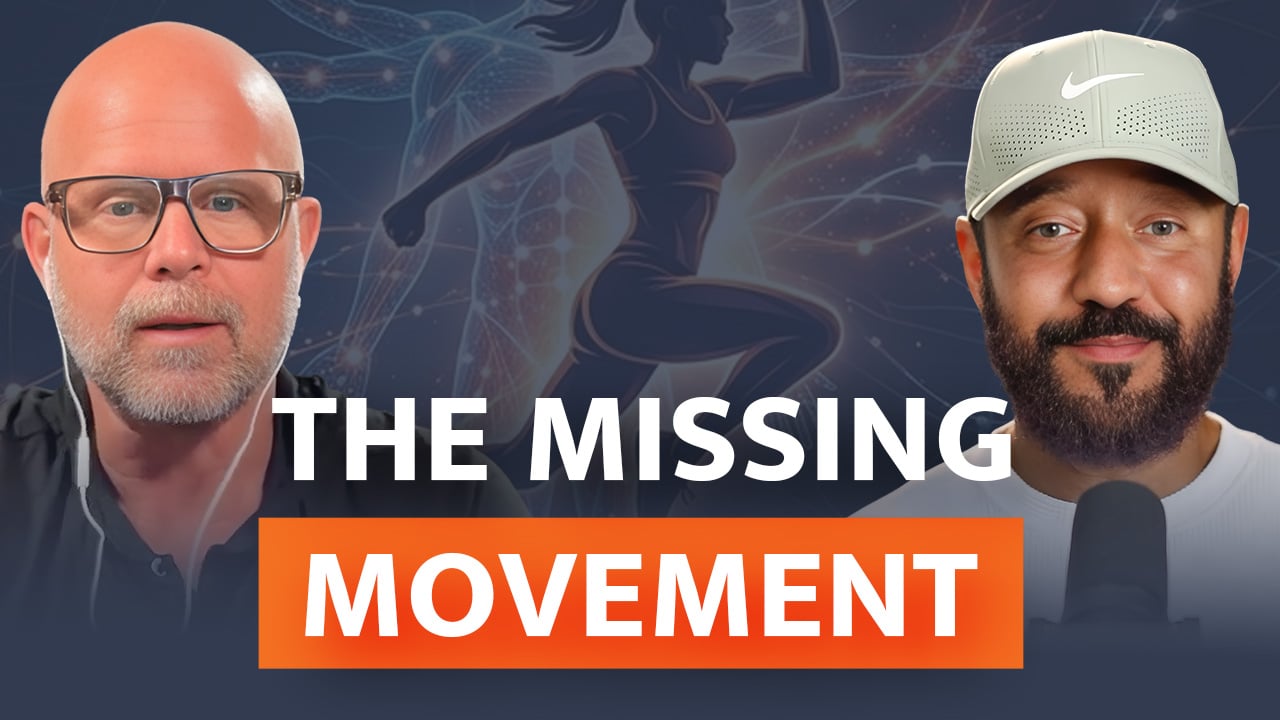
TMHS 1010: Never Stop Doing This Exercise (Or Your Lifespan Will Shorten) – With Dr. Kelly Starrett
Our incredible human bodies have the capacity to move and perform in a multitude of ways. But at the end of the day, what truly matters is having a resilient, capable body that allows us to do the things that we love. Today, you’re going to learn how to improve your training for a better, more functional body.
Dr. Kelly Starrett is a physical therapist, coach, three-time New York Times and Wall Street Journal bestselling author, and the co-founder of The Ready State. His work helps everyday athletes build strength, mobility, and better movement patterns. Today, Dr. Kelly Starrett is back on The Model Health Show for a conversation on creating a well-rounded training plan, reframing pain, and how to train in a way that complements your life.
In this conversation, you’re going to learn about the value of jumping, playing, and how to train for optimal performance. You’ll also hear about using movement as medicine and how to self-assess your fitness. Dr. Kelly Starrett is a true expert in his field, and I know you’re going to take away some valuable insights from this interview. Enjoy!
In this episode you’ll discover:
- The importance of jumping for human health and longevity. (3:56)
- A few different ways to add jumping to your routine. (7:22)
- Why the gym is not the best place to create athletes. (9:36)
- The three waves of fitness. (14:03)
- How the advent of the internet changed fitness. (17:06)
- The forgotten magic of having a physical body. (22:18)
- How to use your warmup as an opportunity to play. (23:53)
- The best way to self-assess your body and your capacity. (30:00)
- What the real goal of athleticism should be. (31:13)
- The value of building resiliency to injuries and life’s challenges. (37:37)
- What pain actually is and what it can tell you about your body. (41:15)
- The highest calling of sport. (44:36)
Items mentioned in this episode include:
- Boncharge.com/model – BON CHARGE is one of our favorite wellness brands for supporting recovery, sleep, and overall health. Their award-winning red light therapy products utilize clinically studied 660nm red light and 850nm near-infrared light frequencies to help optimize your body’s natural recovery and repair processes. Get 15% off with code MODEL.
- Organifi.com/Model – Organifi makes nutrition easy and delicious for everyone. Take 20% off your order with the code MODEL.
- Becoming a Supple Leopard by Dr. Kelly Starrett – Read the ultimate guide to resolving pain and preventing injury!
- Built to Move by Dr. Kelly Starrett and Juliet Starrett – Learn the ten essential habits for better mobility, strength, and quality of life!
This episode of The Model Health Show is brought to you by BON CHARGE and Organifi.
From red light therapy panels and face masks to full-body blankets, BON CHARGE makes it easy to incorporate science-backed wellness into your daily routine. Just 5–10 minutes per day can help support better sleep, recovery, relaxation, and healthier-looking skin. Use code MODEL for 15% off storewide. Get 15% off with code MODEL at boncharge.com/model.
Make nutrition effortless—and actually enjoyable. Organifi’s delicious, superfood blends help you boost energy, reduce stress, and feel your best every day. Get 20% off with code MODEL at organifi.com/model.
Transcript:
SHAWN STEVENSON: Welcome to the Model Health Show. This is fitness and nutrition expert Shawn Stevenson and I'm so grateful for you tuning in with me today. What if we had access to the ultimate body mechanic?
Somebody who's able to assess what's going on with our bodies, what we might need to improve, change some parts, switch some fluids out, whatever the case might be, but ultimately to ensure that we have optimal performance. Well, today we have the world's greatest body mechanic, the one who's teaching physical literacy to the top of the top professionals in physical therapy, as well as everyday people.
And he's such a powerful thinker and expert in instruction. But today we're gonna be able to really look at some powerful insights in relationship to... You're gonna learn what is the number one thing that we want to avoid not doing. What's the thing that we don't wanna stop? We don't wanna stop till we get enough.
We wanna keep doing this particular movement, this particular exercise to literally stave off the end of our lives. We wanna keep doing this particular exercise, and it might not be what you think. We're also going to be talking about the most valuable opportunity that you have to self-assess your readiness to be able to engage in fitness, right?
In fitnessing, whether that's working out in the gym or playing your sport, being active. Where's the most valuable spot? What is the very best time for us to get this self-assessment in, and what does that really look like? Because every day we're different. Life is happening, but we want to be able to play, we want to be able to access range of movement so that we can do the things we wanna do.
And so he's gonna give us some great insights on how do we self-assess and when's the best time to do it. Plus, we're gonna be talking about this overarching idea of being pain-free and really look at the truth about pain and being pain-free. And also, how do we reconstruct or even program around where we're having pain or even an injury And so that we can keep moving, so that we can keep healing.
And you're gonna hear some remarkable stories when it comes to the importance of utilizing movement as rehab, movement as medicine. We have all of this and much more with our special guest, Dr. Kelly Starrett. Dr. Kelly Starrett is a coach, physical therapist, speaker, three-time New York Times and Wall Street Journal bestselling co-author of Becoming a Supple Leopard: Ready to Run and Built to Move.
Kelly is also the co-founder of The Ready State, the program helping everyday athletes to enjoy better movement, agility, and strength with less pain and more protection against injury. Let's dive into this conversation with the one and only Dr. Kelly Starrett. Now, this is a word I don't use lightly when I say legend.
We have the legend, Dr. Kelly Starrett, in the building. Well, not actually in this building. We're in the same building in the quantum field.
DR. KELLY STARRETT: We are in the same place, my friend. Going through so many of the same things. Our kids are graduating. We're transitioning. I don't know how you keep that beard un-gray, but you're gonna have to let me know on that
SHAWN STEVENSON: Oh, man. There's some popping through there for sure. For sure. So listen, I've got some really, really important questions that I wanna ask you, and I wanna kick things off by talking about a statement that I heard you make that
DR. KELLY STARRETT: Oh, boy…
SHAWN STEVENSON: When you stop jumping you start dying. What do you mean by that?
DR. KELLY STARRETT: That is one of those phrases that comes out of this embodied knowledge of human beings, and that is an old Soviet idea. And there are a whole host of these. Like, people will say... I think the Chinese would say, "You're as old as your spine. You're as old as your feet." You might hear some of these old colloquialisms, old pieces of knowledge.
And the first thing I wanna recognize here before we kinda talk about really why that's important, especially now, is that human beings have been rad for as long as there have been human beings. And we have been athletic, we've been heroic, we can... We are capable of incredible feats of strength and stamina and durability and survivorship.
And I wanna just reframe because I think sometimes it's easy for us as modern people with, like, we can track our squat velocity, you know, we know how many grams of, you know, protein we're eating. Humans have been obsessed with being awesome for as long as there have been humans. I mean, can you just imagine, like, young kids playing around?
Like, "I'll carry this rock, you carry this rock," you know. We'll... Like, Let's race the goats up this mountain. I can get there faster." I'm telling you, humans have been competing and playing, and this is the playing, for as long as they've been doing this. That statement is interesting because the true-ism there is about maintaining capacity.
What we've come to understand and interpret that as is that power is a hugely important aspect of our movement system. That, and for everyone who's maybe not a super science nerd, that just means can you generate force quickly? And you might think to yourself, "Eh, jumping, I don't, you know, I don't know about that.
My knee hurts, my back hurts." But if you have to stumble and pick up a foot quickly and recover, that speed is what's missing from your perfect training, Peloton, Pilates. And look, no shade on those things. But as we've come to fetishize capacity, my ability to perform amount of work, wattage, right?
Putting another pound on the bar, we forgot that this brain is designed to problem solve, move quick, play. And one of the keys here is that we see that, that springiness, which is actually a term of art from some of our, you know, you know, coaches of yesteryear, springiness, is that it's a capacity that speaks to our connective tissues.
It speaks to our brain. It speaks to safety. I feel safe enough to move quickly. And so what's interesting is that we can start to ask, "Well, when did, when's the last time you moved quickly?" "Well, maybe it was when I picked up pickleball and I got injured." I'm like, "Oh, okay. We can see that you have this dearth, this vacuum of quick movements in your life, and all of a sudden, you had to go do that."
I had to stumble or do a new sport or pick up a skill or jump in, in, and my tissues couldn't tolerate it. My brain was uncomfortable with it. So some of the easiest things we can do is just say, "Hey, let's start jump roping." So accessible. You were just spinning your rope back over there as we were getting ready.
And a nine-foot piece of half-inch rope Not fancy, very inexpensive. That is our default jump rope now. And in my programming, I program some kind of jumping for all of our athletes every day. And I don't wanna get into the weeds of like what kind of plyometric, you know. The idea is are you jumping or not jumping?
SHAWN STEVENSON: Mm.
DR. KELLY STARRETT: And for those of us who are starting to think about jumping again or hear this, "I, hey, I think I've gotta get into this," it may just be you're bouncing holding onto a sink, right? You're on a rebounder. That's, that rebounder is a form of jumping. Do you need to do these super crazy, you know, superstar plyos?
No, don't need to do that. But what we're understanding is that power is a better predictor of the quality of your life as you get older because maintaining that connective tissue, that health, that brain output really makes a big difference, and it's going to make a big difference in the quality of your life and your ability to sort of stay upright when it gets a little bit chaotic.
So I love that phrase because it reminds us that, wow, the key element of play is moving quickly. And all you need to do, you and I need to do is go throw a Frisbee.
SHAWN STEVENSON: Mm-hmm.
DR. KELLY STARRETT: We need to, you know, go play some basketball. We need to go play tag. We need to engage in some play that looks like a little bit one valence away from sort of I'm doing pool aerobics.
And don't get me wrong, what's nice is that when I have injury, when I have surgery, when I have pain, I can slow down and keep you moving. In fact, when we're working with people coming back from these things, rebuilding the body after injury or trauma, we slow way down. And when we start to say, "Hey, I think you're recovered," I can tell you're recovered because you're moving quickly, and I start to program speed elements into your training, into your daily life.
And what this really hints at, I think, is How do we develop athleticism? Where does that come from? How is the gym the best place to make athletes? And I will say something radical here, and I'm not alone in this. It is not. It's, the gym is a great place for us to enhance athleticism, restore movement choices, expose tissues so they're more robust, find blind spots in conditioning.
But we gotta remember why we were in the gym in the first place, so we could take those skills and go be the best problem-solver. And I'll say for the last, especially the last 20 years, as again, the rise of capacity, the Assault Bike is a good example. You can crush the Assault Bike or the Echo Bike, doesn't mean you're a good athlete.
I'm not gonna choose you for my kickball team. But the gym took a lot of really good athletes and made them look mediocre, right? Because the gym became a place where I could practice the step aerobics with weights and look like I was a really good athlete. And then my abs, and I, my cap delts, and, you know, I look so good on Instagram.
And I'm like, "Good, we're gonna go play some pickup ball." And I'll tell you, good luck. All show, no go. So that's what the heart of that idea is just remind us we are springy, powerful, problem-solving wonder machines. Is that what your training looks like, yes or no?
SHAWN STEVENSON: Oh, I love this already. I love it already.
So are we asking ourselves are we proactively maintaining, protecting, and even developing our springiness, right?
DR. KELLY STARRETT: Yes.
SHAWN STEVENSON: And so just to go back to that statement again, when you stop jumping, you start dying. So finding creative ways to employ jumping intentionally into our workouts, into our week, and also play.
That's the emphasis here. Engaging in these things in the real world. Yeah. And so I wanna ask you just a couple of ... And I know you said you didn't wanna get into the weeds on what to do. Oh, look. yeah, I'm here.
But you're the weed whacker. So I wanna ask you about this because, you know, one of the things that I love to do, I find a resonance with, and I see such a great transfer over into sport, is skipping, is skipping on a rope Oh
with my jump rope, and skipping Yeah ... also in my training, in my warm-ups when I'm gonna do some type of sprints and things like that or push the sled. Skipping, I think, is like a hugely underrated, valuable human movement. And also it just really points to this kind of youthful kind of capacity as well.
Like, you gotta be happy AF if you're just skipping for no reason. You feel me? So what do you think about that?
DR. KELLY STARRETT: So let's go ahead and, again, let's pretend that we have this laboratory of sport out there. We've been running these experiments, independent experiments for, let's just say the last 100 years really thoughtfully.
And we go, "Hey, I don't know, who's super springy?" All boxers are super springy, right? Well, let's, do they do a lot of jump roping? 100%. You see that the jump rope is, like, synonymous. In fact, I think boxing kept jump roping alive, right? Then we're like, "Okay, well, who else is super springy? Jump, run, throw, that sounds like track and field."
So look at how much preparation has gone into the warmup, movement preparation, skill development of our fastest athletes in the world. If you did a track and field warmup, the A skips, the B skips, the bounding, the wickets, you as a society, if we just went to the track and pretended like we were elite sprinters, but much slower, who didn't do anything powerfully, and we just were cool.
Like, you know, I'm a middle-aged white guy. Let's pretend that we just went through that. I guarantee you, your back would feel better. You'd be more protective. You'd be springier, be more athletic. And again, imagine that if we looked around at the people whose jobs require us to be powerful and springy, and how they train.
They're leaving breadcrumbs for us in that position. Something you're hitting at, I think is really important, is that when and where are we gonna do this stuff? Because, you know, what we've, what we've ended up especially, I'm gonna call this where we currently are, the beginning of the third wave of fitness.
So first wave fitness is, like, that malt nut power bar, right? It's an early heart rate monitor. You mean, in the late 1900s, which I'm from where I was I was, you know, a professional paddler in the late 1900s, on the national team early 2000s
SHAWN STEVENSON: The way it sounded when you said late eight-
DR. KELLY STARRETT: Yeah, no, that's right.
SHAWN STEVENSON: You're like ... late 1900s, it sounded like 1800s.
DR. KELLY STARRETT: Okay. 1900, okay. I like I get it, you know? And I think what we saw then is that if you came out of a movement tradition of sports, maybe you lifted a weight to become more powerful. You were lucky if you were doing some Olympic-style weightlifting.
I'll give you a hint. Most people have heard of this thing called the FMS, the Functional Movement Screen. And FMS was created by Burton and Cook, two amazing thinkers, Lee Burton, Gray Cook. And what they wanted to do is come up with a quick assessment to see how could people access fundamental patterns.
And that was a way for sort of beginning to make the invisible... what we call now making the invisible visible. So imagine we don't really... We're... People are doing cable crossovers, and leg press, and really bodybuilding is what we're we're doing there. If you're lifting weights in the '90s, it's probably some version of some bodybuilding for muscular development, Joe Weider, right, Arnold.
And those guys introduced this thing called the overhead squat. And that was the, really the the, they... And let me be clear, if you're an Olympic-style weightlifter, you were overhead squatting since the dawn of time because it's a fundamental position. It's a slowed down version of a heaving snatch balance, and then ultimately a snatch, the Olympic-style snatch.
These guys took this thing and said, "Hey, let's... We can really ask a lot about the coordination and the access of this person." 'Cause all you have to do is keep your arms over your head and squat. Piece of cake, right? That's... I'm just gonna put piece of cake. Because if you've ever overhead squatted, we saw suddenly people like Dan John, who came out of a throwing community, Olympic lifting community.
You know, he was like, "Yeah, you should be able to overhead squat your body weight 10 times. You should be able to do plus, you know, 20 or 40 pounds over your body weight, you know, a couple reps." Like, that's a huge amount of, you know, weight to have over your head. Balance, coordinate, organize, systematize.
He talks about making the body one piece. The reason I mention this Is that 1996, can I see your phone from 1996? Can I see your car from 1996? It is not very sexy. So 1996 is when that came out, and it was the first time we started to expose people and think about, "Hey, what's happening with our bodies?"
This first wave adaptation or first wave fitnessing is happening, and then all of a sudden the internet hits. And you were lucky if you came out of a movement tradition and had professional coaching. But now suddenly we are, it's fitnessing, it's performative fitness, it's vanity fitness, it's bodybuilding, and we've seen the proliferation of every tech, tracker, tool, device.
We've become very sophisticated. And what I like to say is that the room of strength and conditioning has become... It's like you had that one grandma, and you went into her living room, and there was a lace doily and a little figurine and pictures, and, you couldn't sit anywhere, and there's plastic on the seat.
And the whole room was just like, "What is this place?" And you were afraid to, like, sit down 'cause you know, you'd knock something over. That's strength and conditioning right now. It has become the most decorative, heavy, overburdensome sort of idea where I'm gonna go into the gym, I'm gonna touch every position, every shape, hit every need of my possible body in this one-hour section.
Theoretically, that's gonna make me feel like a human and connected to other humans. We know that the gym is a lonely place. You put your headphones in. You don't wanna make eye contact. The fitness influencers are in the corner filming themselves. It is a weird stinking place right now. We forgot that the reason we were training in the gym was it allowed us to develop capacities and tissues and exposed positions so that we could go out into the world and take those bodies and become extraordinary.
SHAWN STEVENSON: Yes.
DR. KELLY STARRETT: And the training should be in service of... Now, people are listening to this and they're like, "Well, I don't have time for that," or, "I love training 'cause it gives me a community." Totally cool. But I just wanna remind you that as soon as I drop this performance filter over what we're talking about, I can't do what you're doing in the gym and still go play soccer.
I can't do what you're doing in the gym and actually go be an elite fighter or basketball player. You're gonna crush me so much in the gym with all of this fanciful power-lifting, you know, style training where I'm obsessing over strength, worshiping strength, where I may actually be making myself a slower, less capable athlete.
Now, I'm gonna use it in a couple examples here, and two people I respect hugely, and I just wanna be very clear, I'm not throwing shade on these two men. Mike Israetel is a big brain in RP, Renaissance Periodization. He is such a savage intellect and a very strong, very jacked dude. And that, his... He would say, he's done that Mike went and was vulnerable, and I love this, and he took that body and that frame, which is extraordinary.
I would like to have his hamstrings and his biceps. And he went and tried to pass the Army physical fitness test, and he could not do it. He couldn't run. He couldn't... The deadlift, crushed it, of course. Any strength thing, that man is a savage. And again, huge brain. He wasn't purporting to train for that.
He wasn't saying... He's saying, "Hey, I'm a bodybuilder. I'm gonna be jacked. I'm gonna be tan. I'm gonna look so good in clothes, and I don't care what the result is." So the... And I'll give you the second example, Larry Wheels, one of the strongest, freakiest human beings who've ever walked on the planet. You can see some video of him sprinting on a treadmill, and what you can see suddenly is, "Hey, there is a cost to being so strong and so sort of buff that it stopped his athleticism."
Now, that's totally okay. We can do that. But what I wanna make sure is that when we are having a nuanced conversation about performance, and again, let me just set this straight. If you've never heard of my work or where I am, let me just tell you my bona fides. I work in NFL, NBA, NHL, right? Premier football, premier soccer, rugby, the Olympics, track and field.
I, I see all the branches of the government. FBI. See, I see people who have this body that we need to go do something extraordinary with, and we might steal ideas from our brothers and sisters in the strength community, but we have to keep in mind that the thing is the thing. And so as we're moving out of the second wave of fitness, we're now beginning, which is where we got real good at saying, "Here's how much.
Here's the exposure. Here are all the fun tools that we have." But on this other side, the performance side is this in service of making my daughter swim faster in the pool? Is this in service of my eighth grader playing good basketball and being more resilient and more tolerant so that he can play more basketball and come out unharmed?
So we're in a place now where you can see where we've lost springiness, we've lost athleticism, and we've forgotten that part of the magic of having this physical body is going out and playing. And for... I'm gonna give everyone a reason here, a rationale that sometimes I understand you're Like, there was a time where I had two kids, business.
Juliet's an attorney. We did this thing called the 10, 10, 10 at 10, which is like 10 kettlebell swings, 10 pull-ups, 10 pull-ups at 10:00 PM for 10 minutes. Like, it was not great. Like, that's all I got, right, in my garage. We're not going to the Olympics on that. But if the we're in service of actually sort of taking all the tools, we need to figure out what's essential, what is the minimum amount.
And I'm not the first person to talk about this. Cal Dietz has been talking about this. Pavel at one point a million years ago was like, "Yeah, double body weight back squat, you're probably strong enough to do any sport we can possibly think of. Now let's go do something else." Bondarchuk, who was the greatest throws coach of all time, you know, created all these mutants.
He was like, "I know you wanna put another kilo on your bench press, but we should probably go out and throw more." You know what I mean? It's easy to see progress in the gym. It's hard to see progress in sport and athleticism. So that's where we are, and when we hear these maxims now of, "Hey, let's make sure that we're jumping and playing and keeping an eye on", one of the things for those of us who sometimes are too busy to actually go do sports The warmup, the movement preparation, the first 15 or 20 minutes in the gym can be a place to explore, to play, to dance, to feel, to integrate, to get attrainment, to wake up your nervous system, to get your eyes working.
And now suddenly we've just stumbled into our movement culture, brothers and sisters. So suddenly we're like, "Oh, I really understand Ido Portal and why he was raging against just the fetishization, the worship of capacity," because we were forgetting how to problem solve, move, twist, access, dance, be fluid, be rhythmical, et cetera, et cetera.
So that's where we are, and what we need to do is help people reclaim some of those aspects because they give us so much more and inoculate us and make us better athletes.
SHAWN STEVENSON: I wanna share with you something that's transformational for not just our appearance and beauty, but for our healing and performance.
A double-blind randomized placebo-controlled trial published in the Journal of Phytochemistry and Phytobiology took 76 patients with notable wrinkles and treated half of their face with red light therapy, near-infrared therapy, or both, while other patients received a fake light treatment that was used as a placebo.
Participants received two light therapy treatments each week for four weeks. Here's what happened. Within just four weeks of treatment, participants had up to a 36% reduction in wrinkles and up to a 20% increase in skin elasticity. Phenomenal in just four weeks. Obviously, red light therapy is changing the game right now when it comes to beauty and appearance, but it is so good for reducing pain and healing.
A meta-analysis published in the BMJ sought to see if red light therapy could reduce pain in people with osteoarthritis versus a placebo. The study included over 1,000 people and found that red light therapy significantly reduced knee pain in study participants. But not only that, the results appeared to have lasting effects, with benefits seen up to three months after the treatment.
The researcher stated, quote, "The positive effect from red light therapy seems to last longer than those of widely recommended painkiller drugs." Unquote. Yes, red light therapy is phenomenal, but it's critical to make sure that we're getting our devices from a reputable FDA-registered source to make sure that we have both red, which is the 660 nanometers light, and near-infrared, which is the 850 nanometers light.
This is the same irradiance seen in these studies, and this is something that we can do from the comfort of our own homes. The wavelength and irradiance needs to be verified in third-party labs And the red light therapy devices that I use meet IEC safety standards and EMF safety standards. The only red light therapy devices that I use meet the key IEC safety standards for electrical and EMF safety. They have the number one red light therapy mask in the world, and I'm talking about the incredible team at Bon Charge.
Go to boncharge.com/model and you're going to get an exclusive 15% off all of their red light therapy devices. I personally prefer the Max and Super Max red light therapy panels to do more of a whole-body treatment. Because if I'm going to get the treatment for my skin health, for my face, why not get some healing when it comes to my recovery from exercise or pain or injuries, things like that.
Just really helping to stack conditions. So they have these large panels as well, and also small, portable, handheld red light therapy devices too. They've got so many different iterations that can fit our lifestyles. So head over there, check them out. Again, all FDA registered and really checking off those boxes for performance and irradiance and safety.
Go to boncharge.com/model. That's B-O-N-C-H-A-R-G-E.com/model and use the code model at checkout for 15% off. Now, back to the show. Love it. I love it. You know, I just, I don't know if it was just intuitive, but prior to moving to LA, the gym that my family would go to, there's, you know, basketball courts there. I would always warm up just shooting around, right?
DR. KELLY STARRETT: Yes.
SHAWN STEVENSON: Yes. You know what I mean? That was my number one warmup every time I go to the gym. Now, we don't have that kinda access. LA, far in between when you're gonna find a gym and a basketball court. Are you kidding me? That's right. But now
DR. KELLY STARRETT: Shout out YMCA.
SHAWN STEVENSON: Shout out to the YMCA. But you know, the, I'm doing the whole dance in my head now.
But with that being said, now rope flow, right? I've got my rope in my bag- Yes ... and I'm just doing dynamic things with the rope, throwing some jabs, doing some backhands, doing some single arm stuff. And just again, finding ways. And also again, as you just mentioned, this is a way to just check in with your body.
You are the supple leopard. So you have encouraged us, we, we do wanna be able to, if we need to run and, you know, be the hero and you know, get somebody out of the way of a moving vehicle or whatever the case might be. But we also, when we're looking at training, this, we're doing training, right?
Versus again, just the capacity to do things when we need to do them. And so this is an opportunity for us to check in, see how we feel, and see based on... And I, this is actually a great question. Evaluating our bodies, evaluating our current Yes ... training programs. I love where you're going. Yes. Right?
Tell me more. To find out like What might we want to train around? What might we want to adjust? Where do I have some blind spots potentially? You know, kind of exploring that and having the ability to self-assess basically.
DR. KELLY STARRETT: Well, you're hitting on this thing about a concept that I want us...
Look, if I ask you how much you bench, you can tell me how much you bench, and it was 1985, and you were hopped up on, you know, monster energy drinks, whatever it was back in 1985. And you all, beautiful people were in the room, and you're cheering on your football team. And I'm like, "That person's dead." Like, what are you telling me about?
Like, like, that's like how much you make. Well, 20 years ago, I won the lottery, and that's what you're that's what you're telling me, right? Like, I don't... Who are you today? Can you access this today? And look PRs are super fun. Let's humans are organized around goals. There's nothing wrong with setting a goal and going after it, of course.
But what I want you to recognize is that, especially as a working person... And let me be very clear, 95% of the people listening to this podcast are what we call rec athletes. And I don't mean any shade. I'm a rec athlete, you're a rec athlete. You may have been a professional at one point in your life, now you're a rec athlete.
You're just a recreational athlete. Welcome back. So the real goal for us is to play as long as we can, play a beautiful game, and bring everyone along with us, right? This is the piece. And what you just hinted at is something really important, is that when we let go of sort of this chasing of these imaginary, you know, capacities, you have a crazy family, amazing family.
You're very busy. You theoretically have a partner you wanna hang out with too. You have friends, you have demands as a member, as a citizen of society. What you don't have is six hours to train and play and become like, you know, the next middle-aged superstar. And what I want you to do is walk into the gym every day and say, "Get to know yourself again."
SHAWN STEVENSON: Mm.
DR. KELLY STARRETT: What... Hey, I've gotten stiff. I just came through a really crazy time. In this last five months, Kelly Starrett lost his mother. I'm a single child of a single working mother. My mother passed, had to bury her, deal with her, getting my stepdad out here, like, just chaos. In February, I'm on an adventure with my wife.
We're skiing in Japan, right? 'Cause our whole life is about, like, play, play, play. I'm going between two open powder runs, not doing anything illegal, and there's a rope, and I go duck the rope, which I've done. I raced FIS Junior Olympics. This is my jam. I love to ski. I love to adventure. The rope doesn't clear my head.
It gets caught underneath my goggle. And so I'm kinda going down. It's knee-deep powder in Japan. The rope is caught on my head. I'm messing around with the rope. And all of a sudden, I run out of slack. Whoop. Get yanked off my feet like a cartoon like a cartoon crash. And as I'm taking this crazy, tumbling, cartoon, impossible, unnatural fall, in the middle of the air, I hear a pop.
That was my ACL. That was my grade two MCL. That was my fibular sprain. That was me tearing my meniscus. And I laid there, and Juliet was, like, 50, you know, like 100 feet from me, just at the bottom of the run, and I was like, "Just tore my ACL." And she starts hiking up, and I'm like, "I got it, I got it. Hang on."
So I'm just, "Give me a second." I push up. I get my stuff back together. I'm like, "I gotta ski down. I ski down." Yes, I have in fact destroyed my knee. My point is Welcome to being an athlete. So if I compare myself, because you could get crashed, you could get sick, some family member gets sick, let's then treat you as a person who's engaged in a physical practice
SHAWN STEVENSON: Yeah
DR. KELLY STARRETT: in the context of an actual life.
SHAWN STEVENSON: Yes.
DR. KELLY STARRETT: That means when I walk into the gym, I'm not comparing myself to who I was when I was 19, when you could cut off my hand and it would grow back. I wanna compare myself to who I am today. That means my warmup and play is, "Hey, I need to refind my touch. How do I feel?
What needs a little bit of work? You know, how beat up am I from the demands of the day?" And that's what we want people to start to do. And then you come into the gym with great curiosity, great humility. "Man, I thought I was gonna kill it today. Not killing it today. I'm going to take some volume down."
We're still gonna squat, but it might be I'm squatting for speed, I'm taking some volume down, I'm challenging myself in another way. And I think when we approach it that way, we wipe off these like, "Hey, you know, I've gotta keep my pull-ups up because if, you know, I don't do pull-ups, you know, then I go on vacation and my pull-ups are gone away, and what do I...
You know, it's so unrealistic. Let me give a framework for this 'cause you're hitting on something that's so important. If we actually work with teams and really good athletes, they don't, they're not on some linear progression where they just PR and PR and PR. We have a big championship season.
We have maybe a big tournament. We come in on Monday, no one's setting PRs. In fact, what we recognize is, hey, we're gonna try to get this ship turned around. We're gonna get you reconnected with your body. We need you to feel good again. And no one is smashing records. That is an artifact of powerlifters, and more importantly, Soviet-style weightlifting where people lived in a dorm, all the aspects of their life were controlled, all the volumes were tracked on the weights and the bars, and they were taking massive amounts of performance-enhancing drugs.
So, right, so that, the chaos of like, you didn't even eat breakfast. You went to bed at 1:00, 1:00 o'clock in the morning 'cause you had a sick child. Quit trying to apply this old system to this modern body. So it doesn't mean we're not gonna go be strong or powerful or play, but we need to come in with a little bit more grace and understanding, who are we today, and hey, I'm gonna go ahead and start again.
So again, if we, the, if we just applied the same strategy and tactics we're using in our team sports, hey, I'm coming back into the gym and now I need to see who we are and we're gonna rebuild shapes and patterns and get some exposure on these tissues, it means that we can continue a long, long game, not in service of, "Oh my gosh, I've lost so much ground."
It is irrelevant. I don't really care how much is on the bar. I care how well you move and how you feel, and I care that we're consistent above all else.
SHAWN STEVENSON: Man, come on. Come on. Listen, you know, thank, first of all, thank you for sharing that story. No. And I was right there with you, in the, it was the whole cartoon, all of it.
Bugs Bunny- You can see. ... ran by you. Was like, "What's up, doc?" Yeah, oh, 100, 100%. You're like, "Yeah. Yeah, Bugs, I tore my ACL." Yeah. The fact that you knew is so you. Is so you.
DR. KELLY STARRETT: In the, well, in the air too. I literally... And I'm so, look, I'm gonna tell, I'm gonna be vulnerable here. I was so disappointed. Like-
SHAWN STEVENSON: Yeah ...
DR. KELLY STARRETT: If I tore my ACL, I want it to sound like a Star Wars, like, sound effect, like...
Like, snow is down, like, causes avalanches. Instead it was like, "Eh, meh." A little tiny, "Meh." So anemic. And I was like, "Man, you wimpy-ass ACL." And what I want to remind people too is that- You know, number one, we like to say play stupid games, win stupid prizes, right?
SHAWN STEVENSON: Mm-hmm. Yeah.
DR. KELLY STARRETT: And you are going to get hit in some way in your life.
SHAWN STEVENSON: Yeah.
DR. KELLY STARRETT: Partner's gonna get sick, child's gonna get sick, demands, lose your job, something gnarly. It's coming for us all. We're gonna bury our parents. We're... Things are gonna change. Your house is gonna burn down in LA. What we're looking for is building resilient, durable people who can take the hit and start again.
And that really is the model, not like, "Hey, I took my shirt off on Tuesday a long time ago. All my friends, all my thirsty friends were like, 'You're so handsome. " You won the internet." Whoa, bro. Whoa. I sprained my ankle getting out of the car. Like, can I start again? How do I train? How do I care for myself?
And so strength and conditioning, and I'll say, call that sport, it's an aspect of sport, is, I think, one of the best ways we have to get to know each other in defeat, in play. How do we fuel? How do we manage pain? How do I interact? How do I deal with a teammate who's, you know, is crappy towards other teammates?
How do I deal with an abusive, nasty coach, boss? And suddenly you see that this framework of sport really potentially condenses down life into these micro-learnings, where then I can take those lessons and apply them through all the things that are important to me too.
SHAWN STEVENSON: You're also directing us to something, and I wanna, I, I actually, this is one of the most important things that I wanna ask you about because even with that, with pain, with even injury, but I think that obviously when we're in pain, we start to see the world through a different kind of- Oh
filter.
DR. KELLY STARRETT: Yeah.
SHAWN STEVENSON: And so we oftentimes, and I know this has happened with me, we'll look at the rest of the world like, "Huh, they're not in pain, and they're not even doing anything with it," right? And so what we don't realize, especially if we're active and really using our bodies, and that joy, our level of joy is so much
higher than those that might not have what you perceive to be pain, and they're not doing things. You know, life, all of this stuff has no, no risk, no reward, right? But I'm pointing to this particular thing I wanna ask you about. In reality, there are very few people who are active, you know, playing, lifting, doing stuff, that are completely pain-free.
Oh, yeah. There are very few. And if you... Again, you're the expert in this, so I wanna ask you if this is accurate, number one, you know, people having something that's just not, you know, having a body that doesn't have anything bothering them at all. And I wanna ask you specifically, how do you think about pain?
DR. KELLY STARRETT: So let me go a step further, and it's even crazier than you think. Number one is when we... Again, imagine that I get to stand in front of middle schoolers. I run camps at Berkeley for, you know, for young athletes. I'll get 100 kids in there. I'm like, "All right, who's pain-free? We got high school kids and middle school kids."
Not a single hand goes up. Nope. And so you're like, "Oh, okay, so this is, this pain thing has been with us for a long time." You know, and ask adults. I go into these big rooms. I'm like, "Who's pain-free?" And, like, one hand goes up, and that person's on drugs and wrapped in bubble tape- ... and, you know, doesn't, you know, you know, in that moment is still high and, you know, can't even feel their body, right?
So the key here is that sets us up to have this really nuanced but important conversation. Pain is a feature of being a human and having a body. We want people to say it's okay to be in discomfort and pain. Pain is a request for change, and I cannot stress that enough. We remind people all the time, pain does not necessarily mean trauma or injury or tissue damage, 'cause that's what we think it is.
And don't get me wrong, you step off a curb, you hear a snap, ankle starts hurting, clear mechanism of injury. Kelly is tomahawking down the powder field, hears a pop. Suddenly I'm like, "Okay, I'm injured," right? We define injury very, very clearly. And I'll give you an example. Caroline comes home one day, she's got, like, kind of a neck ache, right?
And she's a little sore. She's been Olympic lifting, playing goalie. This is my youngest daughter who's gonna be a D1 athlete next year. And, you know, she's like, "Hey, I'm a little sore." Goes back to school the next day. We give her some, you know, w- mobilize her, take care of her, like we're just, you know, doing all our things.
Comes home, she's like, "Ah, still kinda there." Wakes up in the middle of the night vomiting And immediately I'm like, "Oh, this is meningitis. This-- my kid has meningitis." In fact, my daughter, who is obviously my daughter, is retching over the, you know, the toilet in the middle of the night, and she turns to me, she's like, "This is meningitis, isn't it?
You always make meningitis jokes, Dad." Oh. And of course, she had meningitis. So that's no longer like this is medical emergency. So we have clear mechanism of injury. We have pathology, night sweats, fever, vomiting, nausea, something that obviously you're not just sore, something's going on. Or your pain is so bad that you can't take care of your family, you can't go to work, couldn't occupy your role on the team.
Those are medical emergencies, now what we call an injury. We're gonna go ahead and activate the emergency medical system. Doesn't mean we give up agency, doesn't mean we can't take Tylenol to get the fever under control. We can't work on swell But that is a clear, "Hey, we need to get some help." Everything else is normal human behavior, and we shouldn't fear it.
We should become curious about it. So when we start to say, "Hey, it's chances are you're an imperfect human. Maybe you just overdid it," or, "Man, you're super stressed," or, "You've been traveling and haven't eaten a fruit and vegetable, didn't drink any water. You've been sitting for 100 years on the airplanes.
Now your low back is sore." We wanna become curious about that, what that is, and more importantly, we want to give people a set of tools and tactics to be able to self-soothe that doesn't involve ibuprofen, bourbon, OxyContin, right, THC. Because if we don't give people the way to think about it in a systems approach where you say, "Hey, don't, don't panic.
You're a human. You're smart. You can manage this," you're gonna reach for whatever set of tools takes away the pain. But that doesn't necessarily get us to solving the problem, resolving the problem, right, and potentially some really gnarly downstream effects. So we just I wanna be very clear that it's reasonable to say, "Hey, I don't have any tools available to me except for this bourbon and ibuprofen, so I'm gonna reach for that."
That makes sense, but it's not best practice And the highest calling of sport is to transform society. And if I go a step further, the highest calling of sport is to transform my household. And the reason we know these things is we work in sport, and so suddenly we're like, "Hey, let's go ahead and get on this decongestion.
Is this thing swollen? Does this thing just benefit from, need some blood flow and hydration? Hey, is there some simple inputs that can change how my brain is perceiving what's going on with this? Some contract, relax, some isometrics, some soft tissue work. Or, hey, I have a tissue system that doesn't move very well.
I can do something about that, right? I'm sophisticated enough to tell you what my bench press is back in '89. I am sophisticated enough to understand that, wow, my pecs are really stiff, or my T- spine is stiff." So when we give people this democratized set of tools, suddenly we can use pain just like another information set.
Like, "Hey, you and I went to go play basketball today. Your shot is off." I'm like, "What's up, Sean?" You're like, "I'm super stressed. Didn't sleep last night." I'm like, "Okay, I can... I know what to do about that. How can I help with your stress? Let's get you some sleep. Let's go get a snack, right?" Boom, you come back.
We apply pain in the same level of information as loss of force production, loss of skill. "Hey, I jumped on the bike and I was slower. I did my normal run, I was slower." You know, we can use that information to make decisions about agency and control to help ourselves feel better instead of, "Hey, I don't wanna feel pain.
I'm just gonna numb that, and then hope it just works out for the best." Because we're human beings, and that has worked, but it's definitely not the best practice.
SHAWN STEVENSON: One of the most popular supplements that's just on the tip of a lot of people's tongues when it comes to beauty and skin health, and the health of people's nails and hair quality and all that stuff, is collagen.
Collagen is having a huge moment right now, and this is actually turning out to be for good reason. We now have several studies indicating the benefits of collagen supporting metabolic health And skin health to help prevent fine lines and wrinkles. But unlike most collagen products, the collagen that I use utilizes multiple forms of collagen derived from the very best and most bioavailable sources.
There isn't any collagen in the world that's better than this, and I'm talking about the collagen from Organifi. Head over to organifi.com/model right now, and you're going to get 20% off their phenomenal collagen blend, and you're gonna get 20% off storewide. They've got all these incredible food-based formulas with no binders, no fillers, no sketchy stuff, and also sourced from the very best sources in the world.
They make it a mandate to make that so for us. So again, head over to organifi.com/model. That's O-R-G-A-N-I-F-I.com/model for 20% off. Now, back to the show. Amazing. Obviously, I mean, it's been a paradigm change. Let me not say obvious. One of the standards of care for decades has been something happens, rest.
DR. KELLY STARRETT: Ha.
SHAWN STEVENSON: Right? Just don't do anything, bed rest, and you, once you get back to you 100%
DR. KELLY STARRETT: Reasonable. Hey, it hurts when I do that. Don't do that. Oh, okay. All right. I'm with you. I'm following
SHAWN STEVENSON: Once you get back to 100%, you can get back to your normal activities. That's right. Right? Whereas today
DR. KELLY STARRETT: Holy moly, what a terrible model
SHAWN STEVENSON: Thank goodness for your work and your voice and all the people who have been kinda championing the message that you've been teaching us, which is this is one of the most important times to do stuff, right? Yeah. The worst thing that we can do is to do nothing. That's right. Of course, when we have an acute thing and we need to just, you know, take a day, rest a week. But the healing happens.
Movement is medicine truly. Truly. And so again, keeping
DR. KELLY STARRETT: Let me simplify. Active recovery is always best. Yeah. And that, that might mean today I'm walking right? That's what I got today. It might mean I'm gonna focus on my sleep, making sure I'm getting tons of fruits and vegetables, enough protein.
I'm getting, you're right, I'm engaged in some kind of, "Hey, my knee hurts. Guess what? I got three other limbs."
SHAWN STEVENSON: Mm.
DR. KELLY STARRETT: Right? There's still some training to be done. In fact, I'll go a step further and say Kelly,
SHAWN STEVENSON: I heard you have four limbs.
DR. KELLY STARRETT: I heard
SHAWN STEVENSON: You have four.
DR. KELLY STARRETT: Yeah. So there's a ton of well body training that we can do, and it's more important that we wanna keep you plugged into your community.
I wanna keep you plugged into your training environment. I want you to be connected to your team. The last thing I wanna do is pull you out of that stuff. That's an existential, and I've just added another threat to you. You know, one of the things that you're hinting on is this really sophisticated concept called mechanotransduction, which means my tissues need physical input in order to be normal.
If you wanna have a tendon, guess what tendons don't do? They don't rest. What tendons do is that they load concentrically, they load eccentrically, and they load isometrically. And it doesn't mean if your knee hurts that we're gonna go out and smash front squat PRs all day long, but it does mean, "Hey, I can be putting in some input into this thing that maybe it's slower.
I need blood flow. I need isometrics. I can keep the system engaged with input that signals and gives my brain ideas that, 'Hey, it's not... It's okay to move. Hey, it's okay, and we gotta get the right inputs in." Give you an example. My daughter Georgia broke her ankle on a broke her tibia on a trampoline.
We were at a trampoline park, right? One of these big kinda fancy places where there are ramps and stuff, and we love trampolines, and we value athleticism. She's working with a coach on her back flip. She's 11 or 12. She's in the seventh grade. And she catches a weird bounce, and it breaks her tibia, right?
Boom, bad break. And we, you know, it's emergency, she's in a cast. But I have 100 videos, 100 pictures of me floor pressing with my 12-year-old in the living room, having my daughter's leg up on a box and she's on the assault bike, three limb going. She... Eventually, her brain says, "Start putting that leg down."
She's in a cast for 13 weeks, maybe 14 weeks. That's bad. Like, that's not a good thing for a young body to be in. That's how bad the break was. We start setting her up. We're decongesting, managing her tissue, right, her swelling. We're getting her nutrition on board, SEIPS on board, continuing to move as, in the ways that she can.
Her brain starts to say, you know, "I know what the healing times are." And she starts to put the leg down a little bit. I'm like, "Good. Follow that." I was like, "When your brain says yes, start doing it." So she starts putting the leg down. She basically wears out the bottom of her cast. Goes back in, they're cast-off day, and the PA is like, "Oh my God, you're not supposed to be weight bearing."
And I was like, "Hold up." You know? And I was like, "Her brain, we're... I know what the tissue times are. I'm the best in the world at what I do. You're not the best in the world at what I do." And you can see my wife is, like, covering her eyes. I'm just like, "You need to take it, take it down, sir." I was like, "Why don't we get an X-ray and we'll just see how the healing's going?"
And he's like, "Argh," you know. And so lo and behold, the X-ray says what? She has the most insane bone density healing response he's ever seen. Dude. Calls people in, "Look at this girl's leg. We did the best job ever. That cast was the best cast ever cast in the history of casts." So my point is we want...
That bone needs input in order for it to start becoming a bone, and that doesn't mean we're jumping on a trampoline. It means that, like, hey, we're training the body. She's putting the foot down. She's starting to signal. Her brain says it's safe. We know what the healing times are. Her outcome is she can't even tell you which leg she broke now, right?
And that's the point here, that we don't want to just lay around and rest, unless we're sick, and then that's a very different idea.
SHAWN STEVENSON: My man ...
DR. KELLY STARRETT: If you have low back pain so bad, someone in your family, you're like, "I can't walk. I can't get my 1,000 steps." I'm like, "Can you walk around your kitchen counter today?
Good. Let's do that once an hour. Let's do it..." And suddenly you can apply that same thinking. Well, should I just not be moving all day long at my work? No. Every 20 or 30 minutes, let's get up and remind you that you have a body, and we need to circulate some blood and load those tendons. And suddenly you can see how we can take the same principle, spin up, spin down, and that's really the magic.
Body needs input, period.
SHAWN STEVENSON: Period. Period. Listen, I know that you, you know, a big part of why I love you, why I am inspired by you is, yes, you are about that life, and you're also about your family.
DR. KELLY STARRETT: Mm.
SHAWN STEVENSON: And today is a special day. It's a special season, and you got a graduation. As you mentioned, my youngest is going to high school, and your youngest is going to college.
DR. KELLY STARRETT: Holy moly.
SHAWN STEVENSON: And so you've got some familying to do. And so I'm so grateful that you took the time to hang out with us, to share your wisdom, to share your insights. You know, you are on, definitely on the Mount Rushmore of the Model Health Show. We got a I think we probably got about six faces on there.
We add an extra face here or there. But, you know, I'm so grateful for you for your work, and we're gonna continue this conversation absolutely. I'm so excited to see where life is gonna transition you right now, you know, as the seasons are changing with this. And I know that you're working on stuff, and so I'm here to support.
Oh. I've got your back, to the moon and back. And man, you're the best. I just appreciate you.
DR. KELLY STARRETT: Thank you so much. We can have... There's so many places to go. You know, one of the things that I love about you so much is that you're a user fighting for the users. You know, you are a superstar athlete trying to grow amazing people behind you.
You hold the door open for so many of us. And we didn't even get to talk about my, the fact that I just took our, you know, college, was on the staff of a, of my college, you know, water polo team. We went to a natty. I have so many lessons I can't wait to impart. So, bottom line is any, if every anyone ever drops out and you just wanna rap for 30 minutes, you let me know.
And thanks, everyone.
SHAWN STEVENSON: My brother. The one and only Dr. Kelly Starrett, everybody. Thank you so much for tuning into this episode today. I hope that you got a lot of value out of this. If you want to dive deeper, and keep this in mind, when we're looking at this emerging paradigm of very intentional and skilled physical therapy, I want you to understand that Dr.
Kelly Starrett is a physical therapist's physical therapist. And you'll often find the book that they are referring to is Dr. Starrett's New York Times bestselling book, Becoming a Supple Leopard. This is truly like a dynamic textbook. So if you want to know what your physical therapist knows as far as just daily, you know, mobility practices, rehab, that kind of stuff, in textbook form.
Keep it clear. Let's be clear. We don't all of a sudden have the skills and education of a physical therapist. But to know what one of their favorite books are to refer to and also to refer their patients to, that's where you can look at Becoming a Supple Leopard. Or for me, my favorite book from Kelly and his wife Juliet, that is actually sitting on the arm of my couch, has been sitting there for a couple years now, and I'll randomly refer to it, is called Built to Move.
So you can check out that book as well. Very practical, great information, a quick read. And so great resources that you can tap into. But just following Dr. Starrett and The Ready State is an incredible asset. So whether that's on YouTube or social media, whatever the case might be, you can get some quick daily insights for free.
So all we gotta do is tune in and take advantage. And again, if you enjoyed this, please share this out with somebody that you care about. Keep this conversation going. And please know that we got some powerful master classes and world leading experts coming your way very soon. So make sure to stay tuned.
Take care. Have an amazing day, and I'll talk with you soon.
Other episodes you might be interested:
Maximize Your Energy
Get the Free Checklist: “5 Keys That Could Radically Improve Your Energy Levels and Quality of Life”
HEALTHY MEALS EVERYONE WILL LOVE
The Greatest Gift You Can Give Your Family is Health
When you gather your family around the table to share nutritious food, you’re not only spending quality time with them - you’re setting them up for success in all areas of their lives.
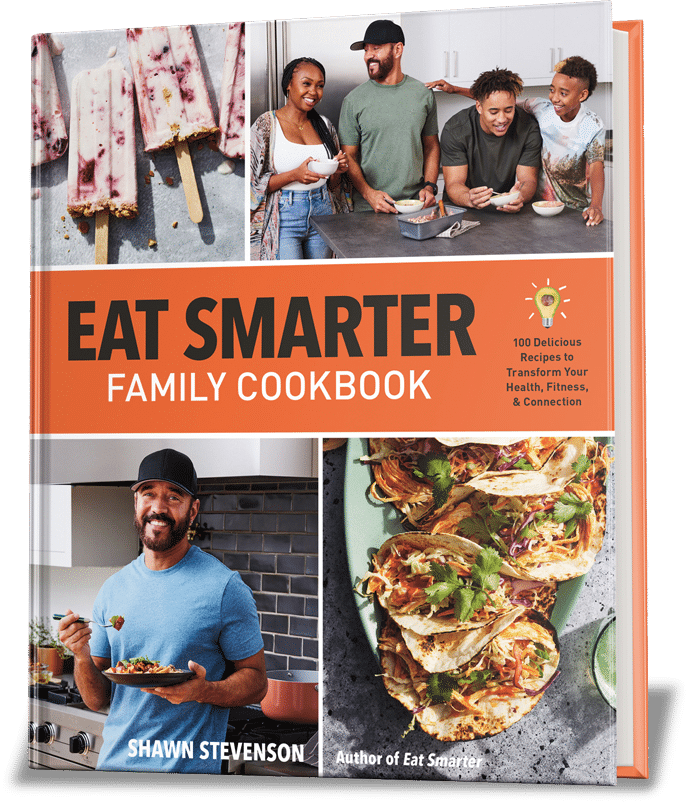
The Eat Smarter Family Cookbook is filled with 100 delicious recipes, plus the latest science to support the mental, physical and social health of your loved ones.


Share Your Voice
0 comments. Be the first to leave a comment.