
Subscribe to The Model Health Show:


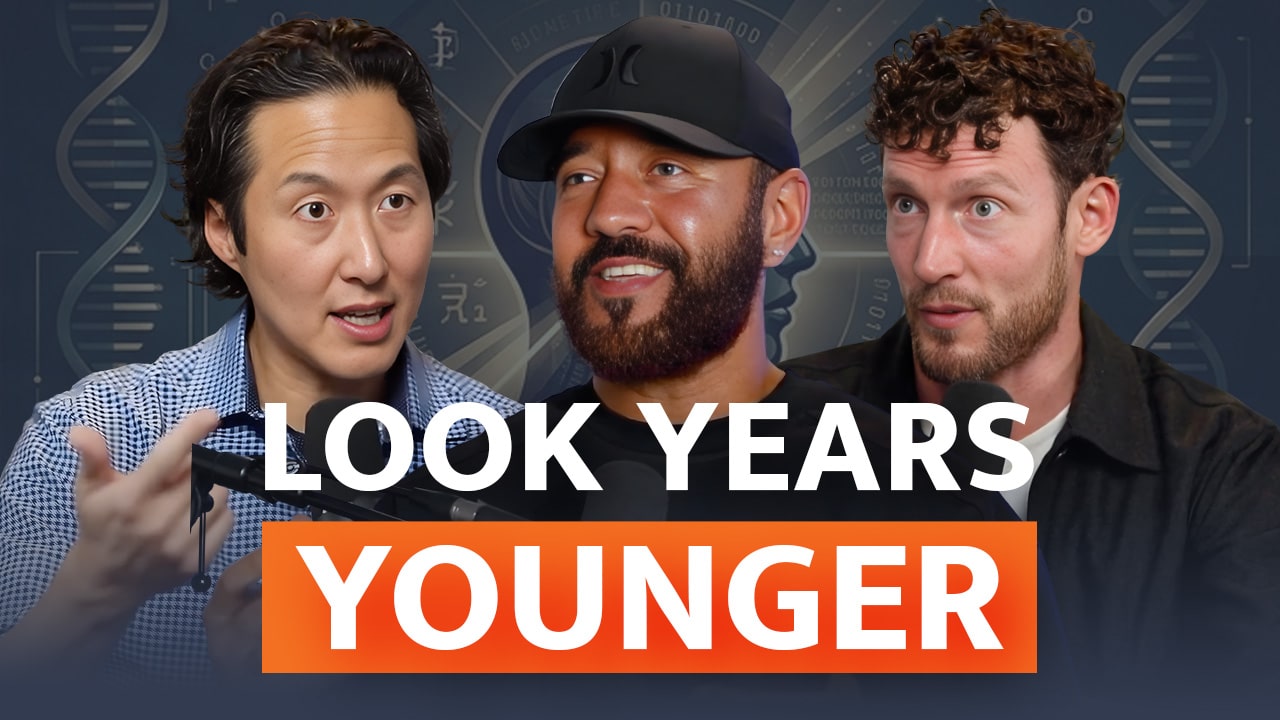
TMHS 1007: Natural Beauty Secrets from the World’s Top Plastic Surgeons (No Surgery Necessary!)
Achieving a vibrant and youthful look doesn’t automatically mean turning to invasive and expensive treatments. Today, you’re going to learn about natural ways to improve the health of your skin and enhance your body’s natural healing mechanisms. On this compilation episode of The Model Health Show, you’re going to hear from two top plastic surgeons on the topic of natural beauty secrets.
You’re going to learn about the best proven ways to take care of your skin, metabolism, and body for a healthier, more youthful looking appearance. You’re going to discover what ages the skin and how to implement a simple, effective skincare routine. You’ll also learn about modern surgical recovery protocols, the truth about collagen, and light therapy for better skin and accelerated healing.
This episode is full of actionable tips you can use to look and feel better. These two plastic surgeons are highly regarded as innovators in their field, and their insights can help you maximize your potential and improve your health. I hope you enjoy this episode of The Model Health Show!
In this episode you’ll discover:
- How to tap into your body’s innate regenerative abilities. (7:43)
- The five main principles of autojuvenation. (8:04)
- What the five main causes of skin aging are. (8:39)
- The main cause of chronic inflammation of the skin. (8:49)
- How ultra processed foods can affect skin health and quality. (10:35)
- The role collagen for skin health. (12:02)
- What you should know about collagen supplementation. (13:07)
- A simple skincare routine you can use to promote healthier skin. (17:27)
- How to use vitamin C for better skin health. (20:31)
- Tools and strategies for healing faster. (29:41)
- How near infrared light can accelerate healing. (33:40)
- What plastic surgery actually is, and its history. (37:13)
- How microplastics and nanoplastics affect human health. (43:29)
- Why surgery is the ultimate mitochondrial stress test. (44:47)
- How minding your blood glucose levels can help you look your best. (48:47)
Items mentioned in this episode include:
- Organifi.com/Model – Organifi makes nutrition easy and delicious for everyone. Take 20% off your order with the code MODEL.
- Boncharge.com/model – Your screens are messing with your sleep. Bon Charge blue light blocking glasses help protect your eyes, improve sleep quality, and support your circadian rhythm. Get 15% off with code MODEL.
- Secrets to Beauty, Skin Care, & Longevity – Watch the whole interview with Dr. Anthony Youn!
- The Dark Side of Fillers, Botox, & Anesthesia – Watch my interview with Dr. Cameron Chesnut!
This episode of The Model Health Show is brought to you by Organifi and Bon Charge.
Make nutrition effortless—and actually enjoyable. Organifi’s delicious, superfood blends help you boost energy, reduce stress, and feel your best every day. Get 20% off with code MODEL at organifi.com/model.
Your screens are messing with your sleep. Bon Charge blue light blocking glasses help protect your eyes, improve sleep quality, and support your circadian rhythm. Get 15% off with code MODEL at boncharge.com/model.
Transcript:
SHAWN STEVENSON: So much of our lives we wear on our bodies. Oftentimes, our outer appearance is a reflection of our choices, of our life experiences, of obviously our diet, our exercise habits, our sleep habits, our stress habits, and so much more. We all have a potential genetic expression. We all have our genes. Yes, our genes absolutely influence how we're put together, but epigenetic influences can decide which proteins are getting built today, which proteins are getting built this very second.
We're able to change out some of those lego pieces, those proteins that get produced based on these epigenetic inputs. So to maximize the potential of the genetic cars that we've been built, this is why we need to focus on those lifestyle factors that are within our power to influence. And today, more and more people are making a decision to focus on those things that help to keep us not just feeling more youthful longer, but also looking more youthful longer.
And I'm thinking about the age bracket that I am in right now and living with my grandma when she's at this very age that I am now, and it is shocking to think of the comparison. And many people are experiencing this same phenomenon, and just seeing the shift that's happening with people who are literally showing up biologically younger and younger, right?
We have our chronological age, but we also have a biological age or phenotypic age that we can deeply influence with our life choices. And so for me, this isn't about the superficial. It's about especially the joy factor and the accessibility and the ability to play and to experience life and to squeeze all of the orange juice Jones that I can out of this amazing life experience.
And within that, also to be more resilient within this amazing life experience because life is gonna life. Life is gonna happen. Stuff is gonna happen, and we need to be prepared. And so it's about stacking conditions in our favor. And shockingly, for myself personally, I found out some incredible insights about our appearance, about our longevity from a very unsuspecting source, and this was the domain of plastic surgeries. Now again, at first glance, this isn't something that I would normally pay attention to, but having the ability to be in this field at such a high level for so long, some incredible people reach out to me and these different connections, and I came across these plastic surgeons that were doing things differently.
And yes, not negating their incredible in-depth training and the results that they get as far as the surgery is concerned, but how these world-renowned plastic surgeons were now shifting gears and advocating, surprisingly, to keep people out of their offices and off of their surgery table because there's so much that can be done in our day-to-day lives to present those characteristics of beauty, to present those characteristics of longevity.
And so today, I'm going to share their secrets with you from these very powerful conversations. You're going to hear from people who are obsessed with beauty and what they are teaching as far as the skincare routines that they're teaching to their patients and the public at large to reduce their desire to have surgical procedures done.
You're gonna hear about their really remarkable nutrition tips as well from a new domain. How is what we're eating impacting, how we're expressing from a beauty perspective and so much more. So this is gonna be an incredible resource for you and things for you to again, you're gonna be able to take some of these tidbits and just make small shifts in your day-to-day routine that can show up big time in how you are showing up to the rest of the world and showing up to yourself.
Now before we get to these incredible special guests, one of the most popular supplements that's just on the tip of a lot of people's tongues when it comes to beauty and skin health and the health of people's nails and hair quality and all that stuff is collagen. Collagen is having a huge moment right now, and this is actually turning out to be for good reason.
We now have several studies indicating the benefits of collagen supporting metabolic health and skin health to help prevent fine lines and wrinkles but unlike most collagen products, the collagen that I use utilizes multiple forms of collagen derived from the very best and most bioavailable sources.
There isn't any collagen in the world that's better than this, and I'm talking about the collagen from Organifi. Head over to organifi.com/model right now, and you're going to get 20% off their phenomenal collagen blend, and you're gonna get 20% off storewide. They've got all these incredible food-based formulas with no binders, no fillers, no sketchy stuff, and also sourced from the very best sources in the world.
They make it a mandate to make that so for us. So again, head over to organifi.com/model. That's O-R-G-A-N-I-F-I.com/model for 20% off and now let's dive into this very special episode and our first featured guest, Dr. Anthony Youn. Known as America's holistic plastic surgeon, Anthony Youn, MD, is a nationally recognized board-certified plastic surgeon and best-selling author.
You're about to discover why this industry-leading plastic surgeon is working to keep people off of his surgery table because so many things we do at home can make a huge difference in our appearance. He'll share his science-backed skincare routine, the primary supplements he recommends for skin health and beauty, and the specific foods that destroy our appearance long term. He's also gonna share some insights on beauty sleep and so much more.
Enjoy this first segment with the incredible Dr. Anthony Youn.
DR. ANTHONY YUON: So I was always taught that the goal of being a plastic surgeon, or a surgeon just in general, was to bring people to the operating room and I finally realized what I needed to do, and what I needed to do was change the paradigm and change that goal.
And the goal should not be bringing people to the operating room. My goal should be, how do I keep people out of the operating room and get them to feel and look their best and feel like they don't need to go under the knife? So it's this idea that our body has innate regenerative abilities and it can rejuvenate itself, but we need to give it the tools and the environment in order to do that.
You know, our body wants to heal itself. Our body has these amazing regenerative abilities, but the way we treat our body in today's day and age is hindering that from happening. And so the concept of auto-juvenation really focuses on five main things. It's what you eat, when you eat, nutritional supplements, skincare, and non-invasive treatments.
And I firmly believe that by focusing on those five things, using that concept of auto-juvenation, anywhere from 80 to 90% of people can look and feel amazing and not feel they need to go under the knife or even get injections and things like that.
SHAWN STEVENSON: Let's talk just from the lens of nutrition. Things that we might want to avoid that can be contributing to degradation of our health, accelerated aging, things like that.
DR. ANTHONY YUON: So I mentioned earlier that there are these five causes of the aging of the skin, nutrient depletion, collagen degradation, chronic inflammation oxidation, and buildup of cellular waste. When you look at inflammation, the main cause of chronic inflammation of the skin is sugar.
And so reducing the amount of sugar that you eat, because sugar can actually bond to the collagen of your skin. And I mentioned earlier that our collagen, it's like the logs of a log cabin. As we get older, those logs become frayed. They start to fall apart. What sugar will do is it will actually bond to the collagen fibers, the actual collagen.
It will bond to it and cause that collagen to become permanently kinked. So it's not that tight log in a log cabin anymore. It's kinked. That is prematurely aging to the skin and so that process creates advanced glycation end products, that's the term, for those collagen sugar hybrids, those connections.
So sugar creates chronic inflammation, so reducing the amount of sugar, super important. I know you've been great with educating people on that. And then the other group-- the other thing that we look at with oxidation, we talked about how antioxidants fight oxidation and, are so healthy for our skin,
What does it fight? It fights free radicals and where do free radicals come from? Well, free radicals are created by our body. Just being alive, our body's metabolism creates free radicals as a waste product, and these free radicals, when they are numerous, can actually damage the DNA of our cells, of our skin cells, let's say.
And so antioxidants will neutralize free radicals but if you have too many free radicals that are attacking your body, we don't have enough antioxidants to support that or to neutralize them, that's when you get DNA damage, and you get premature aging. So where do you get free radicals from? Well, you can get them from pollution in the air.
You can get it from, let's say, cigarette smoking, from automobile exhaust, but you can also get it from ultra-processed foods. So ultra-processed foods, especially if they are fried, like deep-fried foods, are filled with free radicals and so reducing the amount of ultra-processed foods or even eliminating them is a great way to improve the health of your skin.
SHAWN STEVENSON: So you're saying McDonald's french fries
DR. ANTHONY YUON: As good as they may taste going down are quite possibly the worst food for your skin.
Maybe not the worst because probably the worst would be if they smothered them in sugar. Right. So yeah, I would say maybe a donut might be worse than the fries, but that's all the same idea, you know? And there are those foods that not only you know, have sugar, but they also are ultra-processed, you know, like, dessert stuff that you buy, you know, that's packaged in boxes that you buy at the grocery store.
Those could be potentially the worst.
SHAWN STEVENSON:Yeah I went to a carnival recently, and they were
DR. ANTHONY YUON: Oh, yeah ...
SHAWN STEVENSON: literally deep-frying everything.
DR. ANTHONY YUON: Yeah.
SHAWN STEVENSON: You want deep-fried Snickers, deep-fried Oreos.
DR. ANTHONY YUON: Have you seen the deep-fried butter? There is deep-fried butter out there that they sell.
SHAWN STEVENSON: Houseway? Wow. Yes. That's something else.
DR. ANTHONY YUON: Deep-fried sticks of butter. All right. And it's probably not grass-fed butter, I doubt.
SHAWN STEVENSON: Right. I wanna ask you about this because, you know, this, you said this term several times. It's super important. Again, it's the majority of what we're seeing when we see our skin in the mirror with collagen.
There are a lot of different collagen products on the market now. Yes. And there's some controversy around that. Let's talk a little bit about that.
DR. ANTHONY YUON: So 70 to 80% of our skin is composed of collagen. Collagen's that part of your skin that cause your skin to feel tight, to feel thick, and to feel strong. And when we're younger, our skin has a lot of collagen.
It's nice and tight and smooth. And the way I describe it, it's kinda like the logs of a log cabin. And when you're younger, that log cabin is new, the logs are strong, they're shiny, they're smooth. But as we get older, starting about in our mid to late 20s, we start losing about 1% of the thickness of our collagen every year.
Women, after menopause, that increases to upwards of 2% a year, and that's why you see some women who are in their 60s and 70s and 80s who have tissue paper-thin skin, so thin that sometimes they can get a scratch and it tears their skin. You don't see this as much in men because they don't go through that menopause process.
And so really focusing on the collagen is a huge part of slowing down that aging process when you're looking at the skin and the external visible effects of overall aging. and where does that start with? Well, collagen is a large protein. And so in order for us to retain that collagen, slow that collagen degradation down, you wanna definitely have enough protein in your diet.
So yeah, I mean, if-- it's funny 'cause I will post occasionally on social media about collagen supplements, and invariably, I get a ton of comments of, "I asked my family doctor about collagen supplements and he said that doesn't work." There actually is a doctor that I respect on- online he is a weight loss surgeon, and he's got a big bushy beard, and he talks with a lot of authority when he speaks.
He's probably in his 60s, and he seems very well-read and all that, and he made a video a couple of years ago about collagen supplements and saying, you know, "Basically, collagen supplements don't work. If you really wanna take collagen collagen supplements, save your money and buy Jell-O gelatin.
It's the same thing." And I thought, "Oh, geez." But the funny thing, Shawn, is that just a few weeks ago, he made a new video, and he's watching the old video about collagen. He swipes it away and he goes, "You know, some of us physicians, we make decisions and we have opinions based off of the available evidence at that time.
And the available evidence is now telling me that collagen supplements do work. I was wrong." And I thought, "Oh my gosh, here is a doctor who's in his probably 60s, who speaks with such authority, and he's so sure of his opinion, and he says it's wrong. So what does the science say about collagen supplements?
You know, we take collagen supplements. People take it for the health of their hair, their skin, their nails, their bones. That's type 1 collagen. The science basically-- the studies look at it are all pretty conclusive. I mean, people may say that they're not, but if you actually look at the studies, there are so many studies that support the use of collagen supplements.
So, for example, there was a meta-analysis in 2021. They looked at over 1,100 people taking 90 days of a hydrolyzed collagen supplement and found after 90 days a statistically significant improvement in wrinkles and hydration and elasticity of the skin. And that's over 1,100 people. There have been prospective randomized placebo-controlled clinical trials that have been performed where people take, let's say, 90 days or two months of collagen peptide supplements, hydrolyzed collagen, and have found after they actually biopsy their skin, that there is an increased amount of collagen in that skin biopsy.
So there is a ton of research to support the use of collagen and it improving the skin, hence that doctor going back and saying, "Look, I was wrong." I think in the end with collagen supplements, there are a lot of people out there who are just anti-supplement period and the way I describe it, it's people who don't know what they don't know.
And I've been at that point. You know, when I was early on in my career and I was a very traditional plastic surgeon, I didn't know what I didn't know. And then I realized that there was a lot I didn't know, and I needed to learn that and so that's kind of how I look at it with collagen. I think the important thing, if you're gonna try a collagen supplement, couple of things.
First thing make sure it's hydrolyzed collagen peptides. Collagen is a huge protein, and the argument is that how do you know, number one, that your body will actually-- that your GI tract will absorb the collagen protein 'cause it's so huge, and how do you know it's gonna get to your skin? Well, we know it gets to the skin by those studies I've mentioned to you, but we also know that, that good collagen companies that produce these supplements will break that large protein down into individual amino acids and peptides, and that process is called hydrolysis.
It basically hydrolyzes the collagen, makes it much smaller. So that's what you wanna look for. And then the second thing is that there are five types of collagen out there, okay? Type one is hair, skin, nails, and bone. Type two is joints. Type three is muscle. Type four is in the kidneys, and type five is placenta.
So four and five we don't really pay much attention to, but let's say if you've got joint issues, you don't wanna take a beauty collagen that only contains collagen type one 'cause that's not gonna help the cartilage. If you've got hair issues, you don't wanna take one that's just type two 'cause that doesn't have the right collagen.
So you really wanna make sure that it has the right type of collagen for what you're looking for.
SHAWN STEVENSON: So if you could, for everybody, just kind of across the board, what are some of the recommendations as far as a skincare routine? Just some basic things that we could all do to have healthier, younger, fresher-looking skin.
So one of the things that we did for the book is that we really simplified the skincare routine down because it is very confusing when you go to the store and, like, this product's better than Botox. This one is the latest, you know, best thing for your skin. What do you do? So we basically-- I put together a very simple skincare routine that anybody can do, and we found that it takes literally two minutes a day, and we tested people on it, people who weren't necessarily taking good care of their skin before, but they also weren't horribly aged or anything.
And we put them on it for two months, and then we actually took before and after photos, and we asked people online how much younger do they look? And it turns out that they looked an average of about five years younger. So we called it the two minutes, five years younger skincare routine. And it's very simple.
Every morning, you cleanse your skin with a cleanser appropriate for your skin type. So if you've got oily skin, I recommend a foaming cleanser. If you've got, like, drier or sensitive skin, then a more milky or hydrating cleanser is better. Second step, you apply an antioxidant serum. I mentioned earlier, one of the main ages of our skin is oxidation and free radicals.
Antioxidants neutralize free radicals, so important to use a vitamin C or an antioxidant serum every morning to protect your skin and then I recommend, if you're gonna be out, to wear sunscreen, at least an SPF 30. And we can talk about sunscreens in the future if you want. That's all you have to do in the morning.
Cleanser, antioxidant serum, sunscreen if you're gonna be out. In the evening, cleanse your skin. So important. If you only wash your face once a day, make sure it's in the evening 'cause you gotta get rid of that day's worth of dirt and dust and grime and pollution and if you're wearing makeup, you wanna get rid of that as well.
And then you wanna apply an anti-aging cream. The one that most dermatologists and plastic surgeons recommend, super easy to find, is a retinol. Retinol is a derivative of vitamin A. Prescription-strength retinol is Retin-A. Over-the-counter strength is retinol. Some people try to go for the Retin-A.
Retin-A has been very scientifically proven to improve wrinkles, to smooth the skin, to exfoliate the skin, to thicken the dermis of the skin, the deeper layers of the skin, and even reverse early pre-skin cancers. So it kinda does everything, but it's hard on your skin, and so the retinol is the over-the-counter version that most people can tolerate.
And that's all you have to do at night. Cleanse your skin, apply retinol. If you've got dry skin and you wanna add a moisturizer on top of that, feel free to do that, but a moisturizer does not reverse aging of the skin. It just is hydrating and makes it more comfortable. And then the final thing is once a week if you have sensitive skin, two to three times a week if you've got, quote, unquote, "normal skin," you wanna exfoliate your skin.
You can do that with a gentle scrub or you can do that with, let's say, an alpha hydroxy acid type of a peel. That's all you have to do. You know, simple steps. You can buy these products at your local drugstore. Ideally, I always encourage people to buy clean beauty so that it's something that doesn't have added fragrances and additives that aren't necessary for that.
But if you stick to that type of skincare regimen, you're gonna be way ahead of probably 90% of people out there.
I love that, and I love the little note about the exfoliation to not overdo it. You know? Yes. Give your skin a chance to heal. It's like a little exercise, the hormetic stressor, allowing it to heal.
DR. ANTHONY YUON: Yes. If you are exfoliating your skin and you find that it's constantly irritated and red, you are overdoing it. Do less of that.
SHAWN STEVENSON: Okay. Definitely. You've mentioned a particular nutrient which might be surprising for skin health a couple of times now, vitamin C.
DR. ANTHONY YUON: Yes.
SHAWN STEVENSON: You know, we tend to think about it in this, like, vanilla lens of, like, good for your immune system but it's this powerful antioxidant, and it's one of those things that is required by your skin as well for general health and resilience.
DR. ANTHONY YUON: Yeah, I mean, it honestly, it goes back to, you know, our middle school and high school science classes where we were taught the importance of vitamin C and collagen and scurvy, how there were these sailors that would go for these extended trips, and when they ran out of fresh fruits and vegetables, they ran out of vitamin C, and then they would get these sores in their mouth and on their skin because vitamin C is absolutely essential for collagen production.
So on top of that, it also is a very powerful antioxidant. It's the easiest antioxidant to get, both by mouth as well as topically on the surface of your skin but here's a little tip for the listeners. If you want to take that to the next level, if you add vitamin C and vitamin E together, there was a study that found that they are synergistic, and you get- an even better antioxidant protection if you use vitamin C and E, combined.
SHAWN STEVENSON: Yes. There's actually a study that I cited in one of my books looking at vitamin C and E improving sleep quality-
DR. ANTHONY YUON: Oh, wow ...
SHAWN STEVENSON: As well. You know, and in particular, reducing the symptoms of sleep apnea.
DR. ANTHONY YUON: Oh, interesting.
SHAWN STEVENSON: Like, who knew?
DR. ANTHONY YUON: Yeah.
SHAWN STEVENSON: You know? Very powerful, but again, when we look at these things in just one way, you know, get tunnel vision with it, we miss out on real food, real nutrients are great for your whole body in many ways.
DR. ANTHONY YUON: Yep. Yeah, and- So- And they can make big changes. I think that people poo-poo it. I mean, I'm still a surgeon, and I know that there are certain things that you just have to have surgery for if you wanna get there.
You know, if you've lost 100 pounds and you've got skin hanging from your body, yeah, there's no food you're gonna eat that's gonna make it go away. There's no chemical peel that will do that. Unfortunately, the only option is surgery. But outside of, you know, kinda more extreme-type cases, you know, most of these types of things we can really treat pretty effectively without going under the knife.
SHAWN STEVENSON: Well, since I just brought up sleep, is beauty sleep a real thing?
DR. ANTHONY YUON: It is. Yeah. So sleep, you know, one of the parts of the book that, I'm really proud of is kinda, is the focus that we have on lifestyle alterations. We talked earlier about stress and how stress is such a big deal with premature aging.
You definitely need your sleep because that's when your body really rejuvenates itself. But I think that there are also a lot of other practices that we can do that can slow down the process of aging that isn't quite as direct as applying, let's say, a cream on your skin. I'm a big fan of yoga. I think as we get older, that mobility is so, so important to staying young and active and keeping your sense of balance.
I wrote an article that's kinda interesting because walking is great, and it's a great activity as we get older, but one of the things I put in the book is that walking is not the perfect exercise. You know, I have... my parents are in their 80s. My mom's not quite there, but almost there.
My in-laws are in their 80s, and for them, what they do is they walk. that's their, quote-unquote, exercise. But the problem, let's say, with walking, is that you are only using those muscles to power you forward. You're not using any other muscles, and you're not using the fast twitch muscle fibers that are so important to stabilize you if you trip.
One of the things I put in the book was that there was a study that found that over the age of 50, it was something like a 30% mortality rate if you break your hip if you're over the age of 50 so that is something that you really want to avoid as you get older, and you wanna stay, once again, limber and active.
And the way to do that is to make sure that you are working those fast twitch muscle fibers and working on balance, like I said, with yoga. The fast twitch muscle fibers, you do that with strength training. And so really looking at kinda the overall aging picture is so, so important- Yeah ... because as we get older, not only do you want your skin to look nicer, but by actually being more active and exercising, that also really will put an impact on the quality of your skin, too.
So those lifestyle factors are huge and we unfortunately ignore that too much in our, in my field of plastic surgery and in dermatology as well.
SHAWN STEVENSON: All right.
I hope that you enjoyed that first segment. We've got another heavy hitter in store for you, but first, I wanna share with you something that's transformational for not just our appearance and beauty, but for our healing and performance. A double-blind randomized placebo-controlled trial published in the Journal of Phytochemistry and Phytobiology took 76 patients with notable wrinkles and treated half of their face with red light therapy, near-infrared therapy, or both, while other patients received a fake light treatment that was used as a placebo.
Participants received two light therapy treatments each week for four weeks. Here's what happened. Within just four weeks of treatment, participants had up to a 36% reduction in wrinkles and up to a 20% increase in skin elasticity. Phenomenal in just four weeks. Obviously, red light therapy is changing the game right now when it comes to beauty and appearance, but it is so good for reducing pain and healing.
A meta-analysis published in the BMJ sought to see if red light therapy could reduce pain in people with osteoarthritis versus a placebo. The study included over 1,000 people and found that red light therapy significantly reduced knee pain in study participants. But not only that, the results appeared to have lasting effects, with benefits seen up to three months after the treatment.
The researchers stated, quote, "The positive effect from red light therapy seems to last longer than those of widely recommended painkiller drugs." Unquote. Yes, red light therapy is phenomenal, but it's critical to make sure that we're getting our devices from a reputable FDA-registered source to make sure that we have both red, which is the 660 nanometers light, and near-infrared, which is the 850 nanometers light.
This is the same irradiance seen in these studies, and this is something that we could do from the comfort of our own homes. The wavelength and irradiant needs to be verified in third-party labs, and the red light therapy devices that I use meet IEC safety standards and EMF safety standards. The only red light therapy devices that I use meet the key IEC safety standards for electrical and EMF safety. They have the number one red light therapy mask in the world, and I'm talking about the incredible team at Bon Charge.
Go to boncharge.com/model, and you're going to get an exclusive 15% off all of their red light therapy devices. I personally prefer the Max and Super Max red light therapy panels to do more of a whole body treatment because if I'm going to get the treatment for my skin health, for my face, why not get some healing when it comes to my recovery from exercise or pain or injuries, things like that, just really helping to stack conditions?
So they have these large panels as well, and also small, portable, handheld red light therapy devices, too. They've got so many different iterations that can fit our lifestyles, so head over there, check them out. Again, all FDA registered and really checking off those boxes for performance and irradiance and safety.
Go to boncharge.com/model. That's B-O-N-C-H-A-R-G-E.com/model and use the code model at checkout for 15% off. And now moving on in this very powerful compilation with our natural beauty secrets from the world's top plastic surgeons. Up next we have Dr. Cameron Chestnut. Dr. Chestnut is a facial plastic surgeon for the world's highest performers.
People all over the globe seek out his services for minimally invasive procedures and also his focus on regenerative medicine and practical at home beauty support that all of us can take advantage of. In this segment, he's gonna share the beauty bonuses that help his patients to heal faster and improve beauty outcomes.
The amazing thing is that you don't need surgery to take advantage of these things. And for those who do undergo any type of surgery, we're not just talking about plastic surgery, but dental surgery or if this is a surgery regarding a bone or a ligament or any kind of surgical application, these insights you're going to learn are critical.
So if anybody that you know, yourself included ever has to utilize a surgery, this is stuff you need to know to support healing before and after the surgery. So incredibly valuable stuff.
Let's dive into this segment with the incredible Dr. Cameron Chesnut.
DR. CAMERON CHESTNUT: From my patients' standpoint, they'll notice a pre and a postoperative regimen that I have them doing.
The postoperative one is the very in-depth one that has sort of the most fun, unique things in it, and you sort of mentioned healing faster, which is definitely part of it, and if I were to flash back 10 years into something like hyperbaric oxygen, which is a staple of my postoperative recovery, that's mostly what it was cited for.
It makes people heal faster, and that's very true, like, to a noticeable statistically significant degree. But interestingly, where my real passion in this lies is that I want everybody to get better faster, but the things that I do also make our results a little bit better, and
when you're already achieving very good results and things, I'm looking for every degree, literally one degree of improvement that I can get. I'll take anything, what- whatever it is. And so that's the real truth to a lot of these, like hyperbaric oxygen, back to that. It doesn't just make you heal faster from your surgery.
It makes the quality of your healing better. So if I take fat from... like, instead of filler, this is a nice, you know, segue into that earlier, or, you know, pulling in the earlier part of our conversation. An alternative to using filler in your face, gel, would be to borrow some of your own fat from around your belly button or your flanks and move it to your face.
So now we're taking lost facial fat and replacing it with your own fat, which is incredible, like for like, but it's also highly regenerative. Our fat is a very rich source of a certain type of stem cell called the Mesenchymal Stem Cell. Which are incredible for so many reasons. But they help regenerate the structure of our facial fat pads, and when you put them in the fat, they do a really great job doing that, but they do a better job if they're exposed to hyperbaric oxygen right afterwards.
So a prime example of that fat does a better job, heals better, looks better if you have this hyperbaric. So just as a, to get into it, like I really want people to heal fast, but I also looking at better. I want things to be better and after surgery, I'll have them do hyperbaric oxygen. That starts right away.
They're usually doing that before surgery as well. Hyperbaric oxygen from a evidence standpoint in medicine is wildly well-backed to help things heal better, whether that is a chronic wound on a diabetic person's leg, or whether it's a surgery that's struggling to heal, or in my case, a surgery that's not struggling to heal, we're just early on.
Yeah. Hyperbaric oxygen is like the most evidence-backed. That's the staple of what it should look like. And just so everybody knows, that's just a chamber you get in. It's a, looks like a big tube with a giant glass wall on it, and it pressurizes down. So we call it a dive because historically this is used for divers who get something called the bends.
When they go too deep and then come up too fast, they get little bubbles in their blood, so you push them back down to depth and then bring them up more slowly, but you do it in a hyperbaric chamber. So it pressurizes, and then you breathe in oxygen, and you and I right now walking around our red blood cells that carry oxygen are saturated to 98%.
You know, they're just, they're doing all they can do, basically. When we get in a hyperbaric chamber, we don't need just red blood cells anymore because we can directly put the oxygen into the plasma of our blood, just like a soda gets carbonated with pressure that goes in there, and when you open the soda, it all comes out.
Same thing, we can push oxygen into the serum of our blood, and it goes to healing tissue and helps it heal faster. So hyperbarics, That's a nutshell of how it works. It's very fascinating. It's good for longevity, good for exercise recovery, great for surgical recovery Other things that I would mix in would be something like pulsed electromagnetic fields, and this is like a little-- we all think-- h-hear about EMFs all the time.
This is a very specific type that we're used at the frequency for healing specifically. This also has really strong data behind it. Has an FDA, which is a American Food and Drug Association indication to help healing of bones that don't heal after surgery or breaks, things like that. Super simple, like we could be sitting on it doing our PEMF treatments right now, and I get to use that after surgery on my patients and help them heal faster and better from their surgery.
It's a little bit of a different mechanism than hyperbaric oxygen too, so now we're stacking things that are doing different things. Light therapy, this is a huge one and I know you love this, and different wavelengths do different things. Really strong data behind light therapy for wound healing very well backed for that.
But when we use it in a post-surgical setting, we have a bunch of things going on. We have a wound. Oftentimes for me, I'm using a laser as part of my facial procedure, which is non-surgical, but it's just sort of like icing on the cake. You know, we-- I'm treating somebody who's, you know, doing a little bit of anti-aging, and I'm gonna help their skin with this laser as well.
So they quite literally have a skin surface injury that we're healing. They have the actual surgery itself, but then they have just the whole metabolic cascade of healing as well. So something like red light therapy, near-infrared light, plays a wild role in helping all those physiologic functions happen better.
Helps the direct injury heal, helps the surgical healing better, and helps the overall metabolic profile. Like everything meets in the mitochondria there a little bit, you know? And then we can get as much in these as we want, but I use a a very specific IV nutrition protocol. So if you're coming to me and I have your laboratory work, like your genetic work, any metabolic profiles I have, I can custom tailor your IV nutrition afterwards to, you know, what you need to heal.
Like, let's say how you methylate this or what your micronutrient deficiencies are, et cetera, et cetera. I can make these very customized IVs. I like to use peptides in my postoperative and preoperative healing protocol. A lot of nutrition-based things and then some supplemental things, enzymes, things like that to help heal.
And there's a lot to it. I don't wanna talk about this for too long but there's a lot that goes into it.
SHAWN STEVENSON: Yeah. And the thing is, again, just having a couple of these things- Right ... start to stack conditions- ... and better outcomes and better recoveries. And so again, hopefully again, we can have a vision of the future where these modalities are utilized in conventional medicine- Right
just to help people to feel better and to get better results. Like, it just, it's kinda Captain Obvious- Yeah ... you know, that we should. But again there's complexity here. This isn't, like- ... readily available, but it can be because we're talking about conventional medicine here. Right. Like, there's endless possibilities of what can be done, but there's so much money that's wasted in the system right now as well.
DR. CAMERON CHESTNUT: Yeah, and it's interesting 'cause as you said, I haven't really talked about this or thought about it, but what you just said, you know, kinda made me think that we do use them in medicine, like the hyperbarics or PEMF, for example. But we use them when things have gone bad, when it's too late, basically.
When it's, things are out of control, then we call 'em in. But yeah, what, you know, what's the threshold to be, kinda be using them in a normal situation or where maybe somebody's at risk but it hasn't gone bad yet.
SHAWN STEVENSON: Yeah.
DR. CAMERON CHESTNUT: Yeah.
SHAWN STEVENSON: What a concept.
DR. CAMERON CHESTNUT: Yeah, right?
SHAWN STEVENSON: Proactive.
DR. CAMERON CHESTNUT: Proactive.
SHAWN STEVENSON: You know, it is, it's fascinating to me as well that, you know, you mentioned one of your one of your great tools that you utilize is lasers.
Right? And just to think of the power of light- Oh, yeah ... to be able to do all these remarkable things with our biology, right? Whether this is, like, sculpting or, you know, creating some molding. Matter of fact, I wanna ask you about the name plastic surgery itself.
DR. CAMERON CHESTNUT: Yeah.
SHAWN STEVENSON: Right? Yeah. And so when I was a kid, you know, I would hear plastic surgery, and I would think, like, they're and of course some of the results that I would see as well with people on television is like, oh, they're getting plastic in their body.
DR. CAMERON CHESTNUT: Yeah, totally. Right? So- And sometimes that's not far from the truth.
SHAWN STEVENSON: Right. Yeah. So where does this, where does, what, what does plastic surgery mean?
DR. CAMERON CHESTNUT: Yeah.
SHAWN STEVENSON: And let's just go there first.
DR. CAMERON CHESTNUT: Yeah, so Plastikos is, like, the Greek or the root word that leads to it, and plastikos just means that something can be easily shaped, molded, formed, and hence why we have plastics. They can be so easily shaped, molded, and formed, and that's where the plastic in plastic surgery comes from, is that you're changing form, changing shape remolding things.
So pretty simple root word there. Yeah. But I think the irony is that it really kinda gives that idea of, yeah, silicone or whatever kinda goes in to, to change shapes that we may perceive as not being good or not being as good as it was before, the ultimate intent is to restore form and function. That's how plastic surgery started.
SHAWN STEVENSON: Yeah.
DR. CAMERON CHESTNUT: Yeah, it started in wartime, basically to restore form and function to soldiers.
SHAWN STEVENSON: Well, ironically as well, let's talk about actual plastics in plastic surgery today. Yeah, okay. Just, you know- Yeah ... obviously there's a lot- Yeah ... of education about this now, just in our environment- ... in our personal care products and whatnot.
Totally. Yeah. But let's talk about microplastics, nanoplastics in relationship to- Yeah ... plastic surgery.
DR. CAMERON CHESTNUT: Yeah, so, this has been a very deep rabbit hole of mine. I don't really know any other colleagues who have quite done this yet. I think that we will see more of this, 'cause all the things we've talked about I mean, if I were to just kinda say, like, of the scope of surgery or plastic surgery, what we're just talking about here is now we're about to get into a narrow rabbit hole of microplastics, you know?
Your audience is gonna be much more familiar with them than everybody else walking around in the world, just from, you know, being a little bit more tuned in. In medicine in general, if I go back to thinking about medical school and my first times in the operating room, I remember this day of, you know, you're a medical student, you scrub in, and you're just like, "Don't touch anything."
You're so nervous, you know? "I don't wanna touch anything. I don't wanna mess anything up." And by the end of the surgery, I remember being three giant full garbage cans full of plastic. Just dumped everything. Everything's disposable. And at the time, that was probably more eye-opening just from a waste standpoint, which, you know, isn't really the point of the topic here, but I remember even then thinking like, "Wow, we're using a lot of stuff, a lot of plastic that's disposable to do this."
Flash forward years, and now this is even just within the last year with full transparency in my own practice, when I was kinda thinking about, like again, I think in these, like, what can I do to make things 1% better all the time? And I was just thinking and looking at microplastics in general, because there's been a lot of small studies coming out on how they're affecting our bodies, where we're finding them, where they're coming from, sources, and just had my wheels turning in the wellness world a little bit.
As I was looking into these and thinking like, "I'm using a lot of plastic in my world out of necessity," just like using anesthesia is a necessity. But in my world, I'm thinking, "Okay, how can I... what do I need to look at, and how can I get into this?" So I started looking at some very specific plastics or plasticizers, phthalates to be very specific if we really wanna get into it, and what their places are in medicine and In a nutshell, these particular types of plasticizers make plastic soft and moldable, like an IV bag, which I use all the time, or like the tubing for the IV, which I use all the time.
So I started digging into, well, what's in these? Is this something I'd want to be putting in my body? And I found not so much. One of the very specific plasticizers has been known for a long time to, let's just say, not be great for us and when kids get it over and over again, would see issues with them with their development.
Just like anesthesia in kids, as a side note, when kids get repeated bouts of general anesthesia, we know that they-- those kids don't have as high of IQs as they grow up. Back to that topic. So in kids, we know that in vulnerable populations, these very specific plasticizers were not great for them, but for you and I in normal life, probably not as big of a deal, you know, not as de-detectable maybe.
These same things in Europe are not available, not used. So a side note. So I started going, "Okay, are these in my products?" basically. So I started kind of going back, and I did a very deep dive. Again, I own the operating rooms, own the system, own everything, so I can do this. If I were at a hospital, this would not be possible.
I did my own deep research, I rallied my staff, and I was like, "Okay, let's go look at every plastic product that we use, and here's what we're looking for, and here's what's okay," because there are some plastics that are okay that don't, you know, do this as much and we had a very deep dive and discovered, yeah, that we did have some of these in our protocols It's been very well shown now that with things like IVs that some sources even suggest that you, like, run a third of the IV through the tubing before you start putting it in somebody because of the microplastics and nanoplastics that are in it.
So, you know, we totally purged all those out of our operating room. It was a very expensive endeavor, and I love my staff for this because they were very much on board. But this would've been something that, like, you know, the nurse at the hospital's like, "I quit. I'm not doing this." Yeah. You know, my staff's like, "Oh, we can make this better.
Let's do it." And so, you know, very happy to say that we have an operating room that has... You know, we still use plastics, but plastics that I would use on myself now. And it's I think we'll hear more about that topic. There's, again, there's so many other things. This might be a little bit of a higher hanging fruit, but in my patient population, who is very well-researched and very aware this is something that they value.
I value it for sure. And they value it as well. Yeah. I think the thing we didn't talk about that's really important is, well, okay, microplastics, so what? At a cellular level, this is what piqued me in the first place if I go back to the beginning of the story, at a cellular level, they're causing a burden, an inflammatory burden, a mitochondrial burden, and we can't heal as well if those things are present in us, especially if they're very acute and there's a high load of them.
So this all boiled down to healing for me, too. It's like if I'm inhibiting their healing even a little bit in that postoperative period, I don't wanna be using it.
And that's where the plastics come.
SHAWN STEVENSON: Yeah. Wow. This is, again, this is going above and beyond.
DR. CAMERON CHESTNUT: Yeah.
SHAWN STEVENSON: It's not remotely normal.
DR. CAMERON CHESTNUT: No, for sure.
SHAWN STEVENSON: And it's just, it's very admirable to be just even considering it and try to figure things out. Yeah. I mean, we'll put a couple of studies up for everybody to see. Like, one of them is just obviously with our exposure today, you can't escape this. Right. You can't escape microplastics, nanoplastics.
But, you know, pretty much everywhere that they're looking in the human body, they're accumulating in our tissues.
DR. CAMERON CHESTNUT: Right.
SHAWN STEVENSON: And so one of the studies we'll put up for everybody found accumulation with our cardiovascular system, and it's one thing to have it there, but does that, is that, does it mean anything?
Well, they actually found it correlated with higher incidents of cardiovascular issues, right? So heart attacks, strokes. And then of course, the famous study with studying 11 testicles. Yeah. Yes. I don't know where, what, where the other pair went, but every testicle they analyzed had microplastics accumulating in it, you know?
And again, everywhere they were looking, in the brain, just- Yeah ... and so we're living in a very plastic world.
And it's one of those things that we can start to be aware of and just mitigate the effects because the human body is incredibly resilient. And one of the things that I'm hearing, again, like we're, like whether it's, you know, fillers, for example, and we're, then we're, got this huge plastic burden.
Like, we're just filling our tissues with all this stuff that's, at its essence, creating inflammation- yeah ... and damaging the potential of our mitochondria, right? And so that's one of the things as well that you noted is surgery as a mitochondrial stress test.
DR. CAMERON CHESTNUT: Yes, absolutely.
SHAWN STEVENSON: Right? Talk a little bit about that.
DR. CAMERON CHESTNUT: Yeah, so I mean, this happens in every facet. Again, I think all of those modalities that I mentioned sort of meet in the mitochondria because that's what's fueling our entire recovery. It's a big recovery response. It is ... We talk about regenerative medicine, which is essentially what a lot of my practice boils down to, utilizing regenerative medicine as part of my surgical or procedural processes, but we have to regenerate.
We have to gen- we have to make something. That's the generation part of it, and that takes a lot of energy and when a lot of that's happening at the same time, we have to have very efficient systems for that and, you know, we talked about red light. We talked about, you know, supporting our metabolic health, which starts before surgery for me, whether it's some very specific fasting regimens that I'll have people doing or creatine before surgery.
All of these are aimed at metabolic flexibility, fuel usage, how, ketosis versus glucose versus even creatine as a fuel source. I want people to have all of these options available to them. I want them to have great carbon dioxide tolerance before their procedure. I want them to be in good shape 'cause they're gonna heal better afterwards.
Their mitochondria are gonna be more efficient in these stressful environments. Yeah. It is the ultimate stress test to do something like this.
SHAWN STEVENSON: Yeah. This speaks back to, again, light being used as medicine. Whether it's the lasers, the red light therapy in particular, the impact on the mitochondria.
DR. CAMERON CHESTNUT: Yeah.
SHAWN STEVENSON: Just helping everything to work a little bit better.
DR. CAMERON CHESTNUT: Yeah. Lasers fitting into this, like, photobiomodulation thing is really interesting. Because lasers have been around for a long time. One of my mentors was a father of, like, the old lasers in medicine in, you know, like the '70s, and it wasn't talked about in the same way.
And I think it's really that the availability to, to us at home or, you know, something like red light therapy that is like, has an incredible safety profile and very little to no risk with it, has really brought this into the world that light has a very potent interaction with our body. But when we really look back at it in the old school, unlike these guys were, you know, l- a laser is by definition a single wavelength of light, one wavelength, and they were figuring out what that wavelength did in our body.
Basically, what it hit and how that energy affected that target that it had. It's called a chromophore, a fun word. So a specific wavelength of light hits this very specific chromophore, and that there's an interaction that happens and so some of the chromophores are red blood cells, and that shuts down a blood vessel if it gets heated.
Some of them are collagen, some of them are pigment, if we wanna get rid of, you know, sun damage or moles or whatever it may be, things that have like, melanin in them. So if we go, these guys were very old school, you know, pioneers basically figuring out like what wavelength of light did exactly what in our skin and then applying them in incredibly life-changing ways.
It's pretty cool. But this is like the OG photobiomodulation, basically, and now it's so popular and, you know, red light has a different effect. Red light's targeting our mitochondria largely, you know, cytochrome c oxidase it's really cool to see the evolution come and have it sort of be, for who we're talking with, sort of a household, you know, idea.
SHAWN STEVENSON: Yeah. What are some things, again, just with people who want to just look their best and feel their best- ... are there any things that you recommend people to do just for their general self-care- Yeah ... when it comes to you know, just being able to look and feel their best?
DR. CAMERON CHESTNUT: Yeah. This is a great topic.
It's a big one, and I talk about these types of things a lot on my social media, for example, like, here's what I would do in my 20s, in my 30s. I kind of go by the decade or just there's lots to this because it, in reality I'm thinking about this with my kids already, you know? I'm thinking about their skeletal structure with their orthodontics to their airway and how that's gonna affect their jaw in the long term, which is very functional, but also will affect how they look, honestly.
So it's, it really is at every level we really wanna be thoughtful about this. But the best advice I can give, because this spans every decade, even for my kids, honestly, to somebody in their 60s, 70s, 80s, is paying attention to your metabolic health. Very cliche. But let's talk about something like blood glucose levels super simple, we can measure.
I'm wearing a continuous glucose monitor right now. I kind of always know what that is. I use it as more of a systemic stress metric for myself to know what my cortisol levels are approximately doing. But when we look at what's happening with our blood glucose levels, and we know that as they get high, those things will age you faster.
Very simple example of that, right? It's called Glycosylation. Attaching a glucose molecule to a protein makes the protein not function well, and this happens in our arteries, happens in our facial tissues. Not great for how things function, especially when they're elastic and meant to flex like our skin or our blood vessels.
We can measure this. A fun fact, people may, people may have heard of this lab test called a Hemoglobin A1c. That is measuring exactly what I just talked about, how much glucose is attached to our red blood cells, and it gives a really reliable example of like, you got a lot of glucose going on and it's attaching to your proteins.
This is not good. But a very simple, basic, I think, rubber meeting the road example of how our metabolic health affects our aging because what we're seeing externally often is reflecting what's happening internally, metaphorically and quite literally in that situation. If you're having a breakdown of your elastic tissue of your skin- I'd be highly concerned that's happening to your arteries as well, which are also very elastic. Same processes happening.
So this is systemic inflammation, it's toxicity, it's glucose levels. These are all things that we want optimized before surgery, going back to that, but they're gonna help you at every phase of your life moving forward.
The challenging part is, and I think that we're gonna see more of this as this gets into the health span, lifespan discussion a little bit. We want both of those to go up and be better, but we do see a decoupling. We were talking offline about this a little bit before. The patients that I work with are often very high performers, like the best in their fields.
And they are very metabolically healthy. They've taken care of themselves, and this is a selection bias of the people that, you know, I gravitate towards and gravitate towards me. But at some point, it starts to decouple a little bit, and I was kinda saying, you know, this gets into our neuroanatomy. I was working out with Laird Hamilton this morning, he's early 60s, and when you look at him, you maybe don't know exactly how old he is, but you know he's older than you.
But when it comes to the actual performance, he can hang with me easy or better and but when you look at him, you get a different judgment of that, right? So if you take that from the athletic world to the business world to whatever, wherever we live, there starts to get a bit of a decoupling as to where we're at and what we're capable of and what we look like or what we're putting out into the world.
So the space I live in is really erasing that cognitive dissonance and trying to put those things back together just in a nutshell, making people look how they feel or trying to and you can protect that gap from opening by starting early, by being metabolically healthy, by being present and aware of who you are, what you look like, what your goals, missions, and values are, which is a, you know, a big mission to do to figure those things out.
But that all kinda helps kinda things stay cohesive and prevent needs for distorting or altering or doing other things down the road. But at some point, I, you know, this is where I get into it, is like I see that as part of a health metric, is, you know, you've... This is affecting your performance. It's affecting what you put out into the world.
It's affecting how you feel about yourself. There's no question that how we look affects how we feel and our overall health. No question. Very well-studied. Lots of things that look at that. And so, you know, I get a chance to be part of that health journey for a lot of people that's beyond just what they look like.
I want to help them look how they feel, but then I also wanna make them more healthy and make them look better for longer. So there's a lot to it, but very simple, just you know, do the things. Do your exercise. You know, that- that's gonna keep your chronic inflammation down. That's gonna make you age more slowly too.
You know, it's gonna make your blood glucose levels better. They're all intertwined with one another.
SHAWN STEVENSON: Thank you so much for tuning into this episode today. I hope that you got a lot of value out of this. If you did, make sure to share this out with the people that you care about. You can send this directly from the podcast app that you're listening on.
Of course, you could take a screenshot of the episode and share it on social media. And feel free to tag me. I'm @shawnmodel, S-H-A-W-N, the right way, no disrespect. Shawn Model on Instagram. There's many different ways to slice and dice a Shawn name. I get it. No disrespect. I'm @shawnmodel on Instagram and @themodelhealthshow on Facebook.
So share it up. Share your heart. Share your insights. I really do appreciate that and please know we got some epic master classes coming your way very soon and some world-leading, life-transforming experts, so make sure to stay tuned. Take care, have an amazing day, and I'll talk with you soon.
Other episodes you might be interested:
Maximize Your Energy
Get the Free Checklist: “5 Keys That Could Radically Improve Your Energy Levels and Quality of Life”
HEALTHY MEALS EVERYONE WILL LOVE
The Greatest Gift You Can Give Your Family is Health
When you gather your family around the table to share nutritious food, you’re not only spending quality time with them - you’re setting them up for success in all areas of their lives.
The Eat Smarter Family Cookbook is filled with 100 delicious recipes, plus the latest science to support the mental, physical and social health of your loved ones.



Share Your Voice
0 comments. Be the first to leave a comment.