
Subscribe to The Model Health Show:


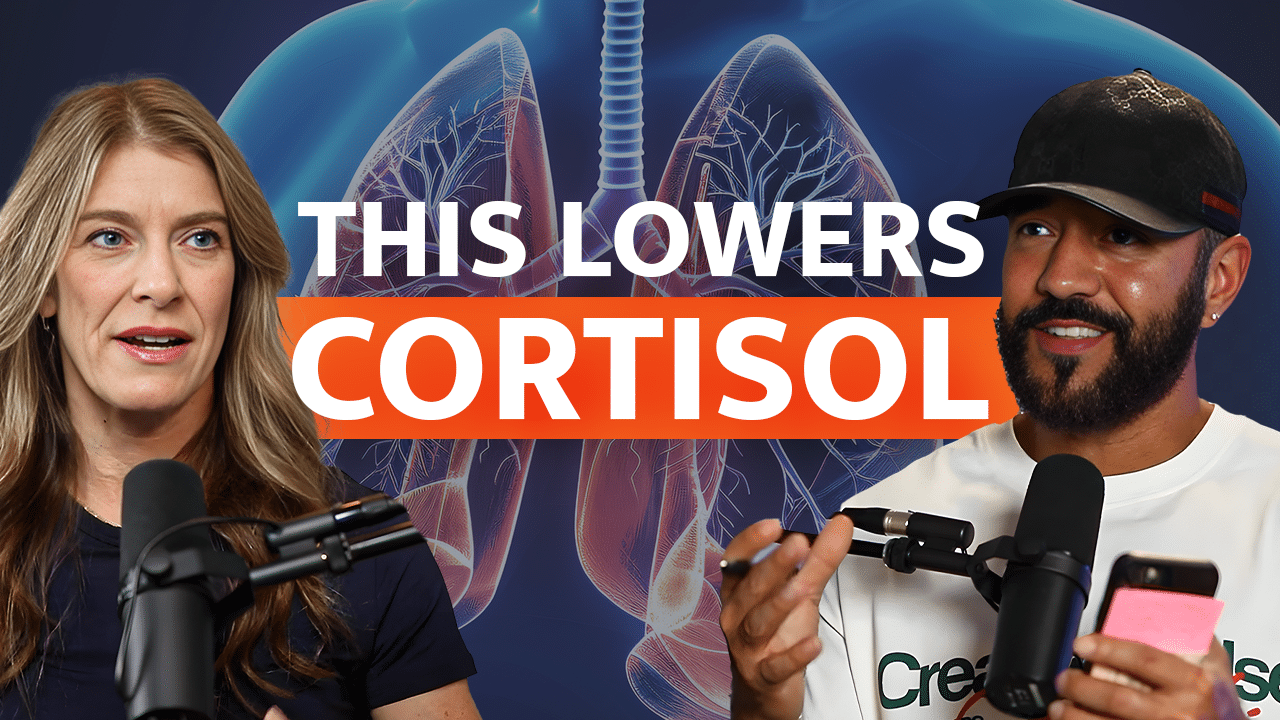
TMHS 972: Use Your Breathing to Control Stress, Reduce Pain, & Much More – With Jill Miller
Breathing is a unique biological process because even though our breath is automatic, we also hold the capacity to control our breathing. When used correctly, your breath can be a powerful tool for self-regulation, pain relief, and so much more. Today, you’re going to learn how to unlock the power of breath for better health.
Our guest today is Jill Miller. She is an author, the cofounder of Tune Up Fitness Worldwide, and a pioneer in the health and fitness space. Jill is back on The Model Health Show to share how to utilize your breath as a resource for reducing stress and pain, recovery, emotional health, and so much more.
We’re going to talk about the connection between breathing and stress, and how to use breathing exercise to increase resilience and accelerate healing. Jill Miller is an absolute expert in the realm of anatomy and movement. I hope you enjoy this interview with Jill Miller!
In this episode you’ll discover:
- The relationship between breathing and stress. (4:57)
- How your diaphragm works. (7:47)
- What the zones of respiration are. (10:29)
- The connection between breathing and pain. (16:41)
- What gut smashing is and its benefits. (23:07)
- How to use abdominal massage techniques. (28:50)
- Breathing practices for reducing anxiety. (35:48)
- What relaxation induced anxiety is. (46:31)
- What interoception is. (51:54)
- How breathing can accelerate healing. (54:00)
Items mentioned in this episode include:
- Peluva.com/model – Get 15% off barefoot shoes with my code MODEL!
- Paleovalley.com/model – Use code MODEL for 15% off!
- Body by Breath by Jill Miller – Get your copy of Jill’s book!
- The Roll Model by Jill Miller – Read Jill’s mobility and pain book!
- Coregeous Ball – Get your own therapy ball from Tune Up Fitness!
This episode of The Model Health Show is brought to you by Peluva and Paleovalley.
Peluva’s barefoot minimalist shoes support postural alignment, proprioception, and overall functionality. Get 15% off your order by using code MODEL at peluva.com/model.
Use my code MODEL at Paleovalley.com/model to save 15% sitewide on nutrient dense snacks, superfood supplements, and more.
Transcript:
SHAWN STEVENSON: How does the way that you breathe affect your experience of pain, affect your sexual function, and even affect your ability to handle stress? Well, we are going to cover this in so much more today. Now you might be like, well Shawn, I already know how to breathe. Let me stop you right there. Alright. There are many forms and fashions of breathing. Just because we can breathe doesn't mean that we know how to breathe. And as a matter of fact, you're gonna learn that the world that we're living in today has even altered the way that we are breathing, for the most part, for the majority of people. And so we have to intentionally retrain ourselves to breathe in a way that is life affirming, that is supportive of this switch over that you're gonna hear about from this kind of sympathetic fight or flight dominance that can be toxic to our bodies if left in a chronic state.
Two, our parasympathetic rest and digest and relaxation response that is very transformative. And again, health affirming, helping to accelerate healing, helping to improve blood flow, and to improve cognitive function and to improve our hormone health. The list goes on and on and on, and we've got a world leading expert in the subject of breath, and this information is incredibly powerful. This is fundamental to our experience of life here on this planet. So tune in and enjoy. And with that said, let's get to our special guest and topic of the day.
Jill Miller is on a mission to democratize self-care and provide education and tools to bring self-treatment everywhere you go. She's been featured in the New York Times, wall Street Journal, shape Women's Health and countless major media outlets, and she's developed fitness and wellness programs for Equinox, 24 Hour Fitness, Amazon, Google, and many other world leading organizations. She's here today to teach you how to transform your relationship with stress, reduce your pain, and experience greater health with a body by breath. Let's dive in this conversation with the one and only Jill Miller. You feeling good?
JILL MILLER: Yes.
SHAWN STEVENSON: Of course you are. You're here with me.
JILL MILLER: I'm here with you.
SHAWN STEVENSON: And immediately, as soon as you got here, then we ended up on the floor.
JILL MILLER: Rolling on the floor.
SHAWN STEVENSON: With balls in our back?
JILL MILLER: Yes.
SHAWN STEVENSON: Pauses in your neck. Yeah, the neck and you know, but so what are, what are these therapy balls called that you use?
JILL MILLER: So those were the Alpha Twins.
SHAWN STEVENSON: The Alpha Twins.
JILL MILLER: Yeah. So the Alpha Twins. So
SHAWN STEVENSON: sounds like me.
JILL MILLER: Well, I, you know, they're like big boy balls. They're like larger than life, you know, they're larger than small. So the yoga tuna balls are, they're smaller. And when the, when a single yoga tuna ball presses into it feels like a thumb. And then the therapy ball plus, which you say you use, they're a little bit larger. It feels like an elbow. And then a single alpha, it feels like a fist. But then when you double them up, you increase the surface area that it's contacting. And I mean, they all feel delicious, whether they're single or double, but the, you double them up. They're really, it's, it's like a mini foam roller, but it's squishy and grippy.
SHAWN STEVENSON: Yeah, that was exactly my sentiment. Like I get down on this like a foam roller, but this is different. And you know, like I mentioned to you, I have the tools that I got from you are sitting right next to my couch.
JILL MILLER: I'm so honored. I can't believe that.
SHAWN STEVENSON: I utilize multiple times a week. And you know, today, more than ever, it's. Having some more physical literacy. Because our bodies are subjected to just so much chaos today. And I wanted to talk to you specifically about this relationship with stress. And so, and everybody that's watching the video version of this episode, they'll see this study come up on the screen, but this was published in JAMA about a decade ago.
This information has been out and compiled, and this was a huge physician survey and meta-analysis. And the research has found that upwards of 80% of all physician visits today have a primary stress related component. And so whether this is autoimmune conditions, whether this is an issue with pain, whether this is a cognitive issue, whether this is a metabolic issue in weight gain. Stress is impacting our biology and most people have no idea about that. And to have you here is such a gift because one of the fastest ways to get into stress and out of stress has to do with how we breathe.
JILL MILLER: True.
SHAWN STEVENSON: So can you talk about that relationship between our breathing and stress?
JILL MILLER: Well, your breathing is an ever present reflection of your autonomic state, and that is your breathing changes millisecond to millisecond depending on the stressors that your body is experiencing internally and externally. So we're taking in inputs all the time. Our environment sounds smells. You know, you, if you smell something noxious immediately your breathing changes to prevent you from breathing deeply, right? So there are so many different ways that our brain is interpreting external stimuli that are going to change the way we breathe.
Like for example, oh, I walked out of the gym this morning and the clouds were this cotton candy pink that only January knows in Los Angeles. We have these crazy skies in the morning. And I just went, oh, right. I let out this involuntary exhale, my whole body relaxed. And that was this combination of sensory input and then this emotional adjustment that changed my breath. So you have the external inputs that end up unbeknownst to you affecting your respiratory rate. And then there's also the stuff going on inside of you, your own emotions or pain or surfaces that, you know, as you walk about or that your body is feeling your body is going to adjust based on, it's gonna adjust its breathing based on these external and internal inputs.
And those are the unconscious things. But what's so cool about breathing is it's not just on automatic. You can adjust your breathing rate anytime, any place in any position that you're in physically, and that will affect your brain in reverse. So we can take control of how we're breathing and typically that is longer and slower and deeper than your breathing already. That's gonna be the calm switch effect.
SHAWN STEVENSON: Hmm. I love this. I love where this is going already. We already talked about some stuff I didn't expect to talk about. So with this being said and understanding this relationship, again, our breathing is part of our autonomic nervous system.
JILL MILLER: Well, the breathing is not a sympathetic or parasympathetic function. It's under a combination of regulatory with some autonomic aspects.
SHAWN STEVENSON: So it's got a asterisk next to it.
JILL MILLER: Yeah. It's not just it impacts the parasympathetic and sympathetic nervous system. But this, you know, sympathetic and parasympathetic is affecting smooth muscle and glands. The diaphragm, which is your primary breathing muscle, is a skeletal muscle. Your intercostals are skeletal muscles. These are, this is meat that you would eat, right. You'd eat ribs, you'd eat a skirt, steak. And they're probably not gonna I'm going to eat some blood vessels today. Right. We're not really seeking out, although some people like to eat glands, this is going in a direction.
I didn't expect it to go either in terms of our dining preferences. But the breathing is not, it can affect your autonomic nervous system, but it is not exclusively an autonomic thing. Right. This is a regulatory function of the body. And it is a bridge though. It is a bridge into your sympathetic and parasympathetic nervous system.
SHAWN STEVENSON: Mm. I love this clarity because autonomic means essentially kind of automatic. And so we can unconsciously breathe.
JILL MILLER: Yes, totally. Most of the day we do.
SHAWN STEVENSON: But the asterisk is we can jump in and take conscious control of it and access all these other forms or expressions of our biology in doing so. And so this is really powerful because our breathing is, I mean, it's the number one connection that we have to life.
JILL MILLER: Yeah.
SHAWN STEVENSON: And if we're talking about dealing with stress and helping us to metabolize stress better associate with stress. First of all, can you tell us how breathing, I'm not gonna say wrong, but how does breathing in a typical, unconscious way contribute to us feeling more stress, anxiety, and things like that?
JILL MILLER: Oh, okay. So shallow breathing or mouth breathing? Well, these are two different things, but when we're breathing at a fast rate and at a very low depth, we are typically in a more excitable, sympathetically, aroused state. And that it's not optimal for decision making. It makes us be much more impulsive, reactive unable to connect with other people 'cause we're just in a state of fight or flight or flee. Right. So that state of constant chronic shallow breathing and that. Shallow breathing is often physically, we're often not using all of the muscles of respiration in their optimal design. So one of the ways that I find it easier to talk about this is going to the anatomy. So if I can take you through what I call the zones of respiration, I think it'll illuminate what I'm talking about right now, which is right now I'm talking about what I call zone three or zone two breathing.
So we have three different primary zones where our breathing muscles are functioning, and then backtracking even more than that. Your main muscle, which I mentioned a moment ago, your skirt steak, your respiratory diaphragm, is this, actually two different muscles fused together. So we have a left and a right, and they live inside of the rib cage,
but they're, they're sewn together, so it looks like a trampoline in there. And it's lining the lower six ribs. So if you just even touch the sides of your rib cage right now. You're touching the area that the diaphragm is living in, and you can touch this diaphragm in a difficult way. You can bend forward, take your hands, and run it underneath the bottom of your ribs so people who are watching on video can see me.
If you're listening, you can just lean forward wherever you are, put your hands in your abdomen and just shape it around the costal margin. And if you have a lot of rigidity in your rectus abdominis, it's gonna be hard to get in there. It's easier if you go from the side. So if you're in a slump position, you're gonna be more apt to get in there. And so your fingers can actually curl around the underside of the rib cage and you can like kind of, you got the diaphragm by, its by its neck here. And then if you take a breath into your hand, you'll feel the hand get pushed out by the action of the diaphragm. So the diaphragm, typically when you breathe in this manner, when you breathe low.
Everything that's below the diaphragm is going to distend, it's gonna expand, and that is the diaphragm has a lot of force. So when we're breathing low in what I call zone one as the diaphragm contracts, it makes all of the guts distend because of the pressure of the diaphragm. Also, your pelvic floor will stretch also your low back, your waist. So we have this ballooning quality. And when we're breathing like this, where the diaphragm is truly descending, it's not inhibited by the descent. And that inhibition is part of that sympathetic, tense, stressed person, personnel persona that we'll discuss in a moment. But when we're breathing low in the zone one, we are in a more calm state.
We're in a more relaxed state, more parasympathetic dominant state. So that's really important to know can you breathe in a way that allows your belly to balloon. Don't get worried about looking chunky or anything. This is normal. Like we should have stretch occurring there when we breathe. And if we don't, if we're holding it in all the time 'cause we wanna look a certain way or maybe we've overtrained our abs or maybe we have a scar from a c-section or liver surgery or multiple laparoscopic surgeries like within the guts we may have some wild tension patterns in the abdomen that don't really allow the diaphragm to move down that well.
And if the diaphragm is inhibited from scar tissue or from you know, a desire for aesthetics, like an emotional drive to look a certain way or because we flogged ourself with exercise and we've created such stiffness in there that those tissues don't glide very well, then we're gonna be more of a zone two breather. And the zone two breather is a breather that the dominant style of breathing is of the rib cage. And so the rib cage is designed to. Open and close. We have this pump handle effect of the bones raising and lowering. When we breathe, and this is very important, the ribs should move out and in they move out on inhale, they move in on exhale, and that's a collaboration between the intercostals and the diaphragm.
But when we're breathing in this way, we actually don't get as much depth into the lungs as we would if we're combining the zone two with our zone one to fill completely into the lung sacks. So zone two is gonna be a little bit more of a shallower breath altogether, and we're gonna be more upregulated, more stimulated, more sympathetic energy. And this is great for exercise, right? When you're exercising, you must brace or you'll be injured, right? You don't wanna deadlift your PR without having abdominal tension. So we have to be able to breathe somewhere. And so we'll, we'll use breathing into the lungs exclusively into that zone two to get this going.
But often what happens when we become a chronic zone two breather is it will more readily slip us into what I call zone three breathing, which is using muscles of the, the face, jaw, neck and shoulders to get breath in. And you see this all the time in shock, in fright, in a fear state but also in high delight or even in that, that awe that I saw this morning. So, but that would be a very short lived moment of zone three, but typically when I'm referring to zone three, like this is the asthma breath, this is the COPD breath. This is the you know, sports induced asthma breath. You see people just on the field with their shoulders way up and they're just hanging over trying to get breath in.
The shoulders are really inefficient at bringing breath into the depth of the lung tissue. You're gonna kind of be hovering in the upper portion of the lungs to get your oxygen and CO2 exchange. And so it's metabolically very costly and it's metabolically very costly on the muscles of the head, neck, and shoulders. And so those folks who are stuck in a more zone three, zone two type of breathing are gonna have the, the jaw pain, the neck pain, the shoulder pain, and then this will because of the way your fascial tissues intertwined, you may have problems in your elbow, your forearm, your hand carpal tunnel like symptoms, you know, this whole chain all the way through from hand to eye.
SHAWN STEVENSON: How on earth can our breathing essentially create pain in our bodies?
JILL MILLER: Because it's a muscular event and you're doing it 20 to 22,000 times a day. So just like you wouldn't wanna do 20, you know, 200 poorly executed pushups. We probably want to try to improve the way we're breathing throughout the day and not veer into 19,000 of those breaths being like bad emails coming in, type of breaths.
SHAWN STEVENSON: This is an important relationship. So skeletal muscle, so the diaphragm being a skeletal muscle. Obviously, it's inherently deeply connected to the rest of our skeletal muscle, which is where we see so much of our pain symptoms manifest. So this is like a huge aha moment in the relationship with our breath and pain.
JILL MILLER: Your diaphragm is a node. It is a muscular node that has fascial connections all over the body. I mean, that's really the premise of body by breath is I wanted people to be able to learn these interconnections of the diaphragm to all these other tissues and the consequences of that throughout the body because breathing is not just a nose to lung pathway, it's body wide, and the way the diaphragm moves has a ripple effect on tissues far, far away from the diaphragm, as well as systems far, far away from the diaphragm. So it's really an important integral tissue, muscular tissue of the body. And so learning to train it or doing specific diaphragm exercise is helpful for so much of your body and being.
SHAWN STEVENSON: Hmm.
What are those? The cry of a generation pointing at uncool footwear. Nobody wants to show up with anything janky on their feet. Everybody wants to be cool. But in our society today, in our ultimate quest for coolness and sometimes even in our ultimate quest for comfort, we've abandoned our focus on healthy footwear for optimal human function. Because your foot has 26 bones, 33 joints, 19 muscles, 107 ligaments, and each one of your feet has over 200,000 nerve endings, and it's all there for collecting data to determine your movement that contact with your foot to the ground is literally informing everything up the chain.
How to move and respond in our world. So whether this is performance in the things that we love to do, or whether this is being able to gather ourselves, if we should bump into something or meet with some kind of obstacle to maintain ourselves to adapt and to prevent injury. It starts with our feet. Truly, our functionality is built from the ground up. And our modern shoes essentially mute or disrupt thousands of data signals that would normally be transmitted from your feet. Up through your kinetic chain and modulate appropriate movement. The results we have, epidemics of foot dysfunction, foot and ankle injuries, knee injuries, hip injuries, and more that can be rooted back to modern footwear.
And again, don't get me wrong, I'm not trying to be at the other end of what are those. And this is why today we have an opportunity to get plenty of rehab and prehab for our feet with some stylish science-backed footwear. Now, this was not an easy quest when we're talking about shoes that have a wide toe box and five toe functionality for each one of those incredible toes to fit into.
But that's what you find with the incredible footwear at Peluvas. Go to Peluvas.com/model right now and you're gonna get 15% off when you use the code model. That's P-E-L-U-V a.com/model and use a code model for 15% off store wide. I've been wearing my palas for a couple of years now, and I absolutely love them. Again, this can be prehab and rehab. If you still wanna wear your other shoes, that might be uncomfortable, but you just adapt to it. You push through, you can utilize your Peluvas to rehab and rehab your feet to get normal function restored. It's also signs backed to help to reverse even some really gnarly conditions that can happen with our feet and things up the chain as well.
But things like, you know, uncomfortable bunions and the like, can be greatly improved by wearing palas. And so after I leave the studio today, I'm headed home, I'm gonna throw my palas on and I'm gonna get out there on the streets. And rehab. Rehab my feet from all the work that I'm doing today, standing and my stylish kicks. So it doesn't have to be all or nothing. It could be a both end world. But if you catch me out there walking or even training, you're probably gonna notice that I'm rocking my palus. So again, head over there, check 'em out. Peluvas.com/model. Use the code model at checkout for 15% off and now back to the show.
SHAWN STEVENSON: Alright. You mentioned some of the things that, especially in our culture that can kind of hamper us, which is, you know, always keeping those abs turned on, you know, there's always 20% on. Yeah. Right. And n not normalizing, like your belly being able to be distended, you know, while you're breathing. And with that said, have, and also the training as well, and just having the rock hard abs and you know, but also, and again, you can have a very aesthetically pleasing in our culture waistline and still have a core and a abdominal muscles and tissues that glide well, right? Oh sure. And that's what you said earlier, you said glide. Well, and so is this where this art or this practice of gut smashing comes in at as far as helping to helping us to activate the parasympathetic, helping us to relax, kind of like digging in and onto those tissues?
JILL MILLER: It's all the things. Yes. So, it's so funny. So like 2011. I was up in Northern California teaching and a mutual friend introduced me to Kelly Starrett, who, you know, from the ready state, formerly mobility wide. And he was in the middle of that mobility wide project. And I was like, I have some things. I wanna show you what I do with my gut and with my diaphragm. And so I brought a gorgeous ball over to his gym and I showed him this abdominal massage that I do on myself, that I teach to my students. And he was like, oh man, gut smash. And he called it the gut smash and that that took off versus abdominal massage. So people refer to the gut smash. I still call it abdominal massage.
SHAWN STEVENSON: I like that better.
JILL MILLER: Or, you know, or self myofascial manipulation of the respiratory muscles. It's just too long. So gut smash, just, it sounds better. Hashtag but yes, the point of, there's so many reasons to do this for one's force production. Sure. Like we wanna get stronger abs. People want a stronger core. Hopefully it's not just the front that they're working on, but they're also working on, you know, all aspects of that area. And doing self myofascial release using a tool like a gushy pliable rubber ball mine. The one I make is called the gorgeous ball, helps to create some frictiony stretch between these layers within the abdominal musculature.
So from the rectus, which is embedded in a sheath of fascia called the rectus sheath. Right? This, you may be familiar with the rectus sheath if you're into bodybuilding and the obliques insert there, the transverse abdominis of the back wall of this rectus sheath. But it can get inappropriately stiff. So stiff that you, when you stretch it, it hurts. That's when we stretch tissue. It shouldn't fight us. It should yield. And so the ball is a really helpful tool to induce that so that we improve the length and tension the the God given of the biologically given length, tension, relationship of those tissues that you might have adapted in.
You might have adapted to have a very tight looking or a tight adapted tissue because you're going for an aesthetic. But that doesn't necessarily mean those tissues are strong. They're just very much bound up. They're tissue bound, they're fascial bound. And so we wanna try to restore proper glide so that we can optimize the length and tension, the contractile elements within those tissues. But it, it's, not just superficial. It's much deeper than that too. If we're talking about breathing, the diaphragm is sewn into the same fascial layer as the transverse abdominis. And so your, the reciprocal motion of breathing, the breathing muscle upon your abdominal canister also needs to have this elasticity for it for you to be able to do zone one breathing.
But the diaphragm is also has a massive fascia link to stuff in the back of your body. The quadratus lumborum, which is a really big low back muscle that connects your ribs, the bottom of your rib cage to the top of your pelvic bone. So now we're talking about the low back, but the diaphragm is also fascially seemed to the SOAs. And the SOAs is really while we're primates and why we walk upright, this amazing long cable that starts on the thoracic spine and then inserts into your upper inner thigh. So when we're doing this abdominal smashing or gut smashing with a gorgeous ball or a soft ball, we're able to affect IDE in and amongst.
All of these tissues that support this area. And then you think of the ripple effect of that. Oh wait, the SOAs starts in my thoracic spine and it attaches below my pelvis into my femur. So we're talking about the hips, we're talking about the pelvis, and that's gait that's walking. So all of this is, it's, it's body wide. And then, you know, to state the obvious, when you're rolling in your midsection, you're also manipulating all your digestive organs. So we're jostling these organs of digestion. And what that might help with is that gentle coaxing of, you know, moving food along the colon. Especially if people are chronically constipated, maybe 'cause they're so tightly wound. This is a way to help induce a vagal dominant state, right? So we're stimulating the vagus nerve inside of those organs and giving feedback to the brain through this pressure.
SHAWN STEVENSON: Who knew? It's just, it's access to your biology. And you know, the gorgeous ball as you mentioned, which again, I have one sitting right next to my couch. It's akin to, I'm just going to, this is not exactly like this, but you designed it. Okay the gorgeous ball. But for me it's akin to like a, a kickball that's slightly deflated.
JILL MILLER: Sure.
SHAWN STEVENSON: And, but again, you designed it especially for this. And if you could, can you describe the abdominal massage? Like how does one actually do it? And we'll put up some video for people to see that are watching the video version. But for those listening, what, what do you mean by abdominal massage and using a gorgeous ball to get access to your biology? Like this? How, how does that work?
JILL MILLER: Oh, it's my favorite thing to talk about. So the gorgeous ball is this grippy, pliable, air-filled ball that shouldn't be blown up like a basketball or soccer ball to tension, right? It should have some, a lot of squish to it and that it can conform to your form when you lay on it so that it doesn't keep sort of like punching into you, which a harder ball will. So what I recommend for people is they start by laying on their, their side and specifically on their left side when they're first learning this right into the side of your waist. And the reason we lay on the left side is because you're descending colon is there, and that will help. Whatever gas might be there to pass, because gas is very painful. So sometimes if you start on the right and there's a lot of gas, you might have visceral pain and you really won't like the gorgeous ball, although your friends in the room might not like you because you're laying on your left side and doing what needs to happen there.
But you lay on your left side, we put a pillow or a block underneath your head so you have your head's not just getting all crunched up with your shoulder and you know, the first moment you, you feel what you feel, which is this interruption, this very strange pressure into your waist. Now the waist has substantial musculature and so because ultimately we're going to be plunging towards the organs and probably towards the spine over time as you acclimate to this pressure we wanna probably tease some of the initial resistance to the ball away. And what I mean by that is anytime you have something that's putting stress into the body a ball or you know, a massage therapist moving their hand into your body, if you're not ready for it, if your brain doesn't really know how to predict that, you'll have what's called the muscle bracing response.
So your body is naturally gonna armor itself against something it thinks might injure it. And so when you lay down with, really with any ball anywhere on your body or foam roller and it, and it hurts often, it's not that, it's not that hurts, it's that you're essentially creating a muscle shield right away. And the sympathetic nervous system is saying, no, go there, get out. But we can work with that by doing something called contract relax. So we can take, we can actually force contractions into that area. So typically what I like to have my students do is take a big breath in, hold your breath, contract your abdominal muscles, and then exhale and let go.
And then you do that again. You breathe in, hold the breath contract, especially where the ball is, and then exhale let go. And that contrasting of all on, all off, all on, all off basically lulls that muscle guarding response into a placid, complacent state. And then the ball is able to increase its stretch into your tissue. Your body allows it, you start to merge with it. So we do that, and that's great because you're also getting some breathing reps in. While you're doing that, you're starting to entrain breath as a tool with the ball. And then once the ball just feels good, it just feels good in you. We'll start to do movements.
So movements might be like pelvic tuck, untucked, or tiny rotation movements. Either the pelvis moving or the upper body moving just to get the ball to start to nuzzle into the guts on the anterior side, and then nuzzle around towards the backside. And then eventually once that side feels, it feels good, it feels compliant, then you go to the other side, you kinda repeat the same steps, and then with permission, with your body's permission, maybe just maybe you can go across the center. And then if the center is always uncomfortable because your organs, you know, I mean like. Organs typically don't want to be restricted. And also as soon as a ball goes into your belly button, you think of that as a pressure blockade for your diaphragm. So the diaphragm can't really move down well when you have all of this central pressure going in.
And so that can also set people off or create pain that's not really there. It's just this interference. And so we train our students to work with that. And then you can work around that also by creating a little bit of tension and preventing it from going deeper. But this is some of the basic steps of how to work into an abdominal massage that can be quite total. I mean, with our students who've done this a lot, and especially, you know, myself, you know, we'll be twisting our body all over the ball and the ball will be ringing into the tissues. And this is how to create the most dramatic levels of glide. Just like a really skilled massage therapist or a Rolfer would do on your tissue to create a tremendous amount of intra tissue stretch.
So not just pressure, but trying to create traction between layers. And the, there's so many benefits to this on a fascial tissue level 'cause what you and I haven't even talked about is the insane amount of neural net within all the fascial layers that are being deformed and informed by the pressure of the ball. And that's a whole other language that's being spoken to different areas of your brain that helps to really rearrange one's perception of their body and pain.
SHAWN STEVENSON: Wow. It's all connected. All connected. Wow. Can you share, by the way, where can people get a gorgeous ball from.
JILL MILLER: Oh, my company's tuneup Fitness. So you can find it on our website and of course, you know, we have an Amazon shop, but yeah. Tuneup fitness.com.
SHAWN STEVENSON: Tuneup Fitness, beware of the imposters. Right. Get the original gorgeous ball.
JILL MILLER: Thank you. Yes.
SHAWN STEVENSON: Of course. And you know, we're talking about accessing our ability to modulate stress in our bodies. Help to kind of be able to release and let go and to get more into that parasympathetic. On the other side though, a big part of stress management, which, you know, even I use that word loosely, but thriving am amid stress, which we all are going to be exposed to is having more stress, resilience, or capacity. And so is there a way that we can actually utilize our breathing to help, to make us more resilient in the face of stress?
JILL MILLER: Well, we can train our breathing in slow breathing. We can train our breathing in fast breathing like kind of in a Petri dish, right? So if you're sitting in a room or sitting in a nice quiet space, you can be the, you can be the sample. You can be you in a Petri dish trying out different experiments and seeing, what effects that has on you personally. And you know, there are a lot of, there's so many different breathing strategies out there that combine, you know, all slow breathing or resonant breathing or fast breathing, hyperventilation, breathing combinations of all of these things.
My friend Tanya Bentley and the HHPF, HHP Foundation, that's the Health and Human Performance Foundation. They did an index or a systematic review of all of the breath literature that shared breath practices geared towards an anxiety reduction. And so this paper came out in 2023, I believe, late 2023. And they had, they were over 300 papers that they looked at, and then they had to rule out a lot of exclusion criteria. And they came down to, I think, like 74 or 76 papers. But the summary of what was included in breathing practices that definitely reduced anxiety over the long term are the breathing practices need to be, need to include slow paced breathing and they need to be at least five minutes.
So continuous breath practice that. Include some slow paced breathing, or you can have a fast, slow mix, but it needs to be at least five minutes and you need to do this at least five days a week to get long-term benefits. So when I look at that, I can say, oh sure. It looks like you can do both slow and fast breathing as long as you have the slow breathing in there, because I think some people may just wanna do fast breathing and think that's all they need to do, and that's gonna pump you up. It's gonna get you really excited, but it's not gonna give you the type of focus like clarity that the slow plate paced breathing will do, which ultimately has a connection with improving your heart rate variability, just helping you to be more organized as an organism with your, the synchrony of your heart rate, the way you're. Brain patterns work with breathing and this other complicated systems of the body that if I start talking about it, we will go into the weeds.
SHAWN STEVENSON: Can you talk about specifically when you say fast breathing, because somebody might be like, well, why would I want to do that if I'm trying to, you know, I found that, and there's different names for it. Chaotic breathing, breath of fire, but having a fast paced, breathing intentionally and then. Going into slow breathing. I relax so much faster than anything else that I've ever done.
JILL MILLER: That's amazing. Yeah.
SHAWN STEVENSON: And so can you specifically tell people what that is and describe what do you mean by fast paced breathing?
JILL MILLER: Yeah. So it would be just taking as fast and inhale and as fast and exhale as you can muster the most volumous, both on the in and on the out. And so that might look like an inhale that goes less than a second in and less than a second out. And it's going to be very metabolically taxing. And I actually think that the exhaustion of it's, you know, it's like a hit class. Yeah. But for your breath, like super hit for your breath in a short timeframe, and then contrasting it with the slow pace breathing that really slams on the vagal break. So you get to really feel this contrast of all on, all off. All on. All off. Just like the contract relax does for your musculature.
So I think these is in a way, like it's a contrast therapy for breathing, like contrast therapy for contractions. We really get to feel the ends of our resilience when we do things like that. For one, I'm not a huge fan of doing fast paced breathing as a practice. I've certainly done it. I like to get my fast pace in, in other ways. Yeah.
SHAWN STEVENSON: Wait, are you talking about sex?
JILL MILLER: I mean, just efforting at.
SHAWN STEVENSON: Okay.
JILL MILLER: The paradigm bite.
SHAWN STEVENSON: The way you look though, you was like in other ways, you know, you had the side eye. Alright. So exercise and.
JILL MILLER: I don't, I keep my, I keep the sex slow and then the breathing fast in other realms.
SHAWN STEVENSON: Okay. Okay. Got it. Got it. It was the side eye for me.
JILL MILLER: Okay.
SHAWN STEVENSON: But again, many different acts. There's a relationship there obviously. We just turned, we just made a turn. Who knew he was gonna turn into this little pathway? Can, is there any insight you could share on the relationship with breathing and our sexual health?
JILL MILLER: Oh my goodness. Well, now I'm, I'm flushed. So orgasm is a parasympathetic event. So if we can do breathing exercise, and especially breathing exercise, that builds awareness all the way to the basement of our body, right? So when I'm talking about zone one, breathing, the pelvis isn't not included. The pelvic floor is a reciprocal, elastic region that is going to receive pressures from the diaphragm. So this can help our body to feel really like totally included in the physical event, the physical effects of breathing that can help us get. Towards orgasm. I mean, I'm not, look, I'm not an orgasm expert, so I'm sure you have a lot of other people in your space, but it is a parasympathetic event.
And so if you can build more tolerance capacity for being in a parasympathetic state. And we do that with the types of things that I've been describing, the breathing, the massage. We can do pelvic floor massage with the gorgeous balls, with the yoga tup balls. This is in the book. It's in embodied by breath. Really smart stuff to do so that there's less muscular tension in those areas. This all helps with blood flow, and I think it all helps with the coordination, the neural control of orgasm.
SHAWN STEVENSON: Thank you. Thank you for that insight.
One of the most important nutrients for human health, and this should be of no surprise, it should be written in the sky. It is vitamin C. It has so many benefits from supporting our immune system function to supporting our sleep quality and even supporting our mental health. Vitamin C is believed to be a bonafide stress buster and reduce stress by supporting the adrenal glands and allows a person to bounce back more quickly when under stress. In a randomized, double-blind, placebo controlled trial published in the journal Psycho-Pharmacology, looking at the stress of public speaking and other stressors, scientists found that those who received vitamin C supplements experienced less stage fright, maintained more balanced blood pressure, and at a faster recovery of their cortisol levels.
What don't you do? Vitamin C. You're so special. Now, here's the rub and what most people don't know, this is not written in the sky is that most vitamin C supplements are made from genetically modified corn syrup and corn starch. These are not ideal sources of vitamin C for our tissues, for our brain, for our biology. And so we wanna make sure that we are sourcing our vitamin C supplements from bonafide science-backed sources. And for that, the vitamin C supplement that I've been using for years is the essential C formula from Paleo Valley. Go to paleo valley.com/model right now. You're going to get 15% off of their powerful essential C complex.
Now it's based on some of the most vitamin C dense real super foods that have ever been discovered, including AC cherry, AMLO berry, and the vitamin C superstar of superstars. Camou, camo berry. It's all organic with no binders, no fillers, no synthetic ingredients. Plus it has a 60 day, 100% money back guarantee. So if you aren't absolutely thrilled with it, you'll get your money back, no questions asked. So again, you've got nothing to lose, but better health to gain by utilizing Paleovalley's essential C Complex. Head over to paleovalley.com four slash model right now for 15% off. That's P-A-L-E-O-V-A-L-L-E y.com/model for 15% off storewide. And now back to the show.
SHAWN STEVENSON: You know, again, I think it's very, it's very superficial the way that we view breathing and relationship to sex and orgasm. You know, very cinematic, you know, perspective, but it's deeply related. Our breathing orgasm, you know, even the, the act of all of it itself can be more, dare I say, controlled. If we are tuning in to our breath and breathing a certain way.
JILL MILLER: I mean, it's hard to get off if you're just trying, right? So that efforting that tension based, that's not really helpful for letting go.
SHAWN STEVENSON: Mm. Dang you, you just wrote it out for us.
JILL MILLER: Hopefully.
SHAWN STEVENSON: So let's get back to the main road again, and I want to ask you now about, obviously when we think about breath in the context of relaxation, a lot of it is tied to meditation, right? Especially in our, in our culture today, which is great. Now with this being said, body by breath and our bodies are just so dynamic and we have all this movement capacity. Can it be possible for us to access a lot of those meditative qualities through movement, basically like movement-based meditations i'm asking about?
JILL MILLER: I love this question. I think stillness meditation can be very intimidating for many bodies, especially many bodies that are like highly charged, may more sympathetically aroused. And one of the things I came across when I was researching the book is this thing called relaxation induced anxiety. So relaxation induced anxiety is that for some bodies, when they are still, they end up getting neural rushes or feeling very fidgety, they have an inability to stay still or they feel like they must, they get very nervous, right? So it's this anxiety of being still, and I saw this when I was teaching.
So I'm, my background is a yoga teaching and then massage. And I would see this in a very small segment of the, my students, like some of them just, they just, they would fidget the whole time. You know, they'd move their fingers or eye eyeball here or there, or just, you know, squirm. And when I came across this relaxation induced anxiety term, I realized that's probably what's happening for a lot of these people. And then I started, I came across the work of Stephen Porges and Polyvagal theory, and his work on polyvagal theory really helped to explain people. Especially who have had a trauma history can find stillness extremely threatening because still they were forced to be still in some of the traumatic events that happened to them.
And if you think about in a yoga space, you're laying with your genitals, your mouth facing the sky, you're completely vulnerable in a dark room, right? Everybody's eyes are closed. And so that made a lot of sense to me in terms of, I mean, I don't know what's going on inside of people's minds and bodies, but stillness can be a threat to certain bodies. So how do you help those people to gain the benefits of relaxation for those folks, their bodies? Should be assisted to move, they should be allowed to do slow, gentle movement, and we can do slow, gentle movements that induce deeper relaxation or deeper concentration or calm or going approaching meditative states.
Meditation doesn't always have to be this complete static stillness. So some of the things I teach in the Body by breath work are these slow motion dynamic movements, such as like rolling over in bed. I know that sounds crazy, but there's an exercise I teach where you're just laying on the ground in an an x like shape and in super slow motion, and I mean super slow motion so that it's like you can feel one filament move at a time, and I'll do it fast now, but basically you, you let your hand cross over to your chest and then it reaches over to the opposite hand and your whole body ends up rolling over. And then you unwind that and you roll back. And it, if you allowing yourself to really let go enough, it feels like an external force is moving you. And that whole event becomes the focus of your meditation.
The slow movement becomes the focus, so your mind and your attention and your body really glom together. And so that becomes a very meditative experience. There's another meditation I teach, it's called the hand dance Meditation that I learned from my studies in bto. So BTO is a form of Japanese dance that came out of Japan after the Second World War, after the second World War, after the devastation of the atomic bombs there. And it's a very elemental, primal form of dance, but sometimes the dances would, and I've studied this and I've attended BTO concerts, you know, you'll see somebody go from standing down to the ground and that will take 60 minutes. So it'll be one gesture, and you'll see them progressively melt all the way down to the ground over the, it's incredibly powerful, like with cool lighting and stuff, or I've just seen it done in a dance space.
But this hand dance meditation is a, an homage to that. And what that is, is you can sit anywhere or you can lay down and you set a timer. Five minutes is probably a good amount of time. And over that timeframe, the hand that's in a fist ends up opening and the hand that's open goes into a fist. And so you do this and it's only one rep. So you've got one hand in a fist, one hand that open, close your eyes or have them partially open and make sure your hands are rested. And then over that five minute time period, no, just once. Yeah. And when I do this for my students and I set the timer a, a lot of times they, they're nowhere near finished.
One hand is barely open, one hand is barely closed. And so this is also this experience of interoception because time is an intercepted, interceptive experience in our body. So interoception, I just jumped four pages of your questions there. Interoception is our body's experience of its physiology. It's our ability to sense our physiology, like our heart rate. Our breath pace, our sexual urges, hunger, satiety. But time is also an interoceptive concept. And so it's really interesting to see folks have this dissociation of their body and time and space. But it doesn't like, that's just like a little factoid on the side. All this is designed to help those students with relaxation induced anxiety, find ways of focusing that don't spin them out or send them into a higher stress or threat response. So yes, slow motion movement, extra slow motion can be so helpful for so many different bodies and temperaments.
SHAWN STEVENSON: This is wonderful. I wanted to cover at least one more thing with you, which this awareness of interoception and our body's awareness of itself, this is also our awareness of pain.
JILL MILLER: Yes.
SHAWN STEVENSON: And obviously, you know, the just part of being human and going through life, you're going to experience pain, whether this is injuries or just hurts and. My question is, can we utilize our breath? Can breathing help us to recover, to heal faster? Is this something that is well established? You know, whether again, somebody is working to recover from an injury, would the state that our breathing can put our bodies in, help us create an environment to where healing can happen more gracefully and swiftly?
JILL MILLER: I just saw a paper last week that was by Joseph Tael out of Germany and some other folks, and it was about chronic pain and PTSD and biofeedback resonance breathing, which is basically you know, resonance breathing. You need some tools to be able to see that you're in a synchronous frequency with your heart rate, the barrier receptors and your breath pace. And typically this is in the five to seven breaths per minute zone. But these people had text, so they had the biofeedback about this breath pace for their own bodies. And I don't remember all the details, but the group that used resonance breathing who had chronic pain along with PTSD, had a remarkable, had a significant ability to not have the catastrophizing around their pain to the degree that they had prior to the study.
So the controls still had the same relationship to their pain, but the people who had done the breathing practice, their relationship to their pain had transformed, which is incredible. And the PTSD, so these are like compounding variables. And then I would, if it were my study, what I would've done is I would've wanted to also see, can we give these people some self myofascial release intervention that actually deliberately addresses some of the pain points that they might have. That's a lot of variables, but I'm so encouraged by this study, and I wish I could remember the name of it, but if you just look up Joseph Tael and those other keywords, you'll find it.
SHAWN STEVENSON: Amazing. So obviously no two people are the same. You know, any injury or any type of condition that somebody's dealing with, they're working to recover from, it's always just gonna be an estimation on how long it's supposed to take to heal. Right? And so it's something that's difficult to track, to see is somebody healing faster with this protocol, with, you know, including breathing versus not, because it's situation dependent. However, it's such a huge component of the catastrophizing, as you just mentioned, how we make it mentally this is so bad, this is gonna take so long. I, whatever negative thing we could add to the mix, I'll never be the same. I'll never recover. The quicker we can shift out of that, the more available we are to feeling better and to healing. And so just that change alone is probably the biggest change possible.
JILL MILLER: Yeah. I think with pain, because there's so many different things that are impacting the pain, right? It could be the tissues, it could be your brain, it could be your brain's memory of the pain. It could be the salsa that you ate, that was unfortunate, right? It could be how your kid yelled at you. There's so many things that impact pain that the beauty of that, something so simple as breathing can be a window that gives you a reprieve into how your mind has arranged itself around its belief about your pain. It's huge. And I think that those, those of us or people who live in chronic pain you really, you wanna stay positive and optimistic that there can be other things that can help with your perspective. Because when the perspective changes, it can change the physical engagement that you have with the pain. And we need those windows in order to feel hopeful about living in this body.
SHAWN STEVENSON: Obviously there are so many different paths to the goal, so many different modalities of accessing or breathing, but are there any kind of tried and true breathing exercises or strategies that you can give people if they're dealing with pain to help them to relax, to reduce the pain, or just to even feel a little bit better.
JILL MILLER: I think the simple answer is slow down your breathing. Whatever you're doing now, make it slower than it is normal, and try to make your exhale last longer than your inhale. So that's like the simplest strategy because slow deep breathing is really what's shown to help with symptoms of anxiety. But pain specifically, I'm not so sure, because sometimes what happens is when we relax deeply, we actually start to really feel our pain, right? The more in touch we get with ourselves, so when we're sympathetically aroused, our muscles are bracing for us and our mind is spinning, and that can inoculate us to some of the screams that are coming from our interoception, from some of the ale of pain, in fact, movement blunts pain.
So as soon as I'm still, and I'm breathing slowly, what might happen is I might start have more emotional processing and that can lead me to more catastrophizing. So it's one of the reasons why. Okay, so also the way you're breathing could compound the pain because you might have a paradoxical breathing pattern, or you might already be a chronic zone two, zone three breather. You might naturally breathe like that when someone tells you to breathe deep because you don't know there's another alternative.
You have trained your body away from a baby's breath, right? Life has not been kind to you, and you've tried to look skinny or not feel the feelings in your gut or whatever it is, and we're. Offloading our breathing into areas that compound our pain over time. So this is one of the reasons why I include body awareness in the context of breathing, because also sometimes you just tell somebody to breathe and they have breath induced anxiety. Forget about relaxation induced anxiety. When I'm working with beginners and I ask them to breathe, that first breath is an assessment. Some people have such a difficult time decoupling the need to control their breathing from letting it be an effortless, full, deep experience. And so that's one of the reasons why especially in body by breath, I introduce self myofascia release into the body in gentle ways because it can actually trick people into a more appropriate healthy breathing pattern.
And get out of this chronic over-breathing, using the neck, the shoulders, the ribs, as the primary drivers of breathing. So I think it's a lot more complicated. Yeah. I'm telling you the simple answer, which is take a longer breath than you normally would and make your exhale last longer than your inhale. But that can have other consequences. One of the things like I'll tell some people is let's blow out candles on the birthday cake and the next blowout is gonna be one more candle. Right? So you breathe in and then blow out four candles. Good. Take another slow breath in. Now blow out five candles. So on. Right? So you can increase the duration of their exhale by giving them an external target. 'cause sometimes the internal target really creates that anxiety. So it's not, it's not simple. I'm sorry, Shawn.
SHAWN STEVENSON: No, I wasn't expecting it to be because you're telling the truth. You know, and there are, there's a overarching principle, which is again accessing our breathing according to what you just shared, making that exhale longer. But you know, for some people it's just finding the tools that work for you right now.
JILL MILLER: Oh, totally.
SHAWN STEVENSON: And one of those things you're really providing and is been now a staple in my life, is putting pressure on parts. And just interacting with those parts that might be holding tension. Right? So whether this is like that knot in your shoulder, whatever the case might be. But utilizing these different tools that you have, you give people access to. And we were just doing some of that before the show started, but that not in your shoulder and putting the right amount of pressure into it and breathing, breathing into it, pressure on parts. And I can literally feel like that tension melting away when I do those kind of things.
And also putting that pressure and then, you know, changing my body, rotating different ways, turning my head, right, just being able to get in there and to move around and to, again, it's creating more physical literacy even around that tension. And so pressure on parts combined with breathing can really help to relieve a lot of the symptoms, the manifestation of pain. But that's just one access point. That's only, that's one strategy. This is incredibly complex and this is why you have such a phenomenal stacked book. It is. It is a hefty book, but it's beautiful. So visual, visually pleasing as well. Tons of photos.
JILL MILLER: Can I flash it? Can I flash it?
SHAWN STEVENSON: Of course, please. Show.
JILL MILLER: I'll take out my stacks of notes.
SHAWN STEVENSON: So this is Body by Breath.
JILL MILLER: Yes.
SHAWN STEVENSON: And this is a book that, and I haven't shared this with you. I see your book every day. Aw. Because it's just kind of right there prominent on my, I'm not sure where Bookshelf.
JILL MILLER: All, it's 480 pages and more than seven years of writing. Plus, you know, the 30, 40 years of life prior to the writing that beginning.
SHAWN STEVENSON: Yeah. This is like a manual for so many different practitioners. You know, sometimes I might randomly visit. A colleague who's doing, you know, whether they're a massage therapist, physical therapist, and I've seen your book out there in the wild.
JILL MILLER: Oh, that's so great. Oh my god, that makes me so happy.
SHAWN STEVENSON: And so can you tell people where they can pick up a copy of the book and also share where they can pick up those tools?
JILL MILLER: Yes. Oh, once you get my gosh.
SHAWN STEVENSON: Get a gorgeous ball.
JILL MILLER: I'm so honored. Yes. So body by breath, I don't carry it 'cause it's too heavy. So get it on Amazon or Barnes and Noble, or wherever you buy, wherever you buy books. And it is available electronically, like Kindle. I'm a hard cop. I'm a paper person, so I love that. And then there's another book called The Role Model. That's my first book and that's all about the self myofascial release, basic self myofascial release strategies. And that's available on Tup Fitness, my website, as well as Amazon. So my, the therapy balls, there are different sizes like we discussed earlier, and they work great on all different parts of your body to help you live better in your body and transform your pain. And they're available on Tuneup Fitness as well as Amazon.
And there's a lot of independent clinics that also sell them. So you can find them and you can find teachers who work in person with you on my website. You can do that by zip code. And then I teach, of course, all over the world. And I also have a platform on Tuneup Fitness, where I teach weekly classes in a library called Move, breathe Roll. But all the exercises in body by breath, they. You know, they're written in the book, but they're also filmed on video because a lot of people are not necessarily wanting to learn an exercise from a book. So I recorded every single exercise that's in this book, and that's also on my platform in the Mood Breathe World Platform.
SHAWN STEVENSON: Amazing. Thank you so much for putting so much energy and effort into creating this. It's truly special. And thank you again for making the trip to come and hang out with me today. I appreciate it.
JILL MILLER: It's easy. You're down the street.
SHAWN STEVENSON: I know! I know.
JILL MILLER: We're really close to each other.
SHAWN STEVENSON: I love it. Well, thank you again so much for everything that you do. It really does mean a lot.
JILL MILLER: Oh, honor. Thank you.
SHAWN STEVENSON: Thank you. The one and only Jill Miller, everybody.
JILL MILLER: The one and only Shawn Stevenson.
SHAWN STEVENSON: Come on. Thank you so much for tuning into this episode today. I hope that you got a lot of value out of this. The real value comes in utilizing it. Alright. Again, this has been transformative for so many people. Putting pressure on parts. PLP, pop that, pop that, all right. Pressure on parts and couple that with being intentional about our breathing. Incredibly powerful for relaxation. Before this episode even started today, I was in there mind taking a nap. I'm not a nappy type guy, but just doing a couple of these exercises with Jill here at our studio in the lobby it's just so relaxing for my body.
And I found little parts of pressure like, oh, I didn't know that was, that's a little junky. You know? And just being able to work on those parts and also just to feel that tension to leave the body. And it's an incredibly valuable practice, but most of us don't realize that we have access to treating and supporting our own bodies and having more physical literacy. That's the key. And so just the awareness that we can do things like this is so powerful. But our ancestors have known this for thousands of years. We are just beginning to remember. So I appreciate you remembering for checking out this episode today, and please share this out with somebody that you care about.
You can send this directly from the podcast app that you're listening on or share it on social media with your friends and follow us. Make sure to tag me. I'm at Shawn Model on Instagram and I appreciate you so much. We've got epic masterclasses and world class guests coming your way very, very soon. So make sure to stay tuned. Take care, have an amazing day, and I'll talk with you soon.
Other episodes you might be interested:
Maximize Your Energy
Get the Free Checklist: “5 Keys That Could Radically Improve Your Energy Levels and Quality of Life”
HEALTHY MEALS EVERYONE WILL LOVE
The Greatest Gift You Can Give Your Family is Health
When you gather your family around the table to share nutritious food, you’re not only spending quality time with them - you’re setting them up for success in all areas of their lives.
The Eat Smarter Family Cookbook is filled with 100 delicious recipes, plus the latest science to support the mental, physical and social health of your loved ones.



Share Your Voice
0 comments. Be the first to leave a comment.