
Subscribe to The Model Health Show:


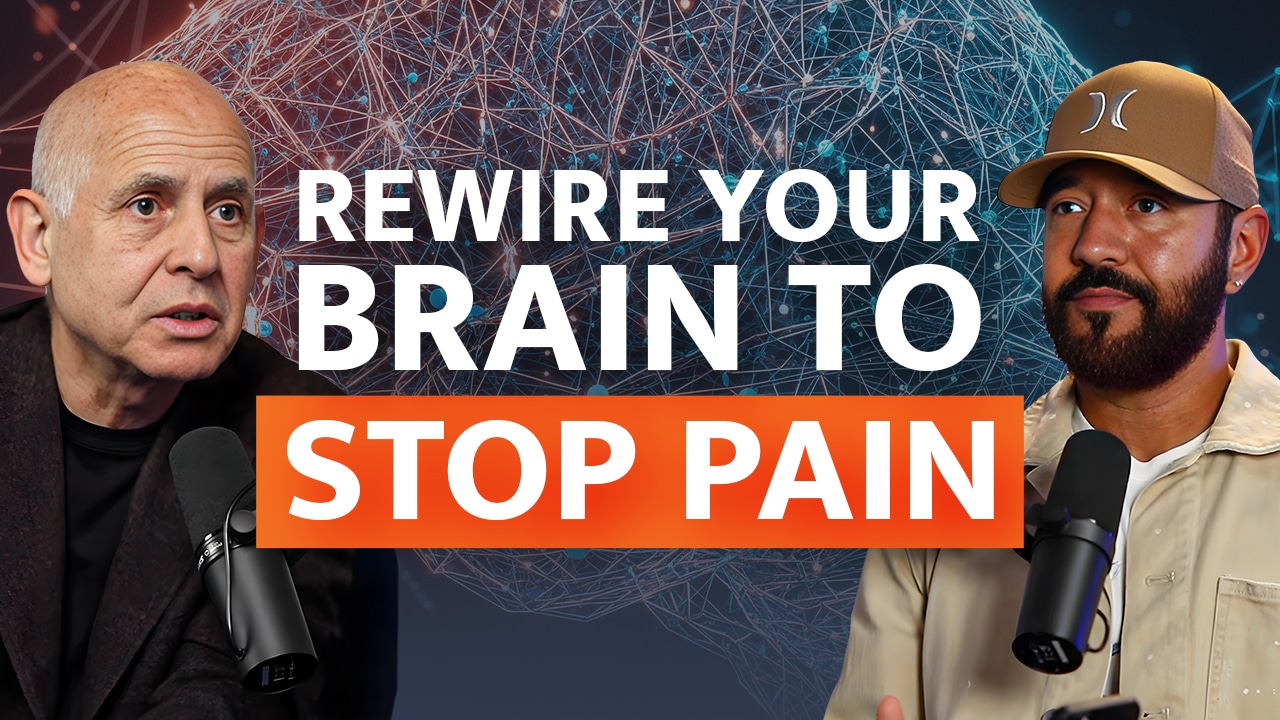
TMHS 952: The Shocking Truth About Physical & Emotional Pain: Get Out of Pain NOW! – With Dr. Daniel Amen
Pain is a pervasive issue our society is facing today, with millions of adults in the United States dealing with pain that can significantly reduce quality of life. Chronic pain is also linked to a host of other health factors, including mental health conditions, addiction, and more. If we want to create better outcomes for these issues, it’s clear that we need more effective solutions for pain – and that’s exactly what you’re going to learn on today’s show.
On this episode of The Model Health Show, double board-certified psychiatrist Dr. Daniel Amen is back to share groundbreaking principles from his new book, Change Your Brain, Change Your Pain. Dr. Amen’s mission is to end mental illness by helping people optimize their brain health, and his new book offers a roadmap to healing from pain and living a more peaceful, joyful life.
In this interview, you’re going to learn about the role the brain plays in fueling pain, healing mechanisms you can use to calm the brain and break out of negative cycles, and so much more. If you’re suffering from chronic pain, whether it be emotional or physical, I hope Dr. Amen’s message of healing and hope resonates with you. So click play and enjoy the show!
In this episode you’ll discover:
- How many people in the US are living with chronic pain. (0:42)
- The connection between pain and the opioid epidemic. (1:55)
- What the three pain circuits in the brain are. (4:21)
- The doom loop and how it creates pain. (6:26)
- Why antidepressants can be effective at reducing pain. (8:00)
- What percentage of children are suffering from chronic pain. (13:24)
- The role of opiates, their risks, and the importance of creating an exit strategy. (14:59)
- How pain has a ripple effect throughout families and society. (18:35)
- The connection between rage and pain. (22:17)
- Which supplements to take for better mood. (35:34)
- What the RELIEF acronym means. (38:40)
- Why you can’t believe everything you think. (39:07)
- How to engage in brain healthy habits. (44:22)
- Why understanding your agency to create change can be pivotal. (44:56)
- How to use breathing exercises to calm your brain and reduce pain. (50:09)
Items mentioned in this episode include:
- Organifi.com/Model – Use the coupon code MODEL for 20% off + free shipping!
- Piquelife.com/model – Get exclusive savings on bundles & subscriptions!
- Change Your Brain Change Your Pain by Dr. Daniel Amen – Claim your free gifts by preordering your copy of the book today!
This episode of The Model Health Show is brought to you by Organifi and Pique.
Organifi makes nutrition easy and delicious for everyone. Take 20% off your order with the code MODEL at organifi.com/model.
Go to Piquelife.com/model for exclusive savings on bundles & subscriptions on cutting-edge solutions for your head-to-toe health and beauty transformation.
Transcript:
SHAWN STEVENSON: Welcome to the Model Health Show. One of the most common things in this human experience is the experience of pain. As it said, pain can be an incredible teacher. It can inform us about danger, it can inform us about making different choices.
But sometimes pain is there for no good reason at all. In fact, whether it's physical pain or emotional pain, it can be incredibly detrimental, if not devastating in the lives of so many people. Right now in the United States, approximately 50 million people are living with chronic pain, just trying to make it through the day. And today's episode is so important and so powerful because we're gonna be addressing the root of pain and how pain is actually expressing itself in our bodies. Today you're going to discover why physical pain and emotional pain are actually deeply connected. They're so connected in fact that they can create what our special guest and renowned expert in this subject matter calls a doom loop of pain feedback.
And in order to break that doom loop, we've got to create a more virtuous loop and utilize science-backed approaches so that we can start to ease into feeling better. And here's the thing, and this is the promise. In many instances, our chronic pain can be completely resolved. And many of us are searching for that thing to help us with our pain. And unfortunately in our world today where pain is of epidemic proportions we're sold. This idea of a pill's gonna fix that, which has led to the opioid epidemic, which at this point, as of this recording, over 1 million Americans have died as a result of being prescribed or utilizing opioid drugs.
And so these drugs, absolutely even them, even as destructive as they may be, have their place. But as you'll discover today, we're often missing the point and missing the pain when we're utilizing these bandaid solutions. And so when you're in pain, you just want something to help you to feel better. I know this very well. And we have so many incredible tools at our disposal, but often we don't know what we don't know. And so creating a widespread education around pain and effective treatments and solution for pain are the order of the day. And our special guest is going to inform you on how if you change your brain, you can change your pain.
With that being said, let's go ahead and get to our special guest and topic of the day. Dr. Daniel Amen is a double board certified psychiatrist and founder of Amen Clinics specializing in spec imaging. The Amen Clinics have collected over 300,000 spec scans on patient's brains from over a 100. 55 countries. Dr. Amen is also a 12 time New York Times bestselling author and has published over 90 peer-reviewed scientific articles. His work has led groundbreaking brain imaging research on active and former NFL players, childhood trauma, negativity bias, reversing brain aging. His mission is bold. To end mental illness by creating a revolution in brain health and teaching people how they can change their brain to change their pain. Let's dive into this conversation with the one and only Dr. Daniel Amen.
I got a big question to ask you. Why do you think physical pain and emotional pain are so deeply connected?
DR. DANIEL AMEN: They run on the same circuits in the brain and. In the book, I talk about the three pain circuits. There's the feeling circuit, you cut your hand. It activates an area of the brain called the thalamus. It's the sensory gateway in the brain, and then it goes to your parietal lobes. They go, oh, I cut my hand. Oh, it hurts. So there's the feeling pathway, which then in vulnerable people, not in everybody activates the suffering pathway, which is your limbic brain.
And if you grew up, for example, with childhood trauma, which you and I have talked about before, well that's already working hard. And then it triggers the calming pathway. And so if you have a healthy frontal lobe, what can sort of tamp down or break the pain? If you don't have a healthy frontal lobe, maybe you have ADD low frontal lobe function.
Maybe you hit soccer balls with your forehead or played tackle football, low frontal lobe function. Maybe you had a car accident, often low frontal lobe function, you can't turn the pain off. And people go, no, it's in my back. It's not in my head. Well, it starts in your back, but did you know? 80% of people my age, I'm 71. 80% of people my age have abnormal MRIs in their back and no pain at all. It's the fear you feel when you get the abnormal MRI with the arthritis, the slipped disc, crushed disc, whatever that triggers. The suffering pathway and now all of a sudden, whatever pain you have gets smeared with dread. Then that makes your muscles tense, which then keeps the pain going.
And so in the book, the star of this new book is The Doom Loop. So that's what I discovered. I was constantly getting myself into the Doom Loop. And there's an acronym called Pain, right? It's like, so you actually have pain for any reason that activates the suffering pathway, which then increases the ants, the automatic negative thoughts that steal your happiness and negativity, which then goes to nervous tension. That's where repressed rage hangs out, which then leads to harmful habits, and you just spin on the doom loop and getting out of the doom loop. We have to have a healing loop. Yeah, it was like pain. I was like, oh, I heard, well, every day you win or you learn. What's different about today? That's yesterday.
Oh, I had corn the day before. Corn, yes, because it's pro-inflammatory and it can increase pain. Or you didn't sleep well or somebody really pissed you off, but you didn't say anything because you want to be nice. And then it's eased the suffering pathway. Something we can talk about EMDR or Havening or Saffron or curcumin or from a medicine standpoint, Cymbalta. Isn't that interesting? It's one of the reasons I wrote the book, Sam e Supplement works for both pain and. Depression. Cymbalta is an antidepressant that is FDA, approved for chronic pain. Why? Because they work on the same circuits in the brain. And then you have to develop a positivity bias. Muscle relaxation, express your feelings, and then really focus on healthy habits.
SHAWN STEVENSON: Hmm. I love it. So we're going to deconstruct these acronyms, of course. And it's just fascinating because people who've experienced pain, which is the majority of people listening, chronic pain specifically, we don't talk about the fact that that often leads to emotional pain. And the reverse is true, right? Emotional pain, right? Chronic depression, anxiety, leading to physical symptoms in the body as well. And so we've had a firsthand experience of that. Interconnected circuitry. You know, I love the analogy you talk about two lanes of a highway merging together in the brain with these two different paths.
And so, but it's very real. You know, the emotional pain is very real and that physical pain, it can be very dark and difficult for us to manage in our lives. And so to have a solution change your brain, change your pain, it really puts a spotlight on some agency here because as you know, just getting stuck in that doom loop is very difficult to break. Can you talk a little bit about what happens? We'll say, you know, somebody does experience an injury, we'll just say a back injury, and their brain and their repetitive thoughts start to go to, this is always going to be my existence. It's so bad. It's so bad. It's so bad.
DR. DANIEL AMEN: So I opened the book with a story of a police officer, Sam. And Sam had been in two high speed chases accidents. And he had severe back pain. He had sick surgeries. He was on opiates, he was drinking too much. He felt like he was a shell of himself. He was irritable with his wife, irritable with the kids. And one day he was done and he went to his garage, turned on his Jeep in a closed garage and he was gonna end it all. And thank God his wife was a light sleeper. Ran to the garage, threw it open, screaming, crying, took him to the hospital. And by random chance, if you believe in random chance, I was on call and he just looked hollow and she looked terrified. And, my first thought was not to put him on medicine. My first thought was to look at his brain, 'cause that's what I do, right?
For the last 34 years, I do a study at Amon Clinics called Brain SPECT Imaging. Speckt looks at blood flow and activity. It looks at how your brain works, and his brain was not working well. The accidents damaged his frontal lobes. So that calming pathway just wasn't working. Taking the opiates turned off his own internal opiate production module. His suffering pathway was on fire. And especially an area called the anterior that just means toward the front cingulate gyrus. And I think of the cingulate as the brain's gear shifter. It lets you go from thought to thought, move from idea to idea, be flexible go with the flow.
Well, his childhood trauma from an alcoholic dad had activated it. The injuries very traumatic, emotionally made it worse. And he hurt, but he couldn't stop thinking about the hurt. It was like his brain was like an old vinyl record and it had a scratch in it and he couldn't get away from it. And giving him supplements to raise serotonin and calm that along with all the other things I talk about in the book. He did dramatically better. And he said, you know, sometimes I still hurt. But I don't think about it all the time. And then he went on to law school and now he's a lawyer.
SHAWN STEVENSON: Amazing. That's such a great story. And there's a plethora of these great stories, these success stories, and you also share their brain results as well. And you know, just keeping this in context as well. In that particular story, I remember his relationships being strained. He started to think about all the things that he couldn't do anymore, and he was more and more isolating and, you know, very snappy with his loved ones. And he just wanted to end it all.
He wanted to get out of pain, and this is not unusual. You know, because one of the things that you share in the book, which is so eye-opening, is the landscape of pain in our world today in our society here in the United States specifically, can you talk about the landscape of pain? Like what are some of those statistics look like? Even kids, a certain percentage of children are experiencing.
DR. DANIEL AMEN: 20% of children have chronic pain, and I actually tell the story of Amlie and made me cry. She was my niece who ended up with something called complex regional pain syndrome after she fractured her ankle playing soccer. But ever since she was little, it was her elbow, it was her knee, it was her wrist. She was always complaining of chronic pain and her ACE score. Adverse childhood experiences. On a scale of zero to 10, how many bad things happened to you growing up, is a nine, which is why t and I ended up adopting her. So 20% of kids, 50 million Americans struggle with chronic pain, and it's devastating.
It increases the incidence of divorce, depression, suicide. And they often end up on multiple medications, including opiates. You know, we're still in the middle of this big opiate epidemic because in the late nineties, some of the pharmaceutical companies were very effective at marketing pain. And they said, now pain is the fifth vital sign that, you know, it's not just heart rate and blood pressure and breathing. Wanna know what's your pain and if you have any pain you should be out of it. But the problem with taking opiates is they piss off your white blood cells and actually increase inflammation and pain in your brain. And of course, short term people, you know, benefit from them, but you need to be thinking about how to get off of them because if you don't, they're gonna steal your life.
SHAWN STEVENSON: As you know, mental health challenges have skyrocketed in recent decades, and without addressing the root cause of this emerging change in our society, we're going to continue to see poor outcomes we need to address, of course, nutrient deficiencies, our sedentary behavior. Our lack of social connection, our poor sleep quality, all of these things are proven to contribute to these epidemics of poor mental health. Of course, medication can be helpful in some context, but most people are not educated about the science backed natural supplement that has been shown to be as effective as many medications.
So making sure that we're being mindful of our lifestyle factors, but also utilizing science-backed supplementation. An analysis published in the Journal of Effective Disorders found that the renowned spice called saffron was just as effective as conventional antidepressant drugs. Like Prozac, toil and Celexa. Additionally, and of the utmost importance, people who are utilizing Saffron had none of the side effects that we're seeing rampant in those who are utilizing those conventional treatments. So something that is far safer, but equally, if not even better in effectiveness. That's what we get when utilizing something like Saffron in.
My favorite resource for Saffron in therapeutic amounts and actually in a tasty version, are the happy drops from Organifi. Go to organifi.com/model right now, and you're gonna get 20% off their phenomenal happy drops, right? As a matter of fact, you're gonna get 20% off storewide. Now, these happy drops are exceptional. It's not necessarily just for a mood boost, but something that can be utilized as a tonic. Something that is good for many other aspects of your health because Saffron doesn't just have one benefit of supporting mental health. It's also been found to be supportive of metabolic health as well, and here are a couple of real world testimonials when it comes to these happy drops.
Nicholas said "happily surprised. I was extremely skeptical about this product. Despite all the good reviews. However, using it daily for the past two weeks, I can definitely say that they work. I definitely have an easier time staying positive and rolling with the punches of daily life with the help of Happy Drops." And Hillary said "Happy Drops will make you happy that you ordered. I found out about these little drops of bliss from Instagram. I was skeptical as every product makes claims that aren't always backed upon trying these happy drops, I've noticed that mood improvement energy that lasts throughout the day, aKA no afternoon slump anymore, and improved sleep at night. I'm thrilled."
These are just some of the incredible testimonials. You could check them out over on the website. Again, go to organifi.com/model for 20% off right now. That's O-R-G-A-N-I-F-I.com/model for 20% off. And now back to the show.
SHAWN STEVENSON: You also talk about the economic impact. As well, like 650 billion is going annually to address pain. Healthcare costs, disability, the list goes on and on.
DR. DANIEL AMEN: And then it leads to alcohol consumption, which just devastates families or it leads to more marijuana consumption, which can be so harmful. We just need a better approach.
SHAWN STEVENSON: Yeah. One of my favorite parts of the book was kind of setting the tone for why is it the way that it is right now, and we are not really doing well. Let alone this epidemic of pain we're experiencing, but the treatment of pain. And you shared that the current mindset to treating physical and emotional pain is most, most healthcare providers are trained to compartmentalize physical and emotional pain, to treat them as separate entities. You are disclosing the fact that they are wired up and connecting in the brain in the same place, and they're treated separately.
And so if we're dealing with a physical issue, you go to the physical person and are conventional treatments, surgery, drugs, maybe some physical therapy might be thrown in there. But it's just attack the physical and hopefully we get some results if the surgery is successful. But what most people don't know is that as you talk about in the book, most surgical procedures don't even change as far as like progressive outcomes and things getting better as nonsurgical approaches. And so there's a place, right?
DR. DANIEL AMEN: In big studies, they come out about the same as far as effectiveness, but surgery has 21 times the number of side effects.
And because of my imaging work, I'm like general anesthesia is not on the top of the list, right? If I have to have it, I will, and then I will go about repairing my brain, but it can hurt your brain. And now I'm a psychiatrist. Why do I know that? Because I have patients who I have their scan, then they went for general anesthesia, and their scans were significantly worse.
And then I went to the literature and it said, children who have general anesthesia have a higher incidence of A DHD and learning problems. Adults who have general anesthesia, especially coronary artery bypass surgery, have a higher incidence of dementia. And so always looking to love and care for my brain. I'm like, what else can I do? And I'm a fan of physical therapy and Pilates and you know, sometimes if you need an injection to sort of decrease the inflammation in that part. But I think you gotta always think about getting your brain healthy first. And I have a cardiologist who I love and we're out to dinner and he said, I'm going to have back surgery.
He said, I've had chronic back pain for four years. And I'd made the decision, I made the appointment. I said, I have a new book coming out. I said, just read the introduction and then call me and tell me what you think. And he read the whole thing and said he loved the book. And two weeks later, his pain was 90% less. He canceled the surgery. And then a month later he said, I have no pain. And for him, I think in part it was repressed rage. And when you repress emotions, they come out, but in other ways, maybe hypertension or back pain or headaches. Why is that? 'Cause the energy's gonna go somewhere. And so many of us, especially, I'm a middle child, I wanted to please, I had a brother that beat me up a lot.
I have reasons for rage, but you really couldn't say it 'cause you get hurt. Or you feel guilty about it. In the book I talk about in the rage section, I-S-T-D-P, it's a form of therapy called intensive, short-term dynamic psychotherapy. John Sarno, in his works often talks about repressed rage, but I didn't think he did a good job of all right. I see that, what do I do about it? And in this book, there's a lot of, what do I do about it? And the theory behind intensive, short-term dynamic psychotherapy is when you're little, you want to bond. Because your parents keep you alive. They feed you, they cloth you, they shelter you. And, but something bad happens, especially people who have higher ACE scores, something bad happens and you feel pain, you feel rage, but you can't express it.
And so you feel guilty about it. You turn it on yourself so it's rage, and then guilt about the rage, which then gets buried. But you hurt and you have anxiety, and you're more likely to have an addiction and you're more likely to have a stress symptoms. And so the treatment is often getting in touch with the rage always appropriately. There's a exercise in the book that I love called Emotional Freedom journaling. I do it with my patients. So however old you are for every five years, one page in the journal and drop lying down the middle of the page on the left side. What awesome things happened in your life? 'cause I always want people to remember, love lives in a balanced way and the right side.
What awful things happened, and write them out with detail. And if you do that, you know, so 71, it's 14 pages you very clearly get to where the rage is from being beaten up to being belittled by my dad to being, being belittled by my colleagues. You know, you, you can't just be Pollyanna with all of this. In fact, there's a section in the book where I talk about Pollyanna having to make friends with Hannibal Lecter that at least in your imagination, you have to be able to recognize and imagine or express the rage.
SHAWN STEVENSON: Yeah. Are there any other like, what about a physical expression of that rage that's not necessarily directed at another person, which can be pretty terrible, obviously.
DR. DANIEL AMEN: Oh, I think breaking dishes could be really helpful. Going to rage rooms where you're. You know, breaking things or beating things with pat taco bats. I think that can be really helpful. Tana, her ACE score is eight. She's had a lot of pain in her life, loved karate, and she goes, I just feel better when I'm hit things.
SHAWN STEVENSON: Yeah. Oh my goodness. And this is just speaking to, again, there's a lot of tools, many paths to the goal, but just holding that stuff in is toxic. Toxic to our bodies. And I think it could be very insidious. Like we don't really know what's happening, especially if it's something from childhood.
But today I think it's easy as well. Even the most kindhearted and patient among us. You know, sometimes we can be a sounding board or a container for a lot of stuff, and maybe we're just like, well, I'm such a nice person. It's okay if this person is like expressing all this anger my way. You know, it's just, it's fine. I'm fine. And it can start to build up. Like you've gotta be able to process stuff yourself as well.
DR. DANIEL AMEN: Wow. I just love the idea of getting. Anger out getting repressed emotions to the surface and so many people that are just so afraid of them, it's like, oh no, I can't feel that because then I'm not a good person.
SHAWN STEVENSON: Yeah.
DR. DANIEL AMEN: So they haven't really worked through and is often, the origin is often 4, 5, 6. Because emotionally you believe you are at the center of the universe. So if something good in your family happens, you sort of think it's 'cause of you. And if something bad in your family happens, you think it's sort of 'cause of you. And you end up holding this guilt that had in fact nothing to do with you. But you carry it throughout your life really believing you're a bad person.
SHAWN STEVENSON: Yeah. So what I'm hearing is that you just said it, a, a lot of us are afraid of anger, for example, but all of our emotions have value. I think that's why we have them. But I think we can get stuck on some of them.
DR. DANIEL AMEN: Of course.
SHAWN STEVENSON: And also sometimes we can put some of our emotions on mute, even though they're valuable for us in our need for expression.
DR. DANIEL AMEN: You know, I find. Yeah. When I get people to be able to express it perhaps at their mom or one of their siblings, you, you know, it's always appropriate. But at least in your imagination, be able to be honest with yourself. And the reason the Emotional Freedom Journal is awesome and awful.
It is, I don't want you getting stuck on awful, because that's not gonna be helpful. I want you to really see your life in a balanced way. I find it so helpful, and I talk about EMDR a lot in the book eye movement desensitization and reprocessing, where you can bring up some of these very powerful negative feelings.
You do it with a therapist, but as they have your eyes going back and forth, you bring them up. And it just sort of sucks the energy out of them. It's so powerful and sometimes in EMDR I'll go and if the feelings could come out at that person. What would happen, where would they go? And you know, sometimes in our, imagine in our imagination, people die. And you know, if you've been sexually abused and you were a victim, getting the rage out at that person, at least in your imagination, is critical to healing.
SHAWN STEVENSON: Yeah. Its breaking this doom loop. Right. I haven't shared this before. 2020. Terrible injury. Terrible injury, sciatic pain. It's around the time I saw you at that Santa Monica studio and I'm just like, it's just on fire hot, leaning in my chair and I healed, recovered better than I had ever been. You know, the things that I was able to do, it was a, it was a difficult process, but I was training, this is 2020. And as I was training to get well, I had in my mind that I was fighting against the idiocy that was happening in the world at the time, and all the infighting, and I was training with this aggression. And I was just in, I didn't know this at the time, but I was just encoding my cells with this command of anger. And I'm a very, as you as you know, I'm just, I'm a very cool person.
I'm very laid back. But this is, that was my mindset at the time and cut to a very difficult year, right? 2024 to 2025, we'll say. Several close people passing away, changes in our household dynamics with one kid moving out, another kid going to a different school, and just all these moving parts. And there's, that's just some of it. Even a mentor that I met around that time who came and sat in this chair and when my father passed, this person showed up and said the things that I would've wanted him to say, right? And then he ended up passing away. So it was just like one thing after the other, and it was enough to, again, I felt like I was handling it all very well, and my wife was very upset during this time with all the changes as well, her father passed. And as I was, you know, like a, the last kind of straw happened and I started to have that pain that I had in 2020 without any mechanical damage. And it was difficult. I ended up going to physical therapy and just doing all this stuff again for a psychosomatic issue, but I didn't believe it was psychosomatic even after getting analyzed. Because I couldn't believe.
DR. DANIEL AMEN: But the stress reactivated exactly your emotional brain and it went to a vulnerable area in your body.
SHAWN STEVENSON: Yeah, exactly. And here was the symptom that explicitly affirms what you're talking about. I went for a walk because I was just, I was having a hard time even walking. I went for a walk. The most beautiful sun shiny blue sky day that I've ever seen in California. The park was pretty much empty. I'm just walking and I didn't know any about anything about this work, and I was just so angry. So much anger was just coming up as I'm taking these steps and I'm just like, why am I so mad? Like I have nothing to be mad about, but I didn't realize I was just holding all this stuff in.
And so coming across Dr. Sonos work, for example, and me having this self-inquiry and realizing like i'm just holding all this stuff in. And so after I have that, first of all, just the awareness that, that's taking place is part, a big part of the battle. But just having the audacity for me at the time is just standing up for myself, for myself to allow myself to be angry. It's okay to be angry, right? Because it's one of those emotions where I don't really do that. I don't need to get angry. It was okay. I gave myself permission to be angry, to express my anger, and I'm not trying to say it was like overnight, but a three month process of dealing with some pain within a matter of a couple of days was gone.
And for then I got the email from you about this new book, and I'm just like, this synchronicity is crazy. The timing is crazy because my my message for everybody is, you'll be shocked at how quickly you can get well or at least have a huge decrease in your pain symptoms, your experience of pain if you address what's going on with your brain, what's going on with your mind, your thoughts. It all is operating on that same pathway and. Last part, I'm gonna pass this back to you. You talk about the statistics, right? We've got, folks undergoing, we, it's beautiful that we have the access to surgery and anesthesia 21 fold increase in subsequent issues post that.
We want to have that as a opportunity and possibility, but there's so much that you can do within your own brain and body, and that's what you're really teaching us as well. Like, we've got all these great tools, but we've gotta address what's going on truly. Change your brain. Change your pain.
DR. DANIEL AMEN: Yeah. And if you go to a surgeon, they're gonna operate because that's what they do. I wanna give people other options, and I want them to just see is the doom loop part of my life? And if it is, well, let me get out of it. How do you get out of the doom loop? Well, every day you win or you learn. So with your pain, I'm like, so what makes it better and what makes it worse? And just, I want you to be curious, not furious. Your body was created to heal and if it's not healing, you have to go. What is in the way of that is a, my eating, eating things, as we talked about aspartate. Am I thinking things? Am I relating in ways that increase my pain? So that's the first part. It's just you win or you learn and then it's calming that suffering pathway.
And I'm a huge fan of Omega-3 fatty acids, curcumin and saffron. And, I've taken, we make something called Happy Saffron, and I've taken it every day for almost six years. Saffron, zinc and Curcumins. 28 randomized controlled trials showing its equally effective antidepressants. Okay. But rather than mess with your sexual function, it enhances it. And it's been shown to enhance memory. So mood, memory, sex, and it calms. And then there's some new studies, helps with PMS, helps with fibromyalgia, helps with arthritis. I'm like, okay, but it's however you want to do it. Calm this suffering pathway, and then you have to discipline your mind because the ants drive pain.
And every time you have a thought, every cell in your body responds to that thought, every single cell. I do a lot of biofeedback in my practice and early in my career, I would develop a word association test. And so I'd hook up your hand temperature, how much your hands, sweat your muscle tension, heart rate variability, and breathing right. And then. Just say all these words and I just watch how your physiology responded. So for me, if I say mother and mother is a good concept for me, my hands get warmer. Almost immediately, they get drier. My muscles react, my heart rate variability goes up, which is a sign of heart health, and my breathing rate goes down and becomes deeper.
Those are all sort of parasympathetic or positive ways. Now, if you say father. My hands get colder, they start to sweat, my muscles get dense, my heart rate variability goes down and my breathing gets fast and shallow. And so if you're thinking a lot of negative things, and if we just think of last year for you when you have a lot of stress, your cells are stressed that. And so when during the pandemic COVID, all by itself, the virus activates the suffering pathway in the brain. So we've seen increases in depression, but also increases in chronic pain. So we need to calm that down. Now meditation will do it. Something called Havening will do it, which is sort of self EMDR. It's bilateral hemisphere stimulation. Very interesting. I talk about it in the book.
SHAWN STEVENSON: Can we go through the relief acronym?
DR. DANIEL AMEN: So I'm sort of doing it. So relief is, recognize the pain and really start thinking about the triggers. E is ease the suffering pathway. L is let go of negativity and negative thoughts, and there's a whole section in the book on positivity bias training 'cause I don't ever want you to believe everything you think. Your brain in so many ways is like a receiver and you get thoughts you don't need. You get thoughts that are crazy. You get thoughts that are stupid. You get thoughts that can I give you an example of one? I had one recently. We have two shepherds and the reason we have two shepherds is the German Shepherd loves Tana and is completely ambivalent about me.
She comes home, he's like a wacko. The energy of love is so, he can't stand it. And I come home and it's, Hey dude, and that's it. And I'm like, no, I'm, I'm the second son in a Lebanese family. No, I wanna be first was something. And so I have this beautiful White Shepherd and I'm completely in love with her and she loves me back. But anyways, recently Terrace, that's the German Shepherd, came into my office. So whenever Tana's not there, he does love me and he comes and hangs out with me. And I just got this thought that if I murdered Tana. That he would get really excited when I came home, but it's just, I'm obviously not gonna murder Tana, and I realize if somebody murders her, I'm, they're gonna look at me first, but it's just a random, stupid thought that I don't have to attach to.
So many of my patients, they get a bad thought and they think they're a bad person. And it's like, no, it's just sort of randomness that, you know, it's the mu the news you watch or the music you listen to or the voices perhaps even of your ancestors. I'm a huge believer in generational trauma and..
SHAWN STEVENSON: It's in the data. It's in the data, it's there.
DR. DANIEL AMEN: So you don't have to believe every stupid thing you think. Take each thought captive. Or I'm working on this new program called the Amen Hole four for faith organizations. So excited about it, and it's based on Romans 12, one and two, and Romans 12-2, be transformed by the renewing of your mind. And Christians know that verse, but they don't know the second part of the verse. Then you will be able to test what is God's good, pleasing and perfect will. Does this thought, i'm not enough fit, god's good, perfect, and pleasing will. Absolutely not. And so it's just really not attaching to the nonsense, to the noise in your head.
And then it's training positivity. So we're gonna have anger and positivity, in the same relief loop, but today is going to be a great day. What went well today, looking for the little micro miracles of the day. So that's the. Let go the L in relief. The I is initiate relaxation. So important. Early in my career, I don't know if we've talked about this much. I took a month elective as a medical student in hypnosis, and I love it. I find it so helpful and it's masterful to get the rage out. So initially you do hypnosis for relaxation, especially progressive muscle relaxation guided imagery. I think it's so critical for anybody who struggles with chronic pain because tension makes it worse. But I have an exercise and I do it for almost all of my patients with pain because they all have repressed emotions, is put 'em in a trance.
Go into a forest, see a clearing, and on the in the clearing there's a big tree stump. And on that stump are pictures of all the things that have made you furious, made you sad, made you mad, give you grief, all the zombies. Zombies are the things from the past that still haunt you, that wake you up at three o'clock in the morning. And now once you get an ax, and I want you to cut up all pictures. And I want you to take your time and I want you to do it until you can't do it anymore. And I just stay with them in that moment. And then just sit down and imagine a breeze come up, it's all dust now, and blow it away and then go back into the park.
And it's just, it's a beautiful exercise and people feel freer afterwards. You just need a mechanism to get it out. And then engage in brain healthy habits. If it's your brain that's feeling it and your brain's inflamed, well guess what? You're gonna feel it much more. And so, you know, kill the alcohol. Get rid of the marijuana. Take your supplements. Eat right, go to bed. The sleep deprivation turns off 700 health promoting genes. And then the f is my favorite. I have a brand new study that we're working on hope. That hope is tomorrow can be better. And I have a role in it, and that's what I love about change your brain, change your pain.
It's a book of hope, because it actually gives you agency on, oh, it's not just me and the orthopedic surgeon. It's me and my brain. It's me and my diet. It's me and my thoughts. And so, our study on hope, which is so interesting. High negativity, low frontal lobe function, low hope. Low frontal lobe function, especially in an area of the brain called the insular cortex. That's an area of the brain that's right between your frontal and temporal lobes, but dramatically low with low hope. Pretty interesting. And low hope if you're not happy. And so always protecting your brain function is just critical. And then like what's the goal and give yourself four paths to the goal. Too often people go, okay, here's the goal and it's surgery, and it's like, I'm not sure I'd do that. I would have options, right? I always do better if I have options.
SHAWN STEVENSON: One of the fastest ways to impact your gut health is through the things that you drink that liquid medium is a fast delivery system. To improve your energy, boost your metabolic health, or to straight up mess you up. When it comes to gut health, one of the most powerful things seen in clinical data to instantly uplevel the health of our gut are polyphenols. And these are incredible compounds that have antioxidant and anti-inflammatory properties that are out of this world. And this is just one of the reasons why in that liquid delivery form teas like green tea and black tea.
Are noted in thousands, literally thousands of peer reviewed studies to have a variety of health benefits. Now, my favorite tea is absolutely abundant in polyphenols, and it's been found to have remarkable impacts on our gut health. A recent study published in their peer-reviewed journal, nature Communications uncovered that a unique compound called Thea Brownen found in the traditional fermented tea called Pu'erh, has remarkable effects on our microbiome.
The researchers found that Thea Brownin positively alters our gut microbiota. That directly reduces liver cholesterol and reduces lipogenesis the creation of fat. Another study published in the Journal of Agricultural and Food Chemistry found that Pu'erh may be able to reverse gut dysbiosis by dramatically reducing ratios of potentially harmful bacteria and increasing ratios of beneficial bacteria. So much of these benefits seen in these peer-reviewed studies are due to the incredible concentrations of polyphenols. That are found in pu'erh, and the only pu'erh that I drink is triple toxin screened for purity. It uses a patented cold extraction technology and it's wild harvested, making it even more abundant in polyphenols.
The pu'erh that I'm talking about, and again, it's the only pu'erh tea that I drink. It's from the incredible folks at Pique Life. Go to piquelife.com/model and you're going to get up to 20% off. Plus they're going to hook you up with a free starter kit that includes an electric frother. With some of my favorite bundles and my favorite tees over at Pique Life, again, go to piquelife.com/model. That's P-I-Q-U-E-L-I-F e.com/model to take advantage. This pu'erh Tea is in a league of its own. It's absolutely incredible. You can enjoy it, either hot or cold, and there are multiple studies affirming its benefit on our overall metabolic health and supporting fat loss as well. It's truly special. Again, head over there, check 'em out, piquelife.com/model. Now, back to the show.
SHAWN STEVENSON: There's a quote that you have in the book that I love. It's from Helen Keller, and it says, "although the world is full of suffering. It is also full of the overcoming of it." What does that statement mean to you?
DR. DANIEL AMEN: That you are not stuck. That it's agency is that I can make things better, that I have a role and you know, I've looked at all these scans over the last 34 years. My favorite thing is making them better. It's like, oh, even if you've been bad to your brain, you can make it better and I can prove it.
SHAWN STEVENSON: Yep. Can you share, obviously there's a ton of tools in the book, but the power of breathing in relationship to pain.
DR. DANIEL AMEN: So when you hurt, your breathing becomes faster. It becomes more shallow, which then perpetuates the pain because then that breathing pattern increases anxiety and increases tension. And I teach people the 15 second breath, and it's so effective. It's four seconds in, take a big breath, hold it for a second and a half. Eight seconds out, hold it for a second and a half. Takes about 15 seconds. Breathe mostly with your belly. So for a lot of our patients, just have 'em lay on the floor, put a book on their belly, and when you breathe in, make the book go up. And when you breathe out, make it go down. So it's called diaphragmatic breathing because you're actually breathing with your diaphragm.
This big bell shaped muscle between your lung chest cavity in your abdominal cavity. It's so effective. If you ever watch a baby breathe or a puppy breathe, they breathe almost exclusively with their bellies. And, but you know, with the stress of life and with pain, all of a sudden we stop moving. Our belly at all, and it's all up here and it's less efficient. So actually every morning, I put my legs up, on a box, lay on my back, and I do diaphragmatic breathing. And right away it increases a thing called heart rate variability, which a sign of relaxation and heart health. It's so simple and it can be very helpful.
SHAWN STEVENSON: Amazing. Amazing. You're amazing, as you know. And this book is very special for me in particular, and this is part of my mission, is to help people to get out of pain and to know that they have options because pain can be very isolating, as you know. And you could feel like you are the one suffering and the world is kind of going on without you, when in reality there are a lot of people who are at the pain party along with you, and we're looking for solutions.
And a big part of these solutions is each other. And you talk about all these different pieces, of course, and the social connection pain tends to isolate us, and we really need each other more than ever. And we need you more than ever. And having you here at this time in human history, I don't think is an accident whatsoever. And I just appreciate you so much. Can you let everybody know where they can get a copy of? Change Your Brain, change Your Pain.
DR. DANIEL AMEN: Well actually, if they pre-order the book or order it the first week or two, it's out. We have special gifts for them. They go to Change your brain, change your pain book.com. We have a 30 day online course that I teach, five to seven minutes a day. Just the major principles in the book. We have the Emotional Freedom Journal for them. We also have brain Curcumin, which is one of the supplements from Brain MD that helps calm down the suffering circuit. So I'm very excited so people get that as well.
SHAWN STEVENSON: So people get that.
DR. DANIEL AMEN: We ship it to them. There's no shipping cost...
SHAWN STEVENSON: oh that's nice
DR. DANIEL AMEN: ..for free. So it's really a great value if they pre-order the book. Go to Change Your Brain. Change your pain book.com.
SHAWN STEVENSON: Amazing. Well, I appreciate you so much. Thank you.
DR. DANIEL AMEN: I love you, my friend.
SHAWN STEVENSON: Love you too.
DR. DANIEL AMEN: Thank you. Love you too. So great to see you again.
SHAWN STEVENSON: The one and only, Dr. Daniel Amen. Thank you so much for tuning into this episode today. I hope that you got a lot of value out of this. This is definitely a book. To add to your library to read, to share, to get this education because again, the subject matter of pain is so prevalent as part of the human experience, and yet we have so little education about it and to know how emotional pain and physical pain are colliding in the same part of the brain and getting all messy.
It's so important to be able to deconstruct what's happening and to have science backed solutions so that we can address the emotional as well as the physical components when it comes to healing. So often the vast majority of the time, once the body has moved past the initial insult and the inflammation has gone down for whenever physical insult may have taken place. So often, so much of the pain and suffering is related to our psychology, and we're just imbuing so much energy into it and just keeping that fire going. In fact, our thoughts themselves can increase and sustain chronic inflammation, and so we need to have a multifaceted approach when dealing with pain.
Yes, we can address the injury to the soft tissue. Yes, we can address the mobility and restoring movement, but we've also got to address our emotions and our mindset when it comes to this incredible cellular community that we have. Alright? There are trillions and trillions and trillions of cells that make up that community that is you. And they're all listening to your thoughts. And our thoughts can absolutely be healing. But on the other side, they can be detrimental and preventing us from feeling as good as we can possibly feel. So again, I hope that you got a lot of value outta this. If you did share it out with the people that you care about on social media, send this directly via text message to somebody that you want to help.
Who's been struggling with pain, you never know. It can be truly life transforming for them. We've got some incredible masterclasses and world-class guests coming your way very, very soon. So make sure to stay tuned. Take care, have an amazing day, and I'll talk with you soon.
Other episodes you might be interested:
Maximize Your Energy
Get the Free Checklist: “5 Keys That Could Radically Improve Your Energy Levels and Quality of Life”
HEALTHY MEALS EVERYONE WILL LOVE
The Greatest Gift You Can Give Your Family is Health
When you gather your family around the table to share nutritious food, you’re not only spending quality time with them - you’re setting them up for success in all areas of their lives.
The Eat Smarter Family Cookbook is filled with 100 delicious recipes, plus the latest science to support the mental, physical and social health of your loved ones.



Share Your Voice
0 comments. Be the first to leave a comment.