
Subscribe to The Model Health Show:


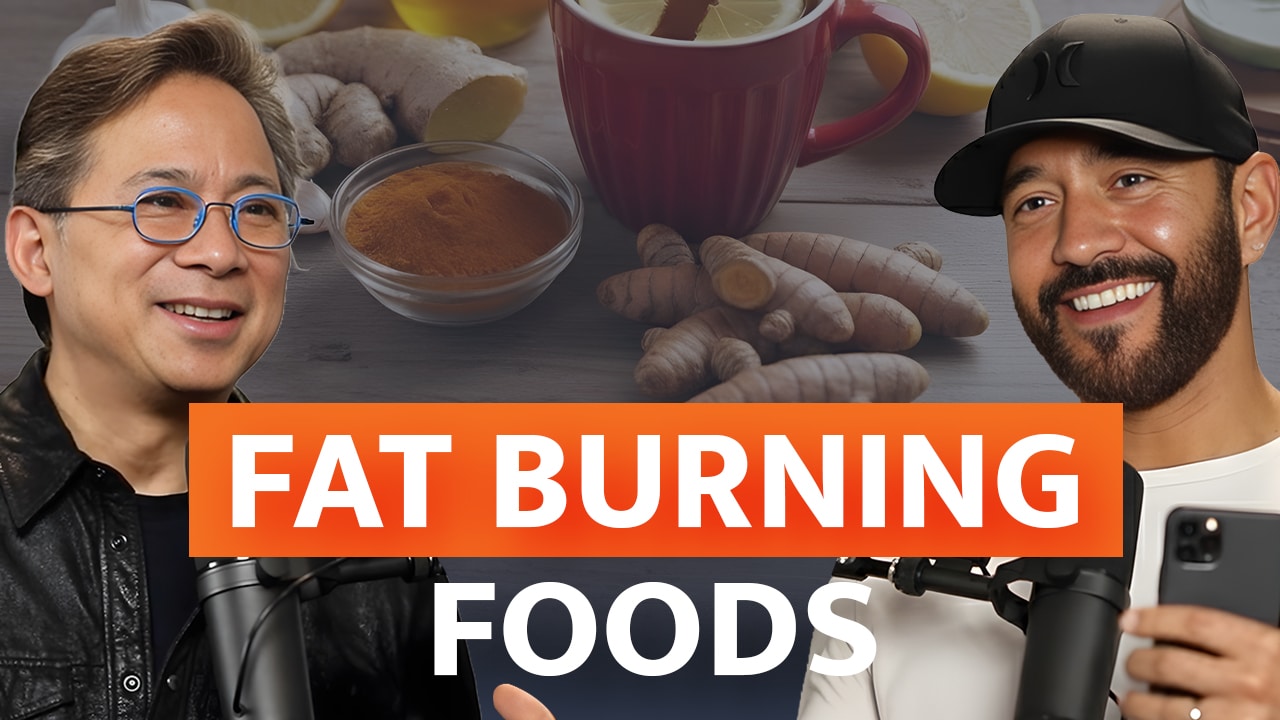
TMHS 974: Real Fat-Burning Foods – Science-Backed Foods That Improve Your Metabolism – With Dr. William Li
What if I told you that eating certain foods that could help your body burn fat? On today’s show, you’re going to learn the exact science behind this process, including the specific ways that certain foods can aid in fat loss, and what to eat if your goal is to lose body fat.
On this episode of The Model Health Show, you’re going to hear from world-renowned physician and scientist, Dr. William Li, on how to eat to optimize your metabolism. Dr. Li is an expert on the intersection of nutrition and human health. Today he’s sharing the exact science behind how certain foods affect your metabolism and ability to lose body fat.
I’m also sharing five science-backed foods that can help you lose more body fat, and the best ways to incorporate these fat-burning foods into your existing routine. This episode is full of powerful science and simple, accessible ways to improve your health from the inside out. So click play and enjoy!
In this episode you’ll discover:
- What body fat actually is, and its purpose. (2:42)
- How overeating affects your fat cells. (8:42)
- The process behind how fat can become inflammatory. (10:23)
- Which specific foods have anti-angiogenesis properties. (12:54)
- The truth about eating soy. (14:13)
- How curcumin helps the body burn fat. (22:24)
- Why whole foods are often like a Swiss army knife. (26:18)
- The science of stem cells inside your body fat. (27:40)
- How the compound hydroxytyrosol can reprogram stem cells. (32:46)
- The connection between the immune system and the metabolism. (43:03)
- How eating avocados can help you lose more belly fat. (52:57)
- The metabolic benefits of eating lean fish. (57:39)
- How to add more sweet potatoes into your diet. (1:02:42)
Items mentioned in this episode include:
- Boncharge.com/model – Use my code MODEL for 15% off blue light blocking glasses!
- Piquelife.com/model – Get exclusive savings on bundles & subscriptions!
- How to Use Food to Burn Fat – Watch the entire interview with Dr. William Li!
- Eat to Beat Disease by Dr. William Li – Learn how to use food
- Eat to Beat Your Diet by Dr. William Li – Learn how to heal your metabolism!
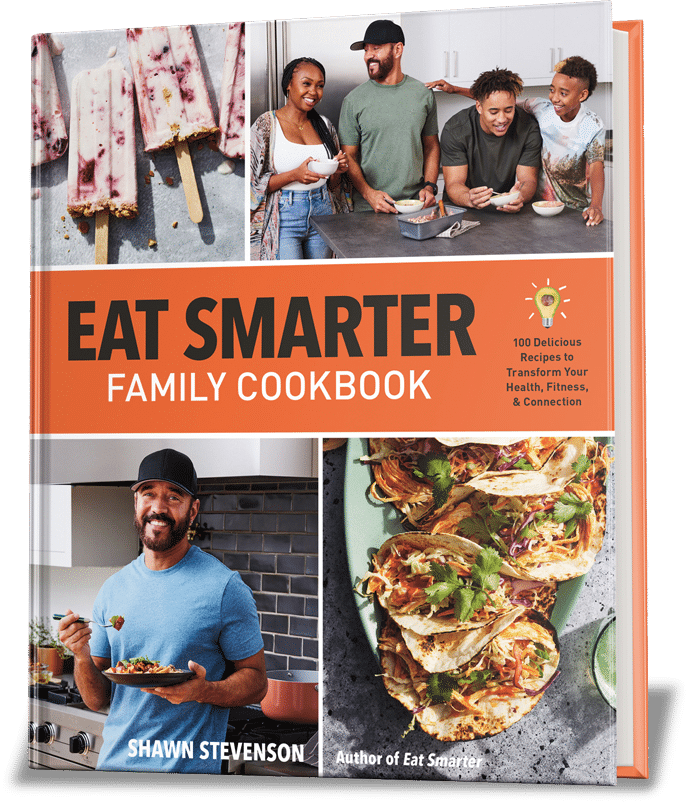
- Eat Smarter Family Cookbook – Transform the health, fitness, and connection of your entire family with the Eat Smarter Family Cookbook!
This episode of The Model Health Show is brought to you by Bon Charge and Pique.
Bon Charge carries the world’s largest selection of science-backed blue light blocking technology to enhance your sleep and overall wellness. Use my code MODEL at boncharge.com/model for 15% off blue light blocking glasses and more.
Go to Piquelife.com/model for exclusive savings on bundles & subscriptions on cutting-edge solutions for your head-to-toe health and beauty transformation.
Transcript:
SHAWN STEVENSON: Are there actually foods that can help you to burn more body fat? Is it possible that a food, that a certain food can actually do that? Or is it just an old wives tale? Is it a basketball wives tale, A real housewives tale? Is it a tale or is it backed by science? Well, on this very special episode, you're gonna hear from one of the world's leading experts in nutrition related to the treatment of diseases, including obesity, including overweight. And in this episode, he's gonna be sharing with you backed by science how specific foods can actually help you to burn more body fat. So this is incredibly profound. Now this is just to kick things off. Alright, so you're gonna hear from him. He's gonna unpack how this actually works and share some specific foods with you.
But I'm gonna add some delicious icing on the cake and share even more science-backed foods that can potentially help you to burn fat. And again, you're gonna learn how, because just saying that a food is a fat burning food is, it's on the fence to make a statement like that. And so we're gonna deliver the science first and then let you in on what these incredible, delicious foods actually are. So, up first, you're about to hear from my incredible friend and colleague, Dr. William Li. Dr. William Li is a Harvard Research scientist, New York Times bestselling author, and the president and medical director of angiogenesis Foundation and he's about to share with you how certain foods can actually help us to burn more body fat, plus some science backed foods to help us to transform our bodies and our health. Enjoy this opening segment with the one and only Dr. William Li.
DR. WILLIAM LI: Fat is an actual term that elicits some pretty negative responses, right? I mean, if you think about it when you hear the word fat, it's in your mind. It automatically turns into something that's not so positive. But I'm actually here to tell you that there's a completely different way, a more, I think, liberating way, more powerful way to look at fat. It has to do with biology, because I'm a scientist. What scientists do. Is we are interested in looking at the origins of things. So where does fat come from, right? Like fat doesn't just automatically come up when we're adult, then we want to actually lose some weight. Turns out what's amazing is that fat forms when we are in the womb.
So when your mom's egg met, your dad's sperm ball of cells emerged. First tissue that got laid down were blood vessels. 'cause every future organ needs a circulation. Second, nerves started forming because every organ needs a channel to receive signals on what the organ should do. The third tissue is little bubbles of fat. They're called adipocytes, little fat cells, and they form like bubble wrap around every blood vessel. Now the reason is fat cells are not actually bad. They're good. They're actually fuel tanks, just like the tank in your car, and they wrap themselves around blood vessels because when you eat food and you get energy, the energy comes through the blood and it gets stored into the fuel tank, right?
So it makes a lot of sense. Now, that means that we had body fat before we had a face. We could stuff with food. Very important to think about. I mean, mind blowing to think about really? Yeah. Now when you're born. Think about it. A cute baby. How do you know there's a cute, healthy baby? It's pudgy. It's chubby, it's fat round, right? Big chubby cheeks, round tummy. Arms and legs are like balloons. You know, like that circus balloon, you twist into a poodle, right? So fat babies are considered healthy babies. So fat's actually good at the moment we're born. And in fact, if you saw a baby that had chiseled cheekbones, thin arms, long thin thighs, like a fashion model you go like, well, there's something seriously wrong with this baby. And you'd be right. And that's the key thing. Fat is important in our origins. It starts before we were born. And so the real new science about fat and the new science, about your metabolism tracks back into this origin. So the question is, what does fat do? Why do we even have it? And why is it important?
SHAWN STEVENSON: Yeah. Oh man. It's so fascinating. I love this because we have to reframe something that has been so vilified in our culture and in some aspects, rightfully so. But if we don't, oftentimes we are, we're fighting against something we don't understand and also trying to hate our way into fitness. And so creating a new relationship and value and understanding with fat has been a big mission of mine as well.
And yeah, and I know, again, having someone like you as an ally in this, because it really starts with education and now we get into a place, so we know that the beginning, the origins of fat and why it's so valuable, it's helped us to evolve as a species and not need to have like a funnel of food going in all the time because fat is there to do its job.
Now let's talk about what happens when we become over fat, or fat cells begin to grow abnormally. How does that process work? How are fat cells growing in the first place? Does this have to something to do with that first thing that develops blood vessels?
DR. WILLIAM LI: Yeah. So let me kind of put a little story together first to talk about how good fat, how fat helps us. And that's really the best way to start. I think this conversation is what is fat doing? Why do we need it? Why does it form so early? And it actually has completely to do with our metabolism. So to, to break it down into, to, to understand why excess fat is so damaging to our health and compromises our fitness. Let's reel it back just a little bit to say, okay, how does normal fat fir, first of all, what does a normal fat do? Normal fat first I mentioned to you is a fuel tank. It literally is a canister, a jerry can to be able to store fuel that we eat. Just like if you had a car and you're driving around, you need our engine to run smoothly on gasoline.
What do you do? You look at the fuel gauge when your fuel gauge runs low. Runs towards empty, you pull over to the filling station, pull out the nozzle, put, plug it into the car and press the handle. And you actually fill up the tank. When the tank is filled, there's a click and that's it. And you put it back and you drive off with a full tank. Right? So our car, our body is kind of like a car engine. That's how our metabolism works. How it actually gets the energy. And so the engine of our body needs fuel the same way as a car. Now when our fuel gauge, which we sense in our brain runs low, alright, what do we do? We don't go to the filling station, we pull over to the dinner table, to the restaurant, to the refrigerator, the pantry, right?
That's how we actually. Pull over and we put the, no, we, we load up on fuel. Our fuel is food. Alright? That's our energy. Some people call it calories. I don't want people to get distracted on the whole topic of calories because it's become so such a fixation. But we just call it calories. But let's call it fuel. And so what happens is that we, when we eat. The fuel goes into our body and our our body produces a hormone called insulin. Insulin is a hormone that basically says, oh, you got some fuel you're eating. Let's pull that energy to, to into our function. So we have enough fuel, just like you would when you're fill, filling up a car and then anything extra that you don't need at that moment to keep running your body, your engine, it gets stored away.
And it's smart that we're storing it away because when we're not eating, we need to draw down from it. Right. It's our storage. So where does it store it? It stores it in body fat. So what does it do that takes those food that we eat goes into our stomach, absorb into our bloodstream. That energy, the fuel actually is stored with insulin's help into little fat cells. Those little fat cells with a bubble wrap that form when we are in our mom's womb. Okay. And it just stores up. It's loaded up. Okay. It's our fuel tanks now when we actually are not eating. When our insulin goes down, our body normally can draw down from that extra fuel and it reaches for the fuel tanks.
It just empties it out. Normal fat cells are not big, they're tiny, and when you load 'em up, they get a little bit bigger. It's like a water balloon that you fill up halfway and then you stop. You can just squirt that water, you can draw it out from that water. But what happens when you overeat? It's like going to the filling station. And imagine if you were pumping gas and that clicker didn't stop the gas from flowing when your tank is full, imagine what would happen, right? Gas keeps on pumping up. Gas tank fills up, but now it continues to overflow. Gas comes outta the side, runs down the side, around the tires, around your shoes, and now you are standing in this dangerous flammable mess.
Now in our bodies, when we're fueling up, we don't have the clicker to stop us from eating so we can keep on eating, alright? And we can overload and overfill our tanks in our body. It doesn't run down around our shoes. What happens? Our body has to pack it away in fat. So those little fat cells get bigger and bigger. They get stretched to their max. All right? And if you keep on eating and you still got more fuel, guess what? The body's gotta make more fuel tanks. Now you take stem cells and you make another fuel tank, let a fat cell and that gets filled up and you still got more fat. Gotta make another one. Keep on cloning it.
And that's why overeating overloading our bodies with fuel. That habit that too many people practice. I mean, it's a kind of a hallmark of modern society and lots of other complexities, right? It's a, there's a psychological component. There's all kinds of marketing forces that can actually make us do this.
Overloads our body, and so then the fat actually gets bigger and bigger. Now, what's the connection to blood vessels? Well, fat is an actual organ in the body, and it means it needs a blood supply. So, and I'll tell you why it's an organ in a second, but it needs a blood supply. And so when fat starts to clone itself because you need more fuel tanks, 'cause you got too much fuel and it keeps on getting bigger and fat, you know, and it starts to fill up more and more. The faster grows, the more blood supply it needs. But if it can't grow its own blood supply quickly enough, what happens is that in this giant expanding mass, the center of that mass is stard of oxygen. It starts to die. It's called hypoxia, not enough oxygen. Alright? And when that happens, the fat becomes inflamed.
Inflammatory cells infiltrate that fat. And we see this even in cancers that are trying to expand, they can't grow blood. Enough of a blood supply starts to die in the middle. Once you have inflammation and not in hypoxia inside a massive fat, you completely derail your metabolism and you derail many other hormonal systems as well, and it sets you up for harm. So the answer to your question, what happens and why does it happen? And what's the connection to blood vessels? That's a simple way to think about the fact that when we eat, we're loading up our fuel, we overeat, we have to keep on loading it up, and it's gonna create more fat. When that fat grows too big, it's gonna start to die In the middle of the mass can't grow enough blood supply, it starts to kind of go bad hypoxic, and that starts to trigger to all kinds of problems downstream.
SHAWN STEVENSON: One of the things that I love about your work and your book is that you're reframing food as well, because a lot of times we see food as an enemy and you're saying food is not the enemy, it's actually the. You know, food is a big contributor to so many of our problems. If we're talking about obesity, if we're talking about excess fat gain, and it's also the solution, right? And so choosing intelligent foods, because that's the thing, these foods, it's not just food, it's information. And there's an intelligence underlying all of this stuff and how it's influencing our metabolism. So at this point, let's get into, and circling back to my initial question, when talking about the growth of our fat cells in angiogenesis, the creation of those new blood vessels, let's talk about first in this fat loss equation. What are some foods that have anti-angiogenesis properties that can help? To cut off that nutrient supply to fat cells?
DR. WILLIAM LI: Well, this actually goes all the way back to my research In the late 1980s, I was super interested in finding ways to fight cancer by cutting off the blood supply. So I worked in a lab and we were looking at before pharmaceuticals were developed, biopharmaceuticals developed for this area. We were looking for natural sources and the, and and we're looking for anything in nature that could give us a clue of how nature might provide a natural chemical that could cut off the blood supply to cancers. Now we knew actually, even back then, like licorice could do it, stuff in licorice could actually cut off the blood supply to tumors, feeding extra cells from that. You don't want to be growing..
SHAWN STEVENSON: You're not talking about Twizzlers?
DR. WILLIAM LI: What's that?
SHAWN STEVENSON: You're not talking about Twizzlers, are you?
DR. WILLIAM LI: We're not talking about Twizzlers. So I'm not talking about Twizzlers. I'm actually talking about licorice. And it turns out that there's a natural chemical found in licorice called Isoliquiritigenin (ISL). Alright. Now, as a researcher, one of the things that we're able to do is to know something's in a natural compound. Take it out and test it in the lab, we tested Isoliquiritigenin on blood vessels that are grown to feed harmful cells like tumors, like tumor blood vessels. And it actually powerfully stopped those extra blood vessels.
But the thing that really brought it home for me, and I've never forgotten, this is a research study that was done by a Greek researcher working in Switzerland. His name was Ted Foes and he looked at the urine of villagers outside of Kyoto, Japan. These villagers were all vegetarians. They ate mostly soy. And he had frozen jars of this urine. And his boss, his supervisor, said, you know, go find something interesting to do with the urine or toss it out. So he went to look for hormones inside the urine, thinking that he was a hormone, he was an endocrinologist, so he was interested looking at hormones when he ran the urine underneath this thing called a mass spectrometry.
Okay, you see these spikes? And he found a spike that didn't belong in the human. It only came from the soybean and it was a spike of genine. So he cut out that spike, which we can do in the lab, and he tested it on blood vessels that would be feeding cancer. It immediately stopped those blood vessels from growing. And so this was to discover that Genine found in plant-based foods like soybeans, could actually be anti-angiogenic if they could cut off the blood supply feeding cancers. It really was a mind blowing discovery. And I read this and I know Ted Fois we had this conversation about it and it was.
Absolutely amazing to think about what other secrets might be in food that could help to control the blood vessels. Now remember earlier we talked about the fact that growing fat knees, extra blood vessels, right? So it's trying to grow those blood vessels. If you deliberately cut off the blood vessels to that are feeding fat, all right? It'll actually shrink the tube. It'll shrink tumors and it'll also shrink fat. So although the tumor wants to grow more blood vessels and it can't, so it starts to die in the middle, if you then step in and do an intervention to really cut off the blood vessels, that fat mass will shrink. And this has been shown very conclusively in the lab that this can actually happen.
Green tea, another the catechins EGCG. Powerful anti-angiogenic can cut off the blood supply, feeding tumors can cut off the blood supply feeding fat as well. So one of the reasons I really came up to this whole idea of body fat is not only my background in this research thinking about, well, maybe fat growing the way that we talked about cloning itself, getting bigger and bigger, hypoxic in the middle. That to me, rep resembles a tumor. Exactly. And so the question is, could we tame the tumor by taming the blood supply? And I remembered the work that was done earlier, and it turns out that many of the foods that I wrote about my first book that are anti-angiogenic, my first book being Eat to Beat Disease more than 300 foods, there's a whole chapter on anti-angiogenic cancer, starving foods, a blood vessel taming flu foods. And I started to realize here was this whole opportunity to look at ways of taming our body fat as well, and the epidemiological study supports it.
SHAWN STEVENSON: One of the fastest ways to impact your gut health is through the things that you drink. That liquid medium is a fast delivery system. To improve your energy, boost your metabolic health, or to straight up mess you up. When it comes to gut health, one of the most powerful things seen in clinical data to instantly uplevel the health of our gut are polyphenols. And these are incredible compounds that have antioxidant and anti-inflammatory properties that are out of this world. And this is just one of the reasons why in that liquid delivery form, teas like green tea and black tea are noted in thousands, literally thousands of peer reviewed studies to have a variety of health benefits.
Now, my favorite tea is absolutely abundant in polyphenols, and it's been found to have remarkable impacts on our gut health. A recent study published in their peer-reviewed journal, nature Communications uncovered that a unique compound called Thea Brownin found in the traditional fermented tea called Pu'erh, has remarkable effects on our microbiome. The researchers found that Thea Brownin positively alters our gut microbiota that directly reduces liver cholesterol and reduces lipogenesis the creation of fat. Another study published in the Journal of Agricultural and Food Chemistry found that Pu'erh may be able to reverse gut dysbiosis by dramatically reducing ratios of potentially harmful bacteria and increasing ratios of beneficial bacteria.
So much of these benefits seen in these peer-reviewed studies are due to the incredible concentrations of polyphenols. That are found in Pu'erh, and the only Pu'erh that I drink is triple toxin screened for purity. It uses a patented cold extraction technology and it's wild harvested, making it even more abundant and polyphenols. The Pu'erh that I'm talking about, and again, it's the only Pu'erh tea that I drink, is from the incredible folks at Peak Life. Go to peak life.com/model and you're going to get up to 20% off. Plus they're going to hook you up with a free starter kit that includes an electric frother. With some of my favorite bundles and my favorite tees over at Peak Life, again, go to peak life.com/model. That's P-I-Q-U-E-L-I-F e.com/model to take advantage. This Pu'erh Tee is in a league of its own. It's absolutely incredible. You can enjoy it, either hot or cold, and there are multiple studies affirming its benefit on our overall metabolic health and supporting fat loss as well. It's truly special. Again, head over there, check 'em out, peak life.com/model. Now, back to the show.
SHAWN STEVENSON: Now in this context, so you mentioned traditionally made tofu. What about fermented soy products?
DR. WILLIAM LI: Fermented soy products are also another continuum of minimal processing. 'cause you're letting nature kind of process it, exposing the temperature and bacteria and changing against nature. I mean, fermented soy and soy paste miso. Miso. Oh, amazing. And also some of those Korean spicy paste, like Go Chiang, you know, like amazing, right? Those are firm, those are actually probiotics, soy products that are minimally processed and they're actually wonderful condiments or wonder, wonderful accompaniments actually to food.
So again, you know, I think buyer beware. All these kinds of, you know, from whole Food to ultra process, the continuum sort of take a look at the fact that minimal processing means that you're sort of letting nature present itself to you, either in a completely unmanipulated way to naturally or minimally manipulating. I mean, you know, look, if you cook food, you're processing it, you know, and when you put it into a pan, you're processing it. So the key is that minimal processing is really not changing the fundamental nature.
SHAWN STEVENSON: And that's what humans have been doing forever.
DR. WILLIAM LI: Exactly.
SHAWN STEVENSON: Ultra processing is, you know, taking something that originates in the form of corn and it ends up being lucky charms. You know, there's so many things, so many processes that it's no longer remotely connected to its origins.
DR. WILLIAM LI: And you know, by the way, one of the things I write about in my new book that I'm so excited by is this idea that. We should be looking at our historical past and how people actually encountered food, exchanged food experienced food to really recognize where some of the healthiest foods are available, hidden in plain sight, and maybe not even hidden, like we're actually partaking in them, but without appreciating the long history of healthy tradition.
And so I taught, there's this whole chapter I write about a term that I use when I'm asked how I eat. Like people come up to me and say, Dr. Li, how do you actually eat? What kind of diet are you on? And I basically say, I'm not on a diet. I don't really go for diets. But I do have a way of eating. My way, my approach of eating I call Mediterrasian, and Mediterrasian is really how I naturally do it. Like I have a Chinese background. I grew up eating Asian food. I lived in a Mediterranean, in Italy and Greece. I've traveled there many times. So whenever I have a opportunity to choose food, I naturally gravitate for something in those genres.
They're delicious. They're, then they come from the healthiest traditions. And I, and and what's interesting is, although I write in the book as sort of a new term Mediterranean, it turns out that 2000 years ago, people are already doing this. And it and me, the Mediterranean Asian, were connected by the Silk Road, the greatest trading route in human history you know, covered thousands of miles through desert caravans and along the way. People from the Mediterranean and people from Asia met each other and they exchanged their food, they cooked together, they saw each other along the way, and they were carrying food from their own homelands to share and distribute and sell to other people. And so, again, as you say, we've been doing this for thousands of years, literally.
SHAWN STEVENSON: Wow. I love that, that the connection with the Silk Road. This could be called the Silky Diet. You know, I love this so much. And so when you talked earlier about your research in cancer and the angiogenesis phenomenon, and then finding an anti-angiogenesis properties in a variety of foods, the first thing I thought about was turmeric. Because that's one of the things just, I don't know, maybe 10, 15 years ago, I was just shocked to see that there was data on this. I didn't know that was a thing that this could be effective in in, in this conversation about cancer. Is that something that's gonna apply with fat loss as well if we're talking about turmeric?
DR. WILLIAM LI: Yeah. So, you know, turmeric has a natural chemical called curcumin. And again, I'm a scientist, so leave the, you know, the tongue twisters to me. But just know that we've actually discovered some of the specific actives, bioactives that are in these foods. Powerful anti-angiogenic. But you know, a lot of these anti-angiogenic substances like curcumin in turmeric or like genine in soy, or the catechins in tea, as it turns out, they also directly help to manipulate our body to be able to burn body fat, which is really interesting.
So this is sort of like multiple job descriptions, multitaskers. And that's the amazing thing that research is discovering. You know, like I study food as medicine now food is medicine. Just like medicines, like we discover aspirin, treats headache. Oh wait a minute. It actually can help to. Thin your blood and actually helps to, you know, prevent heart attack and that kind of stuff. So we're beginning to rediscover that in Mother Nature's pharmacy with an F, not a pH. That what she has imbued in our, in the foods, the whole foods that we have are all these natural chemicals that have multiple tasks in our body. And when it comes to food and health, it's not just about the food, it's about how our body responds to what you put inside it and what those chemicals are actually activating.
Those pathways, that domino effects that they trigger once we actually eat them. And some of the foods that actually cut off the blood supply to fat and cancers also turn on the engine of our metabolism to burn down harmful body fat.
SHAWN STEVENSON: It's just like, it's not a one trick pony.
DR. WILLIAM LI: No.
SHAWN STEVENSON: Like an isolated thing. You know, the pharmacological method of looking at things today, that food has so many other benefits.
DR. WILLIAM LI: You know, I call food like Whole Foods as we're going this research. And you know, as a food and medicine guy, researcher, whole, you know, whole, these foods that we're discovering are like Swiss Army knives. All right? They got all kinds of little new tricks that you didn't realize. Pull something out. It can do this and it can do that. Oh, wait a minute. There's another tool in there too. Oh my gosh. Let's keep on pulling and discovering. That's why, you know, I think that, you know, in a health and wellness space, there, there are lots and lots of people talking about some real research, exciting research.
We're talking about longevity, you know, we're talking about better aging. We're talking about all kinds of different aspects of vitality. We're talking about metabolism. The key thing is not to oversell it. All right. And to realize that we're still at the beginning of this discovery, but the, even at the beginning, what we're finding is like, it's like opening the shades of your window. Like it's jaw dropping. It's mind blowing what it is our foods can do for us if we make wise choices.
SHAWN STEVENSON: Yeah. Now, in the book, you talk about the five defense systems, which you did in your first book, but now it's related to metabolism, and I love how you connected each and every one of these. Let's go through a few of them. One of them is the regeneration system, so let's talk about the regeneration system in regards to metabolism.
DR. WILLIAM LI: Okay. Regeneration and metabolism is very important, and it actually starts with body fat, the healthy, normal body fat, because when we're born. We have, you know, our bodies are formed by, with stem cells when we're born, we have our excess stem cells that we didn't need to form ourselves. It's kinda like extra cans of paint that you bought to finish repainting a house. You always have some overage, right? So how much overage do we have in our stem cells at birth? About 75 million extra stem cells. Alright? And what they do is, and when we're born, cut the cord, right? This is why people talk about umbilical cord stem cells.
Okay, you can harvest that if you want, but the body already has 75 million extras. And so your body immediately begins packing those stem cells away. Most of them go into our bone marrow, which is like the hollow center of our, all of our bones. And a lot of stem cells live there like bees in a hive. But the other place that the stem cells go to is a little in our skin. There's a little bit scattered in our heart and our brains, I mean, there's stem cells in a lot of places. But our body fat also has a lot of stem cells. And a reason is because those stem cells help our body create new fuel cells if we need more containers for extra fuel, right? It's kind of a survival thing over evolution.
So stem cells are we've known for a long time, by the way, the stem cells and fat are called ASCs adipose stromal cells. I spend a lot of time working in this space and for a really interesting way that I write about my book. We really don't want the stem cells in our fat to create much more extra fat. We don't need that, most of it, most of the time, however, to study it. One of the things of some really brilliant cardiologists did is they were wondering, could we be barring those stem cells from body fat and using them somewhere else? 'cause stem cells are what we call context dependent. So if they're in fat, they'll make more fat.
But if they're in another tissue, they'll make other tissues. So the cardiologist says, what if you put them in a heart? All right, so can you imagine a cardiologist working with a plastic surgeon? Plastic surgeon, does liposuction, sucks out the fat. Alright, now what do you do with this? Can this jar of liposuction fat? I'll tell you, as a researcher, I was take away all the mystery on this. You put a little enzyme in there. Enzyme kind of dissolves the fat up. It releases the releases, the cells from the, separates the cells from the fat. You put it in something called a centrifuge. It spins around. Alright?
And when round and round she goes. And what happens is that the stem cells go to the bottom of the tube and the fat floats to the top of the tube as fat should. And then when you stop the spinner, you pour off the fat, and now you got a tube with stem cells at the bottom. The plastic surgeon hands this tube to the cardiologist who takes these stem cells, puts it in a catheter, okay? And then snakes it through your groin up into your heart of somebody who has heart disease and pops it right into the heart. So now stem cells from your fat go into your heart, and guess what happens? It grows new heart tissue. It grows blood vessels to feed the heart. Amazing. Not ready for prime time yet.
This is not the strip mall injecting your knee kind of stem cell. This is like, I've been involved with this and still involved with it. It's amazing to see some of the early success. Not ready for prime time yet. Okay. There's a lot more work that needs to be done, but amazing. So, one of the things I wanted to write about in the book though, to show you just how powerful this is, I didn't wanna talk about the heart part of it. This was my jaw dropper when I looked at it. Somebody did the same process of taking out liposuction fat, separating the stem cells in a young person near their thirties, who is paralyzed from a neck injury, quadriplegic, can't move their arms, can't move their legs paralyzed, game over, right? In terms of like, it's a whole lifetime, 30 years, a lifetime of disability.
A serious disability. So, this was a patient in a clinical trial where they took his own fat stem cells and put them in a brand new place. They took him out of his fat, isolated him and injected his fat stem cells into his spinal cord, right where it was broken, severed. And guess what? It grew a new spinal cord. And pretty soon he started to be able to move his arms and his legs. Unbelievable. So stem cells. Live, reside in fat, absolutely powerful. And so you don't wanna be, you can't be removing those stem cells, but there are certain foods you can eat that can actually prevent or slow down those stem cells from cloning themselves into a new brand new fat.
So there's a dietary way to control it as well. You don't have to remove it and given to another doctor, you can actually eat foods that watch containment. Things like olive oil, has a has a substance called hydroxy rosol, slows down adipose stromal stem cells from growing and cloning themselves. Omega-3, marine Omega-3 fatty acids you find in seafood or dietary supplements will also do the same thing lycopene found in tomatoes. Okay. And watermelon as example, which is all says lycopene will actually kind of reprogram the stem cells to basically say, you know what, if you're thinking about making more fat. Don't do it.
SHAWN STEVENSON: Don't do it. I love that so much. I made a note in that particular chapter, another one of those foods that you mentioned was goji berries.
DR. WILLIAM LI: Goji berries also can actually reprogram stem cells and goji berries, you know, is, it's amazing. It's one of, it's one of those continuum like, you know, you hear these days, you hear a lot about these medicinal foods that have been used in Asia for years, like cordyceps mushrooms, which I saw in the marketplace the other day. It's really cool. But goji berries are something very common as an herbal medicine. And I think that one of the things that we need to remember is that when we're borrowing and exploring fascinating. Food substances that have been used traditionally for thousands of years as medicine in other cultures, we should be just a little cautious that this doesn't mean that we can just be playing around with the substance, but goji berries, you know, which I, you know, I love to put goji berries in tea.
If you mix it with goji berries with tea, put a date, you know, a dry date in there put some chrysanthemum flour in there. You kind of create this really nice herbal tea. You can put oolong tea or black tea, you know, so you can actually find ways to extract some of these natural substances. Gochi berries have bioactives like lutein and zeaxanthin, which is good for your vision. But some of these substances also reprogram your fat stem cells as well.
SHAWN STEVENSON: It's amazing how often in, in particular, in your new book, but just in general in our reality, how obesity and or excessive fat gain is connected to cancer and how the solutions or dramatically reducing the risk of all of these things all tie together, and they're all found in a variety of foods and lifestyle practices. Now, in the book, this is a direct quote from this particular section, you said that "excess body fat creates free radicals inside your body and increases the risk for cancer causing mutations." And you also share some of the foods that can help to boost DNA repair and protect us against excessive fat gain and excessive potential with cancer.
DR. WILLIAM LI: Yeah, I mean, so. Many of the foods that are associated with high antioxidative properties, right? These are phytochemicals, these are flavonols, polyphenols all actually are able to assist us. I mean, we talked about some of 'em already. Green tea, actually. Wonderful antioxidant properties. But it's really think about it less as the, what you see on the label of somebody trying to sell you. Some, you know, healthy, specifically healthy tea. But think about it as really just sort of boosting your natural health defenses, helping your DNA protect itself. Tomatoes, watermelon those are, they've got lycopene. They also are wonderful. You know, like, you know how like lycopene is so powerful that if you actually have a cup of tomato juice or have a two slices of watermelon before you go out to the beach like a couple of hours before, so have lunch, make sure you have some tomato juice or watermelon, a couple slices of water.
Average size of watermelon before you go out to the beach, it'll actually protect your body from ultraviolet radiation, damage from the sun that you're gonna get on a beach by 60% just by having the lycopene in your system. And so this is actually how we can make some of these subtle and delicious tasty choices that actually will help us as we navigate through our lives. And so it's no secret I think that you know, in, in the Mediterranean many times you have a tomato salad at lunchtime before people go back out under the, into the sun or to the beach.
SHAWN STEVENSON: If you just think about today when, you know, rates of skin cancer have just gone up exponentially in recent decades, it's just like something that was rare. You know, earlier on in our, the history of our species documented history, and you think about what were people doing because sunscreen is even a newer invention. What were people doing? How were people surviving? Such a, you know, a vicious thing, you know, interacting with the sun is through our diet, you know, because a lot of that protection is from the inside out.
DR. WILLIAM LI: Yeah, well, exactly. 'cause sunscreen is just a thin layer in the top that you gotta reapply. And once you get in the water, or once you sweat it off, this type of protection, antioxidant protection, DNA protection from the inside out takes advantage of your 40 trillion cells, uses food to power it up even more to be more vigorous on your behalf. And it protects you from the inside out. That's the way to go.
SHAWN STEVENSON: Yeah. Another one of these foods that you mentioned is Kiwis.
DR. WILLIAM LI: Oh yeah.
SHAWN STEVENSON: n this context.
DR. WILLIAM LI: Alright. Look. Kiwis, you can find almost anywhere these days. They're a fruit from Southeast Asia. Fuzzy on the outside. By the way. The most people don't think they can eat the skin of kiwi, but in fact, you can put the skin into a blender and you get a ton of the natural dietary fiber from the skin is really packed, but the flesh, which is either green or golden is sort of mildly sweet. The golden kiwi is a little bit sweeter. But the, but I like the green ones. Got these little dark seeds. Wonderful source of antioxidant activity in Kiwi. It's got a ton of vitamin C. It's got, it's packed with dietary fiber and, you know, one kiwi a day. Will actually protect your DNA again by about 60%.
All right? And if you had to eat three kiwis for breakfast, for example, pretty easy to do. If you peel, you know, if you cut up the kiwi and put it in chunks, you could be eating that as a breakfast as I have. Basically that starts to build back damaged DNA. So one kind of is like a missile shield, prevents the damage from coming in by about 60%. That's just one kiwi a day. Simple. But then you add three, any DNA that did get damaged, it'll start to repair it. It sends out the road crew to .
SHAWN STEVENSON: One of the things that determines your diet more than anything else is your sleep quality at night. Have you ever noticed that when you're sleep deprived and maybe even a little tired, you tend to wanna eat a little bit more, a little bit more snacky? Well, researchers at Stanford University found that insufficient sleep can reduce your levels of satiety hormones, namely leptin, And increase the levels of your hunger hormones, namely ghrelin and directly increase your body mass index as a result. So getting to the heart of our diet choices actually resides in laying down our head at night and getting a good night of sleep.
Now what's the number one deterrent today in getting a good night's sleep? Well, it's our technology. A lot of us are up late watching TV on our phones. On our laptops doing work, doing the laptop lab dance, and not understanding how much it is a detriment to our body's production of melatonin and our sleep quality at night. Numerous studies, including research from scientists at Harvard, have affirmed that blue light specifically is a powerful melatonin suppressant. So having some screen free time before bed is going to help us to sleep better at night, but that's not always possible. Sometimes we got work to do, sometimes we just wanna kick it.
We wanna Netflix and chill a little bit, and that's all right. And in those occasions, if we want to optimize our sleep, we can utilize incredible technology. When it comes to blue light blocking glasses, the blue light blocking glasses that I use are exclusively from on charge. They're scientifically engineered to block out 100% of melatonin disrupting blue light and green light.
For improved sleep and regulated circadian rhythms. So many people don't realize that most blue light blocking glasses are not actually lab tested to be effective and they simply cannot perform like bon charge blue light blocking glasses can. These glasses are FDA registered and proven to be effective. They're made in optics laboratories by trained optical technicians, and because of this you can actually get them in prescription lenses if you want as well. They're absolutely incredible. So many stylish frames. When the sun goes down, my bon-charge glasses, come on. And right now you can get 15% off when you go to bon charge.com/model and use a code model at checkout. That's bon charge.com/model B-O-N-C-H-A-R-G e.com/model. Use a code model. For 15% off. Get yourself some of these incredible blue light black and glasses. This is a fantastic gift to give to your friends and family as well. And again, they've also got prescription lenses available as well, so everybody's invited to the bon charge party. Head over there, check 'em out. And now back to the show.
S:Now you just tied in the last thing that I wanted to definitely cover with you today in these five defense systems connected to metabolism as well, which is the immune system. And I don't think a lot of times we think about the immune system being connected or influential over our metabolic health or vice versa. So how is this connected?
DR. WILLIAM LI: Alright, well first of all our immune system, mostly in our gut. About 70% of our immune system is found inside our gut, in the walls of our gut, our intestines. So think of your intestines like a garden hose. If you cut that garden hose in half and you look down the cross section, you'll see in the wall of the garden hose, that's where 70% of our immune system lives. So, not surprisingly, our gut microbiome actually speaks to our immune system, right? So our gut microbiome also connects, talks to our metabolism. And so here is where gut health, you know, which is a loose term that talks about a healthy ecosystem that our diet and lifestyle can actually have a lot of interaction with, is connected to our immune system.
But surprisingly, up to 20% of our immune systems also found in our body fat. So that's a big surprise, right? Like I remember I told you our fat's in organ produces hormones. Our fats also can houses stem cells to make more of itself, but maybe useful for other parts as well. And now the new science of our body fat and our metabolism tells us that actually our fat actually contains immunity as well. Now when we develop extra body fat and it becomes pro-inflammatory and we derail our metabolism, our ability for our fat to send out immune cells is completely compromised. And this is why we need to really protect ourselves against the harms of extra body fat. So again, you know, on a big picture level, all these correlations of.
Bad chronic diseases that we struggle with in people who are overweight or obese. It starts to make perfect sense why that might be we, because good, healthy levels of fat are perfectly fine, but excess body fat is really harmful. It can actually derail our immunity as well, suppresses our immunity. Now, one of the things that I think is really important to think about. And this has to do with what we now know about excess body, ex extra body fat is how our immune system, I mean, sorry, how our metabolism, one of the things that's most important for us to understand is how our normal metabolism is hardwired. And this is really the soul of my book, is really the fact that new science of the metabolism teaches us that all human beings are born to go through, run through four phases of metabolism throughout our entire lifecycle.
Okay? So, and this, by the way, is a discovery that was made only two years ago. So it's so spanking new. That, and it's changed everything we know about human metabolism, that the old textbooks are being ripped up and thrown out the window, and the new ones haven't even been written yet. So this is research that is really jaw droppingly important because it changes our understanding of ourselves. Our own nature has been changed through this discovery. So lemme explain, and I'll tell you how body fat fits into it and then connect it back to immunity. So two years ago there was a researcher named Herman Ponza, okay. Who worked with 90 colleagues. This is like a 90 plus research team. Big research team across 20 countries global, alright?
And they studied 6,000 people. That's a lot of people in exactly the same way. They studied their metabolism and they studied people that were from two days old to 90 years old. That's the entire human lifespan. Think about how unusual that research project is designed. It's one of the most ambitious metabolism research studies ever undertaken in human history.
And what's remarkable is they studied every individual from two days old to 90 years old in exactly the same way. Across 20 countries, you know, which is a awesome to me. What they did is they gave people a drink of water. It's the simplest thing that you could do, but they tweak the water in a special way. The atoms of the water's H2O, they tweak the hydrogen H so that a little bit, and they tweak the oxygen OA little bit so that you can measure it. So when they drank the water, their body metabolized the hydrogen and the oxygen, and they can measure the metabolism in the breath.
What you're exhaling, they can measure in the blood how hydrogen oxygen got manipulated and equals measured in the urine. Standard research study, again, 6,000 people, 20 countries, two days old to 90 years old. Most ambitious metabolism study ever undertaken in human history. And what do they find when they looked at the output for what human metabolism is in the beginning. All over the map, everyone's readings were different. There was no way of making any sense of it, just like you might expect. Right? Except we now live in the age of artificial intelligence and really super computing. So what they did is they developed an algorithm based on the size, the body size of the individual that they were studying, the two day old versus a 90-year-old.
And they were able to, in this algorithm, subtract the impact on metabolism of excess body fat, the very thing we were talking about. Alright. And when they removed the excess body fat from every individual, every data point. And what they found from outta the sea of confusing result data, they found that every human went through four phases of metabolism. It was crystal clear, it was like uncloaking, you know, the statue of David. You know, it was just a lumpy thing over here. Nobody knows what's in it. You pull it out and you see crystal clear. Human beings are hardwired to go through four phases of metabolism from the time they were born until they, until the end of life.
And here's basically what those stages, those phases are. The first stage, phase one is from when you're born. All the way to your fir 1-year-old. Your metabolism is going up like a rocket ship to 50% above adult metabolism level. So babies are like firing up their engines big time. All right. Now that's phase one, stage one. Second stage is from 1-year-old to 20 years old. Metabolism is going from that high level, that elevated level going down from one to 20 is decreasing. Now, think about what that means and how surprising that is. Right? Through the teenage years, adolescents where kids are shooting up in their height, they're eating two dinners, they're bouncing off the wall with energy, every parent goes, yeah, their metabolism must be going crazy.
Not so. The truth of the matter is that between one years old and 20 year olds, our metabolism is actually going down to adult levels. Alright? But it's going, it's heading downwards. That's the second stage. The third stage is from age 20 to age 60. Guess what? Metabolism is rock steady. It's hardwired not to change. It's a flat line. Our metabolism doesn't, change, isn't designed to change when you have your first baby, when you actually hit menopause when you get into your forties and fifties and sixties. So it's not natural that we start gaining weight and our metabolism slows down in our middle Ages. That's a gigantic eyeopener, a jaw dropping.
That's a mic drop. Actually, from this research study, it changes how we understand how humans are designed. Our bodies don't want to actually gain weight and be fat. Our energy doesn't want to go low. We are hardwired like a laptop with an operating system to be rock stable from 20 to 60. What that means. 60 can be our new, can be the new 20 if we let our metabolism do its thing naturally. Now, the final stage from 60 to 90 last phase of life, our metabolism does decline slightly. Alright? It goes down only 17% from 60 to 90. So when 90, you're only 17% of what you were when you were 60, but 90 also means that you're only 17% when you were 20 years old.
That means that aging okay doesn't have to be declining. It can, doesn't have to be decrepit. We decline a little bit, but we actually have the so now, so this is what happens when you remove the effect of excess body fat. You're, this is what our hard wiring is. Now, here's basically what's really surprising when you add the effect of excess body fat back into the equation. Remember I told you they've removed it to find this the statue of David, when you put it back in, you know what excess body fat does to your hardwired metabolism? It crushes it. When you add extra body fat, it crushes your metabolism alright, at every stage of the game. And so it's not that we're born with a slow metabolism, which is why we gain body fat and struggle with weight.
It's that our behavior, our choices, our lifestyle, our psychology. Causes us to gain extra body fat because of those fuel tanks that get bigger and bigger and clone themselves and become inflammatory and dec and compromise your immune system and all those other kind of things. Alright? And that extra body fat crushes your metabolism. And what that means is that the power is in our hands that any stage of our life to try to uncloak and reveal and resurface our hardwired metabolism. To me that is the mic drop of the new science of the metabolism. There's something we can do about it. It's deep.
SHAWN STEVENSON: Alright, I hope that you enjoyed that segment with Dr. William Li. We're gonna add to this and give you even more foods. That are clinically proven to help us to burn fat. Now again, the caloric conversation is one part of the conversation. There are epi caloric factors that help our metabolism to operate in a much more efficient and healthy manner to help us to burn fat. So with that said, we're gonna give you five additional foods for you to include in your diet with intention. We're gonna start off with number one, avocados. A randomized controlled trial cited in the journal current developments in nutrition found that adding avocado to the diet over the course of the three months study led to a notable reduction in belly fat.
Another recent study published in the journal Nutrients had study participants to replace some of their dietary carbohydrates with some avocado. Instead, after analyzing their biomarkers, the scientists found that calorie for calorie. Okay, adding in some avocado, improved blood sugar levels, increased levels of the satiety hormones, PYY, and GLP one. And overall higher levels of subjective satisfaction and reduced hunger for longer periods of time. Incredibly powerful. The beautiful avocado. This wrinkly fruit. Yes, it is a fruit, has so many remarkable benefits and it's just adding in some avocado with intention. So what are some fun ways to do that?
We can add some avocados to a breakfast scramble. Alright, avocado toast is popping heavy out here on the streets. Alright, we can add avocado to our smoothies, making it creamier. We can add avocado to our salads, we can make avocado fries. We can also make, of course, guacamole. All right. So many incredible ways to utilize this beautiful wrinkly fruit.
And by the way, little tip here, because avocados, sometimes they have an attitude problem. All right? You get 'em. They're not ripe at all sitting there on your counter and you're just waiting day one. Day two, they're still not ripe at all. Then boom, they're over ripe in the blink of an eye, a little tip to extend their lifespan and how good they are is once they start to give a little bit of give or even if they've already ventured into being ripe and you gotta use 'em now, but you can't use 'em now, 'cause you got stuff to do, put 'em in the refrigerator. Alright? It slows down that ripening process just enough to be able to use them or another fun strategy here, especially if you're making smoothies, using avocado, once they get ripe, bag 'em up. Freeze 'em. Alright? But of course, peel them first. And freeze them. All right, so that's number one. Number two here on these additional foods that help us to burn fat more efficiently.
Number two is almonds. A study site in the Journal of Research and Medical Sciences put study participants on matching reduced calorie diets for three months with one interesting difference. One group included almonds in their diet while the other group did not. After the data was compiled at the end of the study, the folks who included almonds in their diet lost twice as much weight and had a greater reduction in their hip to waist ratio than those in the almond free group. The researchers also found a greater improvement in insulin sensitivity and satiety hormones in the almond group. It altered. The way that their metabolism was working in a beneficial way. Again, calorie matched diets, but having almonds in the mix did something remarkable for their metabolism. What are some way to include some almonds?
Of course, almonds are a well established grab and go snack. Alright, so you got almonds that you can utilize. That way there's a bunch of different ways that they can be prepared as well. Different spices and seasonings and things like that. So you can make yourself maybe a little fancy trail mix or something like that. We can add almonds to your smoothies as well, you know, add some almonds, or of course there's almond butter. You just gotta be mindful of that butter. 'cause sometimes, you know, it could be, it could sneak up on you of how much caloric density you might be scooping into that bad boy. So, but it is delicious.
We've got solids that we can add it to. You can make yourself your own healthy protein bowls and add some almonds to that as well. You can make yourself some granola bars. So many different ways to utilize almonds, and that's number two. Let's move on to number three. Number three, and these five additional foods that support fat loss.
Number three is Lean Fish. Now, fatty fish gets a lot of love out here, and I love Ma fatty fish. All right. I love salmon. Shout out to salmon, the mackerels of the world. It's all good. Lean Fish isn't getting a lot of love these days, and so lean fish has been found. In particular, this study published in the Journal of Nutrition that the inclusion of white fish helps to optimize satiety hormones and can be significantly more satiating than other types of dense protein foods. There's something remarkable about white or lean fish when it comes to satiety. Now, another study published in the International Journal of Obesity put test subjects on a reduced calorie diet that included either cod, white, lean fish, salmon, or no fish.
Now, even though the macronutrient content of all the diets was the same, simply including three five ounce servings of fish per week resulted in study participants losing over two additional pounds within the four week study. Again. Same amount of calories, same macronutrient ratio, but including fish. Now, this was fatty or lean fish did something remarkable for their metabolism, right? We can have, of course, just the sauteed grilled jump off, or we can do, you can make it into a soup and have like a s sauciness to it. You could do fish tacos, you can do fish burgers, you could do salmon burgers. Of course you could make burgers with lean fish as well.
But you gotta add the right ingredients to make the patty that you want. Again, so many different ways to utilize fish in different dishes. And now we're gonna move on to number four on this list of these five additional foods to help us to support fat loss. And number four is. Kimchi. All right. Kimchi is a fermented cabbage dish. Alright? Can have in there the cabbage the radishes carrot. Alright. But it's based on cabbage, traditional dish. It's been utilized for centuries. Why is this on the list? Well, a peer reviewed study published in the Journal of Nutrition Research found that eating kimchi led to a significant decrease in body fat, hip to waist ratio, and fasting blood sugar for study participants versus those who merely ate the unfermented form of the cabbage dish.
Again, same ingredients here, but when they were fermented, it significantly decreased body fat, hip waist ratio, and fasting blood sugar. All right, so there's something special about kimchi. All right, Kim Kardashian. Now, sorry. Now how can we utilize kimchi? Well, you could just, you can hit that bad boy straight on the side, right? Have it as the side, little side dish with whatever you're rocking with. Alright? You can do some faux salmon nori wraps. Alright. You could do some nori wraps or the salmon nori wraps. You know, they do the, like sometimes there's the fermented ginger involved as well. You can make yourself a protein bowl or a kimchi, cauliflower bowl.
All right? And put it together that way. Again, so many different ways to utilize kimchi. Now we're gonna move on to our final one. I just want to, again, over deliver, give you some foods for you to target and to add in proactively to support your metabolic health. And the last one I'm gonna share with you, number five. Here is sweet potatoes. A peer reviewed study published in the journal nutrients specifically analyzed the inclusion of sweet potatoes on a macromanage calorie restricted diet. The participants who included sweet potato as part of their diet lost more weight and lost more body fat than the control group who did not include the sweet potato.
Plus, the Sweet potato Group had a greater drop in glycated hemoglobin levels. Sorry, hemoglobin A1C as a marker for risk of insulin resistance and diabetes. All right. Pretty profound because again, when we think about insulin resistance, we might think about sweet stuff causes that. Well, sweet potatoes like Uhuh, I'm different. Kind of sweet. All right, so how can we utilize sweet potatoes? You already know we could do the traditional baked sweet potato. Maybe dress it up a little bit. Little sea salt, little bit of just a little bit of some butter. All right, little cinnamon. Oh, come on now. Alright, we can do the mashed version of that.
We can do sweet potato pancakes. Come on now. Come on now. Are you getting hungry? We can do a sweet potato scramble, you know, sweet potato hash. We can do a protein bowl that includes sweet potato. Alright? So many incredible ways to utilize this amazing food. Now, if you're wondering like, where can I get some recipes?
Well, guess what? I've got you. Sweet Potato Protein pancakes is one of the 100 recipes in the E Smarter Family Cookbook, right? National bestseller number one cookbook release in the United States when it came out. And it is packed with incredible, delicious recipes, but also the science. There's over 240 peer-reviewed studies embedded into the content of this incredible cookbook, and so most of the recipes that I even mentioned and different ways to utilize these incredible foods are all highlighted in the E Smarter Family Cookbook, including my favorite super food guacamole when we're talking about avocados, the avocado fries, the Smarter Cob salad, so many incredible ways to utilize that.
Plus, if we're talking about lean fish, we've got this amazing sheet, pan Fish with Mayo lemon sauce. All right. And when I mentioned how to utilize kimchi, don't think that I didn't utilize kimchi in a delicious recipe. When talking about those nori rolls. We're gonna make those nori rolls and they're amazing. And of course, the sweet potato and pepper hash with avocado, just combining all this goodness together and so much more. So if you don't have your copy, definitely pick up a copy from your favorite retailers to eat Smarter Family Cookbook, and it's all about delivering delicious food experiences and delivering the science, making it fun, bringing us all together to have that unifier.
When it comes to nutrition, the dinner table is a unifier. So getting together with the people that you love with amazing food, what's better than that? Well, I appreciate you so much for tuning into this episode today. If you enjoyed this, please share your voice. Leave a comment below, share your favorite aha moment from this episode. And listen, we've got some amazing masterclasses and world leading, world changing guests coming your way very soon. So make sure to stay tuned. Take care, have an amazing day, and I'll talk with you soon.
Other episodes you might be interested:

Maximize Your Energy
Get the Free Checklist: “5 Keys That Could Radically Improve Your Energy Levels and Quality of Life”
HEALTHY MEALS EVERYONE WILL LOVE
The Greatest Gift You Can Give Your Family is Health
When you gather your family around the table to share nutritious food, you’re not only spending quality time with them - you’re setting them up for success in all areas of their lives.
The Eat Smarter Family Cookbook is filled with 100 delicious recipes, plus the latest science to support the mental, physical and social health of your loved ones.


Share Your Voice
0 comments. Be the first to leave a comment.