
Subscribe to The Model Health Show:


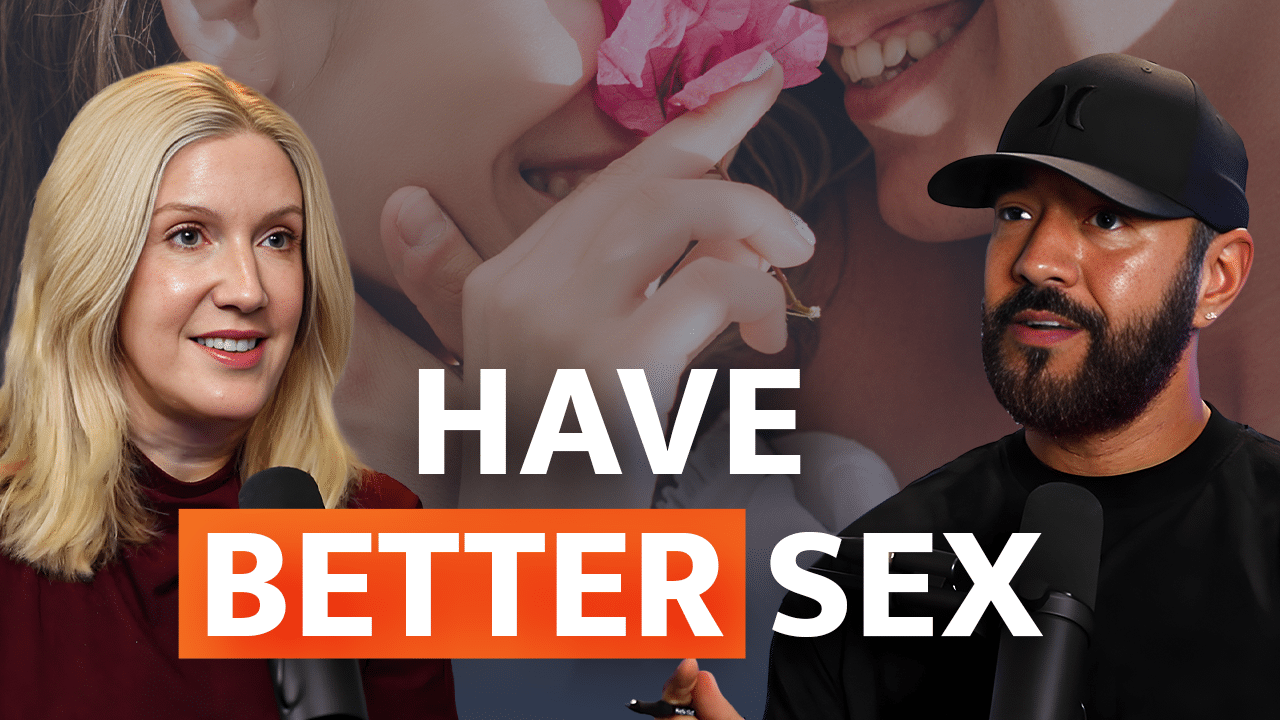
TMHS 971: Does Better Sex = Better Health? The Truth About Sex, Stress, & Satisfaction – With Dr. Nicole McNichols
Our sexual health is a critical part of our overall health and well-being, yet it’s one that can be easily overlooked or dismissed. Understanding the role of sexual health can help you better understand yourself, your relationships, and your body. On today’s show, we’re going to have honest and approachable conversations about sexual health, sexual education, pleasure, and desire.
On this episode of The Model Health Show, our guest is nationally renowned human sexuality professor, Dr. Nicole McNichols. Her new book, You Could Be Having Better Sex, is a guide to understanding desire, improving pleasure, and busting common myths about sex. She’s here to discuss the connection between sexual health and overall health and how to have better sex.
This conversation covers how your sex life can impact your psychology and sleep, what pleasure is, and how to have better sex and connection. Dr. McNichols is known for her ability to help folks understand how to apply the latest research to their real lives, and I hope you find this interview both entertaining and educational. Enjoy!
In this episode you’ll discover:
- The relationship between sexual health and overall health. (2:47)
- Why our society has so much shame around sex. (4:42)
- What the media gets wrong about sex. (10:25)
- How long the average sex session lasts. (13:01)
- What pleasure diversity is. (15:30)
- The difference between vaginal and clitoral orgasms. (18:35)
- What it means to have connected sex. (31:00)
- The most common myths about female pleasure. (31:59)
- What responsive desire is. (34:42)
- The #1 thing robbing women of desire. (38:39)
- What the hierarchy of sexual needs is. (56:14)
- How the menstrual cycle can impact pleasure. (1:06:56)
Items mentioned in this episode include:
- Beekeepersnaturals.com/model – Save up to 30% on natural remedies!
- WildPastures.com/model – Get 20% off every box plus an additional $15 off!
- You Could Be Having Better Sex by Dr. Nicole McNichols – Grab your copy today!
This episode of The Model Health Show is brought to you by Beekeeper’s Naturals and Wild Pastures.
Reinvent your medicine cabinet for with clean, effective products powered by the beehive & backed by science. Claim up to a 30% discount at beekeepersnaturals.com/model.
Get 100% grassfed and finished beef, pasture raised chicken, and other nutrient dense, regenerative meats. Sign up with my link to get 20% of for life, plus an additional $15 off your first box at wildpastures.com/model.
Transcript:
SHAWN STEVENSON: Welcome to the Model Health Show. This is fitness and nutrition expert Shawn Stevenson, and I'm so grateful for you tuning in with me today. It's not every day that you get to talk to the world's leading sexuality professor, and so this episode is powerful and full of incredible insights. We're gonna be talking about how our sexual health is indicative of our overall health. We're gonna talk about this paradox to where we see sex everywhere, but it's still very, very taboo to talk about it. And so this is creating so much dissonance in the minds and experiences of millions, upon millions, upon millions of people. And so we're really gonna talk about some of those aspects of sex that are simply not talked about, including the difference between sexual desire and sexual arousal, right? There's these subtle but very important differences. We're gonna be talking about pleasure, diversity. Everybody's simply not the same.
As a matter of fact, there's a wide spectrum, and so we're gonna crack open that conversation and talk about that. We're gonna be talking about the role of psychology and stress and sexual desire, which is very important and very overlooked. We're gonna be talking about pleasure, of course, but again, coming from the world leading professor in sexuality. And of course with all of that said, we're gonna be talking about how you could be having better sex based on her emerging research. And without further ado, let's get to our special guest and topic of the day. Dr. Nicole McNichols is a nationally renowned human sexuality professor, author, and speaker whose groundbreaking course the diversity of human sexuality is the most popular in the history of the University of Washington, enrolling over 4,000 students annually.
With more than 20 years of experience in research, teaching, and public speaking. Dr. McNichols bridges cutting edge science and real world application to help people better understand themselves, their relationships, and their pleasure. Let's dive in this conversation with the one and only Dr. Nicole McNichols. I'm so excited to talk to you.
DR. NICOLE McNICHOLS: I'm so excited to be here. Shawn, thank you for having me.
SHAWN STEVENSON: Of course, of course. Let's kick things off by talking about why sexual health is indicative of our overall health.
DR. NICOLE McNICHOLS: Sexual health is so critical to our wellbeing, not just physically but psychologically as well too, right? So if we even just start out with the physical benefits of sex, we've been found, we've studies have shown that sexuality that sexual wellness leads to better physiological outcomes, better cardiovascular health easier time sleeping at night. Longevity. There's actually even a famous study showing that men who have more orgasms live twice as long, well, not twice as long, but quite a bit longer.
So yeah, sexual wellness is really something that, you know, it has cardiovascular benefits, longevity benefits, and improves your immunity, it improves your sleep, but most of all, it also just increases your wellbeing. Right? It makes you feel happier and calmer. It connects us to our partners. It makes us feel like we are able to just forgive our partners for the annoying things they may do during the day that would otherwise set us off. So it's a really profound, not just psychological hack, but also a longevity and health hack that I think is very underutilized.
SHAWN STEVENSON: Yeah. Thank you for that. Because we tend to compartmentalize it.
DR. NICOLE McNICHOLS: We do.
SHAWN STEVENSON: Right. It's in its own separate basket.
DR. NICOLE McNICHOLS: Exactly.
SHAWN STEVENSON: All things sex room. And one of the things that was just like, so aha moment. Like I think about it, but you said it in words in the book and it just made me look at it. We are surrounded by sex in our culture.
DR. NICOLE McNICHOLS: Yes.
SHAWN STEVENSON: But it is so taboo still to actually talk about it, to discuss these things.
DR. NICOLE McNICHOLS: Exactly.
SHAWN STEVENSON: Whether it's with friends, physicians, your partner.
DR. NICOLE McNICHOLS: Yes.
SHAWN STEVENSON: And it's so strange because again. Sexual health is a part of our overall health. And so you're really kind of cracking this conversation open, but can you talk about that paradox a little bit?
DR. NICOLE McNICHOLS: Yes, exactly. I mean, there's totally this paradox because there is so much sexual shame that all of us have grown up with, right? And so whether you've grown up in the midst of purity culture or having, you know, grown up with a strong community or even within religion that's made you feel guilty about sex, or if you've just been a kid that's grown up and you know, porn has been your main source of sex education, right?
We don't have any federally mandated sex education in this country. Meaning that the decision of whether kids or any of us learn about sex is completely left up to the dec decision of the states that we live in. So the vast majority of us have not received information that is anywhere near what the CDC recommends. And as a result, we're just subject to all of the shame and stigma that is existent in our current culture. And yet we have these very performative models of sex that we see from the media and from porn that make us feel like no matter who we are or what our bodies look like or what the sex we're having looks like that somehow we just don't measure up. And that can really lead to feelings of strongest connection.
SHAWN STEVENSON: Yeah. Thank you for that too, because, and you share this in the book as well, not getting that sexual education, you know, in our formative years actually has a reverse outcome because sometimes they're just like, well, we don't want our kids to, to know these things, to talk about these things. But then you see higher rates of things like STDs and teenage pregnancy.
DR. NICOLE McNICHOLS: Exactly. And if you look at countries like the Netherlands, where they do have high quality sex, positive, comprehensive sex education, they have lower rates
of unplanned pregnancies, fewer rates of STIs, and more people, especially women who report a positive first time sexual experience. So intuitively, people you know, often fall into this trap of thinking that if we give people information about sex, it's gonna encourage us to be promiscuous and lead to bad decision making around our sex lives. But actually, what the data show is the complete opposite is true. Sex heals. Sex empowers, and sex allows us to reap the benefits of all of that we can benefit from having a healthy sexual life without succumbing to the risks.
SHAWN STEVENSON: It's so well said, you know, because. We're gonna be curious.
DR. NICOLE McNICHOLS: Yeah.
SHAWN STEVENSON: Regardless.
DR. NICOLE McNICHOLS: Exactly.
SHAWN STEVENSON: And getting some education is gonna be helpful versus, you know, curiosity, killing your cat potentially.
DR. NICOLE McNICHOLS: Yes.
SHAWN STEVENSON: You know the other cat, and you know, this is a big reason why I'm so grateful to have you here today, is the impact that this is gonna have on so many lives. And you mentioned the portrayal of sex in the media.
DR. NICOLE McNICHOLS: Yes.
SHAWN STEVENSON: And pornography versus real life.
DR. NICOLE McNICHOLS: Exactly.
SHAWN STEVENSON: Please talk about that schism.
DR. NICOLE McNICHOLS: Exactly. So pornography, first of all, is a really complex, nuanced topic, right? And so I don't wanna send the message that people should never watch porn, and that all porn viewing is problematic and dangerous. I don't think that is, first of all, supported by the data and it's not a helpful message because the reality is people are going to watch porn, right? But the problem is when we're using pornography as an actual script, and so what I mean by that is the genitals that are portrayed in porn are not very realistic, right?
You know, most people do not have an 11 inch penis, right? The average penis size is five and a half inches. One of my most popular tiktoks was about the fact that the average penis size is only five and a half inches, and that. It only needs to be that because in order to penetrate and hit the G spot, which is the most pleasurable part of the vagina, that's only two to three inches inside, right? So yet there's so insecurity that TikTok got 5 million views, right? So even though people understand porn's not real, there's still so much insecurity. Because at some unconscious level, we're using that porn as a sexual script that's making us feel insecure. Right. And beyond just anatomy, right? Just this idea that men should last for hours or have no refractory period.
In other words, be able to ejaculate and that immediately get hard again. Right? Or that women should have an orgasm within minutes of penetration. Or that you need to have multiple orgasms in order to have great sex. Or that people's bodies, including women, should have huge breasts and be, you know, perfectly skinny. And that consent isn't necessary and neither is communication because everybody should get instantly turned down and now know how to please each other. That makes for a hot sex scene. Right? That can be great to stir your fantasy if you come to it with a sense of understanding that it's not real, Shawn.
Right, and that's the problem is that porn. Isolation isn't necessarily evil. It's our country's lack of comprehensive sex education that's causing people who are naturally curious to look to it for a roadmap for sex that's just not setting them up well.
SHAWN STEVENSON: Hmm. This is awesome.
DR. NICOLE McNICHOLS: Yay.
SHAWN STEVENSON: Alright, so we have that box, but then just in kind of conventional media as well. You know. The way that it's portrayed exactly is everybody is a perfect match right outta the gate. You know, they finally hook up and it's just this hot steamy thing that lasts, you know, like she, she's coming within 30 seconds.
DR. NICOLE McNICHOLS: Exactly.
SHAWN STEVENSON: You know? So talk about that angle too.
DR. NICOLE McNICHOLS: Yeah. And you know, so Netflix, Amazon Prime, I guess it's called Prime Video Hulu. They all, you know, on the one hand it's wonderful that we feel. So much more comfortable portraying sex in the media and showing it as something that is important to us. But yeah, even those scenes, they're beautifully curated. I mean, if you look at, you know, for example, Bridger Tin, which on the one hand did a great job of highlighting the importance of female sexuality and the importance of female pleasure.
But even in those scenes, right, woman having an orgasm within, you know, my family makes fun of me because if you were to watch one of those shows with me, I will literal literally start counting down from the beginning of penetration, like 5, 4, 3, 2, 1, boom. There's her orgasm. When that's just not realistic, right? And so it's setting up this idea that women, you know, love, you know, just have this one type of penetrative sex that we put on a pedestal, which can be incredible, is incredible. But the reality is that it's not paying attention to the fact that actually it comes down to the clitoris, right? Only 18% of women can have an orgasm from penetrative sex alone.
The rest need some kind of clitoral stimulation. But you see a beautiful scene like that and you think, well, why am I not having orgasms instantly like that? And yet it's not realistic. So again, fun to watch. Beautifully curated can be a great thing to watch with your partner to help get turned on or even to spark conversations later about things you might wanna try,
whether it's positions or role play or scenes, but as in terms of an accurate representation of what bodies and how sex is supposed to unfold. It's not leading us in the right direction.
SHAWN STEVENSON: Oh, this is so good. So good. We're gonna talk obviously about pleasure.
DR. NICOLE McNICHOLS: Yes.
SHAWN STEVENSON: And myths around pleasure as well.
DR. NICOLE McNICHOLS: Great.
SHAWN STEVENSON: But something that is probably more accurate with a sex scene would be like, okay, we see the onset, then it's like a SpongeBob, you know, five minutes later. 10 minutes later.
DR. NICOLE McNICHOLS: Yes.
SHAWN STEVENSON: You know, but, and also can you talk about that, if somebody is tuned into porn as a roadmap, they might think that, you know, somebody's having sex for an hour. That's the, if you're not doing that exactly, then you're doing it wrong. How, how long is the average session?
DR. NICOLE McNICHOLS: Okay. Again, right. This is a question I get so frequently from my students and from my social media followers. Okay. So there actually is research on this, and it shows that the average amount of time, right, at least in the context of heterosexual sex, that most. People, right? Including women want penetration to go on for is about six to seven minutes, right? Which is not much different than the average amount of time that it takes for a person with a penis to ejaculate. Now, here's the thing though, is that no one wants sex to last for just five to seven minutes, right? But we have to redefine sex as not just including penetration, but all of the different wonderful acts that go before it, after it that.
Really lead to so much pleasure, but that often get sidelined, right? We talk about foreplay. We, you know, have this script that, you know, you get to the main course, which is penetrative sex, but sex needs to be a buffet of different activities and touch and erotic places that you travel to with your partner and not just defined in that one way. So I think that's often a relief to people that the actual penetration part doesn't really need to last much longer than five to seven minutes. You know, some women do you know, 10 to 15 minutes, but given that the majority are probably not going to have an orgasm from that anyway, going to something like oral sex or other types of fingering or types of sex that are more suited for female bodies can sometimes be more pleasurable. So yeah.
SHAWN STEVENSON: I've always loved the buffets.
DR. NICOLE McNICHOLS: Yes, me too. All you can eat.
SHAWN STEVENSON: Yes.
DR. NICOLE McNICHOLS: The best kind.
SHAWN STEVENSON: Yes. So one of the things that you talk about, which is another aha moment, why are we not thinking about this? Is the fact that even within the context of pleasure, everybody's body is different.
DR. NICOLE McNICHOLS: Yes.
SHAWN STEVENSON: And you say specifically, one of my favorite quotes, what feels good to one person might do nothing for the next.
DR. NICOLE McNICHOLS: Yes, exactly.
SHAWN STEVENSON: It's very obvious, but we don't think about it. We don't talk about it. Even learning anatomy.
DR. NICOLE McNICHOLS: Exactly.
SHAWN STEVENSON: Anatomy can be slightly different or exceedingly different.
DR. NICOLE McNICHOLS: Yes.
SHAWN STEVENSON: And being aware of this, that again, there isn't a cookie cutter way to approach sex with one person from the next.
DR. NICOLE McNICHOLS: Exactly.
SHAWN STEVENSON: And so you're really bringing this to light for us to consider and to think about things differently because, and I'm gonna share this as well, you share that pleasure diversity exists between people as well.
DR. NICOLE McNICHOLS: Yes.
SHAWN STEVENSON: But it also sometimes varies in the same, person month to month, depending on mood or circumstances or energy levels. And so we're not born knowing what feels good to us, what turns us on, or what feels good to someone else or turns them on.
DR. NICOLE McNICHOLS: Exactly.
SHAWN STEVENSON: So that's a lot there.
DR. NICOLE McNICHOLS: Exactly.
SHAWN STEVENSON: But it's just these are things we don't think about. We get our roadmap from these outside sources and this is how things are supposed to be. And so everybody's different and you're different. So learning yourself and learning your partner is critical.
DR. NICOLE McNICHOLS: Exactly. Look, clitoris is very in size by a hundred percent, right? Which means one person's might be a bit easier to find than another's, which doesn't make them any less capable of experiencing an amazing orgasm. But it might mean that different types of touch work for that person, right? If you find that one person really enjoys having their G-spot stroked, that can be incredible for that person. It may not do a whole lot for the next, right. Same thing with people with penises, right? It's not the case that everyone enjoys, for example, having their scrotum stroked, right?
But for some people, that's incredible, right? Or that area between the scrotum and the atis perineum can be absolutely amazing for some people, for others, ah, stay away. So leaning into that right is so critical and celebrating that and thinking of it in terms of, oh my God, I thought I had, you know, the male body or the female body figured out. Now I don't, why aren't they responding to what I thought normally works? Look at it as what a cool adventure we're on, where we can be led with curiosity and look at each other's bodies as theme parks, right? Adventure lands that are all different. Would you want everyone to have the exact same rollercoaster? No. That'd be so boring. Right. But figuring out how we like to play, what turns us on, what gives us pleasure as individuals is hugely important.
SHAWN STEVENSON: Oh, so good. So you said something that for some people and some bodies of research might think it's a myth. You said the G spot.
DR. NICOLE McNICHOLS: Yes.
SHAWN STEVENSON: And you talk about that. You kind of bring it forward to talk about is there an anatomical connection here? Is this related somehow to the clitoris, you know, internally. Can you talk about that a little bit?
DR. NICOLE McNICHOLS: Yeah. So this kind of blows people's minds, which is, you know, for a long time there is this question of, you know, does the G-spot exist or doesn't it? And believe it or not, Shawn, this cut highly political because if you think about it, right, the G-SPOT. It's located two to three inches inside the vagina. It typically feels like different texture than the rest of the vagina, because instead of feeling smooth and slippery, it's still slippery, but it has more of a walnut texture, right?
So everyone was on this hunt for their G-spot, but what some people pointed out is there's this myth again, that goes back to Sigmund Freud, and he argued that vaginal orgasms, in other words, those stimulated essentially by the G-spot, are more "mature" than clitoral orgasms.
And if you think about it, that statement. It's a little bit sexist because it's really implying that women who have orgasms from penetration, right, and in Freud's mind, this is usually from a penis from a man, are somehow superior to the orgasms that she's going to be able to have via clitoral stimulation, IE on her own, right? And so it came down to are the orgasms that women can have on their own, as good as those that they can have with a partner.
And if we're telling women that they're not having a great orgasm, unless they're finding their G-spot, which is the kind of sex they have with a man, they're losing out, that's problematic. So here's what blew people's minds with this. The G-spot is not a totally separate construct or anatomical feature than the clitoris because in 2006. Unfortunately, it took until 2006 for us to figure this out. Helen O'Connell did the first internal mapping of the clitoris. The clitoris doesn't just have these external features. It also has the cura and the vestibular bulbs, which descend down around the vagina and are integrated into the internal structures of the vagina.
Which means that when you stimulate a G-spot, you are actually just stimulating the internal structures of the clitoris. It all comes down to the clitoris, sorry, Freud. And so for some women, they may have longer current and vestibular bulbs that are really linked into that g-spot, in which case G-spot stimulation will be really pleasurable. But for some women not as much. And for them it's much more of that external stimulation of the clitoris that really gets things going.
SHAWN STEVENSON: This is so awesome. All right. So the CUV.
DR. NICOLE McNICHOLS: Yes.
SHAWN STEVENSON: Can you talk about that?
DR. NICOLE McNICHOLS: The clitourethraovaginal complex? Exactly. So it's a mouthful, but it is critical to pleasure, and it is speaking to the fact that we cannot think of the G-spot and the clitoris as two distinct features. Kind of what I was just saying in terms of those internal structures being related to the vagina, the G-spot.
So we've established that connection between the clitoris and the vagina. There's also, because of this word urethra, which you'll notice in that word, clit, urethral complex. This is the finding that a within around the urethra, right there is something called the skins gland. So a lot of people might be familiar with the skins gland from watching porn where women have it, you know, g-spot orgasms that lead to squirting, right? Kind of like old faithful tons of fluid getting projected, ridiculous amounts of space across the room.
Not realistic. However, female ejaculation for sure is something that often happens when women have an orgasm and it is simply fluid released from the skins gland, which is again close to the urethra and it's pushed out through the urethra during orgasm. And that can be really pleasurable, but it's not squirting and, you know, female ejaculation as we call it in the literature. It's not the holy grail of orgasm in the sense, if you're not having a ejaculation, you're somehow missing out. It's just something that you can experiment with and try because again, all those structures are related in the way in which they come together and produce pleasure for each person is beautifully diverse.
SHAWN STEVENSON: Come together indeed today, highly refined.
Sugar is infused into so many of the things that are on our grocery store shelves, and we've gotta make a change. We've gotta make an alteration right now to take back control of our palate and to reduce the consumption of that ultra process version of sweetness. So how do we do that? Where can we get that sweet sensation that we're looking for without all of these metabolic problems? Well, a recent study that was published in the peer-reviewed journal, nutrients detailed how honey raw honey specifically can actually improve our fasting blood sugar levels, improve fat metabolism and reduce the risk of heart disease. Additionally, the scientists noted the vast antioxidant and anti-inflammatory properties that honey has to call honey.
A mere sweetener is an absolute atrocity. It's an understatement to call it merely a sweetener. It has remarkable benefits that are simply seen in not many other foods. For example, a study cited in the journal, evidence-based, complimentary and alternative medicine determined that honey's antioxidants have nootropic effects such as memory enhancement. Plus a randomized double-blind placebo controlled study cited in the journal. Pediatrics revealed that honey was able to outperform a placebo and significantly reduce cough frequency and severity at night and improve sleep quality. Now the emphasis here is on raw honey. You wanna make sure that it is actually real honey, because there are some honey sters out there.
And if you don't know about the Honey Gate scandal, look it up. Alright, so you want to get your honey from trusted resources and my favorite source of honey is from the incredible team at Beekeepers Naturals. Go to beekeepers naturals.com/model right now. You're gonna get 20% off the Incredible Superfood honey plus 20% off storewide. They are adamant about the third party testing, making sure there are no nefarious things coming along with only the highest quality honey in the world. That also has complimentary amounts of be pollant and propolis as well. It's truly, truly special. Head over there to check 'em out. It's beekeepers naturals.com/model. That's B-E-E-K-E-E-P-E-R-S and naturals. That's N-A-T-U-R-A-L s.com/model for 20% off Storewide. Head over there. Check them out. Get your sweetness from a source that's keeping you metabolically healthy. Again, head over there, check 'em out. Beekeepers naturals.com. Now back to the show.
SHAWN STEVENSON: So we're gonna circle back and talk more about pleasure. And but first, how did you get into this? Because again, you are considered to be, and I know that you know, and I'm glad that you brought this up too, which is the people's perception of you might be one way 'cause of the work that you do and how vocal you are and how articulate you are and how charismatic you are in describing these things and educating. So it just seems like you might have all the experience in the world. Right. And so how did you make this your focus in your work?
DR. NICOLE McNICHOLS: So Shawn, I did not grow up dreaming of becoming a sex professor. I did not think in my early in my career, even in my twenties and thirties, that this was something that I would be led into. I got my PhD in psychology in 2009. In about 2012, I was later a professor in the department teaching mostly classes generally on psychology and social psychology. My goal at the time was to help people who were struggling with loneliness. I was looking around the world, seeing so many people feeling disconnected, and I wanted to essentially help people to lead more connected, happier, healthier lives.
And then I got an email that kind of changed everything for me, which is that in my department, the professor who had taught human sexuality. For the last 30 years had fallen and broken her leg and was not going to be able to teach that quarter. And the university was panicked because there were 350 students signed up and they had no place to put them for the quarter.
So nobody, as you could imagine, wanted to take over the course. It was kind of considered awkward and filled with landmines. But I was new to the department and I had been a teaching assistant for Lois for several years. So I knew the material and so I kind of offered myself as tribute, Katniss Everdeen style, and never looked back because as soon as I started teaching the course, I realized that this was really a pathway to help people feel more connected. That there was so much shame and misinformation out there, and yet this was a powerful tool where if I could help people become and feel more sexually integrated within themselves, that was a skillset that was important within their world, but that was also going to translate into helping them feel less lonely overall.
So I also realized just from a personal level, right, so. As you kind of hinted to, and much to the dismay of my students, I'm not a dominatrix. I don't have sex every single day. I don't come home from lecture every night with my husband tied to the bed or the chandelier. I'm not in an open relationship and I'm not a porn star, although selling my feet on OnlyFans, that has come across as something when I've seen Just kidding. Just kidding.
SHAWN STEVENSON: Or is she?
DR. NICOLE McNICHOLS: Or is she? But the reality is that I'm just a normal person. Right? And so that can be disappointing to some who like to project onto me this image of this highly sexual out there, crazy woman. It could also be really reassuring to the millions and millions of people who I think are just like me, right? I've been through every phase of it, right? I had to navigate casual sex and hookup culture. I am in a 22 year monogamous relationship now. I've been extremely happily married to my husband for 22 years. I've gone through that phase of life where you've had kids and you're struggling and getting sex on the calendar seems like something that is just nowhere near top of mind.
I've dealt with how you keep passion alive in a long-term relationship. So I feel like I can relate to so many of the challenges that so many people are having, but yet I also think it's so critical to keep an open mind and be able to understand that not everyone is going to choose the path that I have, and that's okay. There's so many different ways to have connected sex in your life, whether you are like me and in a monogamous relationship, or if you are an open relationship, if you are into kink, if you are an exhibitionist, it really just depends on knowing, you know, a, what the research says, but also understanding that we're at a place in time where we need to accept again, this diversity of how people live their lives, how they find happiness and joy.
That means accepting that there's different ways to have sex, different types of people you can be into different structures, structures of relationships that might work best for you, and that's okay. By being educated about it, we can learn about these people, embrace them, and also learn something about our own lives, right? No matter how different it may seem, most different types of sexuality can still lend some kind of teaching to the very types of struggles and questions that we have about ourselves and our own relationships.
SHAWN STEVENSON: Yeah. Thank you for that. I feel like I'm in class right now. It's so awesome. Sorry, you said this in the book very explicitly that Better Sex is Connected Sex.
DR. NICOLE McNICHOLS: Yes.
SHAWN STEVENSON: Talk about that. Why is that? I mean, what does that mean?
DR. NICOLE McNICHOLS: So better sex is connected sex, right? And connected sex is, can take place in any kind of context, right? So I argue that you can have connected sex in a long-term monogamous relationship, but you can also have connected sex in a one night casual sex experience where both people come to the experience wanting just a sense of
adventure and pleasure. You can have connected sex in the concept in the context of an open relationship. You can have it in the context of a sex dungeon. You can have it in the context of what we might term vanilla sex, where it's just slow and connected and intimate. Connected sex is authentic sex. It means showing up as yourself, being honest and mindful. Most of all, connected sex implies a sense of presence and authenticity about what you want and what's turning you on.
SHAWN STEVENSON: Mm. I love this. Let's talk some of these myths.
DR. NICOLE McNICHOLS: Yes.
SHAWN STEVENSON: Now when it comes to pleasure, specifically when it comes to female pleasure, and so we already covered one of those myths, which has to do with the GPO and the CUV.
DR. NICOLE McNICHOLS: Yes.
SHAWN STEVENSON: But I wanna ask you about the difference between sexual arousal versus sexual desire. And specifically one of the myths you talk about is if you're not wet, you're not turned on.
DR. NICOLE McNICHOLS: Exactly.
SHAWN STEVENSON: Let's talk about that.
DR. NICOLE McNICHOLS: So this also blows people's minds, right? Because we tend to think that what's going on in our minds in terms of how turned we on we are, is going to be directly reflected instantly in our bodies. This is not always true, right? A prime example of this is a imagine all the boys that we know going through puberty who just get spontaneous erections, right? Like in the middle of history class, at really inconvenient times. It is not always the case that when you become aroused and your body is showing those signs, that subjectively you're thinking, I want sex right now.
And so, and at the same time, oftentimes we do really desire sex, but our bodies just kind of aren't quite cooperating, right? And so this can happen for a variety of different reasons and typically. It becomes a se, it becomes problematic in the personal sense if you feel that subjective sense of desiring sex, wanting sex, but you're not able to lubricate or you're not able to get an erection, right? And so that can be for a whole host of different reasons, right? If we look at women and lubrication, for example, there's been so much research on the impact of perimenopause and menopause that just with that decline in hormones can really compromise the vagina and the ability for the vagina to lubricate, right?
This is why things like HRT, which thankfully just got the black bottle warning removed as well as different types of, you know. Estrogen creams can be hugely helpful for women who struggle with lubrication and for men, right? Same thing, whether it is going and talking to your doctor, and maybe it might be as simple as a Viagra prescription or dealing with underlying anxiety or with your cardiovascular health, like we talked about in the beginning of this podcast, so many health outcomes are directly related to our ability to respond, but perhaps most importantly, the fact that our minds and bodies don't always perfectly sync up points to something else critical about pleasure, which is that sometimes our bodies respond before we subjectively become turned on.
And this is called responsive desire. And what it means is that you might be in a situation where you're with, let's say your long-term partner, and you might be in the mood for sex, or you might not be, you're not really quite sure, and so you decide to give it a try, right? You decide to start kissing, to start touching. What might happen is that your body then begins to get turned on sexually, and it's only after that physiological response that your brain then kicks into thinking. Oh, I want this. Right. This feels good. Bring it on. So understanding that sometimes our bodies, if you really boil this down, kind of have to decide at a physiological sense that they want sex before our psychological sense of wanting sex kicks in can really give people a sense of relief because it means it's okay if you're not starting out in sex totally turned on and really wanting it.
Which can, you know, for a lot of couples can be kind of, cause a lot of anxiety, right? Like, why don't I want sex all the time? And the reality is that that's okay because another pathway into an amazing sexual experience is allowing your body to physiologically warm up and get turned on before that psychological sense of desire kicks in, into onboard, and leads to the orgasmic experience you're looking for.
SHAWN STEVENSON: Wow. So you said that sometimes the psychology can be out of sync with the biology.
DR. NICOLE McNICHOLS: Yes. Yes.
SHAWN STEVENSON: Which again, this is another cap, obvious thing, but this speaks to, and I would love to dive into this, the impact of stress. And just the overall kind of stress load in the psychology, especially with women today.
DR. NICOLE McNICHOLS: Yes.
SHAWN STEVENSON: And the influence that might have on sexual desires sexual. Wants and needs. Yes. Can you talk about that relationship?
DR. NICOLE McNICHOLS: Absolutely. No, and I'm so glad you brought that up, Shawn, because it's really in the foundation of my McNichols hierarchy of sexual needs, right? Which is this. This idea that if we wanna be able to come forward with our partners and be present, which is what's required to have satisfying sex, we first need to almost get turned on by ourselves. In other words, feel sexy, feel a sense of, you look in the mirror and you're like, I'd wanna have sex with myself. Right? You kind of wanna get into that mind state, which can feel selfish or egotistical, especially to women who have been socialized to think that your role is really about nurturing and taking care of the needs of others, right?
Getting into that really selfish mindset of "Yeah, I'm hot", can be a challenge. And one of the things that really provides a roadblock to getting into that phase of, yes, I would wanna have sex with myself, is stress, right? And so we see stress in so many different avenues. It might be stress from our career, it might be stress from the exhaustion that comes from managing a family keeping track of dentist appointments, keeping track of the tutor that you've gotta schedule for your child's math exam coming up to the dog that just ate the kid's cran set overnight and now needs to go to the vet. Right? All of these different forms of emotional labor and stress, right, where you just feel a sense of depletion, right?
There's so much research coming out showing that the number one thing robbing of women of desire right now isn't necessarily even menopause or hormones or biological. It's the mental load of feeling this level of distraction in mid midlife. And it's sort of interesting at this time because women really feel empowered to be set out on their careers and to really be going for it. And you know, I mean, this is something that I can relate to, right? Feeling really ambitious and having the permission to be ambitious. But the reality is that nonetheless, when we look culturally, the data suggests that. Even almost, especially among women that are hyper achievers in their career, they're actually doing more of the household labor, more of the child rearing, than in situations where it's more equal.
Why that is, that could be a whole topic, but the point is there's so much stress and learning to be able to dismantle that and just sort of leave it, check it so you can achieve that place of presence is so critical, but is often the biggest challenge I think, especially for women trying to enjoy a good sex life.
SHAWN STEVENSON: Alright, this is so major because as you just mentioned, this can supersede so many of the other perceived issues when it comes to sex and sexual pleasure and having better sex. And yet we don't know what the to do about it.
DR. NICOLE McNICHOLS: Exactly.
SHAWN STEVENSON: We don't know what to do. Right. There's so much stress today that we just, we were being born into it.
DR. NICOLE McNICHOLS: Yes.
SHAWN STEVENSON: You know, just the dynamics of our culture you know, tech, social media, all the things to do, all the things to be, and, you know, the paradox of choice as well. Know there's just so much going on. And I relate this to an overall stress load because I know
that, you know, when I was in college and a conversation around stress, it was very, it very much seemed like pseudoscience, like what? You know? But in reality, in just a little sidebar, and we'll put this study up for everybody to see, this was published in jama 15 years ago now, maybe longer, but upwards of 80% of all physician visits today have a major stress related component. Stress is making us sick. But we don't talk about it because it doesn't have calories.
DR. NICOLE McNICHOLS: Yes.
SHAWN STEVENSON: Sometimes you can't see it, you know, but that overall stress load, this could be, of course diet goes into that lack of sleep, exercise, these kind of big pillars. But when, for myself, when I thought about stress, I only related it to work. Right. But that goes into the stress load as well.
DR. NICOLE McNICHOLS: Yep.
SHAWN STEVENSON: Relationship, stress, spiritual stress even. Yeah. You know, just feeling like maybe I'm, I don't matter. I'm not on my purpose, whatever that might look like. And obviously relationship stress.
DR. NICOLE McNICHOLS: Yes.
SHAWN STEVENSON: Right. Which might be the biggest of them all. And you put all that together for one human to deal with and it can, it's kind of stacking conditions against us. And there's you want me to have pleasurable sex too? Yep. You know, so how do we do this? How do we fix this?
DR. NICOLE McNICHOLS: Exactly.
SHAWN STEVENSON: Let's focus on women.
DR. NICOLE McNICHOLS: Yes.
SHAWN STEVENSON: Right now, how can we possibly start to reorder our life structure to process some of this stress, maybe offload some of this stress to open up for more.
DR. NICOLE McNICHOLS: I love that. And I mean, you know, Shawn, the thing is, it's not even just that we dismiss or ignore the stress, we kind of worship it. I mean, if you think about it, everyone loves to be crazy busy, right? We're all "crazy busy." And if you're not crazy busy, what the fuck is wrong with you? Right? What are you doing with your life? And you know, where does that come from? We live in this culture that is just this puritanical upbringing. Hard work equals virtue. It's just ingrained in all of us, right? But I do think there's some certain core things that contribute to the exact type of stress that can be especially problematic when it comes to our sex lives.
And I think almost chief among them is social media. Because you know, you think about it, you get home, you're exhausted from work, you're trying to unwind. Again, going back to this theme of presence, right? That's really the goal is to become present. And yet, what do we do? We grab our phones, right? And we start mindlessly scrolling through TikTok and Instagram and you know, especially tick, a platform like TikTok for example, it's just so easy. That algorithm is way too smart and it just starts feeding you. Videos that are primed to kind of keep that stress component going because it wants your brain activated so that it keeps wanting to watch videos on whatever the thing is that you're anxious about. And so it also just sets up this comparison, right?
So you just get bombarded with messages, whether it's skinny talk, right? For women, which is just gonna be overloading all of your body image concerns, which researches shows really is weighing on women so much when it comes to being able to enjoy your sex life, right? Or seeing all the perfect photos in this beautiful Instagram feed of your friend that are, you know, of course not showing any of the real or hard moments, but I think that that, you know, frame of mind and that that's particular breed of stress can be especially harmful.
But then it also just comes down to our inability to prioritize any kind of pleasure in our lives because we tend to think of pleasure as superfluous or as extra, but the reality is that pleasure builds ego resilience. It makes us think more creatively and the more we can foster pleasure in our lives, the better we're able to cope with those, many of those stressors. Because look, some of them, like social media, you might be able to control, right? We can all get off our phones earlier. But the reality is that your family is there, right? Your work is there. Your, you know, relationship is there. So how are you going to fill your own bucket to be able to deal with those stressors?
And the answer is sexual pleasure, but also fostering other sources of pleasure in your life. Whether that means taking a hot bath. Going for a walk, being in a book club where you get together with friends and discuss things you're excited about. Going out for cocktails with a friend and catching up who you haven't talked to in a while. Right. An exercise class, whatever it is that just brings you pleasure. We need to be prioritizing that because it's going to be giving us the coping skills to put in place the stress that otherwise is gonna kill our sex life.
SHAWN STEVENSON: Hmm. Pleasure appreciates.
DR. NICOLE McNICHOLS: Exactly. Pleasure appreciates. Yeah.
SHAWN STEVENSON: Yeah.
The overall nutrition in our food has taken a nosedive in recent decades. In fact, an analysis published by scientists at the University of Texas made an alarming discovery 43 foods, mostly vegetables, showed a marked decrease in nutrients from the 1950s to 1999. According to that research, everything from vitamin A to calcium to iron and more has significantly declined. Again, if it's not in the soil, it's not in the food. It's the unsustainable farming practices that have obliterated our soil quality. But this is changing thanks to farmers who are dedicated to regenerative farming practices. And this is not easy to do in a market that is slanted towards quantity over quality, but select farms are stepping up to do the right thing.
And this is especially seen in the domain of animal foods. Research published in the British Journal of Nutrition found that beef from animals fed an abnormal diet of conventional pesticide laden grains that decimate the soil quality contain up to five times less Omega-3 fatty acids than what's found in grass fed beef and research from the College of Agriculture
at California State University has found that grass fed beef contains elevated precursors of vitamin A and E, as well as increased disease fighting antioxidants like glutathione and superoxide dismutase activity compared to conventionally raised grain fed beef with unsustainable farming practices. Whether you're eating plant foods or animal foods, you'd better know the difference when it comes to organic practices and regenerative farming.
And this is what I truly love about wild pastures. Wild pastures delivers 100% grass fed and grass finished beef pasture raised, pork pasture raised chicken and wild, caught seafood directly to your door. All born, raised and harvested entirely in the US and raised on regenerative family farms. These pastures are free from synthetic pesticides and other chemicals. There's no antibiotics, no added hormones, and right now with the Wild Pasture subscription, you're going to get 20% off for life. Plus free shipping and $15 off of your first order. Absolutely incredible. Go to wild pastures.com/model. That's W-I-L-D-P-A-S-T-U-R-E s.com/model. 20% off for life free shipping and $15 off your first order. Head over there. Check them out. Wild pastures.com/model. Now, back to the show.
SHAWN STEVENSON: So I don't wanna leave guys out of this conversation.
DR. NICOLE McNICHOLS: Yes.
SHAWN STEVENSON: Is just speaking from the experience of living this life this way, you know, we tend to, we tend to have a higher percentage of us who are our love language is physical touch. Right? And so, stressed out, tough day. Give it to me totally relaxed, chill day, give it to me, Uhhuh you know, got into, you know, an altercation, it doesn't matter, you know, hungry. Not, I'm totally full. Give it to me. You know? And so for a lot of guys, it tends to be that, whereas for women, it is definitely more complex.
There's more psychological factors. And so with this being said, not to negate that, obviously, again, stress can have major ramifications for men's sexual health as well. But in the context of actually getting together and having better sex, one of the things that just, again, based on your work and lived experience as well, is looking at ways. You know, in, instead of adding another thing for our significant other to be feeling guilty about or, you know, just having this extra pressure of what I should be doing because especially social media.
DR. NICOLE McNICHOLS: Yes.
SHAWN STEVENSON: And the media large is telling me I'm supposed to be Omega woman and do all these things.
DR. NICOLE McNICHOLS: Right.
SHAWN STEVENSON: Looking at how can I help to offload some of these stressors. And as you mentioned, having a career tends to lead to, I'm doing even more taking on more stuff at the household, potentially. And so one of my favorite things to do in practices is to take things off my wife's plate.
DR. NICOLE McNICHOLS: Shawn, did you know that there is actual data showing that men in relationships who vacuum have more sex than, I mean, does that say it all?
SHAWN STEVENSON: Suck it up.
DR. NICOLE McNICHOLS: Talk about a love language.
SHAWN STEVENSON: Wow.
DR. NICOLE McNICHOLS: So yes, for sure. Right? And there's so many different levels that you can approach this at, but if we're just gonna go to that, you know, division of household labor for a minute. Yes. Leaning and look, reality is that it is rarely going to be exactly equal in a relationship. Right? But there should to the extent that both partners can be having conversations about what can you know, what's my responsibility? What are you going to do? What do you have time for? And it might be fluid throughout the relationship, right? There might be times when one partner is going through something that the other isn't.
And so the one partner has more time to give and. There's sort of a trust that will, that things will even out. Right? And so that's really critical. But you know, we can all kind of take a lesson from queer relationships because what's been found in queer relationships is that because they're not up against that sort of ingrained, heteronormative script that the woman is gonna do all the household labor and the man is just gonna go to work, that they have higher levels of relationship satisfaction because you don't have that blueprint in place, meaning you've gotta talk about it and have a real conversation.
So couples should absolutely be talking about how do you lean in to help each other not feel overwhelmed. But the other piece of this is simply gratitude. I think people really underestimate how much of an aphrodisiac gratitude is. And Yeah, right, exactly. Just feeling if your partner sees you and appreciates. Everything that you're doing and really leans into that, that's a huge turn on. Right. And then I would also say just at the more immediate level, right, for the guys that are like, okay, like I feel like I have that part of my relationship figured out. You know, like we, I lean in, I help with the kids, da, da, da.
That's not so much an issue. It's more this issue of I feel like I come home from work and it's, give it to me. Or you know, we get into bed and it's, give it to me. So, for a lot of people, and I think especially women, you have to understand that a pathway into feeling desire isn't to just go straight to sex. Right? And this is where emphasizing non-sexual touch really comes into play. Because if you can just be cuddling together, right? Foot rubs hugs, right? The 62nd hug, I think is what the gottman's, you know, defined through research as being so critical. The seven second kiss couples who kiss each other more, right, have been found to have higher levels of sexual satisfaction.
So if you can really lean into these types of touch that are regular parts of your relationship and where they're not always leading to sex, you're gonna be, you know, doing two things, connecting to each other in a really profound way, but also not setting up this expectation that. Every time your partner touches you, they're just looking for sex, right? I think that that's what's really key. You're calming your nervous systems as well, you know, by touching your partner, you're kind of calming each other, which is again, gonna bring you into sync, which is really what needs to happen to lead to a really, you know, amazing sexual experience. But most of all, it's communicating that love and affection and intimacy continuously, not just at the times when you're having sex.
SHAWN STEVENSON: This is great advice. Gratitude is an aphrodisiac.
DR. NICOLE McNICHOLS: Yes.
SHAWN STEVENSON: That is the title of this. So powerful.
DR. NICOLE McNICHOLS: Yes. Mystery is not the secret to desire. Gratitude is, I'm telling you. Yep.
SHAWN STEVENSON: This is something that, I know this, you know, I've worked with countless people, but just in my own life it's, it might be, you know, just our wiring, but we get acclimated. We get jaded. We get used to things and so we gotta train ourselves to be grateful and that can become a habit as well. And so, a good examples, last night my wife did the most, she did, you know, a lot of stuff during the day. And then she still decided to make dinner instead of doing a DoorDash. 'Cause I would Ado did a DoorDash. Because all the stuff she did, but she really wanted to. And so, you know, I have an opportunity there of. You know, the, the Brussels sprouts, they, you know, they taste pretty good. And just keeping it to myself or being like, baby, these are the best Brussels sprouts I've ever had in my life.
DR. NICOLE McNICHOLS: I love that.
SHAWN STEVENSON: And my, and I've trained my son, which he, he, he doesn't know this, but he, he does the same thing. He my youngest son, he's just mom, you, you dad is right. You know, just like encouraging her, offering these words of affirmation is true.
DR. NICOLE McNICHOLS: Yes.
SHAWN STEVENSON: It's true though. But sometimes we hold it in.
DR. NICOLE McNICHOLS: Exactly.
SHAWN STEVENSON: right. And also it's being more mindful on the complaining and if there is something off. Because my wife will tell you, I'm a kitchen hoverer. All right. I wanna, so what do you, what is that? What are you doing? Or babe, it's it's starting to get I don't know if the timeline is so I've gotta be able to keep myself.
DR. NICOLE McNICHOLS: Yep.
SHAWN STEVENSON: From expressing those things 'cause they're usually extremely minor, but they can just be adding to that stress load for her.
DR. NICOLE McNICHOLS: Exactly. Exactly. I love that. It sounds like you really have this, you are living this principle beautifully, Shawn.
SHAWN STEVENSON: Cause I messed up a lot.
DR. NICOLE McNICHOLS: You learn how.
SHAWN STEVENSON: So I want to ask you more about this hierarchy of needs that you've created because it's so good. And the foundation is what, and then let's build up from there.
DR. NICOLE McNICHOLS: Yeah. So I built the hierarchy of sexual needs because kind of circling back to what we were talking about in the beginning, we all have these blueprints of what we think great sex looks like, that are pretty much determined by culture and the media and porn. And so I wanted to say. Look to have incredible connected sex, we need to throw that script out and rebuild a new blueprint for better connected sex, which is really what this hierarchy is trying to be. And it has three different levels. So the bottom foundational level is this idea of connecting to your body as well as your individual mind.
Meaning you need to learn what feels good to your body. Leaning into all those pleasure diversity principles that we talked about, what gets me going, what leads to me having an orgasm, not what I'm being told by porn or Netflix. And then it gets into this idea of. Before you're even able to start leaning into a partner, you need to get yourself into a mindset, whether it's dealing with stress like we talked about, or dealing with your sort of assumptions about sexual shame that you grew up with, or body image issues, which we know can really get in the way of people's ability to feel sexy, right?
This bottom layer. It's really about that idea I talked about in the beginning of being able to look in the mirror and feel like I feel sexy. I would wanna have sex with myself because we need to have that entitlement to pleasure, that feeling of vibrancy if we really wanna be able to show up in the best possible way with our partners, right? We also need to know our bodies because when we get to that second level where we're trying to figure out the dynamics of whether it's keeping passion alive in a long-term relationship, or entering into a new relationship and navigating new sexual experiences with a new partner, we need to know how to communicate.
It's gonna be a lot easier to communicate our needs. If we start out knowing what it is that we want to begin with, right? So that's why this is the second level built on top of getting in touch with our physical needs. And then once we've figured out everything about communication and connecting and those dynamics of long-term relationships, we get into questions of, you know, this final layer. Understanding the dynamics of kink because even if kink is something that you would never really think of yourself as exploring Shawn, all of us are kinky. Kink is a continuum. We all exist somewhere on this scale of playing with erotic power play in our sexual experiences. Even if it's knowing that we love it when our partner takes charge and really radishes us versus we love it when we, you know, feel like we can surrender in the moment or that we take charge in this in the sexual experience.
Right? Even just understanding the psychology of kink can be so helpful to bringing the heat in your own relationship or if it's understanding the dynamics of open relationships, if that's something that you're interested in exploring, which even if you're not, are important to know about because. Today, having an open relationship is about as common as having a cat, which people don't realize it's much more happening, a lot more than people realize, and can also teach you about the inherent challenges of monogamy and ways in your mind to understand that. For example, it's okay if you are in a long-term relationship and feel attraction occasionally to other people. That doesn't make you a bad person. That doesn't constitute cheating, right? So we go from this place essentially in the hierarchy of building a foundation, of knowing our body, becoming present, sexually, present, to then moving into this middle need of our emotional and social needs of how we communicate. Connect with a partner to this third final place of self-actualization and exploration, which is really where we lean into this idea of curiosity and continued growth as being the key for keeping that spark alive.
SHAWN STEVENSON: I love it. I love it. So with this being said, and again, that kind of pinnacle or top layer of this hierarchy, you know, you're bringing to bear something that some people are not gonna want to hear, that humans are freaky. You know, and just have all these different expressions and ideas and, and what tends to happen is, you know, our programming is you shouldn't be a certain way. You shouldn't think certain thoughts. And what happens when you do those things is the guilt and the shame, and.
DR. NICOLE McNICHOLS: Yeah.
SHAWN STEVENSON: I feel that without having an awareness of what's going on in yourself would lead to abnormal behavior. And maybe taking action on some things that are dangerous or illegal or whatever the case might be. And instead of understanding oneself and having these conversations and even understanding like. You know, not just in the freaky sense, but just he, our minds are so expansive.
DR. NICOLE McNICHOLS: Yes.
SHAWN STEVENSON: And bonkers. Some of the stuff that we think about.
DR. NICOLE McNICHOLS: In the most beautiful ways.
SHAWN STEVENSON: In the most beautiful ways, but understanding that we have an infinite mind and this does not make us a bad person or unusual. As a matter of fact, everybody around you has the craziest thoughts you can imagine. And what tends to happen is, especially if we're indoctrinated, is to beat ourselves up.
DR. NICOLE McNICHOLS: Exactly.
SHAWN STEVENSON: Right. And instead of being more aware and honest about the way that we feel, and having good interpersonal communication, self-awareness, the ability to self-assess even.
DR. NICOLE McNICHOLS: Yes, exactly. No, I love that idea. And what it's really kind of highlighting is just how much we need to start celebrating our imaginations, not shaming them. Right. And if you think about it, you know, human beings, I mean, this is kind of fascinating when you think about it. We are the only species that's capable of having a fantasy and even getting turned on by something or someone that's not even physically present. Right. And so our minds, right, have evolved to be able to think of all these.
SHAWN STEVENSON: I never thought about that. There's a deer out there, like I wonder what time she, you know, Bambi's getting whatever, you know?
DR. NICOLE McNICHOLS: Right. Exactly. And so, you know, that's part of our evolution. We are wired to be able to imagine these complex, incredible scenarios in the future that may or may not ever happen. Right. I mean, you know, if. You think about it, this was really the secret to our survival as a species. Homo sapiens were able to imagine different scenarios where they would come up against different species of hominids. And it was only by having these imaginations that could envision all these crazy scenarios, were we able to predict how we would respond so that we could win, which is essentially what happened.
So now we have these imaginations and we need to be able to lean into the fact that sexual fantasy is part of what makes sex beautiful. It's part of what leads to our self-expression. And you know, if you look at research on what the top five sexual fantasies are in America, they're freaky in your words, Shawn, right? I mean things like. You know, public sex threesomes, BDSM, power and control sex, you know, sexual coercion, which is, you know, can really bring, put people's, you know, get people prickly you know, having a sexual fantasy with an, an alien or a unicorn, right? If you watch into any sex toy shop, you'll notice that all the dildos are, you know, have sprinkles and unicorn shapes and alien tentacles.
I mean, we're capable of dreaming up all of these, you know, very fantastical images and that's okay. It's nothing to feel ashamed of because the reality is that fantasy can be a great thing to leverage to help you think of new ideas for things you might wanna try. But sometimes our fantasies don't necessarily perfectly map on to what we desire in real life, you know, and that's okay. That's, it's sometimes it's just fun to enjoy a fantasy in your head that, you know, take home or eroticism. Right?
If you think about, you know, there's a very viral scene in white Lotus Three, season three where Gary and I can't remember the name of the other character, but they have a whole conversation about how he's realized that after sleeping with hundreds and hundreds of women in last year, what he really fantasizes about is being a woman and having someone else who's himself as he says him, right? That blows our minds. That was sort of a, oh my God moment. But the reality is that type of gender bending or imagining that you're having sex with a person that's not your normal sexual orientation that you're attracted to, that's actually more common than people think. So we are freaky, and to the extent that we can just accept that it's gonna help us have better sex, it's not gonna, you know, this idea that we need to suppress that or ignore it or shame it, that's really not doing us any favors.
SHAWN STEVENSON: Yeah. And also, this doesn't mean that we necessarily are going to act on these things.
DR. NICOLE McNICHOLS: No.
SHAWN STEVENSON: Because I don't personally know any aliens.
DR. NICOLE McNICHOLS: Exactly.
SHAWN STEVENSON: But I don't know. I don't know for certain, because some, you know, some people.
DR. NICOLE McNICHOLS: They could.
SHAWN STEVENSON: So I wanna ask you about this as well before I let you go. You know, I mentioned this a little bit earlier, just about the context of sex and sexual desire. And again, you said, and this is a quote from your book, "pleasure diversity exists between people, but it also sometimes varies in the same person month to month depending on mood or circumstances or energy levels." And this brings to mind a question, which is, can a woman's desires change based on where she is on her cycle?
DR. NICOLE McNICHOLS: A million percent, yes. So during the menstrual cycle after ovulation, that's known as the luteal phase. And during the luteal phase, the cervix will actually be lower in the pelvis and instead of being opened and feeling like a mouth, it'll feel like the tip of your nose, which means that if it is lower in the body, that those types of hot sex positions that might lead to really deep penetration might bump up against the cervix and can feel a little bit less comfortable, right?
Or it might be that you need more lube during certain parts of the month, like the luteal phase when you're not lubricating quite as easily, right? Lube is your friend. The wetter the better. So there can be those fluctuations during a person's cycle that will lead to different types of sexual positions or, you know, different activities being sort of more or less desirable. There's also just gonna be a difference in desire, right? So right around ovulation and especially right before ovulation. When estrogen levels are high, that often leads to a high level of sexual desire and interest in sex. Interestingly, a lot of women also get a spike in sexual desire right before they get their period during what we call the late luteal phase.
And the reason that happens is because all women have testosterone, obviously not in the same level that men have, but during the end of your cycle when estrogen levels and progesterone are decreasing relative to that, testosterone is higher. And so a lot of women can experience sort of that burst of sexual interest right before their period. So yeah, it's really cool how desire really can change over the month for a person's cycle, as well as like the different positions and techniques that might feel good, which is why communication is so critical.
SHAWN STEVENSON: What about the, I guess, intensity of the sex? Maybe?
DR. NICOLE McNICHOLS: Yes.
SHAWN STEVENSON: At some phase of the cycle, and this might vary from woman to woman.
DR. NICOLE McNICHOLS: Yeah.
SHAWN STEVENSON: Maybe things that are more quote vanilla.
DR. NICOLE McNICHOLS: Yep.
SHAWN STEVENSON: Versus things that are more, you know, bed squeaking, you know, whatever.
DR. NICOLE McNICHOLS: Yeah, exactly. And that's why it's so important to lean into this idea of not every sexual experience should be the same. Right? And so there are going to be times when you might really desire slow connected, intimate sex, right? Research coming out, showing that, especially when there's kissing during sex, that can increase the chance of orgasm for women. And that might be, you know, let's say. You know, I've had women tell me, for example, that that's the type of sex they really crave right before ovulation. And then maybe you crave the kind of the freakier types of sex where there's maybe a little bit of bondage or a little bit of light spanking or maybe freakier than that closer to that time when it's right before your period and that testosterone spike relative to everything else is happening.
I'm not saying that that's what the pattern looks like by any means for every woman. It's just an example of, you know, what can happen. But yeah, be expect to crave different types of sex depending on the time, the day. Also, how connected you're feeling to your partner in the moment, what you're both in the mood for. What is gonna make you feel sort of emotionally satisfied that's kind of the beauty of sex.
SHAWN STEVENSON: This is so good. You know, I, I just appreciate you so much for putting this together. I know that it's a labor of love to write a book in the first place and to really share this message because I asked you before the show even got started, and we were just talking why you would do this. Why would you put yourself through writing a book? You know? And it's because you do have a message to share and to really open up this conversation around sex. And unfortunately, again, we're surrounded by sex, but it's such a taboo thing and it can be incredibly healing. It can be incredibly connective.
And also, as you mentioned, we start off the episode, all the benefits. Right. And we see multiple studies on increasing longevity, on improving cardiovascular disease, cognitive function. The list goes on and on, but. How do we actually, like what constitutes good sex? How do we make sex better?
DR. NICOLE McNICHOLS: Yes.
SHAWN STEVENSON: And so thank you for unpacking some of this for us today. And again, this is just a little slice of the full meal, the buffet that's in the book.
DR. NICOLE McNICHOLS: The all you can eat.
SHAWN STEVENSON: So as of this release of this episode, it's available everywhere their books are sold. So can you let everybody know, is there a preferred place to pick up the book? Where can they follow you, get more information, all that good stuff?
DR. NICOLE McNICHOLS: Yes. Thank you so much. Yeah, you can buy my book at whatever your preferred retailer is. I always encourage people to buy from their local bookstore if that's an option. And if you'd like to follow more of my work, please do so on Instagram or TikTok. My handles are Nicole, the sex professor and get in touch. Thank you, Shawn.
SHAWN STEVENSON: Amazing.
DR. NICOLE McNICHOLS: This is incredible.
SHAWN STEVENSON: Thank you so much.
DR. NICOLE McNICHOLS: Thank you.
SHAWN STEVENSON: I appreciate you. The new book is You Could Be Having Better Sex, Dr. Nicole McNichols, everybody. Thank you so much for tuning into this episode today. I hope that you got a lot of value out of this. Conversations around sex still for me, jumps right into the forefront of my mind. Salt and pepper. I'm not talking about what might be on your dinner table. I'm talking about the historic female rap group, and they had this song, let's Talk About Sex Baby. They had this incredible song that was the most education I got. They talked about it all right? The good things and the bad things.
That may be all right. I didn't really get to know about the good things from my conventional education. It was all fear-based. Stay away from it. There's sharks in there, you know, all these crazy propositions. No, not, they're not literal sharks, of course, but just having fear when it comes to this part of being human. And so I'm grateful for these conversations and to be able to have this platform to elevate the conversation around sexual health because as it said, sexual health is health. And so we've gotta do better than these catchy tunes from back in the day at this point. And so I'm very grateful for you being a part of this conversation with me today.
And if you enjoyed, please share this out with your friends and family. Of course, you could share this on social media. Take a screenshot, tag me. I'm at Shawn model and tag Dr. McNichols as well. I know she would absolutely love to see that. And listen, we've got some incredible, incredible masterclasses and world changing guests coming your way very, very soon. So make sure to stay tuned. Take care, have an amazing day, and I'll talk with you soon.
Other episodes you might be interested:

Maximize Your Energy
Get the Free Checklist: “5 Keys That Could Radically Improve Your Energy Levels and Quality of Life”
HEALTHY MEALS EVERYONE WILL LOVE
The Greatest Gift You Can Give Your Family is Health
When you gather your family around the table to share nutritious food, you’re not only spending quality time with them - you’re setting them up for success in all areas of their lives.
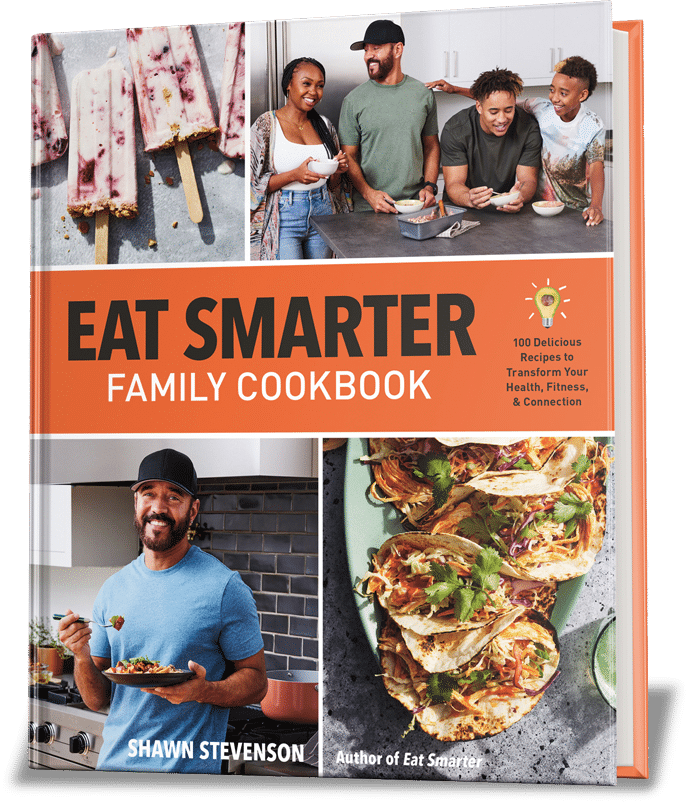
The Eat Smarter Family Cookbook is filled with 100 delicious recipes, plus the latest science to support the mental, physical and social health of your loved ones.


Share Your Voice
0 comments. Be the first to leave a comment.