
Subscribe to The Model Health Show:


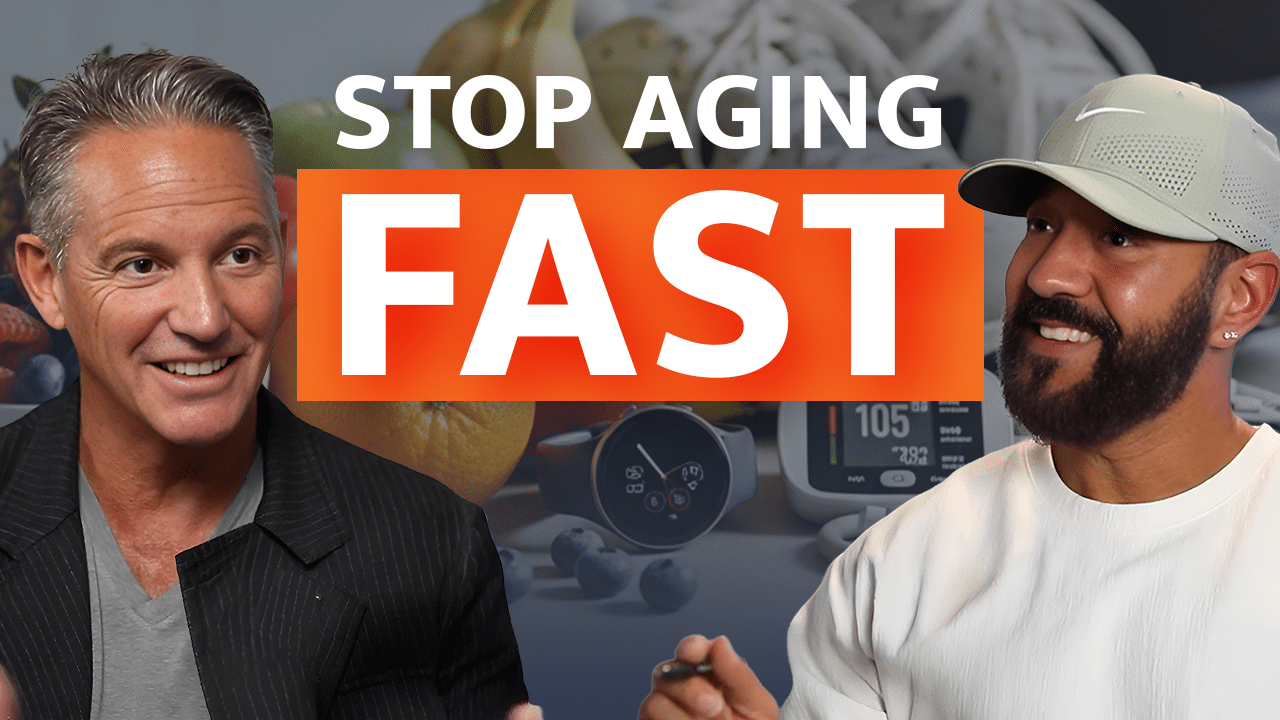
TMHS 975: How Your Tongue Health Influences Your Lifespan & the Type of Exercise That Ages You Faster – With Dr. Daniel Pompa
Aging is an inevitable part of life, but is it possible to use healthy habits to slow down the aging process? On today’s show, we’re going to dive into science-backed habits and practices you can implement today for better health, higher quality of life, and slower, healthier aging.
Today’s guest, Dr. Daniel Pompa, is widely regarded as a leader in natural detoxification. His work focuses on helping patients overcome inflammation based chronic diseases through detox practices and cellular healing. Today, Dr. Pompa joins us for a conversation on powerful ways to slow down the aging process.
We’re diving into specific oral health practices you can implement for better health, the best science-backed exercises to slow down aging, and the best nutrition tips for optimal gut health and lower risk of disease. Dr. Pompa is also sharing his 5 Rs of cellular detox. I hope you enjoy this episode of The Model Health Show!
In this episode you’ll discover:
- The surprising health benefits of tongue scraping. (2:11)
- What types of training are best (and worst!) for longevity. (5:07)
- The connection between the gut and oral microbiome. (11:20)
- How insulin spikes impact aging. (16:39)
- Simple dietary practices for better health. (19:59)
- How to understand the human body’s adaptation processes. (32:10)
- The link between toxins and aging. (40:12)
- How to take control of the chemicals coming into your household. (43:13)
- Dr. Pompa’s story of turning pain into purpose. (53:26)
- How to support your body’s detoxification process. (1:00:13)
- The connection between endocrine disruptors and weight loss resistance. (1:02:02)
- What the 5 Rs of cellular detox are. (1:06:12)
Items mentioned in this episode include:
- Themodelhealthshow.com/ourplace – Use code MODEL to save 10% on toxin-free, ceramic coated cookware!
- Organifi.com/Model - Use the coupon code MODEL for 20% off + free shipping!
This episode of The Model Health Show is brought to you by Our Place and Organifi.
This episode of The Model Health Show is brought to you by Our Place. Use my code MODEL at themodelhealthshow.com/ourplace for 10% off toxin-free, ceramic coated cookware.
Organifi makes nutrition easy and delicious for everyone. Take 20% off your order with the code MODEL at organifi.com/model.
Transcript:
SHAWN STEVENSON: Welcome to the Model Health Show. This is fitness and nutrition expert Shawn Stevenson, and I'm so grateful for you tuning in with me today. On today's episode, we're gonna be talking about science-backed practices that can potentially slow down your aging process. And if you think you've heard everything, I guarantee you, you have not, because one of these practices that has some sound science published in peer-reviewed journals showing that could potentially slow down the aging process and make you healthier has to do with your tongue. All right, so we're gonna cover a lot of ground.
We're gonna be talking about tongues. We're gonna be talking about the oral microbiome. We're gonna be talking about fitness. We're gonna be talking about toxins, like what's the science really around toxins? Is it really a sound of validated science when we're talking about the association between toxins and toxin exposure and our lifespan? All right? So again, we're gonna cover a lot of ground, and I think you're absolutely going to love this powerful interview. So without further ado, let's get to our special guest and topic of the day. Dr. Daniel Pompa is a leader in the field of functional medicine, educating practitioners and the public on science-based solutions for better health.
He's the author of multiple bestselling books. Host of Cellular Healing TV and he's been featured all over major media and he's here today to share some powerful tips to help you to slow down the aging process and experience healing at the cellular level. Starting now. Let's dive into this conversation with the incredible Dr. Daniel Pompa.
Dr. Pompa, thank you for coming to hang out with us today.
DR. DANIEL POMPA: Yeah, man. Glad to be here.
SHAWN STEVENSON: I was just reading a report published in the British Dental Journal, and it's titled Tongue Scraping Will Help Fight the Aging Process.
DR. DANIEL POMPA: Mm.
SHAWN STEVENSON: And it parallels what you've been teaching for years and what you've been applying for years. So can you talk about that connection with tongue scraping and our health?
DR. DANIEL POMPA: Yeah. I started tongue scraping years ago. Probably not even for the same reason that I do it today. Right? I did it because I'm like, you know, what's that crap on the back of my tongue when I wake up? You know, it's like, and someone's, oh, tongue scrape. Started doing it. But yeah, with that study there is referencing is when you tongue scrape, you literally stimulate a bacteria that helps you produce something called nitric oxide. Well, what is that? You know, what does nitric oxide do? Well, it's a vasodilator. It brings oxygen into your deep tissues and where you need it, and nitric oxide prevents heart attacks.
Nitric oxide slows the aging process. Oxygen. It brings it where you need it, and nitric oxide makes that happen. Obviously, people take nitric oxide for boner pills or with, you know what I mean? So it helps erections sexual performance of course, so people know of it that way, but tongue scraping really. Yeah. But it does, and here's the irony. When you do mouthwash, right? Which so many people do for bad breath. Well, guess what it says right on? It kills 99.9% of bacteria. Yes. Same with your good bacteria. That very bacteria that you need to produce, that nitric oxide. When you stimulate a tongue scraping, you actually kill it with mouthwash.
So there was another study showing, and they, they studied young men, young healthy men, and when they were using mouthwash for a week, their blood pressure went up. I think it was like 21% on average, which is massive. And a young man to raise blood pressure. Imagine what it does, and a 60-year-old man like myself or you know, or even a 40-year-old. So, I mean, the point is that you want to do the opposite. You don't wanna kill him, you wanna stimulate him. So you have mouthwash and you have tongue scraping, completely opposite. And yet, I would say most people are not tongue scraping. They're using mouthwash.
SHAWN STEVENSON: Yep.
DR. DANIEL POMPA: Bad idea.
SHAWN STEVENSON: I know that some people watching this video version of the episode when you just said that you're 60, they spit their coffee out or whatever they're sipping on. They're just like, no way. And so this is one of the things that I was excited to talk to you about because for myself personally, just being able to model and to follow the lead of people who've really figured some things out and we're talking about longevity.
DR. DANIEL POMPA: Yeah. Yeah.
SHAWN STEVENSON: And so obviously it's shown in your physical appearance, but also your level of energy and your health. And we're, of course, we're gonna take a trip back in time in a little bit to find out how you got here. But I'm excited to share with everybody your insights when it comes to slowing down the aging process. And so I want to ask you about any form of exercise that you might recommend as far as being able to temper that process, slow down the aging process.
DR. DANIEL POMPA: Well, you know, I recently just posted a video on my Instagram about this oddly, I think what came out maybe yesterday. High intensity training as known as hit right. High intensity interval training to say the acronym is shown to actually slow aging. The opposite is true, just like the mouthwash, the opposite is true. Endurance training will aid you prematurely. I've been on both sides of that. I was a cyclist for a while, training a lot of miles. And I can tell you, no doubt about it, it was aging me prematurely. I loved it, but it was aging me prematurely. Resistive training and high intensity training do the opposite.
Why? Well, you get more of a growth hormone stimulant stimulation, you get more hormone sensitive. So you become, your cells literally become more sensitive to your hormones, which is always going to work in your favor from an anti-aging standpoint. You're getting your, you're producing more mitochondria with those types of performance. The more mitochondria you have in your muscles, which, you know, it really increases when you do resistive training and high intensity training, the slower your brain degenerates. I mean, so that slows aging of the brain, the better your brain performs, and in general, the better and more efficient you utilize fat for energy so you stay leaner longer.
Look it, it's kind of fun. If you look at, pull up any picture of a world-class sprinter, okay? Someone that sprints all the time, you're going to see a muscular physique. You're going to see someone who just looks in, appears healthy, and then pull up a world class marathon runner. You're gonna see someone who's in a catabolic state who looks older than they are, their skin, look at their skin. You're gonna see completely different skin on the sprinter versus the marathon runner. You just are. So the point is what's happening? Well, the type of exercise that they're doing, one is getting aged the other isn't.
SHAWN STEVENSON: Wow. Wow. So can we provide a caveat, because I know some people, like I love. My long distance run. I love to run a couple of miles every day. I love my long distance cycling. I, you know, this is.
DR. DANIEL POMPA: I do too, actually.
SHAWN STEVENSON: Yeah. So can somebody still have that as a part of, you know, it's just something there, there's, there's a caveat maybe for the joy of something.
DR. DANIEL POMPA: Yeah.
SHAWN STEVENSON: Plus how about we put more of an emphasis
DR. DANIEL POMPA: Yes.
SHAWN STEVENSON: Intentional emphasis on, as you just mentioned, resistance training and doing some high intensity training.
DR. DANIEL POMPA: Yeah. And I think you, the balance is the key. Yeah. Right. When you're just doing endurance training, that's a problem. I think a lot of, even long distance runners have found the art of adding resistive training in and even high intensity interval training because they learned that they, it prevents injuries. They learned that they can actually go faster, longer, et cetera, for every reason I just said. So I think that if you're going to do it, and I think that, you know, again, some moderation, you know, a a few times a week doing some longer endurance training.
I think there's some benefits to that. But it's the overuse. It's the overdue. It's when this is all you're doing, it's when you're addicted to the mileage, and many people get addicted to this. So I think there is a balance that you can still do both. I still do both. I still love getting out on my mountain bike. I do. Right. But mountain biking is, you know, kind of high intensity too though. But I think there can be a balance.
SHAWN STEVENSON: Yeah. Thank you for that. Thank you. You know, again, there's many paths to the goal and designing a life that works for you. And in particular, with that said, you know, just keeping in context that there's so many different ways because a lot of people are interested in endurance training for fitness reasons. Right? Thinking that that's the way to get there. Whereas like if this is something that is a passion and there's something for competition, there's a whole space for that. But what we're talking about today, this context is longevity.
DR. DANIEL POMPA: Yeah, exactly.
SHAWN STEVENSON: So keeping that in mind.
DR. DANIEL POMPA: Right. Absolutely.
SHAWN STEVENSON: And so you mentioned the word balance. You said balance is the key. And so this makes me wanna circle back to the microbiome because again, we know all about the gut microbiome, right? That's had a huge spotlight the last few years. But we're talking about the oral microbiome. And actually, you know, when you mentioned that study with the mouthwash, this was a part of this other study that I looked at, and this was published in Frontiers in Cellular, and infection microbiology, and we'll put this study up for everybody to see.
And it analyzed how tongue cleaning impacts the human tongue microbiome composition. But they also had that piece about the mouthwash messing everything up. Yeah. And the researchers stated, "failure to clean the tongue daily results in a microbiome composition that is less favorable to nitric oxide production.
But instead appears to favor conversion of your nitrate into ammonia.
DR. DANIEL POMPA: Yeah.
SHAWN STEVENSON: And they said regular tongue hygiene both selects for a favorable microbiome and revs up the activity of the community." So this oral microbiome has a huge impact Yes. On everything that's going on downstream as well. So, can you talk about that relationship?
DR. DANIEL POMPA: Yeah. You know, I'm glad you pulled me into this because I'm really passionate about this topic actually. Matter of fact, I was told that I just did a documentary for biological dentistry and they said, they introduced me as you are the number one referring person on the planet to biological dentists. I'm like, wow, I didn't know that. But that makes a lot of sense. I refer a lot of people. I was just at the dentist up here, one of my doctors in my group, up here at Smile Body, they call it, and four people that day. Yesterday I was in there, four people were there because of me. That was a random day.
I didn't announce I was coming. Okay. So I was four people. So , I sent a lot of people to Dennis. Okay. On this topic, we could really dig a big hole here, but this is an important topic for everyone to hear because I believe that when people have unexplainable things going on. Fatigue, brain fog, body aches. It could be here in this oral microbiome. So I wanna discuss some of these pitfalls here. But to the point this, these bacteria are affecting these bacteria. So many people have gut issues today, and we could dig a big hole here too, because it's not as simple as just taking bacteria and even, it's not even as simple as just changing your diet anymore.
I mean, everyone should do that, you know? But it's not that simple. People go, I'm still, I still have, I still have much of that problem is here. So they just don't understand the relationship of these bacteria with these guys. They communicate when this is bad, this is bad. You'll never fix this until you fix this. So where are some of these pathogens starting and why people even end up with a coated tongue in the morning? Why they have bad breath and why they end up having gut problems and maybe brain fog and a lot of other problems that are not associating even anxiety with this oral microbiome.
Cavitations. Cavitations mean that you've got a wisdom tooth removed maybe when you were 13, 15 years old, right? They removed it, time goes on, heals over, no pain. Here you are 25, 30 years later perhaps, and you have all these weird symptoms going on, and I tell someone, get a cone beam. What is that? It's a 3D scan, a CAT scan of the jaw. You don't see these cavitations, which are basically lucencies in the jaw that healed over from a tooth being pulled that now howls all kinds of bad guys. Pathogens could be Lyme, could be these nasty anaerobic bacteria, parasites. We, they take, the dentist will take these, the what they find in these holes in your jaw, if you will send it to a lab and analyze it.
And it's stunning what they find. That said, that keeps your immune system not working properly. It keeps it hyper immunity and also it will lower your good immunity. Also, it affects your gut microbiome, meaning you'll never fix this unless you get rid of one of these cavitations. So it was amazing because I did a couple videos with the dentist and he pulled up a client that I sent in. She showed me her cavitation on the cone beam and said she had 20 some years of a severe eczema all over her body. Did everything, tried everything, took out the cavitation. And she said three weeks later, he said she te emailed or texted saying All my eczema's gone and it's never returned. I sent a friend of mine in he had all kinds from Canada, all kinds of, he had liver pain for 21 years body pain throughout his body.
He had the means to go to anywhere, and he did, he went everywhere to try to deal with this. And he was the kind of guy, if you told him stand every day in the corner on your head for 10 minutes, he'd say is 20 better. I mean, that's the kind of guy he was. I sent him into my buddy Dr. Jerry in New York, and he text me on the way out after getting this cavitation fixed. He's like, is it possible all of my pain's gone? Or is it just because blah, blah, blah. And I'm like, I don't know. We'll find out. Well, that was like nine years ago and he hasn't had pain since.
SHAWN STEVENSON: Amazing.
DR. DANIEL POMPA: So the point is, is that these infections affect the oral microbiome, but worse yet, they affect a systemic microbiome and they affect pathogens that are battling, or I should say, distracting your immune system every day. And it affects your health dramatically. And that's one, I didn't talk about root canals yet. I didn't talk about pockets. That when they measure those little pockets and they have, like, they find you have seven millimeters, that's a pocket that bacteria hides in. And again, unless you fix that, you're never fixing this.
SHAWN STEVENSON: Mm.
DR. DANIEL POMPA: You know? So anyways, this is a topic that I'm passionate about because I see, I watch so many people's health turn around when you get rid of this cause. Man, I just gave you a long answer to a simple question.
SHAWN STEVENSON: It's fantastic.
DR. DANIEL POMPA: But I'm passionate about that answer.
SHAWN STEVENSON: When it comes to the oral microbiome, obviously, you know, you mentioned the impact of mouthwash, so this is just coming in and just bombs away, blowing up everything. Michael Bay movie, you know, transformers just messing everything up. So obviously it's avoiding things that can you know, be very detrimental. But the biggest influence on what's happening with our oral microbiome and just the health of our teeth and everything going on there is the foods that we're choosing.
Right. And so if we're talking about being able to slow down the aging process, what are some principles that you recommend when it comes to nutrition? Is there something we should be mindful of? Like in particular, like the impact that certain foods might have on insulin, for example.
DR. DANIEL POMPA: Yeah, look, I mean, I always say if you want to age faster than anyone in your neighborhood, Bible study, whatever it is, just spike your glucose and insulin throughout the day. People do it all the time. Unknowing. They go to their refrigerator.
There was a, someone said this once, that the average American eats between 17 and 21 meals a day. I said, that's impossible, but it's not, because what happens is they walk into their kitchen and they grab the handful of whatever berries, handful of nuts, dah, dah, dah, every time. That's, that's a meal to your body. Your body has to deal with that meal the more often you eat, arguably. The more stress and it literally can speed up the aging process. I always say don't eat less, eat less often, and you know, you'll age slower. But every time people go by in the chips, the pretzels, the glucose spike, insulin spike, the more you do that, the more inflammation you're driving throughout your body.
So controlling insulin and glucose spikes is a way to slow the aging process. Simple as that. So that is diet, right? I mean, the average American gets up and they put something glucose in their mouth, even if it's a darn banana, right? It's like, or the orange juice. I just did a video this morning. I was sitting at the, the table at the hotel, right in the breakfast thing, and I saw the healthy things over here and people trying to be healthy are going to reach for all these juices. And I thought to myself, that's the worst place to be right there is what they're calling healthy. Why? Because all these juices, boom, glucose goes through the roof. Never drink orange juice or apple juice and don't let your kids do it either, you know, the fiber's gone. It's just a massive glucose rise and it's not good. Oh, and then it gets worse because if you wanna look at the concentration of chemicals on that menu, it's in that juice because it's concentrated down all the berries and the things that they were using. I mean, there are typically in the apples that is the dirty dozen.
So if you Google Dirty Dozen, that means don't ever eat these 12 things because there's so much pesticide in them. Well, guess what? All of those juices, like it was the dirty dozen. So you have a, a massive level of pesticides and you have the glucose rise. And people are starting their day thinking that's healthy, right? And then they go about their day, and then they go to work. And then they have their healthy bar, okay? Because they, they want more protein. It says protein and gluten-free and all that. And bad news here too. Gluten-free products. Most of them are super sugars. They have things like corn starch, modified corn starch, which are like massive car.
They're like, the worst carbohydrate you could possibly eat is these corn starches and modified corn starches. And they eat the bar that has all the sugars in it. And typically, you look at it, it's 29 grams of sugar for the bar, but it's healthy because it tells you it's healthy on it. Right? That's the billboard for the bar. So they eat the bar halfway through, then they eat lunch and they start, then it's maybe french fries, god forbid. You know, it's like now you have the bad oils and the glucose rise, right? I mean, I could keep going through the day, but you get the point. You want to age fast. Just do that.
SHAWN STEVENSON: So what should we eat?
DR. DANIEL POMPA: Fast. No, I'm kidding. I am big on fasting, however, but yeah, there's appropriate what should you eat? I look, I without overcomplicating, dude, look, you wrote the book, you know, I mean, eat smarter, man. What the heck is that? You know, I mean, just eat what God gave us. If you can't read it, don't eat it. You know, I mean, I, people overcomplicate diet, they really do. Because I think of convenience. People want things that are convenient. Like that's why people eat the bars and the juice and, you know, but you know, eat things the way God intended them to be eaten. And you're probably gonna nail it every time if you're gonna eat an apple. You know, eat an apple, don't eat apple juice.
If you're gonna eat an orange, eat an orange. Don't eat orange juice or drink orange juice. You know, so, if you're going to eat meat you know, it should eat grass you know, not force fed all kinds of antibiotics, steroids, and horrible grains. Yeah. I mean, so if we eat the food that God intended us to eat his way, if you're gonna drink dairy or eat dairy, do it God's way. I mean, get the good stuff right, always organic with dairy, because the, the fat in dairy holds a lot of the toxins from the pesticides, the antibiotics, the hormones, the, you know, all of it. So, you know, I mean, eat food the way God intended it to be. Now, I do teach something called diet variation where I do.
Believe it's like ancient tribes. They were changing their diet based on seasons. I do believe seasonal eating has a lot of huge benefits for the microbiome. When you change your diet, it forces your microbiome to diversify. And a diverse microbiome means that your healthier, you have better immunity, your brain works better, but you're not going to create diversity by taking pills.
It's just not gonna work that way. But you do create diversity by diet shifts. We have to emulate what ancient cultures we're forced to do. But when you do that. Magic happens. So when we get people who have like horrible digestion and gut, we've changed their diets. Maybe we'll put 'em in a ketosis diet for a few months, then we'll put 'em in a high healthy, higher, healthy carbohydrate, you know, diet for a few months, then we can move them into you know, maybe it's a, a higher fat diet. So I mean, the point is, is that you can vary diets and change the microbiome.
SHAWN STEVENSON: So good. Cross training your diet.
DR. DANIEL POMPA: Yeah, yeah. You know, and that is the example, by the way, what you just said is that athletes know this if you do the same workout all the time. It doesn't work anymore. It becomes non a stress. It becomes a non-stress and the body doesn't have to adapt. You don't get stronger and faster. No different with diet. When you change diet, it's a stress to the microbiome. And then the microbiome has to adapt. And in that adaptation, it has to create new bacteria to digest these different proteins or different fats or whatever diet you're sorting, more plants.
Maybe you switch to a plant-based diet. It has to switch its microbiome. But what happens is, is you're upregulating all these bacteria and you're creating a diversity. And diversity is king. So you know, it, it really does work. And, again, I do it because I get bored with diets anyway. You know, it's like, I'll be in ketosis for a period of time and then I'm like, ah, I just, I want some good carbohydrates, diet variation strategies. I even teach weekly. A lot of people go low carb, too long. Their body will eventually think it's starving. And slow your metabolism down. Why does it do that? Survival. The number one thing that our body wants to do is survive. It will prioritize survival over anything. And if it thinks it's in a starvation mode, then it will slow metabolism down, hold onto your fat, even creating some low insulin resistance and hold the fat because it thinks we might not be getting enough and too low carb too long actually can put your body into that state.
So one or two carb days a week fires up the metabolism again. So diet variation, even from a weekly stand. Works and people go, man, I, I had that pizza last night. Two days later I feel leaner. You know? Well, that, that's actually because your body fired up its metabolism again.
SHAWN STEVENSON: Yeah.
DR. DANIEL POMPA: If you bodybuilders knew this years ago.
SHAWN STEVENSON: Right. I was just gonna say like we've had on some of top trainers when it comes to like bodybuilding MMA, you know, performance, all that stuff, and they're saying something very similar to what you're saying.
DR. DANIEL POMPA: Yeah. Yeah. So I think the reason I have to discuss these things now is because low carb is so invoke, right. But think every diet moves in and out. Right. You know, it'll move from low carb to plant-based to, you know, carnivore now. Right. You know, avoiding different plant toxins. So diets come in and out of vogue, but I'm always clear to make the point of they're all good. But if you stay in any one diet too long, you will create health problems.
Stay in a carnivore diet too long, watch what happens. Now, I would argue carnivore diets can transform people because their, their gut got so inflamed, they're reacting to all these plant toxins, you know, but that's a new thing. Everyone's running from oxalates and lectins thinking they're bad. It's like, well, are they bad? Or is our digestion bad? I would argue it's the digestion that's bad. But that's a whole nother topic. But the fact is, is that if you stay in ketosis too long, you'll create problems too, right? So you want to move in and out of different diets, just like our ancestors did.
SHAWN STEVENSON: There are a few things better than a home cooked meal. It's like a warm hug inside. It's a great opportunity to deliver some of the best nutrition as well. All kind of managed and curated by us or our loved ones versus all the stuff out there on the streets, right? There's so many wonderful benefits of cooking at home, but, and it's a big old, but most people were unaware that when we were cooking at home trying to provide our family with incredible nutrition and great health, we were actually being harmed.
We were actually being poisoned because for years so-called non-stick cookware, Teflon, the Teflon Dons were creating cookware that has been harming human health. One of the most notorious compounds used to make Teflon cookware is a chemical called perfluorooctanoic acid, or PFOA, which has been found repeatedly in peer-reviewed studies to contribute to higher rates of infertility, liver disease, and a variety of cancers.
For instance, a study published in the Journal of the National Cancer Institute. Concluded that PFOA is a strong kidney carcinogen. Now, this compound has only recently been removed from creating non-stick cookware only to be replaced by chemicals that were found to be equally as destructive to human health.
Like Gen X was a recent iteration and so many people are saying no more. Enough is enough. We're choosing better than, and how can we break free from this nonsense? Cooking is supposed to be one of the most healthful things that we can do, and so for real, safe, beautiful non-stick cookware, one of my favorite gifts to give and what my family utilizes every day is the cookware From Our Place.
Our place cookware is non-toxic, pfas free ceramic coated and has over 75,005 star reviews with their award-winning cookware, pressure cookers, air fryers and more. And definitely check out their titanium non-stick cookware as well. Just head over to from our place.com/model. And you're going to receive 10% off all of their cookware and appliances when you use the code model F-R-O-M-O-U-R-P-L-A-C e.com/model.
And with their 100 day risk-free trial, free shipping and free returns, you can give this gift to yourself and the people that you care about with confidence. Again, take advantage right now. Head over to from our place.com/model and let you in on a little secret. You've always got some great bonuses and sales and bundles, and that's how you could save even more on this amazing cookware. Again, go to from our place.com/model. And now back to the show.
SHAWN STEVENSON: One of the things we really connected on before we connected was I've intentionally brought on the different voices, like the top people in the respective DIA framework. Yeah. The top carnivore md, the top, you know, vegan md because these are tools. These are tools. They're tools. And, and if people actually take the time and, you know, and really study their work, they're helping people. You know, a lot of their patients are getting well when they've tried quote everything.
DR. DANIEL POMPA: Absolutely.
SHAWN STEVENSON: But, and when we say and.
DR. DANIEL POMPA: And.
SHAWN STEVENSON: There's a significant percentage of their patients who don't get the same results following that protocol.
DR. DANIEL POMPA: Absolutely.
SHAWN STEVENSON: Of all or nothing. Right. And so we highlight and lift up like some people, this is what they need right now. And they deserve to know about it. Get education, hear from the guy and hear about the framework, but also to keep it in perspective. And to know that these things are tools and seasons change.
DR. DANIEL POMPA: It's true. You know, and people. Two things. People get on a diet and whatever works for them now becomes their diet, you see? Because it worked for them. So it's very psychological that, hey, I went plant-based vegan and I feel better. So they stay vegan and then they end up a year later with new problems and they don't associate it with the diet because the diet made 'em feel better.
Right. And I would argue, take anyone from the standard American diet, put 'em in a vegan diet. You're gonna have, you're gonna feel certain things get better. Right. Put someone on the standard American diet, put 'em in a carnivore diet. Certain things may get better. But to your point though, let's say you put someone on, on a carnivore diet who has low HCL and can't break down fat because they're not making bowel on their liver.
How are they gonna do on that diet? Horribly. So then they make the mistake of saying that diet's not for me. Well, it's not for you because you have an issue, right? It's like meaning we have the ability to move in and out of any different diet. Ketosis isn't a diet. Carnivore arguably isn't even a diet. I mean, it's ketosis is a metabolic state. When your carbohydrates gets so low, then your body starts to use fat as a dominant energy, and it makes ketones that your brain can use. That's a metabolic state. That's really not a diet. Our bodies are designed to go through that state because there was a lot of times when the only thing you had was this meat to eat and your body's designed to deal with that.
But if something's broken, it may not. So that doesn't mean the diet's bad for you or that state, it just means that something's going on. So oftentimes we put people, you know, what they can tolerate and then we bring them back to different tools because the, their tools exactly right. You know, and you can use any diet as a tool. You can use food as a tool. And everyone is different, right? So not one diet is perfect. For everybody, but your body should be healthy enough to be through any of these healthy diets that we're talking about.
SHAWN STEVENSON: Yeah. Oh, I love this. Thank you for bringing up like humans, I've said this before, we've tried to eat everything throughout our evolution and we are like the ultimate hybrid engine. You know what I mean? Like we can take so many different things and utilize it for fuel. It's such a blessing.
DR. DANIEL POMPA: Yeah.
SHAWN STEVENSON: And to demonize what our ancestors figured out a long time ago was just silly.
DR. DANIEL POMPA: Yep.
SHAWN STEVENSON: And even to see the newly invented stuff that we're eating today, humans are still adapting in certain ways.
DR. DANIEL POMPA: It's amazing.
SHAWN STEVENSON: To even straight up poison.
DR. DANIEL POMPA: Yeah.
SHAWN STEVENSON: And many of the diseases we're seeing are actually adaptations that we're giving these labels for. Our body, if we're looking at insulin resistance, it's finding a way to keep you alive and adapt Under unideal circumstances.
DR. DANIEL POMPA: The number one thing the body always wants to do is adapt. Right. You know, it's like in, we don't. Give it enough credit. I'm always amazed by the human body that God made, because it's remarkable what it can adapt to. But see, this premise of adaptation is actually a premise called hormesis. Hormesis means that we stress the, a biological system like ourselves, and when it adapts, you get stronger, faster, smarter, blah, blah, blah.
Healthier. Exactly. If it doesn't adapt, weaker, slower, more unhealthy, right? Et cetera, et cetera. And again, exercise. We get that right. If you don't adapt to the stress, then that stress becomes bad and a good trainer will say, oh. You know, we're over training. Well, how do you know? I can see you. You don't look like you're sleep. Yeah, I'm not sleeping as good. And of course, with devices, heart rate variability, heart variability's dropping, your heart rate's rising. We're gonna back off the exercise, but I feel good. Your body's not adaptive. We're headed for a dive, meaning you're able, as a good trainer to look at your bo your, your persons who you're training, their physical appearance, how they feel, asking questions and even parameters like heart rate variability, heart rate temperature, body temperature, et cetera, and go over training, not adapting.
So what do they do? They pull back or they switch something. Okay. That's a good trainer Now that premise goes to everything almost in life, including diet, right? I teach a lot of fasting, but what I explain to people is fasting is a great stress. You know, you can't do the same fast that someone who fasts a lot does, because it's a stress to you and you may not adapt. And if you don't adapt, it gets worse. Cold baths. You know, people think, I hate cold baths. People think I hate red lights. It's not true. It's not true. And, and I don't hate saunas either, but all of these things apply to hormesis. If you're in that cold bath too long.
Let's say you're traveling, you have all these stressors. This happened to me and my son said, let's do the Cold Bath. So, I just arrived that day. I was traveling, I went in the Cold Bath and I. Forced it out for whatever, longer than I should have. It was probably like four minutes or something like that. It was really cold. I got out, felt amazing. Of course, I felt amazing, right? You know, just to get the endorphins even. And that night, man, I was like, ah, I'm gonna go to bed early. I'm tired, right? Woke up the next day, didn't want to get out of bed, ended up getting sick the next day. See, I didn't adapt to the stress because of the travel, because of whatever. The point is that don't try to do the same amount of ice bath as this person or that person because your adaptation is very different than theirs, or we call it their hormetic ceiling.
So the key is adaptation, whether it be a hot sauna, a cold bath, or exercise, or diet or fasting. All of those apply to that principle. Adaptation is the key. So therefore, you cannot expect your body to do what this person does.
SHAWN STEVENSON: Hmm, fantastic.
DR. DANIEL POMPA: But, we violate this principle constantly in our life. We do. So if you get really good at really understanding what your body needs and feeling your body out, then you can really take your health to another level.
SHAWN STEVENSON: You know why we do that? Just 'cause we don't listen to our bodies.
DR. DANIEL POMPA: That's right. That's right. That's why rings and the aura rings and things like this you know, are very good because. People don't listen to that either. I found that one, the heart rate variability goes down and it's all of a sudden it's like, you know, oh man, my heart rate variability's down. Okay, yeah. You're over stressed.
SHAWN STEVENSON: Whatever.
DR. DANIEL POMPA: Yeah, whatever. Exactly.
SHAWN STEVENSON: Get this run.
DR. DANIEL POMPA: What they say is, I didn't sleep well, but they don't ask the question why. Right. You know, which stress. Did you have in your life that you know or have in your life that you need to like, slow down man. Slow down. So that's the idea.
SHAWN STEVENSON: Yeah. So it's not just working out but working in Yeah. You know, and being able to listen to that data 'cause it's always there. You know. And what we're doing, and I'm grateful that we have aspirational protocols to follow. And tuning into the experts.
DR. DANIEL POMPA: Exactly.
SHAWN STEVENSON: But 10 seconds of a cold bath or maybe of a cold shower study might be perfect for you.
DR. DANIEL POMPA: Yeah.
SHAWN STEVENSON: Versus three minutes or whatever the protocol is.
DR. DANIEL POMPA: I love, I love you man, because you're a study reader. I can tell. You know, and that was a study, right? That was a study that the ten second shower. But so ask yourself, why did that outperform? You know, the longer durations? It's simple because they studied average people. Average people can't hop into a three minute cold bath and adapt. They don't adapt. So therefore, when they did 10 seconds in a cold shower, that's not as cold. Less time they did adapt and they got a better outcome.
More is not better. Right. And so that's why I love that study, but people misunderstood why it was better. Now for someone like my buddy Ben Greenfield, it wouldn't be better, you know, because 10 seconds would not be enough stress for him. Right. You know, to get the response that he's looking for. So that's like, you take the Olympic athlete who's training at a very high level, you know, and then, you know, have 'em run for, you know, two miles down the road. Right. It's like that's not gonna be enough stress for them. You know? They have to do more stress to hit to that level of adaptation, to get the award.
See, the magic is the adaptation. And that's maybe what I'm not saying. When your body adapts, you get hormonally optimized. So when you come out of the Cold Bath, why? Why is a Cold Bath beneficial? Because the body thinks it's gonna die. Number one, survival. Okay, what does it do? Upregulates, something called norepinephrine, which is a survival mechanism, and then that upregulates your growth hormone, that downregulates inflammation, cytokine activity, and the body goes into this survival mode. And then if you adapt, you become more hormonally optimized and you stay in a downregulated situation inflammation wise. But if you don't. The exact opposite happens. You increase inflammation and all these bad things start to happen, you see. So the body's a adaptation process is what makes you stronger, better, faster, healthier, if you adapt.
SHAWN STEVENSON: Yes. Yes. Fantastic. Fantastic. So just to put a pin on this, all of these are tools.
DR. DANIEL POMPA: Tools.
SHAWN STEVENSON: And again, this kind of like all or nothing mentality is part of the problem. Again, the ice bath is, no, that, that doesn't work for me. That's not good for me. Maybe it's the dose.
DR. DANIEL POMPA: That's right. It's the dose.
SHAWN STEVENSON: And so just keeping this in context and being grateful we have access to these different tools in different ways, even at home. I mean, there was times growing up because, you know, I grew up in poverty. We didn't have heat and so the cold shower was just because you know what I mean? Just, and so, you know, keeping this in context, you know, we don't need a fancy, you know, tub or whatever the case might be. A cold shower can stimulate some of this adaptive, this hormesis.
And you know, you just mentioned so many pieces of why it works underneath the surface, which is really awesome. But I want to drive this conversation to something else that a lot of people don't consider when they think about aging and how they're aging.
And it is how our bodies are interacting with and responding to toxins or toxic load. And when I was in college, of course, like the term toxin would be brought up, but in a certain context, in biology. But today, because the word is so mm, so stretched out, I guess is a gentle way to put it. I think when sometimes people hear toxin, they might think of something very soft or it doesn't have credibility. And so can you talk about the relationship between toxins and how we age and why do toxins matter in the first place?
DR. DANIEL POMPA: You know, this is a great topic, and I would even add one thing to that is because there's so much toxin talk these days, it almost puts people in that mentality of, well, yeah, we, there's toxins everywhere, right? It's like, almost like, so what can we do about it? Like nothing. Well, that, that's absolutely not true. And I have to say toxicity today, let, let me start here. If you look at like, you know, Robert F. Kennedy Jr. Bobby Kennedy is, he's several times has said the gut problems. It's not gluten or the gluten problems, it's not gluten, it's the chemical.
Glyphosate. Meaning this chemical, even when you eat, if you and I went out right now and just ate some regular non-organic food, most likely it's sprayed with glyphosate. Glyphosate goes down into our gut, affects something called zonulin, and it opens up our gut. And that, and by the way, zonulin is normal. It's meant to open up to let certain nutrition through, but glyphosate does it prematurely. And certain proteins go across our gut undigested. And if that happens enough, your body will make antibodies to it a.k.a gluten sensitivity and lectin sensitivity, oxalate sensitivity, plant toxin, histamine sensitivities.
Right? So it opens up and then eventually it'll close again and you know, and then things pass through. Now when it stays open, we call that leaky gut. And some people's guts are leaky, they're inflamed and they're passing everything through their gut. They're very reactive response, responding to everything. Mast cell activation. We have names for these things now, but fact is, is even when glyphosate enters all of us, it has a, that open opening and maybe our bodies, you know, work to shut it down. And our bodies, you know, aren't making antibodies. But that's the case. Not with most people. Most people are opening up, gluten goes across and they're reacting to it.
So is it the gluten? No, because if they didn't, if we didn't have the chemical glyphosate opening up the gut, most people would not be responding to the gluten beyond celiac disease. That's a different story. Okay, so I say all that to say chemicals are the reason, and Bobby has made this very public. If you look at what's happened in the last 50, 60 years, the rise of chronic disease, even in children, this is a chemical problem. Processed food, yes, we need to absolutely eat less processed food. However, many countries eat more carbohydrates like Italians do. I think it's 20% more than us. But yet, why don't we see fat people? Why don't we see the gut problems? Because we don't have the chemicals. Their wheat doesn't have the glyphosate.
You know, they're all the, the, they're vegetables. They're not spraying them like we are here. The chemicals and I could get into personal care products. I could get into all these places where we are getting inundated with chemicals. The last 50 to 60 years, the chemical revolution has decimated the health of humanity. And if we don't deal with that problem, we're not going to impact. So the point is, is that we have to understand if desire to make our families healthy again, our families. Then we better control the chemicals that are coming into our families, and that's a discussion because where are they coming from?
It's not just food. Food, water, of course, air. I say get air fresheners out of everything that you're using, including your personal care products, what your laundry detergents and all that. It is poison, you know? Of course all the microplastics from plastic bottles we're drinking outta glass and glass bottles. I saw that because I won't do it. But the point is, is we have to detoxify our life. What's coming in and then what's accumulated in us. That's a whole nother conversation too, because these things are called persistent toxins and they bioaccumulate in our bodies, and once they get to a certain level, which I say, your bucket overflows, and that's when your health problems start, then you have to deal with what's accumulated. Many people who are healthy and just wanna stay healthy, then you better deal with what's coming into your homes, and into you and your children. If you don't, you're gonna be a statistic.
SHAWN STEVENSON: Wow. Thank you for sharing that. Just to get a scope of how big this issue is the recent estimates approximately 330 to 900 billion pounds of synthetic chemical materials are released into the environment globally each year. Alright. We're talking upwards of 900 billion pounds, and a huge percentage of these chemicals fall under the category of volatile organic compounds. And so, you know, again, the idea or the perspective might be, well, we don't know if these things are harming us, if they're dangerous to humans. The things that have been studied and have been affirmed, they still get caught up in all this red tape.
And one of those, because you mentioned earlier about glyphosate and it's just like a normal part of farming practice. But one of these is, and this was published in the Journal of Chemo Sphere, uncovering the intake of one of the most widely used pesticides called chlorpyrifos can promote obesity and insulin resistance through influencing the gut and the microbiome.
DR. DANIEL POMPA: That's right.
SHAWN STEVENSON: Now here's part of the problem. This is a rodent study. It's so crazy because many rodent studies are used to push forward different pharmaceuticals. And so this is, this has a valid place, but we'll take it a step further. Chlorpyrifos works by attacking in particular insects nervous systems.
But according to researchers at Columbia University, one of the most devastating issues seen is in pregnant humans. Exposed to color, power, false finding that it led to significant impairment in the development of their children's brains. I'm sick of this shit, man. I'm sick of it.
DR. DANIEL POMPA: Yeah.
SHAWN STEVENSON: Like it, the world that we are allowing to be created around us is just like, we have to prove that it's hurting us instead of proving that it's safe first.
DR. DANIEL POMPA: I know.
SHAWN STEVENSON: That's how we lead to 900 billion pounds of newly invented synthetic chemicals just inundating our environment, the air that we breathe. The food that we're eating, the water that we drink, you know, all the products that we buy. We've got to slow this down. Yeah. And the issue is so far out outta reach for for even regulation at this point.
DR. DANIEL POMPA: I think when we, people need to vote for their dollars, that's the only way things change. It's all money. Right. I mean, if you look at the chemical industry, this is big, big, big business. Right. And it's amazing that Bobby's still alive. And I say that. Thank God, because the man is called for such a time as this, I believe in my heart, and he's been fighting this fight for a long time. Bipartisan, bipartisan. Put your politics aside. You know, this guy, you know, when he went over on this side because this side was rejecting him, you know, then they started hating him. It's like there's nothing to hate about him. I knew Bobby before, you know, he even had a desire to be in politics and he's been, after making kids healthy again was always his, you know, drive.
And he has won big battles with Monsanto and glyphosate and yet they're still selling it in Home Depot, yet it's still sprayed on our food supply because the billions of dollars that are involved here, countries like Mexico, Italy, France, have banned this substance. And yet here in the United States. We're spraying it on our food. And not only that, they came up with a clever way of, if you spray it on grains before harvest, they shrivel up. It's called desiccation, and it makes harvest yields go that much higher. And yet the amount of this chemical is just grotesque. That is in our grains.
That's why grains are one of the big problems, you know, because there's so much of this, this chemical. And then we're genetically modifying our food. I just met a gal yesterday at the dentist and her family has some of the biggest farms in Mexico. And she even has 40 acres that she farms limes. But she said one of the problems is that they grow stuff for the United States. They call it their exports, and they want them to grow spread certain chemicals even to pass the FDA, it has to be sprayed on these to bring them into the US. But what they're found is that the bees would take the chemicals and bring them over to here and ruin their seed.
And so they're testing their seed and they're finding the chemicals. So now they have to take all these and export all of them and start over in different areas. So they're finding that this to be literally the, our food is contaminating their food because, you know, they get higher more, more dollars when they export the stuff, but they're trying to grow stuff for their country and it's getting contaminated, you know? But that's what's happening to us. You know, if you look at what the devastating effect that these chemicals are having on humanity, this is an experiment gone bad. In this generation, my kids, your kids first generation, not to outlive their parents. That's a chemical problem. Do you understand? Our processed food looks differently than Italy and France.
Go there yourselves. You probably have been. Look at the ingredients. A few ingredients in their processed food. Our processed food. It's a whole different, it's a super processed food chemical list. This long, this long. I mean, it, you can't even read half of it because it's just chemicals. That's the problem. That's the problem. Oh, and then the stuff that's in there that they don't even have to put on there, like the pesticides, they're spraying atrazine. Just you, I know you read that study, right? It made the male frogs female by, you know, when they sprayed the chemical you know, on the what'd they spray the ovaries, the eggs, or, you know, and it made them female.
I think that this generation doesn't have the chance that we did and it is driving the chronic disease. And no wonder we're seeing cancer rates rise. No wonder autism rates are going off the chart. No wonder Diabetes for the first time, you know, al Alzheimer's disease for the first time in 40 year olds. What? It's chemicals.
SHAWN STEVENSON: This episode is brought to you by the incredible team at OrganifI and their phenomenal superfood blends. Not only does their bestselling green juice blend have the most powerful green superfoods, it also has a therapeutic amount of ashwagandha. A doubleblind, randomized placebo controlled trial published in the Journal of Psychological Medicine had test subjects with a history of chronic stress to consume ashwagandha or a placebo. Over the course of the month and a half long study period, the group that received ashwagandha exhibited a significant reduction in scores on all the stress assessment scales compared to the placebo group and the serum cholesterol levels of the test subjects were substantially reduced. In the Ashwagandha group, again, this is just one of the ingredients in the OrganifI Green Juice blend.
Some of the green superfoods include spirulina, chlorella, moringa, and never sleep on spirulina. A recent study published in Plus one revealed that spirulina has a potential to one, improve neurogenesis in the brain, and two reduce neuroinflammation. And right now, you're going to get 20% off of their incredible green juice blend when you go to OrganifI.com/model. That's O-R-G-A-N-I-F-I.com/model for 20% off. Plus, you'll also receive their 60 day money back guarantee. So you have nothing to lose and better health to gain. Head over to OrganifI.com/model. Check out their variety of superfood blends, their green juice blend, their red juice blend. They're phenomenal collagen that we use all the time. Again, 20% off at OrganifI.com/model. And now back to the show.
SHAWN STEVENSON: How did you get here? Not literally today. Yeah. I know you, I know you came in a vehicle, but how did you get to this place in education and teaching? You know, you've got literally millions of followers now, and it just, it kind of, it seemingly happened very quickly, but you've been in this field for decades of course.
DR. DANIEL POMPA: Yeah, yeah, exactly.
SHAWN STEVENSON: Yeah, but you're, you struck a chord with a huge range as far as demographics are concerned, but. M many of the greatest teachers, they went through something to get them to where they are. And so what is your superhero origin story?
DR. DANIEL POMPA: I didn't choose it. It chose me. Yeah. Pain to purpose. That 1999, 2000, 2001, 2, 3, 4. I was very sick like people looking for an answer, you know, because of my degree, I was able to read literature. It's about all my degree got me is being able to read the scientific literature, digging for answers and trying different things. Didn't work, did work. Everything I, I've been teaching doctors now what I learned for the last 20 some years, and that all came out of what I learned to get my own life back.
And I had major heavy metal issues. A lot of mercury in my brain that I accumulated through my life. My mother had silver fillings in. By the way, there's a study called the DR Study. It's a German study. The number of silver fillings in mom's mouth is proportional to how much mercury on autopsies they found in the baby's brain.
Very accurate proportionally. And that was my first exposure. And then of course, I got my own silver fillings. And by the way, those silver fillings contain 50% mercury. It vaporizes mercury right across across the blood brainin barrier turns to inorganic mercury, and it's locked in the brain just to accumulate more for the, for your rest of your life has a half-life. Very long. And then I wore contact lenses in the seventies, eighties, early nineties, which the saline solution had thiol in it. Mercury derivative going right into our eyes. They've outlawed it in the early nineties. But how many of us enjoyed that? Of course there was a time where I was eating a lot of tuna 'cause I was into working out, right?
So I got some sources there. In that time when I got sick, my bucket overflowed. I was also living in a low grade, moldy home and I had dental work done and it just sent my bucket overflowing. You drilled out two amalgams and put a gold filling in and it was causing something called galvanism. So when you have what is called opposing metals in your mouth, meaning I had gold and I still had silver fillings, and he took two out, which vaporized a lot of mercury.
He didn't do it correctly. He didn't know better and, and he's a friend of mine, so he's learned, he does it different now, but the gold creates a galvanic reaction with the other metals. A battery is two opposing metals in an asset. That's what a battery is. It gives a current. That's what was happening to me. So the remainder of the fillings, the mercury was pouring out 10 times faster than normal because of the current, but the brain hates metal in the mouth because it creates current galvanism. When I got that gold out, I remember going, whoa. It was like a load. It was a level of anxiety left, and my sleep got better right there and then as I got the mercury outta my brain, you know, I, I slowly got my life back, but I also became hypersensitive to that moldy home too.
When I got out of there, it brought me to another level. One thing I've learned over the years is that it's typically a perfect storm. It's not one thing that makes your bucket overflow, and all of a sudden the anxiety, the sleep, the energy, it's three stressors that come together and boom. And then your bad genes get triggered and then your manifesting symptoms. But, you know, all of that really what led me to do what I do. My, there, I always had to tell this part of the story when I was I had two young kids at the time, five kids now, but at that time I had two young boys and life became with me very hard to live with because I became someone that I wasn't, I mean, I became extremely volatile.
Mad is a hatter that, that's part of the story because I was digging for answers. I found Mad Hatters disease and people making felt hats were using Mercury and as part of the process, and they became known as Mad Hatters. I'm like, I have every symptom. You know, the, even the anxiety and the mood changes, the unexplainable, irritability, anger, depression. And I went and got a blood test and it came back. Normal amounts within normal. And it was a year or so later, I was working with a very bright endocrinologist because I was chasing adrenal issues constantly, thyroid issues, hormone issues. And he said to me, I think you have mercury toxicity because your fluctuations in body temperature and some other symptoms.
And I said, I thought so too. But I did a blood test. He said, wrong test if, if, if it was in your blood, you'd be getting exposed every day. I think it's chronic. Well, long story short, he was right. But fast forward to that, my wife was on her knees praying many times. This particular time. God spoke to her heart. She says, clear as she could hear a voice, but she didn't. It was right to her heart that not only is he going to get me well, but I'm gonna take a message to the world now when she would tell me that. I would get very angry. I didn't want to hear that because I would say to her Exactly, I can't even get myself well, so how do you expect me to do that?
Right? She hung onto that promise, and as I found out this year, my oldest son also hung onto that. He said, mom, it was you saying that, that made me feel like it was gonna be okay for dad and our family. And so pain to purpose absolutely gave me the purpose. But pain to purpose, to promise is our family motto, because that promise is why I sit here. Yeah, she was right or God was right through her.
SHAWN STEVENSON: Wow.
DR. DANIEL POMPA: So that's how I got into this.
SHAWN STEVENSON: Yeah. Thank you for sharing that.
DR. DANIEL POMPA: Uhhuh.
SHAWN STEVENSON: Wow. If you could, again, you found some ways to help yourself to heal and you've taught a myriad of different protocols and tools for others to, to look into. So when we're talking about like, yeah, we are just inundated. We're living in a quote toxic world, which even that we need to have that mentally as like we're okay. We're resilient. With that being said though, what are some practical ways that we can actually support our body's ability to detoxify some of these things we're exposed to, especially in abnormal quantities? Because again, it's a concern of safety as well when we're detoxifying. So what are some things you could share with us to support healthy detoxification?
DR. DANIEL POMPA: Think of that I've said the bucket a few times, like my bucket overflowed, right? I mentioned also, where does it start in utero, right? We inherit mom's toxins. Matter of fact, the number one cause of lead toxicity comes from mom. It's stored, lead stored in the bone. It's normal to lose bone during pregnancy. And out comes the lead. And so our buckets start filling. Then one day overflows. So think of this, we use the bathtub this time as the bucket. We have the ability to control what goes in.
Let's say the spigot is just flooding, right? But we notice that the drain is clogged and it's going up, going up. We can slow down that spigot. To your point, we're, I doubt we're gonna be able to turn it off today, right?
We're getting exposures no matter what, but we can slow it down. And then if we open up the drain, now we're adapting because we're gonna get exposures. Walk outside, you're gonna get exposures. You know, you drink outta plastic, you're getting exposure. Now the mistake is, I'm gonna get exposed anyway. Right? So what's the difference? Now that's, that's not right because you, you can and should turn down that spigot. Otherwise, that bucket, that bathtub's gonna overflow, and then the ceiling, it's upstairs and the, all the ceiling's falling through.
What we're doing is we're, we keep repairing this instead of dealing with what's up there, the leaking bathtub, right? That's what we have to deal with. So you can deal with the big ones. You and your family should not be drinking city water. Get an RO unit for 400 bucks, okay? Big deal. And that keeps you from drinking out of plastic too. So, you know, change your water, change a lot of the products you're bringing into your home. One of the big ones is laundry detergent. You can walk outside and take a walk in your neighborhood. And I can, I always say I can spot the homes that are overweight, how I smell it. Meaning if they're washing their clothes with regular laundry detergent using fabric softener, they're gonna have some form of weight loss resistance.
Really? Yes, because those chemicals that they use in laundry detergents, and especially in fabric softeners, they're endocrine disruptors. That means they're hormone disruptors. The main reason why America has a weight problem, it's chemicals. I already made that point. Weight loss resistance is a new problem, meaning even when you change your diet and exercise, you still don't lose weight. It's because the chemicals you made, the point in that one study affects the microbiome, but it does something else. It causes cellular inflammation, and all of your hormones have to interact with receptors on your cells for them to work your thyroid. It doesn't matter if you produce the perfect amount of thyroid or take thyroid hormone.
If it can't attach to that receptor and get into the cell, you're not gonna burn fat normally, and you're gonna get fat, and you're not gonna have energy, and you're gonna have brain fog. Well, guess what? You could go to your doctor and say, Hey, my blood, your blood work still looks normal because thyroid hormone can't get in to an inflamed cell. The number one cause of inflammation is toxins. Those toxins that they're putting in, laundry detergent, fabric softener, they disrupt your hormones in multiple ways. They even mimic your hormones. They keep your hormones from transitioning to active forms. They drive cellular inflammation blocking your hormones from getting where they interact.
Hormones don't do anything in your blood. They have to interact with your cells. But when your cells are toxic, they inflame and you, they don't work. So people take hormones, make their blood levels better, go to their back, to their doctor, and it says, great. Look, your thyroid hormone looks so much better. I don't feel better because your cells are inflamed. When you wash your clothes in this type of fabric, softener and all these chemicals, the fragrances that they use in those, they don't have to by law tell you what the chemicals are. Matter of fact, they have, they're protected by IP laws, intellectual property.
They can use banned chemicals that they know cause hormone problems, even cancer in those products, and we're putting them on our clothes and wearing our clothes throughout the day. Where do you think those chemicals are going? They act transdermally. They go right through into your bloodstream. That's what they do. Just like we put hormones on through our skin. That's what your clothes are doing. Oh no. It doesn't stop there because then you sleep in the sheets for eight hours. Hotels now, fortunately, have stopped. Most good hotels have stopped using fragrance because of the allergies that people have, but people don't know that it's still affecting them even if you don't have an allergy.
So the point is, is you need to change what you're washing your clothes in. What are you washing your dishes in? What are you cleaning your counters with? What personal care products, lotions, shampoos. You know, if they have a list of ingredients and you're buying it in a regular grocery store, stop. These are the things that you need to buy healthy. I know you're gonna spend a little more money. But there's always ways around it. There's always things you can do, you know, to, to cut those costs. But I'm telling you, pay now or pay later. Because if you don't make those changes as a family, your bucket's gonna overflow. Your bathtub's overflowing. Then you're gonna be paying to fix the ceiling. You're gonna be paying to fix the carpet. You're gonna be paying to fix the walls because of the damage that the overflow has now caused, you know? So that's the issue.
SHAWN STEVENSON: Amazing. Thank you. Thank you. So that's the?
DR. DANIEL POMPA: Control what you have coming in. That’s lesson one.
SHAWN STEVENSON: That's the control of what you have coming in. Now what about the drainage?
DR. DANIEL POMPA: That's the other problem. That's what I've been teaching for 20 some years. You no, no doubt.
I mean, in my Instagram and, you know, I, I teach like to do these things, right? I mean this will, you know, is the start. But a lot of these chemicals are called persistent chemicals, and they accumulate in our flesh, and then we need things to help our body get rid of them. Look, I teach something called my Five Rs of how you detox a cell, five rs of cellular healing. And I develop these to teach doctors, but then the public kind of caught on to it. It's, it's a whole course, right? I mean, it's like, I, I don't want to do it justice, and I, I always want to be sympathetic to somebody sitting out there just give me that one thing, right?
Look, I, it's, Detox is a cellular issue, meaning this massive amount of chemicals that I'm making, the argument that is driving chronic disease accumulates in us at the cellular level. It starts to decrease your cell's ability to get rid of it. The good news is, and you mentioned it already, we're resilient. God gave us cells that get rid of these toxins. If they didn't, we'd be dead. So here's what happens. Our cell's ability to get rid of these toxins gets less and less and less with more and more exposure and more and more accumulation. Once they stop. Now you start really building up toxins in there, and that's when the gene gets triggered because your DNA is in that cell.
That's when you say, I have no energy. And stimulants aren't even working anymore. That's when you're going, all my hormones are dysregulated and taking hormones. Doesn't even seem like it's working. Toxins have now built up in the cell because the body's inability to get rid of it. So it's like if you take an apple and put it in a tailpipe of a car it'll run, it'll run. All of a sudden it, the power will start to go. This actually happened. This's is a true story. So we were we were at some party we were in high school and, we drove there and I, I think it was my friend's dad's pickup. No, I think I was driving. It was our friend's drive pickup. But anyways, needless to say, I was driving, but it wasn't my truck.
Anyways, so we're driving home and the power's like going. I'm like, man, like you guys are heavy. I'm making fun of them. Like, this thing doesn't have power anymore. What's going on? And all of a sudden we're going and it's getting worse and worse. And the next hill, we didn't make it up and boom, it went complete.
Gone. We looked down the hole. Tailpipe, like it was glowing red. Someone stuffed an apple literally in the tailpipe. What happened first, the power started going before the engine actually, you know, went right? But literally that's what happens when our cells are inflamed and you know, literally you're trying to make energy shutter, make energy, and they're just getting more and more toxic. So the more energy you make, it's building up in that cell, the toxins. Because when you make energy, when you burn wood in a fireplace, you make smoke and you better have the damper open to get the smoke out. That's a healthy cell. The toxins are going out as you're making cellular energy. But when that cell gets to and inflamed, now the toxins build up in the cell and that's what happened to that truck.
The energy went first. So if your energy's dying first, that's the first sign. So what we do, that membrane of the cell, is how the toxins get in and out. Well, how the good stuff gets in, the toxins get out. So. I teach a whole class on how to make membranes healthy, good fats like phosphatidylcholine and good omega six. Good Omega-3, I mean, very important fats make up that membrane. So, I call it lipid therapy and how we come in with good and we stop all the vegetable and can oil, step one, stop all vegetable canola oil, sunflower oil corn oil, soy oil. Those are rancid fats. That go right into that membrane because they're high in omega six, which is good.
Omega six makes up most of the membrane, but Rancid six goes in and takes over, and now you create more inflammation. So change your oil. Step one, change the fats you're eating. Get good omega six in Whole Foods, not seeds, grass fed meat, et cetera. Get rid of anything in packaged food that says sesame oil, soybean oil, corn oil, vegetable oil, canola oil. Get rid of all that because that'll help your membranes right away. The other that's our number two regenerate cell membranes. Our number one is you have to remove the sources in your life. We already talked about controlling what's coming into the bucket. Yeah. Our number three is you have to restore cell energy.
Hmm. Look, I again, there's. A lot here. Restoring cell energy is your diet, right? I talk about fasting strategies. I, I talk about mitochondrial support. We talked about red lights and all these things. I mean, there's so many things you can do, but you have to restore that cell energy. R fours reduce the inflammation of the cell. A lot of my dietary strategies, they're there. And then R five is reestablish something called methylation. The more toxic you get, the more methylation goes down. It's not a genetic problem, it's a more of a stress and toxic problem. So we reestablish that and that starts to get the cell doing what it does. But anyway, so I, it's a long answer and I know it's scientific and I know everyone wants the answer of just sit into a sauna, but it's not that simple.
SHAWN STEVENSON: Yeah. Thank you for sharing that and to give us an overview of it, and of course people get, can get more access to this information and to your training. Just the education that you're sharing out there, can you share where people can get more information on that program. But also where they can follow you and just, you know, get more into your world on social media?
DR. DANIEL POMPA: Yeah, and I'm not holding back because I'm holding back for any other reason than it's just, it's not as simple as taking Kerala or cilantro. People think that's detox. It's not, or what I call poopers. You know, people go, I'm doing a liver cleanse. I'm doing, it's not like that. It is a cellular issue. And look, I, the only reason I have this information know this information is I'm, I believe in my heart of hearts, God showed it to me for such a time as this. And if you go to pompa program.com, I did a training on that, you can watch the train. There's no charge, just watch that and you'll get even more information. So, and then my Instagram is just Dr. Pompa, so. There you go.
SHAWN STEVENSON: Amazing. This has been fantastic. I've had a great time. Thank you so much for sharing your wisdom and your story.
DR. DANIEL POMPA: Mm.
SHAWN STEVENSON: And we've covered a lot of ground. I mean, you started off in the mouth and then, you know.
DR. DANIEL POMPA: We hit that. Yeah. We, you, yeah. A lot.
SHAWN STEVENSON: You know, this is, it's, it's a interesting time, you know, to be alive. It is. And I feel that everybody listening and of course yourself, we are all here at this time because we are qualified. We are here to help to usher in something better.
DR. DANIEL POMPA: Mm.
SHAWN STEVENSON: And sometimes that takes contrast. It takes learning what not to do so that we can move towards those things that are more health affirming.
DR. DANIEL POMPA: Start with the things you can control.
SHAWN STEVENSON: Yeah.
DR. DANIEL POMPA: Yeah.
SHAWN STEVENSON: That part. Yeah. So again, thank you so much for coming to hang out with us. This has been awesome.
DR. DANIEL POMPA: It's great, man. Thanks for having me.
SHAWN STEVENSON: The one and only, Dr. Pompa, thank you so much for tuning into this episode today. I hope that you got a lot of value out of this, and I hope that you'll learn something new and interesting when it comes to the oral microbiome. And again, this practice of tongue scraping, as unusual as it might sound, heavily validated by science, but also it's been done for thousands of years. Certain practices, including Ayurvedic medicine, has included traditions and rituals and habits that have to do with scraping El tango. Alright? So keep that in mind. Maybe look up, hop over to Amazon or go to your favorite store. Grab yourself a tongue scraper if you do. We wanna avoid the plastic stuff and stuff that rusts.
If you can get your hands on a medical grade, stainless steel tongue scraper, if you're gonna do it. And also be gentle to yourself. Alright, this is not coming out the gate trying to scrape your whole face off, or, you know, it's just like gently do the tongue scraping, you know, make it a habit and see if you enjoy it. See if you notice better oral health. See if you notice that people aren't, you know, shying away when you're in close proximity. All right? So take care of that amazing tongue, but also, and we covered a lot of ground, again, being more mindful of our toxin exposure, being more mindful of including resistance training and training for a long lifespan, right?
Being intentional about that. It's incredibly powerful. We know the science now, but it's all about putting it into action. Action, Jackson. All right. I appreciate you so much again for tuning into this episode today. Share it out with somebody that you care about. Take a screenshot, share it on social media. Tag me, tag Dr. Pompa. He's out there doing big things. He's heavy out there on social media, and he would love to see the shares as well. So again, thank you for tuning in. We've got some epic masterclasses and world class guests coming your way very, very soon. So make sure to stay tuned. Take care, have an amazing day, and I'll talk with you soon.
Other episodes you might be interested:
Maximize Your Energy
Get the Free Checklist: “5 Keys That Could Radically Improve Your Energy Levels and Quality of Life”
HEALTHY MEALS EVERYONE WILL LOVE
The Greatest Gift You Can Give Your Family is Health
When you gather your family around the table to share nutritious food, you’re not only spending quality time with them - you’re setting them up for success in all areas of their lives.
The Eat Smarter Family Cookbook is filled with 100 delicious recipes, plus the latest science to support the mental, physical and social health of your loved ones.



Share Your Voice
0 comments. Be the first to leave a comment.