
Subscribe to The Model Health Show:


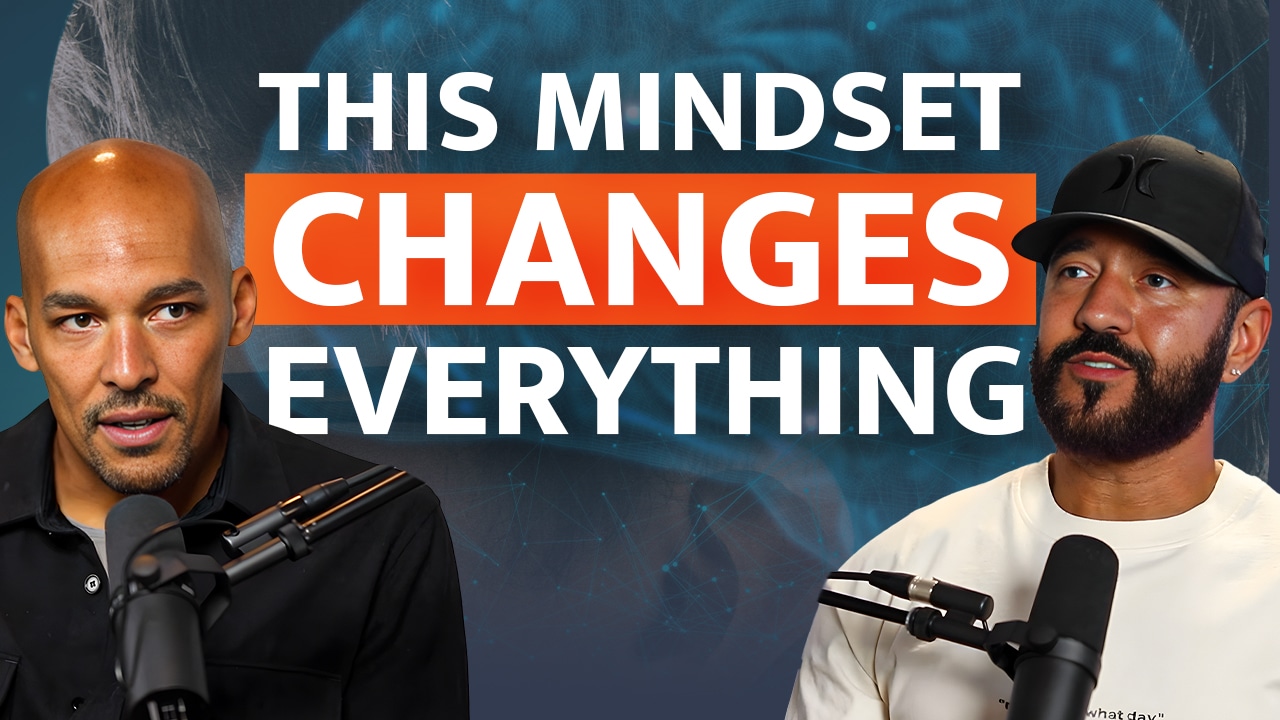
TMHS 968: You Are One Mindset Shift Away From Achieving Everything You Want – With Light Watkins
It’s the time of year when most people begin to drop their New Year’s resolutions. The appeal of a new beginning has faded, and many folks realize the goals they originally set are not realistic or maintainable. But what does it actually take to create sustainable changes in your life? Today, you’re going to learn the keys to getting the results you want.
Light Watkins is a bestselling author and world-renowned meditation teacher and mindfulness expert. His newest book, The Year You Transform, details what it takes to actually create change in your life and the roadmap to get there. Today, Light is back on The Model Health Show for an inspirational conversation about transformation.
You’re going to learn powerful principles like how doing less can actually help you achieve more, how to create micro-challenges that over time lead to massive results, and other powerful mindset shifts that are necessary for change. I hope you enjoy this interview with the one and only, Light Watkins!
In this episode you’ll discover:
- What the three paths to change are. (2:44)
- How to use the tortoise approach to change for lasting results. (4:55)
- The definition of change and what it requires of you. (5:33)
- What it means to take hops of faith. (6:18)
- The power of setting a 7-day challenge. (7:32)
- How to go from normal to elite. (10:01)
- Realistic tips to get more steps per day. (16:10)
- What a free-range mind is. (21:41)
- How to reframe your bad habits. (30:29)
- Why being honest with yourself allows you to improve. (41:23)
- How to create an environment that supports change. (47:04)
Items mentioned in this episode include:
- Boncharge.com/model – Use my code MODEL for 15% off blue light blocking glasses!
- The Year You Transform by Light Watkins – Order your copy today!
- Bliss More by Light Watkins – Read about improving your meditation practice!
- Travel Light by Light Watkins – Learn about spiritual minimalism!
- Connect with Light Watkins Website / Podcast / Instagram
This episode of The Model Health Show is brought to you by Bon Charge.
Bon Charge carries the world’s largest selection of science-backed blue light blocking technology to enhance your sleep and overall wellness. Use my code MODEL at boncharge.com/model for 15% off blue light blocking glasses and more.
Transcript:
SHAWN STEVENSON: What if this was a year that you truly transformed? Whether that's that mission to get into the best shape of your life, to write that book that you've always wanted to write, to create the relationship that you truly want to have? Whatever it might be for you, what if this was the time to truly transform. Now, with that being said, it is a huge aspiration to say I'm getting in the best shape of my life this year. You can absolutely do it, but if we're looking at history and we're looking at our society at large, we set these new year resolutions, it doesn't tend to work out for the majority of people. And today we're going to break down.
Why that is, and actually look at a structured intelligence science-backed way to make it to that destination of getting in the best shape of our life, or again, whatever context this is for you, whatever you have on your heart that you want to achieve this year. This is going to provide some insight on how to actually get there.
I love the sentiment that if you keep doing what you're doing, you're gonna keep getting what you're getting. And so sometimes we have to think differently. We have to take a different approach, and that's what today's episode is all about. And without further do lists, get to our special guest and topic of the day. Light Watkins is a bestselling author, speaker, and mindfulness expert who's all about helping people define presence and fulfillment from the inside out. He's the author of five books, including Bliss More, Travel Light. And his newest book The Year You Transform Light has spoken on stages for Fortune 500 companies led workshops on nearly every continent, and built a thriving online community called The Happiness Insiders. He's here today to show you how this will be the year that you transform. Let's dive into this conversation with the one and only Light Watkins.
Just feeling so inspired. You know, so right now, especially this time of year, people are excited about transformation and opportunity. This can be the year that people actually transform. The person listening, your life can actually change this year, starting today. This could be the catalyst. And what you're doing with this new book is you are really enlightening us on why this doesn't tend to work out for most people. So let's start off with that. Why is it a struggle for most people to actually make the changes that they wanna make?
LIGHT WATKINS: Okay, so there are three paths to change and most people opt for one path or they are victim to another path, and I'm introducing a third path. So the one that people usually opt for because we are, you know, hyper connected and exposed to social media. And as we talked about earlier, what you oftentimes see in social media, what the algorithms favor are extreme cases, black or white. So blow up your life if you want to change, get outta your job, get out of the relationship, become an entrepreneur, become a nomad. Move to Bali, go to India, join in Assam, right? All these extreme things. I call it the eat, pray, love approach. No shame to eat, pray, love. I read the book and I saw the movie, so, and I love Elizabeth Gilbert.
But that approach is for normal people, regular people, I put myself in this category. It's very extreme and it's more of an outside in approach to change, meaning when you get back from your eat, pray, love your version of eat, pray, love. Oftentimes your life hasn't really changed all that much because nothing really shifted internally. So that's one approach. The approach that people end up finding themselves being victimized is what I call the crisis approach to change, which is you don't do anything. Because you have analysis paralysis, and so you stay in the dead end job, you stay in the dead end relationship. You stay in the status quo too long, and then it starts to implode.
And then through the implosion, you get forced into some sort of change where you have to change your diet, you have to change your lifestyle, right? Because you've waited until the thing started manifesting itself physically, and you just can't, you can't operate in the normal way anymore until you take care of this, this thing that's gone on. And there are a lot of people who are subject to that. So this third approach, I call it the tortoise approach to change, which is where you, first of all, you acknowledge that we live in an ever-changing world. So change is not something you have to necessarily decide to be a part of. You're already a part of it.
The question is, are you proactive? Are you proactively engaging in the change or are you denying the change? And so, it's calling people forward to proactively engage in it, but to engage in it in a more sustainable way, which is inside out approach to change. Now all change what? Change essentially means is you have to leave the center of your comfort zone, and you have to start moving in the direction of the sort of edges of your comfort zone. And the closer you get to the edges of the comfort zone, the more uncomfortable the change is going to become. But, when you're forced in that direction, it's uncomfortable times 10.
When you consciously choose to move in that direction, it's uncomfortable times three, right? Just to put a number to it. So in other words, it's still uncomfortable, but there's something that happens internally when you choose it that makes it a little bit more exciting. Right. And so that's what the book is about. It's about getting people to move in the direction of their growth zone by taking small, what I call hops of faith. Instead of big leaps of faith that are scary, that you have to blow up your life. Just start with a little hop of faith.
SHAWN STEVENSON: I like that. So obviously during this time of year, new year changes, it's usually that category one.
LIGHT WATKINS: Yes.
SHAWN STEVENSON: Where it's like radical change.
LIGHT WATKINS: Exactly.
SHAWN STEVENSON: I'm gonna do all of these things.
LIGHT WATKINS: I'm going to the gym every day. I'm gonna stop eating sugar, I'm gonna stop doing this, that, and the other. Yeah.
SHAWN STEVENSON: Yep. And then the other version being basically change through pain.
LIGHT WATKINS: Mm-hmm.
SHAWN STEVENSON: You know, pain driven.
LIGHT WATKINS: Resolutions don't work for me. I'm just gonna keep doing what I'm doing.
SHAWN STEVENSON: Yep. And so whether it's like. Everything breaks, basically breakdown, right. Breakthrough through breakdown. Which, that's a powerful way to change. I've been there.
LIGHT WATKINS: It very powerful. They call rock bottom. Yep.
SHAWN STEVENSON: But that's not, that's not what we would want to consciously choose.
LIGHT WATKINS: Right.
SHAWN STEVENSON: And to consciously choose a version that is truly sustainable. Is the approach that you're recommending for everybody. And I love this, in the book, you talk about the paradox of choice. Can you talk a little bit about that?
LIGHT WATKINS: Sure. Yeah. So I advocate for, instead of adopting a goal that is indefinite, which is I'm not drinking alcohol anymore, or I'm not eating meat anymore, or I'm working out every day, right. To set a goal that is only seven days. I'm introducing the reader in the book to ten seven day challenges, right? So for instance, taking a cold shower every day for seven days. Not even seven days in a row, but just however long it takes you to get through seven days, because it's just a really doable goal for people not complaining for seven days.
See if you can go a full day without vocalizing or typing out a complaint. You can think about complaints all you want. You can't really stop what you think about, but you can control how much you express the complaint and it's like shocking. That's one of the hardest challenges in the book. Being grateful, practicing gratitude for seven days, practicing stillness, overcoming an addiction, purging things you don't need.
Choosing something, choosing to do something that scares you. I call it the scary yes challenge. So you have all these seven day challenges, and then the next instruction is to choose an action step that fits into your average busy day. So forget about your perfect day in your mind, you know, I'm gonna wake up and do this, that and the other. I'm gonna wake up an hour early. Like, do you have anything in your history illustrating that you are able to do that on a consistent basis?
Most people don't, but maybe you can limit your scrolling to. 10 minutes instead of 30 minutes. Right? And then that leaves you with an extra time to work on these other things that you may want to do.
Or maybe there are ways to combine them with other things that you're already doing. So it just gets people to really be intentional about the thing that they say they want to do. And when it comes to the freedom of choice, what I'm suggesting is that people introduce some sort of really small restriction in their day, and so we normally associate restrictive behavior with a lack of freedom in our society. My favorite football coach, Nick Saban from, you know, Crimson Tide, roll Tide. He says, if you want to be elite, you really don't have that many choices. Because it takes what it takes. And so when it comes to the change process, going from normal to elite in your life, restriction really is the only road.
And so again, we're talking about a very doable restriction. Seven days, five minutes a day that's combined with something else you're already doing. So that's a restriction, right? But it's a doable restriction, and what you find is that when you commit to those seven action steps, it actually frees you up. Because now you're not bartering with yourself. Do I have time? You know, do I have to do it today? And all the things, all that energy that we spend around talking ourselves out of doing things or into doing things or negotiating and bartering, and we just kind of have agreed I'm gonna do it. I'm gonna take the cold shower, I'm gonna wake up and I'm gonna take the cold shower.
It's just gonna be 30 seconds. I'm not gonna like it. But after the fact, I'm gonna love that I push myself that much further out of my comfort. And you're gonna have a big smile on your face, and the next morning you're gonna have to, you know, go do it again. But each time you do it, the smile is gonna be bigger. And your ability to do uncomfortable things at work and in your relationships and in your friendships and in your lifestyle is gonna become a lot greater because you practiced it. It's no longer just a idea or an intellectual concept. It's your lived experience and that's why it becomes a lifestyle that ends up ultimately changing your life within the span of, you know, a few months or a year.
SHAWN STEVENSON: Yeah. Obviously today we have a lot of fomo. You know, there's so much to do. There's so many things to try. You know, we all want to journal and to meditate and to eat well, and to get 10,000 steps in and to lift weights and to the list goes on, and to be a good mom and to, you know, the list goes on and on and on, and what you're doing. And it's, I mean, this shouldn't even be as profound as it is because it's so obvious. But you're breaking it down into. One of the most remarkable things that we have as human beings, which is the ability for us to focus on one thing. Right. And so you share in the book that seven days is the sweet spot of transformation. It's the sweet spot. And what you're doing is instead of me saying, okay, I'm gonna commit to meditate every day. Just take a seven day challenge. Just do it for seven days.
LIGHT WATKINS: Yeah.
SHAWN STEVENSON: You, we, you can completely stop after that. You can keep going. It doesn't just. Commit to a seven day challenge for yourself. Right. Five or 10 minutes, whatever that looks like for you. Right. And what that, and you know, don't try and change everything else. You don't have to do Qigong too. You don't have to, you know, do the 10,000 steps. Just commit to that seven day challenge for yourself that you're going to meditate every day just for seven days.
I love that because it's so approachable. It's an easy on ramp. I don't have to turn my life upside down to do that. And you also recommend within that is, you know, it's still gonna be based on you. And thank you for saying that earlier about the discomfort. Because any, any change is gonna bring about discomfort, you gotta adjust to it. But you're not saying, for example, this applies and I want everybody to hear this. This applies to whatever your goal is for yourself, for you to finally transform this year. So this could be drinking less. This could be, you know, changing the way that you're eating this could.
LIGHT WATKINS: Making sales calls.
SHAWN STEVENSON: Sales calls, relationships.
LIGHT WATKINS: Date nights. Yeah. Anything.
SHAWN STEVENSON: So with that being said, if somebody, and we're not talking about in the severity of an alcoholic. But if somebody's like, you know what? I don't want to drink as much. I want to. I wanna step away from alcohol. You can do seven days. Seven day challenge. You also give the advice about being mindful of your own life, though. Like, do you wanna do that when you go on vacation to take your seven day challenge? You know, or whatever. You're going on a cruise ship with your friends. Like, do this in conditions that are about your normal life. Right. And just commit to those seven days. This doesn't mean that you don't drink ever again, but you know, same thing with, okay. You want to, you know, get those, 10,000 steps in. Just do it for seven days.
LIGHT WATKINS: Yeah.
SHAWN STEVENSON: Just take on seven days. You can go back to 2000 on the eighth day.
LIGHT WATKINS: Right. It's funny 'cause yesterday, you know, I don't live in Los Angeles but yesterday, it was 4:30. I looked at my step counter and it was like 800 steps, which is like, just blew my mind 'cause normally by 4:30 I've got, I've got 11,000 steps where I live in Mexico City. But just being in the back in the US and having to drive around to different podcasts and stuff, it's just like, it's so funny how you really intentional.
SHAWN STEVENSON: Right.
LIGHT WATKINS: About getting those steps.
SHAWN STEVENSON: Right.
LIGHT WATKINS: But yeah, man, we live in a best intention society where everyone has the best intentions. Everyone has, you know, I definitely wanna optimize for this and, you know, become mentally stable and all these things. But when the rubber hits the road, you know, we were talking, okay, it's great to do these things on a retreat or on, you know, some other experience where you can just focus on that.
But really we want to put ourselves in a position where we're able to do the things that we ultimately want to do and change life, and change our life in the way that we ultimately want to change it on a regular basis.
And so when it comes to things like walking and meditating and, you know, eating a certain way and not drinking and all that, one of the things that I advocate for is you have an idea of how many steps you want to take. I wanna do 10,000 steps. Okay, fine. Why do you, why are you saying that? Because that's the magic number that you hear on social media a lot, but guess what? 10,000 steps is not really sustainable. If you are in a society where by four 30 in the afternoon you only got 8,000 steps and you got a family, and you got a job and you have other responsibilities, so maybe you just become really intentional about 1000 extra steps or 2000.
Now, that sounds like a lot of steps, but when you really think about step math. Right. If you go to the doctor and your doctor says, you know, this year in order for you to get healthy, I want you to do seven marathons. Somebody will have a heart attack, right? Seven marathons. I don't have time. Guess what? Seven marathons is a thousand steps a day. If you walk a thousand steps a day, every day for a year, effectively, you have completed seven marathons. So every thousand steps is seven marathons. So I walk an average of 10,000 steps a day, sometimes even 12,000 steps a day. So every year I've done 70 to 80 marathons.
Which is crazy if you think about it like that, right? Because that's a massive win just from adding another thousand steps. Now, how long does it take you to walk a thousand steps? Every hundred steps is, takes you an, well, every hundred steps is about a minute of walking. So if you walk an extra 10 minutes a day. That's a thousand steps. If you walk 20 minutes a day extra, that's 2000 steps. That's a mile. So you've walked a whole mile from just walking an extra 20 minutes. So now if you think about your day, okay, my gym is a two minute drive down the street, or the place where I like to have lunch is a two minute drive.
A two minute drive is probably gonna be about a 10 minute walk. So you have an opportunity there to walk. You can listen to the Model Health Show on the way there, and you're getting your steps right? Or you can call, use that time to call your a family or a family member or a friend. So by all means, multitask, make it fit, whatever else you got going on. And then you get back and you're, you don't even realize, you just walk a mile. You just walk 2000 extra steps. Do that seven times. Right. Now, this is what I tell people in the book, take as much time as you need to get those seven action steps, but if you happen to do them all within the same week, back to back, add another thousand steps so you don't add more until you've already demonstrated for yourself that you can be consistent.
So then you add another one, right? And then it may take you six months. It may take you two years to walk 10,000 steps a day, just building it up slowly like that. But guess what? It becomes seamless in your lifestyle. And if you have another 30, 40, 50 years on the planet, two years, it's nothing. Because you're being proactive every day instead of thinking, oh, I need to start doing it now 'cause it's January, whatever. Right? And then you fall off by March 'cause it's not sustainable. 'cause you haven't really fully integrated into your lifestyle. Then it leaves you feeling shameful. Oh, I'm not, I'm not one of those people.
I can't do it. You absolutely can do it. You can start meditating one minute a day. And it may take you two weeks to get one minute a day, seven days, but if you happen to do it one minute a day, seven days in a row, now it's probably leaving you wanting more. Add two minutes. Don't jump to five minutes. Just add two minutes. And then if you do that for the next seven days in a row, add another minute like that and it may take you nine months to build up to a 15 minute practice that leaves you wanting more and it gives you time to learn about it. It gives you time to work out the best practices so you can apply that to every single activity. And then the last challenge in the book is create your own. I show you how to do it for anything else you have going on, like you said, so that you can keep thinking about your life in terms of growth. And that's where change is.
SHAWN STEVENSON: Right? So powerful. So powerful, so simple. But we don't do simple, especially today. And so I love the advice again of just like, pick one thing. Just pick one thing and take on a seven day challenge for yourself. It's the principle. As you talk about less is more. Can you expand on that a little bit more? Because that, I thought more was more. Less is more.
LIGHT WATKINS: So, you know, I'm primarily known as this meditation expert, right? That's where a lot of my, I put it in all my books because I love taking the inside out approach to change. And one of the, one of the instructions that will exponentially increase the quality of your meditation experiences is doing less. A lot of times people, and this is, we talked about this on our very first podcast interview like four episodes ago where I talk about there's too much focusing happening in meditation, and that's what's causing the monkey mind experience. So if you want to get rid of the monkey mind experience, you wanna start to do less, do lease, and ultimately you wanna do nothing. In fact, you wanna take what I call the anti focus approach. Which is you allow your mind to be free range, and we talked about this in our last episode, free range mind, which means you're not thinking about your thoughts like clouds in the sky.
You're not concentrating on your breath, you're not envisioning the white light, you're not doing any of that. You could be sitting in meditation thinking about sex, drugs, rock and roll people. You hate conversations that didn't go well and all that, and you could still have a very powerful and profound experience and you come out of those experiences having had time lapses, like the time went by faster than what you could recall. And that's what makes meditation actually feel great, not trying to control the mind, but there's something else that's happening. The more you can practice doing less, doing least, and doing nothing in meditation, it creates a carryover effect. When you go into life, you become less controlling of the things that are happening.
And now what's interesting about that is, without even trying, what being less controlling does is it allows you to be more present because you're not what causes you to not be present? What yanks you outta the present moment is this idea that this shouldn't be happening. In other words, you have an expectation. This should be happening, not this. And whenever you're expecting something else to be happening other than what you're currently experiencing, you are just diminishing your ability to have present moment awareness, which means there could be all kinds of coincidences and synchronicities and really beautiful serendipitous moments happening all around you, and you're missing most of it.
And so what people ultimately want by taking the extreme approaches to change is they want presence. That's what you want. You want more presence. Just like when you go to Thailand or you go to, I don't know, some very exotic or foreign place. The reason why those experiences become memorable is 'cause you're more present there than you are in your neighborhood. 'Cause you've been in your neighborhood, you know, you've seen the things in your neighborhood a million times. They're not that interesting. And, but when you go to this exotic place, everything is interesting. Everything, the menu at the restaurant, the people on the streets that you're passing by, and the way they get in the rickshaws and the temperature of the weather.
And so we crave that contrast experience 'cause we think it's because, oh, we wanna just wanna be well traveled and, you know, it makes us, we like tasting different food foods. But really it's just because we, we are addicted in a really beautiful way to presence. But the great thing about this is that you can create that where you are, you can, but you have to do it from the inside out. You can't do it from the outside in. So that's why practices like stillness and gratitude and all that, they help you become more present and it'll help you see the things that you have passed by a million times in a new way, the more present you become from the inside out. So as you practice that stillness. It literally expands your ability to stay connected to your familiar space more and more each time you come out, which is really beautiful, and it's all about doing less. Yeah.
SHAWN STEVENSON: Thank goodness we finally understand how our sleep is deeply impacting our metabolic health and our health overall. In fact, the latest science is affirming that fat loss is sleep dependent. An incredible randomized crossover study conducted by research at the University of Chicago found that when people were getting adequate amounts of sleep, they lost 55% more body fat than when they were sleep deprived. And not only that, when they were losing weight through this process, people were losing more muscle mass when they were sleep deprived. Alright, we wanna avoid this to the best of our ability, get high quality sleep, but we've gotta understand the number one thing that is messing up our sleep today. Is the newest thing in our environment today, which is our technology, our screens.
We love 'em so much. Our phones and our TVs and our laptops and our iPads and our this and that. We're inundated. We're surrounded by technology and they're awesome, but they're not awesome for our sleep quality. In fact, research from Brigham and Women's Hospital. Suggest that using light emitting electronic devices specifically in the evening, so again, our tablets, our smartphones, tv, laptops, and the hours before bedtime negatively impact our health, overall impact our alertness and disrupt our circadian clocks.
Studies have suggested that specifically the blue light that's coming from these devices is especially powerful in suppressing our melatonin production. So yes, we absolutely want to have some screen free time before bed to let melatonin start to get produced adequately reduce our cordo saw. But also today, thankfully blue light blocking technology has come so far as well. This has been a part of my sleep wellness protocol for years. When the sun goes down, my blue light blocking glasses come on. And most brands, and this is something that a lot of people don't know about most brands. A blue light blocking glasses do not block blue light efficiently, nor are they lab tested to be effective and they don't block other known spectrums of light that have been proven to disrupt our sleep quality, like green light.
And that's why I utilize the blue light blocking glasses from Bon Charge. They're scientifically engineered to block out 100% of melatonin disrupting blue and green light for improved sleep and regulated circadian rhythms. The glasses are FDA, registered and proven to be effective. They're actually made in optics laboratories by trained optical technicians. Because of this, they're able to provide people with non-prescription and prescription lenses so that everybody can take advantage of this incredible technology. Just go to boncharge.com/model right now and use the code model at checkout for an exclusive 15% off. That's boncharge.com/model. B-O-N-C-H-A-R-G e.com/model. Again, use the code model at checkout and get your hands on the very best blue light blocking classes in the world so that you can sleep more soundly. Enjoy. And now back to the show.
SHAWN STEVENSON: I've had this experience in my neighborhood. You know where. Walking down the same block, little cul-de-sac circling around over and over. And it's just like, I've seen this same tree, but I haven't really seen this tree. You know, especially, again, I'm new, the tree is new, the environment is new every single day, every minute. And it's just can, how can you get it tuned into that? And it just creates this, like, this freshness. Like, and I'm so grateful that you said this 'cause it's so much easier when we're implanted into a different environment to where everything is new to our senses. And so it's like, it's kind of forcing you to be present. Or to yeah, to be present to what's, what's existing now. But we can find that anywhere.
It could be a sound, it could be a smell, it could be, you know, again, the, a difference with the tree. So thank you for sharing that. And for us to, again, these practices unlock more of life that already is. We just kind of detach ourselves from it in a way. And right now, as of the release of this episode, we're in that transitionary time, the fall off period.
LIGHT WATKINS: Yep.
SHAWN STEVENSON: Right. We're in that transitionary fall off period. Shout out to j Cole, by the way. The fall off coming soon. Apparently it's been coming for like 10 years. But this is such a powerful moment because we can reinvigorate with a different perspective, something that's more sustainable. And specifically there's another reframe that you share which is the pro versus the anti approach.
LIGHT WATKINS: Yeah.
SHAWN STEVENSON: To things. And thinking about it through the, that lens. Talk about that.
LIGHT WATKINS: Yeah. So when it comes to things like drinking, right, I write a section in there about the value of being more aware. And if you look at it like, 'cause when you announce your friends that you're not gonna drink, and again, this is not applicable to people who have a severe issue with drinking and you know, you're a danger to yourself and society. This is for people who have more or less, you know, a functional relationship with alcohol. Meaning you can drink occasionally or you can drink a lot and you can still work, you can still do the things that you have to do and show up relatively, you know, well in those environments, but you may.
You may realize you don't feel that great when you drink at night and you wake up the next morning, you're not as sharp as you would normally be. You're not as present as you would normally be. And that may be wearing down on your relationships with your family, with your friends, maybe with yourself. Maybe you're not as active as you would be otherwise. And so there may be some ideas about around experimentation. You know, maybe I wanna see what life is like without it. When you announce it, everyone's focused on, you know, but you're not gonna have any fun. And, you know this, it's not hurting anyone and, you know, little drink here and there won't hurt you. And so that causes us to sort of focus on putting, not drinking in this sort of anti fun category.
SHAWN STEVENSON: Mm-hmm.
LIGHT WATKINS: Like, oh, I'm not, I'm not that fun person anymore. I'm not gonna be the life of the party. I'm not gonna be connected to my friends, et cetera. And what I invite people to do with this sort of mindset shift is to not focus on what you don't want, which is to not be fun, rather to focus on what you do want more of. Right? And I kind of frame 'em as asking yourself weak questions versus strong questions or telling yourself weak stories versus strong stories. So, what's a weak story? A weak story or a question is having one little mezcal, one little tequila, one little glass of wine gonna kill me.
Right. Easy, easy question to answer. No, it's not gonna kill you. Right? But if you shift it from that story to is having this one little glass of wine going to help me be the best, the best version of myself, the version of myself that I've always envisioned. Especially as I'm entering into this new stage of my life where I want to make more money. I want to be a better parent. I want to be a better citizen of the world. I wanna optimize for as many things as possible. So if you have that future vision of yourself that you wanna work towards, that's the question you wanna ask. Is this gonna help me become that person? Guess what, it's the same answer. Different action.
SHAWN STEVENSON: Hmm.
LIGHT WATKINS: No. It's not. So instead of focusing on being anti-alcohol, I encourage people, be pro awareness or pro productivity or pro whatever it is that you want pro optimization and try to keep that in your. Your story that you're telling yourself because that will cut through all the bs. I had a friend who was very sick many years ago, and I went to the doctor with her and she had a history of just eating snicker bars. 'Cause I don't know, for whatever reason, she just was addicted to snicker bars and that's all she would eat, even though she was going through a cancer treatment. And I remember the doctor said to her. You know, what have you been eating? And she goes, I've been eating Snicker bars. And he said, you have to, you have to change the question.
You're probably asking yourself, is eating this one Snicker bar gonna kill me? And the answer is no. He goes, but is this Snicker bar going to help you heal? It's the same answer. So just shifting that the focus of why we're doing the things that we're doing from anti to pro will oftentimes give us the little bit of a, you know, drip feed of the willpower that we need to do, the small action step to move ourselves a little bit further in the direction of the life that we ultimately want to create.
SHAWN STEVENSON: Amazing, amazing. At this point, if people are wondering what to do, like how do I get started? Can you talk about how do we set up our own seven day challenge?
LIGHT WATKINS: So, I led a group of dozens of people through a year of seven day challenges. And the ones in the book are I what I consider to be the most impactful ones. So I have it structured. Starting with, I mean, you can flip through the book and just choose any challenge you want, but I have it structured in a sequence that I think helps you each challenge. Once you do it will help you with the next challenge. So for instance, I start with becoming pro awareness. So in other words, you may not necessarily have an alcohol problem, but maybe there's another thing that you find yourself addicted to.
I used to be addicted to lip balm. Which is crazy 'cause I've given up alcohol, I've given up, you know, meat at certain points in my life. I've given up sex at certain points, you know, just to experiment with these things. And I was able to do all of those without much difficulty. Lip balm. Lip balm was the equalizer. Lip balm brought me to my knees. I was at a point where, this is years ago, but I used to walk around with two tubes of lip balm in each pocket.
SHAWN STEVENSON: Dang.
LIGHT WATKINS: So I'd have four on me because if I ever misplaced one.
SHAWN STEVENSON: Double strapped up. What!
LIGHT WATKINS: I couldn't focus on anything for more than like two minutes.
SHAWN STEVENSON: Each pocket is wild.
LIGHT WATKINS: Each pocket. Yeah. But there are a lot of people out there that are like that. And then one day I misplace all four lip balms and I was just like, I almost had a nervous breakdown. It's like, oh my God, I can't, I can't do the thing that I need to do until I get me some lip balm. And so I was like, I can't have lip balm, cannot have this kind of grip over my sanity.
I need to, I need to free myself of this addiction. And so it, anyway, it took me like 30 days and I just cold turkeyed it and got to the other side of that and l my licked my lips one day and I was like, oh, finally I'm free of the lip balm addiction. And we all have our version of that. It may not be lip balm, but maybe it's, you know, somebody texting you, you can't do anything until they text you and reaffirm that they still want to be with you.
Or maybe it's some work goal or there's something that you are overly attached to happening that's outside of yourself. And if it doesn't happen in the way that you want it to happen or in the time that you want it to happen in, then it throws you off of your center. And that's, so that's what I call addiction. Right. Anything that throws you off your center if you don't have it. So the first challenge is to put yourself in a position where you go without that thing for seven days. Again, it doesn't have to be seven days in a row. Maybe you start gradually one day a week for seven weeks, and then two days a week for seven weeks.
Right, right. So, or for however many weeks, and then you work up to seven days in a row eventually. So that experiment may take you five months. Again, people hear that go five months. That's too five months is gonna go by anyway. So either you're still addicted to this thing after five months or you've gradually wean yourself off of that. And then once you wean yourself off of that, then I hit you with stillness, and then I hit you with, okay. Do something a little bit more physical. Take that 30 second cold shower in the morning. You can still have your hot shower. I'm not saying don't take a hot shower. I'm just saying turn the hot water off for 30 seconds.
You're not gonna wanna do it. But then once you do it the first time, then add a few more seconds onto it. Just make it your Saturday morning ritual or something like that. And eventually you get to the point where you can do that for, you know, maybe subsequent days. And then you go from there to scary yeses. And so like that, it's kind of giving you a pathway that you can take if you want or you can choose your own adventure and create your own pathway. And you can take those challenges, you can modify them in any way you want. You know, it doesn't have to be addiction or stillness. It could be something else that's related to that.
SHAWN STEVENSON: Yeah. I don't know who else, when you're talking about the lip balm was licking their lips out there. But I know that hit different.
LIGHT WATKINS: Yeah.
SHAWN STEVENSON: You know, again, this is very practical. And if we want to get even more like granular. And I appreciate that you're even taking away the pressure of seven days in a row. But I'm gonna advocate for us to do seven days in a row. Everybody listening, choose your focus. So that's step number one. That you talk about. Let's go through the, like tactical steps so we know what our focus is gonna be or we're we, we need to choose our focus before we even get started. So talk about step one, choose your focus.
LIGHT WATKINS: I would just say start with something that you have imagined yourself or dreamed about doing. So let's say it's a lot of people, their New Year's resolution will be, let me get in the best shape of my life. I say that's a terrible resolution because how do you measure that? Right. Get in the best shape of your life. So instead of saying things like that, put your attention on something that you can actually measure, right? If you were to just maybe walk more or maybe drink more water, or just come back to first principles when it comes to health, and just pick two or three things that. If you did these two or three things over an extended period of time, it would be unreasonable for you to not be in better shape or healthier than you are right now.
Right. So then you think about what's your schedule? You know, I've been tracking my macros recently. And, something I've thought about doing for a long time, and I've never really gone all in on it. Got myself a food scale, got myself, you know, all the, all the little gadgetry to make it as simple as possible. And every time I'm doing my numbers, I'm tempted to lie, right? I'm tempted to say that was, that was a tablespoon of mayonnaise versus what it actually was, which is two tablespoons of mayonnaise, because I want the macros to be a certain number, and so you really have an opportunity to be honest with yourself, understanding that if I meet myself where I truly, truly am, then I can actually improve if I keep pretending that I'm somewhere else.
Even though I'm not at that place, all I'm doing is I'm, I'm short changing myself and I'm extending the goal. I'm pushing the goal further down the line. So all that to say, when you're thinking about where you are now, try to be brutally honest with yourself. So look at your phone. Look at how many steps you've averaged over the last year, not last week, not. You know, two weeks ago, but the last year, and the great thing about having an an iPhone is that if you pull up the health app that with a little heart on it, it's already been tracking how many steps you've taken on a daily, monthly, and yearly basis. So that's what you are doing, that's your status quo.
So that's where you wanna start. And then, as I said, you just want to add 10 or 20 minutes on top of that to start with. Right. And you do that for everything. So if you have the idea of, of being in better shape, you choose two or three things. You can measure walking, you could easily measure stillness, you could easily measure going to the gym. You can measure that, right? And maybe your training program is, I'm just gonna go get on the treadmill, or I'm gonna go and do one exercise. Just one exercise. I'm gonna do three sets. I'm gonna do five reps of this, one exercise, and then I'm gonna leave the gym. And if you do that, it may seem like a complete waste of time, like a, and you may be thinking, I could have done more.
But what you're doing there is you're building the habit of just going to the gym. You know, you probably know this, but somebody said the hardest exercise at the gym is walking through the front door. Once you walk through the front door, you do your, your one exercise, your three reps, I'm sorry, your five reps, your three sets, you leave, go back home. You are going to leave every single time wanting more. And then what's happening though? From you doing that is you're creating the habit of everything it takes to go to the gym. You're going home, maybe you're watching YouTube videos on how to optimize for that one exercise you're doing. Oh, I should do this next time.
Oh, I wasn't, you know, I wasn't positioning myself in the optimum way. Right? When you master that one exercise gonna cause you to think about the o the next exercise differently, there are other considerations you would've never have thought about. Had you gone in there and tried to do five exercise, exercises through your back out doing one, fuck your neck up. Now you can't turn to the left because you tried to do pull-ups the wrong way. Right? So yeah, less is always more. Less is always more. And if you take it slowly and you're more intentional, you're gonna end up having a more sustainable route towards change, which is gonna only result in you being more enthusiastic about it.
SHAWN STEVENSON: Yeah. I know a lot of people listening have had that aspiration. I'm gonna get into the best shape of my life this year. Nothing's gonna stop me.
LIGHT WATKINS: And it's a great intention. It's a great intention society.
SHAWN STEVENSON: Beautiful intention. But what does that look like practically, right? Number one. And you know, number two, let's break this down into sustainable, very dare I say, simple tactics, which, okay, let's take one. Let's say that is your goal for this year. What are some of those ingredients for you to be in the best shape of your life? Right. And it's gonna be different from person to person, but there are some basic ingredients. So maybe it's walking a certain amount of steps, you know, strength training a certain amount of times, drinking a certain amount of water. Pick something for you. One thing, one ingredient to your unique formula for getting in the best shape of your life.
LIGHT WATKINS: That you can measure.
SHAWN STEVENSON: That you can measure. Pick one thing maybe for you, you know that you don't eat enough protein. Right? So the next seven days you're going to get in your ideal amount of protein for your goals, or the next seven days you're gonna limit your sugar intake or carbs based on what your goals look like. Or maybe it's alcohol, you know, that, you know, I've been getting all these like kind of quote empty calories and you know, this is a part of my, I need to drink less. So that's what you're gonna choose to do. Maybe it is, again, something with fitness. Pick something for you. So that's the first step in setting up your challenge. Choose your focus. That's number one. All right. I want you to do that for yourself. Number two is to create an environment that supports your experiment. Talk about that one.
LIGHT WATKINS: Hmm. So let's say you want to eat less processed foods, or less like artificially sweetened foods or whatever, and you have in your pantry from top to bottom processed foods and artificially sweetened foods. Again, you wanna be brutally honest with yourself. On an average busy day, when you're stressed, when work is crazy, when the kids are sick and all these things, you don't have time to do the things you normally like to do. Are you going to have the willpower to not grab the Ho, ho or the Oreo or whatever's on that chef at eye level and pop it in your mouth with the justification that one little one is not gonna kill you or you deserve it?
'Cause you've had such a hard day and probably not, probably you're, you're not gonna have that willpower. So lock it up or give it away. Don't have it in the house. With the full awareness that you don't have the willpower because, and this is not, this is not to shame anybody. This is just really, it's taking responsibility for what you've been doing up until that point, and now you want to change. Now people may hear this and go, well, that's punishing. Wait, hold on. You said you wanted to change. You said you wanted to be in the best shape of your life. This is not, I didn't come in your house and say, you should be in the best shape of your life. No. This is your goal for yourself. So acknowledging that this is something that I am saying that I want to do, I'm choosing for myself.
Then put yourself in the best position to make the right choice. Make the choice that is most aligned with what you said you wanna do. And so, yeah, you give it away, you get it outta your house. Now I'm not, again, I don't ever advocate for cold Turkey. So you replace it, right? Go get yourself, go to the Costco or wherever. Go get yourself some grapes. Get yourself some. Carrots, you know, find yourself some sweet fruit, watermelon, whatever, some or some sweet vegetables and, and make that the exchange, right. When I'm, when I'm craving something sweet, instead of going for the candy bar or going for the baked good, I'm going to have some grapes instead. I'm gonna have some carrots instead for those, for the first week, just to kind help you with a little off ramp from that stuff.
SHAWN STEVENSON: Take the edge off.
LIGHT WATKINS: Yeah, take the edge off. But then after that, maybe you do less of the exchange and more just, I'm gonna just go drink a glass of water 'cause that's also something I wanna do more of. Or just throwing stuff out there. It's important to also have a stop gap. Okay. What does that mean? Let's say you don't get rid of the stuff in your pantry and you get weak. And you decide, okay, I'm gonna have one of those. I want you to make a side agreement with yourself. Okay. I can have a donut. I'll have a donut, but if I have a donut, then I have to do 500 pushups.
Right? Or I have to, I have to walk 8,000 steps or something. That's more painful, but healthy than. Succumbing to the urge, the temporary urge to have that donut, and it just makes you think to yourself a little bit more, is this worth the 500 pushups that I have to do before I go to bed? If I have the donut, I have to do these pushups. I have to go walk these steps.
SHAWN STEVENSON: That's what you did with writing your first book.
LIGHT WATKINS: Yes.
SHAWN STEVENSON: You wrote out a check for $4,000.
LIGHT WATKINS: Yes.
SHAWN STEVENSON: And gave to somebody, a friend of yours.
LIGHT WATKINS: Gave to Dhru Purohit.
SHAWN STEVENSON: To our homie, Dhru. He said, if it's not done by this particular date.
LIGHT WATKINS: This is done by two months.
SHAWN STEVENSON: Cash that bad boy.
LIGHT WATKINS: You have to cash it and you can't spend it on anything having to do with me. And these are the excuses I'm probably gonna use. You can't listen to any of it. So I, that's the freedom of choice. I put myself into that corner, painted myself into a corner where it was way more painful to not write the book than it was to just. Get it done. So, yeah, I, I full advocate for people to give themselves that freedom of choices in that way by putting a stop gap in place.
SHAWN STEVENSON: Yeah. Because this transformation, what we're talking about is still, this is all from the inside out. This whole battle is taking place in the mind. And so it's for you to be an intelligent general and be strategic. And so again, those starting steps. Choose your focus. Whatcha gonna focus on for these next seven days or whenever you decide to start, create an environment that supports your experiment. And the last part in starting is decide when you're gonna start. This could be next week. You know, a lot of people start, I'll start on Monday. This could be, which is great advice, is start tomorrow.
Start the day after listening to this conversation or watching this conversation, but decide when you start, but you also talk about in the book to give yourself a fair chance here, don't set yourself up for failure. By again, choosing to, you know, I'm going to make this seven day commitment to not drink alcohol. And you, you know, this weekend you've got a cruise scheduled with your best friends and just making it more complicated than it has to be.
And so, but with that, the rest of the book is really dedicated to all these different incredible facets of our mindset. And just adjustments in our thinking, new ways of perceiving things, and a lot of really special insights. You're a great storyteller as well. You got a lot of good stories. And so if you could, can you tell people where they can pick up a copy?
LIGHT WATKINS: Sure.
SHAWN STEVENSON: Of the book? So it's available right now?
LIGHT WATKINS: It's available right now. The year you transform, you can get it where most people get their books these days. Which you're not supposed to say on Amazon, but I'll just say go to Amazon to get the book. And, I also have, you know, all the different versions of the book. People can go to my website. Light watkins.com is sort of the main portal to all the different versions and, but yeah, Amazon. Amazon is easy.
SHAWN STEVENSON: In addition, where can people follow you get more information? You know, you mentioned that you've been teaching for a long time, like where can people get more information?
LIGHT WATKINS: Light Watkins on all channels. So light watkins.com, @lightwatkins on social media. Yeah, I would say start there.
SHAWN STEVENSON: Amazing. Amazing. The year you transform, I read half the book in one sitting. It's very reader friendly. Beautiful is, you know, certain books. It kind of takes me back to like, when I was a kid, like, you know, adolescence and just having a book that feels good in your hand as well. And so this is a really great job man, and I appreciate you.
I know that you put a lot of thought and intention into even how you construct sentences. You know, it's really incredible and I could see those kind of things. And so again, pick up a copy the year you transform. This could be, should you decide the year that you transform, truly. We've got the tools, we've got the support. Listen to this again. I appreciate you so much for coming to hang out with us.
LIGHT WATKINS: Thanks man. This is like episode, this is the fifth time I think I've been on your show.
SHAWN STEVENSON: Something like that man. You're, you're time is into elite zone.
LIGHT WATKINS: Yeah, yeah, yeah, yeah. Thank you.
SHAWN STEVENSON: I appreciate you man.
LIGHT WATKINS: Thanks.
SHAWN STEVENSON: The one and only Light Watkins. Thank you so much for tuning into this episode today. I hope that you got a lot of value out of this. If you did, please share your voice. If you're watching on Spotify, please leave a comment below and share your biggest aha moment. Just something that you were vibing or connecting with. I really do appreciate that. And if you're listening on Apple Podcasts or SoundCloud, Google Play, wherever you're listening. Please share your voice and share this incredible episode with somebody that you think would enjoy it, and you could send this directly from the podcast app that you're listening on, or of course you could take a screenshot and share it out on social media.
I know Light would absolutely love that, so make sure to tag him and tag me as well. I'm @ShawnModel on Instagram, and we've got some incredible, incredible masterclasses and world class, world leading experts coming your way very, very soon. So make sure to stay tuned. Take care, have an amazing day, and I'll talk with you soon.
Other episodes you might be interested:
Maximize Your Energy
Get the Free Checklist: “5 Keys That Could Radically Improve Your Energy Levels and Quality of Life”
HEALTHY MEALS EVERYONE WILL LOVE
The Greatest Gift You Can Give Your Family is Health
When you gather your family around the table to share nutritious food, you’re not only spending quality time with them - you’re setting them up for success in all areas of their lives.
The Eat Smarter Family Cookbook is filled with 100 delicious recipes, plus the latest science to support the mental, physical and social health of your loved ones.



Share Your Voice
0 comments. Be the first to leave a comment.