
Subscribe to The Model Health Show:


TMHS 961: The Top 3 Ways to Lose Fat FAST and Get in the Best Shape of Your Life This Year!
If your New Year’s resolution involves losing fat or getting in better shape this year, you’ll need a solid strategy. Instead of doing random workouts or guessing what to eat, a better approach is to create an efficient routine that actually yields results. Today, you’re going to learn about exactly what it takes to improve your metabolic health, build muscle, and burn fat.
On this episode of The Model Health Show, you’re going to learn about the top three ways to burn fat. You’re going to learn about the specific exercises, dietary inputs, and lifestyle habits that will support your goals of optimizing fat loss. You’ll learn how to improve your sleep, get the most bang for your buck out of your workouts, and much more.
Not only are we going to cover the science behind these simple, proven tips, but you’ll also hear actionable steps to add them into your routine in 2026! I hope this episode brings you inspiration and education to start your new year off right. Enjoy!
In this episode you’ll discover:
- What REHIT is. (0:44)
- The difference between cardio, HIIT, and REHIT. (1:30)
- Why we need to move fast to burn fat. (8:21)
- What glycogenolysis is and its relationship to insulin. (10:15)
- How REHIT makes you more efficient at burning fat. (11:29)
- What an amplification cascade is. (13:00)
- The relationship between REHIT and insulin sensitivity. (14:45)
- How REHIT can diminish the feeling of dreading exercise. (17:04)
- Ways to implement REHIT without running. (18:03)
- The critical connection between sleep and fat loss. (24:45)
- Why being sleep deprived can accelerate muscle loss. (26:55)
- The importance of having lean muscle mass as you age. (28:44)
- How screens can disrupt your sleep. (30:25)
- What sleep nutrients are and how to include more in your diet. (39:19)
- The role of protein in building muscle. (42:38)
Items mentioned in this episode include:
- Boncharge.com/model – Use my code MODEL for 15% off blue light blocking glasses!
This episode of The Model Health Show is brought to you by Bon Charge.
Bon Charge carries the world’s largest selection of science-backed blue light blocking technology to enhance your sleep and overall wellness. Use my code MODEL at boncharge.com/model for 15% off blue light blocking glasses and more.
Transcript:
SHAWN STEVENSON: Welcome to the Model Health Show. This is fitness and nutrition expert Shawn Stevenson, and I'm so grateful for you tuning in with me today. Today we're going to cover three of the most science backed ways to burn body fat fast. And not only that, these three things will help you to make the hormonal changes. The muscular changes and the overall metabolic changes to ensure that you keep the fat off long term. So let's go ahead and kick things off with number one on this list. And it's a form of exercise that you need to be consistently doing, and it's a form of exercise called re-hit.
Re-hit stands for reduced exertion high intensity interval training. The definition of high intensity interval training has gotten way out of hand and has lost its truest most efficient scientific definition. So a new name has emerged to define exactly what it is to get you the best benefits and the fastest amount of time. Enter, the age of a re-hit. I had a conversation with Dr. Martin Gibala, who is one of the world's leading exercise scientists, and he's the guy who's actually in the laboratory taking muscle biopsies of his test subjects, tracking fat loss, and seeing which form of exercise actually works most effectively. And he's stressed that it's important for us to first define the difference with conventional cardio training, conventional high intensity exercise training or HIIT training and re-hit exercise.
Now, conventional cardio consists of moderately intense aerobic exercises like jogging and cycling typically done in gyms throughout the world on everything from treadmills to elliptical machines to stationary bikes, and it's also referred to as steady state cardio. So he's studying that. Also, we have high intensity interval training or hiit, which consists of short bursts of fast or explosive movements, followed by a rest period of little to no activity, then repeated for a set number of rounds. Now, this is where HIIT has gotten a little bit murky because defining what high intensity is and what an adequate rest is can be as a variable as that box of chocolates forrest Gump was talking about. You never know what you're gonna get. With conventional high intensity interval training, the intensity and the rest can exist on a broad spectrum. So is that intensity 75% of my best effort? Is it 85%? Is it a hundred percent? And is the rest? 20 seconds. 60 seconds. Two minutes.
A hit workout can have you training intensely for eight minutes, and this is a real workout, right? Very popular workout on a YouTube, eight minutes of what's deemed to be higher intensity exercise, then taking a one minute break and then repeating for rounds after rounds until a 45 minute workout is complete. But that form of hit exercise requires you to not work as intensely as you can in short bursts because you have to budget your energy for eight minutes at a time. So you're really not working as hard as you actually can in a short window. Now, Dr. Gibala states that a true sprint interval is an all out effort for a very short amount of time, and the human body simply isn't capable of moving at top speed or close to top speed for very long.
Even the greatest athletes in the world running the 200 meter sprint, for example. Are slowing down towards the end of that 22nd run. So a general rule of thumb is that if your sprint interval is more than 20 to 30 seconds and you feel like you still have a lot more in the tank than you are very likely not working hard enough to induce these benefits that I'm going to share with you. Now, Dr. Gibala detailed a study where he and his team of scientists divided people into two groups. Now, each group had an equal amount of men and women, and the first group was put on a rigorous conventional cardio training program for six weeks. They had the participants to ride stationary bikes five days a week for 40 to 60 minutes each session.
Very common at gyms all over the world, pimping all over the world. They had the participants to go at a moderate pace of about 65% of their maximum aerobic capacity, which again is standard as far as recommendations by public fitness guidelines. And this was enough of course to get them sweating, get their heart rate elevated, and to feel like they're doing something 'cause they're putting in an hour on that bike. Now the second group was put on a six week program as well, but one that can consisted of a re-hit protocol that required much less exercise time. The research team had the participants in this group to start off with a couple of minutes of an easy warmup on the stationary bike. Then they performed a 32nd all out pedaling sprint.
Then after completing that 30 second sprint, they were instructed to rest for four and a half minutes. Just pedaling at a lazy pace. They could pedal as slow as they wanted, and after four and a half minutes of this chill time, they conducted another 30 second sprint on the bike, rested again and repeated this process for a total of four to six rounds. Now at the end of the study, the researchers were shocked at how the two groups of exercises compared to each other. Now, before I tell you the results, I want you to understand just how little the re-hit exercise group was actually training compared to the rigorous conventional cardio group. The re-hit group worked out only one third of the amount of time that the conventional endurance cardio group was working out, and that's counting the time that they were barely pedaling on the bike.
If you only count the time that the re-hit group was actually working hard, that accounts for just 10 minutes of total exercise in the entire week. Compared with the conventional cardio training group, spending four and a half hours of moderate intensity exercise in the week. So at the end of the study, how did the two groups compare? Now, even though the re-hit group worked out only 10 minutes of hard exercise a week versus four and a half hours of moderate exercise that the conventional cardio group was doing, their improvement in cardiovascular fitness was exactly the same. Their increase in mitochondria, in their muscles was exactly the same.
Keeping in mind, our mitochondria is where fat is actually burned. And the metabolic improvement in their ability to burn fat was exactly the same. In short, this powerful experiment proved that approximately 10 minutes of intense exercise a week boosted overall fitness to the same extent as four and a half hours per week of conventional moderate intensity cardio exercise. So if we're going to transform your body into a vessel of fat burning brilliance, I need you to move fast this year. Engage and re-hit exercise this year, two to three times a week, and watch your body transform. Now the question is what's going on behind the scenes? Why does it work so well for fat loss and body transformation?
Well, it addresses three of the biggest components of metabolic efficiency. Number one, it mobilizes stored energy faster than just about anything else that you can possibly do to burn fat. We have to get your body to release the stored energy in the first place. In general terms, your body is going to be looking to be efficient in addressing its energy demands during exercise, and if there's already circulating glucose in your bloodstream to use is gonna use that first.
You can think of that like quick cash on hand to use. Here you go as a few dollars. All right. After that's spent up, then your body will turn to the stored glycogen found in your liver, but mainly in your muscles. Think of that glycogen, like taking the time to write out a check. Alright? The transaction takes a little bit longer, but the money is still good unless it's a check written by my uncle Larry. You gotta be careful about that. Then after going through the glucose cash on hand, the glycogen checks that your body can write, then it will finally do the more arduous work of breaking down stored fat for fuel. Think of this like a certificate of deposit. It takes even more work and even more time to get the funds released so that we can use it the way that we want to use it.
Now the question is, how do we get to those fat money bags faster? And this is where re-hit comes into play. High intensity sprinting ignites something called glycogenolysis like nothing else can. It's getting right to cashing those checks with the quickness. When you engage in a true sprint muscle, glycogen gets cleaved off on the spot and quickly gets metabolized as energy within the same cell. Now, this is where things get really good. The process of glycolysis is regulated by hormones like glycogen and adrenaline. These hormones cut the brakes on insulin being able to store more energy slash potential body fat, this is very important. It stops ins. You cannot store fat unless insulin is present and working.
These hormones that get activated, cut the brakes on insulin being able to do a damn thing. And this enables an enzyme called hormone sensitive lipase to make its grand entrance and start ushering stored fatty acids out of your fat cells. And this leads us to number two on why re-hit is so effective. Re-hit changes your biology to become more efficient at burning fat. And I'm not just talking about superficial changes, I'm talking about changes at the level of your genes. A study published in the Journal of Sport and Health Science titled "Effect of Exercise Training Intensity on Adipose Tissue Hormone Sensitive Lipase gene Expression in Obese Women under weight loss" looked at the changes that happen at the genetic level as a result of different intensities of exercise. And it was found specifically that high intensity exercise increased the expression of the adipose tissue hormone sensitive lipase gene. So again, the hormone sensitive lipase gene expression was upregulated within the fat tissue itself.
Hormone sensitive lipase is that key that comes along like a skeleton key is able to open the doors on that stored fat so that it can get released. And make its way to the mitochondria to be used for fuel. But we can't use it for fuel if it's not getting unlocked, and that gene expression gets turned up when we're doing higher intensity exercise. Another impact of re-hit on your fat burning efficiency has to do with the rate at which it uses stored energy. This is a phenomenon called an amplification cascade. Instead of the slow and steady, moderately intense exercise, releasing single molecules with a single metabolic effect, such as one molecule of glycogen cutting in and causing the release of one molecule of glucose off the store glycogen.
Instead, with re-hit one high efficiency enzyme now activates another set of enzymes. So instead of one molecule of glucose getting cleaved off at a time, just one molecule of adrenaline, when we're going at that intense pace, serves to cleave off thousands of molecules of glucose from stored glycogen at one time. This amplification cascade serves as an extremely effective way of supplying huge amounts of energy to our working muscles, and we evolve to have this capacity if we're in a high intensity situation, a sprinting situation. But how often are we moving quickly today? For the vast majority of us, we're simply not engaging our bodies like that and allowing it to make these incredible adaptations that it's capable of.
While this amplification cascade is breaking down glycogen for use, an enzyme involved with the formation of glycogen prohibits the body from synthesizing more glycogen. So now your metabolism is turned in the direction of energy breakdown with nothing moving in the direction of energy storage. This is one of the key elements of blocking your body from storing more fat.
Which leads us to number three on why re-hit is so effective, re-hit, or high intensity sprint training restores insulin sensitivity. Particularly within your muscle cells, reducing your likelihood of storing more fat in the first place. So we do the work and your body's propensity to storing more fat gets turned down, that volume gets turned down, and this can hold true for hours after a short re-hit workout. Plus, you have the well-established benefits of excess post-exercise, oxygen consumption, epoch. Not to be mistaken with Tupac. Shout out to that thug life. Where your body continues to burn calories at an increased rate even after the workout has ended. Mm, are you gonna be about that re-hit life with me this year?
Incredibly powerful. Incredibly powerful. What are some tips to utilize this to its greatest effect? Well, number one, we've gotta address the mindset piece and why people don't do this. As we progress in age, in our culture, it coincides with the progression of slowing down. And oftentimes it's not because we have to, it's because we choose to. And one of the hallmarks of youth is moving fast. I remember my kids were, you know, at the, the young, the elementary and below age, they barely walked to a room. They, they ran everywhere. Slow down. You gotta keep telling, slow down, slow down, slow down. No running at the pool. Slow down. Don't gotta tell an adult that just slow and steady wins the race.
Just start slowing down. What if I told you that it's one of the greatest crimes that we're committing to ourselves and our culture? By programming us to start to slow down prematurely. And the whole thing is if you don't use it, you lose it. And so most of us do not require our bodies to continue to move fast. And also, of course, we gotta address the fact that it's hard work. But part of why re-hit is now the most formidable form of exercise for fat loss is because it addresses that according to Dr. Martin Gibala. Being able to break it up into those very intense short chunks and then having plenty of rest time.
It diminishes the psychological feeling of like, I don't want to do this. It's just, it's too much, which can happen with a 45 minute hit training class. Now, of course, that's not for everybody. For some people, they love to do a 45 minute hit class, right? But you are in the tiny minority. For most people it's just like, oh, that's too much. They might do it occasionally here or there, or never at all, because just like, it's just too much. And so the barrier to entry is reduced dramatically. It's another reason why it's so effective is that people will actually do it. And so we wanna address the mindset piece, overcome the fear, because if you are learning about this and the benefits of sprint training, you might think, I gotta go out here and try and sprint.
There's plenty of videos now, online on social media, of uncles getting together on a holiday, you know, in their forties and fifties or thirties and deciding are we gonna, we're gonna have our race, we're gonna race. I'm fascinating. And just the falling apart. All manner of falling apart. Okay. Injuries of everything you can conceive of, let alone falling, the coordination, all this stuff. And, but of course you could even see the, the state of the body in the first place. Like I don't know if they can move too well. Now don't let the smooth taste fool you. Some people had that are carrying extra masks can move pretty quickly. But in general, this is why moving quickly is so valuable and powerful from a very practical level, because the penalty of trying to move quickly, carrying excess mass is so high.
Your body's like, okay, if you do this in a safe and smart way, your body's like, okay, I need to release some of this excess cargo to lighten the load so that my human can move as quickly as they're intending they need. They need to move quickly for some reason. I need to make sure that they're able to do it. That's why it's so powerful. A very practical level, the adaptations happen so much faster because your biology is working alongside you, and so doing this in a safe and smart way, this is the benefit that we have today with innovations in tech, like having a stationary bike. Incredibly safe. Recumbent bike, you know, stationary bike where you sit kind of traditionally as well and get your feet into those pedals.
And for somebody like myself, I can turn those pedals so quickly. I look like the road runner. Alright, so I have to add the resistance. So every set I do, I ramp up that resistance to pretty heavy space. And I go as quickly as I can and I'm still, I'm moving quickly. But having that extra resistance helps me to kind of tap out a little bit sooner, usually around that 22nd mark. Alright, so of course utilizing tech and machines like a stationary bike. And of course, training ourselves if we desire to do flat ground sprints. But you need to train your body, you need to qualify your body to do that. Of course, doing sprint drills, just taking little bits at a time, working your way up, but a great on ramp.
For that is literally a ramp, right? Doing uphill sprints, it's taking away part of that stride. Part of the equation that for a lot of people is one of their susceptibilities, which is hams, stringy stuff. All right? So our stride has to adapt, and so doing uphill sprints might be a great way, plus you get a lot of bang for your buck running uphill against gravity as well. So there's tons of ways to go about this. The key is to sprint at maximum effort. Again, primarily fastest on ramp is the stationary bike close to or at maximum effort. So this being 85% of your perceived max effort or all out. I just did it today in honor of this episode. Got on that stationary bike. I was going as quickly as I can move those pedals against resistance.
Again, because I'm trained, I have that muscular endurance, I have these other factors, and so I had to add that resistance for me to really make it worthwhile. Where at that 20 second, 25 second mark, I was so happy that it was over because my body was slowing down. 'cause I put a hundred percent effort into it. And so a hundred percent, 85 to a hundred percent perceived exertion, and then actually rest and recover. That's the key. Until the next round actually rest and recover. Because if you're going all out, you can't be able to perform another fantastic set after 30 seconds or after a minute. So Dr. Gibala was using four and a half minutes.
It doesn't have to be that long. You can, you could follow his protocol. Two minutes is sufficient for most people. So two minutes, 90 seconds at minimum. I recommend we can get into the 60 seceon. Yeah, but 90 seconds to two minutes I think is a really good sweet spot for efficiency. You know, doing five to eight rounds of whatever exercise we choose to do. So again, stationary bike. Flat ground sprints, hill sprints, utilizing other machines as well, like a row machine. That's a great place where we can actually do some all out sprints of movement and increase the resistance if need be. An assault bike. It's another type of bike where we got the handles going while you're pedaling as well.
But for some people the assault bike feels like a salt, right? So it is not their favorite, but it's another great. Innovation to be able to utilize. Also upper body-wise, we have things like a ski air, we have battle ropes as well. And also, depending on how you use it, we can do some sprint intervals with a jump rope. And so for me, if I was to actually do something that was high intensity, it would be running in place. With that rope as I'm jumping. And so again, many different paths to the goal of utilizing this form of exercise. But the key is re-hit provides more favorable changes to your hormones and far less time.
And that's the key. We're forcing these hormonal shifts so our body, our biology, is transformed to become more of an optimal fat burning vessel versus the alternative. Yes, of course. We wanna get plenty of walking in. We want to make sure that we're lifting weights, but I need you moving fast this year so that you can get all of these metabolic benefits in less time, stay youthful and get the physical results that you truly want and deserve. Let's move on to number two in this powerful discussion. Around optimizing fat loss this year and getting in the best shape of our lives. And number two is to optimize your sleep. Listen clearly, fat loss is sleep dependent. This is an aspect of burning fat and building muscle that most people are not educated about.
Still to this day, even the most astute experts in this space do not realize how powerful sleep is for burning fat and protecting our valuable muscle. A randomized crossover study, this is where participants are in both phases are, both conditions of a study. So they go through one condition and then they go through another condition. Again, a randomized crossover study conducted by scientists at the University of Chicago found that when test subjects were placed on the same diet in this same controlled conditions, the amount of sleep they got dramatically affected the amount of fat they lost.
In one condition they were allowed to get eight and a half hours of sleep nightly for two weeks in another condition. They were sleep deprived. They were restricted to just five and a half hours of sleep nightly for two weeks. And now after compiling all of the data at the end of the study, the participants who were able to get adequate amounts of sleep, namely eight and a half hours of sleep were allotted. During that condition, they lost 55% more actual body fat than when they were in the sleep deprived condition. I want you to understand there is no drug. There's no peptide, there's no magical exercise, there's no fancy hack. There's no trick. There's no pulling a rabbit outta your hat. Nothing else can compare to this amount of fat loss that's shown by simply getting adequate sleep, 55% more loss of actual body fat when they were adequately rested.
And not only that, this phenomenal study, which was published in the Annals of Internal Medicine, revealed something shocking that has to do with our muscle. When the participants were sleep deprived, their bodies began burning off their muscle for fuel at a faster rate. The participants' loss of their fat-free mass, including their muscle increased by 60% when they were sleep deprived. When we are depriving our bodies of sleep, we are telling our body we are program programming our body to burn our valuable muscle tissue. Now this was accompanied by what the researchers called a quote, neuroendocrine adaptation that shifted their body away from burning fat for fuel because they don't wanna take their ass to bet they're burning away their valuable muscle tissue.
And blocking the ability to burn sufficient body fat. Now, why does muscle in maintaining and protecting our muscle matter so much in this fat loss and body composition equation? Muscle is our body's primary depot or disposal place for glucose. It's our primary place in our bodies to absorb and to get that glucose out of our bloodstreams to protect us. And we know how detrimental having high blood glucose can be. It's an accelerated aging condition, and diabetes and prediabetes is rampant in our society today. How much is sleep deprivation increasing the propensity of pre-diabetes and diabetes? We've got to stop this madness. Muscle is also really, to give an analogy, it's like a container for what we refer to as anti-aging hormones.
So this is why having more lean mass and muscle tissue on our frames. It's so protective as people move into advanced ages, their recovery, if something does happen, whether it's a injury or a surgery, the survivability goes up dramatically when people have more muscle. Plus the emerging science of these incredible compounds like myokines are produced and found in our muscles when we are using our muscles, when we're actually using these bad boys. These myokines, they have powerful immune system effects. We know how important a healthy immune system is for healthy aging. They have dramatic effects on our cognitive function, protecting our brain and our cognition.
Cardiovascular function, the list goes on and on and on. It's a superpower to maintaining our health and fitness as we age, and we are dwindling it away when we're not getting adequate sleep. So with this said, what are we going to do this year to protect our sleep, to get optimal sleep and to ensure that our body is burning fat like nobody's business? What are some tips here? Number one, the biggest culprit disrupting our sleep quality in our modern world, period point blank, is the use of our tech devices. Especially in the evening hours. Research from Brigham and Women's Hospital suggests that the use of light emitting electronic devices, tablets, some e-readers, smartphones, laptops, et cetera, et cetera, and the hours before bedtime can negatively impact overall health.
Alertness. Our circadian clock. Our circadian timing system, which synchronizes the daily rhythm of sleep and external environmental cues. So these are very powerful genes and proteins that control all of our other genes and proteins. The expression of all of this, when our bodies are doing what they're doing every single day. It's controlled by these circadian clocks and they get thrown off. They're coming in with these hammers, just banging them, breaking them down when we're not getting adequate sleep. Proceeded by being on these electronic devices in the evening. The researcher stated, we found the body's natural circadian rhythms were interrupted by the short wavelength in rich light.
Otherwise known as a blue light from these electronic devices. Additional studies are pointed to the fact that blue light is also an especially powerful melatonin suppressant. It's suppressing our body's production of this very powerful, glorified, sleep regulated hormone. We're setting ourselves up for failure, so you could be unconscious, you could be exhausted and tired, and believing that you are asleep, but not going through your sleep cycles efficiently because melatonin isn't even being produced properly because we've been staring at these screens before bed. So what do we wanna do here? Number one, make sure that we have some screen free time before bed. Alright. Optimally, we wanna give ourselves at least an hour of screen free time, right?
But if you could even start with 30 minutes, find something to do for 30 because you're like, what do I do my phone? It's what I do until I take my very last conscious breath and I put my phone down. You can brush, floss your teeth, maybe, you know, maybe take a magnesium bath, maybe write in your journal, read a physical book. They still exist out here. Listen to a podcast. You don't have to stare at a screen for that. You could talk to somebody you like, you know, you could hang out. You could play a, I don't know, a board game. Play some cards, play some spades. All right. There's so many different things that we can do besides being on our devices.
So give ourselves some screen free time. Ideally, you don't want to play spades, and that's not gonna be part of your nighttime routine per se. Alright? I know if where I'm from, the spades can get pretty aggressive, but having a evening routine to wind down and giving ourselves a screen curfew. In fact, regardless of being on the screens when the evening hours roll along in our modern world, we are riddled. We are inundated with artificial light, and so this is our ideal time and it's in our best interest to utilize some blue light blocking glasses, but not just any blue light blocking glasses. I'm grateful to say I'm one of the people who helped to usher the awareness of these blue light blocking glasses into popular culture.
My book, sleep Smarter was the firstly wellness related book to become an international bestseller. At this point, it's getting close to 30 different foreign translations publications, all separate book distributions in different countries. And prior to that 15 plus years ago, I was buying what? I thought potentially could be blue light blocking glasses just off the internet. You know, they look like these hardware, glasses. I'm sitting up there and I have pictures of, these are some of my first IG posts. All right. Pictures of this stuff. I'm looking like, I just came from wood shop class building a bird house or something, and I'm marvel at the fact that my wife was still. And to me like, thank you baby, for still seeing me with these bulky, crazy glasses on.
But today the technology has come so far, but still most brands of supposed blue light blocking glasses do not block blue light efficiently. They're not actually lab tested to be effective, and they don't block other known spectrums of light that have been proven to disrupt sleep, like artificial green light. And that's why I utilize the blue light blocking glasses from bon charge. They're scientifically engineered to block out 100% of melatonin disrupting blue and green light for improved sleep and regulated circadian rhythms. Their glasses are FDA registered and proven to be effective, and they're made in an optics lab by trained optical technicians.
Because of this, they're able to provide you with prescription lenses, or non-prescription lenses like the ones that I wear. Plus they look amazing. There's so many incredible stylist frames. You're gonna find something that everybody's gonna love, and I'm so grateful because finally, I have a trusted source for blue light blocking glasses that I can share with everybody with complete confidence. So I was able to get an exclusive discount that I can share with my family, friends, and my community. And right now, when you go do boncharge.com/model and use the code model at checkout, you're going to get an exclusive 15% off store wide. Again, that's boncharge.com/model. That's B-O-N-C-H-A-R-G-E.com/M-O-D-E-L. Use the code model at checkout for 15% off. As mentioned, you can also get these in prescription lenses. It's just so amazing and it's inviting more people into utilizing this incredible innovation. So in the evening, when the sun goes down, I pop on my bon charge glasses and I do the things that I would normally do, and it very clearly, most people know this, like it starts to entrain. It's like this neuro association where you start to really feel your body winding down when you pop on your bon charge glasses. So incredible frames, incredible people, incredible technology. FDA registered, they're doing everything the right way. They're proven to be effective. So head over there, check them out. Boncharge.com/model. Use the code model for 15% off.
Now, in addition to being mindful of our tech devices in the evening, having a screen curfew utilizing blue light blocking glasses, especially if we're going to be on a screen, but just overall in the evening. In addition to that, we wanna make sure that we're getting natural light at the other end of the spectrum. A big part of our sleep quality in the evening starts the moment we wake up in the morning. Sunlight appears to cue special areas within the retina and within our brain that cues the release of serotonin and serotonin is a precursor to melatonin. Research published in the journal innovations in Clinical Neuroscience also found another incredible bonus.
Exposure to early morning sunlight significantly decreases cortisol levels later in the day, compared to being exposed to dim light during the day. By getting more exposure to natural sunlight, you set the tempo for a normal cortisol rhythm and a normal melatonin rhythm as well. So the body clock is most responsive to sunlight in the early part of the morning between 6:00 AM and 8:30 AM. Of course, that's adjusted based on the silly daylight savings we're still doing. So weird. Gotta stop it. Exposure to sunlight later in the day is obviously beneficial as well. But again, just syncing up and getting that body clock really synchronized with the 24 hour solar day that we would normally be connected to.
Getting that early morning sun exposure is one of the things that we can do. To automatically improve our sleep quality. And one more tip here in this department of improving our sleep quality. To optimize fat loss, we can have the most fancy pants mattress. We could do all the evening wellness things. We can get sunlight in the morning. We check all these boxes. But if our bodies do not have the sleep related hormones and neurotransmitters, the raw materials to make them in the first place, our sleep quality is going to suffer. So we need to make sure that we're providing our bodies with the building blocks to make our sleep related hormones and neurotransmitters.
So just a few of them, and we've covered these many times here on the Model Health Show, but I wanna share a few of them. Tryptophan is one of the most powerful. This is one of the nine essential amino acids that we must obtain from our diet. And TRYTOPHAN stands out as a key building block for better sleep. A trytophan deficiency has been found to create disruptions in our REM sleep while improving trytophan levels has been shown to reduce wakefulness at night and increase mental alertness when we wake up in the morning. And this is according to a study published in the Journal nutrients. As you recall, serotonin is a key building block of melatonin.
Well, tryptophan is a key building block of serotonin. So what are some great sources of tryptophan? Everybody and our culture today generally attributes that to Turkey, Thanksgiving Turkey, but that's not the reason people are getting sleepy. It doesn't work like that. Alright. Tryptophan has other energy related components besides just helping the body to relax, but it's just eating all the, you know, you know how we do so. But yes, chicken, Turkey, lobster, eggs, cheese, tofu, chocolate is a great source of trytophan. Spinach, pumpkin seeds. Spirulina is another great source. Vitamin C is critical here with our sleep quality data published in the journal's Appetite and plus one demonstrated that insufficient intake of vitamin C increases the likelihood of sleep disturbances and shortens the duration of overall sleep time.
Magnesium is another critical nutrient when it comes to sleep. I call these good sleep nutrients and magnesium is one of the top in this category. A double-blind placebo controlled study published in 2012 found that improving magnesium levels appears to improve sleep efficiency, improve melatonin function, reduce cortisol, and reduce wake after sleep onset. Are we gonna find magnesium, avocados, pumpkin seeds, almonds, dark chocolate, leafy greens, black beans, fatty fish, spirulina, great source. And by the way, I didn't mention vitamin C sources because there's so many, so many. Just eat a variety of fruits and veggies and you can get a pretty good intake of vitamin C.
So again, these are just a few of these good sleep nutrients, but those are three of the very top and importance and understanding how important our nutrition is for our sleep quality, for our exercise performance and building muscle. Yes, but also in this equation of fat loss, we've gotta look to our nutrition as well. And so we're gonna move on to number three on this powerful list of these three powerful tips for us to optimize our fat loss and get in the best shape of our lives this year. And number three is to eat your protein. A recent study titled Perspectives regarding the role of dietary protein for the promotion of muscle hypertrophy with resistance exercise.
It details the role of protein in building muscle. Muscle is our body's primary fat burning machinery. This is largely where the magic happens with our resting metabolic rate. With our conversion of energy into fuel muscle is where so much of this incredible metabolic magic is taking place. And the scientists in the study affirm quote, skeletal muscle supports locomotion and serves as the largest site of post meal glucose disposal. Thus, it is a critical organ for physical and metabolic health going on to say "skeletal muscle mass is regulated by the process of muscle protein synthesis and muscle protein breakdown, both of which are sensitive to external loading and amino acidemia." Essentially, what the researchers are saying is that we need the loading and resistance signal to start the muscle building process.
Yes. Then we need to ensure the optimal amount of protein to build the muscle back better. The research has found that we need ample amounts of protein to induce muscle protein synthesis, but too little, which is most people's problem and too much, which is some people's issue. Protein can reduce the maximum ability for our bodies to build muscle. The researchers honed in on about one gram of protein per pound of body weight per day to effectively build muscle. And where do we see this show up? Well, looking at one of the most popular forms of like a protein supplement. Food first, but we'll just look at this. As far as a protein supplement, a randomized double-blind study published in the Journal of Nutrition found that overweight test subjects who were instructed to consume whey protein for 23 weeks lost more body fat mass, had a greater loss in their waist circumference, and had a greater reduction of circulating ghrelin levels one of our major hunger hormones, compared to subjects taking daily soy protein or an isogenic carbohydrate drink.
So the quality of those amino acids matters. So what's really interesting about this study is that the test subjects were not instructed to make any other dietary or lifestyle changes. Simply adding in more protein led to those results from what's referred to as and seen in most studies when looking at a protein supplement. The most ideal source. So of course we wanna go food first. You know what the great sources of protein are. Ideally, you wanna focus on optimal protein sources that have a nice fraction or ratio of protein without a high carbohydrate load, and that can be complex with certain diet frameworks, but there are ways around everything and we gotta do what's best for us. But eat your protein this year. The research is clear. We get into all this battle about carbs and fats and protein is like Rodney Dangerfield out here, just like I get no respect. So we want to elevate protein status. All right? Put protein on the big stage, any of these breakdowns. This is just us using our modern day knowledge to try to isolate and com compartmentalize real food.
Alright, focus on eating real food. And ideally we just wanna be mindful of that carbohydrate fraction because that's really the big issue in our society today. And it's seen, it's evident in the data when it comes to our epidemic rates of obesity, of diabetes and pre-diabetes in all manner of health conditions associated with that. So protein is incredibly important. It's incredibly satiating as well. Focus on get your protein in. Alright. If your diet framework or your fasting protocol is not allowing you to get in that optimal amount of protein, you feel like you're knocking the results that you really want, maybe open that window up a little bit and try to get in a little bit more protein and just see what it does, because we know one of the most incredible things noted in the data.
This phenomenon that our bodies just do when we provide protein is this thermogenic effect it up levels our metabolic rate, alright? And also these protein building blocks, these amino acids are the building blocks for making not just our muscle, but every part of our bi, our biology. So when we see each other, when you see yourself in the mirror, you're looking largely at the amino acids that you've eaten or the lack thereof. Alright, so we wanna focus on protein. So again, re-hit exercise this year. Optimize your sleep. Make this a mandate. Be asleep savant, a sleep champion guard.
Protect your sleep like a mama bear. Eat your protein. I hope that this was valuable for you. If it was, please share it out. Leave a comment below, share your voice. Share your biggest insight or aha moment, but most importantly, put these practices into play for yourself this year. Let's get these results. Let's transform our bodies, transform our families, transform our culture, and keep elevating this thing even more. I appreciate you so much for tuning into this episode today. We got some amazing masterclasses and world-class guests coming your way very, very soon. So make sure to stay tuned. Take care, have an amazing day, and I'll talk with you soon.
Other episodes you might be interested:
Maximize Your Energy
Get the Free Checklist: “5 Keys That Could Radically Improve Your Energy Levels and Quality of Life”
HEALTHY MEALS EVERYONE WILL LOVE
The Greatest Gift You Can Give Your Family is Health
When you gather your family around the table to share nutritious food, you’re not only spending quality time with them - you’re setting them up for success in all areas of their lives.
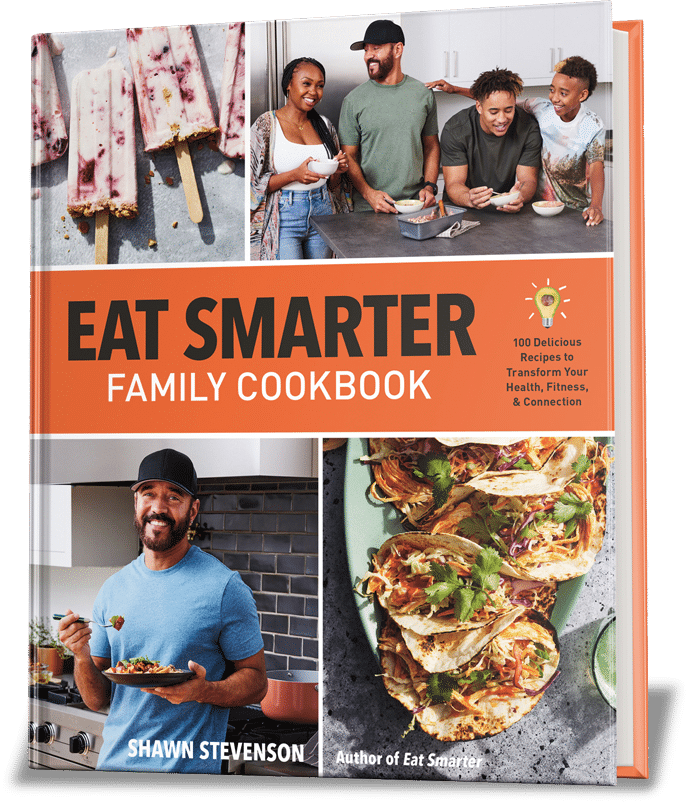
The Eat Smarter Family Cookbook is filled with 100 delicious recipes, plus the latest science to support the mental, physical and social health of your loved ones.


Share Your Voice
0 comments. Be the first to leave a comment.