
Subscribe to The Model Health Show:


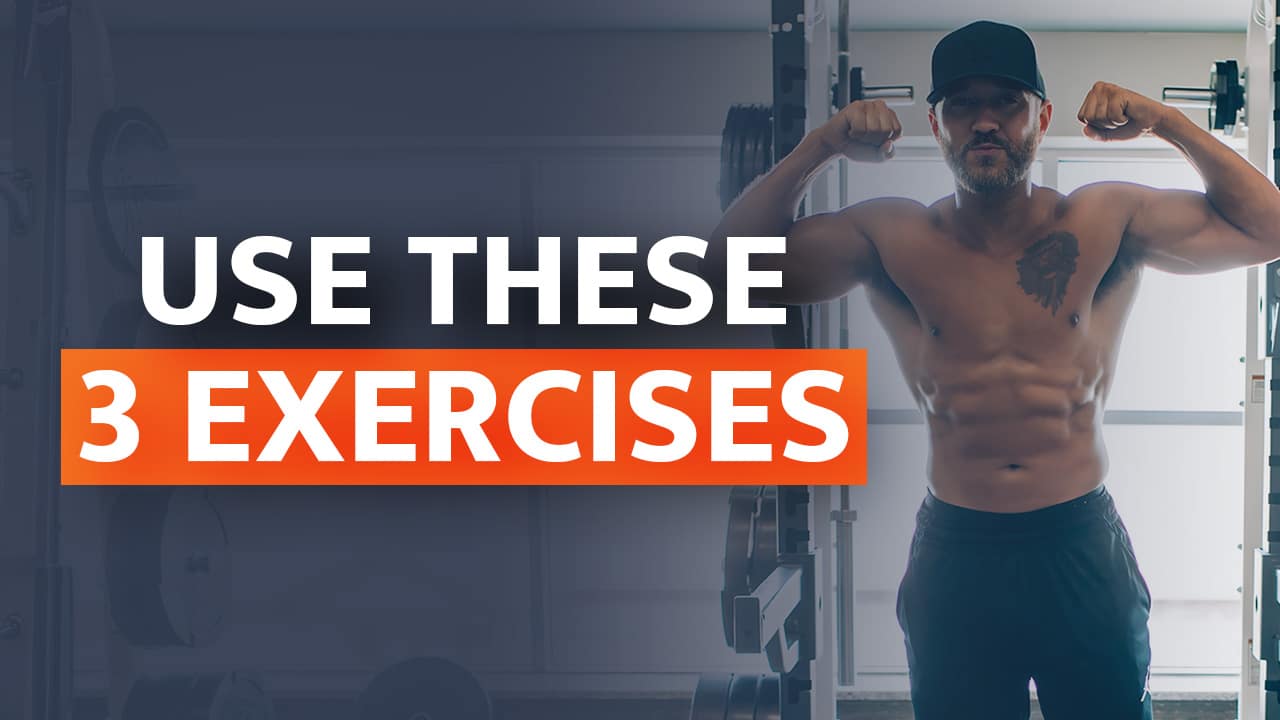
TMHS 987: 3 Underrated Exercises to Burn Fat & Build Muscle (No Gym Needed!)
Building a strong and functional body goes beyond your basic bench press or logging miles on a treadmill. If you want to have a fitter body that will carry you through a long, healthy life, there are a few ways you should be supplementing your existing training regimen.
On this episode of The Model Health Show, you’re going to learn about three underrated exercises you need to take advantage of. These functional exercises are widely overlooked and can help you build a durable body. They are also time-tested, scientifically proven, and at the root of human health and evolution.
If you’re ready to transform your fitness, lower your risk of chronic disease, and improve balance and mobility, this episode is going to help you build a more robust, well-rounded routine. So click play and enjoy the show!
In this episode you’ll discover:
- The history of jumping rope. (0:46)
- Which muscles are strengthened by jumping rope. (1:40)
- How jumping rope has been proven to improve bone density. (1:58)
- The science behind how jumping rope aids in fat loss. (3:20)
- What isometric exercises are. (8:36)
- How isometric exercises can strengthen your tendons. (9:12)
- Specific isometric exercises you can incorporate into your training. (12:17)
- Why walking with weight is an essential human input. (23:31)
- The benefits of walking while carrying weight. (23:54)
- How to start adding more weighted walks into your existing routine. (26:20)
Items mentioned in this episode include:
- Peluva.com/model – Get 15% off barefoot shoes with my code MODEL!
This episode of The Model Health Show is brought to you by Peluva.
Peluva’s barefoot minimalist shoes support postural alignment, proprioception, and overall functionality. Get 15% off your order by using code MODEL at peluva.com/model.
Transcript:
SHAWN STEVENSON: Welcome to the Model Health Show. This is fitness and nutrition expert Shawn Stevenson, and I'm so grateful for you tuning in with me today. These three exercises will help you to get fit faster, build a more functional body, earn more body fat, and the kicker is most of this is totally free. You don't need a fancy membership or complex equipment to get these kind of results. We're about to detail what these three specific exercises are and why they're so effective backed by science. And number one, this form of exercise has been utilized by humans for thousands of years.
It's actually depicted by the ancient Egyptians all the way to the Han Dynasty in ancient China. This form of exercise, which has a ton of benefits, is jumping rope. Now, it may have been depicted by jumping over vines or different types of ropes, but this form of exercise was actually brought to the Americas centuries ago by the Dutch. You might have heard of double Dutch, but the question is, why is it so valuable? Why have humans been utilizing this for so long? There must be something special about it. Well, today we've got a plethora of peer-reviewed studies affirming how jumping rope can radically improve our metabolic health, our balance coordination, and explosive power like few things can.
It's noted from a muscle perspective to target everything from your grip muscles to your core, to the muscles of your glutes, hamstrings, quads, and calves. But if you look a little deeper, you'll find some of the most remarkable benefits from Jumping Rope is the impact that it has on your bone density. A study site in the Journal of Bone and Mineral Metabolism detailed how jumping rope can improve the bone density of swimmers. Again, having a lot of time in the pool can have this kind of anti-gravity effect and not really provide that stimulus for bones to really develop and to develop that very strong density that we're looking for with our bones, especially in the conversation about longevity.
While additional studies, like a meta-analysis that was published in sports medicine, revealed that jumping rope can significantly improve bone mineral density in at risk groups for bone degeneration like premenopausal women. This can be a potential preventative measure to add in to get that stimulus to support bone density.
We wanna make sure, again, in this picture of longevity and functionality to take care of our bones. It's also a site of a lot of endocrine activity as well. There's a lot of hormonal activity that's revolving around the health of our bones, and that's not really talked about very often, let alone the aspect related to our stem cells. So there's a lot of really magical stuff going on with our bones, and this is a science backed way to target our bones through the activity of jumping Rope. Plus, and here comes the good stuff, jumping Rope can potentially change our body composition faster than conventional " cardio". A study site in the Journal of Physical Therapy and Science, randomly assigned overweight young adults into one of two exercise groups.
One group did jump rope training while the other group did training on a stationary bike. Both groups had improvement in fitness, but the researchers found that the cardiovascular capacity was improved more in the jump rope exercise group than the stationary cycling exercise group. They also found that the body mass index was reduced even more in the jump rope exercise group than the stationary cycling exercise group, so not too poo poo on stationary cycling. There's a ton of benefits that can be found there, but what if a simple jump rope can provide us more benefits in less time? And here's the rub as well. Unless you got a gym membership or you're paying a few hundred dollars to get yourself a stationary bike, the accessibility makes it more complicated.
You can get yourself a jump rope from like five to $20 if you want to get fancy and get a tremendous amount of benefits for your body as far, as the metabolic health, bone health, and overall functionality. But let's dig deeper into the benefits with our balance and coordination. A very interesting study that was published in the Journal of Sports Science and Medicine took kids who were soccer athletes and split them into two groups. One group did jump rope training at the beginning of their training session. The other group which was the control group executed soccer specific drills at the beginning of their training session. All the athletes were tested in a circuit training course to monitor their motor ability, IE, their ability to perform rapidly in a course with different physical tasks such as summer salts and passages above and below obstacles and unilateral dynamic balance as well.
So, after eight weeks of training, the group of athletes that implemented jump rope training were able to decrease their time in the obstacle course by nearly 10% while there was no improvement performance in the soccer drills only group. The researcher stated " our findings demonstrate that jump rope training within regular soccer training enhanced general motor coordination and balance in soccer players. Therefore, the inclusion of jump rope training within regular soccer training sessions should be encouraged to improve children's motor skills". What more could you ask for benefits with our coordination, our proprioception, our bone health, our metabolic health. There's so much to be found within the context of a simple jump rope.
Now, the rope is just giving us an object to essentially do this activity, to jump over something, to inspire us to move because that rope is coming at you. But we don't necessarily need a rope to get a lot of these benefits. We could simply jump in place, right? And it's a great idea to actually get some of that input.
Just finding yourself a nice soft surface, whether this is your carpet at home or a yoga mat and just simply jumping in place. Or if you want to get really fancy, then we can bring in something like a rebounder to elicit some of these benefits as well. But a jump rope is one of my favorite tools I utilize all the time, and there's a variety of things we can do with it. Again, it's inexpensive, it's compact, it's easy to carry, and we can do everything from basic jumping in place. We could turn the rope and jump around, have the rope going backwards to elicit another kind of proprioception input we can skip.
All right. Shout out to all the boxers over the years Muhammad Ali, and we can do jumping side to side, we can switch our feet forward and backwards. We can do double unders, we can do single leg jumps. This is really, really great for athletes and also just the weekend warriors who want to be able to use their bodies in more athletic weighs more athletic performance based movements because so much of our movement is one leg. Very seldom are we using both legs at the same time and our athletic endeavors. And so it's another great way to get some inputs is jumping on one leg, maybe 10 reps, and then we switch sides and do 10 on the other side.
So there's many different ways, many great on-ramps to utilizing a jump rope, but it's incredibly valuable and it's been done for thousands of years. So this exercise might be underrated, but it is definitely one of the best. All right, moving on to number two here. Number two on this list of three underrated exercises that you need to be taking advantage of. Number two is isometrics. Isometric exercises are strength exercises where the muscle produces force without changing length. In essence, our joints don't move while the muscle is actively contracting. For example, when you're doing a pushup, our joints are moving as our body is going up and down. But if you were to simply hold the position at the bottom of that pushup for say, 20 seconds, or hold it at the top of that movement for say, 20 seconds, now you're engaging in an isometric exercise, and why is this so valuable?
Well, one of the primary reasons why isometrics are so valuable, utilized for decades, but now as of this recording, there are mountains of studies coming out and being conducted right now on the value of isometrics for longevity and athletic performance because it has a very powerful ability to target the health of our tendons.
First of all, it's important to understand what our tendons are. When we think about movement, we generally think about our muscles, but our tendons are strong bands of connective tissue that attach our muscle to our bones, and their primary role is to transmit the force that's produced by our muscles to our skeleton so that we're able to stabilize our bodies and our joints during activity. Alright, so they're critical in being able to stabilize our bodies during various movements. It's not just the muscle. Our tendons, again, attaching our muscles to our bones. We need to have some strength there as well.
A study published in the Journal of Physiology found that isometric training significantly increased tendon health and tendon stiffness in the quadriceps, meaning that the tendons became better at transmitting muscular force to the skeleton, essentially making the whole muscle tendon system more mechanically efficient. And they were putting this up against traditional up and down movement type exercises. If we're looking at the quads, a leg extension, for example, up and down, up and down, you know, one to two second pace versus holding that extension for 20 seconds for a couple of rounds of that. And so again, it's changing the way that we're looking at human movement and being able to target not just our muscles, but the health and strength of our tendons because here's what was also found in the study.
It also improved the quality of the muscle as well. You're getting a lot of bang for the buck when you're incorporating some ISOs. All right, so isometric exercises is something that we all need to incorporate more frequently, and recently this message has been elevated thanks to the work of muscle centric physicians like Dr. Gabrielle Lyon and high performance coaches for NBA athletes for NFL athletes. Like Coach Mike Gura, who we've had on the show recently as well. And again, this isn't just about the practical science piece, it's about the action piece in the real world. So I wanna make sure that you are incorporating on a regular basis some isometric exercises.
This is great to just add in because iSOs tend to not result in a lot of soreness. In fact, they really help to relieve some of the kind of painful spots that might be in our bodies. And let's give some specific examples of some ISOs that I want you to add in on a consistent basis. One of the most classic anywhere, anytime. Anytime, any place. Shout out to Janet Jackson that you can add in and exercise and get some good stimulus is the classic wall set. All you do is find yourself a wall, and you get up against the wall, back against the wall and step your feet out away from the wall Again, keeping your back against the wall where your knees are close to now being at a 90 degree angle. And doing a wall sit and you can start with, you know, whatever amount of time you could do 10 seconds, 20 seconds and build your way up. It's a great. Implement to add in a 62nd wall, sit a few times a week into your training. And with that, if we really wanna target the health of our knees and the tendons involved in that area, doing a wall sit and adding in a calf raise when you're in that position.
So you lift up on your toes for about two seconds and then lower yourself back down and just do that kind of pumping action. Over the course of that wall sit, so this could be, again, 30 seconds, 45 seconds, a minute, whatever you're doing. But that particular action can really help to alleviate some of the discomfort that you might be having in your knees and the added benefit is we're adding in some resistance input for strengthening our tendons overall. Alright, so wall sits, wall sit, plus calf rays one of my favorite ISOs. I love this so much and I've seen the results. I've seen the results with people reducing pain and improving their mobility and stability, which is doing rear foot elevated split squat ISOs.
Alright, so single leg split squats are popping right now. Again, been done for centuries, but elevating your back foot and getting in that kind of lunge position, a beautiful lunge position, and instead of just going up and down like you normally would with, again, you can add resistance to it. Now we're going to lower ourselves, get to the bottom portion or near the bottom portion of that movement and hold that position. And so keeping your torso elevated, you're gonna. Be engaging more of a quad dominant isometric, which is amazing for the tendons of the knees, and of course targeting the muscles in the quads. So that's one of my favorite exercises. And again, hold that position. Start with 10 seconds if you can. 20 seconds, 30 seconds.
Ideally where we're at and what I just did with my youngest son who's a basketball player this morning, prior to him, he had a late start day with his school, so he had an extra hour in the morning. We did these ISOs and he held a position for 35 seconds each leg. Now we can further this and turn this into a glute focused isometric or glute targeted isometric by getting into that beautiful position. Torso upright, and now we hinge at the hips and lean your body forward over your leg so that you're engaging more of that glute with that leg that's on the ground. And really think about firing, pushing that leg into the ground from the glute. Hold that position again for your specific amount of time that you're targeting, and incredible exercise there.
And I'll add in one more lower body iso. One of the things again he did today was a lateral iso. 'cause a lot of our movements are lateral movements. Life doesn't often come at you, especially if you're playing a sport and just this like front back modality. It's dynamic. And having something where we could target a side lateral movement. So finding a wall, putting your arm up against the wall, stepping away from the wall, and your foot that's furthest from the wall, you're gonna turn that foot inward and you're gonna get up on your toe and the foot closest, your leg closest to the wall. You're gonna elevate that. You're gonna elevate that leg off the ground and just push into that wall.
Hold that position again, 20, 30, whatever amount of time for my son. He's 30 to 45 seconds. And then you switch to the other side again. We're just. We are just scratching the surface on all the different isometric exercises that we can implement, but I'm just giving you some different ones that provide some different inputs and those were focused on the lower body. Upper body, classic, the plank. Walk the plank. Now, a lot of people look at the plank for targeting the core and really getting some more defined abdominal muscles and really targeting the transverse abdominis in particular. But this is just a great exercise to get the benefits of an isometric, and it's not just the core, it's also our shoulder stability.
There's gonna be some tendons that are gonna be engaged in holding that position. So planks are really great for more than just the typical, trying to target our abs. Another great upper body focused exercise, in terms of isometrics, that's gaining more and more popularity, thank goodness is a dead hang. So grabbing a bar and hanging from a bar or whatever you got, maybe it's a tree branch. I don't know. Whatever you got access to. Grabbing something and being able to hold that position. If you're in New York City, they'd be having a lot of bars up when you're walking for some reason. Just grab onto one of those.
Hang there, you're gonna look a little crazy. But sometimes people look crazy in New York City. I've been there a time or 20, and most of the time people just monitor their business as long as you don't get in their way. All right, so grabbing a bar and doing a dead hang. Now, there's essentially two ways to go about this. There is the isometric where it's more grip focused, where you're just allowing your body to just be completely loose and just let your body hang there. But then there's a more active form of it where you are engaging your lats. You're trying to bend the bar, you're turning the, your lats on. Your back and really engaging those muscles as you're holding on and holding that position like that in a more active form.
Again, tons of benefits to be found there. Also, as we kick this off with the example of doing a pushup, you could do an isometric form of a pushup where you get yourself into a pushup position, lower yourself down, and hold at that bottom position for your targeted amount of time. Or you can hold at that top position, which is gonna be more of a glorified plank as well.
But it's gonna engage and bring in more involvement with our elbows, with our shoulders. Tons of great benefits. Many different ways to slice and dice your ISOs, but this is one of the things that I want you to do on a regular basis. Add in your isometrics so we can really target performance and longevity. Now, before we get to number three on this powerful list, if you want to take your movement to the next level, doing all of this, you can put some attention into the performance of your feet. The foot is the primary sensory and mechanical interface with the ground containing thousands of mechanical receptors that detect pressure, vibration, and load.
When your foot contacts the ground, it sends rapid sensory feedback through the nervous system that helps to coordinate muscle activation and joint positioning throughout your entire kinetic chain. So foot to ankle, knee, hip, spine, everything is gonna be responding based on the input that's coming from the ground contact with your feet. Now, what if the data picked up by your feet is inaccurate or muted altogether? Well, that's the phenomenon that's reached epidemic proportions with modern shoes, the abnormal elevations, the uneven slash heel raised structure, and the narrow designs mute and even abnormally alter the ability of your feet to pick up data about your movement and to send it up the kinetic chain so that you make appropriate synchronized movements from the ground up.
Not having this accurate data. Again, this is all happening at lightning speed is one of the major reasons behind a lot of ankle and knee and hip and spine dysfunction and even injury. And so really training our bodies to be more human, to pick up accurate data about our movement. We need to pay more attention to the performance of our feet, the solution. Of course, we wanna spend more time. With our bare feet in contact with the ground, just doing what we can from day to day to spend more time without shoes on so that we can start to cultivate and train some of that physical literacy from our feet that gets muted by having shoes on all the time. Now, am I telling you, am I one of these guys out here, barefoot runner, getting out here in the concrete jungle, being bare a foot?
No. I'm not telling you to do that at all. That's crazy. But some people's crazy leads to great benefits for them. But for a lot of us, crazy is as crazy does alright? And a lot of people that's crazy, don't know they're crazy. Just put that in your back pocket. Think about that later. So the solution when it comes to our footwear is to spend more time wearing shoes that have a wide natural toe box with science-backed five toe functionality.
This is what I do every day when I wear my Peluvas. I walk and I do a lot of training in my Peluvas and with their stylish purpose driven designs. They have footwear for everyone. Their strand sport mesh are great for cross training. Their strand ATRs are perfect for hiking and long walks, and now they have footwear for the golf course for the tennis court, and casual active wear. As well for men and women. Right now, you get 10% off storewide when you go to peluva.com/model and use the code model and you're going to get 10% off at checkout. Again, go to peluv.com/model. That's Peluva.com/model. Use the code model at checkout for 10% off. Give your feet plenty of prehab and rehab for all that they have to endure.
Take care of your feet and they'll take good care of you. Now moving on to our final, one of these three underrated exercises that you need to be taking advantage of. Number three is walking with weight. We are bipetal creatures. It is a thing that we know for certain we are designed to do, but along with walking, humans have been carrying things for thousands upon thousands, upon thousands of years. Our genes expect us to do this, and this might be a reason why we see so many benefits emerging in peer-reviewed data.
For instance, a study that was published in BMC Medicine found some surprising results when it comes to adding some weight and simply moving around and the impact that it can have on fat loss in this randomized controlled trial. The scientists placed participants with obesity into one of two groups.
Group one was instructed to wear a weighted vest that was about 11% of their current body weight, designed as, "the heavy load group". While Group two was instructed to wear a weighted vest that was only 1% of their current body weight designated as the low load group, there were about 30 participants in each group, and they were instructed to wear the weighted vest just around their daily activities for five weeks for about eight hours a day, and here's what happened at the end of the study period. Participants in the heavy load group lost significant body fat and increased their lean mass compared to the low load group. The heavy load group lost about two and a half pounds of actual body fat and gained about 1.5 pounds of lean mass compared to the low load group.
The heavy load group also lost about two and a half centimeters from their waist compared to the low load group. The participants in the heavy load group were the only ones who had reductions in body fat and increases in lean mass. But here was the craziest part. They were actually significantly less active. They had more sedentary time than the low load group. So they weren't necessarily expending more energy and they weren't eating more either. So this led to what was effectively known as a body recomp in terms of just their body changing its composition, adding muscle, and reducing fat. And something really interesting as well, that if you dig deeper into the study, you find there's the participants in the heavy weighted vest group also had reductions in markers of fatty liver disease.
Something special was activated by carrying around some weight on their load. Now, am I suggesting to carry around a weighted vest for eight hours a day? Absolutely not. It's not necessary. But what I am informing you to do, and we got more emerging evidence on this is to add some additional weight to some of the activities that you are doing already. And going on a walk or a hike is a great opportunity to add some additional load. And again, we're gonna be targeting what's going on with our, specifically our metabolic health and this potential to have this body recomp because your body is changing the way that it's processing data to equate for.
The scientists stated, and by the way, this is from another one of their studies, they stated, "their findings demonstrate that there is a weight loading dependent homeostatic regulation of the body, the gravitostat, also in humans". So this GTOs stat is this kind of internal thermometer that's determining the loads that are being placed on the body, the gravitational forces being placed on the body. How to adapt metabolically to be stronger with those additional forces. And so that's what our bodies are really designed to do. We're adaptation machines, and so adding in this input can be very, very helpful. So how do we utilize this? We don't even have to buy a weighted vest per se. It could be a great investment.
Sure. But we can use what we have at home. You can grab yourself a backpack, maybe your kids' old backpack and wrap a some form of a weighted implement and a towel put in that backpack. Just get it strapped on snug and go on about your day and go for your walk or your on your hike. And this emerging movement of urban rucking is really taking over as well. And we've had on one of the essential voices and somebody who's really helped to popularize this urban rucking, which is former UNLV, professor, New York Times bestselling author, Michael Easter. And now you're probably seeing, you're seeing people out wearing weighted vests just walking around the neighborhood or at the park or at the gym more often.
And this thanks in large part to his incredible work. And so being able to provide these incredible scientists and their powerful insights can help us to make the most of the minutes that we have every day. And so it doesn't even have to be something where it's a weighted vest or a backpack per se, or a ruck sack. You can just carry something, right? This could be, and I've done this several times with my family will go out on a hike and somebody's gonna carry a kettlebell and we're gonna pass it around. And it's gonna engage, obviously a lot of core activity as well, grip strength. And once somebody gets tired enough and really challenge themselves, you know, you switch hands obviously, or you could switch it off, pass it off to the next person or a dumbbell or, you know, a heavy water jug or whatever the case might be.
We can use what we have around to get some of these benefits and just kind of stack conditions. And also it adds a layer of creativity and even fun, you know, and to be able to challenge ourselves different ways. That's one of the things that I see as a consistent thread with all three of these underrated exercises is they can add an element of fun. So the jump rope piece obviously, obviously, but also isometrics and the different creative ways that we can add in some ISOs can really stimulate our body to adapt in new creative and even fun ways. And of course, walking with weight. And having creative ways that you can add in more resistance for something that you might be doing already.
Alright. But it's just stacking conditions. And for me, I love to use like a weighted vest or, a weighted backpack to add more inputs on the exercises I'm already doing. So whether this is doing lunges like I did yesterday, my single leg split squat, you know, or Bulgarian split squat, type of single leg exercises as well, or doing pull-ups or pushups. You could just add this additional weight closer to your core and get more bang for your buck. And so I hope that I inspired you to take advantage of these powerful science-backed exercises more frequently. Just sprinkle 'em in, add 'em in, and get some of these benefits. And again, make sure to leave a comment below.
Share your voice. What was your favorite aha moment or exercise or thing that you're already implementing? And really seeing some benefits from Share Your Voice in the comment section. Make sure to hit the like button. If you enjoyed this video and you're gonna be automatically subscribed to win a New Apple Watch, that can track a lot of your health and fitness metrics. Alright? So it's a really cool giveaway. And also, of course, make sure that you're subscribed to the Model Health Show so that you don't miss any of these incredible giveaways that we have coming up. And also, of course, these incredible guests and masterclasses. They're gonna be doing moving forward.
Thank you so much for tuning into this episode today. If you got a lot of value outta this, please share it out with somebody that you care about. You can send this directly from the podcast app that you're listening on. You can hop over to the YouTube channel, of course, hang out with me in the studio. We're doing some incredible giveaways over on the YouTube channel that you need to take advantage of too. And also you'd be able to see some of these exercises that we've talked about. You can see the studies. And just, it's just a good time. Alright, so hop over to the YouTube channel and of course, share this on social media.
Take a screenshot, share it on social. Tag me at Shawn model. It really does mean a lot. And listen, we've got some epic, epic masterclasses and world leading experts coming your way very, very soon. So make sure to stay tuned. Take care, have an amazing day and I'll talk with you soon.
Other episodes you might be interested:


Maximize Your Energy
Get the Free Checklist: “5 Keys That Could Radically Improve Your Energy Levels and Quality of Life”
HEALTHY MEALS EVERYONE WILL LOVE
The Greatest Gift You Can Give Your Family is Health
When you gather your family around the table to share nutritious food, you’re not only spending quality time with them - you’re setting them up for success in all areas of their lives.
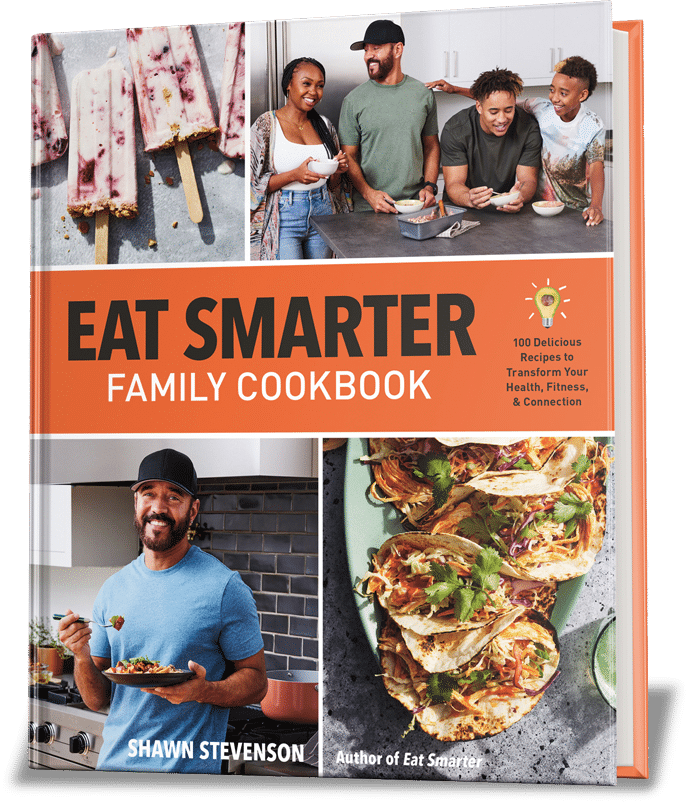
The Eat Smarter Family Cookbook is filled with 100 delicious recipes, plus the latest science to support the mental, physical and social health of your loved ones.


Share Your Voice
0 comments. Be the first to leave a comment.