
Subscribe to The Model Health Show:


TMHS 967: Combine These Two Exercises to Burn Fat, Boost Strength, & Increase Your Longevity – With Michael Easter
Most people today realize the numerous health benefits that walking can provide. But in recent years, the trend of walking with a weighted vest has gained a lot of traction. Today, you’re going to learn how weighted walking can improve your health.
Today’s guest, Michael Easter, is a New York Times bestselling author who is passionate about sharing science-backed strategies you can use to optimize your life and fitness level. On this episode of The Model Health Show, Michael is back for a fascinating conversation on how walking with weight can improve your metabolism, strength, and much more!
You’re going to learn why humans are built to carry weight, and how this movement pattern shaped our evolution as a species. We’re going to uncover how walking with weight can offer the unique combination of both cardio and strength training, and how you can easily incorporate this routine into your everyday life. I hope you enjoy this episode of The Model Health Show!
In this episode you’ll discover:
- Why the human species was designed to walk while carrying weight. (3:21)
- How technology has changed our relationship with weighted walking. (4:01)
- The science behind how walking with weight can help you lose fat. (6:15)
- How using a weighted vest can aid in weight loss maintenance. (10:26)
- Advice for preventing injury while walking with weight. (15:25)
- How much weight to carry as a beginner. (20:15)
- Why carrying weight can improve your lifespan. (32:31)
- What NEAT is and why it matters. (37:24)
- The importance of going outside for human health. (43:12)
- How to get started with weighted walking. (56:45)
Items mentioned in this episode include:
- DrinkLMNT.com/model – Get a FREE sample pack of electrolytes with any order!
- Organifi.com/Model – Use the coupon code MODEL for 20% off + free shipping!
- Walk with Weight by Michael Easter – Pre-order your copy today!
- The Comfort Crisis by Michael Easter – Read Michael’s bestselling book!
- Walkfully – Check out Michael’s company!
This episode of The Model Health Show is brought to you by LMNT and Organifi.
Head to DrinkLMNT.com/model to claim a FREE sample pack of electrolytes with any purchase.
Organifi makes nutrition easy and delicious for everyone. Take 20% off your order with the code MODEL at organifi.com/model.
Transcript:
SHAWN STEVENSON: Welcome to the Model Health Show. This is fitness and nutrition expert Shawn Stevenson, and I'm so grateful for you tuning in with me today. Most of us have been missing something huge in our exercise programs. There's so many different things for us to choose from, obviously, when it comes to exercise today. But one of the most fundamental, one of the most transformative things has been left outta the conversation for far too long. On this episode, you're gonna discover a way to burn more calories doing the things that you're already doing. You're gonna discover how this form of exercise can actually eliminate back pain and give you a stronger core overall. So stronger core plus fat burning means a little sexier. Well, of course, if you're into that, additionally, you're also going to discover the history of this form of exercise and is truly tied to humanity.
It's tied to human evolution is tied to us being the people that we are today. And so I'm very grateful to be able to share this episode with you today. And this is one of those that it's already changing culture very, very quickly for those that are in the know. And so the mission is to get this information out to more people. And with that being said, you're gonna hear from the person who has helped to push this new innovation and exercise in into popular culture. If they didn't learn it from him, they learned it from somebody that learned from him. All right, so I'm very excited to share this with you today, and it's with our special guest, Michael Easter.
Michael Easter is a New York Times bestselling author and former professor of journalism at UNLV. His work has been featured all over major media, including Men's Health Outside Magazine, men's Journal, cosmopolitan, Esquire, scientific American. The list goes on and on and on, and he's here today to share these incredible insights about this form of exercise that you need to intentionally add in, to get incredible benefits. Let's dive into this conversation with the incredible Michael Easter. We've got the one and only Michael Easter in the house. How you doing, man?
MICHAEL EASTER: Good, man. Thanks for having me again.
SHAWN STEVENSON: Of course. It's my honor. It's my honor. You've changed the world. There are people out here on my drive home, gonna see a lot of people doing this form of exercise that we're gonna be talking about today. This is one of the most fundamental, yet underutilized forms of exercise in all of humanity. Let's talk about what it is and let's talk about some of your new discoveries.
MICHAEL EASTER: Yeah, so it's walking with weight. It's carrying weight either in your hands, but most commonly, all those people wearing weight vests in your neighborhood or wearing a backpack that has some weight in it. You know, in the book, the book is sort of a guidebook to how do we insert this practice in our lives, but it starts with a lot of the history and theory and when you look at what humans are good at. The two physical skills that humans are really uniquely good at. One is covering long distances, walking, running, and the other, and this makes us even more unique, is carrying weight while doing it.
So we're the only mammals that can carry weight for distance. It was literally something we did most of the day for all of time, and it really shaped us as humans. It allowed us to take over the world to carry tools into the unknown to explore and has a lot of physical benefits, which we can get into. But to your point, carrying really got engineered out of our lives by technology. So we used to have to carry things around all the time. And then we invented shopping carts for our food. We invented cars to transport things.
We invented strollers instead of carrying our kids, we invented insert 50,000 other inventions that led us to not carry anymore. I think you still see a lot of people who, you know, cover ground as a workout. We have people who walk, who run, but how many people carry things? And I think that what this book is trying to do is sort of put that back onto the radar, so people can understand why it's so important for human health and wellbeing.
SHAWN STEVENSON: Yeah. Yeah. One clarification point. When affirming humans being the only mammal that has this capacity to carry somebody might conjure up. Well, a horse can carry a bunch of stuff.
MICHAEL EASTER: Yeah.
SHAWN STEVENSON: But the horse isn't reaching down, picking it up, throwing it up on its own back.
MICHAEL EASTER: That's exactly it. So people will often put, I try and simplify things. That's like the sort of asterisk, right? Is that donkeys, horses, they can carry things for distance, but not unless we as humans saddle it onto them and then they can't.
SHAWN STEVENSON: Yeah, yeah. Now the reason that neighborhoods are filled with individuals who are doing different versions of rucking and, you know, wearing weighted vests and things like that. And again, it's changed dramatically just within a year. And again, it's largely thanks to your influence and it's just incredible. A big reason people are doing this is because of the perceived aesthetic benefits. Being able to burn fat more efficiently. So I think this is a good place to start because there's been some new revelations about this.
We got a certain way that we go about doing things if we wanna lose weight or get in shape, right? For many people that just, you know, start putting a lot of miles running or walking, which again, they each have their benefits. And of course hitting the gym and different things like that, but there's something really special about walking with weight as far as body transformation is concerned.
MICHAEL EASTER: Yeah. I think there's a lot of evidence that suggests it's uniquely good for fat loss. Now, I think there's a variety of reasons for that, but the simplest way to think about it is you're combining endurance work, which tends to burn more calories than strength work. But you also are working your muscles because you are having to use your muscles to carry the weight more or less, right? And something almost happens where that tends to preferentially burn fat for energy. So there's a study that I really love that looked at these backcountry hunters in Alaska. So for those who aren't familiar with backcountry hunting, it's basically like I'm carrying all my gear in a backpack and I'm going into the mountains for 10 days, two weeks, whatever it might be.
And I can't really eat that much as I'm doing it 'cause I gotta carry in all my food. So the scientists send these guys out, they measure their body fat, they do all these different measurements before they go out. These guys are out in the wilderness for 14 days about, and then they come back. Now they had lost weight, right? You would expect that 'cause they weren't eating that much. They're covering ground like crazy people, these heavy packs. Now, when most people lose weight though, some of that weight is gonna come from muscle. Like if I just start dieting, I'm gonna lose fat, I'm gonna lose muscle. But ideally you want to hang on to as much muscle as possible, right?
So when they tested these guys body fat after the 14 days, they found that. They had lost entirely fat and no muscle at all. They'd even slightly gained muscle. It was not a significant amount, but it was there and that was enough where you're like, wow, that's a shocker. I'll tell you from my own perspective, I did this long backcountry hunt in Alaska in 2019. Just about a year ago I did this 850 mile through hike in southern Utah. So I have these heavy backpacks on my back the whole time I'm covering ground. And in each of those trips I lost about 15 pounds, but that 15 pounds, it was definitely fat. Now, I didn't do any crazy body fat testing, but I can tell you, I can just take my shirt off and go.
You look like you're ready for weigh in at a UFC fight right now. You know? Um, so I think when we do think about weight loss, of course, as I'm sure you've covered, I think that diet is the number one lever to pull. You know, doesn't matter how much rucking you do, if you're eating 7,000 calories a day, like good luck. But as you lower your calories to try and lose weight, the question becomes, all right, well, how do I shift the balance where I'm losing more fat than muscle in this process? And I think that Rucking can be a really good tool for that because you'll burn more calories than you would just from weight lifting alone, but you'll also get some of that strength stimulus, it seems to tell your body to hang on to that muscle.
SHAWN STEVENSON: Amazing. Now, you don't know this before I picked up your book, which is amazing, by the way. Everybody needs to get a copy. I did a show with my guys here and we released the episode and it was inspired by the gravitostat information that came from Dr. Brennan Spiegel, outta UCLA. And when I dug into the research, I was just, I mean, I was blown away. It's rare that you find something that's just like truly like a revelation, like nobody knows this. And it was a study that was published in the International Journal of Obesity. And part of that process, like you said, even you can be 7,000 calories, you're gonna have to run 24/7 or whatever. But part of that struggle that especially here in the United States, people have experienced millions upon millions, they lose weight and they gain it back.
MICHAEL EASTER: Mm-hmm.
SHAWN STEVENSON: Right. Plus a little bit more. And a big part of that has to do with the change in the resting metabolic rate, right. When you cut away those calories, this goes back and ties in so well with this new book, because there's certain things that our body has evolved to do. Your body has evolved to not lose weight.
MICHAEL EASTER: Right.
SHAWN STEVENSON: Right. You know.
MICHAEL EASTER: Exactly. Your body is not like that.
SHAWN STEVENSON: And so having the, our genes are a result of those who survived, who are good at hanging onto weight, right. And so that resting metabolic rate going down to basically just make sure that you survive. Right. So, what these researchers did was they took almost 20 people and they had them to wear a weighted vest, but what they did was each pound that they lost, and by the way, put them on a calorie, calorie restricted diet. And one group, no weighted vest. In the other group wearing a weighted vest. But every pound they lost, they added a pound to the weighted vest.
And so what this did was, and the researchers affirmed this presence of this gravitostat was they did the short term diet. They lost weight. People wearing the weighted vest lost 25 pounds over the course of the study. The study was six months long, and so the weighted vest group lost 25 pounds. The non weighted vest group lost 23 pounds. Not a big difference. That wouldn't be enough for me to be carrying a weighted vest around for, you know, 10 hours a day as a participants. But the magic was in the follow-up. Two years later, they bring the participants back in as expected. The people who were not wearing the weighted vest, they regained the weight that they lost.
Now here's where the magic was. The people who were wearing the weighted vest, they only gained back half of the weight that they lost. Alright? During the study, they found that the people who weren't wearing the weighted vest. Their resting metabolic rate went down by about 250 calories a day. So they were burning 250 less. The people wearing the weighted vest, their resting metabolic rate only went down 16 calories a day.
MICHAEL EASTER: Yeah.
SHAWN STEVENSON: And so it was something about having that load on their frame that was kind of informing their biology, that they don't need to slow that mess, resting metabolic rate down. So remarkable. It's kinda like insulating people against weight regain.
MICHAEL EASTER: Yeah. And that's, and that's the big thing is what, and it's great that the study was pretty long too, because this is why I think most people stop dieting at about five and a half weeks. And, what tends to happen is that your body is cranking up hunger signals as well. So I think one of the findings from the gravitastat hypothesis is that those hunger signals don't get cranked up as much either. Now that really to me is kind of one of the limiters of diet, right? It's like everyone can eat fewer calories for a handful of weeks, but what are you gonna do when all of a sudden your biology goes, Hey, you're losing weight. We need you to eat more. So we're gonna ramp up your hunger signals, we're gonna make you obsess more about food. So if we can find ways to prevent that, that seems like a smart idea to me.
SHAWN STEVENSON: Yeah. And we see the opposite often, again, with kind of conventional methods of like, especially doing a lot of long form, moderate intensity cardio, you know. And so this is another way to insulate against that, which I want to ask you this specifically. When people think about the importance of cardiovascular exercise, they think about that moderate intensity, jogging, cycling, those kind of things. Can we see a similar benefit by walking with weight?
MICHAEL EASTER: Yeah, absolutely. I mean, it'll raise your heart rate, right? I mean, if we just think about it in terms of as the, as sort of scientists would define moderate intensity exercise that captures a lot of movement. Like even a fast walk without weight usually gets captured by that definition. So when you add weight, it's obviously gonna make it more challenging, especially if you're on hilly terrain. So it does tend to get people into sort of heart rate zone, like 40 to 70% of their max heart rate, obviously, again, depends on the hill.
If all of a sudden the hill is really steep, well you might be getting, you know, up into 80% of your max heart rate and it might be really hard. So, yeah, it definitely makes, the whole point is, you know, the tagline is like, you're getting more from every step. Every step is gonna be a little bit harder, and because of that you're gonna get more benefits from it. So for me it's like, and I think what I love about it, and we were talking about this before we hit record here, is that it's so approachable and easy if I want to go for a run. I gotta get on my special run clothes. I gotta get on my special run shoes. But if I wanna walk with weight, it's like if I'm taking the dogs for a walk, I'm just gonna throw on a pack that has whatever, 20, 30, whatever pounds in it, right?
I already have to take the dogs for a walk. It is not that big of a deal. I don't have to put on special clothes. I can just wear normal walking shoes. But I can get a lot more from that walk by simply throwing on that pack. And I'll tell you, in the case of the dogs for dog owners out there. If your pack has a hip belt, you can thread the leashes through the hip belt, and then now your hands are free too to, you know, send emails, take calls, whatever you might have to do.
SHAWN STEVENSON: There you go.
MICHAEL EASTER: There you go.
SHAWN STEVENSON: One of the barriers of entry I would think for people would be, what about safety, right? Like, am is, am I physically strong enough? Right? What about I've got low back pain? Let's talk about that a little bit.
MICHAEL EASTER: So safety wise, if you look at the injury rate of different activities. Generally the most injurious activity is running like at a, on big population level.
So 20 to 79% of distance runners get injured every year. That's a, that's a lot. It's a high injury rate. And I think we see this. I mean, just talk to someone who's run a lot, right? Oh yeah, my knee's always hurt or I stopped running 'cause I hurt my knee, whatever it might be. The injury rate of rucking is closer to that of walking. Walking, pretty safe.
Injury rate is like 1%. Now of course as you add weight, the injury rate goes up. But if you stay within a reasonable amount of weight, it's very safe and it can actually help you become more resilient. So a good case that sort of you mentioned is with back pain. So when you throw weight on your back, if it's in a backpack, your body sort of compensates for that load being on your back by slightly leaning forward.
Now, when you lean forward, what happens is that your abs start to pick up the slack from the weight, right? All of a sudden, your abs are engaged. One of the main drivers of back pain is simply having a weak core, because we don't really have to use our cores that much, if, especially if you're sedentary and then you go down to pick up a bag of mulch or your dog or whatever it might be, and your core is too weak to sort of walk down. Protect your spine and then bam, you got a back problem. So with rucking it's a way to strengthen your core while also adding in endurance and, you know, more lower body strain and all these things and that can help prevent and even relieve back pain. So there's a guy, have you ever had Stu McGill on this podcast?
SHAWN STEVENSON: No.
MICHAEL EASTER: Okay. He's great. Back pain, back health expert, kind of one of the world's foremost. And he works with a lot of people who have back issues like power lift, like bad cases.
SHAWN STEVENSON: Yeah. I'm a fan.
MICHAEL EASTER: Yeah. And he will often use, not for everyone, 'cause every person's different, but for a lot of cases he will have people ruck as a form of rehab because it kind of count, this is counterintuitive. But it actually takes tension off of your back, and shifts more of that tension onto your spine and that gives your spine this like, slight movement that tends to be nice and good for it, more or less.
SHAWN STEVENSON: Hmm. Amazing. Amazing. Obviously it's one of the biggest forms of disability. In our society today, low back pain.
MICHAEL EASTER: Oh yeah. It's crazy. 80% of people will experience low back pain at some point in their life. It's the biggest reason for work related leave in the country. Like it costs us billions a year. It tends to stick around too. It's terrible if you've ever hurt your back, oh my god, it's terrible. And so I think this is a way we can start to think about how do we prevent this thing from happening in the first place. Now, I will say, since we're talking about injury data. When I first wrote the Comfort Crisis and it had this chapter on rucking, so to back up this book really came out because the Walk with Weight book came out because in the comfort crisis, I had a chapter that was towards the end that got into walking with Weight, the history of it, why it's important, but it was like 20 pages.
And then the act sort of started snowballing became more popular. And I started getting questions from people around the world, like thousands of people on my substack asking me questions about rucking and how do I do it? Where do I start? What weight should I start with? Hey, I'm experiencing this issue, how do I solve it? And so it sort of signaled we just need some sort of guidebook to hand out to people instead of me answering every single question individually. So I wrote this book. Now, one of the initial things of feedback that I got literally the day, two days after the book came out is some military people emailed me military guys, and they said, you're an idiot.
I used to ruck in the military, and that hurt a lot of people. It's like, well, okay, let's talk about the kind of rucking you were doing. So the military, the mission is to win a war and we have to carry a certain amount of gear into war. Now, oftentimes soldiers loads are a hundred pounds. That's a ton of weight. That is a lot of weight. That's really intense. Of course that's gonna injure you. That's like saying, you know, go like you've never run. Let's, let's see how fast you can sprint immediately. Like of course you're gonna get injured or you've never lifted. Let's do a max effort lift. Right now, barbell back squat, the most technical thing we can, yeah, you're gonna get injured. But if you lessen the loads and you're using something small to start with so you can sort of build that resilience, that injury rate is very, very low.
So one of the things I talk about in the book is like what amount of weight should you start with? I tell most people like 10% of your body weight. That's probably a good starting point for some people that might feel a little too heavy. And if that's, you dial it back down. For some people it might feel way, way, way too easy, and it's like, all right, well try 15%. But then just slowly on ramp and in general, try not to go over a 30 year body weight. That seems to be, there's an old military study that found that seems to be sort of a tipping point where injuries tend to occur more often once you go above that. Not to mention, you can't move as well because you, you're just too weigh down.
SHAWN STEVENSON: Yeah. Makes sense. It makes sense.
I've never heard somebody say that they want to have a less energy. I just got so much energy. I don't know what to do with it. I don't know what to do. For most people today, they want to have more energy. Energy is the fuel of our lives and our experience of energy, if we're looking at it through the lens of biology, boils down deep down to the role of our mitochondria, also known as our. Cellular power plants or cellular energy plants, but it's a dynamic exchange going on constantly with all of these trillions of mitochondria that we have within our bodies. Now the question is what is going to help our mitochondria to do what they do and to give us that energy that we're really looking for?
Of course, we want to mind our mitochondria, eat some nutritious food, eat foods that are not creating derangement and all these abnormalities, blood sugar spikes and gumming up all of our cells and our tissues, making sure that we're getting adequate sleep, checking all those boxes. But if we're boiling things down to a category of nutrients that we really wanna look for, look no further than that category of electrolytes.
Electrolytes are minerals that carry an electric charge and they are critical for the function of your mitochondria. A recent study published in Free Radical Biology and Medicine determine that mitochondrial sodium levels are critical in contributing to changes in mitochondrial energy exchange and redux capacity. So this is about delivering energy to all of our cells and resisting the harmful impacts of oxidation and stress. Who knew sodium was so essential for life? Well, a lot of people have known this, including researchers at McGill University, who found that not only does sodium help to maintain proper water balance for all of our cells, but also our most essential organ of energy and life, period.
Which is the amazing human brain. They also found that sodium functions as a quote on off switch in our brains for specific neurotransmitters that support optimal function and protect our brain against numerous diseases. And so we wanna make sure that we're targeting plenty of electrolytes and our diet's gonna come in the form most often of whole organic fruits and vegetables. But this is also the reason that so many people feel and experience more energy and faster recovery when they're utilizing supplemental electrolytes. Now, if you're going to utilize an electrolyte supplement, the number one science backed electrolyte supplement that supports active hydration, cognitive performance, and a healthy lifestyle overall.
Look no further than the incredible folks at LMNT. LMNT has the science-backed ratios of sodium, potassium, and magnesium to help you to feel and perform at your best, the best performance in the world. Utilize LMNT. I'm talking about team USA weightlifting, NBA athletes, NFL teams, Navy Seals. The list goes on and on and on. And right now you can try LMNT risk free with their no questions asked refunds. If you don't absolutely love the way that LMNT makes you feel, head over right now to drink LMNT.com/model and you're going to get a free bonus pack of their most popular flavors with every single purchase. Alright, go to drink LMNT.com/model. That's drink L-M-N-T.com/model to take advantage of this right now. Head over there, check 'em out, drink LMNT.com/model. And now back to the show.
SHAWN STEVENSON: You know, with this epidemic of back pain, and obviously the majority of people who are dealing with back pain are more sedentary. But fit active people injure their back as well. But that doesn't mean that you're actually training your spine to carry load and to be able to. The core, as you mentioned earlier, you know, your abs are really just, it's about stability, right? And so one of the primary things missing from programming. Whether somebody is active and fit or just, you know, a sedentary population is carrying things. Right. Because that in of itself requires your core and the stability around your spine and your low back to actually get some inputs and to work and to, you know, to learn how to be pain-free. You know?
MICHAEL EASTER: Yeah. You can almost think about carrying as like a moving plank is an easy way to think about it. And so, you know, the book really focuses on walking with weight in the form of a weight vest or a backpack. But I also think people should be, if you're kind of a gym person, can you do loaded carries in your workout like, you know, farmer's carries two dumbbells, heavier, shorter distance.
Can you do suitcase carries? That's a really good one for back pain 'cause it really teaches you to resist against those sort of push and pull. And just get creative with carrying. I think, you know, to go back to my original point, like this is the, this is the human act. This is the human physical act and we just don't do it anymore. And so I think starting to try and figure out how can I weave more of that back into my daily, weekly, monthly, yearly fitness practice, I think would do people a lot of good. And I'm not saying, you know, stop running. I'm not saying you don't need to ever lift weights. I'm not saying that at all. What I am saying is that. All types of exercise are good, but we've just totally missed this really, really good one.
SHAWN STEVENSON: Yeah.
MICHAEL EASTER: And we should think about adding it back in.
SHAWN STEVENSON: Yeah. Like fundamental human one.
MICHAEL EASTER: Totally.
SHAWN STEVENSON: You know, this reminds me a couple years ago, there's like a hike, a, a trail that's pretty close to our house. Like literally we can walk to the trail. And it got, it got pretty easy for me and my, and my sons. And so we started to like bring a kettlebell, right. And then once somebody would kind of get tired enough of carrying the kettlebell, somebody else would pick it up, you know, and just grab it and keep walking. And so it's this, there's so many creative ways to add in more carrying, whether this is a farmer's carry, you know, waiters carry all these different variations, different loads, right?
And also of course, rucking and the weighted vests and the list goes on and on. So many creative ways. With this being said, what are some creative ways for us to implement this that we might maybe not, might not be thinking about? For example, you highlight some examples like this and one of them has to do with being an airport.
MICHAEL EASTER: Yeah, well I think one of the big messages. So I have this substack and it's called 2%. Now this comes from a study that found that only 2% of people take the stairs when there's also an escalator available. 2%. Now, a hundred percent of people know that if you take the stairs, you're probably gonna get a longer term return on your health and your wellbeing. You're gonna be better for that. Yes, it's gonna be uncomfortable in the short term, but that's how you grow. So to me, I look at that and I think, all right, I know I have to get to the second floor. I can do this thing that is really easy and effortless, but I don't help myself in the long run. In fact, I might even harm myself because we know physical activity is one of the best things you can do.
Or I can be willing to embrace a little bit of discomfort, do the slightly harder thing, and get a huge long-term return, especially if I repeat that. So the idea of like this 2% is where can I find ways in my life where I can make what I already have to do a little bit more challenging and get a big long-term reward? So to bring it back to your question, I think that finding ways to add more rucking into your life is a really easy way to do that. So the example that you suggested is airports, right? Most people, if you're like me, especially, I'm one of those people who shows up early. I'm like, I'm not, I'm not getting stressed about missing my flight.
So I'm there like an hour before I have to board. Now, I could sit there like everyone else in the airport and, you know, watch more Instagram reels and more TikTok and just stress myself out with politics and blah, blah, blah. Or I could just walk the terminal with my pack on, you know, I didn't bring a special weight for it, but I've got books in there. I got a laptop, I got water. Like it's probably 15 pounds. And over the course of an hour, I can probably walk three miles in an airport. I'm not, it's not like I'm trying to be a special forces operator and like, haul as, no, I'm just like taking a stroll. I'm not gonna get sweaty. I'm gonna see interesting people.
I can people watch as I go by. I can make some phone calls, I can listen to a podcast, whatever. But I've taken this opportunity where I had an hour and done something that's gonna improve my life in the long run. Even around the house when I was, especially when I was getting ready to go to Alaska for a month, or I was gonna have to be backpacking all the time with a huge backpack. I would do chores with a really heavy backpack. I'd like vacuum, i'd sweep, I do whatever while weighted down with this pack. And that really helped me prepare even something as simple as, I had this reader from my substack who her work involved taking a lot of phone calls. So she'd just like sit there, take calls all day.
She was only walking two, 3000 steps a day. And, she thought about this 2% idea and it occurred to her, I do have to take the calls. I do not have to take them sitting. So she started taking phone calls while out on a walk. She could still do the job, get her work done, but she bumped her step count up to 10,000 steps. And if you look at like the data on all cause mortality going from 2000 steps to 10,000, it's a crazy drop. It's like a 33% drop. So I think the question we need to ask ourself in the modern world where we've really engineered out so much movement is. Yes, you wanna be exercising, exercise, being this dedicated time where I'm gonna devote to movement.
But one of the problems with when we think of exercise is we go, this is my 30 minutes where I move and the other 23 hours, 30 minutes of the day I am sedentary. It's like, no, how can you figure out, how do I add more general movement, more general physical challenge into my day? Especially if there's something that I'm already gonna do, I might as well try and make that harder, because that's gonna lead to much more benefits over the long run.
SHAWN STEVENSON: This is a good segue to the connection with carrying and lifespan and, but there's a difference, which we've talked about many times. It's integrated into the fabric of the show health span. Right. So this is something that we, you know, just through our evolution, we need to be able to continue to do right to, to be able to carry. It's what we did to survive. And so can you talk a little bit about that? Is there a connection between our lifespan, healthspan and carrying things?
MICHAEL EASTER: Yeah, I think when you simply look at it from, so the biggest predictor of lifespan and healthspan is your activity level when you look at the population. And I think when we think about both lifespan and healthspan, we wanna be doing a range of activities, right? We want to get enough endurance. We also want to do activities that help preserve and strengthen our muscles. And so to me, caring becomes sort of like the one stone that kills the two birds. 'Cause you're getting the endurance work, you're getting the strength work and helping preserve that muscle mass while also improving your endurance.
And therefore if you wanna get technical about it, your VO two max. And also I think that there's a big argument for. You know, I'll go into the gym and I'll do these exercises and whatever and blah, blah blah, and it's like, I'm ever gonna really do this shit in real life. You know, I go deal with like, you know, 300 whatever pound deadlift. Like, am I ever gonna pick something up that's 300 pounds? No, only in this gym. But I think carrying that is something we actually often have to do. You gotta pick up stuff, you gotta pick up your luggage, you gotta like carry your kid, you gotta like carry your groceries occasionally. Like this is a really fundamental human act that we still have to do. So if I can train that, that's gonna transfer over to me being functional for a much longer period of my life.
SHAWN STEVENSON: Yeah, I'm just thinking about all the ways that the act of carrying has been taken out of our culture and certain things I do on accident. Right. So one of those is, maybe it's aspirational, but when I go into the grocery store, I always grab a basket that you carry with your hand. I tend to get more shit that I planned on. And so it ends up, you know, I might have to go get a actual cart at the end.
MICHAEL EASTER: You got the mountain basket. Yeah.
SHAWN STEVENSON: But it just, it's a great work, like immediately it's a great workout. You know, I could feel my core engaged, just my grip strength, all this stuff. And that's just my tendency is to do that. Maybe again, it's just aspirational. Maybe it's like, you know, I want to, you know, unconsciously I'm gonna get some work in the same thing with going to the airport. Right? Obviously we've got so many incredible innovations with the roller bags, but now you can ride that, ride that thing too. Have you seen people riding their back?
MICHAEL EASTER: Cracks me up. I'm like, you gotta be kidding me. I mean. It would be awesome if I was eight years old.
SHAWN STEVENSON: Right? Of course.
MICHAEL EASTER: But when I see like a 39-year-old dude on it, I'm just like, oh my God.
SHAWN STEVENSON: Oh man. But you know, having a duffle bag, like I carry a duffle bag and if it's not me carrying it, you know, my son's carrying it. The same thing. I got a backpack when I could, again, I can get a carry on bag that I could just roll around, but it's just little stuff like that, you know, it's just like, we're doing this anyways and if I didn't do this now, I'd have to find time to do this in the gym or at home, try to get a carry in. But it's just being a little bit more human and not subjecting ourselves to all of these creature comforts, but it's so in insidious, like we don't really know.
MICHAEL EASTER: Exactly.
SHAWN STEVENSON: Right. It's just like what you do, you get the roller back.
MICHAEL EASTER: You just default to it. Yeah. You're born into a society where it's all been engineered out and it just, it seems normal. But it's really not in the grand scheme of time and space. For two and a half million years, people were walking 20,000 steps a day. We were carrying things for many of those steps. We were moving our bodies in all different directions and in different patterns, and that's just kind of been wiped out. And to your point, I mean, use your grocery store example. How long do you spend in the grocery store? Like 20 minutes?
SHAWN STEVENSON: Yeah.
MICHAEL EASTER: Something like that.
SHAWN STEVENSON: Tops.
MICHAEL EASTER: That's 20 minutes of, that's a 20 minute suitcase carry. You would never do that in the gym. Right. But you're forced to do it.
SHAWN STEVENSON: Mm.
MICHAEL EASTER: Right?
SHAWN STEVENSON: Yep.
MICHAEL EASTER: And it's like slowly becoming heavier over time. Especially if you shop like you, where it starts to get nice and big. I'm the same. I'll get like, you know, water case or something, try and jam it in there. And that's awesome. I, that would add, that would tack on another 20 minutes to my workout, whereas now I can do two things at once.
SHAWN STEVENSON: Yep. Yep. And now there's more emerging data about, like these micro exercises like exercise snacks. Yeah. And then really adding up, because from my mind, my classically trained thinking in fitness is like, it's, I have to do a whole workout.
MICHAEL EASTER: Mm-hmm.
SHAWN STEVENSON: Right? But we do like your, your body and your brain. It doesn't care, like when you're doing it in some capacities, it's like these are inputs, you're just giving an input and it's, it's all kind of adding up.
MICHAEL EASTER: Yeah.
SHAWN STEVENSON: As far as your input diet or your movement nutrients that you're getting in throughout the course of a day.
MICHAEL EASTER: Yeah. When you actually look at where people burn the most calories, the average person burns more calories from just daily movement that happens over the course of the day than they do from exercise. And they're not really consciously trying to push that. It just naturally happens because, you know, we, as much as we don't move as we did in the past, we still have to move some. And that over the course of the day, for most people, most of the time, adds up to more calories than exercise does. So to me it's like, that tells me what would happen if we actually tried to push that.
You know, there's some Mayo Clinic data that says people can burn over 800 calories a day just from this, what researchers call Neat, which is non-exercise activity thermogenesis a very scientific, overly complex way of saying all the movement you do when you're not exercising, when you're just living your life. So if we can push that. Good example of that is, and I wrote about this on my substack. It was one of my more popular posts is my wife got a one of those under desk treadmills. She started walking like 35,000 steps a day over the course of a day. It was insane. She would just start 7:00 AM. All the way till three, just walking the entire day working. And it's just like, holy crap. And you, she could've been sitting right. She might've overdone it a little bit. You know, you can take times to sit, but I mean, that just shows you like, that's crazy. And she didn't have to get it through a workout.
SHAWN STEVENSON: Wow. Incredible. Incredible. This is, again, we've, technology is here.
MICHAEL EASTER: Yeah.
SHAWN STEVENSON: You know, there are different ways that we can interact with it, and get some benefits.
MICHAEL EASTER: Yeah.
SHAWN STEVENSON: When you think about anti-aging, you need to think about antioxidants. Antioxidants from your nutrition, help to neutralize one of the known culprits of aging called. Reactive oxygen species. These are potentially harmful molecules that can damage your cells, create DNA mutations and increase your risk of a variety of diseases. Now, how the antioxidants in your food are measured is using the Orax Scale or the Oxygen Radical absorbance capacity, and to support your mission of longevity, performance, good health. In blocking all of the actions of those reactive oxygen species, we need to tune ourselves to some of the highest ORAC scale foods ever discovered.
We wanna get more bang for our buck and look no further than acai. Acai has a ORAC value of 103,000. So what does that mean in everyday terms? It means that it has about 10 times more antioxidants than most of the best fruits that you find in your produce aisle. Acai is powerful, but it's also been proven to actually be highly usable by the human body. A study published in the Journal of Agriculture and Food Chemistry found that acai actually raised participants antioxidant levels demonstrating how effectively that it is absorbed by the human body. So that's just one of these super powerful sources of antioxidants. Now what if you combine it with another powerhouse like beets.
Beets are a phenomenal source of antioxidants, but I don't know about you, but a lot of people are not out here eating beets. But the juice, specifically from beets has been found according to the Journal of Applied Physiology, to boost our stamina up to 16% during exercise, and participants even experience less fatigue post-exercise. Now I get a therapeutic amount of acai. Beets, blueberries, pomegranates, cherry adaptogens like cords and more, and the incredible Organifi red juice blend. It's all organic and it tastes amazing. Kids love this blend as well, and it's a powerhouse source of antioxidants and other important nutrients for human health and vitality.
Now, I've been utilizing Organifi Red Juice for years. It's one of my favorite things to use and also to travel with as well to get a healthy dose of immune system supporting antioxidants and other nutrients. And so right now, when you go to Organifi.com/model, you're gonna get 20% off of their incredible red juice blend, alright? That's O-R-G-A-N-I-F-I.com/model for 20% off sitewide. So check out their incredible green juice blend as well. And one of my other favorite things are the happy drops, so check those out. Therapeutic amounts of Saffron, which have all these incredible clinical benefits for supporting mental health, all these wonderful things. Organifi is an incredible team, incredible company, and they're doing stuff the right way. All organic blends. But definitely check out their red juice. Blend over at Organifi.com/model. You get 20% off right now. So head over there, check them out Now, back to the show.
SHAWN STEVENSON: So, I want to ask you about what this leads me to something that is kind of, kind of anti-tech, which is going outside. All right. So this is the act of walking with weight, the vast majority of the time is going to also involve being outdoors. Let's talk about that benefit as well.
MICHAEL EASTER: I'm always up to talk anti-tech. You know, I'm just one paycheck away from a cabin in the woods that doesn't have internet. So, being outside, yeah, that is one of the best things you can do for mental health. So, lower stress level, even 20 minutes outside, lower stress level tends to increase happiness in some people. Tends to lower depression rates if you're out outdoors enough, increases creativity. It's just as time to sort of shut off. I think there's a lot of reasons for that.
One is, interesting things happen in nature, in the brain 'cause we evolved in nature. So for example, this idea of fractals, which are these repeating patterns that you see in the universe, those are all over nature. When you go on doors, we don't have fractals. It's all just like clean four walls, nice, tight angles. And there seems to be some evidence that exposing yourself to fractals outdoors seems to just like calm people down and reset the sights of nature. The smells of nature, like all these good things happen to humans and nature. And so I think, one great thing about walking with weight, does it get you outside?
You know, if you can, if you have two different choices for a workout and they're roughly equivalent and one is indoors, but one is outdoors, that outdoor one is gonna give you a lot of benefits, you wouldn't get indoors. I think there's also, especially if you're kind of off, off the pavement and in the sort of on the trails. I think that nature is one of the greatest teachers. 'Cause it throws shit at you. You don't expect. Right. All of a sudden it's too cold and I didn't bring a heavy enough jacket, or it starts to rain, or Oh my God, I got lost. I gotta figure my way back. And I think that's can be a really good mindset hack for people.
'Cause it shows you, it gives you evidence that you're a capable person. When you go through that and you come out the other side and you're like, oh yeah, started snowing. I had to walk two miles, but guess what? I'm still alive. Oh, I got some shit done. And that gives you evidence that you are capable. And that doesn't happen in a gym because everything is like, everything's perfect. The temperature is perfect, the speed on the treadmill is exactly where I want it. The incline is exactly where I want it. And I can watch cNN or Fox or whatever the hell it is. And that's perfect too. I don't even have to think about anything, but just take it in. Right? And nature just throws all that shit out the window and goes, you're on my terms now. And I think that teaches people something about themselves.
SHAWN STEVENSON: Incredible. Incredible. You know, if you think about even that relaxation piece, when somebody is putting on, you know, with sound therapy or wanting to relax. It's quote, nature sounds right.
MICHAEL EASTER: Yeah, great point.
SHAWN STEVENSON: It's rain, it's you know, the sound of the waves outside or the, you know, the wind blowing and birds, you don't put on a soundtrack of a casino, chimes and dings and, you know, and cars.
MICHAEL EASTER: Right.
SHAWN STEVENSON: We can get adjusted and acclimated to those things, but these sounds of nature are naturally relaxing for our nervous system.
MICHAEL EASTER: Yeah, and I think it goes back to just like with caring, that's how humans evolved in nature. We now spent 93% of our time indoors and for two and a half million years we spent 100% of our time outdoors. And so we've really adapted to that. And just very recently in the grand scheme of time and space, we started living in four walls and then we inserted. 50 screens in those four walls, right? We've got TVs in every room. We've got cell phones and computer screens and iPads, and that's definitely changed us.
And so I think the question is, you know, what can we do that sort of gets back to some of the things that humans were doing for all of time. And I'm not one of those people who's like, oh, we need to go back to the past. No, I love the fact that I have screens in my house and that, you know, when it's 30 degrees in the morning in Las Vegas, my house is still 70. So I love that. But if I am only doing that and I'm only leaning into that, it's gonna probably cause some problems in the long term.
SHAWN STEVENSON: Yeah. Yeah. What does it mean to be super medium?
MICHAEL EASTER: Super medium. So in short, I think you tend to see two issues in the fitness world when it comes to body sizes. So on one hand we have runners who all they do is run and great. You have good endurance, you're light, you're fast. But if you're only running and you actually have to lift something, like now you're in trouble 'cause you're gonna be too small, too weak, it's gonna cripple you. On the other hand, we have, people will get really into weightlifting where they just get really big for the sake of it.
I'm like, that's great if you need to pick up that, you know, 300 pound barbell. But if all of a sudden you have to cover ground, now you're in trouble 'cause you're just carrying all this. Even if it's muscle, you're carrying all this extra weight that's not gonna move you forward. So to me, super medium is like that sweet spot body type where you've built enough endurance, you're, you are not so heavy that you're weighted down.
When you need to cover ground, you can still cover ground efficiently. But you're also have enough muscle and are strong enough that if you need to carry something while doing that, or you do need to lift a weight, you can do that. Tends to fall into like the, if you wanna think about it in BMI, it's like, you know, 22 to 25 BMI. That's kind of the, the sweet spot for that. And I do think that there's a, I get into it in the book when you look at, when you look at, sort of health span and lifespan around which most studies are looking at BMI, which obviously BMI has its critics, but I will say it's a population metrics, so it applies to most people most of the time.
Being in that sort of 22 to 25 BMI seems to be the best for longevity and, health span as well. So that's kind of what it's after. It's, you know, not falling too far into one camp, not thinking that, oh, extra muscle is always gonna be good. It's like, yeah, it's good up to a point, but at a certain point you're just carrying around more stuff and your body's doing more work for what? Same on the other hand, with being super light, super fast, it's like, yeah, that's probably good, but like what happens if you get sick and you, your body starts to waste away, not much to waste away. You're screwed. Just kind of finding that sweet spot.
SHAWN STEVENSON: Hmm. I love that Super medium. There's just recently, this was like within the last month. One of these like super popular bodybuilding champions was doing like some sprints, like a sprint test with, you know, some other influencer and pulled his quad immediately. Like, first of all, just even moving. It's just he, I don't know. I can't, I don't even know the comparison. He looked like.
MICHAEL EASTER: A sloth.
SHAWN STEVENSON: He looked like bebop from the Ninja Turtles.
MICHAEL EASTER: Okay.
SHAWN STEVENSON: You know what I'm saying? Running it is just, it was crazy. And then pulled the hamstring like he tried again. I think he pulled the hamstring first and then the quad on like the other leg or something like that. And, it's just, and it again, is it functional? Right. It's great to have aspirations and to value muscle. But valuing muscle for the sake of just having a lot of muscle on your frame without functionality, without the capacity to move well, can be, it can be dangerous for sure.
It can, it can handicap us and, you know, but there's a trade off. It's that everybody has, and that's the great thing about being human. Like you get to choose. You know, and so this framework of being extra medium, this does not negate the value of, you know, building muscle and being strong and having the aesthetics. But you know, without a focus on being able to actually move well, we're just doing ourselves a disservice.
MICHAEL EASTER: Yeah, I think, so there's this quote I have in the book. It's from a historian at Oxford, who studied Sparta and the Warriors of Sparta. So when you think about Spartan Warriors, most people go to the movie 300 where they're these big jacked dudes. And his point was, it wasn't like that at all. He's like, the Spartans thought that people that were putting on all this muscle, these warriors were kind of useless. They needed too much food. They were dependent on this strict training. They were so used to like the things being perfect when they trained, they couldn't tolerate weather.
And being outdoors, he is like there were sluggish, useless, and indulgent. It's like, well that's kind of a good metaphor, right? It's like you wanna be able to get shit done and you might have to do a lot of things. So you don't wanna be so big that you're hindered by this extra size you've put on. At the same time, you don't wanna be so little that you can't actually do the things that come your way. So it's trying to find this middle ground. And I think, for me personally in my own life, I kind of use the, I always frame my own training through the lens of the outdoors. Is this helping me do the things I wanna accomplish in the outdoors? I think the outdoors, humans evolved in the outdoors.
We're outdoor athletes for all the time, and that requires often carrying a pack, I'm gonna be covering a lot of ground. I might have to do some serious uphill scrambling. So I try to think what's gonna make me good at that, because that tends to be, I think, most functional when you look at it over time. Now, in your case of the bodybuilder, hilarious story, you know, that's like a, that's like a specific lifestyle thing. I'm sure he realizes like he's giving up a lot of stuff just to be this gigantic, gargantuan human. But I think the problem is that sometimes gets viewed as through the lens of health. It's like, that's not health. It's really not. It's a, it's kind of an extreme test case of how far can we push. An organism to put on muscle, but it shouldn't be viewed as health.
SHAWN STEVENSON: Just a little bit more in the historical perspective, because again, you take us through and show us some of the history of humans carrying weight. And one of the things that you share was the Roman Warrior. And you know, you talk with all these different anthropologists and it was really cool, but can you share a little bit about that? Because the average Roman soldier was like 145 pounds. What was the size of the weight they were often carrying?
MICHAEL EASTER: So the average Roman soldier was carrying about 84 pounds. They weigh like a buck 40. And these guys would have to do these training marches that were miles and miles. Now, if you put that into the context of today, the average pers the average male in the US is 200 pounds. So the math on that for the average male is like carrying 120 pounds. And these guys were doing this as a form of training for battle for miles and miles on end. But, and this sort of backs up to one of the larger points of the book, which is walking with weight, especially in a pack, has been the foundation of military training since we started having militaries and standing armies.
That was always the litmus test because in the past you would have to march a very long way carrying your equipment into a face-to-face battle. So we needed soldiers who were able to sort of carry that load for a long distance. So that's what the training was based around. And still today, even in a world of drones and F-16 and long range rifles. Rucking has still continued to be the main lever that militaries around the world pull for training because it does transfer so well to the battlefield. Um, a lot of it's because it builds that super medium body type. It's a person who can go a long distance if all of a sudden, okay, I need to cover ground quickly, let's move.
But it's also, you're not so weak that you can't, if you need to kick in a door, if you're trying to breach a building. And so it's always been the thing that the military leaned on. Now, like I said, earlier, the military's training for war. So they're using pretty heavy loads that I wouldn't recommend the average person use, but it's still extremely powerful. And there's a section in the book where I look at a lot of these tests that militaries throughout time and place have used to train soldiers. And there's a lot of really interesting one. There's the one from the Romans. There's one, there's the 10th Mountain Division.
I have one from the 10th Mountain Division and the leading up to World War II because they had to carry more, 'cause they had this cold weather gear. They were this unit, that would fight in the mountains as their name implies. Most badass guys who ever lived. By the way, the stuff they did was just unbelievable. Like, I look at it now and I'm, I would probably get selected out, fired that, but it's like, you know, maybe something about war allows people to rise to the occasion. I also think people in the past were generally probably more physically prepared on average than people are today.
SHAWN STEVENSON: Yeah. Yeah. To say the least, to say the least. So with that being said. You touched on this a little bit, about 10% of your body weight being a good kind of place to start and you can have scale up or scale down. Is there anything else that you'd want people to know? Like how can they get started with their own mission to walk with weight?
MICHAEL EASTER: I like to say, to begin, to begin. To begin, begin. That's a William Wordsworth quote, and I think it just applies really well to walking with weight. You don't need to go out and buy a bunch of special equipment. You don't need to get a membership. If you have a backpack lying around your house, and I think most people probably do. Could be your kids' school backpack. Could be the old backpack you had for travel or in college. Just fill it with something that weighs something and go out for a walk. It really is that simple start, like I said, around 10% of your body weight. See how that feels. Do your sort of normal walking route that you might take.
Could be two miles, could be five, whatever you're used to. And see how it feels, and then slowly add weight from there until you find sort of a sweet spot. So for me, I think my go-to weight is about 20% of my body weight that I find I, it's challenging, but I can go for pretty far distance with that. You know, I'm getting enough, muscle stimulus, I'm also able to put in a good enough distance, and I'm getting some solid cardio.
Sometimes I'll go heavier if I have a reason. Sometimes if I'm going really far, I'll go lighter. You know, you can sort of play with the weights depending on what your "mission" is of the day. But I really do think it's just, you know, when you're starting, don't overthink it. Just find what you have. Use it. You'll be fine if people want recommendations of what to actually use for a weight. Books are fine. Water bottles and water bladders can be good when you're starting because if you overcommit you can always pour out the water midway through. If you're going, oh my God, I've, this is way too heavy.
I'll just dump some water out, you know, then you'll be good to go. You could get a dumbbell, wrap it in a towel. That way it's not like jamming into your back, just whatever you have around. And then once you decide, okay, I'm, I wanna keep doing this, I'm committed. Then there's plenty of gear out there that you can buy. I founded a company that's making gear for walking with weight. It's called Walkfily. And we kind of lean, it's for men and women, we kinda lean more female 'cause we realized that a lot of the equipment out there for women in particular was really ill designed for the female body. Most of, most of the brands are using military designs. Which are based on, you know, six foot tall, 200 pound jack dudes, which doesn't necessarily always translate to women. But there's plenty of brands out there. And yeah, you'll find some good stuff. I have a gear guide in the book as well.
SHAWN STEVENSON: Amazing. It's full of resources. As you mentioned, you know, you can get a fancy ruck sack and weights to add to it or just use what you got at home. If your kid's got a Dora the Explorer backpack that she's not using, you know, do what, do what Boots and Dora would do, you know, and add some stuff into that backpack.
MICHAEL EASTER: There you go.
SHAWN STEVENSON: And, just get creative. But walking with weight is very human foundational for our health. I know, and thanks a lot to your work, more research is gonna be done in this and we're gonna just see more and more evidence of it contributing to longevity, you know, efficient fat loss and all these things that we want improved Cardiometabolic health, the list goes on and on. We can already, it's already happening and already emerging, but again, it's thanks in large part to you speaking up about this, so I really do appreciate it.
MICHAEL EASTER: Yeah. Yeah. I appreciate it, man. It's definitely cool to see more people doing it 'cause I know it's helping their health. I live in Las Vegas. There's plenty of things you can do in Las Vegas to hurt your health. So when I see, so when I see people nodding a casino chain smoking and out wearing a weight vest, walking with their kids, that's something I didn't touch on, is that it's something that really scales between people. I could go with my wife. She can take 10 pounds. I can take 30 pounds. We're both getting an equally hard stimulus, but we can have a conversation and connect. It's just a great thing. And so it's, it's been cool to see people take it up and improve their lives.
SHAWN STEVENSON: Yeah. Yeah. Walk with weight It go a copy today. Right now, as of this release of this episode, it's available for pre-order. So you wanna be the first to get your copy and you can pick it up at any of your favorite retailers. But if you're listening to this in the Future, run, don't Walk, go grab a copy, walk With Weight. I love, it's actually a really friendly read as well. You're a great writer, which, you know this, but also the book is really compact and it, like, I just literally just ran through this book in a sitting.
MICHAEL EASTER: Awesome.
SHAWN STEVENSON: Which is rare. That's rare. And so, you know, it's an incredible resource. It's adding to this evidence of. Doing something more human walking with weight. And this is one of those essentials. I think, again, people are gonna look back on this in years and just be like, you know, this was a game changer for our society to remember to do this thing that we started off doing from the beginning.
MICHAEL EASTER: Awesome. Well I appreciate it man. I'm glad you enjoyed it.
SHAWN STEVENSON: Yeah. Well thank you so much for coming to hang out with us. I can't wait to see what you do next. Is there anywhere else that people can connect with you, follow your work, all that good stuff?
MICHAEL EASTER: Yeah, I got a substack that's pretty popular. It's called 2%. I mentioned that it's at twopct.com. I write about rucking on that as well. And then, yeah, that's probably the best place to find me.
SHAWN STEVENSON: Boom. There it is. I appreciate you, man. Yeah, thank you. The one and only Michael Easter. Thank you so much for tuning into this episode today. I hope that you got a lot of value out of this. This is one of those simple, practical things that we can add in to get more bang for our buck and our health and fitness routines, but just something to get us thinking differently about how we engage with the world. It isn't necessarily about just putting on a weighted vest or a ruck sack or grabbing some weighted implement, is just finding more ways to be more human in our day-to-day lives. Being okay with carrying some things from time to time, being okay with taking the stairs, being okay with not parking right in front of the door to where we're going.
And it's just these little changes that really start to add up to give us more physical inputs, more exercise inputs as my good friend Katie Bowman, biomechanist would say nutritious movement inputs that we add into our day-to-day lives. And so I really do appreciate you. Sharing your time with me today. If you enjoy this, please share this out with somebody that you care about. Of course you could share this on social media.
Take a screenshot of the episode, tag me. I'm @ShawnModel on Instagram, and of course you can send this directly from the podcast app that you're listening on. If you're listening/watching on Spotify, I see you on Spotify. We are on Spotify video for the Model Health Show, so definitely pop over to Spotify and check us out there 'cause you get to hang out with us in the studio and it's just a good time. So, regardless of where you're listening, Apple Podcast, SoundCloud, Google Play. I appreciate you so much. It really does mean a lot and I'm dedicated to keep upleveling things and we've got some incredible masterclasses in store for you and some amazing game changing, world leading guests as well. So make sure to stay tuned. Take care, have an amazing day, and I'll talk with you soon.
Other episodes you might be interested:
Maximize Your Energy
Get the Free Checklist: “5 Keys That Could Radically Improve Your Energy Levels and Quality of Life”
HEALTHY MEALS EVERYONE WILL LOVE
The Greatest Gift You Can Give Your Family is Health
When you gather your family around the table to share nutritious food, you’re not only spending quality time with them - you’re setting them up for success in all areas of their lives.
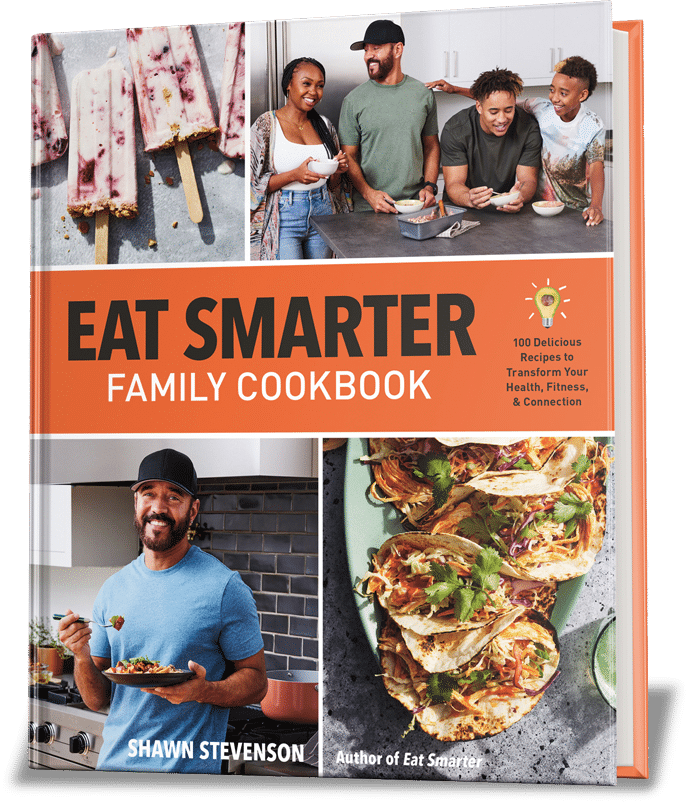
The Eat Smarter Family Cookbook is filled with 100 delicious recipes, plus the latest science to support the mental, physical and social health of your loved ones.


Share Your Voice
0 comments. Be the first to leave a comment.