
Subscribe to The Model Health Show:


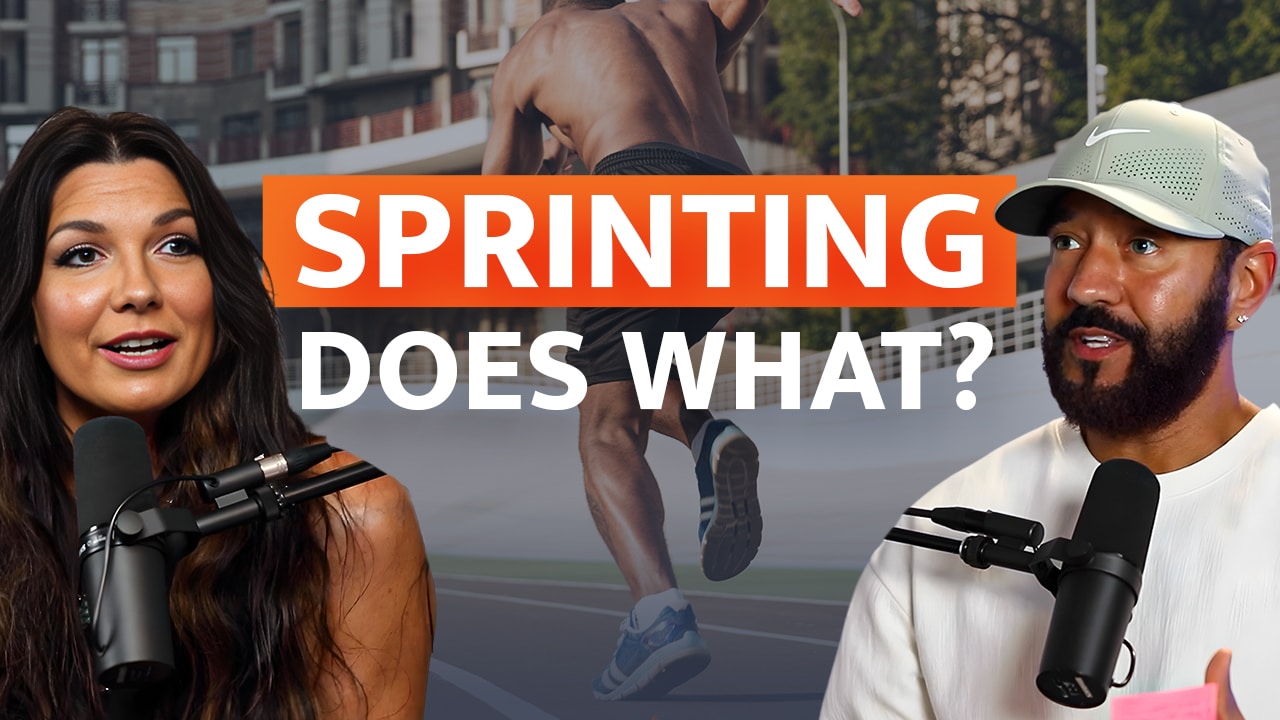
TMHS 960: Top 10 Reasons Why Sprinting is Better for Fat Loss, Longevity, & More – With Cynthia Monteleone
Consistently moving your body in a way that you enjoy is the best route to optimal health. However, in recent years emerging science has shown the benefits that sprint training can have on human health. On this episode of The Model Health Show, you’re going to learn about the science of sprinting.
Today’s guest, Cynthia Monteleone is a 400-meter world champion masters sprinter and decathlete who ran her fastest times in her 40s. Cynthia is also a metabolic practitioner who works with clientele ranging from Olympians to everyday folks. She is an expert on sprinting over 40, and on today’s show she’s sharing the top 10 reasons why sprinting is better than endurance training for longevity.
You’re going to learn how sprinting can affect everything from your gut health to your heart health, the best ways to burn fat, and more. Cynthia is also sharing her personal experience becoming an athlete during midlife and how beginners can start sprint training. Cynthia’s message is that it’s never too late to empower yourself to reach your goals, and I hope this episode resonates with you!
In this episode you’ll discover:
- The top ten reasons why sprinting is better than endurance training for longevity. (2:43)
- How endurance training impacts gut health. (4:50)
- The link between sprinting and BDNF production. (5:18)
- How sprinting impacts fat burning. (7:57)
- Why sprinting can aid in heart health. (13:18)
- What dynapenia is. (25:08)
- How Cynthia became a world champion masters sprinter. (29:23)
- What Cynthia eats to support her neurotransmitters. (34:45)
- How beginners can build up to sprinting. (45:05)
- Which strength training exercises are best for sprinters. (45:57)
- How to improve your form and breathing while sprinting. (53:34)
Items mentioned in this episode include:
- Organifi.com/Model – Use the coupon code MODEL for 20% off + free shipping!
- Fast Over 40 by Cynthia Monteleone – Check out Cynthia’s book here!
- Connect with Cynthia Monteleone Website / Shop / Instagram
This episode of The Model Health Show is brought to you by Organifi.
Organifi makes nutrition easy and delicious for everyone. Take 20% off your order with the code MODEL at organifi.com/model.
Transcript:
SHAWN STEVENSON: Welcome to the Model Health Show. This is fitness and nutrition expert Sean Stevenson, and I'm so grateful for you tuning in with me. Today we're talking about fat loss, injury prevention, heart health, and more. Today you're going to discover 10 amazing reasons why sprinting is better for healthy aging, longevity, and more than long duration cardio training. And our special guest has the facts to back it up, all facts in her raps. And our special guest should absolutely know firsthand because it wasn't until after the age of 40 that she transformed her own body and became a number one ranked track and field athlete. Alright, mind blowing stuff. And I'm telling you, this is a catalyst for us to take action on this knowledge that we're going to receive today.
We have the ability to change the way that our culture is aging, to take back control of our health, but we need to learn from individuals who are paving away, who are demonstrating what's possible. And without further ado, let's get to our special guest and topic of the day. It wasn't until after the age of 40 that Cynthia Monteleone became a 400 meter world champion in masters track and field. And today at nearly 50 years old, she's a master's level 400 meter champion and a cathode, running her fastest times faster than she did as a D1 athlete.
Cynthia is a renowned metabolic practitioner whose clientele ranges from Olympians and celebrities to everyday men and women who haven't been able to get answers anywhere else known for solving complex metabolic and hormonal issues. Cynthia AKA CM combines science, sprinting and personalized protocols to restore peak performance. Enjoy this incredible conversation with the amazing Cynthia Monteleone. Cynthia, thank you so much for coming to see us. You came like halfway across the world to get here.
CYNTHIA MONTELEONE: Yes, Hawaii. Absolutely. Yep. And I'm happy to be here. I had a couple clients here I had to see. Anyway, so, it's great to finally meet you in person.
SHAWN STEVENSON: Yeah, same. I'm so excited to talk to you. First and foremost, I want to ask you why is sprint training better for longevity for us versus conventional endurance training?
CYNTHIA MONTELEONE: Well, I have a top 10 reasons list. Do you want me to breeze through them real quick? Because it's a lot.
SHAWN STEVENSON: Let's go. Let's break it down. Let's do it.
CYNTHIA MONTELEONE: Okay. So the first reason that sprinting is better than endurance training. And look, if you're getting up and moving off the couch, then you know any movement is better than no movement. But a lot of people who listen to your show and who ask me are looking for the optimal, what is the optimal path to longevity? What is the optimal way I can honor my body? So number one, hormone balance. Endurance training tanks, hormones, and all of the things I'm telling you, has plenty of scientific research to back it up. It's PubMed, you guys can go look it up and do your own, you know, research basically, but it tanks testosterone especially. And for women, age 40 and over, our hormones are already kind of on this rollercoaster.
A lot of people think that estrogen just declines, but actually estrogen sometimes surges and then declines. So we're kind of all over the place, and endurance training just makes it worse. Why? Because as we're holding chronic cortisol. Okay, so cortisol is not the enemy. We need cortisol. And when you sprint, you get a cortisol spike, like any exercise, but then it blunts faster than endurance training. So if you're doing a long slow cardio or long steady cardio, traditional ways, than your cortisol is actually going to linger longer, and cortisol is a hormone and it disrupts our sex hormones. So that is one of the reasons why sprinting is better than endurance training. Number two is it causes more endurance training causes more gastrointestinal problems.
If you look up any kind of research on gastrointestinal and endurance marathon runners or any kind of endurance runners on Pub Med or any other research, medical research, you're gonna find that they have an abnormal amount of gut health problems. It disrupts gut bacteria. And there is a really cool study, and I think it was the American Journal of Exercise Science a few years ago that said that the type of exercise we do actually dictates our gut bacteria.
SHAWN STEVENSON: Yes.
CYNTHIA MONTELEONE: Because our gut bacteria has to make fuel. And so, if we're doing long endurance training, it's actually disruptive to the gut. So a lot of gut problems for endurance training, sprinting, none of that. Number three, sprinting makes you smarter. And I'm not just making this up because I sprint and I have a bias. It actually increases BDNF, which most people probably listening to your podcast, but some people dunno. It's brain derived neurotropic factor. This is like fertilizer for your brain. So it increases BDNF more than endurance training. And why this is important, they actually did studies, again, you can find it in any of the research where they tested people who sprinted their learning ability before and after.
And they think it's due to the increased BDNF. But they actually had an increased learning ability after doing high intensity interval work and sprinting, rather than endurance training. So sprinting makes you smarter. Okay. Number four, sprinting makes you happier. Also related to the BDNF, brain derived neurotrophic factor that is really linked to low, low levels are linked to anxiety and depression. So one of the best ways that you can make yourself happier is to increase the intensity in your work and your, and like something like sprinting. And, I'm sure after this list we'll talk about how to get into sprint sprinting and all that stuff and what constitutes sprinting. But, they tested individuals who sprinted and they found that it sprinting relieved their anxiety and depression.
So it also makes you happier. Okay. Number five, ROS, reactive oxygen species. This is the oxidative stress that we get from our environment. We get as we get older, just from metabolic processes. It is much higher in endurance training. So if you are training for a marathon, you are increasing your ROS so much. The research says that it's impossible to mitigate it with antioxidants. There actually is one paper that specifically says that the damage is too much, no amount of antioxidants will fix it. So too much reactive oxygen species. Okay. Number six, it burns fat better than endurance training. Okay. You think, or you see endurance runners and you're like, yeah, but I've seen marathoners and they're pretty lean.
But when you think about the average population and say, this is a bone, I have to pick a woman who turns 40. She thinks, okay, I need a goal. I'm gonna train for a marathon. She has no business training for a marathon. I'm like, girl, you need to train for the a hundred meters instead. Why? Okay, so usually she's trying to lose weight because around that age, even earlier, even age 35, women's hormones are starting this rollercoaster. And so maybe things that she's done before hasn't worked anymore. I hear this story all the time with my clients. Well, I used to be able to just grind it off and now the weight's not moving. So they think I need a bigger goal. I'm gonna train for a marathon. But what happens is that they're running like all this mileage slow because they haven't really gotten strong enough to run fast or, you know, they're not in shape.
So they're running all this mileage slow, trying to lose this body fat, but they're actually, their body fat is clinging to them and they're not losing the weight. Maybe they'll lose a few pounds if they're, you know, majorly overweight at first. But, sprinting actually has a better epoch, you know, epoch. Yeah. Excess post, post exercise oxygen consumption. So you're basically, you need to feed your body again, longer after sprinting. And the, but that, but also the rise in catecholamines. So adrenaline, noradrenaline, all of these catecholamines linger a long time after sprinting. Whereas endurance training, it's kind of like endurance training heats up the body like a thermostat just during that time.
But sprinting lights the fire, and that fire keeps burning through the night. You can imagine that for fat loss. So, I always tell women no, like, train for the a hundred meters instead, if really that's your goal is to get in great shape. Related to that, number seven, you have a better holding of muscle mass with sprinting. I mean, you can just see that clear as day if you look at a marathon runner next to a hundred meter sprinter, right? So you're having this muscle mass that we all know is beneficial to us for many different reasons, as we age. But, yeah, so you're gonna be stronger, you're gonna be more able to move better as you age, that sort of thing.
More fast twitch fibers, which we need as we age. And I really wanna get into that in a little bit. The actual, the neural neural wiring. But, so number seven is you actually hold onto that really critical muscle mass that you need as you age. I think it's something like 30% loss in power or something like that after age 60. So the longer you can hold onto that muscle mass, the better your longevity is going to be. And endurance training basically tells your body that it doesn't need that mu muscle mass. And it's, it just for longevity purposes, it's not as good. So, and I'm sure I'm gonna offend a lot of marathon runners out there today, but I'm just telling it like it is.
I have a lot of experience with masters athletes as well as, you know, my own family. And, yeah, just a lot of individuals who are looking for that path to longevity, they're looking for becoming their superhero warrior self. We talked earlier about my passion. My passion is to help others thrive. And I always tell my clients like, alright, let's do this. Let's make you your superhero warrior yourself like that's what I truly believe, that it's in all of us and that we can do it. So that's why I'm here today is I wanna reach somebody out there who's turned 40 and they're like, I'm gonna train for a marathon. I'm gonna convince them no train for a hundred meters instead.
Okay, so breezing through these, but number eight, overuse injuries. Now you hear people say, well I don't, I can't start sprinting 'cause I'll pull a hamstring. And again, we'll get to that, how to start sprinting. But if you look at the statistics, the amount of overuse injuries are so high in endurance training. And if you think about the logic of it, the common sense, you're doing the same repetitive motion over and over for a long period of time, whether it's running or biking or something like that. So this wears on your tendons and as we age. We really actually need tendon stiffness to produce power. That is the number one thing for longevity, is producing the power, not just the muscle mass.
And we'll talk about the neural wiring after this, but as our bonus. But yeah, so you need that tendon stiffness and you see a lot of research on Achilles problems all kinds of tendon tendinopathies in endurance training. So it really just kind of wreaks havoc on your body to do the same repetitive motion over and over. And don't even get me started. If you have bad form, we've all seen those runners on the side of the road that are training for their marathon and they don't quite have the correct form.
SHAWN STEVENSON: Foot strike and all that.
CYNTHIA MONTELEONE: All of it. The arm, maybe their arms are swinging across their body a lot and they're, you know, they're just basically.
SHAWN STEVENSON: Running like Steven Segal.
CYNTHIA MONTELEONE: Yeah. You know who's a good runner though for movies is Tom Cruise.
SHAWN STEVENSON: Tom Cruise man.
CYNTHIA MONTELEONE: Yeah. He's got that form.
SHAWN STEVENSON: Boy.
CYNTHIA MONTELEONE: He's got that sprint form down.
SHAWN STEVENSON: Yeah.
CYNTHIA MONTELEONE: But yeah, they're just re, they're just reinforcing bad patterns for their body. And as a somebody who's really specializing in movement, which you've studied movement so much, you understand the importance of good patterns, movement patterns. Okay, so that was number eight. So number nine, this one's gonna be surprising for a lot of people. Heart health. I don't know if you've heard this before, but the amount of hypertrophy that happens in remodeling a heart with endurance training actually can cause heart problems. And again, if you don't believe me, it's all in the scientific literature.
I don't make this stuff up because I'm biased and I love sprinting. The heart, particularly the left ventricle, will get so enlarged that it creates problems. People think maybe like training for a marathon or endurance training, keeps them, gives them the golden ticket for health. Like, oh, I'm healthy, I'm training for a marathon. But the reality is if they continue to do it over the years, it's actually becoming harmful to their heart. And I have even known personally people who have done endurance, biking, triathlons, marathons, and they have heart attacks and everyone is shocked, but they're so fit. How could they have a heart attack?
And, this is why, because it remodels the heart. Sprinting does remodel the heart a little bit because you are exercising it, but not to the, basically not to a detriment. So it's doing the good remodeling where it's making your heart stronger because it's the same as our muscles, right? You wanna build it up and rest it and make it stronger, but you don't wanna do it so much that it's gonna cause problems in your, in your chest. So, yes, heart health is better with sprinting, and that's a really big important one. Okay, so are we on number 10?
SHAWN STEVENSON: We're on number 10. Yeah.
CYNTHIA MONTELEONE: I love this one. Okay. And nobody really knows about this, but because I love reading 50 medical journal articles a week on any given subject or books, and books, and books, I just, I do it for my clients. I just stay on top of everything. I learned it from my mentor, Charles Pelican. Always do the research. And research is always changing, right? So, number 10, my favorite one, AQP4. Polarization. What the heck is that? Okay, so in our brains, a lot of people know about the glymphatic system. The glim. Well, first, let's start with the lymphatic system.
Everyone knows the lymphatic system. It's how we clean our blood every day. And, you know, we talk, think about our lymph nodes, and we wanna keep moving our lymph, right? We wanna keep all of that waste clearing out the metabolic waste. Metabolic waste is our cellular reactions that are occurring every day. They create waste. So we need to get rid of that. Well, the same thing happens in our brain during the night, and a lot of people know about this already. But it really was only a recent discovery in the past 15 years, the glymphatic system, and that is the cleaning of the waste in the brain.
SHAWN STEVENSON: Mm-hmm.
CYNTHIA MONTELEONE: Very important for cognition as we age and preventing Alzheimer's, that sort of thing. And so the glymphatic system happens while we sleep. Our glial cells in our brain shrink to let the cerebral spinal fluid us flow through and clean out all that waste. But as it gets pushed out, it needs a special channel called AQP4, aquaporin four. That channel needs to get rid of that waste and it has to be properly polarized to do that. And lo and behold, I found in the literature. Polarization of the AQP4 is better in sprinting and high intensity work than in endurance training. And I thought, wow, like, yes, it still falls under brain health, but this is so specific and so important, this little channel and it's polarization. So that one, that's why it's my favorite.
SHAWN STEVENSON: That's awesome.
CYNTHIA MONTELEONE: But there is a bonus. Okay. And this one is my new favorite. The bonus, neural wiring. Okay. So I talked about how yes, muscle is important and right now I think you might agree that muscle is trending. Protein is trending. I think I saw protein, popcorn or some garbage like that at the store. I don't know, don't get me started, but about quality protein, different things. But what I'm the point is, is that protein is trending muscle mass as we age is trending and rightly so. We do need muscle as we age, but I think there has become a little bit of a myopic view on just muscle mass and not muscle performance. But what the research shows is that the power of the muscle as we age, is more important than the size of the muscle.
So when I read things like larger muscles are the key to longevity. I'm like, Ooh. Well actually, I mean not quite because you could have hypertrophy or large muscles that my mentor Charles would call, oh, all show, no go. You know? But you want the go, you actually want the strength and the power output. And when sprinting is studied in longevity, actually power in longevity is studied. It's found that the neural wiring is what's most important. So for example, if you have a hundred meters of someone running a hundred meters, there, they have the strength and the physical capacity to run that full 100 meters at the same pace, but, or at max velocity. But they don't, they slow down. And the question is why? And the answer is it's actually the neurological timing and rhythm. So training your nerves to keep twitching fast is extremely important as we age.
SHAWN STEVENSON: Yes.
CYNTHIA MONTELEONE: So what happens is that as we get older, particularly in the research after age 60. Our neural wiring starts to break down, unfortunately. So there are ways to keep that going. And sprinting is like the top of the pyramid in ways. We have these things called NMJ neuromuscular junctions, and it's where our nerves tell the muscles to contract. It's that that junction where that happens. And that happens from our brain, and that happens from our spinal cord. And as we age, those signals become disrupted. So if you can imagine it like fiber optics, when you're young, you got the high speed, you can, you know, go live, you can play your video games really fast and react really fast. Our muscles will react to as fast as we wanna go because our brain's sending the signal.
Our spinal cord sending the signal and our muscles are like, yes, we're fast. Go, go, go. As we age past 60 especially, these NMJs are not getting the signal as well, and they're breaking down. And sometimes other nerves are like having to do the job of the ones that are breaking down. And so researchers looked at what are the things that keep these and NMJs firing? Well, what are the things that are, that keep producing output? What are the things that keep producing fast twitch? Which, why is that important as we age? Well, it prevents falls, you know, it keeps people safe. It, all the things we need as we age keeps, keeps us young biologically. So yeah, they found that sprinting was actually the top of the pyramid, the number one thing, because anything our body has to do to use maximal effort and coordinate is the peak of it we'll say.
So other things might be like anything that full body and coordinated jump roping, some Olympic lifts, that sort of thing. If you could, you know, could guess some of them I could probably tell you yes or no, but anything that's really gonna use coordination and full body, that is gonna be your golden ticket to aging well.
SHAWN STEVENSON: Oh, this is so awesome.
When you think about anti-aging, you need to think about antioxidants. Antioxidants from your nutrition helped to neutralize one of the known culprits of aging called reactive oxygen species. These are potentially harmful molecules that can damage your cells, create DNA mutations and increase your risk of a variety of diseases. Now, how the antioxidants in your food are measured is using the ORAC scale or the Oxygen radical absorbance capacity, and to support your mission of longevity performance. Good health and blocking all of the actions of those reactive oxygen species. We need to tune ourselves to some of the highest ORAC scale foods ever discovered.
We wanna get more bang for our buck and look no further than acai. Acai has a ORAC value of 103,000. So what does that mean in everyday terms? It means that it has about 10 times more antioxidants than most of the best fruits that you find in your produce aisle. Acai is powerful, but it's also been proven to actually be highly usable by the human body. A study published in the Journal of Agriculture and Food Chemistry found that acai actually raised participants antioxidant levels demonstrating how effectively that is absorbed by the human body. So that's just one of these super powerful sources of antioxidants. Now what if you combine it with another powerhouse like beets.
Beets are a phenomenal source of antioxidants, but I don't know about you, but a lot of people are not out here eating beets. But the juice, specifically from beets has been found according to the Journal of Applied Physiology, to boost our stamina up to 16% during exercise, and participants even experience less fatigue Post-exercise. Now I get a therapeutic amount of acai beets, blueberries, pomegranates, cherry adaptogens like Cortis and more, and the incredible Organifi red juice blend. It's all organic and it tastes amazing. Kids love this blend as well, and it's a powerhouse source of antioxidants. And other important nutrients for human health and vitality.
Now I've been utilizing Organifi red juice for years. It's one of my favorite things to use and also to travel with as well to get a healthy dose of immune system supporting antioxidants and other nutrients. And so right now, when you go to Organifi.com/model, you're gonna get 20% off of their incredible red juice blend. Alright? That's O-R-G-A-N-I-F i.com/model for 20% off site-wide. So check out their incredible green juice blend as well. And one of my other favorite things are the happy drops. So check those out. Therapeutic amounts of Saffron, which have all these incredible clinical benefits for supporting mental health.
All these wonderful things. Organifi is an incredible team, incredible company, and they're doing stuff the right way. All organic blends, but definitely check out their red juice. Blend over at Organifi.com/model. You get 20% off right now. So head over there, check them out now, back to the show.
SHAWN STEVENSON: Cynthia, this is so amazing.
CYNTHIA MONTELEONE: I know. I just gave you a whole mouthful.
SHAWN STEVENSON: Yeah, no, this is, this is a masterclass already. And even that closing analogy with the high speed internet versus lagging.
CYNTHIA MONTELEONE: Yes.
SHAWN STEVENSON: That could start to take place. You know, again, if, and the thing is, we have so much power in our hands to maintain that high speed access.
CYNTHIA MONTELEONE: Yes, we do.
SHAWN STEVENSON: And you know, it's just that phenomenon. And I know that this is what you've learned as well. So much of our reality is use it or lose it.
CYNTHIA MONTELEONE: It is, you know? Yeah. It's called.
SHAWN STEVENSON: Go ahead.
CYNTHIA MONTELEONE: It's called Dynapenia when, you know, everybody knows sarcopenia, which is loss of muscle mass, but Dynapenia, DYNA is the loss of muscle power. And when you said use it or lose it, there actually is an even worse scenario. And that is to teach it to move slow. And you know what that is.
SHAWN STEVENSON: Right. That part.
CYNTHIA MONTELEONE: That is long, slow, steady cardio.
SHAWN STEVENSON: Mm, mm-hmm.
CYNTHIA MONTELEONE: We cannot afford to teach our bodies.
SHAWN STEVENSON: Training our bodies to do that.
CYNTHIA MONTELEONE: To move slow as we age. And already we're against, you know, losing fast switch fibers and this break in neuro firing. So we can't afford that. That's why I'm so passionate about teaching this.
SHAWN STEVENSON: Yeah. And training our bodies to just be sedentary in general, to sit, you know. Most of us, again, our society today is, we're very, very good at chair seating. You know, and your biology will adapt to the inputs you give it.
CYNTHIA MONTELEONE: That's true.
SHAWN STEVENSON: And so this is phenomenal.
CYNTHIA MONTELEONE: So I teach, I love to teach, especially older people, chair, sit and then stand up and then chair, sit again, and then stand up. And then they're doing a set of squats.
SHAWN STEVENSON: Mm-hmm. Yep. This is great.
CYNTHIA MONTELEONE: And that includes my 82-year-old dad who I taught to sprint last year, and he joined me at the World Championships and raced at 200 meters for team USA. So it's never too late. It's never, you're never too old to learn, to start sprinting. And he's just a total inspiration, of course, he had. And by the way, he did not do any athletics since high school basketball in the fifties. So, yeah. It wasn't like he was, you know, already racing or running or anything like that. So not for the whole time.
SHAWN STEVENSON: The John Travolta, Grease, you know, like that type of era. And then being able to do that is so special. But this leads me to how you're doing this in the first place. Because you're making a huge impact and even right now you're reaching people and you're helping us to reframe, change our perspective and to really get dialed in on the value of this. But what got you reoriented in the value of sprinting? You know, I know that you know, in college you were a collegiate athlete, track and field, but then you were lifing and your story is more recently, you're now a champion. You're a world champion track and field athlete. And how did that happen? What happened in between there? What is your origin story with track and field and what got you back into it recently?
CYNTHIA MONTELEONE: Sure. Well, as you mentioned, I was a division one athlete in North Carolina. And I thought after college, that's it. Okay, now I go on with the rest of my life. I wasn't good enough to go to the Olympics or anything like that, and I just thought I'm done. Didn't lift weights or anything like that. Did the normal drink, wine, eat whatever, standard American diet, felt pretty awful by age 30. Met a student of Charles Pullican, by age 31 ish, 32. And he started to open my eyes about, Hey, like what we eat matters. And he even said to me, I bet you could run just as fast as you ran in college if you tried.
And I thought, yeah, right. And I even, I think I mentioned it to my track coach one time in passing, and he goes, well, that would be very hard. You know, like, nobody thought that was possible. Well, I kind of just started lifting weights again a little bit and just started studying charles's work. And then eventually he became my mentor and took me under his wing and taught me so much, so many things, which I'm so grateful for. But really that is where my journey to helping others thrive started was through my own experience of changing my body and changing my mental health, everything. Just from what foods I was eating and what supplements I was taking. It was just mind blowing to me how I could do that for myself and then start to do that for others.
I became certified under Charles as a metabolic practitioner. So I started taking clients and then I ended up, like, you know, today I work with multiple Olympians and elite athletes. I'm, I'm very blessed and I'm very grateful to have this gift that he taught me. And really the number one thing he taught me is to do my own research. So it's not just the specific things that he taught me. It's, he taught me how to find out what the next thing is and how to get to the bottom of, you know, junk trends and things like that. So, so that I can help others. But, so I ended up, I was 40 and I hadn't run for 20 years, and my daughter was 11 and she said, mom, I wanna run track in college like you did.
And I thought, oh, okay, well let's go to the track and run a 400. See what happens. We did, it was painfully slow and painful period. I mean, the 400 meters as it is, is a beast of a race. We started out pretty good and we crawled across the finish line in something like a minute and 30 seconds. Nothing really, you know, amazing and in a lot of pain. And so I, we started there and we trained together. And by age those was, that was age 40. So age 43, I became World Master Champion in the 400 meters indoors, and I ran faster than I did in college. So I, not only did I match my college pr, but I set a new PR that was faster than college in my indoor 400 meter world championship race. And she went on to run track in college. So mission accomplished.
SHAWN STEVENSON: Oh my gosh.
CYNTHIA MONTELEONE: Yeah. And that's where I guess my journey like kind of started and why I'm so passionate about teaching people to be fast over 40 and continue at fast over 50 now. I guess so.
SHAWN STEVENSON: Yeah. Oh my gosh. Just to hear this. Decades, literally decades later to run faster than your PR is. I mean, but this is what's possible.
CYNTHIA MONTELEONE: It shouldn't have happened. I, I'll say that, in the normal world.
SHAWN STEVENSON: Right.
CYNTHIA MONTELEONE: It shouldn't have happened.
SHAWN STEVENSON: Exactly.
CYNTHIA MONTELEONE: Which is why I tell people, you can be a superhero. Like, superhero is, to me, you becoming not only your best self, but going another level and be what, what is possible? What can I do? And I'm just really thinking people limit themselves sometimes with expectations and, I, there's one thing I could say it is, is like, don't limit yourself. You never know what you can do. Yeah.
SHAWN STEVENSON: All now I wanna know, okay, how you did it. Okay. I wanna know how you did it because again, your daughter being the catalyst and going out and then you haven't run, you know, maybe again since college and going after a 400 and you know, somebody who's competed. And a minute and a half is, that's a hefty time. You know, that's, that's not, that's not particularly good. And it probably weighed on you mentally like, damn, like that was really not that good. So how did you find an inspiration to want to get a little bit better? And how did you improve so rapidly, you know, in that timeframe?
CYNTHIA MONTELEONE: Oh gosh. Okay. So, you know, I do think part of it is neurological. I did have that neurological timing that I remembered from racing the 400 before, but I wasn't strong enough or healthy enough to do it. We'll say, I still had my baby weight from my third child, because I was nursing. And by the way, if anyone, no one should be in a rush to lose that because you need it to feed your baby and you don't want toxins to come out and your breast milk and all that kind of stuff. So don't be in a rush ladies to, you know, lose that body fat. But I was, you know, past that I had gotten done breastfeeding and I was holding a little bit of extra weight. It felt like my bones were moving back together. It was painful at first, but I just kept showing up every day. It really, it wasn't anything to write home about, my workouts in the beginning.
I just consistently showed up. And when? How many times a week was that? It was not every day. It was three days a week. That's how much I showed up. One hour, three days a week. That's all it took. And in fact, my track coach, who I ended up working with, he was adamant about me taking those recovery days, which is so important for our CNS, our central nervous system to have that recovery. Our body likes to work hard and then rest, and then work hard, and then rest. I think there's too much going on with people grinding it out too much, and going every day, boom, boom, boom, boom, boom. And on top of that, we're just bombarded by stimulus all the time, and it's wreaking havoc on our central nervous system.
So, you know, even on recovery days, you have social media coming at you, news coming at you, notifications. I turn off all notifications. I don't even have any, I don't even wanna see anything that I don't necessarily have to see right away. So I'm digressing a little bit, but I just showed up every day and I learned from Charles. I learned what supplements to take. I started studying traditional Chinese medicine on my own. All kinds of Eastern medicines. I figured out what made after Charles passed, I figured out, okay, what's making the biggest difference? I made sure I kept on my protein of course. I, you know, took amino acids if you want specifics. I don't know, glutamine and glycine. Yeah, those were the main ones. And I basically just, oh, yes. And also red meat is the number one thing. I love red meat so much that at one point my team, USA teammates were calling me the meat lady, so.
SHAWN STEVENSON: The meat lady is crazy work. I know that is crazy work.
CYNTHIA MONTELEONE: But I had my baggie of steak cut up before my race, so people think, oh, like the 400, aren't you gonna throw up? I never threw up from a 400. And I really believe the red meat is why. So I actually teach eating for neurotransmitters. Everyone's out there making all the noise about macros and carbs and protein, and they're all arguing, you know, carnival versus vegan. And, I'm like, how come no one is talking about eating for neurotransmitters?
That's what I did to win my races. I ate red meat for tyrosine, I had nuts for choline, and this was one of Charles's things, the meat and nuts breakfast. That was one of his main things that he taught. And berries, if you're carbohydrate tolerant. But, so I'd have my red meat and my nuts, and I'd be firing all those neurotransmitters that set me up for success. So that would definitely be one of my secrets to how I ran that fast.
SHAWN STEVENSON: Wow.
CYNTHIA MONTELEONE: Yeah.
SHAWN STEVENSON: So what I'm hearing also is you're obviously very inclusive of the different types of foods that you're eating.
It isn't just this because there are so many different diet frameworks. It's just doing what's right for you and knowing that you have accessibility to these different categories of foods, but you're eating real food first and foremost.
CYNTHIA MONTELEONE: Yes.
SHAWN STEVENSON: But also you are fueling your body for the performance that you want.
CYNTHIA MONTELEONE: Yes, absolutely. And the neurotransmitters I want, right? So I don't wanna eat something that's going to wind me down. I want something that's going to fire all of those neurotransmitters so that I have energy to last me. And that really helped because especially in the 400, you know, you hit a wall about halfway through and there are many different ways to get through that. And I really found that the red meat was one of them. And it's not just me, my athlete clients, my masters athletes, my elite clients, they all have the stake right before their competitions as well. My one client, Sue McDonald, she's 61, well she's 63 now, but, or 62. Anyway, she's in her early sixties and she's crushing it. She ran a 61 second 400 last year.
SHAWN STEVENSON: Wait, wait, wait, wait, wait.
CYNTHIA MONTELEONE: Yeah.
SHAWN STEVENSON: Say how old is she's?
CYNTHIA MONTELEONE: At 61. She's 62 now. 61. She ran a 61 second 400.
SHAWN STEVENSON: That's unbelievable.
CYNTHIA MONTELEONE: Yeah.
SHAWN STEVENSON: Oh my God.
CYNTHIA MONTELEONE: And she was plant-based for seven years and she, before she turned 60, asked me, please, can I work with you? I wanna break all these records when I turn 60. And I said, well, I don't, I'm sorry I don't work with plant-based athletes. It's just not gonna be the outcome that you're after. I, you know, you want optimal, I'm gonna give you the tools for optimal. And so, she said, well, I don't care. I'll eat a steak tonight. And I said, well, actually poultry's better in the evening for winding down.
And she said, okay. She sent me a picture of her chicken dinner. She hadn't eaten meat in seven years. And I thought, okay, well, she's serious. So I took her on as a client and she was a gem of a client. She followed everything to meticulous detail, had her stake before her races, all the things. She broke 17 world records when she turned 60 in all different events. 17 and at age 61, still running 61 second 400, which if anyone knows the 400, that's just unreal.
SHAWN STEVENSON: I mean, yeah. Most people in their twenties can't do that. That's crazy.
CYNTHIA MONTELEONE: So talk about inspiring. I get to inspire others, but then they get to inspire me too, because I'm totally inspired by her. And she, if you watch her, she moves like a 30-year-old or 20-year-old.
SHAWN STEVENSON: Yeah.
CYNTHIA MONTELEONE: She moves. Well, again, that power.
SHAWN STEVENSON: Yes. That part. And just to be clear, so you're not against plants.
CYNTHIA MONTELEONE: No. In fact. I think that, well, okay, look, if you have an auto autoimmune disease, then maybe giving up the plants for a period of time might heal you. I'm not against that. I'm not against carnivore as a concept. I think that many people find success with it. I think long term, it doesn't have to be that way. You don't have to be carnivore long term. I think you can add plants back in if you get the right reset, if that makes sense. But particularly, into ancient plant medicine. So when I say supplements, a lot of the supplements that I use are based in TCM, traditional Chinese medicine, Ayurvedic medicine.
And recently I'm really into Maya medicine. So, I don't know if you wanna get into that at all, but, my favorite recent supplement from Maya culture, ancient Maya culture, is tocotrienols. Have you heard of that?
SHAWN STEVENSON: Toco.
CYNTHIA MONTELEONE: The longer half of vitamin E.
SHAWN STEVENSON: I've been, I've been on this, you know, over 20 years. Just like, what is the next thing? What is the next thing? Yeah. And it just keeps leading me back to the past.
CYNTHIA MONTELEONE: Exactly.
SHAWN STEVENSON: Yes.
CYNTHIA MONTELEONE: If you look in the research, it'll say scientists recently discovered yeah, the longer chain of vitamin E. But if you look further into the research, you see, oh, it's from ancient Maya culture. They used it back then. So things like that where it's really rooted in the earth and rooted in natural, you know, I'm not saying nothing lab created, but it's just rooted in nature, I would say. So I utilize all those supplements as well, different supplements for different people, for my clients and myself. And that definitely helped me, I'd say change my epigenetics because that's what we're doing here, right? We're changing how our genes are expressing as we get older.
SHAWN STEVENSON: So, after deciding to take on this new, new experience with track, really. So how did that progress? Because again, that was I guess, three years to you becoming a world champion from like that first time of like i'm hurting 92nd. So what did your, what was your PR eventually?
CYNTHIA MONTELEONE: Yeah.
SHAWN STEVENSON: And..
CYNTHIA MONTELEONE: 57.4
SHAWN STEVENSON: 57.4.
CYNTHIA MONTELEONE: Yeah.
SHAWN STEVENSON: Amazing.
CYNTHIA MONTELEONE: Thank you.
SHAWN STEVENSON: Amazing. What was your PR..
CYNTHIA MONTELEONE: However, my client, Christina aged, broke the 40-year-old age record at 56.5 I believe. So I trained her, tore beat that record, but this.
SHAWN STEVENSON: Oh man, amazing.
CYNTHIA MONTELEONE: Yeah.
SHAWN STEVENSON: That's amazing.
CYNTHIA MONTELEONE: So she's a little bit younger than me right now, but yeah. So, um.
SHAWN STEVENSON: In college, your PR was?
CYNTHIA MONTELEONE: And my college, the indoor PR I had was 58.1, which some people would say, oh, that's not great, or whatever. But I mean, it was what my genetic potential was at the time. I wasn't doing anything crazy. I was training as hard as I could and, I mean it's nothing to say it's not good. You know, my outdoor PR was 56.5 I believe. So it was close, but, yes, I mean, I wasn't terrible, but I wasn't going to the Olympics either. But the funny thing is, Shawn, is that women I was running against at these world championships for masters, they did run 51, 52, 53 seconds back in the day.
SHAWN STEVENSON: Right.
CYNTHIA MONTELEONE: But they hadn't taken care of their bodies as well as I was doing, if that makes sense. So the ratio was off. So here I was beating my best and they weren't even coming close to their best. Right. And I was still beating them. So, yeah.
SHAWN STEVENSON: Yeah. That's the context, because again, people don't realize, like a lot of these at these are high level athletes who are coming out for these master's levels track meets. And for you to perform like you have is just, is mind blowing. Truly.
CYNTHIA MONTELEONE: Thank you. Thank you. Yeah. My 200 PR was 25 high. So, you know, in my forties I was very pleased with all of my times. But at age 43, you know, and then as I then COVID hit, so here it was, I was 45, 46, I thought, okay. I, you know what I really wanna do? I wanna learn more things. Neuroplasticity, keep the brain firing. What else can I learn? And I thought, wow, masters women are pioneering the Women's Decathlon. That sounds amazing. That sounds right up My Warrior Alley. So let's see, what can I do? I think if I were to send a message to anyone out there listening today, it would be to question yourself.
What can I do? Not what am I not able to do today, but what can I do today? And really don't set a limit to that. Like, dream as big as you wanna dream with that. So I thought, okay, I'm gonna become a decathlete, never hurdled, never thrown discus, barely thrown the shot, put, you know, basically I could sprint. But I learned all of those new things. The first time I showed up at World Championships, I think I placed like ninth in the Pentathlon, which is the indoor version. Only five events. And then, LA this past year, 2025, I. Won the silver medal at World Championships in this new event. So it took me two years to go from like ninth or 10th or something like that to silver medal. And I joke that I'm even more proud of that silver medal than I am my gold medal in sprinting because I worked so hard for that to learn all those new things.
SHAWN STEVENSON: Yeah. Yeah. Amazing. I mean one of the greatest blessings of having you here is truly like you're showing us what's possible. And also it's these little things like that. Like, let me learn. Let me keep learning what's new, what's next? What can I do to keep progressing and challenging my body and my brain in different ways? Because that's gonna keep you youthful and also you're sharing what you've learned. Like when you teach what you've learned, you get to learn it twice or thrice or just like again and again and again. But that's contagious. And we need that because the messaging that we're getting today about our athleticism and aging and what's possible for us is very skewed.
Thankfully, that's changing. But you're one of these superhero voices that I'm so grateful to be able to share with more people. And you know, with this being said, I want to take a turn back really quickly because when you mentioned fast twitch muscle fibers and you also, you know, tie that to the neural wiring. I wanna dig in a little bit more with the, these fast twitch fibers. So we've got slow twitch fibers on the other end. And then we've got some intermediary.
CYNTHIA MONTELEONE: Right.
SHAWN STEVENSON: As well. But these fast twitch fibers are really important not for. Just the, the longevity benefits, but also the potential for like our metabolic health too 'cause they're tied to so many more motor units.
CYNTHIA MONTELEONE: Exactly.
SHAWN STEVENSON: Like, so when we're re, when we're sprinting and working hard, we are fi like, we're creating a cascade, an amplification effect for our bodies. And you mentioned that epoch. And so what we're doing is we're not just like "burning fat during the workout", but like we're kind of blocking our body from storing more fat over the course of the day. Like we're changing the way that our body's operating by engaging in a sprint. And so I want to ask you how, because you've worked with people in the real world on this, how do you get people to go from not sprinting or being afraid of sprinting to start to incorporate and to add some fast movement into their lives?
CYNTHIA MONTELEONE: Yes. I'm so glad that we got to this because we want the action, right? We want to be able to share what is the path to get to this point.
So, what I have people do is I have them actually, if they're very beginners, they start by walking up a hill. Why? Because that forces your foot into dorsiflexion, which is your toe up. It forces you to drive up the hill and it, that's your sprint position. That's your driving sprint position. So other than forcing you into the correct position, it gives you resistance to help build your tendons and your muscles needed to sprint and it's low impact. So that means you're really not gonna get injured by going up the hill.
And as you walk up the hill, and I would say maybe like, walking maybe 30 seconds up a hill that something about that length and then walking back down, do it maybe 10 times. And then after that start to incorporate a little bit of jogging up the hill and then slowly get faster. The other thing is to strength train for sprinting. So there are specific movements that will strengthen your muscles for sprinting and prevent injury. Of course, my mentor Charles was a strength coaching genius and I learned all of the protocols from him and then again, took it and specifically made it better with my experience from clients. But there are certain, like for instance, the split squat, that is a great exercise for strengthening the tendons in your ankles. Creating that tendon stiffness we talked about 'cause you need to be able to spring back. And that's just one of many, for example.
SHAWN STEVENSON: So would you say like the two foot on the ground split squat or a Bulgarian split squat with one foot up?
CYNTHIA MONTELEONE: Definitely knees over toes style. And if anyone's familiar with the knees over toes guy, he, you know, is the first one to say he learned everything from Charles. So, he basically is, has rebranded Charles' ACL protocol. So it's good information, it works. But yeah, that, like a knees over to style, escalator forward, not elevator up and down.
SHAWN STEVENSON: Right. Got it.
CYNTHIA MONTELEONE: The Bulgarian, you can target the quad or the glute depending on what you're doing. And glutes are important for sprinting, so don't neglect those. But this is more about the stability needed to control that movement and using eccentric. So a lot of, I'll tell you this is, you'll find this fascinating. Between age 40 and 43. When I won that race and ran that fast, I did zero Olympic lifts, which are very popular for track and field athletes. I wasn't ready to do those Olympic lifts. I had a great strength coach as well. He was one of Charles's students, Malcolm William. But basically when you're doing eccentric movements, so eccentric is the lowering portion.
Doing it with a tempo of four to six seconds, say you're controlling the movement and you're recruiting more muscle fibers, especially fast twitch. A lot of people think, oh, I need to move. If I move fast then I'll get fast twitch. But actually the slow eccentric is what's gonna build your muscle and recruit those fibers. A lot of people don't know that. So yeah.
SHAWN STEVENSON: It's a recruitment sequence.
CYNTHIA MONTELEONE: Right. Move slow to be fast is what I say. So things with, so the, let's just say the split squat, maybe a four second down. Hold for one at the bottom and a one second up. You can manipulate that according to time, under tension and your goal and all that stuff. We don't have to get into all that detail, but that's just one example of a great strength exercise. My dad, 82, I had him doing polic and step ups off of his outdoor step. He did. He lifted weights, he did shoulder press movements.
SHAWN STEVENSON: So what..
CYNTHIA MONTELEONE: Bicep up curls.
SHAWN STEVENSON: What does that step up? Is this a step up on like an apparatus? Are you using something?
CYNTHIA MONTELEONE: You have a heel elevation. So if people don't have a slant board, then you would use maybe a couple stack, a couple plates or something like that. My dad did it. He had just like a block of wood that he propped up on and he held onto the railing of the stairs at first until he was strong enough, which is a great progression. And this targets the VMO, which is your VAs modus oblique of your quad. It's right above your knee and it protects your knee from taking all the stress of sprinting. So it's like one of the number one exercises you should do.
SHAWN STEVENSON: Just kinda like going down a stair.
CYNTHIA MONTELEONE: Yes.
SHAWN STEVENSON: A little bit.
CYNTHIA MONTELEONE: Correct. Yeah.
SHAWN STEVENSON: Got it.
CYNTHIA MONTELEONE: And that one's really important. Deadlifts, of course, Romanian deadlifts with a slow eccentric. And that actually is one of the number one exercises. It turns out for neural firing as well, is a slow Romanian deadlift with you can just do dumbbells. So these beginner, we're talking about beginners, right? So those are some great places to start. And then after, like for instance, we'll talk about my dad 'cause he is 82, right? So he did his hills in his driveway. And then he did some down the street. He didn't even go to a track. Sometimes he went to a track for a time trial, but uh, he just did. He would walk for maybe 45 minutes and intermittently sprint, for 10, 20 meters until he became comfortable, got faster as time went on.
Grass sprinting is great to keep the tension off the joints. But yeah, I have many different protocols for beginners that depending on what level they are, but anyone can learn. But what about, say, like me right now? We talked earlier, I have no ACL. Pole vault. I was pole vaulting and fell straight down violently and shredded my knee. So that was about six months ago. So right now I'm not sprinting at the moment. But, I am still sprinting because I'm on the assault bike. So assault, bike especially, you're using your total body for that momentum. So if you say, oh, I can't run and my joint's this and my knees that, well, you can get on a stationary bike and you can do intervals.
This is good. If you can do the assault bike with the upper body, that's better. But anyone can sprint on a stationary bike or rower or that sort of thing. So you can also start there. That's a great place for beginners to start and not every day.
I really have to stress that I see some, I try not to get too upset about it, but like sometimes I see influencers out there and they have no idea what they're talking about. They don't have sprinting experience. They just know that sprinting is trendy right now. And they say, oh, I sprint every day. I sprint a hundred meters times whatever every day and this is incorrect. Like, do not sprint every day. Okay. Three days a week is plenty. I like to prescribe a tempo day, a fast day, and a kind of mix race model type day.
That way you're hitting different energy systems because let's think about it like weightlifting. You're not gonna just max out on bench every single day, right? Like if you go to the gym, you're not like, okay, I'm maxing today. And then you go to the gym the next day and you're like, I'm maxing today too. And then you go the next day. I'm maxing today too, like that's not how you do it. You do, reps in different rep ranges for different purposes like hypertrophy or strength or endurance, that sort of thing, depending on your sports goal or your fitness goal. But you're not maxing it every day. So you don't wanna do that with sprints either.
The tempo helps with that. Tempo means you're going about 85 to 95% for multiple reps with a little bit less rest. Then the second day would be a little bit shorter, faster, more rest, and the third day maybe you're combining a little bit of the two and going for, you know, like a peak performance type thing.
SHAWN STEVENSON: I love that you said that, you know, you're taking your own advice, like what can you do? And so outside of this kind of a freak accident that happened, you were basically injury free for years of all this training.
CYNTHIA MONTELEONE: That's correct. No injuries.
SHAWN STEVENSON: Which is phenomenal.
CYNTHIA MONTELEONE: Yeah.
SHAWN STEVENSON: Unbelievable. Which speaks to how you're training. But, you know, what can you do, which is using an assault bike. And I love that you specifically mentioned that because you're incorporating your upper body.
CYNTHIA MONTELEONE: In coordination.
SHAWN STEVENSON: Because you're incorporating your upper body when you're sprinting.
CYNTHIA MONTELEONE: Yes.
SHAWN STEVENSON: And people don't think about that. And when people are actually utilizing sprint training, they're going to find out they're gonna be in sore in places that they didn't even know. Oh, they could be sore. So can you talk about that phenomenon? Like I, you know, people experience like their abs are so sore the next day, or whatever the case might be.
CYNTHIA MONTELEONE: Oh yeah. It's a great core workout.
SHAWN STEVENSON: Talk about that.
CYNTHIA MONTELEONE: Yeah. Oh, upper body is huge in sprinting. It's not just lower body. You're like, oftentimes I'd even get like a, like a fatigue, a lactate buildup in my pecs when I would run my intervals training for the 400. But, so yeah, this would be a good time to talk about sprint form. You use your upper body a lot because you wanna actually have an open chest. So if you can, if anybody's sitting there right now listening, they can kind of like put their shoulders back, pin them down, roll them back down, and so your chest sticks out.
This is actually the best way to sprint. You're gonna take deep breaths as you sprint. This is where the neurological timing comes into. One of my secrets to success in the 400 was that I. I controlled my breathing throughout in, through the nose long exhale through the mouth, the whole way around. I could control my breathing and that helped, the, my central nervous system stay relaxed and it helped me become more efficient. He who is most efficient is the best sprinter the fastest. If you, in fact, if you look at professionals, you'll see their cheeks jiggling. Yeah, they're completely relaxed when they're sprinting.
So we have the open chest, our shoulders are rolled down and our fingertips come up right outside our eyeballs all the way to our, like we're putting something in our back pocket. Maybe this is the range of motion that's proper for sprinting. If you can imagine that we're not crossing our body, that's kind of putting on the brakes. 'Cause you're wasting energy that way. So this is a good beginning sprint technique. But yeah, so when you do that, clearly your lats are engaged. That's a big one. So, pullups, or sorry, chin ups, pullups, anything that engages the lats, pinches the scapular are gonna, it's gonna be fantastic for sprinting because, absolutely.
You know what was mostly sore is my biceps would be sore too. So any kind of bicep work, really great for sprinting. But yeah, if you can just picture that and just relaxing. So, sometimes you see beginner sprinters and they're really tight and they kind of like are in almost a fetal position. They're just fighting their body and in that case, sprinting is hard, but it doesn't have to be, you can better if you're totally relaxed.
SHAWN STEVENSON: Yeah. Thank you for sharing that. Because again, we would just superficially think this is just the legs, but is truly is a total body, total brain movement. And you know, so you are coaching and helping Olympic athletes succeed. Master's level. Athletes succeed everyday, folks. And what if people wanna learn more from you and learn how to do this stuff from you? What are some resources that you have for people to get access to?
CYNTHIA MONTELEONE: Yeah, sure. Well, I got what, not tired of, but I got so many people asking me how do, how do, do you, how do you do this? I just wrote a book about it. It's called Fast Over 40. My Instagram account is fast over 40. My website wears the home base for any of my brands that I do is fast over forty.com. So I have a new brand called Earthen, which is inspired by the volcano that I live by. It's like skincare and I have a new app coming out, earth and Core Fire. 'cause you're lighting the fire within. Like I just really wanna reach as many people to become their superhero warrior yourself. Like this is my passion.
And yes, the gold medals that my clients win and that I've won are great rewards. But when someone comes to me and they say, Cynthia, I've never felt better. I can't believe that I was feeling the way I was before. And now I feel like I can do anything. I just feel so good. Like that is the number one gold medal in life. I just am humbly grateful to have this gift and be able to share it with others.
SHAWN STEVENSON: Yeah.
CYNTHIA MONTELEONE: And thank you for giving me this opportunity to hopefully make, you know, teach somebody something today.
SHAWN STEVENSON: Yeah. I'm grateful for you, you know, thank you so much for making this incredible trip. Of course, this journey, but for sharing your voice and your experience, and also of course, doing the work, figuring things out. And I know it. I know that there are people who are listening right now who've been inspired and their life is gonna be changed as a result.
CYNTHIA MONTELEONE: I hope so.
SHAWN STEVENSON: Of what you shared today. So thank you so much, and again, we'll put access to Cynthia. a.k.a CM.
CYNTHIA MONTELEONE: Yeah.
SHAWN STEVENSON: To her social media, to her book Fast Over 40 and all those other resources. And final question, what is the model that you are here to create for everyone else with how you live your life personally?
CYNTHIA MONTELEONE: Oh my gosh, yes. So I really live it. We talked a little bit about this earlier, but I really believe in community and giving back to my community. That's a whole other story, but I think if, if you were to, if I were to just relay one message about the model of how to live your life, it would be what can I do today and how can I help others?
Charles used to give us this thing to recite every day for our clients, and it was who have I helped today? What have I learned today? Because if you didn't learn anything, what are you doing? You know? And, how, you know, what am I grateful for? So just maybe. If you find yourself in the rat race of life, think about, and I do this all the time, and this is why every day is a great day, right?
But even if it's a challenging day, because I'm not saying my life is easy or anybody's life is easy. It's not. We all have challenges and, it's what can I do today and what am I grateful for? So put yourself back in the mindset of gratitude. I know this is kind of like a basic thing, but it really works. Just think of five things, five things that you're thankful for, and you can get into that mindset where you can access your champ, champion mentality and be your superhero warrior yourself.
SHAWN STEVENSON: Let's go. Amazing. Thank you again for coming to hang out with us today.
CYNTHIA MONTELEONE: Yes, thank you. Aloha.
SHAWN STEVENSON: The one and only Cynthia Monteleone.
Thank you so much for tuning into this episode today. I hope that you got a lot of value out of this. What a transformative way to think. What if we can be faster in our forties than we were in our thirties? Faster in our forties than we were in our twenties? What if we could be faster in our fifties than we were in our forties and on and on and on to think more progressively. But we need to train for it. We need to qualify ourselves to do it. And the thing is, the map to get there isn't that complex. This isn't like a legends of Zelda situation. This isn't like back in the day we had to pull out the whole map situation to get somewhere, you know, across the country. Now we got the GPS right in our hands, alright?
And we got access to this kind information right in our hands. And so what are we filling our minds with? What are we feeding our minds? What are we feeding our bodies? And we have an opportunity today to transform the way that we are aging as a culture.
But it starts with the microculture in your own home. So applying what you learn from incredible conversations and incredible experts like this is first and foremost in sharing this with the people closest to you. We can create a movement. We can make health and wellness go viral. I believe it. We've got some incredible masterclasses and world class guests coming your way very, very soon. So make sure to stay tuned. Take care, have an amazing day, and I'll talk with you soon.
Other episodes you might be interested:
Maximize Your Energy
Get the Free Checklist: “5 Keys That Could Radically Improve Your Energy Levels and Quality of Life”
HEALTHY MEALS EVERYONE WILL LOVE
The Greatest Gift You Can Give Your Family is Health
When you gather your family around the table to share nutritious food, you’re not only spending quality time with them - you’re setting them up for success in all areas of their lives.
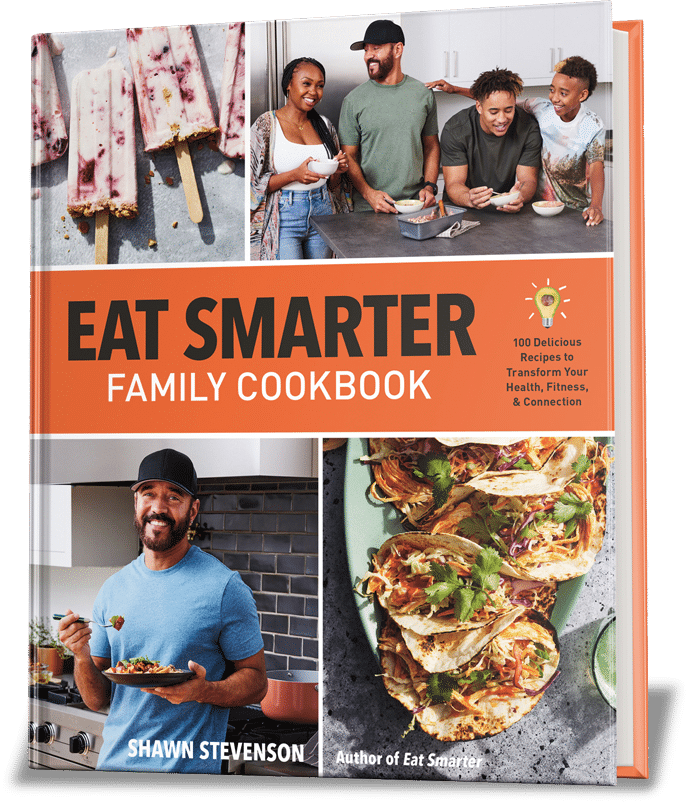
The Eat Smarter Family Cookbook is filled with 100 delicious recipes, plus the latest science to support the mental, physical and social health of your loved ones.


Share Your Voice
0 comments. Be the first to leave a comment.