
Subscribe to The Model Health Show:


TMHS 988: The Hidden Hormone Shift Driving Chronic Disease in Women – With Dr. Jessica Sheperd
For decades, the transition of perimenopause and menopause has largely been ignored. But thanks to emerging data and passionate experts, the conversation is starting to shift and expand. Today, you’re going to learn about the hormones involved in menopause and their relationship to other health conditions.
Our guest, Dr. Jessica Shepherd is a board-certified OB/GYN, author, and leading voice in women’s health and longevity. Dr. Shepherd joins this episode of The Model Health Show for an important conversation on how women can thrive throughout perimenopause and menopause. She’s sharing science-backed insights from her book, Generation M.
In this interview, you’re going to learn about the health issues that women experience throughout perimenopause and menopause, and how to ease symptoms through lifestyle-based recommendations. Dr. Shepherd is a true expert on the latest data surrounding menopause, and I know you’re going to find value in her accessible approach. So click play and enjoy the show!
In this episode you’ll discover:
- What percentage of American adults have a chronic disease. (0:26)
- The three main reasons why women are more susceptible to certain health issues. (2:46)
- Why the perimenopausal phase is like a dimmer switch. (6:41)
- The importance of body awareness during perimenopause. (7:51)
- How hormones are linked to cardiovascular disease. (10:00)
- What women need to know about osteoporosis. (13:17)
- The critical role of strength training for women. (16:59)
- How the thyroid is affected by hormonal shifts in menopause. (18:02)
- The connection between the thyroid, hot flashes, and menopause. (19:40)
- How metabolic syndrome can be caused by perimenopause and menopause. (22:28)
- The benefits of hormone replacement therapy. (27:51)
- Why sleep is critical during perimenopause and menopause. (30:52)
- Dr. Shepherd’s prescription for diet and exercise for women in mid-life. (39:07)
Items mentioned in this episode include:
- Themodelhealthshow.com/ourplace – Use code MODEL to save up to 40% off sitewide on toxin-free, ceramic coated cookware!
- Paleovalley.com/model – Use code MODEL for 15% off!
- Generation M by Dr. Jessica Shepherd – Read more about living well through menopause!
- Modern Meno – Join Dr. Shepherd’s longevity and menopause community!
This episode of The Model Health Show is brought to you by Our Place and Paleovalley.
For a limited time only, save up to 40% off during Our Place’s spring sale. Use my code MODEL at themodelhealthshow.com/ourplace.
Use my code MODEL at Paleovalley.com/model to save 15% sitewide on nutrient dense snacks, superfood supplements, and more.
Transcript:
SHAWN STEVENSON: Welcome to the Model Health Show. This is fitness and nutrition expert Shawn Stevenson, and I'm so grateful for you tuning in with me today.On this episode, you're gonna discover one of hidden reasons for our skyrocketing rates of chronic diseases in the United States. According to the CDCs latest data, 75% of American adults now have at least one chronic disease. Now, we know that this is a multifaceted issue, but there is a specific hormonal change that's contributing to specifically five chronic conditions are again, heavily influenced by the hormonal changes that happen in perimenopause and menopause and today you're going to learn some practical ways to defend against them.
And you're also going to learn the truth about some controversial treatments like hormone replacement therapy, aka HRT and much more with our special guest and she's one of the world's foremost experts in this subject matter. And without further ado, let's dive into this conversation with our special guest and our topic of the day. Dr. Jessica Shepherd is a board certified O-B-G-Y-N, chief Medical Officer of hers and author of Generation M, the chart topping book, redefining women's health, a leading voice in women's wellness and longevity.
She's a regular all over major media, including Good Morning America, the Today Show. Live with Kelly and Mark Vogue, cosmopolitan, and many other media outlets with a no nonsense approach and deep medical expertise. She's helping women cut through the noise, take control of their health, and feel their best at every stage of life. Let's dive in this conversation with the one and only Dr. Jessica Shepherd. Dr. Jessica Shepherd, thank you for coming to join us today.
DR. JESSICA SHEPHERD: Hello. How are you?
SHAWN STEVENSON: I'm doing fantastic.
DR. JESSICA SHEPHERD: Good.
SHAWN STEVENSON: I'm doing fantastic. You're gonna help us to answer the questions and understand the inner workings of the universe today.
DR. JESSICA SHEPHERD: Mm-hmm.
SHAWN STEVENSON: All right. I'm gonna put.
DR. JESSICA SHEPHERD: I'm ready for this.
SHAWN STEVENSON: Solely in your lap. Listen. According to the CDCs most recent data, 75% of American adults have at least one chronic disease, and it's slightly higher prevalence with women. What do you feel from your experience? Your clinical experience?
DR. JESSICA SHEPHERD: Yeah.
SHAWN STEVENSON: And also just the emerging data is causing so much disruption, specifically with women's health today.
DR. JESSICA SHEPHERD: I mean, that could probably take the rest of our time here, but I think if I were to put it into three categories, is research probably the number one thing. It wasn't until the nineties that research really wanted women to be included in outcomes that impacted women. And so I think when you look at it from a perspective of if we have outcomes and we have data, we actually need to use the population in which it's serving. So there's that. Two, I do think that there is a gap in women, and I call it the magic of midlife from when they hit that perimenopausal menopausal state and where their hormones decline.
It really is the starting cascade of how the body is able to respond and optimize itself. And then you have a good 20 years of where women go without these hormones. And then you start to see the influx of the chronic disease state. So it never happens overnight. Chronic disease doesn't happen overnight. It's in chronicity and it's happening over time. And that time span really is important. And we can get into that a little bit later. And then the third thing that I will say is stress. Stress impacts women differently and many times they carry more stressors than we would see in men. Men typically not to say that their stress is not as important, but it usually will be in very succinct categories of maybe financial or work stress.
Whereas women typically will carry the stress from their families, their communities, their children, and that wreaks havoc on a woman. Much more than we know. And many times women are actually taught not to respond to the stress, suppress it. And when you suppress your stress, that increases inflammatory markers and the way your body responds. And over time, your body's like, I can't do this anymore.
SHAWN STEVENSON: Yeah. Yeah. Thank you. I'm so glad that you brought up that stress component.
DR. JESSICA SHEPHERD: Yeah.
SHAWN STEVENSON: You know, and obviously there's a lot of emerging data regarding the stress and impact and the inflammation and whatnot. But, you know, it's this overall life change really, you know? Like the conditions that we're in now are so dramatically different from even a few decades ago.
DR. JESSICA SHEPHERD: Completely.
SHAWN STEVENSON: And with that being said. It's only recently that, as you mentioned, number one here, the lack of research. And actually studying women. Which is crazy that this was.
DR. JESSICA SHEPHERD: Isn't that crazy?
SHAWN STEVENSON: You know.
DR. JESSICA SHEPHERD: The nineties.
SHAWN STEVENSON: Yeah.
DR. JESSICA SHEPHERD: That, is like we were around in the nineties.
SHAWN STEVENSON: Right. We were here.
DR. JESSICA SHEPHERD: We were, we were around and this is when, at the highest level of what you can see in science and representation of what that means was when they were like, let's include those people, call 'em women.
SHAWN STEVENSON: Part of it was of course the complexity of women like let's just take this out because there's too much complexity here. There's cycles involved here. There's life cycles involved here.
DR. JESSICA SHEPHERD: Right.
SHAWN STEVENSON: Let's just remove it or look at women as smaller men basically. And you know, thankfully that's changing right now and you're one of the leading voices in this. So I'm very excited to talk to you about this. And so to pivot to that conversation around perimenopause and menopause, you know, right now, I mean, superficial. Goals are a driver for a lot of people, right?
DR. JESSICA SHEPHERD: Yeah. Yeah.
SHAWN STEVENSON: Weight loss, having the body composition, we want energy, just feeling good in your body and chronic disease is kind of the opposite of that and this is the norm now.
DR. JESSICA SHEPHERD: Right.
SHAWN STEVENSON: And so having that good state of health is actually, you're in the minority. But we are seeking to change that. And to do that, if you could, can you help us to kind of just illuminate this, some of the missing pieces when it comes to perimenopause and menopause? In your book, you talk about like a dimmer switch going on. Can you talk about that?
DR. JESSICA SHEPHERD: Yeah. The dimmer switch is that perimenopausal phase, and even if you think about it in a gas tank analogy, a dimmer light, it's over this 10 to 12 year timeframe that women typically won't necessarily feel it, you know, catastrophically.
They are like, Hmm, something's going on. Right? And so over the course of this 10 to 12 years, you start to see where our hormones, and when I say hormones, you know, throughout this segment, it's gonna be estrogen, progesterone, and testosterone, and namely estrogen, because that seems to be the most profound and kind of gold star of hormones when we think of women and reproductive hormones.
Even though it's not truly a reproductive hormone, it's much more than that. Progesterone is actually the first hormone that starts to decline in perimenopause. And this dimmer switch of estrogen is, it's just dialing down ever so subtly. Like you walk into a room and you have a dimmer switch, and if we were sitting here and just like over the course of our time, the light was getting just dimmer over time, you don't notice it, right, right away. Versus if someone walked in the room and just like shut it off, that's a different experience. And so it's again, this ability to notice it. That's why I really focus on body awareness, like really what's going on in my body and actually embodying it to say something is, that's where we want to meet women in the perimenopausal phase is during this dimmer switch phenomenon.
And because it's, that's where we have the most opportunity, when we have the most opportunity to impact. I will always say this, humans, we are like creatures of habit. And we know over time what benefits us in the best is change of habit and lifestyle, right? And that could be a whole nother kind of segment of what lifestyle changes mean. But I would never expect someone to walk in and I'm like, okay, by tomorrow we're gonna fix all these things, which is gonna give you the best, you know, sustainability in life ever. So that's where we wanna capture women is during that dimmer switch phase so we have the best way to infiltrate with change in lifestyle routine habits. What is gonna work for me, what isn't? And that way it's more of this integration of this beautiful life that you look forward to, rather than what we do see in chronic disease is, oh my God, now your body organs are really failing and we gotta do something right now.
That's, that's not how we should seek to live our lives. And that's why I believe that perimenopause is a beautiful landscape for us to make some really big change.
SHAWN STEVENSON: Yes. I love this so much. In the book. And just to tie this back to what we started with chronic conditions. We see a potential uptick in five specific chronic conditions as a result of, or just around the phenomenon, the changes that happen during menopause for women and you detail each of these five conditions. And again, it's really important for us to speak this and to understand like what is behind these changes. And one of those is cardiovascular disease uptick. And can you talk about that relationship with, with women, menopause and cardiovascular disease?
DR. JESSICA SHEPHERD: Yeah. Cardiovascular disease, just even starting out as number one killer of men and women. But women globally, and I think we don't focus on that a lot. We may say it a lot, but I don't know if it like resonates because we do focus on a lot of other things when it comes to mortality and morbidity, namely breast cancer, and I'm sure we'll get into that later. But the, what I had said before about estrogen being a re reproductive hormone is that yes it is. But it's also so much more. And when you truly understand hormones and how they're messengers and they are kind of the signaling of what the body is able to do and how it's best able to do that thing.
Estrogen receptors are all over our body, so we typecast it, literally typecast it to just the pelvis we like. It's just this little ovary that has estrogen. It's just about periods when really we look at bone, muscle, brain, gut, and heart. All have estrogen receptors. So if we think of estrogen as this messenger that is so prevalent throughout our lives, and then we have a complete shutoff of this messenger. The organ that it's sending a message to is like, so I'm gonna need that hormone here, and it's not being delivered.
The heart muscle is therefore going to multiple things, it's gonna decrease its contractility, the ability for it to do the main thing that it do, which is like push blood through that organ so it can get it to the rest of the body increasing significantly. We see this so much in women going through the perimenopause, menopausal phases increase in the plaques and the atherosclerotic plaque in the vessels. So if you have an uptick in that, and then also the ability for just to ask to perfuse the rest of the body.
Then you're gonna start to see cardiovascular disease, not only from an aging perspective, 'cause there's also aging as well, but now it's compounded with a decline in estrogen. Not being able to shuttle this message to the heart, to being like, do your best thing. And so with that, that's why we start to see with women, a lot of times after that menopausal transition with no estrogen, their heart is like, well now I'm really not being able to do what I need to do. And then in that we have cardiovascular disease, which leads to cardiovascular death.
SHAWN STEVENSON: Hmm. Wow. Oh my goodness. Thank you for sharing that connection. Now of course, we're gonna talk about the. Some of these, wait, some of the things that kind of jump out as top tier and connected, which is like HRT, right? We'll talk about that.
DR. JESSICA SHEPHERD: Yeah.
SHAWN STEVENSON: In another chapter in this conversation. But within this context of you sharing this information, you share why it's even more important to double down, especially in perimenopause to set yourself up for a healthier transition and protect your heart health. And you share some data regarding the Mediterranean diet and really lean, leaning into something closer to that with more intention to help to reduce the risk of cardiovascular events by like 28%.
DR. JESSICA SHEPHERD: Yeah.
SHAWN STEVENSON: Leaning into that. And so that was number one. Number two is osteoporosis.
DR. JESSICA SHEPHERD: Yep.
SHAWN STEVENSON: Is another, you know, again. If we're looking at chronic conditions that millions of women are suffering with and understanding the connection with perimenopause and menopause and osteoporosis, enlighten us please.
DR. JESSICA SHEPHERD: Yeah. Osteoporosis is one of those diseases we always categorize as it happens when you're older. And I think we've said this before as we've been speaking, is nothing happens overnight. It's over the course of time, the body will still, the body is so adaptable. The body's a beautiful machine and it can adapt, but at some point it's like, I've adapted for so much time and I haven't really been given what I need now, I can't function.
Right? So it's a functionality issue in aging in the ability to capture people in the perimenopausal phase for what's gonna benefit them in the end. So we have bones without who do have estrogen receptors. Now we don't have estrogen, and so it doesn't have the ability to sustain the part of the bone that really gives it its strength and what happens over 20 years, it just starts to deplete from bone.
So you have decrease bone mineral ben density, but also decrease in muscle mass, which if you think of it as a complex together, when you get older, you don't have the strength in your muscle to give you the ability to withstand force or decline for, or you know, prevent a fall. But then when you fall, your bones are like, well, I'm gonna break 'cause I'm like pretty much powdered bone at this point because I haven't had, whether it's estrogen from a receptor, a receptivity standpoint, or lifestyle.
No resistance training, no weight training, and all of these things come together. Our bodies are all connected, and when we don't allow women to understand the appreciation of what happens in this decline and this dimmer light or this dimmer switch approach, then we're only setting ourselves up for 20 years from now where our body is like I've been without for so long. I can't sustain at this point.
SHAWN STEVENSON: I've got something super special to share with you today. If you're looking for safe beautiful non-stick cookware, i've got you covered every day. My family cooks with the cookware from our place, and right now they're having their exclusive annual sale with their cookware available for up to 40% off from now until April 12th 2026. You'll receive savings of up to 40% off site-wide across cookware, appliances, bakeware, and tableware. Just go to fromourplace.com/model to take advantage. Right now all of their cookware and appliances are non-toxic pFAS free ceramic coated with nearly 100,005 star reviews. Plus they have their titanium coated cookware as well.
And every day my family utilizes their award-winning cookware, pressure cookers, air fryers, and more. And with their 100 day risk-free trial, free shipping, and free returns, you can give this gift to yourself and others with total confidence. Again, take advantage right now up to 40% off when you go to fromourplace.com/model. That's F-R-O-M-O-U-R-P-L-A-C e.com/model to take advantage right now. And now back to the show.
SHAWN STEVENSON: Yeah. So, and you just mentioned one of the kind of proactive ingredients, which is strength training.
DR. JESSICA SHEPHERD: Oh my God, yes.
SHAWN STEVENSON: But being more intentional about it than ever in that cycle of life. And again, it's just like this wasn't a big part of our culture.
DR. JESSICA SHEPHERD: Oh God, no.
SHAWN STEVENSON: Previously.
DR. JESSICA SHEPHERD: No.
SHAWN STEVENSON: And now thankfully that's changing. But this is like a double down message to strength training.
DR. JESSICA SHEPHERD: And when I say double down, let's go with triple down. That's a triple down message because just kind of like framework of how society is really built in a patriarchal type of system where something is for men and something is for women. And so we're fed that message over time and for a long time it was women do cardio and men do white training. And lo and behold, our bones and our muscle were like craving resistance training and weight training because it needed that force, that mechanical force in order to build the bone, sustain the muscle, so that when we get older, then we have the ability to have the strength with not have falls.
And resistance training is not only just for muscle and bone. I mean, that's like one of the primary benefits, but it also is for brain health as well. And what do we see that increases over the course of time, especially in women, is dementia, namely Alzheimer's, dementia? Mainly women get Alzheimer's.
SHAWN STEVENSON: Hmm. We are putting the puzzle pieces together.
DR. JESSICA SHEPHERD: We're trying, we're trying to connect the pieces today.
SHAWN STEVENSON: Number three.
DR. JESSICA SHEPHERD: Yeah.
SHAWN STEVENSON: And this is something that, again, is more prevalent in women. Thyroid disease.
DR. JESSICA SHEPHERD: Yeah. Thyroid disease is again a hormonal issue, right? So we have hormones, which from the central part of our brain, from the hypothalamus, secretes all these hormones and it tells the body, send the message to do this, send the message to do this.
Thyroid, especially after the age of 40, really takes a hit, primarily in women, where we start to have dysfunction. And so with that comes again, this, these subtle changes where you have symptoms and you're not quite sure. I think, you know, even from a medical standpoint, we probably could do a better job at educating on how important the thyroid is and what subtle signs to look for and not to wait for disease. I'm really big on when you think the functionality of the body is not to wait till it's depleted, to give it the thing that it needs. But help people understand as it's starting to decline, as there are subtle changes, what can we do both in your life, whether it's from a medication standpoint to get you optimized before you get completely depleted, and now we're fighting disease state.
SHAWN STEVENSON: With the thyroid specifically, which, you know, some consider it like the metabolic hub as far as our or our glands are concerned. I'm curious, and I have you here to ask this question, you know, because again, millions of women experience this with hot flashes. And I'm wondering if the thyroid has any influence on this because it's, you know, if we got this HPA axis and there's a lot of activity up and down.
DR. JESSICA SHEPHERD: Yep.
SHAWN STEVENSON: That axis that's helping to kind of regulate temperature. You know, and your thyroid being a hub of just metabolic activity.
DR. JESSICA SHEPHERD: Yep.
SHAWN STEVENSON: You know, I'm curious like what's causing these hot flashes?
DR. JESSICA SHEPHERD: So, hot flashes, I actually love explaining where hot flashes come from, but I'll go back to your question again like, is thyroid potentially a part of this? What I will say is when we think of the HPO axis and like kind of the neighborhood of hormones from the hypothalamus, they all integrate to some degree, right? It's like a neighborhood and they're all like friendly neighbors. So when one is suffering the other typically will feel some of that kind of suffering and take some kind of a hit.
Now, does it directly impact hot flashes? Not necessarily, but you will find on the reverse women who are in the perimenopausal menopausal phase, also having some thyroid issues as well. Some kind of like little abnormalities, maybe some dysfunction. And so that's why it's important when we're looking at women in that timeframe to look at all the hormones and not just focus on one.
And the other thing with, you know, metabolic rate is a lot. People have said that women going through perimenopause and menopause, it's the decline in estrogen, which declines metabolism. But that's why I like to kind of put it in two separate buckets of aging 'cause we're all gonna age, unfortunately, but the aging process is actually more responsible for decline in metabolism.
Estrogen kind of fine tunes into that for other different categories that can impact metabolic rate. But metabolic rate is truly an aging phenomenon rather than just all solely from a menopausal standpoint. But hot flashes, listen to how smart the body is in the brain there is a receptor. It's called the candy neuron, and what it does is responsible for temperature regulations.
It's kind of like the thermostat on the wall, but on that actual neuron is an estrogen receptor. And so when you have a decline in estrogen, which is not able to send the message to this neuron who solely respond, you know, is responding to estrogen is like, well, there's no more estrogen. So then you have a upregulation of the other part. And then that's when we're not able to temperature regulate. And so your body is not able to, you know, have the sensors to being like, oh, we need to click on 'cause we're too hot or we're too cold. And your body responds to that in essence, then it's just like, okay, I guess we're heating up and we're having a hot flash.
So that's why when it comes to hot flashes, one of the like most profound ways to decrease them is literally estrogen. 'Cause it goes right to that candy neuron and goes to the receptor that it's needed to regulate that thermostat.
SHAWN STEVENSON: Holy moly. Holy moly. And this is a good transition as well. Number four is metabolic syndrome.
DR. JESSICA SHEPHERD: Yep.
SHAWN STEVENSON: And the uptick that we see, you know, regarding that. I mean, this is a cultural phenomenon with metabolic syndrome, but specifically with women. Let's talk about that relationship.
DR. JESSICA SHEPHERD: Yeah. The engine of our bodies and what happens with input and output? What happens with expenditure? What happens with the body able to adjust and pivot and recover is based on insulin and glucose like that is the hub of how our body is able to do most of how we function.
And insulin and glucose is a very intimate relationship, which often is disrupted from other disease states, from other things, but aging is one of them. But when women go through perimenopause and menopause, obviously we know that estrogen declining is going to have an impact on how insulin and glucose are able to regulate respond glucose.
We know that. So think of, again, looking at the body as this beautiful machine, we have a decline by three to 5% per decade in our muscle mass, right? So our muscle's already on the way out from probably the age of 35 trying to decline per decade and muscle is the largest absorber in addition to the brain of glucose.
So if your muscle mass is declining and you're not absorbing glucose, what is it gonna do? It's gonna sit in the body and it's not gonna be able to be used as fuel, which is what it's for. But we also then have this shift in estrogen, which is declining, and it's not able to meet the demands of helping this relationship between estrogen and glucose 'cause it does depend on it. And so it's this multifactorial thing that's occurring decline in muscle. It's not being able to absorb, it's sitting in the body. The liver is not meeting the demand, as well as being able to absorb it and store it, but then estrogen is also declining and not being able to help optimize.
All of these functions that are going on in the body. So what do we see Glucose sits around, what does glucose do? And it sits around, it converts to fat. Then we start to have more of our peripheral fat and the fat around our organs. And the beauty of this is we all have the ability to see this coming, right? Because it's a part of aging, it's a part of perimenopause. So it's not like we can escape it, but what we do have the opportunity to do is understand it earlier, adjust, use some changes in our lifestyle, our food intake, considering HRT in order to help the body more.
SHAWN STEVENSON: So again, we've got five of these that you cover, and you mentioned a couple of other offshoots as well. You mentioned dementia, but one of them that isn't talked a lot about, unfortunately, is bladder health. You specifically highlight as increased incidents as a result of menopause. So talk about that relationship.
DR. JESSICA SHEPHERD: Ooh. I'm glad you brought that up. That means I get to say the word vagina. So all parts of the body I know right, are impacted by this hormone decline. But like we know reproductive hormones in the pelvis are one of the. Biggest absorbers of estrogen, progesterone, and testosterone. But I feel that if I can give a depiction of what the bladder is and where it's surrounded by is if we were sitting in this room, so the room that you and I are sitting in right now, I'll label it the vagina.
We are in the vagina room right now. Are you excited? And the floor above us is the bladder, and then the floor below us would be like, what we would say is the rectum. And so basically it's just showing the continuity between all of them and the close proximity. So the bladder really has a lot of function with estrogen.
And so when estrogen declines, the bladder is like for bladder health continuity, and what I'm able to do, I can't do it as well, and so you start to see increase in urinary tract infections. You also start to see increase in what we call urinary incontinence, so that's like leaking of urine, which by the way is one of the biggest reasons you see women actually admitted to nursing homes is because they have urinary incontinence and it's really hard for them and for maybe their caregivers to keep ahold of. And that's a big reason why you see women going into nursing homes. So when we think of quality of life, when we think of reasons that women die, a lot of it can be from sepsis, urinary incontinence.
And if that's something that we can tend to early on, why not? Which is why we should be giving women vaginal estrogen, which is different from systemic estrogen and is very safe, earlier than later.
SHAWN STEVENSON: Okay, great. Thank you for, for helping unpack these issues.
DR. JESSICA SHEPHERD: The rooms.
SHAWN STEVENSON: You know. Yeah. I love the rooms. You know, it, this has also been a big point of controversy in relationship to how.
DR. JESSICA SHEPHERD: Yep.
SHAWN STEVENSON: To treat this and hormone replacement therapy. And you really pull back the curtain and reveal, like this was based on this kind of flawed data from a couple of decades ago. And you unpack all the different flaws of course. And point to the value that it can hold. And you also are clear, like this is not for everybody, but you feel that it can help a lot of women and that managing the symptoms, the transition, and most importantly, helping to reduce the risk of these conditions. So let's talk about hormone therapy and the value that it can have.
DR. JESSICA SHEPHERD: Yeah. You know, like in a snapshot of where we are currently with hormone replacement therapy, or if you even call it menopause hormone therapy or just hormone therapy is that we are basically at this point where we are Olivia Poping. What happened 20 years ago with this bad PR campaign of hormones are bad for you and it causes breast cancer.
It was literally taking a message that was inaccurate. It was not provided by the people who should have provided that information and disseminating it to so many people who likely were going to being like, this is bad for me, I'm not going to do it. And now when we look back at that data, and we have known this for years, by the way. You know, in medicine, is that the list of benefits of hormone therapy completely outweighs, like, quadruple outweighs the risk of hormone therapy. 'Cause now as we're starting to, you know, counsel women and allowing them to feel safe with being like, you are not gonna die and you're not gonna get breast cancer, is allowing them to see the benefits. And we've already gone through a bunch of them.
Cardiovascular, bladder disease, all of that are the potential benefits by taking hormone therapy in addition to feeling good and in addition to WellSpan getting older, but living older? Well, and so, you know, I feel that it is my responsibility and in a lot of people who are in the menopause kind of atmosphere, the knowing what the data is, being able to present it so that women can feel better, live longer well, and also give themselves the benefits. Even one of them decreasing the risk of colon cancer when we've seen colon cancer is only increasing, so why not decrease that risk and letting women know that it does not cause breast cancer.
That was the main reason why women were like throwing it down the toilet and prescribers doctors weren't giving It is because of breast cancer and now we know the data is. Not what it was said, and it was not the estrogen that caused the breast cancer.
SHAWN STEVENSON: Yeah. And you also unpack the different approaches to hormone replacement therapy.
DR. JESSICA SHEPHERD: Yes.
SHAWN STEVENSON: The pharmacological approach. The bioidentical approach. And just again, providing information.
DR. JESSICA SHEPHERD: Yeah.
SHAWN STEVENSON: And with this said before, we. Before I let you go, there's a couple of other things I really wanna talk to you about.
DR. JESSICA SHEPHERD: Yes.
SHAWN STEVENSON: We have to talk about them and you know, it's, there's this really dramatic point of irony really, when it comes to sleep and perimenopause and menopause.
DR. JESSICA SHEPHERD: Yeah.
SHAWN STEVENSON: The challenges that it might bring about and the value that is even more needed. And so you highlight that as well. And so can you talk about that connection?
DR. JESSICA SHEPHERD: Yeah. You know, sleep is definitely this kind of new part of health where we're seeing the benefits. I'm sure you know this, you wrote a book on it, and when we look at sleep health, we know that it's a very big predictor if you're at loss of sleep, of good quality sleep as well, is that it's a very true predictor of health when we think of heart disease, kind of sleep apnea, obesity, and diabetes, right?
So not only that, is one we live in a culture where sleep is not important. I used to be part of that culture. You sleep when you die, yada yada. And now I'm like, give me my sleep. Well, my sleep is that women typically need about 30 more minutes of sleep than men. We're not at a rate where we're getting the amount of hours that we should be getting when it comes to sleep, but during the perimenopausal menopausal phase, sleep is interrupted because of the decline of hormones.
Namely progesterone is one of them, which is really one of the hormones that help with sleep quality and the fact that it's a relaxing hormone and it helps you achieve relaxation. And then with estrogen, most women do wake up in the middle of the night because again, they're having hot flashes and night sweats, and that's what's waking them up. So that's another reason why. You know, kind of repleting those hormones can allow you to relax and then also allow you to stay asleep because you're not suffering from hot flashes and night sweats. And the last thing is there is an increase in how the brain functions during perimenopause and menopause because of our neurotransmitters, they also talk to each other, and women typically seem to have an increase of depression and anxiety.
And a lot of those features are seen at night when women start to ruminate more, when they can't quite shut their brain down in order to get the quality and quantity of sleep that they need. And that also is attributed to the ratio of estrogen and progesterone that's disrupted, therefore disrupting their sleep from just a pure psychological standpoint of rumination and anxiety.
SHAWN STEVENSON: Hmm. Wow.
Whether it's from injury, age related wear and tear, or even chronic diseases and infections, our stem cells have to kick into action to help us heal. There's a specific compound that's been identified in turmeric that's getting a lot of attention right now for its impact on our stem cells. This compound is called Rone in a study site in the journal stem cell research and therapy details how our neuro stem cells proliferate 50 to 80% faster when exposed to varying levels of ourone.
The study concluded that, " ourone thus constitutes a promising candidate to support regeneration in neurologic disease". How powerful is that? In addition to the remarkable power of our turon, turmeric has many other phytonutrients that support stem cell function. A little known reality is that stem cells act upon inflammation and many people are experiencing a chronic state of systemic inflammation that's literally draining their body's supply of stem cells. One of the most notable anti-inflammatory compounds ever discovered comes from turmeric too. That nutrient is called curcumin. And curcumin is shown in numerous studies to reduce inflammation, including.
In a meta-analysis cited in the Journal, frontiers and Pharmacology, plus a randomized placebo controlled trial conducted by scientists at UCLA found that curcumin appears to reduce inflammation in the brain and even improve memory and attention span. And of course we could take this advice and start adding more turmeric to a variety of dishes, including curries to scrambled eggs or whatever the case might be.
But keep in mind that the results seen in these studies are from therapeutic amounts of turmeric that would only come in supplement form. And the turmeric supplement that I've been using for years is certified organic with no binders, no fillers, and has an outstanding money back guarantee. It's the turmeric complex from Paleovalley, and right now you're gonna get 15% off of their incredible turmeric complex when you go to paleovalley.com/model.
That's P-A-L-E-O-V-A-L-L-E-Y.com/model for 15% off. I absolutely love their turmeric complex. It's always there on my superfood shelf for whenever I need it. So definitely head over there, check them out. Support reducing inflammation. Support your stem cells. And even support your cognitive health with the turmeric complex. Go to paleovalley.com/model 15% off and now back to the show.
SHAWN STEVENSON: You also highlight within that something I was kind of surprised at. But you know, it is proven to be effective. Cognitive behavioral therapy.
DR. JESSICA SHEPHERD: Oh yeah.
SHAWN STEVENSON: In the context of helping to improve sleep for women.
DR. JESSICA SHEPHERD: Yeah. That's one of the kind of undertones or the things that people don't talk about much when we think of cognitive behavioral therapy, and we were talking about this before, is that many people want the quick fix. But we all know with cognitive behavioral therapy that it takes time because it's awareness, it's understanding the fundamental basis of why some sort of behavior or some sort of response and reaction is decreasing your sleep quality. So it takes time to get there, but we have clear data that shows that once that can be established, you do start to see sleep benefit from it.
So the thing that I like to say about cognitive behavioral therapy is even if you think, I don't wanna do that, or I just wanna do hormones, it doesn't mean you can't have a combination of both. There I say that. Choose your own adventure of how you want to go through life, whether you wanna age well, whether you wanna consider hormone therapy, whether you wanna consider the dietary, nutritional aspect of your life and how that needs to change as well and also exercise.
Everyone gets to choose their own adventure, but what I will do is keep going around talking about the benefit of the things that we do. If we take time to do it, and we honor our bodies in a way. That it's an investment. The investment of health in our bodies is not gonna show up tomorrow. It's gonna show up in 20 years when you really need it, because you have the reserve, you have the habit, and you have the routine that your body can appreciate. It's the same thing for finances. I would never tell you, you know what? When you retire, start saving, then they'd be like, what in the hell kind of advice is that?
We always say, start saving now so that when you do retire, you have something to fall back into. It's the same thing for our health, but I really feel we have to start to, as an individual, prioritize our health and you get to dictate. What adventure you wanna do in order to do that.
SHAWN STEVENSON: Yeah. You just made me realize how often we are looking at this, like hitting the lottery.
DR. JESSICA SHEPHERD: Yeah.
SHAWN STEVENSON: You know, we're approaching it like when hit the lottery.
DR. JESSICA SHEPHERD: It's that lottery ticket.
SHAWN STEVENSON: Or Amazon priming our fitness.
DR. JESSICA SHEPHERD: Right. Yeah.
SHAWN STEVENSON: You know what I mean? Like, I won it today. Yeah. I've been, you, I ate right for 48 hours. I worked out like, I don't, you know what I mean? So it's just really bringing some reality back to the table and also practicing proven principles.
And by the way, just with that study that I mentioned with cognitive behavioral therapy. This was published in JAMA Internal Medicine, you cited in the book, and specifically targeted women with menopausal sleep problems and six CBT therapy sessions over eight week period had significant improvements in their sleep quality. You know, and so there's so many different things, tools that we have at our disposal. It's just putting them into play.
DR. JESSICA SHEPHERD: It's putting them them into play.
SHAWN STEVENSON: And you also talk about the environmental change. Again, it's kind of stacked against us with technology. You know, the doom scrolling and all the things.
DR. JESSICA SHEPHERD: Yeah.
SHAWN STEVENSON: And so really today, more than ever, we've got to take back control of our environment. And if you could, can you give us your prescription. When it comes to, let's start with I wanna get three specific areas.
DR. JESSICA SHEPHERD: Mm-hmm.
SHAWN STEVENSON: Let's start with your exercise prescription for perimenopause and menopause.
DR. JESSICA SHEPHERD: Yeah. So I'll start it out really, you know, hot and heavy as you gotta lift heavy shit. And I think for so long, again, that messaging of like only men can really lift heavy is there is a fear of if I lift heavy then I'm gonna bulk. But what did we say earlier is your muscle is already on its way out. It's already diminishing and declining in muscle mass over your decades. And it's increased when we go through perimenopause. So you're actually trying to use heavy weight to offset what's already going on biologically and when lean muscle mass is given these, this heavy weight, it's not to bulk people who bulk.
And you know this too, and I'll give a little like history lesson of myself. I got my undergrad in exercise physiology and so that's where this love of the body came from is you really have to do a lot of extra stuff in order to bulk in the way that you see men doing that. In women's bodies, when we lift heavy weights is actually allowing the muscle fibers to adapt to hypertrophy, but it requires that mechanical force in order to build strength and increase the muscle fiber. And so you're not gonna see bulking in the way that you do. You're actually trying to preserve your muscle mass. So I feel that if you can do that at least three times a week, because I also wanna know, you know, for the world that I live in the world of experts and the people that we talk to, they live a different life.
They live a different life where they're, you know, fixated or focused on these kind of modalities that we both know are like best for a lifestyle. The everyday person who doesn't necessarily have time for that, I also wanna appeal to them because that's not their world. And so if they can get to three times a week of heavy lifting, you will see a significant difference in how your body is able to respond and in your body, and it doesn't mean that cardio is bad. There's also the other part of that is that we're like, oh my God, you can never do cardio again. Is that you just have to change the ratio. If you think of a plate and you're gonna be like, how am I gonna redistribute this thing? You're going to increase the amount on your plate that's towards weightlifting and just decrease cardiovascular, but should never be taken off the plate.
SHAWN STEVENSON: Mm, I love it. I love it. Alright, so that's the exercise prescription. Basically a minimum three days a week of strength training.
DR. JESSICA SHEPHERD: Yes. In including cardiovascular, you know, exercise for maybe the other two days. But also another part of that too is to incorporate some form of what I call conditioning in the sense of whether that's with flexibility, whether that's with posture and the ability, because that also decreases as you get old and the ability for you to just stand and move and posture. And then also that can be done through like Pilates, working on our core yoga.
SHAWN STEVENSON: Love it. Let me see you do that. Yoga. What is your prescription? I know that this is complex. But just a general prescription for our nutrition, for diet during.
DR. JESSICA SHEPHERD: Yes.
SHAWN STEVENSON: That phase of life.
DR. JESSICA SHEPHERD: And when, and I know this and I wanna preface it too. When you say diet, you're not talking about diet to lose weight. You're talking about diet as far as like what you consume, that also needs to change in the narrative of how important protein is. But I will make a kind of a statement of protein is you can fixate on protein all you want, but if you're not doing the workout, then you're not doing the complete package that protein is required for either.
So protein needs to increase, and I usually will quote one to 1.2 grams per kg. So you need to do a little conversion to do that. But the other part of that is I don't want people to get there by tomorrow. If you weren't doing that today, this is all progression. This is changing habits. I don't even think I'm at the requirement that I need 'cause it's not necessarily easy. But I do have a goal. We are not gonna eliminate carbs. We're gonna look at what types of carbs we're eating in the amount complex carbs. And then I always say, eat the rainbow, like making it easy. Eat the rainbow. If you look at your plate and it's like really monochromatic, you need to add some color to that.
And then the last thing that I would say is for supplementation and vitamins, again, looking at deficiencies. Look at if you have deficiencies. Vitamin D is actually one of the ones that women typically are low in. So looking at vitamin D and then if I were to say another supplement, I'm very big on creatine when we look at the ability for it to help with muscle, but also brain health.
So going to your five grams, 10 grams if you can get there. And then some people who are more of the elite athlete are really, really use utilizing exercises to, you can even go to about 15 to 20.
SHAWN STEVENSON: Awesome. Awesome. Alright. So, finally and there's so much more, by the way.
DR. JESSICA SHEPHERD: There's so much more.
SHAWN STEVENSON: This generation M.
DR. JESSICA SHEPHERD: Yes.
SHAWN STEVENSON: Is the book and you cover this and so much more in the book. It's a wonderful guide.
DR. JESSICA SHEPHERD: Thank you.
SHAWN STEVENSON: And I wanna ask you about this one, which is, I'm asking this because of something that you really helped to illuminate in the book, which is a lack of conversation and connection around this change historically.
DR. JESSICA SHEPHERD: Yeah.
SHAWN STEVENSON: Alright. My wife is from Kenya. And you know, again, just this, they very close lineage.
DR. JESSICA SHEPHERD: Yeah.
SHAWN STEVENSON: But this isn't something that her mom talked about.
DR. JESSICA SHEPHERD: No.
SHAWN STEVENSON: When it comes to mom did it perimenopause, right? It's just like this cultural thing and it's just like kind of like you go off and you do this on your own. And so I want to ask you about your prescription for community.
DR. JESSICA SHEPHERD: Yeah.
SHAWN STEVENSON: Because you mentioned the impact of stress and how it can worsen all manner. This, you know, phase of life and what I've seen time and time again is the power of community to help alleviate so much of our struggle. So give me a prescription for that.
DR. JESSICA SHEPHERD: Yeah. I think women in general, if you look through the, like, the course of their lives, whether it's getting their period, pregnancy, delivery of a child, and then also going through perimenopause and menopause is. Everyone's done it, you'll be okay. Don't complain. Don't talk too much about it.
Right? So it's, it's stripping away the vulnerability of that actual stage that you're going through. And what we are starting to see, thank God, is a shift into, I'm actually okay to say how I feel, even if it's uncomfortable, and the people around you to be able to absorb that as well. And that truly is communicating and having community is even in this moment of pain or struggle or whatever it is, we actually can talk about it, and the people who are surrounding me can be of support. And once you start to see the community and the sharing that goes on with that, that's where you start to see the healing. The healing of, okay, I, I am going through this. It's not made up in my head.
I'm not crazy. But I also have people who can share their experience or what worked for them. Albeit if you listen to it or not. But now we have the side of community coming from, whether it's social media, whether it's the community of medicine changing and how we hear what people are experiencing versus just coming in with a disease.
I think this is where I'm probably most optimistic about the change in women's health is being able to have this collaborative type of conversation, which will only foster better community for everybody.
SHAWN STEVENSON: I love it. Thank you so much for sharing that. And again the book is available.
DR. JESSICA SHEPHERD: Yes.
SHAWN STEVENSON: Everywhere books are sold.
DR. JESSICA SHEPHERD: Yes.
SHAWN STEVENSON: Generation M. I love the title, by the way.
DR. JESSICA SHEPHERD: You know what? I really fought for that title because the publisher didn't want that title. And I said, of course they didn't want it. They wanted something very medical. And I was like, you know what? Everyone needs to feel that like they're a part of this time in their life and what better way, because a hundred percent of women are going through menopause, so why not be part of Generation M? Right?
SHAWN STEVENSON: Yeah.
DR. JESSICA SHEPHERD: It's like, it's like that's the club you wanna be part of.
SHAWN STEVENSON: I love it. And you, the statistics that you share in here, just like they're so eye-opening, like 40% of your life is still to come after menopause.
DR. JESSICA SHEPHERD: Right.
SHAWN STEVENSON: And to not have education around, it's just. Thank you for the work that you're doing.
DR. JESSICA SHEPHERD: Thank you.
SHAWN STEVENSON: It's, it's incredible. So again, you can pick up a copy of Generation M anywhere that books are sold.
DR. JESSICA SHEPHERD: Yep.
SHAWN STEVENSON: Is there a preferable place?
DR. JESSICA SHEPHERD: I would say, you know, going to Barnes and Noble is good. You can get it on Amazon, but you can also get it on my website, which is Jessica Shepherd md.com. And then also my community that I formed around the things that we just talked about called Modern Meno, MENO, and that's on Instagram. But we formed community where we're having webinars, we're having women to be able to talk to each other. So yeah, it's all community.
SHAWN STEVENSON: Well, thank you so much again. And what about socials?
DR. JESSICA SHEPHERD: Yeah, for social, I'm on Instagram mainly. I'm trying TikTok, but you know, that's like, I'm, I'm really old, so I'm like, teach me. Teach me how to be young. But on Instagram, it's Jessica Shepherd, S-H-E-P-H-E-R-D-M-D, and then also Modern Memo on Instagram. And then on TikTok, I am Dr. Jessica Shepherd.
SHAWN STEVENSON: Boom. Well again, I appreciate you so much for coming hang out with us today.
DR. JESSICA SHEPHERD: Thanks for having me. It was fun. It's an honor.
SHAWN STEVENSON: Yeah. The one and only Dr. Jessica Shepherd, everybody. Thank you so much for tuning into this episode today. I hope that you got a lot of value out of this. This is one to share with somebody that you care about. Keep this conversation going. We're really changing the culture when it comes to education around Menopause and perimenopause and women's health.
Overall, things are changing, but we've got a lot of work to do. So share this with somebody that you care about. And of course you could share this on social media. Take a screenshot of the episode, tag me, I'm @Shawnmodel and tag Dr. Shepherd as well so she could see all the love. And listen, we are just getting warmed up. We've got some incredible, incredible masterclasses. And world leading experts coming your way very, very soon. So make sure to stay tuned. Take care, have an amazing day, and I'll talk with you soon.
Maximize Your Energy
Get the Free Checklist: “5 Keys That Could Radically Improve Your Energy Levels and Quality of Life”
HEALTHY MEALS EVERYONE WILL LOVE
The Greatest Gift You Can Give Your Family is Health
When you gather your family around the table to share nutritious food, you’re not only spending quality time with them - you’re setting them up for success in all areas of their lives.
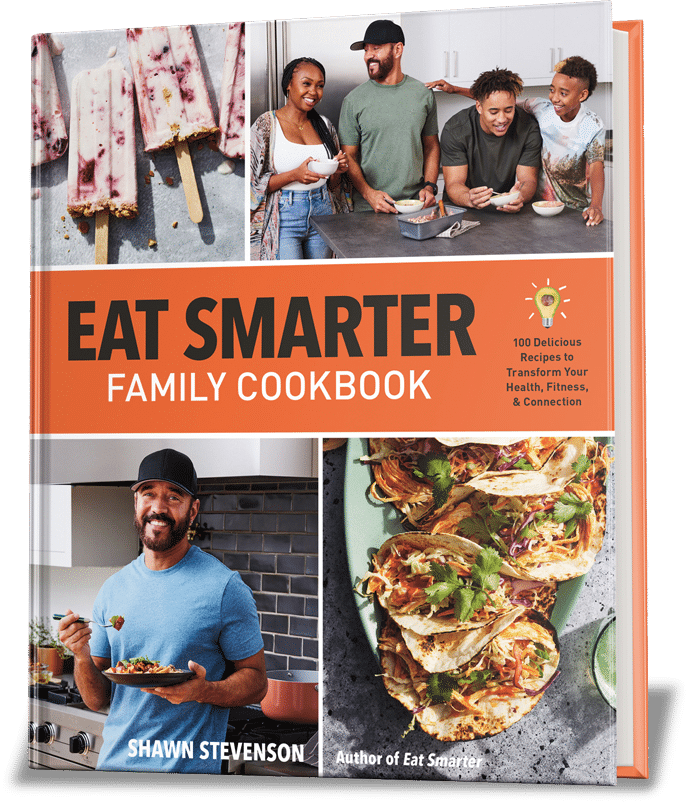
The Eat Smarter Family Cookbook is filled with 100 delicious recipes, plus the latest science to support the mental, physical and social health of your loved ones.


Share Your Voice
0 comments. Be the first to leave a comment.