
Subscribe to The Model Health Show:


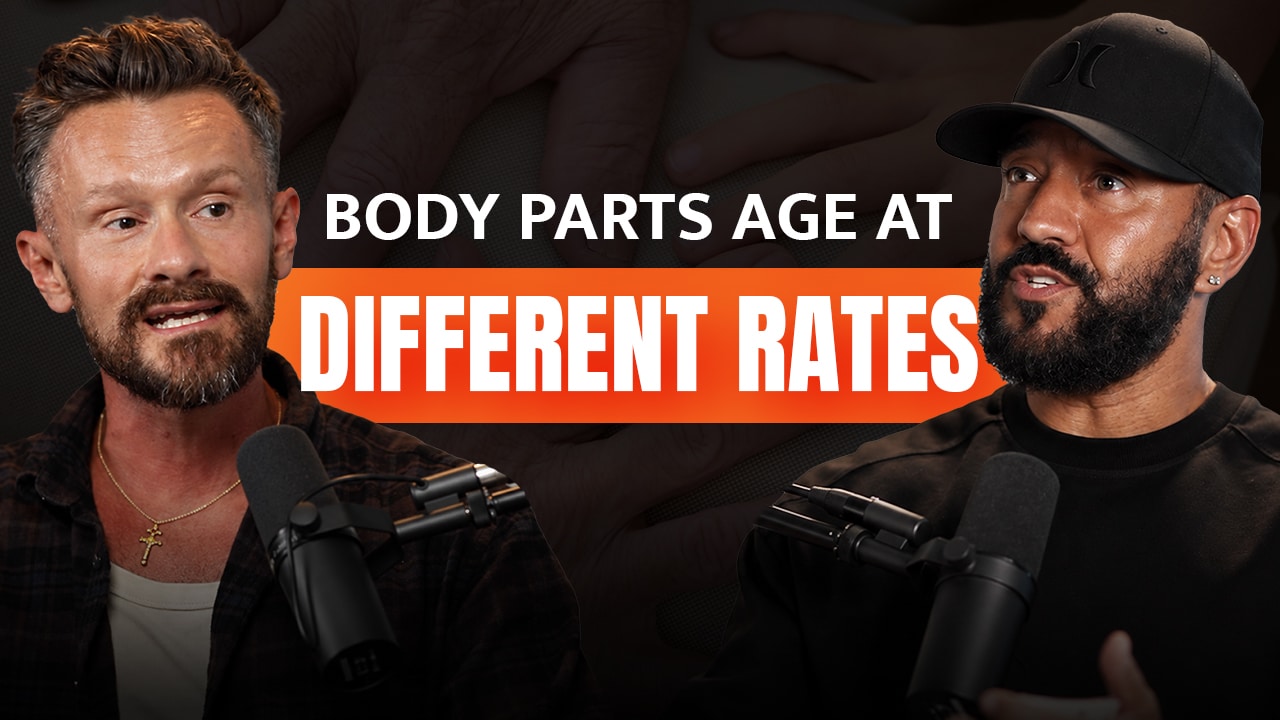
TMHS 1033: Toxic Aging: How Your Organs Can Age At Different Rates & 3 Hidden Threats to Cellular Health | Dr. Will Cole
Cellular health is at the foundation of vitality and longevity – because when you improve the health of your cells, you also reduce inflammation and target the root causes of many chronic illnesses. But how exactly do you improve the health your cells? On today’s show, you’re going to learn some fascinating insights about cellular health and how to give your body the inputs it needs for true strength and resilience.
On this episode of The Model Health Show, our guest is leading functional medicine physician and author, Dr. Will Cole. His new book, Heal Your Cells, co-authored by Dr. Josh Axe, provides a proven plan to reverse cellular aging. In this interview, you’re going to hear the latest research on organ aging, what toxic aging is, and the three hidden threats to your cellular health.
Cellular health is not only the key to longevity, but also faster healing, optimal energy, and looking and feeling better. If you’re ready to improve the health of your cells, this interview with Dr. Will Cole is going to empower you to take control of your health in a realistic, proven way. So click play and enjoy the show!
In this episode you’ll discover:
- The latest science on premature organ aging. (8:26)
- What cell ex-differentiation is. (12:15)
- The three hidden threats to your cellular health. (16:05)
- What biotoxins are. (20:44)
- A conversation on personalized medicine. (28:54)
- The bioindividuality of anxiety and depression. (38:05)
- Why you need to understand optimal vs. normal levels on lab work. (41:28)
- How to take a realistic approach to reducing your exposure to toxins. (41:52)
- What it means to support your body’s natural detox pathways. (51:01)
- The benefits of xenohormetic foods. (53:05)
- Specific micronutrients that can support healthy aging. (56:55)
- How to reverse cellular aging. (1:02:40)
Items mentioned in this episode include:
- Piquelife.com/model – Doctor-approved, cutting-edge solutions for your head-to-toe health and beauty transformation. Get exclusive savings on bundles & subscriptions.
- Paleovalley.com/model – Reclaim vibrant health with nutritional food and supplements that prioritize nutrient density and get 15% off your order.
- Heal Your Cells by Dr. Will Cole and Dr. Josh Axe – Get your copy of the new book!
Thank you so much for checking out this episode of The Model Health Show. If you haven’t done so already, please take a minute and leave a quick rating and review of the show on Apple Podcast by clicking on the link below. It will help us to keep delivering life-changing information for you every week!
Transcript:
SHAWN STEVENSON: What if I told you that no two people ages the same way? And what if I told you that within your own body, your own organs can age at different rates? You can have a very, very youthful heart and maybe even outer appearance, but your thyroid can be significantly older.
And this is what the latest research is showing. Our bodies, not only do we age differently from other people, but within our own bodies, our own tissues, our own organs can age at different rates. And we want to, of course, create homeostasis, get everything working on the same page because we are truly this conglomeration of trillions of cells working together in the community that is you.
You don't wanna have this robust, beautiful park-like environment, acres of great community and land, and then you've got low-key when you get over to your gut, it's the slums. All right? You don't wanna have this incredible expression of health and wellness with certain aspects of your body, but then others are suffering.
However, this is the case for approximately one out of five adults in the US. And our special guest today is gonna tell you about this recent Stanford study detailing this remarkable phenomenon. We're understanding aging at a whole new level, and we're also understanding that there's an emerging paradigm of something called toxic aging.
Toxic aging This episode is incredibly important. In this conversation around longevity, a lot of things can be hidden in plain sight, and ignorance is not bliss anymore when it comes to this, when it comes to our health, when it comes to our biology. We have so many incredible innovations, and at the same time, we've really gotta stack conditions in our favor because we're living in an environment today that is very abnormal, that might be at odds with healthy aging.
And so you're going to discover today in this powerful interview the three hidden threats to your cellular health. And of course, we're very big on action, practicality. What can we do? And so we're gonna talk about how you can start to stack conditions in the favor of healthy cellular aging to completely turn your back on toxic aging and face forward, get locked in on not just increasing your longevity, but also increasing specifically your health span.
Not just the lifespan, but your health span, because we wanna be able to perform at a high level. We wanna be able to do the things that we truly want to do. And when we're looking ahead, we need to pay attention to the present right now and what we can do, because we're truly writing the story of what our future health is going to look like.
And so very, very excited about this episode. And our special guest came in here. He walks his talk. He had this container. It looked like a bottle of mystery liquid. All right? I thought... I literally genuinely asked him, I was like, "Is that Pedialyte?" I thought he was drinking a baby drink, all right? But what he actually had was a big bottle of his favorite jasmine tea And so if we're looking at longevity and understanding the science, there's one beverage that's head and shoulders above others when it comes to this longevity equation.
In fact, a study published in 2024 found that people who regularly drink tea age slower than those who do not. That study again was published in The Lancet in 2024, enlightening us to something that has been around for thousands of years, and today we're using our modern technology to affirm the power of, in this case, he's drinking jasmine tea in the way that he was for a reason, and his favorite source of jasmine green tea is from my favorite tea company, Pique.
Pique's patented cold extraction method helps to retain these valuable nutrients that we're looking for in incredible teas like this jasmine green tea. If we're talking about the polyphenols, if we're talking about the L-theanine content, and L-theanine is well-established to help us to boost those alpha brainwaves, helping to improve focus, helping to improve overall cognitive ability.
And by the way, Pique's jasmine green tea is USDA organic without any preservatives, no refined sugar, no weird additives, none of that stuff, just the highest quality jasmine-infused green tea in the world. Head over to piquelife.com/model right now to take advantage, and you're going to receive up to 20% off Plus some limited time free bonuses.
All right? So that's piquelife.com/model. That's P-I-Q-U-E-L-I-F-E.com/model for up to 20% off plus some free limited time bonuses. And by the way, you get to try Pique teas risk-free with a 30-day money back guarantee. Either you'll love it or you'll receive a full refund. Again, that's piquelife.com/model to check out some of my favorite award-winning teas.
And without further ado, let's get to our special guest and topic of the day. Dr. Will Cole is a leading functional medicine expert who consults people around the globe, starting one of the first functional medicine telehealth centers in the world over a decade ago. Named one of the top 50 functional and integrative doctors in the nation, Dr.
Will Cole provides a functional medicine approach for thyroid issues, autoimmune conditions, hormonal imbalances, digestive disorders. He's also the host of the popular show The Art of Well-Being, and he's a New York Times best-selling author of multiple books, including Intuitive Fasting, Ketotarian, and The Inflammation Spectrum.
Let's dive into this conversation with the incredible Dr. Will Cole. We have an icon- ... in the building with us today, the one and only Dr. Will Cole.
DR. WILL COLE: Man, it's all downhill from there. Thanks. Thanks for having me, man. Honestly, I am so pumped. Thank you On a, you know what it's like to come out of... I, I see patients all day long and, but, and I write books occasionally, so to come out of my introvert world- Yeah
and, and I reach out to you and you re- you just make it happen- Of course ... and support me whenever I comment on pods, and I just, I really do appreciate it. You, t- many people are one way maybe in front of the camera and different. You're the same both, which you're a blessing to people, everyone. I mean it.
And I, and I'm not saying this just to blow smoke up because I'm here in your studio. You are one of the best interviewers in the space.
SHAWN STEVENSON: Thank you.
DR. WILL COLE: Everyone can have a podcast today, right? The democratization of information. You do research, you ask intentional questions, so I know that I'm here to be interviewed, but I just wanted to say that before we jumped in.
SHAWN STEVENSON: My spirit is just singing right now. Thank you so much, man.
DR. WILL COLE: You're welcome.
SHAWN STEVENSON: That means a lot. Mm-hmm. I know, and I know, again, you've been in this world for quite some time, and you've seen a lot, and so that acknowledgement means everything.
DR. WILL COLE: Yep. Yeah.
SHAWN STEVENSON: And with that being said- ... let's kick this off because when you hit me up, this was about some mind-blowing new information and also some mind-blowing new work.
Yeah. And what we're dedicated to is just helping people to, to heal, to transform, to take control of their health. And a recent study was just conducted by researchers at Stanford- that has changed the way that we see aging. Let's talk about that.
DR. WILL COLE: It's wild. It's absolutely wild. So this first round of study came from, it was published in Nature, I believe, it was published in 2023, that found, and they did a follow-up study just this summer, which we can get into that too, but 2023 they found one in five Americans over the age of 50, which equals about 22 million Americans, and that's just over 50, let alone as someone that looks at labs all day long, I could tell you it's actually a lot more, and I'll tell you about some other data.
But this study, one in five Americans over the age of 50 looking at these proteins, 22 million Americans have one organ, at least one organ, aging more rapidly than other organs, this uneven aging happening. And what that means on a practical basis is that the cells that make up that organ, if they're aging faster- If the heart cells are aging faster, the researchers found the person was over a 200% increased risk of a heart attack, stroke, heart failure.
If the brain cells are aging more rapidly, they were at about an 80% increase of neurodegenerative problems like Alzheimer's, Parkinson's. And they looked at 11 different organs in the study. The follow-up study, which just came out a few months ago, they found that not just the or- the cells of that organ, but the specific types of cells- Mm
could be aging more rapidly than the other types of cells within that same organ. So what their goal is, I think, to look at cell-specific treatment to deal with this rapidity, this accelerated aging, this uneven accelerated aging. We're s- we're faced with m- massive epidemic of accelerated cellular aging, which we'll get into today.
But d- what I talked about earlier about how, like that study was just looking at pe- people over 50, but there was another study published a few months ago, again in, in Nature as well, that found people born after 1965 were aging more rapidly than people born prior to 1965. And then even more shockingly, people that are born in the '90s, Millennials We're aging quicker than people born in 1965 at the same age.
So there are so many people, that's why I'm saying the Stanford I think is conservative numbers, one in five over 50. I think if you broaden this to millennials and Gen Z, there's a lot of peoples in there, people in their 20s, 30s, and 40s have senior citizen cells and they don't even know it. Whoa. And we're seeing that with puberty happening younger and younger in girls.
We're seeing this adult on- type 2 diabetes used to be adult onset diabetes, now 38% of pre-teens are pre-diabetic. Autoimmune conditions, I see so many babies and kids clinically that have autoimmune conditions. It used to happen later on. It's happening younger and younger. Why? Because our cells are aging more rapidly.
So that's why we wrote Heal Your Cells.
SHAWN STEVENSON: Oh my God. This is just starting to make sense of what we've seen, right? Because again, with adult onset diabetes being changed to type 2 diabetes- Yeah ... we might see certain expressions with a, with a young person. We'll just say somebody who's 20 years old with their biology, but their pancreas might be much older than the rest of their body or their other cells or their other organs comparatively, and that's where we'll see the dysfunction kind of pop up and show its face.
Yeah. But not just that do we see this aging, and they're tracking that, but we're seeing the increase onset of specific chronic conditions, whether this is heart disease, whether this is dementia. So it's not just this kind of like this superficial thing that we can monitor now. We're seeing a very, very strong correlation that we gotta pay attention to.
DR. WILL COLE: It's happening at a cellular level 'cause w- look, w- it's easy even for us in functional medicine, we're looking at organs at different... That's what you can quantify typically on these clinical biomarkers. But the organ is just a, not just, but it is a collection of cells that are interacting, communicating, or really what's happening with chronic disease, not communicating.
Yeah. So if you look at Sinclair's work out of Harvard, there's sort of information understanding of cellular function, of aging and chronic disease, our cells are confused. Our s- there's cellular confusion, so the heart cell forgets how to be a heart cell. The brain cell forgets to be a brain cell.
That's why people are having chronic disease. It's what researchers call ex-differentiation, is that they've kind of lost their way, and that's where the dysregulation imbalance is happening on a micro level, on a cellular level, then obviously there's a ripple effect that because that's impacts how human health is, but impacts how we interact with other people.
It impacts the cascade of that. If you really think of the confusion, the dysregulation, the hypervigilance that's happening in our world today, just on a societal, existential level, it begins in part because of cellular dysfunction.
SHAWN STEVENSON: Oh, my gosh. This has got me thinking about there's a sentiment you're only as strong as your weakest link, right?
And this reminds me of the TV show. Do you remember that?
DR. WILL COLE: The Weakest Link.
SHAWN STEVENSON: With that, with that mean lady?
DR. WILL COLE: Oh, yeah, the mean British lady.
SHAWN STEVENSON: She's kinda awesome.
DR. WILL COLE: Yeah. But- Bring that show back. They need to-
SHAWN STEVENSON: Bring it back ...
DR. WILL COLE: reboot The Weakest Link fox.
SHAWN STEVENSON: So with that being said, having the sentiment you're only as strong as your weakest link, it's really you're only as healthy as your weakest organ.
Yeah.
And it's really changing the way that we see our health.
DR. WILL COLE: Yeah, yeah. My and this, that same year in 2023... I love your shoes, by the way, Shawn. This is some nice shoes, man.
SHAWN STEVENSON: Thank you. You, how we do.
DR. WILL COLE: Yeah, you do it. You do it, man. 2023 that same s- year that that Stanford study, the first one came out, my dad died suddenly in a car accident, and he was kind of who someone that I always saw as like picture of health.
He was doing more than most people were for their health. That's where most of our telehealth patients are when they meet us. Doing more, they're eating clean, moving their body, but he was driving to pick up my mom from the airport- my mom was landing at the airport in Pittsburgh. He was driving to pick her up, but never made it.
Lost consciousness, passed out, some cardiovascular event, ran into a tree full speed, and died in a car accident, and the autopsy and police report, we kinda pieced things together. He had cardiometabolic issues. Beyond the basic stuff's not gonna cut it. When you look at environmental toxins, which we can get into, what is causing this cellular dysregulation and confusion?
We need to dig deeper and go beyond the basics, and that's what I wanted to put in the b- book. Dr. Axe and I, who I wrote the book with, wanted to, to talk about these deep conversations 'cause it's the basic standard Eat clean, work, move your body isn't gonna cut it anymore
SHAWN STEVENSON: Yeah. Thank you. This is opening up a really important part of this conversation where we see, especially in this space, you could see somebody who's checking a lot of boxes with their health and their fitness, their appearance of these things, and little do we know, we can have one or more of our organs that are aging faster than the rest of our bodies.
And with that being said, what are the solutions to this- Mm-hmm ... to create this balance, to create this homeostasis? And that's what the book is really dedicated to. Because as you guys talk about, there's this phenomenon now. We're not just aging, as you already opened the can on this. We're aging faster.
DR. WILL COLE: Mm-hmm.
SHAWN STEVENSON: And you guys are presenting this conversation around toxic aging- Mm-hmm ... and there are very specific things that you guys have identified, and I love, there's, some books have testimonials. Some of these testimonials, like they're so powerful, they're so good, and well, well, this, I'm gonna put a, a, a, a tab in that, but I just wanna focus on this.
I wanna talk about these things that you guys are now focusing on. There's three primary things that we need to be aware of, three hidden threats to our cellular health: environmental toxins, biological toxins, and metabolic toxins.
DR. WILL COLE: Mm-hmm.
SHAWN STEVENSON: And so I wanna talk about each of these because I don't think that a lot of people are aware of like what some of these things mean.
So when you say environmental toxins, what does that include? What does that mean specifically? Mm-hmm. And why is this creating this toxic aging effect?
DR. WILL COLE: Yeah. So going back to that picture of the cell and what's causing the cellular confusion, there's, the analogy that's used in the space is that it's kind of that CD or a record that scratches, right?
The message is there if you play the CD or record. I don't have like a, someone said you're dating yourself by saying that, but like I don't have a every... We need to bring back analog for my- Hmm ... like anyways, just follow, just Google it if you don't know what a CD or record is. But you've, you, you, you can play it but it's skipping it, there's a scratchiness to it, right?
That's what's happening epi- epigenetically, is that the code, the hardware of the cell is hard to read because of this mismatch. Our genetics haven't changed. The genes that, that's inside the cell, inside the nucleus, haven't changed in thousands and thousands of years. But yet our world has changed dramatically in such a finite period of time.
So it's not just one thing, it's the entourage effect, it's a perfect storm of variables that are our cells in many ways, th- this mismatch, our cells are living in a brave new world, and we're seeing, we're paying the price for that in all of these chronic health problems. So what happens is that scratchiness, the cell becomes ex-differentiated.
It can't read the message so the s- whatever organ, whatever health issue that person's having, that cell, the cells of that organ, which are all communicating to each other and having problems communicating with each other, and then pro- having problems communicating with other organs, so there's this larger cellular confusion problem.
So there's a lot of different things that will create that proverbial cellular scratch, that will create that fuzziness, that static, that noise that's giving, making it difficult for the cells to hear that still small voice of other cells and to operate optimally. But toxins are a significant part of that, and it's such a complex topic, right?
Because that word is bastardized, it's used so much that it kind of loses its weight or becomes so broad, then the context and nuance is lost and you end up p- putting people into fear and they're stressing about this boogeyman that's toxins, right? But I would say that some of the top things that can happen would be, you mentioned man-made toxins.
So these are things that our great-great-grandparents, great-grandparents, depending on how old you are, never had to contest with. So herbicides, pesticides, microplastics, forever chemicals or PFAs, heavy metals, these are significant things that will be a piece of the puzzle for some people more than other, depending on their case, their labs, what they're exposed to, that will create that cellular scratchiness, that will create that cellular confusion, will create that systemic d- health problem.
But you wanna quantify that on labs, right? It's-- ideally, you wanna quantify that on labs because then you don't go addressing things that you don't even need to address. It's not this obscure boogeyman. But we all should limit exposure to environmental toxins, whether you have access to labs or not. The more important thing is what can I do to do the best I can to lower my exposure to these things, not stress about it, and give the rest to God.
You can't control everything. Even the best of us that-- when I g- talk to my-- I talk-- talking about-- thinking about my dad, he was eating cleaner. And then you look at the research of these forever chemicals and microplastics going in people's arteries and that creating the, the PFA forever chemical microplastics creating an inflammatory response in the body, triggering heart attacks and strokes for people, right?
And I just think it's paramount for people to, yes, get the cardiometabolic markers. Everyone should be getting the basic lipid markers, but what's causing this inflammatory storm that's killing one in two Americans with heart attacks and stroke and similar numbers with cancer, and it's happening younger and younger, it's these environmental toxins.
So having a meaningful conversation and doing something about it, right? And mainstream medicine's just not set up to deal with environmental toxins. They're trained to diagnose a disease and match it with a medication. If they had a medication to deal with forever chemicals, then everyone would be tested for these forever chemicals, but mainstream medicine's not there yet.
But science is still there yet. There's therapeutics are there now to support detoxification pathways, and we can dig into that. And then the second group would be biotoxins, things that are from nature but are irritating. They're stressing an already stressed out immune system because of all the manmade stuff.
So things like mycotoxins, bacterial toxins like lipopolysaccharides, viruses, parasites. I, I think that, look, mol- toxic mold, for example, has never been healthy. It's always been toxic, right? The Bible talks about it. Leviticus in the Bible talks about mold, and the Bible says burn the house down if you have mold.
SHAWN STEVENSON: Hmm ...
DR. WILL COLE: We have mold remediators now, we don't have to do that. But the whole point being is it's, it's been since the dawn of time, mold has not been healthy for humans. Toxic mold has not been... But mold is everywhere.
Not everybody is as sensitive to mold as other people. There's a lot of bio-individuality and context to that.
And but these HLA and me- methylation gene variants, some people are just more genetically more sensitive, and the interplay between genetics and their cells are so unique. But I, I am convinced, seeing so many labs, it's actually the EMF component, the manmade electrical component is actually exacerbating in why we're hearing about so many different mycotoxin, mold toxin issues.
Because this data that is out there, and there should be more, but who's researching this in the scientific literature? But the data we do have, and I would say anecdotally on a clinical level I see this connection, is that the EMFs from people's homes, their Wi-Fi, their 5G, their s- their even the electric of their home itself, it's irritating the mold toxins and causing the mold to release more mycotoxins, and then making their cells more permeable to absorb these mycotoxins.
So yeah, these biotoxins, but they've been around, been around, these nature toxins have been around since the dawn of time. Why are we hearing about these toxins more and more? I actually think it's back to the man-made stuff that's exacerbating nat- nature. Nature's pissed off the way that we are living.
And it, I think all this stuff, and we can dig into things beyond toxins, but I think it really could all be summarized when mankind pretends to be God, there's unintended consequences, and sometimes intended consequences. And I love modernity. We're talking to people around the world right now.
It's a blessing. It's a privilege. I'm not saying we have to all live, become Amish off the grid in a yurt somewhere. You can be if you want to. But I'm saying what's a more sane, sustainable way for us to live on this planet? We're not even close to finding that balance and decrease that chasm between genetics and epigenetics.
And I think you mentioned m- metabolic toxins too. But that's when the cell's stressed out. The cell cannot differentiate between physiological and psychological threats, physical and mental, emotional, spiritual. So there's this ancient primordial defense mechanism called the cell danger response, and the cell becomes more rigid, more hyper defensive, more hypervigilant.
The phospholipid healthy fat membrane of the cell becomes more oxidized, more rusted, if you will. So it keeps the good things from coming in and the bad things from going out. So these byproducts of energy which we, like ourselves, again, as above, so below, when we eat food, we're supposed to go to the bathroom, but s- a lot of people have gut issues and are constipated.
There's an epidemic of cellular constipation, if you will, because the cell's stressed out, it's protective, and these byproducts of energy, these reactive oxygen species, these inflammatory markers, can't get out because the cell's in defense mode. So you have this systemic per- endless vicious cycle, I guess you could say, like a cellular vicious cycle that's happening right now that further, that's just the cell's byproducts of energy.
But because of all the stress, the byproducts of energy can't get out, and these pathways that are meant to protect us, like autophagy and metaphagy- mitophagy, the renewal, the cellular renewal pathways are downregulated. So the cell can't keep up with what we're throwing at it.
SHAWN STEVENSON: Hmm. This is making sense why we have this toxic aging- Yeah
effect taking place, ignorance is not bliss anymore. No. It's just being aware of these conditions, but thank you. You, you even added this in of not being inundated by it. There's so much that we can do, of course, to reduce our exposure, but you're gonna be exposed. Basically, everybody who's ever been tested for these PFAS, these forever chemicals, you got 'em, right?
You got 'em,
DR. WILL COLE: baby.
SHAWN STEVENSON: And it is what it is. It's really increasing intentionally our resilience in the face of these things, and being intentional about reducing our exposure. This is tough- It is tough ... because there are billions of tons of these chemicals released into, newly invented chemicals into our environment, and we're in this glorified snow globe together.
Yeah. They're going to settle somewhere, yeah. And the great thing about this is that the human body is incredibly resilient. It's incredibly resilient. One of the things that you guys shared in the book was another study that was affirming our capacity, our lifespan really does look like 120 years to upwards of 150 years.
Can you imagine? Can you imagine? But not just that, but just again, having a level of health and functionality-
DR. WILL COLE: Yeah ...
SHAWN STEVENSON: At those kinds of timeframes, then why are we dying so young? Yeah. Essentially, where we saw this progressive increase in our lifespan, but now that's reversed. Yeah. Right? We are now seeing the generation-
DR. WILL COLE: Lost a bit
SHAWN STEVENSON: the newest generation, it's reversed. They're not going to outlive their predecessors- Yeah ... if we keep going. We've gotta talk about this stuff.
DR. WILL COLE: Right. And the, people will bring that up on different shows, right? And they say, well, they've, they've heard, "Hey, I've heard that we're actually living longer."
You look at the data, like you said, it's actually reversing. It's not. But even if you took some data where we're marginally living longer, we're not talking about lifespan only. We're talking about lifespan and healthspan, both and, not either/or. Yes. 'Cause so many people, and when you talk about the longevity science like you just said, living, I've been writing about it for 15 years.
Every time you talk about living over 100 years long and the science around that, the comment section on social media is, "I would never want to live that long" because wh- what does everyone see? It's the sad, lonely, immobile, hopped up on 50 medications, no quality of life, elderly person. That is not what we're talking about.
Not just adding say some miserable existence, but it's actually thriving, having vibrant wellness to the end of your days.
SHAWN STEVENSON: Yeah. Yeah, just imagine, again I feel like John Lennon right now. But just imagine where midlife is 70, and- What's so crazy, when, just when you said that, I thought about something I just saw.
W- w- even, recently we had on Cynthia Motilyone, who is a world number one ranked masters track athlete, number one ranked woman in the 400. She ran 400 times over 40 than she did in her college days. She was a collegiate athlete, and that's what's possible. And because of her, I just saw a race with somebody who's 71 or 72, they were either 71 or 72, blowing the competition away, running a sub like 14 second 100 meter sprint over 70, right?
It's just just imagine the potential that we have when you're creating certain conditions intentionally because the conditions that are being created around us- Mm-hmm ... without our awareness are kind of stacking conditions against ourselves. And so there's so much that we can do. That's the bright side of this equation.
DR. WILL COLE: That's the beautiful side of it.
SHAWN STEVENSON: Yeah. But an important part of this, and this is why I want to have this conversation with you, is that it's going to depend on you. It's personalized.
We have been fully engulfed in the one size fits all medical paradigm for a minute, and it's not yielded great results.
Mm-hmm. So talk about that paradigm versus personalized- Mm ... medicine, personalized nutrition, personalized programming for your health.
DR. WILL COLE: Yeah. And there, we talk a lot about the sort of history of mainstream medicine in the book. We talk about the Rockefellers and the Flexner Reports. If you're into history at all, which I love it, the sort of orthodoxy of how we understand human health is sort of the underbelly of that is actually quite shocking, so people should learn about that.
But this sort of medicinal matching game, the paradigm that has trained every conventionally trained doctor, and most of my colleagues are conventionally trained doctors in, in functional medicine, but they've had to kind of leave, at least partly leave the mainstream model because the training is to diagnose the disease and match it with the corresponding pharmaceutical drug.
It's this sort of medicinal matching game. And with chronic health management, that's basically it, right? Acute care is different, so let's be clear there. If someone's in a car accident, like I want them to go to the best ER trauma center that there is, right? And have life-saving surgeries and life-saving, saving medical intervention.
So this is not about picking one side or the other, but when you're talking about a g- both and approach, it's yes, let's have a be- life-saving surgeries and interventions when needed, but that's not what's gonna save people struggling with chronic health problems. The United States is 4% of the world's population, yet we consume most of the world's pharmaceutical drugs.
Yet despite that, we spend the most on healthcare. We have the shortest lifespan of all industrialized nations, the most chronic disease of all industrialized nations. If we were sick as a nation because of a pharmaceutical deficiency, we would be the longest living country in the world. But we're not.
We're the last, as far as Western nations are concerned. So this sort of reductive, let's give them an IC- ICD-10 code, diagnosis code, and then y- everyone with that di- diagnosis code gets put on the same pharmaceutical drug, a different brand name, a generic brand name, whatever, tinkering around with the doses.
It is a scra- barely scratching the surface on the tip of that iceberg, whereas two-thirds of that iceberg is underneath the ocean and nobody's looking at it in the clinical setting. To say nobody's a strong statement, but it is few and far between. Now, it's being explored in scientific literature. There's a lot-- We've been talking about it already.
There is already so much exciting stuff out there, but there's such a gap. There's such a miscommunication or just a lack of-- It's so archaic, I guess, is what I'm trying to say. There's so much novel, interesting research, but then you have a system that is just a dinosaur when it comes to understanding how-- why people are sick.
And they're not, you're not going to... They're all-- They're just running the basic labs, the basic biomarkers in the conventional model to give the appropriate pharmaceutical drug. So to why-- It's superfluous to them to figure out why you have the problem in the first place. So the idea of looking at someone's food or idea of looking at somebody's gut health or environmental toxins or even more shockingly, stress and trauma and how that shows up in someone's physiology, it's superfluous because the end result's still gonna be that pharmaceutical drug.
Take this blood pressure, take this statin drug, take this antidepressant, take this whatever. Yeah, it is missing the-- We're missing the mark, and we see that with the statistics. But look, and now this is my take on this, is that you cannot depend or wait for the system to change You can keep waiting.
You can keep waiting. There's pockets of change. There is pockets of change, right? There's amazing physicians. Like 15 years ago when I got into functional medicine, it was heresy, the heresy of heresies to, to say you could, Shawn, reverse type 2 diabetes was heretical. You, you're gonna kill people. How could they...
You false promise, you quack. How could you tell them reverse two, type 2 diabetes? It's genetic. There's nothing you can do about it. But now it is PCP? W- that's the most non-news. Of course, you can change your lifestyle. You have agency on your health. No, bro. The industry has changed in 15 years.
We've, because of podcasts like yours, these long form conversations, mainstream medicine has been forced to say the obvious thing out loud. Yeah. Is that you have a lot of agency on your health, and that's just type 2 diabetes, let alone all the other things we have agency on. So I think there's certainly pockets of change, and the industry's shifting in many ways, and now mainstream institutions like the Cleveland Clinic have functional medicine centers that wasn't around 15 years ago.
They're spending millions of dollars on integrative and functional medicine because the data speaks for itself, and we have to do something different to see something different. And it's like Maya Angelou said, "When you know better, you do better." So it's like I, like we can't go, we can't unlearn as a society that, that we have agency in our health, but the in- industry is largely captured, so you cannot depend on it for your health.
This is your responsibility and you don't have to depend on the system for what's ultimately your responsibility.
SHAWN STEVENSON: Yeah. Yeah. Whether it's from injury, age-related wear and tear, or even chronic diseases and infections, our stem cells have to kick into action to help us heal. There's a specific compound that's been identified in turmeric that's getting a lot of attention right now for its impact on our stem cells.
This compound is called ar-turmerone. In a study cited in the journal Stem Cell Research & Therapy details how our neural stem cells proliferate 50 to 80% faster when exposed to varying levels of ar-turmerone The study concluded that, quote, "Ar-turmerone thus constitutes a promising candidate to support regeneration in neurologic disease."
Unquote. How powerful is that? In addition to the remarkable power of turmerone,
turmeric has many other phytonutrients that support stem cell function. A little-known reality is that stem cells act upon inflammation, and many people are experiencing a chronic state of systemic inflammation that's literally draining their body's supply of stem cells.
One of the most notable anti-inflammatory compounds ever discovered comes from turmeric, too. That nutrient is called curcumin, and curcumin is shown in numerous studies to reduce inflammation, including in a meta-analysis cited in the journal Frontiers in Pharmacology. Plus, a randomized placebo-controlled trial conducted by scientists at UCLA found that curcumin appears to reduce inflammation in the brain and even improve memory and attention span.
And of course, we could take this advice and start adding more turmeric to a variety of dishes, including curries, to scrambled eggs, or whatever the case might be. But keep in mind that the results seen in these studies are from therapeutic amounts of turmeric that would only come in supplement form.
And the turmeric supplement that I've been using for years is certified organic with no binders, no fillers, and has an outstanding money-back guarantee. It's the Turmeric Complex from Paleovalley. And right now, you're gonna get 15% off of their incredible Turmeric Complex when you go to paleovalley.com/model.
That's P-A-L-E-O-V-A-L-L-E-Y.com/model for 15% off. I absolutely love their Turmeric Complex. It's always there on my superfood shelf for whenever I need it. So definitely head over there, check them out. Support reducing inflammation, support your stem cells, and even support your cognitive health with the Turmeric Complex.
Go to paleovalley.com/model 15% off and now back to the show.
I wanna talk about this personalized point because this is what you do. Yeah. This is what you do. You're looking at, and again, it's far more comprehensive than, as you said earlier, like the standard cookie cutter blood tests which is pretty much just to be able to diagnose do you get a statin, do you get lisinopril, do you get metformin?
Yeah. Those kinds of things. And the truth is, as you state in the book, that our biology is as unique as our fingerprint. Mm. We're all so different.
DR. WILL COLE: Yeah.
SHAWN STEVENSON: And sometimes the differences can be radical. Yeah. And if we're not paying attention to those small factors, which could be make or break when it comes to our health, when we talk about like heavy metal exposure you might not be, you might be completely unaware. Why am I struggling with headaches and brain fog?
DR. WILL COLE: Mm-hmm.
SHAWN STEVENSON: Right? It's just like well here's some medication or, you need to deal with your stress or whatever the case might be, when you can actually find out the data and then act accordingly.
So how important, what does that look like for you in what you're guiding people to when it comes to- Yeah ... personalization?
DR. WILL COLE: Well, there's so many interesting examples around this, but I think, I'm thinking of, what comes to mind is let's talk about anxiety and depression, right? I think that's a good example to look at bioindividuality, of how everybody's different.
So your, first of all, in the West we separate mental health from physical health, as somehow it's separate from the body. Mental health is physical health. Our brain, our nervous system's a part of our body just as much as anything else is. But let's understand this, what the brain and the nervous system's doing.
What's driving anxiety and depression for one person may not be driving it for the next person, but yet everybody's given antidepressants, everybody's given SSRIs and you look what happened at this horrible Clancy case that's capturing the attention of the United States, which we don't, I don't know if you wanna get into or not, but it's kind of controversial every time I talk about it.
But it, s- women specifically that are going through postpartum, women specifically that are going through perimenopause, women specifically of all ages of their life are struggling with nervous system dysregulation, brain issues, hormonal problems that is showing up like anxiety, depression, brain fog, and fatigue and they're told, "Just take this antidepressant, see you later."
That is so I would say criminal of how we're treating women in this country. They're first, they're under-researched. They're not researched enough. Most research in medicine and healthcare is done on men. But beyond that, this sort of even for men and women, no matter who you are, if you're going through anxiety and depression, you're all-- no matter what gender you are, you're treated the same.
And the reality is there's so much nuance and context is lost. First of all, they don't even measure things. The brain is like the-- psychiatry is the only field of medicine that doesn't measure and quantify the organ that it's treating, so that's beyond-- that's a, a different topic.
But even if they were looking at some basic labs, they are just scratching the surface. They're really not looking at it. They're just labeled and then given the medication. So for one person, it could be low thyroid. Not just low thyroid, which they'll catch with a TSH or T4. But are they looking? Is it an under conversion of T4 to T3?
Is it autoimmune thyroid and running a TPO or TGA to see if it's Hashimoto's or Graves' disease? Your brain is rich with thyroid receptor sites. You're gonna have-- have depression and anxiety if you have low thyroid function. But the anxiety and depression is the proverbial check engine light. We know the check engine light's on, but why the heck-- what's underneath the proverbial hood?
What's dysfunctional? What's imbalanced? What's deficient? What's misfiring? What's dysregulated? Ultimately, on a cellular level, 'cause remember, going back to that, whatever organ we're talking about, it's a collection of cells of that organ that is not communicating. It's lost recognition of self, and it's crying out for help.
But because of this mismatch, it's not-- it's X differentiated, so that organ is dysfunctional. It's aging faster. And that's-- so for some people, it's the thyroid. For some pe-people, it's the immune system that's attacking the thyroid. For some people, their thyroid's fine. That's not what's aging faster. For some people, it's something l-like low iron, which every cell of your body needs iron to oxygenate, to create ATP.
The amount of women that I see that have low ferritin even, even if it's not lab low, which is a whole different topic, but the lab's reference range is based on a statistical average of people who go to labs. Mm. So people that go to labs aren't the healthiest group of people. Comparing yourself to people with health problems is no way for you to find out why you feel the way that you do when you know your body.
So in functional medicine, we have to look at optimal, not average. So the-- all of this, the context of the thyroid numbers and the nutrients, you have to look at the o- functional range, not just the lab's reference range. But ferritin, your brain needs ferritin, your hormones need ferritin. You need to look at a whole iron series.
For some people, it's their, not their nutrients, and not just iron, but we have to look at selenium, we have to look at magnesium, we have to look at vitamin D, we have to look at lots of different nutrients that impact somebody's mood. It's not-- these things are not being ran in the conventional model. For some people, it's an underlying gut problem.
The gut's the second brain, which your listeners know this, but 95% of serotonin, 50% of dopamine, they, those neurotransm-tr-neu- neurotransmitters made in the gut, stored in the gut, don't pass through the blood-brain barrier, but they work upon GI motility, they work on crosstalk to the vagus nerve, which is another big thing.
Where's the vagal nerve tone? What's going on from nervous system regulation? That's just some. I could go for an hour just telling you from a differential diagnosis standpoint what are the pieces of the puzzle that cause anxiety and depression, and what drives it for one person isn't driving it for the next person.
But the commonality is the cells are dysregulated, but what, where, what cells are dysregulated? What cells are confused that's impacting her or them, him struggling with anxiety, depression? So that's how bio-individual you can get. And it's-- the wild thing is this is all showing up mostly on conventional labs It's just not looked at- Mm
because they don't need those labs to give you that pharmaceutical drug.
SHAWN STEVENSON: Damn. Damn. You mentioned the thyroid there as well, and one of the things you guys talk about in the book is this was considered to be one of those organs that doesn't have much regenerative capacity, largely just can't.
Y- you lose your thyroid, tissue function, it, it's a wrap. But we have new evidence that is to the contrary.
DR. WILL COLE: Yeah.
SHAWN STEVENSON: Our body can regenerate even our thyroid.
DR. WILL COLE: Yeah. Yeah, and even, people were pissed off about type 2 diabetes 15 years ago. Now there's research showing type 1 diabetes, which actually is a little bit more less common, but even that, like the thyroid, the pancreas' ability to regenerate when it has the right input on a cellular level, the body's amazingly, the capacity to heal is profound if you give the body the chance to do so.
SHAWN STEVENSON: Yeah, yeah. Let's talk about what we can do because this is a big part of the conversation is reducing our exposure.
DR. WILL COLE: Mm-hmm.
SHAWN STEVENSON: All right? And I know that this is gonna be Captain Obvious for some people, but for others, they might not be aware. You mentioned earlier about the microplastics and nanoplastics increasing the risk of cardiovascular events, and we'll put the study up for everybody to see.
This is a pretty well-known study at this point for most people, but again, we're finding microplastics, nanoplastics in the cardiovascular system. Mm-hmm. And this is also correlated with significantly higher incidents of things like heart attacks and strokes. So it's not just, oh, we found plastic there, and we think it might be doing something maybe, I don't know, but we, we know.
And so one of those things might be being more aware of, y- your, your, your habits with your shopping, for example. Let's talk about some of those things so we can start- Yeah ... to stack conditions in our favor.
DR. WILL COLE: Yeah, some things we can do?
SHAWN STEVENSON: Yeah.
DR. WILL COLE: Yeah. Well, you have to live in a BPA-free plastic bubble and don't leave the house.
SHAWN STEVENSON: Shout out to John Travolta. Was he the boy in the plastic bubble, right? I
DR. WILL COLE: think he was. Wasn't him? Shout out to John Travolta. Yeah, it's for sure. So I, yeah, what can you do to minimize your exposure, all right? So I would take an inventory. Look, i- You have to meet yourself where you're at, right?
And I think going back to something I said earlier, stressing about this stuff, like stressing about healthy things isn't good for your health. So let's just start there. You have to do the best you can, meet yourself where you're at, and then guess what? The things that used to stress you out and overwhelm you, once you g- create a habit and consistency and you start feeling better when you're less inflamed and dysregulated, the things that used to overwhelm you don't overwhelm you anymore, anymore, and you can lean into it from there.
So lean in. Don't get paralysis of analysis. You do not have to have it all figured out to start moving the needle in the right direction. So this is a word of I was gonna say wisdom, but that's not it. A word of advice and compassion towards everybody on this topic. But I would go through every room of your house and look at the products you're using.
What are you using on a daily basis? It's one thing to say, well We, it's things here and there. I'm not talking about that stuff. I'm talking about what are you using on a daily basis? Because the bioaccumulation, the, the test over time, and it's not just one thing, so if you start inch- a little bit there, you improve a little bit there, a little bit there, a little bit there.
Nothing has to be perfect. There, that wields a lot of influence over time, and you get some weeks and months and years under your belt of living less exposed to these environmental toxins. So I think looking at the kitchen's one thing that comes to mind first is what are we cooking our food in? What are we looking at non-stick cookware, conventional non-stick cookware, things like Teflon?
If it's non-stick, guys, if it's water-resistant in any area of your life, chances are it's gonna be filled with PFAS. It's gonna use some forever chemicals, microplastics to make it non-stick. Convenience, we pay a price with convenience oftentimes, and it's, we have to make decis- decisions as individuals what do we wanna expose ourselves to, and just have informed consent and have a personal decision on that.
But how can you have informed consent when you're not an empowered consumer?
SHAWN STEVENSON: Right.
DR. WILL COLE: We don't even know. We're just buying it 'cause it's at Target and Walmart, right? But it's we- Right ... what are we really, what are we buying? And-
SHAWN STEVENSON: By the way, really quickly- Yeah ... you mentioned Teflon, right? Yeah. This s- non-stick cookware.
Yeah. Teflon was, like, the OG with this. It was just banned. It's banned now. Mm-hmm. It's over a decade ago. Yeah. But it's still- Oh, yeah ... being found in our bodies, these forever chemicals. Yeah. Right? And again, this was decades of use before this was banned to be used- Yeah ... in our, in our culture.
DR. WILL COLE: And people still have them in their house.
I mean- Yeah ... they're, they're just, there's still microplastic forever chemicals in a lot of these non-stick. Yeah, and you're right. If, if they, if they ban something like a BPA with a plastic, they'll get another BP bisphenol that's similar enough- Right ... but it's just passing. What's the workarounds- Mm-hmm
the regulations? They're gonna get something else that's not good for you. So do the best you can, again, and give the rest to God. But I would say it's, there's studies that show that just a single scratch in a non-stick coated pan, a conventional one, will release over 9,000 plastic particles. That's just a single scratch.
The degradation of these non-stick cookware over time, like the wear and tear and the heating of them over time, is a problem. There's so many non-stick that's clean, that's eco-friendly non-stick pans, even cast iron skillets, like using things like that, being mindful of the products you use in your kitchen.
And then you can go, the laundry detergents, like y- the idea, like a w- you know when someone smells very strong like a laundry detergent? It's so far removed from my daily life that it's assaulting to my senses, but yet people are so used to being bombarded by these artificial scents, right? These They're endocrine disruptors.
Many of these are endocrine disruptors. They're dysregulating the cells of your endocrine system and nervous system. And then, of course, the personal care products, like the beauty products. Educate yourself on that. That's why women are exponentially more impacted by autoimmunity in part. Yes, it's estrogen and progesterone's impact on the im- on inflammation.
That's part of it, but it's multifactorial. I think certainly women are exponentially more ex- using more products on average than men, which is why they're exponentially more impacted by autoimmune conditions and fertility problems too. But men are catching up. We've had a 50% drop in sperm count in the last 50 years, so It's multifactorial- Yeah
but it's because of these environmental toxins. Our genetics haven't changed, so please answer. If someone's a contrarian about this, please tell me why. What's the answer? And you can't just say it's idiopathic forever. There's a reason why.
SHAWN STEVENSON: Yeah. Yeah. Wow. Oh, my goodness. Again, we're looking at s- removing the source of the toxicity is to the best of our ability, but what about when it's m- when it's in our bodies, right? When, when our cells are swimming in some metabolic goo- are there any things that we can do to support this process? Because our bodies, again, you mentioned earlier about the word toxin becoming this controversial inflammatory thing. This is something that hum- toxins have been around forever.
DR. WILL COLE: Mm-hmm.
SHAWN STEVENSON: Right? In the environment-
DR. WILL COLE: Yeah ...
SHAWN STEVENSON: And also in our bodies. We produce metabolic waste that can be toxic. The same thing holds true with detoxification. Our bodies do this all the time. This is not new.
DR. WILL COLE: Mm-hmm.
SHAWN STEVENSON: And there are things that you can do to support your body's ability to detoxify.
DR. WILL COLE: Mm-hmm.
SHAWN STEVENSON: So are there any things that we should be mindful of in which you are encouraging people to do with this new project that are accessible?
DR. WILL COLE: Mm-hmm. Yeah. And look, the... Y- you are right. The, the using the word detox or detoxification, it's so, a hot button topic, and has been for years, like my whole career. I'm sure your ev- as long as we've been in this space, it's like, well, the body already has a detoxification, so the idea of doing a detox...
I think the context around that term sometimes it's communication issues of social media and, like, how people communicate this, and sometimes, yeah, things are not worded in the best way. But exactly what you just said is what we need to do. We're bombarded with so many environmental toxins, it should not be controversial to support these tox- th- th- these detoxification pathways, and the idea that we are exposed to so much more.
And look, this is not controversial to me, 'cause when I see environmental toxins high on a pr- on a baseline lab and then low on a normal lab, if their detox pathways were just left as if unsupported were enough, why are their levels so high? Just do you have... Do people are... Some people in the comment section on social media, where all problems of humanity are solved in the comment section on social media-
They are so committed to misunderstanding us, people like you and me. It's like, bro, just no. This should, this is not controversial. It's getting people healthy. Be on the right side of history. But improving somebody and supporting somebody's detoxification, start with the base stuff and then lean in from there.
So of course food is first, right? That's common sense. Nutrient density provides the raw materials, the cofactors, the micro- nutrients and the macronutrients to support your body's ability. Well- Many people aren't starting there, right? They're not even focusing on nutrient density when you look at the standard American out there.
They're nutrient-less, inflammatory foods that don't love their body back, does not have the raw materials, the substrates, the information, the cellular-- food is information for our cells, which you've talked, been talking about for years in your books, is like how can we use food as information to let our cells know what to do or the engines, the, the, the fuel that your body needs to clean house?
So focusing on nutrient density, which we can get in the weed, but I'd say one food group that I think the research is clear on its ability to allow our cells to be renewed are foods that are xenohormetic in nature, which are these hormesis for people that don't know, it's the dose makes the poison, the adage of that.
Well, if the dose makes the poison, the dose also makes the medicine, right? So things like fasting Ketogenic diet, which is fasting mimicking a diet sauna therapy, cold plunge, high-intensity interval training, these are hormetic therapeutics or hormetic things. They're adversity mimetics. They're things that simulate stress in nature, which again, our genetics haven't changed in thousands of years.
Our cells start to remember, "I need to be more resilient. I remember who I am. I remember who God created me to be." And the brain cell can say, "I'm a brain cell." The heart cell can say, "I'm a heart cell." It can s- they can start to reprogram and regenerate and function the way that they were created to function.
So back to food real fast, is that these xenohormetic compounds, if you wanna focus on specific foods for detoxification, I would say colorful things and bitter things. So why do, why does a bright, dark red pomegranate or a blackberry or blueberry, why do they have those flavonoids, those, the, those polyphenols that have, that make it the color?
It's because those plants have gone through tough times, and the deeper, richer the pigment, it's the plant's making these compounds as a defense mechanism because of the life that it lived. Hmm. So that's why organic produce tends to be higher in these compounds because they don't, they're not sprayed with herbicides and pesticides, so they have bugs biting them.
They have maybe a harder life. So the harder that plant's life with the cells of that plant then tell when we consume them, tell this, our cells, "Remember who you are. Become more resilient." So you upregulate these regenerative pathways- Hmm ... these cellular regenerative pathways like autophagy, the cellular recycling or the renewal of the cell, or mitophagy,
the mitochondrial, the cellular energy factories being renewed. So color- is one, and it's also things like, like dark chocolate, cacao, the bitterness of that. So it's not just the color, but it's the bitterness. So think of like a bitter tart berry or a bitter tart I guess it wouldn't be tart, but like a bitter cacao, a bitter extra virgin olive oil.
Like the tougher that olive tree went through, the more these polyphenols, which again, these xenohormetic, it's a way that the cells of the plant can communicate to our cells to become renewed. And then teas, like black, black tea, oop, pu erh tea, oolong tea, green tea, the catechins, the EGCG, these polyphenols are communicative to our cells.
So I start with food and then we can dig into other stuff like sweating. Like these other adversity mimetics that I mentioned are all ways to whip your cells into shape to remember what they are
SHAWN STEVENSON: You walk your talk. You came in here with this big old... It's over there. Is it jasmine tea?
DR. WILL COLE: Yeah, it's jasmine tea.
SHAWN STEVENSON: Yeah, and it's, the, the bottle that you put it all into that you whipped up yourself, I thought it was like, it was like some baby formula, Pedialyte or something.
DR. WILL COLE: Or you thought, people think I'm, like, doing some urine therapy. I'm chugging my own piss. But I'm not.
SHAWN STEVENSON: He's lost. He's gone all the way.
Will's gone all the way.
DR. WILL COLE: I wouldn't put it past some of the people in our space, but no, I'm not drinking my pee. It's just some green tea.
SHAWN STEVENSON: Oh, man. I wanna ask you about this specifically because in this conversation with food, this is our channel as a human being on this planet to get in the micronutrients necessary to run these processes of detoxification, let alone running everything that our bodies do in the first place. We need these micronutrients to be available. Yeah. So talk about the micronutrient piece.
DR. WILL COLE: Oh, man. It's so-- And when you look at, I look at labs all day long, those micronutrients are deficient in those people. Some of them I mentioned already, but these vitamins, minerals, things like vitamin D, which every cell of your body has a vitamin D receptor site, so we want it to be 68, 80 in labs.
Most people are deficient in that. It's the sunshine vitamin, right? So part of that's our relationship to light. So light itself, it's a different topic, but it's one of the reasons light and our exposure to dirty man-made light and not God light is one of the reasons why our cells have lost track of time, and we have accelerated aging just from light.
So sunlight's a big conversation because, yes, it's vitamin D, but it's also beyond vitamin D. What is-- How does it shift our sl- sleep-wake cycle and our circadian rhythm, so our cell clocks? We have this SCN this part of the brain that regulates our cell clocks, but it's communication, the brain's communication with our peripheral cellular clocks.
Light is information for our cell clocks. So yes, vitamin D is part of that conversation, but it's also the light itself, the frequency of light and it-- and light and darkness, I would say, without, with outside in the sun. But then we are so divorced from that inside with man-made light, looking at our screen, on our screens too late at night.
It's throwing off our sleep-wake cycle, so our REM and deep sleep, our heart rate variability are thrown off because of the relationship to light. But vitamin D is part of that conversation, so looking at vitamin D. Magnesium, I, we run a magnesium RBC test on every new telehealth patient, and most people are deficient.
But I would say electrolytes as a whole, we need a lot more electrolytes than people think. So
sodium, potassium, and magnesium, and the ratios of that from mineral-rich foods are important because they're-- what are they doing? They help-- Electrolytes work because it's helping with cellular communication.
It's helping with the electrical conductivity of our cells. Our body's electric, and electrolytes are needed, it's in the name, electrolytes, needed for the electrical conductivity, which is more complex than just electrolytes. It's also getting out in nature and being bare feet in the grass and other things like this that help with shifting polarized manmade EMFs and kind of connecting us to non-polarized God EMFs from nature.
But electrolytes are a big part of that conversation. So grounding plus electrolytes impacts so many different things on a cellular level. And then I mentioned iron or a, a full i- iron panel looking at that, that's deficient. Selenium, a lot of people are deficient. Iodine, a lot of people are deficient.
So these are the biggest things. And then water-soluble vitamins are part of the deficiency that impact-- Your body's peeling a lot of it out, but I just think we need more than we think we need because of the stress our cells are-- the stress that our cells are under. So things like folate, riboflavin, B12 specifically, even these precursors to NAD like nicotin- ni- nicotinamide riboside and NMN have their place 'cause these are all B vitamins that are methyl donors.
Methylation's a very important cell, their biochemical pathway. So would I say they're deficient? No, but they're suboptimal because you basically need to overcompensate for a stressed out system. So I-- taking a bit higher folate, higher B12, and I'm not saying mega doses, I'm not saying go beyond your own threshold.
Start off low and slow for B vitamins, but your cells need B vitamins, and we see that with higher homocysteine levels, which is an inflammation marker. All of these conversations around micronutrients are because our cells are confused, and giving our body nutrient density, whether from food or s- targeted supplementation in both, it's gonna help with the cell to repair itself.
SHAWN STEVENSON: Mm.
So we're gonna, I would assume, target foods that are rich in these nutrients- Yeah ... first and foremost-
DR. WILL COLE: Absolutely ...
SHAWN STEVENSON: And also look at supplementation too.
DR. WILL COLE: Yeah, food is first. You can't supplement your way out of a poor diet, but you start with nutrient density with food. But because of how we treat the earth, the soil microbiome, the nutrient density of food, it isn't what it once was.
And then on top of that, our body's more stressed, so I'm convinced that even if we had optimal, like regenerative farms and things like that, which of course I'm going to be supporting and, and get acce- support local regenerative farmers and organic farmers wherever you can. But even then, I just think that we, our cells are bombarded with more stuff, and I see it on labs.
I see people that just focus on food, right? And I, that's, this is all based on data, on what I see for 15 years. People that just focus on food, yes, that's enough for some people, but some people, they're doing the food bit and they're really focused on nutrient density, and their numbers still aren't optimal.
Hm.
So at that point it's like, is it the food's fault? Maybe 'cause of our soil. Or is it just because living in this modern broken world, we need to basically overcompensate for what our cell needs? Basically the debt, the cellular debt is so great that you need to overcompensate and just to get a m- minor surplus.
SHAWN STEVENSON: Yeah, yeah. You talk about this in the book too, how exercise is a bonafide part of longevity medicine, and so with this being said- What else do readers have to look forward to in this book? Because it's really well put together.
DR. WILL COLE: Thanks.
SHAWN STEVENSON: It's two masterminds coming together- Yeah ... to create this, this new project.
What can readers look forward to?
DR. WILL COLE: Well, I- one thing, you mentioned the exercise. We dig into the things that are beyond the basics and put it all together so people can understand how to reverse cellular aging. So the Stanford researchers that I talked about earlier, they're looking at protein, the proteins, and they are working on a direct-to-consumer lab, I believe is what I heard.
But we can look ... What we have access to today is understanding DNA methylation. There's the Symphony Age Test and other labs that will enable us to look at 100,000 plus DNA methylation sites, and then that is used to look at over 100 or so different clinical biomarkers to understand the 11 organs it's looked at.
In the Stanford study, we can understand what the different ages of somebody's different organs of their body, and it's pretty close apples to apples as that Stanford study that I talked about earlier. It's in ... This lab is in partnership with Yale and TruDiagnostics. And then we look at that plus cardiometabolic markers, inflammation markers, nutrient deficiencies that I had been talking about earlier.
So we talk about that in the book. So yes, people can have access to those labs. We help people around the world with telehealth. But beyond that, I just wanted the book to stand on- alone on its own, so if people never saw a functional medicine doctor, what could they do on their own? So I adapted questions from questions that we ask telehealth patients as not a replacement of a lab, but good clinical pearls, good things you can get out from a he- health history or you learning about your body and the things you've normalized.
So we have the cellular report card, the cellular age report card, so you can check in with your body and the things you've normalized that are maybe not normal, but just common, and ubiquity doesn't necessarily mean with, mean you should normalize it. Many people are struggling with these things that the body's giving you little clues, whispers from your cells saying, "Pay attention to me.
This is not normal. I need some attention here." So we're walking through people, people through these 11 organs that are in the Stanford study for people to have agency, these aha moments of "Whoa, I didn't realize my brain cells was telling me I need to pay attention to them," or my ovarian cells or my gut cells are saying I need some attention here.
So 'cause again, not to look for problems where there aren't problems and become some OCD hypochondriac. It's just having discernment and awareness on what your body's telling you so you can do something about it. These are things you can heal from and reverse and do something about it. Your body's, as we said earlier, amazingly resilient if you just give it a little chance, a little reprieve from this mad world to do something about it.
And then we gave prescriptive protocols based like it... I should say this, bio-individual unique protocols based on that person's assessment of what area is their weak point, like you said, the weakest link. So maybe one person's weak- weakest link is their gut. They're not gonna need necessarily the, the, a different pr- recommendation.
So we wanted to get as bio-individual as we could in book form. It's no replacement to a health history and like case us helping them, but it's a good start. And I would say another thing that's different in the book that I think is different than other, which I know you'll appreciate this, than in other you could say more longevity science centric books, is we're talking about what I think is one of the biggest drivers of cellular confusion, and it is chronic stress, unresolved trauma Spiritual disconnection, and then something that you talk so eloquently about, a disconnection with other humans, relationships.
So those mental, emotional, spiritual things are also contributing to cellular confusion. And it's not just the physical stuff, it's the mental, emotional, spiritual stuff too, and we have to have a both/and conversation. You're not gonna see that in many longevity whatever books, but it's a big part of our, Dr.
Ax and I's, life that we had to cover it, and the science is very clear on that too. So you cannot separate that mental, emotional, spiritual health from physical health. It's all one and the same.
SHAWN STEVENSON: Yes. Facts. Facts. Yeah. And where can people pick up a copy?
DR. WILL COLE: Thanks, man. Everything is at drwillcole.com. We have the links for all the books there.
You can just head to books. It's on the homepage Heal Your Cells. But of course, you can get it Amazon, Barnes & Noble, independent bookstores, all the places where you get books and stuff. Make the bookstores back. Bring them back.
SHAWN STEVENSON: Come on.
DR. WILL COLE: That's what I want. I, I used to spend my Fri- I wrote a lot, actually a lot of my books in a Barnes & Noble, just I love the books, the cafe coffee shop- Yeah
at Barnes & Noble. Even the independent bookstores, man. So support your bookstores.
SHAWN STEVENSON: Yeah. It's a vibe. It's a vibe. Yeah. Many dates with my wife at the- Yeah ... at the bookstore. Many, many dates. Man, this is so special. Again, it's just giving us guidance back to ourselves and empowerment, and I appreciate it so much, man.
Thank you, a million times. And again, every one of these topics we could do an entire show on. Totally. But putting them all together comprehensively in this book is really special, and, I appreciate you, man.
DR. WILL COLE: Thanks, man. Thanks for having me.
SHAWN STEVENSON: Of course. The one and only Dr. Will Cole, everybody.
Thank you so much for tuning into this episode today. I hope that you got a lot of value out of this. If you did, you already know what to do. Sharing is caring. Share this episode out with the people that you care about. You can send this directly from the app that you're listening on, right to somebody via text, or of course you could share this with your social media family.
Take a screenshot of the episode, share it on social. Tag me, I'm @seanmodel. Tag Dr. Cole. I know he loves to see love on social media as well. And listen, we got some epic, epic masterclasses and world leading experts coming your way very, very soon, so make sure to stay tuned. Take care, have an amazing day, and I'll talk with you soon.
Other episodes you might be interested:
Maximize Your Energy
Get the Free Checklist: “5 Keys That Could Radically Improve Your Energy Levels and Quality of Life”
HEALTHY MEALS EVERYONE WILL LOVE
The Greatest Gift You Can Give Your Family is Health
When you gather your family around the table to share nutritious food, you’re not only spending quality time with them - you’re setting them up for success in all areas of their lives.
The Eat Smarter Family Cookbook is filled with 100 delicious recipes, plus the latest science to support the mental, physical and social health of your loved ones.



Share Your Voice
0 comments. Be the first to leave a comment.