
Subscribe to The Model Health Show:


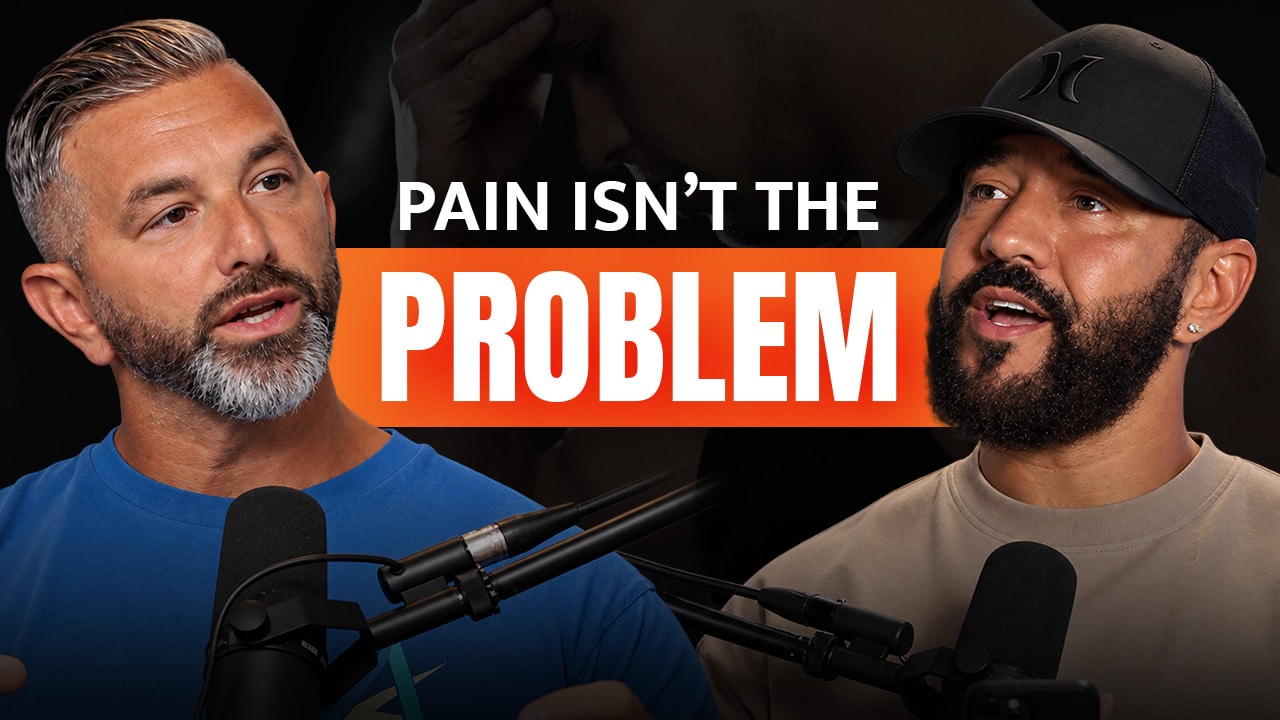
TMHS 1039: This Is Why Pain Doesn’t Go Away: The Science-Backed Ways To Live More & Hurt Less – With Dr. Sean Pastuch
If you’ve ever dealt with immense or persistent pain, you know that it can interrupt your life, slow down your regular activities, and stop you from reaching your goals. On today’s show, you’re going to learn about overcoming pain, the psychology of healing, and strategies for creating a full, healthy life that you don’t have to withdraw from.
Our guest today is Dr. Sean Pastuch. He has worked with elite athletes, business leaders, and parents, helping them overcome chronic pain and live life to the fullest. Sean has helped tens of thousands of people find relief from pain and reclaim their lives. And on this episode of The Model Health Show, he’s here to share his best tips for getting out of pain.
You’re about to discover the exact psychology strategies you need to cultivate to get out of pain and live without limits. We’re going to cover important principles like approaching hardships with audacity, why discipline is a result, and the exact mindset you need to build to reach your potential. I hope you enjoy this interview with Dr. Sean Pastuch!
In this episode you’ll discover:
- Why focusing on getting out of pain is the wrong goal. (3:03)
- What compromise has to do with pain. (3:57)
- The three identities that need to be in alignment. (5:19)
- Why curiosity can be the key to getting out of pain. (9:53)
- The leading indicator of successful pain treatment. (12:29)
- Why failure is part of success. (15:01)
- How reevaluating what comfort means to you can relieve pain. (18:03)
- The role your identity plays in getting out of pain. (22:10)
- Why it’s usually best to keep moving to facilitate healing. (26:20)
- The importance of being an active participant in your healthcare. (36:19)
- How to heal tendon injuries. (50:15)
- Why strength training is critical for durability. (57:42)
- The importance of discipline and what it really means. (1:00:26)
Items mentioned in this episode include:
- Organifi.com/Model - Organifi makes nutrition easy and delicious for everyone. Take 20% off your order with the code MODEL.
- Live More. Hurt Less by Dr. Sean Pastuch – Read to learn more about overcoming pain!
This episode of The Model Health Show is brought to you by Organifi.
Make nutrition effortless—and actually enjoyable. Organifi’s delicious, superfood blends help you boost energy, reduce stress, and feel your best every day. Get 20% off with code MODEL at organifi.com/model.
Transcript:
SHAWN STEVENSON: Live more, hurt less. Isn't that something that we all aspire to do? But a big emphasis needs to be pointed on the living more part of it. When we're experiencing chronic pain, when we are hurting, it's very difficult for us to be aware of the things that the pain is robbing us of, and to focus on those things so that we can get back to living our lives.
Today's episode is a very powerful masterclass on not just the physical approach to our healing, but looking at the psychology component and the bigger mission of getting out of pain. It isn't just being free of the pain. Pain sucks, absolutely. But it's getting back to the life that we desire to live and understanding that we have the birthright to live life on our terms.
But so often we give our power away. We give our power away to the pain. We give our power away to the systems that might tell us that this is our lot in life, and I'm here to tell you that it's just not so. And so I'm very excited about this. And also, we're gonna get a huge reframing in what it takes to get out of pain, and also what it takes to create the body and the health that we want.
We know that discipline is a big part of that, of following the steps. You might get the full steps laid out to you, but you need the discipline to execute. And so you're gonna get a powerful reframe on discipline that I've never heard before, and once I heard it, instantly clicked for me. And so I'm very excited to share this very powerful and important conversation with you.
And without further ado, let's get to our special guest and topic of the day. For more than 20 years, Dr. Sean Pastuch has helped people to reclaim the life that pain has interrupted. His clients include elite athletes competing at the highest levels of sport, business leaders, and parents committed to building strong families with lasting legacies.
As the founder of Active Life, he and his team help people to overcome chronic pain, think differently, and return to full participation in the lives that they want to live. Let's dive into this conversation with the incredible Dr. Sean Pastuch Yes. It's on.
DR. SEAN PASTUCH: Yeah.
SHAWN STEVENSON: It's good to see you, man.
DR. SEAN PASTUCH: It's good to see you too.
SHAWN STEVENSON: Thank you for coming to hang out with us today.
DR. SEAN PASTUCH: It's my pleasure, man. I've been listening and watching your content for a long time. You're a pro, and I'm excited to sit across from you.
SHAWN STEVENSON: Let's go. I appreciate that so much, man. Obviously, in our world today, this paradigm that we're existing in there is a war against pain.
And rightfully so. But the perception of pain and how we're dealing with pain has kind of gotten skewed- ... to put it lightly. And your approach, you've helped so many people. Your approach, funny enough, is out of the gate, pain is the wrong thing for us to focus on.
Why is that?
DR. SEAN PASTUCH: Because no one actually cares that they're in pain until pain robs them of the life that they wanna live.
So if you think about it this way, we've all experienced some kind of an ache or a pain in our life that we were like, "Ah, yeah, it'll go away." And usually it does. We don't care. It's when we get the ache or the pain that doesn't go away, that then starts to inhibit how we live, that has us thinking, "Is this permanent?
Am I gonna have to change my hobbies? Am I gonna have to change the way I get to work? Am I gonna have to change the way I interact with my friends and my kids?" That's when we seek help. And so what happens is the pain isn't actually the problem. The pain is a part of the problem. The problem is the compromise that pain forces us to make.
And compromise, the way I define it, is the acceptance that living less is reasonable or even responsible. It's the life that we live less that hurts.
SHAWN STEVENSON: Yeah.
DR. SEAN PASTUCH: So we can't work on getting out of pain to live more. We have to live more to get out of pain.
SHAWN STEVENSON: Yeah. Yeah. Thank you. You, I haven't heard anybody put it like that before, because again, we get so hyper-focused on the symptom and it's the bigger things, like what is the pain app- appearing to take away from me? That's what really hurts.
And you start to stack those things, it can be very difficult to kinda break that vicious circle.
DR. SEAN PASTUCH: For sure. It's helpful that I spent seven years living in an agonizing amount of pain, so I understand what that is.
It's helpful that I've worked with thousands of people with my hands and with my mind to help them overcome their own pain. That's where my perspective comes from. And my intention is that it's not the last time that you hear somebody describe it this way.
SHAWN STEVENSON: Yeah. So we're gonna talk about fitness, we're gonna talk about psychology. But I wanna ask you first and foremost about these layers. These three identities. That you talk about. Because just operating and trying to live through this one of our identities is probably going to end up getting us in a cycle where we keep landing in the same thing again and again. So what are these three identities?
DR. SEAN PASTUCH: There are three identities that we're living with at any given time. And when they're not perfectly aligned with one another, it leads to burnout, it leads to imposter syndrome, it leads to more aches and pains, it leads to our inability to live the way that we want to.
The first identity is the inner identity. That's who we are when we're alone with our thoughts. You can't lie to you, not all the time. And at the end of the day, when you're laying in bed about to fall asleep, we all have conversations with ourselves. The conversation you're having with yourself about who you are in that moment is your inner identity.
Then there's your physical identity. That's how we express ourselves through movement or don't express ourselves through movement. Do you take that hike? Do you play that sport? Do you say yes to that spontaneous experience that's gonna require you to be physically active or not? And then there's the connected identity, which is who are you when you're in the presence of other people?
Because we all understand there's the gap oftentimes between who we want to be and who we are, and that gap can be who we think we need to be while other people are around. And we need to align all three of those to become the same person.
SHAWN STEVENSON: That's so crazy that we could have a completely different relationship with ourselves and how we talk to ourself versus how we present to the rest of the world.
DR. SEAN PASTUCH: 100%. And it's obvious. Once you've gone through it, it's obvious who's either not interested in going through it or in the middle of going through it. And I'll give you an example. I travel to events for the industry fairly frequently. I wanna meet other people who are doing things I wanna learn how to do in psychology, in training, in the medical world, in the business world.
And for the longest time, I would go to these events and try to impress other people with the things that I had done, the people I had worked with. I helped this guy win an Olympic medal. I helped this person return to pro baseball. I helped this person win the CrossFit Games. Nobody actually cared. When I decided to stop showing up to the events trying to be the most impressive person in the room and decided to turn up to the events to be the most impressed person in the room, that's when relationships started to form.
That's when I started to get noticed. That's when I started to get validated, and it had nothing to do with me talking about me
SHAWN STEVENSON: I love that so much, man. That's so powerful. So powerful
DR. SEAN PASTUCH: It's... I've, I'm oftentimes people's last resort they wish they tried first. And that's because it's easier to say, "My shoulder hurts.
I need this procedure. I need this hands-on treatment. I need this pill," whatever. And you might, by the way. There's always a time and a place for that stuff. You had Dr. Chris Steppe being on. I used to bring Chris out when I had high-profile people come in, and I let my license lapse 'cause I needed hands-on, and he's the best I've ever met.
So there's a time and a place for that stuff, and at the end of the day, none of it lasts if you go back to doing all of the same things in all of the same ways that you did them to end yourself in the position you're in right now
SHAWN STEVENSON: Facts. Yeah. Facts. And it's just, literally it's a perspective switch, right?
From you, again, one approach is to be the most impressive person, right? And you're also, you're going to connect with people in a different way with that kind of energy versus being the most impressed person and really paying attention to other people, being a fan of them.
DR. SEAN PASTUCH: That's it.
SHAWN STEVENSON: And it's so much, there's so much more connective tissue because you're helping people to feel significant themselves.
And also you feel, it's like a reciprocity gets created there. And it puts everybody together versus this distance, and it's simply a perspective shift. And so going back to ourselves, it's a perspective shift with these, these three identities and getting them all aligned.
And I wanna talk about, which again, you've already b- broken this down in an incredible way, getting out of pain, right?
We wanna get out of pain, but addressing the psychology piece because the psychology is really what's driving your experience of physical pain.
So let's talk about this inner identity. Let's talk about the psychology that we need to focus on cultivating for us to really be free of pain.
DR. SEAN PASTUCH: I think that there's a really good line between what you were just talking about with building other people up and the psychology required to get out of pain.
There's a thin line between fandom and curiosity. If you were in a hallway somewhere and someone ran up like, "Shawn, I love your podcast. Dude, your podcast is so awesome. I'm such a huge fan," you would say, "Thank you very much," and you'd be grateful for it. You would shake their hand, and they're probably on their way.
If somebody came up to you and said, "Hey, I love your podcast. I listened to that episode you did with Dr. Sean, and he talked about this and this. How'd it make you feel when he said that? It sounded like you felt something there," that's a totally different experience for you. When you're trying to overcome anything, I don't care if it's chronic aches and pains, I don't care if it's struggling in your business or you're trying to build a relationship, understanding that there's a level below the level that you are thinking at always is worth exploring.
Because the curiosity about what else could there be is oftentimes what's going to set you free. The acceptance that this is the way, this is how it's going to be, this is the best it's going to get, this person told me this and they're an authority, all of those things are dead ends. So continuing to find that next level of curiosity is critical
SHAWN STEVENSON: Curiosity is so important in this.
As you just mentioned, we tend to, especially, it's very difficult even having this conversation when you are in pain-
...
SHAWN STEVENSON: To be able to self-assess, to be able to have like you have any agency to even make any of these changes, to change the way that you're thinking. But there are people who are watching or listening to this right now who are in dire need and desire to get out of pain.
And you talk about, of course, you take everybody through this process, and that's one of the things that I admire about the book because it, it's not easy to put a robust questioning of oneself into a book. And so the questions that you're posing and the homework, you're literally like, "I don't want you to read on.
Just do this fir- if you feel like you can't do this right now, just put the book down and come back when you can actually do this." And it's s- the self-assessment, but there are very specific kind of catalysts for change, and one of them that you mentioned, I wanna ask you about this specifically, is the first step, and this, by the way, no matter if this is losing weight or getting out of pain or whatever the case might be, this is what you say the first step is to believe that the success is inevitable.
To believe that the success is inevitable, and then to proceed as if it's correct.
Talk about that.
DR. SEAN PASTUCH: The leading indicator of any medical treatment, that it's going to be successful or that it's not, is whether or not the patient believes it will. So when we digest that for a second, you can go to the best doctor in the world.
If you don't think it's going to work, it's unlikely to work. If you go to a doctor that's not any good at all and you think it's going to work, it is likely to work. Now, of course, there is a world in which that extreme becomes too extreme for the sentiment to hold. But as a general rule, that's where we all live.
So the idea that we believe something is going to be true is critical first and foremost. The next thing is living as if it absolutely is, and that's where people run out of enthusiasm. I have a friend of mine who worked in government for a really long time, local government, and he made a little bit of money, but not a lot of money, and he was always fluctuating on the yo-yo up and down in weight, right?
Not the healthiest guy, always stressed at work. When he left public service, he landed a really good job and really good pay, and he said, "I'm finally ready to get really healthy. What do you think I need to do?" I said, "I think you need to stop trying to solve this problem, and you need to overwhelm this problem."
The difference there is solving this problem is hiring a nutrition coach and trying to count your macros and thinking about what you're eating all day long, and that's fine. That's fine. That works. I have friends who do it at a really high level as coaches and business owners and people who've gone through it.
My wife is working with one right now. The other side of that is hire somebody to prepare all of your meals in conjunction with that nutrition coach so that you don't have to think about it. You're going to start feeling different, really good. You can't mess it up. It's being done for you. You're gonna get to a place where it's stable.
Once it's stable, you start getting educated as to why it's working, and then you start manipulating the variables yourself with these other professionals. In order to do that, he would have to spend an amount of money that was really uncomfortable for him to spend. He'd have to spend an amount of time that's really uncomfortable for him to spend, and he'd have to embrace a process that was really uncomfortable for him to embrace.
And In order to do that, you have to be certain it's gonna work, even knowing it might not, and not losing enthusiasm when it doesn't. So in our brick-and-mortar locations and the way that we train trainers from around the world is with audacity. Everything that we say is audacity is included in this. The audacity that we include is asking questions along the way "How confident are you on a scale of one to 10 that this is going to work?"
"I'm eight out of 10." "Okay, why don't you choose a lower number?" Because," and they build up all the reasons why they're confident. "Great. What would need to be true for this to be a 10 for you?" And we keep going- Yeah ... until they're like, "Okay, it's a 10 out of 10." Great, now we can start. And then we inform them, there's gonna be a day that's gonna come that this is gonna stop working the way it's working right now.
That is not a sign that it didn't work. That's a sign that we need to now change course a little bit to find the better version of what's going to work for you. Failure along the way is success because it indicates a path not to take anymore.
SHAWN STEVENSON: I love this so much. I love this so much. You mentioned earlier, h- again, this all ties together with the psychology piece.
But the belief in it and in yourself as well.
And to move from that place versus, again I'll see, I'll try. It's very different in how, not only is it the results and how, the act- kind of action that you'll take, but it's literally even the biochemistry.
And so this reminds me, and we'll put this study up for everybody to see, of Alia Crum and some researchers, she was at Stanford at the time, and this pinprick study where they would give people basically a skin irritation.
They'd prick their skin, and it would create a rash And everybody in this, in the study, they developed this rash, but then they had different physicians to come in and say whether or not this is an antihistamine cream-
...
SHAWN STEVENSON: Or an a, an agonist cream that's gonna make the rash worse, right?
But the cream was completely inert. It had no therapeutic benefit. But just based on the belief about what they were putting on their skin, some people's... No, everybody across the board, if they believed that it was an antihistamine cream, it would make the rash better, it started to go away. If they believed that it'd make the rash worse, it got worse. To different degrees, though. Now, here's the key component, and this is going back to what you said. The number one determinant of how much that inert cream helped them was the belief in the pers- what they were told about it. Their belief in how competent that person was.
So it's the belief in the treatment and moving from there. If they really believe that this person was competent and they knew exactly what they're talking about, it would dissolve.
Or it would get worse. And so using this yourself, you just mentioned overwhelming the problem.
This blows my mind because you're stacking conditions. You're overwhelming the objective. The objection, should I say. You're overwhelming it. Now, with that said, you also mentioned how this is probably gonna be uncomfortable to do that as well. And I think that our desire for comfort might keep us from doing that.
DR. SEAN PASTUCH: For sure. The question is, what is comfort to you? Is comfort staying where you are, or is comfort moving to something different? And it truly does depend on who the person is. For some people, being in pain is social equity. They're with their friends, and everyone they're around is like, "Yeah, this hurts, that hurts.
My body would explode if I did that crazy stuff like I just did on the boardwalk." If you're the one who says, "Why are you letting that be the case?" You risk losing those relationships. And so there's a level of courage necessary to move from the level of comfort that you're in to a level of even more comfort.
People say seek discomfort. I actually think that's also backwards because I'm way more comfortable doing things that stretch me than I am staying small. So is that seeking discomfort, or is that seeking comfort? I'm seeking comfort 'cause I need to grow. That's not seeking uncomfortable things. Understanding the uncomfortable is the path to the comfortable.
Now, if we go back for a second to the overwhelming your problems, for me, this all became extremely real when I couldn't put my daughter on my shoulders to walk home from a block party. She was five years old, cute little kid. "Daddy, can I sit on your shoulders?" "No. Daddy's too tired." The problem there is I wasn't too tired and have a rule that I'm never too tired for my kids, so I lied to my daughter and broke my own rule in the same sentence because pain was turning me into a liar, a guy who would compromise on how I got to live.
I had all the tools. I had already worked with Olympic medalists, CrossFit Games champions, professional baseball players. I knew what it took, but I couldn't help myself, and I was willing to live with it. I was like, "You know what? Whatever. I'll just get out of bed like this every morning, grab my neck, and roll out.
It's fine." My daughter saying, "Can I sit on your shoulders?" Me saying no, lying to her, was a snap moment. I was like, "This is unacceptable. That's not who you're going to be. You've tried to solve this problem in the past. Now you have to overwhelm it." So what does overwhelming it look like? No more eating foods that create any kind of inflammatory response at all.
I just don't have the room. No more going to bed after 9:30 at night. Just don't have the room. You're watching Netflix and stuff like that to zone out before bed. I don't mind you watching Netflix before bed, but if you're saying, "I'm doing it 'cause I gotta zone out and like just take my mind off stuff," solve the thing that's you have to zone out from.
So I solved the thing I had to zone out from. I started taking tasks at work and delegating them to other people. I changed who I was allowing to be in my ear on a regular basis. All of these things at the same time to a degree that was unsustainable, and six months later, my kids can sit on my shoulders.
Now, what's interesting about that is I didn't have the confidence that would last, so I spent the next six months becoming the guy who believed it was permanent. And now I've told all three of my daughters, "If and when you get married, I wanna put you on my shoulders in that dress."
SHAWN STEVENSON: Will you be able to see?
DR. SEAN PASTUCH: I don't know. I'm not worried about that. We'll get a photo. We'll know who's underneath.
SHAWN STEVENSON: Oh, man, that's so powerful. That's so powerful. So for you personally, how do you do that? How... Once again, this- Man, you just brought up something really important. When you've been living with a certain level of pain you become acclimated to it.
And once that thing is gone, which is what we wanna get everybody to experience, there's a fear there of it coming back.
And in that space, how do you actually get yourself to believe and to accept that, "This is my life now. I am okay"?
DR. SEAN PASTUCH: I think this is so important.
It's- 'cause it, it- this is why the book is written in a way that it could've been about business, it could've been about, relationships, it could've been about getting out of pain. It's all the same stuff. It's just the middle that's different, the physical part. You have to believe that you are that person and live as if you are that person for long enough to become that person.
'Cause it's always been you. It's just the way that you think, the way that you allow other people to enter your space, your mental space, your physical space, the way that you talk about yourself. One of the things I discuss in the book is that nobody will ever speak about you in a way that is more negative than you will speak about yourself.
You'll never let someone go further than you will. So when you hear someone saying something to you that's just terrible, and you accept it, it's important that you take a moment to recognize you talk to yourself worse than that, and you allow it. So the way to become the person who understands, "No, this is me now," is to start doing the things that person would do and recognize you belong there.
SHAWN STEVENSON: Yeah.
DR. SEAN PASTUCH: So for me, it was stuff like I hadn't played pickup sports in almost a decade. Going to the park, bringing a basketball and just saying, "Who's got next?" That was a big step. Getting back into playing softball and just having the confidence I can throw the ball without my neck going out, swing a bat without my neck going out, run and track a fly ball without my neck going out.
Recently, about s- five months ago, I got into jujitsu because I was like, "You know what? I'm not afraid to put my head into places." But now we're talking about four years after I started to feel better. It still took me four years to say, "Yeah, I'll put my face-
SHAWN STEVENSON: Yeah ...
DR. SEAN PASTUCH: into somebody else's leg and be okay with it."
SHAWN STEVENSON: Yeah.
DR. SEAN PASTUCH: It's incremental.
SHAWN STEVENSON: But- It's level to it ...
DR. SEAN PASTUCH: it's like a, it's like a strap. You know those straps that you use to tighten things down? Once you tighten it down a little bit, that little bit doesn't slide back out. Tighten a little bit more, tighten a little bit more until everything in your life is nice and tight on the bed of that truck.
SHAWN STEVENSON: Yeah. Thank you for sharing that, man. This is awesome.
DR. SEAN PASTUCH: You're welcome.
SHAWN STEVENSON: It's so comforting actually to hear in your psychology and just it's really a process of doing your best, stacking conditions for you to remember- ... to remind yourself. Because it's that next thing "Okay, I know that thing happened.
Okay, it just came up for me. Whoa." Catch it. To be able to catch it.
When you're al- you're healed, you're... That was four years ago.
And that thing comes up, and to remind yourself, "I'm good." I'm strong. I'm okay. I can do this thing." And here's the crazy thing is we start doing this as big adult babies.
We don't do this- ... when we're younger. Like- ... young people, kids, people in their teens, 20s, they have injuries doing stuff, and then they just get better.
And w- it's, a, a big part of this is really our societal programming. It's because you've gotten old, right? It's because you're older, this stuff's just gonna happen.
I promise you, I got injured way more when I was, like, playing youth sports. You know what I'm saying? Just, like, all the stuff that would happen. But it's just par for the course. I get better. I just do the stuff to get better. But we stop doing those things, that's a big part of the problem, right?
For sure. And so let's talk about the physical aspect of this in being able to live more and hurt less.
Because some of the stuff that we do, for example, you go in to play pickup Some stuff we're not qualifying ourself to do. And we just on a whim "I wanna get in shape," and then you go and do that.
Versus like having a base of things. You start training and giving yourself some inputs, and then of course, like adding in inputs like that as well. And what happens today in our culture is like we're very acclimated to chair sitting, for example. We haven't trained ourself to be able to do the things we wanna do.
Maybe we wanna go on a trip with our family, and it's got all these hikes, but, we haven't even hiked up a flight of stairs. Yeah. You know what I mean? So let's talk about number one creating a base of strength and fitness, but let's go start through the lens of getting out of pain.
Do you think that It's a, a good idea for us to stop moving when we're hurting
DR. SEAN PASTUCH: No, it's the opposite of a good idea. Our brain is a permission giver and a permission taker. When we hurt ourselves, within three to four months, most of the time the physical tissue damage is gone, but the pain can last a long time after that.
Why? It's in the brain, like a memory. I'll give you a simple example, and then we'll come back to the physical part. I'm sure you've never done this, but I've done this once or twice in my youth. I drank way too much, right? Get hammered on SoCo and lime. Southern Comfort and lime was the drink of choice in college and the two years after.
Now I'm one drink every quarter, if that. But I remember getting really drunk on SoCo and lime, and then the next day smelling a lime and saying, "Nope, nope." 10 years later, smelling a lime and saying, "I feel like I just drank yesterday. I can't have that." How does the lime 10 years later make me still feel like I drank yesterday?
It's the memory of it. So now when that happens physically, the way that goes is this. Our brain registers a problem. It sends pain so that we can allow the body to heal from that problem instead of overusing that area, but then the body does heal, and we haven't told the brain yet, "Hey, we can go and use it again," because we live in a world where we don't actually have to.
If we were hunters and gatherers, we wouldn't have that choice. So the lifestyle that we live today affords us the ability to not have to go expose that thing again. The non-exposure of it leads that area of the body to deconditioning.
Then when we finally get to the point that we're like, "Oh, you know what?
Maybe I'll just try it again," it hurts because the memory is still there, and we're deconditioned. So now we start saying, "I'm gonna go through the pain. I'm gonna go through the..." This is what happens with my patients and clients all the time in the very beginning. "Okay, Sean, you're telling me to do this. I have confidence in you.
I'm gonna do it." They start doing it. The pain goes away. They're like, "I feel so much better." Then they do it a little bit more, and the pain comes back, and they're like, "I don't know what happened. I thought I was doing so well. Now I feel like a huge setback. I'm back at ground zero." I said, "No, you're not conditioned to be able to handle all the work that you're doing yet.
We got to raise your capacity. This is the same thing that would've been soreness to you five years ago, but today it's pain 'cause you forgot how to interpret it." So the body becomes deconditioned from lack of use, and then we think that more disuse is what's going to lead to the body getting better. No, we...
At that point, we have to use it. Every time we use our body, we send a signal to our brain that it's safe to do that thing Every time we send a signal to our brain it's safe to do that thing, the brain decides a little bit less pain next time then, 'cause maybe we'll need to do this again. You do it again, less pain next time.
You do it again, less pain next time. Until the brain decides, "Sean’'s not gonna stop. I have to remove that pain stimulus from the thing he's doing, 'cause i- he's gonna do this thing and he needs to be able to do it well." That's how we go from brain to body to brain to body in a way that's actually helpful.
SHAWN STEVENSON: Makes sense. It's a desensitization process. And to have somebody ca- that can coach you through it is exceedingly helpful, of course, especially, again, if you've been in pain.
DR. SEAN PASTUCH: Yeah.
SHAWN STEVENSON: And so I love that of... Because also we feel especially when we are feeling better or we don't feel the thing, and then we might do something or venture into maybe what s- similar or maybe the same thing that we got injured before-
And we can go into complete panic mode. Like I gotta go back to ground zero, as you just mentioned. And I think it's a really important sentiment for everybody that, healing is not a straight line, right? And th- there's going to be things that come up along the way, but having those things that are non-negotiable and overwhelming the problem- just keep moving forward. That's it. It's a part of the process.
DR. SEAN PASTUCH: The expert thing that you talked about is really important, because in 2017 I left clinical practice to do this for people from around the world, 'cause they were already flying out. And one of the questions that I got from a lot of people was, "Why can't trainers do this?"
'Cause I was still practicing under my license, and then I let the license lapse and worked with people from around the world. I said, "Trainers could, but there's a really thin line between effective and dangerous." How much to do, how much pain to tolerate, it's different from every single person you work with.
And you gotta understand how to do that. And so the, the confidence that the person who is administering the service, the trainer, the doctor, whomever, has is a huge influence on how much the client is going to adhere to it, the compliance they're going to have. If you're standing at the edge of Dunning-Kruger looking out and thinking it's a beautiful view, you're dangerous.
Once you understand the signs of this makes somebody better, this makes somebody worse, this is a sign that I need to ask more questions, back off here, push here, I believe the trainer, the coach, is the best person in the world to fill the gap between where the fitness industry ends and the healthcare system begins.
There's just a ton of education that's necessary for them to be able to do that.
SHAWN STEVENSON: Come on, man. Come on. Mr. T, it might as well stand for testosterone. The muscles, the Mohawk, the audacity to wear feather earrings. We know the iconic Mr. T, of course, but we all want to be Mr. T in our own lives, and a big component of that is being mindful of supporting our testosterone.
Now, the lifestyle factors matter so much. For example, we've got an incredible study published in the Asian Journal of Andrology finding that there is a heavy sleep-dependent factor in producing testosterone, and another study published in the Journal of the American Medical Association finding that when young men are sleep deprived, just for a week, getting five or less hours of sleep per night plummets testosterone by upwards of 15%.
So sleep deprivation is one of those things that is counter to optimal testosterone levels, so we wanna be mindful of that and other lifestyle factors. Now, many people are looking for a supplemental thing that they can do, that they could take to support testosterone, but I'm telling you right now, the efficacy is far and between.
There are very few things that are proven clinically to support healthy testosterone levels, and dare I say, give it a boost. But one of those things was noted in a randomized, double-blind, placebo-controlled trial titled Clinical Evaluation of Purified Shilajit on Testosterone Levels in Healthy Volunteers.
And it had men between the ages of 45 and 55 take 250 milligrams of purified, purified is key, shilajit twice daily for 90 days. At the end of the study, the researchers found that, versus a placebo, the men taking shilajit had significantly increased levels of total testosterone, free testosterone, and DHEA.
Total testosterone increased by upwards of 28%, while free testosterone increased by upwards of 20%. Now, all of this happened without negative side effects. Now, if you're wondering, "What the heck is shilajit? What is that?" This comes from the Sanskrit word that's translated to mean the conqueror of mountains and the destroyer of weakness.
And Shilajit itself is a dark resinous substance from the Himalayan Mountains. It's been utilized in Ayurveda for thousands of years. And right now you don't need to hunt the mountains of the Himalayas to find it. Organifi now has an ultra-purified authentic extract that's clinically tested for potency and efficacy, all in easy-to-use gummies.
Just go to organifi.com/model and you're going to get 20% off their phenomenal Shilajit gummies and storewide. All right? Incredible opportunity. Head over there, check them out, organifi.com/model for 20% off. Take advantage. And now back to the show. The confidence also with the person that you're working with so often, and you know this, and I wanna get into this as well. They don't have confidence in you as well- in kind of the conventional setting. Sure. You go into, maybe, your primary, whatever the case might be, well-intentioned of course. Maybe you walked in there and you've got some inflammation- ... in your Achilles, but you walked in there.
And they're like, "Oh, I gotta put you in a boot for four to six weeks."
This happens all the time.
DR. SEAN PASTUCH: All the time.
SHAWN STEVENSON: Okay? And so they don't have confidence in you healing.
But you want to. You just mentioned all the things that it takes away from your life. We've gotta have the audacity- ... which you said that word earlier, to not just question ourselves, but also the people that we have around us- and that team. You mentioned that was a part of your healing, too.
DR. SEAN PASTUCH: Sure.
SHAWN STEVENSON: The people that, and the voices that you're allowing around you. And so if the person you're working with is telling you that you can't do the thing that you want to do you have to have the audacity to seek out help from somebody that is on the same page with you.
DR. SEAN PASTUCH: Yes. There's a chapter in the book about how to make your medical provider your best partner. Because if you walk into the clinic and you think everyone who walks into this clinic is just like me, they wanna be physically active, they wanna be in charge of their own health, your listeners, I mean, we're on The Model Health Show, man.
Your listeners are not passive participants in their lives. They want to be the person who dictates their own future. Most people who walk into the doctor's office are not like the listeners of this podcast, and the doctors are going to do what the patient wants, provided that it's not dangerous for the patient to do it.
Because if they don't, the patient's just gonna go to another doctor who will, and every doctor thinks that they're the most responsible one to help that person within the confines of what's ethical. And we confuse that with bad medical care. It's the medical care that the American society has asked for.
We are the outliers, so when we go into the doctor's office, we need to communicate in a way that makes very clear, "This is what I need help with." Instead of walking in and saying, "My back hurts when I lift heavy weights," walk in and say, "My back hurts when I lift heavy weights, and lifting heavy weights is really important to me.
Can you help me get back to it?" Instead of going to the doctor's office and saying, "When I go on long runs, my Achilles really flares up," and then the doctor saying here's a cortisone shot that you don't wanna take," it's, "Can you make recommendations for me that would allow me to avoid any kind of injection or medication?"
And then let the doctor answer a much more specific question. Good doctors love those questions. We refer almost all of our pat- our clients at our local brick-and-mortars to Dr. Amy West, who's on Long Island. Great doctor, great physiatrist. She regularly helps our clients do everything they can to avoid all the medications at her disposal.
Find doctors like that to surround yourself with, and do a good job communicating with them.
SHAWN STEVENSON: Great. Great advice.
DR. SEAN PASTUCH: Thank you.
SHAWN STEVENSON: Let's talk about building that base of strength.
DR. SEAN PASTUCH: Sure.
SHAWN STEVENSON: Again, if we are in pain right now and deconditioned, as you just mentioned what are some of those on-ramp activities for people to do?
And again, I'm saying this, I know that it's situationally dependent, it's individual of course. But what are some of those foundational things that even if we'll just say somebody right now, they are experiencing back pain. Lower back and mid back pain. The pain is moving around, and they've stopped lifting weights- because they feel like... Not because they got injured more or- ... lifting the weights. They just stopped because they don't wanna hurt themselves more.
DR. SEAN PASTUCH: Yep.
SHAWN STEVENSON: What would be some things for them to start to do?
DR. SEAN PASTUCH: There's a space between nothing and everything where almost everybody has some confidence.
So let's say, for example, you used to squat 200, 300 pounds every time you went into the gym and squatted, and now you're like, "I just, I don't know if squatting is a good idea for me because my back." There's two ways to look at that. Is squatting important to you, or is squatting something that you don't ever care to do again?
'Cause it's not dangerous. So the question is, do you want it, or do you not care if you ever do it again? Now we're only talking about the person for whom, "I wanna do it again if for no other reason than to know that there's nothing I'm limited from doing." Are you comfortable air squatting? "Yeah. I'm not afraid to air squat.
I sat in this chair, I sit on the toilet, I get in my bed." Okay. What's the amount of weight between air squat and the weight you used to squat where you don't have alarm bells going off telling you that this is dangerous? Empty bar. Okay, let's go empty bar then. Do empty bar for a few weeks and when you start to feel better with the empty bar, what's the next weight that you feel confident you can add without setting yourself back with aches and pains?
Maybe another 10 pounds on each side." Great. I'm cool with that. Add 10 pounds to each side. And you get to make the incremental decision about how to get back into things at a pace that you are modulating yourself while you're continuously convincing yourself this is safe.
That's how I recommend people do it.
There's a story in the book about a woman who came out with her friend when we were doing a seminar, and she had been told by her doctor never to lift more than 55 pounds again, which is common. And I wanna just give a nod to the doctors. I think oftentimes doctors say things and patients hear something different.
So the doctor might say, "I don't want you to lifting anything over 55 pounds," and the patient doesn't ask until when. And then the belief is forever. I think that there's some of that happens, and we pass each other. So she's with me on this seminar day and I said, "We're gonna do some strength testing.
Would you like to do it?" She's like, "No, I wanna sit this one out 'cause the doctor said I'm not to run 55 pounds." She's in her 20s, healthy, athletic woman. So I said, "Are you comfortable living that way for the rest of your life?" And she said, "No." I said then this is the best room in the world for you to ever try this if you want.
I'm not gonna push you, but if you want, we do it." "I wanna do it." Okay. Load a bar up for 55 pounds. She picks it up no problem. I load the bar up to 55 and one half pound. Quarter pound plate on each side. So whenever you're ready, go ahead and pick that up. How long do you think it took her to pick that bar up?
SHAWN STEVENSON: I don't know. It depends on her mindset.
DR. SEAN PASTUCH: It does. And she was really nervous. She was scared. And so a lot of people think it's, "Oh, of course, she just picked up 55 pounds like it's nothing. She picked up 55 and one half pounds right away." It took her almost 10 minutes. It took her pacing up and down the driveway of the business.
It took her getting her breathing under control. It... she had to push some tears back, she was so nervous, to lift 55 and one half pounds after she lifted 55 pounds. She lifts 55 and one half pounds, no problem at all. She's like, "Okay." She's like, you could see the wave of relief. Yeah. "Let's go to 65."
"Okay." 65 pounds, no problem. I said, "You're the driver of this ship. However much you wanna do, I'm confident you can do it. I'm right here supporting you." Before she left that day, she deadlifted 205 pounds for eight reps. Then, less than a year later, she found herself at the United States Olympic qualifying trials for skeleton-
SHAWN STEVENSON: Get out of town
DR. SEAN PASTUCH: which is an event where you hurl yourself on a 45-pound sled down a bobsled track headfirst wearing a helmet and a skin suit That woman was a set of beliefs away from a life that she never could have lived had she not had the courage to go to 55 1/2 pounds.
SHAWN STEVENSON: That's such a great story, man. It's,
DR. SEAN PASTUCH: It's awesome.
SHAWN STEVENSON: That, that reminds me of something very close to me. Like I, I've lived that. And it was Jay Ferrugia, our mutual friend- Yeah ... and Luka Hocevar.
DR. SEAN PASTUCH: Yeah, another mutual friend.
SHAWN STEVENSON: Shout out to my guys. But through them I met Dan Twinsko, who was
a pers- a physical therapist for me. He was remote, you know- my remote guy that I go to when I need to hit the bat signal.
DR. SEAN PASTUCH: Yeah.
SHAWN STEVENSON: And I had recovered from this particular injury, and he was asking me to do something that I had not done. And at this point it had been months- ... all right? And I was good. Like everything, I have full functionality and doing all this stuff, except this thing-
That I had a mental block on. And I remember pacing back and forth. I was like literally "I don't know, man. I don't know. I feel so, so great." And I got face to face with the voice in my head.
I was like, "I'm s- this is so crazy. I don't wanna do this. I don't feel like I could do this."
And it was something so simple. So simple. And once having him there as that accountability and also affirming that, "Yeah, Shawn, like you got... look at you. You just did all these other things." And then I finally did it. But I, the first time I eased into it very cautiously.
And then after I did it once I was like, "Oh, shit. I could do this again." And I did it again. And it, and then, just became a part of who I was again. It like unlocked that part of my identity again.
DR. SEAN PASTUCH: For sure. It's the big slide at the water park. You get up there like I don't know about this. I'm not supposed to slide down this thing. That's not how humans are supposed to move." And then you do it, and it's "Oh, that was fun."
SHAWN STEVENSON: I'll do it again.
DR. SEAN PASTUCH: Let's do it again. Or or if you're me, I'm like, "I don't know if I wanna do that again, but I'm glad I did it."
SHAWN STEVENSON: Yeah.
DR. SEAN PASTUCH: And then I know if I ever have to do it again, I can climb up and do that again.
SHAWN STEVENSON: Yeah.
DR. SEAN PASTUCH: But it takes that belief breaking down. And then here's where I think people get it wrong. There's a lot of psychology, like the field of psychology, that will talk about how pain lives in your brain, and that's the exclusive antidote, is resolving what's going on in your brain. I don't think that's true at all.
All pain does originate inside of your brain. Everything does. But if we don't integrate the physical it's just telling yourself a story until you're required to do the physical thing that you're still not exposed to. And the likelihood of you regressing when it, time calls for it in an uncontrolled environment is way too high for my comfort zone.
So I like to say, okay, the brain is gonna give you permission, but the body has to take the step, and we gotta do both.
SHAWN STEVENSON: In many ways, your body is your brain
DR. SEAN PASTUCH: 100%.
SHAWN STEVENSON: All right? This is an extension. It's all connected. It's so crazy that we still have this conversation like these things are in isolation- and they're separate from one another, right? And so we can influence our brain through movement. Like- ... we know this stuff. And so it's, this, what this is, it's not a either/or, it's a both/and approach. That's right. And that's what's very apparent in your work and in the book. And w- what I got from the advice is the incremental steps, regardless of what that is for you.
So in the case with the barbell, barbell back squats, right? The incremental. The deadlift, the incremental. This could be with maybe you injured your shoulder. Maybe it's a incremental overhead press. Maybe it's a lower limb injury. It's incremental steps.
And so this is something that's v- we can all do, we can all access, and I know that there are people who literally going they're like, "I'm gonna, I'm gonna walk." I know that- ... this is m- movement is medicine, and they struggle because of the pain that they're in to make it to the end of their block.
DR. SEAN PASTUCH: Yep.
SHAWN STEVENSON: But just getting outside your door a few steps, that's incremental.
Yes. Then tomorrow, maybe take a few more steps.
DR. SEAN PASTUCH: Yes. And the job of the professional is to give people ways that they can approach this with strategy. So for example, we take the person who needs to go on a walk, but they're afraid to go on a walk. Why are they afraid to go on a walk?
You think, not you the coach or the friend might think it's because they're afraid they're gonna get hurt. Reality could be that they're afraid they're not gonna be able to get back. They're only thinking about going on a big loop. What if the pro across from them was like, "Here's what I want you to do.
I want you to walk a mile today, but I want you to walk it in quarter mile increments back and forth in front of your house. So you're gonna walk an eighth of a mile to the left, and then you're gonna walk a full quarter of a mile back, and then you're gonna walk a quarter mile back. You're never gonna be more than an eighth of a mile away from your house, 200 meters.
Does that make you feel safer about going for a long walk?" Yeah, it does. Awesome. Do it like that. And we get so hung up on what is the perfect program, what's the right rep scheme, what's the right tempo, what's the right angle? The best program in the world is always the one that the person across from you will do consistently for a long time.
Meet them where they are and progress them as they allow. I have a client I'm working with right now who I know I can only give him about 20% of what I would like to give him. I know there's 80% more. If I showed you his program or showed it to anybody who's in exercise science, they would say, "You are derelict of your duty.
You're negligent. This is not helpful." I would say, "If I give him one ounce more than this, he gets discouraged, then he gets personal shame about not doing the work I asked him to do, then he withdraws, then he has judgment about himself and a little bit of anger towards me because I asked him to do something that was too far outside of his comfort zone."
And you might say you are the coach. You have to put your foot down." I say, "Why are we in such a rush? That guy's happy to make progress at the pace we're making progress at. Why are you imposing your values in a projective way on him?" Meet them where they are. Progress them as they will.
SHAWN STEVENSON: Yeah. A big part of this in recovering from injury and let alone not getting injured in the first place is getting educated about your body.
We live in these bodies, but especially in our world today, we are not present with our bodies. We don't know shit about our bodies. And you've got a really incredible v- super viral video of you breaking down the muscle and tendon connection.
DR. SEAN PASTUCH: Yeah.
SHAWN STEVENSON: And this is one of the this conversation's getting highlighted more now in understanding our tendons.
But what if we're actually training our bodies in such a way that we're paying attention to these these mechanics? Can you talk about that? I know it's- Yeah ... a little bit more difficult to describe this wonderful kind of video that you made on it, but talk about that.
DR. SEAN PASTUCH: People can go to my Instagram account and look at the video that's pinned at the top. They'll see a tendon one, and they'll see another one about bracing. They'll see one about the psychology of all this with a woman I had a conversation with. Tendons are pressure sensors. That's really how they work.
Their job is to lengthen very little and to connect bone to muscle so that when we contract, the bone moves in the direction that we want it to move with load getting moved across the joint We have such a misunderstanding of how tendons work that oftentimes we do exactly the opposite of what the tendon needs in order to feel better, and so we stay feeling bad.
An example of this would be when people tell you, "I have tendonitis in my whatever," and they've been telling you this for six months, a year, two years, 10 years, forever. The anatomy of a tendon, to keep it really simple, it's a really dense collagen matrix of linear fibers, so they align in the same direction as each other, with very poor blood supply.
A tendon, if you cut the skin back to look at it, they're white to gray. A large reason for that is the a- amount of collagen and the lack of blood. Tendonitis is inflammation of the tendon. Anything-itis is inflammation of the whatever came before it. Tendons have a really hard time inflaming because they have such poor blood supply.
So tendonitis only lasts a matter of weeks most of the time. When you have tendonitis, it does make sense to rest. It does make sense to de-load the structure as much as possible. Once the tendonitis phase is over, we have to load those tendons. Tendons respond to strain. They respond to a lengthening contraction and load at the same time.
The problem is that hurts. It hurts a lot, and people are afraid they're doing more damage than they're doing good. The phase that oftentimes comes after tendonitis is what's called reactive tendinopathy. Reactive tendinopathy is when the tendon thickens. It gets a fluid matrix that runs through it to make it physically thicker and more durable to injury.
It's not permanent. It's not meant to be permanent, but for the moment, it makes it less likely that tendon's going to tear further. The inflammation's gone, though. During that phase, contraction under load is extremely important. Isometric is typically best. So holding a position, not moving through a full range of motion, holding a position that's moderately uncomfortable under load, really good for that tendon to desensitize.
That also only lasts weeks to months. Then there's what we call degenerative tendonosis. That's the final phase. It's the final boss of tendon damage. Imagine the fibers are all supposed to be nice and linearly aligned. They lay right next to each other like a beautiful quilt. This is, they've haphazardly rebuilt.
Often that happens because we don't load during the tendinopathy phase, the reactive phase, and it's longstanding. This hurts a lot, especially first thing in the morning Especially when we haven't used it for a long time. Then you start using it and it feels better while you use it.
But you think if it hurts, don't do it, so you don't use it very often. Degenerative tendinosis requires full range of motion, as much as you can tolerate, as heavy as you can tolerate for contractions that last up to six seconds when you combine the concentric and the eccentric.
There's great studies on this from Copenhagen University called Heavy Slow Resistance. Anybody can go online and look up that protocol or they can find it in the book. But tendons are really misunderstood and people treat them with kid gloves. Tendons need the work.
SHAWN STEVENSON: I love this. I love this. Yeah.
So this is ... I wanna get an example. There's a specific tendon that is the conversation has been highlighted a lot because of the NBA in particular. But having these achi- Achilles tendon, tears, just kinda like this surge has happened that wasn't there in previous decades- of generations of basketball, and now thank goodness trainers are specifically targeting tendon strength and that, and durability. So I wanna ask you, number one, like, why do you think there was an uptick in those types of injuries? And number two, you mentioned isometric exercises and also loading this through a range of motion.
What would be some exercises for people to do to address the Achilles tendon?
DR. SEAN PASTUCH: Let's start with the exercise, then we'll work back into why it's happening and what to do about it at that level. Exercises are things like calf raises, controlled calf raises through a full range of motion, like a donkey squat seated and then standing.
You can do isometric holds in various positions of that exercise and then you can go full range of motion at fairly heavy loads.
SHAWN STEVENSON: Can you describe the isometric hold for that?
DR. SEAN PASTUCH: So let's say you get into half of the range of motion. So if you're imagining yourself on a seated calf raise, you get to the point that your calves are slightly above parallel, your heels are slightly above your ankle joint.
Hold that. Isometric just means a contraction that's held. Then concentric is the shortening phase. Eccentric is a lengthening phase. That's all that a contraction is. So isometric is we're just holding that position. That's really good for tendon strength. What also comes in to help tendons is creating better coordination throughout our body as they get loaded.
So let's take the Achilles for example. You can build the strongest Achilles in the world, but if you don't load your body in the proper sequence, you can still overload the Achilles and tear it. And so one of the things I really like for people to do is learn how to sequence their glute into their foot, and a simple way to do that is put, let's say for example, your left foot up on a 12-inch riser, 18-inch riser, whatever it takes to get your knee just below parallel.
Your right foot is in the ground behind you with an extended leg, like a runner's stance. Imagine yourself in a runner's stance. Left leg is up, right leg is back. Drive your foot into the floor through your glute. So squeeze the glute and drive the foot into the floor. From that position, bounce up and down like you're hammering a nail with the ball of your foot.
Let your foot come off the ground, hammer that nail. Try it again a couple minutes later without using the glute at all. Just do five or six reps. You will feel a profound difference in the way that your calf and your Achilles felt when you load the glute first and when you don't load the glute at all.
And the difference there can be the difference between you being able to stop and start on a field and you blowing your Achilles out. A common question is I'm not gonna be able to think about my glute when I'm on a field, so how am I supposed to do that?" You do it often enough in your training that your body understands how to do it in your sport.
I'll say something that will perhaps come across controversial that's not meant to be controversial. Strength training does not make you a better athlete. Strength training doesn't make you faster. Strength training doesn't help you jump higher. Strength training gives you the resiliency and the durability to handle the training necessary to do the things to get faster, to jump higher.
If you're someone who's sprinting, you're a sprinter. I- if the strongest sprinter was the fastest sprinter, we would just see the world's strongest man winning the 100-yard dash at the Olympics. But that's not what happens. The sprinter who lacks strength altogether breaks down in their training. The sprinter who has enough strength to handle their training can sprint.
So it's really important people understand where all that stuff lives. We strengthen in the gym, and then we train on the field. It's never one or the other. Why are Achilles tears going up? First thing I have to acknowledge is I haven't studied the data on Achilles tears to know that they are going up or by what percentage.
But one of the reasons I think this kind of stuff is starting to happen more prevalently in all sports, we see Tommy John going up in baseball, we see all kinds of injuries happening more frequently. I think we're taking people and we're turning them into metrics, and we're forgetting that people aren't metrics.
And we're letting their Tendo score on the barbell decide if they keep going. We're letting the most incremental measurements that we can now use machines to gather to decide if this person continues to train or not. But when they get to game time, we don't get to do that anymore. They now have to train to the margins of their experience.
If in training we've been protecting those margins, it's unsurprising that in sport we exceed them. I think that we have to get back to the combination of using the science that we've gathered with the intuition that we all have to train the person to be the most capable they can be
SHAWN STEVENSON: Great, man. Thank you so much. For us to enact any of this, discipline is required.
And I've talked about this recently, but discipline for some people is just like a bad word, but for others it's like it's very empowering.
But discipline is a part of the practice, and one of the things that you highlight is that discipline is not the cause because just like I wanna have the discipline to do it.
I'm trying to get the discipline. But you share that discipline is not the cause, it's the effect.
So talk about this connection, because for all of us to get the results that we want, discipline is required.
DR. SEAN PASTUCH: Yes. If you chase discipline, you will catch burnout.
Discipline is not the attribute that people make it out to be. It's the result of having a really strong purpose, something that's extremely important to you that you can feel yourself achieving and feel the benefit of achieving, and a process through which you are confident that you will achieve that thing.
Let me give you an example. You have a great podcast that's respected, professional, and growing. If I told you the way you're gonna grow your podcast is by banging your head against that wall all day, and five other people told you that, but you were like, "I don't think that's how I'm gonna grow my podcast," would you bang your head against the wall?
No. It wouldn't make sense to do that. Maybe the podcast doesn't grow for a couple of months and you're like, "You know what? Maybe that bang my head against the wall thing is what I need to do." You start banging your head against the wall and you're like, "This is so stupid. This isn't gonna work." Is not being disciplined to banging your head against the wall the wrong thing to do?
No. It's the rational thing to do. Banging your head against the wall and expecting a different result would be insanity. So discipline happens when there's something really important at stake and something that you trust is gonna get you there. If you don't have discipline, you're missing one of those.
That's where I recommend people look. Why is it important to you that you get out of pain? I'm just tired of being in pain. Not good enough. You're gonna be stuck. Okay. So, 'cause I wanna be a better dad. Yeah, okay. How would you know if you were being a better dad? This. How would that change the way that your kids are coming up?
This, and this. In my world, it was I wa- I need to be a better dad, I need to be a better husband. I can't put my five-year-old daughter on my shoulders. How does this ever get better? This only gets worse. My daughters are going to grow up believing that their father is frail. They're also going to grow up believing this is normal.
You are what you are most exposed to. They're gonna start to believe these aches and pains, they're normal. My wife, when she complains about something that's bothering her, I have no leg to stand on to tell her that she can overcome this, 'cause I haven't. My entire family's future existence rests on me overcoming this neck thing.
Okay, now we got a reason. How do I do it? What are all the things that are holding me back from doing it? Build the process. That process is built. Do you trust it? Audit it. Genuinely have the litigation with whomever is helping you build it, even if that's just yourself. Don't start until you have the confidence your process is going to work.
Now, when I say don't start, I don't mean just think yourself into it. Start the part you have confidence in, and build the rest, but every step along the way, make sure that you believe what you are doing is going to work. If you have a strong purpose and you have a process that you believe is going to work, discipline is the easy byproduct, and not being disciplined costs a lot more energy than discipline ever did.
We've run into this culture of people on the internet who, and for good reason, I think they're trying to motivate other people and they're trying to motivate themselves. "I'm up at 5:00 AM. I'm working out no matter what. Up late last night? Good. I'll wake up in the morning and work out. Stress at work?
Good. I'll wake up in the morning and work out." Something I like to ask those people in private are things like, "How's your business going?" It's struggling a little bit." Or, "How's your marriage?" Could be better." "How are you feeling about yourself in general?" Could be better." What have you been told to do?
Raise my prices, have this conversation, create some space between me and the things I do. Why haven't you done them? It's just so hard. So you li- you lack discipline? You work out at 5:00 AM, but y- you lack discipline everywhere else? It's not that, it's not that they lack discipline, it's that they lack a belief in the process or an understanding of the value of it, and they can't see that because the area where people are undisciplined oftentimes is in their training, it's in their health, and it's obvious to people when somebody else is wearing that thank you.
SHAWN STEVENSON: Live More, Hurt Less. Is there anything else you want people to know about the book and what to look forward to?
DR. SEAN PASTUCH: Sure. I wrote this book because working with me for a lot of people is cost-prohibitive, and I want everybody to have access to the information that can set them free that's in this book.
I had deep regret at lunch right before this, and it was a lesson that I will carry with me going forward. I'm sitting at a table, and these two women next to me, probably in their late 60s or early 70s, are talking about what they wanna do in the future.
And they're talking about wanting to go on a vacation, and how, "I don't know if we can do it because this, and my shoulder, my back, my, my knee."
I wish I had a book with me to just hand to them and say, "I wasn't listening to your conversation, but I did hear some, and I wrote this book for you. I would love for you to read it and see the kinda life that you can live, because it can be great. And you are both the source of the problem and the solution if you allow yourself to be, and the answers are in this book."
I would love every trainer in the world, every doctor in the world who deals with people in aches and pains to read this book and to gift a copy to the people who need to read it, because you can't be with them 24/7. We've already bought over 200 copies to give to all of our brick-and-mortar clients.
We've bought almost 1,000 copies to give to all of the coaches that we educate from around the world, and we've encouraged the coaches we educate to buy 50 copies themselves to give to all of their clients, all of their family, all of their friends. A lot of people write books because it's a business card for the rest of their life.
They can make a lot of money speaking, giving workshops. I wasn't doing it for that reason. That stuff's already come. I'm blown away by how fast that stuff came. I want a million people to read this book because I believe it can help them and the other people in their lives. I wrote it to get people to read a book, not to build a business off of it.
SHAWN STEVENSON: Yeah. And intention is powerful, and maybe, just maybe, those two ladies, or at least one of them, is listening to this podcast right now.
DR. SEAN PASTUCH: That'd be great.
SHAWN STEVENSON: Or a family member is sending it to them, so but it's just, it's the intention. It's the action behind it.
And man, one of the things that I noticed about you as soon as we met you're an action-oriented guy. It's not just talk.
And I appreciate that about you. Can you let everybody know where to pick up a copy- Yeah ... and where they can follow you, get more information?
DR. SEAN PASTUCH: They can do both in the same place. They can come to my Instagram account, Dr. Sean Pastuch, and they can find the book at the link in my bio.
And they can find the book in all of its different forms, e-book, softcover, hardcover, audiobook at on Amazon.
SHAWN STEVENSON: Awesome. Awesome, man. Thank you so much for making this trip and for the work that you're doing, the impact that you're making. It's really interesting to see how some of the most empowered and impactful people in the world, and who are also, I'm grateful to say, friends of mine, hold you in such high esteem.
So we've already mentioned Jay Ferrugia, Dr. Gabrielle Lyon. You were of that guild, and I'm so grateful because, as again, a lot of people are in pain. Yeah. And they're looking for solutions. And so often, unfortunately, it's driven towards this kind of mechanistic, take this thing, do this surgery, whatever the case might be.
We wanna have options of course. But to really hone in and focus on the psychology and knowing that these things need to be in alignment, and I'm gonna teach you how to do it.
You're really showing and proving, and I appreciate that, man.
DR. SEAN PASTUCH: It's my pleasure. I think it's important that people recognize pain-free is not necessarily the goal. Living more is.
SHAWN STEVENSON: Yeah.
DR. SEAN PASTUCH: And we wouldn't care about the pain if we were doing that.
SHAWN STEVENSON: Yeah. Appreciate you, man.
DR. SEAN PASTUCH: My pleasure.
SHAWN STEVENSON: The one and only Dr. Sean Pastuch, everybody. Thank you so much for tuning into this episode today. I hope that you got a lot of value out of this. You already know what to do. Keep the conversation going.
Share this with somebody that you care about. You can send this directly from the podcast app that you're listening on. You can take a screenshot of the episode, share it on social media. All right? Also, of course maybe you don't know this, Spotify. All right? If you're listening on another platform, Spotify enables you to leave a comment, to communicate, share your voice on the episodes, and also, we have Spotify Video popping as well.
And so whether you're listening on Apple or Spotify or Google Play, wherever you're listening, please share your voice. With Apple, of course, you can leave a review for the show. That really does mean a lot. And of course, you could pop over to the YouTube channel, connect with me there. All right?
I'm staying up to date with the comments and the interaction on YouTube. All right? We've got to make health and fitness and empowerment the norm, and we've still got a lot of work to do. And so sharing your voice and being a part of this community means so much to me. And with that being said, we've got some epic masterclasses and world-leading experts coming your way very soon, so make sure to stay tuned.
Take care, have an amazing day, and I'll talk with you soon.
Other episodes you might be interested:

Maximize Your Energy
Get the Free Checklist: “5 Keys That Could Radically Improve Your Energy Levels and Quality of Life”
HEALTHY MEALS EVERYONE WILL LOVE
The Greatest Gift You Can Give Your Family is Health
When you gather your family around the table to share nutritious food, you’re not only spending quality time with them - you’re setting them up for success in all areas of their lives.
The Eat Smarter Family Cookbook is filled with 100 delicious recipes, plus the latest science to support the mental, physical and social health of your loved ones.



Share Your Voice
0 comments. Be the first to leave a comment.