
Subscribe to The Model Health Show:


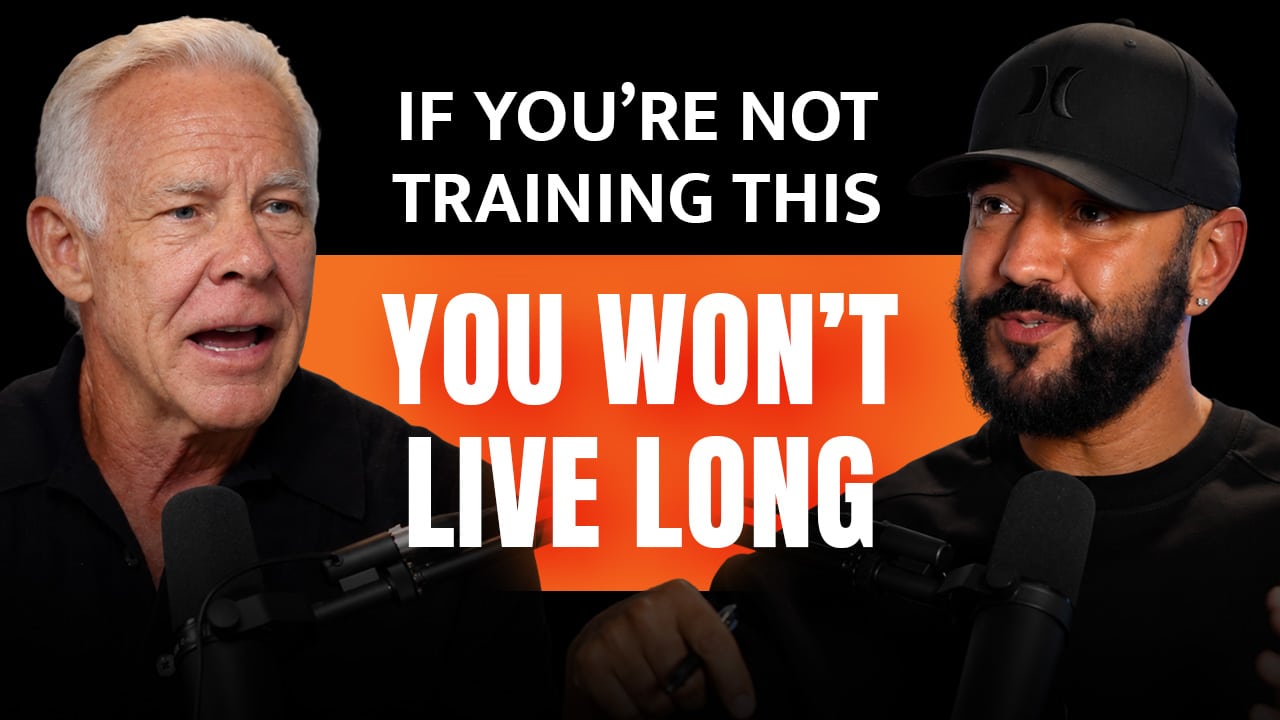
TMHS 1038: The #1 Exercise for Metabolic Health, the Downfall of Biohacking, & the Forgotten Key to Longevity | Mark Sisson
There are a lot of voices on the internet today, especially in the health and wellness space. When it comes to longevity specifically, the best advice to follow comes from those with proven, lived experience. And if you want to achieve true vibrancy and health into your later years, there’s no better model than my mentor, Mark Sisson.
Mark Sisson is a New York Times bestselling author, former elite athlete, and the founder of the primal lifestyle movement. Today, Mark is back on The Model Health Show for another enlightening conversation on longevity, metabolic health, foot functionality, and so much more.
In this interview, you’re going to learn about Mark’s approach to fitness, the basic foundations of health that are often overlooked in the high-tech biohacking culture, and why walking is an essential key to overall health and longevity. Mark is bringing his firsthand expertise and hard-earned wisdom to this conversation, and I know you’re going to love his realistic approach to health and longevity. So click play and enjoy the show!
In this episode you’ll discover:
- The difference between biohacking and the true foundations of health. (6:31)
- Why the biohacking movement is missing the mark today. (9:01)
- The most essential exercise for human health and longevity. (13:20)
- How much strength training to incorporate into your week. (14:44)
- The health benefits of sprinting. (16:13)
- Why developing metabolic flexibility will change your health. (22:11)
- What the lowest hanging fruit in longevity is. (31:08)
- The health issues that can arise from wearing ill-fitting footwear. (41:17)
- Why your goal should be to create strong, resilient feet. (46:37)
- The importance of monitoring your stress levels for longevity. (55:48)
Items mentioned in this episode include:
- Peluva.com/model – Most shoes weaken your feet—these rebuild them. Peluva barefoot shoes are designed to restore natural movement, improve strength, and support long-term health. Get 10% off with code MODEL.
- The Definitive Guide to a Barefoot and Minimalist Shoe Lifestyle – Download your free ebook!
- Peluva on Instagram – Follow for more tips on foot health!
- Connect with Mark Sisson Website / Instagram / Newsletter
This episode of The Model Health Show is brought to you by Peluva.
Most shoes weaken your feet—these rebuild them. Peluva barefoot shoes are designed to restore natural movement, improve strength, and support long-term health. Get 10% off with code MODEL at peluva.com/model.
Transcript:
SHAWN STEVENSON: Welcome to The Model Health Show. I'm a huge fan of proof of concept. When it comes to achieving anything in life, isn't it ideal to have somebody who's gone there before you, who's figured things out and is sharing the secrets? They have proof of concept. They know that this works. In the conversation about longevity, it's difficult to truly understand and to learn from somebody if they've not actually achieved longevity just yet.
It could sound great, it could have some science behind it, but it's still going to be a hypothesis until you've experienced it yourself. And so this conversation, this education about longevity, one of my go-to mentors, who is now in his mid-70s, and he's shredded, all right? In my head, I call him the Shredder.
I picture him with the mask on. I picture him going after turtles, all right? But he's doing this in the ocean, and I'm sure he's not actually going after turtles in a negative way. But he has constructed his life in such a way that these results that he's experiencing are automatic, and it's not just about the superficial.
It's not about the aesthetic piece solely. Of course, most of us aspire towards that. We're not waking up in the morning like, "You know what? I wanna look the worst today, as bad as I could possibly..." Nobody is aspiring towards that. So we want the aesthetic piece. We wanna feel good about ourselves, yes.
But we also want the metabolic health. We also want the physical capacity, the physical literacy, the ability to maintain our lifestyle, to do the things that we want to do in advanced age. And there are role models for that achievement, but we also have predominant models in our world today that are the exact opposite.
And so I ask you, what do you choose? Because at this time, we have choices to make It's what we're doing right now, whether we're in our 20s, 30s, 40s, whatever the case might be. We're setting the template. We're creating the foundation for what we experience in 40s, 50s, 60s, 70s, and beyond. So no matter where you are on that timeline, the time is now to take action.
And so I'm very, very grateful to share this powerful conversation with you today. On this episode, you're gonna discover why, as one of the fathers of the ancestral health and biohacking movement, why our guest now feels that biohacking has lost its way, and what we actually need to focus on instead.
You're gonna discover why you should strive to be a decathlete in your life. Not in sport, in life, AKA be able to do a variety of physical things, and he'll detail exactly what those things are. You're gonna learn the most fundamental exercise for fitness and longevity, and he suggests that you do this a lot.
A lot, a lot. He's also gonna share, when it boils down to it, what's the number one exercise that gives you the most metabolic and physical transformation bang for your buck in the shortest amount of time. And this is not for everyone, but if you can do it, he recommends highly that you do it because it's a wealth of benefits.
All of this and much more with our special guest, Mark Sisson. Mark Sisson is widely regarded as the forefather of the primal/paleo lifestyle movement with a string of best-selling books, including The Primal Blueprint and the Keto Reset Diet. He's also been featured as the number one ranked ancestral lifestyle blog on the planet, and the founder of the Primal Health Coaching Institute.
Mark is a former two hour and 18-minute marathon runner and elite Hawaii Ironman triathlete. He's experienced firsthand the potential pitfalls with chronic cardio and has since transformed his body and his life utilizing science-backed strategies for building strength, optimizing sleep, and of course, locking in on high-quality nutrition.
Let's dive into this conversation with the one and only Mark Sisson. Throughout human history, there's always been, I'm sure, people seeking the fountain of youth. Yeah. And this, this conquest, this adventure, this idea that we can find something to sustain our lives, to live longer, to live forever.
And today we actually have a growing body of science affirming that, our lifespan is potentially double what it is currently, 120, 150 years. But what's so interesting is that along with that and these aspirations, we see people who are living it and demonstrating what's possible, and we have people who are aspirational about it.
And it's gotten to this place to where everything's gotten a little bit out of control and a little bit crazy because that fountain of youth, I believe, the principles of it are very simple. If we're talking about our own kind of in- internal biology and the potential within us. And so having you here is very special for me because I talk about you often when you're not here.
I talk good behind your back- Ah, good ... about being somebody that I really look to to see, again, what's possible because the messages that we've been inundated with around what's possible around aging, around longevity has been very distorted. And so you're a huge shining light for me. And if you could, you seeing all this stuff that's going on right now, all of these interesting characters who've emerged, it's like, "I'm, I'm gonna live to 150 years and I've got all this.
I'm strapped to every being, you can imagine when I go to sleep and I wake up and like you know, I'm red lighting my nut sack. All of this stuff. What do you think about this paradigm that we're seeing right now? And the big question is, what are the real ingredients of longevity?
MARK SISSON: It's it's really interesting to see where the community has taken this, a community that I think I might have helped start back in the early 2000s this biohacking concept of ways in which we can
I started out looking at ways in which we could identify from an ancestral perspective how we can affect how our genes express ourselves. What is this recipe that makes us human? What are the genes that we can turn on to build muscle, to burn fat, to live longer, to have a, a, a robust immune system?
What are the genes that we can turn off through different dietary manipulations or exercise that would decrease inflammation and make us sleep better or not so prone to sunburn, things like that? These are all available to anyone with basic behavioral changes. So the recipe is still very simple, to emulate the lifestyle of an ancestral person, the person who gave us this genetic recipe today starting millions of years ago.
Now, we look at biohacking, and we look at people who are trying to find shortcuts. They're trying to circumvent wet biology with digital tech and with headbands and infusions and transfusions and injections and, and protocols and, and chambers and all this other stuff, and I have to laugh. I have to ... I call biohacking the day trading of health.
So the way, you would build wealth in a, in a very measured way, doing a lot of research, investing, investing your time and your resources into accumulating assets and letting those assets build upon themselves, that's how you build wealth. Day trading within that context is basically trying to exchange
It's betting. It's trying to figure out how I can get a dollar from somebody else who's on the other side of a day trade, and so it's a zero-sum game. I see this within the health community, where biohacking is like, "How can I not have to spend so much time building a foundation? How can I get a device that's going to cut my workout in half theoretically?
How can I get, get a device that's gonna maybe improve my sleep without my actually cooling my room down and, and, putting on a white noise and whatever? What are the pills I can take so that I don't have to eat as well? I don't have to eat real, natural food." It's become, it's become a perverted sort of concept in pursuit of extra years on the back end of your life.
So it's, it's, to me, I'm, sort of on the outside looking in, going, I helped create this kind of, this fear right now," but it's, it, the pendulum is swinging way on the other side. You know what I mean?
SHAWN STEVENSON: Of course. Yeah. Of course. And this is, it's true of just about any field we can think about, is that marketers screw stuff up.
Something might be true, and it's just like kind of mutated into something and, people building a platform around that. And oftentimes, maybe there's products attached to it. But at the end of the day, for me, and this is what I hope to inspire people with with this, with this conversation, is that real longevity, you said it, you said the word, you said an F word in there.
You said foundation.
MARK SISSON: Yeah.
SHAWN STEVENSON: Right? And building that foundation is the key. We're talking about, unfortunately, so many people are majoring in the minor instead of focusing on what are the things that truly create that foundation. And then, of course, you could do the little micro stuff, but if you're not doing those big movers that creates those real firm legs under this foundation, then you're going to struggle, period.
It's, it's just, it's just a matter of time. And so I've got you here, and I wanna talk about those big pillars for the foundation.
MARK SISSON: Yeah.
SHAWN STEVENSON: And obviously, there's a huge conversation, thank goodness, around fitness and fitness practices. What I admire about you and what's so valuable for people to hear is you've done it all.
You've done the most absurd long distance running and training and performing, triathlons, you name it. Yeah. We're talking top, top tier. Top fraction of a percent of the population, you've done that.
MARK SISSON: Yes.
SHAWN STEVENSON: And f- to go from that to whoa, whoa, whoa, whoa, whoa. And being c- perfectly capable, but no, no, sprinting.
This is much more high as, as far as efficiency, but just the benefit, the metabolic benefit-
MARK SISSON: Yes ...
SHAWN STEVENSON: The sustainability, all these things. If we were talking about longevity, that practice that I was doing before, this isn't it. Yeah. And so everything in between, from the games that you've been playing and ultimate Frisbee to the strength training Best practices to build that foundation, what do we need from the fitness side?
MARK SISSON: From the fitness side, it's, it's approaching it from more of the perspective of, of a decathlete, a lifestyle decathlete. We hear a lot about VO2 max now being the ultimate metric for determining longevity and r- reduction in risk for certain diseases. And some of the pundits will say, the top 2% of VO2 max people have a 400% decrease in all risk factors greater than the lowest quintile.
That means nothing to me, and I think it means nothing to most people because i- if you look at what it takes to get to the top 2% of VO2 max, you have to focus on VO2. You have to do a lot of work in that arena, and I, again, I wanna be a decathlete in life. I wanna be-- I wanna be able to hold a plank for three minutes.
I wanna be able to deadlift, one and a half times my body weight 10 times. I wanna be able to hang from a static bar for 90 seconds. I wanna be able to stand on one leg with my eyes closed and my arms crossed for 30 seconds or a minute. I wanna run the mile in eight minutes.
I-- the-- all these different things that you can put together that constitute a capable human able to do a lot of different lifestyle activities. When we talk about longevity, we have to include quality of life. What does quality of life look like? It's, if Dave Asprey's gonna live to 180, God bless you, man, have a good time.
But if you are unable to move around this world and do things and participate in life and communicate with other people and feel connected with the Earth and go on hikes and do all the things that make life really worth living in this modern AI-focused world If you don't have that foundation, you're gonna miss out on a lot of stuff.
So, so what-- So long story short, what does that look like in terms of, like, how do you orchestrate a fitness program? And I think I've come down to a really basic list of things the, the foundation of which is walk. Walk as much as you can, as often as you can. Not to burn calories not to even to count steps, but to move.
The body expects to move. The body is built-- Human bodies are built to move. We have two feet, not four, so it's a m- it's amazing that we are able-- that we don't fall over, every 10 or 15 minutes. We're b- like a Segway. We're bui- we're built to move frequently and through a lot of different ranges and motions and planes of action.
So when you see 80 and 90-year-old people, 100-year-old people particularly in Asia, in the s- in the parks doing Qigong and Tai Chi, they're doing slow movements. They're not counting calories. They're not, they're not working up a sweat. They're not, they don't have devices that are measuring this.
They're moving their arms, their legs, and their torsos through different planes of motion because they understand the body needs to move. So the foundation is always going to be about zone one, zone two, low-level activity that c- causes blood flow, that pumps lymph, lymphatic system to, to help clear toxins.
If you do that, and we're gonna-- we can get c- we can circle back to diet because all of this depends on having a good diet. But if you, if you have a good diet, then that foundation, all you have to do to layer onto that to achieve maybe 80 to 85% of your genetic potential is lift weights twice a week 45 minutes, 30 minutes, 45 minutes, but do it intently, not necessarily intensely, but intently.
Not to failure, not to exhaustion, but do it with, with, with intention twice a week. And by-- And so what I mean by that is you wanna do the hard work, and then you want to recover from the hard work.
So some people will say what if I go to the gym five times a week and I lift weights five days a week?"
My answer is great if you like to hurt yourself, if you like to feel like you're struggling and suffering." But you theoretically, you're doing this to become better at life, better at performance, better at what you do If you do it right on Monday, you won't be able to do it again this-- with the same intensity on Tuesday because it will have-- it will require Tuesday and Wednesday for your body to adapt and recover from that workout.
Not because you beat yourself up, but because if you do this five days a week or six days a week, A, your body gets used to it, so there's no positive adaptation, just gets used to doing it and figures out a way to do it with less energy. And, B, it just takes more time, and it-- and then now you're not as excited about the workouts because you haven't focused on them.
So to recap, foundation work, lots of movement, particularly walking. Could be cycling and swimming, I don't care, but low-level activity. Lift twice a week. Now, here's a little asterisk. Sprint once a week. Sprinting is probably the greatest thing a human can do if you're capable because it's got the greatest bang for the buck of any choice you could do in terms of fitness.
Doesn't always have to be running. It could be on an assault bike. It could be on a treadmill. Could be an elliptical trainer. Could be in a rope pull or a, or a Concept2, an erg machine. Whatever it is, sprinting means doing something all out, max effort, 20 seconds, 30 seconds. Rest a minute or two or whatever the time is for you.
Do it again. And do that four, five, six times in a workout once a week. So now we have lots of low-level activity, lift twice a week, sprint once a week, and the rest fill in with play. Do your stuff, man. Don't call it a workout. Play your pickleball. Swing a golf club. Go play ultimate Frisbee.
Chase your kids around in a game of tag. Go for a hike. All these things are ways in which you can take what you've developed with your aerobic base, with your anaerobic high-intensity training and sprinting, and with the strength that you've built in the gym, and now you put them all together, and now you've got this, this life skill that is adaptable to any pursuit you wanna take on
SHAWN STEVENSON: This sounds like the macronutrients of fitness.
MARK SISSON: Yeah.
SHAWN STEVENSON: Again, there might be this machine, this, NASA-built whatever, you do one minute on this machine, that equals, like three days of working out. Yeah. Right? There might be this thing, but if you're not really paying attention to the macros. Yeah. But I got a question for you.
When you mention zone one and zone two, how do you know if you're in it, Mark, if you're not tracking it, you're not wearing, you know- Yeah ... some kind of a, a bio-
MARK SISSON: Device ... monitor? Yeah,
SHAWN STEVENSON: Yeah.
MARK SISSON: And, and I'm, I'm making a name for myself in that sphere as the anti-quantified self. So I don't, I don't track it.
I can tell you what time it is. But that's about, that's about all I can do. Yeah. As I, as I say bad data is worse than no data. So a lot of times these devices don't give you good data. There's no, there's no reason for you to require an HRV reading if you're not an elite athlete.
There really isn't, because you're not, you shouldn't be training that hard for it to matter. Unless, of course, you're beating yourself up as a citizen athlete trying to struggle and suffer your way through valuable workouts every single day so that you earn the right to eat that dessert, 'cause there's a lot of that going around.
So th- the idea that you would measure something like how do you get to what zone one or zone two? The best way to do it is just can you carry on a conversation while you're doing it? We, I, wrote a book with Brad Kearns, my co-author, in which we talk a lot. We've written several books about this, about the sort of fat max zone, that zone at which at the end of zone two where you stop burning fat and start burning more glycogen in your muscles, which is a different metabolic system.
Nothing wrong with it, but if you spend too much time in that zone three, which is more glycolytic, and zone four and zone five, you're working harder, but you may not be training your body to burn fat well. You may not be setting up your body to develop more capillaries to deliver oxygen because you're not using as much oxygen.
You're depending on glucose and glycogen. Zone one, zone two So the metric we often use is 180 minus your age is the maximum heart rate you should be sustaining for whatever workout that you're doing when you're doing that low-level aerobic activity. So if you're 45 years old 180 minus 45 is 135.
The max heart rate you should, you should be at for 80 or 85% of the time you spend training aerobically should be at 135 heartbeat or less. People say why, why would I, why would I hang out there? I can, I can run, for 45 minutes at a heartbeat of 180 or... Not 180, 160 or 155." Great. What that shows me is that you're really good at burning sugar.
God bless you. You're good at burning sugar. Now you burn the sugar, you're gonna get home, you're gonna be hungrier, you're gonna eat more. You're probably gonna eat more carbohydrates to replenish the sugar you lost, but you're not training yourself to burn fat. So zone one, zone two is where that real anaerobic base is built.
And the, the better anaerob- excuse me, aerobic base. The better aerobic base you have, the easier it is to layer on some of the high-level work. So what we say, and we've said for a long time, is, "Do your long, slow work longer and slower, and do your high, fast, in- intense work, shorter and faster."
SHAWN STEVENSON: Mm.
MARK SISSON: It's, it's pretty simple. It's not like if you blend the two together, you get some magic formula. It almost works against you to blend the two together.
SHAWN STEVENSON: Ah, so good. All right. So with this foundation, we have the fitness piece, and the formula is so simple. Very, very simple. Thank you for simplifying it even more.
And another one of these foundational pieces, another leg to this stool of real longevity... Table. How about a table? Yeah. Of real longevity- Yeah, yeah, yeah ... is, you mentioned it, the food piece. Yeah. Again, there's so many foods. There's so many super foods. Yeah. But also there's this whole category of supplements and, I've seen this firsthand, many colleagues of, they're, taking fistfuls of pills in the morning, and this is their primary nutritional target.
Yeah. They'll, they'll add in some, some whole foods here and there- Yeah ... along with it, but it's really about the supplements.
MARK SISSON: Yeah.
SHAWN STEVENSON: From you- Yeah ... what are the things for us to really target to build that sustainable foundation?
MARK SISSON: The things to target are just to get the macros right, as we said, and develop metabolic flexibility.
So that's the, that's the holy grail of anything that we're doing both in terms of exercise modalities and in terms of, of, of eating choices. You wanna build the ability to burn your own stored body fat whenever there's no food available not many people have that, that real skill. They have become so dependent on carbohydrates most of their life that they have to eat every couple of hours to replenish the carbs they burn off because they have not developed this metabolic flexibility.
The ability to go from the time you wake up in the morning until 1 or 2 or 3 o'clock in the afternoon and feel energetic and not feel logy or, or lightheaded or foggy. To not-- to, to be able to do a full workout based on the glycogen that you've already stored in your, in your body if that you're gonna do a glycolytic workout.
The ability to go long periods of time without eating and maintain muscle mass or build muscle mass to have all the energy you need throughout the day, to not get sick, and, and most importantly, to not be hungry. So metabolic flexibility is sort of the key underlying all of this foundation that it, that the better you can dial in your diet and learn how to burn off your own stored body fat without depending on Another meal, another meal, another meal, the less hard exercise, especially lifting, the, the less work you have to do to kind of come at it from the other end.
The fewer calories you have to burn in an exercise program to get to where you want to be. So we say that i- 80 or 90% of your body composition, like the part of you that what makes you like feel good and light and lean and look good naked, is how you eat. You can't exercise away, in other words, a bad diet.
So if you get the metabolic flexibility part right, which means paying attention to what you eat, which means focusing on protein, and not a lot of protein. Anybody eating more than 120 or 130 grams of protein a day is sort of overeating protein, I think. So you don't need that much protein. We don't need that much carbs because we're not-- there's no nutritional requirement for carbohydrates in, in human nutrition.
So we don't need that much in the way of carbs. So if you ha- focus on lean protein, if you focus on vegetables, I'm a fan of vegetables a little bit of starchy tubers or carbs like that once in a while, some fruits, then you find out you don't even need that much food to be very efficient throughout the day and to be, again, not just metabolically flexible, but metabolically efficient- Mm
to, to burn the calories that you take in, to burn off your own stored body fat whenever your body feels like it needs to an extra boost of energy for your brain to learn how to burn ketones, and now your brain works better on ketones. And ketones got a bad rap 15 years ago. Now it's a big thing.
I mean- Mm ... people talk about be- a ketogenic diet and, and being able to, to exist on ketones. I've been keto-ish for 15 years. I don't eat a keto diet because I'm metabolically flexible. What that means is whenever I-- whatever I'm doing if I'm doing glycolytic work, I have enough glycogen. If I'm doing long, slow, steady stuff, or even if I'm doing zone three and zone four stuff because of my metabolic flexibility I'm still burning mostly fat.
So I've developed this skill that allows me to untether myself from hunger and appetite and cravings and get by on what I would call the minimum effective dose of food. So the minimum effective dose of food, again, focus on protein whatever carbs I need to feel like I had a satisfying meal. I want to enjoy every bite of food I eat and it, it turns out, to not be that much food.
Now, do I take supplements? Not anymore. I had a supplement company for 30 years. I made the world's highest potency, full spectrum, multivitamin, multi-mineral antioxidant formula, the Damage Control Master Formula, a 12 capsule a day super supplement, 52 different ingredients that you could buy individually in a health food store.
It was... It's still a great... I s- we still sell it. I don't take it. I have gone to another approach in my life. What's the minimum effective dose of food I need to get through the day, including protein? What's the minimum effective dose of vitamins and minerals? Because so many people are overdosing on-- They're mega dosing on vitamins I haven't seen any studies or, or anything even in my own experience that shows that that's affecting me on a, on a positive scale except making my piss yellow and costing a lot of money.
So what, I've dialed back my, the, the, my consumption of supplements to basically collagen. I take a collagen supplement. On occasion I take vitamin D supplements because I don't, while I spend a lot of time in the sun, I don't convert vitamin D as well as most people. I might take an occasional vitamin C if I feel like something's coming on.
That's the extent of the supplements I take. I, I just, I went to a minimum effective dose. The converse of that, by the way, is when I first started taking supplements, I was taking 25 grams of vitamin C a day in the late '70s when Linus Pauling was saying vitamin C was the anti-cancer vitamin. W- when you take too much of one vitamin and there's, there, not just, there's hundreds of vitamins and, and micronutrients and phytonutrients and phytochemicals and all of, all the different components that we talk about in whole foods.
When you sort of s- start to inject excess amounts of one into a system without accommodating what the effect is downstream on the other ones, I, I'm back to let me just let real food be my primary source of all these things.
SHAWN STEVENSON: Yeah, yeah. Most people don't realize that you can cause deficiencies in other things- Yeah
by mega dosing, things that are healthy, and so it's, it's really about the context. Yeah. And the context of food first being the primary focus should be obvious. And also, we live at an amazing time where we have access to supplements and, you can really target certain things when you need to.
But chances are a lot of this stuff you don't need to every day- Yeah ... as well. And so I love the approach even, like you said, like vitamin C in these particular occasions, but also getting a lot of vitamin C just through your diet, but it's also coming along with all these other nutrients that help to balance the equation.
MARK SISSON: S- many of the RDAs were determined in the '40s when the diet was largely grain-based. So- ... but it doesn't account for the fact that grains, for instance, contain phytonutrients, phytates- that bind with minerals and leach minerals out, increasing your need to take in more minerals.
So the, the RDA, the d- the DV for calcium being 1,200 for women and, and, 1,000 for men was somewhat based on, on the fact that it was being offset by some of the foods that we were eating or the way we were eating. Again, I'm, I don't, I don't supplement with any of those things.
I just take, I eat a lot of clean, lean protein. I eat a lot of vegetables. I don't- not a lot, but I eat enough vegetables. I eat cheese. That's, it's pretty m- it's pretty simple. Minimum effective dose. So I've given you already the minimum effective dose of exercise. Th- that's really the minimum effective dose of exercise for you to get to 80% of where you wanna be in terms of your physical robustness and your competency across a broad range of activities.
Minimum effective dose of protein, minimum effective dose of food, minimum effective dose of supplements. And we can apply this to the rest of our lives. What's the minimum effective dose of, of digital interaction I need in a day, to, to to get all the news I want, play my games, and not get sucked down the, the thumb scroll,
SHAWN STEVENSON: I wanna ask you these, these two categories are the most as far as health literacy, it's diet and exercise. Yeah. But what are the other parts of that foundation for longevity-
MARK SISSON: Yeah ...
SHAWN STEVENSON: That you feel we need to, make sure people are paying attention to?
MARK SISSON: Yeah. Sleep. Obviously, sleep is the one that's been talked about probably more than anything else in the last five or 10 years because p-- And I think people get that now.
Yeah. But you know, as a sort of subset of exercise we've identified foot health as being the new sleep. So foot health might be the lowest hanging fruit in the world of longevity. You go, "Whoa, that's, that's a strange segue." But foot health, if you look at what happens to people over the age of 65 the greatest risk for death is falling.
Is falling and breaking a hip and winding up in the hospital and then dying of pneumonia. And I know everybody knows not just one person, but several people who've had this happen to them where, it's a, it's an older frail person. They get up in the middle of the night to pee because their bladder is weak and again, there's a whole, a cascade of events behind that as well.
They trip on the cat and they fall and break something. A lot of things are happening now. First of all, because, when you're a kid, when you're t- when you're 20 years old, you trip all the time. When you're 12 years old, it's like, "Ah, I tripped, fell. It's whatever. I caught myself.
Oh, that was goofy of me." You trip in your 30s and 40s, yes, same thing happens. Your feet are strong enough to... they respond well enough so that when you start to trip you catch yourself so you don't even trip, or you are able, you have the foot strength to put that foot out in front of you and stop the trip from happening.
You have enough balance in the first place to maybe not even encounter the trip at all. You have enough peripheral awareness to not be affected by certain things that would cause you to trip. You've gone to the gym, or you've, you've stayed fit enough to build the muscles in your legs to be able to, to, to fix that.
Now, if you don't do any of this work for a bunch of years, now, if you don't go to the gym, you lose bone density. We know this, right? So, bone density is almost a direct result of weightbearing loads. The bones, like the re- the, the entire body responds to the inputs that we choose to give it.
Yeah. So muscles only grow because we choose to go to the gym and lift weights. So then the muscle goes, "Ah, if this clown's gonna do this every day, we better get stronger and bigger and more powerful." And then the bones go, it's just, if, if the muscles are gonna get bigger, we have to be- provide an anchor and support for them," so then the bones get stronger.
And then if you do some sprints or you do some aerobic activity, the heart goes I gotta, I gotta start beating more forcefully to provide the oxygen and the nutrients to the muscles and to the other or- organs to keep up with this choice that this person's made to do this activity," and, and so on.
The lungs have to inspire on a greater volume to provide the oxygen to the heart to pump the blood and, and, and to feed the liver and to feed, the kidneys and the spleen and everything else that all the organs in the body.
They all sort of come back to what we call organ reserve.
If you do the work over a lifetime, and you keep challenging the body with exercise and with hard things, the body responds by staying resilient and doing this. Conversely, you stop doing this stuff. You stop working out. In many cases, you stop working out because your feet hurt. We'll get to that.
We'll come back to that. My feet hurt, my knees hurt, my lower back hurt. I can't, I can't, certainly can't run, can't ride a bike, can't-- I don't feel like walking now. So you stop working out. You stop going to the gym. You stop sprinting or jumping rope or dancing or whatever gives you pleasure. And over a period of years, your muscles atrophy, your bones get weaker your balance is compromised tremendously.
And so now when you trip and fall, all-- everything that can go wrong will go wrong. You break a bone because you are unable to catch yourself in the fall. You wind up in the hospital prone for weeks at a time. You get pneumonia, and you die of heart failure. It's a pretty classic story. So when I say foot health is probably one of the greatest indicators of longevity, I mean it.
Big toe strength, and Courtney Conley, I know you, Courtney, she will argue forever that big toe strength is probably one of the most critical components of foot strength. It's the most important joint in the human body. So when we overlook our foot health, when we assume that, ah, I wear shoes all the time and, and as my feet get more tender and they get more atrophied over time, all I need to do is find more and more thicker cushioned shoes.
I have to go to a thicker cushion and a thicker cushion and walk on clouds. It's almost the o-opposite of what you wanna have happen. Again, you wanna build that resilience. So you want your feet to be strong and resilient and mobile in order to enable you to move for as long as you can. Again, once you stop moving, you start dying.
And with feet, it's like that's your connection with the universe. Feet is our contact with the ground. Everything we do, every step we take, every time we run or jump or change direction or swing a golf club or swing a baseball bat every time we hit a tennis ball, it starts with the k- foot and the foot's connection to the ground.
That's why it's amazing to me that so many athletes kind of overlook foot health in, again, in service to the drills and everything else they do because they put on their tight cleats and they lace them up, and then they bind them up with more tape, and then they go off and, and, and do their training It is that's so archaic to me.
It's so bizarre that you would overlook this most important connection that you have with the ground. Now that's athletes. With average citizens, same thing. Like you should be spending time... Like when people say, "W- what are you doing on Tuesday?" Tuesday is leg day." Excuse me, "Tuesday is back and bis and, Thursday is chest and tris or whatever."
What day is l- is, is foot day? What do you mean foot day? Everybody should have a foot day. Feet are, they are foundational. They are, they are the, the point at from which every athletic move emanates. And even if you're not an athlete and you wanna improve your performance as a human being and do all the things we talked about in the beginning of this show to be able to participate in life, you gotta focus on your feet.
And, and that means, that means walking, not just walking, but walking in the appropriate type of footwear, in the kind of footwear that lets the bottoms of your feet sense the ground underneath, the texture and the tilt of the ground underneath, so that the input, by the time you weight that forward foot, the brain has all the information it needs on exactly how to orchestrate the kinetic chain, how much to scrunch the arch or articulate the toes around that rock or through that divot or over that stick, how much to roll the ankle a little bit to the outside so that the knee doesn't tweak, how much to dip the knee because you just stepped off an 18-inch platform.
And, and if you're in stiff hiking boots, it's like a jolt. You don't even know when you've hit the ground. But if you're barefoot or in really minimalist shoes, by the time you start to weight that foot, the brain already knows bend the knee a little bit extra because of this, this dip. And all of this is built into every one of us.
And people say but Mark, I have wide feet. I have flat feet. I have duck, I'm duck-footed. I'm, I'm knock-kneed. I'm wide-hipped." Everybody is born with perfect feet, and everybody is born with a perfect kinetic chain. The missing link for almost everybody who complains about this is they've, they've lost the input from the bottoms of their feet to allow the brain to organize their perfect kinetic chain the way they were designed, not because you read some manual on how to keep your toes together and, and when you do deep knee bends, make sure your knees are parallel.
No. You're, you're operating on your own unique kinetic chain that just requires the adequate input, the sensory input from the bottoms of the feet for it to work perfectly
SHAWN STEVENSON: I love this. Foot day.
MARK SISSON: Yeah.
SHAWN STEVENSON: When is your foot day? What day
MARK SISSON: Is foot day for you? Yeah. You
SHAWN STEVENSON: know, you gotta think about this. Yeah. And what's so cool, and, you've been ahead of the curve so often in your life, even in the sleep conversation-
MARK SISSON: Yeah
SHAWN STEVENSON: long before it was in vogue. And now advocation for a foot day, and also right now as we're recording this interview Top tier, the best of the best strength coaches, performance coaches in the world in their respective sports are now training their athletes, having them train their feet.
MARK SISSON: Yeah.
SHAWN STEVENSON: In particular, their big toe.
MARK SISSON: Yes.
SHAWN STEVENSON: A lot of NBA athletes now are training barefoot or have barefoot training integrated into their training as well, and also specifically targeting big toe work. Yeah. Which is like maybe, for example you get a, a band and the band is attached to something, pull the band out, and you hold that down with your big toe while getting in a lunge position and holding a s- static isometric, right?
So what you're saying and what you've been saying- Yeah ... is now emerging, and it's just, again, it's so, it's so common sense once you become aware because your foot and that ground contact inform everything up the chain, and we wanna have appro- our bodies know what to do-
MARK SISSON: Yeah ...
SHAWN STEVENSON: to have an appropriate response.
But if you start to mute that data, there can be gaps in information all up the kinetic chain, and what is that gonna do? It's just gonna increase the risk for things to happen that shouldn't happen.
MARK SISSON: No, it's tweaked knees, it's pulled hamstrings, it's weak glutes it's piriformis syndrome because you have weak glutes and because you've, the stabilizer muscles had to take over some of the job that the glutes should've been do- been doing because you didn't engage the big toe.
We talk a lot about in the gym about how the big toe or the great toe, as we call it is needed to fire the glutes properly. It's part of this kinetic chain. If you scrunch that big toe, that great toe against the other toes in a shoe, you not only disable that connection, you also cut off the circulation of the plantar fascia area, so now you wonder why you get plantar fasciitis because there's no blood flow there because you put it in a tight shoe.
Or you get Achilles issues or you get bunions, which is a very common occurrence even in top athletes now from having worn tight, tight restrictive cleats or even basketball shoes. All of these occur because again, you cut off that sensory input, that haptic sense that we need, that we require to organize the kinetic chain perfectly for you.
So it just finds the weakest link up the chain. Mm. And it may be, in some people it may be the knees. Some people may have strong enough knees or they're aligned enough that it bypasses the knees, it manifests itself in, in the hips. Maybe it's the lower back. Maybe it's the neck in some people.
It's, it's amazing how many people have various dysfunction in their body as a result of Their footwear choices- Mm ... and their lack of attention to foot health over the years almost all of which could be, if not cured, certainly alleviated by spending time barefoot doing foot exercises and wearing, in our case, wearing five-toed minimalist shoes that allow the toes to splay outward to get the full impact, the full force of a true foot.
If you try to do a handstand like this, you probably won't be able to do it. But if you do a handstand like this, you've increased your platform 50%. Foot's the same way. If you sprint down the beach at low tide on the flat sand barefoot, and you come back and look at your footprint, that's the widest your foot is ever gonna splay.
That's your foot being happy and saying, "Man, I'm powerful. I'm sprinting. I'm running down the beach, and I'm using the entire, all the musculature, all the intrinsic muscles of my foot to generate force. I'm not just starting the force from my ankle or my Achilles up because I've put a clunky shoe on.
No, I'm using so much of this force is coming f- from the muscles of my feet directly." It's one of the you know, we, we started this company, Peluva, five years ago. We sold our first shoe three years ago, but the barefoot movement, the five-toed barefoot movement goes back to 2005 and 2006. And one of the early problems with anybody adopting a five-toed shoe was the science looked amazing.
The science is like, "This is exactly what we should be doing. We should all be wearing minimalist shoes. We should be articulating our toes individually." But a friend of mine, Christopher McDougall, wrote a book called Born to Run, and in it, he posited that we should be running barefoot. If we're gonna run, we should run barefoot.
We're designed to run that way. It would force us to run in the perfect, in the perfect posture. So like thousands, tens of thousands of runners went out and bought minimalist shoes and said, "That's a great idea. I love that. We'll go run five miles the first time we put these on." They got injured.
Why did they get injured? Because even though they'd been running 50, 60, 80 miles a week in their running shoes, their feet were atrophied. Their plantar fascia was weak. Their big toe was weak. The intrinsic muscles of their... The small muscles of their feet had never really fully integrated into the propulsive nature of a running stride, and so they all got injured, not because of the footwear, but because...
the, not because the new choice in footwear, but because the old choice in footwear had caused them to atrophy. So you think, how can a runner who's been running for 10 or 15 or 20 years have atrophied foot muscles?
SHAWN STEVENSON: Mm.
MARK SISSON: It's an epidemic among runners, and the more you coddle the feet with restrictive shoes and with built-in arches...
built-in arch is one of the worst things that ever happened to shoes because the arch wants to work. The arch is a muscle, and there's an entire industry in podiatry built around creating artificial bridges, inserts orthotics, if you will, for people who have weak arches or who have flat feet.
Again, you're born with perfect feet, and if your arches look flat as a kid and as a teenager, so what? They're strong. If you, if you run barefoot, they don't have to look like this to be an, to be a strong arch. That's just the name we gave it. But a flat foot that's strong is as strong as a arched foot that's strong.
So to have to, to go back and say the only fix for this pain that you have in your knees or in your hips is it's in your shoes, and we're gonna put an, a, a support in there so your arch doesn't have to work-
SHAWN STEVENSON: Mm
MARK SISSON: It's, can you see how ridiculous that is? Of
SHAWN STEVENSON: course.
MARK SISSON: And yet an entire industry is built on arch supports and
Now, am I saying nobody should be using an arch support? Absolutely not, because some people are so messed up that without an arch support, they can't move. So, you gotta see where you are on that- Right ... scale and go, "Okay, if my feet are that messed up, I'm gonna gradually get into this, this concept."
But I'm just telling you that, that everybody has the potential to have really strong, resilient, mobile feet, and with that, to carry them through life to where they're walking until the day they die.
SHAWN STEVENSON: Yeah. Just imagine if those people who, they're s- again, so messed up, as you said- Yeah ... th- with their arches that they need that support, just what if they were given the right training?
What if they were given the right exercise? What if they were given the right kinda lifestyle support to actually make their feet stronger? But that's just not the culture that we have right now. And now, I'm starting to really understand. I, I understood before- Yeah ... because you're, you're passionate about health and fitness and also helping people, but now I'm starting to understand you don't have to do this.
Like- Yeah ... you sold your last company. Yeah. You could just go anywhere- Yeah ... and just lay on the beach.
MARK SISSON: Yeah.
SHAWN STEVENSON: Literally have people serve you grapes-
MARK SISSON: Yeah ...
SHAWN STEVENSON: for the rest of your life. But you chose to dive into this venture, and truly y- you got your ... Oh, Brad is over there in the corner, by the way, in his Peluvas, but y- you've surrounded your people with people who, you've surrounded yourself with people who are equally as passionate- Yes
and who walk their talk, literally.
MARK SISSON: Yeah.
SHAWN STEVENSON: And building this and making this impact, and the people that you're impacting already, just again, you just mentioned that story of bumping into that person who had the Peluvas for quite some time, but you bumped into her walking, and she was wearing them, and it's created all this transformation.
Yeah. And, it's just like that possibility is there, and it's literally helping to heal your body from the ground up.
MARK SISSON: Yeah. And I think the interesting thing about Peluva is we don't tell people to run. In fact, we say, "Don't run. They're the best running shoes you'll ever wear if you know how to run, but don't run in these.
Walk because every time you... Every step you take is a rep. In fact, that's one of our slogans, every step is a rep. Every step is a rep in rebuilding a resilient strong foot. If you run, now you're putting G-forces on it. You're putting stresses on, on muscles that maybe have atrophied for years and years, and you're not ready to do that work yet.
But walking's not the case. Walk, and certainly if you get Peluvas and you walk, 10 or 15 minutes the first day and a half hour the next day, and within a few days your feet go, "Oh God, this is like there's a newfound freedom." The muscles get tired but not sore. They're tired in a good way because you haven't worked them.
It's i- imagine going to the gym not having lifted for 10 years, your first day at the gym you're gonna be tired, right? But that's a good thing because you're now you're starting to rebuild that strength and that power and that resilience that you had at one time. Same with feet. So with Peluva we say just that's why this combination of lots of low level activity, walking as much as you can as often as you can throughout the day, and then if you do it in the right shoes, you engage probably 20 or 30% more of the muscles in your leg when you are using the intrinsic muscles of your feet, when you're letting that big toe be the last point of contact, when you're, when you're roll...
you're, you have a, a... Reacquiring a normal perfect gait. So many people over the years their feet go out like this and now they're walking like this because the big toe wants to be the last point of contact but you've already... Now you've pressed it against the other, other toes. Imagine now if the toe is the last point of contact, now you're walking parallel again.
It, it, the amount of, We have a new website that we just put up. It's just called peluvareviews.com because we had, had 6,000 reviews, many of which are video reviews of just tear-jerking testimonials of people like, "I never thought I'd walk again without some kind of pain, and within a few days things went away."
Now, I can't make this promise or guarantee to anyone or everyone, but so many of these reports that we get are, are just reaffirming what I already knew to be true, which is that foot health is the new, it's the lowest hanging fruit, it's the new sleep, it's the new thing to focus on if in your longevity journey.
And, and if it's mostly built around walking, not even having to do the half pipe, the PVC stuff and all the stuff in the gym. If all you do is walk- Yeah ... but do it with intention and do it with, a regularity I can't think of an easier way to acquire resilience and longevity than that.
SHAWN STEVENSON: Yeah. Yeah. And this is something that you're probably going to be doing anyways, just walking.
MARK SISSON: Yeah.
SHAWN STEVENSON: It's, it's my habit that I've built over the last couple of years. When I leave the studio, I go home, I put on my Peluvas, and I just go walk and I decompress. And, this is like my prehab, rehab, training in them as well, especially like doing lower body type training sessions.
Yeah. I love wearing the Peluvas. And what's different about them for me personally is the, is the accessibility for different types of movement, right? Other iterations of, t- tr- trying to approach what you've created, they don't nec- they're, they're not as forgiving- Yeah ... when it comes to pushing a sled, for example.
Oh, yeah. Yeah. Especially if you're untrained. Yeah. Right? But you've got, you've got Peluvas that are for cross-training. Yes. You've got Peluvas that are for the golf course. Yes. You've got Pelu- Peluvas that are for, as my videographer shared, he bumped into a friend who was wearing them on the tennis court.
And, it's just thinking in those terms of actual applicability- Yeah ... being able to have the accessibility for the thing that I wanna do, and also making them cooler. Mm. That's the key as well.
MARK SISSON: That was big. That was big, yeah.
SHAWN STEVENSON: Because again, it's culturally- Yeah
this is unusual, but really stepping up to make the designs cool and, that's one of the things that I was really surprised at, also how many people stop me and we have conversations oh- Yeah ... What are those? Yeah. What are you... Where, where'd you get those? But not, "What are those?"- No, yeah.
When she would- ... in the negative way. Yeah, yeah, yeah. It's y- Yeah ... I'm genuinely interested. Yeah. And, and often what I'll hear is "I should get some of those." Yeah. And so by the way, if you wanna get some of those, go to peluva.com/model for 10% off. All right? This is exclusive with us. Peluva.com/model.
It's P-E-L-U-V-A.com/model, 10% off. Why the name Peluva?
MARK SISSON: Yeah. It's... That's a great story. I th- I think it's a great story. You, you be the judge. But I have 20 different trademarks on primal words. Primal Fuel, Primal Kitchen, Primal Nutrition, Primal Blueprint, Primal Blueprint Health Coach Institute Primal Health...
All this stuff over the years. And I went to get Primal Footwear or Primal Footprint for for this shoe company. Somebody'd taken it. So, it- they don't exist anymore, but they aggressively protect the name, so I had to come up with a new name. So my son and I went through a list of different iterations of different languages, foot and glove and h- comfort and, and it just turned out that in Portuguese, P-E, pe, is foot, and luva is glove.
So- Mm ... Peluva became the name, and, we, we like it. We think it's a great name. We, it's got a little bit of a cachet to it and everything. Wanna touch on something you said, though, about your evening walk, your decompress, 'cause I do that every night. 6:30 at night when I'm home I'm standing, staying at The Shutters, and I've done it the last couple of nights, too, at The Shutters.
It is to decompress. It's my meditative time, and I think the interesting thing is it's not oh, it's 6:30, I have to go walk. It's 6:30, I get to go walk. And I don't know about you, but when I have Peluvas on, when, when I'm feeling the ground underneath, I'm walking a little bit more upright with my shoulders back, my chest out a little bit chin up a little higher.
I'm walking with a little bit of a swing and swag, swagger. And every step, while unconsciously taken, is intentional. Every step is like, and I'm literally can fit all ... When I say every step's a rep, I can feel the push off, I can feel the completion of the gait. And it's not, again, like I'm focusing on it.
I just feel it, I notice it, and most of the time when I'm walking, I'm, I'm writing a column or I'm working on a business, idea or something. It's my creative time, too. But I love the fact that if you, if you treat it like I get to work, I get to walk- Yeah ... instead of I have to walk, it, that, I think that makes a big difference.
SHAWN STEVENSON: And there's something about it to where it's just more nourishing.
MARK SISSON: Yeah.
SHAWN STEVENSON: So it feels like it's like freedom. Yeah. Like I get, I get to do this.
MARK SISSON: Yeah.
SHAWN STEVENSON: That's great, man. Just to circle back, so again, with these foundational components, our food obviously, our fitness, and the focus on foot health- Yeah
being like this X factor in this, and paying attention to our sleep wellness, is there anything else in that foundation?
MARK SISSON: Yeah. I think these, they, they all sort of intertwine, and I would say that stress management is a big deal here in longevity. And the stress management is, it has to in some cases, 'cause that's been my biggest, probably my biggest issue.
I've, I've always been a good sleeper, I've always been a good eater, I've always been a good exerciser, but I don't handle stress well. So I'm conscious of that, but I'm also aware that I can negatively impact my stress by not eating right, by not sleeping right, by not exercising right, by exercising too much, right?
So the walking part of that becomes meditative. That becomes a de-stress for me as well. But I would say that, that I'd be remiss in not adding that component. Now, stress management for some people takes on different iterations. It could be spiritual practices for some people. That's how you, how you adjust for that, that level of, of stress.
Could be community for some people. It could be just pure meditation for other people. But I think I'd, I would have to add that into the mix.
SHAWN STEVENSON: Yeah.
MARK SISSON: So yeah.
SHAWN STEVENSON: So much of this is again, accessible, simple, cost-efficient, even when it comes to de-stressing. Yeah. Sometimes just practicing the art of being quiet for a little bit, especially in such a noisy world where everybody's talking.
MARK SISSON: Yeah.
SHAWN STEVENSON: So it's incredibly valuable. And a- again, this was in, published in JAMA, and this was, like, over a decade ago, and they found that upwards of 80% of all physician visits today are for stress-related illnesses, or they have a primary stress-related- Yes ... component, to be more specific. Yeah. And so stress, excessive stress, not managing our stress well can literally tear up our biology.
Yeah. And so it's paying attention to that. But just think about what happens when you are stacking conditions against yourself and not minding the other things. So again, still really working on being a great sleeper, getting your nutrition right, getting your movement practices in. These are all, funny enough, if they're done wrong, they add to the stress.
Adds
MARK SISSON: to the stress. Gets us back to the wearable devices. When an Oura Ring tells me that... I don't wear one, but when a, an, a device, sorry, don't wanna pick on Oura, but when a device says, I wa- I wake up in the morning, "Oh, Ge- oh man, I slept great." Oh, I guess I didn't 'cause my device says I got a 62.
That's gonna mess with my head all day long. I thought I slept great. I felt great about it. Or when my, my HRV device says, "Today's a great day to train," and it doesn't know that I have PVCs and I skip beats in my heart, which is not a good thing, but the HRV looks at the intervals and goes, "That's a good thing.
Go ahead and do it." When, when we look at oh, I got a p- part of my practice is doing a cold plunge every day regardless. If I had a, a fight with my wife in the morning, had a stressful day at work and then I, I ran five miles above my max fat heart rate, and then I go home and do a a cold plunge, I've added yet another stress- Hmm
another hormetic stressor, completely unnecessary, but because I thought it was good, now I'm really stressed out, and I could have, I could have handled the conversation with my wife a little differently. I could have not done the five-mile workout because I had a stressful day. I could, whatever.
You, you can ... There are th- literal things that you can do, but like you say, in service to another set of plans, in service to getting my workout in, right? Or in service to the orthorexia of, "Oh, Jesus, I, if I don't have protein in the next 10 hours, I'm gonna waste away. I'm gonna lose my muscle mass. Getting caught up in that orthorexia, that ortho whatever it is, adding the second layer to that, trying to do the right thing can actually put you in a position of being overly stressed.
SHAWN STEVENSON: Hmm. So true. So true. It could be the thing that, the stress that breaks the camel's back-
MARK SISSON: Yeah
SHAWN STEVENSON: potentially, yeah. And this is where we maybe get sick, maybe you have an injury, whatever the case might be. You can usually trace it back to these situations where we're-
MARK SISSON: You could. I think you can almost- Yeah ... trace it almost always. I, like, whenever I've gotten sick, I'm like, "Oh, Jesus, I knew better.
I should've paid attention. Shouldn't have done that last quarter mile, sprint on the track," or, "I shouldn't have had that bag of candy at the movie theater," or whatever it was . You could always kinda go back. "Shouldn't have. Shouldn't have. I was going for 10 reps-" I felt bad at seven.
I should have stopped. I g- I went, I had to do my 10. All those things, you, you can always go back and connect the dots, I think.
SHAWN STEVENSON: Amazing. I love connecting the dots with you. It's one of my favorite things to do. And like I said, every time I talk with you, I gain new insights. And, I started this off with this conversation or this illumination of the fountain of youth.
MARK SISSON: Yeah.
SHAWN STEVENSON: Right? And, and I, I started, as I was talking about it, I was thinking about this Indiana Jones movie as well. And, humans have always been looking for that thing that can bring about, long life, immortality- Yes ... dare I say. And the reality is for us right now, we have so much more potential built in.
MARK SISSON: Yeah.
SHAWN STEVENSON: Our genes already have the blueprint for a much longer, not just lifespan, but health span.
MARK SISSON: Yeah.
SHAWN STEVENSON: The reality is it's the, it's the macros of the situation, right? It's those big movers. It's not hyper-focusing or majoring in the minor.
MARK SISSON: No amount of methylene blue is gonna fix, fix you- I mean- ... if you, if you don't have the rest dialed in
SHAWN STEVENSON: and, and this is the, the beauty today is that, okay, you have that.
MARK SISSON: Yeah.
SHAWN STEVENSON: You have the, the red light therapy. You have all these different things, and those are all wonderful. They have their place, but if you're not doing the things that matter most-
MARK SISSON: Yeah ...
SHAWN STEVENSON: then we're really missing the point.
MARK SISSON: Yeah.
SHAWN STEVENSON: And the fountain of youth can potentially dry up.
MARK SISSON: Yeah.
SHAWN STEVENSON: So, where can people connect with you, get more information, all that good stuff?
MARK SISSON: So I'm on Instagram as Mark Sisson Primal. Peluva, which will be in your show notes, is peluva.com. And then we have an Instagram site for Peluva, which is wear, W-E-A-R Peluva.com. On our peluva.com site, we have an 88-page book on foot health and how to achieve excellent foot health.
Talks about the history of footwear, and then goes into some specifics, sp- specific exercises, talks a little bit about Peluva, of course. But that's- Is that free? That's free for- That's free? Yeah, that's free. Just we need your email, but, but that's a free 88-page download. Yeah, and I just wanna
With my former business, I wanted to change the way the world eats. I wanna change the way the world moves now and looks at movement, and that's the passion I have. You say why am I doing this? Because I'm, I'm equally as passionate about this as anything I've ever been in my life.
SHAWN STEVENSON: Yeah, and I can see it- Yeah
and I appreciate it so much. Yeah. Thank you. Thanks,
MARK SISSON: Shawn.
SHAWN STEVENSON: The one and only Mark Sisson, everybody. Thank you so much for tuning into this episode today. I hope that you got a lot of value out of this. If you did, keep it going. Share the goodness. Keep the conversation going. Share it on social media. Take a screenshot.
Tag me, I'm @shawmodel. Tag Mark as well. He's about that life when it comes to the socials. He's down. He's cool. He's kicking it with the youngsters. No, real talk, Mark is very active on social. He's got some incredible social media videos and insights and education that he does on social, so definitely give him a follow.
And also, again, keep in mind if you wanna take advantage of the exclusive 10% off discount with Peluva, go to peluva.com/model. All right? That's P-E-L-U-V-A.com/model. Take advantage. Get yourself hooked up. Get that foot fitness online. We've got some epic master classes and world-leading experts coming your way very, very soon, so make sure to stay tuned.
Take care, have an amazing day, and I'll talk with you soon.
Other episodes you might be interested:
Maximize Your Energy
Get the Free Checklist: “5 Keys That Could Radically Improve Your Energy Levels and Quality of Life”
HEALTHY MEALS EVERYONE WILL LOVE
The Greatest Gift You Can Give Your Family is Health
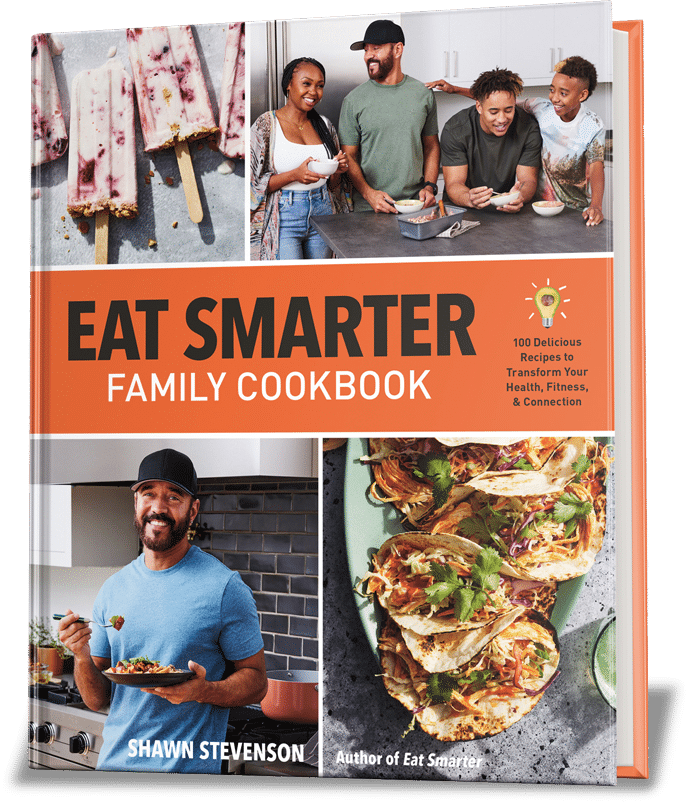
When you gather your family around the table to share nutritious food, you’re not only spending quality time with them - you’re setting them up for success in all areas of their lives.
The Eat Smarter Family Cookbook is filled with 100 delicious recipes, plus the latest science to support the mental, physical and social health of your loved ones.


Share Your Voice
0 comments. Be the first to leave a comment.