
Subscribe to The Model Health Show:


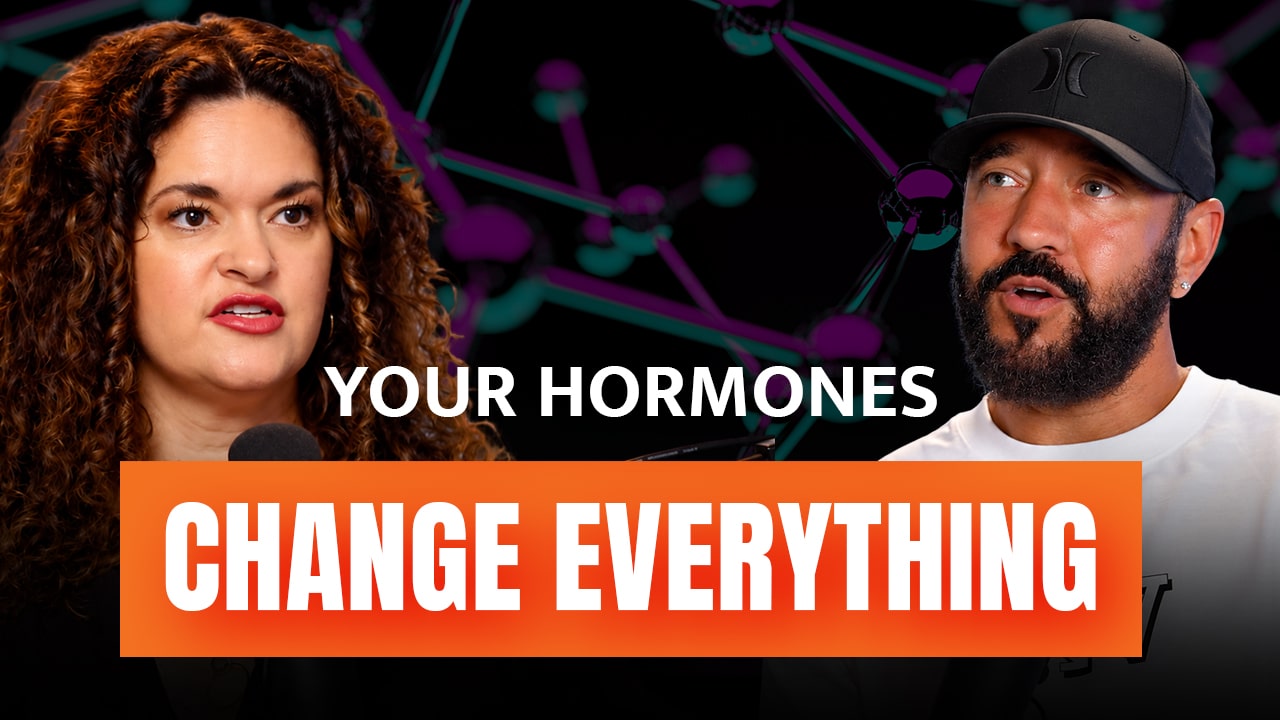
TMHS 1040: Why ADHD Looks Different in Women and How Your Period and Menopause Affect Symptoms – With Dr. Jolene Brighten
Attention-deficit/hyperactivity disorder is often associated with symptoms like being unable to focus, hyperactivity, and trouble managing time. But ADHD can present in a myriad of different ways, and women have long been overlooked and underdiagnosed when it comes to these kinds of neurodivergent conditions. Today, you’re going to discover what ADHD is like for women, why it’s different than the way it presents in men, and what you can actually do to work alongside your brain for better health and efficiency.
Dr. Jolene Brighten is an internationally recognized hormone expert, nutrition scientist, and a bestselling author. Her newest book, ADHD and Women is an enlightening guide to the link between hormones and neurodivergence. Today, Dr. Brighten is back on The Model Health Show for another engaging, informative conversation.
In this interview, you’re going to learn about what ADHD looks like in women, and specific strategies you can use to optimize your hormones and support your mental health. You’ll learn about the specific conditions that are cooccurring with ADHD, strategies and tools you can use to thrive through different phases of life, and why understanding the connection between your brain and your hormones can help you perform at a higher level. I hope you enjoy this interview with Dr. Brighten!
In this episode you’ll discover:
- Why ADHD presents differently in women. (8:32)
- How hormones can impact ADHD symptoms. (9:55)
- Why perimenopause impacts women with ADHD differently. (13:18)
- How ADHD can lead to a shorter lifespan. (14:35)
- Why the name ADHD is a misnomer. (17:58)
- The relationship between dopamine and ADHD. (20:21)
- How ADHD and PMOS (formerly PCOS) are connected. (26:37)
- Why ADHD, postpartum depression, and PMDD are linked. (28:25)
- Three things all women with ADHD should eat. (35:21)
- How to get better sleep with ADHD. (41:29)
- Supplements to support focus. (46:14)
- The number one thing ADHDers can do for better brain health. (50:56)
Items mentioned in this episode include:
- Piquelife.com/model – Doctor-approved, cutting-edge solutions for your head-to-toe health and beauty transformation. Get exclusive savings on bundles & subscriptions.
- ADHD and Women by Dr. Jolene Brighten – Order your copy of Dr. Brighten’s new book!
This episode of The Model Health Show is brought to you by Pique.
Elevate your daily ritual with cutting-edge, doctor-approved teas designed to support your metabolism, skin, and overall vitality. Unlock exclusive savings on bundles and subscriptions at piquelife.com/model.
Transcript:
SHAWN STEVENSON: Welcome to The Model Health Show. Not only are men's and women's brains radically different, the way that conditions like ADHD present themselves in men and women can be radically different. For far too long, ADHD has been viewed as a form of a mental malfunction or even a mental illness.
But the truth is, some of the most remarkable, successful, high-performing brains are ADHD brains. In truth, ADHD is not a mental misfortune or malfunction. It is neurodivergence. Being neurodivergent means your brain merely functions, learns, and processes information differently from what society considers typical or standard.
And in that way, our model of the human brain, of human potential, of what's right to be human, has been put into this pithy box, and that's where the research has been drawn from, this kind of standard of what a brain should be, standard of what health should be. And any good researcher worth their salt knows that there are people on all ends of the spectrum.
And so we're looking at the average or standard and not accounting for this divergency. And with that being said, most often left out of that research for decades has been women's health. So much of our research and what our medical model is built on, our health model is built on, is looking at the male standard.
And this is because a big reason for this is that women bring in a ton of variation because of the variation in hormones, because of the variation from day to day, week to week, month to month, potentially, with how hormones and therefore biology is presenting. So rather than just really working to account for these beautiful hormonal changes and that grace that comes with that, we'll just take them out of the research, just make the numbers nice and pretty, nice and cute, so that everything is, quote, standard as it can possibly be.
Thank goodness that standard is changing. And with that being said, addressing this specific topic of ADHD and women is incredibly important and incredibly valuable, and that's what today's episode is all about. You're going to discover specifically why ADHD presents itself differently in women than it does men.
We're gonna dig in and look at what's going on behind the scenes. You're gonna discover how perimenopause affects ADHD, and I'm telling you, this recent study is going to shock you. You're also going to discover the surprising fact about how ADHD, this neurodivergency can literally decrease your lifespan if not addressed properly.
And with that being said, addressing this and helping to stack conditions in the favor of ADHD brains, it's critical to understand that there is not a separation between the brain and the body. And so we're really going to dig in on the research and understanding that your brain does not operate independently of your body.
And we're gonna look at some science-backed solutions for these critical factors when it comes to nutrition, when it comes to movement. Our special guest is going to detail some aspects, and the way that she is gonna deliver this when talking about the relationship between movement and ADHD is a game-changer.
So important for everybody to hear, no matter what cycle of life. And also, this is critical for the understanding for our children as well because, again, our children, in particular in this conversation with women and ADHD, our little girls, our daughters, are going to grow up in these conditions if we don't do something about it now.
So I'm very, very excited to share this with you today. Now, before we get to our special guest, our expert today mentioned something in the conversation around nutrition and specific supplements. Again, science-backed supplements found to have efficacy with supporting the performance of ADHD brains, and this particular nutrient is called L-theanine.
L-theanine is one of the rare nutrients that can gracefully dance its way across the blood-brain barrier from our diet, from our nutrition, from supplementation, and it's able to increase the activity of the neurotransmitter GABA, which helps to reduce anxiety and makes you feel more centered and relaxed.
Another way that L-theanine works to improve our focus is noted in a peer-reviewed study published in Brain Topography, and the researchers found that L-theanine intake increases the frequency of our alpha brainwaves, indicating reduced stress, enhanced focus, and even increased creativity. Now, I was so happy to hear her mention this because she didn't know this. But in her gift bag that we had for her when she came to the studio today, I had in her gift bag one of my favorite teas, which is a Japanese sencha green tea as a gift for her.
And so she was super happy to see that, and she understands the value of a high-quality green tea. Now please hear this. It's more important than ever to be mindful of the source of your teas. With all of the contaminants, the microplastics, we need third-party testing. And actually, one of my favorite green teas is matcha green tea, and specifically Sun Goddess matcha green tea, which is the first quadruple toxin-screened matcha with no added preservatives, no sugar, no artificial anything.
So where I get my Japanese sencha, my green teas, my pu erh, my Sun Goddess matcha green tea is from Pique Life. Go to piquelife.com/model right now, and you're gonna get up to 20% off plus a free starter kit. Now the starter kit can include things like a hand frother, which I use my hand frother every single day.
But again, go to piquelife.com/model to take advantage. That's P-I-Q-U-E-L-I-F-E.com/model. Right now, again, up to 20% off plus a free starter kit. Definitely check out their Sun Goddess matcha and the pu erh. That's one of my favorites. And also, as I gifted our special guest with today, their incredible Japanese sencha tea.
So many incredible award-winning teas to check out. Head over there and take advantage, piquelife.com/model. And now let's get to our special guest and topic of the day. Dr. Jolene Brighten is an internationally recognized hormone expert, nutrition scientist, and bestselling author. Dr. Brighten is board certified in naturopathic endocrinology, a certified menopause specialist, and sex counselor.
With a passionate advocacy for uncovering the root causes of hormone imbalances, Dr. Brighten combines clinical expertise with evidence-based education to empower women to optimize their hormones, brain health, and sexual wellness. Let's dive into this conversation with the incredible Dr. Jolene Brighten.
Dr. Jolene Brighten, so good to see you. Thank you for coming to hang out with us today.
DR. JOLENE BRIGHTEN: Thanks for having me.
SHAWN STEVENSON: Of course. We got some stuff to talk about.
DR. JOLENE BRIGHTEN: Lots of stuff.
SHAWN STEVENSON: First question, big question. With this emergence in our society and awareness around ADHD, a lot of people don't realize that the presentation of ADHD in women is actually significantly different from how it presents in men. That was already just an eye-opener for me.
Why is that? What's the difference between how it presents in women and how it presents in men?
DR. JOLENE BRIGHTEN: The reality for most women going through midlife, for the woman who feels like, "I'm falling apart," is that she's actually having a reckoning between everything that she has been working on behind the scenes, struggling with, coping and managing.
And then once her hormones change, every coping mechanism seems to fall apart. So why ADHD presents differently in women is because we have hormones that are different than men and that affect our brain differently. So whereas the male brain is roughly cycling testosterone within a 24-hour period, the female brain, once it goes through menarche, through puberty, is cycling every single month, roughly.
And so what we see are these vast changes. Estrogen's high in the follicular phase, then in the luteal phase, progesterone comes online, and the brain is completely changing and adapting. So in that follicular phase, estrogen's high. She starts her period. Estrogen begins to rise. The brain starts branching out all of the neurons.
As she passes ovulation, then progesterone rises and everything begins to shift. GABA receptors have to all come online. And for the hormonally sensitive brain, which many ADHD brains are, that change is profound- Mm ... and it can be tremendously impactful. Now, we can certainly get into deeper about the neurotransmitters, what's happening with hormones, but I think the biggest thing that I want women to understand is as your hormones change, your brain changes, your neurotransmitters change, and your immune system also follows.
SHAWN STEVENSON: This is, why at this point do we not know this stuff? It's just, h- men and women have been around a very long time, but it's just been so catered to the male brain and the male physiology. And truly, and you, you really lay this out very clearly in the book that symptoms change with the expression of ADHD symptoms, symptoms change throughout the month, especially seven to 10 days leading up to the period.
Mm-hmm. These are some of the things that can get heightened. Shifts in focus, decision-making, time blindness, which I think my wife has that in general- ... very deeply. And- I can
DR. JOLENE BRIGHTEN: Certainly tell some my own stories.
SHAWN STEVENSON: And sense of overwhelm. But just really starting to step back and see oh, my, my symptoms, my experience with my symptoms changes throughout the month, and it just makes good sense if you become aware of it.
DR. JOLENE BRIGHTEN: Mm-hmm. I think you really hit the nail on the head when you said we've studied the male brain. Neuroscience, which is the bucket in which ADHD falls under, is very gender-biased. They look at male animal models and male models, and then they try to apply it to the female brain. And so what we see with ADHD is this classic little boy bouncing off the wall, can't sit still, hyperactive.
That's ADHD. So this little girl who talks too much, that's not ADHD, that's just somebody who doesn't know when to be quiet, right? When we think about ADHD and we think about that can't sit still in class, what we find is, is that once a girl starts to go through puberty, which for everybody listening, we always think puberty, period, but puberty for girls is actually starting years before she ever gets her period.
That struggle starts to become more internalized, so she might get diagnosed with anxiety because there are thoughts that are racing. Right. Her hyperactivity is her bouncing off the wall in her own mind. And for the adult female, that might look like falling asleep at night is impossible because you're replaying every time you TMI'd in the day and everything you ever did wrong, and you're even thinking back to fifth grade and what, this teacher said about you, and the brain will just not be quiet.
And so we looked at this male archetype, we came up with solutions for the male archetype, and then we told women, "You're a failure" when they don't work for you.
SHAWN STEVENSON: Hmm. So the H in ADHD, the hyperactivity, again, it presents differently, tends to significantly differently in girls and in women. So again, this is another...
Because it, we have this picture, I think, of what ADHD looks like, but you're really helping to enlighten us on what's going on behind the scenes, especially in this context. And I wanna ask you about this because, you just mentioned the, kind of initiation of the cycle, and just kind of that, that life cycle when it comes to hormones in women.
Another really standout part of this book is the changes that happen with perimenopause in relationship to ADHD. And you shared in the book, there's a recent study of 1,500 women with ADHD, and they determined that 94% of the women's symptoms got worse during perimenopause. Mm-hmm. Talk about that.
DR. JOLENE BRIGHTEN: Well, I think even more astounding is a recent study that showed us that perimenopause comes 10 years earlier for the ADHD woman with twice the symptom severity.
So we're not talking about just having worsening ADHD, although that's par for the course. We're also talking about all of the, depending on how you split it up, 50 to 100 symptoms of
perimenopause, the burning mouth, the hot flashes, the dry skin, the itching ears, the ringing in the ears, the vaginal dryness, the joint aches, like everything outside the period with the periods included as well.
All of those have twice the symptom severity, including the mental-emotional issues that women face. So we know with the decline of estrogen, there's a decline in brain energy metabolism, and with that we can see heightening in depression, anxiety, new onset of these symptoms. So I think it's important right now that if you are a woman who's 35 or older, because that's roughly when perimenopause may start with ADHD, is that you begin to recognize that this has been a lifelong struggle.
And while it feels like, "Okay, suddenly I'm falling apart and everything is failing," really you're being faced with the reality that you've always been expected to do too much, and you have been doing so much to compensate your whole life.
SHAWN STEVENSON: Mm-hmm Another huge thing and a big takeaway for everybody, and I just, I didn't realize that this condition can actually shorten your life.
DR. JOLENE BRIGHTEN: Mm.
SHAWN STEVENSON: And so as you just mentioned, the e- earlier onset of perimenopause, that should be mind-blowing. You also shared that potentially women with ADHD can lose nearly a decade of life overall, a shorter lifespan. And I was just like, I- immediately "What? How? What's going on?" And you start to list out some of the, again, very obvious if you start to think about them, high risk of accidents, substance abuse, tr- trying to self-manage, right?
Mm-hmm. Chronic stress, and metabolic dysfunction. So talk more about that because this is one of those things where, where again, getting education on this and being able to structure and create a plan for yourself can literally save your life
DR. JOLENE BRIGHTEN: Alcohol is such an effective way to raise GABA, and GABA is the neurotransmitter in the brain that helps us feel chill, calm, more regulated.
The problem is, while you may get that short-term hit of "Oh, I'm relaxed," you get the long-term consequences. We know it's detrimental to our health. We know it's detrimental to our brain, but if we consider the ADHD brain and how 70%-plus of those with ADHD already struggle with delayed sleep phase syndrome or other sleep disorders, alcohol is another nail in the coffin to ruin your sleep.
If you want to sabotage someone's cognitive function, sleep deprive them. We absolutely know that can be the case. So when I talk about alcohol in this content context, what I want people to understand is that this isn't just because oh, if you don't have managed ADHD, then that means you're drug-seeking.
You're trying to soothe. You're trying to calm the brain down, and it's why it's so important that we bring in therapies. Now, whenever we talk about ADHD, the obvious thing a doctor's gonna give you is a stimulant or non-stimulant medication. Okay, those can be life-changing for the right person. However, what I go through in the book isn't more of "Oh, you should do this, and you know you should do this."
It's more about you don't sleep. Let's talk about why, because why you don't sleep is different than a neurotypical. You're struggling to feed yourself, right? Everyone's got their 15-step plan that you see influencers do for their morning routine and the perfect plate. But for some ADHDers, the executive function required to open the fridge, see the food, plan what to do with the food, then actually prep the food, cook the food, and then the dishes afterwards, it's too much.
It's too daunting. So within the book, I talk about the science of, like, why do you want to sleep? Why do you want to exercise? Why do you want to eat well? What's happening in your microbiome and your hormones? But I also give very practical tools about what the ADHDer can do because it's different for them.
And I think that all of the wellness space has been doing exactly what neuroscience has been doing of expecting women who are neurodivergent to fit neatly into the neurotypical box, and when they don't, it's a moral failing. They're, they're not trying hard enough. They're too lazy. Why can't they just get it together?
SHAWN STEVENSON: One of the things that I'm also happy you talked about is ADHD being in, in some ways a bad name. Talk about that a little bit.
DR. JOLENE BRIGHTEN: It's a horrible name if you think about it. So attention deficit hyperactivity disorder. And I think, we can look at PMOS, okay so formerly PCOS, which was polycystic ovarian syndrome.
We got it wrong. It wasn't about the ovaries having cysts. Those were never cysts. They were actually follicles. Now we have this polyendocrine metabolic ovarian syndrome, so the ovaries are still involved, but we understand the metabolic component. Medicine learns better. It should evolve, and it should change and do better.
So there are people who they love what they love right? They love the name ADHD. But when we consider that it's not so much that everybody is hyperactive or the- they have a deficit in attention either And, this was first presented to me by Dr. Anne Louise Lockhart, who talked about how it's executive dysfunction dysregulation.
So our executive functions, depending on how you split them up, these are things like time management, organizing, planning, most of the stuff we take for granted 'cause we learned it in kindergarten. Some of it. We don't all master it. And so there's that piece, but there's also the piece that we can...
We have focus. We have attention. We just struggle to regulate it. So really at the underpinning, and I say this in the book, is ADHD is more about dysregulation- Mm ... than it is about a lack of attention, about having too much hyperactivity, your body having too much energy. And I talk about the science behind those things.
But I think what's important for people to understand is that when you engage an ADHDer in their special interest... Hi, it's me right now. You wanna talk about hormones? I can talk about that forever. I can write a book on this. But it's something that doesn't interest me, you wanna do small talk, oh, I, I can't do it.
I c- I can't do it. And when we look at the child in the classroom who's so bored because, I mean, most of the way that we teach children is boring, right? We see that as a problem. We... And, and we see it as "Oh, you just can't focus." But the reality is, it's a difficulty regulating the focus, the attention, and maintaining their interest.
And the brain will literally become so bored it starts to put itself to sleep. So the brain will become so bored that it shifts the neurotransmitters and it just says "We're out." Like, why even bother paying attention to this? Because I think the other part we should talk about with ADHD is that we focus so much on dopamine.
In the book, I talk about all the neurotransmitters, but there's so much focus on dopamine deficit. It's not actually a deficit. What's happening in the ADHD brain is they will make dopamine, but they might clear it out too fast, or the receptors might not actually dock that dopamine in, in the way that we would expect.
But in all of that, if we consider what dopamine's doing, dopamine's telling us, "Is this relevant? Is it important? Should I care about it?" And that matters because the ADHD brain, in regulating the tension, if it's not important, if it's not relevant, then evolutionarily speaking, the brain shouldn't use energy on it.
It should focus somewhere else, and that's the beauty of dopamine and serotonin working together. There was a study that the hypothesis is, 'cause we actually don't know as much about neurotransmitters in the brain as we think we do. Dopamine tells you something's relevant- Serotonin helps you solidify it by bumping your neuroplasticity.
They're working together. But within the ADHD brain, if it's not getting that hit of this is relevant, right? You- the doom pile that people have stepped over in their house 20 times, the brain's not clocking it as relevant. The clothes that, people, ADHDers will know, they have like their basket for dirty clothes, the basket for kind of dirty but shouldn't go in the drawer, but not really doesn't have to be washed, and then there's just like a pile somewhere in the house.
The brain is not clocking that as relevant.
SHAWN STEVENSON: Ooh, I know a lot of people that like this is speaking to them right now. And now that I, I love the framing of dysregulation, right? And I think that the environment that we're in today is like a perfect gumbo for dysregulation, and this is why I think so many people are struggling, and they're struggling just to find some balance, to find not, not necessarily again solutions per se, but just some semblance of normalcy.
It's just like a real big struggle right now. And you're p- you're detailing and helping to point to these are the things that are creating the dysregulation. And also, and this is why this book is so important, directing people towards... And it's more guidance instead of, again, telling you, "This is what you need.
Do this thing." It's like starting to really have some self-inquiry and then providing some solutions, some potential solutions, some tools for people to utilize. So why? Why for you? Why were you inspired to put this book together?
DR. JOLENE BRIGHTEN: Because women deserve better, and medicine has not been giving it to them. My own diagnosis with ADHD came like many women in midlife, which is that their child got the diagnosis, and as they're sitting there hearing all of the symptoms being listed off, they're going through the questionnaires, a mirror's being held up to them, and for the first time in their life, they're like, "Wait a minute.
Everything I thought was just normal about me, the extra energy and effort and attention I have to put into every conversation, thinking about what I'm gonna say, making sure I don't interrupt, not forgetting what I'm gonna say next." The fact that it's so much work sometimes just to go out to be with other people and then to come home and know that like I have to build an hour in when I come home to regulate my nervous system, comes back down from all of that.
The fact that you have like thousands of Post-its and reminders on your phone and rotting food in the fridge because if you don't see it, you forget about it. All of these things we start to realize wasn't us inherently failing or being broken. It was us trying to navigate a life without accommodations and an understanding of our own operating system.
And that's what I classify this in the book, is that, I think, you mentioned the phones. iOS, Apple has its own operating system. Then we've got Android with its own operating system. They're different. And Apple sure seems to be compatible with like just about everything. The iOS is intuitive, right?
And we know that when the Android comes in, it turns the chat a different color. The iOS knows it's different, and that's really what's going on, is that, being ADHD, you're operating with this Android-type system. It is different. It may be less intuitive. The world wasn't built around it. But it's not inferior.
It's just something that is gonna take time to understand, to learn, and for people who love you to also understand and learn.
SHAWN STEVENSON: Yeah, one of the things that you, and we talked about this before the show, you've got these really great kind of self-inquiry questionnaires, but it's not about diagnosis, right?
It's, and the same thing holds true with the paradigm we're in right now where the conversation is there, but we might have people self-diagnosing all kinds of things because of social media videos, right? And so in this kind of paradigm, why are you steering away from telling women that they have this particular issue versus kind of providing some guidance and some insight?
DR. JOLENE BRIGHTEN: Mm-hmm. Well, there is no diagnosis for ADHD low testosterone, right? There's no diagnosis for ADHD with an estrogen brain deficit. We don't have that. We don't even have a diagnosis for progesterone intolerance or sensitivity, but many ADHD women do report that.
So these are the women that in perimenopause, you give them progesterone, they don't sleep, they don't feel chill, they don't feel calm.
That benefit they were told to expect, it never arrives for them. They might feel like they're enraged, they're angry, they're irritable, they're biting at everybody, and they can't sleep at night. Their mind is just racing. And we don't... So we don't even have diagnosis for that, so we can't say that you have ADHD and then this diagnosis is one and the same.
It's more of a pattern. The other thing is that hormones change. They fluctuate and they're fluid. So, for the person who just had a baby, her hormones may look more like that post-menopausal woman. That's temporary. She's going to get her estrogen back. She's going to get her progesterone back, and with those changes, she's gonna notice different symptoms.
I think I talk a lot about the PMOS woman in the book. Now, if you wanna talk about someone with the classic ADHD symptoms, it's typically the one with PMOS. This is what I observed clinically because I kept having these PMOS women. It was two groups of women, PMOS and PM- PMDD, and both of these groups kept getting these diagnoses.
I'd send them out for an evaluation, ADHD, autism, very, very common. And what we see is that there's different hormone profiles and a different sensitivity. So for people listening, PMOS classically has heightened androgens. Well, who also has classically heightened androgens but the male archetype who we have studied and classified ADHD to look like?
So the PMOS woman may experience more hyperactivity, more impulsivity, and the research, if you go into it, it's gonna say PCOS 'cause it's older. When you go into the research and it says PCOS experience ADHD at a higher rate, do they? Do they, or are we just better at catching it because they look like what we expect?
The other thing to understand is even just having elevated androgens, there's about a 40% increased risk that your child will have ADHD. You will birth a human with ADHD.
It's not just about the androgens. It's also because this profile in particular tends to have insulin dysregulation and inflammation.
Two things, maternally speaking, will increase the risk that you birth a neurodivergent human
SHAWN STEVENSON: Holy moly. I didn't even think about the impact potentially. Obviously, and I'm again grateful, postpartum depression, the conversation is there, the awareness is there. Postpartum ADHD, I never considered that being a thing until right now.
DR. JOLENE BRIGHTEN: Well, let's talk about this. We understand now that women with ADHD are about three times more likely to experience PMDD, premenstrual dysphoric disorder. This is way worse than any PMS anyone can imagine. These women have marked suicidal ideation, so thoughts of self-harm. They have physical and mental emotional symptoms that interfere with their life so greatly that sometimes they're thinking, "I wanna get divorced.
I wanna quit my job. I wanna leave this planet altogether." It is so tremendously draining on them because roughly six months out of every year they're losing themselves to this hormonal experience. PMDD is a risk factor for postpartum depression, and we know this. If you have PMDD, you're far more likely to experience postpartum depression, and yet we don't screen women for that.
We don't screen women, are you autistic? Do you have ADHD? Before they're getting pregnant. And because medicine silos everything. But you know who doesn't care whether we put the brain components to the psychiatrist and the hormone components to the endocrinologist is the body. The body literally doesn't care.
And so this is another way that we're failing women, if we could be screening. We could be intervening, and we could certainly be doing better in terms of our support system. I mean, when you consider postpartum, I would say there is no system. There is no system to... People say, "Oh, the system fails women."
There is no system to fail women. Hmm. There's a six-week checkup. Are you cleared to have sex, and can you exercise? Okay, see you later. Whatever happens, happens next.
SHAWN STEVENSON: Yeah. Oh my God. Th- there can be a vast array obviously of how the presentation of different symptoms, different conditions in that postpartum window.
This is, should be, again, super enlightening for everybody. We know about things like gestational diabetes, for example, like this showing up with certain metabolic changes that can kinda linger. But I think a big part of the issue here is that we relate ADHD to brain exclusively. This is a brain issue.
This is a brain-focused, manifestation. And in the book, and then I love this as well, you share that one of the key messages you want people to know is that your brain does not operate independently of your body. And you share that they're profoundly shaped by hormones, how stress affects your body.
You said this earlier in the very beginning of the show, immune signaling. The immune system relationship here is just mind-blowing. Sleep, gut function, and metabolic health. And thankfully, this conversation is changing, especially the last few years with this mind-body connection, which even the fact that we have, the separation in the two is still an issue.
And so let's talk about that. Let's, let's really kind of guide our conversation towards some solutions- Mm-hmm ... some places for people to investigate. And you said this already, and I wanna go back to this. Let's talk about the immune system relationship in this equation.
DR. JOLENE BRIGHTEN: So what you're alluding to, I talk about in the book, is the neuroendocrine immune connection, so what I call the triad.
And what sits in the center of that is the mitochondria, which is either the benefactor or the collateral damage of those systems being off-kilter. So if we take the example of endometriosis, so ADHD women are twice as likely to be diagnosed with endometriosis. Endometriosis is a full body systemic inflammatory condition, okay?
So that inflammation can go systemic. There's heightened histamine. Histamine's a neurotransmitter. These same chemicals of the immune system, the cytokines, the chemical messengers of the immune system, they can cause leaky brain, so they can change the blood brain barrier, or they might bump up against it and then change how the immune cells start to operate within the brain.
Then we've got the vagus nerve, which I think is one of the most fascinating nerves that we're learning about. The vagus nerve runs from the brain and innervates the heart, the gut, but you know where else it goes? Is the uterus, because the uterus is that important for the brain to be surveying.
SHAWN STEVENSON: Mm.
DR. JOLENE BRIGHTEN: And so if you've got adenomyosis, which is endometrial-like cells in the muscle body of the uterus that misbehaves similarly to endometriosis, or endometriosis, or perhaps you have what many ADHDers have, dysbiosis even maybe overgrowth of organisms that are signaling inappropriately to that vagus nerve, that's gonna change how the brain operates.
Now, why I bring up endometriosis is because that could be a major driver of inflammation in your body, and you're wondering Why don't my ADHD meds work so well? I mean, many women find that they don't work well the week before their period because, thanks, estrogen dipping out, dopamine following. I call estrogen the It Girl because dopamine's following her, so is serotonin, acetylcholine, and now you're wondering, I mean, even norepinephrine. And it's like, "Well, why are my meds not working?" But we can also see that people are like, "My things have been effective my whole life, and now they're just not working." It may be you have this underlying inflammatory burden, and we have to address that. Everyone throws around inflammation these days, right?
And people are like, "It's inflammation. It's inflammation." Well, as a clinician, I'm like, "Where? Where is the inflammation coming from? Why do you have inflammation, and how do we track that down?" So in addition to endometriosis, we also see a high co-occurrence between autoimmune conditions and ADHD. There's a lot of co-occurring conditions with ADHD that can make ADHD so much worse.
The symptoms feel so much more heightened. So when you're inflamed, you may be having more brain fog, trouble finding words. You're like, "My brain sees the person, it knows the person, it will not give me the name of that person." The phenomenon of going to your fridge, opening it, not knowing why you were there to begin with, or you've been staring at your computer screen intending to send that email for the last hour, but you don't even know where your mind's been.
You've just been spacing out. That's a manifestation of the inattentive ADHD type.
SHAWN STEVENSON: Holy moly. Within this context, obviously a lot of the awareness now as far as immune system is related to the gut, right? So a significant portion, the majority of our immune system is located in this terrain.
And so this interface with our gut, the brain, the outside world, what we're putting into our gut- Is very obviously going to influence our outcomes. And one of the things you talk about in the book is focus through food.
DR. JOLENE BRIGHTEN: Mm-hmm.
SHAWN STEVENSON: And again, unfortunately, I don't think that this is a big part of the conversation.
And if- w- let's just talk about that. Like, why is this a, a, a really important point of emphasis?
DR. JOLENE BRIGHTEN: So if I could give you three things to eat, it would be ghee, tacos, and probably a good potato salad. Do you wanna talk about why?
SHAWN STEVENSON: Yeah.
DR. JOLENE BRIGHTEN: All right. So firstly, ghee is rich in butyrate. It's one of our best sources of butyrate.
Your gut microbiome should make butyrate. Okay, I'm a should on your microbiome right there, but it may not be, because being ADHD often means having gut dysbiosis. Butyrate is a short-chain fatty acid. It can actually heal the gut, heal the blood-brain barrier, and it's anti-inflammatory. So all this inflammation we talked about in the brain, it can help with that.
Now, I do say tacos are the cure for ADHD in the book, but I am only being funny. But tacos are a phenomenal way to get yourself protein, antioxidants, polyphenols, and in addition to that, if you put spicy salsa on there, we know that contains capsaicin. The thing that makes your tongue burn actually helps with dopamine and serotonin, and it increases blood flow.
Now, what's happening in perimenopause, we actually have loss of bl- blood profusion to the brain. So salsa, m- my book was written on chips and salsa. I will say that because it is so very powerful. But it's also rich in things like vitamin C, so those peppers are a great source of vitamin C. That is a tremendous antioxidant that's sitting in the fluid, aqueous solution around your cells.
I said the mitochondria can be the collateral damage to the immune system dysregulation. Well, mitochondria are so cool until they're not, because when the body starts increasing reactive oxygen species, the mitochondria fo- follow suit. We need more antioxidants in that. Now, in addition to the tacos, we're not gonna do that vegan or vegetarian.
I mean, maybe you are, but you've gotta watch your protein because the newer research shows us ADHDers actually need more protein. They do not metabolize it in the same way. And so why that is so important is that without proteins, we can't make our neurotransmitters, we can't regulate our blood sugar, and we can't build literally ourselves.
So we have to be eating that quality protein. Now, I mentioned potato salad, and that wraps us right back into what is going on with the butyrate. So when we cook and we cool potatoes, we have resistant starch.
This is such an easy, modifiable way to alter the gut microbiome. So ADHDers often aren't eating enough fiber.
I mean, join the club. Most Americans are not eating enough fiber. But we can't just say, "Okay, bring on the fiber, 25, 30 grams of fiber every day." Resistant starch is a really simple way to start to shift the microbiome so that it does start making those short-chain fatty acids that benefit your brain. Now, why potato salad?
Well, because you can go pick it up at the dal- deli. It's a low-friction meal that an ADHDer can go and get, or tacos. I'm not talking about Taco Bell, by the way, everybody. I just wanna be clear about that. Whenever I talk to people in the US about traditional Mexican food, they're like so they start naming off Taco Bell menu items and I'm like, "No.
That's not what we're talking about here." But getting a potato salad and coupling that with maybe some hard-boiled eggs right there you've got your carbohydrates, you've got resistant starch coming in, and then you've got protein, and it's a really easy way for you to manage a meal. Now, I'd love you to get color in there, and what's really easy for the ADHDer is can you grab a handful of red grapes or can you get, another brightly colored piece of fruit and include that in the meal as well?
SHAWN STEVENSON: Are there any foods that might be like a trigger on the other side for maybe unfocus?
DR. JOLENE BRIGHTEN: Well, what's really interesting is when you look at the totality of ADHD research, we see a common theme. Ultra-processed foods and foods high in saturated fat are correlated with more severe ADHD symptoms. Your diet did not cause your ADHD, and you did not cause your child's ADHD.
Instead, there appears to be this aggravation that happens that makes the symptom expression more pronounced. On the flip side, studies look at eating more whole foods, fiber, polyphenols, fresh fruits and vegetables, and omega-3 rich foods, and they find less severe ADHD symptoms. So this doesn't mean you can cure ADHD with diet or that you caused ADHD with diet, but it is to say that you can highly influence your ADHD with what you put on the end of your fork and also what your microbes get to chew on.
Those microbes in the gut produce neurotransmitters. Now, those neurotransmitters do not cross the brain as far as we know. They do signal to the vagus nerve. They're also making hormones, so your gut's making hormones, it's making vitamins, it's making all kinds of compounds to send signals via the vagus nerve to help modulate how your brain behaves.
SHAWN STEVENSON: Mm-hmm. This is so good. This is so good, so important, and it's so obvious. We're talking about, again, contributing, like triggering dysfunction, aggravation, right? And so we're stacking conditions against ourselves. And so finding that place to where we feel more, empowered and kind of i- in control more so.
It's just about stacking these conditions in your favor. Not to say, again, this is not about everything being a, a perfect way or there's not going to be, some struggles that you have along the way, but we're unknowingly stacking conditions against ourselves. And another thing you've mentioned several times is the relationship with sleep, and it just is so obvious a, a, a myriad of conditions would be aggravated if we're sleep deprived.
DR. JOLENE BRIGHTEN: Mm-hmm.
SHAWN STEVENSON: But I think in particular, if we're talking about ADHD. So let's talk more about some solutions here because you mentioned how, even for example, in perimenopause and then for, for one person progesterone might be very helpful and they're... It's helped them to nor- normalize their sleep.
For somebody else, it might keep them up, and they struggle with their sleep. What are some things that women can do to kind of help to stack conditions? Just some of the general stuff. Let's not even get into the hormone therapy piece, but just the general stuff for all women to be mindful of.
DR. JOLENE BRIGHTEN: When we see sleep disturbance and worsening ADHD, there's one mineral we should be checking in every woman, and that is iron.
Iron is necessary for making dopamine, but we also understand from the research that when your ferritin, which is a storage form of iron, falls below 75, you may have restless leg syndrome, and you may struggle to sleep. So if you're a woman, especially a woman, endometriosis, adenomyosis, fibroids, or any condition that leads to heavy periods, this is something we need to screen for.
The CBC, hemoglobin that's not gonna be enough. We need to be looking at women's ferritin levels. So that's one thing I'd say, schedule with your doctor, get that checked, but in the meantime, do these things. So the first thing is give yourself something that is stimulating for your mind, but not over-stimulating at bedtime.
So ADHD women are often told the same things everyone is told, "Get off your phone, cool dark room, and get in bed," right? And sleep should just happen. You may need to knit. You may need to read. You may need to, play a card game, something that is mentally stimulating, but not overly stimulating, just to give your body that little bit of "Okay," "I've been stimulated, and now I can go into winding down."
The other thing is that we need to find more pockets of pleasure throughout our day. ADHDers tend to be working so hard, harder than everyone else to seem completely put together, not running behind. I said women can be losing time in their life because they're arriving an hour early. They're so afraid that they're going to be late, and that they are constantly feel like they're behind.
So if you're a woman listening right now, and you never celebrate your wins, I want you to ask yourself, is that because you're always worried about what you've missed, and what ball's been dropped, and what you're supposed to be doing next? It's very common. I... And it wasn't until I realized that I had ADHD that I was like, "This is why I never celebrate when a book comes out," because I'm like, "What am I supposed to be doing next?"
Because obviously I've gotta be behind on something. So if that's happening throughout your whole day, and then you're trying to get in bed at night, and that's the only time that your b- brain has to be quiet- That's when it's gonna ask c- can we get some me time? Can we do something we actually enjoy?
So try to build that in throughout your day. Maybe you start your day with that. Maybe, during the day you take five minutes to yourself and you just listen to your favorite song. No one even has to know you're doing it, but you do something that makes you feel joy. I think we forget to feel joy because we're feeling everything else, right?
The stress, the pressure. I'm behind. Did I make sure I packed this in their lunch? Or are we gonna miss this appointment? There's so much else going on. So building that in so that you can unwind at night. And then the other thing I would say is we have something called the default mode network.
Sometimes our sleep problems aren't actually problems. So while I do go through progesterone therapy and different sleep supplements, like L-theanine can be great for ADHD, and all of these strategies in the book, sometimes what we need to do is we actually need to get our brain to file things away or put them into buckets.
So is it the save it for tomorrow? Never gonna happen, why am I even thinking about this kind of buckets. And this is when we're trying to fall asleep at night, that the brain starts to replay everything in our life, and starts to process the experiences, the emotions, and connecting things. And so sometimes what you have to do is actually go through the process of saying, "Okay, that's a tomorrow problem.
I'm gonna, slide it, drag it over into the folder, tomorrow problem. That is so irrational. That's a never, ever gonna happen problem." And actually tell your brain what to do with those thoughts.
SHAWN STEVENSON: Mm. I love that. A little bit of a kind of file restructuring. I love that. And also the concept of doing something stimulating before bed, but certain types of stimulation.
That's very counterculture
DR. JOLENE BRIGHTEN: Mm-hmm ...
SHAWN STEVENSON: right now. But I can see, again, very obviously once you lay it all out how that can be helpful. That's so awesome. So you just mentioned there in passing, and I don't wanna gloss over it, that L-theanine can be helpful. Mm-hmm. And that's something that's kind of geared towards focus, ironically, but being helpful to be able to support sleep.
T- talk a little bit more about that, because in the book, another thing that you do is you share some science-backed helpful supplements. And again, this isn't an end-all be-all for everybody, but it's just being able to know "Oh, these are some things for me to do, to, to utilize to experiment with myself and to see if this is helpful for me."
So let's talk about some of the supplements.
DR. JOLENE BRIGHTEN: Yeah. Well, I wanna talk about saffron, creatine, and L-theanine. And since you brought up L-theanine, let's talk about that first. So L-theanine's an interesting one because it can help with sleep. It can help your nervous system calm. And they did a study with ADHD-ers looking at L-theanine and caffeine, and what they found is that it was this non-jittery focus attention, but soothes the nervous system in a way.
Now, I always caution people, I don't think we should supplement with caffeine. I'm like, enjoy some green tea or have some coffee. Green tea is a source of L-theanine, but really you need 200 milligrams and you're not gonna hit that in your, even your best matcha you're not gonna get that. But why I caution people against supplementing is because it's very easy to supplement with caffeine and then have four cups of coffee and be like, "Why do I feel like this?"
So instead, I think if you are a caffeine drinker, coupling with L-theanine with that at the start of your day can help your nervous system really get locked in to what it is you wanna focus on and feel more at ease. Now, I mentioned saffron. I think saffron is one of the most incredible herbs that we are not utilizing enough.
Now- And you're shaking your head yes. I mean, after... So I'll, I'll just share as an aside, I I was put on Lupron, which is a chemical castration, for two months for my adenomyosis. This was prior to an embryo transfer. It puts you into menopause literally within two weeks. There is no perimenopause. You're just in menopause, and I lost my mind.
It was so bad that Christmas morning we have pictures of me melting down at one point because my children were opening multiples of the same gifts. I hadn't even realized. And listen, I bought this $200 Millennium Falcon Lego set. I bought two of them from two different stores. Yeah, and that was an expensive lesson, 'cause no, no takesies backies.
Couldn't, couldn't return that at all. And I didn't recognize myself. My ADHD was so pronounced. I was so depressed. I was so disconnected from my life. And saffron was one of those things that I brought in that really saved my mood. Mm. I formulated a product called Radiant Mind from that experience because I was like, "I will be having none of that."
I will be on this perimenopause until probably I die. They'll test me, I'll be full of saffron. So saffron, let's talk about with ADHD. There was a study in children. Now, most of our research comes from children, and we have to extrapolate from that. Okay, could this work for an adult? And then we have to beg "Please give us funding and do the research."
So they did saffron in these children. They gave the children methylphenidate and saffron and found that methylphenidate, Ritalin, worked better in these children. The saffron also made their ADHD symptoms better. I mentioned PMDD, ADHD women being three times more likely to have that. Some self-report, 50% of ADHD-ers will report PMDD.
It's over 90% of autistic women report ADH- or having PMDD symptoms. Saffron has been shown to be tremendously effective for mood. For the perimenopausal women, it may also help with hot flashes and sleep as well. And when you couple it with things like bacopa, which is an antioxidant, it can help the mitochondria in the brain potentially perform better.
And so L-theanine, saffron, and then creatine. We have no research on ADHD and creatine, but I'm gonna bring this one up because creatine, we've seen it used, right? You, you want your muscle gains in the gym, take creatine. But we see more and more perimenopausal women reporting, "It's helping with my brain energy.
I have more focus, more attention." I take creatine typically three to five grams every day, and in my luteal phase, I'll kick it up to seven so that I have more focus, I have more brain energy. So what might be going on is creatine may be used by the mitochondria to actually help us with that energy production.
When we are at lower phases of estrogen in our cycle, relatively speaking to that progesterone- Mm ... or going through perimenopause, menopause, our brain energy declines. So- Estimates say around 10% reduction in glucose metabolism, so glucose utilization in the brain in perimenopause. That may be 20% by the time you're post-menopausal.
So that's significant. So anything we can do to help women, one, strength train, build muscle, 'cause we can definitely talk about how that's gonna help your ADHD and why you wanna exercise other than just looking fit, but it may also be helping with that brain energy metabolism as well.
SHAWN STEVENSON: That's so good. Th- please, let's talk about that.
DR. JOLENE BRIGHTEN: Yeah. So, it ... I always joke, but it's not really a joke. People will ask me "You own a supplement company. What's the one thing ADHDers can take in order to help their brain?" And I always say, "It's exercise. Hands down, it's exercise." And that shocks people because they're like, "I thought I could just take a pill."
Well, as it turns out, ADHDers are not so great at using glucose, and they're may have mitochondrial dysfunction, and there are some types of ADHD that also have pronounced neuroinflammation happening as well. So if we think about the mitochondria as the powerhouse of the cell, right? It's the main energy source for the house.
I want you to think about exercise as the crank generator. You literally have to move. It's your backup energy supply. That burn in your muscles, that lactic acid, the brain will actually use as energy. And so when we tell children to sit still, that's one of the most detrimental things we do to them because their brains are starving, and so they say, "Move, fidget."
I mean, I'm a Latina. I get to talk with my hands, so nobody knows that I'm moving, I'm fidgeting. And that is all helping with brain energy production. Now, there's a dark side to this. If you don't get enough sleep, the glymphatic system doesn't clear that lactate, and now you got more brain fog the next day.
So w- why do we go right back to exercise with that? So this wasn't one of the sleep tips I gave, but I'll give it now. When you exercise earlier in the day, it helps your body get tired and get ready for bed in the evening. People who exercise earlier in the day get better sleep at night.
SHAWN STEVENSON: That crank analogy is so good.
And this is one of those things we don't think about- We generally, even in our university education, when it comes to energy, it has to do with you eating something.
DR. JOLENE BRIGHTEN: Mm-hmm.
SHAWN STEVENSON: Right? And your body has all of this potential energy already stored in it that's just kinda locked away, and sometimes there's this, there's a hit for you to move, and especially when we're, when we're little ones, and as you mentioned, the way that we've structured things is very much be still. Be still. Go against all your natural instincts to run around and to play. Be still and be sedentary. And it's just, again, we might see the outer actions and not really think about the biology. Our bodies kn- are so intelligent and just kind of guiding us.
And sometimes even for us as adults, like sometimes we just get this knack to just wanna move around and to fidget, but that can get muted because of how comfy something might be, we've got the La-Z-Boy, and so it kind of mutes that, th- the- these mechanoreceptors that are just telling us like, maybe this is not good for me, sitting in this position all this time.
I need to move around." And that's what you get when you sit on the floor, it might be comfy to sit crisscross applesauce for maybe, 15 minutes, but then suddenly I need to stretch my legs. I need to move around. Let me stick one leg out. Let me, hop around and be, maybe kneel down or whatever the case might be.
DR. JOLENE BRIGHTEN: I wanna say something, though.
SHAWN STEVENSON: Sure,
DR. JOLENE BRIGHTEN: Sure. Is that we teach children to betray their bodies for the comfort of adults.
SHAWN STEVENSON: Damn.
DR. JOLENE BRIGHTEN: And when we do that, then we question as adults, why are the, why are not, they not wanting to move? Why is it that they'd rather look at a screen? Why is it ... we judge the adults for the things that we made them conform to as children, and then we wonder why we have a chronic disease epidemic.
SHAWN STEVENSON: I damn near threw my pen across the room. That's so powerful. So powerful. So this is going back to this premise that you want everybody to understand and take away from this conversation and, and, and from the book. We have to stop separating the brain and the body, the mind and the body. And y- your movement, this body as a vehicle for really helping to, again, help to reduce that aggravation, right?
Reduce the potential dysfunction. These are things that our genes are expecting us to do, and to utilize these. Matter of fact, let's be intentional, structure them in our day. And is there anything else, you know, we've already covered a lot of ground. Y- y- the tacos already blew my mind. And by the way, just again, she did not say Taco Bell.
We're not talking about chalupa, whatever. We're talking about this is, if you think about it, such a great medium to get in all kinds of real food. Mm-hmm. And incredible fresh ingredients. So but is there anything else that you want people to know about or what to expect from the new book?
DR. JOLENE BRIGHTEN: Yeah. Well, there's taco recipes in the book, but also you don't have to overcomplicate eating. So I have within the book the Chill Girl Meal Plans is what I call them. Honestly, I w- I call them my Lazy Girl Meals, but my husband was like isn't that kinda stigmatizing? Haven't you been called lazy your whole life?"
I'm like, "Okay, we'll call 'em the Chill Girl Meals." And so these are, you can literally print them out and put them on your fridge. They're structured ways of eating that require no thinking on your part and give you permission to access nutrition in the way that works for your brain and your body. I think so much of what it takes to be a healthy person is incredibly simple, but what we see is an internet full of people trying to overcomplicate it.
And so that's what I really aim to do in the book, is make it really simple, really accessible And even help you understand how exactly to address your hormones. So I know we didn't get into the hormone therapy component, but there's very much nuance to a hormone-sensitive brain, and this is what I teach prescribers all over the world, are things like if you give a ADHD woman testosterone and it's been low, even if you get that dose right, she should hide her credit card for a couple of weeks because the impulsivity can be so real.
Mm. I started testosterone therapy. I went to the mall. I tried to leave with a puppy. My husband redirected me. I came home with two pairs of sequined pants, and we just had a good laugh. I then also bought every '90s video game that was on sale that day for my kids and played M- Mortal Kombat all day.
They were like, "We love this mom." I'm like, "Yeah, mom mode." And, it was a very small dose of testosterone, but once the brain gets the hormones that it needs, sometimes it shifts abruptly. You're very sensitive to it, and it can take some time for that brain to learn how to dance with the hormones again.
SHAWN STEVENSON: Jolene wins.
DR. JOLENE BRIGHTEN: Finish him.
SHAWN STEVENSON: This, this is so awesome. Can you tell people where to pick up a copy of the new book?
DR. JOLENE BRIGHTEN: Yeah, you can get it anywhere books are sold. We love it when you support your local indie bookstores. And for a limited time up until the week the book comes out, drbrayton.com/adhdandwomen.
I've got a ton of bonuses there for you, including the focus meal plans, recipes, and a PMDD workshop to help you understand your PMDD archetype.
SHAWN STEVENSON: Yeah. Thank you so much for putting this together. ADHD in Women Pick up a copy. This is, this is what you do. You're like a paradigm changer. Going back from our first conversation back in- I'm a troublemaker.
Back in St. Louis, it was n- it, it needed to be said, beyond the pill, and really understanding that aspect of women's health that unfortunately, and again, you've changed the paradigm. This is far more part of the culture and the conversation, with the birth control pill, and providing context and talking about the pros and the, and the not so pros, and what some other solutions might be, and really just turning on the light.
That's what happened with me, with reading this book, like the light bulb turned on and I started to understand this in a whole new way. And we need so much more direction when it comes to women's health, and this is changing rapidly too, and you're a big part of this. And stop looking at women, as you said in the book, women's brains as just a, a brain that has nicer eyelashes.
DR. JOLENE BRIGHTEN: Mm-hmm.
SHAWN STEVENSON: And I took offense to that because I apparently I have really nice eyelashes. My wife is "Why do you guys get..." And my sons too, really long eyelashes. Anyways, but you know, it's just looking at this as an opportunity truly to get educated, and women are not just smaller versions of men, and their biology is radically different, and the education is there.
And it's because of people like you, es- especially you. You're very, very special and insightful, and I know the amount of work that it takes to put together a book like this. So I'm just really hoping that people pick up a copy ASAP, share this information with the people that you care about. And where can people follow you on social?
DR. JOLENE BRIGHTEN: Oh, anywhere, @drjolenebrighten. I also have The Dr. Brighten Show, where we have weekly episodes. You have been on that. And I appreciate all of your kind words. I laugh that I'm definitely a villain in someone else's story. If you are the type of person who wants to maintain the status quo, believes women shouldn't be asking for more and that they already have enough, then I'm in my villain era and I'm becoming your worst nightmare-
SHAWN STEVENSON: Come on
DR. JOLENE BRIGHTEN: because I will empower all of these women to demand better.
SHAWN STEVENSON: What a way to end it. I appreciate you so much. The villain era is here. Finish him. The one and only Dr. Jolene Brighten, everybody. Thank you so much for tuning into this episode today. I hope that you got a lot of value out of this. If you did, you already know what to do.
Sharing is caring. Share it with somebody that you care about. You can send this directly from the podcast app that you're listening on, right to somebody's pocket. And of course, you can share this out on social media. Take a screenshot of this episode and tag me. I'm @shawnmodel, and tag Dr. Brighten as well.
Her IG is @drjolenebrighten, all right? And Brighten is E-N. All right? So she would love to see the love. This is something she's incredibly passionate about in helping to educate and empower. So that would be amazing, and I know she'll keep an eye out for those kind of shares. And listen, we got some epic masterclasses and world-leading experts coming your way very, very soon, so make sure to stay tuned.
Take care, have an amazing day, and I'll talk with you soon.
Other episodes you might be interested:


Maximize Your Energy
Get the Free Checklist: “5 Keys That Could Radically Improve Your Energy Levels and Quality of Life”
HEALTHY MEALS EVERYONE WILL LOVE
The Greatest Gift You Can Give Your Family is Health
When you gather your family around the table to share nutritious food, you’re not only spending quality time with them - you’re setting them up for success in all areas of their lives.
The Eat Smarter Family Cookbook is filled with 100 delicious recipes, plus the latest science to support the mental, physical and social health of your loved ones.



Share Your Voice
0 comments. Be the first to leave a comment.