
Subscribe to The Model Health Show:


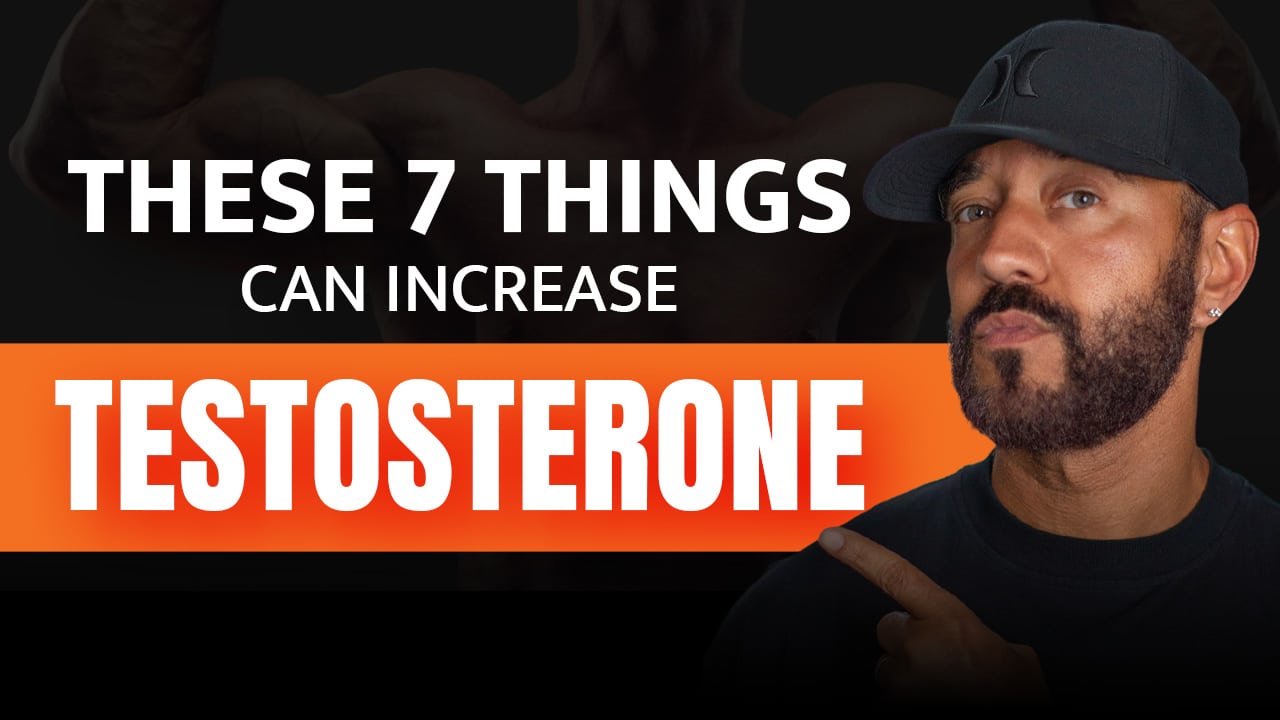
Why My Testosterone Is 2X Higher Than the Average Man
There’s a serious health problem facing today’s men. Not only are fertility rates declining globally, but men have lower testosterone levels than previous generations. On today’s show, you’re going to learn the latest science on the state of men’s health and how to naturally improve your testosterone levels.
On this episode of The Model Health Show, we’re going to uncover the environmental factors that are contributing to declining testosterone levels. You’re also going to learn about lifestyle factors that I’m calling the 5 Ss that you can use to optimize your hormonal health. I’m sharing my personal lab results and the lifestyle factors that I personally practice for optimal testosterone levels.
Specifically, you’re going to learn about how factors like sleep, stress, and sunlight exposure can improve your hormonal health and overall health. You’ll also learn about the role of nutrition and exercise, and how making changes to your environment can help your body operate at its best. I hope you enjoy this episode of The Model Health Show!
In this episode you’ll discover:
- How testosterone levels have declined in recent decades. (0:24)
- Why sleep is like a charging station for your testosterone. (1:40)
- How to create boundaries with your devices for better sleep. (7:14)
- The connection between testosterone levels and the circadian timing system. (12:03)
- How ultra processed food consumption affects sperm quality. (20:49)
- The impact sugar consumption has on testosterone levels. (24:40)
- Why alcohol can suppress hormone production. (35:37)
- The connection between stress and serum testosterone levels. (41:07)
- How sex supports testosterone, and vice versa. (48:56)
- Why cleaning up your personal care products can lead to better health. (58:41)
- The link between strength training and hormonal health. (1:08:32)
Items mentioned in this episode include:
- Boncharge.com/model – BON CHARGE is one of our favorite wellness brands for supporting recovery, sleep, and overall health. Their award-winning red light therapy products utilize clinically studied 660nm red light and 850nm near-infrared light frequencies to help optimize your body’s natural recovery and repair processes. Get 15% off with code MODEL.
- Paleovalley.com/model – Reclaim vibrant health with nutritional food and supplements that prioritize nutrient density and get 15% off your order.
- Sleep Smarter – Upgrade your sleep habits with my national bestselling book!
- Eat Smarter Family Cookbook – Transform the health, fitness, and connection of your entire family with the Eat Smarter Family Cookbook!
This episode of The Model Health Show is brought to you by BON CHARGE and Paleovalley.
From red light therapy panels and face masks to full-body blankets, BON CHARGE makes it easy to incorporate science-backed wellness into your daily routine. Just 5–10 minutes per day can help support better sleep, recovery, relaxation, and healthier-looking skin. Use code MODEL for 15% off storewide. Get 15% off with code MODEL at boncharge.com/model.
If you’re serious about real health, it starts with real nutrition. Paleovalley delivers nutrient-dense foods and supplements designed to help you feel stronger, more energized, and fully alive. Get 15% off your order at paleovalley.com/model.
Transcript:
SHAWN STEVENSON: We are about to go super deep today, so buckle your seatbelt. The average forty-five-year-old man today has dramatically lower testosterone than men the same age just a generation ago. In fact, a brand-new study published in the journal Human Reproduction, including the data from over one hundred thousand participants, revealed that total testosterone levels in men have declined by approximately fifty-four percent between nineteen seventy-two and twenty-nineteen.
But here's what's most unsettling about this situation. Many of these things that are suppressing testosterone levels are the very same things that we've normalized in our world today. Right after my forty-fifth birthday, I had my own hormones tested. My total testosterone came back at one thousand fifty-eight, more than double that of the average man in America today.
And my free testosterone came back at one forty-three, which is near the very top of the reference range. And these results have happened naturally, without TRT, without peptides, and without hormone drugs. So today, I'm going to break down the exact science-backed methods that I use in my life personally to achieve these results.
There are seven specific things, the seven S's, that will ensure that your testosterone levels stay optimized as well. Now let's kick things off with the first S, sleep. A study published in the Asian Journal of Andrology found that there is a heavy sleep-dependent factor in producing testosterone. The researchers noted that testosterone remains elevated for the duration of sleep, and the subsequent decrease in testosterone depends on the duration of being awake.
Essentially, testosterone decreases more and more the longer that you're awake. In many ways, sleep is like a testosterone charging station. You plug in at night, power up the battery, then go throughout your day using that charge to do what you need to do, and then recharge again at night. Now the question is, what happens when you don't properly recharge?
Well, the mind-blowing study cited in the Journal of the American Medical Association analyzed the impact that sleep deprivation has on healthy young men. The results were shocking. Over the course of the study, young men who were sleep-deprived for just one week, getting a maximum of just five hours of sleep per night, they saw their testosterone levels drop by up to fifteen percent.
Now this might not sound like a lot on the surface, but the researchers equated this to their testosterone levels dropping as if they were now suddenly ten or fifteen years older. Now, the good news is that these results were temporary. Once they were able to get adequate sleep again, their testosterone levels normalized, got back up to that baseline.
But the question is, what happens when you're doing this night after night on a regular basis? Additionally, all right, so we know about this testosterone piece and the overall equation of men's health, and sexual performance, for example, is a aspect of that that's often tied to testosterone. But you need to know this as well.
Sleep deprivation has also been found to create significant dysfunction in things like total sperm count, sperm motility, morphology, and testicular size. In truth, sleep deprivation is like hormonal birth control for men, and I am so serious about my sleep. This is one of the biggest reasons why my testosterone is literally double that of the average man in the United States.
I came up much the same way as the average person here in the US. I didn't think anything really about my sleep, especially in my childhood. This was just something we were forced to do. Bedtime was like punishment, right? And also, in the environment that I come from, where there's unpredictability, there's violence in the household, there's violence outside my door, going to sleep was n- never really restful.
I never knew what was going to happen, and I also never really knew what, what I was gonna wake up to. And so there was a level of stress even tied to this sleeping behavior. But once I got a little bit older, you know, my family moved into a, a nicer part of St. Louis, where I'm from, then things got a little bit more normalized, and this was coinciding with the time when I'm getting into my teens, and I'm wanting to have more autonomy, and I'm wanting to stay up.
All right? Damn the sleep. I wanna stay up, and live life and do things and play video games and, you know, connect with the ladies. You know, this is when we had the phones. But we had one house phone line, and there's a couple of phones in the house, but one phone line, so you could be on the phone, you know, trying to spit your little game or whatever, and your, you know, your stepdad picks up the phone, "Get off the phone."
It could kill the vibe very quickly. But anyways, the bottom line is I was not a respecter of my sleep, and I carried that into my adulthood. But once I truly experienced and I saw firsthand the value of my sleep in my cognitive performance, in my energy, in my body composition, the list goes on and on and on, I started to really prioritize my sleep.
Now, this might sound like taking the fun out of things, but I'm telling you, I get that good sleep, and then I'm dangerous when I'm up. All right? I'm having the best time ever. I'm executing on my goals. I'm experiencing life much more full a much more HD version of life, and I know what it's like to not have that when I'm well-rested.
And so some people might think that I am robbing myself of time to be doing things, but I am getting even more value out of the time that I am awake because I prioritize my sleep. Now, the question is, and for you and the takeaways with this, what's the biggest culprit that's deteriorating the average person's sleep quality today that we have normalized?
Because getting good sleep is something that we just did. We didn't have to get special apps for this. We didn't have to read books. We didn't have to, you know, do all these things, take all these things, have all of these biohacks. We just slept. But today, there are things in our environment that we've normalized that are creating all of this friction between our desire to go to sleep and us actually getting that sleep.
And the number one thing today that's causing this disruption is our relationship with our tech devices. Multiple studies, including a study cited in the Journal of Applied Physiology, has found that artificial blue light from our devices is an especially powerful melatonin suppressant. Now, if you want to have higher testosterone, then you need to wear protection for your eyes in the evenings when you are associating with these screens, our laptops, our desktops, our iPads, tablets, smartphones, televisions, the list goes on and on.
For myself personally, I've been wearing blue light blocking glasses for about 15 years every night. I was wearing them last night when my company left. And this is something that early on when I was doing this, this was very abnormal in my environment. Nobody else was doing this. And on the strength of my international bestselling book, Sleep Smarter, these blue light blocking glasses and other devices have become a big part of the wellness culture.
But what most people don't realize is that today the technology has come so far, but most people are unaware that most brands of blue light blocking glasses do not block blue light efficiently, and they're not actually lab tested to be effective. And they don't block other well-established spectrums of light that have been proven to disrupt our sleep quality, like green light, for example.
And this is why I utilize the blue light blocking glasses from Bon Charge. They're scientifically engineered to block out 100% of melatonin-disrupting blue and green light for improved sleep and regulated circadian rhythms. Their glasses are FDA registered and proven to be effective. They're made in an actual optics laboratory by trained optical technicians.
And because of this, they're able to provide you with prescription lenses if you want it, or non-prescription lenses like the ones that I wear. And they have so many incredible frames to choose from. Just go to boncharge.com/model right now to take advantage and get 15% off when you use the code model at checkout.
Again, this is something that I utilize every single night. They're going above and beyond with the technology and also making it cool. They're so much cooler than the wood shop-like glasses that I was wearing 15 years ago. All right, go to boncharge.com/model to take advantage. But in addition to this, how about we take some time off of our devices in the first place?
Because it's not just about the artificial light, it's also about the stimulation and interacting with our dopamine pathways, serotonin, and just all this neuroendocrine chemistry that's getting seduced and stimulated by scrolling on our phones or scrolling through Netflix. And so again, just giving yourself some time to be off of your devices.
I recommend at least a 30-minute screen curfew just to allow your, your mind and your body to start to unwind. And in addition to that, there are many other well-established factors that I've been talking about, again, for well over a decade of making sure that we are sleeping in a largely dark environment as we can possibly get, and making sure that we are sleeping in a cool environment as well to really take advantage of this thermal regulation process that our bodies naturally do, and seeking a cooler climate, because that's how we evolved.
No matter which part of the globe we're on, it's a little bit cooler in the evening. But we can artificially keep that temperature higher in our homes and not really be aware of it. And so cooler environment, dark environment, give ourselves a screen curfew. These are some of the science-backed tips. But if you want more information, of course, you can check out Sleep Smarter anywhere that books are sold.
It's 21 clinically proven strategies to help you to support getting a great night's sleep. And another big part of this actually drives perfectly into the second one of our S's for optimizing testosterone And that is number two, getting sunlight exposure. We now know that getting sun exposure during the day helps to entrain our circadian timing system, helping to improve our sleep quality at night.
But one of the most important takeaways for you today is that testosterone itself is light dependent. Circadian entrainment is the process where your body's internal twenty four hour clock synchronizes with the external environmental cues, such as sunlight. This alignment ensures that your sleep wake cycles, the releases of various hormones like testosterone and more match the actual twenty four hour day night cycle on earth.
And by the way, the suprachiasmatic nucleus in the brain is well established to be the brain's master circadian clock containing androgen receptors, and it interacts closely with testosterone. And to add on top of that, testosterone itself helps to regulate certain behavioral circadian activity rhythms.
So together, the circadian clock genes inside your cells help to control daily testosterone synthesis. And this process literally goes both ways. Now, the bottom line here for us in this context is that sunlight helps to regulate the systems that our testosterone depends on. Now, I want to make this clear.
Testosterone is actually kind of unique because it's not as influenced by circadian variation as some of our other hormones. Our daily choices, which we're going to talk more about, can influence testosterone pretty substantially. But testosterone is still heavily impacted by circadian rhythms. And the number one natural controller of these circadian rhythms in our environment is sunlight.
Just one aspect of how sunlight impacts testosterone is through signaling the production of vitamin D. In short, UVB rays from the sun hit our skin and interact with compounds contained within our tissues to create vitamin D. In a study published in the International Journal of Impotence Research, the scientists observed that compared with healthy men, subjects with vitamin D deficiency obtained lower scores for erectile function, orgasmic function, and sexual desire.
Vitamin D is a group of fat soluble steroid hormones Again, in a natural setting, vitamin D is primarily produced via the skin in response to UVB radiation from sunlight. This is how we've always done it. This is how we are struggling to do it today. But also keep in mind, there's a small percentage of that vitamin D is coming through the diet.
But again, most of our vitamin D production throughout human history has been through this incredible relationship with sun exposure. And so I'm gonna tell you what I do. I have designed my life in such a way where some of the stuff I was doing on accident, I didn't know that my testosterone was going to be that high.
I knew that it was probably pretty good, but I didn't know it was gonna be, like, double the amount of the average American man today. Part of that is the fact that I spend a lot of what I call this kind of no extra time time in the sun. I'm gonna work out anyways, and so rather than working out indoors in a gym, as I predominantly did for years and years, for decades so many more of my workouts every single week I do outside.
And of course, it makes it easier in the climate that I'm in now, but sometimes it's, it's rain, it's a rain or shine. Even on rainy days, those overcast days, the sun, those incredible, powerful rays from the sun are still making their way through and interacting with our biology. And again, this isn't all about UVB and the vitamin D equation because that, for most people, is still gonna be seasonally dependent and a certain time of day and all these things.
It's simply the fact that sunlight is that circadian rhythm entrainment for so much of our biology, and the production, again, of testosterone depends on the environment that we're creating. And so I'm doing more workouts outside as much as I can. I am proactively exposing as much skin as I can and still keeping it cool.
You know, I'm not out there in a speedo pushing a sled. That would be crazy work, all right? But I am usually in some shorts if it's not too chilly outside, no shirt, and I'm getting it in. I'm working out like that as much as I can. And sometimes, you know, again, if it's cooler outside, maybe again, I'll start off with a hoodie on, but then at least I'm gonna go t- to a T-shirt or maybe a tank top or something, you know, just to try to get as much sun exposure on my skin as I can, especially those larger surface area parts of your body.
Your back and your chest, your torso can really help to absorb a lot more of that biophotonic data. Also, I do my best to play in the sun as well. So whether I can get outside and play some basketball or pickleball or, you know, just kinda hanging out and going on walks with my family, these are all things that I proactively do rather than spending extra time indoors, which again, there's tons of stuff to do inside, and we do plenty of that stuff.
But prioritizing outdoor activities just to get more sun exposure as a bonus. And really to top it off in this particular section, every morning I get outside at least, at least for like five minutes. I did this morning. You know, I woke my son up for school, then I immediately threw on my shoes, and went outside for a brisk walk.
You know, again, it's at least five to 10 minutes every day, sometimes a little bit longer, but just getting outside, getting all that biophotonic data input, you know, whether it's... It's not, again, just about being on your skin, but just getting it in your eyes, just the ambient light in the environment. I'm not necessarily out there staring at the sun, but just that real, that real pure, raw sun exposure.
Getting into your environment, in the natural environment, is so powerful for your biology. Now, again, I'm just telling you what I do. It's about being intelligent when it comes to the sun as well, because the sun is very powerful. It can burn you, but we've been fearmongered to the moon and back, which the, the light from the moon is from the sun, by the way.
But the reality is, and thank goodness the science is emerging right now, we've overreached with our fear of sun exposure. Now we're kind of course-correcting socially and understanding the very best form of sun protection is incremental exposures to the sun. Our bodies know what to do to build up the resilience in interacting with the sun.
Now, it depends on our complexion as well, how much sun exposure we can start off with and how much we can progress to, but all of us can proactively spend incrementally more time in the sun to get some of these benefits. All right? So that's number two on this list of these seven S's to support your testosterone production.
We're gonna move on to number three on this list, which is simple, clean nutrition Your hormones are literally made from the food that you eat. You need to provide your body with the actual raw building blocks to make testosterone, and more so, to create the nutrient environment within your body that makes better testosterone production possible in the first place.
Now, with this being said, the most important thing might actually be to avoid interacting with the things that create a suppressive effect on testosterone. Testosterone is, in many ways, metabolically expensive to create. So consuming things that create metabolic chaos and excessively stress your body can be shooting yourself right in the testicles.
For example, a study titled Effect of Ultra-Processed Food Consumption on Male Reproductive and Metabolic Health was just published in the journal Cell Metabolism. This was an incredible controlled crossover feeding study with nearly fifty men eating a seventy-seven percent ultra-processed food diet for one part of the study and an almost entirely unprocessed food diet for another phase of the study.
Each phase of the study was three weeks with a washout period, and the data compiled at the end of the study was shocking When the men consumed a largely ultra-processed food diet, not only did their testosterone trend downward by about eleven percent comparatively, there were significant impairments to their cardiometabolic and reproductive health overall.
Notably, the researchers stated, quote, "Sperm quality trended towards impairment with a decrease in total motility," unquote. So keeping in mind again, it's the environment that we're creating within our biology with the food that we're bringing into our bodies, and also the food itself is going to be used to create all of the different things that our body makes.
That sperm doesn't just manifest out of nowhere. We're making the sperm based off of the nutrition that we're bringing into our bodies. So you might have some whole food avocado, you know, guacamole swimmers. All right? They're all natural. They're thick. Or you might have some Cheeto swimmers. They're kind of all like mutated, crunchy, devoid of any kind of form.
As a matter of fact, some Cheetos actually kinda look like some mutated... Never mind. So what are you creating your cells with? What are you creating your tissues, your organs with? This really does matter in this conversation around testosterone, and also again, overall, it's not just about that. It's about the overall environment that we're creating in our bodies because we wanna create an environment that makes a healthy testosterone production possible in the first place.
Now, what can be overlooked in this study is that both the ultra-processed foods and the real food diets were controlled for matching calorie content overall. This wasn't a matter of, oh, they're just eating more calories on the ultra-processed food diet. That's what's causing the problem. That's what's causing all of this chaos.
Nope. The ultra-processed foods were sniping their swimmers. They were Mark Wahlberging their swimmers. It wasn't just about the calories. It was what those foods are actually made of. And according to this study, your body doesn't care about how many calories you're eating. It appears to care about the quality and processing of the information contained within those calories Now, of particular concern is the sugar and simple carbohydrate content of the ultra-processed foods.
Excess sugar is well established to have a suppressive effect on testosterone. We know this. For example, a study cited in the journal Reproductive Biology and Endocrinology titled Sugar-Sweetened Beverage Intake and Serum Testosterone Levels in Adult Males uncovered some interesting results. Tracking the data of nearly six hundred men, the scientists found, quote, "The odds of low testosterone was significantly greater with increasing sugar-sweetened beverage consumption."
Unquote. In fact, men consuming the most sugar-sweetened beverages each day had more than double the odds of having low testosterone. Now, this data is observational, of course. But in a clinical setting, a study cited in the journal Clinical Endocrinology found that 74 men who were given 75 grams of oral glucose, this is the equivalent of a 20-ounce Mountain Dew or a Venti Starbucks Caramel Ribbon Frappuccino, so it's out here.
These individuals had a 25% average drop in their testosterone within two hours. Now, to be clear, again, this is a temporary effect. Our bodies are very good at finding homeostasis and getting back to baseline. But the question again is, what happens when we're doing this day after day after day? And of notable importance for me and my diet and how I automatically achieve these results, I put a priority on reducing my sugar intake.
Espe- added sugars, it's just like, it's just not something that I interact with hardly ever at all. You know? Just really prioritizing real food and real food ingredients and having delicious meal experiences with real foods, this is where I've centered my diet. And within that, really prioritizing high quality sources of protein and dietary fats.
Our hormones are literally built and synthesized from various dietary fats and dietary proteins. In the case of testosterone, it's largely made from cholesterol. Again, under this umbrella of these fats, our body produces cholesterol as well. It's not just something we interact with in our diets. But keep in mind that our enzymes that actually synthesize testosterone make it usable.
They're made from amino acids, and protein-based hormones like luteinizing hormone can signal the testes to literally produce more testosterone. This is all a part of the environment, the signaling, making the thing. We've gotta prioritize these specific nutrients. Now, additionally, testosterone is primarily transported in our blood bound to two proteins, sex hormone binding globulin and albumin.
Again, proteins. We need these building blocks. Now, carbohydrates are typically viewed as raw material for testosterone production, but they're a part of this matrix as well. Luteinizing hormone, for example, is a glycoprotein Now, a lot of people, they, you know, they, they sidestep, they stiff-arm the carbohydrates.
We're in that era, all right? When I was in college, it was we're stiff-arming fat. Everything was low fat. Now, it's low carbohydrate. That's what we're stiff-arming. That's where we're Heisman Trophy-ing, all right? The low carbs. But again, glycoprotein, meaning it's composed of protein subunits along with carbohydrate chains.
More notably, though, carbohydrate availability can deeply influence the overall hormonal environment in which testosterone is produced, particularly in active men. We know that too much carbohydrate can absolutely blunt testosterone production. But too little, especially in men who do intense glycolytic exercise, can blunt testosterone, too.
The bottom line with this S, simple, clean nutrition, is that for me personally, I eat real food the vast majority of the time. When I say real food, this means foods that you can still recognize where they come from. You know, I've with this ultra-processed food paradigm. Unfortunately, we're getting into this place where we're like, "What does that even mean?"
And I tried to circumvent that early on when I was elevating the conversation. But we're talking about foods that you cannot really recognize where they come from. They've been so distorted, so processed, so mutated into something that is so far removed from anything real that it no longer really holds that quality of something that our genes can even recognize, you know?
And so what I mean by that is we can eat, uh, a, a tuber, right? A potato, sweet potato, right? Very, very simple process. But we could take that potato and we can make sweet potato fries. We can make mashed sweet potatoes. We can make sweet potato hash. You can still tell there's a sweet potato there. You can even get crazy and make a more processed version of it and make a sweet potato donut.
Okay? So there's levels to this. That's an ultra-processed. There's levels to it. Some ultra-processed foods are things like one of my favorite foods. When I met my wife, I would eat this every night. Actually, this was my evening routine. Honey Nut Cheerios, all right? So far removed from where it comes from.
And don't even get me started on my favorite cereals, like the Crunch Berries, you know, Captain Crunch Berries. Now, apparently, they got all Crunch Berry version of the Captain Crunch Berries. There's so many. The innovations in children's cereal, which is really adults be killing that stuff, too, is crazy.
Like, I've missed so much. But the Fruity Pebbles, the Apple Jacks, that's another one of my all-time favorites, and these different cereals, whether they are corn-derived or wheat-derived, rice-derived. They're so far removed from where their origin is with all of these newly invented chemical additives and colorings and, you know, uh, flavor enhancers, and the list goes on and on.
It's just so, this is the definition, levels to it, top-tier ultra-processed food. All right? And what does that do to our gene expression? You know, nutrigenomics, nutrigenetics. This isn't just a superficial thing of like, oh, these foods are not so bad. Ultra-processed doesn't-- What does that even mean? You know what it means.
All right? And there's levels to it. And so with this being said, most of my diet, real food. All right? And I know this plays a huge part, and I don't pay that much attention to the macronutrient ratios of my food because it just tends to balance itself out. You know, sometimes I'll eat meals that have a higher percentage of protein than the other two macronutrients, or a higher percentage of fats, or a higher percentage of carbohydrates.
It just kinda tends to balance itself out. But I can share that the overall ratio of macronutrients in my diet are pretty similar. You know, there isn't one that's just like super far and away dominating the other macronutrients. Now, I wanna share a particular food that I just think that I have been consistently having this food pretty much every day all of these years, that it might just play a part in this equation with testosterone.
And that one food that's been a consistent for me for years is eggs In a 2021 randomized controlled trial published in the Journal of Strength and Conditioning Research, scientists took 30 resistance-trained young men and assigned them to consume after training either three whole eggs or six egg whites, providing approximately the same amount of protein.
Both groups performed the same resistance training program three days per week for 12 weeks. Here's the fascinating part. The whole egg group experienced a significantly greater increase in serum testosterone than the egg white only group. They also had greater improvements in hand grip strength, knee extension strength, and body fat percentage.
Now, to be clear, cholesterol is indeed the precursor molecule from which testosterone and other steroid hormones are synthesized. But that does not mean that eating more cholesterol automatically means making more testosterone. Please hear me. Testosterone synthesis is a tightly regulated system by the hypothalamic pituitary gonadal axis with multiple metabolic signals being involved.
The egg yolks aren't just about the cholesterol. Again, please hear me. They're remarkably nutrient-dense packages containing proteins, fats, cholesterol, choline, selenium, fat-soluble vitamins, and other bioactive compounds. All of these nutrients and more help shape the environment. It's all about the environment within our biology that supports the testosterone production.
And I've personally been eating an average of three to four eggs a day for years and years and years. Again, whole food sources of proteins, fats, and carbohydrates from both plant and animal foods make up the vast majority of my diet. And if you feel like you need a great resource for specific foods and recipes, make sure to check out the Eat Smarter Family Cookbook.
The answer to better health and improving our testosterone levels is, in many ways, just too simple when it comes to nutrition. Eat mostly real foods, ensure your macro and micronutrient needs are met, and avoid the things that are noted to suppress your testosterone. And another one of these things that I wanna make a special note of was highlighted in a study published in 2019, finding that alcohol consumption can heavily disrupt your metabolism by disrupting your sex hormones.
The study, cited in the Journal of Clinical Medicine, affirmed that excessive alcohol consumption does in fact decrease levels of testosterone in men, and it also increases aromatization of testosterone, which in turn leads to higher levels of estrogen. I personally don't drink alcohol at all. I never have, I never will.
There were some little trysts, you know, like college, you know, I had, I had a couple sips one time. There was the, it's the peer pressure. A couple si- but I just, ugh, couldn't do it. For me, my story is just seeing it in my environment growing up and seeing the dysfunction that it created with the excessive use of this very powerful psychoactive substance.
And also, you know, just kind of having my palate not attuned to it and really just listening my, to my body. I'm pretty sure it's rare for most people the first time they take a sip of a beer to be like, "Oh my God, this is delicious." Ever in their life, the first sip No, it just doesn't happen. We acclimate our taste buds to it.
And of course, we could find the deliciousness in there and, you know, find the subtle things about it and the differences and all the things. Same thing with wine. You know, same thing with the good tequila, whatever the case might be. But our body's instincts are kind of to revolt against those things.
It's like a, you know. But all that being said, I would implore you, if your testosterone is important to you, I would be very, very mindful of alcohol consumption. It's one of the strongest things that we can consume that can create a lot of dysfunction around the production of our sex hormones. Now, when I mention making sure that your micronutrient needs are met, I'm talking about the array of vitamins, minerals, antioxidants, and phytonutrients that help to create the environment for optimal testosterone production.
The vast majority of these nutrients are accessible if you're eating a diversity of real nutrient-dense foods, and I personally don't take that many supplements. At this point in my life, I more so cycle supplements. There are things that I take more consistently, um, some of those being, uh, vitamin C.
Food-based vitamin C supplement because of all the things that it does for helping to modulate stress. Of course, we know about the immune system component. It's excellent for supporting our skin health, and just the list goes on and on and on. Vitamin C is critical for a myriad of things in our bodies, the benefits for our cardiovascular system, and it's one of those things that we have to get.
As human beings, we gotta seek this out in food. And with the stressors of our world today, our bodies do kinda run through our vitamin C supply. And so a food-based vitamin C supplement is something I consistently do. Uh, turmeric a real food-based turmeric concentrate. I'm a big fan of, uh, a very high quality omega supplement as well, the omega-3s, and I actually get all three of those supplements from Paleo Valley.
They go above and beyond. No binders, no fillers, the very best sourcing you are going to find, and just incredible people. Incredible people. And by the way, if you go to paleovalley.com/model, you're gonna get 15% off storewide. Their new omega-3 supplement is phenomenal. Phenomenal. You can check out the science behind everything as well.
Their food-based vitamin C is based on camu camu berry, amla berry, acerola cherry. It's just, again, so good, backed by science, and if I am taking supplements on a consistent basis, it's generally those three supplements. But again, I'll cycle in some other stuff, other fun stuff from time to time as well.
And yeah, so food first, add in supplements to supplement an already healthy diet, and these are helping to support that pathway to optimizing that testosterone. And now we're gonna move on to number four of our four S's for optimizing your testosterone. And number four is stress optimization. When I got my testosterone levels checked, this was actually after one of the most stressful years of my life.
So if I'm not handling stress well, and my testosterone levels were that high, who knows what they might have been without that added stress? I might have been growing antlers at that point, you know? But I don't think that that's the case. I think that I was really just, with my practices and, and building up that resilience, I was able to manage that stress somewhat healthily, but I'm telling you, it did...
It definitely made an impact. It definitely made an impact. But it's important to keep in mind that stress is not at odds with testosterone. In fact, acute stress often supports testosterone. But chronic or excessive intense stress can drive testosterone levels down Again, severe or prolonged physiological/psychological stress can absolutely suppress the hypothalamic pituitary gonadal axis.
An example of intense stress impacting testosterone was shown in a study cited in the journal Biological Psychiatry. Researchers followed one hundred and nine people through an extremely stressful military survival course involving captivity and interrogation. During captivity, their cortisol levels rose significantly.
Their testosterone was significantly reduced within just twelve hours. Their thyroid hormones were also suppressed, and cortisol remained elevated into the recovery period. Now obviously, this is an extreme stress example, but that's precisely why it's useful It gives us a very clear demonstration that when the human body perceives an intense survival threat, reproductive hormone production can be rapidly deprioritized by our bodies.
Now, here's the good news, even in the context of an extreme stressor like this military training. A recent study titled Impact of Military Training Stress on Hormone Response and Recovery followed soldiers through an eight-day military training exercise followed by recovery. Field training significantly reduced testosterone, but once the high-stress training period ended, testosterone recovered within four days.
So again, even in the context of intensive stress, if we're allowed that recovery period, if we give our bodies the opportunity to recover, they will, and oftentimes it can bounce back even better. Now, it's not the presence of stress itself. Again, it's the overarching psychological state around the stress.
A remarkable study analyzing testosterone levels of men ages 30 to 55 who had similar cortisol levels but were classified as having high versus low psychological stress based on anxiety, hostility, and depression measures. After analyzing the data, it was found that the high-stress men had significantly lower serum testosterone than their low-stress counterparts.
Again, cortisol was not significantly different between the groups. They all had stress rolling in their bodies, but the mindset above the stress was radically different. So how do we better respond to the stress in our world today? It's inescapable. Well, we actually have a randomized controlled trial involving stress management that fits perfectly here.
This recent randomized controlled trial cited in the journal Stress had young men to complete seven 20-minute mindfulness sessions using integrative body-mind training or an active relaxation control. Researchers then subjected them to acute psychological stress. Following the stressor, an additional mindfulness session produced higher testosterone concentrations and lower cortisol responses relative to the relaxation control.
So the researchers interpreted this as evidence that mindfulness can modulate the interaction between the HPA stress axis and the HPT reproduction axis. All right, so mindfulness, meditation, being able to channel our focus, being able to control our breathing, all of these things are backed clinically to help us to better associate, to better manage stress, and also have this protective effect with our testosterone.
If we look at what this really means, that testosterone production and this relationship between our, our motivation and our drive to, to accomplish, to succeed, to protect, and even to reproduce. When we are in an environment with excessive, intense stress consistently, this is an environment that's signaling that reproduction is no longer a biological priority And so it's keeping all of this in mind.
In our stressful world today, this is a very, very different type of stress than our ancestors were exposed to. So the question is, for me personally, how do I de-stress and manage my stress? Well, I've been meditating for over 20 years now, so it's a big, big part of my life, and I know that I carry that with me now into my day-to-day life.
This practice of meditation, there's so many different iterations of what that can look like, but finding something that works for you will be incredibly valuable in our world today. And this doesn't mean you have to sit quietly. This can be even a standing meditation, moving meditations. Um, some people would say, "No, those aren't gonna...
Those don't cut the mustard." Whoever cut mustard, by the way? What does, where does that come from? But keeping in mind that, you know, even walking, there are walking meditations. Mindfulness, as well, is a certain flavor that fits into this umbrella of meditation as well, and just being able to focus on certain things, paying attention to your environment, paying attention to how you feel, what's going on in your internal environment.
Many different ways to slice and dice this, you know? Um, for me, a big part of my ability to manage stress is saying no to things. I'm so inspired by this work. Sometimes it can be very seductive, and so I've made it a priority to shut things down at a certain time each day and just unplug. You know, especially, again, going outside, going for long walks, hanging out with my family as well, and spending time with community is so critical for managing stress, you know?
Coming from an environment to where I was very kind of isolated and just really understanding the value of these relationships. And also, I'll tell you, probably my greatest secret sauce with managing stress for, you know, this recent version of my life has definitely been just simply walking, just simply unplugging, not, you know, uh, listening to anything or, you know, having my devices on and that kind of thing, but just being with myself, you know?
Being with my, my, my thoughts, and being with the environment and all these natural inputs to the best of my ability. It's really, really been a huge part of this kind of superhero utility belt when it comes to managing stress and de-stressing. So these are just some things for me, and another big part of this is prioritizing my sleep.
Definitely more stressful, you probably notice for you as well. When you are sleep-deprived, you're more irritable, you know, so prioritizing my sleep as well. And so again, this is a big part of this equation, stress management being number four of these S's. We're gonna move on to number five here. And number five on this list of these seven S's to help you to optimize your testosterone, number five is sex.
The evidence suggests a bidirectional feedback loop when it comes to sex. Testosterone supports sexual desire and function, while sexual activity, arousal, intimacy, touch, and the neurochemistry surrounding them feeds information back into the endocrine system. Now, we have actual human evidence that sexual activity can in fact increase testosterone.
A fascinating study published in the journal Physiology & Behavior tracked the testosterone levels of men and women in four heterosexual couples. They tracked their data for 11 evenings before and after sexual intercourse and 11 evenings on which there was no intercourse. After compiling the data, it was found that testosterone increased across the evenings when there was intercourse and decreased when there was none.
The pattern was the same for both men and women. Now, this is one of the most important parts of this study, and I don't want this to be overlooked. The participants' early evening testosterone levels were the same on nights when they had sex and nights when they did not, meaning they didn't have sex because their testosterone was already higher.
The data suggests that the sexual activity itself triggers the higher testosterone effects. Now, please keep this in mind, this effect is primarily acute. This is not a long-term, quote, "testosterone hack." Healthy sexual activity is part of an overall testosterone-supportive lifestyle, creating this testosterone-supportive environment that we've been talking about.
Now, to complement that study, a longitudinal study following nearly 1,300 men over the age of 70 for two years concluded that reducing sexual activity is more likely to reduce testosterone than the reverse. So again, it's not merely because testosterone goes down with aging and therefore you have less sex.
Reducing sexual activity is actually more likely to lower your testosterone So the question is, what's going on behind the scenes with our physiology? It is this dynamic interplay between dopamine, testosterone, sexual motivation, and sexual activity that are all at work here. Add to the mix the neuroendocrine effects of oxytocin, prolactin, and more, and you have a recipe that creates these outcomes.
Now, it's so critical. Please hear this. This is one of the most important takeaways from today. Testosterone is not being produced in isolation, and sex isn't controlled by a single, quote, sex hormone. It's truly a whole body neuroendocrine event that has inputs and outputs that feed into one another and fit together very much like that very popular yin and yang symbol, which also coincidentally sort of looks like the number sixty-nine.
But I digress. On top of all that, pun intended, hey, on top of all that, in this conversation around sex helping to support testosterone, we understand the connection with the stress reduction and testosterone increase, right? We've already covered that There is one of the most powerful stress reducers in our universe when we're talking about the interaction between human beings and close proximity, and the power of touch, the power of affection, the power of love.
Shout out to Huey Lewis and the News. So keeping in mind the power of love, the power of connection, it's one of the greatest forces in our reality, and truly it, it alters our biochemistry, especially in the context of our romantic relationships. The physical touch from our partners, we have multiple studies affirming this, have a powerful impact on reducing levels of cortisol, for example.
But being in this whole kind of environment that we're wanting to create with increasing testosterone, physical touch being a part of sexual activity, this is yet another reason why this is so valuable in this whole equation, again, creating the environment for testosterone to really be optimized.
Now, there's a very important reason that this is on our list of these seven S's in relationship to optimizing our testosterone. This is, if we're looking at this strictly through the lens of biology, this is what we're made for. We're born for this. There's gonna be an evolutionary thrust, a biological thrust towards creating our biology, our chemistry to be able to support this activity should we choose to do the activity.
All right? So our interest in it, in and of itself, is a, is a signal for our biology, right? And also, of course, our capability to do this informs our psychology, and so they feed into each other. And this is why it's not a matter of just okay, my testosterone is high, and so I have this desire to do it. It's also engaging in the things that support the activity of doing it, that support the production of testosterone.
Again, it's a very intimate system that feeds into itself. And so creating intentionally an environment and a relationship to where you have that connection. Another really important takeaway for us today is that testosterone, even though it's labeled as this, quote, "sex hormone," it's not all about sex, obviously.
You know, there are these factors for both men and women related to motivation, to drive, to aspirational behavior, to activity, to energy, and so much more. And we already talked about the relationship with building muscle and metabolic health. The list goes on and on and on. So to put testosterone in this pithy box, and also this conversation itself when we're trying to, quote, "boost testosterone," this is not the goal because testosterone in no way also has a complete monopoly on manhood.
It's not about that. It's an aspect. It's an aspect of humanhood. It's an aspect of humanity. And of course, this can add to certain experiences or certain biology, but no matter where we are on that testosterone spectrum, does this qualify a man to be, quote, "more manly"? There are other capacities that can come packaged with this testosterone or not, and it's not about this aggression.
It's not about this domineering or this striving. It's also about honor. It's also about protection. It's also about being of service, you know? And again, this doesn't matter where our numbers are with our capacity to engage in these things. And so I don't want this conversation also to be this superficial focus on testosterone.
It is important. It is important for our biology, absolutely, but it's not everything, nor is it most of the things But today, why this matters, why this conversation matters, and why I wanted to do this for you today is because our environment is plummeting our testosterone as well as several other sex hormones.
Like we... Again, we put in this category of sex hormones. And our ability to reproduce is changing. But it's not just about reproduction. Our ability to have a strong perspective, our ability to perspective take, our ability to stand up for what's right, so many different things are in question and in flux right now, and we need these qualities more than ever.
Now, with all of this being said, yes, when it comes to investing in this S and this sex component of supporting our testosterone, it's really cultivating beautiful relationships, you know, and creating an environment to where this is just a part. It's, it's not just about the sex, it's about the connection, it's about the intimacy, you know?
And this is something that I value very, very much. I value this very, very much because I love my wife. I, I'm obsessed with her in the most appropriate ways, all right? And so this, again, feeds into itself. It's not just about high testosterone makes me wanna do it. It's also the acts itself supporting the healthy testosterone levels.
So that's number five on our list. We're gonna move on to number six on these seven S's to support healthy testosterone optimization. Number six is... This, again, this is what I've done. This is what I'm doing in my life, oftentimes unconsciously, that created these results. Number six is safe, natural products.
I grew up in a generation that didn't think anything about the chemicals in our personal care products, for example. I washed my body with Caress soap because that's what my mom would buy. I had the Caress. I slathered my body up after I got out of the shower with the Suave lotion. I threw on some Degree deodorant, baby powder scent.
Baby, baby powder scent. Had to have that, you know, that, that essence of the baby. And then I hit myself with a few sprays of the Armani Acqua di Giò. I was one of the cleanest-smelling human beings on the face of the planet, easy. But in many ways, it's an illusion. It's a f- it, it's f- as, as Smeagol, AKA Gollum, says, "It's false."
It's false. It's a false premise, all right? It's an illusion, all of these chemical fragrances to create a mask in many ways of my natural chemistry. And so we didn't think anything about it, and here's the thing. These artificial fragrances are typically stabilized in these products by using phthalates.
Phthalates are a large group of chemical compounds that help fragrances to last longer. In fact, if the product ingredient label says, quote, "fragrance" on it, it's extremely likely that you're looking at the handiwork of phthalates. And depending on the product, phthalates are also frequently used as solvents and plasticizers.
Phthalates have been ubiquitous in the personal care industry for decades with no awareness of them pretty much at all by the general public. Now, what you don't know can't hurt you. That's a saying, but when it comes to these phthalates, this is where it gets messy. A multi-pollutant study titled Phthalate Exposure Is Associated With More Rapid Body Fat Gain in Midlife Women was conducted by the University of Michigan School of Public Health, and it found that phthalates were explicitly associated with more rapid increases in body fat in women.
Now, you might think, "Well, that's too bad for the ladies. I'm a dude, and I'm here to be even more dude. That's why I'm in this testosterone conversation." Those phthalate-y things can't hurt me. Aha. Aha. An analysis cited in the journal Healthcare in 2021 states, quote, "Phthalates are a series of widely used chemicals that demonstrate to be endocrine disruptors and are detrimental to human health," unquote.
This means for everyone, and multiple studies have found an explicit link between phthalate exposure and testosterone, including a 2014 study. And the researchers stated, quote, "Multiple phthalates were associated with significantly reduced testosterone in both sexes and in differing age groups," unquote.
And most notably, the study found that men between the ages of 40 and 60 had the most significant reduction in testosterone with phthalate exposure. And keep in mind, this is an observational study, and it doesn't assign causality. But again, this is one of many studies showing the same thing. And when there's smoke in your testicles, there's probably a fire.
Phthalates, parabens, bisphenols, and so many other newly invented chemicals that are proven to disrupt hormone function are overwhelmingly abundant in our personal care products It isn't just one questionable product, and this is what's so important here, or one questionable chemical. It's the entourage effect.
It's the exposure, the accumulation of multiple of these newly invented chemicals that really creates the metaphoric, uh, but in reality, poison when it comes to our testosterone. So but the goal isn't to live in a bubble. It's to identify the exposures that you have the most control over and simply reduce the unnecessary exposures.
So for me, with my personal care products, and the same thing holds true with household products as well, you know, things for your home, cleaning your home and things like that. Many of these, uh, chemicals, these endocrine disruptors are found in those types of products, but if you're putting it on your body, come on.
So this is one of those places where I keep it really, really simple. Keep it super simple. I'm using oftentimes one ingredient products like for my body, coconut oil. I'm a huge fan of coconut oil. I've been using coconut oil for decades now, and so it's a fantastic, you know, alternative to the lotion paradigm that I once lived in.
All right, so we've got for me personally, I use coconut oil. The same thing, you know, even with my beard, I'm using coconut oil. And, you know, when it comes to deodorant, I'm getting deodorant with very few ingredients, quote, natural ingredients, but I found one that works for me. Some of those deodorants, you know this It be making people who are trying to put on their deodorant, it make you smell.
It make you smell stinky. All right? So you gotta find, and it, don't give up. Experiment. You know, once you go for the aluminum-free and the, you know, this and that, it's finding one that works for you. For some people, they got that, that rock, that crystal, you know, and it works. For some people, the cr- you rub the crystal on, and they s- they start smelling like outdoors.
All right? They start smelling like something. All right? So it's finding what works for you. So again, I do my best to really keep it as simple as possible. Same thing when it comes to, you know, things like toothpaste and, you know, just the list goes on and on. Your whole suite of personal care products.
I'm not putting cologne on, okay? And it's just not my thing, you know. Maybe, like, twice a year maybe I might, like, just have a little change-up maybe. But, you know, I'm just not overdoing it with those types of things. So again, when it comes to these personal care products, I keep it very, very simple. The same thing holds true with, you know, the dental care, toothpaste, and things like that.
And chances are you're not gonna be around me and I've got some cologne blasting on my body very, very r- very rarely. Maybe, maybe once a year I might put some cologne on. All right? It's just not for me. I'm just not thinking in those terms. I have my, my natural vibe going on that, you know, hey, people seem like my wife loves it, you know?
But I'm not s- I'm not, I'm not out here smelling like, you know, Charles Manson or, you know, that whole gang or none of that, you know? It's just keeping yourself clean and using some natural products. If anything, I got a little, like, island, got a island boy smell, you know, with the, with the coconut oil. So, you know, just keeping this in mind, and just a word on the biggest sources of these chemicals.
It's not just things like personal care products and cleaning products. Those compounds that we discussed are abundant in our food supply as well, most frequently found in ultra-processed foods. A study titled Ultra-Processed Food Consumption and Exposure to Phthalates and Bisphenols was conducted by researchers at Johns Hopkins School of Public Health, and it revealed some shocking findings.
The scientists found that higher intakes of ultra-processed food does in fact lead to higher levels of phthalates showing up in human bodies. After analyzing over 2,000 study participants, they discovered that for every 10% of your diet that consists of ultra-processed foods, it leads to an additional 8% higher level of phthalate metabolites The scientist stated, quote, "Higher energy intake from minimally processed food was associated with lower concentrations of phthalates and bisphenols."
Unquote. Again, these are endocrine disruptors. That's their name. They've been well-vetted to do just that. And so in this conversation around optimizing our hormones, let's be aware of this stuff. Let's, you know, throw the Reggie Bush, the Heisman Trophy. Should we give it back to him? Give him, give that man his trophy back.
Anyways We sidestep these to the best of our ability. Choose simple, especially for what we're putting on our bodies. There are literally, they're called hormone creams. There are hormone creams that are prescribed. You rub it on your skin, and it changes your hormone function. What you're rubbing in your skin and, and it's disappearing, it's not just vanishing to an alternate universe, it's going in your body.
So be mindful of what you're putting in and on your body. And now we're at number seven on our list of these seven S's for you to focus on to optimize your testosterone, and number seven is strength training. Yes, strength training done in specific ways can reliably increase testosterone temporarily after a workout.
But please note that this does not necessarily mean that your resting total or free testosterone is increased in a notable way with a session of resistance exercise. It's really the cumulative effect of strength training consistently over time that transforms your biology in ways that create a hormonal environment where testosterone levels remain strong, and we'll circle back to that in just a moment.
But first thing, what kind of strength training provides the most notable short-term testosterone boost? Well, a study cited in the Journal of Steroid Biochemistry and Molecular Biology had researchers looking at nine resistance trained men and had them perform either one set of 10 squats or six sets of 10 squats.
One set produced no significant testosterone increase. But after six sets, serum testosterone increased approximately 16 to 23%. These results were found immediately after exercise and remained significantly elevated at 15 and 30 minutes post-workout. But then again, it goes back to baseline. Now, the question is, how much weight are they using on those squats?
In this study, it was about 80% of their one rep max. That's a lot of weight. That's, that could be heavy. That could be a heavy jump off right there, and then to do six sets of 10? That's, that's something. Now, this is affirming that casually doing a few squats here or there doesn't send your testosterone soaring.
Not at all But please understand this is not required to get that kind of testosterone boost. This was just what was seen in this particular study. Keep in mind, yes, real challenge is required, but that signal through strength training can come in a variety of ways, right? So it's not just like this one set hitter, and it's also not doing, you know, uh, an hour and a half or two hours of not enough resistance to where it's not really even challenging Another fascinating study had researchers put younger and older men through 21 weeks of progressive strength training, two sessions per week, roughly 10 different exercises, two to four sets each exercise, and they were doing five to 15 repetitions at 40 to 80% of one rep max.
So it could be as low as 40%, so you can really again focus more on hypertrophy. And that's what this program designed was to cover hypertrophy with moderate weight and higher reps, as well as overall strength progression with heavier weights and lower reps. Now, when researchers tested their hormonal response to a demanding leg workout, the testosterone rose acutely, of course, it...
They saw the spike in testosterone, even though their resting testosterone didn't significantly change over the training program. Again, it shows that even this structure of a workout can provide short-term boosts to testosterone. But what's most interesting about this study is seen in the training-induced changes in their muscle androgen receptors.
The training sparked a holistic sequence of events acutely boosting testosterone and the androgen receptors on the muscles. Essentially, it primed the muscles to receive the growth and adaptation signal from the testosterone, absorbed it completely, and then brought the testosterone and androgen receptors back to baseline.
So on paper it looks like the resting testosterone doesn't go up, but in reality, the muscles and strength gains are showing what the testosterone helped to create. Testosterone isn't merely a number floating around in your bloodstream. Please hear me. It's part of an adaptive system, and one of the clearest ways to tell that system that you still require strength, you require muscle, you require resilience and physical capability, is to regularly ask your body to produce them by strength training.
So what are some of the other pieces here when it comes to resistance training creating this effect? It's resistance training, again, creating a hormonal environment that supports testosterone production, because muscle itself is an endocrine organ. It's a hormone-producing and utilizing organ. Resistance training also acutely boosts a variety of anabolic hormones.
We see those body composition improvements as well. We see incredible insulin sensitivity improvements because muscle is the number one source of glucose disposal in our bodies. We see this incredible amplification with our mitochondria function. We also see the feedback loops that happen when we get stronger, when we put on some muscle with our confidence and that psychology feedback loop as well starts to feed into itself So what does the ideal strength training look like?
Well, we need sufficient intensity to trigger your body to change. That's the key. So we wanna be in a place where this could be moderate, again, moderate to heavy weight, five to 15 reps according to the data. But though, regardless of where we're at there, when we get to those last three, two, maybe final rep, in that range, it sh- it should be very, very difficult, where we're questioning, "Can I do that last rep?"
All right? We really wanna challenge ourselves. But of course, do this safely, intelligently, progressive overload. So for me, I'm really dedicated, especially the last few years, to focusing on sufficient volume. For years prior, you know, so maybe like a decade ago, I would... I was doing like the really kinda glorified bodybuilding split where we have a leg day, we have a, a chest day, you have a arms day.
And you might just obliterate the, the muscle group and then, you know, come back about a week later and do it all over. But sometimes you're really not accessing adequate volume doing that, and also just having those signals to come in more frequently. So for me, I love to do a split where w- where I have two days each week of upper body training and two days of lower body training.
So I like to split it up like that. But you could do full body, which is what they did in the study that we referenced earlier. Um, but having that two days a week or maybe three days a week where you split it up. And so I'm generally strength training four days a week, and I split it up as mentioned. But also, I'm not walking around as sore as I used to be as well.
I do get some soreness, of course. But, you know, that's what works for me and that's what I'm doing currently. But I wanna tell you this: I change it up. I change it up, you know, uh, every couple of months I'll do something different. I might do super sets. You know, I start my... I might start integrating super sets where I'm doing a, a, a push and then go right to a pull.
Or, you know, a hamstring move and then a quad move, you know? And so there's many different ways to slice and dice it. But I generally, especially when I'm doing splits like this, and where the research shows, uh, and, and encourages us to go for testosterone s- support, compound movements. Compound movements are the most valuable.
So we're working multiple muscle groups at the same time, right? So that's why the squat is so valuable. That's why a, a, a press, you know, a chest press is so valuable because chest, shoulders, triceps, right? Versus a fly, you know, a pec dec or a chest fly, which is great for the, for the... You get the chesticles.
But it's not as valuable from a testosterone perspective. All right? So focus on those compound movements and get that sufficient volume each week. Minimum number of sets to target, six to 12 sets per body part per week is, is where we wanna place that. Again, minimum effective dose, six to 12 sets per body part per week.
Equally as important in this conversation, in this dedication to strength training, is what is this all for? This is signaling to the environment that I am strong, I am capable, I am able to contribute to this life and to this society. I need to be strong. I need to maintain those testosterone levels so that I can be of service in this world.
And this is what it's all about at the end of the day. It's what are you using your body for? It's making yourself useful. And pouring, it creates another positive feedback to support this testosterone optimization, which is for me Using my body to be of service. And I do this, man, I proactively think about ways, and I actually put this in my journal, you know, like how, how did I serve today?
And just the other day when I was preparing this episode, I went for a walk, and I went outside of my, my block, and I went around the corner. And I, I don't know, I just felt compelled, and I just started, I was just like, "Well, I'm... Let me go back to my block." But I was just like, "I'll just go a little bit down the street here."
And I crossed the street, and on the other side of the street, I saw an, an older woman. I'm, I'm guessing she was probably in her mid-70s, and she was carrying some, like a big thing of paper towels, but she was like, she was struggling. She was limping and having a hard time getting to her door. And my spirit was like, "You should ask her if she needs some help."
And but then my m- m- my conscious rationalizing brain was like, "Man, you, you, you look a little swole out here, a little, little cocky." 'Cause I was out there cock dieseling it, all right? Maybe, you know, you don't wanna intimidate this lady, you know? And within two seconds of that thought, she yelled across the street, "Excuse me, young man, can you come and help me?"
And I was like, "Absolutely." I felt like my number was called to come on down for The Price Is Right. All right? So I, I, I jogged over there, and I just grabbed the stuff that she asked me to get, and I started to carry them in, put them into her garage, and then I came back. She was like, "Well, g- I'm sorry, I'm sorry, I'm sorry.
Can you help me?" She has so much stuff. I took like seven trips, no exaggeration, but on those trips, I was taking, you know, maybe there's six, five, six, seven bags of groceries at a time, and she's like, "Oh, you're so strong." And I was like, "Well, you know, this is what I train for, you know? To be helpful in these moments."
And I literally just told her, I didn't say that. I was... You know, I didn't say that. But I just said, you know, "This is easy. This is easy. I got you. It's no worries." You know, I want to her to make f- uh, make her feel like it wasn't a stress for me or it wasn't something I had to go, quote, "out of my way" to, to help her.
I wanted her to feel seen, to feel like she mattered. And so I took all of her stuff, set them into, you know, her garage, and then, you know, she was... On the way out, I was walking by, and she was like, "Thank you so much. You're just like my, you're like my son." And man, I mean, I was just like overwhelmed with emotion, and I'm so grateful that I was called to make that trip, uh, around the corner because she would've really had a difficult time had I not shown up, so Asking for ways and being proactive about using your body in ways to be of service in the world.
And also feeding into that, part of this support with testosterone is also to collaborate, is to compete as well. It's a part of that. It... Competition makes us better. Competition brings out qualities in us that often are dormant. And so this is something that I focus on as well, and the data confirms high intensity sports like soccer, basketball, have been found to temporarily increase circulating testosterone levels, right?
It's not an accident. And so nature rewards these things. For myself personally, I've found that ensuring that my body fat is not too low is actually very supportive of my testosterone levels. Again, this is very counterculture because you see the magazines, you're like, "Man, this dude shredded. His testosterone must be just shooting off the page.
Let me close this magazine." All right? But in reality, when your body fat gets abnormally low, your testosterone levels can significantly drop as well. A remarkable 12 months case study cited in the International Journal of Sports Physiology and Performance followed a drug-free male bodybuilder through six months of contest preparation and six months of recovery.
His body fat went from 14.8% to 4.5%, and his testosterone went from 9.22 nanograms per milliliter to 2.7 nanograms per milliliter. That's equivalent to approximately a 75% reduction in testosterone Now, after the competition, he regained his body fat and increased his energy intake. Six months later, his body fat was essentially back to the same place, and his testosterone had recovered and was actually just slightly, a tiny bit higher at 9.91 nanograms per milliliter.
Other similar studies have found the same thing. Another one included nine bodybuilders and saw similar results, with significantly low body fat dropping total testosterone by approximately 40% and dropping free testosterone by nearly 50%. So one of the things that happened in that era of the most stressful time of my life, I changed the way that I was training.
I dropped the intensity. I actually dialed the volume down a little bit. I was doing less of the kind of high intensity interval training. I spent more time outside, just more like parasympathetic. I was walking more, and I wasn't necessarily lifting as heavy and as frequently. So I dialed that back and I s- and I was eating a little bit more.
And so what that did for me, and I could see it just in my body, like I was more, as somebody put it, my muscles looked so much more dense. And also, I just felt stronger in my body, and this coincided with that's when I got my testosterone levels checked versus walking around at, you know, six, seven, 8% body fat for many years.
And that is one way to be. And by the way, there's, there's a range here. There's a range here. And so I, I might have some of my colleagues who might say like, "You should be 8% body fat From my perspective, for longevity, for optimal testosterone levels long term, I would suggest d- from person to person depends, but somewhere in the range of 8% to 14, 15% body fat for men.
All right? Now, again, having that higher body fat is still minding all of the things, right? So making sure that we're active, making sure that we're minding our nutrition, and all these other things. But it's not glorifying just being super shredded like that's the key to having high testosterone, because many people don't know this, but the Shredder himself had low T.
That's why he kept trying to fight the Turtles. What I do for my fitness today, strength train four days a week, and I do a lot of walking. I'll add in some... Most of the time for the high intensity piece, I'm not doing, quote, "high intensity interval training" as frequently. I'm playing. I'm playing sports.
I'm playing basketball. And if I don't do that, I, I love to jump rope as well. You know, just doing something to really get my heart rate up, and you could do some fast, intense, um, rounds of something like that, or a stationary bike, or, you know, sometimes I'll do sprints. But a lot of that sprinting, I'll translate that over into playing, and it all feeds into itself.
And so in closing, your reproductive system isn't sitting in isolation merely waiting for enough Cialis or blue chew or whatever else to come in. It's listening to your life, whether you're sleeping enough, whether you're well-nourished, whether you're constantly under threat, whether you're physically capable, and even whether you're connecting intimately with other human beings.
All of these things are truly the key to creating an environment where your testosterone can be optimized for you and the life that you desire. I hope that you enjoyed this. If you did, please share your voice in the comment section below. Share this out with somebody that you care about. Let's keep this conversation going, and I appreciate you so much for tuning in with me today.
We've got some epic master classes and world-leading experts coming your way very, very soon, so make sure to stay tuned. Take care, have an amazing day, and I'll talk with you soon.
Other episodes you might be interested:
Maximize Your Energy
Get the Free Checklist: “5 Keys That Could Radically Improve Your Energy Levels and Quality of Life”
HEALTHY MEALS EVERYONE WILL LOVE
The Greatest Gift You Can Give Your Family is Health
When you gather your family around the table to share nutritious food, you’re not only spending quality time with them - you’re setting them up for success in all areas of their lives.
The Eat Smarter Family Cookbook is filled with 100 delicious recipes, plus the latest science to support the mental, physical and social health of your loved ones.



Share Your Voice
0 comments. Be the first to leave a comment.