
Subscribe to The Model Health Show:


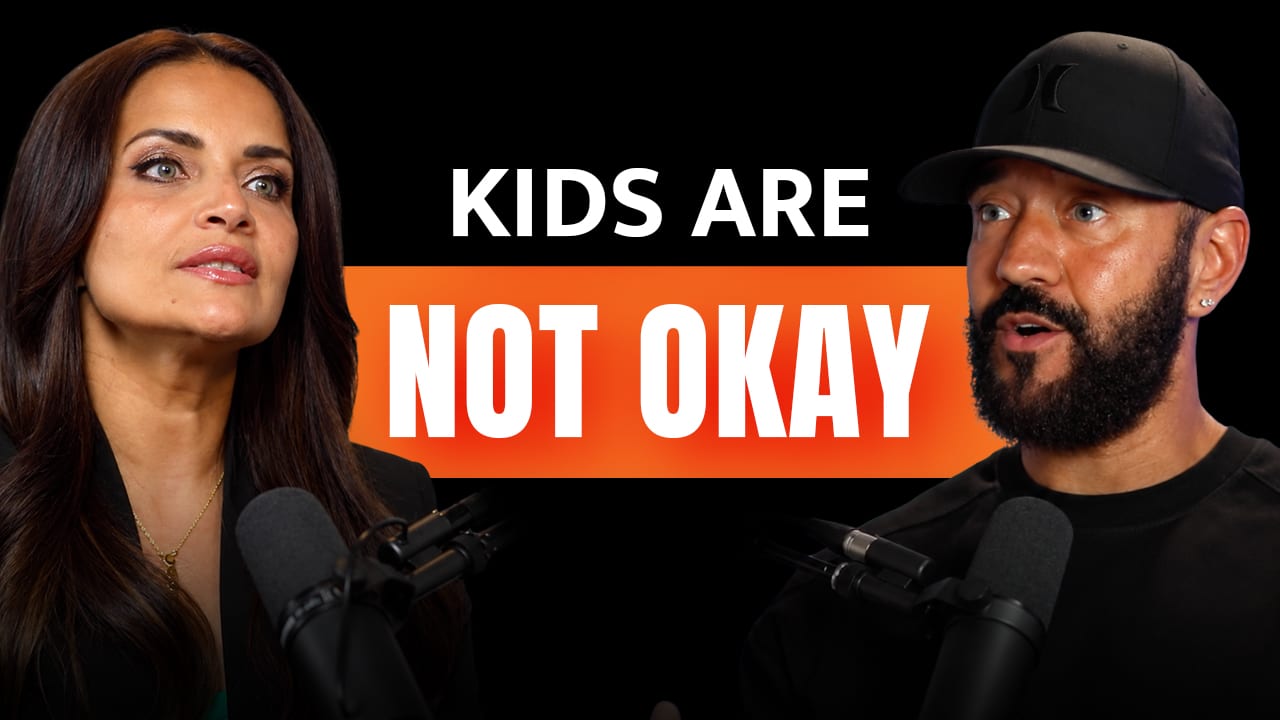
TMHS 1034: The Algorithm Is Rewiring Our Kids – Here’s What Every Parent Needs to Know – with Dr. Shefali
Every generation has to navigate its own unique parenting challenges—but today, the world of social media is making it increasingly difficult for parents to authentically connect with their children. On today’s show, you’re going to learn about the challenges that boys and girls are facing in today’s digital world, and what parents can do to intentionally cultivate healthy relationships and healthy children.
Today’s guest, Dr. Shefali is a clinical psychologist, New York Times bestselling author, and the founder of the Conscious Parenting Movement. Her new books, Raising Conscious Sons and Raising Conscious Daughters, are a parent’s comprehensive guide to helping children develop confidence, purpose, and inner power in our modern world. Dr. Shefali unpacks the unique challenges our children face today, and how we as parents can help them stay grounded and emotionally healthy.
In this interview, Dr. Shefali is diving into some of the specific differences between boys and girls and how to help them navigate today’s algorithm-driven environment. We’re discussing topics like social media, body image issues, anxiety, anger, and more. We all want our children to be whole, authentic, and healthy – and Dr. Shefali is sharing the tools you need to connect, parent, and help your children thrive. I hope you enjoy this interview with the one and only, Dr. Shefali.
In this episode you’ll discover:
- Why Dr. Shefali decided to write two new parenting books. (6:59)
- How parents can stop outsourcing their attachment. (8:38)
- The repercussions of taking boredom out of childhood. (13:31)
- How AI can harm children and teenagers. (19:57)
- Why boys and girls learn differently. (23:47)
- The importance of channeling masculinity (not shaming and suppressing it). (24:57)
- What boys need to be taught about anger. (36:53)
- How to guide girls who are growing up with immense pressure. (42:52)
- Why masculinity needs to be given a purpose. (50:12)
- The value of unstructured free play. (52:15)
Items mentioned in this episode include:
- Wildpastures.com/model – High-quality, responsibly sourced meat—delivered right to your door. Wild Pastures makes it easy to eat clean without overpaying. Get 20% off every box + $15 off your first order.
- Organifi.com/Model – Organifi makes nutrition easy and delicious for everyone. Take 20% off your order with the code MODEL.
- Raising Conscious Sons and Daughters by Dr. Shefali – Order your copies today!
This episode of The Model Health Show is brought to you by Wild Pastures and Organifi.
High-quality, responsibly sourced meat—delivered right to your door. Wild Pastures makes it easy to eat clean without overpaying. Get 20% off every box + $15 off your first order at wildpastures.com/model.
Make nutrition effortless—and actually enjoyable. Organifi’s delicious, superfood blends help you boost energy, reduce stress, and feel your best every day. Get 20% off with code MODEL at organifi.com/model.
Transcript:
SHAWN STEVENSON: Welcome to The Model Host Show. You're probably well aware that the world that our children are growing up in today is vastly different from the one that we did. We didn't have social media, so our days were filled with being social in the real world with our friends and families. We might have hung out on the phone, but that bad boy was attached to a building.
All right? Of course, then the cordless phone hit the scene. We could walk around a little bit, but you can't go too far. All right? If somebody wanted to talk to you, you had to be home in order to catch up with you. There was this ex- experience of if you wanna connect with your friend, you gotta go outside, maybe hop on your bike, and go and knock on the door.
"Hey, can Avery come out and play?" Right? Today's world is radically different because our days were spent outdoors, accessibility to screens, especially those that had jarring and sometimes inappropriate media, was extremely limited in our environment. Our environment required us to figure things out for ourselves if we wanted to find solutions.
Today, our kids have the knowledge of the entire world at their fingertips. They have instant accessibility to almost anything they can conceive of, whether that's food, entertainment, education, or even connecting with a potential mate. Because of these rapid changes, the stages of growth and independence are far more nebulous for today's youth.
Our children are more isolated than ever before. They're struggling with more mental health challenges than ever before and struggling with their identity and tapping into their potential more than ever before A whole new world requires a whole new approach to parenting, and that's why I'm so excited and feeling so blessed today to share this incredible interview with Dr.
Shefali. Her new research and her new books have absolutely changed me as a parent, changed my outlook on life, and also have already changed the way that I'm interacting in my relationships as a husband, as a father, and it's been incredibly valuable. And I don't say this lightly, but some of the things that you're going to learn today are not just going to affect this current generation, but this can affect generations well into the future.
We are writing that future right now with how we are raising our kids. And again, in this whole new world, we've gotta have a whole new approach to parenting. So again, I'm very grateful to be able to share this episode with you today. Now, really quickly, as parents, one of our responsibilities It's feeding these kids.
And my wife has had a level of pissosity a time or two in regards to this. She's just like, "I just made all these meals yesterday and I gotta do it again today. Just gotta keep feeding. They just keep eating. I keep cooking, they keep eating. I keep making these meals and they just keep eating it all." And it's this seemingly never-ending loop, but I'm gonna tell you this.
We will look back and miss those times. You know, it can be a lot of work being a parent on the food front, not, let alone everything else, but those times are some of the most special times and we're really setting the template, we're setting the bar for our kids' food choices and eating behaviors as they get older.
And so it's an incredible opportunity and there's always room for us to improve, but also this comes with some cost. Not just the time investment, but the monetary investment, especially if we're wanting to feed our kids healthy food. And I'm so grateful that many companies are really stepping up to provide the very best quality food with strategic discounts as well and giving accessibility nationwide.
One of those great resources is Wild Pastures. They deliver 100% grass-fed and grass-finished beef, pasture-raised pork, pasture-raised chicken, and wild-caught seafood right to your door. All raised on regenerative family farms, raised on pastures free from pesticides and other chemicals, no antibiotics, no added hormones, no steroids, no feedlots, no GMOs.
Fast delivery from their farms right to your door. And right now, with a Wild Pastures subscription, you're gonna receive 20% off for life. 20% off for life, plus free shipping, plus $15 off your first order. Just go to wildpastures.com/model to take advantage. That's W-I-L-D-P-A-S-T-U-R-E-S.com/model
This is absolutely incredible. Save some money. Eating healthy does not have to break the bank. Go to wildpastures.com/model to take advantage right now. And without further ado, let's get to our special guest and topic of the day. Dr. Shefali is a clinical psychologist, New York Times bestselling author, and the founder of the Conscious Parenting Movement, redefining how families understand selfhood, connection, and the inner life of our children.
Trained at Columbia University, she spent decades guiding families to move beyond patterns of control and fear towards presence and authenticity. Her work brings Western psychology and Eastern wisdom into lived practice, creating a path for our children and the adults who raise them to know themselves fully.
Let's dive into this conversation with the amazing Dr. Shefali. This is a very, very special occasion. Aw. We have Dr. Shefali here. How are you today?
DR. SHEFALI: Thank you for having me. I love spending time with you, Shawn. Yes. So thank you.
SHAWN STEVENSON: I'm already transformed in my thinking- Really? ... and I've already been applying things from your new books.
Really? And it's so important. It's so timely, as you know, and I wanna start by asking you what inspired you to create these two new books-
DR. SHEFALI: Yes ...
SHAWN STEVENSON: Raising Conscious Daughters and Raising Conscious Sons.
DR. SHEFALI: Yeah, and, and it's so great because you have sons and daugh- a daughter. Yeah. So I'm sure you found some resonance in the pages.
So the reason I wrote these two books is because I was really worried, Shawn, and nauseatingly so, and I wanted to do something about it. Yeah. And I called my publishers and I said, "Listen, we have a problem in our world today, and it's an adult male problem. You know, there's a wounded male psychology going on, and instead of just being angry and just protesting and just talking about how men can be assholes, we need to do something else.
We need to lean in and ask, well, what's happening in their childhood that's leading these boys to become men who are disconnected or pedophiles or, you know, who then become violent and harm our women and our children?" And I told them that I wanna write a book called Raising Conscious Sons, and, and then of course, I wanna write a book for daughters as well, and they were, you know, very reluctant to publish two books at the same time because it's like it's not the thing to do.
One book will eat the other book. But they finally saw the importance of having a conversation both for our girls and our boys. And the reason I, I separated the sexes is because each one of them, boys and girls, have a unique hormonal neurochemical blueprint- Yes ... that the world responds to differently, the algorithm responds to differently, and so we as parents need to be attuned to what, what does my son need more of because of his testosterone, because of his neurobiology, that my daughter may not need, and vice versa.
So that's why I wrote two books, and I'm so excited. And, and let me tell you that my worry is that in this increasingly anxious and chaotic world, where we have so much stimulation now, digital overload, parents are distracted. We are outsourcing our attention, and we're outsourcing our attachment. Yes. And children are lost and confused, and we parents need to rein our power back and stop giving away this connection we can have with our children.
And these books are a wake-up call for parents, but they're also a blueprint for the way forward to raise our children consciously in the digital era.
SHAWN STEVENSON: It's one of the things you really put front and center for me was just like we are in the age now- Yes ... of artificial parenting. Yes. Like, it's here and it's happening right now.
Yes. And what are the ramifications of that? Because it's not just about what's going on with our children, it's what's going on with us.
DR. SHEFALI: Yes.
SHAWN STEVENSON: And for you to specifically state the facts, which are- Yeah ... there are differences with our boys and our girls- Yeah ... and that's okay. There's different hormonal cascades going on.There's different temperaments that we've seen for thousands of years. And now they're kind of thrust into this increasingly crazy new environment.
DR. SHEFALI: Yes.
SHAWN STEVENSON: It's not an accident, some of the things that we're seeing with not just the, the behavior, but the fulfillment and the mental health and- Yes
the list goes on and on and on, and all of it's connected.
DR. SHEFALI: Yeah, and, and how the algorithm knows how to feed the boy in a way that'll hook his testosterone and hook his dopamine receptors, and how to hook the girl. You know, there was a study, I think by Meta, in fact, I, I may be wrong, but where they were actually tracking how girls were erasing their selfies.
And when they noticed that, then they would feed the girls more things to do with beauty and with fashion, because they could tell that the girl was feeling insecure, right? Mm. So the algorithm is tracking our children's insecurities and, and their habits and their neurobiology, and they're sending our boys, for example, porn and stuff from the red pill communities, from the manosphere, and seeing if he will respond.
And you know, they're tracking our eyeballs all the time. Yeah. So they are abducting our children's attention and, and as you now know, children are turning to AI chatbots for therapy and for emotional safety. Well, soon they will stop coming to the parent. And if parents lose that connection, then children will grow up without that foundational imprinting that only a parent can provi- can adequately provide, you know?
SHAWN STEVENSON: Yes. This is directly from your, from your book. From, this was from Raising Conscious Sons, which I tore through immediately. Yeah, yeah. I read it so quickly, so good. Um, this quote, you said that, "What was a fight for our children's attention has now become a fight for their attachment."
DR. SHEFALI: Yes.
SHAWN STEVENSON: And that really speaks to this phenomenon when it comes to we're talking about genius level engineers and strategists and marketing experts
DR. SHEFALI: Right ...
SHAWN STEVENSON: controlling our attention, let alone our s- ourselves as adults.
DR. SHEFALI: Yes.
SHAWN STEVENSON: But our children, who have no awareness or capacity to know anything other than this stuff- Right ... like they're growing up in it.
DR. SHEFALI: They think this is the world. They think this is reality, and you know, each person in the house can have a very different take on reality now, because there's not one news station, right? So my sister can have a whole different understanding of what's happening in Los Angeles th- than my brother, right?
And it's completely different, so we are losing our shared language. We are seeing these filtered, curated images. We're thinking, "Oh, I need to look like that." The girls are thinking, "Wow, that's a beautiful girl, and why don't I look like that?" She doesn't realize that that's AI generated, that's not even a real person.
But these unrealistic, unremitting standards of success and beauty, and the perfect life, and the perfect house, and the perfect child, and the per- is really warping our understanding of what it means to be a messy, ordinary, imperfect human. And our tolerance for it is going way down. We're becoming more fragile, right?
We can't handle rejection. We can't wait for a bus or an Uber. We can't wait for our food. We're so getting psyched into this constant dopamine fixation and these dopamine loops that we are losing our capacity to connect to each other. And look, adults are feeling it, but imagine what our children feel, right?
Like you said, they have no capacity to know the difference. Their brains are not ready to modulate and regulate, and it's this constant influx. Children need simplicity. Children need quietude. Children need the capacity to dream and to think and to be creative and to play and to be bored. We're taking boredom out of childhood, you know?
And when you take boredom out ... You know, boredom and childhood is, like, the same thing. You know, when your kids were young, you remember them, them coming to you and going, "I'm bored, I'm bored." And we would say, "Good, go be bored." Because being bored is inherently a fabric of childhood, and you know, when you're bored enough, your brain's default mode network turns on, and that's when you become creative.
That's when you come up with new ideas. So imagine a childhood without play, without unstructured freedom outside, without community, right? Children are playing less outside than ever before. That means they're not connected. They're not taking risks. They're sitting at home. They're not physical, and now they're not bored.
So they're not creative. They're not f- feeling the risk of their physical capacity. And ima- imagine boys sitting, sitting, sitting, sitting. What that must do to his testosterone
SHAWN STEVENSON: Can you imagine, well, I know that you can, but just a world where we have to remember the sentiment and this kind of framing of there's no reward without the risk.
DR. SHEFALI: Mm-hmm.
SHAWN STEVENSON: Right? Mm-hmm. And now we have this world that's been constructed around our children where they get these rewards, these artificial rewards constantly just by scrolling their phone or scrolling what's on- YouTube or the television or conversations with artificial intelligence. And not to take away any of the value that those things might hold-
DR. SHEFALI: Yes ...
SHAWN STEVENSON: but we're not actually embracing the fact that there's no, reward without the risk in our lives. Yes. Like, this is how we grow, this is how we develop.
DR. SHEFALI: Right.
SHAWN STEVENSON: Develop. And one of the things that was also brought front and center in my mind reading your book was just my childhood-
DR. SHEFALI: Yeah
SHAWN STEVENSON: as well, and just how many risks I was taking.
DR. SHEFALI: Yeah, talk about that a little bit because I think it's really important for people to know how we grew up, you know? Yeah. So talk about that a little bit.
SHAWN STEVENSON: Yeah. Thank you. You know, just growing up in a neighborhood in the inner city, you know, I remember for example, a story that's jumped into mind, my friend Avery, who lived like a block away, we would climb up the electric pole-
DR. SHEFALI: Yeah
SHAWN STEVENSON: right? They had those little handles. We'd get to those, and then climb up onto his garage and just be up there. Maybe we'd throw rocks. Yeah. Maybe we would, you know, just yell at people down there, talk stuff, and just hang out up here. Which was, again, just kind of... It could be like boys being boys.
But it just felt free and it felt adventurous. Mm-hmm. It felt fun. It was a little bit of danger involved. Yes, yes. Like being up, but I didn't think about it like that.
DR. SHEFALI: Right.
SHAWN STEVENSON: Also, I would jump off of everything.
DR. SHEFALI: Yeah.
SHAWN STEVENSON: Everything that I could.
DR. SHEFALI: Right.
SHAWN STEVENSON: And just learning the capacity that my body has.
DR. SHEFALI: Yes.
SHAWN STEVENSON: You know?
DR. SHEFALI: Yes, you took risks and you understood your body's limits. Yeah. And you expanded your body's limits. Yes. But only through the true test of embodied experience, right? It wasn't thought about. You weren't sitting there thinking, and your robot or your avatar wasn't jumping off roofs. You were jumping off roofs.
SHAWN STEVENSON: Yeah.
DR. SHEFALI: And now looking back, what do you think that did for you?
SHAWN STEVENSON: It created a sense of agency.
DR. SHEFALI: Mm-hmm.
SHAWN STEVENSON: You know? Like, I can survive something. Yeah. You know? Like, I can do things- Yeah ... on my own.
DR. SHEFALI: Yes.
SHAWN STEVENSON: And I'm just imagining, again, these kids. Like, the neighborhood that I live in right now, I've been in for seven years, we live in a cul-de-sac.
DR. SHEFALI: Yeah.
SHAWN STEVENSON: And I'm friends with all the, you know, the neighbors who've been there for, like, 30, 40, 50 years. My neighbor Stan has been there for 53 years- Mm-hmm ... which is crazy. Mm-hmm. He just used to tell me, uh, these stories about, like, this cul-de-sac used to be just filled with kids playing all the time. The kids live in the cul-de-sac still.
DR. SHEFALI: Yes,
SHAWN STEVENSON: And they're living- They're just not outside playing.
DR. SHEFALI: What, what, where are they, right? They're o- behind their consoles pretending like they are doing things. Yeah. Right? Their avatars are doing things, but they're just sitting, so they're not learning the embodiment of real-life experience.
They're not learning through the embodiment of real-life experiences. They're not taking risks. They're not testing themselves. They're not challenging themselves. And for boys especially, you remember, y- I mean, you still have, but back then you had even more testosterone, right? Testosterone is the hormone to, to, the, to, that fuels drive and pursuit and adventure and risk and challenge and conquest.
And when boys don't channel their testosterone, they suppress it, and then it mutates, and it shows up in very unhealthy ways.
SHAWN STEVENSON: I cannot wait to dig into this more. This is so important. Something else that came up was, and again, you pointed this out, and my awareness just expanded on this subject, which was organic play organic relationships.
DR. SHEFALI: Yeah.
SHAWN STEVENSON: Because the things that our kids are doing outside of our house are things that are usually curated by us. We're taking them to these appointments to this thing, to this practice. Yes. And those things are all fine and dandy but just our kids' play dates that we're scheduling
DR. SHEFALI: Mm-hmm ...
SHAWN STEVENSON: Right , versus our kids creating these organic relationship which was just in, it's a nature of being around other humans and being outside of your doors.
DR. SHEFALI: Yes.
SHAWN STEVENSON: And also the access to a tribe an extended family-
DR. SHEFALI: Yes ...
SHAWN STEVENSON: being fractured, really. You know, so many one of the things that I'm thinking more about recently is how this phenomenon of You know, our kids go off to college.
DR. SHEFALI: Mm-hmm.
SHAWN STEVENSON: Right? So we have this environment that they're in- Mm-hmm ... and then suddenly, you know, maybe they grew up in LA- Mm-hmm ... and now they're going to New York by themselves.
DR. SHEFALI: Yeah.
SHAWN STEVENSON: Right? And they're trying to create roots there, and that's again, that's another human capacity. Right. But is that... Look at the s- success rate. What about the results?
DR. SHEFALI: Right.
SHAWN STEVENSON: Are they ending up more successful, more fulfilled, more healthy more mentally healthy?
DR. SHEFALI: Right.
SHAWN STEVENSON: You know? Or is there something that we need to be more aware of?
And not to say that our kids don't go off on adventure. We've always had that-
DR. SHEFALI: Mm-hmm ...
SHAWN STEVENSON: in, in the human experience. Mm-hmm. But maybe we're more intentional about a tribe being present.
DR. SHEFALI: Yes.
SHAWN STEVENSON: You know?
DR. SHEFALI: Yeah. If you go to college campuses now, you will see most people on their phones. They're not gathering by the fire or by the park or by the basketball hoop.
They are mostly disconnected in individual silos on their phone, and children need to discover who it is through the messiness of the friction of rejection and failure and r- relationships that are cho- choppy, and you have to kind of negotiate it. And when they turn to AI for friendship or for therapy, sure, AI is an echo chamber.
It repeats it. Uh, it reflects. It mirrors exactly what you need to hear. AI is always available. AI may not judge you the way your mom will judge you. Your mom will be like, "Get out of here," right? But th- that kind of human-to-human checking- Yeah ... which makes you uncomfortable, which makes you squirm, which makes you pissed off, and you have to regulate your emotions, that is how you grow.
SHAWN STEVENSON: Yes.
DR. SHEFALI: AI is not gonna piss you off. AI is not gonna be imperfect and choppy. AI is going to be there for you on demand, but that is unhealthy. Which human being is there for us on demand? So then if a boy is talking to his AI therapist, who's always up his ass, then AI, uh, he has porn where he's thinking, "Wow, women are there for my pleasure.
There is no friction. You know, bend them any which way," any fantasy he can scroll to. He begins to develop a very warped understanding of human relationships. Then when he goes to get, you know, a girlfriend or have sex for the first time and she squirms or says, "No, not now," or, "I'm too tired," he's going to think there's something wrong with her.
He doesn't understand he has a warped sense of what relationships are all about.
SHAWN STEVENSON: Hmm. One of the things that you shared which is so powerful is that the surest way to keep our daughters safe is to raise boys who are whole.
DR. SHEFALI: Yeah.
SHAWN STEVENSON: And I wanna go back to boyhood.
DR. SHEFALI: Mm-hmm.
SHAWN STEVENSON: Because what I loved most, because I didn't know what to expect.
I said I shared this with you. Yeah. But I kinda did- Yeah ... because you really are about that life for real. Yeah. And but what, what really helped me, and I celebrated, was the fact that you weren't warring against- testosterone-
DR. SHEFALI: No ...
SHAWN STEVENSON: and boyhood and aggression. Uh-huh. And also at the other, other end of the spectrum, we know the dangers when things are not channeled correctly, or we don't have some of the things that we're gonna talk about.
And so I've seen this firsthand working as a practitioner- Mm-hmm ... uh, doing this work. I've been in this field for 23 years. Mm-hmm, mm-hmm. But how many kids get lost in the shuffle-
DR. SHEFALI: Yeah ...
SHAWN STEVENSON: Who are just full of energy, right? Yes. They're just full of energy and vitality.
DR. SHEFALI: Yes.
SHAWN STEVENSON: But they're led to believe in a, a well-meaning parent- Yes
that there's something wrong with their child- That there's, yes ... because they have a hard time sitting still in class, in kindergarten-
DR. SHEFALI: Right ...
SHAWN STEVENSON: or first grade. Right. Now you gotta sit down, and one child that I'm thinking about, I remember having a conversation with him.
DR. SHEFALI: Mm-hmm.
SHAWN STEVENSON: And we were talking about something.
DR. SHEFALI: Mm-hmm.
SHAWN STEVENSON: And he was like moving around.
DR. SHEFALI: Right.
SHAWN STEVENSON: Right? He went behind my couch- Behind, right ... and then he kind of was sitting on the couch, and then I'm just like, "This kid is not listening."
DR. SHEFALI: Mm-hmm.
SHAWN STEVENSON: And is very different- different from the temperament of my youngest son- Mm ... who he's friends with.
DR. SHEFALI: Mm.
SHAWN STEVENSON: Cut to the next day, he basically verbatim recited back to me what we were talking about.
Wow. I'm like, "Whoa." I, I mean, I, I felt like in that moment like, "You're a genius."
DR. SHEFALI: Right.
SHAWN STEVENSON: And his genius was also integrated- Mm ... as he was moving around.
DR. SHEFALI: Yeah.
SHAWN STEVENSON: You know? But unfortunately his parents, again, just- Yeah ... the situation wanted him to be good in school. Mm-hmm. And, they had him on various medications.
Mm-hmm. And he would share with them, which he eventually, the- Mm-hmm ... thankfully, you know, the mother shared with me that whenever he would have the medication, he would say, "I don't feel like myself anymore." Yeah. Yeah.
DR. SHEFALI: You're absolutely right. I always say that there's a war on boys right from when they're in elementary school.
Boys are not supposed to, I'm just talking in the main, uh, uh, stereotypes, sit still and learn from them- from the, you know, from the head down. Boys learn from a bottom-up approach, from their body. That boy was learning through his movement. He needed to move because his testosterone was like, "Go, go, go." And when you shun his wiring and you make him feel bad for his wiring, for who he is in his neurochemistry, he goes, "Well, what do you want me to do?"
So boys are being shamed, medicated, diagnosed as problems, suppressed, and almost, you know, um, ostracized for who it is they are, and told to be more like girls. But they cannot be more like girls when they are more like boys, and there's nothing wrong with being like a boy, right? And we've thrown the baby out with the bathwater just because a few men can be violent and, quote-unquote, bad.
We've kind of made all men feel bad about themselves, and we've thrown out masculinity, like masculinity is bad. Masculinity is a beautiful force. It is a powerful force. It is protective. It is nurturing. It is, it is integrated. It can be the guiding leadership that we need. Of course it needs to be conscious.
But it in and of itself is not bad. It is only bad when it is suppressed- shamed, and then it mutates out as violence towards women and children and other men, right? Yeah. But in itself, it's a guiding force that needs to be channeled in a beautiful way. So little boys are being suppressed and told they're bad, but then teenage boys are being told they're bad because now they are burgeoning into their sexuality, and like you talked about, there is no brotherhood to initiate them into a conscious sexuality.
So they feel like, "What is wrong with me? I'm having erections all the time. I'm having desires. I wa- look at my mother's friend and I'm having desires. W- is there something wrong with me?" And no one is explaining to him that this is his wiring, and he needs to integrate that sexuality, be accountable for that sexuality, restrain the sexuality, but you can only do that when you are celebrating that this is not a bad part of you. Yeah. This is a part that is needing integration.
SHAWN STEVENSON: Yeah, and this is, again, normal. Normal. This is happening to-
DR. SHEFALI: Natural ...
SHAWN STEVENSON: all of these, uh, young men.
DR. SHEFALI: Yes.
SHAWN STEVENSON: And again, unfortunately, and, and I wanna ask you, like, why? Why do we treat it the way that we have? You know, I know that there's some indoct- indoctrination just from, like, a, maybe, um, a, uh-
DR. SHEFALI: Religious
SHAWN STEVENSON: religious perspective.
DR. SHEFALI: Cultural
SHAWN STEVENSON: Cultural. Cultural.
DR. SHEFALI: Sexuality
SHAWN STEVENSON: is a big taboo. It's basically like this i- all of this stuff is bad.
DR. SHEFALI: Bad.
SHAWN STEVENSON: You're having, you know, evil thoughts.
DR. SHEFALI: Yes.
SHAWN STEVENSON: What you-
DR. SHEFALI: And you're a sinner.
SHAWN STEVENSON: You're a sinner.
DR. SHEFALI: And purify yourself When actually it's just normal male sexuality. And when normal male sexuality is shunned, suppressed, uninitiated, and sent into the gutters of the male psyche, it doesn't die.
It mutates-
SHAWN STEVENSON: Hmm ...
DR. SHEFALI: and comes out in a perverted way. So if we really care about our women and children, we must teach males, especially adolescent males, how to harness that powerful sexuality and channel it in a healthy way. But if we're not even talking about it-
SHAWN STEVENSON: Yeah ...
DR. SHEFALI: If we're not even... Right? Women don't know how to talk about it.
They're not sexual. They don't have a penis. They don't understand male erections. They don't understand desire and testosterone, and in fact, they've been victims of male desire and testosterone, so they're like, "Get that away from me. I don't like it. Put it back in the box." So where are the fathers? Right?
Fathers need to integrate their sons and initiate. Fathers, brothers, uncles, cousins. A band of elderly males need to help that boy to understand accountability, consent, restraint, and integration.
SHAWN STEVENSON: And the, this is underlined the word, and it's bolded even on the cover is conscious.
DR. SHEFALI: Yes.
SHAWN STEVENSON: Conscious, because you can get those messages from elders that are distorted as well.
DR. SHEFALI: Absolutely.
SHAWN STEVENSON: Right? And so really being conscious about this and the messages and the community that you're intentionally having around your son
DR. SHEFALI: Yes ...
SHAWN STEVENSON: and understanding how important it is. So even Making sure that this conversation is being had-
DR. SHEFALI: Yes ...
SHAWN STEVENSON: about sexuality- Yes ... about this development, and again, that there's nothing wrong or unusual or
um, you know, um, something for you to fear-
DR. SHEFALI: Yes,
SHAWN STEVENSON: Can be developed as well. Yeah, I- And not more, just more things to suppress.
DR. SHEFALI: Yeah, I, um, a father came to me recently and said, "No one talked to me. I don't know what to say. What can I say?" So I literally had to teach him. I said, "You can say something like this.
You know, 'Son, you're about to be 12, 13. You are going to wake up with this raging fire inside you called desire. Your brain is going to be telling you to procreate, to, like, spread your seeds. This is part of your evolutionary heritage as a male, and you're going to have to manage those thoughts and those impulses.
But society will tell you that you're a bad person, or you're dirty, or you're evil, or the church will tell you, or the s- religious scripture will tell you to, to hide from it. But the more you hide from it, the more it'll chase you. So I'm here to tell you that it happened to me. It still happens to me, and I want us to be able to talk about it.
So one night you're gonna wake up, and you're going to have a male erection.'" A- and so this is how... We just break it down. And, just giving it language, name, voice will help your son to be able to integrate it and hold space for it without shame, without feeling bad, and without running away from it.
SHAWN STEVENSON: So how do we actually do this?
DR. SHEFALI: Yeah.
SHAWN STEVENSON: You know? Because again, I, and I, I have a similar story to that, to that man. Nobody talked to me.
DR. SHEFALI: Nobody talked to
SHAWN STEVENSON: You know, I had a little half awkward cl- like, two sessions of, like, a phys- phys ed class- Yeah ... where we talked about sex. Yeah. Then all the kids are just like, "Man, this is mad weird."
Like, you know? Yeah. Just laughing, giggling, whatever. Yeah. And that was the extent of, like, a formal education. Yeah.
DR. SHEFALI: Right.
SHAWN STEVENSON: And the only other person to talk to me about it was my grandmother- Oh, goodness ... randomly- Yeah ... when I'm already sexually active.
DR. SHEFALI: Yes,
SHAWN STEVENSON: All right? And she's like- It was already too late. She gives me some condoms, like.
DR. SHEFALI: Yeah.
SHAWN STEVENSON: I'm like, "Grandma, what the... What is this?"
DR. SHEFALI: Yeah.
SHAWN STEVENSON: You know? And so I didn't have any male, um-
DR. SHEFALI: Guidance ...
SHAWN STEVENSON: models or guidance- Yeah, yeah ... or mentorship except for voices that were demonstrating or encouraging me for, you know, conquests like
DR. SHEFALI: locker room talk
SHAWN STEVENSON: The more you know, women that you and also, you know, me being a guy who's attracting women- Mm-hmm ... they were kind of even using me.
DR. SHEFALI: Yeah.
SHAWN STEVENSON: You know? Like, one of my earliest memories is, like, you know, one of my uncles, like, taking me around places because- Oh ... girls would come up to him and be like- Right ... you know, "Oh, my God, he's so cute."
DR. SHEFALI: Right.
SHAWN STEVENSON: And he would try to, like, leverage me- Oh, goodness ... as, like... You know what I mean? Yeah. And so I just, that was what my environment was teaching me.
DR. SHEFALI: Correct, but nobody taught you that this is a force that you are privileged to possess, and you need to honor it and hold it responsibly, right? You didn't know, so it's all over the place.
You're like, "Oh, this is fun," but you're not really able to be in charge of it in a conscious way unless you're guided to do that, you know? And when we used to live in tribes, uh, and not to idealize it 'cause I wasn't there, but I imagine that the elders tested boys and made them go through these series of rites of passages where their sexuality, their physicality was tested before they were called a man, you know?
Yeah. They needed to prove themselves, that they could contain themselves, that they could manage themselves, that they could discipline themselves before they were indoctrinated as a man.
SHAWN STEVENSON: This episode is brought to you by the incredible team at Organifi and their phenomenal superfood blends. Not only does their best-selling Green Juice blend have the most powerful green superfoods, it also has a therapeutic amount of ashwagandha.
A double-blind, randomized, placebo-controlled trial published in the Journal of Psychological Medicine had test subjects with a history of chronic stress to consume ashwagandha or a placebo. Over the course of the month-and-a-half-long study period, the group that received ashwagandha exhibited a significant reduction in scores on all the stress assessment scales compared to the placebo group.
And the serum cholesterol levels of the test subjects were substantially reduced in the ashwagandha group. Again, this is just one of the ingredients in the Organifi Green Juice blend. Some of the green superfoods include spirulina, chlorella, moringa, and never sleep on spirulina. A recent study published in PLOS ONE revealed that spirulina has the potential to, one, improve neurogenesis in the brain, and two, reduce neural inflammation.
And right now, you're going to get 20% off of their incredible Green Juice blend when you go to organifi.com/model. That's O-R-G-A-N-I-F-I.com/model for 20% off. Plus, you'll also receive their 60-day money-back guarantee, so you have nothing to lose and better health to gain. Head over to organifi.com/model. Check out their variety of superfood blends, their Green Juice blend, their Red Juice blend, their phenomenal collagen that we use all the time.
Again, 20% off at organifi.com/model. And now, back to the show. Yeah, I, I, I didn't value it. I didn't value that fire.
DR. SHEFALI: Yeah.
SHAWN STEVENSON: And again, by not valuing it, I would give it- Yeah ... give it away freely. Yeah. You know? And so that's another thing that helped me reading your book. It was also for myself, too. Oh,
DR. SHEFALI: Yeah.
SHAWN STEVENSON: And to Again, and, and just think about the results of that as well.
If I'm not valuing it- Yeah ... I'm not probably valuing that exchange as well.
DR. SHEFALI: Yeah.
SHAWN STEVENSON: And how much energy and power that it actually holds. It
DR. SHEFALI: actually holds, and, and how scary it can be when it's not held with accountability.
SHAWN STEVENSON: Right.
DR. SHEFALI: You know? And if we look at all the pedophiles in the world today, mostly men, if we look at violence, domestic violence, and abuse against women and children, mostly men, you know, most girls have been molested or sexually violated by someone in their house, someone in their family, right?
The most dangerous person to the girl will be a stepparent, a male stepparent. So we have to protect our girls and children by helping men manage their aggression and sexuality, right? And we have to have conversations and bring it out of the closet and be bold about it and not allow men to think that they can walk around with this power, and they're entitled to every desire being met, right?
We men have to check other men and tell them, "Just because you have desire doesn't mean y- the woman has to allow you." You know, when we used to live in the natural world, females held a lot of power. You know, we were the choosers. We got to choose which males we reproduced with, and we knew we held the power.
Like the peahen, who is very plain-looking, the peahen, she chooses from the peacocks, right? The males have to dance and win her favor.
SHAWN STEVENSON: Hmm.
DR. SHEFALI: But now we live in this world where females have lost their choice. Now they are being chosen, so we're competing with each other. We're going to go get our Botox. We're going to go get skinny or, or be in shape, and the men are, like, doing whatever they want.
Like, things have changed, and that is what leads to so much violence against us women.
SHAWN STEVENSON: If you marry that fire with anger-
DR. SHEFALI: Yeah ...
SHAWN STEVENSON: and the repression of both-
DR. SHEFALI: Yes ...
SHAWN STEVENSON: Again, we see more of this distortion. Yes. And this is, I wanna talk about anger. Wait, because it can manifest, it's not just anger. This could be married with, uh, inadequacy.
Mm-hmm. This could be married with depression or sadness. Absolutely. And it can manifest a different way, but specifically anger. Yeah. This is another one of those things that as boys- Mm-hmm ... as young men, we are kind of indoctrinated or programmed- Mm-hmm ... to suppress it.
DR. SHEFALI: Mm-hmm.
SHAWN STEVENSON: T- don't express anger, don't be mad.
Right. That's scary. That's violent.
DR. SHEFALI: Right.
SHAWN STEVENSON: Right? Right. When it, again, just the, the emotion itself-
DR. SHEFALI: Yeah ...
SHAWN STEVENSON: being the problem.
DR. SHEFALI: Yeah.
SHAWN STEVENSON: But it's not, again, anger isn't the problem. Anger isn't. It's the, how, how it's harnessed and how it's expressed.
DR. SHEFALI: And h- to the degree to which it is dominating over other people.
Like, does your anger impede on other people? But anger is a fire which needs to be harnessed and chan- channeled, like you said. And anger is part of the testosterone blueprint. Anger, when initiated and when integrated, protects you, right? If an intruder comes into the house and you're not angry about it- Your boundaries are gonna get violated.
Ang- anger is an expression that comes about when your boundaries are about to get violated, so it's protective. Yeah. It just needs to be expressed and manifested in a way that doesn't take away the rights of others, right?
SHAWN STEVENSON: Yeah. Thank you for saying that. Yeah. Yeah. I mean, I, I could think of examples of anger being protective for, you know, entire communities-
DR. SHEFALI: Yes
SHAWN STEVENSON: You know? Yeah. Entire, um, you know, countries even. Yeah.
DR. SHEFALI: You know, just- You know, I've had so many men come to me sometimes, my male friends who in the past when I was in my early 20s or in my teens, I would tell them about a boyfriend or about a fling or about... And they would get angry with that man I was talking about.
And I'd be like, "Why are you angry?" They're like, "Do you know that that's not appropriate?" But I was such a good girl, I didn't even know. So it took another man to tell me, "That's inappropriate," right? And that's what men can do for each other. Y'all can check each other. Yeah. And men respect that from other men more than they do from stereotypically a woman, you know?
SHAWN STEVENSON: Let's talk more about that, the modeling, the tribe.
DR. SHEFALI: Yeah.
SHAWN STEVENSON: You know, a- again, there are many different versions of what a family can look like- Mm ... today. Mm-hmm. You know, maybe a father isn't present.
DR. SHEFALI: Right.
SHAWN STEVENSON: But, like, can you talk more about the importance of having those mentors and- Yeah ... and, um, the guidance for our, our s- Yes
our young men?
DR. SHEFALI: So I tell mothers that after a certain point you need to really back off, in general, with girls and with boys. All of us need to back off when our kids are entering their authority and sovereignty as teenagers. But definitely mothers with sons. After a certain point, 12, 11, 12, you need to allow your boy to be i- initiated into a circle of other elderly men.
Go to the YMCA, go to the Boys & Girls Club, find some uncle. You cannot initiate your boy into his sexuality and into his manhood. You are not his sex. You don't understand the male experience, and that's okay. You can do it for your daughter. And this sounds like gender stereotyping. I don't, I don't mean to be reductive.
I mean to be a pragmatist, that asking a woman to imagine what a teenage boy is going through, it's, it's just lunacy, you know? You can do it for your teenage daughter, but let your teenage boy be released into a circle of conscious men who can teach him what conscious masculinity looks like
SHAWN STEVENSON: One of the things that you shared, a, a great little insight and tip and thing that I accidentally did-
DR. SHEFALI: Yeah
SHAWN STEVENSON: but I wish I would have done more-
DR. SHEFALI: Yeah ...
SHAWN STEVENSON: is when your son is maturing- Yeah ... to l- let him lead.
DR. SHEFALI: Yeah. How did you know to do that?
SHAWN STEVENSON: To be honest, just going on these hikes here in LA. Wow. And my tendency is to lead. Yes. Is just to, like, get out- Yes, just get, yeah ... in front of everybody. Let's get the pace going.
DR. SHEFALI: Yeah.
SHAWN STEVENSON: And I'm the dad. I'm the dad as well. But, like, consciously, you know, like, pushing my son in for, in front and, like, let him, let him lead,
DR. SHEFALI: you know? Like, "Son, I'm following you."
SHAWN STEVENSON: Yeah. "
DR. SHEFALI: Son, take the baton."
SHAWN STEVENSON: You, you, you guide the way.
DR. SHEFALI: You guide the way. I trust you. You, you are somebody I believe in. You know, a, a father recently told me that his father told him, "Son, I believe in you."
Just that one sentence set him free. Because when you get that faith, that trust from your trusted father, uncle, oh, my goodness, that means so much because that man is telling you, "I'm entrusting you with care for the tribe. I'm entrusting you with leadership. You can do this. I'm gonna follow you." Wow, what a testament to that man who is yet emerging- Yeah
you know?
SHAWN STEVENSON: It's like an i- it's an initiation.
DR. SHEFALI: It's an initiation, but many fathers are competitive. You didn't have that? You didn't feel competitive with your sons?
SHAWN STEVENSON: Of course. We are s- still super competitive.
DR. SHEFALI: Yeah. Yes. Yeah.
SHAWN STEVENSON: For sure.
DR. SHEFALI: But you were also, in a healthy way, but you didn't let it become unhealthy, where you had to dominate.
SHAWN STEVENSON: Let me say this.
DR. SHEFALI: Yes.
SHAWN STEVENSON: I want them to be better than me.
DR. SHEFALI: See?
SHAWN STEVENSON: Yeah. I'm competing with them-
DR. SHEFALI: So that they can push themselves.
SHAWN STEVENSON: Yes.
DR. SHEFALI: Yes. Yeah. I love that.
SHAWN STEVENSON: Yeah.
DR. SHEFALI: I love that.
SHAWN STEVENSON: Wow. Oh man, I got the chills. Um, one of the things you've already presented is, and it's the catalyst for writing two different books- Yeah ... at the same time, which I would imagine, again, they, they mirror each other- They do
very much as well. Yes. But we are speaking to an entirely different makeup.
DR. SHEFALI: Mm-hmm.
SHAWN STEVENSON: You know, if we just wanna look at it, this from the point of biology. Mm-hmm. But also cultural and- Mm-hmm ... you know, so many different layers when it comes to our, our girls.
DR. SHEFALI: Mm-hmm.
SHAWN STEVENSON: And today more than ever, as you mentioned, this age of artificial parenting.
DR. SHEFALI: Yes.
SHAWN STEVENSON: But just it's artificial everything. Everything. And so can you help us to start to unpack, like how can we manage this when our girls are, have, they, they are literally indoctrinated into these unrealistic expectations- Oh, my gosh ... and they're constantly judging themselves. And I'm thinking about my daughter- Yeah
who, you know, she's not a little girl anymore. Mm-hmm. But just she was young as all of this stuff, smartphones were coming along. Mm-hmm. Right? So she knows what it's like pre and post. Mm-hmm. And I just remember little things, like in high school, you know, and her judging herself.
DR. SHEFALI: Mm-hmm.
SHAWN STEVENSON: And I just thought she was the most beautiful thing-
DR. SHEFALI: Mm-hmm
SHAWN STEVENSON: ever.
DR. SHEFALI: Mm-hmm.
SHAWN STEVENSON: And there were things about herself that she start... And I'm just like, "Where did this come from?"
DR. SHEFALI: Right. Right.
SHAWN STEVENSON: You know? And so- How can we be more conscious- Mm-hmm ... raise conscious daughters, and help to manage all of this newness?
DR. SHEFALI: Oh my goodness. Girls are growing up in a pressure cooker of unrealistic standards for beauty and success and purpose, and they're supposed to, you know, do 10 things by 9:00 and be everywhere and everything to all people.
And girls feel like they are overwhelmed with this pressure, and they're imploding. So anxiety in girls is at an all-time high. Self-harm, anorexia, bulimia, uh, feeling like they are lonely, feeling like they have nowhere to go, the competition. You know, girls have oxytocin more than boys, and that makes them feel bonded to people.
So being in connection and feeling seen by others, I call it the perception prison, is very important. So being seen by others becomes a prison online because you're being constantly evaluated, constantly told who you need to be by strangers, right? And so that girl grows up thinking that she can never be good enough, and she's watching thousands of other people, other girls, and she's constantly comparing herself to them.
And that's why you're asking, "How did she get that?" Like, "Where did she get that from?" Well, from, from the internet, from the algorithm that feeds her this unrelenting competition with other females, and she's constantly pitting herself with them, thinking she needs to be like them or better. Mm. But you can never be like them or better when they are filtered, when they are not even real, when they are electric- you know, electronically manipulated and, and technologically enhanced, and they're almost avatars of themselves.
So the girl grows up dissociated from her own beauty, her own inner worth, her own power, and she's buying products, and she's going to Sephoras, and she's constantly consuming, which is exactly what the algorithm wants her to do. The algorithm wants our boys to be zombies so that they can control the male psyche, and they want our girls to be buckling under pressure so that she will buy more and more product-
SHAWN STEVENSON: Yeah
DR. SHEFALI: and make their wallets fatter. It is all in the design to feed the capitalist machine that our entire world is being led on
SHAWN STEVENSON: You just broke it down.
DR. SHEFALI: Yeah.
SHAWN STEVENSON: And, and the men who are being controlled, they're not gonna fight back.
DR. SHEFALI: Yeah.
SHAWN STEVENSON: You know, and that anger, again-
DR. SHEFALI: Yeah ...
SHAWN STEVENSON: being directed towards something- Mm-hmm
to protect.
DR. SHEFALI: Mm-hmm.
SHAWN STEVENSON: Ah, it just makes so much sense. Mm-hmm. We're in a, we're in a mess right now, and this is why we need this.
DR. SHEFALI: Yeah. I, I, I recognize that we are feeling overwhelmed. I was feeling overwhelmed in my own life, just sitting with anger, and I was just yelling at the algorithm, you know, as if the algorithm is a human.
You know? Oh, uh, waiting for the government to make ch- make laws, change laws. Hmm. What is the government going to do? Even if there are laws, at the end of the day, we at home need to be empowered to make choices. So, uh, that's why I've written these books, because I was terrified, I was anxious, I was worried for our children, but I also needed a blueprint.
I needed to feel empowered that I could make a difference. So every chapter has conscious tools. It has red flags. It has a way forward, what you can do starting right now.
SHAWN STEVENSON: Yeah, yeah. Let's talk about some of these red flags.
DR. SHEFALI: Yes.
SHAWN STEVENSON: Like, what are some of the things that we can keep an eye out for?
DR. SHEFALI: Oh, my goodness.
By the age of seven and eight, your daughter will probably begin to tuck her tummy in and try to have a nose that looks like other people's noses. She will extra look at herself in the mirror. She'll critique herself from her earlobes to her toes, and she'll begin to ask you for fashion. You know, "Can I buy this?
Can I buy makeup? Can I have a nightly m- face routine?" You know? And you-
SHAWN STEVENSON: 13-step
DR. SHEFALI: skincare routine. Yeah, 13- Yeah ... and, and she's trying to tell you already, "Mommy, Daddy, I'm feeling too much pressure. I don't like my body. I wanna change my face." And that means she is succumbing to the cultural messages that who she is as she is is not good enough.
She wants to be skinnier or, or thicker or whatever the latest trend is, and she's going to get on a rollercoaster that will never stop, and she will be at war against herself. So what do you need to do at home? You need to watch for the signs, you need to pay attention, and you need to constantly integrate her into the message that who she is as she is is more than good enough, and that there's a trap that's waiting for her-
SHAWN STEVENSON: Hmm
DR. SHEFALI: to kill herself on that will tell her that she needs to be better, prettier, skinnier, richer, and those messages are false. So we need to bust the machine at home. And how the mother is with the daughter, right? Is the mother secure? Is the mother confident? Is the father respectful of the mother? Is the father attracted to the mother as she is, or does the father only get turned on when the mother is ultra sexy, right?
Mm. How the father treats the mother- Mm ... is very important for the daughter to imbue a model of healthy female-male sexuality.
SHAWN STEVENSON: That's so good. Again, we usually look to the issue like it's the kid.
DR. SHEFALI: Yeah.
SHAWN STEVENSON: Right? Yeah. Instead of thinking about the environment and the modeling-
DR. SHEFALI: Yes, there's- ...
SHAWN STEVENSON: That we're doing ourselves
DR. SHEFALI: There's so much we can do, which is not very difficult to do, but it takes us being conscious, right? Yeah. If we're not conscious, then we won't even realize the impact we're having on our children.
SHAWN STEVENSON: Yeah. That's one of those things where, you know, I look back with updated knowledge to, like, I just wish I would have affirmed my daughter even more.
Mm. Mm. I, I did-
DR. SHEFALI: Mm-hmm ...
SHAWN STEVENSON: but it's just like in those moments and, like, just seeing her personality, because what happens is, and you talk about this so well in the books as well, which is, like, the distancing that might happen- Yeah ... and the annoyance, and you write from the perspective of kids, and you've, uh, you've done sessions and
I worked with so many kids over the years, and parents and so you're, you are putting together those experiences and your own experiences as well, and speaking from their point of view.
DR. SHEFALI: Yes.
SHAWN STEVENSON: And it's not like, because, you know, this can feel like a rebellion phase or like they, they're bothered by everything.
Mm-hmm. That doesn't mean that we don't love. Yeah. That doesn't mean that we don't adjust our own behavior. Right. As you just mentioned, even letting go.
DR. SHEFALI: Yes.
SHAWN STEVENSON: You know? And so can you talk a little bit about that, too, that kind of resistance that happens where it seems like I can't get through to them anyways.
DR. SHEFALI: Right. We typically tend to feel helpless as parents. We are quick to judge ourselves and think that we failed, and when we feel like we failed, it pisses us off because we've spent all this money, all this time. We're like, so instead of looking inward, we project that failure onto the kid and yell at the kid, call them a loser, tell them they're unmotivated, tell them they're lazy, but what we need to do is not feel like failures ourselves, have grace and compassion for ourselves.
It's very difficult to parent, but also don't make your kid the enemy. Your kid is, in their own way, prey to culture just like you are, and your kid is not lazy or evil or defective. Your kid is probably dysregulated and overwhelmed, right? When you see your son on the couch and you're like, "You're so lazy.
You're a loser," no, that- is male energy which has nowhere to go.
SHAWN STEVENSON: Mm.
DR. SHEFALI: That is masculinity without a purpose. You know, when masculinity is given a purpose to contribute, to feel part of, that they're protecting, that they are driven, that they're challenged, masculinity will never sit on a couch. That is lost purpose.
So have compassion for your son that he's lost his purpose. Instead of yelling at him and shaming him, understand that that is masculinity that needs direction, that has lost its direction and become apathetic, right? So I teach parents in both books how to reframe what is happening to their children based on neurochem- chem- chemistry, based on research, and when you dig below the surface, you can understand what your son is experiencing, what your daughter is feeling, and then I give you the strategies to help them.
SHAWN STEVENSON: Yes. Yes. I know we're coming to a conclusion here, but there was a really great story that you talked about in Raising Conscious Sons with these kids, again, true story-
DR. SHEFALI: Yes ...
SHAWN STEVENSON: that would sneak out at night. Yeah. And they were going into all these seemingly dangerous situations and kind of just adventuring through New York City.
DR. SHEFALI: Yeah, like you did on the rooftops. Yeah. These kids were doing. I was
SHAWN STEVENSON: reminded of that. And so the parents were just terrified, like- Yeah ... "They're sneaking out at night. What's wrong with them?" Yes. Like, are you a... Like, you got different sets of parents and how they're responding.
DR. SHEFALI: Yeah.
SHAWN STEVENSON: But all of them were just shocked, confused, angry, upset, sad, fearful, all the things you can imagine which any parent would.
DR. SHEFALI: Right.
SHAWN STEVENSON: But you helped to really make sense of the situation. Mm-hmm. Talk about that a little bit.
DR. SHEFALI: Yeah, so these mothers actually came to me, and many of them were single mothers who were up in arms because their boys were sneaking out at night with each other.
They were all mothers of the friends of these boys that were hanging out together, going out after midnight, coming back early morning, hanging out in deserted subways, going on trains, going on high-rise buildings, construction sites, looking on the prowl for danger and adventure and risk-taking to overcome The, the friction, right?
They want a challenge to overcome. Think about it. It's a primal instinct. You had it. You had it when you were young. Yeah. You were just allowed to do it, so you did it in the daytime. But these kids, because they're supervised all the time, they are in activity after activity, there is no time, like you said, for unstructured free play, and so all that energy is just like where it n- it needs to go somewhere.
So they give up their sleep and go in the middle of the night looking for their brothers to conquer the world, to feel physical, to feel like they've achieved something through their body. This is exactly what testosterone does. You... And when I showed them that their boys were actually developmentally so on point, then they could see them differently, and I encouraged them to do many things.
I said, "Tell your sons to take you guys on their adventures in the daytime." Then follow them at night, right? If you want them to have adventures, follow them. You can be the safe people, and yes, don't go into deserted subways and stuff, but let them feel a sense of overcoming friction. That's what these boys are really dying for, yearning for.
And I told them to enroll them in Parkour and, you know, different adventure things. Take them to the, you know, take them to the mountainsides, take them hiking. These are boys who are throbbing with energy, looking for release.
SHAWN STEVENSON: Yeah. Yeah. So good. And also, you brought that point of wanting to be a part of something.
Yeah. To be a part of a pack.
DR. SHEFALI: Yes. That is so important, right? And when that is unhealthy, it becomes a cult or hazing at college universities. But it speaks to that same primal instinct of wanting to be with your brothers and initiated through a rite of passage into adulthood.
SHAWN STEVENSON: Hm. Yes. Is there a similar thing with girls as well?
Because you mentioned o- the oxytocin
DR. SHEFALI: component, the bonding. Girls are always bonding. Yeah. But sisterhood is so vital. Ask any girl, and she needs her sisters. She needs her friends, non-negotiable, because that is how we thrive, that is how we feel safe, we feel nurtured, we feel seen, is through our community, our network.
And girls are always building friendships, but friendships, when they go wrong for girls, it can feel like a physical injury. Like the same part of her brain lights up when she's rejected as if she was physically injured. So her connections mean the world to her. So we teach her to have healthy sisterhoods and not to compete with her sisters, and that she needs to cooperate with them.
And we show her what that looks like through the mother having her own network of friends.
SHAWN STEVENSON: Yeah.
DR. SHEFALI: Yeah.
SHAWN STEVENSON: Well, as of the release of this episode, these two amazing books are available everywhere that books are sold.
DR. SHEFALI: Thank you.
SHAWN STEVENSON: Is there anything else that you want people to know? Um, how can they get more information, all that good stuff?
DR. SHEFALI: Yeah, I'd love them to come to my website because when they buy the books through my website, they get all these free gifts. I have masterclasses, summits, a 30-day free, uh, entry into my conscious community. I have courses that I'm giving away. And if people really wanna do this work and go out there and be ambassadors of conscious parenting, I have an amazing institute.
I train coaches, uh, to do this work with parents and change families one, one home at a time. So I need more ambassadors out there. So if anyone listening wants to do this work and be trained by me, they can go to my institute and explore whether this could be their next purpose.
SHAWN STEVENSON: Amazing. So where's the information for that for people?
All
DR. SHEFALI: on my website, dr, spelled D-R, shefali.com.
SHAWN STEVENSON: Amazing. And we'll put that in the show notes, of course, for everybody. You're the best. Oh, thank you, Sean.
DR. SHEFALI: I just appreciate you so much, truly. Thank you so much for having me.
SHAWN STEVENSON: Of course. It's my honor. The one and only Dr. Shefali, everybody. Thank you so much for tuning into this episode today.
I hope that you got a lot of value out of this. If you did, please share this conversation. You can send this directly to somebody that you care about from the podcast app that you're enjoying this on. Just shoot them a text, deliver some goodness, some inspiration, some support. You know, sometimes being a parent can seem like a very, very heavy solo job, but truly, this sentiment has been going on for thousands of years that it takes a village.
And having access to education and also resources and support is more important than ever. Absolutely check out Raising Conscious Sons and/or Raising Conscious Daughters. These books are wonderful, so rich with insights, so rich with tactical things as well. And again, I really hope that you enjoyed this.
If you did, take a screenshot of the episode and share it on social media. You can share it on Instagram, tag Dr. Shefali, tag me, I'm @ShawnModel. You can share it on Facebook. You can share it on X, TikTok, all over the place. Apparently MySpace is making a comeback, too, so who knows? You could pop it over there as well.
But just keep this conversation going. Let's make inspiration go viral, all right? And keep in mind, I've got some amazing, amazing masterclasses. I'm telling you now, amazing masterclasses and world-leading experts coming your way very, very soon, so make sure to stay tuned. Take care, have an amazing day, and I'll talk with you soon.
Other episodes you might be interested:

Maximize Your Energy
Get the Free Checklist: “5 Keys That Could Radically Improve Your Energy Levels and Quality of Life”
HEALTHY MEALS EVERYONE WILL LOVE
The Greatest Gift You Can Give Your Family is Health
When you gather your family around the table to share nutritious food, you’re not only spending quality time with them - you’re setting them up for success in all areas of their lives.
The Eat Smarter Family Cookbook is filled with 100 delicious recipes, plus the latest science to support the mental, physical and social health of your loved ones.



Share Your Voice
0 comments. Be the first to leave a comment.