
Subscribe to The Model Health Show:


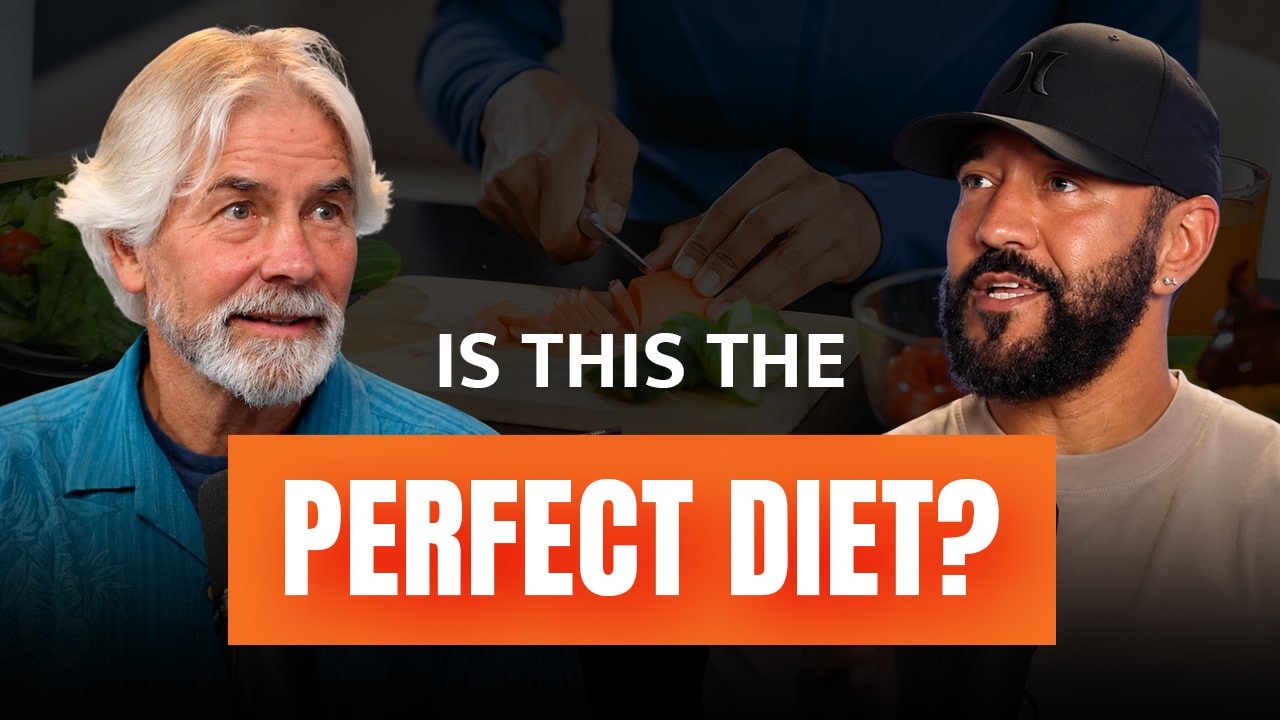
TMHS 1043: Stanford Nutrition Scientist Reveals How to Build the Perfect Diet for YOUR Body – with Dr. Christopher Gardner
For all of modern history, humans have tried to uncover the perfect diet for optimal health. And today, there are a lot of conflicting opinions on what makes a healthy diet, from keto to vegan and everything in between. Today’s guest is here to cut through the noise and help you optimize your diet with objective, science-based principles.
Dr. Christopher Gardner is a world-renowned expert in the field of nutrition science. He holds a PhD in Nutrition Science, is a professor at Stanford, and has led over 25 human nutrition intervention studies on various popular diets. Today, he’s joining this episode of The Model Health Show to debunk common diet myths and help us understand the true foundations of human nutrition.
Dr. Gardner is sharing his extensive experience in nutrition, including the details of his studies and work as a professor. You’re going to learn about the basic, undisputed truths about nutrition, some of the nuances, and how to create a diet that works for you. I know you’re going to love this interview with Professor Christopher Gardner!
In this episode you’ll discover:
- Why it’s impractical to search for the perfect diet. (2:37)
- The importance of context when assessing the quality of a food. (5:06)
- An example of how to optimize what’s on your plate. (9:46)
- Why consensus is more important than strict food rules. (11:46)
- Four dietary principles that can help you avoid disease. (13:43)
- A common misconception about eating fruit. (15:41)
- The health benefits of eating beans. (21:19)
- Why your diet should be based around objective science, not social media posts. (24:30)
- The importance of exploring different foods and allowing your taste to change. (26:21)
- Why nutrition science can often be hard to measure. (27:49)
- How to become your own scientist. (41:31)
- Why food quality matters more than diet dogma. (46:18)
- How to find a balance between quality and price. (49:07)
- The importance of finding joy in food. (53:02)
Items mentioned in this episode include:
- Organifi.com/Model - Organifi makes nutrition easy and delicious for everyone. Take 20% off your order with the code MODEL.
This episode of The Model Health Show is brought to you by Organifi.
Make nutrition effortless—and actually enjoyable. Organifi’s delicious, superfood blends help you boost energy, reduce stress, and feel your best every day. Get 20% off with code MODEL at organifi.com/model.
Transcript:
SHAWN STEVENSON: Welcome to The Model Health Show. We are all human beings. We're all the same species. We share pretty much the same genetic information with some minor variations here or there, but being that we are so similar, couldn't we ascertain that there is a perfect diet for us as human beings? There are certain foods that just help us to thrive, that help us to work better than everything else.
Does that perfect diet exist? That's what we're talking about today. And for this purpose, I sought out someone who's arguably the most prestigious expert in this subject, somebody who has decades, decades of experience in nutrition science, in teaching at the highest levels at Stanford University, and running clinical trials, the most well-constructed studies ever with human subjects to get the data.
All right? So if there's a perfect diet for us, this guy's gonna know about it. And so I'm very, very grateful and excited to share this conversation with you today. And without further ado, let's dive right in with our special guest and topic of the day. Dr. Christopher Gardner is a renowned nutrition scientist and professor of medicine at Stanford University.
For more than 30 years, he's been a key faculty member at the Stanford Prevention Research Center, and he's led over 25 human nutrition intervention studies, including trials of the Mediterranean diet, ketogenic diet, vegan diet, low-fat, and low-carb diets, and their effects on cardiometabolic outcomes. He's a frequent contributor to major media outlets like The New York Times, CNN, MSNBC, and more for his expertise.
And now he's here to share his new project, Food Sense, so that we can finally understand what to eat and why. Let's dive into this conversation with the incredible Dr. Christopher Gardner. Professor Gardner-
DR. CHRISTOPHER GARDNER: Shawn
SHAWN STEVENSON: ... good to see you.
DR. CHRISTOPHER GARDNER: Happy to be here.
Awesome. Big question: have we finally discovered what the best diet is for human beings?
Oh. Actually, I have it in my back pocket, and I'm gonna tell you what it is.
SHAWN STEVENSON: Let me see it
DR. CHRISTOPHER GARDNER: Yeah, so in the back pocket, let me read. I have this perfect breakfast, and I have a perfect lunch, and I have a perfect dinner. And let's say if I had that, would you eat that every day for the rest of your life? Oh, my God.
Same breakfast, same lunch, same dinner every day. No, that would be so boring. Okay, so some people want the super food elixir of longevity, so I'll just have chia seeds, or I'll just have soy, or I'll just have something, and then they use it as an excuse to eat crap the rest of the day, so that won't, won't work either.
And even if we did found that... find that fountain of life longevity diet, you're still gonna have to exercise and sleep and be social and fit it into everything else. So no, you should stop looking. It's not out there. But if it were, what would be nice is there wouldn't be one. There'd be a Mediterranean one, an Asian one, an African, a Latin American, a Middle Eastern You know, they talk about, um, paleo diets.
There's a really good YouTube from several years back where somebody says there was never a paleo diet. There were, like, eight paleo diets. If you looked on every continent, there were paleolithiums living on whatever was local and seasonal, and that worked for them while they lived there until we got here today and got super foods and longevity diets and miracle cures.
So actually, I don't have that in my back pocket. Sorry, I lied.
SHAWN STEVENSON: Well, I appreciate you, you know, even considering this because this is what... And you know this. A lot of people are looking for that thing, like, "What should I eat? Just tell me what to eat, and I'll do it." And you are really helping us to understand that there isn't this kind of one perfect cookie cutter diet that if you eat this diet, you're gonna get all the health benefits that you can imagine.
There are a variety of diets. Humans have tried, I say, tried to eat everything at some point, and they figured out what works in the context of the environment that they were living in, right? And so this is one of the things I really admire about your work as well. It's like there aren't these hard and fast rules.
There are more of these pillars- Yeah ... that you talk about, and I wanna talk about some of those pillars if that's okay with you. Yeah. I wanna ask you specifically about context. Context matters. Let's talk about this pillar.
DR. CHRISTOPHER GARDNER: Yeah, absolutely, and that's the most fun I've had because... So I teach nutrition at Stanford University.
This'll be my 25th year teaching it. And I start off the class, and I tell everybody, "Okay, so when it comes time for the exam, you'll get at least half credit if I ask you a question and you say, 'It depends,' in your answer." And it depends on that context, and the two terms I actually, to expand on that a little bit, are with what and instead of what So they'll come up to me and say, "Ah, Professor Gardner, fish.
Should I be eating fish? I don't even really like fish." Okay, well, if you don't like it, don't eat it. You should have some joy and pleasure here. But are we talking fish and chips in the UK, which is dif- just breaded deep-fried fish? Are we talking wild-caught salmon from Alaska braised and it's got some lentils on it and some, ah, some something great, lemon and...
Those are completely dif- different fish, right? And what were you gonna have? So you were gonna have this amazing Mediterranean salad. Okay, well, that Mediterranean salad would've been pretty good. Or you were gonna have a fast food hamburger. Oh my God, the fish is way better than the fast food hamburger.
So if you go with instead of what and with what, you'll of- often solve a lot of this confusing questions. Actually, I got one better one for you that I like to use. Okay, so are you a coffee drinker?
SHAWN STEVENSON: I am.
DR. CHRISTOPHER GARDNER: Are you a tea drinker?
SHAWN STEVENSON: I am.
DR. CHRISTOPHER GARDNER: Do you know which one is better, coffee or tea?
SHAWN STEVENSON: It depends.
DR. CHRISTOPHER GARDNER: Oh, thank you. You get half credit already.
Okay, so then think about mocha frappa frappuccino, right? A ton of cream and sugar in the coffee, or just black tea, a really, really good flavorful black tea or for coffee. For tea, what if you think of a nice green tea versus bubble tea? Isn't that... I have a lot of kids, and they're, like, always going for boba.
SHAWN STEVENSON: Hmm.
DR. CHRISTOPHER GARDNER: And so that, isn't that just filled with tapioca pearls and cream and sugar and-
SHAWN STEVENSON: A lot of balls in the mouth.
DR. CHRISTOPHER GARDNER: Ugh. So I have some slides, and so I ask which is better, coffee or tea, and then I have mocha frappa frappuccino versus green tea, and green tea wins. Or I have bubble tea versus black coffee, and black coffee wins.
And then I have mocha frappuccino versus bubble tea, and I say I'm not even going there. That's like a race to the bottom. I'm not gonna tell you- ... which one of those is better. And then I say if you had black coffee and green tea, which one's better? And actually, there is so much research to show both of those are good.
Tons of published papers. So if you did the instead of what, coffee instead of tea, but added with what It resolves a lot of the controversy right there. It's not as controversial anymore 'cause you put it in context.
SHAWN STEVENSON: Yeah. With those examples, and this just hit me, coffee and tea have been enjoyed by humans for thousands of years.
DR. CHRISTOPHER GARDNER: Oh, thank you for bringing that up.
SHAWN STEVENSON: That's like The, the frappe kappa alpha, uh, frappuccino that you mentioned- Uh-huh ... that's new. Yeah. And maybe we need to be a little bit more skeptical, but, you know.
DR. CHRISTOPHER GARDNER: In the scope of history, it's like, "Ah, we just discovered this. Everything we thought we knew for 50 years, or 50 million, is wrong, and now," with a little fear-mongering thrown in there, "this thing is the key to longevity," you should be skeptical right away.
And then the next time you see a headline that says, "Man, vegetables and fruits are great for you," he won't even read it, will he? It's like, "Ugh, that is so old. That is so boring. I don't wanna hear about vegetables and fruits. I want the miracle cure." It's a tough sell.
SHAWN STEVENSON: With this context, I love this example.
You, you gave an example in the book of, like, an airport scenario. Yeah. Some type of burrito- Uh-huh ... versus a, a, a really kind of low, super low tier quesadilla. You know, like- Yeah ... cheese and whatever, you know, mystery meat in there. And I think this is a great example to illuminate for everybody with what is a part of that context.
So let's give an example of, again, a super standard quesadilla, tortilla, shredded cheese, chicken, versus, you know, with what we could have Mexican food with the, the, the chicken, but now we got some fresh tortillas. We've got grilled fajita veggies. We've got fresh-made salsa. We've got guacamole, right? We start to see with what.
Can you talk more about this with what?
DR. CHRISTOPHER GARDNER: Yeah, absolutely, and I, I think the burrito's a perfect example, and part of this goes back to the trauma of my fatherhood, where, uh, we eat a lot of plant-rich meals at home, and my oldest son at one point was basically every day having a white flour tortilla with, uh, melted cheese on it fold over and a Coke And I said, "Dude, this is so embarrassing.
I'm a nutrition scientist, and I'm gonna get in trouble if anybody ever sees you." He said, "Dad, I'm vegetarian." And I said, "Dude, you suck at being vegetarian." "Can you-- can we add some guacamole? Can you put some salsa on there? I mean, what I really want is the fajita veggies and all kinds of things like that added."
Um, and yeah, you know, maybe some of those simple quesadillas with cheese and a little bit of salsa and avocado isn't as good as some really fancy Latin American restaurant where they do have a ton of veggies on it and brown rice with it instead of white rice and black beans cooked not in lard but in water and great seasonings and...
So you can keep adding to the with what and it becomes a continuum. It's not a, "Oh, you had that thing? That thing is wrong." Wait a sec. With what and instead of what, and right now in the airport while I'm rushing to my gate, this is better than that protein bar that I would've bought to replace the meal 'cause a lot of those protein bars are made as meal replacers, not just as an additive on top of a healthy diet.
So better than the protein bar, not as good as the really nice culinarily driven, really fun recipe. So sometimes we're in the middle. That's where we have to be for the day, and we get to start over tomorrow.
SHAWN STEVENSON: Amazing. Another one of these pillars is consensus over hard and fast food rules.
DR. CHRISTOPHER GARDNER: Yeah. And so this is a fun experiment for me.
So I do a lot of stuff with the American Heart Association, and I was the chair of the nutrition committee for a while. And the American Heart Association, much like the dietary guidelines if we end up going there, updates their guidelines every five or 10 years when there's more evidence. Let's see if we should shift anything.
And they did that in twenty twenty-one. And after they had done it, some, some of the general population wrote into the American Heart and said, "Ah, now that you've got these updated guidelines, can you tell us which among them, which among all the popular diets follows your guidelines? Does keto or paleo or vegan or whatever?"
And so I got to work with nine others, and we spent six months, and we said, "Okay, hmm, what if we break all those different popular diets down? How many categories would we have?" And we had about ten. We said, "Okay, so now let's match the key factors of all those ten popular diets with the ten domains of the American Heart Association diet.
Let's see how they match up." And I'll, I'll tell you the winners and losers to start with. So the DASH diet, which is called the Dietary Approaches to Stop Hypertension, you can find that online, or Mediterranean or pescatarian or lacto-ovo vegetarian all pretty much one And keto and paleo lost. They were at the other end of matching the American Heart domain for a heart healthy diet.
Um, but what was really fun was looking through the 10 domains and seeing, like, there's nothing more, more of a polar opposite in my mind than a ketogenic and a low-fat vegan diet. So keto's supposed to be not only just low carb, keto's supposed to be really high fat. Lot... If you wanna get into this later, we can.
Lot of people think keto's a lot of meat. It's not. It's really supposed to be a lot of fat. So low-fat vegan and keto are really polar opposites, and we had everything in between. And what we found were at least four things that were consistent across all 10 categories, and one was eat more vegetables, eat more whole foods, eat less added sugar, and eat less refined grain and processed food.
So to me it was a big kumbaya moment, thinking, "Wow, all these tribes are bickering with one another," and maybe this is boring. Let me think about this. Maybe Americans already eat tons of vegetables, tons of whole foods, and they avoid added sugar and refined grain. No. That's what America thrives on at this point, and so I'm thinking, "Ah, wow, if they all agree on four things- Yeah
what if we stop the bickering and saying, 'Well, let's... I bet if we fix those four things, like half the diet-related diseases would be resolved.'"
SHAWN STEVENSON: Yeah.
DR. CHRISTOPHER GARDNER: Right there, but instead we're, "Is it the soy? Is it the lectin in the beans? Is it the fat in the nuts and seeds? Is it..." Ah, it's so frustrating to sort of miss the consensus that's out there.
So in my book I talk about those four pillars, but is it okay if I do the next round of pretty strong consensus?
SHAWN STEVENSON: For sure.
DR. CHRISTOPHER GARDNER: Okay. So I f- I, I think there's six other groups where there's pretty much consensus, but not full. So one is this bean thing with Gundry and The Plant Paradox and lectins. Don't not eat beans just so you'll avoid lectins.
This is so goofy. Like, beans have so many good things. They have fiber, and they have protein and unsaturated fat. Ah, and yes, they have lectins, and it kind of binds some nutrients, and it can suck them out of you when you go to the bathroom. But all you gotta do is cook the beans and soak them for a while, and you don't wanna miss those other things.
So beans, legumes would be at the top of the list. I'd love to come back to beans and legumes later. Fruit, so a lot of people, "Ah, fruit. Oh, those fruits have sugars. Aren't we supposed to avoid sugar?" Well, no. Turns out if you're eating the whole fruit, not drinking the fruit juice, then the food matrix around the sugar makes it absorb really slowly.
Fruit's great. Nuts and seeds. So the low-fat vegan community kind of eschews all fats, even unsaturated fat. Oh, so many things taste better with nuts and seeds on them. The mouthfeel of fat is so good for you, and those nuts and seeds, they're all unsaturated. Oh, we could do seed oils, too. That would be another fun one.
Okay, but let's just do nuts for now and fat. So the next one would be eggs, and in my book, I do a whole chapter, two chapters actually, one for eggs, one for cholesterol. Yes, eggs have cholesterol But the cholesterol in eggs doesn't actually end up going to your heart as much as the cholesterol that goes up in your blood 'cause you ate saturated fat.
There's sort of a cool little metabolic twist that our liver helps to regulate. And I mean, what do people eat eggs for? Breakfast quite often. What's the standard American breakfast? Crappy, sugary, refined grain cereal. So here's another one of the instead of what things. "So what'd you have today?" "Eggs." "Oh, what were you gonna have?"
"I was gonna have multicolored marshmallows and a really sugary refined grain cereal." "Oh my God, the eggs were so much better than that. By the way, what are you having your eggs with?" "Uh, bacon and sausage." I said, "Oh, okay, wait a sec. How about an omelet with some veggies inside and some salsa on top and a side of fruit?
That would be a better egg." So anyway, eggs and cholesterol shouldn't have been vilified as much as they have been over the years. And the next one would be fish. So the vegetarians don't want to eat fish. Uh, I know a lot of people who don't eat anything with a face. It's kind of a simple rule. Fish have a face.
Okay, but fish are pretty healthy, especially if they're caught the right way. Right? We have to get into farm fish, wild-caught fish. There's some angles that way, but again, if you do fish and chips in the UK where it's just breaded deep-fried fish versus wild-caught salmon that's been braised and it's got some lemon on it and it's on a bed of lettuce.
So fish is a pretty darn good choice, and then my sixth one in this list would be yogurt. I'm not a big fan of dairy overall. I don't know how many people that are listening will recognize this, but three-quarters of the world is lactose intolerant. Really, the majority of humans are lactose intolerant, and they don't tolerate dairy.
They get GI distress. But a quarter of the population can handle it, and among all the dairy products, milk, cheese, butter, um, and ice cream, yogurt's kind of different. I actually now study the microbiome with some microbiologists, and fermented foods are kind of all the rage these days. Yogurt's a fermented food.
Now, I, I would certainly avoid all those rows in my grocery store of low-fat organic yogurt that's peach and blueberry and pomegranate, and then when you look it's like, wait, there's hardly any fruit in this. They added a ton of sugar. So if you really went for beans and fruits and nuts and eggs and fish and yogurt there's quite a bit of consensus around those, especially if you keep in mind the with what instead of what.
And if you started with the first four that I said, oh, that's a lot of really good food that almost everybody would agree on. Yeah. And it'd be a big kumbaya moment. We wouldn't have to have all these- ... diet wars. Ah.
SHAWN STEVENSON: Yeah. Yeah. This is awesome. This is awesome. You know, this is something I've been talking about for years, you know?
It's just infighting amongst people who care about this subject. Meanwhile, most of the population is eating the stuff that isn't in the consensus. The, the s- the consensus is, is fucking us up. But, you know, I'm really grateful because we have these things that unify us, and let's double down, let's triple down on the things that we can agree on.
But, you know, it's hard to do when you've got, you know, a platform dependent on a certain idea. And also, to circle back to Dr. Gundry as well, you know, um, because of his persona, uh, his personality and the framing around him is just like, "Oh, this guy's saying this He actually, and I'm not saying he eats beans, but he says it's how you prepare it as well.
Hmm. You know? To soak it, pressure cook it, like these type of things that have been done historically. But it can come down to, like, this very... Which, in general, maybe the beans at Chipotle might give you gastrointestinal distress.
DR. CHRISTOPHER GARDNER: Uh-huh.
SHAWN STEVENSON: Whereas if you prepare them at home, it might be awesome. Oh, yeah. You know what I mean?
Right. So the context there, too, you know?
DR. CHRISTOPHER GARDNER: Yep, and the individualization because some people have more of a GI distress to the same food than the person right next to them.
SHAWN STEVENSON: Right.
DR. CHRISTOPHER GARDNER: Right? And so you can't just say, "It works for me. Try this." It's like, "No, I'm super lactose intolerant," or, "No, I really don't intolerate, don't tolerate beans very well."
"Oh, maybe you ought to try lentils, like in the whole legume family. Lentils are part of that."
SHAWN STEVENSON: Don't give up on beans.
DR. CHRISTOPHER GARDNER: Yeah.
SHAWN STEVENSON: Be- Did I see beanitarian? Is that the name? Is that the term?
DR. CHRISTOPHER GARDNER: Oh, so the thing that I like best is the leguminati. Um- Leguminati. Okay, so can we have a quick lesson here? So Americans don't use the word legumes very much.
Can I ask you when was the last time you used the word legumes?
SHAWN STEVENSON: I don't wanna sound s- snotty.
DR. CHRISTOPHER GARDNER: So that means you have used it.
SHAWN STEVENSON: No. Okay. I mean, I can't recall. I don't use legume.
DR. CHRISTOPHER GARDNER: How about pulses? Do you use that word?
SHAWN STEVENSON: Not at all, no.
DR. CHRISTOPHER GARDNER: So Americans don't use legumes or pulses, but so can we do a quick botany lesson here?
So leguminous plants, that's like the overarching botanical term for, are we ready, fresh beans and peas, soy and peanuts, and pulses. And then pulses actually have subcategories: dried beans and peas, lentils, and chickpeas. Technically, all of those are legumes, and there's so many different kinds of beans and so many different kinds of lentils, and a cool agricultural thing is all of those being leguminous plants fix nitrogen in the soil.
So when farmers are growing those, it's less synthetic fertilizer to put in the land. So nutritional powerhouse, agricultural wonder. And so I was listening the other day to a guy in Australia named Paul Newnham, and he talked about the leguminati, and I thought that was just frigging hilarious. It's like, yes, the secret society of bean lovers.
And then I live up in the San Francisco area, and there's a really great bean farmer up there called Rancho Gordo, and they have T-shirts that say, "The Leguminati." And I just think, "Let's have some fun with this. Yes!" And maybe we'll fart as well together 'cause farts can be, you know, off-putting, but let's have some more beans.
There's lots of kinds of them. But legumes is actually the overarching term. If you go to Europe, a lot more people say legumes- Than in the US. Uh, one last thing to add there. I served on the Dietary Guidelines Advisory Committee, and one of our overarching findings was that legumes, beans, and pulses were, um, really good for us, and Americans should eat more of those.
And the communication team at the Department of Agriculture said, "Don't use the word legumes." I said, "But we're, we're finding research papers that said they used legumes." And they said, "Americans don't know what legumes are. They're gonna go to the grocery store, and they're gonna say, 'Look, I found the beans and the peas and the lentils, but I couldn't find legumes anywhere.'"
It's like, tho- those are all legumes. Okay, so when we wrote up our report after two years of working on it, they prohibited us from saying legumes. Okay. We had to say beans, peas, and lentils-
SHAWN STEVENSON: Mm ...
DR. CHRISTOPHER GARDNER: so that we could communicate to people 'cause Americans don't say legumes. But maybe they would, especially if they joined the Leguminati.
T-shirts and hats are coming your way soon.
SHAWN STEVENSON: Oh my, I can't even... I can, I, actually, I can picture some, um, some designs right now.
DR. CHRISTOPHER GARDNER: Okay. Okay, let's work together on that. We'll have some merch.
SHAWN STEVENSON: So we've got context matters is one of these pillars. Uh, consensus over hard and fast food rules. Another one of these pillars is no preconceived ideas.
DR. CHRISTOPHER GARDNER: Yeah, yeah, yeah. Right. And so, uh, I mean, we, we have these echo chambers now with all the social media going on. Yeah. So as soon as you, "Oh, I really think beef tallow should replace seed oils," and then suddenly you're just flooded with all kind of affirmatory messages that you're right. You're right. You're right.
But if you look at the science and you say, "Wow, I'm now looking at objective science, not listening to influencers who don't have credible backgrounds, and I'm recognizing that, you know, there's some people who don't tolerate the thing that I'm really excited about, and they do tolerate something else", I mean, it's pretty cool to be open-minded to change.
And food can be a journey. What a cool journey to have. Like, what if you screw up your whole life and you're eating the wrong thing for decades?
SHAWN STEVENSON: Mm.
DR. CHRISTOPHER GARDNER: And all of a sudden you learn something and say, "Ah- I think I'm gonna change. So if you didn't have that preconceived notion and you were open to trying the flavors and all the other things of different cultures, you're probably gonna have more fun than just sticking with that same thing all the time.
SHAWN STEVENSON: Yeah. I, I, I've heard a time or 20 when somebody's talking with me they, and they say something like, "I thought fruit was bad for me." Right? They're co- I know, I know it sounds crazy.
DR. CHRISTOPHER GARDNER: Yeah.
SHAWN STEVENSON: I know it sounds crazy, but it's like these food frameworks tend to imprison us. Like, we put ourselves into these pithy boxes, and we can be missing out on the greatest food experiences, the greatest health, because it doesn't fit into that kind of preconceived box or, or notion of what your diet should be.
And so coming into it more open-minded, of course minding the consensus, having that other pillar, but then being open to there's so much diversity, variety. There's other things that might not fit in that preconceived framework that might be, like, the best thing ever for you.
DR. CHRISTOPHER GARDNER: And even for a simple example, "Oh, I tried kimchi once and I didn't like it, so I didn't have any more."
Oh my God, there's like 100 different kinds of kimchi. So you might have got one that didn't agree with you. It might have been too spicy. It might not have been spicy enough. So get out there. Try some flavors. I have heard encouraging news that the Gen Z-ers, or whatever the new generation is, are really interested in exploring the flavors and cultures of the world.
Um, so maybe we could be more like them.
SHAWN STEVENSON: Yeah.
DR. CHRISTOPHER GARDNER: The sad part is I've also heard they really don't wanna cook.
SHAWN STEVENSON: Hmm.
DR. CHRISTOPHER GARDNER: They really just wanna go buy it. Um, I'm really sad that we've lost culinary intelligence here.
SHAWN STEVENSON: We're, we're pro and con people.
DR. CHRISTOPHER GARDNER: Oh. Okay, but, um, yeah, try all those different flavors. And, and you know, does anybody remember this?
So when we were kids, there were lots of things we didn't like that later we acclimated to. How many of us really liked coffee when we were little kids?
Hmm. None of us.
SHAWN STEVENSON: I thought my grandparents were insane. When I took a sip of my grandmother's coffee- Yeah ... I thought something was wrong with her.
DR. CHRISTOPHER GARDNER: Okay, and now how many people can't wake up without a cup of coffee in the morning? You can adapt to some of these flavors.
SHAWN STEVENSON: That's awesome. One more pillar here. Know that some things are unknowable and- Oh ... unanswerable.
DR. CHRISTOPHER GARDNER: Oh. Yeah, yeah. Can I be the science geek for a little while here?
SHAWN STEVENSON: Please. Please do.
DR. CHRISTOPHER GARDNER: Okay, and this would be, um... Okay, let me see if I can frame one of my sort of favorite controversies here, sort of the vegans versus the carni- carnivores.
Let's just set something up that are polar opposites. And so he says, "You know, there's a couple of two-week or four-week studies where they had people eat different things, but from a science perspective, they didn't to see if-- didn't wait to see if they lived or died." So there's this stuff called observational epidemiology, where people have-- scientists have asked tens of thousands of people what they're eating, and then they track them for decades, and a whole bunch of them have lived or died, and they say, "Ah, we're looking back to what they were-- said they were eating, and we saw who lived or died, and so there seems to be an association with eating more or less of this and living or dying."
And a podcaster will say, a social influencer will say, "That's association, not causation. We need to have the science that shows its cause and effect." Okay, so for a living, what I've done for 30 years is 24 randomized trials where I get humans to volunteer to be randomly assigned to diet A or diet B. And that's the key.
They have to agree to be randomly assigned to either one. So picture this, I'm gonna have a big ad in a newspaper, and I can't pay people 'cause it takes too much money. Uh, I do wanna see if they live or die, so I'm gonna see if who's willing to be randomly assigned to vegan or carnivore for a decade or two.
Can you imagine anyone signing up for a study where they'd be willing to do either one, not for a week, not for a month, but for years? And so when I hear people say, "Oh, there's no randomized controlled trial of that," I feel like, "Ugh, get in my shoes for a minute. Try to advertise that and see who would sign up to be in that study."
There isn't enough money, and there aren't enough people who would volunteer to ask that particular question. So what we're gonna do is we're gonna have some mouse models and look at biological plausibility, and we're gonna look at Professor Gardner's studies where he did some of these things for weeks or months at a time.
And we're gonna look at his colleagues who do these observational epidemiological studies where they track tens of thousands of people for forty years to see who did live or die. And then we'll try to piece that together, the mechanism and the short-term changes like in cholesterol or blood pressure or glucose or weight, and then the association with who lived or died.
And as a group of scientists, we'll say, "You know, the, the most consensus we can come to is you should eat more beans, peas, and lentils and less red meat," which is actually what we said in December of twenty twenty-four. And somebody will say, "But wait, where's the proof? Where's the randomized controlled trial?"
And this is where you have to understand that you... we're not gonna know some of those answers. And then a s-- My favorite example is I did a really great garlic study. It was a one point four million dollar NIH-funded garlic study. I used one clove of garlic in real garlic from Gilroy, California, or in pills for people with high LDL cholesterol for six months.
And we waited, and nobody's cholesterol went down in any of the groups. And it was four or five years of my life to write the grant and run the study and publish the findings. And I said, "Wow, I'm pretty proud. I ran a really good randomized controlled trial that these three different approaches to garlic did not cause LDL cholesterol to get lower. As soon as I published it, somebody said, "What about two cloves a day, not one?"
Oh, that's a different question. What about blood pressure? I said, "Well, we didn't recruit people with high blood pressure." What about... A farmer wrote me. He said, "I grow 90 kinds of varieties of garlic. Did you try all 90?" Mm. I said, "No. I tried one. It's called California Early. It's the most popular garlic in the US."
I had marketers call me and say, "We know why your trial didn't work. You didn't use our supplement." I said, "Well, there are hundreds of supplements. I can't try all the supplements and all the doses for all the kinds of people, for all the concerns they have." And so as we tracked this study, as it got published in the mainstream media, it was in 400 news outlets, and one of the outlets said, ready, "Stanford finds garlic isn't good for you."
SHAWN STEVENSON: Come on.
DR. CHRISTOPHER GARDNER: How irresponsible is that? Okay, but I have some empathy. I have a lot of empathy. I mean, the general public wants answers to questions like, is garlic good for me?
SHAWN STEVENSON: Yeah.
DR. CHRISTOPHER GARDNER: But if I'm a scientist and this unknowable that you brought up a few minutes ago, I have to think about the dose and the person and the outcome and the duration of time.
And when I run a study and publish it, for it to be accepted and published, it has to be very specific for all those things. Yeah. And then you say, "Yeah, but can I have the general answer?" No, 'cause the general answer isn't in the context of with what, instead of what. I actually had some visions of our study working and showing how great garlic was, and then all of a sudden garlic fry sales took off and garlic ice cream sales took off.
I don't know if you've ever been to Gilroy for the Garlic Festival. They have garlic wine, garlic ice cream, and of course garlic fries are very popular. Um, I would have wanted hummus. I like... My wife teases me that my hummus is garlic flavored with chickpeas- ... because I put so much garlic in my hummus. But those are the...
I understand why the public wants the simpler, generic answer. But when we run those studies and try to develop the evidence base to answer those questions, it's more specific than people want or expect.
SHAWN STEVENSON: Yeah. This episode is brought to you by the incredible team at Organifi and their phenomenal superfood blends.
Not only does their best-selling green juice blend have the most powerful green superfoods, it also has a therapeutic amount of ashwagandha. A double-blind randomized placebo-controlled trial published in the Journal of Psychological Medicine had test subjects with a history of chronic stress to consume ashwagandha or a placebo.
Over the course of the month-and-a-half long study period, the group that received ashwagandha exhibited a significant reduction in scores on all the stress assessment scales compared to the placebo group, and the serum cholesterol levels of the test subjects were substantially reduced in the ashwagandha group.
Again, this is just one of the ingredients in the Organifi green juice blend. Some of the green superfoods include spirulina, chlorella, moringa. And never sleep on spirulina. A recent study published in PLOS ONE revealed that spirulina has a potential to, one, improve neurogenesis in the brain, and two, reduce neural inflammation.
And right now, you're going to get 20% off of their incredible green juice blend when you go to organifi.com/model. That's O-R-G-A-N-I-F-I.com/model for 20% off. Plus, you'll also receive their 60-day money back guarantee, so you have nothing to lose and better health to gain. Head over to organifi.com/model. Check out their variety of superfood blends, their green juice blend, their red juice blend, their phenomenal collagen that we use all the time.
Again, 20% off at organifi.com/model.
And now, back to the show.
Y- the thing, I c- I can't say my favorite thing about you, but one of them is that you have conducted these trials, and also we all have our biases. And so you were, you know, you just shared it. You had that hope that this is gonna affirm that garlic does its thing, but that's not what you found, and that's okay.
For you to say, "Actually, I'm really proud of this study," to have the audacity to do that, that makes me want to listen to you a lot more.
DR. CHRISTOPHER GARDNER: I really did think we were gonna get the keys to the city of Gilroy, and now I feel like I need a bodyguard to go there just in case they're really mad at me. But these things that it was supposed to do, we didn't find.
SHAWN STEVENSON: They're throwing cloves of garlic at you when you come into town.
DR. CHRISTOPHER GARDNER: Yeah. "Get out of here!" It's humiliating. But yeah, when you-
SHAWN STEVENSON: Get the vampires for this guy.
DR. CHRISTOPHER GARDNER: It's kind of fun. Another fa- can I tell another favorite story? Sh-
SHAWN STEVENSON: absolutely.
DR. CHRISTOPHER GARDNER: If I try to keep it short? Okay. So I hooked up with microbiologists lately for the microbiome It's a cool health topic these days.
Everybody's into their gut microbes, and these are some microbiologists who always worked with mice, never humans. And they were doing all kinds of things with them, and after years they said, "Wow, the biggest impact seems to be what the mice are eating." This is super cool, and there are sort of two areas.
One's called prebiotics, and one is called probiotics. I'm sure many of your listeners have heard that, and probiotics really is referring to live bacteria, and prebiotics is really referring to the fiber that would feed the bacteria if you ate it. 'Cause fiber doesn't get digested and absorbed in your upper small intestine.
It goes to your colon. That's where most of the microbes live. So in all of the Sonnenburg's trials, this is Justin and Erica Sonnenburg, they had been finding that the fiber was really doing great things for all these mice, and they tried feeding some live microbes, and it wasn't really working. So we raised some money and said, "Oh, let's do this in humans."
And they had been terrified of humans. They said, "Don't humans lie and quit and reschedule? You know, our mice show up every day. They're in the cage every day. We want them to be there, and if we wanna chop their heads off and look at their spleen or their liver, we can. Humans won't let us do that." We're terrified of humans.
And I said, "Oh, but you study the microbiome in poop. Poop is icky. I do not wanna study poop, but I tell you what. I'll recruit the humans and help them deliver their poop to you if you will look at the poop and tell me what the food did for the humans." So we launched this study, and the Sonnenburg said, "You know, these studies cost a lot."
Well, actually, the human studies cost more than the mouse studies for many reasons. And they said, "You know, with this limited budget, let's just do fiber." And I said, "Ah, the American public seems to be fascinated with pre and probiotics. Couldn't we do fermented food and fiber, like in two different arms?"
They said, "Well, we're gonna humor you. The fermented food isn't really gonna do very much 'cause of all of our mouse work. It's gonna be in the mice and the fiber." So we ran the trial, and we handed over the poop and all the diet records to the Sonnenburg lab, and they wrote up all the results. And they said, "Uh, we're pretty much done, and we're ready to publish the paper, and we've been blinded as to which group the people were in."
That's the right way to do science, do a blinded trial so you don't know. And they say, "But it looks like you got it wrong when you told us which group was which." I said, "What do you mean?" And they said, "Well, the humans getting the fermented food did much better than the ones getting fiber, and that's wrong 'cause we do this in mice."
And so we went back and we said, "I mean, we've looked at this a dozen times, dude. It's the, it's the right thing And they went in without a preconceived notion somewhat. I mean, they were, they were somewhat preconceived. They didn't think we should even do the fermented food- Right ... arm. But it really changed everything they did in their lab to accept that they were wrong.
And now we have a new faculty member who just thrives on fermented food, and we have all different kinds of folks on the Stanford campus having, like, f- a fermented food conference and people coming out of the woodwork to show what they ferment and how people could consume it and what fun flavors you get with fermented food By being open-minded that you could be wrong.
So it, sometimes it's very disappointing, and sometimes it's pretty d- pretty fun to find out you were wrong and to say that out loud.
SHAWN STEVENSON: Yeah.
DR. CHRISTOPHER GARDNER: I'm actually really glad you shared that with me right now, 'cause I have published at least six null findings where I said, "We studied this. We designed it. We really thought it would work, and nothing happened."
And I have found over the years that that really has given me a lot more credibility to be able to point to the times when I really thought something was gonna work, and it didn't, and I said it didn't.
SHAWN STEVENSON: Yeah. Yeah. Because also how often does it happen in another way where the outcome isn't what the researchers wanted and, like for example, them saying, "Oh, that's wrong," and just finessing it to be, to fit the model.
DR. CHRISTOPHER GARDNER: Yeah.
SHAWN STEVENSON: Right? That happens as well. And so for, uh, researchers to, you know, find things that are contradictory or, you know, to not find the thing you're looking for, that's okay. That's what science is supposed to be about. It's supposed to be about discovery. It is. Not I'm trying to affirm the thing that I want.
DR. CHRISTOPHER GARDNER: And then you can be your own scientist and try food, different food. If it doesn't agree with you after you've done it for a while, switch. Mm. Try something different. But do try to read credible people who are writing about it. Don't just listen to the fearmongerers.
SHAWN STEVENSON: This is one of the most important things of our time right now.
Uh, and I'm grateful that we have really... We're, we're existing right now in a model of, uh, evidence-based nutrition, right? Where's the research? Where's the research, as you mentioned? And you can check my track record. I've got, you know, shows and, uh, talks that I've done, university lectures 15, 20 years ago, where I was leaning into the data first just to talk about common sense.
All right? And I was doing that because I'm also showing up. I'm not wearing a lab coat. I'm just showing up as a cool person. Uh-huh. And so I would use that data and help to kinda create this model. Where's the data? Where's the data? Where's the data? Now we've swung to this whole other extreme- ... and we are negating one of the most valuable pieces of data, which is the N of 1, the N of 1 experiment- Yeah
the N of 1 experience, right? Because this particular study can show this outcome for 99 out of 100 people, and they got like some kind of superpower unlocked. Let's get crazy with it. But one person died-
DR. CHRISTOPHER GARDNER: Yeah ...
SHAWN STEVENSON: from eating that cherry.
DR. CHRISTOPHER GARDNER: Yeah.
SHAWN STEVENSON: Right? And what if you're that one person where even though the d- study says this, but this one, this thing doesn't work for me?
That's okay to give yourself permission to know like- Every, everybody, everybody's body is different. You know? It's, it's as, as unique as our fingerprints. E- let alone our microbiome.
DR. CHRISTOPHER GARDNER: Yes.
SHAWN STEVENSON: Right? And so I'm really hoping we can bring a place of balance here to where we, yes, mind the evidence, and also have the audacity to experiment within the context of those pillars.
Within the context of the consensus, there's so much for us to play with.
DR. CHRISTOPHER GARDNER: Yeah. There's a lot of wiggle room. I have had people come up to me and say, "Look, I don't know if anybody's listening, and I don't wanna say this, but I'm trying this new thing in the diet, and Professor Gardner, I don't think you even like this, but my skin was this, and I had this pain here, and I tried this other thing, and my skin cleared up, and the pain is gone.
Am I doing the wrong thing?" And you could see them doubting themselves. Right. I said, "No. Your skin cleared up, and the pain is gone. If it was really the food, if that's the only thing that you changed, then you did something right for yourself, and it might not be right for other people, but it's right for you."
And so yeah, that's what we have to be open to. There isn't really any one thing that works for everyone.
SHAWN STEVENSON: This is why I'm, I'm so grateful for this conversation, because you have the diet for yourself that i- that you thrive with, right? And a lot of people, unfortunately, especially when we find something that works for us, we think that this is the thing.
Everybody should be doing this. And I have made it a mandate over the years that I bring on the voices with the most credibility from these different perspectives, right? To provide, uh, options for people. So some of the most prestigious physicians in the vegan and plant-based paradigm to the other somewhat extreme carnivore, but a lot of these guys, and I know these guys, they also include plants.
Like one of most recent, Dr. Sean Omara, more carnivore-centric, but he's a huge fan. You need to make sure that you're having your fermented veggies. Like, they're still in the mix there, right? Yeah. But what I do this for is each of these camps have found that they found success with some of their patients who might be experiencing, you know, uh, colitis for a decade and struggling, and then once they go plant-based it, it resolves, right?
Remission. Or once they go more of this kind of meat-centric, it resolves and they feel better. And not-- And, and to withhold that information, but what tends to happen, though, is like we don't talk about the people it doesn't work for because it doesn't work for everybody. Yeah. Right? So it's context-dependent, providing some options and opportunities, and I think that's one of the special things about your work, is highlighting the things, again, the consensus.
If you're doing a, a quote paleo protocol, these are the things to be mindful of with the consensus. If you're doing a vegan protocol, if you're doing a Mediterranean, make sure you're minding these principles. Not to say that this is the end-all be-all.
DR. CHRISTOPHER GARDNER: And can I build on that idea? So vegan could be french fries, Oreos, and Coke That is a crappy vegan diet, right?
And so vegan could be lentils and hummus and tortillas filled with fajita sauteed vegetables. Um, Asian diets are full of tofu, but it's not tofu popsicles and it's not tofu ice cream. It's tofu and tempeh and edamame.
Mm.
Uh, the ketogenic diet is one that gets misunderstood all the time. It's supposed to be a really high fat diet, not a high meat diet.
So when I just say, "What? I s- I see you're eating a lot of meat. What's up?" They say, "Yeah, I'm keto." I said, "Do you understand the principle of keto?" They said, "Yeah, super low carb, and meat is super low in carb." I say, "Yeah, okay. But actually, if you read, um, the well-formulated ketogenic diet, it's mostly fat.
Like, we don't have any place to store extra protein in our body, and when you're eating all that extra protein, it's actually getting converted to carbs at the end of the day, and you're undermining the whole premise of this low carb. You should be eating as much fat as you can, pouring olive oil on everything, and having really fatty foods and nuts- Avocados and-
and seeds and avocados- ... nuts and seeds ... fatty fish. You're undermining it." So in one of our more famous studies was a low-fat versus a low-carb diet for weight loss, and a key to them was we said both groups are supposed to eat a really high quality low fat and a really high quality- Mm ... low carb.
SHAWN STEVENSON: Yeah.
DR. CHRISTOPHER GARDNER: And some of the low quality low fat things, for example, are added sugars and refined grains.
Those are low fat. But when we told the low fatters they shouldn't eat that, and oh, we have to eat more beans and vegetables. And we told the low carbers this shouldn't really just be butter and gristle. This should be avocado and fatty fish and things like that. It was actually pretty much a tie in the two groups.
This is a 600-person study, uh, done for a year. It was mostly a weight loss study, and both groups, on average, lost the same amount of weight, and both of them had all kinds of metabolic improvements in their health.
But we did a little side paper and focused on within each group who got the highest quality low fat and who got the highest quality low carb, and they did better than the ones who were technically assigned to those diets.
SHAWN STEVENSON: Yeah.
DR. CHRISTOPHER GARDNER: But they didn't really follow through on the quality aspects of it, and they didn't get the same benefits. So it was more like the quality was more important-
SHAWN STEVENSON: Yeah ...
DR. CHRISTOPHER GARDNER: than low carb or low fat And if we did that conversation, then we'd have a lot more consensus.
SHAWN STEVENSON: Yeah. Let's advocate for quality.
DR. CHRISTOPHER GARDNER: Yeah.
Although for cost too, I don't know if we wanna get into that. So, right? I mean, you don't actually have to have organic. You don't have to have fresh. You could have frozen. You could have canned. You could have conventional. I get sad if somebody goes in the produce aisle and says, "Oh my God, uh, I can't afford the organic carrots.
I'm gonna go to the packaged food in the middle." Get the veggie chips. "Oh, I found some really good organic veggie chips. Let me see. Oh, there's 100 ingredients in it, but it's really cheap, and I can afford this, but I can't afford the organic produce." Well, then buy the damn conventional carrots. They're really not that much worse And, and find that balance where it's affordable and accessible to everybody.
And that's, uh, actually where we need the government to step in and say, "All right. We grow way too much corn, soy, and wheat in this country that's all being... Most of it's being used for packaged, processed food. We should be growing more vegetables and nuts and seeds and legumes."
SHAWN STEVENSON: Yeah. And the research is there.
Um, and we'll put the study up for everybody to see. But there was an analysis done looking at, um, consumptions of American adults who were consuming the highest amount of government subsidized foods and them having upwards of around 40% greater incidence of insulin resistance, obesity, the list goes on and on.
The very foods that our tax dollars are, right? But the reality is a lot of those foods are what's showing up in ultra-processed foods. And also, this is another thing that was great to hear you talk about, is in the United States, it tends to be very minimal, the diversity of that particular food. So for example, a certain type of grain.
A certain type of wheat, or a certain type of, you know, fill in the blank, when there's so much diversity elsewhere in the world.
DR. CHRISTOPHER GARDNER: So a quick example of that, and I don't know how well documented this is yet, but I'll bet some of your listeners will recognize that there's people who are gluten intolerant in the US, and they go to Europe and have some bread, and they can tolerate bread.
And they say, "Wow, somehow I'm cured," and they come back to the US and the intolerance comes right back to them, 'cause really we grow one kind of wheat really efficiently and really inexpensively. But first of all, there's all kinds of varieties of wheat, and there's amaranth and teff and oats and brown rice, and there are so many grains.
America mostly eats wheat for grain. It mostly eats refined white bread in their pizza crust, in their danish, in their bagel, in their... Ah. So yes, the variety that the world produces is astounding, unless you wanna be really inexpensive and efficient, which the US got really good at doing, and the pendulum swung too far, right?
And those crops are actually more susceptible to plague and, and disruption if there's only one kind of wheat, one kind of corn, one kind of banana. So more variety in the way we grow those foods.
SHAWN STEVENSON: Sounds Captain Obvious.
DR. CHRISTOPHER GARDNER: Okay.
SHAWN STEVENSON: So you said something earlier, I do not wanna look past this. You said, in the context of food, you said the word joy.
DR. CHRISTOPHER GARDNER: Yes. Okay. Okay.
SHAWN STEVENSON: Now, we know that there are perspectives about food where food is fuel. It's just fuel.
DR. CHRISTOPHER GARDNER: Uh-huh.
SHAWN STEVENSON: If it tastes good, spit it out. These are things that have been said.
Uh, eat to live, don't live to eat. And these are all ways of being that might have found some success for a very, very, very, very, very small percentage of people, maybe for a little bit. But why would you have the audacity to say joy in the context of food science?
DR. CHRISTOPHER GARDNER: 15 years ago, I got asked to attend this group of scientific folks meeting that was arranged by the Culinary Institute of America.
Ah, I forgot my joke. I'm supposed to say, "I'm on the scientific advisory of the CIA." And then people look really funny, and I say, "No, not the Pentagon CIA, the Culinary Institute of America." And the chefs at the time-- So the CIA is the biggest cooking school in the US. They've to date graduated 55,000 chefs that you'll find in Marriott, Hilton, universities, hospitals, military.
And their craft is making food taste great, and they were getting frustrated, some of those that were in the commercial industry, with, "Oh, today it's vegan. Today it's paleo. Today it's keto. Today it's Mediterranean." And they were like, had to design new menus and get new cooking equipment, and they said, "Couldn't we start to drive part of this conversation?
We're the chefs." Like, what if we made the menus and asked for the food, and the farmers, ranchers, and fishers grew that? Instead of us being so reactive, we could be proactive. So 15 years ago, a scientific board that I was on and a business board and a board of the chefs from the CIA developed the 24 principles of the Menus of Change, and the idea was this is scientifically good for your health and it makes good business sense, and first and foremost, it's delicious.
SHAWN STEVENSON: Hmm.
DR. CHRISTOPHER GARDNER: So I wasn't originally on the delicious part. I was on the science part. But when I saw them put it all together and recognized with some disgruntlement that people really aren't cooking for themselves as much as we might hope, that they eat out a lot. And so the chefs, and we have some chef rock stars these days, a bunch come from LA, right?
So I think the status of chefs has risen- And so there's a bunch of chefs who actually want to hit that intersection of deliciousness and health and planetary sustainability. And so there's a class I teach at Stanford called Food and Society, and a pediatrician named Tom Robinson and I started this years ago, and we agreed on a handshake to never talk about health in the class of Food and Society.
We would only talk about societal issues, and if anybody wanted, we would pull health out of our back pocket and explain what the nutrients were. But if they didn't ask, we would just get the Stanford students engaged in social justice and drought and planetary health. And now working with these chefs, when they're
They can make anything taste delicious. They're really good at it, so they make great leguminous dish- dishes. Um, one of the themes they have is called the protein flip. The protein flip works 'cause they get meat out of the center of the plate, and they don't have to get rid of it. They could, but they can make it a side dish or a condiment or just a small portion of meat on top.
But they're celebrating the vegetables and legumes and fruits and nuts and seeds at the center, and they're using a Mediterranean diet, an Asian diet, African diet, Indian diet, Latin American diet. All those cultures have some amazing plant rich foods. So they call it the prote- protein flip 'cause it ... You can get plenty of protein from plants.
That's a big thing in my book. So much easier than people think to get enough protein from plants. But they put that at the middle and the focus is deliciousness. Hmm. And I realized when I started hanging out with chefs and going to their conferences, people were always talking about that. They're like, "Oh, usual conferences I go, the food sucks.
The food here is just almost obscenely good. What are these chefs doing?" It's like, that, that's their job. And when you bring that joy and pleasure back into the equation, it's such a much more warm and inviting environment as to if it tastes good, spit it out 'cause it might have tasted good 'cause of all the sugar and the fat and the salt in it, but it could also taste good 'cause people around the world forever have wanted to enjoy their food.
So we can incorporate that joy and pleasure, too. What, what a paradigm shift. Oof.
SHAWN STEVENSON: Food is a unifier.
DR. CHRISTOPHER GARDNER: Ah.
SHAWN STEVENSON: You know? And it's, it's transformative. You're literally taking something from out there, putting it in your body, and it's becoming a part of you in a way, and this intimate relationship has been there with us for thousands upon thousands upon thousands of years, and the reason I'm even sitting here with you is because of that.
You know? Like, I grew up in poverty, which in the United States, I always hesitate to say it because we still had a TV. You know? We did get food from, you know, charities and things like that and government assistance, but I was one of those... And I had the audacity to be a picky eater in this context as well.
Uh-huh. So my mom would make me sit there at the table. She tried to. Like, "I'm gonna outlast you." Like, "You're gonna sit there till you eat." And like black-eyed peas and things like that, beans. Uh-huh. So I never, never, never ate them And it wasn't until I was in my early to mid-20s when I met my now wife, then girlfriend, who's from Kenya, and she invited me over to eat, and I had all of these crazy thoughts in my head.
Because, uh, my connective tissue was like Coming to America with Eddie Murphy. You know, that's pretty much it. Yeah. So I didn't know what we were about to have. But her mother made the most amazing, uh, ndengu, which is sort of like, uh, mung beans, right? Uh-huh. So it's like mung beans that's seasoned a certain way using some Kenyan spices that are very common in, in, in Kenya.
And I hadn't eaten beans, like... Or I tried them and ran to the trash can since I was like- ... you know, a little kid. Uh-huh. And so to take a bite and to be like, m- 'Cause I know I'm... My head is like, "You're gonna hate this."
DR. CHRISTOPHER GARDNER: Huh.
SHAWN STEVENSON: I took a bite and I'm like, "Oh, this is... It's not bad. But the next bite's gonna be terrible."
I took another bite. I'm like, "Oh my God, this is amazing." And then the way that she made the rice, some chele- Mm ... um, and then the ndengu is the mung beans, and I had never eaten greens in my life. Not a single time. And so it's called sukuma wiki in-
DR. CHRISTOPHER GARDNER: Oh ...
SHAWN STEVENSON: in, in Kenya. In Swahili. And, um, she made these greens, and it was like a juicy, delicious steak to my mind.
Like, it was just so n- it was so fulfilling. It was so rich. It was so delicious. I just couldn't believe it. It changed my life. Um, a single meal- Wow ... changed so many barriers I had in my mind and connected me to truly opening up my possibilities of what food can be, right? And on top of all that- feeling better.
Nice. You get to feel better-
DR. CHRISTOPHER GARDNER: Yeah ...
SHAWN STEVENSON: at the end of the day as well. And so food is a connective tissue. It's that thing that, and you have this thread throughout the book of, you know, the, it's the framing. And thinking about the consensus across the board, it's not, it's not plant-based, it's plant rich. It's reframing it so that we are paying attention to these things that as a consensus we know that there's so much benefit in all these different plant foods.
Talk about that.
DR. CHRISTOPHER GARDNER: And I will say that I was really excited at one point, this is probably 10 years ago, 15, when plant-based started being used a lot, and then there was plant-based junk food, so started shifting to whole food, plant-based. I used that for at least a decade, but when we started that, the plant-based, how much is based?
Does based mean 51% so that it's more than less? M- uh, nobody really ever resolved that. And I wasn't really paying attention, but I started seeing a whole bunch of new packaged products say, "This is plant based." And I'd look and say, "Okay, so what animal products are in here? None. Wait, here's another one where there's none.
Here's another one where there's... Wait, does plant-based now mean vegan?" And in my world, vegan has been avoided because it's polarizing. It's like, "Ugh, not the wacko vegans." Okay. So now they've replaced the word vegan with plant-based. Apparently the toothpaste's out of the toothpaste tube, like you can't put it back.
That's what it means now, and I've stopped using plant-based. The reason I liked it before was it was emphasizing plants. What did Michael Pollan say? "Eat food. Not too much. Mostly plants." Not exclusively plants You can. I pretty much eat exclusively plants, and I'm 67 and going strong. But I know people who eat mostly plants, and they're fine.
So this idea... Yeah, so I've actually recently shifted to whole food, plant rich, thinking that, "Do I wanna be based, or do I wanna be rich? Oh, I wanna be rich in variety, rich in flavor, rich in culture." And it does not have to be exclusively. There's no evidence to show that it needs to be exclusive. So much more welcoming approach, which I hope comes through in the book.
SHAWN STEVENSON: Food Sense: What to Eat and Why, the new book. What else do you want people to know about this book? What should they expect?
DR. CHRISTOPHER GARDNER: There's recipes in the back of what I eat. I actually had someone respond very positively, "Oh my God, and there's recipes." Um, it's a pretty easy read. I've had some really great feedback.
Uh, people have laughed reading it, so it's not really a scientific, geeky, dry thing. I, I try to put some of my aha moments in there, and I try to give lots of practical examples and, and things that didn't turn out the way I wanted them to. But really, I hope they get the joy of science in there. Like, ah, if you read this, y- you, you would have the capacity to be less confused and less caught up in the tribes that are pushing fear-mongering and say, "Ah, cool.
Food's like an experiment. I can experiment a little with this and a little with that. And ah, there's evidence for a lot of this." But there isn't evidence for everything, and I- I'm gonna have to be comfortable with that.
SHAWN STEVENSON: Yeah. That's okay.
DR. CHRISTOPHER GARDNER: Yeah.
SHAWN STEVENSON: The... It's an adventure. Food really is an adventure. And we know, we know a nice amount, but we will never know everything.
And you say that explicitly. Being a top-tier scientist in this, like, we're so far from knowing everything there is to know about food, but we act like we've got it all figured out. And instead, let's participate. Yeah. Let's have curiosity. Let's go on this adventure together, and let's have some delicious meals in the process.
Like, what a concept.
DR. CHRISTOPHER GARDNER: With other people. With other people. In social interaction.
SHAWN STEVENSON: Yeah.
DR. CHRISTOPHER GARDNER: As a bonding moment. Yeah. Talking about food. How come you like that culture? Oh, I like my culture 'cause of this. Oh, can I share that with you? Yes, you could. Is there wisdom? Is there evidence? Ah, we didn't finish the conversation.
We'll have to have another meal together.
SHAWN STEVENSON: Come on. And I stay hungry. So where can people pick up a copy?
DR. CHRISTOPHER GARDNER: Oh, well, Simon & Schuster are the publishers. It's gonna be offered everywhere. I really hope people get it at an independent bookstore. I'd love to support them, but not everybody can get to one or find one.
So it should be available online, in bookstores on October 13th, and hopefully forever thereafter
SHAWN STEVENSON: Professor Gardner, this has been a joy- Thanks ... to hang out with you. So I appreciate you so much. Thank you.
DR. CHRISTOPHER GARDNER: I appreciate your attitude toward the whole topic, and I love your Kenyan story. I'm gonna use that again.
SHAWN STEVENSON: All right. Y- come by for some Kenyan food.
DR. CHRISTOPHER GARDNER: Okay, I'm coming by for Kenyan food. Thanks, Shawn.
SHAWN STEVENSON: Let's go. The one and only Professor Christopher Gardner, everybody.
Thank you so much for tuning into this episode today. I hope that you got a lot of value out of this. I hope this got you thinking. All right?
There's so many different iterations of what our diets can look like, and so for us to really start to remove the dogma, to give ourselves permission to try things, and of course, to lean on the data. Yes, we've figured some things out that are true in most instances, but not all. In any of these studies, there are going to be outliers.
There are gonna be people at different ends of the spectrum. What we are presented with in clinical trials are the mean, right? The average. Why does the average gotta be mean, right? But it's keeping that in mind because we're all unique. We might be somewhere in the average for one thing, but then above or below average in something else.
Or should we say to the left or the right of that spectrum. And so it's a mission for us to experiment, to ask questions, to let our bodies and our experience be our most powerful guidance. Yes, get educated. Yes, absolutely, so that it can inform our decisions, but ultimately it is our bodies and our minds, our experience, that's going to light the way for that perfect diet for us.
If you enjoyed this, please share this out with the people that you care about. You can send this directly from the podcast app that you are listening on right to somebody's cellular device. Or take a screenshot, share it on social media, tag me, I'm @ShawnModel. Tag Dr. Gardner as well. He's @CGardnerPhD on Instagram.
All right. We got some epic master classes and world-leading experts coming your way very, very soon, so make sure to stay tuned. Take care, have an amazing day, and I'll talk with you soon.
Other episodes you might be interested:

Maximize Your Energy
Get the Free Checklist: “5 Keys That Could Radically Improve Your Energy Levels and Quality of Life”
HEALTHY MEALS EVERYONE WILL LOVE
The Greatest Gift You Can Give Your Family is Health
When you gather your family around the table to share nutritious food, you’re not only spending quality time with them - you’re setting them up for success in all areas of their lives.
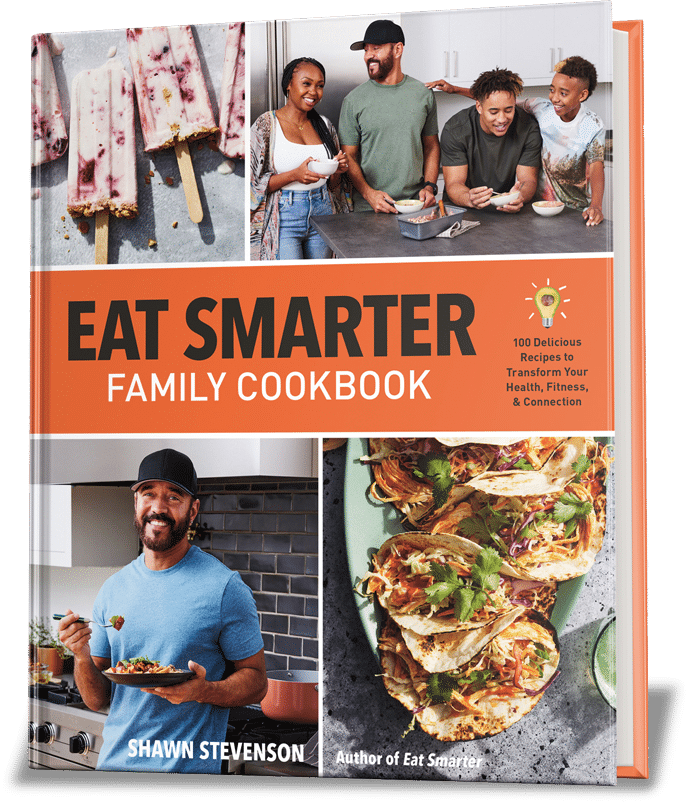
The Eat Smarter Family Cookbook is filled with 100 delicious recipes, plus the latest science to support the mental, physical and social health of your loved ones.


Share Your Voice
0 comments. Be the first to leave a comment.