
Subscribe to The Model Health Show:


TMHS 1045: The Incredible Benefits of Group Exercise & How to Turn Your Adversity Into Advantage – with Bryce Henson
No matter who you are, at some point you’re going to be faced with discomfort and difficulties. But what separates the great from the average is their ability to build resilience and greatness in the face of adversity. On today’s show, you’re going to learn exactly how to turn adversity into advantage.
Bryce Henson is the CEO of Fit Body Bootcamp and author of the new book, Turn Adversity Into Advantage. Bryce is joining us on this episode of The Model Health Show to share powerful insights from his book, including how you can leverage adversity by harvesting your energy, the details of The Phoenix Effect, and more. Bryce is also sharing important moments of his personal story like childhood trauma, changing his relationship with alcohol, and how he became a fitness professional.
If you want to build resilience and grow from your challenges, I know you’re going to love this episode. Bryce is bringing positive energy, inspirational stories, and a ton of profound insights to this interview. So click play and enjoy the show!
In this episode you’ll discover:
- Why group exercise leads to greater adherence. (8:58)
- How Bryce got into fitness. (11:46)
- What the first step of turning adversity into advantage is. (15:15)
- Why adversity is energy. (22:25)
- What The Phoenix Effect is. (23:22)
- How Fit Body Boot Camp was able to thrive during the pandemic. (33:16)
- Why high performance is created under pressure. (39:51)
- The story behind why Bryce stopped drinking alcohol. (43:15)
- Two habits that lead to having more energy. (48:27)
- How older adults can add fitness into their lives. (54:23)
Items mentioned in this episode include:
- Beekeepersnaturals.com/model – Reinvent your medicine cabinet with clean, effective products powered by the beehive & backed by science with 20% off!
- Piquelife.com/model – Doctor-approved, cutting-edge solutions for your head-to-toe health and beauty transformation. Get exclusive savings on bundles & subscriptions.
- Relentless by Tim Grover – Learn more about what it takes to become great!
- Sleep Smarter – Upgrade your sleep habits with my national bestselling book!
- Turn Adversity Into Advantage by Bryce Henson – Preorder Bryce’s book right here!
This episode of The Model Health Show is brought to you by Beekeeper’s Naturals and Pique.
Elevate your daily ritual with cutting-edge, doctor-approved teas designed to support your metabolism, skin, and overall vitality. Unlock exclusive savings on bundles and subscriptions at piquelife.com/model.
Upgrade your medicine cabinet with powerful, science-backed remedies from the hive. Clean ingredients. Real results. Get 20% off and feel the difference at beekeepersnaturals.com/model.
Transcript:
SHAWN STEVENSON: Welcome to The Model Health Show. What if our biggest adversities were actually our biggest blessings? And what are the ingredients or the process that helps us to not just make it through the biggest obstacles that life throws at us, but actually that help us to thrive on the other side of them?
That's what we're gonna be talking about today with our special guest, and I was blown away by this conversation. It really resonated with me and my life, and it's just understanding that life is qualifying us, constantly qualifying us for those things that we aspire towards. And sometimes we can get stuck in the messy middle.
It can feel like quicksand. We can get into a phase to where, our special guest is gonna describe this in a really, really unique and very poignant, powerful way, but it can feel like we're stuck, and we don't have to stay there And some of these ingredients are really going to just completely make sense today at another level.
And one of those ingredients, it was a through line of this conversation, is the power of community and the other people in our lives. Oftentimes, we're suffering in silence, and we're taking on these very heavy things in our lives, and in some ways, self-sacrificing for the greater good. Maybe it's for the greater good of our families or for the mission, whatever the case might be.
But it's truly through community and through our relationships that we can find, that light at the end of the tunnel, and ultimately, it's being able to give back to that community and the greater community. Oftentimes when we go through difficult things, there are lessons, there are those nuggets, there is those transformational insights that come as a result.
And oftentimes, people are going through things that are very similar, and they might not feel that they know anybody that has a solution, and what you've been through might be that solution that can change somebody's life. And so this is very powerful and also very practical because it's a circle of life here, shout out to The Lion King, for all of us to really understand there's a process.
And when we're faced with obstacles, which we're going to be faced with obstacles, that's part of this. Sometimes we go through hard stuff, and we're just like, "I'm done. I made it through the hard stuff. Life is easy now. It's all bliss from here on out." And oftentimes, life has other plans. But when you build yourself up, when you build your character, your resilience, you're able to better relate to and have a strong perspective when those difficult times show up and know that there are more gifts, more blessings, more growth that you're now in the process of.
And so I think that you're absolutely going to love this conversation. And so right now, as of this recording, as of the release of this episode, we're in the thick of it. It's cold and flu season is upon us, and I got a question for you. Are you still using conventional over-the-counter cough syrups? What are you doing?
You might be like Shawn, I need, I need that hitter. You don't understand. I got the coughs. I got the achy cough I'm trying to get to sleep at night, all the things. I need that pharmaceutical hitter. I need that pharmaceutical cough suppressant. Cough suppressants like dextromethorphan that are in popular products like Robitussin, put some tussin on it, and NyQuil.
I need that pharmaceutical hitter." Those are the gold standards, right? The randomized control trial published in the journal Archives of Pediatric and Adolescent Medicine included over 100 kids with upper respiratory infections and notable nighttime symptoms. The children were split into three groups.
Group one received a dose of natural buckwheat honey. Group two received dextromethorphan, honey flavored, so that the kids don't know which they're getting. And group three received neither, functioning as a control. Group one and two were given their treatment 30 minutes prior to bedtime. After compiling all of the data, the researchers found that there were significant differences in symptom improvement detected between the treatment groups, with honey consistently scoring the best and no treatment scoring the worst.
In paired comparisons, honey was significantly superior to no treatment for cough frequency and the combined score. But dextromethorphan was not better than no treatment for any outcome. The popular cough suppressant in these popular products utilized for decades was no better than no treatment. Please hear me.
And in comparison of honey with dextromethorphan, it was revealed that dextromethorphan had no significant advantages over high-quality honey. And what else is coming along with these conventional cough syrups? You've got the FD&C Blue 1, FD&C Red 40. You got, quote, "flavor." You've got high fructose corn syrup, propylene glycol.
The list goes on and on with more additives and chemicals. Does any of that stuff sounds like, "Oh, this is gonna help me to be healthier"? And to top it all off, we know this paradigm, or some people still don't, but oftentimes you go to the pharmacy, you go to the local drugstore, the cough syrups are locked up because people are getting high.
They're getting messed up off of the cough syrup. They're sip, sip, sipping on some sizzurp. All right? Again, what about this paradigm is speaking towards health? And based on the data, utilizing a high-quality honey-based cough syrup can be a game changer. But we need to have this stuff on hand. And the honey-based cough syrup that my family has been utilizing for years, and in fact, it's the number one honey-based cough syrup in the world.
It's the honey-based Propolis cough syrup from Beekeepers Naturals. Go to beekeepersnaturals.com/model. Use the code MODELHEALTH at checkout, and you're gonna get 20% off. All right, that's beekeepersnaturals.com/model, B-E-E-K-E-E-P-E-R-Snaturals.com/model.
Use the code model for 20% off. Also in this phenomenal cough syrup is a therapeutic amount of elderberry. And why does this matter? A double-blind, placebo-controlled study published in Advances in Traditional Medicine found that after 48 hours of treatment with elderberry, coughing was relieved in 31% of patients versus a placebo.
The study also noted significantly reduced fever, headaches, muscle aches, and nasal congestion within 24 hours of treatment with elderberry. This stuff works and is backed by science. All right? Head over there, check them out, stock up. Get it in your natural, healthy medicine cabinet. The old paradigm of those s- s- sipping on some sizzurp cough syrups is over.
Turn towards something far better. Go to beekeepersnaturals.com/model. Use the code modelhealth for 20% off. And now let's get to our special guest and topic of the day. As co-owner and CEO of Fit Body Boot Camp, Bryce Henson has helped build a franchise culture that consistently drives individual and community transformation.
But his most important credential is not his title. From entering the professional workforce at age 11, to selling blood plasma to fund college, to leading Fit Body's eight-figure global fitness franchise through its worst crisis in modern history, Bryce Henson has never taken the easy road. That's not a personality trait.
It's the foundation of the leadership system he now teaches to organizations and individuals across the globe.
And today, he's here to teach you how to turn adversity into advantage. Let's dive into this conversation with the incredible Bryce Henson. We've got the one and only Bryce Henson in the house.
How are you, man?
BRYCE HENSON: My brother, Shawn. Dude, so pumped to be here. Thanks so much. Of course ... appreciate you
SHAWN STEVENSON: Of course. It's my honor. Listen There's this mind-blowing study I wanna ask you about. This was published in the journal Health Behavior Research, and it found that group exercise training can boost exercise compliance and consistency up to 97% over the course of their 11-week study.
97% compliance and follow-through. What else can create the environment where people follow through like that? And so having you here is very special because if anybody knows about group training, and even scaling group training, it's you. And so what is it about group exercise that makes it so successful?
BRYCE HENSON: I think first and foremost, humans' natures, we are tribal. We thrive off each other, right? Yeah. This is how our species evolved. So whether it's training, whether it's eating, 'cause I know a guy who wrote a cookbook around the benefit of eating with family and connection whether it's socializing, we are just wired together.
So because of that that's in our DNA, and then you put a exercise program together with even people that have different levels of exercise, and of course from a time sequence perspective is how group training and my, myself and my brand is administered, what happens is you get more compliance.
Human nature, we're also competitive as well, so that competition creates a better result. So there's so many psychological, physiological benefits of group training that have stood the test of time. And Shawn, to land the plane specifically in this, this thought, I embarked on it back in 2012.
Met a mutual friend of ours, Bedros Keuilian, founder of my f- brand, Fit Body, and he has actually introduced the, a concept of group training. I jumped in, and I was hooked as a client first and foremost, and it just made a ton of sense. So, there's so much value in group training, and I guess that's the foundation for my business and fitness.
SHAWN STEVENSON: Yeah. So you're not just the president, you're also a user.
BRYCE HENSON: Look at that.
SHAWN STEVENSON: Was that, was that the Hair Club for Men, I think?
BRYCE HENSON: I think so.
SHAWN STEVENSON: Man, this is freaking awesome already. That part, even for you prior to that, like you were hooked with that, but even your devotion to your fitness- ... was really a result of relationships.
And in your new book, Turn Adversity into Advantage, you share the story of a friend of yours and that kind of environment that you were in and seeing somebody who's really dedicated to their fitness-
It started off with an an event that would seem to be adversarial or even humiliating-
BRYCE HENSON: Oh, yeah
SHAWN STEVENSON: That was the catalyst for you to really focus on your fitness. Because people see you, they might think you came out the womb shredded- Hardly ... with all the muscles, but in reality, some things happened along the way, so can you share that story?
BRYCE HENSON: Oh, I love it. I refer to the story as islands for nipples, and that's a good tagline if you will.
Hopefully that caught your interest. But growing up in the midway, Midwest, great place, salt of the earth people, but one thing for sure, Mr. Stevenson, not the fitness capital of the world. So there I was, 21 years young, moved out west. I was excited to be in California, actually about 15 miles from here, where we're shooting this studio.
And super pumped to be here, the beaches, the blue skies, everything that California has to offer. But one thing they don't tell you when you're 21 years young, 3,000 miles from home, you don't have a friend network, you don't have professional skills, you don't have confidence or fitness, that LA can be the plastic capital of the world.
So I had some dark days for those first couple years as I was getting my own. But to your point, one of my good friends, dear friends to this day, his name's Adam, talks about this story in the book. He moved out from the Midwest, Michigan State guy. And a little bit about Adam. He had the six-pack abs, the glistening muscles, all the girls loved him.
I certainly looked up to that. So we ended up living together for the better part of two years, and he was the one who first introduced me to fitness. But check this out. With the first like couple months of us living together, Adam was known to like pool parties. You have beautiful venues out here.
Think Beverly Hills swanky pool party vibe. So my buddy Adam invites me and a few other buddies out Saturday afternoon. So we enter this venue, and I'm super pumped to be there, stoked just the, the vibe is awesome, but I'm also not fit. I'm insecure. I'm looking at Adam, and this guy has like confidence for days.
So we all have that friend in the group that likes to, specifically in guys group more than probably girls, although girls can be a little harsh with each other as well. But my buddy's name was Thomas, he was the guy in the group, and always liked to give each other a hard time. And as we start ch- chatting with these beautiful women, over the bow I hear, "Bryce, what's going on over there, dude?
I can't see your chest. It looks like you have islands for nipples." And at that, I'm like, this shriek of pain goes through my body. First I was like super embarrassed, then I'm angry. I'm angry at the joke, I'm angry at Thomas, I'm also angry at myself, 'cause let's face it, Shawn, this was not the first time that I thought to myself, "Bryce, you should get fit."
So I tried to play it off and play it cool. I was probably beat red. And if you're hearing this, you can imagine that particular situation and embarrassment. We've all been there, right? Tried to play it off, but went through the rest of the day, and then the next morning, wake up, still embarrassed, still pissed off, and I knock on the door.
I was like, "Dude, Adam- I need some help, man. You gotta teach me a little thing about this game called fitness that you've dominated." And he turns to me, he's like, "Bryce, I thought you'd never ask." Like a little kid on Christmas- Yeah ... lights up. But then here's where it got real. He's like, "Shawn," or he's like, "Bryce," he's "If we're gonna do this, we're gonna do this.
I'm gonna put you on a 12-week program. You're gonna lift what I want you to lift. You're gonna train how I want you to train. You're gonna eat how I want you to eat, 'cause let's face it, I don't wanna waste your time, I don't wanna waste my time." And going back to group and accountability, like, without that accountability, without that cons- commitment, without that consistency, without that accountability, that, that group partner, that mentor, I would love to look you in the eye and say I would've been successful at fitness, but I can't.
So that was the, what I call the rock bottom moment, okay, which is my framework, embracing adversity. And to, to finish this particular thought off and, and teach a framework from the book, the first step of turning adversity into advantage is embracing it. You gotta deal with the truth. And what I've found is there's three parts of that.
There is the hovering in true hell. In true hell, it could be a situation where you know you need to do something, or you're doing something negative that gets you a short hit of dopamine, but it's qui- quietly wrecking your life. And for me, I knew I was in true hell because I wanted to get fit. It was not the first time that I thought to myself I wanted to get fit.
Mm. But it wasn't until that, quote-unquote, "rock bottom moment", which was actually a blessing disguised as a tragedy- Mm ... which then created this pain or this burn, and what I've learned about human nature, we move in two ways. We either move towards pleasure or away from pain. And interestingly enough, we move away from pain as a primal, primar- primary driver.
So for me, in that moment, while now I look back two 20 years later, my mission, okay, in life is to inspire fitness and change lives. This is why I run the franchise system that I do, Fit Body. But I would love to tell you that was my mission in that moment. Shawn, it wasn't. My, my anti-mission, I wanted to run away from the shame, the embarrassment, and that's actually what got me in motion.
So, that is the story of how fitness shaped my life, and how that, quote-unquote, "embarrassing rock bottom," moment changed the trajectory of my fitness, my life, and thousands of other people
SHAWN STEVENSON: I love this framing of an anti-mission. That's incredible because, especially when you wanna have a positive mindset, we're taught to frame everything in a positive way.
Totally. But you're talking about our factory settings. Totally. And we're really driven to move away from pain. So what is that thing that you are, your anti-mission, that thing that you wanna get away from?
And so you were leveraging that at the time. And so somebody yelling out, "That guy is talking shit."
"You got more nipple than chest"- Yeah ... basically- Yeah ... is what he's saying. And that being a catalyst one of those, like, final straws. I'm sure there were many other, moments of that, of just I should, I would, I could. But it's also the access, right? And the leveraging of your environment and your community.
Like, how special is that? You, through your life story, which we'll talk more about this, your life was qualifying you to be there with him in that moment.
BRYCE HENSON: Mm.
SHAWN STEVENSON: It was qualifying you to do the work that you're doing today.
BRYCE HENSON: Totally.
SHAWN STEVENSON: That moment of what appears to be something self-serving transformed into a commitment to be of service to so many others.
Amen. It's so powerful, man. And I wanna ask you about this as well because, just circling back to the power of community in this fitness and health context. So you mentioned how there's a power of accountability-
BRYCE HENSON: Oh, yeah ...
SHAWN STEVENSON: involved. Just knowing that somebody's there expecting to see you.
Right? And having your back and kinda supporting you along the way. So we got accountability, we got support, we got competition.
BRYCE HENSON: Yeah.
SHAWN STEVENSON: Which that might not jump right out at the front of the line, but we were even talking about this before the show. My guy Connor here would smoke us in pickleball.
You know what I mean? But we're both competitive, so we're gonna, saying we're gonna, we're gonna do everything we can to not let that happen.
BRYCE HENSON: Totally.
SHAWN STEVENSON: And so leveraging that. We do want to compete as well. It's in our DNA. And so the- there's an acronym here, e- accountability, support, competition.
Ask. Ask. Ask for help. Amen. And this is one of the things that I really took away from your book, which is a page-turner. I'm talking about I was riveted from the very first chapter in just going through your story and just to see how you got here. Because again, somebody might see you, and they don't see the struggle.
They don't see where you came from. And you shared some, and I'm- I'm grateful, thank you for your vulnerability in sharing some of this stuff. I know it's not always easy.
BRYCE HENSON: Of course.
SHAWN STEVENSON: But you shared a story that was really a catalyst for you in how you ended up in Michigan, where you spent, quite a few years growing up.
BRYCE HENSON: Yeah.
SHAWN STEVENSON: But it was revolving around your father- ... and alcoholism.
That was kinda this- Last straw for your mom.
BRYCE HENSON: Totally.
SHAWN STEVENSON: Can you share that story?
BRYCE HENSON: Yeah, thank you. I refer to it as the great escape. So, interestingly enough, I grew up for the first eight years of my life in Atlanta, Georgia, a suburb from that, and I would say it was volatile.
My father had a lot of issues. He's a drug addict addicted to gambling and alcohol. Not the trifecta for a g- for good family upbringing, but bless my heart, or bless my mom's heart, she did her best to kinda shelter us from that. But unfortunately, just things got progressively worse, and I was the oldest out of my siblings, so I had a better sense of what was going on, but still not a really good sense.
But I noticed the last year, things started to get more aggressive. My dad- my dad's drinking increased and he would go on these benders and gamble away a ton of money, which we didn't have. At that point, we used to run out of money before he short a month, so you know, when you gamble away the mortgage payment, again, not a good situation.
And the straw that broke the camel's back was, one weekend bender, my dad went out for a few days and was with his friends and drinking and all that, and gambled away the mortgage pa- payment again. And as you would imagine, when he came back, my mom was not pleased, rightfully so.
She's trying to support the household, take care of myself, my two siblings, and that day, things just took a turn, got violent. And through alcohol, through a lot of the issues that were going on in terms of the foundation my dad's wiring, and ultimately just through his intoxication things got out of hand, and it turned physical.
And before you know it, my mom was on her back on her bed. She was being strangled by my father and by the grace of God, my little kid sister, Emma, comes walking through the door. She was only three years at the t- at the time, and she startled, according to my mom, she startled my father 'cause she yelled out, "Mommy?"
And that was just enough basically to allow her to slip the grip. Her knees hit the ground, and like a bat out of hell, she grabbed my sister, ran out of the house, and that's when our life changed. And it was a very traumatic situation, as you would imagine, because within seven days we're on a plane from Georgia to Michigan, where my, my grandma lived and my mom grew up.
And my grandma, this angel, Gran- Grandma Josie was her name, and I know you had a special relationship with your grandparents as well, so that's a connection point that we have as well. And she didn't have to. She was 75 years old. She was an empty nester. She'd done her duty, but she opened her house and a three little modest bedroom three-bedroom modest house in, the suburbs of Detroit, Michigan where my brother and I shared a room My grandma had one room, and then my mom and my sister shared a room and a bed for the better part of 10 years.
And that was the foundation that we came from. But when I look back, it taught me a lot. I'm super grateful for that experience. It showed me the man I wanna be from the example of the opposite, okay? It got us out of a bad situation. It was tough to go through that, but again, another, quote-unquote, proverbial rock bottom moment that turned out to be the biggest blessing, 'cause I got to spend 16 years of my life with this angel, which I call Grandma Josie, and without that situation, it would never happen.
So, my, my message here is, adversity, I look at it as it's actually neutral. It's energy, okay? And for example, Shawn, you're a great person. If I give you more money, 'cause money's energy, you're gonna do great things with that. But if I give a bad person money, guess what? They're gonna take that, and they're gonna do bad things.
So, adversity, it happens to us all. If you're listening to this, if you're watching this, okay, I know that one thing to be true, you've already gone through adversity. Guess what? You're going through adversity today, okay, in some aspect of your life. And guess what? You're gonna go through more of it, okay?
So it's not just about, going through adversity. It's about taking that adversity, going through a transformational process, and actually using it for the good. And I'll finish this thought here, because you s- I'm super impressed and grateful for who you are and how you show up. And when I look, y- learned about your story, this particular podcast, your mission, also Sleep Smarter, which is initially how I first got connected with you, from my lens, looking at, your story outside, you followed my Phoenix Effect framework.
When you were 20 years old, you had a degenerative issue bone. Also, too, I think some spinal issues that put you in a really dark situation. You gained a lot of weight. That was a horrible situation you went through. That was adversity, okay? But you, you weren't, quote-unquote, what I call an ash dweller.
You didn't sit in the ashes and cry and become a victim. You actually took that, and what you did is you went on this mission. "I'm gonna figure out what's going on with me. I'm gonna figure out how I can beat this. And you know what? I'm actually gonna have a duty, obligation, responsibility to help other people in the process."
And my friend, Shawn, that's the essence of what I believe in my philosophy.
SHAWN STEVENSON: Yeah. Yeah. Come on, man. So powerful. That's one thing that jumped right out at me is just I've went through these things- Yeah ... annoyingly. Yeah. And you really just structured it out for everybody, because we usually, especially when we're in the midst of something, we don't wanna look at the fact that this can be a possible advantage- Mm
or this could be a blessing, this could be a gift, because we just wanna make it through. And actually, in the book, you share that, quote, "When you're in the thick of adversity, when your world is upside down and you're just trying to survive, silver linings are a fantasy."
You don't look for meaning.
You look for a way out. And that's usually what we're going through when we're in the thick of it. But if we can tune in, especially studying, learning this stuff that we're... And also we don't wanna hear that we're going to face more adversity, especially if we've been through some stuff,
BRYCE HENSON: not fun to think about.
SHAWN STEVENSON: But there is a process here. There's a formula. And something else that you share in the book that I really love, you said that, "Every setback carries a lesson, every challenge contains an opportunity, and every failure is simply feedback." And if I was to view it like that, and how I changed was I changed the questions that I was asking myself, that was so centered around being a victim.
Why me? Why is this happening to me? And I asked more empowering questions. What is it that I need to learn from this situation? How can I feel better?
Right? A simple question like that versus "Why me? Why do I always feel terrible?" And so what you're doing with this new project is helping to reframe the adversity that we all go through in life.
We will all go through it. But you just mentioned this Phoenix Framework, and you, you refer to them as ash dwellers- Yeah ... which many of us have been in the ash a little bit too long- Totally ... from time to time. So talk about that model. Talk about this Phoenix Framework a little bit more, because that analogy of the phoenix is such a great fit for what you're communicating.
BRYCE HENSON: No, I appreciate that. I think it's interesting. I think human nature, our default mechanism and wiring, is actually to default to victim thinking, right? So you just shared it. I've been there, and if you're listening to this, part of our wiring, our DNA, is when bad stuff happens, immediately we get in defensive mode, and we start pointing fingers.
That's our default. So I believe through personal growth, through development, through community, through environment, through engineering proximity to great people and mentors you can learn from, you can actually grow up and supersede that and become a person that can go through a process and make bad things good.
So I wanna start there, 'cause if you've ever had these victim thoughts guess what? That just means you're human. But it also is a challenge for yourself to be able to learn, grow, and overcome those. Now, when I wrote this book, Shawn, this is wild, and you've written a few now, and I- you probably can relate to this experience, and I heard this many times.
I think you shared this with me a couple years ago before I would start writing the book. You're like, "Bryce, you're gonna learn so much." Okay the book is gonna be able to add value to the world, but you're gonna learn so much about you in the process. And really I've been through this process many times over, from learning a foreign language from scratch, from getting embarrassed about my fitness to overcoming my battle with alcoholism, all these things, right?
I've, I went through and I've experienced. But it wasn't until taking a step back and actually breaking down the process when I had this big aha, wow, there's a re- repeatable process. So I went out to book write a book on mindset, on resilience, because I think doesn't matter what you do for life.
If you're a business person, if you're an attorney, if you're a family person, if you're a coach, it doesn't matter what you do, you have to have a strong mindset and resilience 'cause your mind takes you, you through places. So my vision for the world is I wanted to create a piece of content that would empower people, and that was the vision that I went out on.
Now, when I wrote the book, about midway through, what I realized was, yes, I was writing a book on mindset, yes, I was b- writing a book on resiliency, but I was actually writing a book on transformation. And how I tied The Phoenix Effect into this, it became very clear to me as I was going through the process.
I was like, "Oh, wow, I'm talking about a transformational process." And for me, I've always been attracted to Greek mythology. I was never a huge movie buff. My brother Barry, he'll quote, quote Will Ferrell till he's blue in the face. Nothing wrong with that especially if you're listening and that's your cup of tea.
But for me, I always liked grown-up myths, like Troy and The Odyssey, which actually just came out, which is super cool. And most people know about the phoenix, which is a, in mythology, it's, it's in Greek mythology, it's in Egyptian mythology, but most people don't know actually the story behind it. And the phoenix is a mythical bird, used to live for nearly 1,000 years.
But instead of dying a natural death like the rest of the anim- animal kingdom, what it would do is it actually would arrange a, a nest of aromatic woods and spices, and it would light it aflame, and then it would engulf itself in the flame, okay, through the ashes, and it would be reborn a new, more vibrant phoenix.
And when I was going through this particular self-journey process, I was like, "Oh my God, the transformational process, this is actually it." Someone needs to take these five particular steps, or I call them the five phoenix levers. When you activate these particular five phoenix levers, when you embrace adversity, then when you forge through it.
We just talked about reflecting, when you look back at it, and then you also said reframing, when you reframe the adversity. And then lastly I believe you have a duty, obligation, responsibility to pay it forward. Once you have turned the adversity through yourself, once you've thr- transformed, you have a duty, obligation, responsibility to pay that to other people, and that's the fifth lever, which I call leverage.
So when you activate all five levers, what you do is you ignite the Phoenix Effect, and therefore you can turn adversity to advantage. So my friend, that is a little bit of a long-winded, but a story, a narrative on how I came up with the particular framework, and I named it the way I did.
SHAWN STEVENSON: So powerful, man.
So powerful. Thank you for sharing that. I wanna go back to Grandma Josie, and that story also illuminated this consistent thread through the book that, again, it might have been there on accident, but it's not an accident, which is the value of community- ... and support along the way. So often when we're going through our adversities, we tend to think it's a solo act, right?
And you see in all these different examples that you share, that there are people there that help to support you to get to that next level, and we all have that, but sometimes we compartmentalize stuff, and sometimes it's "It's my struggle. This is my problem. This is my pain." And my grandmother was there, and the same thing with yours.
But it wasn't just your grandmother. You even shared in the, in the, in the book how it was your uncle who picked you guys up and, it was just like this community surrounded you guys. And this was really the fostering of a new reality.
And one where you know that there are people who care about you.
BRYCE HENSON: Totally.
SHAWN STEVENSON: There are people who are will- willing to go into their own discomfort to help to support you to grow. It's very, very special. And you're one of those people for so many other people, man, and I just wanna acknowledge you for that.
BRYCE HENSON: Thank you.
SHAWN STEVENSON: But I also wanna share this in the book, because you kinda alluded to this.
You say in the book that modern leaders, adversity isn't a surprise anymore. It's the job description. And so whether, whatever that leadership role looks like in your life, we might be a leader in our family, a leader b- a leader in the context of, the work that we do, but the world is bonkers right now.
It's just so much going on.
BRYCE HENSON: Totally.
SHAWN STEVENSON: And to be able to ask you this, because I've been actually wanting to ask you this for years, all right? Because the work that you guys are doing really centered around helping people to actually get healthy. We recently faced a global shutdown. Businesses were forced to shut down.
And according to the Federal Reserve, researchers estimate that here in the US, there were roughly 200,000 more permanent business closures than what would normally be expected. All right? And this was just in 2020, that time span, that first year alone. Okay? 200,000 businesses exceeding, so these are excessive closures.
Permanently closed doors. And Fit Body was faced with that as well.
BRYCE HENSON: Oh, yeah.
SHAWN STEVENSON: Right? And so this is a model to where there's so many other gym owners and people who are dedicated to serving the community, but you guys figured out, and you were facing mad adversity, you figured out a way to traverse this.
And I, I wanna ask you about that. W- was it the principles that you're now sharing in your book that helped you to not just survive in those conditions, but to be thriving today?
BRYCE HENSON: Oh man, appreciate that. And y- what you said there is, is a life philosophy. It's not just thriving, or excuse me, not just surviving, it's thriving.
And that's what I've learned actually. Most people, we know how to survive adversity, but the question is, can you actually thrive? Can you grow from it? And holy smokes, man, you just gave me a little PT- PTSD taking me back then, but it's all good. It's funny in hindsight. But I'll never forget March 16th, 2020 Chino Hills, California, our mutual friend Bedros sends me a text at 6:00 AM.
He's And we've been seeing some weird stuff going on, and all of a sudden the mayor of LA came out I think the, the night before, started shutting things down. He's like, "Bryce, we gotta round up the troops. Let's go." So we connect as a team, and interestingly enough, in the spirit of good leadership, Bedros, everyone's like super intense "What the hell's going on?"
Probably a lot of fear and nerves. And he just stops and says, "All right, guys, this is gonna be fun," and just broke the ice. And what I realized is, at the end of the day, sometimes you gotta take a step back, you gotta pause, you gotta reset, and you gotta laugh at the craziness at times, so that was a good learning lesson there. But what the next few, I would say, weeks and then months, and even I would say upwards of two years, because, this wasn't just about one business or one gym. I had three locations in the sta- state of California at that period of time, personal locations, but then hundreds of locations throughout every state in North America, in, in the United States and Canada.
So it wasn't just about one jurisdiction. Right. It was learning about how the shutdowns were facing New York and New Jersey and Florida and Michigan, and every single day there'd be a new update. "Okay, this state's good, but this state's going down." So it was actually just wild and chaotic, and it was for everyone.
So in many ways I'm speaking to the choir, but in my particular line of business, being that I was running internet or still run an international fitness franchise that has governance around multiple countries, multiple jurisdictions, it was a, it was a wild ride. But, going through that, I would say my second lever, forging through the adversity, like when I think of going through COVID, that's actually what it was, and it was cultivating curiosity as a three-step in the forge process.
Number one, I learned a ton from you. I was glued to you during that particular process, learning about viruses and things of that nature, so I'm super grateful for you and this show from an education piece, and then also from a thought leadership, our, our I guess your friend, my mentor from afar, Eric Thomas, getting just good motivational, inspirational videos.
David Goggins was on repeat. Actually, a mutual friend of ours, Tim Grover, wrote a book- Yeah ... called Relentless. I think I read on or listened to Audible that book probably five or six times during COVID. Yeah. Speaking about community and mentors, getting good, positive in- insight in your mind. So, cultivating curiosity, engineering proximity to education, environment, community, and then optimizing through feedback.
At the end of the day, feedback optimization, and I'm speaking to a scientist right here who I know has a ton of appreciation for that, the scientific method. It's in a scientific method when you're trying to figure out a hypothesis, you adjust something, and then, okay, what's that feedback tell you?
Keep on going or do we have to adjust? Depending on what you're trying to accomplish. So for me, that framework of forging through the adversity was like the North Star during COVID, and it wasn't pretty. It wasn't fun. When I look back there was casualties and it's, unfortunate to see how things, and for business and the closures, and our franchise system certainly was affected as well.
But on the flip side, it taught me a lot about human nature. It taught me about leadership. It taught me about communication. It taught me about how to lead through fear. So it was just invaluable. I would never wanna go through it again, but in some way, Shawn, I'm, I'm grateful I did.
SHAWN STEVENSON: Amazing. Amazing, man.
Thank you so much for sharing that. I wanna let you in on a little secret. I'm doing something that I never thought that I would do growing up. I'm regularly sitting around enjoying a cup of tea. I never thought that I'd be having my pinky up, enjoying a nice hot cup of tea in the middle of the day, but that's where I'm at.
And actually, it's really inspired by this study that was published in The Lancet in 2024, and the study found that people who regularly drink tea age slower than those who don't drink tea Now, I know that the name sounds a little bit funny, but the tea that I drink most often is called pu erh. And the reason that I do is that it's one of the most powerful teas ever discovered, or beverages period, or foods period, to support the health of the microbiome.
A recent study published in the peer-reviewed journal Nature Communications uncovered that there's a unique compound called theabrownin that's found in this traditionally fermented tea called pu erh. The researchers found that theabrownin positively alters gut microbiota and directly reduces excessive hepatic cholesterol and reduces lipogenesis, AKA the creation of more fat.
Now, if that's not enough, another study published in the Journal of Agricultural and Food Chemistry found that pu erh may be able to reverse gut dysbiosis by dramatically reducing ratios of potentially harmful bacteria and increasing ratios of beneficial bacteria. Now, please hear this. The quality of teas out there on the market vary a lot.
There's a lot of hot garbage out there in the tea market. So it's really important to know where you're getting your teas from because the quality matters tremendously. And the pu erh that I've been drinking for years that I absolutely love is from the incredible team at Pique Life. Go to piquelife.com/model right now and use the code model at checkout, and you're gonna get up to 20% off plus a free starter kit.
Now, this starter kit includes things like this electric frother. I'm about that froth life. I use my electric frother every single day. Again, this is part of the bonuses that come along with the incredible teas at Pique Life. Again, go to piquelife.com/model. That's P-I-Q-U-E-L-I-F-E.com/model. They have dozens of incredible teas and award-winning flavors of teas as well.
Just one of the reasons that I love their pu'erh so much is that it's made using a patented cold extraction technology, it's wild harvested, and it's triple toxin screened for purity. There's really nothing else like it. Again, go to piquelife.com/model. Use the code model at checkout. Receive up to 20% off plus a free starter kit.
Now, back to the show. So to go back to the book again, so many great insights. You shared in the book that high performance doesn't develop in seasons when everything is easy and predictable. It's forged in moments when the pressure is high, the path forward is unclear, and the only option is to keep going forward.
Ooh. Powerful. Yeah. You wrote that.
BRYCE HENSON: Thank you. And, and I just think about we're in the fitness space and the health space and the athletic space. We're just talking to your son, about your son off- offline, just how he's thriving in his sports, right? When he's in the strength and conditioning room, what's gonna make him stronger, okay?
It's not weak diet or taking it easy. It's actually let's add resistance. Let's add load. Okay, let's add time under tension. That's what gets you better, so that's the, that's the ment- that's the mantra. That's, that's the message. That's the philosophy.
SHAWN STEVENSON: Yeah, yeah. So what inspired you to put this in book form for everybody right now?
BRYCE HENSON: Ooh. Many, many inspiration points. I feel like at some point I, I learned, or I heard this from a mentor from afar, I would say 10 years ago. It stopped me in my track. And he said, "Bryce, if you've ever read a book and got value from a book, then you have a duty, obligation, and responsibility to write a book for humanity to help other, someone else."
So that was like a North Star in my mind that I always thought, "Wow, you know what that's right. I've learned so much from you," from, the, the, a limited amount of mentors that I have, both in person and also to, remotely, that I just felt like I had a duty, obligation, and responsibility to pay it forward, first and foremost.
And I think a message, going back to my line of thinking about a pr- a concept, a, a physics framework that is called First Principles. And First Principles, a physics framework, if you're not familiar, if you're trying to solve a complex problem, what you wanna do is break down the problem into all the known parts, and then build from there, okay?
Elon Musk inventor and, and scientist, actually taught me that framework. And for me, when I look at First Principles, I think of what are the biggest priorities? What is the foundational things that are just mission critical to life? And for me, Shawn, having a strong mindset and resiliency, I think I hit, hit this early in our conversation, your body follows your mind, not vice versa.
So because of that, I wanted to create a piece of content that doesn't matter what walk of life you are that you can take this and, and learn from it and grow from it, because guess what? No one gets out of this thing called life alive. We all go through adversity, to your point. It's not comfortable thinking that we're going through more, but we are.
So at the end of the day, I wanted to, to create someone, something through my own experience that was valuable to humanity, and that's the reason I landed on this particular topic.
SHAWN STEVENSON: Yeah. And you can speak from experience, which is, that connective tissue for people. Because again, your vulnerability and sharing, again, you having that experience in your childhood with your, with your father- and the alcoholism, and not necessarily seeing it creep up on you the way that it did in your own life, and you really articulated that. And you mentioned in the 12-step program that your level of rock bottom wasn't, quote, "as low as other people."
BRYCE HENSON: Yeah.
SHAWN STEVENSON: Can you talk about that a little bit, and also talk about how you found yourself- drinking way more than you would want to or expect that you would based on your experience, and how did you actually overcome that yourself?
BRYCE HENSON: Yeah, it's a great question, and it goes, actually goes back to the anti-mission. So, I just told the story of the great escape where, growing up, volatility with my father. As it turns out, it's a generational curse. And there's a lot of science out there showcasing the g- genetic composition of, of addicts and alcoholisms, alcoholism.
And it was interesting. It was such a blessing to be removed from that situation when I was young. I was about eight years old when I s- left my father. But also, I didn't actually get to see it later in life in the thick of it. So I didn't realize when I started drinking, m- I think senior year of high school into freshman year.
And I drank not as what I thought an alcoholic drank like. I thought an alcoholic was someone who drank every day out of a brown paper bag. Their life was all chaotic. And certainly there's many people in that class, but there's also highly functioning alcoholics like me, and now I'm a recovering alcoholic, thankfully.
But I w- would be what I call a binge drinker. So I didn't drink every day. In fact, I didn't really like drinking. I just liked the effect of it. But what I realized, Shawn, so as they say in my 12-step recovery program, one drink is too many and a thousand is never enough. And for me, when I drank in that capacity, what I realized is I overshot the mark way more than I'd like to admit.
I don't like to talk in absolutes. It wasn't every single time. But I can honestly say, my beautiful wife is here, our relationship would not be where it is today if that was continuing in my life. So that's just one particular data point. And I didn't realize I had an issue with it, especially as I got a little bit older through my 20s and early 30s.
I actually drank less frequently, but Shawn, I drank more violently and aggressively. And there was a really unfortunate situation with a, a dear friend of mine f- from childhood, watching him go through a really challenging situation. I refer to him as Coach James in the book. And seeing a lot of the chaos that was involved in his life, that was the first data point that made me have this aha.
And then on New Year's Eve 2016 Tatiana my wife and I went out for just a casual dinner with some friends. And I overshot the mark. And this was a few weeks after that experience of, ultimately my family friend, my coach. And I woke up the next day And I was hungover and, groggy.
But I look in the mirror, and Shawn, something had changed. This time I take a deep, deep look at the mirror, and what I saw is I saw my father, and I saw his father, and I saw probably his father and his father through this line of the generational curth- curse of alcoholism. And going back to the anti-mission, which I just referred to, I wish I could say that in that moment my mission was, "I wanna get sober.
I wanna lead a clean life." It wasn't, but that's okay. It has its purpose. Going back to the anti-mission, I looked at that mirror and I said, "I will break the genetic curse. I will break the bloodline of alcoholism, and I will be a better person. I will overcome this." So for me, my anti-mission, I was running away from, okay, the generation of curse.
I never wanted to be like my father and his father. And that got me to a point where then it actually opened up the opportunity, speaking of community, to join a 12-step community, get a sponsor, learn h- how recovering alcoholics live their life. And my God, I am so grateful. I'm not sitting here in this seat without that particular rock bottom experience.
So that's just another data point in, in the turn adversity into advantage philosophy. But, going through my hovering over true hell, okay, in the embrace section, going through the rock bottom moment, and then the anti-mission. It was identity rejection of who I didn't wanna become
SHAWN STEVENSON: There's something else really special about the book.
You provide this map for us to understand adversity and really coming out the other side. Again, not just surviving it, but thriving in it-
BRYCE HENSON: Yeah ...
SHAWN STEVENSON: and being able to, as you shared, turn your mess into a message. One of the things that I was surprised to see but I really enjoyed, and it's a linchpin in this, in this process of sustainability, is a focus on making yourself better, right?
And making yourself healthier and, and making that a part of the process. We've got so much data on this now of resilience, and the capacity, if you're already healthy, for example, if you have an injury, you're going to heal significantly faster than somebody who's not dedicated to that. We just mentioned the COVID paradigm.
And we know predominantly those who were often, s- with the most severe effects.
And so with this being said, what inspired you to put this focus on health and these practices into the book as well? And, and I, I also saw myself in the book and the mention of the sleep knowledge and sleep smarter.
So what, what inspired you to put that in the book?
BRYCE HENSON: First and foremost, I would not write a book in whatever genre without a touchpoint on fitness, and I framed it in the fifth Phoenix lever, which is leveraging the adversity, the transformation you just went on, in the service of others. And there's two things that you need to do in order to do that, and the first one is you need to harvest the energy.
You need to have strong energy, right? Now, from a mental perspective and an emotional perspective, when you go through the first four Phoenix levers, and you take something bad and you reframe it as something good, you're fired up. You're excited. You have a good amount of emotional energy, but we also need physical energy, okay, to be able to carry us through.
And I ref- reference it to as in my terminology, to the performance trinity, and there's three aspects of the perfo- performance trinity, which is, putting yourself in a situation where you have good health and you have good energy to overcome oba- obstacles and injuries and life nuisances that just happen to us all.
And for me, it starts out with training. Okay? Strength and conditioning training, longevity muscle being the organ of life. I know you'd recently had our mutual friend, Dr. Gabrielle Lyon, and watching her work has just been just inspirational and transformational in my own understanding of health, fitness, the value of muscle, the value of longevity, how that curtails in.
The second is clean nutrition. It's what we put in our bodies. It's the fuel. Okay? At the end of the day we need to have good, clean fuel in order to have the energy that we need, whether it's to overcome adversity or raise a family or to be a leader in your community. And then lastly, and this is where you come in, my friend, I'm super grateful for you and the work that you've done.
And for a long period of time, I had this mindset that I'll just crush through. I'll just grit through. I'll get her done, that was the mindset for a long period of time, and I would say I still have that in many ways. But there was something that you shared with me that rest, okay, is not default, it's design time, okay?
Recovery is design time. It actually rewires you. And just think about it, any piece of electronics, your phone, you have to plug in and recharge. So for a long period of time, I did not value, okay, recovery, restorative recovery. But I also would say I was paying the price for it. I was burning the candle at both ends.
I was running on fumes. And our mutual friend, Bajril Schooly, sent me this book called Sleep Smarter by a gentleman named Shawn Stevenson. I just ta- I just heard about this guy named Jo- Shawn Stevenson through my wife, Tatiana, on this podcast called The Mental Health Show. So I'm hitting these data points two times in a row, and I just, it clicked for me, and I read your piece of content, and it talked, it taught me, okay, how to sleep better, okay, how to get better rest.
And that was incredibly foundationally important for me in my health and fitness journey. But what it did actually opened up my mindset to just other, other aspects and the value of recovery, okay? So sleep is one aspect, but other ways that our bodies need to recover. So I wanted to acknowledge you and edify you.
Game changing for me in my life and my fitness. It's allowed me to harvest the energy and overcome adversity and run businesses and companies, and hopefully it's done a lot, a lot of good for other people in your audience as well. But for me going back to the first principles and that phy- physics framework of thinking, doesn't matter what you wanna accomplish in life, you have to, take care of yourself.
You have to invest in your body, your mind, your soul, and fitness is the foundation, so.
SHAWN STEVENSON: Yeah. That's awesome, man. And it was that paradigm, I'll sleep when I'm dead. Like just grinding and, and again, there's a place for all of these things. The human experience, like it's so diverse and we have incredible capacities, but if we're talking about sustainability-
BRYCE HENSON: Oh, yeah
SHAWN STEVENSON: If we're talking about longevity, if we're talking about peak performance consistently, that's what you're really dedicated to and what you're teaching, and you don't have to sacrifice the wrong shit to be able to perform at a high level. And so I really appreciate that and I appreciate the acknowledgement.
It's one of those cool things for me, man, as I sit here and listen to this, because you never know who you're impacting, and you've impacted so many other people through that. It's just, that's transformational, it's how we change the world.
BRYCE HENSON: Dude, man. And it was tactical at first, then turned into transformational, and I'm so grateful for you, brother.
SHAWN STEVENSON: Yeah. Yeah. Same. Same. I'm curious, man is, is Grandma Josie still with us?
BRYCE HENSON: She's not. She went to heaven in April of 2007
SHAWN STEVENSON: What do you feel she would think or she would say to you about your new book?
BRYCE HENSON: Oh, she would be incredibly proud and grateful. She was this force of life and na- a force of nature.
Speaking of community, she created a community. She brought people together. She'd give you the shirt off your back. So this is who she was. In fact, her profession, she was a registered nurse by trade. So this was her whole life was about giving, serving, and if she could only s- well, she does see this now, just from a different dimension, a different level.
But, seeing this book, I know she's looking down just so happy and grateful of me and proud of me, but also a little bit of her and her mission continues to live on as well.
SHAWN STEVENSON: That's powerful, man.
BRYCE HENSON: Yeah.
SHAWN STEVENSON: That's powerful. At this time, obviously again, there's a multitude of issues that we're facing as a culture.
Obviously as you mentioned, the uncertainty is just par for the course. It's just, it is what it is now. There's so much uncertainty. We've got the whole AI paradigm as well. But where there's a will, there's a thousand ways, and we're so creative and dynamic. But again, it's working together is a big part of this, and a through line in the book- that, again, I don't know if it was intentional, but it's there, just really stood out for me. And something that you're working on right now, and I believe it's about to launch, because Fit Body has just it's transformed the industry when it comes to group exercise. And coming up, you have Fit Body Forever Right?
And so this is launching in the next few months.
BRYCE HENSON: So at our world conference event in August is when I shared to our brand about the vision for the particular standalone franchise opportunity. And next month is when it'll officially be marketed and available to the world. And thank you for bringing that insight to the table.
Fit Body Boot Camp, which is our large group personal tra- or large group personal training program based off initially high-intensity interval training. We've transitioned the program to more of a resistance-based program. But when you're in a large group, okay, yes, we have two coaches. They have high energy.
From a strength perspective we saw an opportunity. Number one, as we all get older, the baby boomer population, sarcopenia is a real thing. Muscle loss happens no matter what. That just happens with atrophy, especially now with GLP-1s and peptides, and certainly you probably have a lot more insight than even I do.
But the studies that I see and the research that I've shown is, on one hand, very powerful piece of technology that's providing a lot of value in many ways. On the other side, we're also seeing, some bone density loss and some muscle, lean muscle loss as well. And lean muscle mass and specifically muscle, it's the organ of longevity.
We need that. And we talked about peak performance. Initially, Shawn, that was my North Star, peak performance, when I first, learned about in your study. Now it's shifted more to the longevity game, okay? And maybe it's 'cause at the ripe age of 43, I've starting to think about life a little bit differently now, but it's just every- everything has its seasons and ebbs and flows.
And what I've realized and I've seen in the industry, there's a big need. Aging population, muscle loss is real, okay? That's causing big issues, metabolic issues. There's a, there's an opportunity and need for a strength program, okay, geared at the older adult. So Fit Body Boot Camp, we're a program and a brand targeted for adults over the age of 40.
But Fit Body Forever, okay, is a strength program targeted for adults over 60. And what I've realized is that this is the most underserved- Yes ... demographic from a health and fitness perspective. Their goals are different. Also, too, and I'm guilty of this, when I got into the industry 15 years ago, when I was in my late 20s, my initial thought wasn't to be training, people in their 60s and 70 years old, okay?
Mine was initially thinking of athletes and high performance, and I think that's just naturally human nature, especially in the fitness industry. But what I've learned is it's the biggest opportunity and need in the market, okay? What I refer to as the silver tsunami. It's adults, 60s, 70s, even in their early 80s who have been neglected, who maybe are not looking to get, six-pack abs and in their skinny jeans, but they want strength, they want mobility.
They wanna be able to take the trip or play with their grandkids, and that's a big need. Yeah. And we're super excited to be able to launch Fit Body Forever, a franchise system based on a program of strength training to serve the older adults in your community. And to kinda put a bow on this, we launched it on the heels of COVID, just two years after COVID, as an embedded program within our Fit Body boot camps.
And what we've seen over the last three, four years, the program just continues to grow because the need is there. Yeah. So we couldn't ignore it. Ultimately, going back to leveraging adversity, serve for the service of others, have a duty, obligation, responsibility to take fitness, take community, take group training, and be able to provide a solution to an avatar, a type of people, a demographic that greatly needs it, and I'm just so fired up about it.
SHAWN STEVENSON: Yeah. Yeah, such an incredible service, man. As you just mentioned, underserved.
BRYCE HENSON: Underserved.
SHAWN STEVENSON: And there's a through line when we look at the communities with the longest lifespans. Community is a huge part of that. And especially here in the US, it's very fractured-
...
SHAWN STEVENSON: Community, family structures.
And so having that dedicated place where we get that input for elderly citizens as well, to be able to have that community access that's always there consistently, is such a it's a priceless asset.
BRYCE HENSON: Totally.
SHAWN STEVENSON: And so ha- providing that access under the guise of fitness as well, so the fitness piece together, the community piece together, and you got something special, so just to being able to scale that and to make that available is, I'm very, very grateful for that, man, so-
BRYCE HENSON: Thank you ...
SHAWN STEVENSON: with that being said, we've got available now- Ooh ... as of the release of this episode, Turn Adversity into Advantage Bryce Henson, can you tell people where to pick up a copy?
BRYCE HENSON: My brother, thank you so much.
Turn Adversity to Advantage brycehenson.com/launch and you'll be able to pick up a copy there. And just super fired up, super grateful. This is a, a serendipitous moment. 10 years ago, first connecting with you tw- two mutual friends, my wife befriending you, you adding so much value to me and my mindset, including in the book, speaking to my fitness franchise.
For those of you who don't know Shawn gave a keynote at our annual world conference last year, 500 fitness franchise partners and coaches, literally standing ovation. So grateful, and this is just a, a, a great opportunity I'm super grateful for, and I wanna acknowledge you for that.
SHAWN STEVENSON: Oh, man.
Thank you so much, and you just brought me back to that moment. I, I've been doing this a long time. It's gonna be 25 years next year, and I've s- spoken at events all over the, literally all over the world. Totally. That was one of the funnest times because of the people. And afterwards, I did the keynote, but, I did a book signing and just kinda hang out, take pictures.
The line was wrapped around the hotel-
BRYCE HENSON: Like two hours
man ...
SHAWN STEVENSON: Right. Man, I- ... I hugged the hugs, I kissed the babies. All of it, man. It was so awesome 'cause there were actually some people brought their babies. And like couples, and they were, like, trading off who's sitting in the different sessions.
And just the people were so amazing. It's just the quality of people that you guys attract is extraordinary, and I know you feel that. And so, great people coming together and, creating something extraordinary. We need this right now, man. Totally. We need each other.
We need our health and fitness, and this focus on longevity is just growing, so it's incredible. Turn Adversity into Advantage. Pick up your copy today. My guy, Bryce Henson, thank you so much.
BRYCE HENSON: My brother, Shawn Stevenson, thank you.
SHAWN STEVENSON: Let's go. Thank you so much for tuning into this episode today. I hope that you got a lot of value out of this.
If you did, you already know what to do. Keep the conversation going. Keep elevating. Share this with somebody that you care about. You can send this directly from the podcast app that you're listening on right now. And of course, you can take a screenshot, share it on the socials. X, formerly known as Twitter, is, are we doing the Prince thing?
Instagram, Facebook, you know the usher. That's what the kids are saying now, the usher. But, this is really important because we're all going to face adversity, and it's not just gonna be a one-time thing. That's another thing the kids are saying. Damn it. But it's something that we continuously face in our lives.
What if we had a roadmap? What if we were able to more swiftly tune into the fact that there's a blessing on the other side of this? What is this trying to teach me? What is the gift in this? And this is what I believe that Bryce is providing with his new book, and again, definitely pick up a copy, Turn Adversity into Advantage.
And I'm telling you right now, we got some epic master classes and world-leading experts coming your way very, very soon, so make sure to stay tuned. Take care, have an amazing day, and I'll talk with you soon.
Other episodes you might be interested:

Maximize Your Energy
Get the Free Checklist: “5 Keys That Could Radically Improve Your Energy Levels and Quality of Life”
HEALTHY MEALS EVERYONE WILL LOVE
The Greatest Gift You Can Give Your Family is Health
When you gather your family around the table to share nutritious food, you’re not only spending quality time with them - you’re setting them up for success in all areas of their lives.
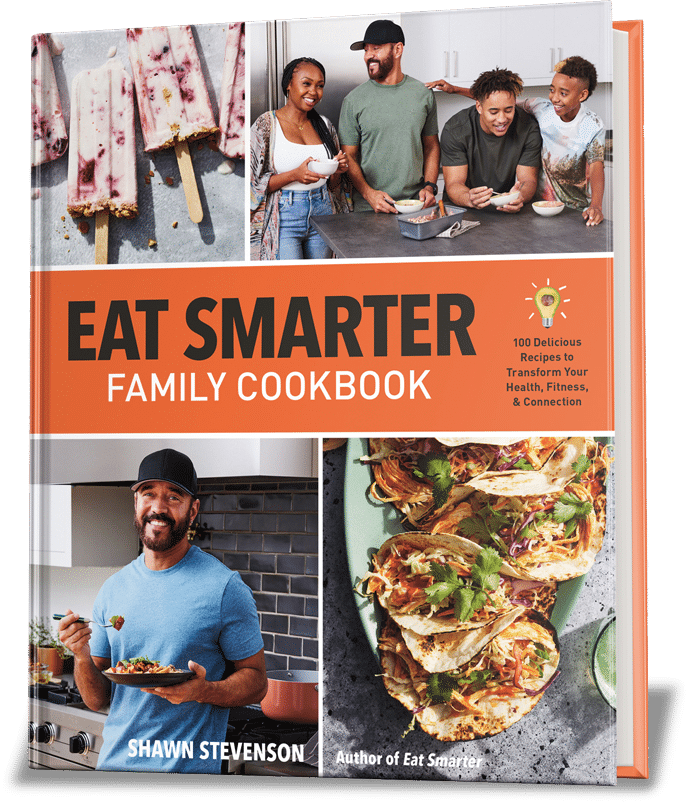
The Eat Smarter Family Cookbook is filled with 100 delicious recipes, plus the latest science to support the mental, physical and social health of your loved ones.


Share Your Voice
0 comments. Be the first to leave a comment.